Search Results: "ron"

1 July 2006

David Welton: Good thing that he doesn't speak Italian

The Java Conference in Milan was a pretty good experience on the whole. Took a train there in the morning, and managed to arrive just in time for James Gosling's talk. It wasn't a bad talk, but he's not a great speaker - you can tell he's more of a technical guy who's interested in the details, and perhaps would do a better job of transmitting some of what he's interested in/working on in a small group or individually. He did talk some about utilizing Java in real time embedded environments, which I found interesting, because those guys tend to be very careful, 'no bullshit' sorts of engineers, who have people's lives riding on their work. It's not an environment where enterprisey fad things go over very well. In general, the technical level was reasonably high - I was pleasantly surprised, expecting a bit more in the way of marketing driven presentations. Indeed, the association of Java with Big Business sorts of applications has long been something that has turned me off on the language. As an individual, or part of a small team, I'm much more interested in systems like Tcl and Tk or Ruby on Rails that let me do more with less code. I've felt that it made more sense to avoid competing on terrain where the differentiating factor is the ability to crank out massive amounts of code (getThis, setThat, etc...), because alone, I can't take on a larger group. As I was explaining some of this as part of 'Why I wrote Hecl' to one of the other guys slated to talk about J2ME in the speakers' lunch room, I was talking about how "non e che Java mi piaccia in modo particolare" (I'm not particularly wild about Java), the person I'm talking with starts gesticulating at me, and I turn around and look, and who should be there, talking with someone else, but James Gosling. Hope no one provided a translation for him! To tell the truth, I think Java has its place. It seems to be an appropriate technology for something like OFBiz, or other apps that genuinely do need to be reasonably large and complex. Just that I have more fun with other languages like Ruby and Tcl.

30 June 2006

Joey Hess: slow

Coming up on being a full year of only dialup internet at home. Slow dialup at that, generally 28.8. Most people I know who use the net a lot switched to high speed years ago and never looked back, while my internet speed graphed over time is a square tooth wave[1]. I seem to have learned to cope with a slow network, both in the tools I've chosen to use, the things I work on, and the ways I work. Oddly often slow internet turns into an advantage. Watching apt download the new pdiffs (which relieved at least 1/5th of my current pressure to get a faster connection), I seem to be able to see the steps it's taking to update better than people with insanely fast connections. Checking up on d-i's memory use the other day as it downloaded itself, I could get a much clearer picture of which components used how much memory. Loading a web page, I can tell if it's built on 200kb of crap html or a well-designed style-sheet. Using different revision control systems to download software trees, I can tell which have innefficient protocols. It's the effect of being able to turn a crank and watch the lights as the CPU processes one instruction at a time. Remember the first computer you used that could scroll text, maybe in a directory listing, faster than you could skim it? Did that feel like an improvement or a new burden? For me this happened with 486 66 machines in DOS as opposed to the older 33's. Now we have to remember to pipe certian commands through less or fiddle with a scroll bar to see their full output. Now when I am on fast internet, I often seem to feel like too many things are going on at once. I can no longer flip over to my mail reader and read one of the messages that downloaded this half hour while a web page is loading; instead the page loads in an instant and I find myself triggering one mail download after the other, since after all, each takes only seconds, not tens of minutes. And as the mail is downloading I can't watch it out of the corner of my eye and get a sense for whether I have a lot of new mails in one mailbox or the other, whether spam is attachment-heavy today or light, whether there's a lot of work mail today or not, etc. Instead it's all there at once and I feel compelled to go deal with it. The last time I had really fast internet at home, I ended up turning off my wireless for hours at a time so I could concentrate on coding or reading instead of the available distractions. Now I've inverted that pattern; I'll seek out a fast internet connection and spend a few hours soaking up the full slendour of the net, but then I'll go home feeling shakey and nervious and get back to getting something actually useful done on dialup. Sometimes I feel we've lost sight of the reason why we want computers to be fast; it's not an end into itself, it's just one more means to let the computer accomplish what we want it to accomplish, when we want it accomplished. Sometimes that's not right away; sometimes, the Italians tell me, you want a nice long compile to go out for a cappuccino. This all seems very interesting to me and ripe for more research. The rare bits of user interface that intentionally slow things down rather than operating at maximum possible speed (for example, edge resistance) are, I suspect, some of the hardest bits of UI design out there, and probably the most influenced by actual users. There are tie-ins with calm computing, all kinds of interesting UI and scheduling issues (for example, which download does the user need right away and which isn't a priority, as it's not really wanted until tomorrow), all kinds of stuff that we basically don't consider today in day-to-day program design. And if I could buy an old-style instruction-level crank and front panel lights USB dongle for my laptop, I would, in a heartbeat.
[1] Old-timey-net "fast" at college, then dialup, upgraded to ISDN, back to dialup, then upgraded to ADSL, then blazing fast nearly symetric DSL, then back to dialup, then pretty fast cable, then crazy latency satellite, then back to dialup.

29 June 2006

Enrico Zini: New Economy

The short version:
Welcome to Benq-Siemens mobile phone support. Where do I click on this program in front of me to get the answer you need?
And when I'd tell them where exactly they should click, they weren't trusting me. It must be because I wasn't using the precise words they have on screen: the interface and user manual of my phone are in Italian, and I had to translate back to English. So I later downloaded the English manual. I was saying "phone lock code" when the English manual said "phonecode". I'm impressed. So at some point I asked them: "Suppose that my phone is broken. Do you have a list of repair services near Manchester?". Turns out they don't. The Benq-Siemens support center has no list of their own repair centers, and tells you (I swear) to google for it. I'll wait to be back to Italy: I know where to go, there. Conclusion: is there a SIP-VoIP software with a "record phone call" functionality? I don't know of any so far. Some things, if you just tell them, they're hard to believe.

Kai Hendry: Mailing list subscriptions

Since mutt can’t tell me how many messages are in each procmail filtered IMAP folder I wrote a little script that could. That combined with a cronjob and a HTML template, I now have a listing that I can check from time to time. Didn’t realise I was subscribed to 60+ lists.

28 June 2006

John Goerzen: Mario Cuomo against Ronald Reagan

I finally have episode 3 of my podcast Sound of History online.

Episodes 1 and 2 both had two speeches each, and one of those speeches in each episode was from Ronald Reagan. So, for episode 3, I selected Mario Cuomo's address to the 1984 Democratic National Convention. Quite an interesting listen.

It was quite interesting to hear how the rhetoric 20 years go, from both sides, is quite similar to today's rhetoric.

Martin F. Krafft: Please test mdadm/experimental

This is an email I just sent to debian-devel:
I have done some major work on mdadm (see PTS) in experimental, which is now at version 2.5.2-1 (not all web pages reflect that yet). I still have not received enough success reports to make me comfortable enough to upload to unstable, so here's another request for testing (or else etch will ship with 2.4.1). I am 95% confident that it's a smooth upgrade, though it helps if you make sure that the output of the script /usr/share/mdadm/mkconf looks okay before you reboot. Come and find me on IRC if you need reconfirmation (see below). Previously, mdadm required a newer version of initramfs-tools, one which did not exist yet. I have addressed this issue with this version, meaning that you can install it with any initramfs-tools out there, and it will just do what it can do. Details are available in the online README, which is a little more up to date than the included /usr/share/doc/mdadm/README.experimental. Please test mdadm 2.5.2-1! and drop me a line if it works, or if it does not! The package is in experimental or available from my repository for i386 or amd64. Again, do not hesitate to bug me on IRC (#debian-devel/irc.debian.org) if you have questions or need assistance.
Update: Alec Berryman discovered a slight problem when mdadm 2.5.2-1 is used in conjunction with initramfs-tools 0.64 or earlier. Please see this post for details and solutions. The online README has been updated. I don't think this warrants a new package to be uploaded to the archive, but please correct me if I am wrong. Update: Alec Berryman helped discover another problem when the root filesystem is on LVM is on RAID. If this is your setup, please do not use mdadm 2.5 at the moment. See #375879.

Anthony Towns: On being DPL

It’s almost the end of financial year in Australia, so what better time to take stock? I’m actually a bit surprised at just how much I need to do that – I knew being DPL would involve some new challenges, but it’s barely two months in and I’m already just about in shock. Guess it serves me right for putting “increasing Debian’s tempo” in my platform…
The two other roles I’ve been in that I would have expected to prepare me more have been Debian release manager, and secretary of Linux Australia. They’re both similar in a way – the release manager does a lot of cat herding within Debian, and has to make some calls that will leave people aggrieved; and Linux Australia has some contact with the press, and some reasonably serious projects going on. So a few issues were completely expected: a random initial slashdotting, a press report, an interview or two, some requests for quotes in articles and press releases, or ongoing opposition and arguments from dedicated Debianites who don’t happen to agree with me on some decision. There were other things that were new and interesting though not really surprising. The leader@ mail address turned out to have just as much spam as I expected, though also some unexpected interesting stuff too, including my first ever personally addressed open letter – in this case by Keith Curtis who also wrote the 10,000 bugs away from World Domination article that got slashdotted a while back. A tidbit:
Everyone agrees that Ubuntu couldn’t exist without Debian, but I also believe that Debian is better setup to take Ubuntu where it needs to go. There are hints that the Ubuntu team feels like they brought a pork chop suit to a lions den. Ubuntu’s user base and development team is growing exponentially, but I believe they could get there much faster with more of Debian’s help.
Keith also forwarded an open letter he’d written to Mark Shuttleworth, and had some interesting comments on the whole Java thing. As well, I suddenly started receiving SPI board mail, as Debian’s advisory representative to the SPI board, and started getting a couple of requests for authorising expenditures (Debian UK reimbursing Matthew Garrett for travel costs to the Gnome Advisory Board meeting in 2005) or providing a Debian representative for a meeting or joining the Google Summer of Code. And then there were the cool things I knew absolutely nothing about, like the excellent news Christian Perrier passed on about the launch of Dzongkha Linux, featured in news reports from Bhutan, India, and Australia. Of course, I completely expected that all this would overload me a bit, and I’d end up getting distracted from what I wanted to do, and not being able to keep up with stuff other people wanted me to do. To help with this a little, I delegated Steve McIntyre as, essentially, a co-DPL, and he’s been working on a few things, including the now successful switch of irc.debian.org over to OFTC, and another fun little endeavour that I won’t spoil just yet. Things started getting a bit weird as I was preparing to travel off to debconf in Mexico – with some frustrated comments from damog and Marga and Gunnar, which was odd coming from the conference organisers themselves; and independently the reinflamation of some old tension on the debian-installer team. That got compounded at debconf itself, with the controversy over the inclusion of Sun Java in non-free extending not just to the lists, but an article in LWN (with a followup) as well as numerous other places around the net. That issue came to something of a climax when John Goerzen (with whom I’ve had some entertaining disagreements in the past) questioned whether SPI had been sufficiently involved in the decision (“I am becoming increasingly concerned at the unilateral method in which you and/or the archive maintainers have taken this decision.”), to which I responded fairly curtly to defend the way Debian makes decisions (“If SPI wish to withdraw from their relationship with Debian, then that’s entirely possible to arrange. I don’t think it’s at all proper that you try to obtain veto power of Debian’s activities as conducted by the duly authorised members of that organisation.”). Nothing’s really news there – flamewar on Debian lists between influential project members? Next thing you know the sun will rise in the East every morning, and then where will we be? What’s not so normal is those flamewars getting front page coverage on slashdot, or noted in an article on distrowatch. As far as Debian’s concerned, we had a couple more rounds, both in public and on the developer only -private list, then moved onto actually getting the legal advice John wanted. That’s actually still pending, and the debate has pretty much abated while that’s going on. And meanwhile, Wouter Verhelst, Manoj Srivastava, and others have started a much more productive look at Debian’s relationship with SPI and similar organisations, which has continued on to a draft of a constitutional amendment. But there was more stress and chaos at debconf than just the Java stuff, but what’s really impressive is the way people ended up dealing with it. Take damog for example:
Just as Tore said: This is the best DebConf ever. Isn’t it great? I started really enjoying this DebConf once I stopped worrying about bullshit, once I stopped worrying about senseless things and started to really give a shit about almost anything. Why do I need Gunnar to tell my girlfriend Ana, “you picked up the irresponsible one”? Why do I have to worry about the DPL giving a shit or not on the Latinamerican Debian community, even after being invited to meet the guys or to attend our BOF? […] I enjoy people here, thanks to all the organization cabal, thanks for your effort and your time on this. […] But after leaving all of this behind, I think Ana and me are having a great time sharing time with friends around us (the friends, los cuates, we are here for).
After seeing that post, and figuring out who damog actually was when he gave a lightning talk towards the end of the conference, we had a chance to briefly chat about what was going on – somehow I hadn’t taken in the invitation to attend the BOF, and had been told it was all in Spanish anyway, so hadn’t gone; meanwhile they’ve been thinking about holding a Debian miniconf in Latin America somewhere and wanting to know what sort of support they can get from the rest of the project – particularly moral support rather than financial, at that. Hopefully we’ll see news on that score in the coming months. But really, damog was right in the first place anyway: why care if the DPL supports you or not? Debian’s about everyone doing what they think is good and worthwhile, and that combining to produce something great – it’s not about what some guy who got six votes more than the next guy happens to think is important. But support is important, whether it comes in the form of a DPL saying “good idea!”, or something else. Gunnar’s response to the latter, eg:
Debian is love. After my scream for help a couple of days ago, and after a mountain of hard work, things are just running. No, we are not -by far- free of incidents, and it would be foolish to expect it to be so, but we are working nicely. And by the way, thank you, I have been receiving the largest amount of hugs ever, and believe me, each of them has been important. […] Thank you all, folks. I am in Cristoph Berg’s talk about reworking NM - And this comes very good to wrap up my post. Debian is much, much more than technical work. It is a social club. I love this social club. Just sitting here makes long months of work really worth it. A great hug back to you all!
And in the end we got quite a bit out of debconf6, for example more movement on the forthcoming release, improvements on i18n stuff, a new publicity project, movement on updating python, amongst other things. Who knows if the next debconf will manage to be anywhere near as much of an experience, but at least we’ll find out fairly soon where it’s going to be (though that process isn’t without hiccups of its own). Post debconf, there’s also been a notable influx of trolling going on too; with the most obvious and odious example being the insane, anonymously-posted prayers for a female developer’s death. Fortunately those have mostly been ignored as the mindless spam they are, though one might argue that Marcela Tiznado’s acceptance as a DD on her birthday, and the inclusion of women.debian.org in the official debian.org namespace are a more appropriate response to that sort of harassment than any sort of direct reply anyway. Not all our problems have conveniently been resolved right now, of course, the difficulties related to the installer team I alluded to above are ongoing, and at the moment a really good solution is still eluding us, though development continues anyway. And then, of course, there’s more to come – half the point of posting this is so I can stop worrying about all the stuff that’s been and gone, and get on with interesting things like the next point release, and the various other projects that I’ve let languish for the past few weeks.

26 June 2006

Evan Prodromou: 7 Messidor CCXIV

Our trip to wt:Santa Barbara was fantastic, I've forgotten to mention. The three of us got to stay on Henry and Peggy Hill's boat, right next to Nelly and John and Charlie. We had a great view of the mountains, and flocks of pelicans flew right by and over the sea wall. There was a 5-foot-tall blue heron who stalked our section of the harbor, taking long, slow, gripper-claw steps everywhere. Amita June loved watching the boats go by -- ba, ba, ba, ba. Dinner on Friday night was ahi tuna just minutes off the boat -- tender enough for sushi, but we grilled it up with lime, garlic and tequila and it was very very good.

25 June 2006

Carlos Villegas: BTS and Lintian

While working on the script to check for LSB compliance, and as a recommendation from Petter Reinholdtsen, I commited two bug reports to the BTS related to a wrong order of some scripts in the sysvinit package. Specifically alsa-utils and udev (Bug reports #375388 and #375389, respectively).

The reason for this, besides correcting the bug itself, is to raise the issue of correct script ordering. Currently, a developer cannot know if their package is correctly placed in the /etc/rc?.d symbolic pools until a bug is reported. If lintian and/or linda included some check for init script dependency information, i.e. basic LSB-compliance, the maintainers would remember to include this information and a script could correct the order for each individual system. The script needs to be developed for debian and this is one of the next steps on the current boot project.

Biella Coleman: Before another month passes, a little on Mexico

Last month I went to Mexico to attend Debconf6 and then I traveled with 4 geeks to Oaxaca. Here are a few photos from the trip, which was quite lovely, though I stalled writing anything about it here because I was thrown into a strom of sickness during my last week there and into my first week here. I have been to Mexico a few times before though usually in passing or in Baja, which is somewhat nice but desolate. This was the first time I had any sustained exposure to Mexico and it was quite nice. Some of my favorite things about the country and my visit are perhaps a little odd but they are what took me in and here are some of them… For example, during Debconf proper, I feel in love with the following reptile and very surprisingly, because, when it comes to animals, I usually like the soft and cuddly and not the scaly and spiny. But…. this lizard was…. special. Here is how I found him: We were eating at a restaurant after a visit to some ruins and there we found this little guy caged at the back of the restaurant. I was more than a little miffed that he was trapped (and by butting his head against the cage, he clearly was saying I WANT OUT) and so was about to pull a “PETA move” and just let him out. But I decided that was not such a good idea so instead I went over to the owners to ask why the little one was caged. In answer to my query, they promptly pulled him out and told me he first that he was a chameleon (which does not seem right to me) and was usually free to roam but when there are a lot of folks (as there were) they lock him up. He plopped the little one on my arm and alas, what I pleasantly found out was that a lizard can act an awful lot like a dog. He LOVED to be pet and basically had a look of all-out-pleasure when you stroked his back. And at times, with a particularily good stroke, he would even subtly smile and flutter his hind leg a little just like a doggie. Aside from a special dog-like reptile, there were many other things that I loved about Mexico. The food at the market was divine, divine, especially the corn smut a.k.a huitlacoche and all the salsas were better than you could imagine. It is tragic that every city does not have a local market with such divine food. The architecture of Oaxaca was especially stuning as was the whole city center. It reminded me of viejo San Juan in Puerto Rico but the buildings were a little lower (apparently because of earthquakes) and the environment was dryer and more expansive. Our hostel was courtyard style (as were many houses there) and I think the courtyard should be revived as the defacto style for housing as this is probably one of the most enticing and smart architectural styles ever (at least in warm places). While a home is suppsed to provide shelter to enclose, the courtyard brings some of the outside inside and some of the inside outside. While in Oaxaca we met some folks from espora, walked a lot in the city, met up with other Debian folks traveling about, and cleaned out Vagrant’s ear which was truly … well I won’t go into that. We also drove for a few hours up to the mountains for a few nice hikes. The town hoped we happy trip and I think we did. Mexico city, by a number of measures, is one of the largest in the world and I unfortunately only got to see the Zocalo area as well as the subway. The center was quite impressive and especially nice before a thunderous storm One night at the Zocalo we happened upon a free concert, the lineup including the Tijuana Nortec Collective. One of the most dynamite parts of Mexico City is its impressive and I mean impressive subway system. In a nutshell, the system is large, clean, efficient, cheap, and quiet (thanks to thick and black rubber tires). The trains come quickly, ferrying the millions of riders who pay 20 cents for a ride on a lovely bright orange train. Every time I rode it, without fail, a vendor entered the car, loaded with a backpack that doubled as a radio/stereo, who was selling pirated music. I appreciated the sample and bought one disc chock full of mp3s. Like most urban trains, the riders are silent and I have always wondered why this is so. When I go to PR, I ride the busses much more and there, as in the states on the busses, there seems to be more open flow of chatter. Perhaps it is because trains are quite comfortable and they lull already tired riders into a state of quite contemplation. Who knows. So these are some of the things that I liked about Mexico but perhaps the most exciting part about the country was the clear political heatwave passing through, just as it is with much of Latin America. In the zocalo of Mexico City there were various stands protesting the attacks in Atenco, as well as general protests against neoliberal policies. The city of Oaxca was also filled to the gills with protesting teachers, demanding a pay raise. Thousands of them were camped out all over the city center, which is apparently a year rite. Sadly, in the last week the police broke up the protest, violently…

Wouter Verhelst: Say hi to ragtime

A few months ago, my good friend Kris gave me an OldWorld Powermac (a model 8500/150, even though the processor really runs at 120Mhz) as a donation to the Debian project. I arranged to hand it to Sven Luther, who is very much into Debian on PowerPC, at FOSDEM in Brussels. Due to some misunderstandings, however, Sven did not take the mac with him; so it had been left at the office. And since I don't go to an awful lot of meetings (FOSDEM is probably going to be the only one this year), the mac is likely going to stay at our office. So I thought I'd put it to some good use. I saw last week that the PowerPC dailies hadn't been built for about a week or so. When I asked around, I found out this was because Colin Watson, who usually builds them, does so on his laptop. Since he was not directly available, however (due to him being on vacation or something similar), they were not getting built for about a week. An understandable situation, but rather suboptimal. So, since I had this unused PowerPC machine anyway, I installed Debian on it, called it "ragtime" in accordance with my usual machine naming scheme, did a checkout of the d-i subversion tree, and added the daily-build script to cron. As of yesterday, Frans Pop changed the different configuration items to point to my dailies instead of Colin's; so I guess it's now rather official. Ish. Update: NOW. Not NOT. Aargh.

Andrew Pollock: [life] An Inconvenient Truth

Tonight Sarah and I went to see An Inconvenient Truth. It was, as expected, quite similar to the talk that Al Gore gave when he visited Google. From what I can figure out from IMDb, it doesn't look like this movie has been screened across the whole US, it's only had a fairly art-house screening outside of California. That's a bit of a shame really. It also doesn't look like it's going to get a mainstream screening in Australia either. Granted, it's largely aimed at giving America a wake-up call, and according to Gore, Australia only contributes 1.1% to the world's CO2 levels, but it's still worth seeing. I'm curious as to how many non-Democrat inclined (i.e. Republican) Americans have gone to see it. I don't know if they wouldn't hear the message because of who was delivering it, or whether they'd still go along to give it a fair hearing. It's certainly interesting to see the number of "make you think" movies coming out. (Fahrenheit 9/11, Thankyou For Smoking, and we saw a trailer for Who Killed the Electric Car? tonight). Good to see. The word on the street is that Gore is going to run for President again in the 2008 Presidential elections, off the back of this movie. It makes me wonder if we're going to see a new political lobbying vector, where future Presidential candidates pitch themselves at the American public via the movie theatre... I certainly don't think it's a bad thing if this movie thrusts the environment fairly and squarely onto the candidates' political agendas.

Daniel Burrows: Seth Crosson, are you out there? Your mother would like to speak with you.

Ever since I hooked up my phone line, I've been getting calls for someone named "Seth Crosson". The first call was fielded by my answering machine, and I figured it was a wrong number. The first two calls were from schools, and I figured maybe they just had an old number. But a few weeks later, I started getting calls from this guy's friends and family, wondering where he had gotten to.

Seth, whoever you are, if you by any chance happen to read this, please call your mother and let her know where you are. Also, please tell your family what your new number is so they stop calling me and asking for you. If you give me your new phone number (preferably by calling your old Redmond number), I'll be happy to redirect people to it.

And, next time that you move, please tell people that you are moving and where you're moving to, so they don't have to call the poor guy who gets assigned your old number.

Thanks.

24 June 2006

David Welton: Concurrency

We've been having some interesting discussions on the Hecl mailing list about how to do concurrency: http://sourceforge.net/mailarchive/message.php?msg_id=19566676 (although it seems SF has managed to lose a portion of the conversation!) When all things are said and done, we have a couple of options: At this point, I'm tending towards each thread having an interp, because option three seems very prone to extremely difficult bugs. Not sharing the interpreter has worked well for Tcl both from the implementation and end user perspectives. It is, however, not an easy subject and I'm still thinking about it. Note comments are broken, so email me with questions or comments.

Andrew Pollock: [tech] Voiding the warranty for fun and profit

A bunch of us Prius owners at work did a bulk purchase of the Coastal Electronic Technologies EV-only "hack". It's not so much a hack as providing an interface to a feature that already exists in the car and has an interface in European and Asian models. Anyway, on Friday afternoon, there was a small install fest in the car park, and I installed it in our car, under the guidance of master Prius modder, Thunder. It was a fairly straightforward operation, albeit a bit fiddly. Apparently the cables were a bit shorter on our car, which made it all a bit more fiddly. You basically have to stick two vampire taps around existing cables, and connect in the module that comes from Coastal to the vampire taps, and you're done. The bulk of the work is just fiddling around dismantling a bit of the dash on the passenger side, and trying to disconnect a block of cables so you can fit the vampire taps (and then fitting the vampire taps) and the reverse the put everything back the way it was. The other mod that I'm slightly curious about is the BT Tech Chassis, but it's a bit more more expensive, and I can't quite appreciate what it's going to do for us, so I'm not quite ready to race out and buy one. Oh, and hopefully the warranty isn't really voided, it's not externally obvious that the EV hack is installed.

23 June 2006

Uwe Hermann: Trac - web-based project management with wiki + bug-tracker + svn code browser

Trac screenshot I've started looking at Trac recently, a nice web-based project management tool written in Python. It integrates with existing Subversion repositories; for example, you can browse the code in your repositories with Trac (it'll be displayed syntax-highlighted), view diffs between revisions etc. etc. Additionally, you get a wiki (e.g. for project documentation), as well as a built-in bug-tracker a la Bugzilla, all integrated nicely into a single piece of software... It's Free Software, of course (the license changed from GPL to revised BSD somewhat recently)... A few words on the installation: So far I've set up ca. 7-8 Trac instances for various projects and I'm quite happy with it. While I was at it, I also created a tiny Trac article in the German Wikipedia. You can get tons of useful plugins and macros over at trac-hacks.org for additional functionality, e.g. DoxygenPlugin, GanttPlugin, DebianBtsMacro, and many more.

Erich Schubert: The truth why Microsoft delays its products all the time

... because it keeps on renaming them. Which means they have to review their Sourcecode to replace all the occurences of the product name, and then they have to fix the resulting bugs again. Latest name changes: WinFX becomes .NIET Framework 3.0, Antigen becomes Forefront. I wonder what the new name of the Internet Explorer will be, once it's released. Maybe "Windows Live Explorer"? Or is maybe Microsoft introducing it's previous try in setting up a brand - "Microsoft Passport Explorer"? Or will it be "Microsoft Live Passwort.NET Explorer"? I wonder what Vista will be called once it's released? How about "Duke Nukem Forever"? The funny thing is that Microsoft lost track of its product names itself - ther are two different products named Microsoft Live Search.

Ross Burton: GStreamer Bounty

I'm willing to start a bounty for someone to fix/port/implement the required pieces of GStreamer so that Sound Juicer can rip a whole CD, fully tagged (all tags SJ writes must be correctly encoded), to MPEG4 AAC (as used natively by iTunes). A requirement is that a music player that support MPEG4 files can see the tags without any extra work: the primary test for this will be importing the ripped files into iTunes. I think there are many people out there who would like this to happen, so I want to arrange a group bounty. Bounty County looked promising but I have to specify how much the bounty is up front, I can't just let the fund grow as people donate what they can. The Bounties section on Launchpad has the same limitation. Does anyone know a reputable site for managing donations like this, or should I just get register a new email address on PayPal and get people to donate there? Also to gauge how much interest there is in this, can anyone who would consider donating leave a comment? NP: Vertigo, Groove Armada

Wouter Verhelst: Choir concert

I had been in a choir called "Cantilene" since the age of sixteen. Since this was a youth choir, however, I was kindly asked to leave when I hit 26, now two years ago. Unfortunately, that left me in the cold, as Cantilene was part of the c-koren family which did not really have a choir that appealed to me, with hours that would allow me to attend rehearsals. This has changed now; since a few months, the C-koren have a new member choir called "Caljent " (which is supposedly a spanish word meaning "warmth" or some such—I'm sure Spanish people will correct me if I'm wrong;-P ), and we will give our first small concert next week's friday, at 20:30, in the "Sint Lambertuskerk" (church of Saint Lambert) of Ekeren, my home town. Everyone who can make it is welcome to be there...

Clint Adams: In this parable, which member of the d-i team is which?

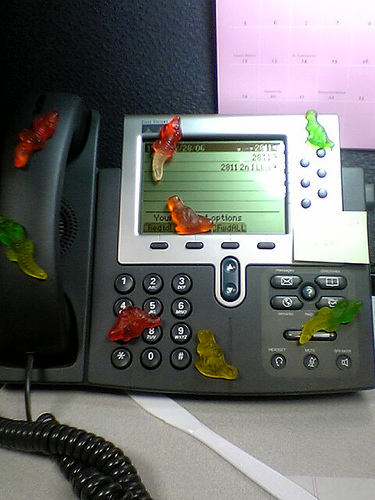
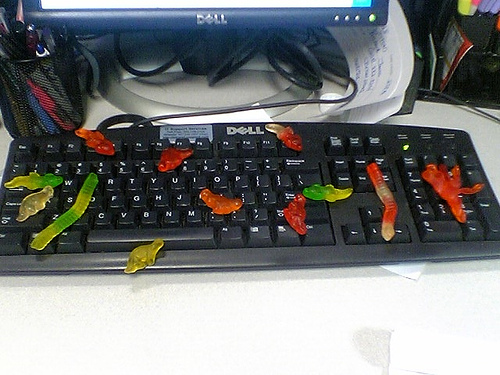
In the Year of the Mezcal, a prophecy was fulfilled. Don Gusano de Az car sired a critter the likes of which the world had never seen. This mahdi could not dispense honey, milk, orange juice, or ghee from his fingers. In point of fact, he had no fingers. What he had was the burning desire to liberate his brethren from the iron yoke of the She-Beast. He set up a vast terrorist network, the likes of which the world had seen many times over, for it was basically just a phone tree, a couple of code phrases, and a bunch of dullards. Then, having forged his legacy, he perished, suffering a series of strokes brought on by being forced to watch an episode of Full House . His minions bided their time until the coming of the Summer Solstice, and though they did not know how to say it in Portuguese, they eagerly sprang into action. [dialing phone] With daring and finesse, they commandeered an IP phone. [talking on phone] After 45 minutes of trying to add value, they failed to bring it to the table, since one major oversight was that they lacked any capacity to generate speech. H las ! cried the one that wasn't translucent at all, and he did so silently. [typing on keyboard] Cleverly devising a backup strategem, they rushed to a computer to send some emails. Unfortunately, Outlook crashed on them six times, and then they were, like, totally diverted by a fascinating exchange between two guys named BJ and William. By the time they managed. To send their first email. Which they typed like this. Because the little guy on the period key. Had a tick. It was too late. [STD transmission] Oh, you poor, foolish things! If only you had used free software, she wouldn't be giving you oral herpes right now.


Next.

Previous.