Search Results: "tim"

4 March 2011

Alexander Reichle-Schmehl: Picture could be titled: Me and my new best friend

Karsten Gerloff and Alexander Reichle-Schmehl I guess it's time to renew my Fellowship now :) Picture taken by Andre McMillan licensed CC by 2.0.

Steve Kemp: A final update on redisfs

I think I'm done with the redis filesystem for the moment. It does everything I need it to do, although I am curious to see how much faster it could go if it were to use non-blocking writes that isn't a major concern. There is only one missing feature I'm planning to play with - and that is the ability to implement snapshots. As a refresher redis is a key+value store, which mostly uses system memory. I've built a simple FUSE filesystem on top of that (now with symlink support!) and so all the file contents, meta-data, and similar is stored in memory. Implementing snapshots could be done by two different routes:
Copying all keys and their values, under a new name.
For example right now, by default, all the filesystem entries in the root directory are stored beneath the key "SKX:/" - where "SKX" is the key prefix. Assume I copy each existing key, and the associated value(s), giving them a new prefix such as "SKX2:" I can mount the filesystem against that prefix - and we've got a point-in-time snapshot.
Serialising all keys & values
Redis has a primitive which allows you to determine the names of keys at runtime. Given that all my filesystem keys have a prefix ("SKX:" by default) it wouldn't be difficult to find them, and serialise them. This would require more effort to re-import and re-mount, but it should be portable across hosts.
Anyway assuming I get this right we'll have a filesystem which is replication-friendly and snapshot-able. A fun combination. ObQuote: "We had been everywhere. We had really seen nothing. " - Lolita

Jo Shields: Protip: parallel-installing Mono versions in an APT-happy way

If you ve ever gotten tired of waiting for a new Mono release to appear, and taken matters into your own hands by compiling your own copy of Mono, you ve likely faced the problem of missing libraries. That s weird, it says it can t find gtk-sharp, but I have that package! This happens because every version of Mono on your system has what s called a Global Assembly Cache a location where all system-wide assemblies lives. So when you run an app like Tomboy, it loads its libraries such as GTK# from the GAC belonging to the Mono runtime being used. Ordinarily, this is in /usr/lib/mono/gac on a Debian/Ubuntu system. When you have your parallel Mono, it doesn t share a GAC as a result, libraries in your main distro GAC are not available in your DIY GAC, as they were never registered in there. Typically, the advice is to either start compiling every lib you need into a non-standard place too however, here s a better idea. Why not make Apt take care of not only your system s GAC but additional GACs too? We actually have structures in place to handle this, so it s not as hard as you think (merely relatively unknown). This guide does NOT take startup scripts into account it s your problem to ensure you re using the correct mono command to run your copy of MonoDevelop or Tomboy or whatever. You should probably learn about update-alternatives and $PATH for this. Oh, and this guide will BREAK HORRIBLY if you try to uninstall system mono completely. Don t try it. Setup step 1: preparation Don t install parallel Mono into /usr/local. I don t care what happens to you if you do. Use some random folder in /opt, usually a per-build prefix like /opt/mono-2.10 Setup step 2: duplicating existing magic Open a terminal, and copy /usr/share/cli-common/runtimes.d/mono to a new filename, e.g. /usr/share/cli-common/runtimes.d/mono-2.10 Setup step 3: tweak duplicate magic Open your copied file in an editor, and change the name value on line 27ish (e.g. from Mono\n to Mono (parallel 2.10 install)\n ). Then change the two places in the file, on lines 64ish and 120ish, from /usr/bin/gacutil to /opt/mono-2.8.2/bin/gacutil or equivalent. Setup step 4: apply magic to existing packages Run /usr/share/cli-common/gac-install mono-2.10 (or whatever filename you picked for your runtimes.d entry) as root. This will instantiate your parallel GAC(s). From now on, every GAC library you install or uninstall will happen to every single runtime in runtimes.d. To go back to how things were before, with only a single Mono runtime: Uninstall step 1: empty out parallel GAC Run /usr/share/cli-common/gac-remove mono-2.10 (or whatever filename you picked for your runtimes.d entry) as root. This will remove all packaged entried from your parallel GAC(s). Uninstall step 2: remove magic Delete your file from runtimes.d

Dirk Eddelbuettel: RcppArmadillo 0.2.14 and 0.2.15

A few days ago Conrad Sanderson released version 1.1.6 of his Armadillo templated C++ library for linear algebra. Accordingly, I made a new release 0.2.14 of RcppArmadillo, our Rcpp-based integration into R which included a few local fixes. However, while I updated SVN at the R-Forge project I didn't update the final tarball so Armadillo 1.1.6 wasn't in it. That is corrected in the 0.2.15 upload which is now on CRAN and its mirrors. The short NEWS file extract for both releases follows, also containing Conrad's entry for 1.1.6. A few minor tweaks were added but no user-visible changes:
0.2.15  2011-03-04
    o   Upgraded to Armadillo Version 1.1.6    Baby Carpet Shark 
         * fixed size matrices and vectors can use auxiliary (external) memory
         * .in_range() can use span() arguments
         * subfields can use span() arguments
0.2.14  2011-03-02
    o   Support Run-Time Type Information (RTTI) on matrices by setting the
        state variable vec_state in Row and Col instantiation, with thanks to
        Conrad Sanderson for the hint
    o   fastLm code simplified further by instantiating the Armadillo matrix
        and vector directly from the SEXP coming from R
    o   inst/doc/Makefile now respects $R_HOME environment variable
And courtesy of CRANberries, here are the diffs to.2.14
 ChangeLog                                                   14 -
 DESCRIPTION                                                  8 
 inst/NEWS                                                   10 
 inst/doc/RcppArmadillo-unitTests.pdf                     binary
 inst/doc/unitTests-results/RcppArmadillo-unitTests.html     10 
 inst/doc/unitTests-results/RcppArmadillo-unitTests.txt      39 +-
 inst/include/armadillo_bits/Col_meat.hpp                    51 +++
 inst/include/armadillo_bits/Col_proto.hpp                    3 
 inst/include/armadillo_bits/Cube_meat.hpp                   52 +++
 inst/include/armadillo_bits/Cube_proto.hpp                   7 
 inst/include/armadillo_bits/Mat_meat.hpp                    51 +++
 inst/include/armadillo_bits/Mat_proto.hpp                   12 
 inst/include/armadillo_bits/Row_meat.hpp                    51 +++
 inst/include/armadillo_bits/Row_proto.hpp                    3 
 inst/include/armadillo_bits/arma_version.hpp                 6 
 inst/include/armadillo_bits/config.hpp                       9 
 inst/include/armadillo_bits/field_meat.hpp                 220 ++++++++++++++--
 inst/include/armadillo_bits/field_proto.hpp                 20 +
 inst/unitTests/runit.RcppArmadillo.R                        16 +
 19 files changed, 521 insertions(+), 61 deletions(-)
and to the previous release 0.2.13, respectivel
 ChangeLog                                                   14 ++++++
 DESCRIPTION                                                  6 +-
 inst/NEWS                                                   11 +++++
 inst/doc/Makefile                                           15 +++++--
 inst/doc/RcppArmadillo-unitTests.pdf                     binary
 inst/doc/unitTests-results/RcppArmadillo-unitTests.html     18 ++++----
 inst/doc/unitTests-results/RcppArmadillo-unitTests.txt      34 ++++++++--------
 inst/include/RcppArmadillo/Col_meat.h                       24 ++++++-----
 inst/include/RcppArmadillo/Row_meat.h                       19 ++++----
 src/fastLm.cpp                                              15 ++-----
 10 files changed, 94 insertions(+), 62 deletions(-)
More information is on the RcppArmadillo page. Questions, comments etc should go to the rcpp-devel mailing list off the R-Forge page.

Michal Čihař: Fun with MinGW64 and ODBC

The test suite for recently added ODBC support in Gammu was consistently failing on Win64 platform (all others were just fine). It took me some time to figure out why. The reason is SQLLEN type, which is in some sort special, that generated code for it is broken. All started with pretty much standard retrieving value from ODBC result:
SQLLEN size;
SQLRETURN ret;
/* Figure out string length */
ret = SQLGetData(res->odbc, 1, SQL_C_CHAR, NULL, 0, &size);
if (!SQL_SUCCEEDED(ret))  
    return NULL;
 
/* Did not we get NULL? */
if (size == SQL_NULL_DATA)  
    return NULL;
 
/* Allocate buffer for string */
out = reallocate(out, size + 1);
The first problem was comparing of size against SQL_NULL_DATA. It simply always failed even if size did contain -1 (what is actually value of SQL_NULL_DATA). Yesterday, I've come out with typecasting magic that worked fine for this case. However what I've missed is that even reallocate is failing with this parameter. No matter what the size would be, it would return NULL. Typecasting again did help here. Hey, should not be compiler clever enough to typecast this for me? It turns out that in case of MinGW64 it is not. Anybody has suggestion why? At the end I ended up with pretty ugly duplicating of the variable just to avoid mixing it up in future changes (as would happen with typecasting everywhere). I'd really like to know why my assumptions are wrong in this case.

Filed under: English Gammu 0 comments Flattr this!

Craig Small: Apache and incomplete redirection messages

As part of moving my site around, I needed a bunch of redirects so that http://enc.com.au/docs/linuxload.html now becomes http://enc.com.au/2010/07/manually_calculating_process_times/ because its now controlled by WordPress. so I used the RedirectPermanent feature of mod_alias to do it with lines like:
RedirectPermanent /docs/linuxload.html /2010/07/manually_calculating_process_times/
So you come in on /docs/linuxload.html and redirect to the blog entry, simple really! It actually works, kinda, but the log files fill with things like:
[Fri Mar 04 14:40:17 2011] [warn] [client 172.16.242.1] incomplete redirection target of '/2010/07/manually_calculating_process_times/' for URI '/docs/linuxload.html' modified to 'http://enc.com.au/2010/07/manually_calculating_process_times/
What is going on? Why won t Apache just be quiet and be happy? The reason is in the Redirect Directive documentation on the 2.0 mod_alias page:
Also, URL-path must be a fully qualified URL, not a relative path, even when used with .htaccess files or inside of <directory> sections.
But I m running Apache 2.2 and the 2.2 mod_alias page says:
The new URL should be an absolute URL beginning with a scheme and hostname, but a URL-path beginning with a slash may also be used, in which case the scheme and hostname of the current server will be added.
That s it, you two choices: Changing the above config snippet to use absolute paths fixed it.
RedirectPermanent /docs/linuxload.html http://enc.com.au/2010/07/manually_calculating_process_times/

Cyril Brulebois: Debian XSF News #7

Time for a seventh Debian XSF News issue!

3 March 2011

Michal &#268;iha&#345;: Gammu has ODBC support

One of features for Gammu SMSD which was for quite a long time in my head was ODBC support. With unified SQL backend we have right now it should be pretty easy to add support for it so I gave it a try. It really did not take to long and the ODBC driver is committed to git and will be part of next release. The great benefit of this is that we get native database support on Windows without need to linking against database libraries, which is always painful. The ODBC driver behaves like any other SQL based driver for SMSD, so if you are familiar with it, the configuration won't surprise you:
[smsd]
service = sql
driver = odbc
host = dsn_of_your_database
user = username
password = password
All important information about the driver should be available in the manual.

Filed under: English Gammu 0 comments Flattr this!

Rapha&#235;l Hertzog: People behind Debian: Christian Perrier, translation coordinator

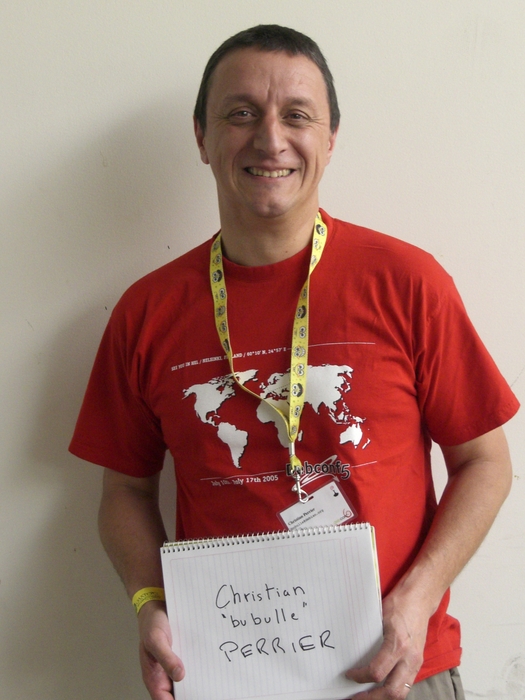
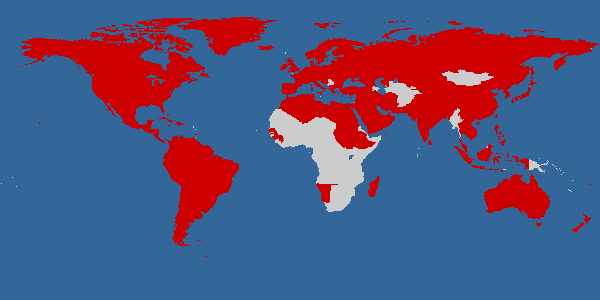
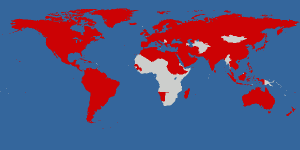
Christian is a figure of Debian, not only because of the tremendous coordination work that he does within the translation project, but also because he s very involved at the social level. He s probably in the top 5 of the persons who attended most often the Debian conference. Christian is a friend (thanks for hosting me so many times when I come to Paris for Debian related events) and I m glad that he accepted to be interviewed. He likes to speak and that shows in the length of his answers :-) but you ll be traveling the world while reading him. My questions are in bold, the rest is by Christian. Who are you? I am a French citizen (which is easy to guess unless you correct my usual mistakes in what follows). I m immensely proud of being married for nearly 26 years with Elizabeth (who deserves a statue from Debian for being so patient with my passion and my dedication to the project). I m also the proud father of 3 wonderful kids , aged 19 to 23. I work as team manager in the Networks and Computers Division of Onera the French Aerospace lab , a public research institute about Aeronautics, Space and Defense. My team provides computer management services for research divisions of Onera, with a specific focus put on individual computing. I entered the world of free software as one of the very first users of Linux in France. Back in the early 1990 s, I happened (though the BBS users communities) to be a friend of several early adopters of Linux and/or BSD386/FreeBSD/NetBSD in France. More specifically, I discovered Linux thanks with my friend Ren Cougnenc (all my free software talks are dedicated to Ren , who passed away in 1996). You re not a programmer, not even a packager. How did you come to Debian? I m definitely not a programmer and I never studied computing (I graduated in Materials Science and worked in that area for a few years after my PhD). However, my daily work always involved computing (I redesigned the creep testing laboratory and its acquisition system all by myself during my thesis research work). An my hobbies often involved playing with home computers, always trying to learn about something new. So, first learning about a new operating system then trying to figure out how to become involved in its development was quite a logical choice. Debian is my distro of choice since it exists. I used Slackware on work machines for a while, but my home server, kheops, first ran Debian 1.1 when I stopped running a BBS on an MS-DOS machine to host a news server. That was back in October 1996. I then happened to be a user, and more specifically a user of genealogy software, also participating very actively in Usenet from this home computer and server, that was running this Debian thing. So, progressively, I joined mailing lists and, being a passionate person, I tried to figure out how I could bring my own little contribution to all this. This is why I became a packager (yes, I am one!) by taking over the geneweb package, which I was using to publish my genealogy research. I applied as DD in January 2001, then got my account in July 2001. My first upload to the Debian archive occurred on August 22nd 2001: that was of course geneweb, which I still maintain. Quite quickly, I became involved in the work on French localization. I have always been a strong supporter of localized software (I even translated a few BBS software back in the early 90 s) as one of the way to bring the power and richness of free software to more users. Localization work lead me to work on the early version of Debian Installer, during those 2003-2005 years where the development of D-I was an incredibly motivating and challenging task, lead by Joey Hess and his inspiring ideas. From user to contributor to leader, I suddenly discovered, around 2004, that I became the coordinator of D-I i18n (internationalization) without even noticing :-) You re the main translation coordinator in Debian. What plans and goals have you set for Debian Wheezy? As always: paint the world in red. Indeed, this is my goal for years. I would like our favorite distro to be able to be used by anyone in the world, whether she speaks English, Northern Sami, Wolof, Uyghur or Secwepemcts n. As a matter of symbol, I use the installer for this. My stance is that one should be able to even install Debian in one s own language. So, for about 7 years, I use D-I as a way to attract new localization contributors. This progress is represented on this page where the world is gradually painted in red as long as the installer supports more languages release after release. The map above tries to illustrate this by painting in red countries when the most spoken language in the country is supported in Debian Installer. However, that map does not give enough reward to many great efforts made to support very different kind of languages. Not only various national languages, but also very different ones: all regional languages of Spain, many of the most spoken languages in India, minority languages such as Uyghur for which an effort is starting, Northern Sami because it is taught in a few schools in Norway, etc., etc. Still, the map gives a good idea of what I would like to see better supported: languages from Africa, several languages in Central Asia. And, as a very very personal goal, I m eagerly waiting for support of Tibetan in Debian Installer, the same way we support its sister language, Dzongkha from Bhutan. For this to happen, we have to make contribution to localization as easy as possible. The very distributed nature of Debian development makes this a challenge, as material to translate (D-I components, debconf screens, native packages, packages descriptions, website, documentation) is very widely spread. A goal, for years, is to set a centralized place where translators could work easily without even knowing about SVN/GIT/BZR or having to report bugs to send their work. The point, however, would be to have this without making compromises on translation quality. So, with peer review, use of thesaurus and translation memory and all such techniques. Tools for this exist: we, for instance, worked with the developers of Pootle to help making it able to cope with the huge amount of material in Debian (think about packages descriptions translations). However, as of now, the glue between such tools and the raw material (that often lies in packages) didn t come. So, currently, translation work in Debian requires a great knowledge of how things are organized, where is the material, how it can be possible to make contribution reach packages, etc. And, as I m technically unable to fulfill the goal of building the infrastructure, I m fulfilling that role of spreading out the knowledge. This is how I can define my coordinator role. Ubuntu uses a web-based tool to make it easy to contribute translations directly in Launchpad. At some point you asked Canonical to make it free software. Launchpad has been freed in the mean time. Have you (re)considered using it? Why not? After all, it more or less fills in the needs I just described. I still don t really figure out how we could have all Debian material gathered in Rosetta/Launchpad .and also how Debian packagers could easily get localized material back from the framework without changing their development processes. I have always tried to stay neutral wrt Ubuntu. As many people now in Debian, I feel like we have reached a good way to achieve our mutual development. When it comes at localization work, the early days where the everything in Rosetta and translates who wants stanza did a lot of harm to several upstream localization projects is, I think, way over. Many people who currently contribute to D-I localization were indeed sent to me by Ubuntu contributors .and by localizing D-I, apt, debconf, package descriptions, etc., they re doing translation work for Ubuntu as well as for Debian. Let s say I m a Debian user and I want to help translate Debian in my language. I can spend 1 hour per week on this activity. What should I do to start? Several language teams use Debian mailing lists to coordinate their work. If you re lucky enough to be a speaker of one of these languages, try joining debian-l10n-<yourlanguage> and follow what s happening there. Don t try to immediately jump in some translation work. First, participate to peer reviews: comment on others translations. Learn about the team s processes, jargon and habits. Then, progressively, start working on a few translations: you may want to start with translations of debconf templates: they are short, often easy to do. That s perfect if you have few time. If no language team exists for your language, try joining debian-i18n and ask about existing effort for your language. I may be able to point you to individuals working on Debian translations (very often along with other free software translation efforts). If I am not, then you have just been named coordinator for your language :-) I may even ask you if you want to work on translating the Debian Installer. What s the biggest problem of Debian? We have no problems, we only have solutions :-) We are maybe facing a growth problem for a few years. Despite the increased welcoming aspects of our processes (Debian Maintainers), Debian is having hard times in growing. The overall number of active contributors is probably stagnating for quite a while. I m still amazed, however, to see how we can cope with that and still be able to release over the years. So, after all, this is maybe not a problem :-) Many people would point communication problems here. I don t. I think that communication inside the Debian project is working fairly well now. Our famous flame wars do of course still happen from time to time, but what large free software project doesn t have flame wars? In many areas, we indeed improved communication very significantly. I want to take as an example the way the release of squeeze has been managed. I think that the release team did, even more this time, a very significant and visible effort to communicate with the entire project. And the release of squeeze has been a great success in that matter. So, there s nearly nothing that frustrates me in Debian. Even when a random developer breaks my beloved 100% completeness of French translations, I m not frustrated for more than 2 minutes. You re known in the Debian community as the organizer of the Cheese & Wine Party during DebConf. Can you tell us what this is about? This is an interesting story about how things build themselves in Debian. It all started in July 2005, before DebConf 5 in Helsinki. Denis Barbier, Nicolas Fran ois and myself agreed to bring at Debconf a few pieces of French cheese as well as 1 or 2 bottles of French wine and share them with some friends. Thus, we settled an informal meeting in the French room where we invited some fellows: from memory, Benjamin Mako Hill, Hannah Wallach, Matt Zimmermann and Moray Allan. All of us fond of smelly cheese, great wine plus some extra p t home-made by Denis in Toulouse. It finally happened that, by word of mouth, a few dozens of other people slowly joined in that French room and turned the whole thing into an improvized party that more or less lasted for the entire night. The tradition was later firmly settled in 2006, first in Debconf 6 in Mexico where I challenged the French DDs to bring as many great cheese as possible, then during the Debian i18n meeting in Extremadura (Sept 2006) where we reached the highest amount of cheese per participant ever. I think that the Creofonte building in Casar de C ceres hasn t fully recovered from it and is still smelling cheese 5 years after. This party later became a real tradition for DebConf, growing over and over each year. I see it as a wonderful way to illustrate the diversity we have in Debian, as well as the mutual enrichment we always felt during DebConfs. My only regret about it is that it became so big over the years that organizing it is always a challenge and I more and more feel pressure to make it successful. However, over the years, I always found incredible help by DebConf participants (including my own son, last year a moment of sharing which we will both remember for years, i think). And, really, in 2010, standing up on a chair, shouting (because the microphone wasn t working) to thank everybody, was the most emotional moment I had at Debconf 10. Is there someone in Debian that you admire for their contributions? So many people. So, just like it happens in many awards ceremonies, I will be very verbose to thank people, sorry in advance for this. The name that comes first is Joey Hess. Joey is someone who has a unique way to perceive what improvements are good for Debian and a very precise and meticulous way to design these improvements. Think about debconf. It is designed for so long now and still reaching its very specific goal. So well designed that it is the entire basis for Joey s other achievement: designing D-I. Moreover, I not only admire Joey for his technical work, but also for his interaction with others. He is not he loudest person around, he doesn t have to .just giving his point in discussion and, guess what? Most of the time, he s right. Someone I would like to name here, also, is Colin Watson. Colin is also someone I worked with for years (the D-I effect, again ) and, here again, the very clever way he works on technical improvements as well as his very friendly way to interact with others just make it. And, how about you, Rapha l? :-) I m really admirative of the way you work on promoting technical work on Debian. Your natural ability to explain things (as good in English as it is in French) and your motivation to share your knowledge are a great benefit for the project. Not to mention the technical achievements you made with Guillem on dpkg of course! Another person I d like to name here is Steve Langasek. We both maintain samba packages for years and collaboration with him has always been a pleasure. Just like Colin, Steve is IMHO a model to follow when it comes at people who work for Canonical while continuing their involvment in Debian. And, indeed, Steve is so patient with my mistakes and stupid questions in samba packaging that he deserves a statue. We re now reaching the end of the year where Stefano Zacchiroli was the Debian Project Leader. And, no offense intended to people who were DPL before him (all of them being people I consider to be friends of mine), I think he did the best term ever. Zack is wonderful in sharing his enthusiasm about Debian and has a unique way to do it. Up to the very end of his term, he has always been working on various aspects of the project and my only hope is that he ll run again (however, I would very well understand that he wants to go back to his hacking activities!). Hat off, Zack!I again have several other people to name in this Bubulle hall of Fame : Don Armstrong, for his constant work on improving Debian BTS, Margarita Manterola as one of the best successes of Debian Women (and the most geeky honeymoon ever), Denis Barbier and Nicolas Fran ois because i18n need really skilled people, Cyril Brulebois and Julien Cristau who kept X.org packaging alive in lenny and squeeze, Otavio Salvador who never gave up on D-I even when we were so few to care about it. I would like to make a special mention for Frans Pop. His loss in 2010 has been a shock for many of us, and particularly me. Frans and I had a similar history in Debian, both mostly working on so-called non technical duties. Frans has been the best release manager for D-I (no offense intended, at all, to Joey or Otavio .I know that both of them share this feeling with me). His very high involvment in his work and the very meticulous way he was doing it lead to great achievements in the installer. The Installation Guide work was also a model and indeed a great example of non technical work that requires as many skills as more classical technical work. So, and even though he was sometimes so picky and, I have to admit, annoying, that explains why I m still feeling sad and, in some way, guilty about Frans loss. One of my goals for wheezy is indeed to complete some things Frans left unachieved. I just found one in bug #564441: I will make this work reach the archive, benefit our users and I know that Frans would have liked that.

Thank you to Christian for the time spent answering my questions. I hope you enjoyed reading his answers as I did. Subscribe to my newsletter to get my monthly summary of the Debian/Ubuntu news and to not miss further interviews. You can also follow along on Identi.ca, Twitter and Facebook.

7 comments Liked this article? Click here. My blog is Flattr-enabled.

Michal &#268;iha&#345;: Bloating dependencies

It looks like many peoples decided it is right time to bloat my system with stuff I don't use. The first think I did not like when squeeze went out was libpcsclite1 pulling pcsd and hal into my system. This is being solved on two fronts - porting pcsd to udev (in #612971) and disabling libpcslite1 support in wpasupplicant. Both of them being good ideas. What actually drove me to writing this post is today's update, where aptitude suddenly wanted to install whole latex and thus using about 760MiB of extra disk space. I know disk space is supposed to be cheap these days, but it's not that cheap with SSD in notebook. The culprit turned out to be doxygen, which up to now happily lived without single bit of latex, but now needs it (though temporarily according to changelog). I know it is tempting to enable every possible feature in your package, but in same cases it is really not something what most of people would appreciate.

Filed under: Debian English 4 comments Flattr this!

2 March 2011

Jonathan Wiltshire: Privacy specialists should hire security specialists

I was interested to hear about a company here in the UK called ALLOW Ltd., offering marketing database management under a we ll get you off lists, then pay you to go back on at your pleasure basis. That sounds a fair deal to me, so I decided to sign up for it.
Our technology is built using some of the best and most secure tools in the industry. We have partnered with infrastructure providers who handle some of the most sensitive data in the UK (such as medical and financial records). Both the digital and physical security measures we have implemented are amongst the strongest available anywhere. This includes full encryption of all data at all times, full implementation of secure socket layers, security certificates and physical restriction of access to the data, our servers and our offices. Our systems have been fully penetration tested (that means we ve asked people to try and break in).
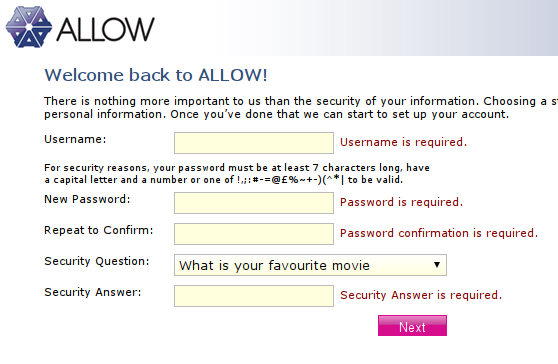
(There are other suitable assertions in various places they even have a set of principles about safeguarding data.) Unfortunately, this promise is rather undermined in several ways after noticing the first couple, I did a little digging to see what else was exploitable. Here s the final part of the joining process, where you choose a username and password combination: The text I ve cropped too eagerly says Choosing a secure password is an essential part of protecting your personal information , or thereabouts. I duly chose a complex password that fitted the requirements, and to my surprise it was rejected. I tried another, and it was rejected; then a third and a fourth. By trial and error I worked out what was going on: 1. The password must contain only the listed special characters, not just include one of them. That s a bit of a problem, because even assuming a basic ASCII set, 15 characters are unavailable to users; 80 are left, so that s about a 15% fall in the available combinations*. Not a good start. More concerning is the presence of a security question field. It s used for resetting the password in the event losing it, but this technique for recovery has long been ridiculed the shared secret is often common knowledge amongst friends, and sometimes (as in this case) the available questions are fairly easy for an attacker to find the answer to in public records or solicit from the victim without arousing much suspicion: 2. The security questions available include First pet s name and worse, First school name . It s pretty pointless enforcing stringent password requirements, and then bypassing them with something so susceptible to a dictionary attack. I was pleased to find that failing to log in to an account more than a few times results in a temporary lockout, which should deter casual brute force attacks. But I wanted to know how that security question would be used, so I forgot my password and followed the links to reset it. Here s the form: Actually the first form, not shown here, initially just asks for a username, giving an error message if it isn t registered, and here s another problem: 3. The password reset process confirms the existence, or non-existence, of a given username half the credentials required to log in to any visitor. I d be prepared to take a bet that most users will choose What was the name of your first school? as a security question. The first pet you have is often at such a young age you can t remember it clearly; the name of the street you grew up on might change a couple of times if you moved house. But first school I attended? I ll never forget that, so it makes most sense to use as a backup password . It s also the best one for an attacker to try and find out from public sources. But that aside, as you can see the password is not generated at random and communicated to the real account holder out-of-band, in the manner of many other sites. Instead: 4. A new password is immediately set to a value already known by the attacker. Once inside, an attacker can also change the security question or answer, or both, so you can t even regain your account by telephoning the company unless you can convince them you re genuine, in which case the security question was a total waste of time anyway. I awarded some marks for notifying the user by email that the password has been changed, but immediately docked them again because bingo! You re now a victim of identity theft! Let s assume you ve been locked out, the security question has been changed and you want your account back. ALLOW don t let you telephone them; you either have to dig around and find an address to send an email, which we all know can be intercepted, or (and you re encouraged to) contact them through a form on the site. You ll probably include some personal details, because you want to convince them of your real identity; indeed, two of the options on the form are I ve got a question and Something doesn t work . I sent my findings through this very form, under the latter heading, and to my surprise: 5. Despite promises of full encryption of all data at all times, full implementation of secure socket layers , the contact form is transmitted to ALLOW in the clear, with no protection whatsoever. So now anyone listening in your connection knows all about you too: your ISP, any of the peers along the route, the deep packet inspection advertisers if your ISP is less than reputable, and the neighbour who connects to your wireless and slips you a fiver every month for the privilege. Nice work, privacy specialists. (For the record: * please feel free to correct my maths. It was never my strongest subject.
Comments
Privacy specialists should hire security specialists is a post from: jwiltshire.org.uk Flattr

Julien Blache: Digi AccelePort driver 1.3-21 available for Squeeze

Long time no see! I ve just packaged Digi s latest dgap beta release, dgap 1.3-21, for Squeeze. The packages are available at the usual address, using this APT source: deb http://debian.technologeek.org squeeze non-free I have made some changes to the packaging as far as udev and firmware loading is concerned, but this is nothing major. Firmware files moved out of /usr, along with udev-related utilities. Should you notice any issue with the packages or the APT repository, please let me know. The previous packages, version 1.3-15, are still available for Lenny, APT source unchanged: deb http://debian.technologeek.org lenny non-free

Lucas Nussbaum: Banshee and Ubuntu

[ If you haven't heard of this debate yet, you probably want to read Vincent Untz's and Mark Shuttleworth's blog posts. ] Last year, I gave a talk at FOSDEM about Debian and Ubuntu (slides of a slightly updated version). One of my points was that Debian has better values, being a volunteer-driven project where decisions are taken in the open. In contrast, Ubuntu is a project managed and controlled by Canonical, and recent history has shown that Canonical had no problem imposing some decisions to the developers community: first with the inclusion of UbuntuOne, then the switch from Google to Yahoo! to Google as the default search engine, both to increase revenue streams. So one should not be surprised by the Banshee story. I find Mark s justification quite difficult to buy, and similar to Apple s model where 30% of the revenues from the App Store go to Apple, and 70% to the seller of the application. For those wondering how much work was done by Canonical directly on the Banshee package: the banshee package in Ubuntu natty is based on the package currently in Debian experimental. The package is mainly maintained in Debian by an Ubuntu developer not paid by Canonical AFAIK, Chow Loong Jin. There are some differences between the Debian package and the Ubuntu package, which are fairly limited (full diff here) and mainly about enabling UbuntuOne and disabling the other music stores. That patch itself apparently was provided by Jo Shields, who doesn t seem to be a canonical employee. (Feel free to correct me) I think that one of the conclusions to draw from this story is that we now have several proofs that Ubuntu isn t a volunteer-driven project, and that volunteer contributors should really decide whether they are OK with working for free for Canonical, or if their free time would be better spent on other projects where they actually have a chance to influence decisions. From the Debian POV, I m still convinced that we should take the feedback that we receive from Ubuntu in consideration to improve our Debian packages (by looking at patches made by Ubuntu, or at bugs reported in Launchpad). But my motivation for contributing to Ubuntu directly has just diminished a bit more (not that it was very high before).

Steve Kemp: I updated my redis-based filesystem

In July last year I made a brief post about a simple filesystem I'd put together which used Redis for the storage. At that time I thought it was a cute hack, and didn't spend too much time with it. But recently I found a use for it so I cleaned it up, synced up the C client for Redis which I used and generally started to care again. If it is useful you can now find it online: The basic idea is the same as it was before, except I did eventually move to an INODE-like system. Each file/directory entry receives a unique identifier (integer) - and then I store the meta-data in a key based off that name. This means for a file I might have keys, and values,like this:
KeyValue
INODE:1:NAMEThe name of the file (e.g. "passwd").
INODE:1:SIZEThe size of the file (e.g. "1661" )
INODE:1:GIDThe group ID of the file's owner (e.g. "0")
INODE:1:UIDThe user ID of the file's owner (e.g. "0")
INODE:1:MODEThe mode of the file (e.g. 0755)
To store these things I use a Redis "SET" which allows me to easily iterate over all the entries in each directory. ObQuote: "They fuck up, they get beat. We fuck up, they give us pensions. " - The Wire

1 March 2011

Bastian Venthur: Summer School: Advanced Scientific Programming in Python

Once again, there will be another round of the Summer School Advanced Scientific Programming in Python . This year in St. Andrews, UK. Quoting from the official announcement:
Scientists spend more and more time writing, maintaining, and debugging software. While techniques for doing this efficiently have evolved, only few scientists actually use them. As a result, instead of doing their research, they spend far too much time writing deficient code and reinventing the wheel. In this course we will present a selection of advanced programming techniques, incorporating theoretical lectures and practical exercises tailored to the needs of a programming scientist. New skills will be tested in a real programming project: we will team up to develop an entertaining scientific computer game. We use the Python programming language for the entire course. Python works as a simple programming language for beginners, but more importantly, it also works great in scientific simulations and data analysis. We show how clean language design, ease of extensibility, and the great wealth of open source libraries for scientific computing and data visualization are driving Python to become a standard tool for the programming scientist. This school is targeted at PhD students and Post-docs from all areas of science. Competence in Python or in another language such as Java, C/C++, MATLAB, or Mathematica is absolutely required. Basic knowledge of Python is assumed. Participants without any prior experience with Python should work through the proposed introductory
materials before the course.
You can apply on-line at http://python.g-node.org Applications must be submitted before May 29, 2011. Notifications of acceptance will be sent by June 19, 2011. No fee is charged but participants should take care of travel, living, and accommodation expenses. Candidates will be selected on the basis of their profile. Places are limited: acceptance rate in past editions was around 30%. Prerequisites: You are supposed to know the basics of Python to participate in the lectures. Please consult the website for a list of introductory material. If your re a scientist and interested in Python, I cannot recommend this summer school highly enough. The Summer School is always fun, the faculty members are very nice and always willing to help and answer questions. The balance between lectures and exercises is in my opinion very good, and you ll learn a lot about Python during the week. The highlight of every Python School is always the Pac Man tournament, where groups of students will implement their own Pac Man agent (in Python) and compete against the other agents in a tournament till the bitter end! The students of the previous editions were usually very happy during and after the School. Speaking of happiness, since no fee is charged for the Summer School, you ll have more money left over to invest into the excellent Scottish pubs!

Kai Wasserb ch: Weather Forecasts In A KDE Environment

As Squeeze was just released, some might be on the lookout for a replacement for LiquidWeather++, a SuperKaramba script. Others might just search for the first time for a way to have a weather forecast displayed on their desktop. With my yaWP maintainer hat on, I'd like to recommend yaWP for the job. Why yaWP? Short answer: because it's the best (SCNR). Longer answer: because yaWP is easy to use, yet highly customizable. yaWP can track the forecasts of several cities for you, you can put yaWP on your desktop or in your control bar. You can limit the amount of days displayed (in the control bar mode). It's localized for many languages (if your language isn't among the already existing ones, please consider translating yaWP). yaWP can work with multiple services, is themeable and can display a satellite image for your area. Now, some of you might still (don't ask me why) prefer a different Plasmoid for displaying the weather forecasts. But even those can benefit from yaWP and use one of its three data engines (AccuWeather, Google Weather Service and Weather Underground (Wunderground)), thanks to KDE's Weather Ions. Ok, and how does it look? Please remember, that yaWP can be themed, so the picture below just shows one option of many. A screenshot of yaWP displaying data
Included from screenshots.debian.org (License: GPL2 or later + OpenSSL exception)

Julien Danjou: My latest contributions to the Emacs' world

I spend too much time writing Emacs Lisp code these days. Unfortunately, the more I do the more I find new useful tools to improve my work-flow and save time for doing more Lisp. D'oh. I did not work on any big thing these last weeks, so I'm thinking it's a good time to talk about the various code and patches I sent to multiple Emacs packages. el-get el-get, a fabulous tool that installs and handles all the external Emacs packages I use. A friendly war started on the development list about autoloads handling. The discussion was overall pointless, since we had a very hard time to communicate our ideas, and we did not understand each others several times. In the end, el-get now supports autoload correctly and do not load automatically all your packages, improving the startup time, and using the Emacs way to do things. Which is always better, obviously. git-commit-mode

I've started to use git-commit-mode some times ago. I usually use git-commit with the -v option to see what I'm committing. I though it would be useful to color the diff with diff-mode, so I wrote a patch just to do that, which was merged today by Florian. magit

Some weeks ago, I decided to give a try to magit, and loved it. I am not always using it, but for basic operations it is very useful. But I really soon found some things I did not like and therefore send patches to enhance it. First, I've added a patch to honor status.showUntrackedFiles which I use in my home directory. In the mean time, I've also added a patch to allow adding an arbitrary file. Yesterday, I sent another pull request, not closed for now, which adds the possibility to visit files in another window from a diff file, and the support for add-change-log-entry directly from the displayed diff. Useful for these old projects still using ChangeLog files but accessible through git (hi Emacs & Gnus!). Gnus

Nothing remarkable, but I write a couple of fixes and enhancements to the Sieve manage mode, to the Gravatar code and cleaned-up some very very old code. Also added the possibility to set list-identifier as a group parameter. Org-mode

I spent most of my time working on my jd/agenda-format branch, which is soon to be merged. I've also just got developer access to the Org-mode patch work and repository, so I'll be able to break things even more! ;-) ERC

I fixed the bug that annoyed me for a long time. Now erc-track does not reset the last channel status on window visibility changes not made by the user. Flattr this

Michal &#268;iha&#345;: phpMyAdmin translation status

Another week is over and it's time to look again at state of translations for phpMyAdmin 3.4. Compared to last week, there one three translations at 100%, so we now have 12 translations at 100%: But there are still lot of translations which would need some love: You can help make translation to your language better!

Filed under: English Phpmyadmin 0 comments Flattr this!

Rapha&#235;l Hertzog: 5 Free Software To Support With Flattr

Flattr FOSS LogoAnother month and thus another issue of Flattr FOSS. Time flies but Flattr s usage seems to remain relatively strong. I was fearing that people get bored after some time but that does not seem be to the case, my Flattr income does not really drop (it doesn t take off either ;-) ). I get a bit less for dpkg than at the start but a bit more for my blog. Enough babbling, let s go straight to the 5 projects to flattr this month:
  1. Linux Mint (Flattr link) is a Linux distribution based on Debian and Ubuntu that targets home desktop users. I have never tried it (I m too much of an hardcore Debianer) but I ve read several good reviews saying that it works well out of the box with good multimedia support. If you try it out, be sure to pick Linux Mint Debian Edition (LMDE). :-)
  2. Network Block Device (NBD) user-space support tools (Flattr link) is the set of tools to setup a block device whose content is really on a remote server. It requires support of NBD in the kernel of course. The user space tools are maintained by Debian developer Wouter Verhelst.
  3. Tahoe LAFS (Flattr link) is a filesystem that implements a cloud storage. The data are distributed across multiple servers in such a way that it can continue to work even if one of the servers fails.
  4. Gajim (Flattr link) is a full featured and easy to use Jabber client. If you don t need support of multiple instant messaging protocols, this Jabber client might be a good fit for you.
  5. Aur lien Gateau (Flattr link) is a KDE developer who takes one day per week off his work to work on KDE. He seeks support from the community to compensate for the loss of revenue. Much like me, he has a support page with a complete history of the amount of donations received. I can only sympathize with people who try to live true to their passion good luck Aur lien!
This article is part of the Flattr FOSS project.

5 comments Liked this article? Click here. My blog is Flattr-enabled.

Russ Allbery: Life update

Wow, it's the last day of February and this is the first journal post I've made for the whole month. Needless to say, this month isn't working out quite the way that I'd intended at the start of year, although this is due to external forces that I hadn't been able to predict. The work project that I've been working on since last September or so (and in some sense since last June) hit the crunch, and I was pulled off of nearly everything else I was doing to work on that full time. I've been working 45-50 hours a week for the whole month, and probably will for a bit of March as well. The good part is that we're hitting our deadlines. We're going to push back by two weeks due to a design problem we missed until integration testing, but it looks like only two weeks. And given that we're picking up the entire complex account management system, teasing it apart from another major system that it's part of, and bringing it up in my group, along with reimplementing some bits around the edges and working on very old and fragile code, I'm very impressed. Unfortunately, that's also eaten my life. I'm trying to keep up with occasional things here and there, but projects like Debian got put almost entirely on hold. When I'm working this much during the week, I basically collapse on the weekends, rather than work on other projects like I normally do. I've been playing video games or just watching TV, and doing a bit of reading, but not working on free software or writing book reviews. I'm going to get a bit of time off at the end of this project, and hopefully will be able to rebalance my life again. This sort of huge push is quite unusual for work, which I like. I don't like working this way, and I've been occasionally rather unhappy with how little life outside of work I feel like I have (I can't imagine what working 60 hours a week regularly would be like). But there's only about a month or a month and a half left and then we'll be done and can go back to a more relaxed pace. I'm going to see if I can get a review finished tonight just because I hate going through a month without posting a book review. I've read five books (and three magazines) that I've not reviewed yet; sadly, the reviewing brain requires quite a bit more energy than the reading brain. Or perhaps not sadly, since it means I'm still reading. Expect posting to be minimal for the next month or so, and then it will hopefully pick up again.

Next.

Previous.