Search Results: "spa"

12 May 2023

Dirk Eddelbuettel: crc32c 0.0.2 on CRAN: Build Fixes

A first follow-up to the initial announcement just days ago of the new crc32c package. The package offers cyclical checksum with parity in hardware-accelerated form on (recent enough) intel cpus as well as on arm64. This follow-up was needed because I missed, when switching to a default static library build, that newest compilers would complain if -fPIC was not set. gcc-12 on my box was happy, gcc-13 on recent Fedora as used at CRAN was not. A second error was assuming that saying SystemRequirements: cmake would suffice. But hold on whippersnapper: macOS always has a surprise for you! As described at the end of the appropriate section in Writing R Extensions, on that OS you have to go the basement, open four cupboards, rearrange three shelves and then you get to use it. And then in doing so (from an added configure script) I failed to realize Windows needed a fallback. Gee. The NEWS entry for this (as well the initial release) follows.

Changes in version 0.0.2 (2023-05-11)
  • Explicitly set cmake property for position-independent code
  • Help macOS find its cmake binary as detailed also in WRE
  • Help Windows with a non-conditional Makevars.win pointing at cmake
  • Add more badges to README.md

Changes in version 0.0.1 (2023-05-07)
  • Initial release version and CRAN upload

If you like this or other open-source work I do, you can now sponsor me at GitHub.

This post by Dirk Eddelbuettel originated on his Thinking inside the box blog. Please report excessive re-aggregation in third-party for-profit settings.

11 May 2023

Shirish Agarwal: India Press freedom, Profiteering, AMD issues in the wild.

India Press Freedom Just about a week back, India again slipped in the Freedom index, this time falling to 161 out of 180 countries. The RW again made lot of noise as they cannot fathom why it has been happening so. A recent news story gives some idea. Every year NCRB (National Crime Records Bureau) puts out its statistics of crimes happening across the country. The report is in public domain. Now according to report shared, around 40k women from Gujarat alone disappeared in the last five years. This is a state where BJP has been ruling for the last 30 odd years. When this report became viral, almost all national newspapers the news was censored/blacked out. For e.g. check out newindianexpress.com, likewise TOI and other newspapers, the news has been 404. The only place that you can get that news is in minority papers like siasat. But the story didn t remain till there. While the NCW (National Commission of Women) pointed out similar stuff happening in J&K, Gujarat Police claimed they got almost 39k women back. Now ideally, it should have been in NCRB data as an addendum as the report can be challenged. But as this news was made viral, nobody knows the truth or false in the above. What BJP has been doing is whenever they get questioned, they try to muddy the waters like that. And most of the time, such news doesn t make to court so the party gets a freebie in a sort as they are not legally challenged. Even if somebody asks why didn t Gujarat Police do it as NCRB report is jointly made with the help of all states, and especially with BJP both in Center and States, they cannot give any excuse. The only excuse you see or hear is whataboutism unfortunately

Profiteering on I.T. Hardware I was chatting with a friend yesterday who is an enthusiast like me but has been more alert about what has been happening in the CPU, motherboard, RAM world. I was simply shocked to hear the prices of motherboards which are three years old, even a middling motherboard. For e.g. the last time I bought a mobo, I spent about 6k but that was for an ATX motherboard. Most ITX motherboards usually sold for around INR 4k/- or even lower. I remember Via especially as their mobos were even cheaper around INR 1.5-2k/-. Even before pandemic, many motherboard manufacturers had closed down shop leaving only a few in the market. As only a few remained, prices started going higher. The pandemic turned it to a seller s market overnight as most people were stuck at home and needed good rigs for either work or leisure or both. The manufacturers of CPU, motherboards, GPU s, Powersupply (SMPS) named their prices and people bought it. So in 2023, high prices remained while warranty periods started coming down. Governments also upped customs and various other duties. So all are in hand in glove in the situation. So as shared before, what I have been offered is a 4 year motherboard with a CPU of that time. I haven t bought it nor do I intend to in short-term future but extremely disappointed with the state of affairs

AMD Issues It s just been couple of hard weeks apparently for AMD. The first has been the TPM (Trusted Platform Module) issue that was shown by couple of security researchers. From what is known, apparently with $200 worth of tools and with sometime you can hack into somebody machine if you have physical access. Ironically, MS made a huge show about TPM and also made it sort of a requirement if a person wanted to have Windows 11. I remember Matthew Garett sharing about TPM and issues with Lenovo laptops. While AMD has acknowledged the issue, its response has been somewhat wishy-washy. But this is not the only issue that has been plaguing AMD. There have been reports of AMD chips literally exploding and again AMD issuing a somewhat wishy-washy response.  Asus though made some changes but is it for Zen4 or only 5 parts, not known. Most people are expecting a recession in I.T. hardware this year as well as next year due to high prices. No idea if things will change, if ever

9 May 2023

Dirk Eddelbuettel: crc32c 0.0.1 on CRAN: New Package

Happy to announce a new package: crc32c. This arose out of a user request to add crc32c (which is related to but differnt from crc32 without the trailing c) to my digest package. Which I did (for now in a branch), using the software-fallback version of crc32c from the reference implementation by Google at their crc32c repo. However, the Google repo also offers hardware-accelerated versions and switches at run-time. So I pondered a little about how to offer the additional performance without placing a dependency burden on all users of digest. Lo and behold, I think I found a solution by reusing what R offers. First off, the crc32c package wraps the Google repo cleanly and directly. We include all the repo code but not the logging or benchmarking code. This keeps external dependencies down to just cmake. Which while still rare in the CRAN world is at least not entirely uncommon. So now each time you build the crc32c R package, the upstream hardware detection is added transparently thanks in part to cmake. We build libcrc32c.a as a static library and include it in the R package and its own shared library. And we added exporting of three key functions, directly at the C level, along with exporting one C level function of package that other packages can call. The distinction matters. The second step of offering a function R can call (also from other packages) is used and documented. By means of an Imports: statement to instantiate the package providing the functionality, the client package obtains access to a compiled functions its R code can then call. A number of other R packages use this. But what is less well known is that we can do the same with C level functions. Again, it takes an imports statement but once that is done we can call C to C . Which is quite nice. I am working currently on the branch in digest which motivated this, and it can import the automagically hardware-accelerated functionality on the suitable hardware. Stay tuned for a change in digest. I also won and lost the CRAN lottery for once: the package made it through the new package checks without any revisions. Only to then immediately fail on the CRAN machines using gcc-13 as a -fPIC was seen as missing when making the shared library. Even though both my CI and the r-universe builds were all green. Ah well. So a 0.0.2 release will be coming in a day or two. If you like this or other open-source work I do, you can now sponsor me at GitHub.

This post by Dirk Eddelbuettel originated on his Thinking inside the box blog. Please report excessive re-aggregation in third-party for-profit settings.

5 May 2023

Shirish Agarwal: CAT-6, AMD 5600G, Dealerships closing down, TRAI-caller and privacy.

CAT-6 patch cord & ONU Few months back I was offered a fibre service. Most of the service offering has been using Chinese infrastructure including the ONU (Optical Network Unit). Wikipedia doesn t have a good page on ONU hence had to rely on third-party sites. FS (a name I don t really know) has some (good basic info. on ONU and how it s part and parcel of the whole infrastructure. I also got an ONT (Optical Network Terminal) but it seems to be very basic and mostly dumb. I used the old CAT-6 cable ( a decade old) to connect them and it worked for couple of months. Had to change it, first went to know if a higher cable solution offered themselves. CAT-7 is there but not backward compatible. CAT-8 is the next higher version but apparently it s expensive and also not easily bought. I did quite a few tests on CAT-6 and the ONU and it conks out at best 1 mbps which is still far better than what I am used to. CAT-8 are either not available or simply too expensive for home applications atm. A good summary of CAT-8 and what they stand for can be found here. The networking part is hopeless as most consumer facing CPU s and motherboards don t even offer 10 mbps, so asking anything more is just overkill without any benefit. Which does bring me to the next question, something that I may do in a few months or a year down the road. Just to clarify they may say it is 100 mbps or even 1 Gbps but that s plain wrong.

AMD APU, Asus Motherboard & Dealerships I had been thinking of an AMD APU, could wait a while but sooner or later would have to get one. I got quoted an AMD Ryzen 3 3200G with an Asus A320 Motherboard for around 14k which kinda looked steep to me. Quite a few hardware dealers whom I had traded, consulted over years simply shut down. While there are new people, it s much more harder now to make relationships (due to deafness) rather than before. The easiest to share which was also online was pcpartpicker.com that had an Indian domain now no longer available. The number of offline brick and mortar PC business has also closed quite a bit. There are a few new ones but it takes time and the big guys have made more of a killing. I was shocked quite a bit. Came home and browsed a bit and was hit by this. Both AMD and Intel PC business has taken a beating. AMD a bit more as Intel still holds part of the business segment as traditionally been theirs. There have been proofs and allegations of bribing in the past (do remember the EU Antitrust case against Intel for monopoly) but Intel s own cutting corners with the Spectre and Meltdown flaws hasn t helped its case, nor the suits themselves. AMD on the other hand under expertise of Lisa Su has simply grown strength by strength. Inflation and Profiteering by other big companies has made the outlook for both AMD and Intel a bit lackluster. AMD is supposed to show Zen5 chips in a few days time and the rumor mill has been ongoing. Correction Not few days but 2025. Personally, I would be happy with maybe a Ryzen 5600G with an Asus motherboard. My main motive whenever I buy an APU is not to hit beyond 65 TDP. It s kinda middle of the road. As far as what I could read this year and next year we could have AM4+ or something like those updates, AM5 APU s, CPU s and boards are slated to be launched in 2025. I did see pcpricetracker and it does give idea of various APU prices although have to say pcpartpicker was much intuitive to work with than the above. I just had my system cleaned couple of months so touchwood I should be able to use it for another couple of years or more before I have to get one of these APU s and do hope they are worth it. My idea is to use that not only for testing various softwares but also delve a bit into VR if that s possible. I did read a bit about deafness and VR as well. A good summary can be found here. I am hopeful that there may be few people in the community who may look and respond to that. It s crucial.

TRAI-caller, Privacy 101& Element. While most of us in Debian and FOSS communities do engage in privacy, lots of times it s frustrating. I m always looking for videos that seek to share that view why Privacy is needed by individuals and why Governments and other parties hate it. There are a couple of basic Youtube Videos that does explain the same quite practically.
Now why am I sharing the above. It isn t that people do not privacy and how we hold it dear. I share it because GOI just today blocked Element. While it may be trivial for us to workaround the issues, it does tell what GOI is doing. And it still acts as if surprised why it s press ranking is going to pits. Even our Women Wrestlers have been protesting for a week to just file an FIR (First Information Report) . And these are women who have got medals for the country. More than half of these organizations, specifically the women wrestling team don t have POSH which is a mandatory body supposed to be in every organization. POSH stands for Prevention of Sexual Harassment at Workplace. The gentleman concerned is a known rowdy/Goon hence it took almost a week of protest to do the needful  I do try not to report because right now every other day we see somewhere or the other the Govt. curtailing our rights and most people are mute  Signing out, till later

4 May 2023

Valhalla's Things: Linen Slippers

Posted on May 4, 2023
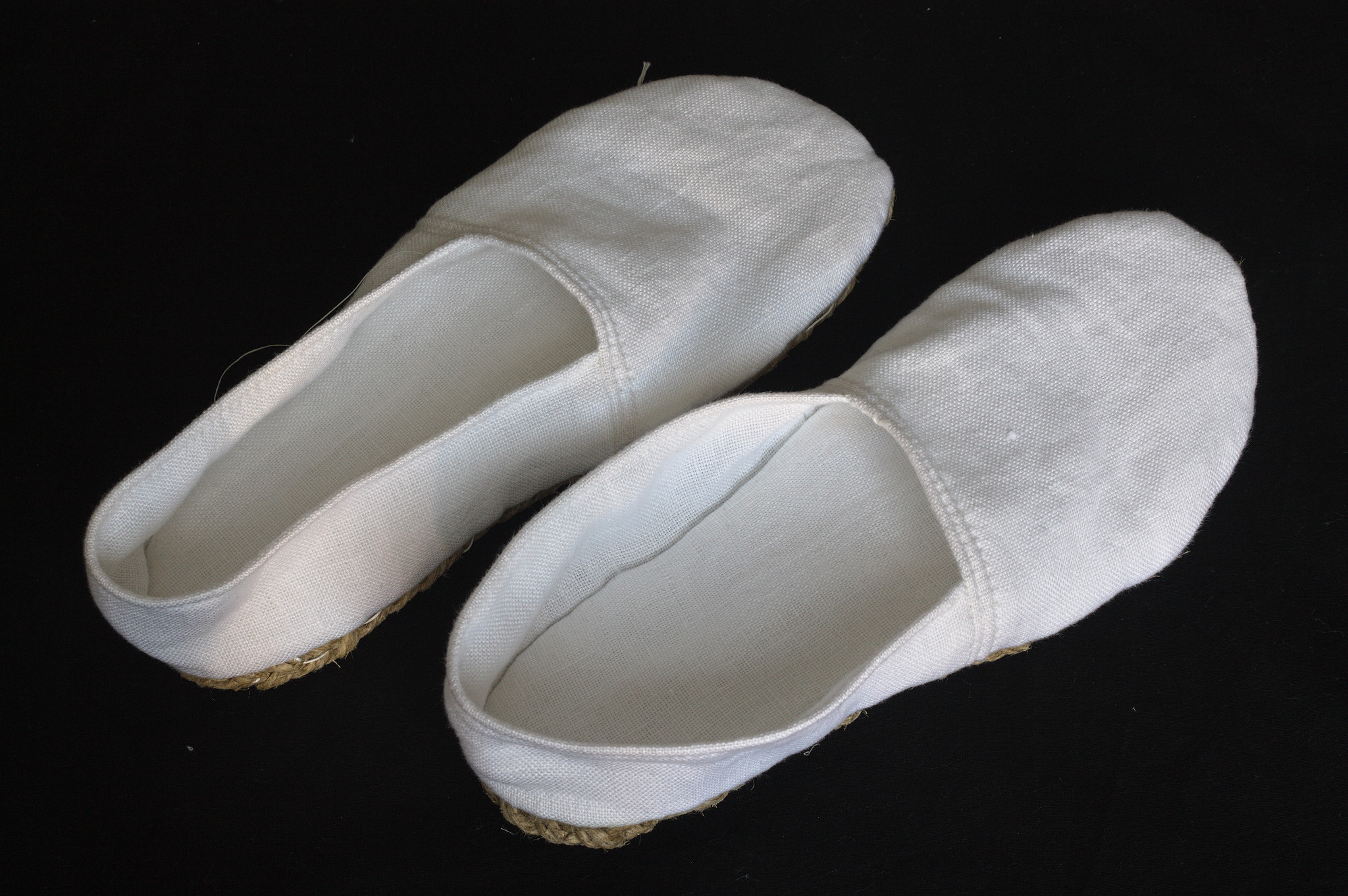
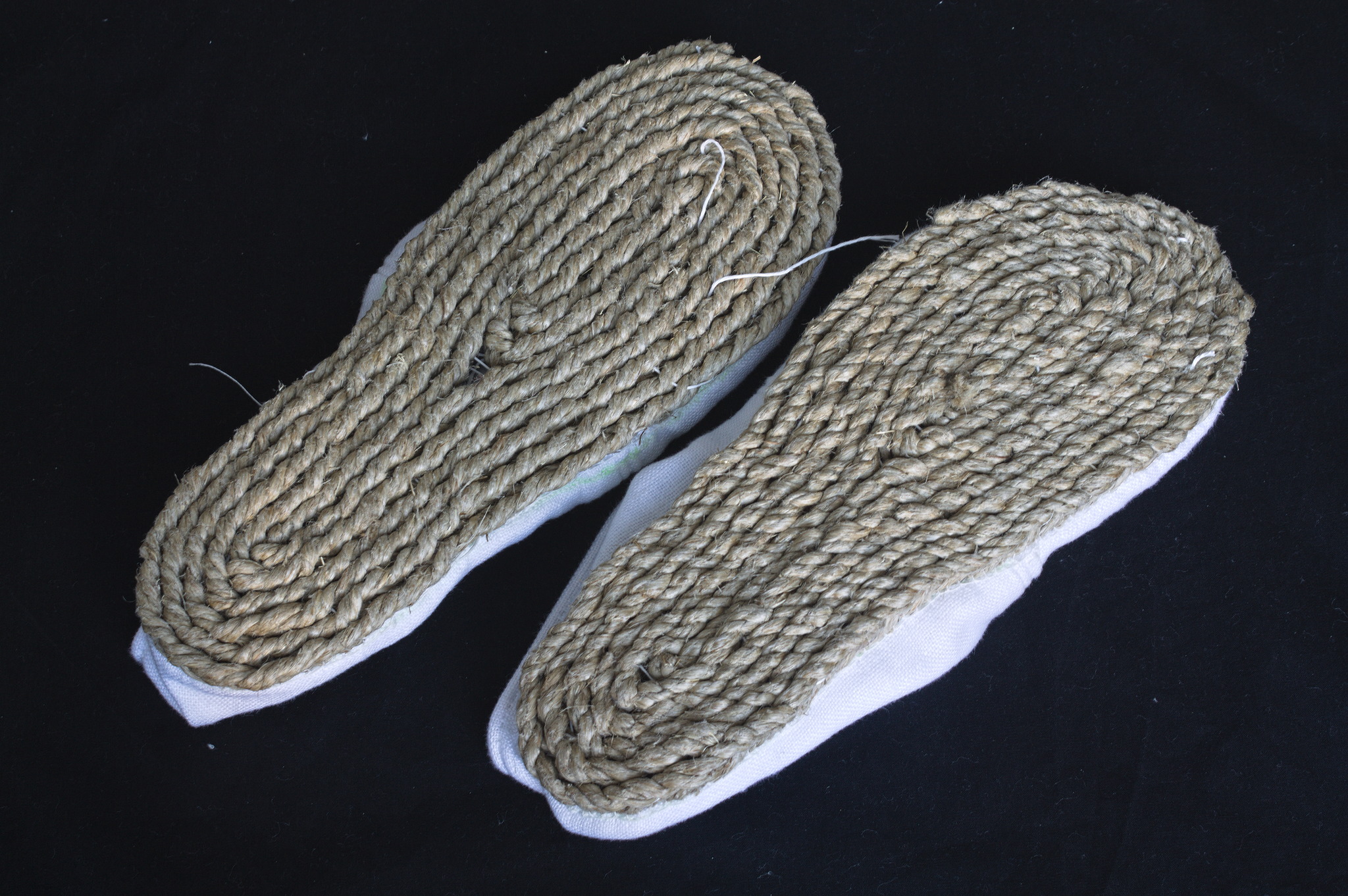
A pair of espadrille-like slippers in white fabric. I hate going out to buy shoes. Even more so I hate buying home shoes, which is what I spend most of my life in, also because no matter what I buy they seem to disintegrate after a season or so. So, obviously, I ve been on a quest to make my own. As a side note, going barefoot (with socks) would only move the wear issue to the socks, so it s not really a solution, and going bare barefoot on ceramic floors is not going to happen, kaythanksbye. For the winter I m trying to make knit and felted slippers; I ve had partial success, and they should be pretty easy to mend (I ve just had to do the first mend, with darning and needle felting, and it seems to have worked nicely). For the summer, I ve been thinking of something sewn, and with the warm season approaching (and the winter slippers needing urgent repairs) I decided it was time to work on them. I already had a shaped (left/right) pattern for a sole from my hiking sandals attempts (a topic for another post), so I started by drafting a front upper, and then I started to have espadrille feeling and decided that a heel guard was needed. As for fabric, looking around in the most easily accessible part of the Stash I ve found the nice heavyweight linen I m using for my Augusta Stays, of which I still have a lot and which looked almost perfect except for one small detail: it s very white. I briefly thought about dyeing, but I wanted to start sewing NOW to test the pattern, so, yeah, maybe it will happen one day, or maybe I ll have patchy dust-grey slippers. If I ll ever have a place where I can do woad dyeing a blue pair will happen, however. Contrary to the typical espadrillas I decided to have a full lining, and some padding between the lining and the sole, using cotton padding leftovers from my ironing board. To add some structure I also decided to add a few rows of cording (and thus make the uppers in two layers of fabric), to help prevent everything from collapsing flat. As for the sole, that s something that is still causing me woes: I do have some rubber sole sheets (see hiking sandals above), but I suspect that they require glueing, which I m not sure would work well with the natural fabric uppers and will probably make repairs harder to do. In the past I tried to make some crocheted rope soles and they were a big failure: they felt really nice on the foot, but they also self-destroyed in a matter of weeks, which is not really the kind of sole I m looking for. the slippers with the braided soles on top. Now I have some ~ 3 mm twine that feels much harsher on the hands while working it (and would probably feel harsher on the feet, but that s what the lining and padding are for), so I hope it may be a bit more resistant, and I tried to make a braided rope sole. Of course, I have published the pattern and instructions for the slippers as well as those for the braided rope sole as #FreeSoftWear. Now what is left is trying everything under daily use, and I hope I will have updates on this at the end of the season, rather than soon :D

2 May 2023

Dirk Eddelbuettel: RQuantLib 0.4.18 on CRAN: Maintenance

A new release 0.4.18 of RQuantLib arrived at CRAN earlier today, and will be uploaded to Debian as well. QuantLib is a very comprehensice free/open-source library for quantitative finance; RQuantLib connects it to the R environment and language. This release of RQuantLib comes about six months after the previous maintenance release. It brings a few small updates triggered by small changes in the QuantLib releases 1.29 and 1.30. It also contains updates reflecting changes in the rgl package kindly contributed by Duncan Murdoch. Last but not least, Jeroen Ooms helped with two pull requests updating builds on, repspectively, macOS and Windows by updating the pre-made libraries of QuantLib.

Changes in RQuantLib version 0.4.18 (2023-05-01)
  • Use of several rgl functions was updated to a new naming scheme in the package (kindly contributed by Duncan Murdoch in #174)
  • A default argument is now given for option surface plots
  • Changed call from SwaptionVolCube1 to SabrSwaptionVolatilityCube (conditional on using QuantLib 1.30 or later)
  • Some other deprecation warnings were tweaked as in QL test file
  • Builds for macOS and Windows were updated with more library build (changes kindly contributed by Jeron Ooms in #176 and #175)
  • Some remaining throw calls were replace by Rcpp::stop

Courtesy of my CRANberries, there is also a diffstat report for the this release. As always, more detailed information is on the RQuantLib page. Questions, comments etc should go to the new rquantlib-devel mailing list. Issue tickets can be filed at the GitHub repo. If you like this or other open-source work I do, you can now sponsor me at GitHub.

This post by Dirk Eddelbuettel originated on his Thinking inside the box blog. Please report excessive re-aggregation in third-party for-profit settings.

1 May 2023

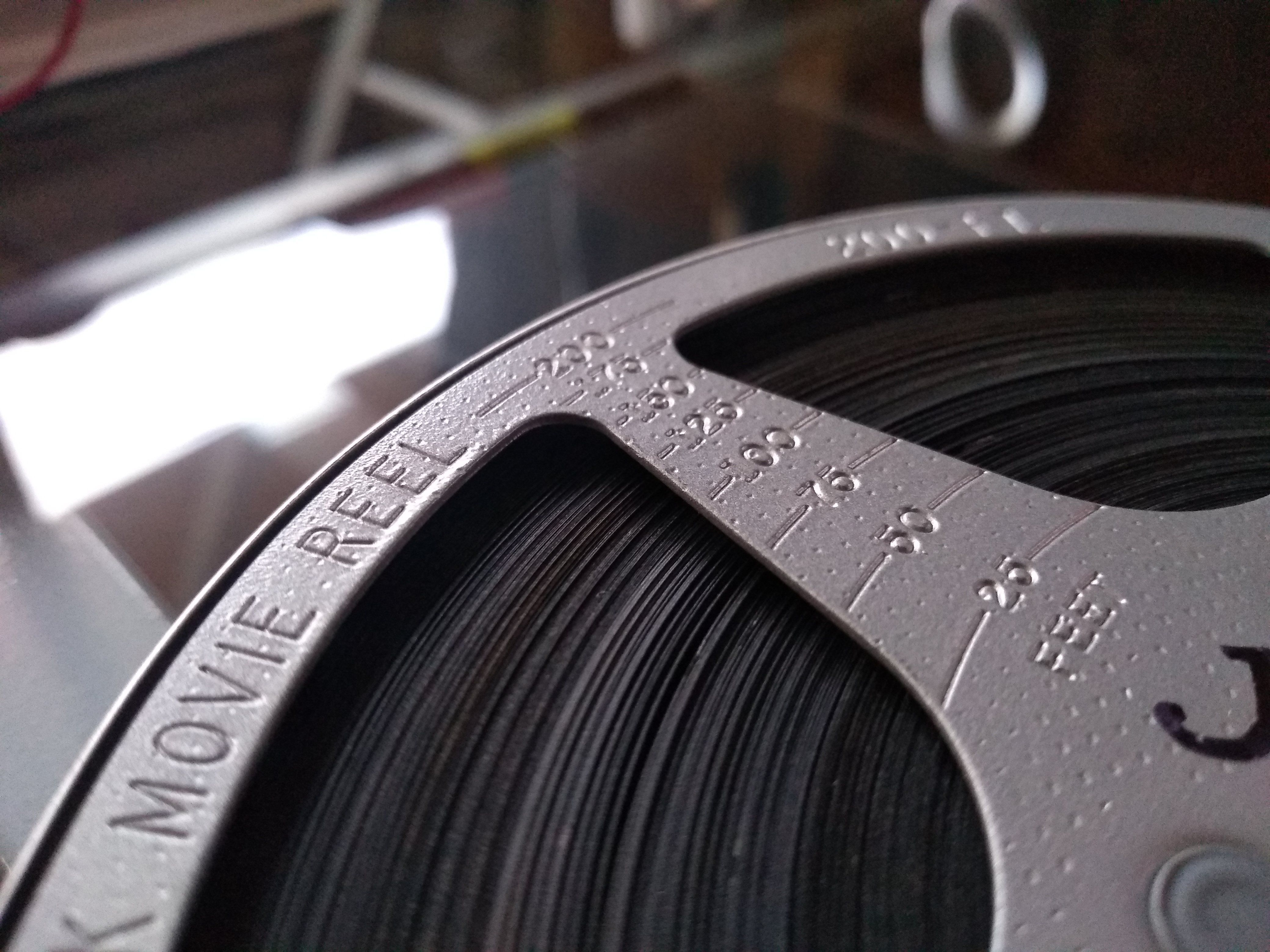
Gunnar Wolf: Scanning heaps of 8mm movies

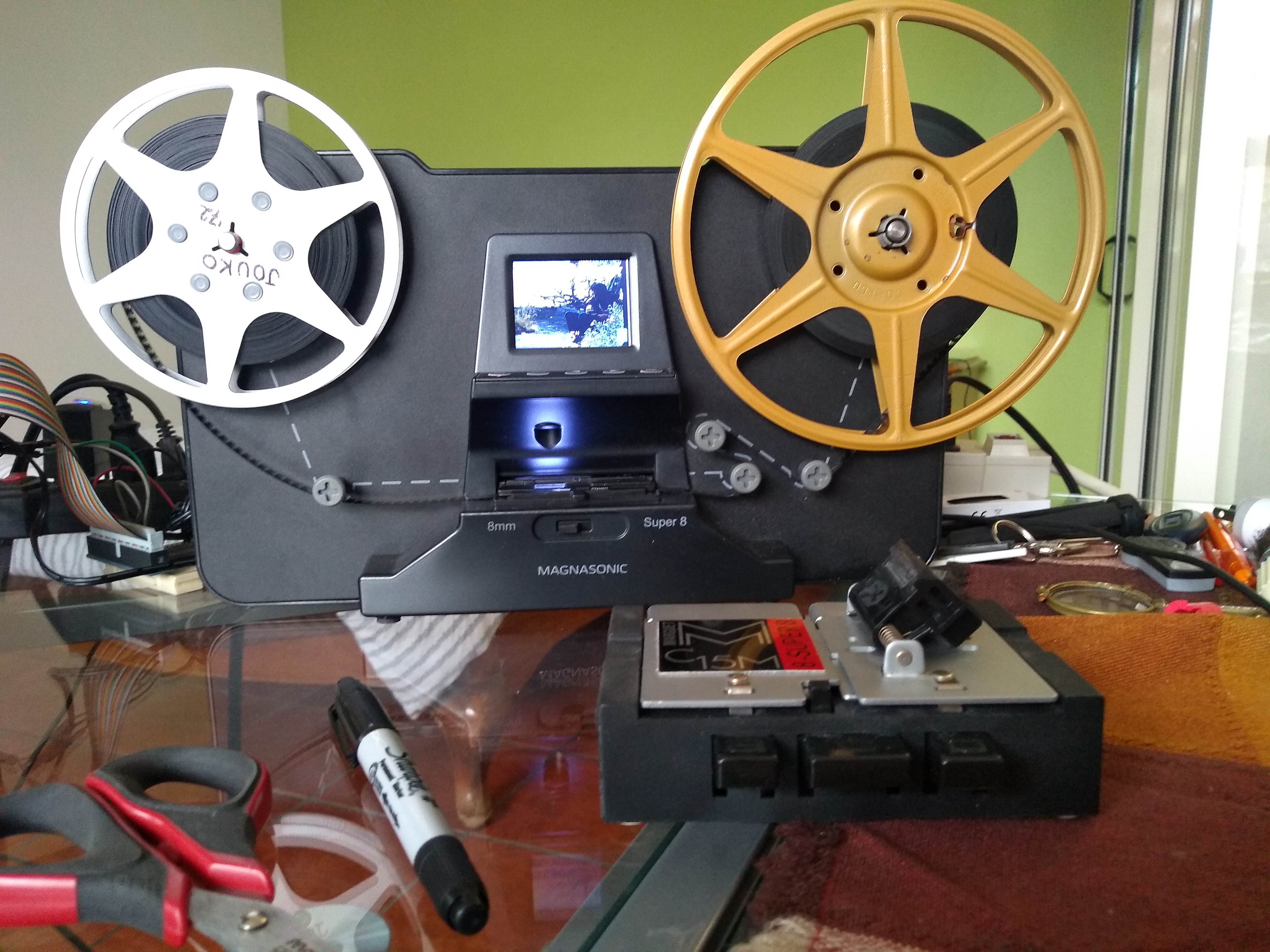
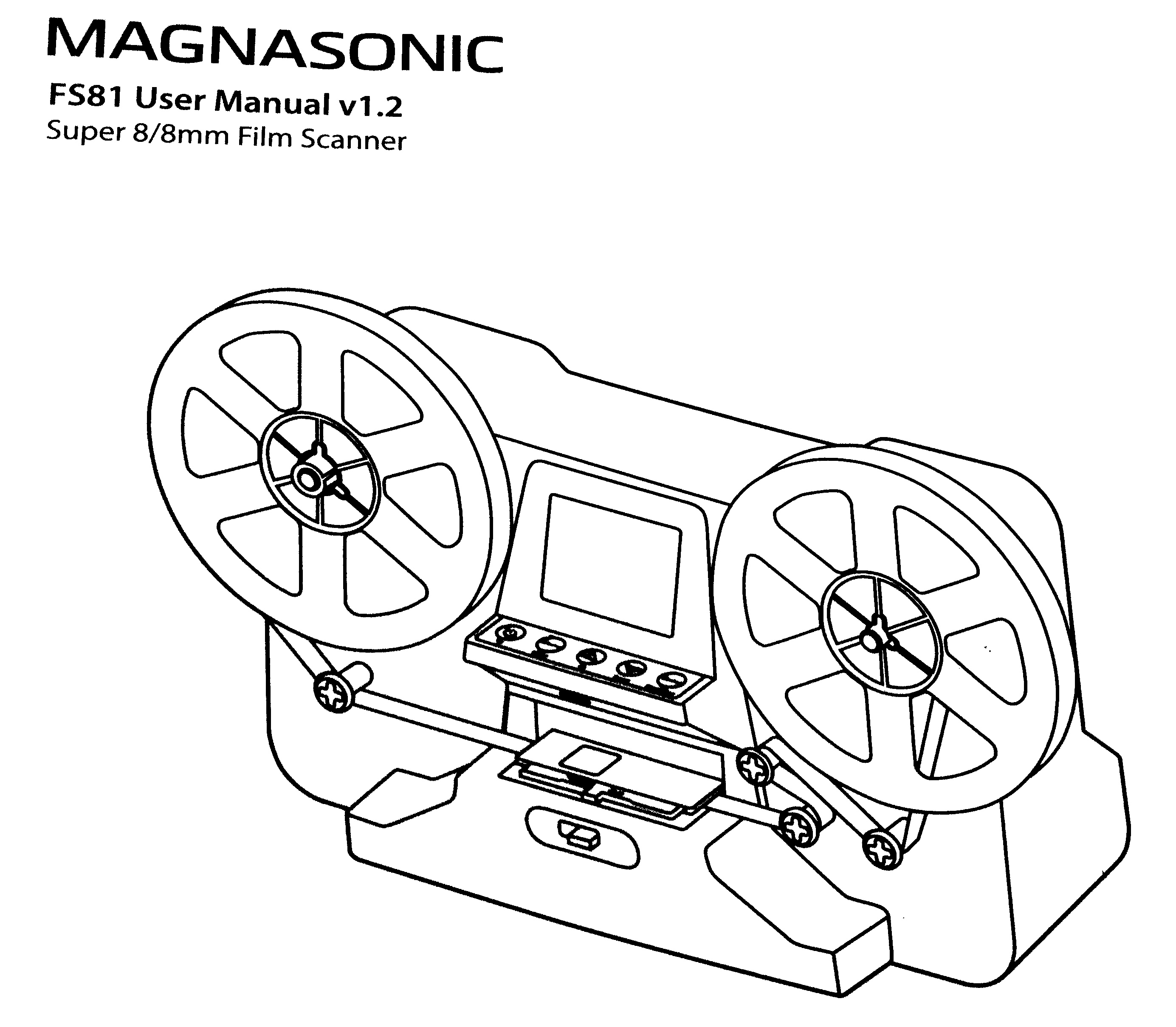
After my father passed away, I brought home most of the personal items he had, both at home and at his office. Among many, many (many, many, many) other things, I brought two of his personal treasures: His photo collection and a box with the 8mm movies he shot approximately between 1956 and 1989, when he was forced into modernity and got a portable videocassette recorder. I have talked with several friends, as I really want to get it all in a digital format, and while I ve been making slow but steady advances scanning the photo reels, I was particularly dismayed (even though it was most expected most personal electronic devices aren t meant to last over 50 years) to find out the 8mm projector was no longer in working conditions; the lamp and the fans work, but the spindles won t spin. Of course, it is quite likely it is easy to fix, but it is beyond my tinkering abilities and finding photographic equipment repair shops is no longer easy. Anyway, even if I got it fixed, filming a movie from a screen, even with a decent camera, is a lousy way to get it digitized. But almost by mere chance, I got in contact with my cousin Daniel, ho came to Mexico to visit his parents, and had precisely brought with him a 8mm/Super8 movie scanner! It is a much simpler piece of equipment than I had expected, and while it does present some minor glitches (i.e. the vertical framing slightly loses alignment over the course of a medium-length film scanning session, and no adjustment is possible while the scan is ongoing), this is something that can be decently fixed in post-processing, and a scanning session can be split with no ill effects. Anyway, it is quite uncommon a mid-length (5min) film can be done without interrupting i.e. to join a splice, mostly given my father didn t just film, but also edited a lot (this is, it s not just family pictures, but all different kinds of fiction and documentary work he did). So, Daniel lent me a great, brand new, entry-level film scanner; I rushed to scan as many movies as possible before his return to the USA this week, but he insisted he bought it to help preserve our family s memory, and given we are still several cousins living in Mexico, I could keep hold of it so any other of the cousins will find it more easily. Of course, I am thankful and delighted! So, this equipment is a Magnasonic FS81. It is entry-level, as it lacks some adjustment abilities a professional one would surely have, and I m sure a better scanner will make the job faster but it s infinitely superior to not having it! The scanner processes roughly two frames per second (while the nominal 8mm/Super8 speed is 24 frames per second), so a 3 minute film reel takes a bit over 35 minutes And a long, ~20 minute film reel takes Close to 4hr, if nothing gets in your way :- And yes, with longer reels, the probability of a splice breaking are way higher than with a short one not only because there is simply a longer film to process, but also because, both at the unwinding and at the receiving reels, mechanics play their roles. The films don t advance smoothly, but jump to position each frame in the scanner s screen, so every bit of film gets its fair share of gentle tugs. My professional consultant on how and what to do is my good friend Chema Serralde, who has stopped me from doing several things I would regret later otherwise (such as joining spliced tapes with acidic chemical adhesives such as Kola Loka, a.k.a. Krazy Glue even if it s a bit trickier to do it, he insisted me on best using simple transparent tape if I m not buying fancy things such as film-adhesive). Chema also explained me the importance of the loopers (las Lupes in his technical Spanish translation), which I feared increased the likelihood of breaking a bit of old glue due to the angle in which the film gets pulled but if skipped, result in films with too much jumping. Not all of the movies I have are for public sharing Some of them are just family movies, with high personal value, but probably of very little interest to others. But some are! I have been uploading some of the movies, after minor post-processing, to the Internet Archive. Among them: Anyway, I have a long way forward for scanning. I have 20 3min reels, 19 5min reels, and 8 20min reels. I want to check the scanning quality, but I think my 20min reels are mostly processed (we paid for scanning them some years ago). I mostly finished the 3min reels, but might have to go over some of them again due to the learning process. And Well, I m having quite a bit of fun in the process!

Paul Wise: FLOSS Activities April 2023

Focus This month I didn't have any particular focus. I just worked on issues in my info bubble.

Changes

Issues
  • Security issue in secret manager (sent privately)
  • Broken symlinks in opencpn
  • Test problem in SPTAG
  • Debian migration unblock needed for evolution

Review

Administration
  • Debian IRC: fixed the #debian-mips channel topic
  • Debian wiki: unblock IP addresses, approve accounts
  • Debian QA services: deploy changes, investigate SourceForge uscan issue

Communication
  • Respond to queries from Debian users and contributors on the mailing lists and IRC

Sponsors The SPTAG work was sponsored. All other work was done on a volunteer basis.

29 April 2023

Russell Coker: Write a blog post in the style of Russell Coker

Feeling a bit bored I asked ChatGPT Write a blog post in the style of Russell Coker and the result is in the section below. I don t know if ChatGPT knows that the person asking the question is the same as the person being asked about. If a human had created that I d be certain that great computer scientist and writer was an attempt at flattery, for a machine I m not sure. I have not written a single book, but I expect that in some alternate universe some version of me has written several. I don t know if humans would describe my writing as being known for clarity, precision, and depth . I would not be surprised if no-one else wrote about it so I guess I m forced to read what he wrote would be a more common response. The actual article part doesn t seem to be in my style at all. Firstly it s very short at only 312 words, while I have written some short posts most of them are much longer. To find this out I did some MySQL queries to get the lengths of posts (I used this blog post as inspiration [1]). Note that multiple sequential spaces counts as multiple words.
# get post ID and word count
SELECT id, LENGTH(post_content) - LENGTH(REPLACE(REPLACE(REPLACE(REPLACE(post_content, "\r", ""), "\n", ""), "\t", ""), " ", "")) + 1 AS wordcount FROM wp_posts where post_status = 'publish' and post_type='post';
# get average word count
SELECT avg(LENGTH(post_content) - LENGTH(REPLACE(REPLACE(REPLACE(REPLACE(post_content, "\r", ""), "\n", ""), "\t", ""), " ", "")) + 1) FROM wp_posts where post_status = 'publish' and post_type='post';
# get the first posts by length
SELECT id, LENGTH(post_content) - LENGTH(REPLACE(REPLACE(REPLACE(REPLACE(post_content, "\r", ""), "\n", ""), "\t", ""), " ", "")) + 1 AS wordcount, post_content FROM wp_posts where post_status = 'publish' and post_type='post' ORDER BY wordcount limit 10;
# get a count of the posts less than 312 words
SELECT count(*) from wp_posts where (LENGTH(post_content) - LENGTH(REPLACE(REPLACE(REPLACE(REPLACE(post_content, "\r", ""), "\n", ""), "\t", ""), " ", "")) + 1) < 312 and post_status = 'publish' and post_type='post';
# get a count of all posts
select count(*) from wp_posts where post_status = 'publish' and post_type='post';
It turns out that there are 333/1521 posts that are less than 312 words and the average length is 665 words. Of the shortest posts a large portion were written before Twitter became popular and had the sort of unimportant content that Twitter is good for. It seems ironic that ChatGPT says that I'm known for "depth" and then writes a short post allegedly in my style. As for the actual content of the "post", it's not something that I greatly disagree with but it's definitely not something I'd write. If some manager or marketing person wrote something like this and asked my opinion I'd probably suppress a sigh and say it's OK for it's target market. I think that free software is better in many ways and for many reasons and that separately from the issue of merit free software is important because of the ways that it is used. We could debate various issues related to the quality of free software vs proprietary software but even people who don't believe that free software is of high quality have to admit that software that runs most mobile phones and most web servers is important. As much as I dislike Windows most desktop PCs and laptops run it so I can't claim it to be unimportant. So my first disagreement with the content is the issue of importance vs quality. One thing that ChatGPT is known for is weak arguments that appear convincing. "This diversity often leads to better software, as bugs are found and fixed faster, and new features are added more quickly" could be opposed by "the payment for proprietary software often leads to better software, as bugs are found and fixed faster, and new features are added more quickly". I think that any case where "feature of option A gives this list of good results" can be rewritten as "feature of the opposite of option A gives the same list of good results" and be equally convincing is a poor argument. Also any argument that seems to rest on "free software is all written by hobbyists" is ignoring the demands of users who need things done on a non-hobby timeframe, the many profitable companies that develop and support free software, and the employment status of a large portion of my Facebook friends (many of whom are paid for ~2000 hours a year of free software development and many more of whom have paid free software development as part of their work supporting the use of free software). Really the entire blog post it wrote seems to me like something a human might write if their boss assigned them to write about the benefits of free software, and that they would then write a new article saying the exact opposite if their boss asked them to. Finally I prefer the term "free software" to "open source software". The difference doesn't seem important to some people, but any being that doesn't know the difference won't do well at impersonating me. ChatGPT Result Hello everyone, I'm ChatGPT, and today I'm going to try my best to write a blog post in the style of the great computer scientist and writer, Russell Coker. Russell Coker is a renowned software engineer and writer, who is best known for his contributions to the Linux community, especially the Debian project. He has authored several books and articles on topics ranging from security to software engineering, and his writing style is known for its clarity, precision, and depth. So, without further ado, let's dive into the topic of this blog post, which is the importance of open-source software. Open-source software is software whose source code is available for anyone to inspect, modify, and distribute. This means that anyone can use, study, and improve the software, without any restrictions or fees. Open-source software has been around for a long time, but it has become more prevalent and important in recent years, thanks to the rise of the internet and the digital economy. Open-source software has several benefits, both for individuals and for society as a whole. One of the most significant benefits is that it fosters innovation and collaboration. When software is open-source, it means that anyone can contribute to it, which leads to a diverse range of perspectives and ideas. This diversity often leads to better software, as bugs are found and fixed faster, and new features are added more quickly. Another benefit of open-source software is that it is often more secure than proprietary software. Because the source code is available for anyone to inspect, vulnerabilities and security flaws can be found and fixed faster. This means that open-source software is often more reliable and trustworthy than proprietary software, which may have hidden backdoors or vulnerabilities that can be exploited by attackers. Open-source software is also often more cost-effective than proprietary software. Because it is free to use and distribute, organizations can save money on licensing fees and other costs associated with proprietary software. This can be particularly important for non-profit organizations or small businesses that may not have the resources to invest in expensive software licenses. In conclusion, open-source software is an important part of the digital landscape, and its benefits are numerous. Whether you are a software developer, a business owner, or an individual user, open-source software has something to offer. So, the next time you are looking for software to use, consider open-source options, and help support the collaborative and innovative spirit of the open-source community.

Enrico Zini: Gtk4 model-backed radio button in Python

Gtk4 has interesting ways of splitting models and views. One that I didn't find very well documented, especially for Python bindings, is a set of radio buttons backed by a common model. The idea is to define an action that takes a string as a state. Each radio button is assigned a string matching one of the possible states, and when the state of the backend action is changed, the radio buttons are automatically updated. All the examples below use a string for a value type, but anything can be used that fits into a GLib.Variant. The model This defines the action. Note that enables all the usual declarative ways of a status change:
mode = Gio.SimpleAction.new_stateful(
        name="mode-selection",
        parameter_type=GLib.VariantType("s"),
        state=GLib.Variant.new_string(""))
gtk_app.add_action(self.mode)
The view
def add_radio(model: Gio.SimpleAction, id: str, label: str):
    button = Gtk.CheckButton(label=label)
    # Tell this button to activate when the model has the given value
    button.set_action_target_value(GLib.Variant.new_string(id))
    # Build the name under which the action is registesred, plus the state
    # value controlled by this button: clicking the button will set this state
    detailed_name = Gio.Action.print_detailed_name(
            "app." + model.get_name(),
            GLib.Variant.new_string(id))
    button.set_detailed_action_name(detailed_name)
    # If the model has no current value set, this sets the first radio button
    # as selected
    if not model.get_state().get_string():
        model.set_state(GLib.Variant.new_string(id))
Accessing the model To read the currently selected value:
current = model.get_state().get_string()
To set the currently selected value:
model.set_state(GLib.Variant.new_string(id))

Simon Josefsson: How To Trust A Machine

Let s reflect on some of my recent work that started with understanding Trisquel GNU/Linux, improving transparency into apt-archives, working on reproducible builds of Trisquel, strengthening verification of apt-archives with Sigstore, and finally thinking about security device threat models. A theme in all this is improving methods to have trust in machines, or generally any external entity. While I believe that everything starts by trusting something, usually something familiar and well-known, we need to deal with misuse of that trust that leads to failure to deliver what is desired and expected from the trusted entity. How can an entity behave to invite trust? Let s argue for some properties that can be quantitatively measured, with a focus on computer software and hardware: Essentially, this boils down to: Trust, Verify and Hold Accountable. To put this dogma in perspective, it helps to understand that this approach may be harmful to human relationships (which could explain the social awkwardness of hackers), but it remains useful as a method to improve the design of computer systems, and a useful method to evaluate safety of computer systems. When a system fails some of the criteria above, we know we have more work to do to improve it. How far have we come on this journey? Through earlier efforts, we are in a fairly good situation. Richard Stallman through GNU/FSF made us aware of the importance of free software, the Reproducible/Bootstrappable build projects made us aware of the importance of verifiability, and Certificate Transparency highlighted the need for accountable signature logs leading to efforts like Sigstore for software. None of these efforts would have seen the light of day unless people wrote free software and packaged them into distributions that we can use, and built hardware that we can run it on. While there certainly exists more work to be done on the software side, with the recent amazing full-source build of Guix based on a 357-byte hand-written seed, I believe that we are closing that loop on the software engineering side. So what remains? Some inspiration for further work: Onwards and upwards, happy hacking! Update 2023-05-03: Added the Liberating property regarding free software, instead of having it be part of the Verifiability and Transparency .

28 April 2023

Enrico Zini: Handling keyboard-like devices

CNC control panel and Bluetooth pedal page turner I acquired some unusual input devices to experiment with, like a CNC control panel and a bluetooth pedal page turner. These identify and behave like a keyboard, sending nice and simple keystrokes, and can be accessed with no drivers or other special software. However, their keystrokes appear together with keystrokes from normal keyboards, which is the expected default when plugging in a keyboard, but not what I want in this case. I'd also like them to be readable via evdev and accessible by my own user. Here's the udev rule I cooked up to handle this use case:
# Handle the CNC control panel
SUBSYSTEM=="input", ENV ID_VENDOR =="04d9", ENV ID_MODEL =="1203", \
   OWNER="enrico", ENV ID_INPUT =""
# Handle the Bluetooth page turner
SUBSYSTEM=="input", ENV ID_BUS =="bluetooth", ENV LIBINPUT_DEVICE_GROUP =="*/ mac ", ENV ID_INPUT_KEYBOARD ="1" \
   OWNER="enrico", ENV ID_INPUT ="", SYMLINK+="input/by-id/bluetooth- mac -kbd"
SUBSYSTEM=="input", ENV ID_BUS =="bluetooth", ENV LIBINPUT_DEVICE_GROUP =="*/ mac ", ENV ID_INPUT_TABLET ="1" \
   OWNER="enrico", ENV ID_INPUT ="", SYMLINK+="input/by-id/bluetooth- mac -tablet"
The bluetooth device didn't have standard rules to create /dev/input/by-id/ symlinks so I added them. In my own code, I watch /dev/input/by-id with inotify to handle when devices appear or disappear. I used udevadm info /dev/input/event to see what I could use to identify the device. The Static device configuration via udev page of libinput's documentation has documentation on the various elements specific to the input subsystem Grepping rule files in /usr/lib/udev/rules.d was useful to see syntax examples. udevadm test /dev/input/event was invaluable for syntax checking and testing my rule file while working on it. Finally, this is an extract of a quick prototype Python code to read keys from the CNC control panel:
import libevdev
KEY_MAP =  
    libevdev.EV_KEY.KEY_GRAVE: "EMERGENCY",
    # InputEvent(EV_KEY, KEY_LEFTALT, 1)
    libevdev.EV_KEY.KEY_R: "CYCLE START",
    libevdev.EV_KEY.KEY_F5: "SPINDLE ON/OFF",
    # InputEvent(EV_KEY, KEY_RIGHTCTRL, 1)
    libevdev.EV_KEY.KEY_W: "REDO",
    # InputEvent(EV_KEY, KEY_LEFTALT, 1)
    libevdev.EV_KEY.KEY_N: "SINGLE STEP",
    # InputEvent(EV_KEY, KEY_LEFTCTRL, 1)
    libevdev.EV_KEY.KEY_O: "ORIGIN POINT",
    libevdev.EV_KEY.KEY_ESC: "STOP",
    libevdev.EV_KEY.KEY_KPPLUS: "SPEED UP",
    libevdev.EV_KEY.KEY_KPMINUS: "SLOW DOWN",
    libevdev.EV_KEY.KEY_F11: "F+",
    libevdev.EV_KEY.KEY_F10: "F-",
    libevdev.EV_KEY.KEY_RIGHTBRACE: "J+",
    libevdev.EV_KEY.KEY_LEFTBRACE: "J-",
    libevdev.EV_KEY.KEY_UP: "+Y",
    libevdev.EV_KEY.KEY_DOWN: "-Y",
    libevdev.EV_KEY.KEY_LEFT: "-X",
    libevdev.EV_KEY.KEY_RIGHT: "+X",
    libevdev.EV_KEY.KEY_KP7: "+A",
    libevdev.EV_KEY.KEY_Q: "-A",
    libevdev.EV_KEY.KEY_PAGEDOWN: "-Z",
    libevdev.EV_KEY.KEY_PAGEUP: "+Z",
 
class KeyReader:
    def __init__(self, path: str):
        self.path = path
        self.fd: IO[bytes]   None = None
        self.device: libevdev.Device   None = None
    def __enter__(self):
        self.fd = open(self.path, "rb")
        self.device = libevdev.Device(self.fd)
        return self
    def __exit__(self, exc_type, exc, tb):
        self.device = None
        self.fd.close()
        self.fd = None
    def events(self) -> Iterator[dict[str, Any]]:
        for e in self.device.events():
            if e.type == libevdev.EV_KEY:
                if (val := KEY_MAP.get(e.code)):
                    yield  
                        "name": val,
                        "value": e.value,
                        "sec": e.sec,
                        "usec": e.usec,
                     
Edited: added rules to handle the Bluetooth page turner

Shirish Agarwal: John Grisham s books, Evolution removed from textbooks

Gray Mountain John Grisham I have been perusing John Grisham s books, some read and some re-read again. Almost all of the books that Mr. Grisham wrote are relevant even today. The Gray Mountain talks about how mountain top removal was done in Applachia, the U.S. (South). In fact NASA made a summary which either was borrowed from this book or the author borrowed from NASA, either could be true although seems it might be the former. And this is when GOI just made a new Forest Conservation Bill 2023 which does the opposite. There are many examples of the same, the latest from my own city as an e.g. Vetal Tekdi is and was a haven for people animals, birds all kinds of ecosystem and is a vital lung of the city, one of the few remaining green spaces in the city but BJP wants to commercialize it as it has been doing for everything, I haven t been to the Himalayas since 4-5 years back as I hear the rape of the land daily. Even after Joshimath tragedy, if people are not opening the eyes what can I do  The more I say, the more depressed I will become so will leave it for now. In many ways the destruction seems similar to the destruction that happened in Brazil under Jair Bolsonaro. So as can be seen from what I have shared this book was mostly about environment and punitive damages and also how punitive damages have been ceiling in America (South). This was done via lobbying by the coal groups and apparently destroyed people s lives, communities, even whole villages. It also shared how most people called black lung and how those claims had been denied by Coal Companies all the time. And there are hardly any unions. While the book itself is a fiction piece, there is a large amount of truth in it. And that is one of the reasons people write a fiction book. You could write about reality using fictional names and nobody can sue you while you set the reality as it is. In many ways, it is a tell-all.

The Testament John Grisham One of the things I have loved about John Grisham is he understands human condition. In this book it starts with an eccentric billionaire who makes a will which leaves all his property to an illegitimate child who coincidentally also lives in Brazil, she is a missionary. The whole book is about human failings as well as about finding the heir. I am not going to give much detail as the book itself is fun.

The Appeal John Grisham In this, we are introduced to a company that does a chemical spill for decades and how that leads to lobbying and funding Judicial elections. It does go into quite a bit of length how private money coming from Big business does all kind of shady things to get their person elected to the Supreme Court. Sadly, this seems to happen all the time, for e.g. two weeks ago. This piece from the Atlantic also says the same. Again, won t tell as there is a bit of irony at the end of the book.

The Rainmaker John Grisham This in short is about how Insurance Companies stiff people. It s a wonderful story that has all people in grey including our hero. An engaging book that sorta tells how the Insurance Industry plays the game. In India, the companies are safe as they ask for continuance for years together and their object is to delay the hearings till the grandchildren are not alive unlike in the U.S. or UK. It also does tell how more lawyers are there then required. Both of which are the same in my country.

The Litigators John Grisham This one is about Product Liability, both medicines as well as toys for young kids. What I do find funny a bit is how the law in States allows people to file cases but doesn t protect people while in EU they try their best that if there is any controversy behind any medicine or product, they will simply ban it. Huge difference between the two cultures.

Evolution no longer part of Indian Education A few days ago, NCERT (one of the major bodies) that looks into Indian Education due to BJP influence has removed Darwin s Theory of Evolution. You can t even debate because the people do not understand adaptability. So the only conclusion is that Man suddenly appeared out of nowhere. If that is so, then we are the true aliens. They discard the notion that we and Chimpanzees are similar. Then they also have to discard this finding that genetically we are 96% similar.

27 April 2023

Jonathan McDowell: Repurposing my C.H.I.P.

Way back at DebConf16 Gunnar managed to arrange for a number of Next Thing Co. C.H.I.P. boards to be distributed to those who were interested. I was lucky enough to be amongst those who received one, but I have to confess after some initial experimentation it ended up sitting in its box unused. The reasons for that were varied; partly about not being quite sure what best to do with it, partly due to a number of limitations it had, partly because NTC sadly went insolvent and there was less momentum around the hardware. I ve always meant to go back to it, poking it every now and then but never completing a project. I m finally almost there, and I figure I should write some of it up. TL;DR: My C.H.I.P. is currently running a mainline Linux 6.3 kernel with only a few DTS patches, an upstream u-boot v2022.1 with a couple of minor patches and an unmodified Debian bullseye armhf userspace.

Storage The main issue with the C.H.I.P. is that it uses MLC NAND, in particular mine has an 8MB H27QCG8T2E5R. That ended up unsupported in Linux, with the UBIFS folk disallowing operation on MLC devices. There s been subsequent work to enable an SLC emulation mode which makes the device more reliable at the cost of losing capacity by pairing up writes/reads in cells (AFAICT). Some of this hit for the H27UCG8T2ETR in 5.16 kernels, but I definitely did some experimentation with 5.17 without having much success. I should maybe go back and try again, but I ended up going a different route. It turned out that BytePorter had documented how to add a microSD slot to the NTC C.H.I.P., using just a microSD to full SD card adapter. Every microSD card I buy seems to come with one of these, so I had plenty lying around to test with. I started with ensuring the kernel could see it ok (by modifying the device tree), but once that was all confirmed I went further and built a more modern u-boot that talked to the SD card, and defaulted to booting off it. That meant no more relying on the internal NAND at all! I do see some flakiness with the SD card, which is possibly down to the dodgy way it s hooked up (I should probably do a basic PCB layout with JLCPCB instead). That s mostly been mitigated by forcing it into 1-bit mode instead of 4-bit mode (I tried lowering the frequency too, but that didn t make a difference). The problem manifests as:
sunxi-mmc 1c11000.mmc: data error, sending stop command
and then all storage access freezing (existing logins still work, if the program you re trying to run is in cache). I can t find a conclusive software solution to this; I m pretty sure it s the hardware, but I don t understand why the recovery doesn t generally work.

Random power offs After I had storage working I d see random hangs or power offs. It wasn t quite clear what was going on. So I started trying to work out how to find out the CPU temperature, in case it was overheating. It turns out the temperature sensor on the R8 is part of the touchscreen driver, and I d taken my usual approach of turning off all the drivers I didn t think I d need. Enabling it (CONFIG_TOUCHSCREEN_SUN4I) gave temperature readings and seemed to help somewhat with stability, though not completely. Next I ended up looking at the AXP209 PMIC. There were various scripts still installed (I d started out with the NTC Debian install and slowly upgraded it to bullseye while stripping away the obvious pieces I didn t need) and a start-up script called enable-no-limit. This turned out to not be running (some sort of expectation of i2c-dev being loaded and another failing check), but looking at the script and the data sheet revealed the issue. The AXP209 can cope with 3 power sources; an external DC source, a Li-battery, and finally a USB port. I was powering my board via the USB port, using a charger rated for 2A. It turns out that the AXP209 defaults to limiting USB current to 900mA, and that with wifi active and the CPU busy the C.H.I.P. can rise above that. At which point the AXP shuts everything down. Armed with that info I was able to understand what the power scripts were doing and which bit I needed - i2cset -f -y 0 0x34 0x30 0x03 to set no limit and disable the auto-power off. Additionally I also discovered that the AXP209 had a built in temperature sensor as well, so I added support for that via iio-hwmon.

WiFi WiFi on the C.H.I.P. is provided by an RTL8723BS SDIO attached device. It s terrible (and not just here, I had an x86 based device with one where it also sucked). Thankfully there s a driver in staging in the kernel these days, but I ve still found it can fall out with my house setup, end up connecting to a further away AP which then results in lots of retries, dropped frames and CPU consumption. Nailing it to the AP on the other side of the wall from where it is helps. I haven t done any serious testing with the Bluetooth other than checking it s detected and can scan ok.

Patches I patched u-boot v2022.01 (which shows you how long ago I was trying this out) with the following to enable boot from external SD:
u-boot C.H.I.P. external SD patch
diff --git a/arch/arm/dts/sun5i-r8-chip.dts b/arch/arm/dts/sun5i-r8-chip.dts
index 879a4b0f3b..1cb3a754d6 100644
--- a/arch/arm/dts/sun5i-r8-chip.dts
+++ b/arch/arm/dts/sun5i-r8-chip.dts
@@ -84,6 +84,13 @@
 		reset-gpios = <&pio 2 19 GPIO_ACTIVE_LOW>; /* PC19 */
 	 ;
 
+	mmc2_pins_e: mmc2@0  
+		pins = "PE4", "PE5", "PE6", "PE7", "PE8", "PE9";
+		function = "mmc2";
+		drive-strength = <30>;
+		bias-pull-up;
+	 ;
+
 	onewire  
 		compatible = "w1-gpio";
 		gpios = <&pio 3 2 GPIO_ACTIVE_HIGH>; /* PD2 */
@@ -175,6 +182,16 @@
 	status = "okay";
  ;
 
+&mmc2  
+	pinctrl-names = "default";
+	pinctrl-0 = <&mmc2_pins_e>;
+	vmmc-supply = <&reg_vcc3v3>;
+	vqmmc-supply = <&reg_vcc3v3>;
+	bus-width = <4>;
+	broken-cd;
+	status = "okay";
+ ;
+
 &ohci0  
 	status = "okay";
  ;
diff --git a/arch/arm/include/asm/arch-sunxi/gpio.h b/arch/arm/include/asm/arch-sunxi/gpio.h
index f3ab1aea0e..c0dfd85a6c 100644
--- a/arch/arm/include/asm/arch-sunxi/gpio.h
+++ b/arch/arm/include/asm/arch-sunxi/gpio.h
@@ -167,6 +167,7 @@ enum sunxi_gpio_number  
 
 #define SUN8I_GPE_TWI2		3
 #define SUN50I_GPE_TWI2		3
+#define SUNXI_GPE_SDC2		4
 
 #define SUNXI_GPF_SDC0		2
 #define SUNXI_GPF_UART0		4
diff --git a/board/sunxi/board.c b/board/sunxi/board.c
index fdbcd40269..f538cb7e20 100644
--- a/board/sunxi/board.c
+++ b/board/sunxi/board.c
@@ -433,9 +433,9 @@ static void mmc_pinmux_setup(int sdc)
 			sunxi_gpio_set_drv(pin, 2);
 		 
 #elif defined(CONFIG_MACH_SUN5I)
-		/* SDC2: PC6-PC15 */
-		for (pin = SUNXI_GPC(6); pin <= SUNXI_GPC(15); pin++)  
-			sunxi_gpio_set_cfgpin(pin, SUNXI_GPC_SDC2);
+		/* SDC2: PE4-PE9 */
+		for (pin = SUNXI_GPE(4); pin <= SUNXI_GPE(9); pin++)  
+			sunxi_gpio_set_cfgpin(pin, SUNXI_GPE_SDC2);
 			sunxi_gpio_set_pull(pin, SUNXI_GPIO_PULL_UP);
 			sunxi_gpio_set_drv(pin, 2);
 		 

I ve sent some patches for the kernel device tree upstream - there s an outstanding issue with the Bluetooth wake GPIO causing the serial port not to probe(!) that I need to resolve before sending a v2, but what s there works for me. The only remaining piece is patch to enable the external SD for Linux; I don t think it s appropriate to send upstream but it s fairly basic. This limits the bus to 1 bit rather than the 4 bits it s capable of, as mentioned above.
Linux C.H.I.P. external SD DTS patch diff diff --git a/arch/arm/boot/dts/sun5i-r8-chip.dts b/arch/arm/boot/dts/sun5i-r8-chip.dts index fd37bd1f3920..2b5aa4952620 100644 --- a/arch/arm/boot/dts/sun5i-r8-chip.dts +++ b/arch/arm/boot/dts/sun5i-r8-chip.dts @@ -163,6 +163,17 @@ &mmc0 status = "okay"; ; +&mmc2 + pinctrl-names = "default"; + pinctrl-0 = <&mmc2_4bit_pe_pins>; + vmmc-supply = <&reg_vcc3v3>; + vqmmc-supply = <&reg_vcc3v3>; + bus-width = <1>; + non-removable; + disable-wp; + status = "okay"; + ; + &ohci0 status = "okay"; ;

As for what I m doing with it, I think that ll have to be a separate post.

Simon Josefsson: A Security Device Threat Model: The Substitution Attack

I d like to describe and discuss a threat model for computational devices. This is generic but we will narrow it down to security-related devices. For example, portable hardware dongles used for OpenPGP/OpenSSH keys, FIDO/U2F, OATH HOTP/TOTP, PIV, payment cards, wallets etc and more permanently attached devices like a Hardware Security Module (HSM), a TPM-chip, or the hybrid variant of a mostly permanently-inserted but removable hardware security dongles. Our context is cryptographic hardware engineering, and the purpose of the threat model is to serve as as a thought experiment for how to build and design security devices that offer better protection. The threat model is related to the Evil maid attack. Our focus is to improve security for the end-user rather than the traditional focus to improve security for the organization that provides the token to the end-user, or to improve security for the site that the end-user is authenticating to. This is a critical but often under-appreciated distinction, and leads to surprising recommendations related to onboard key generation, randomness etc below.

The Substitution Attack
An attacker is able to substitute any component of the device (hardware or software) at any time for any period of time.
Your takeaway should be that devices should be designed to mitigate harmful consequences if any component of the device (hardware or software) is substituted for a malicious component for some period of time, at any time, during the lifespan of that component. Some designs protect better against this attack than other designs, and the threat model can be used to understand which designs are really bad, and which are less so.

Terminology The threat model involves at least one device that is well-behaving and one that is not, and we call these Good Device and Bad Device respectively. The bad device may be the same physical device as the good key, but with some minor software modification or a minor component replaced, but could also be a completely separate physical device. We don t care about that distinction, we just care if a particular device has a malicious component in it or not. I ll use terms like security device , device , hardware key , security co-processor etc interchangeably. From an engineering point of view, malicious here includes unintentional behavior such as software or hardware bugs. It is not possible to differentiate an intentionally malicious device from a well-designed device with a critical bug. Don t attribute to malice what can be adequately explained by stupidity, but don t na vely attribute to stupidity what may be deniable malicious.

What is some period of time ? Some period of time can be any length of time: seconds, minutes, days, weeks, etc. It may also occur at any time: During manufacturing, during transportation to the user, after first usage by the user, or after a couple of months usage by the user. Note that we intentionally consider time-of-manufacturing as a vulnerable phase. Even further, the substitution may occur multiple times. So the Good Key may be replaced with a Bad Key by the attacker for one day, then returned, and later this repeats a month later.

What is harmful consequences ? Since a security key has a fairly well-confined scope and purpose, we can get a fairly good exhaustive list of things that could go wrong. Harmful consequences include:
  • Attacker learns any secret keys stored on a Good Key.
  • Attacker causes user to trust a public generated by a Bad Key.
  • Attacker is able to sign something using a Good Key.
  • Attacker learns the PIN code used to unlock a Good Key.
  • Attacker learns data that is decrypted by a Good Key.

Thin vs Deep solutions One approach to mitigate many issues arising from device substitution is to have the host (or remote site) require that the device prove that it is the intended unique device before it continues to talk to it. This require an authentication/authorization protocol, which usually involves unique device identity and out-of-band trust anchors. Such trust anchors is often problematic, since a common use-case for security device is to connect it to a host that has never seen the device before. A weaker approach is to have the device prove that it merely belongs to a class of genuine devices from a trusted manufacturer, usually by providing a signature generated by a device-specific private key signed by the device manufacturer. This is weaker since then the user cannot differentiate two different good devices. In both cases, the host (or remote site) would stop talking to the device if it cannot prove that it is the intended key, or at least belongs to a class of known trusted genuine devices. Upon scrutiny, this solution is still vulnerable to a substitution attack, just earlier in the manufacturing chain: how can the process that injects the per-device or per-class identities/secrets know that it is putting them into a good key rather than a malicious device? Consider also the consequences if the cryptographic keys that guarantee that a device is genuine leaks. The model of the thin solution is similar to the old approach to network firewalls: have a filtering firewall that only lets through intended traffic, and then run completely insecure protocols internally such as telnet. The networking world has evolved, and now we have defense in depth: even within strongly firewall ed networks, it is prudent to run for example SSH with publickey-based user authentication even on locally physical trusted networks. This approach requires more thought and adds complexity, since each level has to provide some security checking. I m arguing we need similar defense-in-depth for security devices. Security key designs cannot simply dodge this problem by assuming it is working in a friendly environment where component substitution never occur.

Example: Device authentication using PIN codes To see how this threat model can be applied to reason about security key designs, let s consider a common design. Many security keys uses PIN codes to unlock private key operations, for example on OpenPGP cards that lacks built-in PIN-entry functionality. The software on the computer just sends a PIN code to the device, and the device allows private-key operations if the PIN code was correct. Let s apply the substitution threat model to this design: the attacker replaces the intended good key with a malicious device that saves a copy of the PIN code presented to it, and then gives out error messages. Once the user has entered the PIN code and gotten an error message, presumably temporarily giving up and doing other things, the attacker replaces the device back again. The attacker has learnt the PIN code, and can later use this to perform private-key operations on the good device. This means a good design involves not sending PIN codes in clear, but use a stronger authentication protocol that allows the card to know that the PIN was correct without learning the PIN. This is implemented optionally for many OpenPGP cards today as the key-derivation-function extension. That should be mandatory, and users should not use setups that sends device authentication in the clear, and ultimately security devices should not even include support for that. Compare how I build Gnuk on my PGP card with the kdf_do=required option.

Example: Onboard non-predictable key-generation Many devices offer both onboard key-generation, for example OpenPGP cards that generate a Ed25519 key internally on the devices, or externally where the device imports an externally generated cryptographic key. Let s apply the subsitution threat model to this design: the user wishes to generate a key and trust the public key that came out of that process. The attacker substitutes the device for a malicious device during key-generation, imports the private key into a good device and gives that back to the user. Most of the time except during key generation the user uses a good device but still the attacker succeeded in having the user trust a public key which the attacker knows the private key for. The substitution may be a software modification, and the method to leak the private key to the attacker may be out-of-band signalling. This means a good design never generates key on-board, but imports them from a user-controllable environment. That approach should be mandatory, and users should not use setups that generates private keys on-board, and ultimately security devices should not even include support for that.

Example: Non-predictable randomness-generation Many devices claims to generate random data, often with elaborate design documents explaining how good the randomness is. Let s apply the substitution threat model to this design: the attacker replaces the intended good key with a malicious design that generates (for the attacker) predictable randomness. The user will never be able to detect the difference since the random output is, well, random, and typically not distinguishable from weak randomness. The user cannot know if any cryptographic keys generated by a generator was faulty or not. This means a good design never generates non-predictable randomness on the device. That approach should be mandatory, and users should not use setups that generates non-predictable randomness on the device, and ideally devices should not have this functionality.

Case-Study: Tillitis I have warmed up a bit for this. Tillitis is a new security device with interesting properties, and core to its operation is the Compound Device Identifier (CDI), essentially your Ed25519 private key (used for SSH etc) is derived from the CDI that is computed like this:
cdi = blake2s(UDS, blake2s(device_app), USS)
Let s apply the substitution threat model to this design: Consider someone replacing the Tillitis key with a malicious key during postal delivery of the key to the user, and the replacement device is identical with the real Tillitis key but implements the following key derivation function:
cdi = weakprng(UDS , weakprng(device_app), USS)
Where weakprng is a compromised algorithm that is predictable for the attacker, but still appears random. Everything will work correctly, but the attacker will be able to learn the secrets used by the user, and the user will typically not be able to tell the difference since the CDI is secret and the Ed25519 public key is not self-verifiable.

Conclusion Remember that it is impossible to fully protect against this attack, that s why it is merely a thought experiment, intended to be used during design of these devices. Consider an attacker that never gives you access to a good key and as a user you only ever use a malicious device. There is no way to have good security in this situation. This is not hypothetical, many well-funded organizations do what they can to derive people from having access to trustworthy security devices. Philosophically it does not seem possible to tell if these organizations have succeeded 100% already and there are only bad security devices around where further resistance is futile, but to end on an optimistic note let s assume that there is a non-negligible chance that they haven t succeeded. In these situations, this threat model becomes useful to improve the situation by identifying less good designs, and that s why the design mantra of mitigate harmful consequences is crucial as a takeaway from this. Let s improve the design of security devices that further the security of its users!

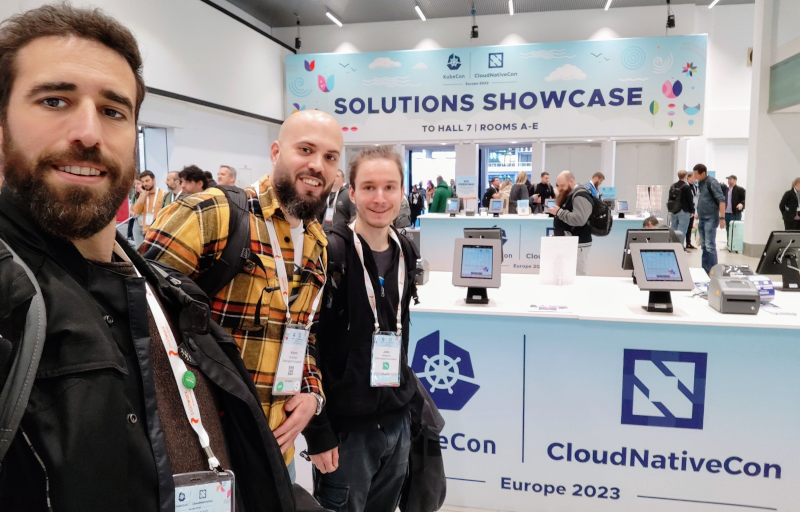
Arturo Borrero Gonz lez: Kubecon and CloudNativeCon 2023 Europe summary

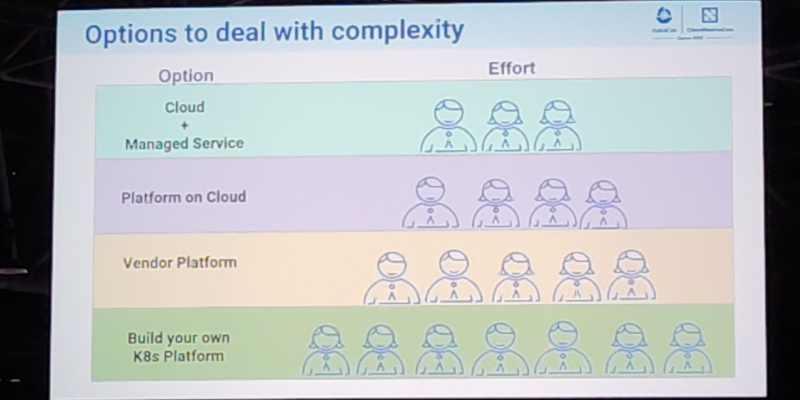
Post logo This post serves as a report from my attendance to Kubecon and CloudNativeCon 2023 Europe that took place in Amsterdam in April 2023. It was my second time physically attending this conference, the first one was in Austin, Texas (USA) in 2017. I also attended once in a virtual fashion. The content here is mostly generated for the sake of my own recollection and learnings, and is written from the notes I took during the event. The very first session was the opening keynote, which reunited the whole crowd to bootstrap the event and share the excitement about the days ahead. Some astonishing numbers were announced: there were more than 10.000 people attending, and apparently it could confidently be said that it was the largest open source technology conference taking place in Europe in recent times. It was also communicated that the next couple iteration of the event will be run in China in September 2023 and Paris in March 2024. More numbers, the CNCF was hosting about 159 projects, involving 1300 maintainers and about 200.000 contributors. The cloud-native community is ever-increasing, and there seems to be a strong trend in the industry for cloud-native technology adoption and all-things related to PaaS and IaaS. The event program had different tracks, and in each one there was an interesting mix of low-level and higher level talks for a variety of audience. On many occasions I found that reading the talk title alone was not enough to know in advance if a talk was a 101 kind of thing or for experienced engineers. But unlike in previous editions, I didn t have the feeling that the purpose of the conference was to try selling me anything. Obviously, speakers would make sure to mention, or highlight in a subtle way, the involvement of a given company in a given solution or piece of the ecosystem. But it was non-invasive and fair enough for me. On a different note, I found the breakout rooms to be often small. I think there were only a couple of rooms that could accommodate more than 500 people, which is a fairly small allowance for 10k attendees. I realized with frustration that the more interesting talks were immediately fully booked, with people waiting in line some 45 minutes before the session time. Because of this, I missed a few important sessions that I ll hopefully watch online later. Finally, on a more technical side, I ve learned many things, that instead of grouping by session I ll group by topic, given how some subjects were mentioned in several talks. On gitops and CI/CD pipelines Most of the mentions went to FluxCD and ArgoCD. At that point there were no doubts that gitops was a mature approach and both flux and argoCD could do an excellent job. ArgoCD seemed a bit more over-engineered to be a more general purpose CD pipeline, and flux felt a bit more tailored for simpler gitops setups. I discovered that both have nice web user interfaces that I wasn t previously familiar with. However, in two different talks I got the impression that the initial setup of them was simple, but migrating your current workflow to gitops could result in a bumpy ride. This is, the challenge is not deploying flux/argo itself, but moving everything into a state that both humans and flux/argo can understand. I also saw some curious mentions to the config drifts that can happen in some cases, even if the goal of gitops is precisely for that to never happen. Such mentions were usually accompanied by some hints on how to operate the situation by hand. Worth mentioning, I missed any practical information about one of the key pieces to this whole gitops story: building container images. Most of the showcased scenarios were using pre-built container images, so in that sense they were simple. Building and pushing to an image registry is one of the two key points we would need to solve in Toolforge Kubernetes if adopting gitops. In general, even if gitops were already in our radar for Toolforge Kubernetes, I think it climbed a few steps in my priority list after the conference. Another learning was this site: https://opengitops.dev/. Group On etcd, performance and resource management I attended a talk focused on etcd performance tuning that was very encouraging. They were basically talking about the exact same problems we have had in Toolforge Kubernetes, like api-server and etcd failure modes, and how sensitive etcd is to disk latency, IO pressure and network throughput. Even though Toolforge Kubernetes scale is small compared to other Kubernetes deployments out there, I found it very interesting to see other s approaches to the same set of challenges. I learned how most Kubernetes components and apps can overload the api-server. Because even the api-server talks to itself. Simple things like kubectl may have a completely different impact on the API depending on usage, for example when listing the whole list of objects (very expensive) vs a single object. The conclusion was to try avoiding hitting the api-server with LIST calls, and use ResourceVersion which avoids full-dumps from etcd (which, by the way, is the default when using bare kubectl get calls). I already knew some of this, and for example the jobs-framework-emailer was already making use of this ResourceVersion functionality. There have been a lot of improvements in the performance side of Kubernetes in recent times, or more specifically, in how resources are managed and used by the system. I saw a review of resource management from the perspective of the container runtime and kubelet, and plans to support fancy things like topology-aware scheduling decisions and dynamic resource claims (changing the pod resource claims without re-defining/re-starting the pods). On cluster management, bootstrapping and multi-tenancy I attended a couple of talks that mentioned kubeadm, and one in particular was from the maintainers themselves. This was of interest to me because as of today we use it for Toolforge. They shared all the latest developments and improvements, and the plans and roadmap for the future, with a special mention to something they called kubeadm operator , apparently capable of auto-upgrading the cluster, auto-renewing certificates and such. I also saw a comparison between the different cluster bootstrappers, which to me confirmed that kubeadm was the best, from the point of view of being a well established and well-known workflow, plus having a very active contributor base. The kubeadm developers invited the audience to submit feature requests, so I did. The different talks confirmed that the basic unit for multi-tenancy in kubernetes is the namespace. Any serious multi-tenant usage should leverage this. There were some ongoing conversations, in official sessions and in the hallway, about the right tool to implement K8s-whitin-K8s, and vcluster was mentioned enough times for me to be convinced it was the right candidate. This was despite of my impression that multiclusters / multicloud are regarded as hard topics in the general community. I definitely would like to play with it sometime down the road. On networking I attended a couple of basic sessions that served really well to understand how Kubernetes instrumented the network to achieve its goal. The conference program had sessions to cover topics ranging from network debugging recommendations, CNI implementations, to IPv6 support. Also, one of the keynote sessions had a reference to how kube-proxy is not able to perform NAT for SIP connections, which is interesting because I believe Netfilter Conntrack could do it if properly configured. One of the conclusions on the CNI front was that Calico has a massive community adoption (in Netfilter mode), which is reassuring, especially considering it is the one we use for Toolforge Kubernetes. Slide On jobs I attended a couple of talks that were related to HPC/grid-like usages of Kubernetes. I was truly impressed by some folks out there who were using Kubernetes Jobs on massive scales, such as to train machine learning models and other fancy AI projects. It is acknowledged in the community that the early implementation of things like Jobs and CronJobs had some limitations that are now gone, or at least greatly improved. Some new functionalities have been added as well. Indexed Jobs, for example, enables each Job to have a number (index) and process a chunk of a larger batch of data based on that index. It would allow for full grid-like features like sequential (or again, indexed) processing, coordination between Job and more graceful Job restarts. My first reaction was: Is that something we would like to enable in Toolforge Jobs Framework? On policy and security A surprisingly good amount of sessions covered interesting topics related to policy and security. It was nice to learn two realities:
  1. kubernetes is capable of doing pretty much anything security-wise and create greatly secured environments.
  2. it does not by default. The defaults are not security-strict on purpose.
It kind of made sense to me: Kubernetes was used for a wide range of use cases, and developers didn t know beforehand to which particular setup they should accommodate the default security levels. One session in particular covered the most basic security features that should be enabled for any Kubernetes system that would get exposed to random end users. In my opinion, the Toolforge Kubernetes setup was already doing a good job in that regard. To my joy, some sessions referred to the Pod Security Admission mechanism, which is one of the key security features we re about to adopt (when migrating away from Pod Security Policy). I also learned a bit more about Secret resources, their current implementation and how to leverage a combo of CSI and RBAC for a more secure usage of external secrets. Finally, one of the major takeaways from the conference was learning about kyverno and kubeaudit. I was previously aware of the OPA Gatekeeper. From the several demos I saw, it was to me that kyverno should help us make Toolforge Kubernetes more sustainable by replacing all of our custom admission controllers with it. I already opened a ticket to track this idea, which I ll be proposing to my team soon. Final notes In general, I believe I learned many things, and perhaps even more importantly I re-learned some stuff I had forgotten because of lack of daily exposure. I m really happy that the cloud native way of thinking was reinforced in me, which I still need because most of my muscle memory to approach systems architecture and engineering is from the old pre-cloud days. List of sessions I attended on the first day: List of sessions I attended on the second day: List of sessions I attended on third day: The videos have been published on Youtube.

21 April 2023

Steve Kemp: Managing header-spacing in markdown/org-mode files

It seems I'm having a theme recently on this blog, of making emacs-related posts. Here's another. I write a bunch of stuff in markdown, such as my emacs init-file, blog-posts and other documents. I try to be quite consistent about vertical spacing, for example a post might look like this:
# header1
Some top-level stuff.
## header2
Some more details.
## header2
Some more things on a related topic.
# header2
Here I'm trying to breakup sections, so there is a "big gap" between H1 and smaller gaps between the lesser-level headings. After going over my init file recently, making some changes, I noticed that the spacing was not at all consistent. So I figured "How hard could it be to recognize headers and insert/remove newlines before them?" A trivial regexp search for "^#" identifies headers, and that counting the "#" characters lets you determine their depth. From their removing any previous newlines is the work of a moment, and inserting the appropriate number to ensure consistency is simple. I spent 15 minutes writing the initial implementation, which was markdown-specific, then another 30 minutes adding support for org-mode files - because my work-diary is written using the org-diary package (along with other helpers, such as the org-tag-cloud. Anyway the end result is that now when I save a markdown/org file the headers are updated automatically:

20 April 2023

Dirk Eddelbuettel: qlcal 0.0.5 on CRAN: Updates from QuantLib 1.3.0

The fifth release of the still new-ish qlcal package arrivied at CRAN just now. qlcal delivers the calendaring parts of QuantLib. It is provided (for the R package) as a set of included files, so the package is self-contained and does not depend on an external QuantLib library (which can be demanding to build). qlcal covers over sixty country / market calendars and can compute holiday lists, its complement (i.e. business day lists) and much more. This release brings updates to five calendars from the QuantLib 1.30 release from this week.

Changes in version 0.0.5 (2023-04-19)
  • Calendars routines for Australia, Denmark, New Zealand, Turkey and the US have been updated from QuantLib 1.30.
  • Support for 'Australia/ASX' has been added.
  • Added demo showing all US holidays in current year

We also added a quick little demo using xts to column-bind calendars produced from each of the different US sub-calendars. This is a slightly updated version of the sketch we tooted a few days ago. The output now is
> print(Reduce(cbind, Map(makeHol, cals)))
           LiborImpact NYSE GovernmentBond NERC FederalReserve
2023-01-02        TRUE TRUE           TRUE TRUE           TRUE
2023-01-16        TRUE TRUE           TRUE   NA           TRUE
2023-02-20        TRUE TRUE           TRUE   NA           TRUE
2023-04-07          NA TRUE             NA   NA             NA
2023-05-29        TRUE TRUE           TRUE TRUE           TRUE
2023-06-19        TRUE TRUE           TRUE   NA           TRUE
2023-07-04        TRUE TRUE           TRUE TRUE           TRUE
2023-09-04        TRUE TRUE           TRUE TRUE           TRUE
2023-10-09        TRUE   NA           TRUE   NA           TRUE
2023-11-10        TRUE   NA             NA   NA             NA
2023-11-23        TRUE TRUE           TRUE TRUE           TRUE
2023-12-25        TRUE TRUE           TRUE TRUE           TRUE
> 
(and we just discovered a tiny h -> hols bug in the demo so see the git repo sorry!). The release was finalized uploaded yesterday morning. But because we have to set CXX_STD=CXX14 as satisfy requirements of some of the Boost headers, we get ourselves a NOTE and with that a manual inspection and a delay of 1 1/2 days. Not really all that meaningful in the grand scheme of things but still suboptimal relative to the fully automated passage this release should have gotten. Oh well. Courtesy of my CRANberries, there is a diffstat report for this release. See the project page and package documentation for more details, and more examples. If you like this or other open-source work I do, you can now sponsor me at GitHub.

This post by Dirk Eddelbuettel originated on his Thinking inside the box blog. Please report excessive re-aggregation in third-party for-profit settings.

Simon Josefsson: Sigstore for Apt Archives: apt-cosign

As suggested in my initial announcement of apt-sigstore my plan was to look into stronger uses of Sigstore than rekor, and I m now happy to announce that the apt-cosign plugin has been added to apt-sigstore and the operational project debdistcanary is publishing cosign-statements about the InRelease file published by the following distributions: Trisquel GNU/Linux, PureOS, Gnuinos, Ubuntu, Debian and Devuan. Summarizing the commands that you need to run as root to experience the great new world:
# run everything as root: su / sudo -i / doas -s
apt-get install -y apt gpg bsdutils wget
wget -nv -O/usr/local/bin/apt-verify-gpgv https://gitlab.com/debdistutils/apt-verify/-/raw/main/apt-verify-gpgv
chmod +x /usr/local/bin/apt-verify-gpgv
mkdir -p /etc/apt/verify.d
ln -s /usr/bin/gpgv /etc/apt/verify.d
echo 'APT::Key::gpgvcommand "apt-verify-gpgv";' > /etc/apt/apt.conf.d/75verify
wget -O/usr/local/bin/cosign https://github.com/sigstore/cosign/releases/download/v2.0.1/cosign-linux-amd64
echo 924754b2e62f25683e3e74f90aa5e166944a0f0cf75b4196ee76cb2f487dd980  /usr/local/bin/cosign   sha256sum -c
chmod +x /usr/local/bin/cosign
wget -nv -O/etc/apt/verify.d/apt-cosign https://gitlab.com/debdistutils/apt-sigstore/-/raw/main/apt-cosign
chmod +x /etc/apt/verify.d/apt-cosign
mkdir -p /etc/apt/trusted.cosign.d
dist=$(lsb_release --short --id   tr A-Z a-z)
wget -O/etc/apt/trusted.cosign.d/cosign-public-key-$dist.txt "https://gitlab.com/debdistutils/debdistcanary/-/raw/main/cosign/cosign-public-key-$dist.txt"
echo "Cosign::Base-URL \"https://gitlab.com/debdistutils/canary/$dist/-/raw/main/cosign\";" > /etc/apt/apt.conf.d/77cosign
Then run your usual apt-get update and look in the syslog to debug things. This is the kind of work that gets done while waiting for the build machines to attempt to reproducibly build PureOS. Unfortunately, the results is that a meager 16% of the 765 added/modifed packages are reproducible by me. There is some infrastructure work to be done to improve things: we should use sbuild for example. The build infrastructure should produce signed statements for each package it builds: One statement saying that it attempted to reproducible build a particular binary package (thus generated some build logs and diffoscope-output for auditing), and one statements saying that it actually was able to reproduce a package. Verifying such claims during apt-get install or possibly dpkg -i is a logical next step. There is some code cleanups and release work to be done now. Which distribution will be the first apt-based distribution that includes native support for Sigstore? Let s see. Sigstore is not the only relevant transparency log around, and I ve been trying to learn a bit about Sigsum to be able to support it as well. The more improved confidence about system security, the merrier!

Jamie McClelland: Electron doesn't like negative layout coordinates

I got a second external monitor. Overkill? Probably, but I like having a dedicated space to instant messaging (now left monitor) and also a dedicated space for a web browser (right monitor). But, when I moved signal-desktop to the left monitor, clicks stopped working. I moved it back to my laptop screen, clicks started working. Other apps (like gajim) worked fine. A real mystery. I spent a lot of time on the wrong thing. I turned this monitor into portrait mode. Maybe signal doesn t like portrait mode? Nope. Maybe signal doesn t think it has enough horizontal space? Nope. Maybe signal suddently doesn t like being on an external monitor? Nope. Maybe signal will output something useful if I start it via the terminal? Nope (but that was a real distraction). Then, I discovered that mattermost desktop behaves the same way. A clue! So, now I know it s an electron app limitation, not a signal limitation. Finally I hit on the problem: Via my sway desktop, I set my laptop screen to the x,y coordinates: 0,0 (since it s in the middle). I set the left monitor to negative coordinates so it would appear on the left. Well, electron does not like that, not sure why. Now, my left monitor occupies 0,0 and the rest are adjusted to that center. I originally used negative coordinates so when I unplugged my monitors, my laptop would still be 0,0 and display all desktops properly. Fortunately, sway magically figures that all out even when the center shifts by unplugging the monitors. Hooray for sway.

Next.

Previous.