Search Results: "nion"

29 August 2010

Bernd Zeimetz: the guruplug server plus - major design and qa fail

As a lot of people are coming to my blog to read the installing instructions for Debian on the GuruPlug Server Plus, I shall not hide my opinion about it: It is a major design and QA fail. Don't waste your money on it.

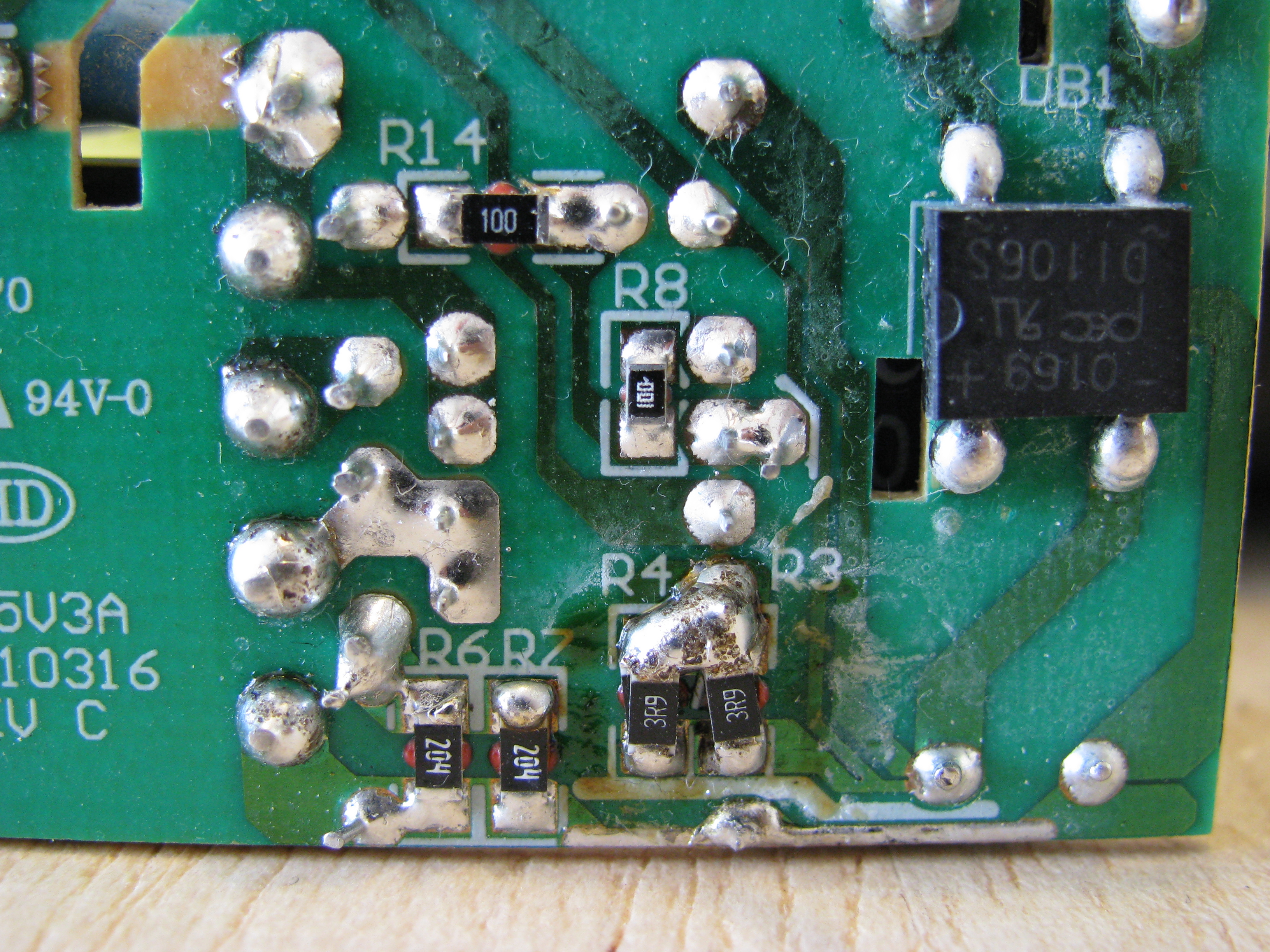
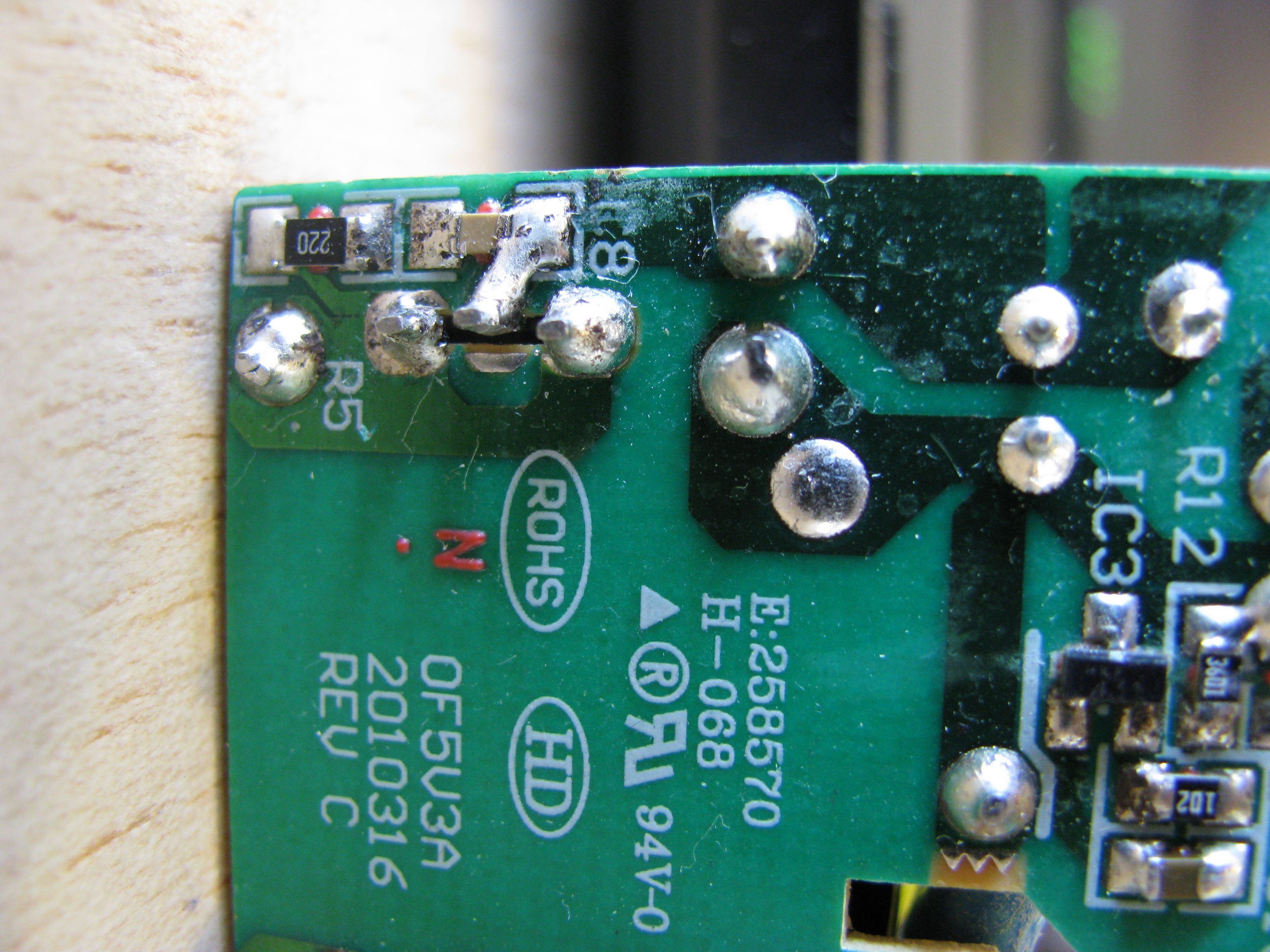
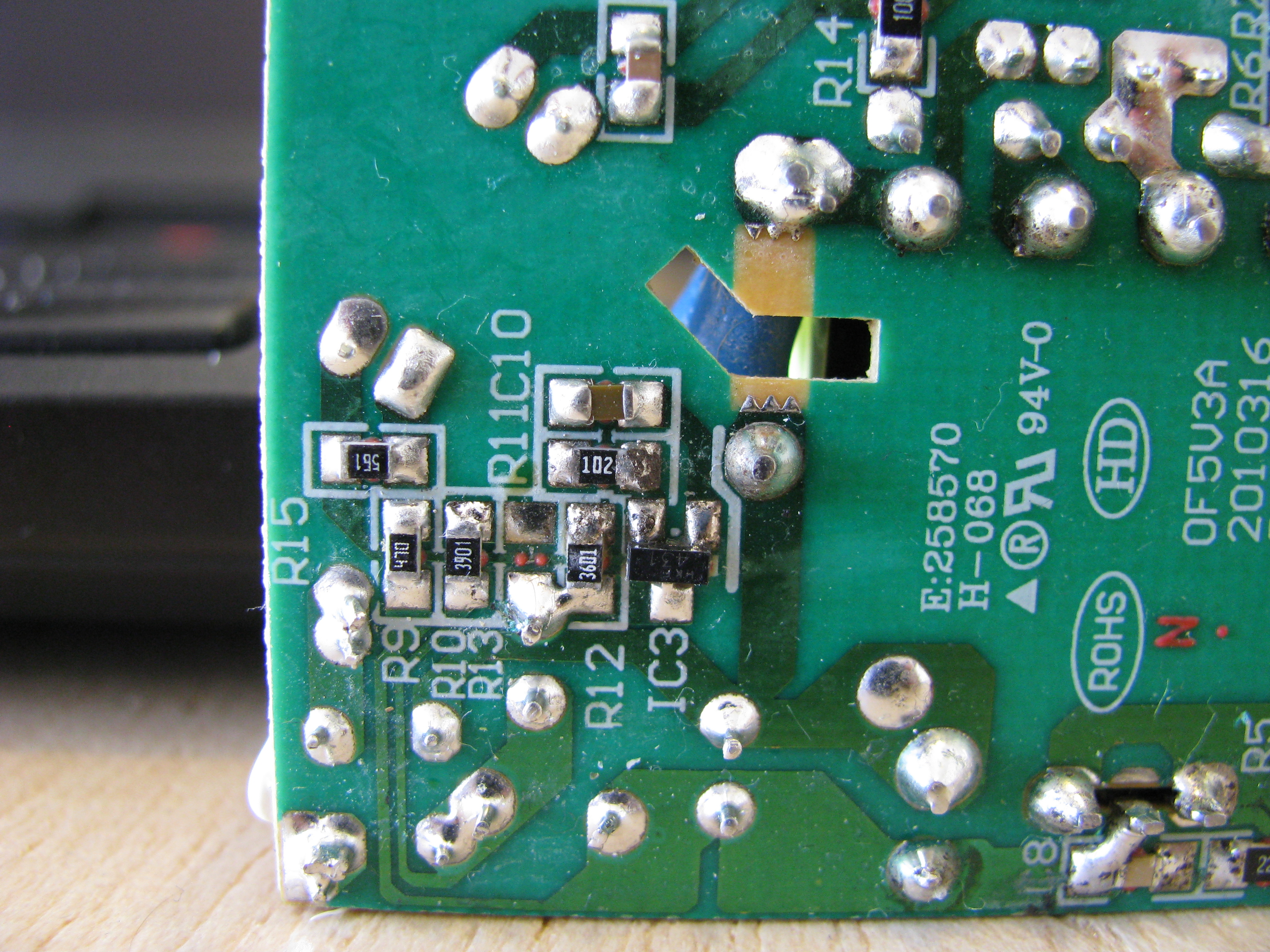
The power supply Although I've ordered the Guruplug pretty early with the promise, that I'd have it in April, it arrived at the end of May due to QA issues with the power supply. While I appreciate that they didn't deliver broken power supplies, I would have preferred not to receive one which was "fixed" by somebody who uses the soldering iron like an axe. Here are some macro photos to show the gory details: GuruPlug Server Plus PSU 1 GuruPlug Server Plus PSU 2 GuruPlug Server Plus PSU 3

Software issues The version of UBoot which shipped with the device was only able to boot from NAND and network. Booting from USB failed and ext2 support was missing, too. Didn't have a look if the community came up with a fixed UBoot version yet, but in my opinion a piece of hardware for >100 EUR should not have such flaws.

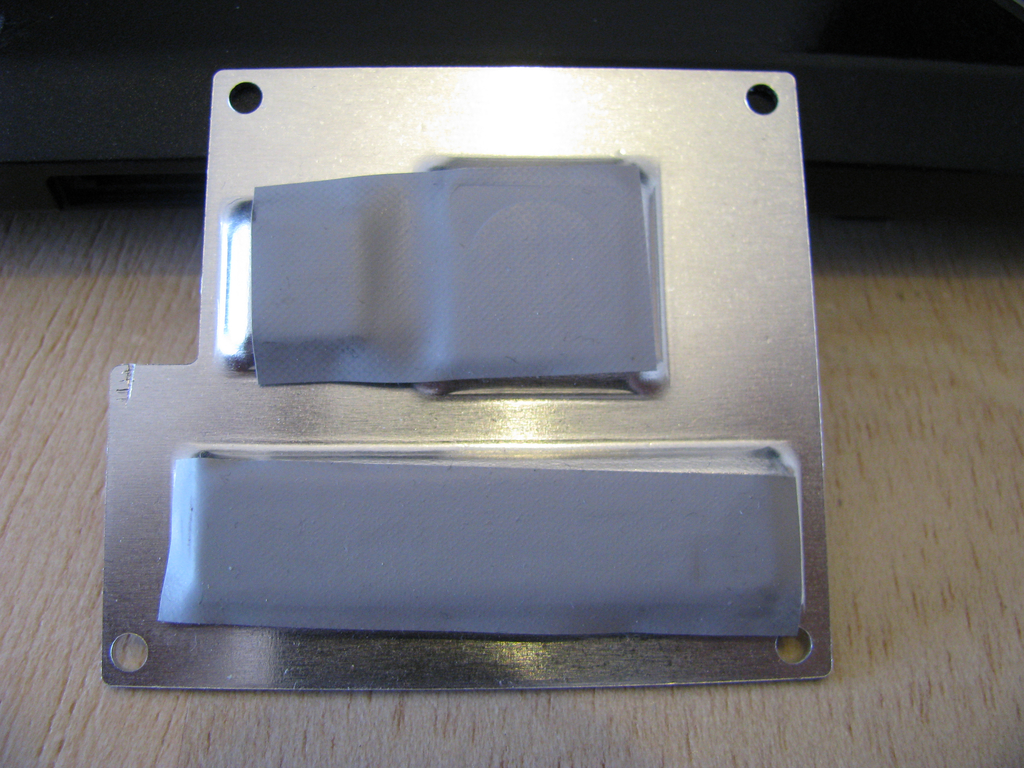
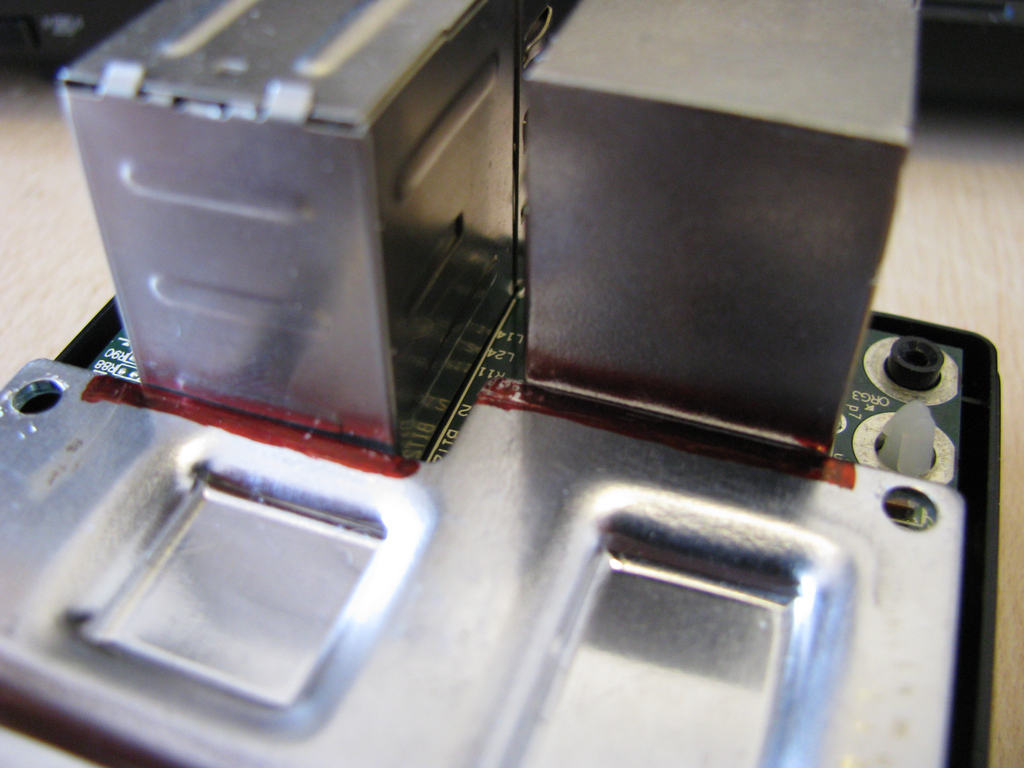
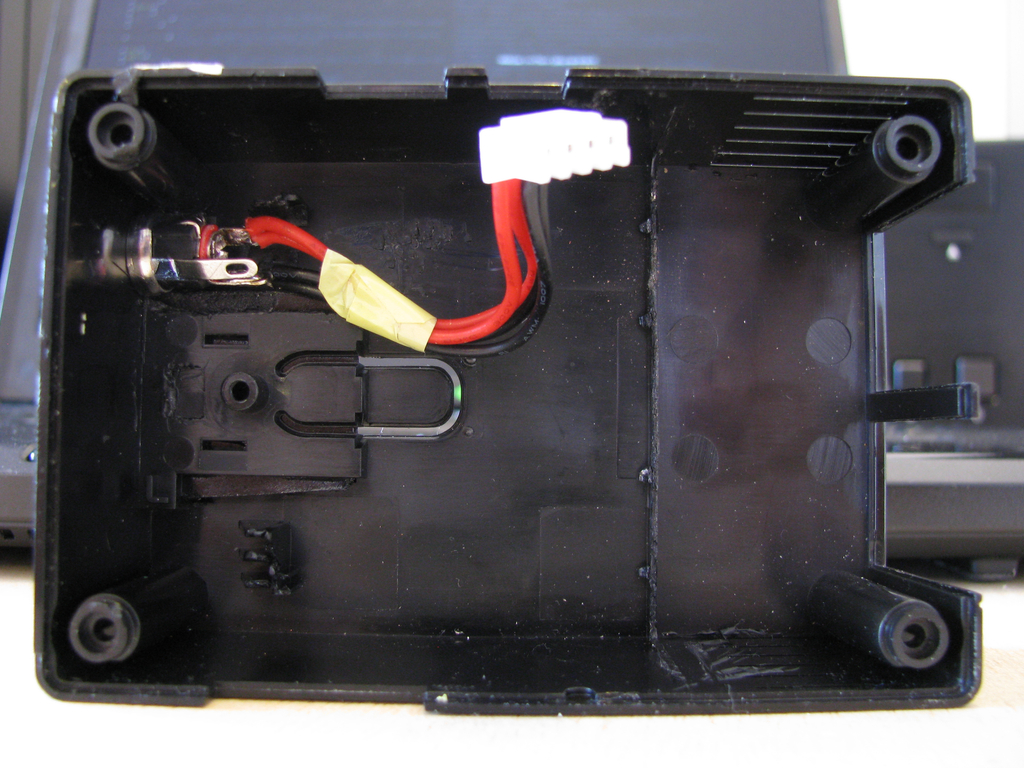
Thermal issues Using the Guruplug with more than one 100 MBit/s connection is just not possible, as it would toast itself to death. For the details have a look at this discussion in the NewIT forum, it links to a lot of interesting photos and postings. This issue is a major design and QA failure. Even without knowing what the datasheets say, it is easy to imagine that a thin piece of alloy is not the proper way to cool a CPU and network chip. Especially not when it is mounted with cheapish pads instead of a proper paste. GuruPlug Server Plus Cooling 1 As it seems the plan was to send the heat to the shielding of the network/USB/eSata ports (the area is marked red as my first plan was to remove that part of the alloy and reuse the heat-spreader), a strong indication for that is that this is the only area with holes for air circulation. I could imagine that it was not possible to have these holes next to the PSU, which was mounted above the heat-spreader, to avoid electrical shocks. GuruPlug Server Plus Cooling 2 As there was no other opening for the heat to leave the case, even the microSD card became pretty hot - I've measured temperatures around 60 deg. C next to the card - while CPU and 100MB/s network were idling. The official information from GlobalScale Technologies is that only 10/100MBit/s should be used as workaround to avoid overheating until a "Professional Upgrade Kit" is released. As mentioned here the upgrade kit announcement was removed silently from GST's website. To be honest, this doesn't make me wonder. There is no way to fix the Guruplug with an external fan or any other external magic as the only way to fix it is to cool the CPU and networking chip properly. There are various workarounds for the cooling issues posted to the forums. I've decided to rip out the power supply and heat spreader out of the case and get a nice external PSU. The new connector is mounted, ready to supply the GuruPlug's board with power. GuruPlug Server Plus power connector Currently I'm waiting for the new heat sinks and glue to arrive. Then I'll give it a try to mount eveything in the small case again, probably with some additional air holes. As soon as I have a workign solution, I'll blog about it again.

Bernd Zeimetz: the guruplug server plug - major design and qa fail

As a lot of people are coming to my blog to read the installing instructions for Debian on the GuruPlug Server Plus, I shall not hide my opinion about the Guruplug Server Plus: It is a major design and QA fail. Don't waste your money on it.

The power supply Although I've ordered the Guruplug pretty early with the promise, that I'd have it in April, it arrived at the end of March due to QA issues with the power supply. While I appreciate that they didn't deliver broken power supplies, I would have preferred not to receive one which was "fixed" by somebody who uses the soldering iron like an axe. Here are some macro photos to show the gory details: GuruPlug Server Plus PSU 1 GuruPlug Server Plus PSU 2 GuruPlug Server Plus PSU 3

Software issues The version of UBoot which shipped with the device was only able to boot from NAND and network. Booting from USB failed and ext2 support was missing, too. Didn't have a look if the community came up with a fixed UBoot version yet, but in my opinion a piece of hardware for >100 EUR should not have such flaws.

Thermal issues Using the Guruplug with more than one 100 MBit/s connection is just not possible, as it would toast itself to death. For the details have a look at this discussion in the NewIT forum, it links to a lot of interesting photos and postings. This issue is a major design and QA failure. Even without knowing what the datasheets say, it is easy to imagine that a thin piece of alloy is not the proper way to cool a CPU and network chip. Especially not when it is mounted with cheapish pads instead of a proper paste. GuruPlug Server Plus Cooling 1 As it seems the plan was to send the heat to the shielding of the network/USB/eSata ports (the area is marked red as my first plan was to remove that part of the alloy and reuse the heat-spreader), a strong indication for that is that this is the only area with holes for air circulation. I could imagine that it was not possible to have these holes next to the PSU, which was mounted above the heat-spreader, to avoid electrical shocks. GuruPlug Server Plus Cooling 2 As there was no other opening for the heat to leave the case, even the microSD card became pretty hot - I've measured temperatures around 60 deg. C next to the card - while CPU and 100MB/s network were idling. The official information from GlobalScale Technologies is that only 10/100MBit/s should be used as workaround to avoid overheating until a "Professional Upgrade Kit" is released. As mentioned here the upgrade kit announcement was removed silently from GST's website. To be honest, this doesn't make me wonder. There is no way to fix the Guruplug with an external fan or any other external magic as the only way to fix it is to cool the CPU and networking chip properly. There are various workarounds for the cooling issues posted to the forums. I've decided to rip out the power supply and heat spreader out of the case and get a nice external PSU. The new connector is mounted, ready to supply the GuruPlug's board with power. GuruPlug Server Plus power connector Currently I'm waiting for the new heat sinks and glue to arrive. Then I'll give it a try to mount eveything in the small case again, probably with some additional air holes. As soon as I have a workign solution, I'll blog about it again.

27 August 2010

Russell Coker: Links August 2010

Urban Honking has an insightful article about the Arduino and suggests that it is one of the most important factors for the development of the computer industry in the near future [1]. It compares the Arduino to the Altair. Wired has an interesting article about a company that provides a satellite kit and a launch into low Earth orbit for $8000 [2]. Arduino in space? Linux Journal has an interesting article by David Rowe about the Mesh Potato which is a Wifi mesh router that also runs VOIP [3]. One particularly interesting aspect of this article is the explanation of the way they designed and tested it. Susan Shaw gave an informative TED talk about the toxic effects of the attempts to clean up the oil spill in the Gulf of Mexico [4]. It seems that trying to disperse the oil just makes it worse, and the chemical companies are refusing to disclose the chemicals that are being used. The New York Times has an interesting article by David Leonhardt about the value of pre-school teachers [5]. Some research on the difference that good teachers can make in economic terms suggests that the make an economic difference to the children to the value of $320,000 per annum (IE a class of 16 children who were taught for a year would on average each receive a benefit of $20,000 over their lifetime). Also there are social benefits which aren t counted by that study. While I can t imagine pre-school teachers getting paid $320,000 any time soon, it does seem obvious that good teachers deserve significantly better pay. Of course one problem is how to determine which teachers are good, better test results are not a reliable indication. Paul Krugman describes America as being on the unlit, unpaved road to nowhere due to the policies of saving money by cutting funding for schools, street-lights, and roads [6]. The Chive has an amusing post about how to quit a bad job [7]. It would be good if someone really did this, I m sure that there are enough creative people who don t like their job. Hell Pizza in New Zealand published a zombie themed choose your own adventure on Youtube [8]. Unfortunately the options to choose the next segment don t work on HTML5 with Chromium so if you don t have flash you miss out. AskThePilot.com has an informative essay about airline security written by a commercial pilot [9]. The anecdote about the pilot not being allowed to take the type of knife that is issued to first and business class passengers is rather amusing. FredOnEverything.net has an interesting analysis of Wikileaks and why the Pentagon and Fox News hate it [10]. Fred is a very skillful writer, while he s not the first person to say some of these things he may have said it best. The Wikipedia page on Borosilicate glass (which is best known under the trademark Pyrex) is really interesting [11]. Borsilicate glass was formerly known as Duran and it s main characteristic that makes it suitable for lab use is resistance to Thermal Shock, but it s also harder and has a higher melting point. Apparently you can get Pyrex drinking glasses, I want some! Eben Moglen gave an interesting talk Freedom in the Cloud about the development of free servers to manage personal data and replace Facebook etc (among many other things) [12]. The Debian Wiki has an articla about designing such a system [13]. The APNIC published an interesting paper on IPv4 background radiation [14]. Apparently some /24 s receive so much random traffic (from broken applications and viruses) that they can t be delegated. IPv6 will solve this problem by making it infeasible to scan all IP addresses. Also it s interesting to note the excessive amounts of traffic to 1.0.168.192 which is from applications too broken to correctly send data to 192.168.0.1 which have been installed by sysadmins who are too incompetent to watch what is being sent out of their network.

25 August 2010

Matt Zimmerman: DebConf 10: Last day and retrospective

DebConf continued until Saturday, but Friday the 6th was my last day as I left New York that evening. I m a bit late in getting this summary written up. Making Debian Rule, Again (Margarita Manterola) Marga took a bold look at the challenges facing Debian today. She says that Debian is perceived to be less innovative, out of date, difficult to use, and shrinking as a community. She called out Ubuntu as the elephant in the room , which is taking away from Debian. She insists that she is not opposed to Ubuntu, but that nonetheless Ubuntu is to some extent displacing Debian as a focal point for newcomers (both users and contributors). Marga points out that Debian s work is still meaningful, because many users still prefer Debian, and it is perceived to be of higher quality, as well as being the essential basis for derivatives like Ubuntu. She conducted a survey (about 40 respondents) to ask what Debian s problems are, and grouped them into categories like motivation and communication (tied for the #1 spot), visibility (#3, meaning public awareness and perception of Debian) and so on. She went on to make some suggestions about how to address these problems. On the topic of communication, she proposed changing Debian culture by: This stimulated a lot of discussion, and most of the remaining time was taken up by comments from the audience. The video has been published, and offers a lot of insight into how Debian developers perceive each other and the project. She also made suggestions for the problems of visibility and motivation. These are crucial issues for Debian devotees to be considering, and I applaud Marga for her fortitude in drawing attention to them. This session was one of the highlights of this DebConf, and catalyzed a lot of discussion of vital issues in Debian. Following her talk, there was a further discussion in the hallway which included many of the people who commented during the session, mostly about how to deal with problematic behavior in Debian. Although I agreed with much of what was said, I found it a bit painful to watch, because (ironically) this discussion displayed several of the characteristic people problems that Debian seems to have: These same patterns are easily observed on Debian mailing lists for the past 10+ years. I exhibited them myself when I was active on these lists. This kind of cultural norm, once established, is difficult to intentionally change. It requires a fairly radical approach, which will inevitably mean coping with loss. In the case of a community, this can mean losing volunteer contributors cannot let go of this norm, and that is an emotionally difficult experience. However, it is nonetheless necessary to move forward, and I think that Debian as a community is capable of moving beyond it. Juxtaposition Given my history with both Debian and Ubuntu, I couldn t help but take a comparative view of some of this. These problems are not new to Debian, and indeed they inspired many of the key decisions we made when founding the Ubuntu project in 2004. We particularly wanted to foster a culture which was supportive, encouraging and welcoming to potential contributors, something Debian has struggled with. Ubuntu has been, quite deliberately, an experiment in finding solutions to problems such as these. We ve learned a lot from this experiment, and I ve always hoped that this would help to find solutions for Debian as well. Unfortunately, I don t think Debian has benefited from these Ubuntu experiments as much as we might have hoped. A common example of this is the Ubuntu Code of Conduct. The idea of a project code of conduct predates Ubuntu, of course, but we did help to popularize it within the free software community, and this is now a common (and successful) practice used by many free software projects. The idea of behavioral standards for Debian has been raised in various forms for years now, but never seems to get traction. Hearing people talk about it at DebConf, it sometimes seemed almost as if the idea was dismissed out of hand because it was too closely associated with Ubuntu. I learned from Marga s talk that Enrico Zini drafted a set of Debian Community Guidelines over four years ago in 2006. It is perhaps a bit longand structured, but is basically excellent. Enrico has done a great job of compiling best practices for participating in an open community project. However, his document seems to be purely informational, without any official standing in the Debian project, and Debian community leaders have hesitated to make it something more. Perhaps Ubuntu leaders (myself included) could have done more to nurture these ideas in Debian. At least in my experience, though, I found that my affiliation with Ubuntu almost immediately labeled me an outsider in Debian, even when I was still active as a developer, and this made it very difficult to make such proposals. Perhaps this is because Debian is proud of its independence, and does not want to be unduly influenced by external forces. Perhaps the initial growing pains of the Debian/Ubuntu relationship got in the way. Nonetheless, I think that Debian could be stronger by learning from Ubuntu, just as Ubuntu has learned so much from Debian. Closing thoughts I enjoyed this DebConf very much. This was the first DebConf to be hosted in the US, and there were many familiar faces that I hadn t seen in some time. Columbia University offered an excellent location, and the presentation content was thought-provoking. There seemed to be a positive attitude toward Ubuntu, which was very good to see. Although there is always more work to do, it feels like we re making progress in improving cooperation between Debian and Ubuntu. I was a bit sad to leave, but was fortunate enough to meet up with Debian folk during my subsequent stay in the Boston area as well. It felt good to reconnect with this circle of friends again, and I hope to see you again soon. Looking forward to next year s DebConf in Bosnia

24 August 2010

Richard Darst: The DebConf selection process

Selecting a DebConf location hard, and can certainly get intense at times. This is an area where the DebConf team and the Debian project can work to improve our processes. There is a wiki page to collect our thoughts in preparation for a discussion later, as planned during the DebConf&Debian BOF.
First off, there is a time at DebConfN-2 for interested localteams to describe their rough plans. These are videoed, and you can view the events online if you would like: for dc11 at dc9, for dc12 at dc10 .There has been a nominal deadline of December 31, 20XX-2 for submitting a bid (not finalizing), but this has been bent in the past.While teams are preparing their bids, they should look at the location checklist. This summarize what past organizers know to look for in a location. There are questions sorted by category and priority.To organize their information so that people can understand, teams prepare bid documents on the wiki (DC10, DC11, here are the winning bid documents: DC10-New York City, DC11-Banja Luka). These start off by just answering all of the questions in the location checklist, but then get a lot of work to make the pages clear and complete. Anyone can browse the pages and ask questions of the teams anytime.There are several mini-meetings where teams describe their progress, and organizers and other interested people can ask questions. In these meetings, the channel is not moderated. Questions tend to be about the location checklist criteria related things.In February/March, there is a big selection meeting. This is the only DebConf meeting where the channel is moderated and only voiced people can speak. The voiced people historically are two moderators who keep things moving, two other past DebConf organizers to ask questions and relay questions from the audience discussion channel. (These facilitators have been self-selected in the past, usually in the minutes leading up to the meeting.) Then, there are two people per location whom are voiced. There is a audience channel for everyone else to discuss, and the moderators/helpers will look there for questions and relay them to the main channel. There have been unvoiced Q&A periods and periods which are designated for relaying questions from the discussion channel.These meetings are logged (dc10 selection, dc11 selection)Teams are rated based on the priority list. There has been a simple point list the last two years, -1 to +1 for each point on that list. For each item, there are debates on how many points each location should get. Points are added up, and a result appears. In the past, this has been a simple arithmetic sum, so all items are weighted the same (despite nominally having different weights). In the case of a tie or close call, there is more discussion. For DC10, there was a tie, and NYC won after opening the meeting to the audience and getting their opinions. I didn't pay enough attention to the DC11 selection process to be able to say how that close call was resolved.While this isn't really part of the selection process, local teams can give presentations at DebConfN-1 about their location and encourage attendance: dc10 at dc9, dc11 at dc10
So, there it is. Overall, there is a lot of openness in the process, but the exact rating schemes in the decision meeting could use discussion. The criteria are established, but can be refined each year based on what we learn.If you would like to comment on how to improve this in the future, please use the selection process wiki page (first person create it). We can follow up with a list discussion after our ideas have been fleshed out.Tags: debconf

23 August 2010

Richard Darst: What is the DebConf team?

Now that I've mentioned the general timeline of a DebConf, let's talk about the "global team", "local team", and decision processes.Who is the "global team"? Basically, it is the active people on the debconf-team IRC channel and mailing list. Anyone can contribute, but we know who is who. Those with the most moral authority tend to be those who have organized a past DebConf or been involved for many years, and their opinions always have a high weight. Many of them are still around.So then how are decisions made? It's a combination of consensus-based and "whoever want to, do it". We discuss ideas based on what experienced people have seen work/not work, what new people want to try, and perhaps most importantly, who can make it happen. (this is where you fit in). There aren't necessarily leaders picked beforehand, instead leaders develop themselves. Overall, this is similar to any other team in Debian.There aren't formal gatekeepers who can veto anything, but if someone sees a problem, they should speak up and get critical mass of people to fix things. Those who hold the money (SPI, FFIS, the DPL) of course will monitor our processes and would intervene if someone started going off course.Typical global team tasks are fundraising, travel sponsorship selection, talks, registration.The local team starts out as the winning bid team. They started out figuring out local logistics for their venue, and up until arrival, they are the ones who are handling the local tasks (venue, food, accommodation, entertainment, day trip, Debian Day outreach). They should keep the global team updated on their status and what they are arranging, so that the experienced ones on the global team can give feedback. Global people will, of course, get involved here where they see fit and can help.The local team shouldn't exist in isolation though, anyone local is highly encouraged to get involved in "global team" tasks. The more coordination and bi-directional help we have, the better.It isn't the job of the local team to put on all of DebConf themselves. They aren't selected and left with free reign, they should integrate with and understand the history of DebConf, and then work on whatever improvements they want, whether they are local or global.
So in short, there are the names "global team" and "local team", but really, it's all one big Debian team. Those who are interested work and make things happen through a consensus-driven process. Things aren't always perfect: we have conflict, disorganization, leadership turn-over, lack of volunteers, lack of time, all the usual things that happen in volunteer organizations. I think most people want to work towards this ideal, and we hope that this series of posts will help us to improve. Most importantly, when you see something you'd like to work on, you can get involved.Tags: debconf

19 August 2010

Russell Coker: It s Election Time Again

Linux People and Voting Chris Samuel (a member of LUV who s known for his work on high performance computers and the vacation program) has described why he s voting for the Greens [1]. His main reasons are the Greens strong support of human rights and for science-based policy. Paul Dwerryhouse (a member of the Australian Linux community who s currently travelling around the world and who has made contributions to a range of Linux projects including SE Linux) has described his thoughts about the Filter Conroy campaign [2]. He gives a list of some of the high profile awful candidates who could possibly win a seat and therefore deserve a lower position in the preferences than Conroy. SAGE-AU and Voting for the Internet There has been some discussion by members of the System Administrators Guild of Australia (SAGE-AU) [3] about issues related to the election. As you would expect there was no consensus on which party was best. But there was a general agreement that the Greens are the only significant party to strongly support the NBN (National Broadband Network fiber to the home in cities and fast wireless in rural areas) and to also strongly oppose censoring the Internet. SAGE-AU has an official position opposing Internet filtering, and while the organisation hasn t taken a position on the NBN it seems that the majority of members are in favor of it (I am in a small minority that doesn t like the NBN). So it seems that political desires of the SAGE-AU members (and probably most people who care about the Internet in Australia) are best represented by the Greens. Note that SAGE-AU has no official policy on this, the above paragraph is based on discussions I ve had on mailing lists and in private mail with a number of SAGE-AU members. Also note that not all the SAGE-AU members who agree that the Greens advocate their positions on Internet issues plan to vote for them. The Green support for the NBN is based on the importance of the Internet to all aspects of modern life, the social justice benefit of providing decent net access for everyone (particularly people in rural areas) is very important to the Greens. I still oppose the NBN and believe that it would be better to just provide better ADSL in all suburbs, better net access (through whichever technology works best) in rural areas, and fiber to the central business areas. But the NBN isn t really that important to me, human rights and a science based policy are much more important and are the reasons why I ve been supporting and voting for the Greens. No Wasted Votes One thing to note is that the Australian electoral system is designed to avoid wasted votes. There are two ways of considering a vote to be wasted in Australia, one is if you live in an electorate where both the upper and lower house elections have an almost certain result such that no expected swing can change the outcome I doubt that this is possible for any region in Australia given the way the upper house elections work, although a large portion of the lower house seats have a result that is almost certain. The other way of having a wasted vote is to vote for someone who doesn t actually represent you. Lots of people mindlessly vote for a party that seems to represent them, either they identify with unions and vote Labor every time, they regard themselves as conservative and vote Liberal every time, or they live in a rural area and vote National every time. The Labor and Liberal parties don t differ much in policies and members in safe seats typically don t do anything for the people who elected them. If you generally support the policies of one of the major parties then it can be a good tactic to give your first preference to a minor party. For example if you tend towards Labor then vote Greens first and preference Labor over Liberal. The result will be that your vote will count towards Labor in the lower house and it sends a message to Labor and prevents them from being complacent. Before Australian elections there is always some propaganda going around about wasted votes, this is usually part of a deliberate campaign to try and prevent people from voting for smaller parties. Because the news has many mentions of wasted votes in US elections (which are watched closely in Australia) it seems that some Australians don t realise that there are significant and fundamental differences between the political systems in Australia and the US. Volunteering Last time I checked the Greens were still accepting volunteers to hand out how to vote cards, so if you want to do more for the Greens than just vote for them then this is one way to do it. If you want an uncensored Internet with freedom of speech and a lot of investment in infrastructure (as well as good support for all human rights) then you really want to help the Greens win more seats at the election on Saturday.

15 August 2010

Tim Retout: SmoothWall Express on Debian

SmoothWall Express is a GNU/Linux distribution geared towards firewalling, with an installer, a web interface, and some common software like squid that can be useful when running a small business router. It is theoretically the basis for the corporate products of SmoothWall Ltd., who happen to employ me; but all opinions here are my own, and I'm not speaking for them. Unfortunately, the SmoothWall Express kernel is somewhat "stable", which leads to problems installing the distro on modern hardware. There is a new version of Express in the works, but I'm afraid SmoothWall Ltd. currently has a bit of a "code dump" mentality with respect to delivering updates to their community, because they don't recall seeing any significant contributions from outsiders. At DebConf I created proof-of-concept Debian packages of two components of Express 3.0: the swe3 web interface, and the smoothd daemon which executes privileged commands. Currently these can show a basic web interface; some of the less complicated bits will even run, and I can shut down my laptop using the "shutdown" button via smoothd. (Note that I still need to add boring stuff like debian/copyright files, but I plan to release these as soon as I can.) In the near future, hopefully I can implement some of the more important features (like, er, firewalling), and add some other components like the traffic shaping and IM filtering daemon. I'm working towards a demonstration Debian Pure Blend that can show off some of the advantages of working with a third-party distribution as a base. If anyone would like to help me... send me patches. :) I expect I'll be blogging my progress occasionally.

12 August 2010

Gerfried Fuchs: Why new Design isn't deployed yet

This blog post is actually a response to a talk that was given at the debconf last week. It was marga's talk about Making Debian Rule, again. Now that the beta versions of the talks are available for download I'm able to proper quote what I want to respond to: Is there a reason why we haven't yet updated the website?, perhaps someone can answer. I feel the need to respond to this as I am the main person driving that effort. Unfortunately the question was asked in a talk with no-one involved in that work around instead of addressing those people directly, and the question wasn't brought to my attention before the talk so that I could have provided an answer to offer in the presentation already. Also, as disclaimer, this is my personal story for it and doesn't need to get shared by the other people involved. I hope it can be seen as an answer anyway. As a little of background, Kalle's proposal went a long path before even I found out about it. I was simply in awe in several ways about it because it wasn't just a great mockup of the page (which it actually is, IMHO) but was accompanied by thoughts about not only the main site but also about several sub sites. Also, it was accompanied by patches, so it was seemingly ready to get deployed right ahead. I started working on it, got accused of being discouraging while doing that, got told that it would require a proper vote for a decision and can't happen just as, but those are just the Debian way of communication. I nevertheless did set up several test sites for some over the time to play with it. Some did work out better (like the git one, though this one came last and Kalle improved the CSS over time a fair bit), some weren't ready yet (like wiki, missing e.g. the coloring for the version diff, or the packages one where the separation between the different sections isn't that visible yet). Time passed, other things demanded their attention too. Like the thing where our system administrators did send me a request along about a new www-master server that needs to get set up from scratch. Given that the documentation about the required packages for the website was lacking a fair bit (to say the least) it did require a lot of attention, especially when doing things from scratch the wish to document the dependencies properly is just natural. There are still some issues with that as can e.g. be seen on this page in the empty table at the bottom. The same issue also appears on my testsite for the new design. The last part though is currently the biggest blocking issue for both efforts. There is no way to move forward with either without having that addressed. Simon Paillard did a great job on helping the move along so far, keeping the thread about the server move requirements that I started on the debian-www mailinglist updated with information about what's still pending. Unfortunately Kalle, Simon and me are also facing some private time constraints (amongst other duties that require attention) which weren't helping to move forward at a bigger pace. Unfortunately not very many people actually has shown interest in helping out neither, after all it's easier to go and ask questions about why it's not done yet to the completely wrong audience. My plan is to switch many sites at the same time instead of one after the other simply for the effect but also for less distraction for our users, including less people repeatedly pestering about when this or that site gets done, too. At least we need a final discussion on what should go into the header links and what should be at the bottom before a switch can be made anyway. And for some there is still the opinion that such a switch is nothing that we are rightfully allowed to decide without a vote, so that's also part of the reason to not just deploy it. I hope this answers the question to some extend and like said, if only I would had been addressed about this before the talk was given an answer to it would had been ready for presentation right ahead instead of having a pretty terse statement getting relayed through IRC (thanks, Yoe!) because I was fortunate enough to be around and watching the talk at that time. Feel free to discuss it further or offer your help on debian-www, especially if you are familiar with working on CSS files.

/debian permanent link Comments: 3 Flattr this

David Moreno: DebConf 10

I was in New York for three full weeks, before, during and after DebConf 10 took place. Unfortunately, I wasn't able to attend talks or go hang out with folks as much as I would've wanted. Most of the time I was busy at the office with a new product launch we have been preparing for the last few months. However, I was able to come and say hi to a few people, attend the C&W party and talk with friends and ran into. I was, however, following all conversations on IRC so I was pretty informed of all of what was going on. Some random thoughts: DebConf 10 rocked and I appreciate everybody's participation in it. See you in Banja Luka, next year!

2 August 2010

John Goerzen: The Best Place of Ever

Jacob and Oliver have enjoyed our recent train trip, and our stay, from Kansas to New York City for Debconf. All told, that s a 40-hour trip, including the layover in Chicago. When we got on the train, in the middle of the night as usual, Jacob couldn t stop chattering about how great , fun , and exciting it is. He told us about all the lots of great things on the train, the fact that we were on a night train , and generally couldn t stop chattering. For an hour. At 3:30AM. This was a typical sight from Jacob: IMG_4284 It wasn t as relaxing as usual for Terah and me. Oliver is at the grabbing everything in sight stage. Which worked fine when Jacob was at the age, but with Jacob also along it was a bit more difficult to manage. I suspect that our next trip, when Oliver is a few months older, will go easier. A highlight for both boys, as usual, is the dining car. Oliver loves anything related to eating solid food it s still novel to him and Jacob loves anything relating to trains. What could go wrong? (Parents will probably identify the capability for two hyper-excited young boys to have plenty of things go wrong at a table in a restaurant here fortunately we didn t have anything go terribly wrong.) Oliver turned out to find the things outside the window to require intense concentration intense enough to stick out his tongue while he worked it all out. IMG_4296 And Jacob, of course, wanted to get the wrapper off his straw by himself. Which he can do, but takes a minute. IMG_4305 They also enjoyed the lounge car. IMG_4292 We were in a sleeper room on both trains. That was nice, and when we needed to go explore , we could. Jacob s favorite part of the trip was when I folded down the upper bunk during the day for him to play. I pointed out that it was like a train treehouse. His face sure lit up. He loved that he had his own window up there to look out of. He climbed up the ladder, and after awhile of playing, said, Dad, would you like to play with me up here? Of course I would it always makes me happy when he asks if I want to play with him. As I was playing with him, I asked him if he was having fun in his train treehouse. He gave me a sweet smile, and said, Dad, this is the best place of ever! IMG_4321 In Chicago, Jacob and I went outside and walked around. He enjoyed walking across the bridges over the canal by Union Station. I checked some work email when we got back, tried but failed to reach some local hams with my handheld, and then we got on the train for New York. The boys loved it too, and Jacob was very ready to be in New York when we got there. We got out at Penn Station which was, I think, pretty much what my mind had imagined of an underground station robbed of its former glory (especially having been in that part of Chicago Union Station). We found the connection to the 2 train uptown, bought some MetroCards for the subway, and got on. Jacob was very interested in the subway. He sat very, very still I thought he was scared but on asking him some questions, realized that he was just very interested and engrossed in it all. I had been trying out my HF antenna for my amateur radio setup a few days ago, and by some coincidence, kept making contact with people that grew up in New York. A guy from Fargo, ND a native of Brooklyn told me to make sure to get pretzels from a hot sauce vendor, Pastrami on rye or corned beef on rye from a Jewish deli (because they have the best meat), pizza from guys wearing red and white shirts, and don t be afraid of rats on the subway tracks, and that our boys will love to feed leftover bits of pretzels to pigeons and squirrels. He got so excited about NYC that he went on and on, saying, Man, you re making me hungry now. During times I m not at sessions at Debconf, we ve found some time to do some things as a family. We went to Grand Central Terminal, just to see it it is indeed still Grand. I knew there was a Jewish deli there, so I thought hey try out his advice. It was closed, and when I realized it was Saturday, I realized why. Oops. We hopped on another train to Brooklyn and checked out the New York Transit Museum, which is great and has a lot of exhibits about the history of the city s subway and bus systems. It s housed in a former subway station, and they have a lot of old subway cars down there dating back to 1905 most of which are open to go inside of. It s been nice to meet people at Debconf that I have only known via email or IRC. The organizers of this conference have done a fabulous job. I have every expectation that this will turn out to be the best conference I ve been to in at least 12 years this is my first Debconf. It doesn t skimp on the technical details, people are friendly, and there is a sense of common purpose. But just as important, while there is a set schedule, there is an easy way to add other ad-hoc sessions to the conference schedule. People can get together a group interested in a topic, and schedule an event about it for the next day very easily. I m quite impressed by that, and am looking forward to the virtualization discussion that grew out of a question to the mailing list. It was also neat to meet people that sort of knew our family from my blog posts. I had no idea that there were all that many people that actually read these things ;-) The Debconf kick-off was great. As I was walking across the campus of Columbia towards it, it was a nice temperature, with some light rain, and I heard bagpipes in the distance. Beautiful. And when I left after the evening sessions, I still heard bagpipes. So I went to check it out, and ran into Gabriella Coleman, one of the Debconf organizers and the person that gave the talk I just left on the way, with the same idea. The Columbia campus is beautiful and historic, and it is an excellent venue for the conference. New York is a great city and I m sure we ll be back. It is great to walk out of the hotel in the morning, buy a fresh peach or two from the street vendor 20 feet away, and then go buy a roll or two ($0.75 each) from the bakery down the street. I have been so missing rolls like that since we got back from Germany in March. These weren t quite like the German bakeries, but the closest I ve had to it. It is interesting to note how differently people from different places look at things. Terah has told several people how we live 6 miles from a town with 500 people in it, and people that stop to think about it realize how different it is from New York. It was a surprise to me to hear that some New Yorkers think of Columbia as country . It is beautifully landscaped, and feels different than the rest of the city. The numbers I ve seen suggest that a typical fall weekday has more people on the Columbia campus than in the entire county where we live. And that county is twice the size of New York City. That s not to say that there s anything wrong with New Yorkers thinking of it as country, any more than there is of me thinking of a town with 15,000 people as a pretty big town. It s a different perspective, and I enjoy different perspectives which is another thing I like about Debconf. There are so many people from all over the world there that different perspectives are inevitable.

31 July 2010

Wouter Verhelst: Wouter Verhelst, Tourist

So for one day a few days ago, I wasn't Wouter Verhelst, Debian Developer, but rather the above. I'm not usually very much interested in doing touristy things, but then on the other hand I'm of the opinion that you can't really claim to have been somewhere if all you've seen is the inside of a certain specific university campus. So, well, touristy things. I took the subway to about 10 blocks away from the very south of Manhattan, and then walked. I passed by city hall and what used to be the world trade center, but there wasn't much to see there construction sites are the same everywhere in the world. I moved on to "the battery", the south tip of Manhattan, and had an... interesting look at the Statue of Liberty in the distance. I thought about going there, but the tickets were sold out, so scratch that. Wall Street from Trinity Church Instead, I walked on to the Brooklyn Bridge (passing by Wall Street on the way), spent some time looking for the pedestrian's entrance to that bridge (which was slightly harder than would've thought it to be), and walked partway up the bridge. I wasn't interested in crossing over to Brooklyn, but it's an interesting bridge to walk on, and I had an interesting time. Brooklyn Bridge When I left the bridge again, it started raining. I don't mind a few drips on a warm day like that day, but this was more than that, and it started to bother me. So, rather than walking to the Empire State building, as I'd been planning, I decided to take the subway there. This did mean I missed out on the SOHO area, which I would've liked to see, but well, you can't have it all. dsc_6639 The Empire State building is something you grow up hearing about, and I'd seen pictures of it. It has a somewhat distinctive silhouette, shown on several comparative graphics of high-profile skyscrapers. But none of that is even close to the real thing. Not that it's higher than I expected; on the contrary. But it does look different; its color is much lighter than I thought, and the distinctive silhouette isn't as distinctive once you're standing right next to the building. But, well, going up the building clearly shows that it is the tallest building of New York. There are other skyscrapers, but most of those seem to be little dwarves in comparison. The view is nice, up there, and I took some interesting pictures. The tickets aren't very cheap ($20), but not insanely expensive either. I don't regret doing this. Going down... (in case you were wondering: yes, the above picture is in the point of view of the one above that, and vice versa) By that time it was around 4 pm already, and I thought about going back to the Columbia campus. As I checked out my map for the most efficient route, I found that it probably would've been easier to walk to Times Square and take the number 1 train there which stops right in front of Columbia (but below the surface, obviously). So since I was going to have to go there, I figured I could just visit Times Square while I was at it. Times "Square" I must say I'm not very impressed by it. For starters, Times Square isn't actually a square, at least not as I'm used to that word. Broadway and 7th avenue happen to cross at a, for Manhattan, uncharacteristically sharp angle, which results in more space between buildings than usual. But it's still fairly small as a "square". They've fenced off a part of that space and put a bunch of chairs and tables there. This would be a cosy and inviting, "gezellig" place, if not for the very audible noise of the traffic still going on all around it, and the fact that everywhere you see, there's three layers of brustling and visually noisy adverts. It could have been a relaxing oasis in the middle of the city, but instead it's just as busy as everywhere else in Manhattan. But then, I guess that's what New York City is all about. At any rate, after spending about half an hour or so there, I walked over to the subway to get back to the venue just in time for dinner. The end of a nice, touristy, day.

27 July 2010

Tim Retout: Running around

So apparently the route I took round Central Park is 9.7km, which explains a lot. This morning I checked out Morningside Park, but it's really too small for running - there's a loop of about 400m at one end, and you can go down the long bit to 123rd St, but it gets boring very quickly. Most of the park is taken up with a big hill and stairs. I'll try Riverside Park on Thursday, or find a shorter loop at this end of Central Park. This morning I had breakfast at Nussbaum & Wu, because it seemed like a good name. Then I went to Duane Reade down the road (a pharmacy open 24 hours a day, which is quite impressive), and picked up some hand soap for a couple of dollars - none is provided in the bathrooms (and I didn't read the checklist about what to bring). And if anyone forgets/loses their wherever-to-US power socket adaptor, the Best Buy in Union Square has four left. So far I've missed about three sponsored meals. In related news, if you ask for all the salad at Subway in the US, you seem to end up with something much hotter than in the UK.

25 July 2010

Russell Coker: Links July 2010

David Byrne gave an interesting TED talk about how changes to architecture drove changes to musical styles [1]. I think he does stretch the point a little. To a certain extent people develop the most complex instruments and the largest music halls that can be supported by the level of technology in their society people with a hunter-gatherer civilisation play drums because they can build them and can carry them. The NY Times has an interesting article about paternity leave in Sweden [2]. The Swedish government pays for a total of 13 months leave that can be split between parents for every child. Of those 13 months 2 months can only be taken by the father and that is likely to increase to a minimum of 4 months of paternity leave after the next election. Dan Meyer gave an interesting TEDX talk about how the current math curriculum in the US (as well as Australia and lots of other countries that do the same thing) is totally wrong [3]. His main point is that maths problems should be based on real-world use cases where not all needed data is immediately available and there is also useless data that must be discarded. He believes that the most important thing is developing mathematical problem solving skills basically the things that I did for fun when I was in primary school are skills that need to be taught to high-school students The Atlantic magazine has an amusing article by Daniel Byman and Christine Fair about the incompetent Islamic terrorists [4]. In Afghanistan half the suicide bombers kill only themselves and the US government has a lot of evidence of Taliban soldiers practicing bestiality and collecting porn. Islamic extremist groups are staffed by people who are bad soldiers and bad Muslims. Jon Masters wrote an interesting post titled What Would Jesus Buy about ethical purchasing decisions [5]. Jon references The Church of Stop Shopping which isn t a real religious organisation but a street theatre activist group. ZeroHedga has an insightful article comparing corporations and the US government to street gangs [6]. The conclusion is that when gangs take over a neighbourhood everyone has to join a gang for their own protection. Hillel Cooperman gave an interesting TED talk about being obsessed with Lego [7]. He compares Lego fans to Furries and makes a good case for this comparison. Marian Bantjes gave an interesting TED talk about her graphic art / graphic design work [8]. I ve never seen anything quite like this. Business Insider has an interesting article about oil cleanup, it seems that most people who worked on the Exxon Valdez disaster are now dead [9], s opposed to most people who worked in almost every other occupation at that time who are either still working or enjoying their retirement. The current gulf disaster is bigger, will require more workers for the cleanup, and can be expected to have a higher death toll. Some people claim that measures to reduce oil efficiency will impact the economy, how will millions of people who are chronically ill for the rest of their lives impact the economy? The NY Times has an interesting article on circle lenses [10], contact lenses designed to make the eyes look larger. It s illegal to sell contact lenses in the US without a prescription, but the latest trend is for women to buy them online in a variety of colors. The FDA should probably approve them, it would be better to have the quality controls you expect from a medical supply company instead of having people rely on Malaysian mail-order companies for the safety of their eyes. Don Marti has written an interesting article about the economic decline in the US, he suggests making pension funds invest in local jobs [11]. Companies are supposed to act on behalf of their stock-holders, but US companies often have the majority of their stock owned by the pension funds of workers but they act on behalf of a small number of rich people who own a minority of the stock. Don s article was inspired by Andy Grove s article in Bloomberg about the stagnation in technological development that has been caused by off-shoring the manufacturing [12]. Neil Brown has completed a test release of a new Linux software RAID feature for arrays with multiple redundancy that have bad sectors [13]. When a disk gets a bad sector the current behavior is to kick it out of the array, if you have two such errors on a 3 disk RAID-1 or a RAID-6 array then you lose all redundancy and are at risk of catastrophic failure even though in most cases both disks will still mostly work. With this patch some regions of the disk may be excluded but it can provide redundancy for other stripes. Thanks Neil for your great work here, and all your previous work over the last 10+ years! The RSPCA has a new campaign titled Close the Puppy Factories [14]. Dogs are kept in very poor conditions and forced to churn out puppies for their entire lives to supply pet stores. The RSPCA recommends that people buy puppies from registered dog breeders (not registered dog breeding companies ) and ask to see the dog s parents. They also recommend not buying from classified adverts or pet stores. Animal shelters have to euthenise huge numbers of unwanted animals, you can buy a pet dog or cat from an animal shelter for a small fee that covers the expenses related to housing and spaying it and save that animal from being euthenised! Maureen Dowd criticises the Catholic Church properly in an article for the New York Times [15]. The Catholic Church officially regards ordaining a woman and raping a child to be equally bad offenses. Frank Rich wrote an interesting column for the New York Times about Mel Gibson [16]. He describes the destruction of Mel Gibson s reputation as a symptom of changes in the culture in the US and also links it to the fall of Ted Haggard (who supported Gibson s most notorious movie The Passion of the Christ).

16 July 2010

Romain Beauxis: What's this thing with CDBS ?

What's this thing with CDBS that makes people so angry at it ? I can understand that one may not like that it is a bunch of makefiles, but, hell, the whole makefile system is obscured all the way, so I guess those people NEVER write (complex) makefile.. :-) More seriously, I have used CDBS for years, I've always been very happy with it. I understand that some people prefer other solutions, but it does not mean that there should be a war between this or that. Those are simply personal options/opinions et c'est tout !

8 July 2010

Aigars Mahinovs: Phoning it in

Currently I own and use an iPhone 3G. I bought it almost two years ago, when the local phone provider LMT started offering the iPhone legally. I had a pretty good experience with it most of the time, but now it is showing its age: I will try to send my iPhone in for repair hoping to extend its usefulness, but frankly it looks that I might have to get a new phone at or before Debconf. So I am considering my options for a new phone and so far I have 3 main options each with some sub-options. The main options are: iPhone 4, MeeGo and Android. Each choice has its benefits and drawbacks and each also has several sub-options related either to specific phone models or to purchase methods. What I need is a phone with: calling function, contact information synchronised to Google, support for Google Mail/Contacts/Calendar simultaneously with one Exchange account also providing mail/contacts/calendars, music, audiobooks saving my place in the audio book and in the list of books, fully featured Twitter client with Twitpic and location support, encrypted password storage application (preferably open source), GPS with maps, ability to download maps for offline use, Geocaching support with offline cache info and logging, Skype client, ability to write in Latvian, English and Russian in all applications, reliable backup and restore of phones data including settings and data of installed apps. Optional features: last.fm streaming and reporting support, ebook applications with purchasable ebooks, high quality video and photo recording (for a phone), ability for me to write applications on the phone, ssh client, wireless data upload to the phone, ability to change the phones battery without loosing data in the phone (on the go), compass, physical keyboard, confidence in getting software upgrades and developer interest for the next 2 years. I ll try to describe all of the options here to organise my thoughts and maybe also help someone else make the choice. Option 1: iPhone 4 To get the iPhone 4 I have two options: LMT and unlocked. The official arrival of iPhone 4 to Latvia is expected in September and it will likely be sold by LMT for the same prices as iPhone 3GS is now. If I choose this scenario, I will need to survive with my semi-broken iPhone for 2-3 more months. Total price over 2 years (LVL): 131 (purchase price) + 24 * 8 (surcharge) = 323 LVL. Note: the surcharge is the extra cost of the iPhone call plan compared to a comparable regular plan (Vien dais 7 + Internets telefon 5). If I go and purchase an unlocked iPhone 4 in a country where such units are sold (UK is the most easily accessible choice, because a few of my workmates travel weekly to and from UK) then the total price over 2 years would be the purchase price: 499 GBP + 65 GBP (2 year warranty extension) = 505 LVL Now lets go over the general benefits and downsides of the iPhone 4, first the positives: Drawbacks: Option 2: Maemo/MeeGo Some of my colleagues at work (in the Riga office of Accenture) have N900 phones and I have been exposed to people with raw enthusiasm towards the Maemo platform ever since the Debconf in Helsinki, where we saw the first N700 devices in the hands of some lucky Debian/Nokia people using it as an Internet tablet. N900 has been a strong leap forward for the platform, before its head was teleported sideways by the whole MeeGo merger/debackle. Again I have two options here: Get a N900 either here in Latvia for 325 LVL (that would be the total cost over 2 years) or get it from USA during Debconf for 399 USD (+129 USD for 2 year warranty) = 317 LVL. And additional option would be to wait until October/November and then buy the new Nokia MeeGo device, rumoured to be N9-00 and likely to be around the same price as N900 was when it was introduced (around 500 LVL). Benefits: Drawbacks: Option 3 Android After looking trough the options for Android phones, I ve narrowed the selection to the ones that are either available from local carriers or can be easily gotten unlocked also the phones need to have announced plans to have at least Android 2.2 version. Currently the choice is limited to HTC Desire (from carrier or unlocked) and Samsung Galaxy S (unlocked). The prices over 2 years break down as follows: HTC Desire (locked to LMT): 69 + 9*24 = 285 LVL
HTC Desire (locked to Bite): 199 + 2*24 = 247 LVL (Note: only 500Mb of data per month available)
HTC Desire (locked to Tele2): 179 + 6*24 = 323 LVL
Note: all the above options would also require me to pay a 45 LVL early termination fee on my current iPhone contract if I choose to do this before September.
HTC Desire (unlocked): 311 LVL
Samsung Galaxy S (unlocked): 350 LVL (import from Germany) Benefits: Drawbacks: Please correct me if I am wrong with something!!! And also it would be cool if you expressed your own opinions in the comments. Currently I am very undecided about what I am going to do, but after completing this entry I am leaning towards an unlocked HTC Desire. Update:
Olivier Cr te shares a N900 vs. Nexus One experience Edit 01-07-2010: Handed my iPhone in for a warranty repair, got a dumbphone Nokia as a loaner during repairs. Very surprised about how long a battery can last on a low powered and cheap phone. In the mean time from all the comments here and elsewhere I am starting to see that I am too annoyed with the iPhone platform (mostly iTunes) to stay there and that I am also not convinced in the direction MeeGo is going (a lot of community developers are annoyed and are jumping ship), so N900 is also out. I will need to see 2-3 MeeGo smartphones and also see how Nokia will treat their smartphone users and developers on this platform, in the long term, before I ll be ready to trust them with my money. Therefore, my choice is becoming pretty clear look for the best Android phone (after my iPhone dies). We have this thing at Accenture, where we can get company phones at a discount and HTC Desire is on that list. If I can get that, it would slash 100 LVL (almost a third of the price!) off it, but to get there I either need to get a promotion (rather rare after just one year with the company) or prove the necessity of the phone for the needs of my project (kinda hard currently). Well, the situation will be a bit clearer next week when I get my iPhone back. (Apparently the Latvia s largest holiday Midsummer Festivities or J i/L go with tons of traditional outdoor activities, caused a lot of phones to become broken and there is a backlog of warranty service :) ) So at this point my plan is: get my iPhone repaired and get a promotion or a project where I can justify a company-paid HTC Desire and then hope that Nokia/Intel really get their stuff together and make MeeGo a great smartphone platform over the next year or two. Update: Got my iPhone 3G back from the warranty . It is in quotes because they just gave me a new iPhone 3G. The battery lasts for 3 days of minimal use and it has not crashed yet. The recovery process was a pain again caused by iTunes: iTunes refused to restore my backup onto the new phone, because my backup was made on a iOS 4.0, while the new phone I got from the warranty has 3.1.3 on it. So I had to set this phone as a new phone, initialise it, make a backup, upgrade to 4.0, restore from the (empty) backup, then reset the phone to factory settings again and only then I could start restoring data from my original (pre-warranty) backup and start copying my data on to the device. All in all it took nearly 3 hours if iTunes doing something and almost a dozen reboots of the phone. Almost half of that time was spent doing completely unnecessary steps to work around the fact that iTunes is braindead. I ll continue using my iPhone for now, keeping my eyes on the newest Android phones and also waiting for the long-promised first MeeGo phone from Nokia.

4 July 2010

Christine Spang: Christine Spang: [h]ledger rocks my world

I hate keeping track of money. Bank accounts, credit cards, investing it's such a hassle. Hell, sometimes I even hate the fact that money exists and needs to be dealt with in the first place. But I admit that it's an easier system than bartering for everything. In college I pretty much ignored most things financial. I rarely had more money than I needed, and put little financial planning into deciding what I could and could not spend money on besides, "I'm going to make X dollars this summer," and, "think twice." But now that I have a steady paycheck, it seems like a good idea to know where all my money goes, so I can make better decisions about how I'm spending (and saving) it. But I've kept procrastinating starting to do so, because GUI programs like Gnucash and HomeBank seem like such a hassle. Their first screen is dauntingly complex, and if you don't know much about accounting it's scary and difficult to be asked to set up a big set of accounts when first starting to use the program, without having any prior experience with what you personally would find useful to keep track of. Entering data through menus and dialogs is tedious and slow. hledger (or ledger, which came first) had been appearing on my radar recently, not least because Iron Blogger uses it). hledger changed my opinion of accounting software. In about 15 minutes, using only the sample transactions from the manual, I was able to enter all my assets and liabilities bank accounts, credit card, student loans, money I've borrowed from people and never paid back though I said I would, etc. And then, I could run 'hledger balance' and it would tell me what sorts of things I had spent money on in the past few days, as far back as I could bother looking up actual transactions for, rather than entering a single transaction with a balance forward. Duuude, awesome! I'm a geek. I like statistics and data about my life, as long as it's not a huge pain to collect the data in the first place. More data means more on which to base decisions, decisions which will then be freer from the bias of what I find memorable enough to remember having done. Here's what I like best about ledger: I don't think I'd be enjoying keeping track of my money nearly so much without a tool like hledger. It gets out of your way to let you focus on the hard things, like choosing categories for the things you spend money on and remembering to record the data in the first place.

27 June 2010

MJ Ray: Doing Business the Co-operatives 2010 Way


Co-operatives 2010
On Friday, I was at this event in Plymouth. The basics of it are pretty well covered by John Atherton s blog post. I led one of open surgeries on use of Social Media, which I m going to try to summarise and expand into an interactive briefing note on the website of our co-op. If you ve hints and tips, or questions you feel I should cover, please leave me a comment here. Other than that, I was trying to help support the event (as I m one of the steering group for co-sponsors Co-operatives SW), so I was carrying some kit around and videoed the Question Time. That and some other clips should find their way online next week, along with some other thoughts triggered by the presentations. It was a pretty interesting and productive day, worth the ticket price in my opinion. Happily, we launched the new Co-operatives SW website from a train at 9am Friday because of some unforeseen events and it seems to be working fairly smoothly. Please be gentle with it. I like the Members News section, but then I would, wouldn t I?

25 June 2010

Matthew Garrett: In better news

The GNOME Foundation released their conference speaker guidelines today. This is an important step not just in helping speakers know what's acceptable, but also in helping audience members understand in advance what the community is likely to find objectionable and ensure that they can feel comfortable in raising concerns.

Of course, guidelines mean little without enforcement. My original draft of these suggested that event runners be able to stop presentations if they felt they were gratuitously in breach of the guidelines. Opinions on this were fairly strongly split, with several people concerned that this effectively allowed individuals to immediately shut down presentations with little oversight. That's a genuine concern, but it does seem to assume bad faith on the part of conference organisers in a way we've rarely (never?) seen. On the other hand, conferences in our field have endured presentations that have contained offensive material from start to finish. If an offended individual is in a minority then it's not easy for them to potentially challenge the audience by vocally expressing their unhappiness, and even standing up and leaving may be a difficult and obvious act.

But I don't set the behavioural standards of the community, and attempting to enforce standards that people don't agree with isn't going to fly. Some people are likely to feel that even the level of enforcement suggested is an unwelcome intrusion into free discussion of some topics, so I think this is a good compromise that is a great signal for our unwillingness to accept inappropriate presentations. With luck we'll see other communities enact similar guidelines and we can come to a broad consensus that covers the majority of our conferences.

23 June 2010

Stefano Zacchiroli: Debian consultancy for the European Framework Programme

on the interaction of FOSS communities with EU research projects The 7th Framework Programme (or FP7) is a well-known European program to fund research projects and promote the creation of the European Research Area. For some European countries, FP7-funded projects are so important that they can make the difference between an institution that has the resources to pursue its research & teaching activities and an institution that doesn't, which will then have hard time surviving. As part of FP7 and its previous editions, the European Commission (EC) has been funding research into FOSS for a while now, with different degrees of "FOSS-involvement". Some projects routinely use FOSS products, some fund the development of relevant FOSS projects (e.g. PyPy), some try to address shortcomings of specific communities (e.g. EDOS and Mancoosi, on which you surely are aware of my bias ...), some others try to remove barriers to FOSS adoption in various contexts (e.g. FLOSSinclude). A nice overview of EU-funded FOSS projects is available as a leaflet. As with all project funding initiatives: having a project funded does not mean it will be successfully. By analogy: the fact that the project (proposal) mentions FOSS does not mean it will be successful in interacting with FOSS communities. Luckily, the EC is well aware of existing difficulties and is now seeking input from FOSS communities to understand how to better interact with them, from the standpoint of FP7 research projects. That is why last week I've joined, upon invitation and as a Debian representative, a meeting at the EC in Brussels on the above topics. At the table we were about a dozen people, including representatives of ongoing research projects (both from academia and large industries), EC commissioners, ... and Debian (i.e. yours truly). Beside joining the brainstorming, what I've brought to the table are some thoughts on best and worst practices on the interaction between research projects and FOSS communities, answering to some working questions. There is probably little to see in the slides for people belonging to FOSS communities, as all suggestions would seem fairly obvious (e.g.: do not invent/use yet another FOSS license, do not jail people into specific forges, do not expect people to work at your place, etc.). Still, I assure you that most of them were not obvious for EC commissioners and that they have been very much interested in hearing Debian feedback, which is perceived has having no other interest than serving Free Software. I'm personally very proud of the fact that Debian was there, as a purely community-driven project run by volunteers, whose opinion is clearly valued by an important program as FP7 is. Various possible next steps have been discussed: from drafting guidelines that will help reviewers in evaluating the commitment of project proposals to FOSS communities, to create a scenario-based license chooser based on the needs of FP7 projects. While I did not volunteer to take part in all such initiatives, I'll keep you posted of advancements.

Next.

Previous.