Search Results: "nic"

11 July 2023

Dirk Eddelbuettel: RcppSpdlog 0.0.14 on CRAN: Upstream Update

Version 0.0.14 of RcppSpdlog is now on CRAN and has just been uploaded to Debian. RcppSpdlog bundles spdlog, a wonderful header-only C++ logging library with all the bells and whistles you would want that was written by Gabi Melman, and also includes fmt by Victor Zverovich. You can learn more at the nice package documention site. This release simply brings an update to the just release spdlog 1.12.0 from a few days ago. The NEWS entry for this release follows.

Changes in RcppSpdlog version 0.0.14 (2023-07-09)
  • Added new badge to README.md
  • Upgraded to upstream releases spdlog 1.12.0

Courtesy of my CRANberries, there is also a diffstat report. More detailed information is on the RcppSpdlog page, or the package documention site. If you like this or other open-source work I do, you can sponsor me at GitHub.

This post by Dirk Eddelbuettel originated on his Thinking inside the box blog. Please report excessive re-aggregation in third-party for-profit settings.

10 July 2023

Shirish Agarwal: PLIO, Mum, Debconf, Pressure Cooker, RISC-V,

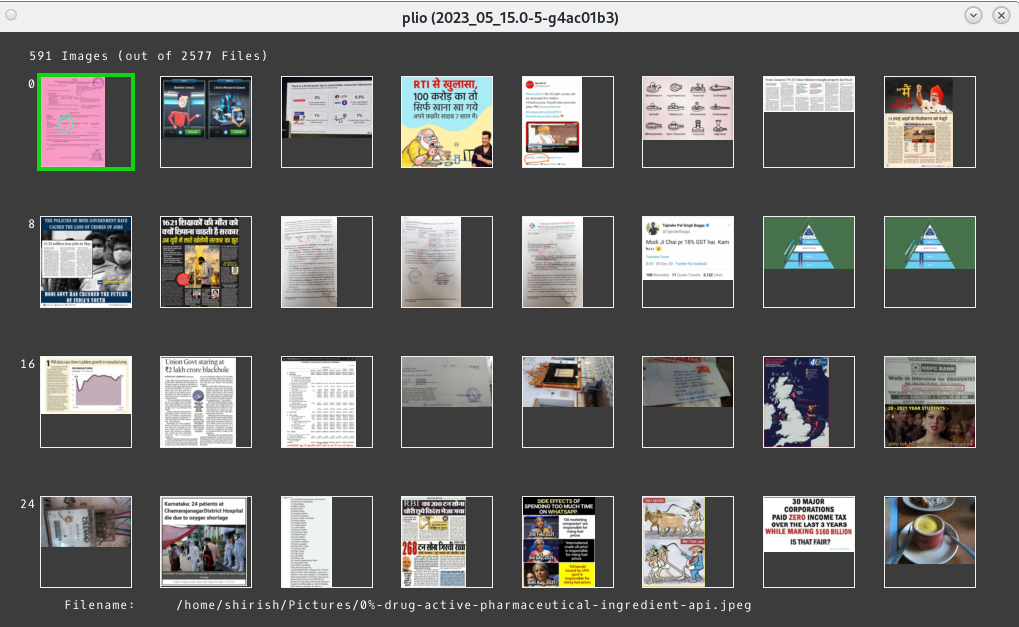
PLIO I have been looking for an image viewer that can view images via modification date by default. The newer, the better. Alas, most of the image viewers do not do that. Even feh somehow fails. What I need is default listing of images as thumbnails by modification date. I put it up on Unix Stackexchange couple of years ago. Somebody shared ristretto but that just gives listing and doesn t give the way I want it. To be more illustrative, maybe this may serve as a guide to what I mean.
There is an RFP for it. While playing with it, I also discovered another benefit of the viewer, a sort of side-benefit, it tells you if any images have gone corrupt or whatever and you get that info. on the CLI so you can try viewing that image with the path using another viewer or viewers before deleting them. One of the issues is there doesn t seem to be a magnify option by default. While the documentation says use the ^ key to maximize it, it doesn t maximize. Took me a while to find it as that isn t a key that I use most of the time. Ironically, that is the key used on the mobile quite a bit. Anyways, so that needs to be fixed. Sadly, it doesn t have creation date or modification date sort, although the documentation does say it does (at least the modification date) but it doesn t show at my end. I also got Warning: UNKNOWN command detected! but that doesn t tell me enough as to what the issue is. Hopefully the developer will fix the issues and it will become part of Debian as many such projects are. Compiling was dead easy even with gcc-12 once I got freeimage-dev.

Mum s first death anniversary I do not know where the year went by or how. The day went in a sort of suspended animation. The only thing I did was eat and sleep that day, didn t feel like doing anything. Old memories, even dreams of fighting with her only to realize in the dream itself it s fake, she isn t there anymore  Something that can never be fixed

Debconf Kochi I should have shared it few days ago but somehow slipped my mind. While it s too late for most people to ask for bursary for Debconf Kochi, if you are anywhere near Kochi in the month of September between the dates. September 3 to September 17 nearby Infopark, Kochi you could walk in and talk to people. This would be for people who either have an interest in free software, FOSS or Debian specific. For those who may not know, while Debian is a Linux Distribution having ports to other kernels as well as well as hardware. While I may not be able to provide the list of all the various flavors as well as hardware, can say it is quite a bit. For e.g. there is a port to RISC-V that was done few years back (2018). Why that is needed will be shared below. There is always something new to look forward in a Debconf.

Pressure Cooker and Potatoes This was asked to me in the last Debconf (2016) by few people. So as people are coming to India, it probably is a good time to sort of reignite the topic :). So a Pressure Cooker boils your veggies and whatnot while still preserving the nutrients. While there are quite a number of brands I would suggest either Prestige or Hawkins, I have had good experience with both. There are also some new pressure cookers that have come that are somewhat in the design of the Thai Wok. So if that is something that you are either comfortable with or looking for, you could look at that. One of the things that you have to be sort of aware of and be most particular is the pressure safety valve. Just putting up pressure cooker safety valve in your favorite search-engine should show you different makes and whatnot. While they are relatively cheap, you need to see it is not cracked, used or whatever. The other thing is the Pressure Cooker whistle as well. The easiest thing to cook are mashed potatoes in a pressure cooker. A pressure Cooker comes in Litres, from 1 Ltr. to 20 Ltr. The larger ones are obviously for hotels or whatnot. General rule of using Pressure cooker is have water 1/4th, whatever vegetable or non-veg you want to boil 1/2 and let the remaining part for the steam. Now the easiest thing to do is have wash the potatoes and put 1/4th water of the pressure cooker. Then put 1/2 or less or little bit more of the veggies, in this instance just Potatoes. You can put salt to or that can be done later. The taste will be different. Also, there are various salts so won t really go into it as spices is a rabbit hole. Anyways, after making sure that there is enough space for the steam to be built, Put the handle on the cooker and basically wait for 5-10 minutes for the pressure to be built. You will hear a whistling sound, wait for around 5 minutes or a bit more (depends on many factors, kind of potatoes, weather etc.) and then just let it cool off naturally. After 5-10 minutes or a bit more, the pressure will be off. Your mashed potatoes are ready for either consumption or for further processing. I am assuming gas, induction cooking will have its own temperature, have no idea about it, hence not sharing that. Pressure Cooker, first put on the heaviest settings, once it starts to whistle, put it on medium for 5-10 minutes and then let it cool off. The first time I had tried that, I burned the cooker. You understand things via trial and error.

Poha recipe This is a nice low-cost healthy and fulfilling breakfast called Poha that can be made anytime and requires at the most 10-15 minutes to prepare with minimal fuss. The main ingredient is Poha or flattened rice. So how is it prepared. I won t go into the details of quantity as that is upto how hungry people are. There are various kinds of flattened rice available in the market, what you are looking for is called thick Poha or zhad Poha (in Marathi). The first step is the trickiest. What do you want to do is put water on Poha but not to let it be soggy. There is an accessory similar to tea filter but forgot the name, it basically drains all the extra moisture and you want Poha to be a bit fluffy and not soggy. The Poha should breathe for about 5 minutes before being cooked. To cook, use a heavy bottomed skillet, put some oil in it, depends on what oil you like, again lot of variations, you can use ground nut or whatever oil you prefer. Then use single mustard seeds to check temperature of the oil. Once the mustard seeds starts to pop, it means it s ready for things. So put mustard seeds in, finely chopped onion, finely chopped coriander leaves, a little bit of lemon juice, if you want potatoes, then potatoes too. Be aware that Potatoes will soak oil like anything, so if you are going to have potatoes than the oil should be a bit more. Some people love curry leaves, others don t. I like them quite a bit, it gives a slightly different taste. So the order is
  1. Oil
  2. Mustard seeds (1-2 teaspoon)
  3. Curry leaves 5-10
  4. Onion (2-3 medium onions finely chopped, onion can also be used as garnish.)
  5. Potatoes (2-3 medium ones, mashed)
  6. Small green chillies or 1-2 Red chillies (if you want)
  7. Coriander Leaves (one bunch finely chopped)
  8. Peanuts (half a glass)
Make sure that you are stirring them quite a bit. On a good warm skillet, this should hardly take 5 minutes. Once the onions are slighly brown, you are ready to put Poha in. So put the poha, add turmeric, salt, and sugar. Again depends on number of people. If I made for myself and mum, usually did 1 teaspoon of salt, not even one fourth of turmeric, just a hint, it is for the color, 1 to 2 teapoons of sugar and mix them all well at medium flame. Poha used to be two or three glasses. If you don t want potato, you can fry them a bit separately and garnish with it, along with coriander, coconut and whatnot. In Kerala, there is possibility that people might have it one day or all days. It serves as a snack at anytime, breakfast, lunch, tea time or even dinner if people don t want to be heavy. The first few times I did, I did manage to do everything wrong. So, if things go wrong, let it be. After a while, you will find your own place. And again, this is just one way, I m sure this can be made as elaborate a meal as you want. This is just something you can do if you don t want noodles or are bored with it. The timing is similar. While I don t claim to be an expert in cooking in anyway or form, if people have questions feel free to ask. If you are single or two people, 2 Ltr. Pressure cooker is enough for most Indians, Westerners may take a slightly bit larger Pressure Cooker, maybe a 3 Ltr. one may be good for you. Happy Cooking and Experimenting  I have had the pleasure to have Poha in many ways. One of my favorite ones is when people have actually put tadka on top of Poha. You do everything else but in a slight reverse order. The tadka has all the spices mixed and is concentrated and is put on top of Poha and then mixed. Done right, it tastes out of this world. For those who might not have had the Indian culinary experience, most of which is actually borrowed from the Mughals, you are in for a treat. One of the other things I would suggest to people is to ask people where there can get five types of rice. This is a specialty of South India and a sort of street food. I know where you can get it Hyderabad, Bangalore, Chennai but not in Kerala, although am dead sure there is, just somehow have missed it. If asked, am sure the Kerala team should be able to guide. That s all for now, feeling hungry, having dinner as have been sharing about cooking.

RISC-V There has been lot of conversations about how India could be in the microprocesor spacee. The x86 and x86-64 is all tied up in Intel and AMD so that s a no go area. Let me elaborate a bit why I say that. While most of the people know that IBM was the first producers of transistors as well as microprocessors. Coincidentally, AMD and Intel story are similar in some aspects but not in others. For a long time Intel was a market leader and by hook or crook it remained a market leader. One of the more interesting companies in the 1980s was Cyrix which sold lot of low-end microprocessors. A lot of that technology also went into Via which became a sort of spiritual successor of Cyrix. It is because of Cyrix and Via that Intel was forced to launch the Celeron model of microprocessors.

Lawsuits, European Regulation For those who have been there in the 1990s may have heard the term Wintel that basically meant Microsoft Windows and Intel and they had a sort of monopoly power. While the Americans were sorta ok with it, the Europeans were not and time and time again they forced both Microsoft as well as Intel to provide alternatives. The pushback from the regulators was so great that Intel funded AMD to remain solvent for few years. The successes that we see today from AMD is Lisa Su s but there is a whole lot of history as well as bad blood between the two companies. Lot of lawsuits and whatnot. Lot of cross-licensing agreements between them as well. So for any new country it would need lot of cash just for licensing all the patents there are and it s just not feasible for any newcomer to come in this market as they would have to fork the cash for the design apart from manufacturing fab.

ARM Most of the mobiles today sport an ARM processor. At one time it meant Advanced RISC Machines but now goes by Arm Ltd. Arm itself licenses its designs and while there are lot of customers, you are depending on ARM and they can change any of the conditions anytime they want. You are also hoping that ARM does not steal your design or do anything else with it. And while people trust ARM, it is still a risk if you are a company.

RISC and Shakti There is not much to say about RISC other than this article at Register. While India does have large ambitions, executing it is far trickier than most people believe as well as complex and highly capital intensive. The RISC way could be a game-changer provided India moves deftly ahead. FWIW, Debian did a RISC port in 2018. From what I can tell, you can install it on a VM/QEMU and do stuff. And while RISC has its own niches, you never know what happens next.One can speculate a lot and there is certainly a lot of momentum behind RISC. From what little experience I have had, where India has failed time and time again, whether in software or hardware is support. Support is the key, unless that is not fixed, it will remain a dream  On a slightly sad note, Foxconn is withdrawing from the joint venture it had with Vedanta.

Lukas M rdian: Netplan and systemd-networkd on Debian Bookworm

Debian s cloud-images are using systemd-networkd as their default network stack in Bookworm. A slim and feature rich networking daemon that comes included with Systemd itself. Debian s cloud-images are deploying Netplan on top of this as an easy-to-use, declarative control layer. If you want to experiment with systemd-networkd and Netplan on Debian, this can be done easily in QEMU using the official images. To start, you need to download the relevant .qcow2 Debian cloud-image from: https://cloud.debian.org/images/cloud/bookworm/latest/
$ wget https://cloud.debian.org/images/cloud/bookworm/latest/debian-12-generic-amd64.qcow2

Prepare a cloud image Next, you need to prepare some configuration files for cloud-init and Netplan, to prepare a data-source (seed.img) for your local cloud-image.
$ cat > meta.yaml <<EOF
instance-id: debian01
local-hostname: cloudimg
EOF
$ cat > user.yaml <<EOF
#cloud-config
ssh_pwauth: true
password: test
chpasswd:
  expire: false
EOF
$ cat > netplan.yaml <<EOF
network:
  version: 2
  ethernets:
    id0:
      match:
        macaddress: "ca:fe:ca:fe:00:aa"
      dhcp4: true
      dhcp6: true
      set-name: lan0
EOF
Once all configuration is prepared, you can create the local data-source image, using the cloud-localds tool from the cloud-image-utils package:
$ cloud-localds --network-config=netplan.yaml seed.img user.yaml meta.yaml

Launch the local VM Now, everything is prepared to launch a QEMU VM with two NICs and do some experimentation! The following command will launch an ephemeral environment for you, keeping the original Debian cloud-image untouched. If you want to preserve any changes on disk, you can remove the trailing -snapshot parameter.
$ qemu-system-x86_64 \
  -machine accel=kvm,type=q35 \
  -cpu host \
  -m 2G \
  -device virtio-net-pci,netdev=net0,mac=ca:fe:ca:fe:00:aa \
  -netdev user,id=net0,hostfwd=tcp::2222-:22 \
  -nic user,model=virtio-net-pci,mac=f0:0d:ca:fe:00:bb \
  -drive if=virtio,format=qcow2,file=debian-12-generic-amd64.qcow2 \
  -drive if=virtio,format=raw,file=seed.img -snapshot
We set up the default debian user account through cloud-init s user-data configuration above, so you can now login to the system, using that user with the (very unsafe!) password test .
$ ssh -o "StrictHostKeyChecking=no" -o "UserKnownHostsFile=/dev/null" -p 2222 debian@localhost # password: test

Experience Netplan and systemd-networkd Once logged in successfully, you can execute the netplan status command to check the system s network configuration, as configured through cloud-init s netplan.yaml passthrough. So you ve already used Netplan at this point implicitly and it did all the configuration of systemd-networkd for you in the background!
debian@cloudimg:~$ sudo netplan status -a
     Online state: online
    DNS Addresses: 10.0.2.3 (compat)
       DNS Search: .
   1: lo ethernet UNKNOWN/UP (unmanaged)
      MAC Address: 00:00:00:00:00:00
        Addresses: 127.0.0.1/8
                   ::1/128
           Routes: ::1 metric 256
   2: enp0s2 ethernet DOWN (unmanaged)
      MAC Address: f0:0d:ca:fe:00:bb (Red Hat, Inc.)
   3: lan0 ethernet UP (networkd: id0)
      MAC Address: ca:fe:ca:fe:00:aa (Red Hat, Inc.)
        Addresses: 10.0.2.15/24 (dhcp)
                   fec0::c8fe:caff:fefe:aa/64
                   fe80::c8fe:caff:fefe:aa/64 (link)
    DNS Addresses: 10.0.2.3
           Routes: default via 10.0.2.2 from 10.0.2.15 metric 100 (dhcp)
                   10.0.2.0/24 from 10.0.2.15 metric 100 (link)
                   10.0.2.2 from 10.0.2.15 metric 100 (dhcp, link)
                   10.0.2.3 from 10.0.2.15 metric 100 (dhcp, link)
                   fe80::/64 metric 256
                   fec0::/64 metric 100 (ra)
                   default via fe80::2 metric 100 (ra)
As you can see from this output, the lan0 interface is configured via the id0 Netplan ID to be managed by systemd-networkd. Compare this data to the netplan.yaml file above, the networkctl output, the local Netplan configuration in /etc/netplan/ and the auto-generated systemd-networkd configuration.
debian@cloudimg:~$ networkctl 
IDX LINK   TYPE     OPERATIONAL SETUP     
  1 lo     loopback carrier     unmanaged
  2 enp0s2 ether    off         unmanaged
  3 lan0   ether    routable    configured
3 links listed.
debian@cloudimg:~$ cat /etc/netplan/50-cloud-init.yaml 
# [...]
network:
    ethernets:
        id0:
            dhcp4: true
            dhcp6: true
            match:
                macaddress: ca:fe:ca:fe:00:aa
            set-name: lan0
    version: 2

debian@cloudimg:~$ ls -l /run/systemd/network/
total 8
-rw-r--r-- 1 root root  78 Jul  5 15:23 10-netplan-id0.link
-rw-r--r-- 1 root root 137 Jul  5 15:23 10-netplan-id0.network
Now you can go ahead and try something more advanced, like link aggregation, using the second NIC that you configured for this QEMU VM and explore all the possibilities of Netplan on Debian, by checking the Netplan YAML documentation.

Michael Ablassmeier: Java timezone sheanigans

While running CI tests for a application that is implemented in C and Java, some configuration scripts set the current timezone. The C implemented parts catch the change just nicely, but the java related parts still report the default image timezone. A simple example:
import java.util.*;
import java.text.*;
class simpleTest
 
        public static void main(String args[])
         
           Calendar cal = Calendar.getInstance();
           System.out.println("TIME ZONE :"+ cal.getTimeZone().getDisplayName());
         
 
Result:
vagrant@vm:~$ sudo timedatectl set-timezone America/Aruba 
vagrant@vm:~$ timedatectl 
[..]
                Time zone: America/Aruba (AST, -0400)
[..]
vagrant@vm:~$ java test.java
TIME ZONE :Central European Standard Time
vagrant@vm:~$ ls -alh /etc/localtime 
lrwxrwxrwx 1 root root 35 Jul 10 14:41 /etc/localtime -> ../usr/share/zoneinfo/America/Aruba
It appears the Java implementation uses /etc/timezone as source, not /etc/localtime.
vagrant@vm:~$ echo America/Aruba   sudo tee /etc/timezone 
America/Aruba
vagrant@vm:~$ java test.java
TIME ZONE :Atlantic Standard Time
dpkg-reconfigure tzdata updates this file as well, so using timedatectl only won t be enough (at least not on Debian based systems which run java based applications.)

8 July 2023

Lisandro Dami n Nicanor P rez Meyer: Open question: Podman and user/group IDs

Here is an open question for Podman users: is there a (ideally simple) way to keep the user/group ID between the real system and the container? Let me be more verbose. I use Docker mostly in two "special" cases: Now in both setups I mount some system directory into the chroot, normally as $HOME. Using Docker I can do the right UID/GID mapping and any file I create inside the container will have my system's UID/GID. And that's the thing I so far could not do with Podman. So dear Podman user: is there any way to do this with Podman? If you know, please feel free to send a comment/email!

Russell Coker: Sandboxing Phone Apps

As a follow up to Wayland [1]: A difficult problem with Linux desktop systems (which includes phones and tablets) is restricting application access so that applications can t mess with each other s data or configuration but also allowing them to share data as needed. This has been mostly solved for Android but that involved giving up all legacy Linux apps. I think that we need to get phones capable of running a full desktop environment and having Android level security on phone apps and regular desktop apps. My interest in this is phones running Debian and derivatives such as PureOS. But everything I describe in this post should work equally well for all full featured Linux distributions for phones such as Arch, Gentoo, etc and phone based derivatives of those such as Manjaro. It may be slightly less applicable to distributions such as Alpine Linux and it s phone derivative PostmarketOS, I would appreciate comments from contributors to PostmarketOS or Alpine Linux about this. I ve investigated some of the ways of solving these problems. Many of the ways of doing this involves namespaces. The LWN articles about namespaces are a good background to some of these technologies [2]. The LCA keynote lecture Containers aka crazy user space fun by Jess Frazelle has a good summary of some of the technology [3]. One part that I found particularly interesting was the bit about recognising the container access needed at compile time. This can also be part of recognising bad application design at compile time, it s quite common for security systems to flag bad security design in programs. Firejail To sandbox applications you need to have some method of restricting what they do, this means some combination of namespaces and similar features. Here s an article on sandboxing with firejail [4]. Firejail uses namespaces, seccomp-bpf, and capabilities to restrict programs. It allows bind mounts if run as root and if not run as root it can restrict file access by name and access to networking, system calls, and other features. It has a convenient learning mode that generates policy for you, so if you have a certain restricted set of tasks that an application is to perform you can run it once and then force it to do only the same operations in future. I recommend that everyone who is still reading at this point try out firejail. Here s an example of what you can do:
# create a profile
firejail --build=xterm.profile xterm
# now this run can only do what the previous run did
firejail --profile=xterm.profile xterm
Note that firejail is SETUID root so can potentially reduce system security and it has had security issues in the past. In spite of that it can be good for allowing a trusted user to run programs with less access to the system. Also it is a good way to start learning about such things. I don t think it s a good solution for what I want to do. But I won t rule out the possibility of using it at some future time for special situations. Bubblewrap I tried out firejail with the browser Epiphany (Debian package epiphany-browser) on my Librem5, but that didn t work as Epiphany uses /usr/bin/bwrap (bubblewrap) for it s internal sandboxing (here is an informative blog post about the history of bubblewrap AKA xdg-app-helper which was developed as part of flatpak [5]). The Epiphany bubblewrap sandbox is similar to the situation with Chrome/Chromium which have internal sandboxing that s incompatible with firejail. The firejail man page notes that it s not compatible with Snap, Flatpack, and similar technologies. One issue this raises is that we can t have a namespace based sandboxing system applied to all desktop apps with no extra configuration as some desktop apps won t work with it. Bubblewrap requires setting kernel.unprivileged_userns_clone=1 to run as non-root (IE provide the normal and expected functionality) which potentially reduces system security. Here is an example of a past kernel bug that was exploitable by creating a user namespace with CAP_SYS_ADMIN [6]. But it s the default in recent Debian kernels which means that the issues have been reviewed and determined to be a reasonable trade-off and also means that many programs will use the feature and break if it s disabled. Here is an example of how to use Bubblewrap on Debian, after installing the bubblewrap run the following command. Note that the new-session option (to prevent injecting characters in the keyboard buffer with TIOCSTI) makes the session mostly unusable for a shell.
bwrap --ro-bind /usr /usr --symlink usr/lib64 /lib64 --symlink usr/lib /lib --proc /proc --dev /dev --unshare-pid --die-with-parent bash
Here is an example of using Bubblewrap to sandbox the game Warzone2100 running with Wayland/Vulkan graphics and Pulseaudio sound.
bwrap --bind $HOME/.local/share/warzone2100 $HOME/.local/share/warzone2100 --bind /run/user/$UID/pulse /run/user/$UID/pulse --bind /run/user/$UID/wayland-0 /run/user/$UID/wayland-0 --bind /run/user/$UID/wayland-0.lock /run/user/$UID/wayland-0.lock --ro-bind /usr /usr --symlink usr/bin /bin --symlink usr/lib64 /lib64 --symlink usr/lib /lib --proc /proc --dev /dev --unshare-pid --dev-bind /dev/dri /dev/dri --ro-bind $HOME/.pulse $HOME/.pulse --ro-bind $XAUTHORITY $XAUTHORITY --ro-bind /sys /sys --new-session --die-with-parent warzone2100
Here is an example of using Bubblewrap to sandbox the Debian bug reporting tool reportbug
bwrap --bind /tmp /tmp --ro-bind /etc /etc --ro-bind /usr /usr --ro-bind /var/lib/dpkg /var/lib/dpkg --symlink usr/sbin /sbin --symlink usr/bin /bin --symlink usr/lib64 /lib64 --symlink usr/lib /lib --symlink /usr/lib32 /lib32 --symlink /usr/libx32 /libx32 --proc /proc --dev /dev --die-with-parent --unshare-ipc --unshare-pid reportbug
Here is an example shell script to wrap the build process for Debian packages. This needs to run with unshare-user and specifying the UID as 0 because fakeroot doesn t work in the container, I haven t worked out why but doing it through the container is a better method anyway. This script shares read-write the parent of the current directory as the Debian build process creates packages and metadata files in the parent directory. This will prevent the automatic signing scripts which is a feature not a bug, so after building packages you have to sign the .changes file with debsign. One thing I just learned is that the Debian build system Sbuild can use chroots for building packages for similar benefits [7]. Some people believe that sbuild is the correct way of doing it regardless of the chroot issue. I think it s too heavy-weight for most of my Debian package building, but even if I had been convinced I d still share the information about how to use bwrap as Debian is about giving users choice.
#!/bin/bash
set -e
BUILDDIR=$(realpath $(pwd)/..)
exec bwrap --bind /tmp /tmp --bind $BUILDDIR $BUILDDIR --ro-bind /etc /etc --ro-bind /usr /usr --ro-bind /var/lib/dpkg /var/lib/dpkg --symlink usr/bin /bin --symlink usr/lib64 /lib64 --symlink usr/lib /lib --proc /proc --dev /dev --die-with-parent --unshare-user --unshare-ipc --unshare-net --unshare-pid --new-session --uid 0 --gid 0 $@
Here is an informative blog post about using Bubblewrap with Seccomp (BPF) [8]. In a future post I ll write about how to get this sort of thing going but I ll just leave the URL here for people who want to do it on their own. The source for the flatpak-run program is the only example I could find of using Seccomp with Bubblewrap [9]. A lot of that code is worth copying for application sandboxing, maybe the entire program. Unshare The unshare command from the util-linux package has a large portion of the Bubblewrap functionality. The things that it doesn t do like creating a new session can be done by other utilities. Here is an example of creating a container with unshare and then using cgroups with it [10]. systemd --user Recent distributions have systemd support for running a user session, the Arch Linux Wiki has a good description of how this works [11]. The units for a user are .service files stored in /usr/lib/systemd/user/ (distribution provided), ~/.local/share/systemd/user/ (user installed applications in debian a link to ~/.config/systemd/user/), ~/.config/systemd/user/ (for manual user config), and /etc/systemd/user/ (local sysadmin provided) Here are some example commands for manipulating this:
# show units running for the current user
systemctl --user
# show status of one unit
systemctl --user status kmail.service
# add an environment variable to the list for all user units
systemctl --user import-environment XAUTHORITY
# start a user unit
systemctl --user start kmail.service
# analyse security for all units for the current user
systemd-analyze --user security
# analyse security for one unit
systemd-analyze --user security kmail.service
Here is a test kmail.service file I wrote to see what could be done for kmail, I don t think that kmail is the app most needing to be restricted it is in more need of being protected from other apps but it still makes a good test case. This service file took it from the default risk score of 9.8 (UNSAFE) to 6.3 (MEDIUM) even though I was getting the error code=exited, status=218/CAPABILITIES when I tried anything that used capabilities (apparently due to systemd having some issue talking to the kernel).
[Unit]
Description=kmail
[Service]
ExecStart=/usr/bin/kmail
# can not limit capabilities (code=exited, status=218/CAPABILITIES)
#CapabilityBoundingSet=~CAP_SYS_TIME CAP_SYS_PACCT CAP_KILL CAP_WAKE_ALARM CAP_DAC_OVERRIDE CAP_DAC_READ_SEARCH CAP_FOWNER CAP_IPC_OWNER CAP_LINUX_IMMUTABLE CAP_IPC_LOCK CAP_SYS_MODULE CAP_SYS_TTY_CONFIG CAP_SYS_BOOT CAP_SYS_CHROOT CAP_BLOCK_SUSPEND CAP_LEASE CAP_MKNOD CAP_CHOWN CAP_FSETID CAP_SETFCAP CAP_SETGID CAP_SETUID CAP_SETPCAP CAP_SYS_RAWIO CAP_SYS_PTRACE CAP_SYS_NICE CAP_SYS_RESOURCE CAP_NET_ADMIN CAP_NET_BIND_SERVICE CAP_NET_BROADCAST CAP_NET_RAW CAP_SYS_ADMIN CAP_SYSLOG
# also 218 for ProtectKernelModules PrivateDevices ProtectKernelLogs ProtectClock
# MemoryDenyWriteExecute stops it displaying message content (bad)
# needs @resources and @mount to startup
# needs @privileged to display message content
SystemCallFilter=~@cpu-emulation @debug @raw-io @reboot @swap @obsolete
SystemCallArchitectures=native
UMask=077
NoNewPrivileges=true
ProtectControlGroups=true
PrivateMounts=false
RestrictNamespaces=~user pid net uts mnt cgroup ipc
RestrictSUIDSGID=true
ProtectHostname=true
LockPersonality=true
ProtectKernelTunables=true
RestrictAddressFamilies=~AF_PACKET
RestrictRealtime=true
ProtectSystem=strict
ProtectProc=invisible
PrivateUsers=true
[Install]
When I tried to use the TemporaryFileSystem=%h directive (to make the home directory a tmpfs the most basic step in restricting what a regular user application can do) I got the error (code=exited, status=226/NAMESPACE) . So I don t think the systemd user setup competes with bubblewrap for restricting user processes. But if anyone else can start where I left off and go further then that will be interesting. Systemd-run The following shell script runs firefox as a dynamic user via systemd-run, running this asks for the root password and any mechanism for allowing that sort of thing opens potential security holes. So at this time while it s an interesting feature I don t think it is suitable for running regular applications on a phone or Linux desktop.
#!/bin/bash
# systemd-run Firefox with DynamicUser and home directory.
#
# Run as a non-root user.
# Or, run as root and change $USER below.
SANDBOX_MINIMAL=(
    --property=DynamicUser=1
    --property=StateDirectory=openstreetmap
    # --property=RootDirectory=/debian_sid
)
SANDBOX_X11=(
    # Sharing Xorg always defeats security, regardless of any sandboxing tech,
    # but the config is almost ready for Wayland, and there's Xephyr.
#    --property=LoadCredential=.ICEauthority:/home/$USER/.ICEauthority
    --property=LoadCredential=.Xauthority:/home/$USER/.Xauthority
    --property=Environment=DISPLAY=:0
)
SANDBOX_FIREFOX=(
    # hardware-accelerated rendering
    --property=BindPaths=/dev/dri
    # webcam
    # --property=SupplementaryGroups=video
)
systemd-run  \
    "$ SANDBOX_MINIMAL[@] "  "$ SANDBOX_X11[@] " "$ SANDBOX_FIREFOX[@] " \
    bash -c '
        export XAUTHORITY="$CREDENTIALS_DIRECTORY"/.Xauthority
        export ICEAUTHORITY="$CREDENTIALS_DIRECTORY"/.ICEauthority
        export HOME="$STATE_DIRECTORY"/home
        firefox --no-remote about:blank
    '
Qubes OS Here is an interesting demo video of QubesOS [12] which shows how it uses multiple VMs to separate different uses. Here is an informative LCA presentation about Qubes which shows how it asks the user about communication between VMs and access to hardware [13]. I recommend that everyone who hasn t seen Qubes in operation watch the first video and everyone who isn t familiar with the computer science behind it watch the second video. Qubes appears to be a free software equivalent to NetTop as far as I can tell without ever being able to use NetTop. I don t think Qubes is a good match for my needs in general use and it definitely isn t a good option for phones (VMs use excessive CPU on phones). But it s methods for controlling access have some ideas that are worth copying. File Access XDG Desktop Portal One core issue for running sandboxed applications is to allow them to access files permitted by the user but no other files. There are two main parts to this problem, the easier one is to have each application have it s own private configuration directory which can be addressed by bind mounts, MAC systems, running each application under a different UID or GID, and many other ways. The hard part of file access is to allow the application to access random files that the user wishes. For example I want my email program, IM program, and web browser to be able to save files and also to be able to send arbitrary files via email, IM, and upload to web sites. But I don t want one of those programs to be able to access all the files from the others if it s compromised. So only giving programs access to arbitrary files when the user chooses such a file makes sense. There is a package xdg-desktop-portal which provides a dbus interface for opening files etc for a sandboxed application [14]. This portal has backends for KDE, GNOME, and Wayland among others which allow the user to choose which file or files the application may access. Chrome/Chromium is one well known program that uses the xdg-desktop-portal and does it s own sandboxing. To use xdg-desktop-portal an application must be modified to use that interface instead of opening files directly, so getting this going with all Internet facing applications will take some work. But the documentation notes that the portal API gives a consistent user interface for operations such as opening files so it can provide benefits even without a sandboxed environment. This technology was developed for Flatpak and is now also used for Snap. It also has a range of APIs for accessing other services [15]. Flatpak Flatpack is a system for distributing containerised versions of applications with some effort made to improve security. Their development of bubblewrap and xdg-desktop-portal is really good work. However the idea of having software packaged with all libraries it needs isn t a good one, here s a blog post covering some of the issues [16]. The web site flatkill.org has been registered to complain about some Flatpak problems [17]. They have some good points about the approach that Flatpak project developers have taken towards some issues. They also make some points about the people who package software not keeping up to date with security fixes and not determining a good security policy for their pak. But this doesn t preclude usefully using parts of the technology for real security benefits. If parts of Flatpak like Bubblewrap and xdg-portal are used with good security policies on programs that are well packaged for a distribution then these issues would be solved. The Flatpak app author s documentation about package requirements [18] has an overview of security features that is quite reasonable. If most paks follow that then it probably isn t too bad. I reviewed the manifests of a few of the recent paks and they seemed to have good settings. In the amount of time I was prepared to spend investigating this I couldn t find evidence to support the Flatkill claim about Flatpaks granting obviously inappropriate permissions. But the fact that the people who run Flathub decided to put a graph of installs over time on the main page for each pak while making the security settings only available by clicking the Manifest github link, clicking on a JSON or YAML file, and then searching for the right section in that shows where their priorities lie. The finish-args section of the Flatpak manifest (the section that describes the access to the system) seems reasonably capable and not difficult for users to specify as well as being in common use. It seems like it will be easy enough to take some code from Flatpak for converting the finish-args into Bubblewrap parameters and then use the manifest files from Flathub as a starting point for writing application security policy for Debian packages. Snap Snap is developed by Canonical and seems like their version of Flatpak with some Docker features for managing versions, the Getting Started document is worth reading [19]. They have Connections between different snaps and the system where a snap registers a plug that connects to a socket which can be exposed by the system (EG the camera socket) or another snap. The local admin can connect and disconnect them. The connections design reminds me of the Android security model with permitting access to various devices. The KDE Neon extension [20] has been written to add Snap support to KDE. Snap seems quite usable if you have an ecosystem of programs using it which Canonical has developed. But it has all the overheads of loopback mounts etc that you don t want on a mobile device and has the security issues of libraries included in snaps not being updated. A quick inspection of an Ubuntu 22.04 system I run (latest stable release) has Firefox 114.0.2-1 installed which includes libgcrypt.so.20.2.5 which is apparently libgcrypt 1.8.5 and there are CVEs relating to libgcrypt versions before 1.9.4 and 1.8.x versions before 1.8.8 which were published in 2021 and updated in 2022. Further investigation showed that libgcrypt came from the gnome-3-38-2004 snap (good that it doesn t require all shared objects to be in the same snap, but that it has old versions in dependencies). The gnome-3-38-2004 snap is the latest version so anyone using the Snap of Firefox seems to have no choice but to have what appears to be insecure libraries. The strict mode means that the Snap in question has no system access other than through interfaces [21]. SE Linux and Apparmor The Librem5 has Apparmor running by default. I looked into writing Apparmor policy to prevent Epiphany from accessing all files under the home directory, but that would be a lot of work. Also at least one person has given up on maintaining an Epiphany profile for Apparmor because it changes often and it s sandbox doesn t work well with Apparmor [22]. This was not a surprise to me at all, SE Linux policy has the same issues as Apparmor in this regard. The Ubuntu Security Team Application Confinement document [23] is worth reading. They have some good plans for using AppArmor as part of solving some of these problems. I plan to use SE Linux for that. Slightly Related Things One thing for the future is some sort of secure boot technology, the LCA lecture Becoming a tyrant: Implementing secure boot in embedded devices [24] has some ideas for the future. The Betrusted project seems really interesting, see Bunnie s lecture about how to create a phone size security device with custom OS [25]. The Betrusted project web page is worth reading too [26]. It would be ironic to have a phone as your main PC that is the same size as your security device, but that seems to be the logical solution to several computing problems. Whonix is a Linux distribution that has one VM for doing Tor stuff and another VM for all other programs which is only allowed to have network access via the Tor VM [27]. Xpra does for X programs what screen/tmux do for text mode programs [28]. It allows isolating X programs from each other in ways that are difficult to impossible with a regular X session. In an ideal situation we could probably get the benefits we need with just using Wayland, but if there are legacy apps that only have X support this could help. Conclusion I think that currently the best option for confining desktop apps is Bubblewrap on Wayland. Maybe with a modified version of Flatpak-run to run it and with app modifications to use the xdg-portal interfaces as much as possible. That should be efficient enough in storage space, storage IO performance, memory use, and CPU use to run on phones while giving some significant benefits. Things to investigate are how much code from Flatpak to use, how to most efficiently do the configuration (maybe the Flatpak way because it s known and seems effective), how to test this (and have regression tests), and what default settings to use. Also BPF is a big thing to investigate.

5 July 2023

Reproducible Builds: Reproducible Builds Summit 2023 in Hamburg

We are glad to announce the upcoming Reproducible Builds Summit, set to take place from October 31st to November 2nd, 2023, in the vibrant city of Hamburg, Germany. This year, we are thrilled to host the seventh edition of this exciting event following the success of previous summits in various iconic locations around the world, including Venice (2022), Marrakesh (2019), Paris (2018), Berlin (2017), Berlin (2016) Athens (2015). If you re excited about joining us this year, please make sure to read the event page which has more details about the event and location. As in previous years, we will be sending invitations to all those who attended our previous summit events or expressed interest to do so. However also without receiving such a personal invitation please do email the organizers and we will find a way to accommodate you.

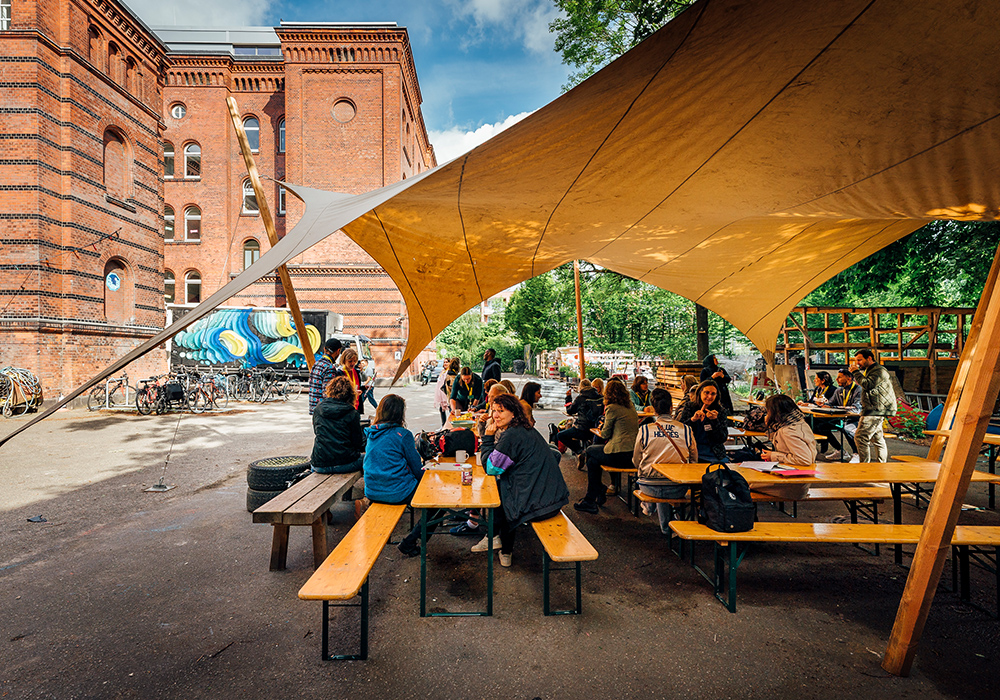
About the event The Reproducible Builds Summit is a unique gathering that brings together attendees from diverse projects, united by a shared vision of advancing the Reproducible Builds effort. During this enriching event, participants will have the opportunity to engage in discussions, establish connections and exchange ideas to drive progress in this vital field. Our aim is to create an inclusive space that fosters collaboration, innovation and problem-solving. With your help, we will bring this space (and several other inside areas) into life:
The outside area at dock-europe (source: dock-europe.net)

Schedule Although the exact content of the meeting will be shaped by the participants, the main goals will include:
  • Update & exchange about the status of reproducible builds in various projects.
  • Improve collaboration both between and inside projects.
  • Expand the scope and reach of reproducible builds to more projects.
  • Work together and hack on solutions.
  • Establish space for more strategic and long-term thinking than is possible in virtual channels.
  • Brainstorm designs on tools enabling users to get the most benefits from reproducible builds.
  • Discuss how reproducible builds will be usable and meaningful to users and developers alike.
Logs and minutes will be published after the meeting.

Location & date
  • October 31st to November 2nd, 2023
  • Dock Europe, Zeiseweg 9, 22765, Hamburg, Germany.

Registration instructions Please reach out if you d like to participate in hopefully interesting, inspiring and intense technical sessions about reproducible builds and beyond! We look forward to what we anticipate to be an extraordinary event!

1 July 2023

Dirk Eddelbuettel: New Achievement Unlocked: Bugfix Patch into Stable Release Update

Last weekend was the bi-annual time to roll the main machine and server to the current Ubuntu release, now at 23.04. It must now have been fifteen or so years that I have used Ubuntu for my desktop / server (for reasons I may write about another time). And of course it all passed swimmingly as usual. [ And a small aside, if I may. Among all these upgrades, one of my favourite piece of tech trivia that may well be too little known remains the dedication of the PostgreSQL maintainers installing the new version, now PostgreSQL 15, seamlessly in parallel with the existing one, in my case PostgreSQL 14, keeping both running (!!) on two neighbouring ports (!!) so that there is no service disruption. So at some point, maybe this weekend, I will run the provided script to dump-and-restore to trigger the database migration at my convenience. Happy PostgreSQL on Debian/Ubuntu user since the late 1990s. It. Just. Works. ] [ Similarly, it is plainly amazeballs how apt orders and runs package updates to service to keep running for a maximum amount of time. This machine acts as e.g. a web server and it was up and running (as were other services) while thousands of package got updated/replaced. It is pretty amazing. Whereas on other platforms people still maintain the do not ever update anything we demonstrably offer the opposite here. Really not too shabby. ] This time, I had one small hickup. Emacs, now at version 28 bringing loads of niceties along, would not load. And the error soon lead to a post on the magit list where its indefatigable author Jonas Bernoulli suggested a rebuild (and hence re-compilation of the elisp files). Which I did, and which allowed a start of VM inside Emacs. So I was happy. But it allowed it only once for each VM package reinstall. Not good, and I remained curious. Some more digging lead to a breakthrough. A post and commit at the Fedora Project indicated that for just VM within Emacs, byte-compilation throws a spanner. Which one can work around by telling Emacs not to compile the files in the VM folder. So I applied that patch to the VM package in a local build et voil we have working VM. The world is clearly better when your email client of 25+ years just works. And feels snappier because everything under Emacs28 feels snappier! So I set this up properly and filed Debian Bug Report #1039105. To which Ian Jackson, the maintainer, replied a few days later nodding that he could reproduce. And that he concurred with the bug report, and was planning to update throughout. And lo and behold this morning s update reveals that this made into an update for the just-released Debian Bookworm. So yay. In all these years of Debian maintainership (somewhere between twentyfive and thirty) this may be my first bug report with patch going straight into a stable release. But of course, true and full credit goes of course to G ran Uddeborg for putting it up first for Fedora. Lovely how Open Source can work together. We really should do more, not less, of that. But I digress Anyway, in sum: If you try to use VM under the lovely Emacs 28, there is a fix, and if you use it with Debian Bookworm the fix should hit your mirrors soons. Ditto, methinks, for the next Ubuntu release. If you use it under Ubuntu now, the package is (elisp) text-only and can be safely installed on a derivative (which we do not enjoy in general but which is fine here). So enjoy! If you like this or other open-source work I do, you can now sponsor me at GitHub.

This post by Dirk Eddelbuettel originated on his Thinking inside the box blog. Please report excessive re-aggregation in third-party for-profit settings.

Bastian Venthur: dotenv-cli update

Thanks to Nicholas Guriev, dotenv-cli now uses exec instead of popen to create the new process on POSIX systems. As a refresher, dotenv-cli is a package that provides the dotenv command. dotenv reads the .env file from the current directory, puts the contents in the environment variables, and executes the given command with the extra environment variables set. dotenv comes in handy if you follow the 12 factor app methodology or just need to run a program locally with specific environment variables set. With this new change, when you call
dotenv my_awesome_tool
instead of forking a new process for my_awesome_tool, effectively creating a child process of dotenv, dotenv now uses exec to become the new process. This is a bit cleaner, as there is no longer a dotenv-process running that you don t actually care about, and less-error prone when trying to send signals such as SIGTERM to the processes that runs my_awesome_tool. Unfortunately, exec does not work properly under Windows, so here we still fall back to using popen. This new feature is available in version 3.2.0 which is available on PyPI and debian/unstable.

Debian Brasil: MiniDebConf Bras lia 2023 - um breve relato

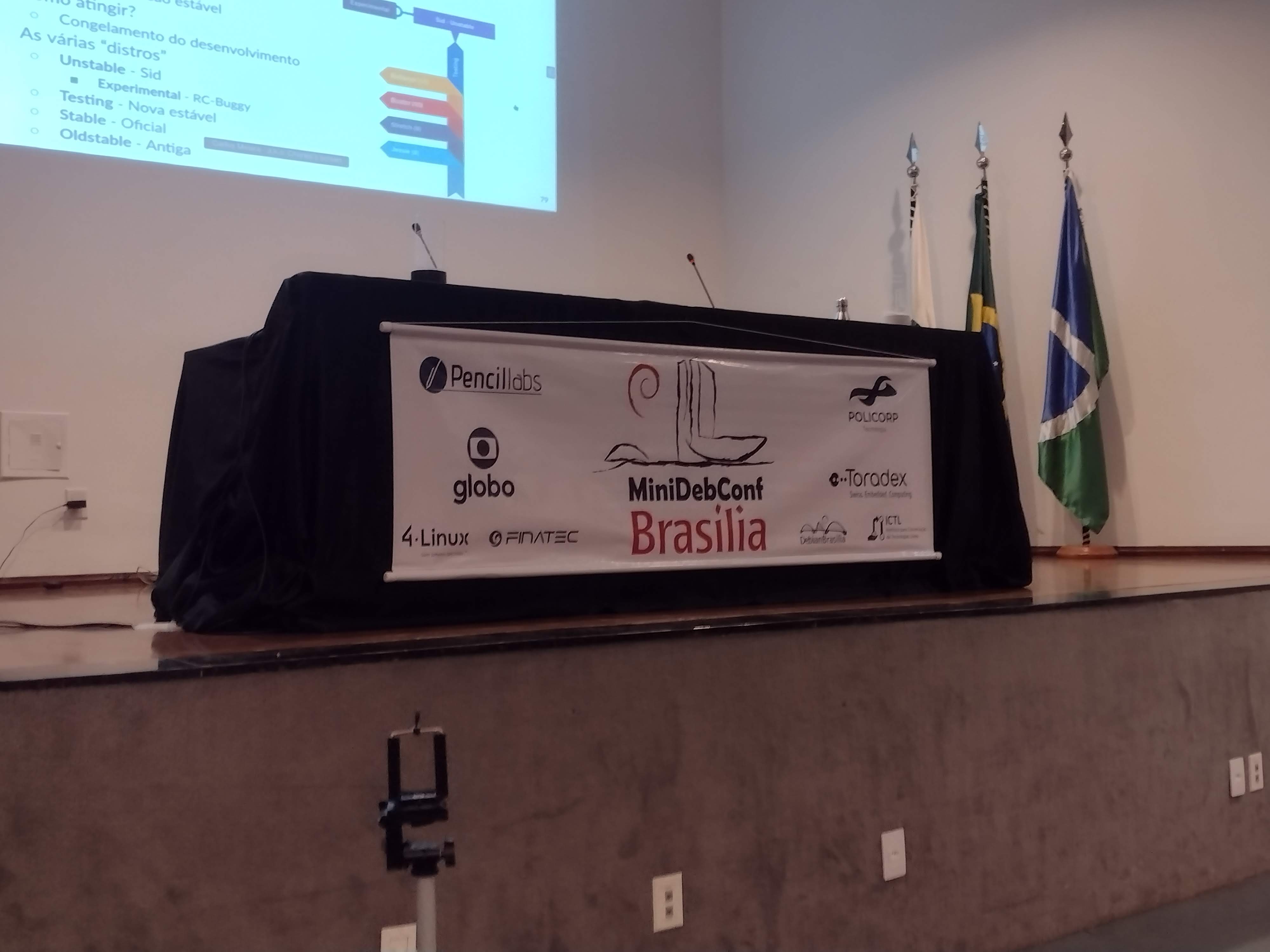
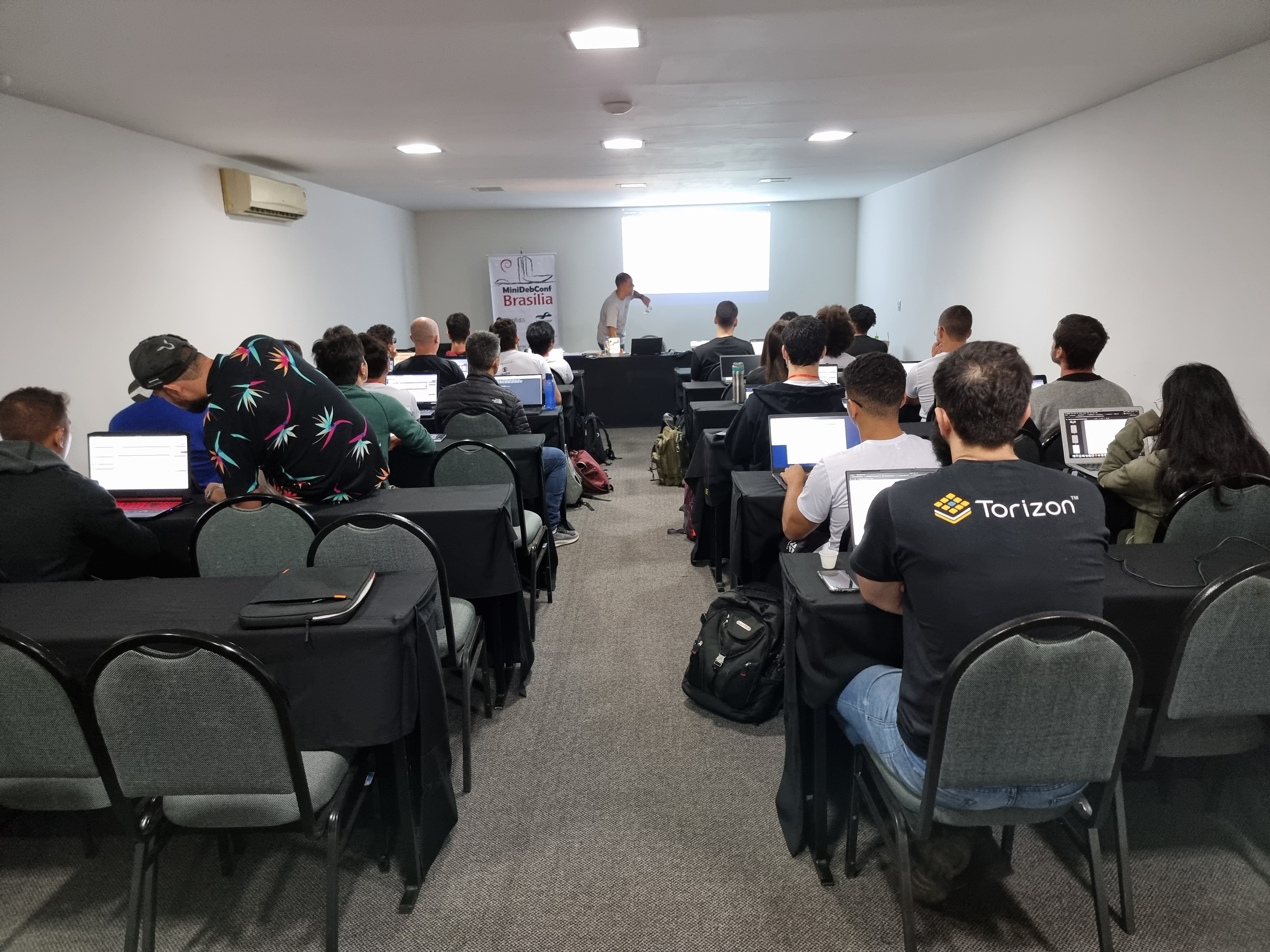
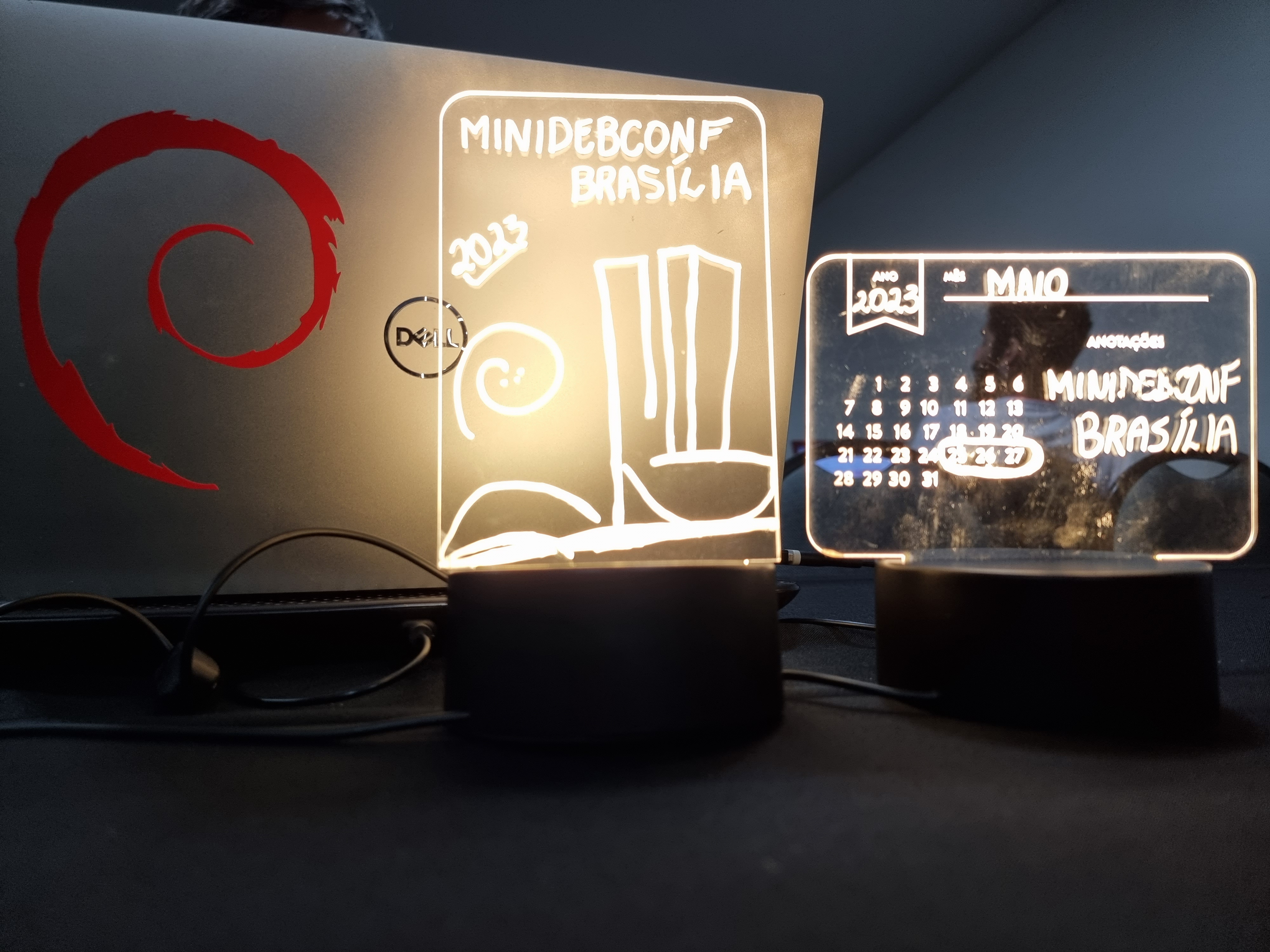
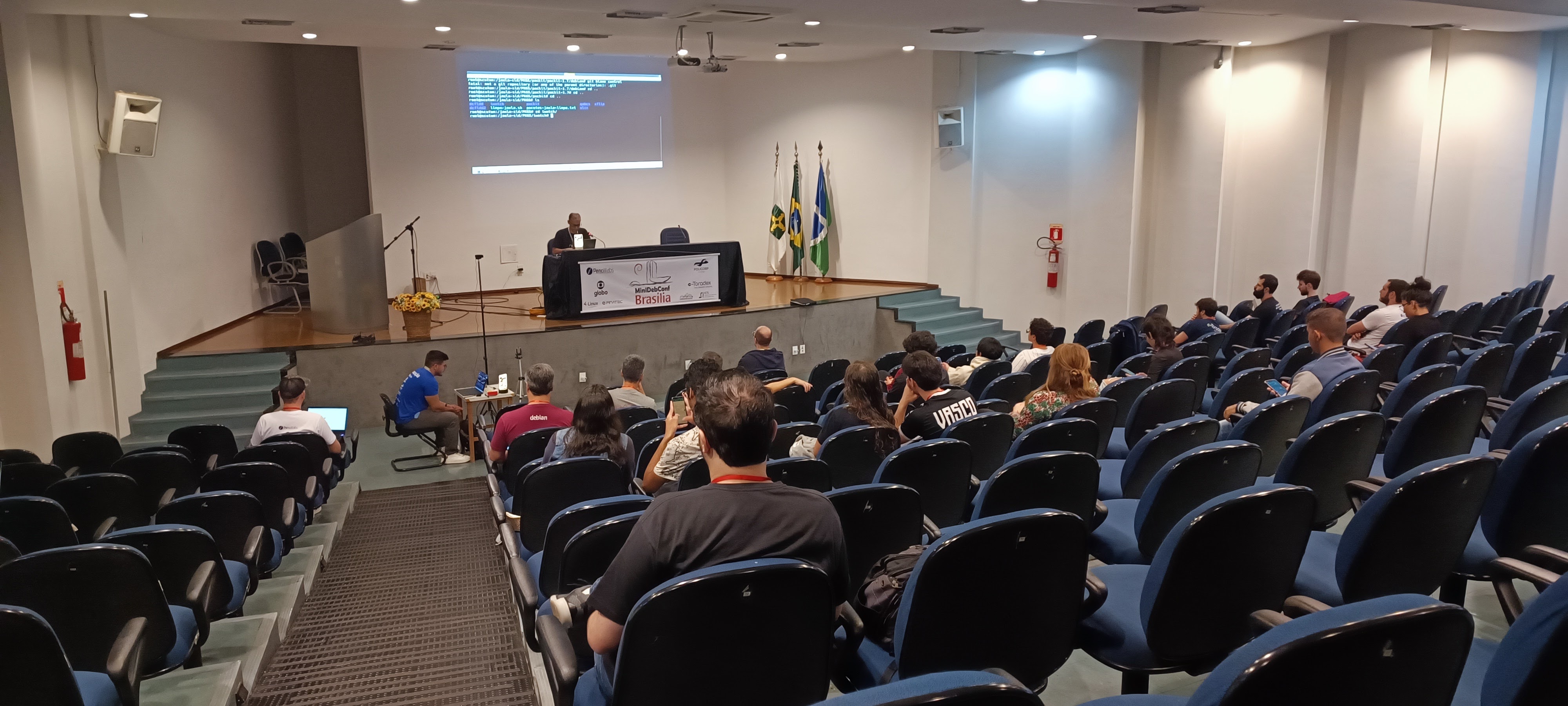
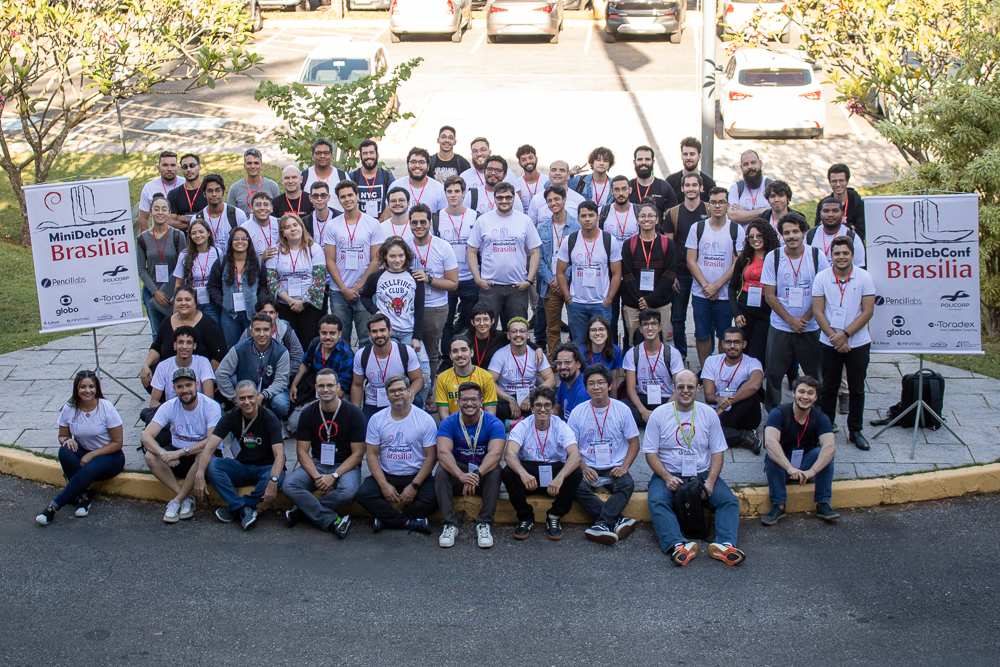
Minidebconf2033 palco No per odo de 25 a 27 de maio, Bras lia foi palco da MiniDebConf 2023. Esse encontro, composto por diversas atividades como palestras, oficinas, sprints, BSP (Bug Squashing Party), assinatura de chaves, eventos sociais e hacking, teve como principal objetivo reunir a comunidade e celebrar o maior projeto de Software Livre do mundo: o Debian. A MiniDebConf Bras lia 2023 foi um sucesso gra as participa o de todas e todos, independentemente do n vel de conhecimento sobre o Debian. Valorizamos a presen a tanto dos(as) usu rios(as) iniciantes que est o se familiarizando com o sistema quanto dos(as) desenvolvedores(as) oficiais do projeto. O esp rito de acolhimento e colabora o esteve presente em todos os momentos. As MiniDebConfs s o encontros locais organizados por membros do Projeto Debian, visando objetivos semelhantes aos da DebConf, por m em mbito regional. Ao longo do ano, eventos como esse ocorrem em diferentes partes do mundo, fortalecendo a comunidade Debian. Minidebconf2023 placa Atividades A programa o da MiniDebConf foi intensa e diversificada. Nos dias 25 e 26 (quinta e sexta-feira), tivemos palestras, debates, oficinas e muitas atividades pr ticas. J no dia 27 (s bado), ocorreu o Hacking Day, um momento especial em que os(as) colaboradores(as) do Debian se reuniram para trabalhar em conjunto em v rios aspectos do projeto. Essa foi a vers o brasileira da Debcamp, tradi o pr via DebConf. Nesse dia, priorizamos as atividades pr ticas de contribui o ao projeto, como empacotamento de softwares, tradu es, assinaturas de chaves, install fest e a Bug Squashing Party. Minidebconf2023 auditorio
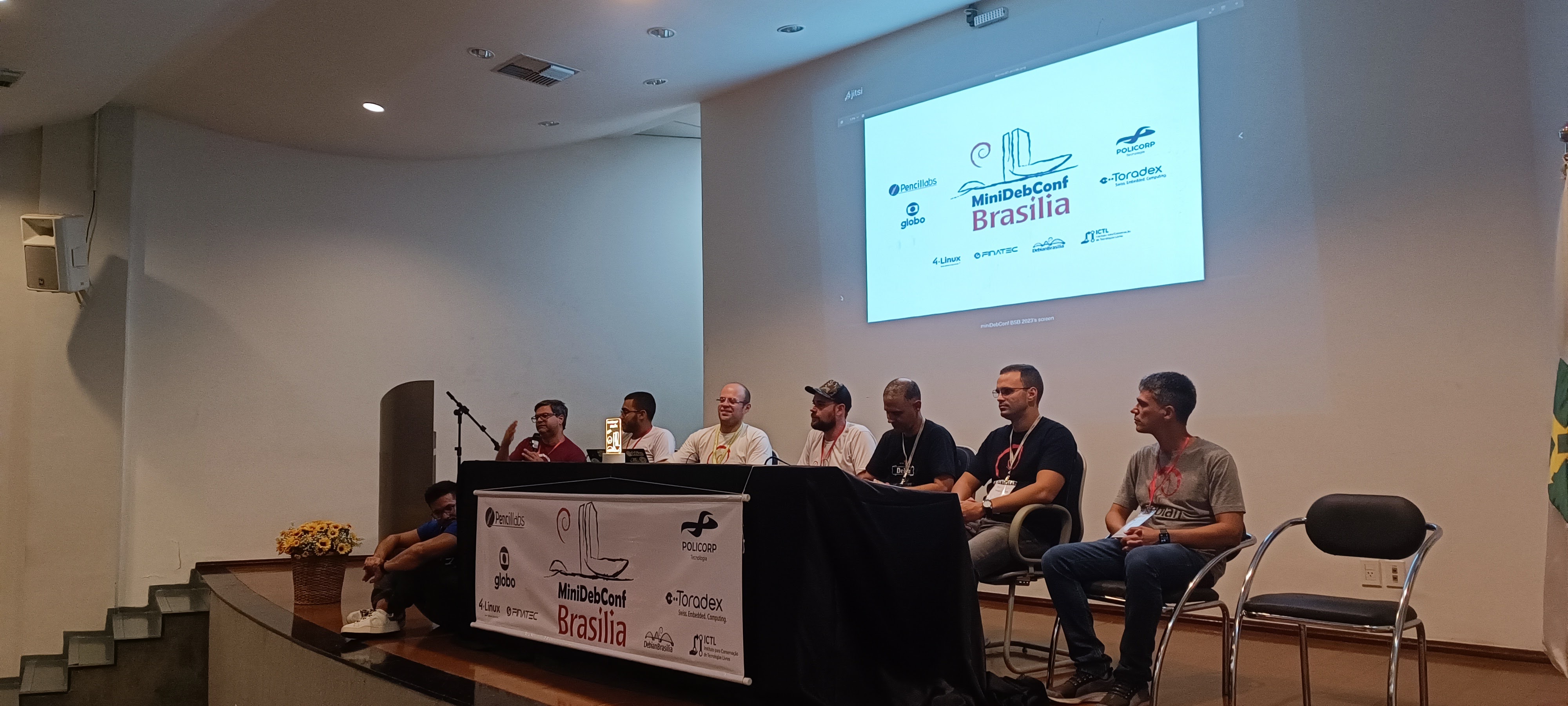
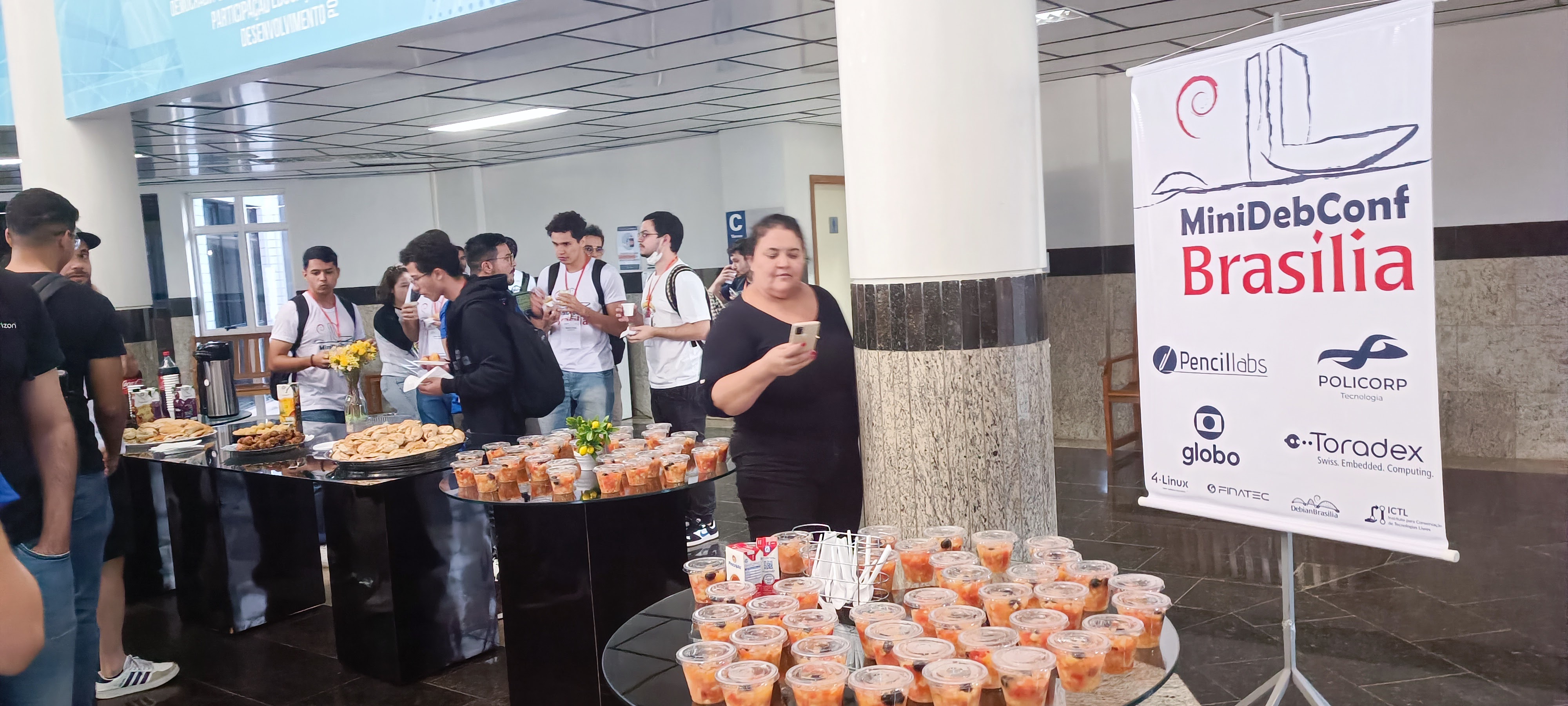
Minidebconf2023 oficina N meros da edi o Os n meros do evento impressionam e demonstram o envolvimento da comunidade com o Debian. Tivemos 236 inscritos(as), 20 palestras submetidas, 14 volunt rios(as) e 125 check-ins realizados. Al m disso, nas atividades pr ticas, tivemos resultados significativos, como 7 novas instala es do Debian GNU/Linux, a atualiza o de 18 pacotes no reposit rio oficial do projeto Debian pelos participantes e a inclus o de 7 novos contribuidores na equipe de tradu o. Destacamos tamb m a participa o da comunidade de forma remota, por meio de transmiss es ao vivo. Os dados anal ticos revelam que nosso site obteve 7.058 visualiza es no total, com 2.079 visualiza es na p gina principal (que contava com o apoio de nossos patrocinadores), 3.042 visualiza es na p gina de programa o e 104 visualiza es na p gina de patrocinadores. Registramos 922 usu rios(as) nicos durante o evento. No YouTube, a transmiss o ao vivo alcan ou 311 visualiza es, com 56 curtidas e um pico de 20 visualiza es simult neas. Foram incr veis 85,1 horas de exibi o, e nosso canal conquistou 30 novos inscritos(as). Todo esse engajamento e interesse da comunidade fortalecem ainda mais a MiniDebConf. Minidebconf2023 palestrantes Fotos e v deos Para revivermos os melhores momentos do evento, temos dispon veis fotos e v deos. As fotos podem ser acessadas em: https://deb.li/pbsb2023. J os v deos com as grava es das palestras est o dispon veis no seguinte link: https://deb.li/vbsb2023. Para manter-se atualizado e conectar-se com a comunidade Debian Bras lia, siga-nos em nossas redes sociais: Agradecimentos Gostar amos de agradecer profundamente a todos(as) os(as) participantes, organizadores(as), patrocinadores e apoiadores(as) que contribu ram para o sucesso da MiniDebConf Bras lia 2023. Em especial, expressamos nossa gratid o aos patrocinadores Ouro: Pencillabs, Globo, Policorp e Toradex Brasil, e ao patrocinador Prata, 4-Linux. Tamb m agradecemos Finatec e ao Instituto para Conserva o de Tecnologias Livres (ICTL) pelo apoio. Minidebconf2023 coffee A MiniDebConf Bras lia 2023 foi um marco para a comunidade Debian, demonstrando o poder da colabora o e do Software Livre. Esperamos que todas e todos tenham desfrutado desse encontro enriquecedor e que continuem participando ativamente das pr ximas iniciativas do Projeto Debian. Juntos, podemos fazer a diferen a! Minidebconf2023 fotos oficial
Junichi Uekawa: New month.

New month. It's been 15 years since I joined the current company. That's a long time.

Paul Wise: FLOSS Activities June 2023

Focus This month I didn't have any particular focus. I just worked on issues in my info bubble.

Changes

Issues

Review
  • Spam: reported 29 Debian mailing list posts
  • Debian wiki: RecentChanges for the month
  • Debian BTS usertags: changes for the month
  • Debian screenshots:
    • approved lsd stockfish x86dis
    • rejected libselinux1 (photo), stockfish (mobile app), php-bcmath (selfie), chromium-browser/binutils-alpha-linux-gnu (medical photo), weboob-qt (QR code)

Administration
  • Debian QA services: deploy changes
  • Debian IRC: updated #debian-live admin list
  • Debian mentors: investigate reason for missing package
  • Debian wiki: unblock IP addresses, approve accounts

Communication

Sponsors The sptag work was sponsored. All other work was done on a volunteer basis.

30 June 2023

Russell Coker: Links June 2023

Tablet Magazine has an interesting article about Jewish men who fought in the military for Nazi Germany [1]. I m surprised that they didn t frag their colleagues. Dropbox has an insightful interview with a lawyer about the future of machine learning in the legal profession [2]. This seems like it could give real benefits to society in giving legal assistance to more people and giving less uncertainty about the result of court cases. It could also find unclear laws for legislators who want to improve things. Some people have started a software to produce a free software version of Victoria 2 [3]. Hopefully OpenVic will become as successful as FreeCiv and FreeCraft! Hackster has an interesting article about work to create a machine that does a realistic impersonation of someone s handwriting [4]. The aim is to be good enough to fool people who want manually written assignments. Ars technica has an interesting article about a side channel attack using the power LEDs of smart-card readers to extract cryptographic secret key data [5]. As usual for articles about side channels it turns out to be really hard to do and their proof of concept involved recording a card being repeatedly scanned for an hour. This doesn t mean it s a non-issue, they should harden readers against this. Vice has an interesting article on the search for chemical remnants of ancient organisms in 1.6 billion year old fossils [6]. Bleeping Computer has an interesting article about pirate Windows 10 ISOs infecting systems with EFI malware [7]. That s a particularly nasty attack and shows yet another down-side to commercial software. For Linux the ISOs are always clean and the systems aren t contaminated. The Register has an interesting article about a robot being used for chilled RAM attacks to get access to boot time secrets [8]. They monitor EMF output to stop it at the same time in each boot which I consider the most noteworthy part of this attack. The BBC has an interesting article about personalised medicine [9]. There are 400 million people in the world with rare diseases and an estimated 60 million of them will die before the age of 5. Personalised medicine can save many lives. Let s hope it is used outside the first world. Knuth s thoughts about ChatGPT are interesting [10]. Interesting article about Brown M&Ms and assessing the likely quality of work from a devops team [11]. The ABC has an interesting article about the use of AI and robot traps to catch feral cats [12].

Shirish Agarwal: Motherboard battery, Framework, VR headsets, Steam

Motherboard Battery You know you have become too old when you get stumped and the solution is simple and fixed by the vendor. About a week back, I was getting CPU Fan Error. It s a 6 year old desktop so I figured that the fan or the ball bearings on the fan must have worn out. I opened up the cabinet and I could see both the on cpu fan was working coolly as well as the side fan was working without an issue. So I couldn t figure out what was the issue. I had updated the BIOS/UEFI number of years ago so that couldn t be an issue. I fiddled with the boot menu and was able to boot into Linux but it was a pain that I had to do every damn time. As it is, it takes almost 2-3 minutes for the whole desktop to be ready and this extra step was annoying. I had bought a Mid-tower cabinet while the motherboard so there were alternate connectors I could try but still the issue persisted. And this workaround was heart-breaking as you boot the BIOS/UEFI and fix the boot menu each time even though it had Debian Boot Launcher and couple of virtual ones provided by the vendor (Asus) and they were hardwired. So failing all, went to my vendor/support and asked if he could find out what the issue is. It costed me $10, he did all the same things I did but one thing more, he changed the battery (cost less than 1USD) and presto all was right with the world again. I felt like a fool but a deal is a deal so paid the gentleman for his services. Now can again use the desktop and at least know about what s happening in the outside world.

Framework Laptops I have been seeing quite a few teardowns of Framework Laptops on Youtube and love it. More so, now that they have AMD in their arsenal. I do hope they work on their pricing and logistics and soon we have it here competing with others. If the pricing isn t substantial then definitely would be one of the first ones to order. India is and remains a very cost-conscious market and more so with the runaway prices that we have been seeing. In fact, the last 3 years have been pretty bad for the overall PC market declining 30% YoY for the last 3 years while prices have gone through the roof. Apart from the pricing from the vendors, taxation has been another hit as the current Govt. has been taxing anywhere from 30-100% taxes on various PC, desktop and laptop components. Think have shared Graphic cards for instance have 100% Duty apart from other taxes. I don t see the market picking up at least in the 24 to 36 months. Most of this year and next year, both AMD and Intel are doing refreshes so while there would be some improvements (probably 10-15%) not earth-shattering for the wider market to sit up and take notice. Intel has proposed a 64-bit architecture (only) about couple of months back, more on that later. As far as the Indian market is concerned, if you want the masses, then have lappies at around 40-50k ($600 USD) and there would be a mass takeup, if you want to be a Lenovo or something like that, then around a lakh or INR 100k ($1200 USD) or be an Apple which is around 150k INR or around 2000 USD. There are some clues as to what their plans but for that you have to trawl their forums and the knowledgebase. Seems some people are using freight forwarders to get around the hurdles but Framework doesn t want to do any shortcuts for the same. Everybody seems to be working on Vertical stacking of chips, whether it is the Chinese, or Belgian s or even AMD and Intel who have their own spins to it, but most of these technologies are at least 3-4 years out in the future (or more). India is a big laggard in this space with having knowledge of 45nm which in Aviation speak one could say India knows how to build 707 (one of the first Boeing commercial passenger carrying aircraft) while today it is Boeing 777x or Airbus 350. I have shared in the past how the Tata s have been trying to collaborate with the Japanese and get at least their 25nm chip technology but nothing has come of it to date. The only somewhat o.k. news has been the chip testing and packaging plant by Micron to be made in Gujarat. It doesn t do anything for us although we would be footing almost 70% of the plant s capital expenditure and the maximum India will get 4k jobs. Most of these plants are highly automated as dust is their mortal enemy so even the 4k jobs announced seem far-fetched. It would probably be less than half once production starts if it happens  but that is probably a story for another time. Just as a parting shot, even memory vendors are going highly automated factory lines.

VR Headsets I was stuck by how similar or where VR is when I was watching Made in Finland. I don t want to delve much into the series but it is a fascinating one. I was very much taken by the character of Kari Kairamo or the actor who played the character of him and was very much disappointed with the sad ending the gentleman got. It is implicated in the series that the banks implicitly forced him to commit suicide. There is also a lot of chaos as is normal in a big company having many divisions. It s only when Jorma Olila takes over, the company sheds a lot of dead weight was cut off with mobiles having the most funding which they didn t have before. I was also fascinated when I experienced pride when Nokia shows off its 1011 mobile phone when at that time phones were actually like bricks. My first Nokia was number of years later, Nokia 1800 and have to say those phones outlasted a long time than today s Samsung s. If only Nokia had read the tea leaves right  Back to the topic though, I have been wearing glasses since the age of 5 year old. They weigh less than 10 grams and you still get a nose dent. And I know enough people, times etc. when people have got headaches and whatnot from glasses. Unless the VR headsets become that size and don t cost an arm and leg (or a kidney or a liver) it would have niche use. While 5G and 6G would certainly push more ppl to get it it probably would take a few more years before we have something that is simple and doesn t need too much to get it rolling. The series I mentioned above is already over it s first season but would highly recommend it. I do hope the second season happens quickly and we do come to know why and how Nokia missed the Android train and their curious turn to get to Microsoft which sorta sealed their fate

Steam I have been following Steam, Luthris and plenty of other launchers on Debian. There also seems to some sort of an idea that once MESA 23.1.x or later comes into Debian at some point we may get Steam 64-bit and some people are hopeful that we may get it by year-end. There are a plethora of statistics that can be used to find status of Gaming on Linux. This is perhaps the best one I got so far. Valve also has its own share of stats that it shows here. I am not going to go into much detail except the fact that lutris has been there on Debian sometime now. And as and when Steam does go fully 64-bit, whole lot of multilib issues could be finally put to rest. Interestingly, Intel has quietly also shared details of only a 64-bit architecture PC. From what I could tell, it simply boots into 16-bit and then goes into 64-bit bypassing the 32-bit. In theory, it should remove whole lot code, make it safer as well as faster. If rival AMD was to play along things could move much faster. Now don t get me wrong, 32-bit was good, but for it s time. I m sure at some point in time even 64-bit would have its demise, and we would jump to 128-bit. Of course, in reality we aren t anywhere close to even 48-bit, leave alone 64-bit. Superuser gives a good answer on that. We may be a decade or more before we exhaust that but for sure there will be need for better, faster hardware especially as we use more and more of AI for good and bad things. I am curious to see how it pans out and how it will affect (or not) FOSS gaming. FWIW, I used to peruse freegamer.blogspot.com which kinda ended in 2021 and now use Lee Reilly blog posts to know what is happening in github as far as FOSS games are concerned. There is also a whole thing about handhelds and gaming but that probably would require its own blog post or two. There are just too many while at the same time too few (legally purchasable in India) to have its own blog post, maybe sometime in Future. Best way to escape the world. Till later.

29 June 2023

Russ Allbery: Review: Semiosis

Review: Semiosis, by Sue Burke
Series: Semiosis #1
Publisher: Tor
Copyright: February 2018
ISBN: 0-7653-9137-6
Format: Kindle
Pages: 333
Semiosis is a first-contact science fiction novel and the first half of a duology. It was Sue Burke's first novel. In the 2060s, with the Earth plagued by environmental issues, a group of utopians decided to found a colony on another planet. Their goal is to live in harmony with an unspoiled nature. They wrote a suitably high-minded founding document, the Constitution of the Commonwealth of Pax, and set out in cold sleep on an interstellar voyage. 158 years later, they awoke in orbit around a planet with a highly-developed ecology, which they named Pax. Two pods and several colonists were lost on landing, but the rest remained determined to follow through with their plan. Not that they had many alternatives. Pax does not have cities or technological mammalian life, just as they hoped. It does, however, have intelligent life. This novel struggled to win me over for reasons that aren't the fault of Burke's writing. The first is that it is divided into seven parts, each telling the story of a different generation. Intellectually, I like this technique for telling an anthropological story that follows a human society over time. But emotionally, I am a character reader first and foremost, and I struggle with books where I can't follow the same character throughout. It makes the novel feel more like a fix-up of short stories, and I'm not much of a short story reader. Second, this is one of those stories where a human colony loses access to its technology and falls back to a primitive lifestyle. This is a concept I find viscerally unpleasant and very difficult to read about. I don't mind reading stories that start at the lower technological level and rediscover lost technology, but the process of going backwards, losing knowledge, surrounded by breaking technology that can never be repaired, is disturbing at a level that throws me out of the story. It doesn't help that the original colonists chose to embrace that reversion. Some of this wasn't intentional some vital equipment was destroyed when they landed but a lot of it was the plan from the start. They are the type of fanatics who embrace a one-way trip and cannibalizing the equipment used to make it in order to show their devotion to the cause. I spent the first part of the book thinking the founding colonists were unbelievably foolish, but then they started enforcing an even more restrictive way of life on their children and that tipped me over into considering them immoral. This was the sort of political movement that purged all religion and political philosophy other than their one true way so that they could raise "uncorrupted" children. Burke does recognize how deeply abusive this is. The second part of the book, which focuses on the children of the initial colonists, was both my favorite section and had my favorite protagonist, precisely because someone put words to the criticisms that I'd been thinking since the start of the book. The book started off on a bad foot with me, but if it had kept up the momentum of political revolution and rethinking provided by the second part, it might have won me over. That leads to the third problem, though, which is the first contact part of the story. (If you've heard anything about this series, you probably know what the alien intelligence is, and even if not you can probably guess, but I'll avoid spoilers anyway.) This is another case where the idea is great, but I often don't get along with it as a reader. I'm a starships and AIs and space habitats sort of SF reader by preference and tend to struggle with biological SF, even though I think it's great more of it is being written. In this case, mind-altering chemicals enter the picture early in the story, and while this makes perfect sense given the world-building, this is another one of my visceral dislikes. A closely related problem is that the primary alien character is, by human standards, a narcissistic asshole. This is for very good story and world-building reasons. I bought the explanation that Burke offers, I like the way this shows how there's no reason to believe humans have a superior form of intelligence, and I think Burke's speculations on the nature of that alien intelligence are fascinating. There are a lot of good reasons to think that alien morality would be wildly different from human morality. But, well, I'm still a human reading this book and I detested the alien, which is kind of a problem given how significant of a character it is. That's a lot baggage for a story to overcome. It says something about how well-thought-out the world-building is that it kept my attention anyway. Burke uses the generational structure very effectively. Events, preferences, or even whims early in the novel turn into rituals or traditions. Early characters take on outsized roles in history. The humans stick with the rather absurd constitution of Pax, but do so in a way that feels true to how humans reinterpret and stretch and layer meaning on top of wholly inadequate documents written in complete ignorance of the challenges that later generations will encounter. I would have been happier without the misery and sickness and messy physicality of this abusive colonization project, but watching generations of humans patch together a mostly functioning society was intellectually satisfying. The alien interactions were also solid, with the caveat that it's probably impossible to avoid a lot of anthropomorphizing. If I were going to sum up the theme of the novel in a sentence, it's that even humans who think they want to live in harmony with nature are carrying more arrogance about what that harmony would look like than they realize. In most respects the human colonists stumbled across the best-case scenario for them on this world, and it was still harder than anything they had imagined. Unfortunately, I thought the tail end of the book had the weakest plot. It fell back on a story that could have happened in a lot of first-contact novels, rather than the highly original negotiation over ecological niches that happened in the first half of the book. Out of eight viewpoint characters in this book, I only liked one of them (Sylvia). Tatiana and Lucille were okay, and I might have warmed to them if they'd had more time in the spotlight, but I felt like they kept making bad decisions. That's the main reason why I can't really recommend it; I read for characters, I didn't really like the characters, and it's hard for a book to recover from that. It made the story feel chilly and distant, more of an intellectual exercise than the sort of engrossing emotional experience I prefer. But, that said, this is solid SF speculation. If your preferred balance of ideas and characters is tilted more towards ideas than mine, and particularly if you like interesting aliens and don't mind the loss of technology setting, this may well be to your liking. Even with all of my complaints, I'm curious enough about the world that I am tempted to read the sequel, since its plot appears to involve more of the kind of SF elements I like. Followed by Interference. Content warning: Rape, and a whole lot of illness and death. Rating: 6 out of 10

28 June 2023

Russ Allbery: Review: Translation State

Review: Translation State, by Ann Leckie
Publisher: Orbit
Copyright: June 2023
ISBN: 0-316-29024-6
Format: Kindle
Pages: 354
Translation State is a science fiction novel set in the same universe as the Imperial Radch series and Provenance. It is not truly a sequel of any of those books, but as with Provenance, it has significant spoilers for the conclusion of Ancillary Mercy. Provenance takes place earlier, but it's plot is unrelated as far as I can recall. Enea has spent much of hir adult life living with hir difficult and somewhat abusive grandmanan and, in recent years, running her household. Now, Grandmanan is dead, and the relatives who have been waiting to inherit Grandmanan's wealth are descending like a flock of vultures and treating hir like a servant. Enea can barely stand to be around them. It is therefore somewhat satisfying to watch their reactions when they discover that there is no estate. Grandmanan had been in debt and sold her family title to support herself for the rest of her life. Enea will receive an allowance and an arranged job that expects a minimum of effort. Everyone else gets nothing. It's still a wrenching dislocation from everything Enea has known, but at least sie can relax, travel, and not worry about money. Enea's new job for the Office of Diplomacy is to track down a fugitive who disappeared two hundred years earlier. The request came from the Radchaai Translators Office, the agency responsible for the treaty with the alien Presger, and was resurrected due to the upcoming conclave to renegotiate the treaty. No one truly expects Enea to find this person or any trace of them. It's a perfect quiet job to reward hir with travel and a stipend for putting up with Grandmanan all these years. This plan lasts until Enea's boredom and sense of duty get the better of hir. Enea is one of three viewpoint characters. Reet lives a quiet life in which he only rarely thinks about murdering people. He has a menial job in Rurusk Station, at least until he falls in with an ethnic club that may be a cover for more political intentions. Qven... well, Qven is something else entirely. Provenance started with some references to the Imperial Radch trilogy but then diverged into its own story. Translation State does the opposite. It starts as a cozy pseudo-detective story following Enea and a slice-of-life story following Reet, interspersed with baffling chapters from Qven, but by the end of the book the characters are hip-deep in the trilogy aftermath. It's not the direct continuation of the political question of the trilogy that I'm still partly hoping for, but it's adjacent. As you might suspect from the title, this story is about Presger Translators. Exactly how is not entirely obvious at the start, but it doesn't take long for the reader to figure it out. Leckie fills in a few gaps in the world-building and complicates (but mostly retains) the delightfully askew perspective Presger Translators have on the world. For me, though, the best part of the book was the political maneuvering once the setup is complete and all the characters are in the same place. The ending, unfortunately, dragged a little bit; the destination of the story was obvious but delayed by characters not talking to each other. I tend to find this irritating, but I know tastes differ. I was happily enjoying Translation State but thinking that it didn't suck me in as much as the original trilogy, and even started wondering if I'd elevated the Imperial Radch trilogy too high in my memory. Then an AI ship showed up and my brain immediately got fully invested in the story. I'm very happy to get whatever other stories in this universe Leckie is willing to write, but I would have been even happier if a ship appeared as more than a supporting character. To the surprise of no one who reads my reviews, I clearly have strong preferences in protagonists. This wasn't one of my favorites, but it was a solidly good book, and I will continue to read everything Ann Leckie writes. If you liked Provenance, I think you'll like this one as well. We once again get a bit more information about the aliens in this universe, and this time around we get more Radchaai politics, but the overall tone is closer to Provenance. Great powers are in play, but the focus is mostly on the smaller scale. Recommended, but of course read the Imperial Radch trilogy first. Note that Translation State uses a couple of sets of neopronouns to represent different gender systems. My brain still struggles with parsing them grammatically, but this book was good practice. It was worth the effort to watch people get annoyed at the Radchaai unwillingness to acknowledge more than one gender. Content warning: Cannibalism (Presger Translators are very strange), sexual assault. Rating: 8 out of 10

27 June 2023

Matt Brown: Designing a PCBA friendly CO2 monitor

co2mon.nz currently uses monitors based on Oliver Seiler s open source design which I am personally building. This post describes my exploration of how to achieve production of a CO2 monitor that could enable the growth of co2mon.nz.

Goals Primarily I want to design a CO2 monitor which allows the majority of the production process to be outsourced. In particular, the PCB should be able to be assembled in an automated fashion (PCBA). As a secondary goal, I d like to improve the aesthetics of the monitor while retaining the unique feature of displaying clear visual indication of the current ventilation level through coloured lights. Overall, I ll consider the project successfull if I can achieve a visually attractive CO2 monitor which takes me less than 10 minutes per monitor to assemble/box/ship and whose production cost has the potential to be lower than the current model.

PCB

Schematic The existing CO2 monitor design provides a solid foundation but relies upon the ESP32 Devkit board, which is intended for evaluation purposes and is not well suited to automated assembly. Replacing this devkit board with the underlying ESP32 module is the major change needed to enable PCBA production, which then also requires moving the supporting electronics from the devkit board directly onto the primary PCB. The basic ESP32 chipset used in the devkit boards is no longer available as a discrete module suitable for placement directly onto a PCB which means the board will also have to be updated to use a more modern variant of the ESP32 chipset which is in active production such as the ESP32-S3. The ESP32-S3-WROOM1-N4 module is a very close match to the original devkit and will be suitable for this project. In addition to the change of ESP module, I made the following other changes to the components in use:
  • Added an additional temperature/humidity sensor (SHT30). The current monitors take temperature/humidity measurements from the SCD40 chipset. These are primarily intended to help in the calculation of CO2 levels and rely on an offset being subtracted to account for the heat generated by the electronic components themselves. I ve found their accuracy to OK, but not perfect. SHT30 is a cheap part, so its addition to hopefully provide improved temperature/humidity measurement is an easy choice.
  • Swapped to USB-C instead of USB-B for the power connector. USB-C is much more common than USB-B and is also smaller and not as tall off the board which provides more flexibility in the case design.
With major components selected the key task is to draw the schematic diagram describing how they electrically connect to each other, which includes all the supporting electronics (e.g. resistors, capacitors, etc) needed. Schematic I started out trying to use the EasyEDA/OSHWLab ecosystem thinking the tight integration with JLCPCB s assembly services would be a benefit, but the web interface was too clunky and limiting and I quickly got frustrated. KiCad proved to be a much more pleasant and capable tool for the job. The reference design in the ESP32 datasheet (p28) and USB-C power supply examples from blnlabs were particularly helpful alongside the KiCad documentation and the example of the existing monitor in completing this step (click the image to enlarge).

Layout The next step is to physically lay out where each component from the schematic will sit on the PCB itself. Obviously this requires first determining the overall size, shape and outline of the board and needs to occur in iteration with the intended design of the overall monitor, including the case, to ensure components like switches and USB sockets line up correctly. In addition to the requirements around the look and function of the case, the components themselves also have considerations that must be taken into account, including:
  • For best WiFi reception, the ESP32 antenna should be at the top of the monitor and should not have PCB underneath it, or for a specified distance either side of it.
  • The SHT30 temperature sensor should be as far from any heat generating components (e.g. the ESP32, BME680 and SCD40 modules) as possible and also considering that any generated heat will rise, as low on the monitor as possible.
  • The sensors measuring the air (SCD40, BME680 and SHT30) must have good exposure to the air outside the case.
PCB Taking all of these factors into account I ended up with a square PCB containing a cutout in the top right so that the ESP32 antenna can sit within the overall square outline while still meeting its design requirements. The SCD40 and BME680 sit in the top left corner, near the edges for good airflow and far away from the SHT30 temperature sensor in the bottom left corner. The LEDs I placed in a horizontal row across the center of the board, the LCD in the bottom right, a push button on the right-hand side and the USB-C socket in the center at the bottom. Once the components are placed, the next big task is to route the traces (aka wires) between the components on the board such that all the required electrical connections are made without any unintended connections (aka shorts) being created. This is a fun constraint solving/optimisation challenge and takes on an almost artistic aspect with other PCB designers often having strong opinions on which layout is best. The majority of the traces and routing for this board were able to be placed on the top layer of the PCB, but I also made use of the back layer for a few traces to help avoid conflicts and deal with places where different traces needed to cross each other. It s easy to see how this step would be much more challenging and time consuming on a larger and more complex PCB design. The final touches were to add some debugging breakouts for the serial and JTAG ports on the ESP32-S3 and a logo and various other helpful text on the silkscreen layer that will be printed on the PCB so it looks nice.

Production For assembly of the PCB, I went with JLCPCB based out of China. The trickiest part of the process was component selection and ensuring that the parts I had planned in the schematic were available. JLCPCB in conjunction with lcsc.com provides a basic and extended part library. If you use only basic parts you get quicker and cheaper assembly, while using extended parts bumps your order into a longer process with a small fee charged for each component on the board. Initially I spent a lot of time selecting components (particularly LEDs and switches) that were in the basic library before realising that the ESP32 modules are only available in the extended library! I think the lesson is that unless you re building the most trivial PCB with only passive components you will almost certainly end up in the advanced assembly process anyway, so trying to stay within the basic parts library is not worth the time. Unfortunately the SCD40 sensor, the most crucial part of the monitor, is not stocked at all by JLCPCB/LCSC! To work around this JLCPCB will maintain a personal component library for you when you ship components to them to for use in future orders. Given the extra logistical time and hassle of having to do this, combined with having a number of SCD40 components already on hand I decided to have the boards assembled without this component populated for the initial prototype run. This also had the benefit of lowering the risk if something went wrong as the cost of the SCD40 is greater than the cost of the PCB and all the other components combined! I found the kicad-jlcpcb-tools plugin for KiCad invaluable for keeping track of what part from lcsc.com I was planning to use for each component and generating the necessary output files for JLCPCB. The plugin allows you to store these mappings in your actual schematic which is very handy. The search interface it provides is fairly clunky and I found it was often easier to search for the part I needed on lcsc.com and then just copy the part number across into the plugin s search box rather than trying to search by name or component type. The LCD screen is the remaining component which is not easily assembled onto the PCB directly, but as you ll see next, this actually turned out to be OK as integrating the screen directly into the case makes the final assembly process smoother. fabricated PCBs The final surprise in the assembly process was the concept of edge rails, additional PCB material that is needed on either side of the board to help with feeding it through the assembly machine in the correct position. These can be added automatically by JLCPCB and have to be snapped off after the completed boards are received. I hadn t heard about these before and I was a little worried that they d interfere or get in the way of either the antenna cut-out at the top of the board, or the switch on the right hand side as it overhangs the edge so it can sit flush with the case. In the end there was no issue with the edge rails. The switch was placed hanging over them without issue and snapping them off once the boards arrived was a trivial 30s job using a vice to hold the edge rail and then gently tipping the board over until it snapped off - the interface between the board and the rails while solid looking has obviously been scored or perforated in some way during the production process so the edge breaks cleanly and smoothly. Magic! The process was amazingly quick with the completed PCBs (picture above) arriving within 7 days of the order being placed and looking amazing.

Case

Design I mocked up a very simple prototype of the case in FreeCAD during the PCB design process to help position and align the placement of the screen, switch and USB socket on the PCB as all three of these components interface directly with the edges of the case. Initially this design was similar to the current monitor design where the PCB (with lights and screen attached) sits in the bottom of the case, which has walls containing grilles for airflow and then a separate transparent perspex is screwed onto the top to complete the enclosure. As part of the aesthetic improvements for the new monitor I wanted to move away from a transparent front panel to something opaque but still translucent enough to allow the colour of the lights to show through. Without a transparent front panel the LCD also needs to be mounted directly into the case itself. The first few prototype iterations followed the design of the original CO2 monitor with a flat front panel that attaches to the rest of the case containing the PCB, but the new requirement to also attach the LCD to the front panel proved to make this unworkable. To stay in place the LCD has to be pushed onto mounting poles containing a catch mechanism which requires a moderate amount of force and applying that force to the LCD board when it is already connected to the PCB is essentially impossible. case with lcd attached As a result I ended up completely flipping the design such that the front panel is a single piece of plastic that also encompasses the walls of the case and contains appropriate mounting stakes for both the screen and the main PCB. Getting to this design hugely simplified the assembly process. Starting with an empty case lying face down on a bench, the LCD screen is pushed onto the mounting poles and sits flush with the cover of the case - easily achieved without the main PCB yet in place. case with pcb in place Next, the main PCB is gently lowered into the case facing downwards and sits on the mounting pole in each corner with the pins for the LCD just protruding through the appropriate holes in the PCB ready to be quickly soldered into place (this took significant iteration and tuning of dimensions/positioning to achieve!). Finally, a back panel can be attached which holds the PCB in place and uses cantilever snap joints to click on to the rest of the case. Overall the design is a huge improvement over the previous case which required screws and spacers to position the PCB and cover relative to the rest of the case, with the spacers and screws being particularly fiddly to work with. The major concern I had with the new design was that the mount to attach the monitor to the wall has moved from being attached to the main case and components directly to needing to be on the removable back panel - if the clips holding this panel to the case fail the core part of the monitor will fall off the wall which would not be good. To guard against this I ve doubled the size and number of clips at the top of the case (which bears the weight) and the result seems very robust in my testing. To completely assemble a monitor, including the soldering step takes me about 2-3 minutes individually, and would be even quicker if working in batches.

Production Given the number of design/testing iterations required to fine tune the case I chose not to outsource case production for now and used my 3D printer to produce them. I ve successfully used JLCPCB s 3D printing service for the previous case design, so I m confident that getting sufficient cases printed from JLCPCB or another supplier will not be an issue now that the design is finalised. completed monitor I tried a variety of filament colours, but settled on a transparent filament which once combined in the necessary layers to form the case is not actually transparent like perspex is, but provides a nice translucent medium which achieves the goal of having the light colour visible without exposing all of the circuit board detail. There s room for future improvement in the positioning of the LEDs on the circuit board to provide a more even distribution of light across the case but overall I really like the way the completed monitor ends up looking.

Evaluation Building this monitor has been a really fun project, both in seeing something progress from an idea, to plans on a screen to a nice physical thing on my wall, but also in learning and developing a bunch of new skills in PCB design, assembly and 3D design. completed monitor The goal of having a CO2 monitor which I can outsource the vast majority of production of is as close to being met as I think is possible without undertaking the final proof of placing a large order. I ve satisfied myself that each step is feasible and that the final assembly process is quick, easy and well below the level of effort and time it was taking me to produce the original monitors. Cost wise it s also a huge win, primarily in terms of the time taken, but also in the raw components - currently the five prototypes I ordered and built are on par with the component cost of the original CO2 monitor, but this will drop further with larger orders due to price breaks and amortisation of the setup and shipping expenses across more monitors. This project has also given me a much better appreciation for how much I m only just scratching the surface of the potential complexities and challenges in producing a hardware product of this type. I m reasonably confident I could successfully produce a few hundred and maybe even a few thousand monitors using this approach, but it s also clear that getting beyond that point is and would be a whole further level of effort and learning. Hardware is hard work. That s not news to anyone, including me, but there is something to be said for experiencing the process first hand to make the reality of what s required real. The PCB and case designs are both shared and can be found at https://github.com/co2monnz/co2monitor-pcb and https://github.com/co2monnz/cad, feedback and suggestions welcome!

26 June 2023

Lukas M rdian: Netplan 0.106.1 stable release

We are happy to announce that Netplan 0.106.1 is available for download on Ubuntu Mantic Minotaur and Debian testing. This release includes some improvements in our documentation and CI infrastructure and a number of bug fixes.

What s new in Netplan 0.106.1?

Documentation

Infrastructure
  • canonical/setup-lxd GitHub action. The autopkgtest environment creation was standardized to use Canonical s setup-lxd action.
  • Snapd integrations tests with spread. A new test set for the Snapd integration with Netplan was introduced using the spread tool.
  • DBus. A number of DBus integration tests were added to the Debian package.

New features
  • Keyfile parser improvements. Our Network Manager keyfile parser (the capability of loading Network Manager configuration to Netplan YAML) was expanded to support all the types of tunnels supported by Netplan.

Misc
  • Ubuntu s Code of Conduct 2.0 was added to the code repository.
  • We added a new bash autocompletion script with all the Netplan s subcommands.
  • The new release package was synchronized with Debian.

Bug fixes
  • Keyfile parser. This release contains a couple of important fixes for the NetworkManager integration stability: 1) adding WPA enterprise connections is now working fine and new test cases were added to the package; 2) a WireGuard peer with allowed IPs that don t include the network prefix are now accepted.
  • Netplan parser. A number of memory leaks and stability issues were fixed.
  • DBus. An issue related to how directory paths are built in the Netplan DBus service was causing issues in the Snapd integration and was fixed.
For the complete list of changes please consult the debian/changelog file in https://launchpad.net/ubuntu/+source/netplan.io/+changelog

25 June 2023

Junichi Uekawa: update-info.

update-info. Something is corrupting my /usr/share/info/dir entry. I've found mutt-alias.info.gz and muttrc-mode.info.gz seems to cause the problematic entries. They seem to declare iso-8859-1 and that seems to cause some kind of corruption. Then I found there's a bug 1024997 and then it was fixed in experimental. So this fix didn't get in to bookworm.

Russ Allbery: Review: The Wee Free Men

Review: The Wee Free Men, by Terry Pratchett
Series: Discworld #30
Publisher: HarperTempest
Copyright: 2003
Printing: 2006
ISBN: 0-06-001238-2
Format: Mass market
Pages: 375
The Wee Free Men is the 30th Discworld novel but the first Tiffany Aching book and doesn't rely on prior knowledge of Discworld, although the witches from previous books do appear. You could start here, although I think the tail end of the book has more impact if you already know who Granny Weatherwax and Nanny Ogg are. The Amazing Maurice and His Educated Rodents was the first Discworld novel written to be young adult, and although I could see that if I squinted, it didn't feel that obviously YA to me. The Wee Free Men is clearly young adult (or perhaps middle grade), right down to the quintessential protagonist: a nine-year-old girl who is practical and determined and a bit of a misfit and does a lot of growing up over the course of the story. Tiffany Aching is the youngest daughter in a large Aching family that comes from a long history of Aching families living in the Chalk. She has a pile of older relatives and one younger brother named Wentworth who is an annoying toddler obsessed with sweets. Her family work a farm that is theoretically the property of the local baron but has been in their family for years. There is always lots to do and Tiffany is an excellent dairymaid, so people mostly leave her alone with her thoughts and her tiny collection of books from her grandmother. Her now-deceased Grandma Aching was a witch. Tiffany, as it turns out, is also a witch, not that she knows that. As the book opens, certain... things are trying to get into her world from elsewhere. The first is a green monster that pops up out of the river and attempts to snatch Wentworth, much to Tiffany's annoyance. She identifies it as Jenny Green-Teeth via a book of fairy tales and dispatches it with a frying pan, somewhat to her surprise, but worse are coming. Even more surprised by her frying pan offensive are the Nac Mac Feegle, last seen in Carpe Jugulum, who know something about where this intrusion is coming from. In short order, the Aching farm has a Nac Mac Feegle infestation. This is, unfortunately, another book about Discworld's version of fairy (or elves, as they were called in Lords and Ladies). I find stories about the fae somewhat hit and miss, and Pratchett's version is one of my least favorites. The Discworld Queen of Fairy is mostly a one-dimensional evil monster and not a very interesting one. A big chunk of the plot is an extended sequence of dreams that annoyed me and went on for about twice as long as it needed to. That's the downside of this book. The upside is that Tiffany Aching is exactly the type of protagonist I loved reading about as a kid, and still love reading about as an adult. She's thoughtful, curious, observant, determined, and uninterested in taking any nonsense from anyone. She has a lot to learn, both about the world and about herself, but she doesn't have to be taught lessons twice and she has a powerful innate sense of justice. She also has a delightfully sarcastic sense of humor.
"Zoology, eh? That's a big word, isn't it." "No, actually it isn't," said Tiffany. "Patronizing is a big word. Zoology is really quite short."
One of the best things that Pratchett does with this book is let Tiffany dislike her little brother. Wentworth eventually ends up in trouble and Tiffany has to go rescue him, which of course she does because he's her baby brother. But she doesn't like him; he's annoying and sticky and constantly going on about sweets and never says anything interesting. Tiffany is aware that she's supposed to love him because he's her little brother, but of course this is not how love actually works, and she doesn't. But she goes and rescues him anyway, because that's the right thing to do, and because he's hers. There are a lot of adult novels that show the nuanced and sometimes uncomfortable emotions we have about family members, but this sort of thing is a bit rarer in novels pitched at pre-teens, and I loved it. One valid way to read it is that Tiffany is neurodivergent, but I think she simply has a reasonable reaction to a brother who is endlessly annoying and too young to have many redeeming qualities in her eyes, and no one forces her to have a more socially expected one. It doesn't matter what you feel about things; it matters what you do, and as long as you do the right thing, you can have whatever feelings about it you want. This is a great lesson for this type of book. The other part of this book that I adored was the stories of Grandma Aching. Tiffany is fairly matter-of-fact about her dead grandmother at the start of the book, but it becomes clear over the course of the story that she's grieving in her own way. Grandma Aching was a taciturn shepherd who rarely put more than two words together and was much better with sheep than people, but she was the local witch in the way that Granny Weatherwax was a witch, and Tiffany was paying close attention. They never managed to communicate as much as either of them wanted, but the love shines through Tiffany's memories. Grandma Aching was teaching her how to be a witch: not the magical parts, but the far more important parts about justice and fairness and respect for other people. This was a great introduction of a new character and a solid middle-grade or young YA novel. I was not a fan of the villain and I can take or leave the Nac Mac Feegle (who are basically Scottish Smurfs crossed with ants and are a little too obviously the comic relief, for all that they're also effective warriors). But Tiffany is great and the stories of Grandma Aching are even better. This was not as good as Night Watch (very few things are), but it was well worth reading. Followed in publication order by Monstrous Regiment. The next Tiffany Aching novel is A Hat Full of Sky. Rating: 8 out of 10

Next.

Previous.