
Search Results: "js"

2 November 2012

Bastian Venthur: Introducing The Art of Asking

Since October 2011 my flatmate and I where quite busy realizing a little pet project of ours called The Art of Asking. The ultimate goal is to visualize the world s opinion in an intuitive fashion and make it easy for everyone to play around with the data. The idea behind The Art of Asking is that users submit interesting questions which are answered by users around the world. But instead of showing only the boring result, we want to provide interesting insights and statistics about the answers given. For now the users can see the results of the question visualized by geographical regions. For example on the page for the question How are you today? you can see the interactive map with the pie chart. The map shows the average/dominating answer for each continent encoded by color, and the pie chart the distribution of the different answers for that region. If you move the mouse over a continent the pie chart updates and shows the distribution of answers for that continent. You can also click to zoom into the map to see the same for countries and regions. This allows you to investigate how the answers are distributed around the world. This is already quite nice and fancy to play around with, but of course we want much more. Right now we re working on a feature which will users allow to combine two arbitrary questions and see how the answers are related. This doesn t sound like much, but it is very addictive to crawl through the list of questions and find interesting correlations. Here is a little plot how it could look like (the data is from the actual data base of answers). For each possible combination of answers it shows the percentage of people who answered in that combination. Of course those plots only make sense when enough users answered for both questions you want to compare which is right now not very often the case, so I guess we ll roll out that feature sometime later when we have more data. But we have lots of ideas and are working on further ways to investigate the answers. Obviously one low hanging fruit for example would be the distribution of the answers over time. We ve been working for over a year now on this project in our spare time and we built it more or less from scratch. I wrote a small WSGI framework in Python and on top of that the WSGI application which runs the site. We use MongoDB for the storage of the data, uWSGI and nginx for the server, Jinja2 and Bootstrap for the HTML and D3.js for the visualization of the data, where Maci did a wonderful job realizing the interactive map and charts. We re running this site since July 2012 now and are already quite satisfied with the number of users, and the quality of the questions. But of course we could always use more (especially more answers). So if you want to try it out, go to theartofasking.com and fill out the blank spots on the map! We re happy about every answer and question we can get and are eager to hear your suggestions.

31 October 2012

Paul Tagliamonte: dput-ng -- the next generation of your friendly upload tool

Hello, World! Arno and I have been in the middle of a 3 week long quest to rewrite dput. We feature tons of improvements over the old dput, such as: Support for even core features are treated as plugins, so derivative distributions should be able to add features without maintaining a patch against dput (current situation). In addition, I ve implemented some show-ey post-upload hooks, such as a Twitter plugin. Here s how it s defined:
import twitter
import json
import os
def tweet(changes, profile, interface):
    tweet = "I've just uploaded %s/%s to %s's %s suite #debian" % (
        changes['Source'],
        changes['Version'],
        profile['name'],
        changes['Distribution']
    )
    if len(tweet) > 140:
        tweet = tweet[:140]
    obj = json.load(open(os.path.expanduser("~/.twitter.json"), 'r'))
    t = twitter.Api(
        consumer_key=obj['consumer_key'],
        consumer_secret=obj['consumer_secret'],
        access_token_key=obj['oath_token'],
        access_token_secret=obj['oath_secret']
    )
    t.PostUpdates(tweet)
This file is placed in ~/.dput.d/scripts, as tweet.py, and the plugin def file is placed in ~/.dput.d/processors (since it s a post-upload processor), which looks like:
 
    "name": "Tweet after an upload.",
    "path": "tweet.tweet"
 
I know this sounds confusing, but it s actually quite nice. Check out the plugin in action Feedback, and contributors more then welcome! Documentation is at dput.rtfd.org. It s all a bit pre-beta at the moment, but the authors are using it for all their uploads, and should be stable for users who don t mind a bit of breakage. We ve filed the ITP, and updates on it & and upload will follow shortly. We re just weeding out some final major issues. Should be stable enough for general use in the next 30 days or so.

30 October 2012

Matthew Garrett: Getting started with UEFI development

It's not difficult to write a UEFI application under Linux. You'll need three things:


So, let's write a trivial UEFI application. Here's one from the gnu-efi source tree:
#include <efi.h>
#include <efilib.h>
EFI_STATUS
efi_main (EFI_HANDLE image, EFI_SYSTEM_TABLE *systab)
 
        SIMPLE_TEXT_OUTPUT_INTERFACE *conout;
        conout = systab->ConOut;
        InitializeLib(image, systab);
        uefi_call_wrapper(conout->OutputString, 2, conout, L"Hello World!\n\r");
        return EFI_SUCCESS;
 
The includes are fairly obvious. efi.h gives you UEFI functions defined by the specification, and efilib.h gives you functions provided by gnu-efi. The runtime will call efi_main() rather than main(), so that's our main function. It returns an EFI_STATUS which will in turn be returned to whatever executed the binary. The EFI_HANDLE image is a pointer to the firmware's context for this application, which is used in certain calls. The EFI_SYSTEM_TABLE *systab is a pointer to the UEFI system table, which in turn points to various other tables.

So far so simple. Now things get interesting. The heart of the UEFI programming model is a set of protocols that provide interfaces. Each of these interfaces is typically a table of function pointers. In this case, we're going to use the simple text protocol to print some text. First, we get a pointer to the simple text output table. This is always referenced from the system table, so we can simply assign it. InitializeLib() just initialises some internal gnu-efi functions - it's not technically required if we're purely calling native UEFI functions as we are here, but it's good style since forgetting it results in weird crashes.

Anyway. We now have conout, a pointer to a SIMPLE_TEXT_OUTPUT_INTERFACE structure. This is described in section 11.4 of the UEFI spec, but looks like this:
typedef struct _EFI_SIMPLE_TEXT_OUTPUT_PROTOCOL  
    EFI_TEXT_RESET Reset;
    EFI_TEXT_STRING OutputString;
    EFI_TEXT_TEST_STRING TestString;
    EFI_TEXT_QUERY_MODE QueryMode;
    EFI_TEXT_SET_MODE SetMode;
    EFI_TEXT_SET_ATTRIBUTE SetAttribute;
    EFI_TEXT_CLEAR_SCREEN ClearScreen;
    EFI_TEXT_SET_CURSOR_POSITION SetCursorPosition;
    EFI_TEXT_ENABLE_CURSOR EnableCursor;
    SIMPLE_TEXT_OUTPUT_MODE *Mode;
  EFI_SIMPLE_TEXT_OUTPUT_PROTOCOL;
The majority of these are functions - the only exception is the SIMPLE_TEXT_OUTPUT_MODE pointer, which points to the current mode. In an ideal world you'd be able to just call these directly, but sadly UEFI and Linux calling conventions are different and we need some thunking. That's where the uefi_call_function() call comes in. This takes a UEFI function as its first argument (in this case, conout->OutputString), the number of arguments (2, in this case) and then the arguments. Checking the spec for OutputString, we see this:
typedef
EFI_STATUS
(EFIAPI *EFI_TEXT_STRING) (
    IN EFI_SIMPLE_TEXT_OUTPUT_PROTOCOL *This,
    IN CHAR16 *String
);
The first argument is a pointer to the specific instance of the simple text output protocol. This permits multiple instances of the same protocol to exist on a single machine, without having to duplicate all of the code. The second argument is simply a UCS-2 string. Our conout pointer is a pointer to the protocol, so we pass that as the first argument. For the second argument, we pass L"Hello World!\n", with the L indicating that this is a wide string rather than a simple 8-bit string. uefi_call_function() then rearranges these arguments into the appropriate calling convention and calls the UEFI function. The firmware then prints "Hello World!" on the screen. Success.

(Warning: uefi_call_function() does no type checking on its arguments, so if you pass in a struct instead of a pointer it'll build without complaint and then give you a bizarre error at runtime)

Finally, we clean up by simply returning EFI_SUCCESS. Nothing more for us to worry about. That's the simple case. What about a more complicated one? Let's do something with that EFI_HANDLE that got passed into efi_main().
#include <efi.h>
#include <efilib.h>
EFI_STATUS
efi_main (EFI_HANDLE image, EFI_SYSTEM_TABLE *systab)
 
        EFI_LOADED_IMAGE *loaded_image = NULL;
        EFI_GUID loaded_image_protocol = LOADED_IMAGE_PROTOCOL;
        EFI_STATUS status;
        InitializeLib(image, systab);
        status = uefi_call_wrapper(systab->BootServices->HandleProtocol,
                                3,
                                image, 
                                &loaded_image_protocol, 
                                (void **) &loaded_image);
        if (EFI_ERROR(status))  
                Print(L"handleprotocol: %r\n", status);
         
        Print(L"Image base        : %lx\n", loaded_image->ImageBase);
        Print(L"Image size        : %lx\n", loaded_image->ImageSize);
        Print(L"Image file        : %s\n", DevicePathToStr(loaded_image->FilePath));
        return EFI_SUCCESS;
 
UEFI handles can have multiple protocols attached to them. A handle may represent a piece of physical hardware, or (as in this case) it can represent a software object. In this case we're going to get a pointer to the loaded image protocol that's associated with the binary we're running. To do this we call the HandleProtocol() function from the Boot Services table. Boot services are documented in section 6 of the UEFI specification and are the interface to the majority of UEFI functionality. HandleProtocol takes an image and a protocol identifier, and hands back a pointer to the protocol. UEFI protocol identifiers are all GUIDs and defined in the specification. If you call HandleProtocol on a handle that doesn't implement the protocol you request, you'll simply get an error back in the status argument. No big deal.

The loaded image protocol is fairly different to the simple text output protocol in that it's almost entirely data rather than function pointers. In this case we're printing the address that our executable was loaded at and the size of our relocated executable. Finally, we print the path of the file. UEFI device paths are documented in section 9.2 of the UEFI specification. They're a binary representation of a file path, which may include the path of the device that the file is on. DevicePathToStr is a gnu-efi helper function that converts the objects it understands into a textual representation. It doesn't cover the full set of specified UEFI device types, so in some corner cases it may print "Unknown()".

That covers how to use protocols attached to the image handle. How about protocols that are attached to other handles? In that case we can do something like this:
#include <efi.h>
#include <efilib.h>
EFI_STATUS
efi_main (EFI_HANDLE image_handle, EFI_SYSTEM_TABLE *systab)
 
        EFI_STATUS status;
        EFI_GRAPHICS_OUTPUT_PROTOCOL *gop;
        EFI_GUID gop_guid = EFI_GRAPHICS_OUTPUT_PROTOCOL_GUID;
        InitializeLib(image_handle, systab);
        status = uefi_call_wrapper(systab->BootServices->LocateProtocol,
                                   3,
                                   &gop_guid,
                                   NULL,
                                   &gop);
        Print(L"Framebuffer base is at %lx\n", gop->Mode->FrameBufferBase);
        return EFI_SUCCESS;
 
This will find the first (where first is an arbitrary platform ordering) instance of a protocol and return a pointer to it. If there may be multiple instances of a protocol (as there often are with the graphics output protocol) you should use LocateHandleBuffer() instead. This returns an array of handles that implement the protocol you asked for - you can then use HandleProtocol() to give you the instance on the specific handle. There's various helpers in gnu-efi like LibLocateHandle() that make these boilerplate tasks easier. You can find the full list in /usr/include/efi/efilib.h.

That's a very brief outline of how to use basic UEFI functionality. The spec documents the full set of UEFI functions available to you, including things like direct block access, filesystems and networking. The process is much the same in all cases - you locate the handle that you want to interact with, open the protocol that's installed on it and then make calls using that protocol.Building these examplesBuilding these examples is made awkward due to UEFI wanting PE-COFF binaries and Linux toolchains building ELF binaries. You'll want a makefile something like this:
ARCH            = $(shell uname -m   sed s,i[3456789]86,ia32,)
LIB_PATH        = /usr/lib64
EFI_INCLUDE     = /usr/include/efi
EFI_INCLUDES    = -nostdinc -I$(EFI_INCLUDE) -I$(EFI_INCLUDE)/$(ARCH) -I$(EFI_INCLUDE)/protocol
EFI_PATH        = /usr/lib64/gnuefi
EFI_CRT_OBJS    = $(EFI_PATH)/crt0-efi-$(ARCH).o
EFI_LDS         = $(EFI_PATH)/elf_$(ARCH)_efi.lds
CFLAGS          = -fno-stack-protector -fpic -fshort-wchar -mno-red-zone $(EFI_INCLUDES)
ifeq ($(ARCH),x86_64)
        CFLAGS  += -DEFI_FUNCTION_WRAPPER
endif
LDFLAGS         = -nostdlib -znocombreloc -T $(EFI_LDS) -shared -Bsymbolic -L$(EFI_PATH) -L$(LIB_PATH) \
                  $(EFI_CRT_OBJS) -lefi -lgnuefi
TARGET  = test.efi
OBJS    = test.o
SOURCES = test.c
all: $(TARGET)
test.so: $(OBJS)
       $(LD) -o $@ $(LDFLAGS) $^ $(EFI_LIBS)
%.efi: %.so
        objcopy -j .text -j .sdata -j .data \
                -j .dynamic -j .dynsym  -j .rel \
                -j .rela -j .reloc -j .eh_frame \
                --target=efi-app-$(ARCH) $^ $@
There's rather a lot going on here, but the important stuff is the CFLAGS line and everything after that. First, we need to disable the stack protection code - there's nothing in the EFI runtime for it to call into, so we'll build a binary with unresolved symbols otherwise. Second, we need to build position independent code, since UEFI may relocate us anywhere. short-wchar is needed to indicate that strings like L"Hi!" should be 16 bits per character, rather than gcc's default of 32 bits per character. no-red-zone tells the compiler not to assume that there's 256 bytes of stack available to it. Without this, the firmware may modify stack that the binary was depending on.

The linker arguments are less interesting. We simply tell it not to link against the standard libraries, not to merge relocation sections, and to link in the gnu-efi runtime code. Nothing very exciting. What's more interesting is that we build a shared library. The reasoning here is that we want to perform all our linking, but we don't want to build an executable - the Linux executable runtime code would be completely pointless in a UEFI binary. Once we have our .so file, we use objcopy to pull out the various sections and rebuild them into a PE-COFF binary that UEFI will execute.

comment count unavailable comments

22 October 2012

Craig Small: jqGridWidget in Turbogears

Turbogears 2 uses Toscawidgets 2 for a series of very clever widgets and base objects that you can use in your projects. One I have been playing with is the jqGridWidget which uses jquery to display a grid. The idea with jquery is creating a grid or other object and then using javascript to call back to the webserver to obtain the data which usually comes from a database using the very excellent SQLAlchemy framework. I found it a bit fiddly to get going and it is unforgiving, you get one thing wrong and you end up with an empty grid but when it works, it works very well.
from tw2.jqplugins.jqgrid import jqGridWidget
from tw2.jqplugins.jqgrid.base import word_wrap_css
 
class ItemsWidget(jqGridWidget):
    def prepare(self):
        self.resources.append(word_wrap_css)
        super(ItemsWidget, self).prepare()
    options =  
            'pager': 'item-list-pager2',
            'url': '/items/jqgrid',
            'datatype': 'json',
            'colNames': ['Date', 'Type', 'Area', 'Description'],
The code above is a snippet of the widget I use to make the graph. This is the visual side of the graph and shows just the graph with nothing in it. You need the datatype and url lines in the options which tell the code the url to get the data. I have an items controller and within it there is a jqgrid method. Note the number of columns I have, the data sent by the jqgrid method has to match this. Deep inside the items controller is a jqgrid method. The idea is to return some rows of data back to the grid in the exact way the grid expects it otherwise you get, yep more empty grids.
   @expose('json')
    def jqgrid(self, page=1, rows=30, sidx=1, soid='asc', _search='false',
            searchOper=u'', searchField=u'', searchString=u'', **kw):
 
        qry = DBSession.query(Item)
        qry = qry.filter()
        qry = qry.order_by()
        result_count = qry.count()
        rows = int(rows)
 
        offset = (int(page)-1) * rows
        qry = qry.offset(offset).limit(rows)
 
        records = [ 'id': rw.id,
           'cell': [ rw.created.strftime('%d %b %H:%M:%S'), rw.item_type.display_name), rw.display_name, rw.text()]  for rw in qry]
        total = int(math.ceil(result_count / float(rows)))
        return dict(page=int(page), total=total, records=result_count, rows=records)
The four items in the value for the cell in the dictionary must equal the number defined for the colNames. I found it was useful to have firebug looking at my gets and another widget based upon SQLAjqGridWidget which is a lot simpler to setup but much less flexible too.

21 October 2012

Jonas Smedegaard: How I (don't) use Facebook images

Dear Facebook friend, I like you and I am happy that you take/tag/share photos of me, just not on Facebook! I have a Facebook account but don't hang out there. Please share your photos in public, not (only) inside Facebook. And please consider allowing Free reuse of your photos, by licensing them with a Free license like CC-BY-SA or CC0.

Here & Now My suggestion for now is to use Flickr, and license all images as "Attribution, share alike".

The Perfect Way Ideally you would publish the photos on some server that you control, like the Freedombox, but those are unfortunately not yet easy to find or use.

Why not Facebook? Facebook is a closed system: all activities happen at one central place. Maybe you don't care who is spying on the photo gallery that you share. That's fine - but please respect those of your friends who do care, by putting a copy of your photos somewhere with less thirdparty control. Regards, Jonas

18 October 2012

Jonas Smedegaard: SOME DESCRIPTIVE TITLE

# Copyright (C) YEAR Free Software Foundation, Inc. # This file is distributed under the same license as the PACKAGE package. # FIRST AUTHOR <email>, YEAR. # #, fuzzy msgid "" msgstr "" "Project-Id-Version: PACKAGE VERSION\n" "POT-Creation-Date: 2012-10-12 11:14+0300\n" "PO-Revision-Date: YEAR-MO-DA HO:MI+ZONE\n" "Last-Translator: FULL NAME <email>\n" "Language-Team: LANGUAGE <ll>\n" "Language: \n" "MIME-Version: 1.0\n" "Content-Type: text/plain; charset=UTF-8\n" "Content-Transfer-Encoding: 8bit\n" #. type: Title # #, no-wrap msgid "Retro-style live webcam of our couch" msgstr "" #. type: Plain text #, no-wrap msgid "\n" msgstr "" #. type: Plain text #, no-wrap msgid "\n" msgstr "" #. type: Title ## #, no-wrap msgid "Here's my office - Live!" msgstr "" #. type: Plain text msgid "I generally work from home, sitting in our big red couch." msgstr "" #. type: Plain text msgid "Last fall, when I told this to" msgstr "" #. type: Title ## #, no-wrap msgid "Technical setup" msgstr "" #. type: Plain text #: #, no-wrap msgid "[[!graph src="""\n" msgstr "" #. type: Plain text #, no-wrap msgid "" "rankdir=LR\n" "webcam -> motion -> stream;\n" msgstr "" #. type: Plain text msgid "" "Most of my work is in trying to avoid ways things might go wrong which so " "often happens when computers are involved." msgstr "" #. type: Plain text #, no-wrap msgid "" "What if \n" " * messages are delayed or lost?\n" " * a chain of messages arrive out of order?\n" " * messages are sent faster than they can be delivered?\n" msgstr "" #. type: Plain text #, no-wrap msgid "" "[Copenhagen Carpool]: http://www.kobenhavnsdelebiler.dk/\n" " "K benhavns Delebiler"\n" msgstr "" #. type: Title ## #, no-wrap msgid "Reliable conversation" msgstr "" #. type: Plain text msgid "" "Human conversation is most reliable when using plain speak. Slang, sarcasm " "or jokes raise the risk of misunderstandings. This is quite similar in " "computer conversation." msgstr "" #. type: Plain text msgid "" "When surfing the Web, you normally "GET" a web page or "POST" new data " "like a search query. The words "GET" and "POST" are "plain speak" of " "the World Wide Web defined as a principle called "[REST][]" or " ""RESTful design"." msgstr "" #. type: Plain text #, no-wrap msgid "" "rankdir=LR\n" ""fetch document" -> website [label="GET", dir="back"];\n" ""provide info" -> website [label="POST"];\n" msgstr "" #. type: Plain text msgid "" "I use the [Kannel][] tool to talk directly to the phones. When an sms " "arrives on the phone, Kannel "GET"s it to the calendar. That's weakly " "expressed better if it had "POST"ed the message instead." msgstr "" #. type: Plain text #, no-wrap msgid "" "rankdir=LR\n" ""provide sms info" -> "calendar" [label="GET" style="dotted"];\n" msgstr "" #. type: Plain text msgid "" "Kannel is a quite reliable tool, but not RESTful in conversations. That " "requires extra attention at other parts of the setup to avoid breakage in " "special situations." msgstr "" #. type: Plain text msgid "That worries me." msgstr "" #. type: Plain text #, no-wrap msgid "" "[Kannel]: http://www.kannel.org/\n" " "Kannel: Open Source WAP and SMS Gateway"\n" msgstr "" #. type: Plain text #, no-wrap msgid "" "[REST]: http://en.wikipedia.org/wiki/REST\n" " "Representational State Transfer"\n" msgstr "" #. type: Title ## #, no-wrap msgid "Each car has a blog" msgstr "" #. type: Plain text msgid "" "So I setup a gateway from Kannel to RESTful conversation. And choose " "classic blogging as style of conversation:" msgstr "" #. type: Bullet: ' * ' msgid "The carpool fleet is a blogroll" msgstr "" #. type: Bullet: ' * ' msgid "each car has a blog" msgstr "" #. type: Bullet: ' * ' msgid "each sms emitted from a car is a blog entry" msgstr "" #. type: Plain text msgid "" "Blogging comes in two flavors, [RSS][] and [Atom][]. Both cover " "distribution of messages. I use Atom because it is newest and coolest, and " "because it also covers creating and editing meesages with the [AtomPub][] " "extension." msgstr "" #. type: Plain text msgid "" "AtomPub allows the calendar to create an empty message which then " "triggers an sms from the car which "fills it in."" msgstr "" #. type: Plain text msgid "" "AtomPub also let the calendar "PUT" tags onto existing messages, to mark " "them as processed, read etc., and let an admin or a cleanup script " ""DELETE" outdated entries or blogs. The words "PUT" and "DELETE" are " "RESTful conversation as well." msgstr "" #. type: Plain text #, no-wrap msgid "" "[Atom]: http://en.wikipedia.org/wiki/Atom\n" " "Atom"\n" msgstr "" #. type: Plain text #, no-wrap msgid "" "[RSS]: http://en.wikipedia.org/wiki/RSS\n" " "RSS"\n" msgstr "" #. type: Plain text #, no-wrap msgid "" "[AtomPub]: http://en.wikipedia.org/wiki/AtomPub\n" " "AtomPub"\n" msgstr "" #. type: Title ## #, no-wrap msgid "The system is dancing!" msgstr "" #. type: Plain text msgid "My sms-to-blog gateway is written in [Perl][], using the [Dancer][] toolkit." msgstr "" #. type: Plain text msgid "" "Dancer makes it simple to setup a RESTful web conversation, and when I " "contacted the authors on [IRC][], they swiftly added support for the " "non-RESTful quirk that I needed." msgstr "" #. type: Plain text #, no-wrap msgid "" "rankdir=LR\n" "phone -> "sms gateway" [dir="both"];\n" ""sms gateway" -> "blog gateway" [dir="both", style="dotted"];\n" ""blog gateway" -> calendar [dir="both"];\n" msgstr "" #. type: Plain text msgid "" "My sms-to-blog gateway is not yet ready, but basic routines work. The " "[project is public][], and code is [Free Software][]." msgstr "" #. type: Plain text #, no-wrap msgid "" "[Perl]: http://en.wikipedia.org/wiki/Perl\n" " "Perl"\n" msgstr "" #. type: Plain text #, no-wrap msgid "" "[Dancer]: http://www.perldancer.org/\n" " "Dancer: Perl web development framework"\n" msgstr "" #. type: Plain text #, no-wrap msgid "" "[IRC]: http://www.perldancer.org/irc\n" " "IRC Chat system (Internet Relay Chat)"\n" msgstr "" #. type: Plain text #, no-wrap msgid "" "[project is public]: git://source.delebilfonden.dk/msg/\n" " "Kannel-to-AtomPub Gateway"\n" msgstr "" #. type: Plain text #, no-wrap msgid "" "[Free Software]: http://www.debian.org/social_contract#guidelines\n" " "The Debian Free Software Guidelines (DFSG)"\n" msgstr ""

Jonas Smedegaard: SOME DESCRIPTIVE TITLE

# Copyright (C) YEAR Free Software Foundation, Inc. # This file is distributed under the same license as the PACKAGE package. # FIRST AUTHOR <email>, YEAR. # #, fuzzy msgid "" msgstr "" "Project-Id-Version: PACKAGE VERSION\n" "POT-Creation-Date: 2012-10-12 12:27+0300\n" "PO-Revision-Date: YEAR-MO-DA HO:MI+ZONE\n" "Last-Translator: FULL NAME <email>\n" "Language-Team: LANGUAGE <ll>\n" "Language: \n" "MIME-Version: 1.0\n" "Content-Type: text/plain; charset=UTF-8\n" "Content-Transfer-Encoding: 8bit\n" #. type: Title # #, no-wrap msgid "Robot-driven phone theater" msgstr "" #. type: Plain text #, no-wrap msgid "\n" msgstr "" #. type: Plain text #, no-wrap msgid "\n" msgstr "" #. type: Plain text msgid "I collaborate with [Hello!earth][] on creating theater performances." msgstr "" #. type: Title ## #, no-wrap msgid "You've got a message!" msgstr "" #. type: Plain text msgid "" "Unlike traditional theater, however, the "stage" is everyday life. The " "familiar streets of your home town, the supermarket, or perhaps your own " "home. And the story is yours uniquely, like ancient storytelling at a " "campfire unfolding inside your head, imagined by you, only seeded by the " "storyteller." msgstr "" #. type: Plain text msgid " and the storyteller is robots, texting your cellphone." msgstr "" #. type: Title ## #, no-wrap msgid "Programming poems to be live-performed by machines" msgstr "" #. type: Plain text msgid "" "Vera and Jacob, the artists behind Hello!earth, compose "poems" that I " "program a system to "read" for the audience, triggered by a "dialogue" " "of words and actions of the audience." msgstr "" #. type: Plain text #, no-wrap msgid "[[!graph src="""\n" msgstr "" #. type: Plain text #, no-wrap msgid "" "rankdir=LR\n" "subgraph robot botphone poetrybot chatbot \n" "authors -> poetrybot -> botphone -> "phone net" -> audience;\n" "admin -> chatbot;\n" msgstr "" #. type: Plain text #, no-wrap msgid "#rank=same authors audience artists admin \n" msgstr "" #. type: Title ## #, no-wrap msgid "Who's behind the wheel?" msgstr "" #. type: Plain text msgid "When I say "robot-driven" I don't mean computers taking over." msgstr "" #. type: Plain text msgid "" "Like a car driven by the engine, these performances are driven by programs " "acting like agents with tiny missions. But like someone is (or should be!) " "steering the car to reach a sensible destination, the robot agents don't " "operate autonomously, but are steered throughout the performance." msgstr "" #. type: Plain text msgid "" "Our phone performances are guided by the plot and storyline(s) embedded " "into the robot system by HelloEarth and me. But the real beauty of it is " "that the one steering - the one really in control - are those traditionally " "called "audience", but here more accurately labelled "participants". " "Individually or collaboratively, depending on plot of each performance, the " "participants unfold the "play" in their minds, inspired by the weakest " "possible but accurately planted seeds of inspiration provided by our " "machinary." msgstr "" #. type: Plain text msgid "Theater performed by robots, controlled by the minds of the audience." msgstr "" #. type: Plain text #, no-wrap msgid "" "[hello!earth]: http://helloearth.cc/\n" " "hello!earth - platform for art projects crossing the edge of diverse performative practice"\n" msgstr ""

Jonas Smedegaard: SOME DESCRIPTIVE TITLE

# Copyright (C) YEAR Free Software Foundation, Inc. # This file is distributed under the same license as the PACKAGE package. # FIRST AUTHOR <email>, YEAR. # #, fuzzy msgid "" msgstr "" "Project-Id-Version: PACKAGE VERSION\n" "POT-Creation-Date: 2012-10-12 11:14+0300\n" "PO-Revision-Date: YEAR-MO-DA HO:MI+ZONE\n" "Last-Translator: FULL NAME <email>\n" "Language-Team: LANGUAGE <ll>\n" "Language: \n" "MIME-Version: 1.0\n" "Content-Type: text/plain; charset=UTF-8\n" "Content-Transfer-Encoding: 8bit\n" #. type: Title # #, no-wrap msgid "Status hos doktoren" msgstr "" #. type: Plain text #, no-wrap msgid "\n" msgstr "" #. type: Plain text #, no-wrap msgid "\n" msgstr "" #. type: Plain text #, no-wrap msgid "" "**Jonas Smedegaard** [dr.jones at pobox.com " "](mailto:friends%40jones.dk?Subject=Status%20hos%20doktoren&In-Reply-To=1.5.4.32.19971011010004.0067de34%40kaospilot.dk) " "\n" msgstr "" #. type: Plain text msgid "_Sat Oct 11 15:22:00 CEST 1997_" msgstr "" #. type: Bullet: ' * ' #: msgid "Previous message: [Spamming? ](000001.html)" msgstr "" #. type: Bullet: ' * ' #: msgid "" "**Messages sorted by:** ? date (date.html#2) ? thread (thread.html#2) " "? subject (subject.html#2) ? author (author.html#2)" msgstr "" #. type: Plain text #, no-wrap msgid " Hej Patrik (og alle Jer andre )!\n" msgstr "" #. type: Plain text #, no-wrap msgid "" " >_Vad sker med dig det var ett stycke tid diden?\n" " _>_Vad skedde der med ditt arbejde pa cafeet og pa skolen?\n" " _\n" " Lang historie!\n" " (den kommer nu )\n" msgstr "" #. type: Plain text #, no-wrap msgid "" " Jeg tror snart jeg har laert (the hard way) hvor dyr jeg egentligt er i " "drift.\n" " Jeg har nu i 3 maneder "ligget med r ven *under* vandskorpen" " " konomisk: minus 15.000,- pa kontoen. Det vender forhabentligvis indenfor " "den naeste maned - ellers pa jeg tage et regulaert lan, hvis jeg fortsat " "skal have firma som fuldtidsbeskaeftigelse.\n" " Det betyder, at jeg for tiden arbejder fra ca. 9 morgen til 0:30 nat syv " "dage om ugen (med enkelte eftermiddage eller aftener fri). Der er faktisk " "opgaver at lave, som ogsa gi'r penge i kassen - men det har der ikke vaeret " "for nogle maneder siden, og nar der var, har jeg taget mig for billigt " "betalt (men du kender mig jo!). Jeg er begyndt mere at involvere min " "storebror, nar jeg udarbejder tilbud, til at hjaelpe mig med en mere reel " "prissaetning.\n" msgstr "" #. type: Plain text #, no-wrap msgid " Her er lidt(?) om, hvad jeg beskaeftiger mig med for tiden:\n" msgstr "" #. type: Plain text #, no-wrap msgid "" " *** Homebase ***\n" " Jeg far forbindelse fra mit kontor og ned til Mejlgade om en lille uge - " "rent teoretisk ihvertfald - derefter skal jeg ha' elektronikken til at " "fungere \n" " Jeg administrerer deres servere og netvaerk, og er "Boss" for Morten " "P. fra Frontl berne, som er blevet hyret til at vedligeholde alle " "arbejdspladserne pa skolen.\n" " Jeg har *intet* at g re med content pa webserveren. Efter i foraret at " "have haft DogSystem (et par nystartede edb-folk) til at udarbejde noget " "smart (som vist aldrig blev rigtigt til noget) har Uffe nu faet samlet nogle " "studerende (vist primaert fra hold 3), som skal hitte pa noget \n" msgstr "" #. type: Plain text #, no-wrap msgid "" " Her er et uddrag af en mail til Rasmus fra hold 3:\n" " >>_Du ma gerne f lge lidt med i arbejdet og sende mig en kommentar " "eller\n" " _>>_gode rad, hvis du f ler for det.\n" " _>_\n" " _>_Jeg har et ambivalent forhold til Jeres arbejde:\n" " _>_ - Jeg f ler for det, Ja. Meget!\n" " _>_ - I sidder og laver mit arbejde \n" " _>_ - Meningen med mit arbejde er ar g re mig selv arbejdsl s - sa det " "er\n" " _>_*godt*, at I laver det \n" " _>_ - I laver det maske bedre, maske darligere end jeg ville ha' gjort " "det -\n" " _>_men helt sikkert anderledes!\n" " _>_ - Min force (og min kaephest!) er grundstrukturer mere end visuel " "(og\n" " _>_anden) indpakning. Det er svaert at kommentere og komme med gode rad, " "nar de\n" " _>_er omkring grundstruktur. Det kraever naesten, at man sidder ved " "roret \n" " _>_ - Hvis ikke jeg kommer med mine kommentarer nu, skal jeg enten holde " "mund\n" " _>_med det (og det er svaert) eller de vil udvikles til bagklogskab og\n" " _>_bedrevidenhed \n" " _>_ - Jeg har egentligt for travlt til at beskaeftige mig med det: Jeg " "har hele\n" " _>_tiden haft "travlt". At jeg har "for travlt" er et udtryk for, at " "jeg er\n" " _>_blevet klar over, at for at leve et liv som selvstaendigt " "erhvervsdrivende\n" " _>_er det ikke nok at arbejde hardt - man skal ogsa ta' penge for " "det Jeg\n" " _>_har derfor ikke for travlt, hvis der er penge i lortet (men det er " "sjaeldent\n" " _>_tilfaeldet i Mejlgade - til gengaeld er der sa meget andet " "dernede!).\n" " _\n" " *** Brugerflade-design ***\n" " Jeg har faet et job ved Frontl berne: VPAE (Virtual Project Assistance " "Environment).\n" " De er med i et faelles-nordisk projekt om at lave en "virtuel " "projektvugge" - altsa et forum pa Internet med en raekke vaerkt jer til " "projektudvikling og administration af gamle projekter.\n" " Konkret arbejder jeg i diss uger pa design af brugergraenseflade " "(dialogbokse osv.) og n dvendige datastrukturer til et system til " "udarbejdelse af en projektbeskrivelse.\n" msgstr "" #. type: Plain text #, no-wrap msgid "" " Jeg arbejder taet sammen med Morten P., og det er utroligt spaendende at " "arbejde med en konkret, mindre opgave med stor paedagogisk og funktionel " "vaerdi.\n" msgstr "" #. type: Plain text #, no-wrap msgid "" " *** Praktikant ***\n" " En af mine venner fra gymnasietiden, Henrik, studerer informatik (det " "hedder vist noget lidt andet ) her i rhus, og meget tyder pa, at han " "snart kommer i praktik her hos mig i en maned.\n" " Han skal arbejde meget selvstaendigt. Jeg har brug for hans viden " "indenfor PR, han kan bruge mig som "pr veklud", og jeg kan stille medier " "(webserver o.l.) til hans radighed.\n" msgstr "" #. type: Plain text #, no-wrap msgid "" " Jeg har en ide om at vaere meget aben overfor brug af praktikanter - " "ikke bare som nem arbejdskraft (det er kraevende at saette i arbejde, og at " "give opgaver fra sig!), men mere fordi det giver mig en traening i " "formidling af min viden, og erfaringer mht. "s saetning" af mine metoder " "og ideer som tekniker - men det kraever maske lidt uddybning :\n" msgstr "" #. type: Plain text #, no-wrap msgid "" " Mit virke er grundliggende at bygge bro mellem teknikere og brugere " "indenfor IT. Det har 2 aspekter - at naerme teknikeren til brugeren, og at " "naermere brugeren til teknikken. Jeg arbejder med undervisning (arketyper, " "paedagogik og kommunikation), brugerfladedesign og almen radgivning for at " "hjaelpe brugeren pa vej. For at hjaelpe teknikeren tager jeg udgangspunkt i " "mig selv og mit arbejde med brugeren, og udvikler herigennem en raekke " "metoder og tankesaet, som jeg vil formidle - gennem praktikanter eller " "evt. decideret undervisning - til andre teknikere, som ikke i det daglige " "arbejder "i begge lejre", og derfor ikke ser de samme problematikker som " "mig.\n" " konomisk skulle "Projekt dr. Jones" gerne baeres igennem " "vha. konkrete projekter - virksomheder og enkeltpersoner, som har behov for " "min viden og mit arbejde, og som er villige til at betale merprisen for " "forskning fremfor traditionelle l sninger (NB! jeg bruger bevidst ikke ord " "som "udvikling" og "innovation" - for mit arbejde f rer til tider " "tilbage til udgangspunktet - det er ikke *altid* n dvendigt at opfinde den " "dybe tallerken igen!)\n" msgstr "" #. type: Plain text #, no-wrap msgid "" " Henrik vil ikke give mig de store erfaringer mht. formidling af min " "viden - jeg har for stor en pukkel af opgaver liggende til at kunne gabe " "over ham ogsa. Denne gang er det primaert hans felt - PR - jeg kan drage " "nytte af.\n" msgstr "" #. type: Plain text #, no-wrap msgid "" " *** Undevisning ***\n" " Jeg har nu i en maned undeervist i edb som valgfag pa IDA " "(Idraetsdagh jskolen). Indtil nu har det vaeret 2 timer om ugen, elever i " "alderen 30-60 ar - men om fa uger bliver der yderligere 4 timer om ugen med " "elever pa 20-30 ar.\n" msgstr "" #. type: Plain text #, no-wrap msgid "" " Afl nningen er symbolsk (nej, god l n regnet som underviser, jeg far " "samme l n som en uddannet laerer - men ikke sammenholdt med, hvor " ""dyrebar" min tid er som selvstaendig ), men sjaeldent har jeg oplevet " "sa tydeligt et ryk i min paedagogiske forstaelse og opmaerksomhed.\n" " Jeg bliver sandsynligvis ikke haengende ved IDA i mere end et 1/2-1 ar - " "det er simpelthen for tids- og ressourcekraevende - men h ster gode " "erfaringer salaenge (og bader mig i deres positive feedback :-)\n" msgstr "" #. type: Plain text #, no-wrap msgid "" " *** Brugerflade-programmering ***\n" " Samtidig (egentligt burde jeg forlaengst vaere faerdig, men opgaven greb " "om sig) arbejder jeg pa mit eget projekt: BOS (BrugerOpdateringsSystem).\n" " Det er et CGI-script (lille program pa en web-server), som muligg r " "redigering af indholdet pa websider uafhaengigt af sidens grafiske " "opsaetning, og - vaesentligst - UDEN AT SKRIVE EEN ENESTE KODE!\n" msgstr "" #. type: Plain text #, no-wrap msgid "" " 1. udgave af BOS betalte jeg en programm r 15.000,- for at udvikle. Jeg " "havde brug for det til en opgave for AC (Akademikernes Centralorganisation), " "som skulle bruge det til bl.a. pressemeddelelser og publicering af et " "manedsblad pa deres 200+ siders websider (som jeg ogsa har lavet!).\n" " Da AC i sensommeren kom med rettelser og udvidelser til deres website " "blev der brug for forbedringer af BOS, og jeg erfarede, at min programm r " "havde lavet meget u-fleksibel kode, som var umulig at bygge videre pa.\n" " 2. udgave af BOS er nu naesten faerdig. Jeg valgte at skrive det om fra " "grunden selv (med hjaelp fra en god ven, som studerer datalogi), og har " "efterhanden skrevet ca. 750 linjers kode i programmeringssproget Perl \n" msgstr "" #. type: Plain text #, no-wrap msgid "" " Jeg havde ikke troet, at jeg nogensinde skulle kunne programmere. Det " "kraever disciplin og god forstaelse for grundliggende datastrukturer, som " "jeg hidtil troede n dvendiggjorde et mangearigt universitetsstudie " "(datalogi).\n" " Jeg vil ikke sla mig ned som programm r, men kan nu bruge det som ekstra " "fjer i min vifte af erfaringsomrader, i min rejse mod "At vaere det ledende " "radgivningsorgan i Danmark indenfor anvendt edb"!\n" msgstr "" #. type: Plain text #, no-wrap msgid "" " *** Internet-Cafe ***\n" " Jeg har jo kontor i 2 lokaler hos NETLAB, en spillecafe (computerspil i " "netvaerk). Det tog ikke mange jeblikke at slutte deres og mit netvaerk " "sammen, sa alle spillecomputerne ogsa kunne komme pa Internet - desvaerre " "fungerede det ikke med store computerspil (lang teknisk forklaring ), kun " "med alm. ting som e-mail og at "surfe" pa nettet.\n" " Jeg far snart (indenfor fa uger) "aegte" adgang til Internet, via fast " "forbindelse d gnet rundt. Sa kan der spilles computerspil via Internet, og " "spillecafeen er reelt blevet en Internet-Cafe \n" " Den kommende Internetforbindelse er dog ikke saerligt kraftig (64kbit - " "2-4 x modemhastighed) til deling mellem 20 kraftige maskiner, og har lagt en " "f ler ind hos Telia: Om ikke de har lyst til at sponsorere stedet. Give os " "en kraftig forbindelse til Internet, og til gengaeld fa reklamevaerdien af " "en stabil og hurtig forbindelse Folk der bliver rigtigt bidt af det vil " "jo f r eller siden k be en maskine selv, og sa far de jo brug for en " "Internet-udbyder \n" " Min rolle bliver at administrere "hullet" (eller "hullerne" til " "Internet, og evt. ogsa at strukturere og administrere mail-adresser til " "bes gende pa cafeen.\n" " konomisk forestiller jeg mig en fast procentdel af indtaegterne i " "cafeen - eller evt. simpelthen en billigere husleje?!?. Det gaelder om at " "finde en prispolitik, som spiller sammen med den grundliggende holdning ved " "bade dr. Jones og NETLAB om et indbydende, seri st (uden at blive kedeligt!) " "milj fremfor "flest muligt forbi kasseapperatet".\n" msgstr "" #. type: Plain text #, no-wrap msgid " -\n" msgstr "" #. type: Plain text #, no-wrap msgid "" " Det blev et laengere brev - og jeg tror faktisk, jeg vil genbruge det " "til ogsa at fortaelle familie og andre venner, hvorfor de har h rst sa lidt " "til mig pa det sidste \n" msgstr "" #. type: Plain text #, no-wrap msgid "" " Hej allesammen!\n" " Haber I nyder tilvaerelsen. Det g r jeg - men traenger ogsa snart til et " "lille pusterum - juleferie i Sydfrankrig, regner jeg med!\n" msgstr "" #. type: Plain text #, no-wrap msgid "" " Ha' det bra!\n" " Jonas\n" " :_-)\n" " _\n" msgstr "" #. type: Plain text msgid "" "[More information about the Friends mailing list](http://mail.jones.dk/cgi- " "bin/mailman/listinfo/friends)" msgstr "" #. type: Plain text msgid "This text is part of my friends scriblings." msgstr ""

Jonas Smedegaard: Blended configuration

I want all my computing environments "furnished" similarly and as close to my personal taste as possible - be it big and small machines, self-administered and user accounts of others. and not only for myself - similar is needed for the environments I help maintain for my friends Siri, Erik and Peter. The environments are seldom fully equal, so simply copying things around is rarely useful. Here's a checklist of things that I need to customize and syncronize for me and my friends to feel at $HOME : Above is work-in-progress. I hope to later extend with more details - probably by linking to separate pages about each subtopic.

15 October 2012

John Sullivan: Libre Software World Conference

I'm off to Spain to attend and speak at the Libre Software World Conference. If you're going to be there too, let me know.

13 October 2012

Raphael Geissert: Debian mirrors map

Ever wondered how the Earth would look like if you added markers for every mirror that is part of Debian's mirrors network?
Debian mirrors map

(the bigger the shadow of the marker, the larger the number of mirrors in that zone)

Mirrors map generated with leaflet, using Openstreetmap.org tiles, and mirrors geolocation using GeoLite data created by MaxMind, available from maxmind.com.

Russell Coker: Google mod_pagespeed

I ve just downloaded and installed the Debian AMD64 package of the Google Apache Pagespeed module [1]. To see if it worked I used the Google PageSpeed insights tool which gave my blog a rating of 93% (and 88% for mobile) [2]. After installing mod_pagespeed I received the same scores. So it appears that Pagespeed isn t doing any good according to Google s analysis! etbe.coker.com.au 10.11.12.13 - [13/Oct/2012:05:22:31 +0000] "GET /wp-content/plugins/openid/f/W.openid.css,qver=519.pagespeed.cf.Bbu1gxRjUE.css HTTP/1.0" 200 2165 "http://etbe.coker.com.au/" "Mozilla/5.0 (X11; Linux x86_64) AppleWebKit/537.1 (KHTML, like Gecko) Chrome/21.0.1180.89 Safari/537.1" 0
etbe.coker.com.au 10.11.12.13 - [13/Oct/2012:05:22:31 +0000] "GET /wp-content/themes/atahualpa/js/DD_roundies.js,qver=0.0.2a.pagespeed.jm.4gw5yluag0.js HTTP/1.0" 200 3679 "http://etbe.coker.com.au/" "Mozilla/5.0 (X11; Linux x86_64) AppleWebKit/537.1 (KHTML, like Gecko) Chrome/21.0.1180.89 Safari/537.1" 0
etbe.coker.com.au 10.11.12.13 - [13/Oct/2012:05:22:31 +0000] "GET /wp-includes/js/jquery/jquery.js,qver=1.7.2.pagespeed.jm.XZwfunyK-6.js HTTP/1.0" 200 33587 "http://etbe.coker.com.au/" "Mozilla/5.0 (X11; Linux x86_64) AppleWebKit/537.1 (KHTML, like Gecko) Chrome/21.0.1180.89 Safari/537.1" 0
etbe.coker.com.au 10.11.12.13 - [13/Oct/2012:05:22:33 +0000] "GET /wp-content/themes/atahualpa/images/xlogo.png.pagespeed.ic.ICWmaHBME5.png HTTP/1.0" 200 2267 "http://etbe.coker.com.au/" "Mozilla/5.0 (X11; Linux x86_64) AppleWebKit/537.1 (KHTML, like Gecko) Chrome/21.0.1180.89 Safari/537.1" 0 The above sample of web logs shows that the string pagespeed is appended to some URLs with a hash of the file contents which apparently allows much longer cache times without making it difficult to change content. So Pagespeed is obviously doing something. Is Google analysis expected to say that there is no change? Note that my speed scores are 93% and 88% so my site is was apparently quite good before mod_pagespeed was installed maybe the analysis would report a difference on a site that didn t perform so well. Now even if mod_pagespeed has given a benefit to real users but not Google tests it still means that I won t get the SEO benefits that Google apparently gives to fast sites. Also to make things even more exciting the W3.org HTML validator [3] now says that there s an error in my blog. So not only has mod_pagespeed failed to improve performance in a way that Google notices but it has also broken something! Related posts:
  1. More About Google Earth I recently wrote about problems with Google Earth [1]. In...
  2. A Strange Attempt to Trick Google I just noticed that my post about LED Headlights in...
  3. google-bank Currently many people have Google advertising on their web sites,...

12 October 2012

Johannes Schauer: analyzing Packages and Sources from snapshot.debian.org

When I wanted to use my dependency graph analysis tools to analyze earlier states of Debian Sid, I naturally used snapshot.debian.org to retrieve the Packages and Sources files from which my tools retrieve the dependency information. The problem is, that many of those Packages and Sources files contain syntax errors that make the dose3 parser choke. This leads to my tools being unable to parse the affected files. The following script does not only download all Packages and Sources files in a five day interval (4460 MB from 2005/03/12 to 2012/10/11) but also cleans all the syntax errors that were not parsable by dose3. This includes invalid version naming, architecture lists separated by commas, disjunctions in Conflict fields and incorrect braces/bracket usage. Maybe this helps others who also want to profit from Packages and Sources files from the past. Fun fact #1: starting from June 2010, there were no more syntax errors in the Packages and Sources files of Debian Sid. Fun fact #2: starting from December 2009, there are no more mismatches between versions of binary packages in the Packages file and the versions of the corresponding source packages in the Sources file. <script src="https://gist.github.com/3880904.js"> </script>

Julien Danjou: Ceilometer 0.1 released

After 6 months of development, we are proud to release the first release of Ceilometer, the OpenStack Metering project. Ceilometer. This is a first and amazing milestone for us: we follow all other projects by releasing a version for Folsom! Using Ceilometer, you should now be able to meter your OpenStack cloud and retrieve its usage to build statistics or bill your customer! You can read our announcement on the OpenStack mailing list. Architecture We spent a good amount of time defining and refining our architecture. One of its important point, is that it has been designed to work without modifying any of the existing core components. Patching OpenStack components in an intrusive way to meter them was not an option for now, simply because we had no legitimacy to do so. This may change in the future, and this will likely be discussed next week during the OpenStack Summit. Meters Initially, we defined a bunch of meters we'd like to have for a first release, and in the end, most of them are available. Some of them are still missing, like OpenStack Object Storage (Swift) ones, mainly due to lack of interest from the involved parties so far. Anyhow, with this first release, you should be able to meter your instances, their network usage, memory, CPU. Images, networks and volumes and their CRUD operations are metered too. For more detail, you can read the complete list of implemented meters. REST API The HTTP REST API has been partially implemented. The provided methods should allow basic integration with a billing system. DreamHost is using Ceilometer in their deployment architecture and coupling it with their billing system! Towards Grizzly We don't have a clear and established road-map for Grizzly yet. We already have a couple of patches waiting in the queue to be merged, like the use of Keystone to authenticate API request and the removal of Nova DB access. On my side, these last days I've been working on a small debug user interface for the API. Ceilometer API server will return this interface if your do an API request from a browser (i.e. requesting text/html instead of application/json). I hope this will help to discover Ceilometer API more easily for new comers and leverage it to build powerful tools! Anyhow, we have tons of idea and work to do, and I'm sure the upcoming weeks will be very interesting. Also, we hope to be able to become an OpenStack incubated project soon. So stay tuned!

9 October 2012

David Welton: Fast, Light and Asynchronous

I am a big fan of Ruby on Rails: it does a lot of things, and it does most of them pretty well. When starting a new web project, it's the first thing I would reach for: most of the time, your problem is going to be figuring out a good product/market fit, or whipping up some internal tool without wasting a lot of programmer time. Once you've got a firm grasp of the problem, then maybe you can consider optimizing. Who cares if you do something that no one wants really really fast? However, Ruby on Rails is not beautiful in terms of being particularly fast or lightweight. No complaints from me: most of the time, I'm happy to have something that does so much for me, leaving me to work on the actual problem at hand. Once in a while, though, you do need fast and relatively lightweight, and that space has been getting more interesting over the past few years, at least in terms of the web. First of all, technologies like "Comet", utilizing web sockets or some other always-on connection are becoming more common, where a socket with the server remains open in order to quickly exchange data from the server to the client - and back. That seems to be a poor fit for something like Rails, where it can tie up a lot of resources if one isn't careful. And while computing costs continue to decline, no one minds getting more for less in terms of what their server can do. Furthermore, with frameworks like Backbone.js, pushing more and more code to the client, the server can afford to be a bit simpler and do less, so it may as well be snappy to boot. Java has long been fairly popular for "heavy lifting" types of applications, partially because it does end up being reasonably fast. But it's not something I've ever had much fun using and is usually kind of wordy, and makes you feel like you need a crew of people in Palo Alto, one in Bangalore, and one in Stockholm just to churn out all the code. And it certainly is no lightweight in terms of memory either. So... while it can certainly do pretty much anything you need, I don't see it as being the strongest player when someone needs "real time web" code, and needs it to be reasonably light weight. Ruby, outside of standard Rails stuff like Passenger, seems to offer some interesting possibilities for this kind of work, like Reel but they don't seem to have the traction other solutions do. Python is in a similar situation: the Twisted framework has been around for a while, and while it has some success stories, never seems to have really 'caught fire'. Neither of these languages was built for "concurrency" from the ground up, and that seems to have, to date, inhibited people from using them extensively for this kind of job. My gut feeling is that the need for speed and "concurrency" (or at least handling a lot of concurrent users) will drive adoption of languages heretofore not so popular on the server. Let's have a look at them. Erlang: This is by no means a new language, having been developed in Ericsson in the late 1980ies; and it implements several interesting concepts. First and foremost, concurrency is handled in the form of many small "processes", which are not actually Unix processes at all, but processes internal to the Erlang VM. The Erlang system contains a scheduler that allocates resources to all of these processes, so even if one of them dies or behaves badly, it's not a problem: the system as a whole can continue to function well. The way Erlang is built, the scheduler is preemptive: the internal "processes" don't need to yield to let other processes run. Beyond the scheduler and simple processes, Erlang gives you the tools to create elaborate trees of supervisors and workers that are quite robust to failures in any one portion of the system, as well as giving you the tools to set up a system to run on multiple, distributed computers. This kind of thinking is necessary when you write applications, such as phone switches, where downtime is really, really not ok. Erlang processes comunicate almost exclusively via message passing, meaning that state is not shared. Altogether, this makes for a fast, rock solid system that can easily handle thousands of concurrent connections without breaking a sweat. The computing world being what it is though, Erlang is likely to be more of a Lisp or Smalltalk: it's a trailblazer that did many things years before their time in other languages, but I don't see it as ever quite catching on amongst 'the masses'. It has a wonky syntax, it's a functional programming language, and because it is used in environments where too much experimentation is not good, it does not have a lot of room to break with its own past and innovate in terms of the language itself: it's slow to change and improve, even where the need to is clearly perceived. Node.js: is the opposite, in some ways: being based on Javascript, it draws on a huge number of potential programmers - orders of magnitude more than Erlang. And thanks to design decisions enforcing the use of asynchronous code and callbacks for anything that could block, it deals quite well with concurrent connections, even if the language and libraries don't really give you much in terms of "true" concurrency. This is a simple model that works pretty well, even if, theoretically, all it would take is one "while (1)" loop in a callback to block the entire system. In practice, this doesn't seem to be a big problem, though. More of a problem is writing maintainable code, when everything is a callback. Keeping the network of callbacks straight can be a bit of a chore, and is probably not an optimal model in terms of programmer productivity. That said, people seem to do make due with it, although Node is young enough that we haven't seem projects that are 5 or 6 years old and maintained by people who didn't write them. One of the advantages of being such a popular language is that lots of people have a strong interest in seeing Javascript being very, very performant. That need begat the V8 Javascript engine, from Google, which they were kind enough to release as free software. So one of the advantages that Node has is that the underlying implementation is extremely fast for a dynamic language. For many people who know Javascript, picking up Node.js is also an easy choice, even though people used to browser side programming with Javascript will have to adjust their way of thinking to succesfully tackle server projects. Go language: this is an interesting one, written by some luminaries who work at Google. It can best be described as something akin to C with some updated features, such as garbage collection, that make it more suitable for working on large projects, where things like memory leaks are going to make life very frustrating. It has the feel of a "real language, for real programmers" in that it doesn't stray far too far from what people are used to - it's not going to cause the "what the hell is this?!" reactions that Erlang might in more close-minded circles. Between the big company backing it, and the approachable syntax and concepts, Go looks like it has a good shot at the mainstream. Where it gets interesting is their concurrency model, which is apparently based on something called "communicating sequential processes" which, superficially at least, looks like it has some things in common with Erlang's "actor model" of concurrency. Under the hood, Go apparently hives off its "goroutines" to different OS level threads, but does not have a preemptive scheduler like Erlang: http://code.google.com/p/go/issues/detail?id=543 - although according to this, they may change that in the future. I'm not enough of a computer science guy to comment much on the details of CSP vs Actors, but both seem like valid models with strengths compared to trying to keep threads straight, which always seems to be a source of problems for programmers. Conclusions So, what's actually going to happen? I see Node.js as the clear front runner. It takes a worse-is-better approach that seems to work well enough as people get started. If they encounter difficulties later, they can always rewrite in something else, if needs be, but by "luring people in", Node.js has gathered a large group of users who continue, in turn, to churn out more code for use with the system, making it more attractive to new users. Programming languages are not winner-take-all markets though, so perhaps there is room for a few more languages to have decent followings in this space. Hopefully the competition will lead to ever better tools for those of us utilizing them! What do you think?

1 October 2012

Jonas Smedegaard: How I (don't) use Facebook

Dear Facebook friend, I like you and I want to chat with you, just not on Facebook! My Facebook account is there to reach you where you are, but I do not hang out there. Please join me at Free and Open spaces instead - via email, IRC or Jabber

Good old email If you cannot be bothered with change, then simply email me! My email address is dr@jones.dk like always :-)

Simple webchat If you are in a hurry and do not use Jabber yet, then try use my Simple Groupchat. Use guest login if you are not a user at jones.dk.

Proper Jabber Jabber is similar to email: You need 1) an account somewhere, 2) some client application setup to use that account, and 3) the address of those you want to connect.
  1. Register an account at e.g. Indonesian http://jabin.org/ or some other server.
  2. Install a Jabber client program :
    • on Windows try install Gajim from http://gajim.org/.
    • on smartphone try app from https://imo.im/.
    • on Ubuntu try use the Me menu in top right corner.
    • on Debian try install Pidgin: aptitude install pidgin.
  3. Invite me as your friend/buddy: my Jabber ID is jonas@jones.dk
  4. Tell your friends to do the same! :-D

Geeky IRC Many computer geeks hang out on IRC. I find it ugly and clumsy to use, but most of my techie friends are there, so I recommend going there to discuss technical matters. On OFTC my nickname is jonas, and I often hang out at the chatroom #debian-devel (plus a few others).

Why not Facebook? Facebook is a closed system: all activities happen at one central place. Email, Jabber and IRC are open protocols, exchanging between many Free systems (and some non-free ones as well).
Imagine having an overprotecting mother, who allow you only to meet your friends at one spot in town - where she can look after you. You maybe have no secrets from your mom, but probably still appreciate the option of being alone - to have some privacy.
Facebook is that one spot in town. Jabber is "let's go meet somewhere". Regards, Jonas

Jonas Smedegaard: Building a remote-control for real cars

SMS is used to lock car doors Copenhagen Carpool soon receive a new batch of electric cars. The new cars will contain a cellphone tied to the door locks, to only let into the car the member who booked its current timeslot. I am setting up the system to connect the cars with their booking calendar. The general idea is to
  1. Connect a standard cellphone to a computer.
  2. Forward sms messages received on the phone to the calendar.
  3. Send messages from the calendar through the phone.
  4. Leave the system in a corner, turned on 24/7.
Most of my work is in trying to avoid ways things might go wrong which so often happens when computers are involved. What if
  • messages are delayed or lost?
  • a chain of messages arrive out of order?
  • messages are sent faster than they can be delivered?

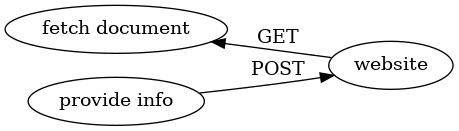
Reliable conversation Human conversation is most reliable when using plain speak. Slang, sarcasm or jokes raise the risk of misunderstandings. This is quite similar in computer conversation. When surfing the Web, you normally "GET" a web page or "POST" new data like a search query. The words "GET" and "POST" are "plain speak" of the World Wide Web defined as a principle called "REST" or "RESTful design". I use the Kannel tool to talk directly to the phones. When an sms arrives on the phone, Kannel "GET"s it to the calendar. That's weakly expressed better if it had "POST"ed the message instead. Kannel is a quite reliable tool, but not RESTful in conversations. That requires extra attention at other parts of the setup to avoid breakage in special situations. That worries me.

Each car has a blog So I setup a gateway from Kannel to RESTful conversation. And choose classic blogging as style of conversation:
  • The carpool fleet is a blogroll
  • each car has a blog
  • each sms emitted from a car is a blog entry
Blogging comes in two flavors, RSS and Atom. Both cover distribution of messages. I use Atom because it is newest and coolest, and because it also covers creating and editing meesages with the AtomPub extension. AtomPub allows the calendar to create an empty message which then triggers an sms from the car which "fills it in." AtomPub also let the calendar "PUT" tags onto existing messages, to mark them as processed, read etc., and let an admin or a cleanup script "DELETE" outdated entries or blogs. The words "PUT" and "DELETE" are RESTful conversation as well.

The system is dancing! My sms-to-blog gateway is written in Perl, using the Dancer toolkit. Dancer makes it simple to setup a RESTful web conversation, and when I contacted the authors on IRC, they swiftly added support for the non-RESTful quirk that I needed. My sms-to-blog gateway is not yet ready, but basic routines work. The project is public, and code is Free Software.

23 September 2012

Gregor Herrmann: RC bugs 2012/38

during the last week, I've worked on the following RC bugs:

Jonas Smedegaard: Spamming?

Hi! I have collected a small list of people that I want to give lifesign once in a while.
- and you are one of them Maybe we shook hands once, and for some obscure reason I kept (or found) your email address.
Maybe we are even related by blood (then you probably know :-) - e.g. ny brothers are on the list, as is both my parents
Few of you I actually never met in person, but you made a special impression on me - either in a phone conversation or an email exchange If you dislike being "bombarded" with emails from me - or if you are not at all the one I think you are, and really I write to a stranger - then please tell me! I will immediately remove you from the list, if you ask for it - and won't take it badly Kind regards
Jonas Smedegaard
This text is part of my friends scriblings.

22 September 2012

Jonas Smedegaard: Muziik!

Hi there! I'm sittin' here listening to Rickie Lee Jones. Just bought the CD today :-) Simply wanted you to know, that's all! Best regards
Jonas Smedegaard BTW Welcome aboard this pseudo-list (actually I'm doin' it directly from my e-mail client!) If you don't know who I am, or why you got this letter, then please contact me - there might be an error somewhere (and we might get to know each other ;-) I'm just an ordinary guy with an ordinary mail program, not a spammer
This text is part of my friends scriblings.

Next.

Previous.


