Tianon Gravi: Yubi Whati? (YubiKeys, ECDSA, and X.509)
Off-and-on over the last several weeks, I've been spending time trying to learn/understand YubiKeys better, especially from the perspective of ECDSA and signing.
I had a good mental model for how "slots" work (canonically referenced by their hexadecimal names such as
With that background, now let's get to the second aspect of "slots" and how X.509 fits. For every aforementioned slot, there is a corresponding "object" (read: place to store arbitrary data) which is corresponding only by convention. For all these "key" slots the (again, by convention) corresponding "object" is explicitly supposed to be an X.509 certificate (see also the PDF reference linked above).
It turns out this is a useful and topical place to store that public key we need to keep handy! It's also an interesting place to shove additional details about what the key in a given slot is being used for, if that's your thing. Converting the raw public key into a (likely self-signed) X.509 certificate is an exercise for the reader, but if you want to follow the conventions, you need some way to convert a given "slot" to the corresponding "object", and that is the lookup table I wish existed in more forms.
So, without further ado, here is the anti-climax:
See also "piv-objects.json" for a machine-readable copy of this data.
(Major thanks to paultag and jon gzip johnson for helping me learn and generally putting up with me, but especially dealing with my live-stream-of-thoughts while I stumble through the dark. )
9C), but found that it had a gap related to "objects"; while closing that, I was annoyed that the main reference table for this gap lives primarily in either a PDF or inside several implementations, so I figured I should create the reference I want to see in the world, but that it would also be useful to write down some of my understanding for my own (and maybe others') future reference.
So, to that end, I'm going to start with a bit ( ) of background information, with the heavy caveat that this only applies to "PIV" ("FIPS 201") usage of YubiKeys, and that I only actually care about ECDSA, although I've been reassured that it's the same for at least RSA (anything outside this is firmly Here Be Not Tianon; "gl hf dd").
(Incidentally, learning all this helped me actually appreciate the simplicity of cloud-based KMS solutions, which was an unexpected side effect. )
At a really high level, ECDSA is like many other (asymmetric) cryptographic solutions you've got a public key and a private key, the private key can be used to "sign" data (tiny amounts of data, in fact, like P-256 can only reasonably sign 256 bits of data, which is where cryptographic hashes like SHA256 come in as secure analogues for larger data in small bit sizes), and the public key can then be used to verify that the data was indeed signed by the private key, and only someone with the private key could've done so. There's some complex math and RNGs involved, but none of that's actually relevant to this post, so find that information elsewhere.
Unfortunately, this is where things go off the rails: PIV is X.509 ("x509") heavy, and there's no X.509 in the na ve view of my use case.
In a YubiKey (or any other PIV-signing-supporting smart card? do they actually have competitors in this specific niche? ), a given "slot" can hold one single private key. There are ~24 slots which can hold a private key and be used for signing, although "Slot 9c" is officially designated as the "Digital Signature" slot and is encouraged for signing purposes.
One of the biggest gotchas is that with pure-PIV (and older YubiKey firmware ) the public key for a given slot is only available at the time the key is generated, and the whole point of the device in the first place is that the private key is never, ever available from it (all cryptographic operations happen inside the device), so if you don't save that public key when you first ask the device to generate a private key in a particular slot, the public key is lost forever (asterisk).
$ # generate a new ECDSA P-256 key in "slot 9c" ("Digital Signature")
$ # WARNING: THIS WILL GLEEFULLY WIPE SLOT 9C WITHOUT PROMPTING
$ yubico-piv-tool --slot 9c --algorithm ECCP256 --action generate
-----BEGIN PUBLIC KEY-----
MFkwEwYHKoZIzj0CAQYIKoZIzj0DAQcDQgAEtGoWRGyjjUlJFXpu8BL6Rnx8jjKR
5+Mzl2Vepgor+k7N9q7ppOtSMWefjFVR0SEPmXqXINNsCi6LpLtNEigIRg==
-----END PUBLIC KEY-----
Successfully generated a new private key.
$ # this is the only time/place we (officially) get this public key
| Slot | Object | Description |
|---|---|---|
0x9A |
0x5FC105 |
X.509 Certificate for PIV Authentication |
0x9E |
0x5FC101 |
X.509 Certificate for Card Authentication |
0x9C |
0x5FC10A |
X.509 Certificate for Digital Signature |
0x9D |
0x5FC10B |
X.509 Certificate for Key Management |
0x82 |
0x5FC10D |
Retired X.509 Certificate for Key Management 1 |
0x83 |
0x5FC10E |
Retired X.509 Certificate for Key Management 2 |
0x84 |
0x5FC10F |
Retired X.509 Certificate for Key Management 3 |
0x85 |
0x5FC110 |
Retired X.509 Certificate for Key Management 4 |
0x86 |
0x5FC111 |
Retired X.509 Certificate for Key Management 5 |
0x87 |
0x5FC112 |
Retired X.509 Certificate for Key Management 6 |
0x88 |
0x5FC113 |
Retired X.509 Certificate for Key Management 7 |
0x89 |
0x5FC114 |
Retired X.509 Certificate for Key Management 8 |
0x8A |
0x5FC115 |
Retired X.509 Certificate for Key Management 9 |
0x8B |
0x5FC116 |
Retired X.509 Certificate for Key Management 10 |
0x8C |
0x5FC117 |
Retired X.509 Certificate for Key Management 11 |
0x8D |
0x5FC118 |
Retired X.509 Certificate for Key Management 12 |
0x8E |
0x5FC119 |
Retired X.509 Certificate for Key Management 13 |
0x8F |
0x5FC11A |
Retired X.509 Certificate for Key Management 14 |
0x90 |
0x5FC11B |
Retired X.509 Certificate for Key Management 15 |
0x91 |
0x5FC11C |
Retired X.509 Certificate for Key Management 16 |
0x92 |
0x5FC11D |
Retired X.509 Certificate for Key Management 17 |
0x93 |
0x5FC11E |
Retired X.509 Certificate for Key Management 18 |
0x94 |
0x5FC11F |
Retired X.509 Certificate for Key Management 19 |
0x95 |
0x5FC120 |
Retired X.509 Certificate for Key Management 20 |



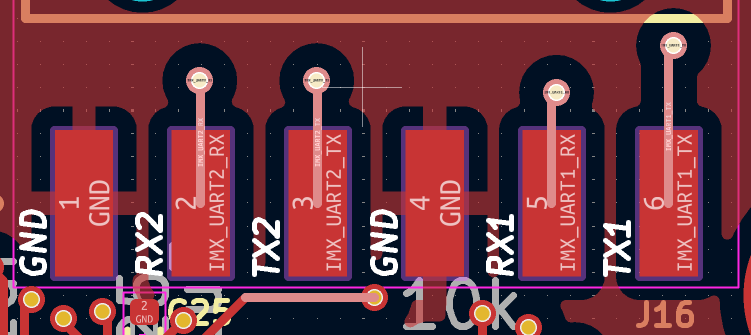
 Updated my timezone tool.
 My first impressions of the device are good - it is heavier than I anticipated,
but very vell made. It is very easy to assemble and disassemble and it feels
like it can take a hit.
When I started it the first time it took some minutes to boot because of the
new memory module, but then it told me right away that it could not detect an
operating system. As usual when I want to install a new system, I created
a
 I only learned later, that the SecureBoot setting is in a separate section
that is not part of the main BIOS configuration dialog. There is an Administer
Secure Boot icon which you can choose when starting the device, but
 One small downside of the keyboard is that it does not have a backlight, which
was a surprise. But given that this is a frame.work laptop, there are chances
that a future generation of the keyboard will have backlight support.
The screen of the laptop can be turned all the way around to the back of the
laptops body, so it can be used as a tablet. In this mode the keyboard gets
disabled to prevent accidently pushing keys when using the device in tablet
mode.
For online meetings I still prefer using headphones with cables over bluetooth
once, so I m glad that the laptop has a headphone jack on the side.
Above the screen there are a camera and a microphone, which both have separate
physical switches to disable them.
I ordered a couple of expansion cards, in the current setup I use two USB-C,
one HDMI and one USB-A. I also ordered a 1TB expansion card and only used this
to transfer my
 Dear Debian community,
This is bits from the DPL for June.
The Challenge of Mentoring Newcomers
In June there was an extended discussion about the ongoing challenges
around mentoring newcomers in Debian. As many of you know, this is a
topic I ve cared about deeply--long before becoming DPL. In my view, the
issue isn t just a matter of lacking tools or needing to try harder to
attract contributors. Anyone who followed the discussion will likely
agree that it s more complex than that.
I sometimes wonder whether Debian s success contributes to the problem.
From the outside, things may appear to just work , which can lead to
the impression: Debian is doing fine without me--they clearly have
everything under control. But that overlooks how much volunteer effort
it takes to keep the project running smoothly.
We should make it clearer that help is always needed--not only in
packaging, but also in writing technical documentation, designing web
pages, reaching out to upstreams about license issues, finding sponsors,
or organising events. (Speaking from experience, I would have
appreciated help in patiently explaining Free Software benefits to
upstream authors.) Sometimes we think too narrowly about what newcomers
can do, and also about which tasks could be offloaded from overcommitted
contributors.
In fact, one of the most valuable things a newcomer can contribute is
better documentation. Those of us who ve been around for years may be
too used to how things work--or make assumptions about what others
already know. A person who just joined the project is often in the best
position to document what s confusing, what s missing, and what they
wish they had known sooner.
In that sense, the recent

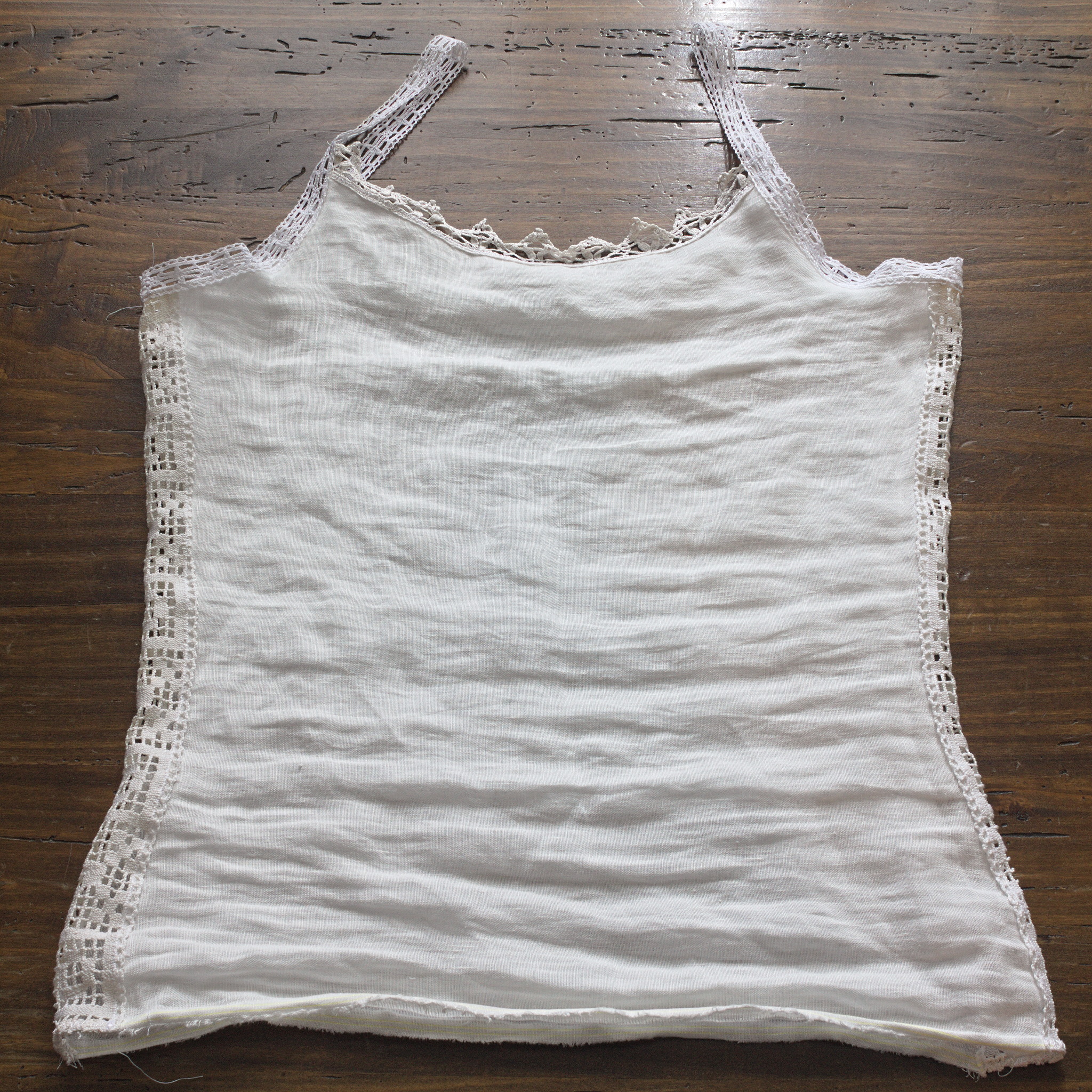 And this is the time when one realizes that she only has one white
camisole left. And it s summer, so I m wearing a lot of white shirts,
and I always wear a white camisole under a white shirt (unless I m
wearing a full chemise).
Not a problem, I have
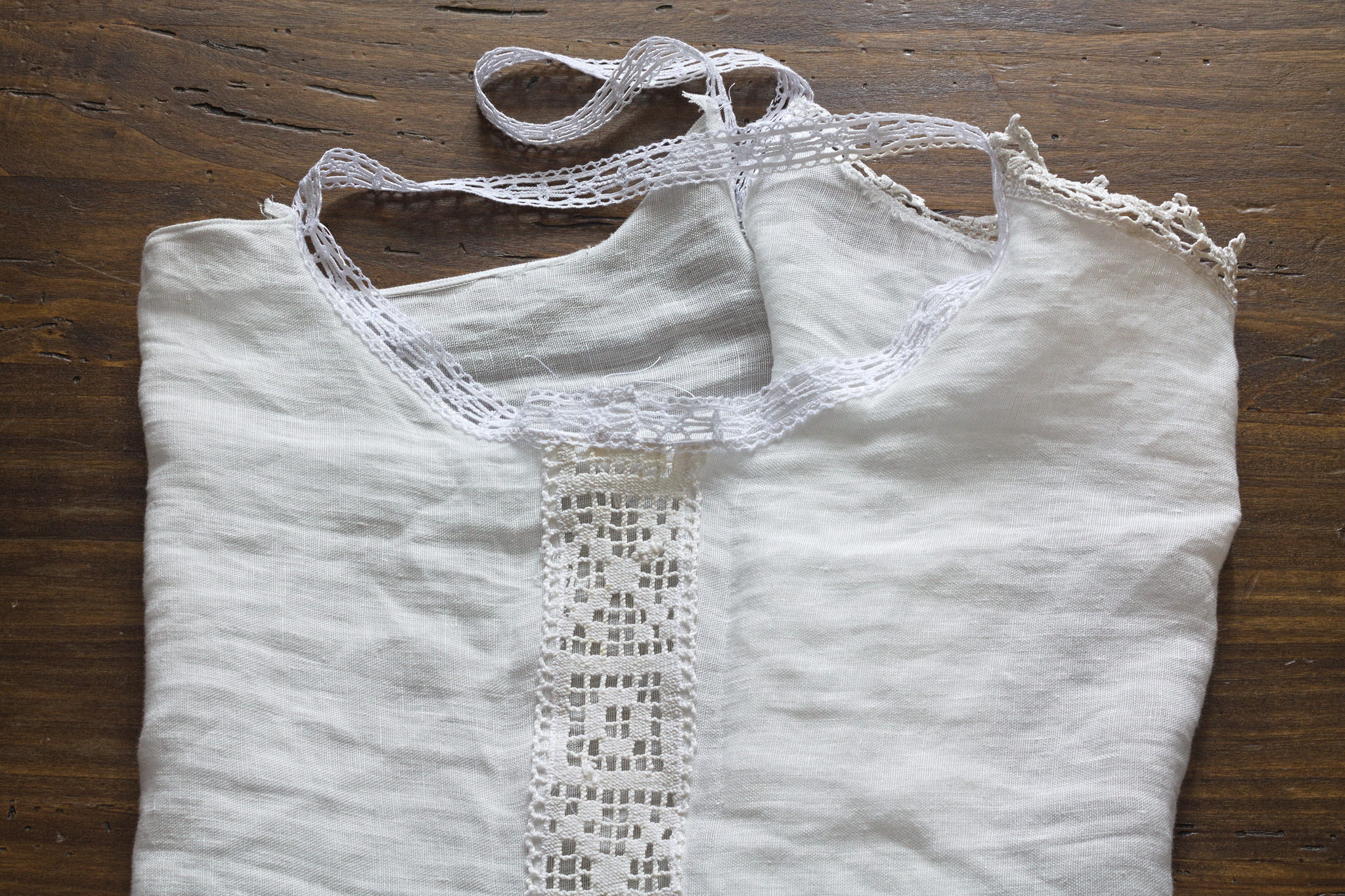 At bust level it s now a bit too wide, and it gapes a bit under the
arms, but I don t think that it s going to cause significant problems,
and (other than everybody on the internet) nobody is going to see it, so
it s not a big deal.
I still have some linen, but I don t think I m going to make another one
with the same pattern: maybe I ll try to do something with a front
opening, but I ll see later on, also after I ve been looking for the
missing jersey in a few more potential places.
As for now, the number of white camisoles I have has doubled, and this
is progress enough for today.


 With a friendly Canadian hand wave from vacation in Beautiful British
Columbia, and speaking on behalf of the Rcpp Core Team, I am excited to
shared that the (regularly scheduled bi-annual) update to
