Search Results: "eric"

15 November 2012

Dirk Eddelbuettel: Rcpp and the new R:: namespace for Rmath.h

We released Rcpp 0.10.0 earlier today. This post will just provide a simple example for one of the smaller new features -- the new namespace for functions from Rmath.h -- and illustrate one of the key features (Rcpp attributes) in passing. R, as a statistical language and environment, has very well written and tested statistical distribution functions providing probability density, cumulative distribution, quantiles and random number draws for dozens of common and not so common distribution functions. This code is used inside R, and available for use from standalone C or C++ programs via the standalone R math library which Debian / Ubuntu have as a package r-mathlib (and which can be built from R sources). User sometimes write code against this interface, and then want to combine the code with other code, possibly even with Rcpp. We allowed for this, but it required a bit of an ugly interface. R provides a C interface; these have no namespaces. Identifiers can clash, and to be safe one can enable a generic prefix Rf_. So functions which could clash such as length or error become Rf_length and Rf_error and are less likely to conflict with symbols from other libraries. Unfortunately, the side-effect is that calling, say, the probability distribution function for the Normal distribution becomes Rf_pnorm5() (with the 5 denoting the five parameters: quantile, mean, std.deviation, lowerTail, logValue). Not pretty, and not obvious. So one of the things we added was another layer of indirection by adding a namespace R with a bunch of inline'd wrapper functions (as well as several handful of unit tests to make sure we avoided typos and argument transposition and what not). The short example below shows this for a simple function taking a vector, and returning its pnorm computed three different ways:
#include <Rcpp.h>
// [[Rcpp::export]]
Rcpp::DataFrame mypnorm(Rcpp::NumericVector x)  
    int n = x.size();
    Rcpp::NumericVector y1(n), y2(n), y3(n);
    for (int i=0; i<n; i++)  
        // the way we used to do this
        y1[i] = ::Rf_pnorm5(x[i], 0.0, 1.0, 1, 0);
        // the way we can do it now
        y2[i] = R::pnorm(x[i], 0.0, 1.0, 1, 0);
     
    // or using Rcpp sugar in one go
    y3 = Rcpp::pnorm(x);
    return Rcpp::DataFrame::create(Rcpp::Named("Rold")  = y1,
                                   Rcpp::Named("Rnew")  = y2,
                                   Rcpp::Named("sugar") = y3);
 
This example also uses the new Rcpp attributes described briefly in the announcement blog post and of course in more detail in the corresponding vignette. Let us just state here that we simply provide a complete C++ function, using standard Rcpp types -- along with one 'attribute' declaration of an export via Rcpp. That's it -- even easier than using inline. Now in R we simply do
R> sourceCpp("mypnorm.cpp")
to obtain a callable R function with the C++ code just shown behind it. No Makefile, no command-line tool invocation -- nothing but a single call to sourceCpp() which takes care of things --- and brings us a compiled C++ function to R just given the source file with its attribute declaration. We can now use the new function to compute the probaility distribution both the old way, the new way with the 'cleaner' R::pnorm(), and of course the Rcpp sugar way in a single call. We build a data frame in C++, and assert that all three variants are the same:
R> x <- seq(0, 1, length=1e3)
R> res <- mypnorm(x)
R> head(res)
      Rold     Rnew    sugar
1 0.500000 0.500000 0.500000
2 0.500399 0.500399 0.500399
3 0.500799 0.500799 0.500799
4 0.501198 0.501198 0.501198
5 0.501597 0.501597 0.501597
6 0.501997 0.501997 0.501997
R> all.equal(res[,1], res[,2], res[,3])
[1] TRUE
R> 
This example hopefully helped to illustrate how Rcpp 0.10.0 brings both something really powerful (Rcpp attributes -- more on this another time, hopefully) and convenient in the new namespace for statistical functions.

13 November 2012

Erich Schubert: Migrating from GNOME3 to XFCE

I have been a GNOME fan for years. I actually liked the switch from 1.x to 2.x, and at some point switched to 3.x when it became somewhat usable. At some point, I even started some small Gnome projects, one even was uploaded to the Gnome repositories. But I didn't have much time for my Linux hobby anymore back then.
However, I am now switching to XFCE. And for all I can tell, I am about the last one to make that switch. Everybody I know hates the new Gnome.
My reason is not emotional. It's simple: I have systems that don't work well with OpenGL, and thus don't work well with Gnome shell. Up to now, I can live fine with "Fallback mode" (aka: Gnome classic). It works really good for me, and does exactly what I need. But it has been all over the media: Gnome 3.8 will drop 'fallback' mode.
Now the choice is obvious: instead of switching to shell, I go to XFCE. Which is much closer to the original Gnome experience, and very productivity oriented.
There are tons of rants on GNOME 3 (for one of the most detailed ones, see Gnome rotting in threes, going through various issues). Something must be very wrong about what they are doing to receive this many sh*tstorms all the time. Every project receives some. I've even received a share of the Gnome 2 storms when Galeon (an early Gnome browser) made the move and started dropping some of the hard-to-explain and barely used options that would break with every other Mozilla release. And Mozilla embedding was a major pain these days. Yet, for every feature there would be some user somewhere that loved it, and as Debian maintainer of Galeon, I got to see all the complaints (and at the same time was well aware of the bugs caused by the feature overload).
Yet with Gnome 3, things are IMHO a lot different. In Gnome 2, it was a lot about making things more usable as they are, a bit cleaner and more efficient. With Gnome 3, it seems to be about experimenting with new stuff. Which is why it keeps on breaking APIs all the time. For example themeing GTK 3 is constantly broken; most of the themes available just don't work. Similar Gnome Shell extensions - most of them work with exactly one version of Gnome Shell (doesn't this indicate the author has abandoned Gnome shell?).
But the one thing that was really sticking out was when my I updated the PC of my dad. Apart from some glitches, he could not even shutdown his PC with Gnome-shell. Because you needed to press the Alt button to actually get a shutdown option.
This is indicative of where Gnome is heading: something undefined inbetween of PCs, tablets, media centers and mobile phones. They just decided that users don't need to shutdown anymore, so they could as well drop that option.
But the worst thing about the current state of GNOME is: They happily live with it. They don't care that they are losing users by the dozens. Because to them, these are just "complainers". Of cousre there is some truth in "Complainers gonna complain and haters gonna hate". But what Gnome is receiving is way above average. At some point, they should listen. 200 posts long comment chains from dozens of peopls on LWN are not just your average "complaints". It's an indicator that a key user base is unhappy with the software. In 2010 GNOME 2 had 45% market share in the LinuxQuestions poll, XFCE had 15%. In 2011, GNOME 3 had 19%, and XFCE jumped to 28%. And I wouldn't be surprised if GNOME 3 shell (not counting fallback mode) would clock at less than 10% in 2012 - despite being default.
Don't get me wrong: there is a lot on Gnome that I really like. But as they decided to drop my preferred UI, I am of course looking for alternatives. In particular, as I can get lots of the Gnome 3 benefits with XFCE. There is a lot in the Gnome ecosystem that I value, and that IMHO is driving Linux forward. Network-manager, Poppler, Pulseaudio, Clutter just to name a few. Usually, the stuff that is modular is really good. And in fact I have been a happy user of the "fallback" mode, too. Yet, the overall "desktop" Gnome 3 goals are in my opinion targeting the wrong user group. Gnome might need to target linux developers more again, to keep a healthy development community around. Frequently triggering sh*tstorms by high-profile people such as Linux Torvalds is not going to strengthen the community. There is nothing wrong in the FL/OSS community to encourage people to use XFCE. But these are developers that Gnome might need at some point.
On a backend / technical level (away from the Shell/UI stuff that most of the rants are about), my main concern about the Gnome future is GTK3. GTK2 was a good toolkit for cross-platform development. GTK3 as of now is not, but is largely a Linux/Unix only toolkit - in particular, because there apparently is no up to date Win32 port. With GTK 3.4 it was said that they are now working on Windows - but as of GTK 3.6 they are still nowhere to be found. So if you want to develop cross-platform, as of now, you better stay away from GTK 3. If this doesn't change soon, GTK might sooner or later lose the API battle to more portable libraries.

9 November 2012

Gunnar Wolf: Road trip to ECSL 2012 in Guatemala

Encuentro Centroamericano de Software Libre! Guatemala! During a national (for us) holiday, so it's easy to go without missing too much work time! How would I miss the opportunity? Several years ago, I started playing with the idea of having a road trip Probably this was first prompted with the UK crew and the Three Intrepid Motorcycle Riders arriving by land to DebConf 9 I don't know. Fact is, I wanted to go to DebConf10 in New York by land, as well as to DebConf12 in Nicaragua. Mostly due to a lack of time, I didn't Although we did start making some longish trips. Of course, my desire to show Regina what Mexico is like also helped! So, up until a week ago, our (according to my standards) long distance driving experience included:
  • M xico Guanajuato Puerto Vallarta Guanajuato M xico, in early November 2011, for Festival de Software Libre and with Regina and our Blender friends Octavio and Claudia. Totalling almost 1900Km, mostly consisting of wide, toll highway.
  • M xico Xilitla San Luis Potos M xico, in April 2012, just for fun and for a nice short vacation, alone with Regina. Totalling almost 1200Km, but through Sierra Gorda de Quer taro, a very tough stretch of about 250Km which we did at about 50Km/h on average. Beautiful route for sure! We didn't originally intend to go through San Luis Potos , and it does not appear to make much sense, as it adds ~350Km to the total, but it was even quicker than going back by the same route and according to those who now, even faster than our planned route, via Tamazunchale and Ixmiquilpan!
  • M xico San Luis Potos Zacatecas Aguascalientes Guanajuato M xico, in May 2012, for Congreso Internacional de Software Libre, again with Octavio and Claudia. Totalling 1250Km, and following very good roads, although most of them were toll-free.
But there is always a certain halo over crossing a border, maybe more so in countries as large as Mexico. We convinced Pooka and Moni, and granted, with some aprehension, as we knew of some important security risks in the more rural areas we wanted to go through we decided to go to Guatemala. And, although we wanted to go with a bit more time, Real Life took its toll: We could not take more time than the intersection of what our respective jobs offered. So, here goes a short(?) recap of our six day long, 3200Km trip. Of course, we have a map detailing this. Mexico Veracruz I came to my office early on Wednesday (31-oct), and left with Regina around 10AM towards Veracruz. We agreed to meet there with Moni and Pooka, who would take the night bus, and continue together. Crossing Mexico City proved to be the longest obstacle We arrived to Veracruz already past 3PM, and spent a nice evening walking down the center and port of the city. Veracruz port can still be seen as part of central Mexico; I knew the road quite well. Veracruz San Andr s Tuxtla Catemaco San Cristobal de las Casas We met with our friends at the iconic Gran Caf de la Parroquia at 6:30AM. Had a nice breakfast with coffee, and by 7:30 we were heading south-west. The reason to have a road trip was to get to know the route, to enjoy the countryside So, given we "only" had to make 650Km this day, we took the non-toll road A narrow path stretching along the coastal plains of Veracruz, until Acayucan. Doing so, we also saved some money, as the equivalent toll road is around MX$300 (~US$25)! Veracruz is a hot state. We ended up all sweaty and tired by 19:00, when we reached San Cristobal. We had agreed not to drive at night, due to security issues, but fortunately there was quite a bit of traffic both ways between Tuxtla Guti rrez (Chiapas State capital, around 1hr from San Cristobal, where darkness got us) and our destination, so we carried on. Now, San Cristobal is a high city, almost as high as Mexico City (2100m), and being more humid, it was quite chilly. We went for a walk, and were convinced that at a later time, we had to stay for several days there. The city is beautiful, the region is breath-taking, there is a lot of great handicrafts as well, and it's overall very cheap. Really lovely place. San Cristobal de las Casas Cd. Cuauht moc La Mesilla Guatemala Once again, this day started early. We woke up ready to leave at 7AM, and not earlier because the hotel's parking didn't open earlier. After a very quick visit to San Cristobal downtown, to take some photos that were not right the night before, we took the road to Comit n, stopping just for some tamales de bola y chipil n for breakfast. Central Chiapas is almost continuously populated, differing from most of my experience in Mexico. It is all humid, and has some very beautiful landscapes. We passed Comit n, which is a much larger city than what we expected, went downhill after La Trinitaria, crossed a plain, and continued until hills started taking over again. We stopped in a very chaotic, dirty place: Just accross the border, where Ciudad Cuauht moc becomes La Mesilla. This border was basically what we expected: There is no half-official place to exchange money, so we had to buy quetzales from somebody who offered them on the street, at MX$2 per Q1 (where the real exchange should be around 1.50 to 1). While on the road, I was half-looking for exchange posts in Comit n and onwards, and found none (and being a festive day, they would probably be closed anyway). But we were expecting this, after all, and exchanged just the basic minimum: MX$600 (US$50, which by magic became Q300, US$40). The tramit consists of:
  • Spraying the car against diseases (which has a cost of Q18)
  • Each of us has to go through migration. Note, in case you cross this border: We didn't expressly cross Mexican migration, so officially there was no record of us going out. Be sure to go through migration to avoid problems at re-entry!
    Migration has no cost.
  • Customs. As we were entering by car, I had to purchase a permit for circulation. I don't remember the exact quote, but it was around Q150, and the permit is valid for 90 days.
  • That's it! Welcome to Guatemala!
La Mesilla is in Guatemala's Huehuetenango Department, and from all of the Departments we crossed until Guatemala city (Huehuetenango, Quetzaltenango, Totonicap n, Solol , Chimaltenango, Sacatep quez and Guatemala), this is the largest one. Huehuetenango is home to the Cuchumatanes mountain ridge. We found beautiful, really steep, really fertile mountains. It is plainly amazing: Mountains over 60 , and quite often full with agricultural use Even at their steepest points! The CA-1 highway is, in general, in very good shape. There are however many (many, many) speed bumps (or topes, in Mexican terminology. Or t mulos in Guatemalan), at least a couple at every village we crossed, not always painted. The road is narrow and quite winding; it follows river streams for most of the way. We feared it would be in much worse shape, from what we have heard, but during the whole way we found only three points where the road was unusable due to landslides and an alternative road was always in place when we needed it. After Totonicap n, the narrow road becomes a wide (four lane) highway. Don't let that fool you! It still goes through the center of every village along the road, so it's really not meant for speeding. Also, even though the pavement is in very good condition, it is really steep quite often. It is not the easiest road to drive, but it's (again) by far not as bad as we expected. We arrived to Guatemala City as dawn was falling, and got promptly lost. Guatemala has a very strange organization scheme: The city is divided in several zones, laid out in a swirl-like fashion. East-west roads are called Calle and North-south roads are called Avenida (except for zona 4, I think, where they are diagonal, and some are Rutas while the others are V as). I won't go into too much detail). Thing is, many people told us it's a foolproof design, and people from different countries understand the system perfectly. We didn't... At least not when we arrived. We got quite lost, and it took us around one hour to arrive to our hotel, at almost 19:00 Almost 12 hours since we left San Cristobal. Went for a quick dinner, and then waited for our friends to arrive after the first day of work of ECSL, which we missed completely. And, of course, we were quite tired, so we didn't stay up much longer. Antigua Guatemala On Saturday, ECSL's activities started after 14:00 so we almost-kidnapped Wences, the local organization lead, and took him to show us around Antigua Guatemala. Antigua was the capital of Guatemala until an earthquake destroyed it in the 1770s; the capital was moved to present-day Guatemala city, but Antigua was never completely abandoned. Today, it is a world heritage site, a beautiful city, where we could/should have stayed for several days. But we were there for the conference, so we were in Antigua just a couple of hours, and headed back to Guatemala. Word of caution: Going from Guatemala to Antigua, we went down via the steepest road I have ever driven. Again, a real four-lane highway... but quite scary! The main focus for this post is to give some roadtrip advice to potential readers... So, this time around, I won't give much detail regarding ECSL. It was quite interesting, we had some very good discussions... but it would take me too much space to talk about it! The road back: Guatemala Tec n Um n; Cd. Hidalgo Arriaga So, about the road back: Yes, we just spent three days getting to Guatemala City. We were there only for ~36 hours. And... We needed to be here by Tuesday morning no matter what. So, Sunday at noon we said goodbye to our good friends in ECSL and started the long way back. To get to know more of Guatemala, we went back by the CA-2 highway, which goes via the coastal plains Not close to the Pacific ocean, which we didn't get to see at all, but not through the mountains. To get to CA-2, we took CA-9 from Guatemala. If I am not mistaken, this is the only toll road in Guatemala (at least, the only we used, and we used some pretty good highways!) It is not expensive; I don't remember right now, but must have been around Q20 (US$3). Went South past Palin and until CA-2, just outside Escuintla city, and headed West. All of Escuintla and Suchitep quez it is again a four lane highway; somewhere in Retalhueu it becomes a two lane highway. We were strongly advised not to take this road at night because, as the population density is significantly lower than in CA-1, it can get lonely at times And there are several reports of robberies. We did feel the place much less populated, but saw nothing suspicious in any way. Something important: There are almost no speedbumps in CA-2! The terrain stayed quite flat and easy as we crossed Quetzaltenango, and only in San Marcos we found some interesting hills and a very strong rain that would intermitetntly accompany us for the rest of the ride. So, we finally arrived to the border city of Tec n Um n at around 16:30 Approximately four hours after leaving the capital. The Tec n Um n Cd. Hidalgo cities and border pass are completely different from the disorderly and dirty Cd. Cuauht moc La Mesilla ones. The city of Tec n Um n could be just a nice town anywhere in the country, it does not feel aggressive as most border cities I have seen in our continent. We stopped to eat at El pollo campero and headed to the border. In the Mexican side, we also saw a very well consolidated, big and ordered migration area. Migration officers were very kind and helpful As we left Cd. Cuauht moc, Regina didn't get a stamp of leaving Mexico, so technically she was ilegally out of the country (as she is not a national... They didn't care about the rest of us). The tramit to fix this was easy, simple, straightforward. We only paid for the fumigation again (MX$60, US$5), and were allowed to leave. Anyway, we crossed the border. There is a ~30Km narrow road between Cd. Hidalgo and Tapachula, but starting in Tapachula we went on Northwards via a very good, four lane and very straight highway. Even though we had agreed not to drive at night... Well, we were quite hurried and still too far from Mexico City, so we decided to push it for three more hours, following the coastline until the city of Arriaga, almost at the border between Chiapas and Oaxaca. Found a little hotel to sleep some hours and collapsed. Word of warning: This road (from Tapachula to Arriaga) is also known for its robberies. We saw only one suspicious thing: Two guys were pushing up their motorcycle, from which they had apparently fallen. We didn't stop, as they looked healthy and not much in need of help, but later on talked about this Even though this was at night, they were not moving as if they had just crashed; nothing was scratched, not the motorcycle and not their clothes. That might have been an attempt to mug us (or whoever stopped by). This highway is very lonely, and the two directions are separated by a wall of vegetation, so nobody would have probably seen us were we to stop for some minutes. Be aware if you use this road! The trip comes to an end: Arriaga Niltepec Istmo C rdoba M xico The next (last, finally!) day, we left at 6:30AM. After driving somewhat over one hour, we arrived to Niltepec, where a group of taxi drivers had the highway closed as a protest against their local government's tolerance of mototaxis. We evaluated going back to Arriaga and continue via the Tuxtla Guti rrez highway, but that would have been too long. We had a nice breakfast of tlayudas (which resulted in Pooka getting an alergic reaction shortly afterwards) and, talking with people here and there, were told about an alternative route by an agricultural road that surrounds the blockade. So, we took this road the best way we could, and after probably 1hr of driving at 20Km/h, finally came back to the main road. We planned on crossing the isthmus using the Acayucan-Juchit n road We were amazed at the La Ventosa ("the windy") area, where we crossed a huge eolic plant for electricity generation, so of course we got our good share of photos. From then onwards, not much more worth mention. Crossed the isthmus via a quite secondary road in not too good shape (although there is a lot of machinery, and the road will much likely improve in the next few months/years), then took the toll freeway along Veracruz until C rdoba. We stopped for a (delilcious and revigorizing!) cup of coffee in Hotel Zeballos, where Agust n de Iturbide signed with Viceroy Juan O'Donoj the treaties that granted Mexico the independence. Traveller, beware: When crossing between Puebla and Veracruz, there is a steep slope of almost 1000m where , you will almost always (except if it's close to noon) find very thick fog; taking the highway from C rdoba, this is in the region known as Cumbres de Maltrata. We had the usual fog, and just as we left it, a thin but constant rain that went on with us up until we got home. Crossed Puebla state with no further eventualities, and arrived to Pooka and Moni's house by 22:00. Less than one hour later, Regina and me arrived home as well. This was four days ago... and I have finally finished writing it all down ;-) Hope you find this useful, or if not, at least entertaining! If you read this post in my blog, you will find many pictures taken along the trip below (Well, if you are reading the right page, not in the general blog index...). If you are reading from a planet or other syndication service... Well, come to the blog! Dreamhost woes Oh, and... Yes, it sometimes happens: My blog is hosted at Dreamhost. This means that usually it works correctly... But sometimes, specially when many people request many nontrivial pages, it just gives an error. If you get an error, reload once or twice... Or until your patience manages ;-)

6 November 2012

Stefano Zacchiroli: bits from the DPL for October 2012

Freshly baked, bits from the DPL for October 2012.
Dear Project Members,
another month, another periodic report of DPL-ish activities, this time for October 2012. Highlights Debian on public clouds I've spent quite some time to improve Debian presence on the so called "public clouds". Following up to an inquiry of a fellow developer, I've reached out to Microsoft to investigate the possibility of having Debian as an option on Windows Azure. Around the same time, I've been approached by Amazon to have Debian as an option on the AWS marketplace. In both cases, we will need to overcome challenges of various kinds, at the technical (e.g. image preparation), bureaucratic (e.g. terms of the agreements we'll need to accept to be present), and political (e.g. chain of trust, platform freedom) levels. Up to now, discussions have been going on mostly in private, simply because they started as 1-to-1 inquiries and continued from there, but there is no good reason they should remain so. Hence, thanks to the listmasters and in particular Alexander Wirt, we have setup the new debian-cloud mailing list. If you are interested in these topics please join the list. For both Azure and AWS there is good progress on the technical part already; summaries will soon be posted on the list so that we are all on the same page. Similarly, I'll post there status reports about the bureaucratic requirements. And of course there is no reason to focus on specific clouds, if you'd like to support others and are willing to put some work to that end, please join the list and let us know. DPL helpers meeting I've already bothered you at least in my last platform and DebConf13 talk with observations about how non-scalable the DPL job is. After having collected applications of DPL helpers for a while, I've finally sat down and tried to put those applications into good use. The idea is simple: to the extend of possible, we should shift from a one-man-band job to a more "board-like" job, with people sharing an agenda, a list of outstanding tasks, and public communication. We have started slowly, setting up the #debian-dpl IRC channel and running periodic bi-weekly meetings there. You can find the meeting minutes and full logs at the usual place. We are still ramping up, so we don't have yet "fancy" stuff like a mailing list or an issue tracker entry, but they're in the working. Some of the outcome are starting to show, too (e.g. as part of recent discussions on 3rd party orphaning, or on our inbound trademark policy, or even in the forthcoming DMCA policy to make mentors.d.n an official project service). It's an experiment and a big challenge. I'm, for one thing, not yet convinced there are enough people interested in sharing the load of DPL duties (that look boring, for many tech geeks) in the long run. But I'm also convinced that the sustainability of the Debian organization model depends on this, so it's worth trying. If you're interested in the challenge and willing to volunteer some of your time, please join us on #debian-dpl . I'll take care of keeping the project informed of further evolution, in particular about the communication channels we will pick for day to day activities and accountability. Events / public communication I've spent most of my remaining Debian time in October attending events on behalf of the Project, in particular: On the topic of public communication, I've also coordinated with the press team an answer to a press inquiry about Secure Boot (which has become part of this article), and happily vouched for the Ubuntu charity marathon, adding some Debian challenges to it. Delegations As largely overdue matters, I've finalized the delegations mentioned last month, namely: FTP masters, New Members Front Desk, and Policy editors. Assets and legal stuff Miscellanea Now let's all go back to RC Bug squashing to make Wheezy a reality. SPAM-my link of the month is http://udd.debian.org/bugs.cgi and its various "views" at the bottom of the page. Cheers.
PS the day-to-day activity log for October 2012 is available at the usual place master:/srv/leader/news/bits-from-the-DPL.txt.201210

2 November 2012

Vincent Bernat: Network virtualization with VXLAN

Virtual eXtensible Local Area Network (VXLAN) is a protocol to overlay a virtualized L2 network over an existing IP network with little setup. It is currently described in an Internet-Draft. It adds the following perks to VLANs while still providing isolation:
  1. It uses a 24-bit VXLAN Network Identifier (VNI) which should be enough to address any scale-based concerns of multitenancy.
  2. It wraps L2 frames into UDP datagrams. This allows one to rely on some interesting properties of IP networks like availability and scalability. A VXLAN segment can be extended far beyond the typical reach of today VLANs.
The VXLAN Tunnel End Point (VTEP) originates and terminates VXLAN tunnels. Thanks to a serie of patches from Stephen Hemminger, Linux can now act as a VTEP. Let s see how this works.

About IPv6 When possible, I try to use IPv6 for my labs. This is not the case here for several reasons:
  1. IP multicast is required and PIM-SM implementations for IPv6 are not widespread yet. However, they exist. This explains why I use XORP for this lab: it supports PIM-SM for both IPv4 and IPv6.
  2. VXLAN Internet-Draft specifically addresses only IPv4. This seems a bit odd for a protocol running on top of UDP and I hope this will be fixed soon. This is not a major stopper since some VXLAN implementations support IPv6.
  3. However, the current implementation for Linux does not support IPv6. IPv6 support will be added later.
Once IPv6 support is available, the lab should be easy to adapt.

Lab So, here is the lab used. R1, R2 and R3 will act as VTEPs. They do not make use of PIM-SM. Instead, they have a generic multicast route on eth0. E1, E2 and E3 are edge routers while C1, C2 and C3 are core routers. The proposed lab is not resilient but convenient to explain how things work. It is built on top of KVM hosts. Have a look at my previous article for more details on this. VXLAN lab The lab is hosted on GitHub. I have made the lab easier to try by including the kernel I have used for my tests. XORP comes preconfigured, you just have to configure the VXLAN part. For this, you need a recent version of ip.
$ sudo apt-get install screen vde2 kvm iproute xorp git
$ git clone git://git.kernel.org/pub/scm/linux/kernel/git/shemminger/iproute2.git
$ cd iproute2
$ ./configure && make
You get  ip' as  ip/ip' and  bridge' as  bridge/bridge'.
$ cd ..
$ git clone git://github.com/vincentbernat/network-lab.git
$ cd network-lab/lab-vxlan
$ ./setup

Unicast routing The first step is to setup unicast routing. OSPF is used for this purpose. The chosen routing daemon is XORP. With xorpsh, we can check if OSPF is working as expected:
root@c1# xorpsh
root@c1$ show ospf4 neighbor   
  Address         Interface             State      ID              Pri  Dead
192.168.11.11    eth0/eth0              Full      3.0.0.1          128    36
192.168.12.22    eth1/eth1              Full      3.0.0.2          128    33
192.168.101.133  eth2/eth2              Full      2.0.0.3          128    36
192.168.102.122  eth3/eth3              Full      2.0.0.2          128    38
root@c1$ show route table ipv4 unicast ospf   
192.168.1.0/24  [ospf(110)/2]
                > to 192.168.11.11 via eth0/eth0
192.168.2.0/24  [ospf(110)/2]
                > to 192.168.12.22 via eth1/eth1
192.168.3.0/24  [ospf(110)/3]
                > to 192.168.102.122 via eth3/eth3
192.168.13.0/24 [ospf(110)/2]
                > to 192.168.102.122 via eth3/eth3
192.168.21.0/24 [ospf(110)/2]
                > to 192.168.101.133 via eth2/eth2
192.168.22.0/24 [ospf(110)/2]
                > to 192.168.12.22 via eth1/eth1
192.168.23.0/24 [ospf(110)/2]
                > to 192.168.101.133 via eth2/eth2
192.168.103.0/24        [ospf(110)/2]
                > to 192.168.102.122 via eth3/eth3

Multicast routing Once unicast routing is up and running, we need to setup multicast routing. There are two protocols for this: IGMP and PIM-SM. The former one allows routers to forward multicast datagrams while the first one allows hosts to subscribe to a multicast group.

IGMP IGMP is used by hosts and adjacent routers to establish multicast group membership. In our case, it will be used by R2 to let E2 know it subscribed to 239.0.0.11 (a multicast group). Configuring XORP to support IGMP is simple. Let s test with iperf to have a multicast listener on R2:
root@r2# iperf -u -s -l 1000 -i 1 -B 239.0.0.11
------------------------------------------------------------
Server listening on UDP port 5001
Binding to local address 239.0.0.11
Joining multicast group  239.0.0.11
Receiving 1000 byte datagrams
UDP buffer size:  208 KByte (default)
------------------------------------------------------------
On E2, we can now check that R2 is properly registered for 239.0.0.11:
root@e2$ show igmp group
Interface    Group           Source          LastReported Timeout V State
eth0         239.0.0.11      0.0.0.0         192.168.2.2      248 2     E
XORP documentation contains a good overview of IGMP.

PIM-SM PIM-SM is far more complex. It does not have its own topology discovery protocol and relies on routing information from other protocols, OSPF in our case. I will describe here a simplified view on how PIM-SM works. XORP documentation contains more details about PIM-SM. The first step for all PIM-SM routers is to elect a rendez-vous point (RP). In our lab, only C1, C2 and C3 have been configured to be elected as a RP. Moreover, we give better priority to C3 to ensure it wins. RP election
root@e1$ show pim rps   
RP              Type      Pri Holdtime Timeout ActiveGroups GroupPrefix       
192.168.101.133 bootstrap 100      150     135            0 239.0.0.0/8
Let s suppose we start iperf on both R2 and R3. Using IGMP, they subscribe to multicast group 239.0.0.11 with E2 and E3 respectively. Then, E2 and E3 send a join message (also known as a (*,G) join) to the RP (C3) for that multicast group. Using the unicast path from E2 and E3 to the RP, the routers along the paths build the RP tree (RPT), rooted at C3. Each router in the tree knows how to send multicast packets to 239.0.0.11: it will send them to the leaves. RP tree
root@e3$ show pim join   
Group           Source          RP              Flags
239.0.0.11      0.0.0.0         192.168.101.133 WC   
    Upstream interface (RP):   eth2
    Upstream MRIB next hop (RP): 192.168.23.133
    Upstream RPF'(*,G):        192.168.23.133
    Upstream state:            Joined 
    Join timer:                5
    Local receiver include WC: O...
    Joins RP:                  ....
    Joins WC:                  ....
    Join state:                ....
    Prune state:               ....
    Prune pending state:       ....
    I am assert winner state:  ....
    I am assert loser state:   ....
    Assert winner WC:          ....
    Assert lost WC:            ....
    Assert tracking WC:        O.O.
    Could assert WC:           O...
    I am DR:                   O..O
    Immediate olist RP:        ....
    Immediate olist WC:        O...
    Inherited olist SG:        O...
    Inherited olist SG_RPT:    O...
    PIM include WC:            O...
Let s suppose that R1 wants to send multicast packets to 239.0.0.11. It sends them to R1 which does not have any information on how to contact all the members of the multicast group because it is not the RP. Therefore, it encapsulates the multicast packets into PIM Register packets and sends them to the RP. The RP decapsulates them and sends them natively. The multicast packets are routed from the RP to R2 and R3 using the reverse path formed by the join messages. Multicast routing via the RP
root@r1# iperf -c 239.0.0.11 -u -b 10k -t 30 -T 10
------------------------------------------------------------
Client connecting to 239.0.0.11, UDP port 5001
Sending 1470 byte datagrams
Setting multicast TTL to 10
UDP buffer size:  208 KByte (default)
------------------------------------------------------------
root@e1# tcpdump -pni eth0
10:58:23.424860 IP 192.168.1.1.35277 > 239.0.0.11.5001: UDP, length 1470
root@c3# tcpdump -pni eth0
10:58:23.552903 IP 192.168.11.11 > 192.168.101.133: PIMv2, Register, length 1480
root@e2# tcpdump -pni eth0
10:58:23.896171 IP 192.168.1.1.35277 > 239.0.0.11.5001: UDP, length 1470
root@e3# tcpdump -pni eth0
10:58:23.824647 IP 192.168.1.1.35277 > 239.0.0.11.5001: UDP, length 1470
As presented here, the routing is not optimal: packets from R1 to R2 could avoid the RP. Moreover, encapsulating multicast packets into unicast packets is not efficient either. At some point, the RP will decide to switch to native multicast1. Rooted at R1, the shortest-path tree (SPT) for the multicast group will be built using source-specific join messages (also known as a (S,G) join). Multicast routing without RP From here, each router in the tree knows how to handle multicast packets from R1 to the group without involving the RP. For example, E1 knows it must duplicate the packet and sends one through the interface to C3 and the other one through the interface to C1:
root@e1$ show pim join   
Group           Source          RP              Flags
239.0.0.11      192.168.1.1     192.168.101.133 SG SPT DirectlyConnectedS 
    Upstream interface (S):    eth0
    Upstream interface (RP):   eth1
    Upstream MRIB next hop (RP): 192.168.11.111
    Upstream MRIB next hop (S):  UNKNOWN
    Upstream RPF'(S,G):        UNKNOWN
    Upstream state:            Joined 
    Register state:            RegisterPrune RegisterCouldRegister 
    Join timer:                7
    KAT(S,G) running:          true
    Local receiver include WC: ....
    Local receiver include SG: ....
    Local receiver exclude SG: ....
    Joins RP:                  ....
    Joins WC:                  ....
    Joins SG:                  .OO.
    Join state:                .OO.
    Prune state:               ....
    Prune pending state:       ....
    I am assert winner state:  ....
    I am assert loser state:   ....
    Assert winner WC:          ....
    Assert winner SG:          ....
    Assert lost WC:            ....
    Assert lost SG:            ....
    Assert lost SG_RPT:        ....
    Assert tracking SG:        OOO.
    Could assert WC:           ....
    Could assert SG:           .OO.
    I am DR:                   O..O
    Immediate olist RP:        ....
    Immediate olist WC:        ....
    Immediate olist SG:        .OO.
    Inherited olist SG:        .OO.
    Inherited olist SG_RPT:    ....
    PIM include WC:            ....
    PIM include SG:            ....
    PIM exclude SG:            ....
root@e1$ show pim mfc  
Group           Source          RP             
239.0.0.11      192.168.1.1     192.168.101.133
    Incoming interface :      eth0
    Outgoing interfaces:      .OO.
root@e1$ exit
[Connection to XORP closed]
root@e1# ip mroute
(192.168.1.1, 239.0.0.11)        Iif: eth0       Oifs: eth1 eth2

Setting up VXLAN Once IP multicast is running, setting up VXLAN is quite easy. Here are the software requirements:
  • A recent kernel. Pick at least 3.7-rc3. You need to enable CONFIG_VXLAN option. You also currently need a patch on top of it to be able to specify a TTL greater than 1 for multicast packets.
  • A recent version of ip. Currently, you need the version from git.
On R1, R2 and R3, we create a vxlan42 interface with the following commands:
root@rX# ./ip link add vxlan42 type vxlan id 42 \
>                               group 239.0.0.42 \
>                               ttl 10 dev eth0
root@rX# ip link set up dev vxlan42
root@rX# ./ip -d link show vxlan42
10: vxlan42: <BROADCAST,MULTICAST,UP,LOWER_UP> mtu 1460 qdisc noqueue state UNKNOWN mode DEFAULT 
link/ether 3e:09:1c:e1:09:2e brd ff:ff:ff:ff:ff:ff
vxlan id 42 group 239.0.0.42 dev eth0 port 32768 61000 ttl 10 ageing 300
Let s assign an IP in 192.168.99.0/24 for each router and check they can ping each other:
root@r1# ip addr add 192.168.99.1/24 dev vxlan42
root@r2# ip addr add 192.168.99.2/24 dev vxlan42
root@r3# ip addr add 192.168.99.3/24 dev vxlan42
root@r1# ping 192.168.99.2                    
PING 192.168.99.2 (192.168.99.2) 56(84) bytes of data.
64 bytes from 192.168.99.2: icmp_req=1 ttl=64 time=3.90 ms
64 bytes from 192.168.99.2: icmp_req=2 ttl=64 time=1.38 ms
64 bytes from 192.168.99.2: icmp_req=3 ttl=64 time=1.82 ms
--- 192.168.99.2 ping statistics ---
3 packets transmitted, 3 received, 0% packet loss, time 2003ms
rtt min/avg/max/mdev = 1.389/2.375/3.907/1.098 ms
We can check the packets are encapsulated:
root@r1# tcpdump -pni eth0
tcpdump: verbose output suppressed, use -v or -vv for full protocol decode
listening on eth0, link-type EN10MB (Ethernet), capture size 65535 bytes
11:30:36.561185 IP 192.168.1.1.43349 > 192.168.2.2.8472: UDP, length 106
11:30:36.563179 IP 192.168.2.2.33894 > 192.168.1.1.8472: UDP, length 106
11:30:37.562677 IP 192.168.1.1.43349 > 192.168.2.2.8472: UDP, length 106
11:30:37.564316 IP 192.168.2.2.33894 > 192.168.1.1.8472: UDP, length 106
Moreover, if we send broadcast packets (with ping -b or ARP requests), they are encapsulated into multicast packets:
root@r1# tcpdump -pni eth0
11:31:27.464198 IP 192.168.1.1.41958 > 239.0.0.42.8472: UDP, length 106
11:31:28.463584 IP 192.168.1.1.41958 > 239.0.0.42.8472: UDP, length 106
Recent versions of iproute also comes with bridge, an utility allowing one to inspect the FDB of bridge-like interfaces:
root@r1# ../bridge/bridge fdb show vxlan42
3e:09:1c:e1:09:2e dev vxlan42 dst 192.168.2.2 self 
0e:98:40:c6:58:10 dev vxlan42 dst 192.168.3.3 self

Demo For a demo, have a look at the following video (it is also available as an Ogg Theora video).
<iframe frameborder="0" height="270" src="http://www.dailymotion.com/embed/video/xusell" width="480"></iframe>

  1. The decision is usually done when the bandwidth used by the follow reachs some threshold. With XORP, this can be controlled with switch-to-spt-threshold. However, I was unable to make this works as expected. XORP never sends the appropriate PIM packets to make the switch. Therefore, for this lab, it has been configured to switch to native multicast at the first received packet.

Erich Schubert: DBSCAN and OPTICS clustering

DBSCAN [wikipedia] and OPTICS [wikipedia] are two of the most well-known density based clustering algorithms. You can read more on them in the Wikipedia articles linked above.
An interesting property of density based clustering is that these algorithms do not assume clusters to have a particular shape. Furthermore, the algorithms allow "noise" objects that do not belong to any of the clusters. K-means for examples partitions the data space in Voronoi cells (some people claim it produces spherical clusters - that is incorrect). See Wikipedia for the true shape of K-means clusters and an example that canot be clustered by K-means. Internal measures for cluster evaluation also usually assume the clusters to be well-separated spheres (and do not allow noise/outlier objects) - not surprisingly, as we tend to experiment with artificial data generated by a number of Gaussian distributions.
The key parameter to DBSCAN and OPTICS is the "minPts" parameter. It roughly controls the minimum size of a cluster. If you set it too low, everything will become clusters (OPTICS with minPts=2 degenerates to a type of single link clustering). If you set it too high, at some point there won't be any clusters anymore, only noise. However, the parameter usually is not hard to choose. If you for example expect clusters to typically have 100 objects, I'd start with a value of 10 or 20. If your clusters are expected to have 10000 objects, then maybe start experimenting with 500.
The more difficult parameter for DBSCAN is the radius. In some cases, it will be very obvious. Say you are clustering users on a map. Then you might know that a good radius is 1 km. Or 10 km. Whatever makes sense for your particular application. In other cases, the parameter will not be obvious, or you might need multiple values. That is when OPTICS comes into play.
OPTICS is based on a very clever idea: instead of fixing MinPts and the Radius, we only fix minpts, and plot the radius at which an object would be considered dense by DBSCAN. In order to sort the objects on this plot, we process them in a priority heap, so that nearby objects are nearby in the plot. this image on Wikipedia shows an example for such a plot.
OPTICS comes at a cost compared to DBSCAN. Largely because of the priority heap, but also as the nearest neighbor queries are more complicated than the radius queries of DBSCAN. So it will be slower, but you no longer need to set the parameter epsilon. However, OPTICS won't produce a strict partitioning. Primarily it produces this plot, and in many situations you will actually want to visually inspect the plot. There are some methods to extract a hierarchical partitioning out of this plot, based on detecting "steep" areas.
The open source ELKI data mining framework (package "elki" in Debian and Ubuntu) has a very fast and flexible implementation of both algorithms. I've benchmarked this against GNU R ("fpc" package") and Weka, and the difference is enormous. ELKI without index support runs in roughly 11 minutes, with index down to 2 minutes for DBSCAN and 3 minutes for OPTICS. Weka takes 11 hours and GNU R/fpc takes 100 minutes (DBSCAN, no OPTICS available). And the implementation of OPTICS in Weka is not even complete (it does not support proper cluster extraction from the plot). Many of the other OPTICS implementations you can find with Google (e.g. in Python or MATLAB) seem to be based on this Weka version ...
ELKI is open source. So if you want to peek at the code, here are direct links: DBSCAN.java, OPTICS.java.
Some part of the code may be a bit confusing at first. The "Parameterizer" classes serve the purpose of allowing automatic UI generation, for example. So there is quite a bit of meta code involved.
Plus, ELKI is quite extensively optimized. For example, it does not use Java Collections much anymore. Java Iterators, for example, require returning an object on next();. The C++ style iterators used by ELKI can have multiple values, and primitive values.
for(DBIDIter id = relation.iterDBIDs(); id.valid(); id.advance())
is a typical for loop in ELKI, iterating over all objects of a relation, but the whole loop requires creating (and GC'ing) a single object. And actually, this is as literal as a for loop can get.
ModifiableDBIDs processedIDs = DBIDUtil.newHashSet(size);
is another example. Essentially, this is like a HashSet<DBID>. Except that it is a lot faster, because the object IDs do not need to live a Java objects, but can internally be stored more efficiently (the only currently available implementation of the DBID layer uses primitive integers).
Java advocates always accuse you of premature optimization when you avoid creating objects for primitives. Yet, in all my benchmarking, I have seen this continuously to have a major impact how many objects you allocate. At least when it is inside a loop that is heavily used. Java collections with boxed primitives just eat a lot of memory, and the memory management overhead does often make a huge difference. Which is why libraries such as Trove (which ELKI uses a lot) exist. Because memory usage does make a difference.
(Avoiding boxing/unboxing systematically in ELKI yielded approximately a 4x speedup. But obviously, ELKI involves a lot of numerical computations.)

1 November 2012

Antoine Beaupr : My short computing history

This is a long story. I wanted to document which tools I used on my desktop, but then realized it was difficult to do this without an historical context. This therefore, became a history of my computer usage and programming habits.

Before the desktop: vic 20 and apple My first contacts with computers were when my uncle showed me his Apple computers at his home. He was working at UQAM and had access to all sorts of crazy computers. My memory is vague, but I believe he showed me a turtle moving around the screen, which I suspect was Logo, and some rabbit game which I was quite fond of. Later, I hooked up with a Vic-20 (similar to a Commodore 64) and typed in my first programs. Back then, you would painstakingly transcribe the program from a book into the screen, type RUN at the end and really hope that you didn't make a typo. You could also read and write data off audio tape with an external tape drive, which was really amazing. To put things into perspective, the Vic-20 would plug into your television for a display, and the computer was "in the keyboard". Old school shit. The language was BASIC, which was awful. Later, we got luxurious and had the privilege of a Macintosh Plus computer. 3000$ plus the printer, that was quite something. Still, that modern system could run Word, had games, and a 9" black and white screen. But the best part, and where I really started to learn to program, is with Hypercard, the crazy software written by Bill Atkinson that became the inspiration for wikis, the Myst computer game and, to a certain extent, popularized the concept of hyperlinking, which is the basic principle of the World Wide Web.

The early years: afterstep and FreeBSD But my real computer life all started with FreeBSD 2.2.x (probably 2.2.5), around 1997, when I installed my first FLOSS operating system. This was just amazing: source code for everything, down to the compilers themselves, I was amazed, since I was coming from a Mac (still had that Mac Plus lying around) and Windows (95!) world. Back then, X11 (XFree86, it was called) was a fantasy. Something I would compile with the FreeBSD ports system and sometimes would be able to run. Window managers were some weird things I wasn't sure how to use, but I figured out twm (yuck!) but was still amazed. At the university, we had SGI workstations (remember the Indigo machines?) on which I started setting up the Afterstep window manager, which I used for a long time. The web browser was Netscape Communicator 4, and lo and behold, it also did email, although I mostly used Pine over a modem terminal to the university. Internet access at home was spotty and was dependent on students compiling discreetly copies of slirp which were allowing us, in a really clunky way, to run a PPP session over those terminal lines. That actually got my account suspended because I messed up my sendmail configuration and was sending emails that appeared to be coming as , which freaked out the sysadmins that be over there. The hardware was a Pentium 166Mhz with 32MB of ram and 20GB of disk space, which was a huge improvement over the 1MB of ram and 20MB of (external!) hard disk that the Mac Plus was proud of. By then, I started programming in more languages: I learned the basics of shell scripting, C programming and I had learned Pascal in a college class.

The real freedom: Debian and... enlightenment? I then switched to Debian, thanks to my friend scyrma, which showed me the power of dselect which, for a FreeBSD user, was really impressive. Imagine that: you could just install software and all dependencies without compiling anything! ;) I don't exactly remember when that was, but it was probably Woody. I probably still used afterstep, but at that time, changing window managers was like changing t-shirts and we would waste countless hours fiddling around with borders and background images and other silly things. I remember running Enlightenment and writing software for it, for example, but not much else. Back then, email was still over pine, but a new web browser was rearing its ugly head, Mozilla, and was quickly trimmed down to Phoenix, shortly lived as Mozilla Firebird, only to be finally renamed Mozilla Firefox, and was unleashed as a stable release to an unsuspecting Internet Explorer and Microsoft-dominated world. Throughout this chaos, I also used various Mozilla derivatives like Galeon since all of this was pretty unstable and heavy for my poor computers. This was probably around 2002 to 2005. By then, I had formal classes on programming languages, was forced to learn Java, discovered C++, and learned more C as the university assumed that you knew that language in the data structures and algorithm class, which some students really didn't find funny at all. I also learned some Prolog and Haskell back then. Through my experiences with free software, I discovered various eclectic programming languages like TCL, and kept an eye out for other languages like lisp (thanks to Emacs), Forth (thanks to the FreeBSD boot loader), HTML/CSS/Javascript (no thanks to the web). There are probably others I am forgetting here, voluntarily or not.

The years of the desktops: rox, sawfish and gnome Another stable increment on my desktop was the use of the sawfish window manager and the rox desktop, mostly because of the awesome Rox file manager that had no equal in the rest of the free software world. Gnome was an atrocity and KDE even more so: bloated and unstable. Eventually, however, KDE and Gnome not only matured, but simply took over the whole of the graphical environment psyche of the free world. People nowadays don't even know what a window manager is and assume that you now have a "desktop environment", which, for me, is a real desk with a bunch of papers, a radio transceiver and maybe a computer with a screen lying around. So I did use KDE, and then Gnome. I switched from KDE to Gnome because I felt that Gnome left me more space to run my own stuff without starting crazy daemons to preload everything. At this point, Firefox was the new thing and basically stable enough for daily use. This lasted until around 2009, I guess. On the programming side, I had picked up Perl because I had to learn it to work at Ericsson (don't ask) and learned PHP to pay my rent, which I consider one of the biggest professional mistakes I have made so far in that story. It is around that time that Koumbit was founded by me and other friends.

The tiles fall on the gnomes: awesome desktop and sysadmin programming At some point, friends (mostly comar and millette) introduced me to wmii as the best thing since sliced bread. I banged my head against it with great pains, but I really enjoyed the hands off approach to window management. Tiling window managers really got a hold on me there, and in fact we can say on the whole desktop, with recent Gnome 3 taking up some tiling concepts itself. I have since then switched to the Awesome Window Manager which is probably the worst name you can use for software (try googling for "Awesome crash" to get an idea). I have switched from Firefox to Chromium, after having repeated crashes from Firefox on a site that Chrome would load fine. I was expecting Chrome to crash only one tab, because of its design, and it turned out to not crash at all, and I have since given up on Firefox totally. I have also given up on desktop environments. While I have given them a chance in quick setups and still use them when forced to, I find them too bloated and single-minded for my needs. I want control over my desktop, and those tools work very hard to remove control and hide it behind user interfaces that treat me like a brain-dead dog. Finally, I have kept on programming in PHP for work, because that's what we do over there (unfortunately). Mostly because of Drupal and Aegir, in which I was and still am deeply involved. But I am quite fond of Python for my personnal project and still use shell scripting to get myself out of trouble or automate data processing from time to time. I have a rule though: once a program hits 100 lines of shell scripting, it needs to be rewritten, usually in Perl because the syntax is closer. During the years 2009 to 2012, I have started to work more and more on system administration however. In 2010, I became a Debian Developer and a lot of my work at Koumbit revolves around system administration, optimisation and maintenance. I work oncall and sometimes get called during the night to nurse servers (which is why I am up writing this right now).

The future of programming I have become seriously disgruntled with programming. I have seen the emergence of the web, where programmers felt it was relevant to rewrite 30 years of programs into the web framework (webmail? wtf?), and now we are seeing the same thing happen with mobile devices, the tracking devices they call phones and "pads", we should rather say. And again they are trying to make people pay for trivial software. I am tired of seeing our community reinvent the wheel every 10 years because of infatuated egos and marketing sprints. We are wasting great minds on this, a lot of energy and precious time. I would rather maintain 5 year old imperfect software than coordinate a 5 year project to rewrite that software into another imperfect software. That is what is happening right now, and it's going nowhere. So here's the current state of affairs, some perls, some tiles, but mostly system administration and less programming. Through all this time, the common pattern is that I have learned to solve problems and document my work, which are key concepts of the job of a system administrator, which is what I really am now. Somehow, that popped into my life like a natural fit. Maybe, one day, I will retire and become a shepherd in far away mountains, but I will always have in my mind the strong desire to fix shit up and make things right with the world. Maybe get involved in a project like Open Source Ecology and especially their Global Village Construction Set to make sure humankind survives all that stupidity.

31 October 2012

Mark Brown: ASoC updates in 3.6

Linux v3.6 was another quiet release for ASoC with just a single notable framework feature being merged:

28 October 2012

Roland Mas: Guitar Hero drumkits and MIDI, again

Almost a year after my previous post, I felt inclined to spend another Sunday (this one was chilly rather than rainy) working on my script to integrate the drumkit of Guitar Hero World Tour for Wii within a MIDI environment. And wiigh2midi got, if not a rewrite, then at least a few enhancements since I last mentioned it here. It's still not something that I'd put in everyone's hands, but it's coming to be seriously usable. I wonder if there'd be any interest in me packaging that and uploading it to Debian? It would need some cleanup first (and a more generic name, since it's far from restricted to Guitar Hero controllers or drumkits), but I guess it could be useful. Ping me if you're interested.

27 October 2012

Soeren Sonnenburg: Shogun at Google Summer of Code 2012

The summer came finally to an end and (yes in Berlin we still had 20 C end of October), unfortunately, so did GSoC with it. This has been the second time for SHOGUN to be in GSoC. For those unfamiliar with SHOGUN - it is a very versatile machine learning toolbox that enables unified large-scale learning for a broad range of feature types and learning settings, like classification, regression, or explorative data analysis. I again played the role of an org admin and co-mentor this year and would like to take the opportunity to summarize enhancements to the toolbox and my GSoC experience: In contrast to last year, we required code-contributions in the application phase of GSoC already, i.e., a (small) patch was mandatory for your application to be considered. This reduced the number of applications we received: 48 proposals from 38 students instead of 70 proposals from about 60 students last year but also increased the overall quality of the applications. In the end we were very happy to get 8 very talented students and have the opportunity of boosting the project thanks to their hard and awesome work. Thanks to google for sponsoring three more students compared to last GSoC. Still we gave one slot back to the pool for good to the octave project (They used it very wisely and octave will have a just-in-time compiler now, which will benefit us all!). SHOGUN 2.0.0 is the new release of the toolbox including of course all the new features that the students have implemented in their projects. On the one hand, modules that were already in SHOGUN have been extended or improved. For example, Jacob Walker has implemented Gaussian Processes (GPs) improving the usability of SHOGUN for regression problems. A framework for multiclass learning by Chiyuan Zhang including state-of-the-art methods in this area such as Error-Correcting Output Coding (ECOC) and ShareBoost, among others. In addition, Evgeniy Andreev has made very important improvements w.r.t. the accessibility of SHOGUN. Thanks to his work with SWIG director classes, now it is possible to use python for prototyping and make use of that code with the same flexibility as if it had been written in the C++ core of the project. On the other hand, completely new frameworks and other functionalities have been added to the project as well. This is the case of multitask learning and domain adaptation algorithms written by Sergey Lisitsyn and the kernel two-sample or dependence test by Heiko Strathmann. Viktor Gal has introduced latent SVMs to SHOGUN and, finally, two students have worked in the new structured output learning framework. Fernando Iglesias made the design of this framework introducing the structured output machines into SHOGUN while Michal Uricar has implemented several bundle methods to solve the optimization problem of the structured output SVM. It has been very fun and interesting how the work done in different projects has been put together very early, even during the GSoC period. Only to show an example of this dealing with the generic structured output framework and the improvements in the accessibility. It is possible to make use of the SWIG directors to implement the application specific mechanisms of a structured learning problem instance in python and then use the rest of the framework (written in C++) to solve this new problem. Students! You all did a great job and I am more than amazed what you all have achieved. Thank you very much and I hope some of you will stick around. Besides all these improvements it has been particularly challenging for me as org admin to scale the project. While I could still be deeply involved in each and every part of the project last GSoC, this was no longer possible this year. Learning to trust that your mentors are doing the job is something that didn't come easy to me. Having had about monthly all-hands meetings did help and so did monitoring the happiness of the students. I am glad that it all worked out nicely this year too. Again, I would like to mention that SHOGUN improved a lot code-base/code-quality wise. Students gave very constructive feedback about our (lack) of proper Vector/Matrix/String/Sparse Matrix types. We now have all these implemented doing automagic memory garbage collection behind scenes. We have started to transition to use Eigen3 as our matrix library of choice, which made quite a number of algorithms much easier to implement. We generalized the Label framework (CLabels) to be tractable for not just classification and regression but multitask and structured output learning. Finally, we have had quite a number of infrastructure improvements. Thanks to GSoC money we have a dedicated server for running the buildbot/buildslaves and website. The ML Group at TU Berlin does sponsor virtual machines for building SHOGUN on Debian and Cygwin. Viktor Gal stepped up providing buildslaves for Ubuntu and FreeBSD. Gunnar Raetschs group is supporting redhat based build tests. We have Travis CI running testing pull requests for breakage even before merges. Code quality is now monitored utilizing LLVMs scan-build. Bernard Hernandez appeared and wrote a fancy new website for SHOGUN. A more detailed description of the achievements of each of the students follows:

26 October 2012

Dirk Eddelbuettel: Accelerating R code: Computing Implied Volatilities Orders of Magnitude Faster

This blog, together with Romain's, is one of the main homes of stories about how Rcpp can help with getting code to run faster in the context of the R system for statistical programming and analysis. By making it easier to get already existing C or C++ code to R, or equally to extend R with new C++ code, Rcpp can help in getting stuff done. And it is often fairly straightforward to do so. In this context, I have a nice new example. And for once, it is work-related. I generally cannot share too much of what we do there as this is, well, proprietary, but I have this nice new example. The other day, I was constructing (large) time series of implied volatilities. Implied volatilities can be thought of as the complement to an option's price: given a price (and all other observables which can be thought of as fixed), we compute an implied volatility price (typically via the standard Black-Scholes model). Given a changed implied volatility, we infer a new price -- see this Wikipedia page for more details. In essence, it opens the door to all sorts of arbitrage and relative value pricing adventures. Now, we observe prices fairly frequently to create somewhat sizeable time series of option prices. And each price corresponds to one matching implied volatility, and for each such price we have to solve a small and straightforward optimization problem: to compute the implied volatility given the price. This is usually done with an iterative root finder. The problem comes from the fact that we have to do this (i) over and over and over for large data sets, and (ii) that there are a number of callbacks from the (generic) solver to the (standard) option pricer. So our first approach was to just call the corresponding function GBSVolatility from the fOption package from the trusted Rmetrics project by Diethelm Wuertz et al. This worked fine, but even with the usual tricks of splitting over multiple cores/machines, it simply took too long for the resolution and data amount we desired. One of the problems is that this function (which uses the proper uniroot optimizer in R) is not inefficient per se, but simply makes to many function call back to the option pricer as can be seen from a quick glance at the code. The helper function .fGBSVolatility gets called time and time again:
R> GBSVolatility
function (price, TypeFlag = c("c", "p"), S, X, Time, r, b, tol = .Machine$double.eps, 
    maxiter = 10000) 
 
    TypeFlag = TypeFlag[1]
    volatility = uniroot(.fGBSVolatility, interval = c(-10, 10), 
        price = price, TypeFlag = TypeFlag, S = S, X = X, Time = Time, 
        r = r, b = b, tol = tol, maxiter = maxiter)$root
    volatility
 
<environment: namespace:fOptions>
R> 
R> .fGBSVolatility
function (x, price, TypeFlag, S, X, Time, r, b, ...) 
 
    GBS = GBSOption(TypeFlag = TypeFlag, S = S, X = X, Time = Time, 
        r = r, b = b, sigma = x)@price
    price - GBS
 
<environment: namespace:fOptions>
So the next idea was to try the corresponding function from my RQuantLib package which brings (parts of) QuantLib to R. That was seen as been lots faster already. Now, QuantLib is pretty big and so is RQuantLib, and we felt it may not make sense to install it on a number of machines just for this simple problem. So one evening this week I noodled around for an hour or two and combined (i) a basic Black/Scholes calculation and (ii) a standard univariate zero finder (both of which can be found or described in numerous places) to minimize the difference between the observed price and the price given an implied volatility. With about one hundred lines in C++, I had something which felt fast enough. So today I hooked this into R via a two-line wrapper in quickly-created package using Rcpp. I had one more advantage here. For our time series problem, the majority of the parameters (strike, time to maturity, rate, ...) are fixed, so we can structure the problem to be vectorised right from the start. I cannot share the code or more the details of my new implementation. However, both GBSVolatility and EuropeanOprionImpliedVolatility are on CRAN (and as I happen to maintain these for Debian, also just one sudo apt-get install r-cran-foptions r-cran-rquantlib away if you're on Debian or Ubuntu). And writing the other solver is really not that involved. Anyway, here is the result, courtesy of a quick run via the rbenchmark package. We create a vector of length 500; the implied volatility computation will be performed at each point (and yes, our time series are much longer indeed). This is replicated 100 times (as is the default for rbenchmark) for each of the three approaches:
xyz@xxxxxxxx:~$ r xxxxR/packages/xxxxOptions/demo/timing.R
    test replications elapsed  relative user.self sys.self user.child sys.child
3 zzz(X)          100   0.038     1.000     0.040    0.000          0         0
2 RQL(X)          100   3.657    96.237     3.596    0.060          0         0
1 fOp(X)          100 448.060 11791.053   446.644    1.436          0         0
xyz@xxxxxxxx:~$ 
The new local solution is denoted by zzz(X). It is already orders of magnitude faster than the RQL(x) function using RQuantLib (which is, I presume, due to my custom solution internalising the loop). And the new approach is a laughable amount faster than the basic approach (shown as fOp) via fOptions. For one hundred replications of solving implied volatilities for all elements of a vector of size 500, the slow solution takes about 7.5 minutes --- while the fast solution takes 38 milliseconds. Which comes to a relative gain of over 11,000. So sitting down with your C++ compiler to craft a quick one-hundred lines, combining two well-known and tested methods, can reap sizeable benefits. And Rcpp makes it trivial to call this from R.

22 October 2012

Erich Schubert: Changing Gnome 3 colors

One thing that many people dislike about Gnome 3, in my opinion is that the authors/maintainers impose a lot of decisions on you. They are in fact not really hard coded, but I found documentation to be really inaccessble on how to change them.
For example colors. I found it extremely badly documented on how to customize GTK colors. And at the same time, a lot of the themes do not work reliably across different Gnome versions. For example the unico engine in Debian experimental is currently incompatible with the main GTK version there (and even worse, GTK does not realize this and refuse to load the incompatible engine). A lot of the themes you can get on gnome-look.org for example use unico. So it's pretty easy to get stuck with a non-working GTK 3, this really should not happen that easily. (I do not blame the Debian maintainers to not have worked around this using package conflicts yet - it's in experimental after all. But upstream should know when they are breaking APIs!)
For my work on the ELKI data mining framework I do a lot of work in Eclipse. And here GTK3 really is annoying, in particular the default theme. Next to unusable, actually, as code documentation tooltips show up black-on-black.
Recently, Gnome seems to be mostly driven by a mix of design and visual motivation. Gnome shell is a good example. No classic Linux user I've met likes it, even my dad immediately asked me how to get the classic panels back. It is only the designers that seem to love it. I'm concerned that they are totally off on their audience, they seem to target the mac OSX users instead of the Linux users. This is a pity, and probably much more a reason why Gnome so far does not succeed on the Desktop: it keeps on forgetting the users it already has. They by now seem to move to XFCE and LXDE because neither the KDE nor the Gnome crowd care about classic Linux users in the hunt for copying OSX & Co.
Anyway, enough ranting. Here is a simple workaround -- that hopefully is more stable across GTK/Gnome versions than all those themes out there -- that just slightly adjusts the default theme:
$ gsettings set \
org.gnome.desktop.interface gtk-color-scheme '
os_chrome_fg_color:black;
os_chrome_bg_color:#FED;
os_chrome_selected_fg_color:black;
os_chrome_selected_bg_color:#f5a089;
selected_fg_color:white;
selected_bg_color:#c50039;
theme_selected_fg_color:black;
theme_selected_bg_color:#c50039;
tooltip_fg_color:black;
tooltip_bg_color:#FFC;
'
This will turn your panel from a designer-hip black back to a regular grayish work panel. If you are working a lot with Eclipse, you'll love the last two options. That part makes the tooltips readable again! Isn't that great? Instead of caring about what is the latest hipster colors, we now have readable tooltips for developers again instead of all that fancy-schmanzy designer orgasms!
Alternatively, you can use dconf-editor to set and edit the value. The tricky part was to find out which variables to set. The (undocumented?) os_chrome stuff seems to be responsible for the panel. Feel free to change the colors to whatever you prefer!
GTK is quite customizable. And the gsettings mechanism actually is quite nice for this. It just seems to be really badly documented. The Adwaita theme in particular seems to have quite some hard-coded relationships also for the colors. And I havn't found a way (without doing a complete new theme) to just reduce padding, for example. In particular, as there probably are a hundred of CSS parameters that one would need to override to get it into everywhere (and with the next Gnome, there will be again two dozen to add?)
Above method just seems to be the best way to tweak the looks. At least the colors, since that is all that you can do this way. If you want to customize more, you probably have to do a complete theme. At which point, you probably have to redo this at every new version. And to pick on Miguel de Icaza: the kernel APIs are extremely stable, in particular compared to the mess that Gnome has been across versions. And at every new iteration, they manage to offend a lot of their existing users (and end up looking more and more like Apple - maybe we should copy more from where we are good at, instead of copying OSX and .NET?).

10 October 2012

Jonathan Carter: LTSP By The Sea 2012


Last weekend I was in Southwest Harbour, Maine again for the annual LTSP hackfest (called By The Sea). It s a fun and productive event and as always it s been good catching up with LTSP folk, even though we were missing Oliver, Alkis and Vagrant. Here is a summary of what I can recall from the discussions of the weekend Recent Happenings in LTSP Going Forward

  • Libpamssh - This has been ongoing work in the LTSP project that will allow you to authenticate against another machine using SSH with local PAM. This will make it somewhat trivial to adapt LightDM (Light Display Manager) as a remote login manager and we can then do away with LDM (LTSP Display Manager) which currently has several big limitations. Scott Balneaves and St phane Graber made big progress on this over the weekend and it s close to an initial release.
  • New LTSP Cluster Control Center - Simon Poirier has been working on a new LTSP Cluster Control Center, the old one has been rusting away and other attempts at rewriting it didn t quite work out. He did a demonstration of the proof-of-concept code and it s looking quite nice already.
  • Squashed Bugs - Marc Gari py took some time to squash some bugs: LP: #996533, LP: #1048689 and LP: #1062947
  • Documentation - I m taking it upon myself to fix some problems we have with documentation. The lts.conf documentation is incomplete and difficult to maintain, so I will be going through the client/server code and tag all the possible settings that there are so that we can auto-generate documentation from it. David Trask will be helping out there and will be writing some nice descriptions for the config settings.
  • LTSP 6.0 and the Future of LTSP - There was a good opening discussion about the future of LTSP. The combination of all the recent partial rewrites that Alkis has been doing combined with the deprecation of LDM will culminate in what will be called LTSP 6.0. There was also some interest in having an LTSP standalone distribution again (that can be installed on none-integrated distributions) and things like an LTSP live client disc. We were also wondering about the future of pure thin clients, many upstreams are writing software that aren t at all thin client friendly (Clutter-based software like Gnome Shell and Totem, Unity, etc) and at the same time, thin client hardware is becoming increasingly powerful. It s possible that there may be a focus on making diskless fat clients working even better with LTSP and make it easier to use remote-apps for running only certain applications the application servers. We re also quite interested in projects like FreeRDP for users who would still require pure thin clients.
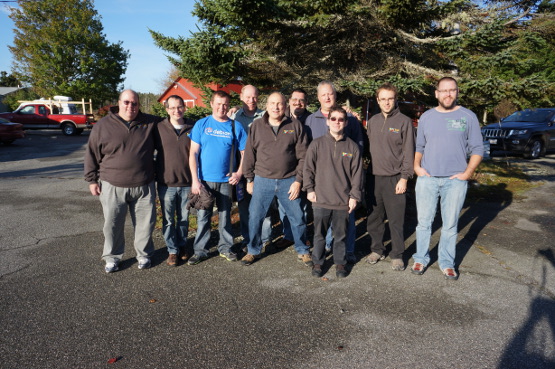
Social It was great seeing everyone again. I first started using LTSP around 9 years ago and never imagined back then that I d get to meet the people behind it. Ron Colcernian sourced us some really cool LTSP tops that you can see us wearing in the group photo. I hope to get to BTS again next year!

9 October 2012

David Welton: Fast, Light and Asynchronous

I am a big fan of Ruby on Rails: it does a lot of things, and it does most of them pretty well. When starting a new web project, it's the first thing I would reach for: most of the time, your problem is going to be figuring out a good product/market fit, or whipping up some internal tool without wasting a lot of programmer time. Once you've got a firm grasp of the problem, then maybe you can consider optimizing. Who cares if you do something that no one wants really really fast? However, Ruby on Rails is not beautiful in terms of being particularly fast or lightweight. No complaints from me: most of the time, I'm happy to have something that does so much for me, leaving me to work on the actual problem at hand. Once in a while, though, you do need fast and relatively lightweight, and that space has been getting more interesting over the past few years, at least in terms of the web. First of all, technologies like "Comet", utilizing web sockets or some other always-on connection are becoming more common, where a socket with the server remains open in order to quickly exchange data from the server to the client - and back. That seems to be a poor fit for something like Rails, where it can tie up a lot of resources if one isn't careful. And while computing costs continue to decline, no one minds getting more for less in terms of what their server can do. Furthermore, with frameworks like Backbone.js, pushing more and more code to the client, the server can afford to be a bit simpler and do less, so it may as well be snappy to boot. Java has long been fairly popular for "heavy lifting" types of applications, partially because it does end up being reasonably fast. But it's not something I've ever had much fun using and is usually kind of wordy, and makes you feel like you need a crew of people in Palo Alto, one in Bangalore, and one in Stockholm just to churn out all the code. And it certainly is no lightweight in terms of memory either. So... while it can certainly do pretty much anything you need, I don't see it as being the strongest player when someone needs "real time web" code, and needs it to be reasonably light weight. Ruby, outside of standard Rails stuff like Passenger, seems to offer some interesting possibilities for this kind of work, like Reel but they don't seem to have the traction other solutions do. Python is in a similar situation: the Twisted framework has been around for a while, and while it has some success stories, never seems to have really 'caught fire'. Neither of these languages was built for "concurrency" from the ground up, and that seems to have, to date, inhibited people from using them extensively for this kind of job. My gut feeling is that the need for speed and "concurrency" (or at least handling a lot of concurrent users) will drive adoption of languages heretofore not so popular on the server. Let's have a look at them. Erlang: This is by no means a new language, having been developed in Ericsson in the late 1980ies; and it implements several interesting concepts. First and foremost, concurrency is handled in the form of many small "processes", which are not actually Unix processes at all, but processes internal to the Erlang VM. The Erlang system contains a scheduler that allocates resources to all of these processes, so even if one of them dies or behaves badly, it's not a problem: the system as a whole can continue to function well. The way Erlang is built, the scheduler is preemptive: the internal "processes" don't need to yield to let other processes run. Beyond the scheduler and simple processes, Erlang gives you the tools to create elaborate trees of supervisors and workers that are quite robust to failures in any one portion of the system, as well as giving you the tools to set up a system to run on multiple, distributed computers. This kind of thinking is necessary when you write applications, such as phone switches, where downtime is really, really not ok. Erlang processes comunicate almost exclusively via message passing, meaning that state is not shared. Altogether, this makes for a fast, rock solid system that can easily handle thousands of concurrent connections without breaking a sweat. The computing world being what it is though, Erlang is likely to be more of a Lisp or Smalltalk: it's a trailblazer that did many things years before their time in other languages, but I don't see it as ever quite catching on amongst 'the masses'. It has a wonky syntax, it's a functional programming language, and because it is used in environments where too much experimentation is not good, it does not have a lot of room to break with its own past and innovate in terms of the language itself: it's slow to change and improve, even where the need to is clearly perceived. Node.js: is the opposite, in some ways: being based on Javascript, it draws on a huge number of potential programmers - orders of magnitude more than Erlang. And thanks to design decisions enforcing the use of asynchronous code and callbacks for anything that could block, it deals quite well with concurrent connections, even if the language and libraries don't really give you much in terms of "true" concurrency. This is a simple model that works pretty well, even if, theoretically, all it would take is one "while (1)" loop in a callback to block the entire system. In practice, this doesn't seem to be a big problem, though. More of a problem is writing maintainable code, when everything is a callback. Keeping the network of callbacks straight can be a bit of a chore, and is probably not an optimal model in terms of programmer productivity. That said, people seem to do make due with it, although Node is young enough that we haven't seem projects that are 5 or 6 years old and maintained by people who didn't write them. One of the advantages of being such a popular language is that lots of people have a strong interest in seeing Javascript being very, very performant. That need begat the V8 Javascript engine, from Google, which they were kind enough to release as free software. So one of the advantages that Node has is that the underlying implementation is extremely fast for a dynamic language. For many people who know Javascript, picking up Node.js is also an easy choice, even though people used to browser side programming with Javascript will have to adjust their way of thinking to succesfully tackle server projects. Go language: this is an interesting one, written by some luminaries who work at Google. It can best be described as something akin to C with some updated features, such as garbage collection, that make it more suitable for working on large projects, where things like memory leaks are going to make life very frustrating. It has the feel of a "real language, for real programmers" in that it doesn't stray far too far from what people are used to - it's not going to cause the "what the hell is this?!" reactions that Erlang might in more close-minded circles. Between the big company backing it, and the approachable syntax and concepts, Go looks like it has a good shot at the mainstream. Where it gets interesting is their concurrency model, which is apparently based on something called "communicating sequential processes" which, superficially at least, looks like it has some things in common with Erlang's "actor model" of concurrency. Under the hood, Go apparently hives off its "goroutines" to different OS level threads, but does not have a preemptive scheduler like Erlang: http://code.google.com/p/go/issues/detail?id=543 - although according to this, they may change that in the future. I'm not enough of a computer science guy to comment much on the details of CSP vs Actors, but both seem like valid models with strengths compared to trying to keep threads straight, which always seems to be a source of problems for programmers. Conclusions So, what's actually going to happen? I see Node.js as the clear front runner. It takes a worse-is-better approach that seems to work well enough as people get started. If they encounter difficulties later, they can always rewrite in something else, if needs be, but by "luring people in", Node.js has gathered a large group of users who continue, in turn, to churn out more code for use with the system, making it more attractive to new users. Programming languages are not winner-take-all markets though, so perhaps there is room for a few more languages to have decent followings in this space. Hopefully the competition will lead to ever better tools for those of us utilizing them! What do you think?

6 October 2012

Lars Wirzenius: Obnam 1.2 (backup software)

I've just made release 1.2 of Obnam, my backup program. The NEWS file entry: Bug fixes: This release has been uploaded to my own apt repository on code.liw.fi, for squeeze and unstable. Due to the Debian freeze, I am not uploading this to Debian at this time, though some changes may eventually be uploaded there.

3 October 2012

Petter Reinholdtsen: Why is your local library collecting the "wrong" computer books?

I just read the blog post from Tim Retout about the computer science book collection available in his local library, and just wanted to share my comment on his theory about computer books becoming obsolete so soon. That is part of the reason why the selection is so sad in almost any local library (it is in mine too), but I believe the major contributing factor is that the people buying books to the library have no way to know a good and future computer classic from trash. And they need to know which one will become a classic in the future, as they would normally buy one of the recently published books. During my university years, I worked for a while at the university library, and even there the person in charge of buying computer related books (and in fact any natural science related book), did not know enough about computers to make a good educated guess. Once, just before Christmas, they had some leftover money on the book budget and I was asked if I could pick out a lot of computer books in the university book store, for the library to buy for their collection. I had a great time picking all the books I dreamt of buying and reading, and the books I knew were classics (like most of the Stevens collection). I picked several of the generic O'Reilly books (ie documenting protocols, formats and systems, not specific versions of products) and stayed away from the 'teach yourself X in N days' class. I had a great time, and probably picked out more than a hundred books for the library that evening. The sad fact is that there is no way a overworked librarian is going to know that for example The Practice of Programming is a must-have in any computer library, and they will most of the time end up picking the wrong books to buy. Perhaps you can help your local library make better choices by giving the suggestions for books to get? I know they would love to hear from you, even if their budget might block them from getting your favourite book right away.

2 October 2012

Philipp Kern: How to maintain an OpenWRT installation

I wondered how to properly maintain an OpenWRT installation that needs to track trunk for one reason or another. For instance the OpenWRT release pace is quite slow and "new" devices or various fixes are only available in this particular branch.

Now the OpenWRT project does offer snapshot builds. These are images built with the default config for the particular device type. You can even upgrade most models using sysupgrade, which preserves a list of configuration files you specify when flashing the new image, instead of doing a dreadful tftp upload. But you still lose all the packages you installed and accumulate a bit of cruft when reinstalling them. If you do not flash new images, you will be unable to install kernel modules after a while, because the kernel version they're based upon was updated.

So what's suggested is this:
The advantage of building an image that includes all the packages is that you don't get to reinstall them and due to the use of squashfs, all files provided by those packages are actually kept in compressed form in flash. The image I built has a size of about 7 MB and contains "heavyweight" packages like isc-dhcpd, bind, openvpn (using openssl), bash, vim-tiny, tcpdump-mini, luci, and a webserver with TLS support.

As always: Take great care when you're flashing devices. The devices I bought cannot be bricked, but this might not be true for all devices that run OpenWRT. You might need and go doing a tftp image upload if something goes wrong. Check the OpenWRT wiki for instructions and possibly make your computer ready for them before starting to play with your box. For my Buffalo WZR-HP-AG300H the sysupgrade procedure is stable.

28 September 2012

Keith Packard: DRI-Next

Thoughts about DRI.Next On the way to the X Developer s Conference in Nuremberg, Eric and I chatted about how the DRI2 extension wasn t really doing what we wanted. We came up with some fairly rough ideas and even held an informal presentation about it. We didn t have slides that day, having come up with the content for the presentation in the hours just before the conference started. This article is my attempt to capture both that discussion and further conversations held over roast pork dinners that week. A brief overview of DRI2 Here s a list of the three things that DRI2 currently offers. Application authentication. The current kernel DRM authentication mechanism restricts access to the GPU to applications connected to the DRM master. DRI2 implements this by having the application request the DRM cookie from the X server which can then be passed to the kernel to gain access to the device. This is fairly important because once given access to the GPU, an application can access any flink d global buffers in the system. Given that the application sends screen data to the X server using flink d buffers, that means all screen data is visible to any GPU-accessing application. This bypasses any GPU hardware access controls. Allocating buffers. DRI2 defines a set of attachment points for buffers which can be associated with an X drawable. An application needing a specific set of buffers for a particular rendering operation makes a request of the X server which allocates the buffers and passes back their flink names. The server automatically allocates new buffers when window sizes change, sending an event to the application so that it knows to request the new buffers at some point in the future. Presenting data to the user. The original DRI2 protocol defined only the DRI2CopyRegion request which copied data between the allocated buffers. SwapBuffers was implemented by simply copy data from the back buffer to the front buffer. This didn t provide any explicit control over frame synchronization, so a new request, DRI2SwapBuffers, was added to expose controls for that. This new request only deals with the front and back buffers, and either copies from back to front or exchanges those two buffers. Along with DRI2SwapBuffers, there are new requests that wait for various frame counters and expose those to GL applications through the OMLsynccontrol extension What s wrong with DRI2? DRI2 fixed a lot of the problems present with the original DRI extension, and made reliable 3D graphics on the Linux desktop possible. However, in the four years since it was designed, we ve learned a lot, and the graphics environment has become more complex. Here s a short list of some DRI2 issues that we d like to see fixed. Proposed changes for DRI.Next Given the three basic DRI2 operations (authentication, allocation, presentation), how can those be improved? Eliminate DRI/DRM magic-cookie based authentication Kristian H gsberg, Martin Peres, Timoth e Ravier & Daniel Vetter gave a talk on DRM2 authentication at XDC this year that outlined the problems with the current DRM access control model and proposed some fairly simple solutions, including using separate device nodes one for access to the GPU execution environment and a separate, more tightly controlled one, for access to the display engine. Combining that with the elimination of flink for communicating data between applications and there isn t a need for the current magic-cookie based authentication mechanism; simple file permissions should suffice to control access to the GPU. Of course, this ignores the whole memory protection issue when running on a GPU that doesn t provide access control, but we already have that problem today, and this doesn t change that, other than to eliminate the global uncontrolled flink namespace. Allocate all buffers in the application DRI2 does buffer allocation in the X server. This ensures that that multiple (presumably cooperating) applications drawing to the same window will see the same buffers, as is required by the GLX extension. We suspected that this wasn t all that necessary, and it turns out to have been broken several years ago. This is the traditional way in X to phase out undesirable code, and provides an excellent opportunity to revisit the original design. Doing buffer allocations within the client has several benefits: Present buffers through DMA-buf The new DMA-buf infrastructure provides a cross-driver/cross-process mechanism for sharing blobs of data. DMA-buf provides a way to take a chunk of memory used by one driver and pass it to another. It also allows applications to create file descriptors that reference these objects. For our purposes, it s the file descriptor which is immediately useful. This provides a reliable and secure way to pass a reference from an underlying graphics buffer from the client to the X server by sending the file descriptor over the local X socket. An additional benefit is that we get automatic integration of data from other devices in the system, like video decoders or non-primary GPUs. The Prime support added in DRI version 2.8 hacks around this by sticking a driver identifier in the driverType value. Once the buffer is available to the X server, we can create a request much like the current DRI2SwapBuffers request, except instead of implicitly naming the back and front buffers, we can pass an arbitrary buffer and have those contents copied or swapped to the drawable. We also need a way to copy a region into the drawable. I don t know if that needs the same level of swap control, but it seems like it would be nice. Perhaps the new SwapBuffers request could take a region and offset as well, copying data when swapping isn t possible. Managing buffer allocations One trivial way to use this new buffer allocation mechanism would be to have applications allocate a buffer, pass it to the X server and then simply drop their reference to it. The X server would keep a reference until the buffer was no longer in use, at which point the buffer memory would be reclaimed. However, this would eliminate a key optimization in current drivers the ability to re-use buffers instead of freeing and allocating new ones. Re-using buffers takes advantage of the work necessary to setup the buffer, including constructing page tables, allocating GPU memory space and flushing caches. Notifying the application of idle buffers Once the X server is finished using a buffer, it needs to notify the application so that the buffer can be re-used. We could send these notifications in X events, but that ends up in the twisty mess of X client event handling which has already caused so much pain with Invalidate events. The obvious alternative is to send them back in a reply. That nicely controls where the data are delivered, but causes the application to block waiting for the X server to send the reply. Fortunately, applications already want to block when swapping buffers so that they get throttled to the swap buffers rate. That is currently done by having them wait for the DRI2SwapBuffers reply. This provides a nice place to stick the idle buffer data. We can simply list buffers which have become idle since the last SwapBuffers reply was delivered. Releasing buffer memory Applications which update only infrequently end up with a back buffer allocated after their last frame which can t be freed by the system. The fix for this is to mark the buffer purgable, but that can only be done after all users of the buffer are finished with it. With this new buffer management model, the application effectively passes ownership of its buffers to the X server, and the X server knows when all use of the buffer are finished. It could mark buffers as purgable at that point. When the buffer was sent back in the SwapBuffers reply, the application would be able to ask the kernel to mark it un-purgable again. A new extension? Or just a new DRI2 version? If we eliminate the authentication model and replace the buffer allocation and presentation interfaces, what of the existing DRI2 protocol remains useful? The only remaining bits are the other synchronization requests: DRI2GetMSC, DRI2WaitMSC, DRI2WaitSBC and DRI2SwapInterval. Given this, does it make more sense to leave DRI2 as it is and plan on deprecating, and eventually eliminating, it? Doing so would place a support burden on existing applications, as they d need to have code to use the right extension for the common requests. They ll already need to support two separate buffer management versions though, so perhaps this burden isn t that onerous?
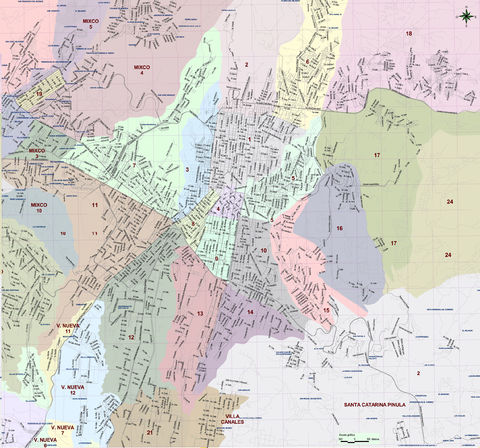
22 September 2012

Russell Coker: Changing Phone Prices in Australia

18 months ago when I signed up with Virgin Mobile [1] the data transfer quotas were 200MB on the $29 per month plan and 1.5G on the $39 per month plan. About 4 months ago when I checked the prices the amounts of data had gone up on the same plans (2.25G for $39 per month from memory). Now $39 per month gets only 500MB! It seems that recently Virgin has significantly reduced their value for money. Virgin does have an option to pay an exgtra $10 per month for 2GB of data which gets you 2GB per month if you sign up for 24 months. That is reasonably good value, when I first signed up with Virgin I paid $39 per month to get extra data transfer, now I could use the $29 plan for phone access and spend $10 per month on data with a Wifi gateway device. On top of this the phone plans aren t nearly as good value as they used to be. When I signed up with Virgin the Sony Ericsson Xperia X10 was free on a $29 plan, at the time that was a hell of a phone. I believe that the Samsung Galaxy S3 currently occupies a similar market position to the one that the Xperia X10 did 18 months ago so it shouldn t be much more expensive. But Virgin are offering the Galaxy S3 for $21 extra per month over 24 months on the $29 plan a total cost of ($29+$21)*24==$1200 while offering the same amount of calls and data transfer for $19 per month ($19*24==$456) when you don t get a phone this makes the price of a Galaxy S3 $1200-$456==$744 while Kogan [2] sells the same phone for $519 + postage! The cheapest phone that Virgin is offering is a Galaxy S2 for $5 per month on a $29 plan which when compared to $19 per month for the same plan without a phone makes the phone cost ($5+$10)*24==$360. Kogan sells the Galaxy S2 for $399 so there s a possibility of a Virgin plan saving some money over buying a phone from Kogan. But given the choice of $360 for a Galaxy S2 from Virgin and the Kogan prices of $839 for a Galaxy Note 2, $349 for a Galaxy Nexus, $469 for a Galaxy Note, $529 for a Galaxy S3, and $219 for a HTC One V I find it difficult to imagine that anyone would think that the $360 Galaxy S2 is the best option. I ve previously investigated dual-sim phones for cheap calls and data [3] but they didn t seem like good value at the time because the free phones offered by the telcos used to be a good deal. Now it seems that none of the telcos are offering good deals on phones so with my needs the way to go would be to buy a Samsung Galaxy S3 or Samsung Galaxy Note 2 from Kogan, and get the $19 plan from Virgin probably with a $10 per month extra fee to get an extra 2GB of data. For my wife the best option would be to keep using the Xperia X10 on a $19 per month plan as she doesn t seem to have any problem with the Xperia X10 that justifies spending hundreds of dollars. I idly considered getting a portable Wifi-3G device to use a cheap pre-paid 3G data option ($10 per month) and a cheap phone plan without data (maybe $10 per month), but decided that it s not worth the effort. The Virgin $19 plan gives me free calls to my wife and lots of calls to other numbers (more than I can use) and an extra $10 gives me all the data transfer I need. To use a Wifi-3G device would involve buying such a device and the hassle of carrying it and using it, that wouldn t save money for at least a year and would be annoying. The sudden decrease in data quotas is a real concern though. It s an indication that the telco cartel in Australia is pushing prices up, that s not a good sign. LTE is nice, but 3G with better quotas would be more generally useful to me. Related posts:
  1. Dual SIM Phones vs Amaysim vs Contract for Mobile Phones Currently Dick Smith is offering two dual-SIM mobile phones for...
  2. Virgin Refunds Me $200 Virgin Mobile Excessive Billing In my previous post about the...
  3. A Mobile Phone for Sysadmin Use My telco Three have just offered me a deal on...

17 September 2012

Petter Reinholdtsen: Debian Edu interview: Giorgio Pioda

After a long break in my row of interviews with people in the Debian Edu and Skolelinux community, I finally found time to wrap up another. This time it is Giorgio Pioda, which showed up on the mailing list at the start of this year, asking questions and inspiring us to improve the first time administrators experience with Skolelinux. :) The interview was conduced in May, but I only found time to publish it now. Who are you, and how do you spend your days? I have a PhD in chemistry but since several years I work as teacher in secondary (15-18 year old students) and tertiary (a kind of "light" university) schools. Five years ago I started to manage a Learning Management Service server and slowly I got more and more involved with IT. 3 years ago the graduating schools moved completely to Linux and I got the head of the IT for this. The experience collected in chemistry labs computers (for example NMR analysis of protein folding) and in the IT-courses during university where sufficient to start. Self training is anyway very important I live in the Italian speaking part of Switzerland, and the SPSE school (secondary) is a very special sport school for young people who try to became sport pro (for all sports, we have dozens of disciplines represented) and we are recognised by the Olympic Swiss Organisation. How did you get in contact with the Skolelinux/Debian Edu project? Looking for Linux / Primary Domain Controller (PDC) I found it already several years ago. But since the system was still not Kerberized and since our schools relies strongly on laptops I didn't use it. I plan to introduce it in the next future, probably for the next school year, since the squeeze release solved this security hole. What do you see as the advantages of Skolelinux/Debian Edu? Many. First of all there is a strong and living community that is very generous for help and hints. Chat help is crucial, together with the mailing list. Second. With Skolelinux you get an already well engineered platform and you don't have to start to build up your PDC and your clients from GNU/scratch; I've already done this once and I can tell it, it is hard. Third, since Skolelinux is a standard platform, it is way easier to educate other IT people and even if the head IT is sick another one could pick up the task without too much hassle. What do you see as the disadvantages of Skolelinux/Debian Edu? The only real problem I see is that it is a little too less flexible at client level. Debian stable is rocky and desirable, but there are many reasons that force for another choice. For example the need of new drivers for new PC, or the need for a specific OS for some devices that have specific software packages for another specific distribution (I have such a case for whiteboards that have only Ubuntu packages). Thus, I prepared compatibility packages educlient and eduroaming, hoping not to use them ;-) Which free software do you use daily? I have a Debian Stable PDC at school (Kerberos, NIS, NFS) with mixed Debian and Ubuntu clients. If you think that this triad combination is exotic... well I discovered right yesterday that Perceus has the same... For myself I run Debian wheezy/sid, but this combination is good only I you have enough competence to fix stuff for yourself, if something breaks. Daily I use texmacs, gnumeric, a little bit of R statistics, kmplot, and less frequently OpenOffice.org. Which strategy do you believe is the right one to use to get schools to use free software? I think that the only real argument that school managers "hear" is cost reduction. They don't give too much weight on quality, stability, just because they are normally not open to change. Students adapts very quickly to GNU/Linux (and for them being able to switch between different OS is a plus value); teachers and managers don't. We decided to move to Linux because students at our school have own laptop and we have the responsibility to keep the laptop ready to use; we were really unsatisfied with Microsoft since every Monday we had 20 machine to fix for viral infections... With Linux this has been reduced to zero, since people installs almost only from official repositories. I think that our special needs brought us to Linux. Those who don't have such needs will hardly move to Linux.

Next.

Previous.