Search Results: "edd"

3 April 2017

Dirk Eddelbuettel: RApiDatetime 0.0.3

A brown bag bug fix release 0.0.3 of RApiDatetime is now on CRAN. RApiDatetime provides six entry points for C-level functions of the R API for Date and Datetime calculations. The functions asPOSIXlt and asPOSIXct convert between long and compact datetime representation, formatPOSIXlt and Rstrptime convert to and from character strings, and POSIXlt2D and D2POSIXlt convert between Date and POSIXlt datetime. These six functions are all fairly essential and useful, but not one of them was previously exported by R. I left two undefined variables in calls in the exported header file; this only become an issue once I actually tried accessing the API from another package as I am now doing in anytime.

Changes in RApiDatetime version 0.0.3 (2017-04-02)
  • Correct two simple copy-and-paste errors in RApiDatetime.h
  • Also enable registration in useDynLib, and explicitly export known and documented R access functions provided for testing

Courtesy of CRANberries, there is a comparison to the previous release. More information is on the rapidatetime page. For questions or comments please use the issue tracker off the GitHub repo.

This post by Dirk Eddelbuettel originated on his Thinking inside the box blog. Please report excessive re-aggregation in third-party for-profit settings.

1 April 2017

Antoine Beaupr : My free software activities, February and March 2017

Looking into self-financing Before I begin, I should mention that I started tracking my time working on free software more systematically. I spend a lot of time on the computer, as regular readers of this blog might remember so I wanted to know exactly how much time was paid vs free work. I was already using org-mode's time clock system to keep track of my work hours, so I just extended this to my regular free software contributions, which also helps in writing those reports. It turns out that over 60% of my computer time is spent working on free software. That's huge! I was expecting something more along the range of 20 to 40% of my time. So I started thinking about ways of financing this work. I created a Patreon page but I'm hesitant into launching such a campaign: the only thing worse than "no patreon page" is "a patreon page with failed goals and no one financing it". So before starting such an effort, I'd like to get a feeling of what other people's experience with it are. I know that joeyh is close to achieving his goals, but I can't compare with the guy that invented git-annex or debhelper, so I'm concerned I wouldn't be able to raise the same level of funding. So any advice you have, feel free to contact me in private or in the comments. If you would be ready to fund my work, I'd love to know about it, obviously, but I guess I wouldn't get real numbers until I actually open up such a page... Now, onto the regular report.

Wallabako I spent a good chunk of time completing most of the things I had in mind for Wallabako, which I mentioned quickly in the previous report. Wallabako is now much easier to installed, with clearer instructions, an easier to use configuration file, more reliable synchronization and read status propagation. As usual the Wallabako README file has all the details. I've also looked at better integration with Koreader, the free software e-reader that forms the basis of the okreader free software distribution which has been able to port Debian to the Kobo e-readers, a project I am really excited about. This project has the potential of supporting Kobo readers beyond the lifetime that upstream grants it and removes a lot of proprietary software and spyware that ships with the Kobo readers. So I have made a few contributions to okreader and also on koreader, the ebook reader okreader is based on.

Stressant I rewrote stressant, my simple burn-in and stress-testing tool. After struggling in turn with Debirf, live-build, vmdebootstrap and even FAI, I just figured maybe it wasn't the best idea to try and reinvent that particular wheel: instead of reinventing how to build yet another Debian system build tool, maybe I should just reuse what's already there. It turns out there's a well known, succesful and fairly complete recovery system called Grml. It is a Debian Derivative, so all I needed to do was to stop procrastinating and actually write the actual stressant tool instead of just creating a distribution with a bunch of random tools shipped in. This allowed me to focus on which tools were the best to stress test different components. This selection ended up being: fio can also be used to overwrite disk drives with the proper options (--overwrite and --size=100%), although grml also ships with nwipe for wiping old spinning disks and hdparm to do a secure erase of SSD disks (whatever that's worth). Stressant still needs to be shipped with grml for this transition to be complete. In the meantime, I was able to configure the excellent public Gitlab CI service to provide ISO images with Stressant built-in as a stopgap measure. I also need to figure out a way to automate starting stressant from a boot menu to automate deployments on a larger scale, although because I have little need for the feature at this moment in time, this will likely wait for a sponsor to show up for this to be implemented. Still, stressant has useful features like the capability of sending logs by email using a fresh new implementation of the Python SMTPHandler (BufferedSMTPHandler) which waits for logging to complete before sending a single email. Another interesting piece of code in there is the NegateAction argparse handler that enables the use of "toggle flags" (e.g. --flag / --no-flag). I'm so happy with the code that I figure I could just share it here directly:
class NegateAction(argparse.Action):
    '''add a toggle flag to argparse

    this is similar to 'store_true' or 'store_false', but allows
    arguments prefixed with --no to disable the default. the default
    is set depending on the first argument - if it starts with the
    negative form (define by default as '--no'), the default is False,
    otherwise True.
    '''
    negative = '--no'
    def __init__(self, option_strings, *args, **kwargs):
        '''set default depending on the first argument'''
        default = not option_strings[0].startswith(self.negative)
        super(NegateAction, self).__init__(option_strings, *args,
                                           default=default, nargs=0, **kwargs)
    def __call__(self, parser, ns, values, option):
        '''set the truth value depending on whether
        it starts with the negative form'''
        setattr(ns, self.dest, not option.startswith(self.negative))
Short and sweet. I wonder why stuff like this is not in the standard library yet - maybe just because no one bothered yet? It'd be great to get feedback of more experienced Pythonistas on this one. I hope that my work on Stressant is complete. I get zero funding for this work, and have little use for it myself: I manage only a few machines and such a tool really shines when you regularly put new hardware online, which is (fortunately?) not my case anymore. I'd be happy, of course, to accompany organisations and people that wish to further develop and use such a tool. A short demo of stressant as well as detailed description of how it works is of course available in its README file.

Standard third party repositories After looking at improvements for the grml repository instructions, I realized there was no real "best practices" document on how to configure an Apt repository. Sure, there are tools like reprepro and others, but those hardly qualify as policy: they are very flexible and there are lots of ways to create insecure repositories or curl sh style instructions, which we of course generally want to avoid. While the larger problem of Unstrusted Debian packages remain generally unsolved (e.g. when you install any .deb file, it can get root on your system), it seemed to me one critical part of this problem was how to add a random third-party repository to your machine while limiting, as much as possible, what possible attackers could do with such a repository. In other words, to solve the more general problem of insecure .deb files, we also need to solve the distribution problem, otherwise fixing the .deb files themselves will be useless. This lead to the creation of standardized repository instructions that define:
  1. how to distribute the repository's public signing key (ie. over HTTPS)
  2. how to name suites and components (e.g. use stable and main unless you have a good reason, and explain yourself)
  3. recommend a healthy does of apt preferences pinning
  4. how to distribute keys (e.g. with a derive-archive-keyring package)
I've seen so many third party repositories get this wrong. For example, a lot of repositories recommend this type of command to intialize the OpenPGP trust path:
curl http://example.com/key.asc   apt-key add -
This has the following problems:
  • the key is transfered in plaintext and can easily be manipulated by an active attacker (e.g. a router on your path to the server or a neighbor in a Wifi cafe)
  • the key is added to the main trust root, which allows the key to authentify as the real Debian archive, therefore giving it all rights over all packages
  • since it's part of the global archive, it's difficult for a package to remove/add the key when a key rollover is necessary (and repositories generally don't provide a deriv-archive-keyring to do that process anyways)
An example of this are the Docker install instructions that, at least, manage to do this over HTTPS. Some other repositories don't even bother teaching people about the proper way of adding those keys. We settled for:
wget -O /usr/share/keyrings/deriv-archive-keyring.gpg https://deriv.example.net/debian/deriv-archive-keyring.gpg
That location was explicitly chosen to be out of the main trust directory, so that it needs to be explicitly added to the sources.list as well:
deb [signed-by=/usr/share/keyrings/deriv-archive-keyring.gpg] https://deriv.example.net/debian/ stable main
Similarly, we highly recommend users setup "apt pinning" to restrict what a given repository can do. Since pinning is so confusing, most people don't actually bother even configuring it and I have yet to see a single repo advise its users to configure those preferences, which are essential to limit what a repository can do. To keep configuration simple, we recommend this:
Package: *
Pin: origin deriv.example.net
Pin-Priority: 100
Obviously, for a single-package repository, the actual package name should be listed, e.g.:
Package: foo
Pin: origin deriv.example.net
Pin-Priority: 100
And the priority should probably be set to 1 unless you want to allow automatic upgrades. It is my hope that this design will get more traction in the years to come and become a de-facto standard that will be a key part in safely adding third party repositories. There is obviously much more work to be done to improve security when installing untrusted .deb files, and I encourage Debian developers to consider contributing to the UntrustedDebs discussions and particularly to the Teams/Dpkg/Spec/DeclarativePackaging work.

Signal R&D I spent a significant amount of time this month struggling with the Signal project on my phone. I'm still ambivalent on Signal: it's a centralized designed, too dependent on phone numbers, but I must admit they get a lot of things right and it's the only free-software platform that allows for easy-to-use, multi-platform videoconferencing that my family can use. I've been following Signal for a while: up until now, I had been using the LibreSignal rebuild of the official client, as it is distributed on a F-Droid repository. Because I try to avoid Google (proprietary) software on my phone, it's basically the only way I could even install Signal. Unfortunately, the repository is out of date and introduces another point of trust in the distribution model: now you not only need to trust the Signal authors to do the right thing, you also need to trust that F-Droid repo not to inject nasty code on your phone. I've therefore started a discussion about how Signal could be distributed outside of the Google Play Store. I'd like to think it's one of the things that led the Signal people to distribute an official copy of Signal outside of the playstore. After much struggling, I was able to upgrade to this official client and will be able to upgrade easily by just downloading the APK. (Do note that I ended up reinstalling and re-registering Signal, which unfortunately changed my secret keys.) I do hope Signal enters F-Droid one day, but it could take a while because it still doesn't work without Google services and barely works with MicroG, the free software alternative to the Google services clients. Moxie also set a list of requirements like crash reporting and statistics that need to be implemented on F-Droid's side before he agrees to the deployment, so this could take a while. I've also participated in the, ahem, discussion on the JWZ blog regarding a supposed vulnerability in Signal where it would leak previously unknown phone numbers to third parties. I reviewed the way the phone number is uploaded and, while it's possible to create a rainbow table of phone numbers (which are hashed with a truncated SHA-1 checksum), I couldn't verify the claims of other participants in the thread. For me, Signal still does the right thing with contacts, although I do question the way "read status" notifications get transmitted, but that belong in another bug report / blog post.

Debian Long Term Support (LTS) It's been more than a year working on Debian LTS, started by Raphael Hertzog at Freexian. I didn't work much in February so I had a lot of hours to catchup with, and was unfortunately unable to do so, partly because I was busy with other projects, and partly because my colleagues are doing a great job at resolving the most important issues. So one my concerns this month was finding work. It seemed that all the hard packages were either taken (e.g. my usual favorites, tiff and imagemagick, we done by others) or just too challenging (e.g. I don't feel quite comfortable tackling the LTS branch of the Linux kernel yet). I spent quite a bit of time trying to figure out what was wrong with pcre3, only to realise the "32" in the report was not about the architecture, but about the character width. Because of thise, I marked 4 CVEs (CVE-2017-7186, CVE-2017-7244, CVE-2017-7245, CVE-2017-7246) as "not-affected", since the 32-bith character support wasn't enabled in wheezy (or jessie, for that matter). I still spent some time trying to reproduce the issues, which require a compiler with an AddressSanitizer, something that was introduced in both Clang and GCC after Wheezy was released, which makes reproducing this fairly complicated... This allowed me to experiment more with Vagrant, however, and I have provided the Debian cloud team with a 32-bit Vagrant box that was merged in shortly after, although it doesn't show up yet in the official list of Debian images. Then I looked at the apparmor situation (CVE-2017-6507), Debian bug #858768). That was one tricky bug as well, since it's not a security issue in apparmor per se, but more an issue with things that assume a certain behavior from apparmor. I have concluded that Wheezy was not affected because there are no assumptions of proper isolation there - which are provided only starting from LXC 1.0 - and Docker is not in Wheezy. I also couldn't reproduce the issue on Jessie, but, as it turns out, the issue was sysvinit-specific, which is why I couldn't reproduce it under the default systemd configuration shipped with Jessie. I also looked at the various binutils security issues: as I reported on the mailing list, I didn't see anything serious enough in there to warrant a a security release and followed the lead of both the stable and Red Hat security teams by marking this "no-dsa". I similiarly reviewed the mp3splt security issues (specifically CVE-2017-5666) and was fairly puzzled by that issue, which seems to be triggered only the same address sanitization extensions than PCRE, although there was some pretty wild interplay with debugging flags in there. All in all, it seems we can't reproduce that issue in wheezy, but I do not feel confident enough in the results to push that issue aside for now. I finally uploaded the pending graphicsmagick issue (DLA-547-2), a regression update to fix a crash that was introduced in the previous release (DLA-547-1, mistakenly named DLA-574-1). Hopefully that release should clear up some of the confusion and fix the regression. I also released DLA-879-1 for the CVE-2017-6369 in firebird2.5 which was an interesting experiment: I couldn't reproduce the issue in a local VM. After following the Ubuntu setup tutorial, as I wasn't too familiar with the Firebird database until now (hint: the default username and password is sysdba/masterkey), I ended up assuming we were vulnerable and just backporting the patch after seeing the jessie folks push out a release just in case. I also looked at updating the ca-certificates package to deal with the pending WoSign/Startcom removal: I made an explicit list of the CAs that need to be removed after reviewing the Mozilla list. I also sent a patch for an unrelated issue where ca-certificates is writing to /usr/local (!!) in Debian bug #843722. I have also done some "meta" work in starting a discussion about fixing the missing DLA links in the tracker, as you will notice all of the above links lead to nowhere. Thanks to pabs, there are now some links but unfortunately there are about 500 DLAs missing from the website. We also discussed ways to Debian bug #859123, something which is currently a manual process. This is now in the hands of the excellent webmaster team. I have also filed a few missing security bugs (Debian bug #859135, Debian bug #859136), partly because I wanted to help the security team. But it turned out that I felt the script needed some improvements, so I submitted a patch to improve the script so it is easier to run.

Other projects As usual, there's the usual mixed bags of chaos: More stuff on Github...

David Kalnischkies: Winning the Google Open Source Lottery

I don't know about you, but I frequently get mails announcing that I was picked as the lucky winner of a lottery, compensation program or simply as "business associate". Obvious Spam of course, that never happens in reality. Just like my personal "favorite" at the moment: Mails notifying me of inheritance from a previously (more or less) unknown relative. Its just that this is what has happend basically a few weeks ago in reality to me (over the phone through) and I am still dealing with the bureaucracy required of teaching the legal system that I have absolutely no intention of becoming the legal successor of someone I haven't seen in 20 years, regardless of how close the family relation is on paper but that might be the topic of another day. On the 1st March a mail titled "Google Open Source Peer Bonus Program" looked at first as if it would fall into this lottery spam class. It didn't exactly help that the mail was multipart HTML and text, but the text really only the text, not mentioning the embedded links used in the HTML part. It even included a prominent and obvious red flag: "Please fill out the form". 20% Bayes score didn't come from nothing. Still, for better or worse the words "Open Source" made it unlikely to be spam similar to how the word PGP indicates authenticity. So it happened, another spam message became true for me. I wonder which one will be next You have probably figured out by now that I didn't know that program before. Kinda embarrassing for a previous Google Summer of Code student (GSoC is run by the same office), but the idea behind it is simple: Google employees can nominate contributors to open source stuff for a small monetary "thank you!" gift card. Earlier this week winners for this round were announced 52 contributors including yours truly. You might be surprised, but the rational given behind my name is APT (I got a private mail with the full rational from my "patron", just in case you wonder if at least I would know more). It is funny how a guy who was taken aback by the prospect of needing a package manager like YaST to use Linux contributed just months later the first patch to apt and has roughly 8 years later amassed more than 2400 commits. It's birthday season in my family with e.g. mine just a few days ago, so its seems natural that apt has its own birthday today just as if it would be part of my family: 19th years this little bundle of bugs joy is now! In more sober moments I wonder sometimes how apt and I would have turned out if we hadn't meet. Would apt have met someone else? Would I? Given that I am still the newest team member and only recently joined Debian as DD at all APT has some strange ways of showing that it loves you: It e.g. helps users compose mails which end in a dilemma to give a recent example. Perhaps you need to be a special kind of crazy1 to consider this good, but as I see it apt has a big enough userbase that regardless of what your patch is doing, someone will like it. That drastically increases the chances that someone will also like it enough to say so in public offsetting complains from all those who don't like the (effects of the) patch which are omnipresent. And twice in a blue moon some of those will even step forward and thank you explicitly. Not that it would be necessary, but it is nice anyhow. So, thanks for the love supercow, Google & apt users! Or in other words: APT might very well be one of the most friendly (package manager related) project to contribute to as the language-specific managers have smaller userbases and hence a smaller chance of having someone liking your work (in public) so contribute a patch or two and be loved, too! Disclaimer: I get no bonus for posting this nor are any other strings attached. Birthdays are just a good time to reflect. In terms of what I do with my new found riches (in case I really receive them I haven't yet so that could still be an elaborate scam ): APT is a very humble program, but even it is thinking about moving away from a dev-box with less than 4 GB of RAM and no SSD, so it is happily accepting the gift and expects me to upgrade sooner now. What kind of precedence this sets for the two decades milestone next year? If APT isn't obsolete by then We will see.

  1. which even ended up topping Hacker News around New Year's Eve who would have thought that apt and reproducibility bugs are top news ;)

31 March 2017

Dirk Eddelbuettel: #2: Even Easier Package Registration

Welcome to the second post in rambling random R recommendation series, or R4 for short. Two days ago I posted the initial (actual) post. It provided context for why we need package registration entries (tl;dr: because R CMD check now tests for it, and because it The Right Thing to do, see documentation in the posts). I also showed how generating such a file src/init.c was essentially free as all it took was single call to a new helper function added to R-devel by Brian Ripley and Kurt Hornik. Now, to actually use R-devel you obviously need to have it accessible. There are a myriad of ways to achieve that: just compile it locally as I have done for years, use a Docker image as I showed in the post -- or be creative with eg Travis or win-builder both of which give you access to R-devel if you're clever about it. But as no good deed goes unpunished, I was of course told off today for showing a Docker example as Docker was not "Easy". I think the formal answer to that is baloney. But we leave that aside, and promise to discuss setting up Docker at another time. R is after all ... just R. So below please find a script you can save as, say, ~/bin/pnrrs.r. And calling it---even with R-release---will generate the same code snippet as I showed via Docker. Call it a one-off backport of the new helper function -- with a half-life of a few weeks at best as we will have R 3.4.0 as default in just a few weeks. The script will then reduce to just the final line as the code will be present with R 3.4.0.
#!/usr/bin/r
library(tools)
.find_calls_in_package_code <- tools:::.find_calls_in_package_code
.read_description <- tools:::.read_description
## all what follows is from R-devel aka R 3.4.0 to be
package_ff_call_db <- function(dir)  
    ## A few packages such as CDM use base::.Call
    ff_call_names <- c(".C", ".Call", ".Fortran", ".External",
                       "base::.C", "base::.Call",
                       "base::.Fortran", "base::.External")
    predicate <- function(e)  
        (length(e) > 1L) &&
            !is.na(match(deparse(e[[1L]]), ff_call_names))
     
    calls <- .find_calls_in_package_code(dir,
                                         predicate = predicate,
                                         recursive = TRUE)
    calls <- unlist(Filter(length, calls))
    if(!length(calls)) return(NULL)
    attr(calls, "dir") <- dir
    calls
 
native_routine_registration_db_from_ff_call_db <- function(calls, dir = NULL, character_only = TRUE)  
    if(!length(calls)) return(NULL)
    ff_call_names <- c(".C", ".Call", ".Fortran", ".External")
    ff_call_args <- lapply(ff_call_names,
                           function(e) args(get(e, baseenv())))
    names(ff_call_args) <- ff_call_names
    ff_call_args_names <-
        lapply(lapply(ff_call_args,
                      function(e) names(formals(e))), setdiff,
               "...")
    if(is.null(dir))
        dir <- attr(calls, "dir")
    package <- # drop name
        as.vector(.read_description(file.path(dir, "DESCRIPTION"))["Package"])
    symbols <- character()
    nrdb <-
        lapply(calls,
               function(e)  
                   if (startsWith(deparse(e[[1L]]), "base::"))
                       e[[1L]] <- e[[1L]][3L]
                   ## First figure out whether ff calls had '...'.
                   pos <- which(unlist(Map(identical,
                                           lapply(e, as.character),
                                           "...")))
                   ## Then match the call with '...' dropped.
                   ## Note that only .NAME could be given by name or
                   ## positionally (the other ff interface named
                   ## arguments come after '...').
                   if(length(pos)) e <- e[-pos]
                   ## drop calls with only ...
                   if(length(e) < 2L) return(NULL)
                   cname <- as.character(e[[1L]])
                   ## The help says
                   ##
                   ## '.NAME' is always matched to the first argument
                   ## supplied (which should not be named).
                   ##
                   ## But some people do (Geneland ...).
                   nm <- names(e); nm[2L] <- ""; names(e) <- nm
                   e <- match.call(ff_call_args[[cname]], e)
                   ## Only keep ff calls where .NAME is character
                   ## or (optionally) a name.
                   s <- e[[".NAME"]]
                   if(is.name(s))  
                       s <- deparse(s)[1L]
                       if(character_only)  
                           symbols <<- c(symbols, s)
                           return(NULL)
                        
                     else if(is.character(s))  
                       s <- s[1L]
                     else   ## expressions
                       symbols <<- c(symbols, deparse(s))
                       return(NULL)
                    
                   ## Drop the ones where PACKAGE gives a different
                   ## package. Ignore those which are not char strings.
                   if(!is.null(p <- e[["PACKAGE"]]) &&
                      is.character(p) && !identical(p, package))
                       return(NULL)
                   n <- if(length(pos))  
                            ## Cannot determine the number of args: use
                            ## -1 which might be ok for .External().
                            -1L
                          else  
                            sum(is.na(match(names(e),
                                            ff_call_args_names[[cname]]))) - 1L
                         
                   ## Could perhaps also record whether 's' was a symbol
                   ## or a character string ...
                   cbind(cname, s, n)
                )
    nrdb <- do.call(rbind, nrdb)
    nrdb <- as.data.frame(unique(nrdb), stringsAsFactors = FALSE)
    if(NROW(nrdb) == 0L   length(nrdb) != 3L)
        stop("no native symbols were extracted")
    nrdb[, 3L] <- as.numeric(nrdb[, 3L])
    nrdb <- nrdb[order(nrdb[, 1L], nrdb[, 2L], nrdb[, 3L]), ]
    nms <- nrdb[, "s"]
    dups <- unique(nms[duplicated(nms)])
    ## Now get the namespace info for the package.
    info <- parseNamespaceFile(basename(dir), dirname(dir))
    ## Could have ff calls with symbols imported from other packages:
    ## try dropping these eventually.
    imports <- info$imports
    imports <- imports[lengths(imports) == 2L]
    imports <- unlist(lapply(imports,  [[ , 2L))
    info <- info$nativeRoutines[[package]]
    ## Adjust native routine names for explicit remapping or
    ## namespace .fixes.
    if(length(symnames <- info$symbolNames))  
        ind <- match(nrdb[, 2L], names(symnames), nomatch = 0L)
        nrdb[ind > 0L, 2L] <- symnames[ind]
      else if(!character_only &&
              any((fixes <- info$registrationFixes) != ""))  
        ## There are packages which have not used the fixes, e.g. utf8latex
        ## fixes[1L] is a prefix, fixes[2L] is an undocumented suffix
        nrdb[, 2L] <- sub(paste0("^", fixes[1L]), "", nrdb[, 2L])
        if(nzchar(fixes[2L]))
            nrdb[, 2L] <- sub(paste0(fixes[2L]), "$", "", nrdb[, 2L])
     
    ## See above.
    if(any(ind <- !is.na(match(nrdb[, 2L], imports))))
        nrdb <- nrdb[!ind, , drop = FALSE]
    ## Fortran entry points are mapped to l/case
    dotF <- nrdb$cname == ".Fortran"
    nrdb[dotF, "s"] <- tolower(nrdb[dotF, "s"])
    attr(nrdb, "package") <- package
    attr(nrdb, "duplicates") <- dups
    attr(nrdb, "symbols") <- unique(symbols)
    nrdb
 
format_native_routine_registration_db_for_skeleton <- function(nrdb, align = TRUE, include_declarations = FALSE)  
    if(!length(nrdb))
        return(character())
    fmt1 <- function(x, n)  
        c(if(align)  
              paste(format(sprintf("     \"%s\",", x[, 1L])),
                    format(sprintf(if(n == "Fortran")
                                       "(DL_FUNC) &F77_NAME(%s),"
                                   else
                                       "(DL_FUNC) &%s,",
                                   x[, 1L])),
                    format(sprintf("%d ,", x[, 2L]),
                           justify = "right"))
            else  
              sprintf(if(n == "Fortran")
                          "     \"%s\", (DL_FUNC) &F77_NAME(%s), %d ,"
                      else
                          "     \"%s\", (DL_FUNC) &%s, %d ,",
                      x[, 1L],
                      x[, 1L],
                      x[, 2L])
           ,
          "     NULL, NULL, 0 ")
     
    package <- attr(nrdb, "package")
    dups <- attr(nrdb, "duplicates")
    symbols <- attr(nrdb, "symbols")
    nrdb <- split(nrdb[, -1L, drop = FALSE],
                  factor(nrdb[, 1L],
                         levels =
                             c(".C", ".Call", ".Fortran", ".External")))
    has <- vapply(nrdb, NROW, 0L) > 0L
    nms <- names(nrdb)
    entries <- substring(nms, 2L)
    blocks <- Map(function(x, n)  
                      c(sprintf("static const R_%sMethodDef %sEntries[] =  ",
                                n, n),
                        fmt1(x, n),
                        " ;",
                        "")
                   ,
                  nrdb[has],
                  entries[has])
    decls <- c(
        "/* FIXME: ",
        "   Add declarations for the native routines registered below.",
        "*/")
    if(include_declarations)  
        decls <- c(
            "/* FIXME: ",
            "   Check these declarations against the C/Fortran source code.",
            "*/",
            if(NROW(y <- nrdb$.C))  
                 args <- sapply(y$n, function(n) if(n >= 0)
                                paste(rep("void *", n), collapse=", ")
                                else "/* FIXME */")
                c("", "/* .C calls */",
                  paste0("extern void ", y$s, "(", args, ");"))
            ,
            if(NROW(y <- nrdb$.Call))  
                args <- sapply(y$n, function(n) if(n >= 0)
                               paste(rep("SEXP", n), collapse=", ")
                               else "/* FIXME */")
               c("", "/* .Call calls */",
                  paste0("extern SEXP ", y$s, "(", args, ");"))
             ,
            if(NROW(y <- nrdb$.Fortran))  
                 args <- sapply(y$n, function(n) if(n >= 0)
                                paste(rep("void *", n), collapse=", ")
                                else "/* FIXME */")
                c("", "/* .Fortran calls */",
                  paste0("extern void F77_NAME(", y$s, ")(", args, ");"))
             ,
            if(NROW(y <- nrdb$.External))
                c("", "/* .External calls */",
                  paste0("extern SEXP ", y$s, "(SEXP);"))
            )
     
    headers <- if(NROW(nrdb$.Call)   NROW(nrdb$.External))
        c("#include <R.h>", "#include <Rinternals.h>")
    else if(NROW(nrdb$.Fortran)) "#include <R_ext/RS.h>"
    else character()
    c(headers,
      "#include <stdlib.h> // for NULL",
      "#include <R_ext/Rdynload.h>",
      "",
      if(length(symbols))  
          c("/*",
            "  The following symbols/expresssions for .NAME have been omitted",
            "", strwrap(symbols, indent = 4, exdent = 4), "",
            "  Most likely possible values need to be added below.",
            "*/", "")
       ,
      if(length(dups))  
          c("/*",
            "  The following name(s) appear with different usages",
            "  e.g., with different numbers of arguments:",
            "", strwrap(dups, indent = 4, exdent = 4), "",
            "  This needs to be resolved in the tables and any declarations.",
            "*/", "")
       ,
      decls,
      "",
      unlist(blocks, use.names = FALSE),
      ## We cannot use names with '.' in: WRE mentions replacing with "_"
      sprintf("void R_init_%s(DllInfo *dll)",
              gsub(".", "_", package, fixed = TRUE)),
      " ",
      sprintf("    R_registerRoutines(dll, %s);",
              paste0(ifelse(has,
                            paste0(entries, "Entries"),
                            "NULL"),
                     collapse = ", ")),
      "    R_useDynamicSymbols(dll, FALSE);",
      " ")
 
package_native_routine_registration_db <- function(dir, character_only = TRUE)  
    calls <- package_ff_call_db(dir)
    native_routine_registration_db_from_ff_call_db(calls, dir, character_only)
 
package_native_routine_registration_db <- function(dir, character_only = TRUE)  
    calls <- package_ff_call_db(dir)
    native_routine_registration_db_from_ff_call_db(calls, dir, character_only)
 
package_native_routine_registration_skeleton <- function(dir, con = stdout(), align = TRUE,
                                                         character_only = TRUE, include_declarations = TRUE)  
    nrdb <- package_native_routine_registration_db(dir, character_only)
    writeLines(format_native_routine_registration_db_for_skeleton(nrdb,
                align, include_declarations),
               con)
 
package_native_routine_registration_skeleton(".")  ## when R 3.4.0 is out you only need this line
Here I use /usr/bin/r as I happen to like littler a lot, but you can use Rscript the same way. Easy enough now?

This post by Dirk Eddelbuettel originated on his Thinking inside the box blog. Please report excessive re-aggregation in third-party for-profit settings.

30 March 2017

Shirish Agarwal: The tale of the dancing girl #nsfw

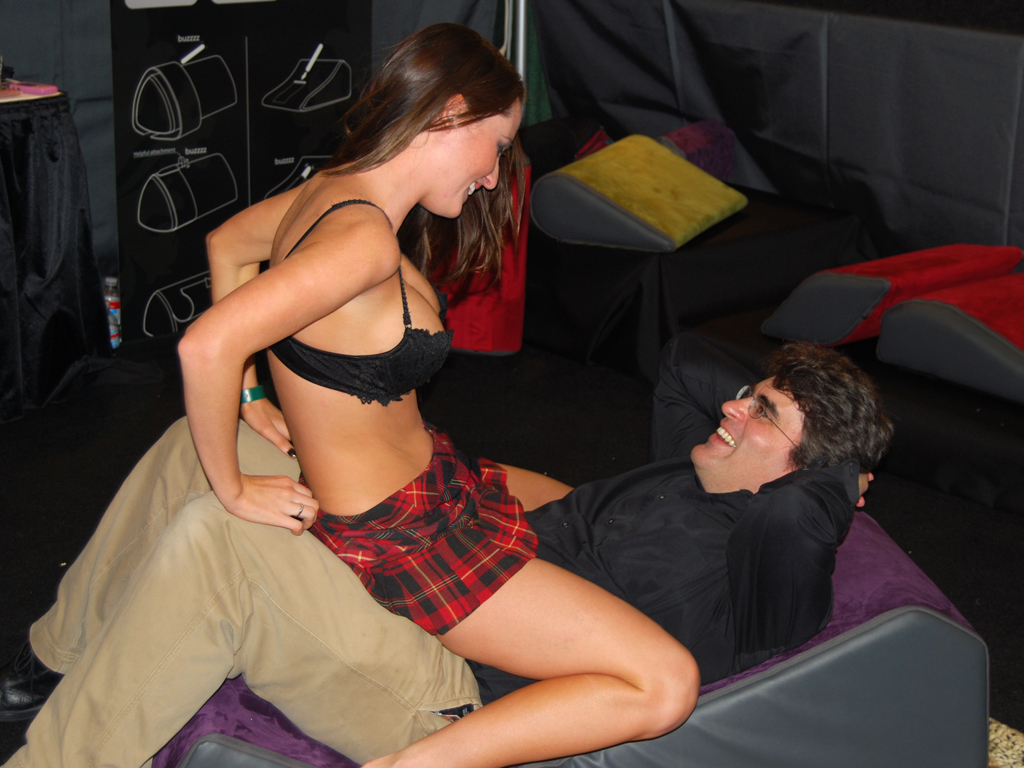
Demonstration of a Lapdance - Wikipedia

Demonstration of a Lapdance Wikipedia

The post will be adult/mature in nature. So those below 18 please excuse. The post is about an anecdote almost 20 years to date, The result its being posted is I had a dinner with a friend to whom I shared this and he thought it would be nice if I shared this hence sharing it. The conversation was about being young and foolish in which I shared the anecdote. The blog post was supposed to be about Aadhar which shocked me both in the way no political discourse happened and the way the public as well as public policy was gamed but that would have to wait for another day. History I left college in 1995. The anecdote/incident probably happened couple of years earlier so probably 1992-1993. At that time, I was in my teens and as a typical teenager I made few friends. One of those friends, who would remain nameless as since we drifted apart, and as I have not take permission from him, taking his name would not be a good idea. Anyway, this gentleman, let s call him Mr. X as an example. Couple of months before, he had bought an open jeep, similar but very different from the jeep being shown below. Open Jeep had become a fashion statement few months back (in those days) as a Salman khan starred movie had that and anybody who had money wanted one just like that.
Illustration of an open jeep, sadly its a military one - wikipedia

Illustration of an open jeep, sadly its a military one wikipedia

Those days we didn t have cell-phones and I had given my land-line phone number to very few friends as in those days, as the land-lines were a finicky instrument. One fine morning, I get a call from my friend telling he is going to come near my place and I should meet him at some xyz place and we would go for a picnic for the whole day and it is possible that we might return next day. As it was holidays and only a fool would throw away a chance to have a ride in open air jeep, I immediately agreed. I shared that my friends had organized a picnic and giving another friend s number (who didn t know anything) got permission and went to meet Mr. X. This was very early morning, around 0600 hrs. . After meeting him, he told that we would be going to Mumbai, take some more friends from there and then move on. In those days, a railway ticket from Shivaji Nagar to V.T. (now C.S.T.) costed INR 30/- . I had been to Mumbai few times before for various technical conferences and knew few cheap places to eat, I knew that going via train, we could go and come back spending at the most INR 150/- and still have some change left-over (today s meal at a roadside/street vendor easily passes that mark). The Journey I shared with him that it will be costly and I don t have any money to cover the fuel expenses and he said he would shoulder the expenses, he just wanted my company for the road. Those days, it was the scenic Old Mumbai-Pune highway and we took plenty of stops to admire that ghats (hills and valleys together). That journey must have taken around 7-8 hours while today by new Expressway, you could do the same thing by 2.5/3 hours. Anyhow, we reached to some swanky hotel in South Mumbai. South Mumbai was not the financial powerhouse that it today is, there was mix of very old buildings and new buildings like the swanky hotel that we had checked in. I have no memory nor any idea whether it was 1 class, 3 class or 5 class and could have cared less as had been tired from the journey. We checked in, I had a long warm water bath and then slept in the king-size bed with curtains drawn. Evening came and we took the jeep and picked up 2-3 of his friends who were from my age or a year or two older and we went to Nariman Point. Seeing the Queen s necklace from Nariman Point at night is a sight in itself. Keeping with the innocence, I was under the impression that we had arrived at our destination, at this our host, Mr. X and his Bombaiya friends had a quiet laugh saying its a young night still. We must have whiled away couple of hours, having chai and throwing rocks in the sea. The Meeting After a while, Mr. X took us to another swanky place. My eyes were out of my sockets as this seemed to be as elitist a place as could be. I saw many White European women in various stages of undress pole-dancing and lap-dancing. I had recently (in those days) come to know the term but was under the impression that it was something that happened in Europe and States only. I had no idea that lap-dancing was older than my birth as according to Wikipedia. So looking back now, I am not surprised that in two decades the concept crossed the oceans. Again, Mr. X being the host, agreed to bear all the costs and all of us had food, drink and a lap-dance from any of the dancers on the floor. As I was young and probably shy (still am) I asked Mr. X s help to pick a girl/woman for me. The woman whom he picked was auburn-aired, was either my age or a year or two older/younger to me. What proceeded next was about 20-30 minutes of totally sexualized erotic experience. While he and all his friends picked girls to go all the way, I was hesitant to let loose. Maybe it was due to my lack of courage or inexperience, maybe it was not in my city so couldn t predict the outcome, maybe was just afraid that reality might mar fantasy, I dunno till date. Although we kissed and necked a lot, I guess that should count for something. The conversation After all my friends had gone to the various rooms, sometime after I excused myself, went to the loo myself, peed a bit, splashed cold water on self, came out and had couple of glasses of water and came back to my seat. The lady came back and I shared that I was not interested in going further and while she was beautiful, I just didn t have the guts. I did ask her if she would give me company though for sometime as I didn t know anyone else at that place. Our conversation was more about her than me as I had more or less an average life upto that moment. There were only three unorthodox things that I had done before meeting her. I had drunk wines of different types, smoked weed and had a Magic Mushrooms experience the year before with another group of friends I had made there. Goa in those days was simply magical in those days but that probably would need its story/own blog post. When I enquired about her, she shared she was from Russia and she rattled off more than half a dozen places around the world where she had been to and this was her second or third stint in Mumbai and she wasn t at all unhappy about the lifestyle and choices she was leading. I had no answer for her as a young penniless college-going student. Her self-confidence and the way she carried herself was impressive, with or without clothes. During course of the conversation she shared a couple of contacts from whom I could get better weed at slightly higher price if I were in Goa. Few months later, those contacts turned out to be true. After sometime, we took all the women and ourselves, around 8-9 people in his jeep (how he negotiated that is beyond me) went to a hygienic Pani puri and Bhel (puffed rice mixed with variety of spices typically tomato, potato, coriander chutney as well as Tamarind Chutney among other things) place and moved them to tears (the spices in bhel and Pani puri did it for them) and this was when we had explicitly asked the bhel-wala guy to make it extremely mild with just a hint of spice in it. Anyways, sometime later, we dropped them at the same place, dropped his friends and came back to the hotel we booked and got drunk again. After-effects Few years later, it came in the newspapers/media that while India had broken out of financial isolation just few years back (1991) and were profiting from it, many countries of the former USSR were going the other way around and hence there was huge human trafficking and immigration that had taken place. This was in-line with what the lady/woman/Miss X had shared with me. The latest trigger The latest trigger happened couple of months back where I learnt of a hero flight attendant saving a girl from human-trafficking. Till date, I am unsure whether she was doing it willingly or putting a brave smile in front of me, because even if she had confided me in any way, I probably would have been too powerless to help her in any-way. I just don t know. Foolishness thy name While my friend took advantage of my innocence and introduced me to a world which otherwise I would probably not know exists, it could have easily have gone some other way as well. While I m still unsure of the choices I made, I was and am happy that I was able to strike a conversation with her and attempt to reach the person therein. Was it the truth or an elaborate fabricated lie to protect myself and herself, this I will never know. Oppression I understand the fact that as a customer or somebody who is taking part in either of those performances or experiences it isn t easy in any way to know/say that whether the performer is doing it wilfully or not as the experiences are in tightly controlled settings.
Filed under: Miscellenous Tagged: #anecdote, #confusion, #elitist, #growing up, #lap dance, #NSFW, #Open Jeep, Mumbai

29 March 2017

Dirk Eddelbuettel: #1: Easy Package Registration

Welcome to the first actual post in the R4 series, following the short announcement earlier this week.

Context Last month, Brian Ripley announced on r-devel that registration of routines would now be tested for by R CMD check in r-devel (which by next month will become R 3.4.0). A NOTE will be issued now, this will presumably turn into a WARNING at some point. Writing R Extensions has an updated introduction) of the topic. Package registration has long been available, and applies to all native (i.e. "compiled") function via the .C(), .Call(), .Fortran() or .External() interfaces. If you use any of those -- and .Call() may be the only truly relevant one here -- then is of interest to you. Brian Ripley and Kurt Hornik also added a new helper function: tools::package_native_routine_registration_skeleton(). It parses the R code of your package and collects all native function entrypoints in order to autogenerate the registration. It is available in R-devel now, will be in R 3.4.0 and makes adding such registration truly trivial. But as of today, it requires that you have R-devel. Once R 3.4.0 is out, you can call the helper directly. As for R-devel, there have always been at least two ways to use it: build it locally (which we may cover in another R4 installment), or using Docker. Here will focus on the latter by relying on the Rocker project by Carl and myself.

Use the Rocker drd Image We assume you can run Docker on your system. How to add it on Windows, macOS or Linux is beyond our scope here today, but also covered extensively elsewhere. So we assume you can execute docker and e.g. bring in the 'daily r-devel' image drd from our Rocker project via
~$ docker pull rocker/drd
With that, we can use R-devel to create the registration file very easily in a single call (which is a long command-line we have broken up with one line-break for the display below). The following is real-life example when I needed to add registration to the RcppTOML package for this week's update:
~/git/rcpptoml(master)$ docker run --rm -ti -v $(pwd):/mnt rocker/drd \  ## line break
             RD --slave -e 'tools::package_native_routine_registration_skeleton("/mnt")'
#include <R.h>
#include <Rinternals.h>
#include <stdlib.h> // for NULL
#include <R_ext/Rdynload.h>
/* FIXME: 
   Check these declarations against the C/Fortran source code.
*/
/* .Call calls */
extern SEXP RcppTOML_tomlparseImpl(SEXP, SEXP, SEXP);
static const R_CallMethodDef CallEntries[] =  
     "RcppTOML_tomlparseImpl", (DL_FUNC) &RcppTOML_tomlparseImpl, 3 ,
     NULL, NULL, 0 
 ;
void R_init_RcppTOML(DllInfo *dll)
 
    R_registerRoutines(dll, NULL, CallEntries, NULL, NULL);
    R_useDynamicSymbols(dll, FALSE);
 
edd@max:~/git/rcpptoml(master)$ 

Decompose the Command We can understand the docker command invocation above through its components:
  • docker run is the basic call to a container
  • --rm -ti does subsequent cleanup (--rm) and gives a terminal (-t) that is interactive (-i)
  • -v $(pwd):/mnt uses the -v a:b options to make local directory a available as b in the container; here $(pwd) calls print working directory to get the local directory which is now mapped to /mnt in the container
  • rocker/drd invokes the 'drd' container of the Rocker project
  • RD is a shorthand to the R-devel binary inside the container, and the main reason we use this container
  • -e 'tools::package_native_routine_registration_skeleton("/mnt") calls the helper function of R (currently in R-devel only, so we use RD) to compute a possible init.c file based on the current directory -- which is /mnt inside the container
That it. We get a call to the R function executed inside the Docker container, examining the package in the working directory and creating a registration file for it which is display to the console.

Copy the Output to src/init.c We simply copy the output to a file src/init.c; I often fold one opening brace one line up.

Update NAMESPACE We also change one line in NAMESPACE from (for this package) useDynLib("RcppTOML") to useDynLib("RcppTOML", .registration=TRUE). Adjust accordingly for other package names.

That's it! And with that we a have a package which no longer provokes the NOTE as seen by the checks page. Calls to native routines are now safer (less of a chance for name clashing), get called quicker as we skip the symbol search (see the WRE discussion) and best of all this applies to all native routines whether written by hand or written via a generator such as Rcpp Attributes. So give this a try to get your package up-to-date.

This post by Dirk Eddelbuettel originated on his Thinking inside the box blog. Please report excessive re-aggregation in third-party for-profit settings.

28 March 2017

Sylvain Beucler: Practical basics of reproducible builds 2

Let's review what we learned so far: We stopped when compiling a PE .exe produced a varying output.
It turns out that PE carries a build date timestamp. The spec says that bound DLLs timestamps are refered to in the "Delay-Load Directory Table". Maybe that's also the date Windows displays when a system-wide DLL is about to be replaced, too.
Build timestamps looks unused in .exe files though. Anyway, Stephen Kitt pointed out (thanks!) that Debian's MinGW linker binutils-mingw-w64 has an upstream-pending patch that sets the timestamp to SOURCE_DATE_EPOCH if set. Alternatively, one can pass -Wl,--no-insert-timestamp to set it to 0 (though see caveats below):
$ i686-w64-mingw32.static-gcc -Wl,--no-insert-timestamp hello.c -o hello.exe 
$ md5sum hello.exe 
298f98d74e6e913628a8b74514eddcb2  hello.exe
$ /opt/mxe/usr/bin/i686-w64-mingw32.static-gcc -Wl,--no-insert-timestamp hello.c -o hello.exe 
$ md5sum hello.exe 
298f98d74e6e913628a8b74514eddcb2  hello.exe
If we don't care about debug symbols, unlike with ELF, stripped PE binaries look stable too!
$ cd repro/
$ i686-w64-mingw32.static-gcc hello.c -o hello.exe && i686-w64-mingw32.static-strip hello.exe
$ md5sum hello.exe 
6e07736bf8a59e5397c16e799699168d  hello.exe
$ i686-w64-mingw32.static-gcc hello.c -o hello.exe && i686-w64-mingw32.static-strip hello.exe
$ md5sum hello.exe 
6e07736bf8a59e5397c16e799699168d  hello.exe
$ cd ..
$ cp -a repro repro2/
$ cd repro2/
$ i686-w64-mingw32.static-gcc hello.c -o hello.exe && i686-w64-mingw32.static-strip hello.exe
$ md5sum hello.exe 
6e07736bf8a59e5397c16e799699168d  hello.exe
Now that we have the main executable covered, what about the dependencies?
Let's see how well MXE compiles SDL2:
$ cd /opt/mxe/
$ cp -a ./usr/i686-w64-mingw32.static/lib/libSDL2.a /tmp
$ rm -rf * && git checkout .
$ make sdl2
$ md5sum ./usr/i686-w64-mingw32.static/lib/libSDL2.a /tmp/libSDL2.a 
68909ab13181b1283bd1970a56d41482  ./usr/i686-w64-mingw32.static/lib/libSDL2.a
68909ab13181b1283bd1970a56d41482  /tmp/libSDL2.a
Neat - what about another build directory?
$ cd /usr/srx/mxe
$ make sdl2
$ md5sum usr/i686-w64-mingw32.static/lib/libSDL2.a /tmp/libSDL2.a 
c6c368323927e2ae7adab7ee2a7223e9  usr/i686-w64-mingw32.static/lib/libSDL2.a
68909ab13181b1283bd1970a56d41482  /tmp/libSDL2.a
$ ls -l ./usr/i686-w64-mingw32.static/lib/libSDL2.a /tmp/libSDL2.a 
-rw-r--r-- 1 me me 5861536 mars  23 21:04 /tmp/libSDL2.a
-rw-r--r-- 1 me me 5862488 mars  25 19:46 ./usr/i686-w64-mingw32.static/lib/libSDL2.a
Well that was expected.
But what about the filesystem order?
With such an automated build, could potential variations in the order of files go undetected?
Would the output be different on another filesystem format (ext4 vs. btrfs...)? It was a good opportunity to test the disorderfs fuse-based tool.
And while I'm at it, check if reprotest is easy enough to use (the manpage is scary).
Let's redo our basic tests with it - basic usage is actually very simple:
$ apt-get install reprotest disorderfs faketime
$ reprotest 'make hello' 'hello'
...
will vary: environment
will vary: fileordering
will vary: home
will vary: kernel
will vary: locales
will vary: exec_path
will vary: time
will vary: timezone
will vary: umask
...
--- /tmp/tmpk5uipdle/control_artifact/
+++ /tmp/tmpk5uipdle/experiment_artifact/
    --- /tmp/tmpk5uipdle/control_artifact/hello
  +++ /tmp/tmpk5uipdle/experiment_artifact/hello
  stat  
    @@ -1,8 +1,8 @@
     
       Size: 8632       Blocks: 24         IO Block: 4096   regular file
     Links: 1
    -Access: (0755/-rwxr-xr-x)  Uid: ( 1000/      me)   Gid: ( 1000/      me)
    +Access: (0775/-rwxrwxr-x)  Uid: ( 1000/      me)   Gid: ( 1000/      me)
     
     Modify: 1970-01-01 00:00:00.000000000 +0000
     
      Birth: -
# => OK except for permissions
$ reprotest 'make hello && chmod 755 hello' 'hello'
=======================
Reproduction successful
=======================
No differences in hello
c8f63b73265e69ab3b9d44dcee0ef1d2815cdf71df3c59635a2770e21cf462ec  hello
$ reprotest 'make hello CFLAGS="-g -O2"' 'hello'
# => lots of differences, as expected
Now let's apply to the MXE build.
We keep the same build path, and also avoid using linux32 (because MXE would then recompile all the host compiler tools for 32-bit):
$ reprotest --dont-vary build_path,kernel 'touch src/sdl2.mk && make sdl2 && cp -a usr/i686-w64-mingw32.static/lib/libSDL2.a .' 'libSDL2.a'
=======================
Reproduction successful
=======================
No differences in libSDL2.a
d9a39785fbeee5a3ac278be489ac7bf3b99b5f1f7f3e27ebf3f8c60fe25086b5  libSDL2.a
That checks!
What about a full MXE environment?
$ reprotest --dont-vary build_path,kernel 'make clean && make sdl2 sdl2_gfx sdl2_image sdl2_mixer sdl2_ttf libzip gettext nsis' 'usr'
# => changes in installation dates
# => timestamps in .exe files (dbus, ...)
# => libicu doesn't look reproducible (derb.exe, genbrk.exe, genccode.exe...)
# => apparently ar timestamp variations in libaclui
Most libraries look reproducible enough.
ar differences may go away at FreeDink link time since I'm aiming at a static build. Let's try! First let's see how FreeDink behaves with stable dependencies.
We can compile with -Wl,--no-insert-timestamp and strip the binaries in a first step.
There are various issues (timestamps, permissions) but first let's check the executables themselves:
$ cd freedink/
$ reprotest --dont-vary build_path 'mkdir cross-woe-32/ && cd cross-woe-32/ && export PATH=/opt/mxe/usr/bin:$PATH && LDFLAGS='-Wl,--no-insert-timestamp' ../configure --host=i686-w64-mingw32.static --enable-static && make -j$(nproc) && make install-strip DESTDIR=$(pwd)/destdir' 'cross-woe-32/destdir/usr/local/bin'
# => executables are identical!
# Same again, just to make sure
$ reprotest --dont-vary build_path 'mkdir cross-woe-32/ && cd cross-woe-32/ && export PATH=/opt/mxe/usr/bin:$PATH && LDFLAGS='-Wl,--no-insert-timestamp' ../configure --host=i686-w64-mingw32.static --enable-static && make -j$(nproc) && make install-strip DESTDIR=$(pwd)/destdir' 'cross-woe-32/destdir/usr/local/bin'
    --- /tmp/tmp2yw0sn4_/control_artifact/bin/freedink.exe
  +++ /tmp/tmp2yw0sn4_/experiment_artifact/bin/freedink.exe
    @@ -2,20 +2,20 @@
     00000010: b800 0000 0000 0000 4000 0000 0000 0000  ........@.......
     00000020: 0000 0000 0000 0000 0000 0000 0000 0000  ................
     00000030: 0000 0000 0000 0000 0000 0000 8000 0000  ................
     00000040: 0e1f ba0e 00b4 09cd 21b8 014c cd21 5468  ........!..L.!Th
     00000050: 6973 2070 726f 6772 616d 2063 616e 6e6f  is program canno
     00000060: 7420 6265 2072 756e 2069 6e20 444f 5320  t be run in DOS 
     00000070: 6d6f 6465 2e0d 0d0a 2400 0000 0000 0000  mode....$.......
    -00000080: 5045 0000 4c01 0a00 e534 0735 0000 0000  PE..L....4.5....
    +00000080: 5045 0000 4c01 0a00 0000 0000 0000 0000  PE..L...........
     00000090: 0000 0000 e000 0e03 0b01 0219 00f2 3400  ..............4.
     000000a0: 0022 4e00 0050 3b00 c014 0000 0010 0000  ."N..P;.........
     000000b0: 0010 3500 0000 4000 0010 0000 0002 0000  ..5...@.........
     000000c0: 0400 0000 0100 0000 0400 0000 0000 0000  ................
    -000000d0: 00e0 8900 0004 0000 7662 4e00 0200 0000  ........vbN.....
    +000000d0: 00e0 8900 0004 0000 89f8 4e00 0200 0000  ..........N.....
     000000e0: 0000 2000 0010 0000 0000 1000 0010 0000  .. .............
     000000f0: 0000 0000 1000 0000 00a0 8700 b552 0000  .............R..
     00000100: 0000 8800 d02d 0000 0050 8800 5006 0000  .....-...P..P...
     00000110: 0000 0000 0000 0000 0000 0000 0000 0000  ................
     00000120: 0060 8800 4477 0100 0000 0000 0000 0000  . ..Dw..........
     00000130: 0000 0000 0000 0000 0000 0000 0000 0000  ................
     00000140: 0440 8800 1800 0000 0000 0000 0000 0000  .@..............
  stat  
      @@ -1,8 +1,8 @@
       
         Size: 5121536       Blocks: 10008      IO Block: 4096   regular file
       Links: 1
       Access: (0755/-rwxr-xr-x)  Uid: ( 1000/      me)   Gid: ( 1000/      me)
       
      -Modify: 2017-03-26 01:26:35.233841833 +0000
      +Modify: 2017-03-26 01:27:01.829592505 +0000
       
        Birth: -
Gah...
AFAIU there is something random in the linking phase, and sometimes the timestamp is removed, sometimes it's not.
Not very easy to track but I believe I reproduced it with the "hello" example:
# With MXE:
$ reprotest 'i686-w64-mingw32.static-gcc hello.c -I /opt/mxe/usr/i686-w64-mingw32.static/include -I/opt/mxe/usr/i686-w64-mingw32.static/include/SDL2 -L/opt/mxe/usr/i686-w64-mingw32.static/lib -lmingw32 -Dmain=SDL_main -lSDL2main -lSDL2 -lSDL2main -Wl,--no-insert-timestamp -luser32 -lgdi32 -lwinmm -limm32 -lole32 -loleaut32 -lshell32 -lversion -o hello && chmod 700 hello' 'hello'
# => different
# => maybe because it imports the build timestamp from -lSDL2main
# With Debian's MinGW (but without SOURCE_DATE_EPOCH):
$ reprotest 'i686-w64-mingw32-gcc hello.c -I /opt/mxe/usr/i686-w64-mingw32.static/include -I/opt/mxe/usr/i686-w64-mingw32.static/include/SDL2 -L/opt/mxe/usr/i686-w64-mingw32.static/lib -lmingw32 -Dmain=SDL_main -lSDL2main -lSDL2 -lSDL2main -Wl,--no-insert-timestamp -luser32 -lgdi32 -lwinmm -limm32 -lole32 -loleaut32 -lshell32 -lversion -o hello && chmod 700 hello' 'hello'
=======================
Reproduction successful
=======================
No differences in hello
0b2d99dc51e2ad68ad040d90405ed953a006c6e58599beb304f0c2164c7b83a2  hello
# Let's remove -Dmain=SDL_main and let our main() have precedence over the one in -lSDL2main:
$ reprotest 'i686-w64-mingw32.static-gcc hello.c -I /opt/mxe/usr/i686-w64-mingw32.static/include -I/opt/mxe/usr/i686-w64-mingw32.static/include/SDL2 -L/opt/mxe/usr/i686-w64-mingw32.static/lib -lmingw32 -lSDL2main -lSDL2 -lSDL2main -Wl,--no-insert-timestamp -luser32 -lgdi32 -lwinmm -limm32 -lole32 -loleaut32 -lshell32 -lversion -o hello && chmod 700 hello' 'hello'
=======================
Reproduction successful
=======================
No differences in hello
6c05f75eec1904d58be222cc83055d078b4c3be8b7f185c7d3a08b9a83a2ef8d  hello
$ LANG=C i686-w64-mingw32.static-ld --version  # MXE
GNU ld (GNU Binutils) 2.25.1
Copyright (C) 2014 Free Software Foundation, Inc.
$ LANG=C i686-w64-mingw32-ld --version  # Debian
GNU ld (GNU Binutils) 2.27.90.20161231
Copyright (C) 2016 Free Software Foundation, Inc.
It looks like there is a random behavior in binutils 2.25, coupled with SDL2's wrapping of my main(). So FreeDink is nearly reproducible, except for this build timestamp issue that pops up in all kind of situations. In the worse case I can zero it out, or patch MXE's binutils until they upgrade. More importantly, what if I recompile FreeDink and the dependencies twice?
$ (cd /opt/mxe/ && make clean && make sdl2 sdl2_gfx sdl2_image sdl2_mixer sdl2_ttf glm libzip gettext nsis)
$ (mkdir cross-woe-32/ && cd cross-woe-32/ \
  && export PATH=/opt/mxe/usr/bin:$PATH \
  && LDFLAGS="-Wl,--no-insert-timestamp" ../configure --host=i686-w64-mingw32.static --enable-static \
  && make V=1 -j$(nproc) \
  && make install-strip DESTDIR=$(pwd)/destdir)
$ mv cross-woe-32/ cross-woe-32-1/
# Same again...
$ mv cross-woe-32/ cross-woe-32-2/
$ diff -ru cross-woe-32-1/destdir/ cross-woe-32-2/destdir/
[nothing]
Yay!
I could not reproduce the build timestamp issue in the stripped binaries, though it was still varying in the unstripped src/freedinkedit.exe.
I mentioned there was other changes noticed by diffoscope. That one is interesting.
Could be ignored, but we want to generate an identical binary package/archive too, right?
That's where archive meta-data matters.
make INSTALL="$(which install) install -p" could help for static files, but not generated ones.
The doc suggests clamping all files to SOURCE_DATE_EPOCH - i.e. all generated files will have their date set at that timestamp:
$ export SOURCE_DATE_EPOCH=$(date +%s) \
  && reprotest --dont-vary build_path \
  'make ... && find destdir/ -newermt "@$ SOURCE_DATE_EPOCH " -print0   xargs -0r touch --no-dereference --date="@$ SOURCE_DATE_EPOCH "' 'cross-woe-32/destdir/'
Caused by varying umask.
I attempted to mitigate the issue by playing with make install MKDIR_P="mkdir -p -m 755" (1).
However even mkdir -p -m ... does not set permissions for intermediate directories.
Maybe it's better to set and record the umask...
So, aside from minor issues such as BuildIDs and build timestamps, the toolchain is pretty stable as of now.
The issue is more about fixing and recording the build environment.
Which is probably the next challenge :)

Dirk Eddelbuettel: nanotime 0.1.2

A new minor version of the nanotime package for working with nanosecond timestamps arrived yesterday on CRAN. nanotime uses the RcppCCTZ package for (efficient) high(er) resolution time parsing and formatting up to nanosecond resolution, and the bit64 package for the actual integer64 arithmetic. This release just arranges things neatly before Leonardo Silvestri and I may shake things up with a possible shift to doing it all in S4 as we may need the added rigour for nanotime object operations for use in his ztsdb project.

Changes in version 0.1.2 (2017-03-27)
  • The as.integer64 function is now exported as well.

We also have a diff to the previous version thanks to CRANberries. More details and examples are at the nanotime page; code, issue tickets etc at the GitHub repository.

This post by Dirk Eddelbuettel originated on his Thinking inside the box blog. Please report excessive re-aggregation in third-party for-profit settings.

Reproducible builds folks: Reproducible Builds: week 100 in Stretch cycle

Welcome to the 100th issue of this weekly news! We hope you have been enjoying our posts and would love to receive some feedback via our mailing list! Anyway, here's what happened in the Reproducible Builds effort between Sunday March 19 and Saturday March 25 2017: Reproducible Builds Hackathon Hamburg 2017 The Reproducible Builds Hamburg Hackathon 2017 (or RB-HH-2017 for short) is a 3-day hacking event taking place May 5th-7th in the CCC Hamburg Hackerspace inside Frappant, as collective art space located witin a historical monument in Hamburg, Germany. The event is open to everyone and we still have some free seats. If you wish to attend, please register your interest as soon as possible. Media coverage Packages reviewed and fixed, and bugs filed Chris Lamb: Reviews of unreproducible packages 30 package reviews have been added, 13 have been updated and 2 have been removed in this week, adding to our knowledge about identified issues. Weekly QA work During our reproducibility testing, FTBFS bugs have been detected and reported by: diffoscope development buildinfo.debian.net development Misc. This week's edition was written by Chris Lamb & Holger Levsen & reviewed by a bunch of Reproducible Builds folks on IRC & the mailing lists.

27 March 2017

Dirk Eddelbuettel: #0: Introducing R^4

So I had been toying with the idea of getting back to the blog and more regularly writing / posting little tips and tricks. I even started taking some notes but because perfect is always the enemy of the good it never quite materialized. But the relatively broad discussion spawned by last week's short rant on Suggests != Depends made a few things clear. There appears to be an audience. It doesn't have to be long. And it doesn't have to be too polished. So with that, let's get the blogging back from micro-blogging. This note forms post zero of what will a new segment I call R4 which is shorthand for relatively random R rambling. Stay tuned.

This post by Dirk Eddelbuettel originated on his Thinking inside the box blog. Please report excessive re-aggregation in third-party for-profit settings.

26 March 2017

Dirk Eddelbuettel: RcppTOML 0.1.2

A new release of RcppTOML is now on CRAN. This release fixes a few parsing issues for less frequently-used inputs: vectors of boolean or date(time) types, as well as table array input. RcppTOML brings TOML to R. TOML is a file format that is most suitable for configurations, as it is meant to be edited by humans but read by computers. It emphasizes strong readability for humans while at the same time supporting strong typing as well as immediate and clear error reports. On small typos you get parse errors, rather than silently corrupted garbage. Much preferable to any and all of XML, JSON or YAML -- though sadly these may be too ubiquitous now. TOML is making good inroads with newer and more flexible projects such as the Hugo static blog compiler, or the Cargo system of Crates (aka "packages") for the Rust language.

Changes in version 0.1.2 (2017-03-26)
  • Dates and Datetimes in arrays in the input now preserve their types instead of converting to numeric vectors (#13)
  • Boolean vectors are also correctly handled (#14)
  • TableArray types are now stored as lists in a single named list (#15)
  • The README.md file was expanded with an example and screenshot.
  • Added file init.c with calls to R_registerRoutines() and R_useDynamicSymbols(); also use .registration=TRUE in useDynLib in NAMESPACE
  • Two example files were updated.

Courtesy of CRANberries, there is a diffstat report for this release. More information is on the RcppTOML page page. Issues and bugreports should go to the GitHub issue tracker.

This post by Dirk Eddelbuettel originated on his Thinking inside the box blog. Please report excessive re-aggregation in third-party for-profit settings.

25 March 2017

Dirk Eddelbuettel: RApiDatetime 0.0.2

Two days after the initial 0.0.1 release, a new version of RApiDatetime has just arrived on CRAN. RApiDatetime provides six entry points for C-level functions of the R API for Date and Datetime calculations. The functions asPOSIXlt and asPOSIXct convert between long and compact datetime representation, formatPOSIXlt and Rstrptime convert to and from character strings, and POSIXlt2D and D2POSIXlt convert between Date and POSIXlt datetime. These six functions are all fairly essential and useful, but not one of them was previously exported by R. Josh Ulrich took one hard look at the package -- and added the one line we needed to enable the Windows support that was missing in the initial release. We now build on all platforms supported by R and CRAN. Otherwise, I just added a NEWS file and called it a bugfix release.

Changes in RApiDatetime version 0.0.2 (2017-03-25)
  • Windows support has added (Josh Ulrich in #1)

Changes in RApiDatetime version 0.0.1 (2017-03-23)
  • Initial release with six accessible functions

Courtesy of CRANberries, there is a comparison to the previous release. More information is on the rapidatetime page. For questions or comments please use the issue tracker off the GitHub repo.

This post by Dirk Eddelbuettel originated on his Thinking inside the box blog. Please report excessive re-aggregation in third-party for-profit settings.

Eddy Petri&#537;or: LVM: Converting root partition from linear to raid1 leads to boot failure... and how to recover

I have a system which has 3 distinct HDDs used as physucal volumes for Linux LVM. One logical volume is the root partition and it was initally created as a linear LV (vg0/OS).
Since I have PV redundancy, I thought it might be a good idea to convert the root LV from liear to raid1 with 2 mirrors.

WARNING: It seems LVM raid1 logicalvolume for / is not supported with grub2, at least not with Ubuntu's 2.02~beta2-9ubuntu1.6 (14.04LTS) or Debian Jessie's grub-pc 2.02~beta2-22+deb8u1!

So I did this:
lvconvert -m2 --type raid1 vg0/OS

Then I restarted to find myself at the 'grub rescue>' prompt.

The initial problem was seen on an Ubuntu 14.04 LTS (aka trusty) system, but I reproduced it on a VM with Debian Jessie.

I downloaded the Super Grub2 Disk and tried to boot the VM. After choosing the option to load the LVM and RAID support, I was able to boot my previous system.

I tried several times to reinstall GRUB, thinking that was the issue, but I always got this kind of error:


/usr/sbin/grub-probe: error: disk lvmid/QtJiw0-wsDf-A2zh-2v2y-7JVA-NhPQ-TfjQlN/phCDlj-1XAM-VZnl-RzRy-g3kf-eeUB-dBcgmb' not found.

In the end, after digging for more than 4 hours for answers, I decided I might be able to revert the config to linear configuration, from the (initramfs) prompt.

Initally the LV was inactive, so I activated it:

lvchange -a y /dev/vg0/OS

Then restored the LV to linear:

lvconvert -m0 vg0/OS

Then tried to reboot without reinstalling GRUB, just for kicks, which succeded.

In order to confirm this was the issue, I redid the whole thing, and indeed, with a raid1 root, I always got the error lvmid error.

I'll have to check on Monday at work if I can revert it the same way the Ubuntu 14.04 system, but I suspect I will have no issues.


Is it true root on lvm-raid1 is nto supported?

24 March 2017

Dirk Eddelbuettel: RApiDatetime 0.0.1

Very happy to announce a new package of mine is now up on the CRAN repository network: RApiDatetime. It provides six entry points for C-level functions of the R API for Date and Datetime calculations: asPOSIXlt and asPOSIXct convert between long and compact datetime representation, formatPOSIXlt and Rstrptime convert to and from character strings, and POSIXlt2D and D2POSIXlt convert between Date and POSIXlt datetime. These six functions are all fairly essential and useful, but not one of them was previously exported by R. Hence the need to put them together in the this package to complete the accessible API somewhat. These should be helpful for fellow package authors as many of us have either our own partial copies of some of this code, or rather farm back out into R to get this done. As a simple (yet real!) illustration, here is an actual Rcpp function which we could now cover at the C level rather than having to go back up to R (via Rcpp::Function()):
    inline Datetime::Datetime(const std::string &s, const std::string &fmt)  
        Rcpp::Function strptime("strptime");    // we cheat and call strptime() from R
        Rcpp::Function asPOSIXct("as.POSIXct"); // and we need to convert to POSIXct
        m_dt = Rcpp::as<double>(asPOSIXct(strptime(s, fmt)));
        update_tm();
     
I had taken a first brief stab at this about two years ago, but never finished. With the recent emphasis on C-level function registration, coupled with a possible use case from anytime I more or less put this together last weekend. It currently builds and tests fine on POSIX-alike operating systems. If someone with some skill and patience in working on Windows would like to help complete the Windows side of things then I would certainly welcome help and pull requests. For questions or comments please use the issue tracker off the GitHub repo.

This post by Dirk Eddelbuettel originated on his Thinking inside the box blog. Please report excessive re-aggregation in third-party for-profit settings.

22 March 2017

Dirk Eddelbuettel: Suggests != Depends

A number of packages on CRAN use Suggests: casually. They list other packages as "not required" in Suggests: -- as opposed to absolutely required via Imports: or the older Depends: -- yet do not test for their use in either examples or, more commonly, unit tests. So e.g. the unit tests are bound to fail because, well, Suggests != Depends. This has been accomodated for many years by all parties involved by treating Suggests as a Depends and installing unconditionally. As I understand it, CRAN appears to flip a switch to automatically install all Suggests from major repositories glossing over what I consider to be a packaging shortcoming. (As an aside, treatment of Additonal_repositories: is indeed optional; Brooke Anderson and I have a fine paper under review on this) I spend a fair amount of time with reverse dependency ("revdep") checks of packages I maintain, and I will no longer accomodate these packages. These revdep checks take long enough as it is, so I will now blacklist these packages that are guaranteed to fail when their "optional" dependencies are not present. Writing R Extensions says in Section 1.1.3
All packages that are needed10 to successfully run R CMD check on the package must be listed in one of Depends or Suggests or Imports . Packages used to run examples or tests conditionally (e.g. via if(require(pkgname))) should be listed in Suggests or Enhances . (This allows checkers to ensure that all the packages needed for a complete check are installed.) In particular, packages providing only data for examples or vignettes should be listed in Suggests rather than Depends in order to make lean installations possible. [...] It used to be common practice to use require calls for packages listed in Suggests in functions which used their functionality, but nowadays it is better to access such functionality via :: calls.
and continues in Section 1.1.3.1
Note that someone wanting to run the examples/tests/vignettes may not have a suggested package available (and it may not even be possible to install it for that platform). The recommendation used to be to make their use conditional via if(require("pkgname"))): this is fine if that conditioning is done in examples/tests/vignettes.
I will now exercise my option to use 'lean installations' as discussed here. If you want your package included in tests I run, please make sure it tests successfully when only its required packages are present.

Dirk Eddelbuettel: anytime 0.2.2

A bugfix release of the anytime package arrived at CRAN earlier today. This is tenth release since the inaugural version late last summer, and the second (bugfix / feature) release this year. anytime is a very focused package aiming to do just one thing really well: to convert anything in integer, numeric, character, factor, ordered, ... format to either POSIXct or Date objects -- and to do so without requiring a format string. See the anytime page, or the GitHub README.md for a few examples. This releases addresses an annoying bug related to British TZ settings and the particular impact of a change in 1971, and generalizes input formats to accept integer or numeric format in two specific ranges. Details follow below:

Changes in anytime version 0.2.2 (2017-03-21)
  • Address corner case of integer-typed (large) values corresponding to POSIXct time (PR #57 closing ##56)
  • Add special case for Europe/London and 31 Oct 1971 BST change to avoid a one-hour offset error (#58 fixing #36 and #51)
  • Address another corner case of numeric values corresponding to Date types which are now returned as Date
  • Added file init.c with calls to R_registerRoutines() and R_useDynamicSymbols(); already used .registration=TRUE in useDynLib in NAMESPACE

Courtesy of CRANberries, there is a comparison to the previous release. More information is on the anytime page. For questions or comments use the issue tracker off the GitHub repo.

This post by Dirk Eddelbuettel originated on his Thinking inside the box blog. Please report excessive re-aggregation in third-party for-profit settings.

20 March 2017

Shirish Agarwal: Tale of two countries, India and Canada

Apologies the first blog post got sent out by mistake. Weather comparisons between the two countries Last year, I had come to know that this year s debconf is happening in Canada, a cold country. Hence, few weeks/month back, I started trying to find information online when I stumbled across few discussion boards where people were discussing about Innerwear and Outerwear and I couldn t understand what that was all about. Then somehow stumbled across this Video, which is of a game called the Long Dark and just seeing couple of episodes it became pretty clear to me why the people there were obsessing with getting the right clothes and everything about it. Couple of Debconf people were talking about the weather in Montreal, and surprise, surprise it was snowing there, in fact supposed to be near the storm of the century. Was amazed to see that they have a website to track how much snow has been lifted. If we compare that to Pune, India weather-wise we are polar opposites. There used to be a time, when I was very young, maybe 5 yrs. old that once the weather went above 30 degree celsius, rains would fall, but now its gonna touch 40 degrees soon. And April and May, the two hottest months are yet to come. China Gate Before I venture further, I was gifted the book China Gate written by an author named William Arnold. When I read the cover and the back cover, it seemed the story was set between China and Taiwan, later when I started reading it, it shares history of Taiwan going back 200 or so odd years. This became relevant as next year s Debconf, Debconf 2018 will be in Taiwan, yes in Asia very much near to India. I am ashamed to say that except for the Tiananmen Square Massacre and the Chinese High-Speed Rail there wasn t much that I knew. According to the book, and I m paraphrasing here the gist I got was that for a long time, the Americans promised Taiwan it will be an Independent country forever, but due to budgetary and other political constraints, the United States took the same stand as China from 1979. Interestingly, now it seems Mr. Trump wants to again recognize Taiwan as a separate entity from China itself but as is with Mr. Trump you can t be sure of why he does, what he does. Is it just a manoeuvrer designed to out-smart the chinese and have a trade war or something else, only time will tell. One thing which hasn t been shared in the book but came to know via web is that Taiwan calls itself Republic of China . If Taiwan wants to be independent then why the name Republic of China ? Doesn t that strengthen China s claim that Taiwan is an integral part of China. I don t understand it. The book does seduce you into thinking that the events are happening in real-time, as in happening now. That s enough OT for now. null Population Density As well in the game and whatever I could find on the web, Canada seems to be on the lower side as far as population is concerned. IIRC, few years back, Canadians invited Indian farmers and gave them large land-holdings for over 100 years on some small pittance. While the link I have shared is from 2006, I read it online and in newspapers even as late as in 2013/2014. The point being there seems to be lot of open spaces in Canada, whereas in India we fight for even one inch literally, due to overpopulation. This sharing reminded me of Mark of Gideon . While I was young, I didn t understand the political meaning of it and still struggle to understand about whom the show was talking about. Was it India, Africa or some other continent they were talking about ? This also becomes obvious when you figure out the surface area of the two countries. When I had started to learn about Canada, I had no idea, nor a clue that Canada is three times the size of India. And this is when I know India is a large country. but seeing that Canada is thrice larger just boggled my mind. As a typical urbanite, would probably become mad if in a rural area in Canada. Montreal, however seems to be something like Gwalior or Bangalore before IT stormed in, seems to be a place where people can work, play and have quite a few gardens as well. Rail This is one thing that is similar in both the great countries. India has Indian Railways and while the Canadians have their own mountain railway called viarail. India chugs on its 68k kilometre network, Canada is at fourth position with 52k network. With thrice the land size, it should have been somewhere where Russia is or even better than them. It would be interesting if a Canadian/s comment about their railway network and why it is so bad in terms of reach. As far as food is concerned, somebody shared this Also, have no idea if Canadian trains are as entertaining as Indian ones, in terms of diverse group of people as well as variety of food to eat as also shared a bit in the video. I am not aware whether Via Rail is the only network operator and there are other network operators unlike Indian Railways which has monopoly on most of the operations. Countries which have first past the post system - Wikipedia Business houses, Political Families This is again something that is similar in both the countries, it seems (from afar) that its only few business houses and more importantly political families which have governed for years. From what little I could understand, both India and Canada have first past the post system which as shared by its critics is unfair to new and small parties. It would be interesting to see if Canada does a re-think. For India, it would need a massive public education outreach policy and implementation. We just had elections in 5 states of India with U.P. (with respect to area-size and population density) and from the last several years, the EVM s (Electronic Voting Machines) tries to make sure that nobody could know which area which party got the most votes. This is to make sure the winning party is not able to take revenge on people or areas which did not vote for them. Instead you have general region counting of votes with probably even the Election Commission not knowing which EVM went to what area and what results are there in sort of double-blind methodology. As far as Business houses are concerned, I am guessing it s the same world-over, only certain people hold the wealth while majority of us are in hard-working, non-wealthy status. Northern Lights - Aurora Borealis Northern Lights, Aurora Borealis Apart from all the social activities that Montreal is famous for, somebody told/shared with me that it is possible to see the Northern Lights, Aurora Borealis can be seen in Canada. I dunno how true or not it is, while probably in Montreal it isn t possible to see due to light pollution, but maybe around 40-50 kms. from the city ? Can people see it from Canada ? IF yes, how far would you have to go ? Are there any companies or people who take people to see the Northern Lights. While I still have to apply for bursary, and if that gets ok, then try getting the visa, but if that goes through, apart from debconf and social activities happening in and around Montreal, Museums, Music etc. , this would be something I would like to experience if it s possible. While I certainly would have to be prepared for the cold that would be, if it s possible, no offence to debconf or anybody else but it probably would be the highlight of the entire trip if its possible. This should be called/labelled as the greatest show on earth TM.
Filed under: Miscellenous Tagged: # Population Density, #Area size, #Aurora Borealis, #Canada, #Trains, DebConf, India, politics

Shirish Agarwal: Canada and India, similarities and differences.

Weather comparisons between the two countries Few days/weeks back, I had come to know that Canada, where this year s debconf is happening is cold country. I started trying to find information online when I stumbled across few boards where people were discussing about innerwear and outerwear and I couldn t understand what that was all about. Then somehow stumbled across this game, it s called the Long Dark and just seeing couple of episodes it became pretty clear to me why the people there were obsessing with getting the right clothes and everything about it. Couple of Debconf people were talking about weather in Montreal, and surprise, surprise it was snowing there, in fact supposed to be near the storm of the century. Was amazed to see that they have a website to track how much snow has been lifted. If we compare that to Pune, India weather-wise we are polar opposites. There used to be a time, when I was very young, maybe 5 yrs. old that once the weather went above 30 degree celcius, rains would fall, but now its gonna touch 40 degrees soon. And April and May, the two hottest months are yet to come. China Gate Before I venture further, I was gifted the book China Gate written by an author named William Arnold. When I read the cover and the backcover, it seemed the story was set between China and Taiwan, later when I started reading it, it shares history of Taiwan going back 200 or so odd years. This became relevant as next year s Debconf, Debconf 2018 will be in Taiwan, yes in Asia very much near to India. I am ashamed to say that except for the Tiananmen Square Massacre and the Chinese High-Speed Rail there wasn t much that I knew. According to the book, and I m paraphrasing here the gist I got was that for a long time, the Americans promised Taiwan it will be an Independent country forever, but due to budgetary and other political constraints, the United States took the same stand as China from 1979 and now it seems Mr. Trump wants to again recognize Taiwan as a separate entity from China itself. One thing which hasn t been shared in the book but came to know via web is that Taiwan calls itself Republic of China . If Taiwan wants to be independent then why the name Republic of China ? Doesn t that strengthen China s claim that Taiwan is an integral part of China. I don t understand it. The book does seduce you into thinking that the events are happening in real-time, as in happening now. That s enough OT for now. null Population Density As well in the game and whatever I could find on the web, Canada seems to be on the lower side as far as population is concerned. IIRC, few years back, Canadians invited Indian farmers and gave them large land-holdings for over 100 years on some small pittance. While the link I have shared is from 2006, I read it online and in newspapers even as late as in 2013/2014. The point being there seems to be lot of open spaces in Canada, whereas in India we fight for even one inch literally, due to overpopulation. This sharing reminded me of Mark of Gideon . While I was young, I didn t understand the political meaning of it and still struggle to understand about whom the show was talking about. Was it India, Africa or some other continent they were talking about ? This also becomes obvious when you figure out the surface area of the two countries. When I had started to learn about Canada, I had no idea, nor a clue that Canada is three times the size of India. And this is when I know India is a large country. but seeing that Canada is thrice larger just boggled my mind. As a typical urbanite, would probably become mad if in a rural area in Canada. Montreal, however seems to be something like Gwalior or Bangalore before IT stormed in, seems to be a place where people can work, play and have quite a few gardens as well. Rail This is one thing that is similar in both the great countries. India has Indian Railways and while the Canadians have their own mountain railway called viarail. India chugs on its 68k kilometre network, Canada is at fourth position with 52k network. With thrice the land size, it should have been somewhere where Russia is or even better than them. It would be interesting if Canadians comment about their railway network and why it is so bad in terms of reach. Business houses, Political Families This is again something that is similar in both the countries, it seems (from afar) that its only few business houses and more importantly political families which have governed for years.
Filed under: Miscellenous

19 March 2017

Dirk Eddelbuettel: Rcpp 0.12.10: Some small fixes

The tenth update in the 0.12.* series of Rcpp just made it to the main CRAN repository providing GNU R with by now over 10,000 packages. Windows binaries for Rcpp, as well as updated Debian packages will follow in due course. This 0.12.10 release follows the 0.12.0 release from late July, the 0.12.1 release in September, the 0.12.2 release in November, the 0.12.3 release in January, the 0.12.4 release in March, the 0.12.5 release in May, the 0.12.6 release in July, the 0.12.7 release in September, the 0.12.8 release in November, and the 0.12.9 release in January --- making it the fourteenth release at the steady and predictable bi-montly release frequency. Rcpp has become the most popular way of enhancing GNU R with C or C++ code. As of today, 975 packages on CRAN depend on Rcpp for making analytical code go faster and further. That is up by sixtynine packages over the two months since the last release -- or just over a package a day! The changes in this release are almost exclusively minor bugfixes and enhancements to documentation and features: James "coatless" Balamuta rounded out the API, I aki Ucar fixed a bug concerning one-character output, Jeroen Ooms allowed for finalizers on XPtr objects, Nathan Russell corrected handling of lower (upper) triangular matrices, Dan Dillon and I dealt with Intel compiler quirks for his algorithm.h header, and I added a C++17 plugin along with some (overdue!) documentation regarding the various C++ standards that are supported by Rcpp (which is in essence whatever your compiler supports, i.e., C++98, C++11, C++14 all the way to C++17 but always keep in mind what CRAN and different users may deploy).

Changes in Rcpp version 0.12.10 (2017-03-17)
  • Changes in Rcpp API:
    • Added new size attribute aliases for number of rows and columns in DataFrame (James Balamuta in #638 addressing #630).
    • Fixed single-character handling in Rstreambuf (I aki Ucar in #649 addressing #647).
    • XPtr gains a parameter finalizeOnExit to enable running the finalizer when R quits (Jeroen Ooms in #656 addressing #655).
  • Changes in Rcpp Sugar:
    • Fixed sugar functions upper_tri() and lower_tri() (Nathan Russell in #642 addressing #641).
    • The algorithm.h file now accomodates the Intel compiler (Dirk in #643 and Dan in #645 addressing issue #640).
  • Changes in Rcpp Attributes
    • The C++17 standard is supported with a new plugin (used eg for g++-6.2).
  • Changes in Rcpp Documentation:
    • An overdue explanation of how C++11, C++14, and C++17 can be used was added to the Rcpp FAQ.

Thanks to CRANberries, you can also look at a diff to the previous release. As always, even fuller details are on the Rcpp Changelog page and the Rcpp page which also leads to the downloads page, the browseable doxygen docs and zip files of doxygen output for the standard formats. A local directory has source and documentation too. Questions, comments etc should go to the rcpp-devel mailing list off the R-Forge page.

This post by Dirk Eddelbuettel originated on his Thinking inside the box blog. Please report excessive re-aggregation in third-party for-profit settings.

Clint Adams: Measure once, devein twice

Ophira lived in a wee house in University Square, Tampa. It had one floor, three bedrooms, two baths, a handful of family members, a couple pets, some plants, and an occasional staring contest. Mauricio lived in Lowry Park North, but Ophira wasn t allowed to go there because Mauricio was afraid that someone would tell his girlfriend. Ophira didn t like Mauricio s girlfriend and Mauricio s girlfriend did not like Ophira. Mauricio did not bring his girlfriend along when he and Ophira went to St. Pete Beach. They frolicked in the ocean water, and attempted to have sex. Mauricio and Ophira were big fans of science, so Somewhat quickly they concluded that it is impossible to have sex underwater, and absconded to Ophira s car to have sex therein. I hate Mauricio s girlfriend, Ophira told Amit on the telephone. She s not even pretty. Hey, listen, said Amit. I m going to a wedding on Captiva. Oh, my family used to go to Captiva every year. There s bioluminescent algae and little crabs and stuff. Yeah? Do you want to come along? You could pick me up at the airport. Why would I want to go to a wedding? Well, it s on the beach and they re going to have a bouncy castle. A bouncy castle Are you serious? Yes. Well, okay. Amit prepared to go to the wedding and Ophira became terse then unresponsive. After he landed at RSW, he called Ophira, but instead of answering the phone she startled and fell out of her chair. Amit arranged for other transportation toward the Sanibel Causeway. Ophira bit her nails for a few hours, then went to her car and drove to Cape Coral. Ophira cruised around Cape Coral for a while, until she spotted a teenager cleaning a minivan. She parked her car and approached him. Whatcha doing? asked Ophira, pretending to chew on imaginary gum. The youth slid the minivan door open. I m cleaning, he said hesitantly. Didn t your parents teach you not to talk to strangers? I could do all kinds of horrible things to you. They conversed for a bit. She recounted a story of her personal hero, a twelve-year-old girl who seduced and manipulated older men into ruin. She rehashed the mysteries of Mauricio s girlfriend. She waxed poetic on her love of bouncy castles. The youth listened, hypnotized. What s your name, kid? Ophira yawned. Arjun, he replied. How old are you? Arjun thought about it. 15, he said. Hmm, Ophira stroked her chin. Can you sneak me into your room so that your parents never find out about it? Arjun s eyes went wide. MEANWHILE, on Captiva Island, Amit had learned that even though the Tenderly had multiple indoor jacuzzis, General Fitzpatrick and Mrs. Fitzpatrick had decided it prudent to have sex in the hot tub on the deck; that the execution of this plan had somehow necessitated a lengthy cleaning process before the hot tub could be used again; that that s why workmen were cleaning the hot tub; and that the Fitzpatrick children had gotten General Fitzpatrick and Mrs. Fitzpatrick to agree to not do that again, with an added suggestion that they not be seen doing anything else naked in public. A girl walked up to Amit. Hey, I heard you lost your plus-one. Are you here alone? What a loser! she giggled nervously, then stared. Leave me alone, Darlene, sighed Amit. Darlene s face reddened as she spun on her heels and stormed over to Lisette. Oh my god, did you see that? I practically threw myself at him and he was abusive toward me. He probably has all the classic signs of being an abuser. Did you hear about that girl he dated in Ohio? I bet I know why that ended. Oh really? said Lisette distractedly, looking Amit up and down. So he s single now? Darlene glared at Lisette as Amit wandered back outside to stare at the hot tub. Hey kid, said Ophira, bring me some snacks. I don t bring food into my room, said Arjun. It attracts pests. Is that what your parents told you? scoffed Ophira. Don t be such a wuss. Three minutes later, Ophira was finishing a bag of paprika puffs. These are great, Arjun! Where do you get these? My cousin sends them from Europe, he explained. Now get me a diet soda. Amit strolled along the beach, then yelped. What s biting my legs? he cried out. Those are sand fleas, said Nessarose. What are sand fleas? asked Amit incredulously. Nessarose rolled her eyes. Stop being a baby and have a drink. After the sun went down, Amit began to notice the crabs, and this made him drink more. When everyone was soused, General Fitzpatrick announced that they were going for a swim in the Gulf, in direct contravention of safety guidelines. Most of the guests were wise enough to refuse, but an eightsome swam out, occasionally stopping to slap the algae, but continuing until they reached the sandbar that General Fitzpatrick correctly claimed was there. Then screams echoed through the night as all the jellyfish attacked everyone invading their sandbar. The crestfallen swimming party eventually made it back to shore. Pee on the jellyfish sting, commanded Nessarose. It s the best cure. No! shouted General Fitzpatrick s daughter. Urine makes it worse. Things quickly escalated from Nessarose and General Fitzpatrick s daughter screaming at each other to the beach dividing into three factions: those siding with Nessarose, those siding with General Fitzpatrick s daughter, and those who had no idea what was going on. General Fitzpatrick had no interest in any of this, and went straight to bed. It s getting late, kid, said Ophira. I m taking your bed. What? squeaked Arjun. Look, said Ophira, your bed is small and there isn t room for both of us. You may sleep on the floor if you re quiet and don t bother me. What? squeaked Arjun. Are you deaf, kid? Ophira grunted and then went to bed. Arjun blinked in confusion, then tried to fall asleep on the floor, without much success. Ophira got up in the morning and said, Before I go, I want to teach you a valuable lesson. What? groaned Arjun, getting to his feet. You should be careful talking to strangers. Now, I told you that I could do horrible things to you, so this is not my fault; it s yours, she announced, then sucker-punched him in the gut. Ophira climbed out the window as Arjun doubled over. As the ceremony began, only a small minority of the wedding party was visibly suffering from jellyfish stings, which may or may not have helped with ignoring the sand fleas. The ceremony ended shortly thereafter, and now that marriage had been accomplished, everyone turned their attention to food and drink and swimming less irresponsibly than the night before. Guests that needed to return home sooner departed in waves and Amit started to appreciate the more peaceful environment. He heard the deck door slide open behind him and turned his attention away from the hot tub. Hey, mofo, Ophira shouted as strode stylishly out onto the deck. Where s this bouncy castle? Amit blinked in surprise. That was yesterday. You missed it. Oh, she frowned. So I met this South Slav guy with a really sexy forehead, and I need some advice. I don t know if I should call him or wait. Amit pointed to the hot tub and told her the story of General Fitzpatrick and Mrs. Fitzpatrick and the hot tub. What? said Ophira. How could they have sex underwater? What do you mean? asked Amit. Well, it s impossible, she replied.
Posted on 2017-03-19
Tags: mintings

Next.

Previous.