Sylvain Beucler: Practical basics of reproducible builds
As GNU FreeDink upstream, I'd very much like to offer pre-built binaries: one (1) official, tested, current, distro-agnostic version of the game with its dependencies.
I'm actually already doing that for the Windows version.
One issue though: people have to trust me -- and my computer's integrity.
Reproducible builds could address that.
My release process is tightly controlled, but is my project reproducible? If not, what do I need? Let's check! I quickly see that documentation is getting better, namely https://reproducible-builds.org/ :)
(The first docs I read on reproducibility looked more like a crazed date-o-phobic rant than actual solution - plus now we have SOURCE_DATE_EPOCH implemented in gcc ;)) However I was left unsatisfied by the very high-level viewpoint and the lack of concrete examples.
The document points to various issues but is very vague about what tools are impacted. So let's do some tests!
Let's start with a trivial program:
OK, first does GCC compile this reproducibly?
I'm not sure because I heard of randomness in identifiers and such in the compilation process...
Cool, ELF compiler output is stable through time!
Now do 2 versions of GCC compile a hello world identically?
Well let's not get our hopes too high ;)
Trivial build options change?
OK, let's be very careful with build options then.
What about 2 different build paths?
Basic compilation is stable across directories.
Now I tried recompiling identically FreeDink on 2 different git clones.
Disappointment:
Hmm, what about stripped versions?
OK, what's happening? diffoscope to the rescue:
What on earth is Build ID and how it is computed?
After much digging, I find it's a 2008 plan with application in selecting matching detached debugging symbols.
https://fedoraproject.org/wiki/RolandMcGrath/BuildID is the most detailed overview/rationale I found.
It is supposed to be computed from parts of the binary. It's actually pretty resistant to changes, e.g. I could add the missing "return 0;" in my hello source and get the exact same Build ID!
On the other hand my FreeDink binaries do match except for the Build ID so there must be a catch. Let's try our basic example with default ./configure CFLAGS:
Bummer. So the build ID must be computed also from the debug symbols, even if I strip them afterwards :(
OK, so when https://reproducible-builds.org/docs/build-path/ says "Some tools will record the path of the source files in their output", that means the compiler, and more importantly the stripped executable. Conclusion: apparently to achieve reproducible builds I need identical full build paths and to keep track of them. What about Windows/MinGW btw?
PE compiler output is not stable through time.
(any clue?) OK, there's still a long road ahead of us...
There are lots of other questions.
Is autoconf output reproducible?
Does it actually matter if autoconf is reproducible if upstream is providing a pre-generated ./configure?
If not what about all the documentation on making tarballs reproducible, along with the strip-nondeterminism tool?
Where do we draw the line between build and build environment?
What are the legal issues of distributing a docker-based build environment without every single matching distro source packages? That was my modest contribution to practical reproducible builds documentation for developers, I'd very much like to hear about more of it.
Who knows, maybe in the near future we'll get reproducible official builds for Eclipse, ZAP, JetBrains, Krita, Android SDK/NDK...
I'm actually already doing that for the Windows version.
One issue though: people have to trust me -- and my computer's integrity.
Reproducible builds could address that.
My release process is tightly controlled, but is my project reproducible? If not, what do I need? Let's check! I quickly see that documentation is getting better, namely https://reproducible-builds.org/ :)
(The first docs I read on reproducibility looked more like a crazed date-o-phobic rant than actual solution - plus now we have SOURCE_DATE_EPOCH implemented in gcc ;)) However I was left unsatisfied by the very high-level viewpoint and the lack of concrete examples.
The document points to various issues but is very vague about what tools are impacted. So let's do some tests!
Let's start with a trivial program:
$ cat > hello.c
#include <stdio.h>
int main(void)
    printf("Hello, world!\n");
I'm not sure because I heard of randomness in identifiers and such in the compilation process...
$ gcc-5 hello.c -o hello-5
$ md5sum hello-5
a00416d7392442321bad4afc5a461321  hello-5
$ gcc-5 hello.c -o hello-5
$ md5sum hello-5
a00416d7392442321bad4afc5a461321  hello-5
Now do 2 versions of GCC compile a hello world identically?
$ gcc-6 hello.c -o hello-6
$ md5sum hello-6
f7f52c2f5f82fe2a95061a771a6c5acd  hello-6
$ hexcompare hello-5 hello-6
[lots of red]
...
Trivial build options change?
$ gcc-6 hello.c -lc -o hello-6
$ gcc-6 -lc hello.c -o hello-6b
$ md5sum hello-6 hello-6b
f7f52c2f5f82fe2a95061a771a6c5acd  hello-6
f73ee6d8c3789fd8f899f5762025420e  hello-6b
$ hexcompare hello-6 hello-6b
[lots of red]
...
$ cd ..
$ cp -a repro/ repro2/
$ cd repro2/
$ gcc-6 hello.c -o hello-6
$ md5sum hello-6
f7f52c2f5f82fe2a95061a771a6c5acd  hello-6
Now I tried recompiling identically FreeDink on 2 different git clones.
Disappointment:
$ md5sum freedink/native/src/freedink freedink2/native/src/freedink
839ccd9180c72343e23e5d9e2e65e237  freedink/native/src/freedink
6d5dc6aab321fab01b424ac44c568dcf  freedink2/native/src/freedink
$ hexcompare freedink2/native/src/freedink freedink/native/src/freedink
[lots of red]
$ strip freedink/native/src/freedink freedink2/native/src/freedink
$ md5sum freedink/native/src/freedink freedink2/native/src/freedink
415e96bb54456f3f2a759f404f18c711  freedink/native/src/freedink
e0702d798807c83d21f728106c9261ad  freedink2/native/src/freedink
$ hexcompare freedink/native/src/freedink freedink2/native/src/freedink
[1 single red spot]
$ diffoscope freedink/native/src/freedink freedink2/native/src/freedink
--- freedink/native/src/freedink
+++ freedink2/native/src/freedink
  readelf --wide --notes
  @@ -3,8 +3,8 @@
     Owner                 Data size  Description
     GNU                  0x00000010  NT_GNU_ABI_TAG (ABI version tag)
       OS: Linux, ABI: 2.6.32

   Displaying notes found in: .note.gnu.build-id
     Owner                 Data size  Description
     GNU                  0x00000014  NT_GNU_BUILD_ID (unique build ID bitstring)
  -    Build ID: a689574d69072bb64b28ffb82547e126284713fa
  +    Build ID: d7be191a61e84648a58c18e9c108b3f3ce500302
After much digging, I find it's a 2008 plan with application in selecting matching detached debugging symbols.
https://fedoraproject.org/wiki/RolandMcGrath/BuildID is the most detailed overview/rationale I found.
It is supposed to be computed from parts of the binary. It's actually pretty resistant to changes, e.g. I could add the missing "return 0;" in my hello source and get the exact same Build ID!
On the other hand my FreeDink binaries do match except for the Build ID so there must be a catch. Let's try our basic example with default ./configure CFLAGS:
$ (cd repro/ && gcc -g -O2 hello.c -o hello)
$ (cd repro/ && gcc -g -O2 hello.c -o hello-b)
$ md5sum repro/hello repro/hello-b
6b2cd79947d7c5ed2e505ddfce167116  repro/hello
6b2cd79947d7c5ed2e505ddfce167116  repro/hello-b
# => OK for now
$ (cd repro2/ && gcc -g -O2 hello.c -o hello)
$ md5sum repro2/hello
20b4d09d94de5840400be05bc76e4172  repro2/hello
$ strip repro/hello repro2/hello
$ diffoscope repro/hello repro2/hello
--- repro/hello
+++ repro2/hello2
  readelf --wide --notes
  @@ -3,8 +3,8 @@
     Owner                 Data size  Description
     GNU                  0x00000010  NT_GNU_ABI_TAG (ABI version tag)
       OS: Linux, ABI: 2.6.32

   Displaying notes found in: .note.gnu.build-id
     Owner                 Data size  Description
     GNU                  0x00000014  NT_GNU_BUILD_ID (unique build ID bitstring)
  -    Build ID: 462a3c613537bb57f20bd3ccbe6b7f6d2bdc72ba
  +    Build ID: b4b448cf93e7b541ad995075d2b688ef296bd88b
# => issue reproduced with -g -O2 and different build directories
$ (cd repro/ && gcc -O2 hello.c -o hello)
$ (cd repro2/ && gcc -O2 hello.c -o hello)
$ md5sum repro/hello repro2/hello
1571d45eb5807f7a074210be17caa87b  repro/hello
1571d45eb5807f7a074210be17caa87b  repro2/hello
# => culprit is not -O2, so culprit is -g
OK, so when https://reproducible-builds.org/docs/build-path/ says "Some tools will record the path of the source files in their output", that means the compiler, and more importantly the stripped executable. Conclusion: apparently to achieve reproducible builds I need identical full build paths and to keep track of them. What about Windows/MinGW btw?
$ /opt/mxe/usr/bin/i686-w64-mingw32.static-gcc hello.c -o hello.exe
$ md5sum hello.exe
e0fa685f6866029b8e03f9f2837dc263  hello.exe
$ /opt/mxe/usr/bin/i686-w64-mingw32.static-gcc hello.c -o hello.exe
$ md5sum hello.exe
df7566c0ac93ea4a0b53f4af83d7fbc9  hello.exe
$ /opt/mxe/usr/bin/i686-w64-mingw32.static-gcc hello.c -o hello.exe
$ md5sum hello.exe
bbf4ab22cbe2df1ddc21d6203e506eb5  hello.exe
(any clue?) OK, there's still a long road ahead of us...
There are lots of other questions.
Is autoconf output reproducible?
Does it actually matter if autoconf is reproducible if upstream is providing a pre-generated ./configure?
If not what about all the documentation on making tarballs reproducible, along with the strip-nondeterminism tool?
Where do we draw the line between build and build environment?
What are the legal issues of distributing a docker-based build environment without every single matching distro source packages? That was my modest contribution to practical reproducible builds documentation for developers, I'd very much like to hear about more of it.
Who knows, maybe in the near future we'll get reproducible official builds for Eclipse, ZAP, JetBrains, Krita, Android SDK/NDK...
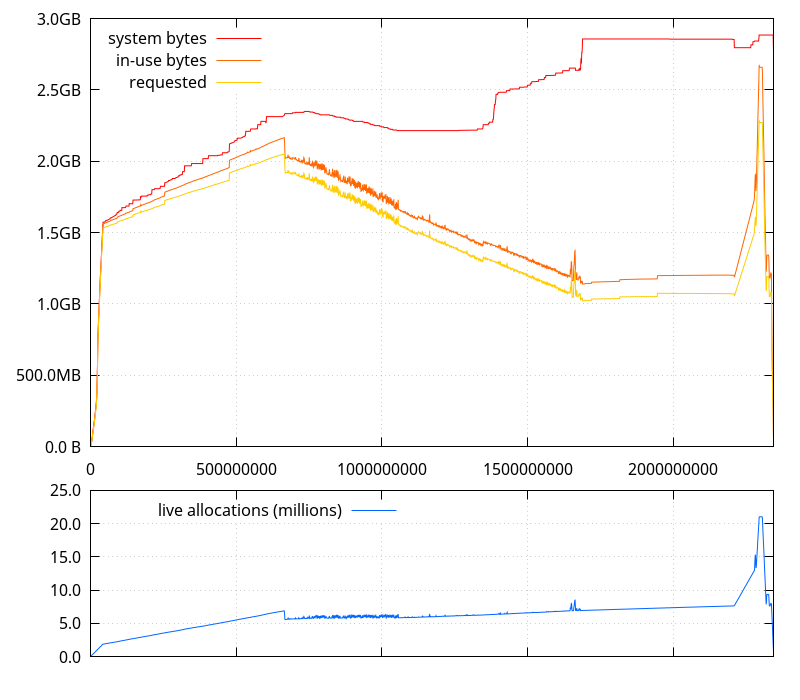 There are 7 different phases happening during a
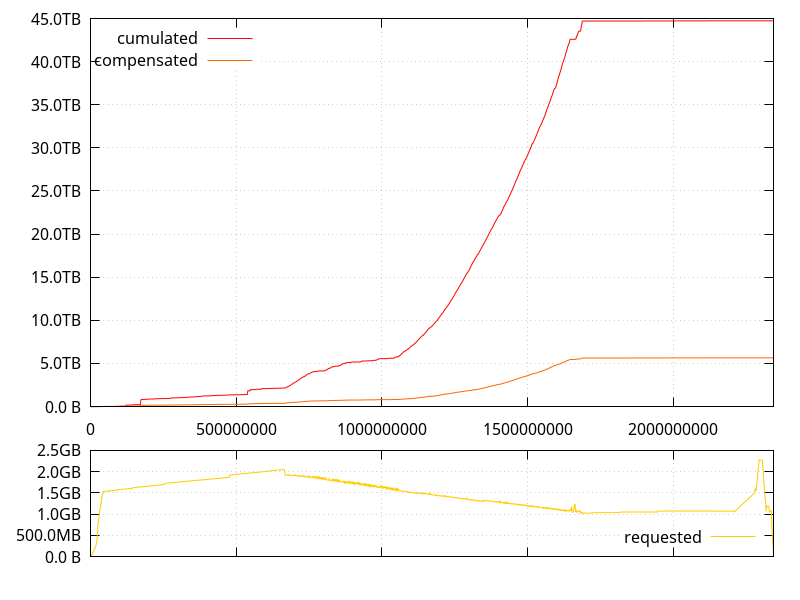 and this is clearly bad. Like, really bad. But we already knew that from the previous post, although it s nice to put numbers on it. The lower bound is about twice the amount of data we re handling, and the upper bound is more than 10 times that amount. Clearly, we can do better.
We ll see how things evolve after the necessary code changes happen. Stay tuned.
 Apologies the first blog post got sent out by mistake.
Weather comparisons between the two countries
Last year, I had come to know that this year s debconf is happening in Canada, a cold country. Hence, few weeks/month back, I started trying to find information online when I stumbled across few discussion boards where people were discussing about Innerwear and Outerwear and I couldn t understand what that was all about. Then somehow stumbled across this Video, which is of a game called the Long Dark and just seeing couple of episodes it became pretty clear to me why the people there were obsessing with getting the right clothes and everything about it. Couple of Debconf people were talking about the weather in Montreal, and surprise, surprise it was
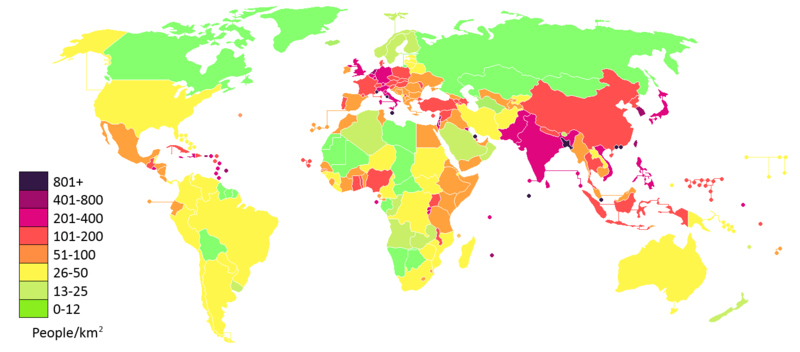 Population Density
As well in the game and whatever I could find on the web, Canada seems to be on the lower side as far as population is concerned.
 Rail
This is one thing that is similar in both the great countries. India has Indian Railways and while the Canadians have their own mountain railway called
 Business houses, Political Families
This is again something that is similar in both the countries, it seems (from afar) that its only few business houses and more importantly political families which have governed for years. From what little I could understand, both India and Canada have first past the post system which as shared by its critics is unfair to new and small parties. It would be interesting to see if Canada does a re-think. For India, it would need a massive public education outreach policy and implementation. We just had elections in 5 states of India with U.P. (with respect to area-size and population density) and from the last several years, the EVM s (Electronic Voting Machines) tries to make sure that nobody could know which area which party got the most votes. This is to make sure the winning party is not able to take revenge on people or areas which did not vote for them. Instead you have general region counting of votes with probably even the Election Commission not knowing which EVM went to what area and what results are there in sort of double-blind methodology.
As far as Business houses are concerned, I am guessing it s the same world-over, only certain people hold the wealth while majority of us are in hard-working, non-wealthy status.
 Northern Lights, Aurora Borealis
Apart from all the social activities that Montreal is famous for, somebody told/shared with me that it is possible to see the Northern Lights, Aurora Borealis can be seen in Canada. I dunno how true or not it is, while probably in Montreal it isn t possible to see due to light pollution, but maybe around 40-50 kms. from the city ? Can people see it from Canada ? IF yes, how far would you have to go ? Are there any companies or people who take people to see the Northern Lights.
While I still have to apply for bursary, and if that gets ok, then try getting the visa, but if that goes through, apart from debconf and social activities happening in and around Montreal, Museums, Music etc. , this would be something I would like to experience if it s possible. While I certainly would have to be prepared for the cold that would be, if it s possible, no offence to debconf or anybody else but it probably would be the highlight of the entire trip if its possible. This should be called/labelled as the greatest show on earth TM.


 Like
 I've written parts of this story in the past, but never in one place
and never in much detail. So why not now?
In 1982 my family moved house, so one morning I went to school and
at lunch-time I had to walk home to a completely different house.
We moved sometime towards the end of the year, and ended up spending
lots of money replacing the windows of the new place. For people
in York I was born in Farrar Street, Y010 3BY, and we moved to a place on Thief Lane, YO1 3HS. Being named as it was I "ironically" stole at least two street-signs and hung them on my bedroom wall. I suspect my parents were disappointed.
Anyway the net result of this relocation, and the extra repairs meant
that my sisters and I had a joint Christmas present that year, a ZX Spectrum 48k.
I tried to find pictures of what we received but unfortunately the web doesn't remember the precise bundle. All together though we received:
 Conferences
After quite a bit of work, we finally have the
 I was sent a package in the post, with lots of blank stickers and a couple of pens. I ve now signed a load of stickers, and my hand hurts. More details about exactly what this is about soon :)
 So the CIA
 For people who are visually differently-abled, the above reads
To learn who rules over you, simply find out who you are not allowed to criticize Voltaire wrote this either in late 16th century or early 17th century and those words were as apt in those times, as it is in these turbulent times as well.
Update 05/03 According to @bla these words are attributable to a neo-nazi and apparently a child abuser. While I don t know the context in which it was shared, it describes the environment in which we are perfectly. Please see his comment for a link and better understanding.
The below topic requires a bit of maturity, so if you are easily offended, feel free not to read further.
While this week-end I was supposed to share about the recent Science Day celebrations that we did last week
 Would explore it probably next week.
This week the attempt is to share thoughts which had been simmering at the back of my mind for more than 2 weeks or more and whose answers are not clear to me.
My buttons were pressed when Martin f. Kraft
 From the little sharings and interactions I have been part of, I find people take offence at the most innocuous things. For instance, one of the easy routes of not offending anyone is to use self-deprecating humour (or so I thought) either of my race, caste, class or even my issues with weight and each of the above would offend somebody. Charlie Chaplin didn t have those problems. If somebody is from my caste, I m portraying the caste in a certain light, a certain slant. If I m talking about weight issues, then anybody who is like me (fat) feels that the world is laughing at them rather than at me or they will be discriminated against. While I find the last point a bit valid, it leaves with me no tools and no humour. I neither have the observational powers or the skills that


 Today while looking up something in my productivity nemesis Wikipedia, I was waylaid by an article on
 Please use
 Here is my monthly update covering what I have been doing in the free software world (
 Happy
 And, for those of you who don t know: uberspace is a shared hoster that basically just gives you an SSH shell account, directories for you to drop files in for the http server, and various tools to add subdomains, certificates, virtual users to the mailserver. You can also run your own custom build software and open ports in their firewall. That s quite cool.
I m considering migrating the blog away from wordpress at some point in the future having a more integrated experience is a bit nicer than having my web presence split over two sites. I m unsure if I shouldn t add something like cloudflare there I don t want to overload the servers (but I only serve static pages, so how much load is this really going to get?).
in other news: off-site backups
I also recently started doing offsite backups via borg to a server operated by the wonderful

 This probably won't mean much to people outside the UK, I'm
guessing. Sorry! :-)
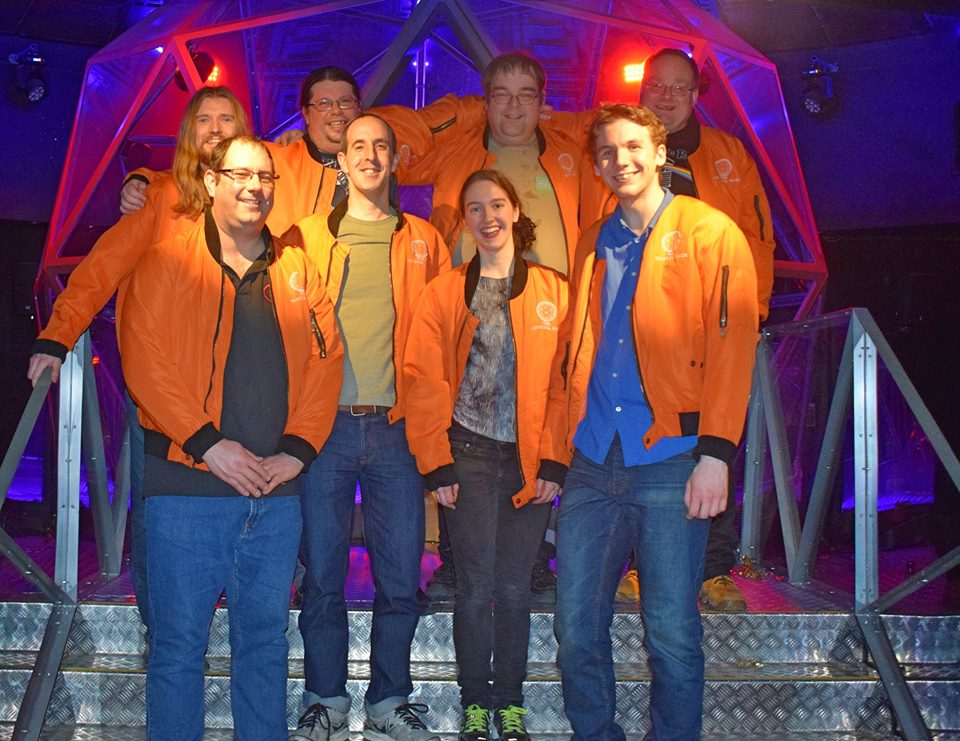 I just missed the biting scorn of the original show
presenter,
