Search Results: "jam"

7 November 2007

Benjamin Mako Hill: Revealing Errors

Groups that campaign for free technology, like the Free Software Foundation and the Electronic Frontier Foundation, tend to be supported primarily by technologists. Both groups have struggled to communicate their messages to non-geeks. I have written an article and helped create a new weblog, both called Revealing Errors, that attempt to address a root cause of this issue in what I hope is both an insightful and entertainingly manner. Geeks support groups like the FSF and EFF because, as people who understand technology, they understand just how powerful technology is. Geeks know that control of our communication technologies is control over what we can say, who we can say it to, and how and when we can say it. In an increasingly technologically mediated age, control over technology is not only the power to control our actions; it is the power to limit our possible actions. Our freedom to our technology is our freedom, full stop. This message fails to resonate with non-geeks but it does not fail because non-geeks are happy to hand over their freedom. It fails to resonate simply because the vast majority of people do not understand that technology, and control over it, is powerful enough to impact their freedom. Most people fail to see the power because, quite simply, most people fail to see technology. While we all see the effects of technologies, the technologies themselves are frequently hidden. We see emails but not mail transport agents. We see text messages but not the mobile phone network. Before one can argue that such systems must be free, one must reveal their existence. Technologists are keenly aware of the existence of these systems. To everyone else, they are completely invisible. Marc Weisner of Xerox PARC cited eyeglasses as an ideal technology because, with spectacles, "you look at the world, not the eyeglasses." When technology works smoothly, its nature and effects are invisible. But technologies do not always work smoothly. A tiny fracture or a smudge on a lens renders glasses quite visible to the wearer indeed. Similarly, people see their MTAs when messages bounce. They see Windows on their ATM or phone when the system crashes. Technological errors are moments when usually invisible technology becomes visible. They are, in this sense, also an educational opportunity. /copyrighteous/images/blue_screen.jpg I have recently published an article in Media/Culture Journal from the University of Melbourne within a special issue called Error. If you are interested in learning more about what I'm trying to do or looking at some examples, please read the article. With support and ontributions from Aaron Swartz, I have also created a new weblog, Revealing Errors, that reveals errors that reveal technology by posting descriptions of errors with commentary on what the error reveals. I've posted a few examples there already and I will be updating it regularly. The goal is to help explain the power and influence of technology in the service of broadening the base of people who can get excited about freedom to technology. Eventually, I hope to be able to communicate this message to a less technical audience. With that said, I hope that even seasoned technologists will learn things about their technological environment through the analysis and interaction. I hope readers of this blog will subscribe to it and, if possible, comment on and contribute to the project as it moves forward.

Roland Mas: Planet scores

Top posters in a few Debian-related Planets:
$ planet-scores.sh 
Planet Debian-FR :
     19 Rapha l Hertzog
      4 Roland Mas
      3 Jean-Christophe Dubacq
      2 Gr gory Colpart
      2 Alexis Sukrieh
Sometimes I think this should be renamed Planet Buxy.
Planet Debian-FR (utilisateurs) :
     10 Julien Candelier
      8 Emilien Macchi
      4 Guilhem Bonnefille
      3 Shams Fantar
      1 Rapha l Hertzog
      1 Olivier Berger (perso)
      1 Jean-Christophe Dubacq
      1 Jean-Baptiste H tier (djib)
      1 Eric Veiras Galisson
Newly added contributors to that planet have all their recent articles aggregated, not only the ones they wrote since they were added.
Planet Debian :
     40 Christian Perrier
      2 Russell Coker
      2 Raphael Geissert
      1 Wouter Verhelst
      1 Steve Kemp
      1 Romain Francoise
      1 NOKUBI Takatsugu
      1 Michal  iha 
      1 John Goerzen
      1 Joey Schulze
      1 Gerfried Fuchs
      1 Fathi Boudra
      1 Enrico Zini
      1 Emanuele Rocca
      1 Dirk Eddelbuettel
      1 David Welton
      1 Christine Spang
      1 Antti-Juhani Kaijanaho
      1 Adam Rosi-Kessel
Planet "Christian loves rugby".
debian-community.org :
      4 Holger Levsen
      3 Andrew Donnellan
      2 Evgeni Golov
      1 Wolfgang Lonien
      1 Rapha l Hertzog
      1 Martin Albisetti
      1 Marcos Marado
      1 Jean-Christophe Dubacq
      1 Cord Beermann
      1 Benjamin A'Lee
      1 Andreas Putzo
$
I know I have an encoding problem on some planets, but that script is a very basic curl+shell+sed+grep+recode+sort+uniq pipeline, and I only use it for the amusement value. Maybe I'll recode it with a proper RSS parser some day if I feel utterly bored.

5 November 2007

James Morrison: Climbing

So the New York Times had a nice article about all the bars in BH. One of these many bars is even cooler. Sete Cumes has a climbing wall in the bar that is available for use during the week when the bar wouldn't have as many customers anyway.

Anyway, it's time for me to go climbing.

4 November 2007

MJ Ray: Movements 2007-11-04

While bumbling about on a search engine, I found slides from a talk I gave in 2001 and these 2005 consultation submissions to the Department of Culture... about TV and the WSIS Civil Society Internet Governance Caucus Here's some other stuff on other sites I wrote about since the last round-up of this sort:
A Cambridge Co-operator: Sorry!
EASF :: View topic - What happened to Norwich Citywide Co-op?
Bond films and the Roger Moore humor controversy Ultimate James Bond Fan Blog
Does Having Fewer Rules Inspire Hard Work? etbe
The Right Width for Your Blog
Shine OpenStreetMap Cycle Map :: GravityStorm
Social mapping Tom Chance's website
Russ Nelson: Chordite versus CyKey
The prescient TomTom
robmyers - Bender's Big Score
Citing References in Blog Posts etbe
Matt Lee - Advogato Exploring Freedom
Ross Burton
Inside the Box Blog Archive Linux On a Mobile PC
Javascript performance in browsers
Bryan Clark : Web Browser Homepage
BBC SPORT Sport Editors' Blog Behind the Scenes at BBC Sport: Weekend feedback
][ stefano maffulli The end of a phase
A Cambridge Co-operator: Shoefayre / Cambridge City
(Persone) 12 25 Septembro 2007, 5:21
Buxy: DSA needs a leader

3 November 2007

Benjamin Mako Hill: Accidentally Accurate

The label on this office product is correct, but for the wrong reason. /copyrighteous/images/stapler-small.jpg

2 November 2007

Adam Rosi-Kessel: Catch-22 Poor Organization, and City Council Endorsements

I was quoted in a recent Needham Times article regarding my complaints with the T:
But Adam Rosi-Kessel, a Roslindale resident who takes the Needham Line to his job in the financial district, said 15- to 20-minute delays have kept him from getting to work before 9 a.m. since May. Now Rosi-Kessel, a lawyer who biked to work when he lived in Jamaica Plain, is thinking about trading in his Charlie Card again. It used to be, living here in Roslindale, the train was always the fastest way to get in, he said. Now, it s slowed down to the point where it s starting to get competitive with biking again.
I’m glad they got my biking quote. Here’s the part I don’t understand (emphasis added):
Massachusetts Bay Transportation Authority spokeswoman Lydia Rivera said Needham Line delays have been caused by construction work and speed restrictions on tracks that don t go anywhere near Needham. In order to maximize train use, the T often transfers trains between tracks, rather than leaving underused trains empty in the MBTA yard. The method helps the T get trains where they re needed most, but it also means a delay on one track can slow service on a seemingly unrelated track. It s a Catch-22, Rivera said.
I don’t think the T spokesperson knows what a “Catch-22″ is. I refer those interested to the Wikipedia article on the subject, but it is nicely summarized there as “heads I win, tails you lose.” The T’s problem is not a logical paradox, but some combination of inadequate resources and poor organization. Can someone please help them out? Also on Boston local topics: I’ve received several unattributed mailings lately related to the city council election that do not facially promote any particular candidate. Today’s mailing attacked Stephen Murphy for repeatedly trying (and failing) to win some other office or get some other job than City Councilor. The return address was 31 Milk Street, which is the address of many different businesses. A few days ago, I received another unattributed mailing bemoaning how long it has been since an at-large city councilor came from the Parkway Area (my neighborhood), but not mentioning any candidate in particular. My guess is these mailings are all meant to support John Connolly, a West Roxbury resident, attorney, and ostensibly good guy. I was feeling pretty happy about the possibility of Connolly replacing Murphy on the Council (I have to admit some unfair prejudice in that the only house in our neighborhood I’ve ever seen prominently posting a sign in support of Bush also features a Murphy billboard). But these questionable campaign tactics are giving me pause. Does anyone know anything more about this? In any case, here are my endorsements for next week’s election, notwithstanding the concern outlined above: (1) Felix Arroyo, (2) John Connolly, and (3) Sam Yoon. I have no pick for a fourth candidate. I’ll also throw in a vote for Matt Geary. I really wouldn’t want the socialists running the City, but a broader spectrum of political opinion within the council wouldn’t hurt. Incidentally, it is remarkably hard to find any information summarizing all of the candidates’ positions and records. It’s almost as if the election isn’t even happening. (A commenter properly points me to Brighton Centered as a good resource.) 11/3/07 Update: More discussion here. Technorati Tags: , , , , , , , , , , , ,

30 October 2007

Benjamin Mako Hill: Post Deleted

Perhaps my favorite article in Wikipedia, the List of homophonous phrases, was deleted from Wikipedia in mid-August. Those arguing for deletion claimed that it was original research and were, I suppose, correct in that designation. But that doesn't make me happy to see it go. I asked an admin to move the list into a temporary home in my userspace until I can find a better home for it. Please help me find one and I'll redirect. It's the latest in several unfortunate deletions I witnessed recently. I created a humorous "undeletionist" barnstar to give to an admin for undeleting some humorous project pages in Wikipedia (which have since been redeleted, but copied first). My barnstar was also deleted. In retaliation for this all, and in good fun, I proposed the Association of Deletionist Wikipedians for deletion. The delete tag stuck around for a week until it was deleted under suspicion that it might be a joke. True enough. On the other hand, I have similar suspicions about the subject of the article.

25 October 2007

Benjamin Mako Hill: Anti-Features

I've written a short essay about anti-features. An anti-feature, I argue, is functionality that technology producers charge you to turn off. Apple's new, "pay-more to get DRM-free" is one example of an anti-feature but one can find them everywhere. It's a quick read and, I believe, an important but largely missing argument in most free software advocates' arsenal. I've posted it the on the FSF blog here:
http://www.fsf.org/blogs/community/antifeatures

24 October 2007

Benjamin Mako Hill: Frailty, by any other name...

A short program I wrote has searched the web and revealed many names for frailty: It eliminated a few as well:

21 October 2007

Alastair McKinstry: Whither Darwin/ Terrestrial Planet Finder ?

I see from the BBC and /. that ESA has made its choices in Cosmic Vision 2015-2025. It appears that Darwin did not make the cut. Istead, PLATO and SPICA seem to be holding the banner for exoplanetary exploration. Can someone closer to the decision-making process comment? What does this mean for NASA's Terrestrial Planet Finder? There were considerations of merging Darwin and TPF; does the project live as TPF, or was the task of imaging an exoplanet left to JWST ? Tags , ,

18 October 2007

James Morrison: Rain

When I was back in Canada last we got a nice rain storm while driving to see Kevin, his wife and little son Tank. Tonight in Belo Horizonte our football game was cancelled because of rain. The rain really was something, the thunder was fantastics, a few of the strikes were big enough to make me drunk.

Oh, other good thing, I have internet in the Hotel now.

16 October 2007

Benjamin Mako Hill: What I'm Up To

So, I finished graduate school at MIT. I presented some of my thesis work at Wikimania and I'll be posting information, code, and the thesis itself, in the next weeks as I find time. I've decided to focus, at least in the immediate future, on several important projects. Here's what I'm up to: This is, of course, in addition to my work with FSF, Debian, and Ubuntu which I'll be continuing. And talks. And writing. (Yikes!) I'll be keeping my office at MIT (yes, like RMS) for the time being and sticking around Cambridge at least until Mika finishes her degree at Harvard School of Public Health. I'll be in wrapping up projects modes for the next few weeks and months and will be posting about them here as I go.

15 October 2007

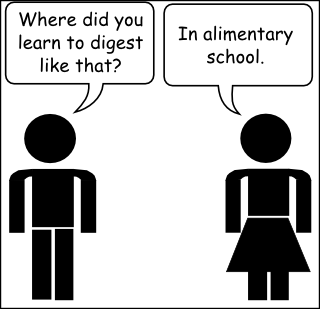
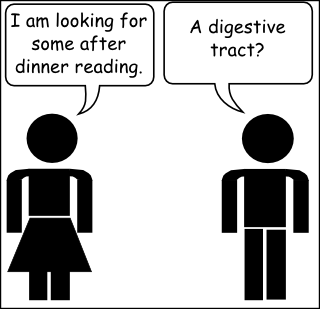
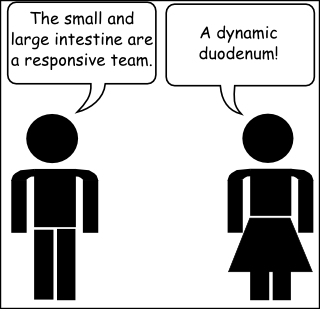
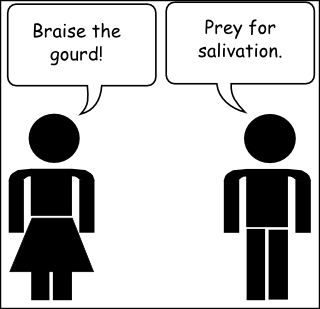
Benjamin Mako Hill: Comical Gastronomical

When it comes to puns about digestion, Dafydd Harries and I make up for in quantity what we lack in quality. Apologies to Daf if he is embarassed by my public acknowledgement of his contributions in this endeavor.

12 October 2007

Benjamin Mako Hill: Ubuntu (w/ Special Guests) in Boston

There are quite a few important events related to Ubuntu -- and to free software communities more generally -- in the Boston area in the next few weeks. I plan to participate in many of them. First, this coming Saturday, October 13, there will be an Ubuntu install party hosted at MIT and organized by the Ubuntu Massachusetts local community team. It promises to be a lot of fun and a great opportunity to have a gaggle of geeks install a free OS on your computer for you. If you've been thinking about installing free software but been hesitant (my guess is that this is not the majority of my readers), this is the event for you. I'll probably be doing RockBox installs as well so backup your music and bring an iPod if you're unfortunate enough to have funded Apple through the purchase of one. Next week on October 18, Ubuntu Massachusetts will be hosting a party at the Globe Bar and Cafe to celebrate the (scheduled) release of the Gutsy Gibbon. I am not thrilled about everything in this release -- like Compiz by default -- but I am happy about the progress of the distribution both technically and in reaching out to an ever-wider and ever-larger group of users. On the week of October 29-November 2, Canonical is hosting the Ubuntu Developer Summit in Cambridge. I'll definitely drop by for a least a day or two to make some strategic interjections and to participate in a few specifications that I care about. The summit is just down the street from my office at the Hotel at MIT so I have little excuse to not show up. I'll also being hanging out with friends from Ubuntu during the week. Finally, as part of the Ubuntu conference, Canonical is sponsoring FOSSCamp. It promises to be a Foocamp/Barcamp style "un-conference" with a focus on free software and open source. I'll be there and, if there's demand, will run sessions on Selectricity and a quick Making Debian/Ubuntu Packages for Sysadmins talk -- basically a more polished version of what I did at the Ubucon in New York. All events are open to the public although people who are not Ubuntu developers may be a little bored at the developer summit. I look forward to seeing both old and new faces around the project in the next month.

Raphaël Hertzog: The DSA dilemma

For once, Clint blogged on something that I can understand. :-) I don’t buy everything he says, but in the case of DSA, the part where he says “you cannot have a functional and respectable subgroup if it maintains autonomy like that” is a real problem. The leadership problem I mentioned is real. And it can theoretically be solved by undelegating one of the problematic side of this DSA-internal dispute. But which one? Given the unwillingness of Joey to discuss the problems, he makes an easy target… which would leave DSA up to Ryan, James and Phil. But is that a desirable thing? If DSA is perceived as being an “autonomous” group which is not involved in Debian’s main discussions and which is somewhat disconnected from Debian’s day-to-day life, it’s largely due to the behavior of James and Ryan. E-mail communication with them is very difficult as they’ll respond only if they really care about something. And despite the setup of the request tracker, they have barely been able to make proper usage of it… the idea was to use RT tickets to track everything that DSA does but they don’t use it as such. For example, James setup a “wikiadm” group and he never reported anything to the related ticket (#194) (I did it myself once I found out). Also there’s an internal ticket about the replacement of ftp.debian.org (that I created because ftp.d.o ran out of space regularly) and AFAIK Jeroen has been in touch with James to setup that replacement, but nothing got reported to the tracker. Ryan promised me once to put his DSA TODO list in the tracker so that other people can jump in and help out. He never did. So while Joey is definitely a pain for DSA, at least he’s a visible participant of the team and he interacts with the community. James and Ryan are not, they interact only through private channels and do not share their opinions or their vision of Debian.
I believe this is a real problem. On the other hand, most of the interesting changes in the last months are the results of James’s work. But he’s also implicitly blocking addition of new members as long as the leadership problem is not solved. I tried to fill the communication void of the DSA team by various means. I follow everything as closely as I can so that I can report changes on other channels, mailing lists when needed. I made efforts to document stuff on the wiki page, etc. But this is not a long term solution, the communication issue must be fixed within the team. The path ouf of this mess is still not very clear, but something is going to change soon. Not quite sure what though. What would you suggest? And if you were DPL, what would you do? Since private discussions and negotiations lead nowhere, it’s tempting to bring the issue in the public area. In theory, they have no way to escape discussions and they’ll have to communicate their grudges against the other side if they want to have some fair judgment between both parties. Unfortunately, given the habits of James and Ryan, they probably won’t participate in any public discussion and either resign or stay where they are waiting for any decision… Comments welcome. Partagez cet article / Share This

10 October 2007

Benjamin Mako Hill: Open Minds

I'm going to be giving the opening keynote presentation at the K-12 Open Minds conference tomorrow. I was supposed to be talking on Thursday but will be filling in for David Thornburg who will be a day late. Apparently, he's been described as one of the top 21 speakers in the United States. Yikes! I'll be talking about the free software movement and hacker culture. I've heard that the whole thing will be streamed.

5 October 2007

Biella Coleman: On Traveling, Airports, and Thinking

After 6 weeks of teaching and over 2 months in my new apartment, I am making a short escape from NYC to visit my mom and sister in PR. In my Impacts of Technology class, we just finished a week on large-scale and complex technological systems, with a focus on industrial farming. We read a few sections of Micahel Pollan’s fanstastic book, The Ominvore’s Dilemma, which combines the odd qualities of being seductively alluring (thanks to his exquisite writing) and repulsive (thanks to the content, well at least the part on factory animal “farming”). I can’t recommend it enough and look forward to reading the rest, when I find the (magical) time to do so. Now that I am at the airport, I am struck at how little I know about this place, which is also a large and complex technological system and I bet revealing its technological and cultural innards would provide as fascinating (although not quite as gross) of a story as that of factory animal farming. There are many questions I would love answered: How exactly is coordination secured and what are the toughest elements to airport coordination? Where are the lines of cooperation and those of competition between airlines? What factors and values go into the design of the airport? (I know that for one thing, in American airports, there rarely seems to be enough electrical jacks; I am now sitting under the telephones, the only place with jacks in terminal 8 at JFK, and the funny thing is that there are a row of 7 unused phones and only one jack and I am sure it would be more useful to have 1 pay phone and a row of 7 jacks, instead). What sorts of airport technologies have put people out of jobs? What technologies have created new job opportunities? What sorts of social hierarchies are there in airports? Like who runs the big show? Is it a CEO? Or is something more like a university provost? What is standardized by the FAA, and what elements are more flexible, and thus different airport to airport? Is there a sense of camaraderie among airport employees, or are loyalties built primarily among employees of one airline or among the classes of workers? Given that unions are quite strong among airport employees and from the top (pilots) down (food workers), what is the political culture of airports/employees like? (I remember once overhearing a group of machinist and ground crew talking about the ugly face of globalization and NAFTA over coffee and I was dumbfounded and pretty psyched too). Are airports one of the few last remaining places in th US that provides for decent job security? Why do so many of the ground crew have such athletic, bulging calves? :-) Is it a result of the physical demands of the job? Or is it that the type of job ( outdoors with lots of heavy lifting), attract the athletic types? Do they have to pass certain physical standards as to pilots? Was there always first class seats? Or did that come about when flying became cheaper? Are employees trained to deal with irate passengers? In what ways do pilots bitch about the long waits/delays they also have to endure? What can they do when they are waiting, as we did for an hour last night, during the massive traffic jams that are especially noxious in NYC-area airports? Do pilots have any say in the way airports are run? Why do they consistently provide less chairs than are needed in lounges, even in new terminals, as the one I was in tonight? Do air traffic controllers ever meet face-to-face with pilots or do they largely have a virtual relationship? Are programmers who patch, improve, and build traffic control systems housed in the airports, or elsewhere? Airports are not only fascinating for technological and sociological reasons but I reckon there is a lot of interesting psychological work that must happen in airports. I imagine that during those long, endless waits in the lounge, on the security lines, on the tarmac, people must often take the time to reflect, on where am I going, where am I coming from, and not in the literal sense but the metaphorical one. I know that I have spent many hours in airports letting my mind wander to places and thoughts in ways that don’t happen as easily or often elsewhere. And in many instances, I don’t think that this propensity to indulge in some reflective thinking, is a matter of time, that is waiting. For me at least, it is the fact that many times when I fly, I am moving between worlds. While I have flown hundreds of times, I never have been shed of the sense of awe I feel about planes and their ability to shrink space and time so quickly. For me, it is less the act of flying itself (that feels boring, tiring, annoying, mostly because of the insane waits and delays and I never seem to get the right amount of sleep the night before) but the visceral contrast it brings. In the morning my life is of a particular tone and rhythm, currently situated in NYC and by evening, I am back at home in PR, surrounded by thick humidity and the loud sound of coquis. Once there, my as currently configured in NYC, has little direct bearing to those around me. Planes don’t just transport, they shift and convert your inner and outer world… So, if anyone (who got this far) knows of a good social history of the airport, do tell. I would love to read it.

4 October 2007

Benjamin Mako Hill: Wikinews and Multiperspectival Reporting

Adapting some work from my thesis, I've written a short article on Wikinews over on the blog for the newly created MIT Center for Future Civic Media where I am a Fellow this year. Please, check it out.

3 October 2007

James Morrison: Birthday!

I got a little older yesterday. I'm 26 now. It was a fun day. It started out by going to the Federal Police to get my temporary id. The agents who register foreigners are on strike for the last week or so, but there was someone there dealing with the registration. So my name got put in a big book and I've got a piece of paper that will let me back into the country next week.

Now for the actual birthday. A bunch of use went out to a place called Pinguin (yes, Penguin in Portuguese). We had some chopp, some very good garlic bread. Then since it was my birthday we got a cotton candy cake, and a nice little Penguin!

1 October 2007

Joey Hess: pristine-tar followup

Madduck wondered why a package using revision control needed pristine tarballs at all. Firstly, the example he gave of tagging an upstream release and creating a tarball of it to build the package against is exactly what pristine-tar does. Except it preserves permissions and timestamps and other tar cruft. Sometimes timestamp or permissions issues do cause issues with package builds, so being able to build against the original files from the pristine tarball is potentially useful to catch and fix such problems. As to other uses of pristine tarballs... It's hard to list the advantages to using pristine tarballs, since Debian (rpm too) has had them forever, and lots of people may depend on them in ways that we don't anticipate. For example, I've seen FreeBSD point at ftp.debian.org to get tarballs for their packages, since they don't archive tarballs on their own, and sometimes the tarball isn't available upstream (or ftp,debian.org is the upstream). That's a wacky example, but I've seen it more often than I've seen pristine tarballs used for the often-cited md5sum comparison case. Rather than try to enumerate all the possible reasons for pristine tarballs, and then try to whittle the list down to reasons that actually make sense, and cost-benefit analise those, it seemed better to just try to write a solution to the problem. (Or at least, to most of it -- a hopefully small subset of the set of reasons for pristine tarballs are not satisfied by pristine-tar.) I've also been theoretically interested in this problem of generating pristine tarballs from version controlled source ever since Scott Remnant mentioned at a meeting (140 mb video of meeting here) that he had a tool to do it -- and AFAIK never shared the tool! So the challange factor was another reason to write it. However, pristine-tar has already saved me hundreds of megabytes of disk space, sped up my release process (avoiding bug #225483) and simplified the way I work, so it's already a net win for me, even if it turns out we don't need pristine tarballs for anything at all!

Next.

Previous.