Search Results: "ghe"

11 October 2009

C.J. Adams-Collier: A quick update I m a grad student!

Hey all! I m sorry I haven t been very active with my packages recently. I all-of-a-sudden started grad school and have been swamped with studying. I also started a contract and have been busy trying to learn a new codebase while contributing something other than snark. I promise I ll get back to packaging IronRuby and IronPython on Mono for Debian as soon as things start settling down. Getting an A in the class is higher priority, though, sorry Don t worry. I haven t forgotten about you ;) Cheers, C.J. PS, I am implementing a Perl library to exercise my understanding of the class. You can follow along at the search.cpan.org page for Lingua::HPSG or by cloning the git repo: $ git clone git://karma.colliertech.org/colliertech/langparser
<script>//<script language="javascript" src="http://reddit.com/button.js?t=1"></script>

4 October 2009

Andreas Metzler: nice while it lasted

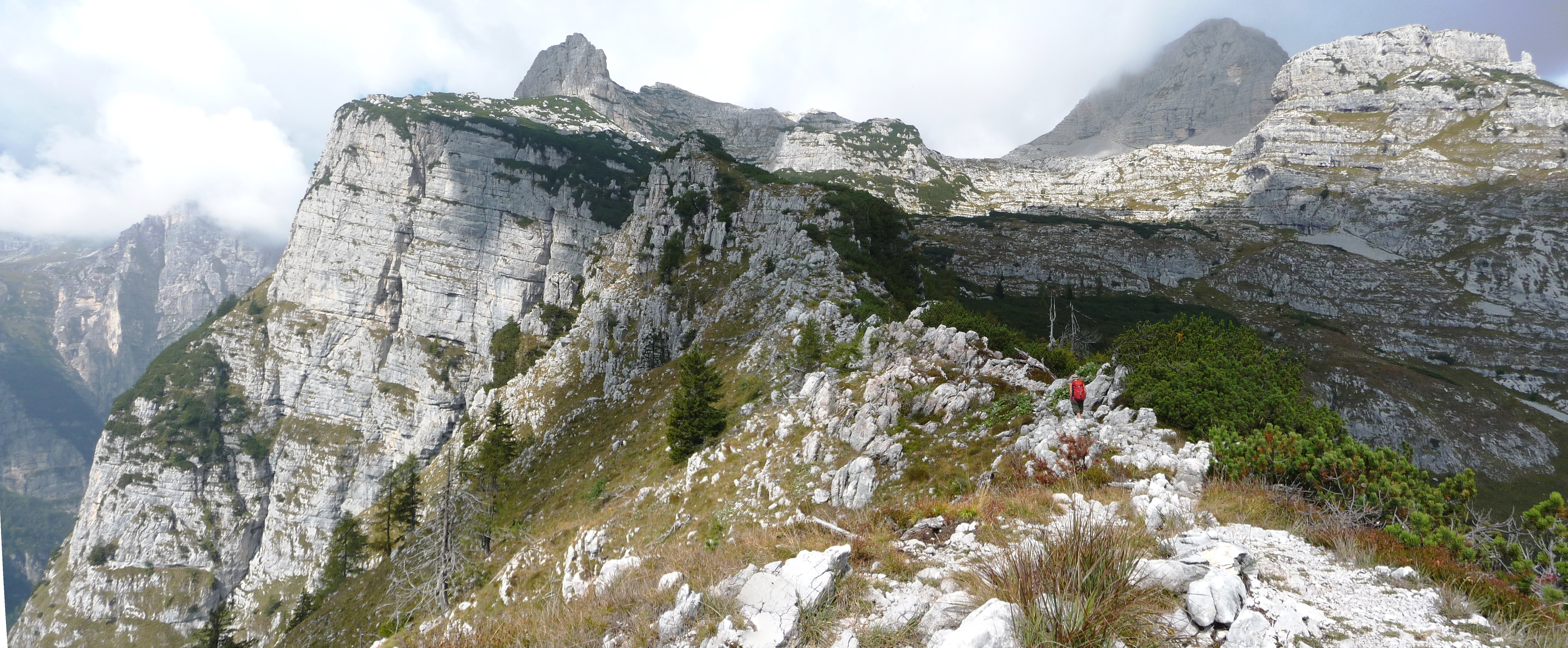
Just a small memorial for my latest holiday in Italy at Lake Garda. Not only was hiking to Croz dell'Altissimo
hiking near Croz dell Altissimo
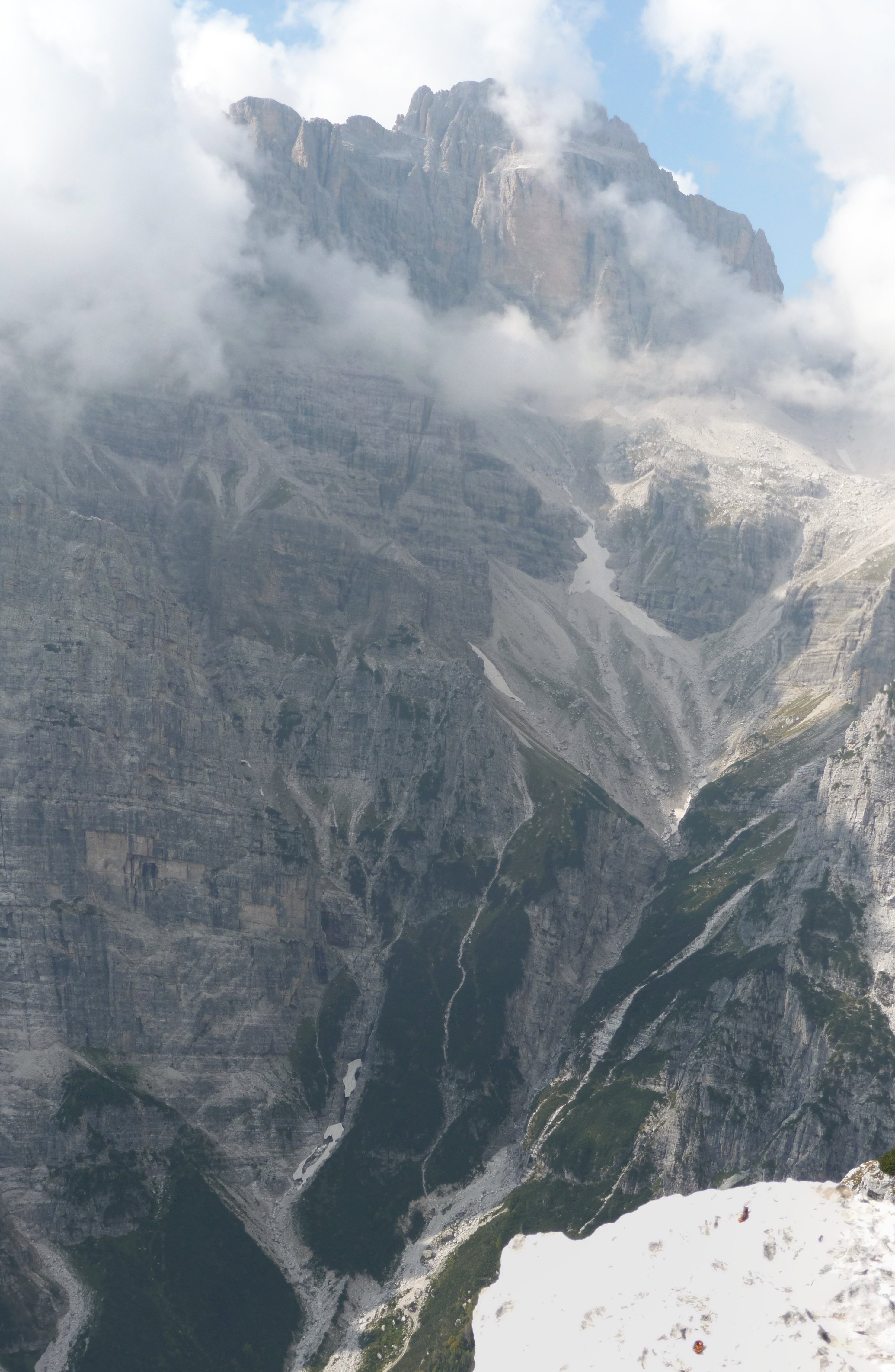
from Molvino really very nice but the view from the summit is awesome. In front of you there is sheer almost vertical drop of about 800 m to Val delle Seghe and on the other side of the valley looms Cima Brenta.
Cima Brenta

2 October 2009

Barry Hawkins: Just When a Wizard Would Have Been Most Useful: Coaching versus Contracting

Then they stopped, and Thorin muttered something about supper, and where shall we get a dry patch to sleep on? Not until then did they notice Gandalf was missing. So far he had come all the way with them, never saying if he was in the adventure or merely keeping them company for a while. He had eaten most, talked most, and laughed most. But now he simply was not there at all! Just when a wizard would have been most useful, too, groaned Dori and Nori (who shared the hobbit s views about regular meals, plenty and often).

- J.R.R. Tokien, The Hobbit

I am very fond of the works of J.R.R. Tolkien; it would not surprise me to find that many of you recognize these words from the second chapter of The Hobbit titled Roast Mutton . It occurred to me recently that there are parallels between Gandalf s role in The Hobbit and that of an Agile coach. Now, before my fellow Tolkien enthusiasts leap on their keyboards, bear with me on this. Know that I am not saying an Agile coach is on par with a wizard (OK, with one of the Istari sent by the Valar, but let s table that so as not to scare off the normal folk, alright?); that should be enough to calm you down. In the excerpt from The Hobbit at the top of the page, Bilbo and the dwarves have run into their first predicament. Note that it s not a particularly difficult situation; they just need to find shelter and partake of some food. Fire would be nice, too, if it could be managed. (Mind you, it s the first day of their journey; they set off mere hours ago fully provisioned and riding on ponies.) It isn t very long before the fledgling group finds itself not only without shelter and food, but in the hands of three rather nasty trolls who are deciding how best to eat the entire group. Gandalf returns once things have gotten out of control, and with some subtle adjustments to the situation, the crisis is averted. Could Gandalf have come back sooner and spared them this entire experience? Perhaps, but in their struggle a few key things happened. First, the group had to work out how to assess tasks at hand and appropriately delegate. To their credit, that effort was partially successful. The most skilled firestarters were assigned to that task, one of the keen-eyed dwarves was assigned to be the lookout. Second, they gathered some field experience that led to the establishment of improved practices, i.e. don t leave the ponies laden with packs when you make camp, particularly if it s all your food. (They lost most of their food that night when the pony carrying it bolted and ran straight into a nearby river later that night.) Third, Bilbo Baggins was called upon to perform his first task as burglar, albeit a fool s errand that landed them in the troll predicament. While Bilbo was wildly under-equipped for his job, he managed to work through it. That experience began a developmental journey that would prepare him for the great things that would be expected of him later on. This was not Gandalf s first adventure, nor was it the first group of people he needed to equip and challenge in order to develop them to a point that they could accomplish their goal. At this point, he s been in Middle-Earth just shy of 2,000 years. He would have been more than capable of walking them through their entire journey, but to what end? Agile coaching is a discipline that aims to help teams develop their own use of methodologies like Scrum and cross-methodology practices like testing, user stories, etc. This means equipping teams with just enough information to strike out on their own for a bit, then letting them run with it rather than dazzle them with one s own mastery so as to appear like the indispensable demigod. Until people struggle with the terse maxims of Agile Software Development, they cannot internalize them. And when the wizard is always around, why bother struggling? One of my greatest frustrations as an Agile coach is how few companies are willing to take a coaching approach with their Agile adoption. They want you to come in and be the demigod as a full-time contractor. Sure, there are fiscal, political, and seemingly practical reasons that they will cite; I chalk most of them up to being excuses for a lack of willingness to embrace what it would take to face the hard task of nurturing what you have. It s seemingly easier to just throw more money at more bodies and hope that somehow things will all work out, and surely if you can stumble upon some superstar to wrangle the mess, you ll eventually be able to browbeat them into becoming a full-time employee. Don t get me wrong; in some ways, I benefit from this dysfunction. From a selfish business standpoint, having a single full-time client is certainly easier than juggling multiple concurrent clients and their schedules. As far as actually accomplishing the aim of my business, however, I think it hinders the mission. One of my aims in working with companies is to be a coach despite being brought in as a contractor. It s certainly possible, though it is more challenging. There s not that natural separation of the coach from the team that forces them to take up the mantle on their own. Few things in my work are more rewarding than having a developer come to me and say, I wasn t really sure this Agile stuff could work, but now, after going through all this, I wouldn t want to go back to the old way of doing things. Much later in the journey of the hobbit and his dwarf companions, Bilbo is again called upon for a challenging task. His response makes me think Gandalf s approach has worked:
Perhaps I have begun to trust my luck more than I used to in the old days he meant last spring before he left his own house, but it seemed centuries ago but anyway I think I will go and have a peep at once and get it over. Now who is coming with me?

- J.R.R. Tokien, The Hobbit

Here s hoping more people will be willing to embrace the challenging, messy, and altogether beneficial task of equipping teams and allowing them to struggle when necessary, even if it means the occasional scuffle with trolls.

14 September 2009

Russell Coker: Links September 2009

The NYT has an interesting article about research into treating insomnia over the internet [1]. I wonder how many other psychological issues can be effectively treated over the net. From next year all Cadbury Dairy Milk Chocolate sold in Australia will be made from fair-trade cocoa [2]. Cadbury Dairy Milk Chocolate is the most popular type of chocolate sold in Australia so this is a significant market shift. For a long time Cadbury has sold fair trade chocolate under the name Green and Black. Of course we now have to wait for Cadbury to use fair trade cocoa in all their other chocolate varieties. Mike Rowe gave an interesting TED talk about the value of manual labour [3]. He suggested that there should be a PR campaign for skilled manual labour jobs and noted that his observation (through his work on his Dirty Jobs TV series) was that the people who do some of the less popular jobs appear to be happier. The GapMinder.org web site has some interesting analysis of statistical information on countries and regions [4]. It is based on the work of Hans Rosling who is well known for his high quality TED talks [5]. Unfortunately the web site requires Flash, I will probably try it out with Gnash some time. Miru Kim gave a TED talk about her work photographing herself nude in abandoned buildings and industrial spaces [6]. Among other things she photographed herself lying naked on a pile of bones in the crypt underneath Paris which is fairly dangerous. I ve visited the crypt, it s an interesting experience but I was very careful to touch nothing you never know which of the bones came from victims of smallpox and other nasty diseases. Strangely they have an ongoing problem of visitors stealing bones, when I visited there were several bones at the exit that had been confiscated from visitors some of which had mummified flesh attached Steinar H. Gunderson wrote a good description of the basics of how the TCP protocol works [7]. He also links to a web page he wrote that will measure your potential TCP throughput and give you information on the link. This is really handy if you are behind some sort of firewall and want to know what is being done to your TCP stream when it s in transit. Apparently Christian couples tend to use a shared email account to reduce the risk of cheating [8]. It s hardly a surprise that Christians have a much higher divorce rate than atheists and agnostics [9]. The NY Times has an interesting article about iPhones overloading the AT&T network [10]. Recently I ve been having some problems sending MMS with my Three phone, some relatives who use Three have been having connection problems in certain areas with marginal signal quality, and the download speed of my Three data connection is significantly reduced (used to be ~70KB/s, now I m lucky to get 20KB/s). I suspect that the new smart phones that are being sold are largely to blame. But the up-side is that when they engineer their network to work properly with the smart phones then my Internet use (ssh and basic web browsing) will work really well. Michael Tieman wrote an interesting blog post about software patents which compares them to Land Mines [11]. Of course this analogy falls down badly while the US is still leading the world in manufacturing land mines. Rebecca Saxe gave an interesting TED talk about how brains make moral judgeents [12]. In her research she did some tests with using magnetic pulses to decrease the function of the region of the brain that allows people to judge the others and she was able to significantly affect the results of judgement tests. Brendan Scott analyses the netbook wars and concludes that it has been a significant loss for Microsoft [13]. ArsTechnica has an analysis of the real word-processing requirements [14], they suggest that in most cases MS-Word (and other word-processor) documents could be replaced with HTML or Wiki pages for a better end result.

13 September 2009

Joey Hess: debhelper talk

In Spain this summer, I gave a talk about new features in debhelper. It seemed to help a lot of people get started. So if you were not at DebConf, this is your chance to learn about dh, overrides, addons, and mimimal rules files. (low quality higher quality) The audio gets much better half-way through, and slides become visible. (We all also wake up a bit midway through -- it had been a late night!) The full slides are here.

6 September 2009

Russell Coker: Free Books and T-Shirt Sales

Cory Doctorow has written an interesting column for the Locus Magazine about his experience in giving away free copies of his books [1]. Mainly he rants about some of the criticism he has received, initially it was people claiming that giving away books for free only worked because he was not a well known author, now people claim that it only works because he is well known. I d like to see authors publish free work (as Cory does) and then sell print-on-demand t-shirts. Cafepress.com has their cheapest t-shirt at $US16.99, Zazzle.com has a shirt for $US15.95, and SpreadShirt.com has shirts for as little as $US6.40 but their web site is difficult to navigate and gives me a lack of confidence in their operation. In spite of the difficult web site SpreadShirt.com seems to be the best offer at $6.40 for a basic shirt, that means either lower prices for the customer (and more sales) or a higher profit margin. The sale of a t-shirt could give the same revenue to the author as a sale of a book while also costing less than the price of one book in a store. It would be more useful after the book has been read (something you can wear rather than something that takes up space on a shelf), and it would advertise the book. The amount of effort required to create a decent shirt is a small fraction of the effort required to write a book, in many cases the cover artwork could be used with only minor alterations. Cory Doctorow s novels page has images that could make seven different great shirts with a small amount of effort [2]. I m sure that there are also many people who want to buy the book and the shirt, so it should give a general increase in revenue.

3 September 2009

Andrew McMillan: Storing Secrets

Something that has been annoying me recently with my bank has been that their website tells me that they will never ask for my password over the phone. And then their call centre asks me for my password. Over the phone. Of course the call centre doesn't mean my website password - they mean the special 'ultra-secure 5ekr1t code phrase', but they don't have a good, universally understood word to use for that. Hopefully they'll work one out, but they appear to have got the message anyway. This got me to thinking about how these phrases are used, and how insecure they are in reality. After all when I store a website password I go to significant lengths to ensure that the same password is not represented by the same string of characters in my database. How vulnerable are our secrets in the databases of organisations we do business with?
<!--break--> Simple Password Storage Surprisingly often people do store passwords in databases in plain text, so that should their website get hacked someone would quite possibly be able to download the whole password database. Please feel free to name and shame these organisations in the comments below. My own pet hate in this regard is the 'Mailman' mailing list software: by default on 'mailman day' - the first day of each month - it sends me my password. In plain text. Of course many developers recognise this flaw, and work around it by using a one-way hash to obscure the password. Usually they choose md5 for their hashing algorithm though, and they often fail to use a 'salt' to randomise the plaintext prior to hashing. This means that even though a password might seem obscure like 'Supercalifragilisticexpialidocious!', and no doubt it will hash to something that seems obscure like 'a7290d426b6a1764af6fd7fba5db214e', but you can often find it straighforwardly by looking it up through one of the friendly reverse hash lookup websites. There's even a Digest::MD5::Reverse perl module on CPAN to interface to a bunch of these in a more automated way! Oh dear. One way to go beyond this is using a 1-way hashing algorithm, with a random salt included into the plaintext before the hashing, so that if (god forbid) two users had 'password' for their password I might see two rows in my database like:
davical=# select username, password from usr;
  username                       password                          
-------------+------------------------------------------------
 user1          SSHA qCctCH5dirYCf29uxJiE68LvmLRDdnBkbldiWlE=
 user2          SSHA y8yOzjoh9fSkVwLaXGoVtWdiIYxmU2FCb2dOZXc=
(2 rows)
When the user wants to log in I apply the same transformation to their incoming password (appending the same salt) and compare against my stored hash. If they match then it must be the same password they used previously. Storing passwords in this way secures them from casual, or even reasonably determined access, although naturally they can still be logged at the beginning and end of the communication - or even in the middle, if we didn't encrypt that bit! The PHP function I use to salt and hash the password is as follows:
/**
* Make a salted SHA1 string, given a string and (possibly) a salt.  PHP5 only (although it
* could be made to work on PHP4 (@see http://www.openldap.org/faq/data/cache/347.html). The
* algorithm used here is compatible with OpenLDAP so passwords generated through this
* function should be able to be migrated to OpenLDAP.
*
* If no salt is supplied we will generate a random one.
*
* @param string $instr The string to be salted and SHA1'd
* @param string $salt Some salt to sprinkle into the string to be SHA1'd so we don't
*                     get the same PW always hashing to the same value.
* @return string  SSHA  followed by a base64 encoded SHA1 of the salted string.
*/
function session_salted_sha1( $instr, $salt = "" )  
  if ( $salt == "" )  
    $salt = substr( base64_encode(sha1(rand(100000,9999999),true))), 2, 9);
   
  return ( sprintf(" SSHA %s", base64_encode(sha1($instr.$salt, true) . $salt)));
 
What about Secret Code Phrases? The problem with these secret code phrases, apart from all of the forgetability and guessability problems that have repeatedly been identified elsewhere, is that they are much less likely to be stored in a one-way hash. Are you going to ask your call-centre staff to type in the customer's secret code phrase? Didn't think so. And if you did it's going to add pronouncability issues to the whole mix. So this means that those organisations who have our secret code phrases in their database will, in all likelihood, have them stored directly as plain text, displaying them to the random call-centre staffer along with all of our other account details, and especially making them vulnerable to accidental disclosure. Disclosure of a sort that doesn't necessarily involve knowing they have been disclosed. Proliferation of Use These things provide the appearance of security - 'Security Theatre' as Bruce Schneier terms it - and because of that they're taken up in a kind of a cargo cult of security: "if the banks do it that way it must be a really good form of security". This makes the problem much worse, because now I have to remember a secret code phrases not only for banks, but for ISPs, phone companies, online auction websites, and so on. How many mother's maiden names, favourite teachers and friend's phone numbers do I have? I'm sure I'm at well up whatever curve it is that measures the number of passwords a person has, because five years ago I had so many I started to store them all in an encrypted database - protected by a yet another password, of course. Now in order to get my story straight I have to store my 'secret code phrases' in there too. If I didn't store my secret code phrases in that database, I'd obviously be re-using them everywhere, from a very small set - perhaps the same one that everyone around me overhears, every time I have to ring my bank to authorise another payment from my account. Because the proliferation of use is not just the breadth of wannabe thespians hoping to climb on the stage of this latest play, but the way they want to use it all the time, too. In fact the only conversation I've had recently with my bank where they didn't want it was when they rang me. Obviously I was the only person who could answer a phone in my house, right? It isn't just security theatre: I think we can see that this analogy belongs much deeper into the sub-genre of 'Security Farce'. Is there a solution? I don't have any easy answers - other than the ones to my security questions, of course - but some improvements are possible. Other banks have quizzed me about stuff like recent expenditure or credit card limits from time to time, but I've usually passed those tests by reading my last bank statement - or failed them by not having it to hand! I don't really think that the answers can lie in that direction because the information is only quite loosely tied to my identity. For some parts of the call-centre handling of secret code phrases there are changes that could make them more secure, but in the fairly short term these organisations need to find a different way to perform these out of band identity checks. For the actual storage of the code phrases it would be a marginal improvement if the database did not contain the actual phrase. Perhaps it could be encrypted with some application-known key, so that it can be unencrypted when it needs to be displayed, but never stored in the clear. Of course there's still the problem with that key... Verification of the secret code phrase could be done by someone not involved in the transaction, so that the call could be temporarily passed into a 'verification stream' where a different person performed the verification step without the context of the account details or enquiry. Though this sort of complexity seems unlikely with call centres seemingly being outsourced to the cheapest supplier. One thing does seem likely to become increasingly true: there is less and less private data in our lives, and every time we share one of these little nuggets with our bank, or our electricity company, or our on-line associates-we-call-friends, is one more chance that it escapes into the hands of the foaming-at-the-mouth-terrorist-cracker-communist-nazi-right-wing-religious-fruitcake hordes. The highest bar for personal verification which any of my banks currently sets for me is a random choice from a set of personally entered questions, with a set of personally entered answers, for which I have to enter two randomly selected characters using my mouse. That's not bad for safe verification, and I'd have to be really impressed with their security if that was stored in the database by a passphrase-protected encryption key. With that bank I don't know what they do over the phone - I assume they've concluded they can trust my logged on persona enough that I can do what I want online, consequently I haven't had to call them and share those secrets with everyone in earshot. Maybe paranoid freaks like me will go back to a chequebook and close down on-line access to their bank accounts entirely when they find themselves having to supply a skin scraping in order to authorise their next $500 payment. "Please insert your finger in the AccuYou(tm) BloodSucker(tm) to proceed with this payment" - well, I guess it might cut down my spending! In any case, biometrics need to be understood before they can be used effectively and appropriately - and remotely over the phone is probably not one of the ways that they can be trusted to work.

7 June 2009

Sam Hartman: Debconf and Debcamp

I will be attending Debconf 9 in Spain from July 23-30. I will also be attending debcamp the previous week. I m hoping to build contacts and increase my involvement in the Debian community, and the previous debconf I attended was an interesting window into what was going on in Debian and Linux. I m still lining up things to do at Debcamp. Jelmer Vernooij will be there; he s interested in working with me on Samba 4 support for MIT Kerberos in Debian. I m interested in working with him on making the user experience good for people who use both Samba 4 and other Kerberos applications. As I wrote at the bottom of this post, I believe it is critical that the open source community not just follow what Microsoft is doing in the Enterprise space. I also think it is important that we maintain avenues for our own innovation. To that end, I want to look at what we can do to use enterprise infrastructure independent of AD-look-alike projects like Samba as well. So, I ll be looking at making what I can do to help this in Debian. Areas of interest include:
  1. Easy set up of Kerberos to use an LDAP database
  2. Easy configuration of libpam-krb5 and libpam-ldap together using Kerberos for authentication and LDAP for authorization but not authentication.
  3. Support for FAST integrated into Debian systems so we can gain better protection against weak passwords. As I promised, more about this in its own post.
  4. Better support for PKI/smart cards for network authentication.
These are all projects I think I could make headway on myself. However the value of debcamp is the other people there. I ve never been to a debcamp before and so I don t know what it will be like. I do know that I will give higher priority to projects that will benefit from close cooperation over a week. So, if you re there and want to try to recruit me to your project, feel free. I m interested in enterprise infrastructure, VOIP, IPv6, network security and making complex infrastructure easy to use.

Gunnar Wolf: Foldable Universo bike

Today I went to the La Merced area to finally buy a foldable bike. There were basically four options: Benotto's 20" Utopia, Alubike 16" Foldingbike, Alubike 24" and a custom-made bike at a smaller store, Bici Universo. In Mexico it is also possible to buy a Brompton, although they are not available in larger stores and their pricing is prohibitive. Sergio Mendoza advised me to look for the Dahon bikes at Benotto, but they have discontinued them in favor of their own making. I ended up buying the Bici Universo one. I must say this: I sincerely hope not to regret this option I got this bike because neither of the other ones satisfied me, and this one was at about two thirds the price (MX$1800, plus some extras I requested, MX$2100 That means, US$187 or 113). First of all, after thinking about it for a while, I decided I didn't want a larger, more normal wheel The Alubike 24 (which I'd have to build shopping piece by piece, as they had only the frame for sale Would be a good ocassion to learn more about the whole process!) is basically a great regular bike you can put in a regular car trunk, but is still too large for taking it into public transport or lugging along when travelling, by bus or by plane. Besides, the manubrium1 is not foldable. So it is basically as portable as this venerable Compaq. The Benotto's manubrium does fold, but the bike does not hold itself together when folded, it is not stable. You have to explicitly keep it folded. Not exactly comfortable. I had tested the smaller Alubike at another bike store closer to my home. It feels a bit freer than the Universo one (I'll get to it soon), but still feels a bit kludgy... And at a price about MX$1000 higher, I decided against it. Now, why am I wary with the Universo? Because after all... It is just a bike for kids age 4-7 and 7-12 (?) cut in half, and with a hinge soldered on: Bici Universo - 4 to 12 year old It is also a heavy bike (I have not weighed it yet, but comparative guesstimates puts it over the Alubikes), so it might be problematic when travelling... I'll see when in Nicaragua in a couple of weeks ;-) I have yet a couple of adjustments to make to it, but I am very looking forward to travelling with my bike on. I hope it turns out to be comfortable. And in any case, I can of course! donate it to my nephews... who are in the right age group. Some photos:
  1. 1. the word seems strange, but that's Google's suggestion The bar you take with your hands to steer the bike

Enrico Zini: Voice-controlled waypoints

Voice-controlled waypoints I have it in my TODO list to implement taking waypoints when pressing the headset button of the openmoko, but that is not done yet. In the meantime, I did some experiments with audio mapping, and since I did not manage to enter waypoints while recording them, I was looking for a way to make use of them anyway. Enter findvoice:
$ ./findvoice  --help
Usage: findvoice [options] wavfile
Find the times in the wav file when there is clear voice among the noise
Options:
  --version             show program's version number and exit
  -h, --help            show this help message and exit
  -v, --verbose         verbose mode
  -p NUM, --percentile=NUM
            percentile to use to discriminate noise from voice
            (default: 90)
  -t, --timestamps      print timestamps instead of human readable information
You give it a wav file, and it will output a list of timestamps corresponding to where it things that you were talking clearly and near the FreeRunner / voice recorder instead of leaving the recorder dangling to pick up background noise. It does not use sound statistics because I have no background whatsoever in audio processing, but it basically finds those parts of the audio file where the variance of the samples is above a given percentile: the higher the percentile, the less timestamps you get; the lower the percentile, the more likely it is that it picks a period of louder noise. For example, you can automatically extract waypoints out of an audio file by using it together with gpxinterpolate:
./findvoice -t today.wav   ./gpxinterpolate today.gpx > today-waypoints.gpx
On the timestamps that it outputs, it will add the modification time of the .wav. This means that if you touch -d "@timestamp" the .wav file with the date you started recording, then you can get decently accurate waypoints provided your system clock is decently synchronized. For example:
START= date +%s 
arecord file.wav
^C
touch -d "@$START" file.wav
./findvoice -t file.wav   ./gpxinterpolate today.gpx > today-waypoints.gpx
In record-audio-on-freerunner I even set the .wav mtime using the GPS time at the start of the recording.

5 June 2009

Brett Parker: And summer bites again!

So, summer has arrived - how can I tell? The heat is killing the servers in our office again, the poor little AC unit can't keep up when the temperature outside is getting to summer weather. So the door to the magical cupboard is open for the moment, as the office temperature is slightly lower (but still, not great), and it's keeping the cupboard at somewhere around 26, which is still a little higher than I'd like, but better than the 32/33 that knocks the main firewall out. I'll be replacing the main firewall over the weekend with a lower power (and thus less heat generating) soekris box (which should have enough grunt to shift the packets), and means that we'll go from OpenBSD 4.3 -> OpenBSD 4.5 at the same time. Also, it's time to finally get the workstations on to lenny - as they're all NFS root, it becomes slightly tricky to get the setup just right for them... hopefully we can start rolling it out to the developers early next week, and then we should be in business...

31 May 2009

Russell Coker: LG U990 Viewty

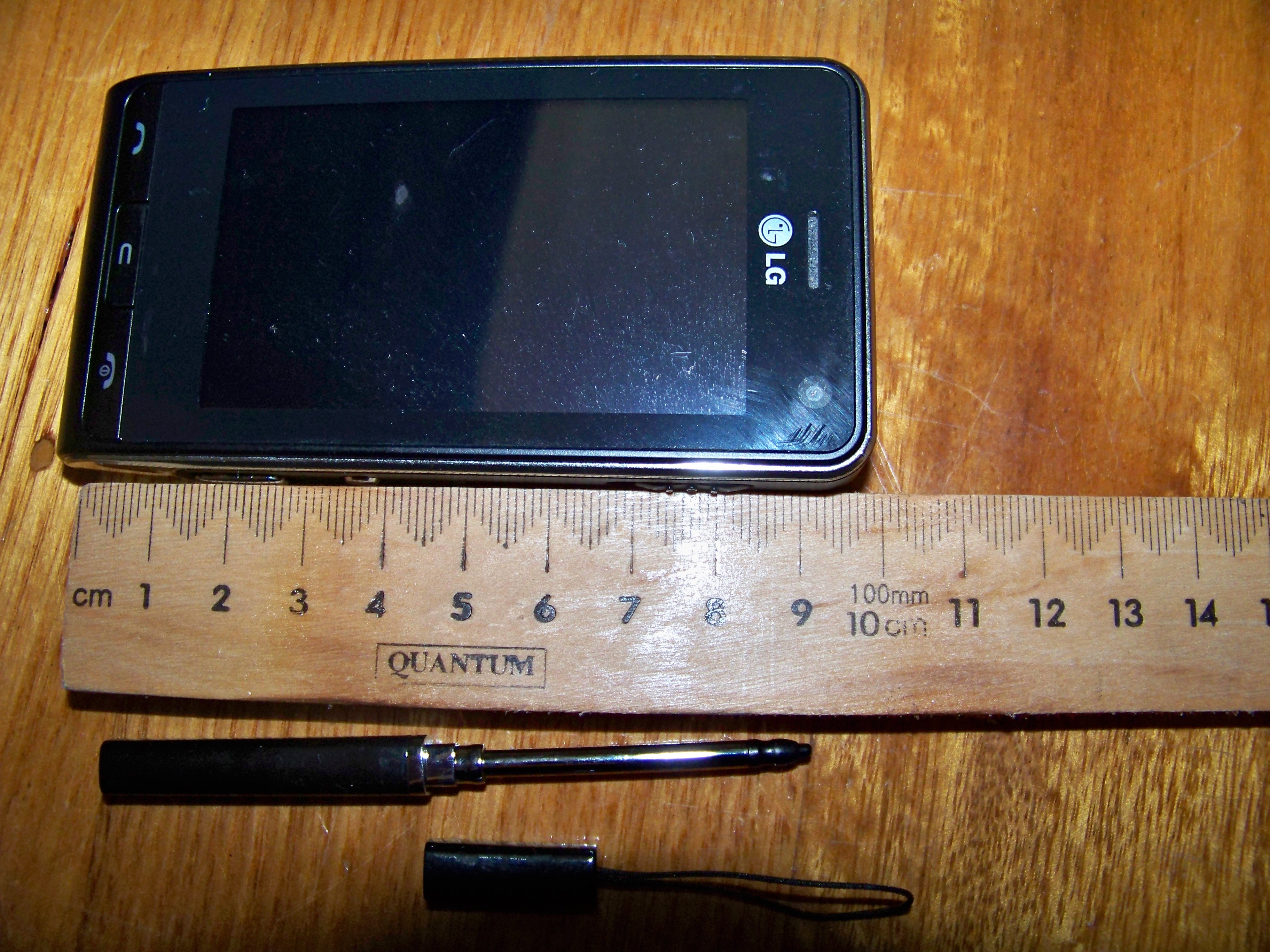
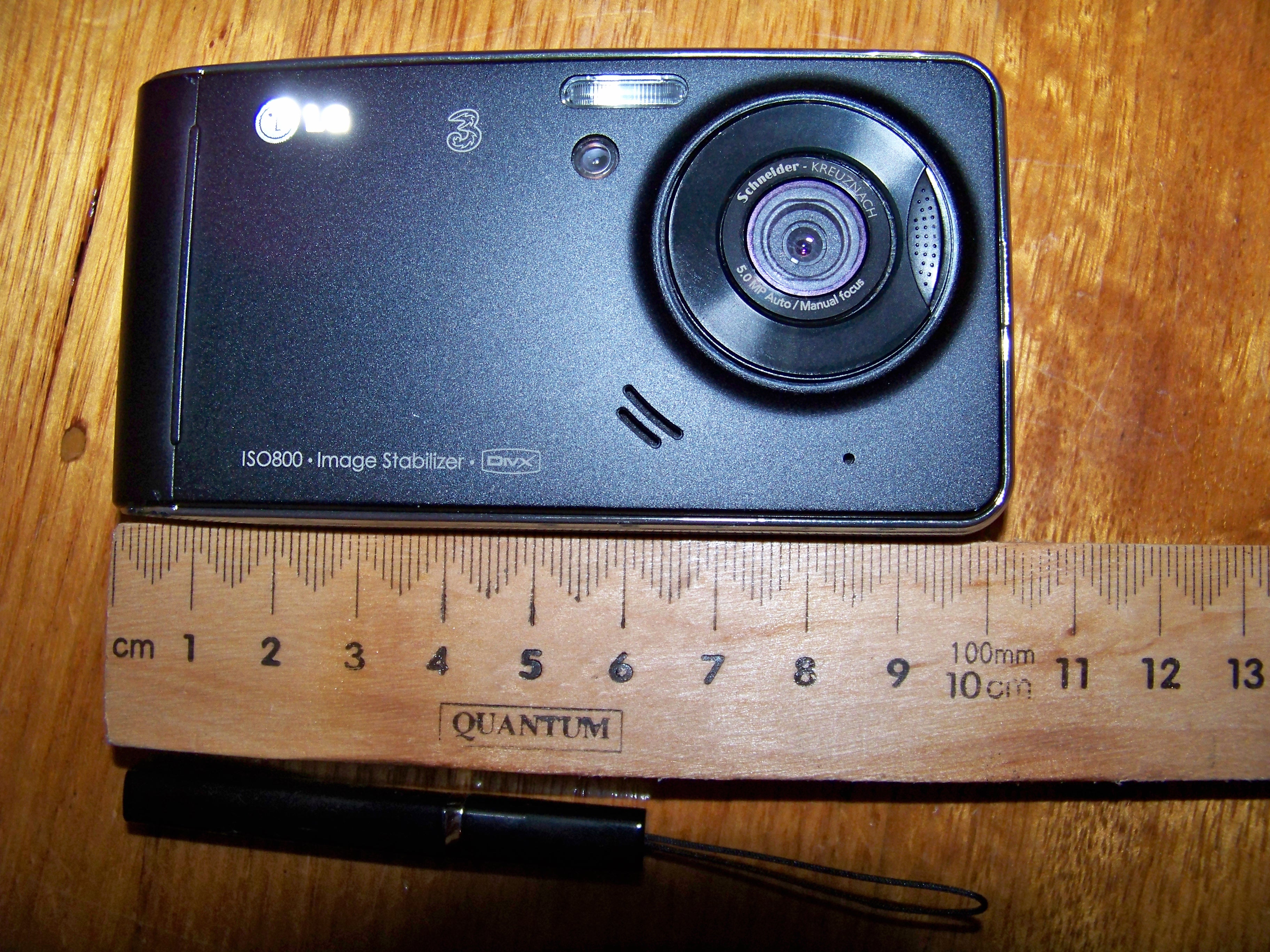
I have just got a LG U990 Viewty mobile phone [1]. It s a 3G phone and came free on the $29 monthly cap plan from Three (minimum monthly spend is $29 - but this is free if you use $29 per month). My previous plan was the $29 cap but had a minimum spend of $20 per month, as I never happened to use less than $29 per month I am not paying more. For a modern mobile phone the actual phone functionality is a sideline. If a device was strictly designed to be a phone then I think it would be very similar to the Nokia phones that were available 5+ years ago - the Nokia I had in 1999 performed every phone function that I desired of it. Like most modern phones the LG U990 Viewty suffers in it s phone functionality from the desire to make it do non-phone tasks and from the desire to cripple it to meet the desires of the carriers (not the desires of the users). For example the home screen will always have at least two buttons for paid Three services and I have no configuration option to remove them. Replacing them with speed dial options for a couple of numbers that I regularly call would be handy. As the main screen is a touch-screen there is no excuse for this, they should allow the software to be reconfigured with more useful options. Eventually the Android will kill most of the other phones and this problem of phones being designed to suit the telephone companies instead of the users will be solved. One of the most annoying mis-features of the phone is that it doesn t properly handle address book entries with multiple phone numbers. One of my friends turns his mobile off when he is at home, so I regularly call his mobile and then immediately call his home number if the mobile is unavailable. With my previous two mobile phones I could press the dial button to bring up the list of previous calls and then use the arrow buttons to select from the other numbers that are attached to the same address-book entry, so with three button presses I would be dialing his other number. With the Viewty I have to go back to the address book. The compelling feature of the Viewty is the camera and display. It has a 5MP camera which makes it the second highest resolution camera-phone offered by Three - the LG Renoir (KC910) has 8MP but needs a $99 plan for it to be free. It also has a 240*320 resolution touch-screen display (in a quick search in January when I bought my phone the best resolution display I could find on a phone is 240*400 in the LG Renoir). While the camera is documented as being 5mp there are no specs available about the resolution of the CCD. I want to use the native resolution of the CCD for pictures (I think interpolation is a waste of space). The CCD might actually be 5mp, a picture of the 1400*1050 resolution screen on my Thinkpad allows me to read all the text even when small fonts are in use, so the CCD resolution must be significantly greater than 1400*1050. This is a really important feature as the Viewty will work well for making screen-shots for bug reports about crashed computers (several of my clients have expressed interest in getting one after seeing such a demonstration). One annoying problem is that the camera software takes a while to load, my trusty Sony digital camera starts a lot faster and the LG U890 phone I used for the past two years is also a lot faster and more convenient. This won t work well for photographing unexpected events. When I am traveling by public transport I will photograph the relevant pages of my street directory as I can zoom in to photos of the maps and read the street names, it saves some weight when traveling. The 2G micro-SD card (which incidentally cost $10 from OfficeWorks) will allow me to store a lot of maps. One interesting feature is the video recording capabilities. It can do 640*480 resolution at 30fps (which is pretty good) and 320*240 resolution at 120fps (they claim that you can film a balloon popping). In my quick tests the standard 640*480*30fps mode works well, but the 120fps mode requires much brighter light than most of my test environments, so I have not yet got it working properly. The phone has a reasonable voice recording function, it can record considerably more than 34 hours of audio and the quality is reasonably good if you use an external microphone. It is however quite poor if you use the built-in microphone for a dictaphone function, it seems that quality is poor at any distance. I had wanted to record my LCA mini-conf talks with my phone but unfortunately forgot to bring the adapter for the external microphone. It s a pity that the phone doesn t have a standard microphone socket as I have misplaced my Viewty microphone, when designing the phone they should assume that misplacing attachments is a common occurrence and design it to use common parts. I recently spoke to a journalist who uses his mobile phone to record interviews. He said that his phone supported phone calls, voice recording, and taking pictures - all the essential tasks for his work. It seems that the Viewty would be better than most phones for journalistic work apart from the issue of low quality voice recording when you have misplaced your external microphone. The text editor is unfriendly in the keyboard mode (I have not tried hand-writing recognition), one thing I don t like is the fact that the letters jump when you press them. This does allow changing a letter by moving the stylus before releasing the press (some people consider this a great feature). There are no cursor control keys (which is a serious omission), and the keyboard doesn t resemble a real keyboard. My iPaQ is far better for writing (I once wrote a full-length magazine article on an iPaQ). The stylus is quite strange and interesting. In the picture of the front of the phone the stylus is compacted with it s lid on. In the picture of the back of the phone the stylus is extended with the lid off. The end of the stylus clips in to the lid so that removing the lid drags the central part out of the body. It s an interesting design and with the string on the lid allows the stylus to be attached to the phone when it s not being used. But I have never used it. Even with an iPaQ (which had a proper stylus that attached firmly inside the body of the device) I often used a fingernail on the touch screen. I have not felt the need to ever use a stylus with my Viewty. One final noteworthy thing is the support for Google services. It seems to have client support for YouTube, Google Maps, GMail, and Blogger. This seems to be a major win for Google, the Viewty is one of the most popular phones at the moment and I expect that lots of people who buy them will now have an incentive to use the Google services. Between these sorts of deals and the Android I think that it will be necessary to have some sort of anti-trust action against Google. Google are generally doing good things for the users. I have been quite satisfied to use Google search, Google advertising on my blog, and Gmail. Also I have been moderately happy with Blogger (it was good when I started blogging) and Google Maps is useful on occasion. So generally I am happy with Google, but monopolies are bad for the users so I think that if things continue on their current trend then Google may have to be split into several little Googlets some time in the next few years.

30 May 2009

Andrew Pollock: [life] On obtaining an E-3 visa from the US Consulate in Vancouver

I've already had one enquiry, so I guess I'd better get writing. Despite the lawyers being really down on using this Consulate, I have to say that from my experience, it's been the easiest so far. Or I'm just getting used to the rigmarole. The one screw up was I didn't read the instructions thoroughly enough, and we rocked up to the Scotia Bank branch to deposit the visa application fee in their bank account, and I thought the fee was quoted in Canadian dollars. Turns out, it was quoted in US dollars. It wasn't the end of the world that we didn't have cash, they could sell us US dollars on a credit card, except the bank would only accept Visa card, not Mastercard. I haven't had to deal with such bullshit since the great Cabcharge/Visa card war in Australia in the late 90's. Moral of that story: read the instructions multiple times. Carry one of each flavour of credit card when traveling internationally, just in case. That minor transactional hiccup aside, everything went fine. The Consulate itself does all of the pre-interview shenanigans on one floor (the bulk of the waiting around, the fingerprinting and photographing) and then they shoot you up to another floor for the "interview". Annoyingly, they run you through the metal detectors again on the higher floor. The interview was basically "So you work for Google? How about the food?" and then he told us to come back the next day to pick up the passports. I think we were in and out in about three, three and a half hours. I have to say, the ability to collect the passports from the Consulate later is a real boon. When you're in a foreign country, the last thing you want to deal with is any glitches in the postal system, or trying to get mail delivered to a hotel. This alone makes me like the Vancouver Consulate the best. We went back at the 2:15pm allotted "passport pick up time", and they came down to the security checkpoint on the ground floor and you show your receipt and they give you your passports back. They tell you to step outside and check it, and come back if there's any problems, so I presume you can at least talk to a human at that point if there are any problems. This is my third E-3 visa. They did not ask to see any of my supporting paperwork showing ties with Australia or anything else that I had in my giant wad of paperwork, just the approved Labor Condition Application, which they kept and returned with the passport the next day.

29 May 2009

Russell Coker: Links May 2009

An interesting opinion post in the NY Times describes the research on early education and how it can affect IQ [1]. Among other things children from poor families who are adopted into upper middle-class families tend to end up with higher IQ scores. The article notes that half the population in 1917 would be regarded as mentally retarded by today s standards - finally we have an explanation for WW1! Two Dominos employees tarnish the brand s image with a prank video on Youtube [2]. The next obvious step is for activists to seek jobs at such companies for the purpose of influencing companies. The animal rights protesters outside KFC stores haven t achieved much, but if they worked for KFC and made some nasty videos they would really encourage a change of action. I predict that chain stores will be spending a lot more on security and background checks for their employees in the near future. Cory Doctorow has written an amusing article titled Big Entertainment Wants to Party Like It s 1996 about how the entertainment industry is killing itself by conducting back-room negotiations about new copyright laws [3]. Nate Silver gave a TED talk about racism in elections [4]. The most interesting point was demonstrating statistically that people who don t meet people of other races tend to be more racist. It seems to me that the use of the X-Face: header in email and the use of HackerGotchi in Planets can help reduce the level of racism on the Internet. Cory Doctorow writes about his Geeky writing [5]. His idea for an organised system for donating books to libraries will hopefully be fully implemented soon - it should be easy to do and the incremental costs will decrease as the scope increases. Cory Doctorow writes about the perverse laws that protect criticism of copyright works but stifle praise [6]. In a similar note he has documented a plan for trademark and copyright holders to allow fans to create derivitive works while preserving the original rights AND sharing the profits [7]. So if Cory s idea became popular someone who wanted to create some art work based on a Coke bottle (which is trademarked) could pay the Coca-Cola company a reasonable rate, include an appropriate disclaimer, and things would work out well for everyone. Also this would allow small artists to develop new products that could be used by the large companies (I m sure that anyone who legally released an artwork that turned out to be an effective advert for Coke would receive a lucrative job offer). Bruce Schneier s blog has an interesting article about the poor quality of software used for breath alcohol detectors [8]. It s a great concern that innocent people are being punished due to bad software, but it s only a small part of the problems with the legal system. Mary Roach gave a TED talk 10 Things You Didn t Know About Orgasm [9]. Not as insightful as the usual TED talk, but strange and interesting.

21 May 2009

Kurt Roeckx: Audio ripping: Drive offsets

Thanks to Thomas Vander Stichele I've found out that when ripping an audio CD you get a different file depending on the CD drive you use because they don't all start reading at the same position and that for most drives this is a constant offset. So if you know what offset your drive has, you can compare rips done with a different drive. I was under the impression that this offset was always a multiple of the sector size, because audio CDs do not have a reliable way to detect the position. But it seems this offset can in the middle of a sector too. It looks like they agreed on some standard to compare the drive offsets. You can find a list of drives here and here. Cdparanoia has an option you can use to correct for that offset. But I started wondering where this error comes from. There is no real reason why all CD drives shouldn't be able to return the same thing. There is very little real info about it out there, and I basically get the impression that someone just decided to use something as base value. It isn't really a problem, since this is about very small time. To fully understand this, I think it's important to understand the basic layout of an audio CD. A sector (frame) of a CD contains 2352 bytes (588 samples) main data and 96 byte of sub-channel data. You have 75 such sectors per second, giving you a total of 44100 samples per second. A sector is made up of 98 sub-frames. Each such sub-frame has 24 bytes (6 samples) of main data, 4 bytes of C1 error correction and 4 bytes of C2 error correction, and 1 "byte" of sub-channel data. The first 2 sub-frames are used to mark the beginning of the sector. It contains a special pattern at the location of the sub-channel data. The first sub-frame contains S0 and the second S1. So you are left with 96 byte of sub-channel data. The highest bit of the sub-channel byte is used for the P sub-channel, bit 6 for the Q sub-channel, and so on until the W sub-channel. So the sub-channel has 96 bits (12 byte) per sector and each bit is in a different sub-frame. If you go look at the offsets, you'll notice there are a lot of drives that have an offset that's a multiple of 6 samples, but there are also a lot that aren't a multiple of 6. In the P and Q sub-channels you can see at what place you're reading. The P channel is a "pause" flag. At least 2 seconds before the track starts the P flag is turned on and the second sector of the track it's turned off again. All bits of P sub-channel should be the same for the whole sector, it can only change after an S0/S1. In the Q channel you can have different information depending on what is in the first byte. The most useful one is "mode 1", which contain things like the track number, index in the track, and time indication for both the current track and the whole disc, and a CRC. Mode 1 should be in at least 9 out of 10 sectors. So you known perfectly at which location you are. There is just 1 small problem, the sub-channels do not have any error correction, but does have a CRC. And there are lots of sectors with the information in it. So I wondered if the drives just didn't look at S0/S1 and that the sub channel data was shifted too. So I changed cdparanoia to log the sub-channel data and dumped it. I've tried this with a total of 6 drives, and also look at what the drive offset is. This are the drives I've used and the offsets they have:
Driveoffset
SONY DVD RW DRU-700A VY03 +12
PLEXTOR CD-R PX-W4012A 1.00 +98
PLEXTOR CD-R PX-R412C 1.06 +355
TSSTcorp CD/DVDW TS-L532A TI5a1 +116
HL-DT-ST DVD-ROM GDR-H30N 1.00i +6
ASUS CD-S520/A 1.7L +1858
Some notes: I can perfectly understand that it might be off by 1 or more sector, like the ASUS. I could also understand that it might be off by 1 or more sub-frames, but then I wouldn't expect to get proper values for the sub-channel data. Having an offset not be a multiple of the sub-frame makes no sense to me. So I can only come to the conclusion that this are all firmware issues.

15 May 2009

Eddy Petri&#537;or: svn-buildpackage is now orphaned

I have decided that is high time to declare svn-buildpackage orphaned since many people are replying on it to be useful, but nobody cared enough to answer to the RFH Eduard Bloch made some 3 years ago.

I know it would have been better if I would have asked a request for adoption, but, honestly, the package didn't had a maintainer in the last year and that would have been lying to everybody.

The package is quite important and I would hate to see it leave the official archive since many people do need it and use it regularly (I know for sure the GNOME, Perl and the Debian Games Team use it) and I have enjoyed working on the package while I was motivated.

The code is maintained in SVN and the trunk can be viewed at:

http://svn.debian.org/wsvn/collab-maint/deb-maint/svn-buildpackage/trunk/

and can be checked out with any of these commands:

# read-only copy
svn co svn://svn.debian.org/svn/collab-maint/deb-maint/svn-buildpackage/trunk svn-buildpackage

# read write, if you have an account on alioth.debian.org:

svn co svn+ssh://svn.debian.org/svn/collab-maint/deb-maint/svn-buildpackage/trunk


Also, note that the package has several features which the new maintainer(s) should be aware of and must make sure they all work when changing the code. Also, there are some things to remember:

These being said, I am really hoping svn-buildpackage will find a new maintainer since it deserves a lot more attention than I am providing. Don't forget, 0.6.24 is wating for an upload already.


Update: Neil Williams answered and agreed to take over maintenance, but he doesn't usually use svn-inject and svn-upgrade, so somebody taking care of those would be needed. Ironically, those two scripts are the ones in the worst shape of the three main scripts.

8 May 2009

Antti-Juhani Kaijanaho: Star Trek

It is curious to see that the eleventh movie in a series is the first to bear the series name with no adornment. It is apt, however: Star Trek is a clear attempt at rebooting the universe and basically forgetting most of the decades-heavy baggage. It seems to me that the reboot was fairly well done, too. The movie opens with the birth of James Tiberius Kirk, and follows his development into the Captain of the Enterprise. Along the way, we also see the growth of Spock from adolescence into Kirk s trusted sidekick and also into well. Despite the fact that the action plot macguffins are time travel and planet-killer weaponry, it is mainly a story of personal vengeance, personal tragedy, and personal growth. Curiously enough, although Kirk gets a lot of screen time, it is really the personal story of Spock. Besides Kirk and Spock, we also get to meet reimagined versions of Uhura (I like!), McCoy, Sulu, Chekov and Scott. And Christopher Pike, the first Captain of the Enterprise. The appearance of Leonard Nimoy as the pre-reboot Spock merits a special mention and a special thanks. I overheard someone say in the theatre, after the movie ended, that the movie was a ripoff and had nothing to do with anything that had gone before. I respectfully disagree. The old Star Trek continuum had been weighed down by all the history into being a 600-pound elderly man who is unable to leave the couch on his own. This movie provided a clearn reboot, ripping out most of the baggage, retaining the essence of classic Star Trek and giving a healthy, new platform for good new stories. One just hopes Paramount is wise enough not to foul it up again. It was worth it, I thought.

7 May 2009

Robert Collins: 7 May 2009

My desktop machine blew up, so I got a lovely fresh install of Jaunty. And, X and Gnome still disagreed by default about my actual screeen size... it was unreadably small with the default fonts. I've posted the following instructions before - these are basically unchanged except that the location of the fonts dialog has moved. Tip for folk that would like X to show fonts (i.e. the GDM log in screen) in the correct size: Teach X about the dpi setting! Step 1: run xdpyinfo and look for the dimensions: line. There will be something like this: dimensions: 1280x768 pixels (266x161 millimeters) resolution: 122x121 dots per inch Grab a ruler and measure the screen you have. If it matches the millimeters reported by X, then skip step 2. Step 2: edit /etc/X11/xorg.conf, and locate your Monitor section: Section "Monitor" Identifier "Generic Monitor" Option "DPMS" DisplaySize 265 160 EndSection Add in a DisplaySize like I have there. Now logout of your GUI and restart X - you can run /etc/init.d/ g,k dm restart from the console, or do what I do - just hit ctrl-alt-bkspace so it restarts. Your login screen should change appearance slightly - either the fonts and regions will get bigger if your dpi was set too low, or vice verca. Step 3: (For KDE users, someone please tell me what it should be, for GNOME read on)... Run xdpyinfo again and find the Resolution: line. Ignore the fact that it may not be square, grab one of the two numbers ( I suggest the higher).. Go to System, Preferences, Appearance, and the Font tab. Select 'Details'. There is a Resolution field there. Put in the single number you chose. Changes should take effect immediately. Applications I know of which benefit from having this set correctly: xpdf, gnome-* (panels are readable etc etc), firefox.

6 May 2009

Daniel Kahn Gillmor: HOWTO prep for migration off of SHA-1 in OpenPGP

Last week at eurocrypt, a small group of researchers announced a fairly serious attack against the SHA-1 digest algorithm, which is used in many cryptosystems, including OpenPGP. The general consensus is that we should be moving in an orderly fashion toward the theater exits, deprecating SHA-1 where possible with an eye toward abandoning it soon (one point of reference: US gov't federal agencies have been directed to cease all reliance on SHA-1 by the end of 2010, and this directive was issued before the latest results). Since Debian relies heavily on OpenPGP and other cryptographic infrastructure, i'll be blogging about how Debian users can responsibly and carefully migrate toward better digests. This post focuses on some first steps for users of gpg, and for Debian Developers and Debian Maintainers in particular. The good news is that gpg and gpg2 both support digest algorithms from the stronger SHA-2 family: SHA512, SHA384, SHA256, and SHA224. By using these stronger digest algorithms some of your signatures may be un-readable by users of older software. However, gpg and PGP (a proprietary implementation) have both had support for at least SHA256 for well over 5 years. Debian's gnupg packages have supported the full SHA-2 family since sarge. However, most existing signatures in today's Web of Trust were made over the SHA-1 digest algorithm, which means that abandoning it immediately would cause the Web of Trust as we know it to evaporate. So we need to rely on SHA-1-based signatures until a reasonably-fleshed-out Web of Trust based on stronger digests is in place. Since we don't want to have to rely on SHA-1 for too much longer, we need to collectively start the transition now. So what can you do to help facilitate the move away from SHA-1? I'll outline three steps that current gpg users can do today, and then i'll walk through how to do each one: The first two are simple, quick, and painless actions. You'll be done with them in minutes! The third is tougher, and while you can start it today, key transitions take a little bit of time to complete. Read on for a HOWTO! This entry has been truncated read the full entry.Tags: cryptography, openpgp, security, sha1, tip

4 May 2009

Daniel Kahn Gillmor: NYC public services require Microsoft software

Providing city services only to users of specific proprietary software is bad public policy. I just discovered that New York City's 2009 Summer Youth Employment Program requires Internet Explorer in order to apply online. Even downloading the pdf version of the application to print out from the site is impossible under non-IE browsers because the actual pdf link is wrapped in some IE-only javascript. And even if you could download the PDF directly, any additional "online information to help you select a SYEP provider" is inaccessible for the same reason. I just called 311 and filed an official complaint against the NYC Dept. of Youth and Community Development (DYCD), who sponsor the program. I also called the number on the application page (1-800-246-4646), and spoke with "Karen" from the DYCD, who explained that the site was a New York City web site, and that it had been created by DoITT (the Department of Information Technology and Telecommunications) at the request of the DYCD, but that the DYCD didn't program it directly. She seemed to misunderstand the tech behind the situation, saying "we can't bring it to a higher level (like Firefox) because then it wouldn't work for everyone". I was happy that she understood that Firefox was a concern here, but the point is not to build the site "higher" to Firefox, but to use standard technology that all browsers can access for a public site. Karen also seemed to think the situation was acceptable because the city youth "can always use IE on local public library computers" to access the site. Note that the applications involve submitting very detailed information (SSN, health insurance, family income, criminal record, selective service registration #, etc), which are things that i would personally be unwilling to submit over a shared public computer if i had any other choice. Furthermore, this crappy implementation decision encourages the NYPL to continue to spend limited resources on proprietary software to an out-of-state monopolist to run their computer labs, which is money that could be better spent locally (or even spent on books or something similarly quaint and library-like). I'm frustrated. This is 2009. The application process for public services here should not require any proprietary technology, but it uses it gratuitously. This excludes legitimate citizens, and encourages Microsoft in its ongoing pursuit of monopoly status. Both of these are bad things. I submitted feedback on the DYCD customer survey web site, and submitted two 150-word-limited(!) complaints to Commissioner Mulgrav of the DYCD and Commissioner Cosgrave of DoITT. I'm sure they'd be interested in hearing from other people about this. Is this kind of proprietary lock-in what we should expect from a Mayor who cuts budgets city-wide except for IT? Where is all that money going? What is the city getting out of it?Tags: policy

Next.

Previous.