First of all, congratulations to all those who got us 2022 Debconf, so we will finally have a debconf in India. There is of course, lot of work to be done between now and then. For those who would be looking forward to visit India and especially Kochi I would suggest you to hear this enriching tale
I am sorry I used youtube link but it is too good a podcast not to be shared. Those who don t want youtube can use the invidio.us link for the same as shared below.
https://www.invidio.us/watch?v=BvjgKuKmnQ4
I am sure there are lot more details, questions, answers etc. but would direct them gently to Praveen, Shruti, Balasankar and the rest who are from Kochi to answer if you have any questions about that history.
National Science Day, GMRT 2020
First, as always, we are and were grateful to both NCRA as well as GMRT for taking such good care of us. Even though Akshat was not around, probably getting engaged, a few of us were there. About 6-7 from the Mozilla Nasik while the rest representing the foss community. Here is a small picture which commentrates the event
National Science Day, GMRT 2020
While there is and was a lot to share about the event. For e.g. Akshay had bought RPI- Zero as well as RPI-2 (Raspberry Pi s ) and showed some things. He had also bought up a Debian stable live drive with persistence although the glare from the sun was too much that we couldn t show it to clearly to students. This was also the case with RPI but still we shared what and how much we could. Maybe next year, we either ask them to have double screens or give us dark room so we can showcase things much better. We did try playing with contrast and all but it didn t have much of an effect . Of course in another stall few students had used RPI s as part of their projects so at times we did tell some of the newbies to go to those stalls and see and ask about those projects so they would have a much wider experience of things. The Mozilla people were pushing VR as well as Mozilla lite the browser for the mobile.
We also gossiped quite a bit. I shared about indicatelts , a third-party certificate extension although I dunno if I should file a wnpp about it or not. We didn t have a good experience of when I had put an RFP (Request for Package) which was accepted for an extension which had similar functionality which we later come to know was sharing the sites people were using the extension to call home and share both the URL and the IP Address they were using it from. Sadly, didn t leave a good taste in mouth
Delhi Riots
One thing I have been disappointed with is the lack of general awareness about things especially in the youth. We have people who didn t know that for e.g. in the Delhi riots which happened recently the law and order (Police) lies with Home Minister of India, Amit Shah. This is perhaps the only capital in the world which has its own Chief Minister but doesn t have any say on its law and order. And this has been the case for last 70 years i.e. since independance. The closest I know so far is the UK but they too changed their tune in 2012. India and especially Delhi seems to be in a time-capsule which while being dysfunctional somehow is made to work. In many ways, it s three body or a body split into three personalities which often makes governance a messy issue but that probably is a topic for another day. In fact, scroll had written a beautiful editorial that full statehood for Delhi was not only Arvind Kejriwal s call (AAP) but also something that both BJP as well as Congress had asked in the past. In fact, nothing about the policing is in AAP s power. All salaries, postings, transfers of police personnel everything is done by the Home Ministry, so if any blame has to be given it has to be given to the Home Ministry for the same.
American Capitalism and Ventilators
America had been having a history of high cost healthcare as can be seen in this edition of USA today from 2017 . The Affordable Care Act was signed as a law by President Obama in 2010 which Mr. Trump curtailed when he came into power couple of years back. An estimated 80,000 people died due to seasonal flu in 2018-19 . Similarly, anywhere between 24-63,000 have supposed to have died from Last October to February-March this year. Now if the richest country can t take care of their population which is 1/3rd of the population of this country while at the same time United States has thrice the area that India has. This I am sharing as seasonal flu also strikes the elderly as well as young children more than adults. So in one senses, the vulnerable groups overlap although from some of the recent stats, for Covid-19 even those who are 20+ are also vulnerable but that s another story altogether.
If you see the CDC graph of the seasonal flu it is clear that American health experts knew about it. One another common factor which joins both the seasonal flu and covid is both need ventilators for the most serious cases. So, in 2007 it was decided that the number of ventilators needed to be ramped up, they had approximately 62k ventilators at that point in time all over U.S. The U.S. in 2010, asked for bids and got bid from a small californian company called Newport Medic Instruments. The price of the ventilators was approximately INR 700000 at 2010 prices, while Newport said they would be able to mass-produce at INR 200000 at 2010 prices. The company got the order and they started designing the model which needed to be certified by FDA. By 2011, they got the product ready when a big company called Covidgen bought Newport Medic and shutdown the project. This was shared in a press release in 2012. The whole story was broken by New York Times again, just a few days ago which highlighted how America s capitalism rough shod over public health and put people s life unnecessarily in jeopardy. If those new-age ventilators would have been a reality then not just U.S. but India and many other countries would have bought the ventilators as every county has same/similar needs but are unable to pay the high cost which in many cases would be passed on to their citizens either as price of service, or by raising taxes or a mixture of both with public being none the wiser. Due to dearth of ventilators and specialized people to operate it and space, there is possibility that many countries including India may have to make tough choices like Italian doctors had to make as to who to give ventilator to and have the mental and emotional guilt which would be associated with the choices made.
Some science coverage about diseases in wire and other publications
Since Covid coverage broke out, the wire has been bringing variousreports of India s handling of various epidemics, mysteries, some solved, some still remaining unsolved due to lack of interest or funding or both. The Nipah virus has been amply discussed in the movie Virus (2019) which I shared in the last blog post and how easily it could have been similar to Italy in Kerala. Thankfully, only 24 people including a nurse succumbed to that outbreak as shared in the movie. I had shared about Kerala nurses professionalism when I was in hospital couple of years back. It s no wonder that their understanding of hygeine and nursing procedures are a cut above the rest hence they are sought after not just in India but world-over including US and UK and the middle-east. Another study on respitory illness was bought to my attention by my friend Pavithran.
Possibility of extended lockdown in India
There was talk in the media of extended lockdown or better put an environment is being created so that an extended lockdown can be done. This is probably in part due to a mathematical model and its derivatives shared by two Indian-origin Cambridge scholars who predict that a minimum 49 days lockdown may be necessary to flatten the covid curve about a week back.
Predictions of the outcome of the current 21-day lockdown (Source: Rajesh Singh, R. Adhikari, Cambridge University)
Alternative lockdown strategies suggested by the Cambridge model (Source: Rajesh Singh, R. Adhikari, Cambridge University)
India caving to US pressure on Hydroxychloroquine
While there has been lot of speculation in U.S. about Hydroxychloroquine as the wonder cure, last night Mr. Trump threatened India in a response to a reporter that Mr. Modi has to say no for Hydroxychloroquine and there may be retaliations.
As shared before if youtube is not your cup you can see the same on invidio.us
https://www.invidio.us/watch?v=YP-ewgoJPLw
Now while there have been several instances in the past of U.S. trying to bully India, going all the way back to 1954. In fact, in recent memory, there were sanctions on India by US under Atal Bihari Vajpayee Government (BJP) 1998 but he didn t buckle under the pressure and now we see our current PM taking down our own notification from a day ago and not just sharing Hydroxychloroquine but also Paracetemol to other countries so it would look as if India is sharing with other countries. Keep in mind, that India, Brazil haven t seen eye to eye on trade agreements of late and Paracetemol prices have risen in India. The price rise has been because the API (Active Pharmaceutical Ingredients) for the same come from China where the supply chain will take time to be fixed and we would also have to open up, although should we, should we not is another question altogether. I talk about supply chains as lean supply chains were the talk since late 90 s when the Japanese introduced Just-in-time manufacturing which lead to lean supply chains as well as lot of outsourcing as consequence. Of course, the companies saved money but at the cost of flexibility and how this model was perhaps flawed was shared by a series of articles in Economist as early as 2004 when there were lot of shocks to that model and would be exaberated since then. There have been frequent shocks to these fragile ecosystem more since 2008 after the financial meltdown and this would put more companies out of business than ever before.
The MSME sector in India had already been severely impacted first by demonetization and then by the horrendous implementation of GST whose cries can be heard from all sectors. Also the frequent changing of GST taxes has made markets jumpy and investors unsure. With judgements such as retrospective taxes, AGR (Adjusted Gross Revenue) etc. it made not only the international investors scared, but also domestic investors. The flight of the capital has been noticeable. This I had shared before when Indian Government shared about LRS report which it hasn t since then. In fact Outlook Business had an interesting article about it where incidentally it talked about localcircles, a community networking platform where you get to know of lot of things and whom I am also a member of.
At the very end I apologize for not sharing the blog post before but then I was feeling down but then I m not the only one.
Welcome to the March 2020 report from the Reproducible Builds project. In our reports we outline the most important things that we have been up to over the past month and some plans for the future.
What are reproducible builds?
One of the original promises of open source software is that distributed peer review and transparency of process results in enhanced end-user security.
However, whilst anyone may inspect the source code of free and open source software for malicious flaws, almost all software today is distributed as pre-compiled binaries. This allows nefarious third-parties to compromise systems by injecting malicious code into ostensibly secure software during the various compilation and distribution processes.
News
The report from our recent summit in Marrakesh was published and is now available in both PDF and HTML formats. A sincere thank you to all of the Reproducible Builds community for the input to the event a sincere thank you to Aspiration for preparing and collating this report.
Harmut Schorrig published a detailed document on how to compile Java applications in such as way that the .jar build artefact is reproducible across builds. A practical and hands-on guide, it details how to avoid unnecessary differences between builds by explicitly declaring an encoding as the default value differs across Linux and MS Windows systems and ensuring that the generated .jar a variant of a .zip archive does not embed any nondeterministic filesystem metadata, and so on.
Janneke gave a quick presentation on GNU Mes and reproducible builds during the lighting talk session at LibrePlanet 2020. []
Vagrant Cascadian presented There and Back Again, Reproducibly!video at SCaLE 18x in Pasadena in California which generated some attention on Twitter.
Herv Boutemy mentioned on our mailing list in a thread titled Rebuilding and checking Reproducible Builds from Maven Central repository that since the update of a central build script (the parent POM ) every Apache project using the Maven build system should build reproducibly. A follow-up discussion regarding how to perform such rebuilds was also started on the Apache mailing list.
The Telegram instant-messaging platform announced that they had updated their iOS and Android OS applications and claim that they are reproducible according to their full instructions, verifying that its original source code is exactly the same code that is used to build the versions available on the Apple App Store and Google Play distribution platforms respectfully.
Herv Boutemy also reported about a new project called reproducible-central which aims to allow anyone to rebuild a component from the Maven Central Repository that is expected to be reproducible and check that the result is as expected.
In last month s report we detailed Omar Navarro Leija s work in and around an academic paper titled Reproducible Containers which describes in detail the workings of a user-space container tool called dettrace (PDF). Since then, the PhD student from the University Of Pennsylvania presented on this tool at the ASPLOS 2020 conference in Lausanne, Switzerland. Furthermore, there were contributions to dettrace from the Reproducible Builds community itself. [][]
Debian
Chris Lamb further refined his merge request for the debian-installer component to allow all arguments from sources.list files (such as [check-valid-until=no] ) in order that we can test the reproducibility of the installer images on the Reproducible Builds own testing infrastructure. (#13)
Holger Levsen filed a number of bug reports against the debrebuild tool that attempts to rebuild a Debian package given a .buildinfo file as input, including:
Requests to improve the documentation in various ways. (#955049 & #955308)
48 reviews of Debian packages were added, 17 were updated and 34 were removed this month adding to our knowledge about identified issues. Many issue types were noticed, categorised and updated by Chris Lamb, including:
Finally, Holger opened a bug report against the software running tracker.debian.org, a service for Debian Developers to follow the evolution of packages via web and email interfaces to request that they integrate information from buildinfos.debian.net (#955434) and Chris Lamb kept isdebianreproducibleyet.com up to date. []
Software development
diffoscope
Chris Lamb made the following changes to diffoscope, the Reproducible Builds project s in-depth and content-aware diff utility that can locate and diagnose reproducibility issues, including preparing and uploading version 138 to Debian:
Improvements:
Don t allow errors with R script deserialisation cause the entire operation to fail, for example if an external library cannot be loaded. (#91)
Experiment with memoising output from expensive external commands, eg. readelf. (#93)
Use dumppdf from the python3-pdfminer if we do not see any other differences from pdftext, etc. (#92)
Prevent a traceback when comparing two R .rdx files directly as the get_member method will return a file even if the file is missing. []
Reporting:
Display the supported file formats into the package long description. (#90)
Print a potentially-helpful message if the PyPDF2 module is not installed. []
Remove any duplicate comparator descriptions when formatting in the --help output or in the package long description. []
Weaken Install the X package to get a better output message to may produce a better output as the former is not actually guaranteed. []
Misc:
Ensure we only parse the recommended packages from --list-debian-substvars when we want them for debian/tests/control generation. []
Inline the RequiredToolNotFound.get_package method s functionality as it is only used once. []
Drop the deprecated py36 = [..] argument in the pyproject.toml file. []
In addition, Vagrant Cascadian updated diffoscope in GNU Guix to version 138 [], as well as updating reprotest our end-user tool to build same source code twice in widely differing environments and then checks the binaries produced by each build for any differences to version 0.7.14 [].
Upstream patches
The Reproducible Builds project detects, dissects and attempts to fix as many currently-unreproducible packages as possible. We endeavour to send all of our patches upstream where appropriate. This month we wrote a large number of such patches, including:
isbg (report a non-determinstic documentation issue)
Project documentation
There was further work performed on our documentation and website this month including Alex Wilson adding a section regarding using Gradle for reproducible builds in JVM projects [] and Holger Levsen added the report from our recent summit in Marrakesh [][].
In addition, Chris Lamb made a number of changes, including correcting the syntax of some CSS class formatting [], improved some filed against copy a little better [] and corrected a reference to calendar.monthrange Python method in a utility function. []
Testing framework
We operate a large and many-featured Jenkins-based testing framework that powers tests.reproducible-builds.org that, amongst many other tasks, tracks the status of our reproducibility efforts as well as identifies any regressions that have been introduced.
This month, Chris Lamb reworked the web-based package rescheduling tool to:
Require a HTTP POST method in the web-based scheduler as not only should HTTP GET requests be idempotent but this will allow many future improvements in the user interface. [][][]
Improve the authentication error message in said rescheduler to suggest that the developer s SSL certificate may have expired. []
In addition, Holger Levsen made the following changes:
Revisit ordering of Debian suites; sort the experimental distribution last and reverse the ordering of suites to prioritise the suites in development. [][][]
Schedule Debian buster and bullseye a little less in order to allow unstable to catch up on the i386 architecture. [][]
Various cosmetic changes to the web-based scheduler. [][][][]
Improve wordings in the node health maintenance output. []
Lastly, Vagrant Cascadian updated a link to the (formerly) weekly news to our reports page [] and kpcyrd fixed the escaping in an Alpine Linux inline patch []. The usual build nodes maintenance was performed by Holger Levsen [][], Mattia Rizzolo [] and Vagrant Cascadian [][].
If you are interested in contributing to the Reproducible Builds project, please visit our Contribute page on our website. However, you can get in touch with us via:
This month s report was written by Bernhard M. Wiedemann, Chris Lamb, Holger Levsen and Vagrant Cascadian. It was subsequently reviewed by a bunch of Reproducible Builds folks on IRC and the mailing list.
Debian Social
This month we finally announced the Debian Social project. A project that hosts a few websites with the goal to improve communication and collaboration within the Debian project, improve visibility on the work that people do and make it easier for general users to interact with the community and feel part of the project.
Some History
This has been a long time in the making. From my side I ve been looking at better ways to share/play our huge DebConf video archives for the last 3 years or so. Initially I was considering either some sort of script or small server side app that combined the archives and the metadata into a player, or using something like MediaDrop (which I was using on my highvoltage.tv website for a while). I ran into a lot of MediaDrop s limitations early on. It was fine for a very small site but I don t think it would ever be the right solution for a Debian-wide video hosting platform, and it didn t seem all that actively maintained either. Wouter went ahead and implemented a web player option for the video archives. His solution is good because it doesn t rely on any server side software, so it s easy to mirror and someone who lives on an island could download it and view it offline in that player. It still didn t solve all our problems though. Popular videos (by either views or likes) weren t easily discoverable, and the site itself isn t that easy to discover.
Then PeerTube came along. PeerTube provides a similar type of interface such as MediaDrop or YouTube that gives you likes, viewcount and comments. But what really set it apart from previous things that we looked at was that it s a federated service. Not only does it federate with other PeerTube instances, but the protocols it uses means that it can connect to all kinds of other services that makes up an interconnected platform called the Fediverse. This was especially great since independent video sites tend to become these lonely islands on the web that become isolated and forgotten. With PeerTube, video sites can subscribe to similar sites on the Fediverse, which makes videos and other video sites significantly more discoverable and attracts more eyeballs.
At DebConf19 I wanted to ramp up the efforts to make a Debian PeerTube instance a reality. I spoke to many people about this and discovered that some Debianites are already making all kinds of Debian videos in many different languages. Some were even distributing them locally on DVD and have never uploaded them. I thought that the Debian PeerTube instance could not only be a good platform for DebConf videos, but it could be a good home for many free software content creators, especially if they create Debian specific content. I spoke to Rhonda about it, who s generally interested in the Fediverse and wanted to host a instances of Pleroma (microblogging service) and PixelFed (free image hosting service that resembles the Instagram site), but needed a place to host them. We decided to combine efforts, and since a very large amount of fediverse services end with .social in their domain names, we ended up calling this project Debian Social. We re also hosting some non-fediverse services like a WordPress multisite and a Jitsi instance for video chatting.
Current Status
Currently, we have a few services in a beta/testing state. I think we have most of the kinks sorted out to get them to a phase where they re ready for wider use. Authentication is a bit of a pain point right now. We don t really have a single sign-on service in Debian, that guest users can use, or that all these services integrate with. So for now, if you re a Debian Developer who wants an account on one of these services, you can request a new account by creating a ticket on salsa.debian.org and selecting the New account template. Not all services support having dashes (or even any punctuation in the username whatsoever), so to keep it consistent we re currently appending just guest to salsa usernames for guest users, and team at the end of any Debian team accounts or official accounts using these services
Stefano finished uploading all the Debconf videos to the PeerTube instance. Even though it s largely automated, it ended up being quite a big job fixing up some old videos, their metadata and adding support for PeerTube to the DebConf video scripts. This also includes some videos from sprints and MiniDebConfs that had video coverage, currently totaling 1359 videos.
Future plans
This is still a very early phase for the project. Here are just some ideas that might develop over time on the Debian Social sites:
Team accounts. Some Debian teams already have accounts on a myriad of other platforms. For example, the Debian Med team has a blog on blogspot and the Debian Publicity team has an account on framapiaf.org. I d really like to make our Debian Social platforms (like our WordPress multisite instance and Pleroma) a place where Debian teams can trust to host their updates on. It would also be nice to have more teams use these that don t have a particularly big online presence right now, like Debian women or a DPL team account.
Developer demos. I enjoy the videos that the GNOME project makes that demos the new features in every release, as they ve done for the 3.36 release. I think it would be great if people in Debian could make some small videos to demo the things that they ve been working on. It doesn t have to be as flashy or elaborate as the GNOME video I ve linked to, but sometimes just a minute long demo can be really useful to convey a new idea or feature or to show progress that has been made.
User participation. YouTube is full of videos that reviewDebianordemohowtocustomiseit. It would be great if we could get users to post such videos to PeerTube. For Pixelfed, I d like to try out projects like users posting pictures of their computers with freshly installed Debian systems with a hashtag like #WeInstallDebian, then at the end of the year we could build a nice big mosaic that contains these images. Might make a cool poster for events too.
DebConf and other Debian events. We used to use a Gallery instance to host DebConf photos, but it s always been a bit cumbersome managing photos there and Gallery hasn t updated it s UI much over the years causing it to fall a bit out of favour with attendees at these events. As a result, photos end up getting lost in WhatsApp/Telegram/Signal groups, Twitter, Facebook, etc. I hope that we could get enough users signed up on the Pixelfed instance that it could become the de facto standard for posting Debian event photos to. Having a known central place to post these make them easier to find as well.
If you d like to join this initiative and help out, please join #debian-social on oftc. We re also looking for people who can help moderate posts on these sites.
Debian packaging
I had the sense that there were fewer upstream releases this month. I suspect that everyone was busy figuring out how to cope during Covid-19 lockdowns taking place all over the world.
2020-03-02: Upload package calamares (3.2.10-1) to Debian unstable.
2020-03-10: Upload package gnome-shell-extension-dash-to-panel (29-1) to Debian unstable.
2020-03-10: Upload package gnome-shell-extension-draw-on-your-screen (5.1-1) to Debian unstable.
2020-03-28: Upload package gnome-shell-extension-dash-to-panel (31-1) to Debian unstable.
2020-03-28: Upload package gnome-shell-extension-draw-on-your-screen (6-1) to Debian unstable.
2020-03-28: Update package python3-flask-autoindexing packaging, not releasing due to licensing change that needs further clarification. (GitHub issue #55).
2020-03-28: Upload package gamemode (1.5.1-1) to Debian unstable.
2020-03-28: Upload package calamares (3.2.21-1) to Debian unstable.
Debian mentoring
2020-03-03: Sponsor package python-jaraco.functools (3.0.0-1) (Python team request).
2020-03-03: Review python-ftputil (3.4-1) (Needs some more work) (Python team request).
2020-03-04: Sponsor package pythonmagick (0.9.19-6) for Debian unstable (Python team request).
2020-03-23: Sponsor package bitwise (0.41-1) for Debian unstable (Email request).
2020-03-23: Sponsor package gpxpy (1.4.0-1) for Debian unstable (Python team request).
2020-03-28: Sponsor package gpxpy (1.4.0-2) for Debian unstable (Python team request).
2020-03-28: Sponsor package celery (4.4.2-1) for Debian unstable (Python team request).
2020-03-28: Sponsor package buildbot (2.7.0-1) for Debian unstable (Python team request).
Tressie McMillan Cottom is an associate professor of sociology at Virginia
Commonwealth University. I first became aware of her via retweets and
recommendations from other people I follow on Twitter, and she is indeed
one of the best writers on that site. Thick: And Other Essays is
an essay collection focused primarily on how American culture treats black
women.
I will be honest here, in part because I think much of the regular
audience for my book reviews is similar to me (white, well-off from
working in tech, and leftist but privileged) and therefore may identify
with my experience. This is the sort of book that I always want to read
and then struggle to start because I find it intimidating. It received a
huge amount of praise on release, including being named as a finalist for
the National Book Award, and that praise focused on its incisiveness, its
truth-telling, and its depth and complexity. Complex and incisive books
about racism are often hard for me to read; they're painful, depressing,
and infuriating, and I have to fight my tendency to come away from them
feeling more cynical and despairing. (Despite loving his essays, I'm
still procrastinating reading Ta-Nehisi Coates's books.) I want to learn
and understand but am not good at doing anything with the information, so
this reading can feel like homework.
If that's also your reaction, read this book. I regret having waited as
long as I did.
Thick is still, at times, painful, depressing, and infuriating.
It's also brilliantly written in a way that makes the knowledge being
conveyed easier to absorb. Rather than a relentless onslaught of bearing
witness (for which, I should stress, there is an important place), it is a
scalpel. Each essay lays open the heart of a subject in a few deft
strokes, points out important features that the reader has previously
missed, and then steps aside, leaving you alone with your thoughts to come
to terms with what you've just learned. I needed this book to be an essay
collection, with each thought just long enough to have an impact and not
so long that I became numb. It's the type of collection that demands a
pause at the end of each essay, a moment of mental readjustment, and
perhaps a paging back through the essay again to remember the sharpest
points.
The essays often start with seeds of the personal, drawing directly on
McMillan Cottom's own life to wrap context around their point. In the
first essay, "Thick," she uses advice given her younger self against
writing too many first-person essays to talk about the writing form, its
critics, and how the backlash against it has become part of systematic
discrimination because black women are not allowed to write any other sort
of authoritative essay. She then draws a distinction between her own
writing and personal essays, not because she thinks less of that genre but
because that genre does not work for her as a writer. The essays in
Thick do this repeatedly. They appear to head in one direction,
then deepen and shift with the added context of precise sociological
analysis, defying predictability and reaching a more interesting
conclusion than the reader had expected. And, despite those shifts,
McMillan Cottom never lost me in a turn. This is a book that is not only
comfortable with complexity and nuance, but helps the reader become
comfortable with that complexity as well.
The second essay, "In the Name of Beauty," is perhaps my favorite of the
book. Its spark was backlash against an essay McMillan Cottom wrote about
Miley Cyrus, but the topic of the essay wasn't what sparked the backlash.
What many black women were angry about was how I located myself in
what I'd written. I said, blithely as a matter of observable fact,
that I am unattractive. Because I am unattractive, the argument went,
I have a particular kind of experience of beauty, race, racism, and
interacting with what we might call the white gaze. I thought nothing
of it at the time I was writing it, which is unusual. I can usually
pinpoint what I have said, written, or done that will piss people off
and which people will be pissed off. I missed this one entirely.
What follows is one of the best essays on the social construction of
beauty I've ever read. It barely pauses at the typical discussion of
unrealistic beauty standards as a feminist issue, instead diving directly
into beauty as whiteness, distinguishing between beauty standards that
change with generations and the more lasting rules that instead police the
bounds between white and not white. McMillan Cottom then goes on to
explain how beauty is a form of capital, a poor and problematic one but
nonetheless one of the few forms of capital women have access to, and
therefore why black women have fought to be included in beauty despite all
of the problems with judging people by beauty standards. And the essay
deepens from there into a trenchant critique of both capitalism and white
feminism that is both precise and illuminating.
When I say that I am unattractive or ugly, I am not internalizing the
dominant culture's assessment of me. I am naming what has been done
to me. And signaling who did it. I am glad that doing so unsettles
folks, including the many white women who wrote to me with impassioned
cases for how beautiful I am. They offered me neoliberal self-help
nonsense that borders on the religious. They need me to believe
beauty is both achievable and individual, because the alternative
makes them vulnerable.
I could go on. Every essay in this book deserves similar attention. I
want to quote from all of them. These essays are about racism, feminism,
capitalism, and economics, all at the same time. They're about power, and
how it functions in society, and what it does to people. There is an
essay about Obama that contains the most concise explanation for his
appeal to white voters that I've read. There is a fascinating essay about
the difference between ethnic black and black-black in U.S. culture.
There is so much more.
We do not share much in the U.S. culture of individualism except our
delusions about meritocracy. God help my people, but I can talk to
hundreds of black folks who have been systematically separated from
their money, citizenship, and personhood and hear at least eighty
stories about how no one is to blame but themselves. That is not
about black people being black but about people being American. That
is what we do. If my work is about anything it is about making plain
precisely how prestige, money, and power structure our so-called
democratic institutions so that most of us will always fail.
I, like many other people in my profession, was always more comfortable
with the technical and scientific classes in college. I liked math and
equations and rules, dreaded essay courses, and struggled to engage with
the mandatory humanities courses. Something that I'm still learning, two
decades later, is the extent to which this was because the humanities are
harder work than the sciences and I wasn't yet up to the challenge of
learning them properly. The problems are messier and more fluid. The
context required is broader. It's harder to be clear and precise. And
disciplines like sociology deal with our everyday lived experience, which
means that we all think we're entitled to an opinion.
Books like this, which can offer me a hand up and a grounding in the
intellectual rigor while simultaneously being engaging and easy to read,
are a treasure. They help me fill in the gaps in my education and help me
recognize and appreciate the depth of thought in disciplines that don't
come as naturally to me.
This book was homework, but the good kind, the kind that exposes gaps in
my understanding, introduces topics I hadn't considered, and makes the
time fly until I come up for air, awed and thinking hard. Highly
recommended.
Rating: 9 out of 10
ssh-agent is a program to hold in memory the private keys used by
SSH for public-key authentication. When the agent is running, ssh
forwards to it the signature requests from the server. The agent
performs the private key operations and returns the results to ssh.
It is useful if you keep your private keys encrypted on disk and you
don t want to type the password at each connection. Keeping the agent
secure is critical: someone able to communicate with the agent can
authenticate on your behalf on remote servers.
ssh also provides the ability to forward the agent to a remote
server. From this remote server, you can authenticate to another
server using your local agent, without copying your private key on the
intermediate server. As stated in the manual page, this is
dangerous!
Agent forwarding should be enabled with caution. Users with the
ability to bypass file permissions on the remote host (for the
agent s UNIX-domain socket) can access the local agent through the
forwarded connection. An attacker cannot obtain key material from
the agent, however they can perform operations on the keys that
enable them to authenticate using the identities loaded into the
agent. A safer alternative may be to use a jump host (see -J).
As mentioned, a better alternative is to use the jump host feature:
the SSH connection to the target host is tunneled through the SSH
connection to the jump host. See the manual page and this
blog post for more details.
If you really need to use SSH agent forwarding, you can secure it a
bit through a dedicated agent with two main attributes:
it holds only the private key to connect to the target host, and
it asks confirmation for each requested signature.
The following alias around the ssh command will spawn such an
ephemeral agent:
With the -o AddKeysToAgent=confirm directive, ssh adds the
unencrypted private key to the agent but each use must be
confirmed.1 Once connected, you get a password prompt for
each signature request:2
Request for the agent to use the specified private key
But, again, avoid using agent forwarding!
Update (2020-04)
In a previous version of this article, the
wrapper around the ssh command was a more complex function.
Alexandre Oliva was kind enough to point me to the simpler
solution above.
Update (2020-04)
Guardian Agent is an even safer
alternative: it shows and ensures the usage (target and command) of
the requested signature. There is also a wide range of alternative
solutions to this problem. See for example SSH-Ident, Wikimedia
solution and solo-agent.
Alternatively, you can add the keys with ssh-add -c.
Unfortunately, the dialog box default answer is Yes.
Update: Seems this is a Firefox specific bug in the Slack Webapplication,
it works in Chrome and the Slack Electron Application as it should.
Tested with Firefox ESR on Debian/buster and Firefox 74 on OS X.
Ah I like it that we now have so many TLDs and matching on those
seems to go bad more often now. Last occassion is Slack (which
I think is a pile of shit written by morons, but that is a different
story) which somehow does not properly match on .co domains.
Leading to this auto linking:
Now I'm not sure if someone enocountered the same issue, or people just registered
random domains just because they could. I found registrations for
resolv.co
pam.co
sysctl.co
so.co (ld.so.co woud've been really cute)
I've a few more .conf files in /etc which could be interesting in an IT environment, but for the sake of playing with
it I registered nsswitch.co at godaddy. I do not want to endorse them in
anyway, but for the first year it's only 13.08EUR right now, which is okay to
pay for a stupid demo. So if you feel like it, you can probably register something stupid for yourself to play around with. I do not intent to renew this domain next year, so
be aware of what happens then with the next owner.
rejected deletion of
onboard (not a support channel),
ace-of-penguins (random reason),
phpbb3/awstats/freeciv-client-gtk (spam reason),
apt (not a reason)
Respond to queries from Debian users and developers on the mailing lists and IRC
Sponsors
The dh-make-perl feature requests, file bug report, File::Libmagic changes, autoconf-archive change, libpst work and the purple-discord upload were sponsored by my employer.
All other work was done on a volunteer basis.
Here is my monthly update covering what I have been doing in the free software world during March 2020 (previous month):
Patched the browserify-lite Javascript compiler to ensure that module dependency maps are rendered in a deterministic order. (#14)
Pushed a change to the "pmemkv" key-value data store to make their documentation build reproducibly. (#615)
As part of my duties of being on the board of directors of the Open Source Initiative and Software in the Public Interest I attended their respective monthly meetings and participated in various licensing and other discussions occurring on the internet as well as the usual internal discussions regarding logistics, licensing, policy and liaising with the ClearlyDefined and so
Congratulations to Megan Sanicki and Josh Simmons who were elected and re-elected respectively to the OSI Board's two individual member seats and to Italo Vignoli who was elected to the affiliate member seat. These newly-elected Directors will took their seats on March 20, 2020.
As part of being on being on the judging panel of the OpenUK Awards I am pleased to announce that after some discussion nominations are now open until 15th June in five different categories.
Merged a number of contributions to my django-cache-toolbox "non-magical" caching library for Django web applications, including caching negative relation lookups locally (#14) and to include the README file in the package long description (#17).
Made some small changes to my tickle-me-email library which implements Gettings Things Done (GTD)-like behaviours in IMAP inboxes to support to optionally limiting the number of messages in the send-later functionality. [...]
In addition, I did even more hacking on the Lintian static analysis tool for Debian packages, including:
New features:
Check for py3versions -i in autopkgtests and debian/rules files. (#954763)
Warn when py3versions -s is used without a python3-all dependency. (#954763)
Correct reference to a bug in a previous debian/changelog entry. [...]
Avoid indenting approximately 150 lines by returning early from a subroutine and other code improvements. [...]
Reproducible builds
One of the original promises of open source software is that distributed peer review and transparency of process results in enhanced end-user security. However, whilst anyone may inspect the source code of free and open source software for malicious flaws, almost all software today is distributed as
pre-compiled binaries. This allows nefarious third-parties to compromise systems by injecting malicious code into ostensibly secure software during the various compilation and distribution processes.
The motivation behind the Reproducible Builds effort is to ensure no flaws have been introduced during this compilation process by promising identical results are always generated from a given source, thus allowing multiple third-parties to come to a consensus on whether a build was compromised.
The initiative is proud to be a member project of the Software Freedom Conservancy, a not-for-profit 501(c)(3) charity focused on ethical technology and user freedom.
Conservancy acts as a corporate umbrella allowing projects to operate as non-profit initiatives without managing their own corporate structure. If you like the work of the Conservancy or the Reproducible Builds project, please consider becoming an official supporter.
This month, I:
Filed an issue against IMAP Spam Begone a script by Louis-Philippe V ronneau (pollo) that makes it easy to process an email inbox using SpamAssassin to report that a (duplicate) documentation entry includes nondeterministic value taken from the value of the XDG cache directory (#151) and filed an upstream pull requests against the pmemkv key-value data store to make their documentation build reproducibly (#615).
Further refined my merge request against the debian-installer component to allow all arguments from sources.list files (such as [check-valid-until=no]) in order that we can test the reproducibility of the installer images on the Reproducible Builds own testing infrastructure. (#13)
Submitted two following patches to fix reproducibility-related toolchain issues within Debian:
node-browserify-lite: Please make the output reproducible. (#954409)
pdb2pqr: Please make the aconf.py file reproducible. (#955287)
Submitted eight patches to fix specific reproducibility issues in beep (caused by a variation between /bin/dash and /bin/bash), cloudkitty (due to a default value being taken from the number of CPUs on the build machine), font-manager (embedding the value of @abs_top_srcdir@ into the resulting binary), gucharmap (due to embedding the absolute build path when generating a comment in a header file), infernal (timestamps are injected into a Python example, which should not be shipped anyway), ndisc6 (embeds the value of CFLAGS into the binary without sanitising any absolute build paths), node-nodedbi (embedded timestamp in binary) & pmemkv (does not respect SOURCE_DATE_EPOCH when populating a YEAR variable).
Improved our website, including correcting the syntax of some CSS class formatting [...], improved some "filed against" copy a little better [...] and corrected a reference to calendar.monthrange Python method. [...]
In our tooling, I also made the following changes to diffoscope, our in-depth and content-aware diff utility that can locate and diagnose reproducibility issues, including preparing and uploading version 138 to Debian:
Improvements:
Don't allow errors with R script deserialisation cause the entire operation to fail, for example if an external library cannot be loaded. (#91)
Experiment with memoising output from expensive external commands, eg. readelf. (#93)
Use dumppdf from the python3-pdfminer if we do not see any other differences from pdftext, etc. (#92)
Prevent a traceback when comparing two R .rdx files directly as the get_member method will return a file even if the file is missing. [...]
Reporting:
Display the supported file formats into the package long description. (#90)
Print a potentially-helpful message if the PyPDF2 module is not installed. [...]
Remove any duplicate comparator descriptions when formatting in the --help output or in the package long description. [...]
Weaken "Install the X package to get a better output." message to "... may produce a better output." as the former is not guaranteed. [...]
Misc:
Ensure we only parse the recommended packages from --list-debian-substvars when we want them for debian/tests/control generation. [...]
Inline the RequiredToolNotFound.get_package method's functionality as it is only used once. [...]
Drop the deprecated "py36 = [..]" argument in the pyproject.toml file. [...]
The Reproducible Builds project also operates a fully-featured and comprehensive Jenkins-based testing framework that powers tests.reproducible-builds.org. This month, I reworked the web-based package rescheduling tool to:
Require a HTTP POST method in the web-based scheduler as not only should HTTP GET requests be idempotent but this will allow many future improvements in the user interface. [...][...][...]
Improve the authentication error message in the rescheduler to suggest that the developer's SSL certificate may have expired. [...]
Investigated and triaged glibc (CVE-2020-1751), jackson-databind, libbsd (CVE-2019-20367), libvirt (CVE-2019-20485), netkit-telnet & netkit-telnet-ssl (CVE-2020-10188), pdfresurrect (CVE-2020-9549) & shiro (CVE-2020-1957), etc.
In the script that reserves a unique advisory number don't warn about potential duplicate work when issuing a regression in order to avoid this message being missed when it does apply. [...]
Frontdesk duties, responding to user/developer questions, reviewing others' packages, participating in mailing list discussions, etc.
xtrlock versions 2.8+deb9u1 (#949112) and 2.8+deb10u1 (#949113) was accepted to the Debian jessie and buster distributions.
Issued DLA 2115-2 to correct a regression in a previous fix (a use-after-free vulnerability) in the ProFTPD FTP server.
Issued DLA 2132-1 to fix an issue where incorrect default permissions on a HTTP cookie store could have allowed local attackers to read private credentials in libzypp, the library underpinning package management tools such as YaST, zypper and the openSUSE/SLE implementation of PackageKit.
Issued DLA 2134-1 to patch an out-of-bounds write vulnerability in pdfresurrect, a tool for extracting or scrubbing versioning data from PDF documents.
Issued DLA 2136-1, addressing an out-of-bounds buffer read vulnerability in libvpx, a library implementing the VP8 & VP9 video codecs.
Issued DLA 2142-1. It was discovered that there was a buffer overflow vulnerability in slirp, a SLIP/PPP emulator for using a dial up shell account. This was caused by the incorrect usage of return values from snprintf(3).
Issued DLA 2145-1 and DLA 2145-2 for twisted to prevent a large number of HTTP request splitting vulnerabilities in Twisted, a Python event-based framework for building various types of internet applications.
Issued ELA-219-1 to address an out-of-bounds read vulnerability during string comparisons in libbsd, a library of functions commonly available on BSD systems but not on others such as GNU.
You can find out more about the Debian LTS project via the following video:
Debian Uploads
xtrlock (2.13) Add a warning that X11 does not support grabbing events under the Wayland display server protocol. (#953319)
gunicorn (20.0.4-4) Ensure that the Python 3.x gunicorn binary package replaces the now-legacy gunicorn3 that was removed in 19.9.0-2 upon installation. I also backported this version to buster-backports. (#953883)
xcb (2.4-6) Remove a vague "pigeon holes" metaphor from package description.
For the Debian Privacy Maintainers team I requested that the pyptlib package be removed from the archive (#953429) as well as uploading onionbalance (0.1.8-6) to fix test failures under Pytest 3.x (#953535) and a new upstream release of nautilus-wipe.
Finally, I sponsored an upload of bilibop (0.6.1) on behalf of Yann Amar.
Some further thoughts on ephemeral versus preserve-everything note-taking.
Note-taking is about capturing ideas, thoughts, and processes. You want as
little friction as possible when doing so: you don't want to be thinking the
page is too small, or the paper drying up the ink too quickly so the pen
doesn't move smoothly, or similar such things distracting from capturing
what you are trying to capture.
I used my PhD notebook as an example of a preserve-everything approach. A
serious drawback of the notebook as the sole place to capture work is the risk
that it will be damaged or lost. I periodically photograph all the pages and
store those photos digitally, alongside other things relating to the work.
Those other things include two different private wiki instances that I use
to capture notes when I'm working at the computer, as well as several Git
repositories (some public, some private) for source code, experiments, drafts
of papers, etc. There's also a not-insignificant amount of email correspondence.
There have been several train journeys and several meetings where I've grabbed
a cheap, larger-format pad of paper and a box of Pound-shop felt-tip pens to
sketch ideas, whiteboard-style. At the time it just seemed easier to capture
what we were doing in that way, rather than try to do so into the notebook.
So the notebook is neither canonical nor comprehensive. Ultimately it's really
another example of ephemeral note-taking, and so I think the Ephemeral model
wins out.
Use whatever notebook or paper or envelope or window pane that is convenient
and feels attractive at the time you need to capture something with the least
amount of friction. Digitise that and store, catalogue, adjust, derive, etc.
from that in the digital domain.
Some of you might have noticed that I m into keyboards since a few
years ago into mechanical keyboards to be precise.
Preface
It basically started with the Swiss Mechanical Keyboard Meetup (whose website I
started later on) was held in the hackerspace of the CCCZH.
I mostly used TKL keyboards (i.e. keyboards with just the for
me useless number block missing) and tried to get my hands on
more keyboards with Trackpoints (but failed so far).
At some point a year or two ago, I looking into smaller keyboards for
having a mechanical keyboard with me when travelling. I first bought a
Vortex Core at Candykeys. The size was nice and especially having all
layers labelled on the keys was helpful, but nevertheless I soon
noticed that the smaller the keyboards get, the more important is,
that they re properly programmable. The Vortex Core is programmable,
but not the keys in the bottom right corner which are exactly
the keys I wanted to change to get a cursor block down there. (Later I
found out that there are possibilities to get this done, either with
an alternative firmware and a hack of it or
desoldering all switches and mounting an alternative PCB
called Atom47.)
40% Keyboards
So at some point I ordered a MiniVan keyboard from The Van Keyboards (MiniVan keyboards will soon be available again at The Key
Dot Company), here shown with GMK
Paperwork (also bought from and designed by The Van Keyboards):
The MiniVan PCBs are fully programmable with the free and open source firmware QMK and
started to use that more and more instead of bigger keyboards.
Layers
With the MiniVan I learned the concepts of layers. Layers are similar
to what many laptop keyboards do with the Fn key and to some extent
also what the German standard layout does with the AltGr key: Layers
are basically alternative key maps you can switch with a special key
(often called Fn , Fn1 , Fn2 , etc., or especially if there
are two additional layers Raise and Lower ).
There are several concepts how these layers can be reached with these
keys:
By keeping the Fn key pressed, i.e. the alternative layer is
active as long as you hold the Fn key down.
One-shot layer switch: After having pressed and released the Fn
key, all keys are on the alternative layer for a single key press and
then you are back to the default layer.
Layer toggle: Pressing the Fn key once switches to the alternative
layer and pressing it a second time switches back to the default
layer.
There are also a lot of variants of the latter variant,
e.g. rotating between layers upon every key press of the Fn key. In
that case it seems common to have a second special key which always
switches back to the default layer, kinda Escape key for layer
switching.
My MiniVan Layout
For the MiniVan, two additional layers suffice easily, but since I
have a few characters on multiple layers and also have mouse control
and media keys crammed in there, I have three additional layers on my
MiniVan keyboards:
TRNS means transparent, i.e. use the settings from lower
layers.
I also use a feature that allows me to mind different actions to a key
depending if I just tap the key or if I hold it. Some also call this
tap dance . This is especially very popular on the usually rather
huge spacebar. There, the term SpaceFn has been coined, probably
after this discussion on Geekhack.
I use this for all my layer switching keys:
The left spacebar is space on tap and switches to layer 1 if
hold. The right spacebar is a real spacebar, i.e. already triggers a
space on key press, not only on key release.
Layer 1 has numbers on the top row and the special characters of
the number row in the second row. It also has Home/End and Page
Up/Down on the cursor keys.
The key between the Enter key and the cursor-right key (medium
grey with a light grey caret in the picture) is actually the Slash and
Question Mark key, but if hold, it switches me to layer 2.
Layer 2 has function keys on the top row and also the special
characters of the number row in the second row. On the cursor keys it
has volume up and down as well as the media keys previous and
next .
The green key in the picture is actually the Backslash and Pipe
key, but if hold, it switches me to layer 3.
On layer 3 I have mouse control.
With this layout I can type English texts as fast as I can type them
on a standard or TKL layout.
German umlauts are a bit more difficult because it requires 4 to 6 key
presses per umlaut as I use the Compose key functionality (mapped to
the Menu key between the spacebars and the cursor block. So to type an
on my MiniVan, I have to:
press and release Menu (i.e. Compose); then
press and hold either Shift-Spacebar (i.e. Shift-Fn1) or Slash
(i.e. Fn2), then
press N for a double quote (i.e. Shift-Fn1-N or Fn2-N) and then
release all keys, and finally
press and release the base character for the umlaut, in this case
Shift-A.
And now just use these concepts and reduce the amount of keys to 28:
30% and Sub-30% Keyboards
In late 2019 I stumbled upon a nice little keyboard kit shop on Etsy which I
(and probably most other people in the mechanical keyboard scene)
didn t take into account for looking for keyboards called WorldspawnsKeebs. They offer mostly kits for keyboards of 40%
size and below, most of them rather simple and not expensive.
For about 30 you get a complete sub-30% keyboard kit (without
switches and keycaps though, but that very common for keyboard kits as
it leaves the choice of switches and key caps to you) named Alpha28 consisting
of a minimal Acrylic case and a PCB and
electronics set.
This Alpha28 keyboard is btw. fully open source as the source code,
(i.e. design files) for the hardware are published under a free
license (MIT license) on GitHub.
And here s how my Alpha28 looks like with GMK Mitolet (part of
the GMK Pulse group-buy) key caps:
So we only have character keys, Enter (labelled Data as there was no
1u Enter key with that row profile in that key cap set; I ll also call
it Data for the rest of this posting) and a small spacebar, not even
modifier keys.
The Default Alpha28 Layout
The original key layout by the developer of the Alpha28
used the spacbar as Shift on hold and as space if just tapped, and the
Data key switches always to the next layer, i.e. it switches the layer
permanently on tap and not just on hold. This way that key rotates
through all layers. In all other layers, V switches back to the
default layer.
I assume that the modifiers on the second layer are also on tap and
apply to the next other normal key. This has the advantage that you
don t have to bend your fingers for some key combos, but you have to
remember on which layer you are at the moment. (IIRC QMK allows you to
show that via LEDs or similar.) Kinda just like vi.
My Alpha28 Layout
But maybe because I m more an Emacs person, I dislike remembering
states myself and don t bind bending my fingers. So I decided to
develop my own layout using tap-or-hold and only doing layer switches
by holding down keys:
A triangle means that the settings from lower layers are used,
N/A means the key does nothing.
It might not be very obvious, but on the default layer, all keys in
the bottom row and most keys on the row ends have tap-or-hold
configurations.
Basic ideas
Use all keys on tap as labelled by default. (Data = Enter as
mentioned above)
Use different meanings on hold for the whole bottom row and some
edge column keys.
Have all classic modifiers (Shift, Control, OS/Sys/Win, Alt/Meta)
on the first layer twice (always only on hold), so that any key, even
those with a modifier on hold, can be used with any
modifier. (Example: Shift is on A hold and L hold so that Shift-A is
holding L and then pressing A and Shift-L is holding A and then
pressing L.)
Bottom row if hold
Z = Control
X = OS/Sys/Win
C = Alt/Meta
V = Layer 3 (aka Fn3)
Space = Layer 1 (aka Fn1)
B = Alt/Meta
N = OS/Sys/Win
M = Ctrl
Other rows if hold
A = Shift
L = Shift
Data (Enter) = Layer 2 (aka Fn2)
P = Layer 4 (aka Fn4)
How the keys are divided into layers
Layer 0 (Default): alphabetic keys, Space, Enter, and (on hold)
standard modifiers
Layer 1: numbers, special characters (most need Shift, too), and
some more common other keys, e.g.
Space-Enter = Backspace
Space-S = Esc
Space-D = Tab
Space-F = Menu/Compose
Space-K = :
Space-L = '
Space-B = ,
Space-N = .
Space-M = /, etc.
Layer 2: F-keys and less common other keys, e.g.
Enter-K = -
Enter-L = =
Enter-B = [
Enter-N = ]
Enter-M = \, etc.)
Layer 3: Cursor movement, e.g.
scrolling
and mouse movement.
Cursor cross is on V-IJKL (with V-I for Up)
V-U and V-O are Home and End
V-P and V-Enter are Page Up/Down.
Mouse movement is on V-WASD
V-Q
V-E and V-X being mouse buttons
V-F and V-R is the scroll wheel up down
V-Z and V-C left and right.
Layer 4: Configuring the RGB bling-bling and the QMK reset key:
P-Q (the both top corner keys) are QMK reset to be able to reflash
the firmware.
The keys on the right half of the keyboard control the modes of
the RGB LED strip on the bottom side of the PCB, with the upper two
rows usually having keys with some Plus and Minus semantics, e.g. P-I
and P-K is brightness up and down.
The remaining left half is unused and has no function at all on
layer 4.
Using the Alpha28
This layout works surprisingly well for me.
Only for Minus, Equal, Single Quote and Semicolon I still often have
to think or try if they re on Layer 1 or 2 as on my 40%s (MiniVan,
Zlant, etc.) I have them all on layer 1 (and in general one layer less
over all). And for really seldom used keys like Insert, PrintScreen,
ScrollLock or Pause, I might have to consult my own
documentation. They re somewhere in the middle of the keyboard, either
on layer 1, 2, or 3. ;-)
And of course, typing umlauts takes even two keys more per umlaut as
on the MiniVan since on the one hand Menu is not on the default layer
and on the other hand, I don t have this nice shifted number row and
actually have to also press Shift to get a double quote. So to type
an on my Alpha, I have to:
press and release Space-F (i.e. Fn1-F) for Menu (i.e. Compose); then
press and hold A-Spacebar-L (i.e. Shift-Fn1-L) for getting a
double quote, then
press and release the base character for the umlaut, in this case
L-A for Shift-A (because we can t use A for Shift as I can t hold a
key and then press it again :-).
Conclusion
If the characters on upper layers are not labelled like on the Vortex
Core, i.e. especially on all self-made layouts, typing is a bit like
playing that old children s game Memory: as soon as you remember (or your muscle memory knows)
where some special characters are, typing gets faster. Otherwise, you
start with trial and error or look the documentation. Or give up. ;-)
Nevertheless, typing on a sub-30% keyboard like the Alpha28 is much
more difficult and slower than on a 40% keyboard like the MiniVan. So
the Alpha28 very likely won t become my daily driver while the MiniVan
defacto is my already my daily driver.
But I like these kind of challenges as others like the game
Memory . So I ordered three more 30% and sub-30% keyboard kits and
WorldspawnsKeebs for soldering on the upcoming weekend during the
COVID19 lockdown:
A Reviung39
to start a new try on ortholinear layouts.
A Jerkin (sold out, waitlist available) to try an Alice-style
keyboard layout.
A Pain27 (which btw. is also open source under the CC0 license) to try typing
with even one key less than the Alpha28 has. ;-)
There have been lot of stories about Coronavirus and with it a lot of political blame-game has been happening. The first step that India took of a lockdown is and was a good step but without having a plan as to how especially the poor and the needy and especially the huge migrant population that India has (internal migration) be affected by it. A 2019 World Economic Forum shares the stats. as 139 million people. That is a huge amount of people and there are a variety of both push and pull factors which has displaced these huge number of people. While there have been attempts in the past and probably will continue in future they will be hampered unless we have trust-worthy data which is where there is lots that need to be done. In the recent few years, both the primary and secondary data has generated lot of controversies within India as well as abroad so no point in rehashing all of that. Even the definition of who is a migrant needs to be well-established just as who is a farmer . The simplest lucanae in the later is those who have land are known as farmers but the tenant farmers and their wives are not added as farmers hence the true numbers are never known. Is this an India-specific problem or similar definition issues are there in the rest of the world I don t know.
How our Policies fail to reach the poor and the vulnerable
The sad part is most policies in India are made in castles in the air . An interview by the wire shares the conundrum of those who are affected and the policies which are enacted for them (it s a youtube video, sorry)
If one with an open and fresh mind sees the interview it is clear that why there was a huge reverse migration from Indian cities to villages. The poor and marginalized has always seen the Indian state as an extortive force so it doesn t make sense for them to be in the cities. The Prime Minister s annoucement of food for 3 months was a clear indication for the migrant population that for 3 months they will have no work. Faced with such a scenario, the best option for them was to return to their native places. While videos of huge number of migrants were shown of Delhi, this was the scenario of most states and cities, including Pune, my own city . Another interesting point which was made is most of the policies will need the migrants to be back in the villages. Most of these are tied to the accounts which are opened in villages, so even if they want to have the benefits they will have to migrate to villages in order to use them. Of course, everybody in India knows how leaky the administration is. The late Shri Rajiv Gandhi had famously and infamously remarked once how leaky the Public Distribution system and such systems are. It s only 10 paise out of rupee which reaches the poor. And he said this about 30 years ago. There have been numerous reports of both IPS (Indian Police Services) reforms and IAS (Indian Administrative Services) reforms over the years, many of the committee reports have been in public domain and in fact was part of the election manifesto of the ruling party in 2014 but no movement has happened on that part. The only thing which has happened is people from the ruling party have been appointed on various posts which is same as earlier governments.
I was discussing with a friend who is a contractor and builder about the construction labour issues which were pointed in the report and if it is true that many a times the migrant labour is not counted. While he shared a number of cases where he knew, a more recent case in public memory was when some labourers died while building Amanora mall which is perhaps one of largest malls in India. There were few accidents while constructing the mall. Apparently, the insurance money which should have gone to the migrant laborer was taken by somebody close to the developers who were building the mall. I have a friend in who lives in Jharkhand who is a labour officer. She has shared with me so many stories of how the labourers are exploited. Keep in mind she has been a labor officer appointed by the state and her salary is paid by the state. So she always has to maintain a balance of ensuring worker s rights and the interests of the state, private entities etc. which are usually in cahoots with the state and it is possible that lot of times the State wins over the worker s rights. Again, as a labour officer, she doesn t have that much power and when she was new to the work, she was often frustrated but as she remarked few months back, she has started taking it easy (routinized) as anyways it wasn t helping her in any good way. Also there have been plenty of cases of labor officers being murdered so its easier to understand why one tries to retain some sanity while doing their job.
The Indian response and the World Response
The Indian response has been the lockdown and very limited testing. We seem to be following the pattern of UK and U.S. which had been slow to respond and slow to testing. In the past Kerala showed the way but this time even that is not enough. At the end of the day we need to test, test and test just as shared by the WHO chairman. India is trying to create its own cheap test kits with ICMR approval, for e.g. a firm from my own city Pune MyLab has been given approval. We will know how good or bad they are only after they have been field-tested. For ventilators we have asked Mahindra and Mahindra even though there are companies like Allied Medical and others who have exported to EU and others which the Govt. is still taking time to think through. This is similar to how in UK some companies who are with the Govt. but who have no experience in making ventilators are been given orders while those who have experience and were exporting to Germany and other countries are not been given orders. The playbook is errily similar. In India, we don t have the infrastructure for any new patients, period. Heck only a couple of states have done something proper for the anganwadi workers. In fact, last year there were massive strikes by anganwadi workers all over India but only NDTV showed a bit of it along with some of the news channels from South India. Most mainstream channels chose to ignore it.
On the world stage, some of the other countries and how they have responded perhaps need sharing. For e.g. I didn t know that Cuba had so many doctors and the politics between it and Brazil. Or the interesting stats. shared by Andreas Backhaus which seems to show how distributed the issue (age-wise) is rather than just a few groups as has been told in Indian media. What was surprising for me is the 20-29 age group which has not been shared so much in the Indian media which is the bulk of our population. The HBR article also makes a few key points which I hope both the general public and policymakers both in India as well as elsewhere take note of.
What is worrying though that people can be infected twice or more as seems to be from Singapore or China and elsewhere. I have read enough of Robin Cook and Michael Crichton books to be aware that viruses can do whatever. They will over time mutate, how things will happen then is anybody s guess. What I found interesting is the world economic forum article which hypothesis that it may be two viruses which got together as well as research paper from journal from poteome research which has recently been published. The biggest myth flying around is that summer will halt or kill the spread which even some of my friends have been victim of . While a part of me wants to believe them, a simple scientific fact has been viruses have probably been around us and evolved over time, just like we have. In fact, there have been cases of people dying due to common cold and other things. Viruses are so prevalent it s unbelivable. What is and was interesting to note is that bat-borne viruses as well as pangolin viruses had been theorized and shared by Chinese researchers going all the way back to 90 s . The problem is even if we killed all the bats in the world, some other virus will take its place for sure. One of the ideas I had, dunno if it s feasible or not that at least in places like Airports, we should have some sort of screenings and a labs working on virology. Of course, this will mean more expenses for flying passengers but for public health and safety maybe it would worth doing so. In any case, virologists should have a field day cataloging various viruses and would make it harder for viruses to spread as fast as this one has. The virus spread also showed a lack of leadership in most of our leaders who didn t react fast enough. While one hopes people do learn from this, I am afraid the whole thing is far from over. These are unprecedented times and hope that all are maintaining social distancing and going out only when needed.
My free software activities in february 2020
March is ending but I finally wrote my monthly report about activities in Debian
and Free Software in general for February.
As I already wrote here, I
attended to FOSDEM 2020 on February 1st and 2nd in Brussels. It was a amazing
experience.
After my return to Curitiba, I felt my energies renewed to start new challenges.
MiniDebConf Macei 2020
I continued helping to organize MiniDebConf and I got positive answers from
4Linux and Globo.com and they
are sponsorsing the event.
FLISOL 2020
I started to talk with Maristela from IEP - Instituto de Engenharia do
Paran and after some messages and I joined a meeting with
her and other members of C mara T cnica de Eletr nica, Computa o e Ci ncias de
Dados.
I explained about FLISOL in Curitiba to them and
they agreed to host the event at IEP. I asked to use three spaces: Auditorium
for FLISOL talks, Sal o Nobre for meetups from
WordPress and
PostgreSQL Communities, and
the hall for Install Fest.
Besides FLISOL, they would like to host other events and meetups from
Communities in Curitiba as Python, PHP, and so on. At least one per month.
I helped to schedule a PHP Paran Community
meetup on March.
New job
Since 17th I started to work at Rentcars as
Infrastructure Analyst. I m very happy to work there because we use a lot of
FLOSS and with nice people.
Ubuntu LTS is the approved OS for desktops but I could install Debian on my
laptop :-)
Misc
I signed pgp keys from friends I met in Brussels and I had my pgp key signed by
them.
Finally my MR to the DebConf20 website fixing
some texts was accepted.
I have watched v deos from FOSDEM
Until now, I saw these great talks:
Growing Sustainable Contributions Through Ambassador Networks
Building Ethical Software Under Capitalism
Cognitive biases, blindspots and inclusion
Building a thriving community in company-led open source projects
Building Community for your Company s OSS Projects
The Ethics of Open Source
Be The Leader You Need in Open Source
The next generation of contributors is not on IRC
Open Source Won, but Software Freedom Hasn t Yet
Open Source Under Attack
Lessons Learned from Cultivating Open Source Projects and Communities
WebRTC is a standard real-time communication protocol
built directly into modern web browsers. It enables the creation of video
conferencing services which do not require participants to download
additional software. Many services make use of it and it almost always works
out of the box.
The reason it just works is that it uses a protocol called
ICE
to establish a connection regardless of the network environment. What that
means however is that in some cases, your video/audio connection will need
to be relayed (using end-to-end encryption) to the other person via
third-party
TURN
server. In addition to adding extra network latency to your call that relay
server might overloaded at some point and drop or delay packets coming
through.
Here's how to tell whether or not your WebRTC calls are being relayed, and
how to ensure you get a direct connection to the other host.
Testing basic WebRTC functionality
Before you place a real call, I suggest using the official test
page which will test your camera, microphone and
network connectivity.
Note that this test page makes use of a Google TURN server which is locked
to particular HTTP referrers and so you'll need to disable privacy features
that might interfere with this:
Brave: Disable Shields entirely for that page
(Simple view) or allow all cookies for that page (Advanced view).
Firefox: Ensure that http.network.referer.spoofSource is set to false
in about:config, which it is by default.
uMatrix: The "Spoof Referer
header" option needs to be turned off for that site.
Checking the type of peer connection you have
Once you know that WebRTC is working in your browser, it's time to establish
a connection and look at the network configuration that the two peers agreed
on.
My favorite service at the moment is Whereby
(formerly Appear.in), so I'm going to use that to connect from two
different computers:
canada is a laptop behind a regular home router without any port
forwarding.
siberia is a desktop computer in a remote location that is also behind a
home router, but in this case its internal IP address (192.168.1.2) is
set as the DMZ
host.
Chromium
For all Chromium-based browsers, such as Brave, Chrome, Edge, Opera and
Vivaldi, the debugging page you'll need to open is called
chrome://webrtc-internals.
Look for RTCIceCandidatePair lines and expand them one at a time until you
find the one which says:
state: succeeded (or state: in-progress)
nominated: true
writable: true
Then from the name of that pair (N6cxxnrr_OEpeash in the above example)
find the two matching RTCIceCandidate lines (one local-candidate and one
remote-candidate) and expand them.
In the case of a direct connection, I saw the following on the
remote-candidate:
ip shows the external IP address of siberia
port shows a random number between 1024 and 65535
candidateType: srflx
and the following on local-candidate:
ip shows the external IP address of canada
port shows a random number between 1024 and 65535
candidateType: prflx
These candidate
types
indicate that a STUN server was used
to determine the public-facing IP address and port for each computer, but
the actual connection between the peers is direct.
On the other hand, for a relayed/proxied connection, I saw the following
on the remote-candidate side:
ip shows an IP address belonging to the TURN server
candidateType: relay
and the same information as before on the local-candidate.
Firefox
If you are using Firefox, the debugging page you want to look at is
about:webrtc.
Expand the top entry under "Session Statistics" and look for the line
(should be the first one) which says the following in green:
ICE State: succeeded
Nominated: true
Selected: true
then look in the "Local Candidate" and "Remote Candidate" sections to find
the candidate
type
in brackets.
Firewall ports to open to avoid using a relay
In order to get a direct connection to the other WebRTC peer, one of the
two computers (in my case, siberia) needs to open all inbound UDP
ports since there doesn't appear to be a way to restrict Chromium or
Firefox to a smaller port range for incoming WebRTC connections.
This isn't great and so I decided to tighten that up in two ways by:
restricting incoming UDP traffic to the IP range of siberia's ISP, and
explicitly denying incoming to the UDP ports I know are open on siberia.
To get the IP range, start with the external IP address of the machine (I'll
use the IP address of my blog in this example: 66.228.46.55) and pass it
to the whois command:
To get the list of open UDP ports on siberia, I sshed into it and ran
nmap:
$ sudo nmap -sU localhost
Starting Nmap 7.60 ( https://nmap.org ) at 2020-03-28 15:55 PDT
Nmap scan report for localhost (127.0.0.1)
Host is up (0.000015s latency).
Not shown: 994 closed ports
PORT      STATE         SERVICE
631/udp   open filtered ipp
5060/udp  open filtered sip
5353/udp  open          zeroconf
Nmap done: 1 IP address (1 host up) scanned in 190.25 seconds
I ended up with the following in my /etc/network/iptables.up.rules (ports
below 1024 are denied by the default rule and don't need to be included
here):
# Deny all known-open high UDP ports before enabling WebRTC for canada
-A INPUT -p udp --dport 5060 -j DROP
-A INPUT -p udp --dport 5353 -j DROP
-A INPUT -s 66.228.32.0/19 -p udp --dport 1024:65535 -j ACCEPT
I recently stumbled upon chafa, a tool to display pictures, especially color
pictures on your ANSI text terminal, e.g. inside an xterm.
And I occasionally use aha, the Ansi HTML Adapter to convert a colorful
terminal content into HTML to show off terminal screenshots without
the requirement of a picture so that it also works in
e.g. text browsers or for blinds.
Combining chafa and aha: Examples
A moment ago I had the thought what would happen if I feed the output
of chafa into aha and expected nothing
really usable. But I was surprised by the quality of the outcome.
looks like this after chafa -w 9 -c full -s 160x50 DSCN4692.jpg
aha -n:
Checking the Look in Text Browsers
It even looks not that bad in elinks as far as I know the only text browser
which supports CSS and styles:
In Lynx and Links 2, the text composing the image is displayed only in
black and white, but you at least can recognise the edges in the
picture:
Same Functionality in One Tool?
I knew there was a tool which did this in one step. Seems to have been
png2html.
Tried to play around with it, too, but neither really understood how
to use it (seems to require a text file for the characters to be used
why?) nor did I really got it working. It always ran until I
aborted it and it never filled the target file with any content.
Additionally, png2html insists on one character per pixel, requiring
to first properly resize the image before converting to HTML.
The Keyboard in the Pictures
Oh, and btw., the displayed keyboard is my Zlant. The Zlant is a 40% uniform staggered mechanical keyboard. Currently,
only Zlant
PCBs are available at 1UP Keyboards (USA), i.e. no
complete kits.
It is shown with the SA
Vilebloom key cap set, currently available at MechSupply (UK).
Like each month, here comes a report about the work of paid contributors to Debian LTS.
Individual reports
In February, 226 work hours have been dispatched among 14 paid contributors. Their reports are available:
Abhijith PA gave back 12 out of his assigned 14h, thus he is carrying over 2h for March.
Ben Hutchings did 19.25h (out of 20h assigned), thus carrying over 0.75h to March.
Evolution of the situation
February began as rather calm month and the fact that more contributors have given back
unused hours is an indicator of this calmness and also an indicator that contributing
to LTS has become more of a routine now, which is good.
In the second half of February Holger Levsen (from LTS)
and Salvatore Bonaccorso (from the Debian Security Team)
met at SnowCamp in Italy and discussed
tensions and possible improvements from and for Debian LTS.
The security tracker currently lists 25 packages with a known CVE and the dla-needed.txt file has 21 packages needing an update.
Thanks to our sponsors
New sponsors are in bold.
... something eerily similar to the infamous curl pipe bash
method which I often decry. As a short-term workaround, I relied on
the SHA-1 checksum of the repository to make sure I have the right
code, by running this both on a "trusted" (ie. "local") repository and
the remote, then visually comparing the output:
One problem with this approach is that SHA-1 is now considered as
flawed as MD5 so it can't be used as an authentication mechanism
anymore. It's also fundamentally difficult to compare hashes for
humans.
The other flaw with comparing local and remote checksums is that we
assume we trust the local repository. But how can I trust that
repository? I can either:
audit all the code present and all the changes done to it after
or trust someone else to do so
The first option here is not practical in most cases. In this specific
use case, I have audited the source code -- I'm the author, even --
what I need is to transfer that code over to another server.
(Note that I am replacing those procedures with Fabric, which
makes this use case moot for now as the trust path narrows to "trust
the SSH server" which I already had anyways. But it's still important
for my fellow Tor developers who worry about trusting the git server,
especially now that we're moving to GitLab.)
But anyways, in most cases, I do need to trust some other fellow
developer I collaborate with. To do this, I would need to trust the
entire chain between me and them:
then the hosting provider (and that hardware/software stack)
and then backwards all the way back to that other person's computer
I want to shorten that chain as much as possible, make it "peer to
peer", so to speak. Concretely, it would eliminate the hosting
provider and the network, as attackers.
OpenPGP verification
My first reaction is (perhaps perversely) to "use OpenPGP" for this. I
figured that if I sign every commit, then I can just check the latest
commit and see if the signature is good.
The first problem here is that this is surprisingly hard. Let's pick
some arbitrary commit I did recently:
commit b3c538898b0ed4e31da27fc9ca22cb55e1de0000
Author: Antoine Beaupr  <anarcat@debian.org>
Date:   Mon Mar 16 14:37:28 2020 -0400
    fix test autoloading
    pytest only looks for file names matching  test  by default. We inline
    tests inside the source code directly, so hijack that.
diff --git a/fabric_tpa/pytest.ini b/fabric_tpa/pytest.ini
new file mode 100644
index 0000000..71004ea
--- /dev/null
+++ b/fabric_tpa/pytest.ini
@@ -0,0 +1,3 @@
+[pytest]
+# we inline tests directly in the source code
+python_files = *.py
That's the output of git log -p in my local repository. I signed
that commit, yet git log is not telling me anything special. To
check the signature, I need something special: --show-signature,
which looks like this:
commit b3c538898b0ed4e31da27fc9ca22cb55e1de0000
gpg: Signature faite le lun 16 mar 2020 14:37:53 EDT
gpg:                avec la clef RSA 7B164204D096723B019635AB3EA1DDDDB261D97B
gpg: Bonne signature de  Antoine Beaupr  <anarcat@orangeseeds.org>  [ultime]
gpg:                 alias  Antoine Beaupr  <anarcat@torproject.org>  [ultime]
gpg:                 alias  Antoine Beaupr  <anarcat@anarc.at>  [ultime]
gpg:                 alias  Antoine Beaupr  <anarcat@koumbit.org>  [ultime]
gpg:                 alias  Antoine Beaupr  <anarcat@debian.org>  [ultime]
Author: Antoine Beaupr  <anarcat@debian.org>
Date:   Mon Mar 16 14:37:28 2020 -0400
    fix test autoloading
    pytest only looks for file names matching  test  by default. We inline
    tests inside the source code directly, so hijack that.
Can you tell if this is a valid signature? If you speak a little
french, maybe you can! But even if you would, you are unlikely to see
that output on your own computer. What you would see instead is:
commit b3c538898b0ed4e31da27fc9ca22cb55e1de0000
gpg: Signature made Mon Mar 16 14:37:53 2020 EDT
gpg:                using RSA key 7B164204D096723B019635AB3EA1DDDDB261D97B
gpg: Can't check signature: No public key
Author: Antoine Beaupr  <anarcat@debian.org>
Date:   Mon Mar 16 14:37:28 2020 -0400
    fix test autoloading
    pytest only looks for file names matching  test  by default. We inline
    tests inside the source code directly, so hijack that.
Important part: Can't check signature: No public key. No public
key. Because of course you would see that. Why would you have my
key lying around, unless you're me. Or, to put it another way, why
would that server I'm installing from scratch have a copy of my
OpenPGP certificate? Because I'm a Debian developer, my key is
actually part of the 800 keys in the debian-keyring package,
signed by the APT repositories. So I have a trust path.
But that won't work for someone who is not a Debian developer. It will
also stop working when my key expires in that repository, as it
already has on Debian buster (current stable). So I can't assume I
have a trust path there either. One could work with a trusted keyring
like we do in the Tor and Debian project, and only work inside that
project, that said.
But I still feel uncomfortable with those commands. Both git log and
git show will happily succeed (return code 0 in the shell) even
though the signature verification failed on the commits. Same with
git pull and git merge, which will happily push your branch ahead
even if the remote has unsigned or badly signed commits.
To actually verify commits (or tags), you need the git
verify-commit (or git verify-tag) command, which seems to do
the right thing:
$ LANG=C.UTF-8 git verify-commit b3c538898b0ed4e31da27fc9ca22cb55e1de0000
gpg: Signature made Mon Mar 16 14:37:53 2020 EDT
gpg:                using RSA key 7B164204D096723B019635AB3EA1DDDDB261D97B
gpg: Can't check signature: No public key
[1]$
At least it fails with some error code (1, above). But it's not
flexible: I can't use it to verify that a "trusted" developer (say one
that is in a trusted keyring) signed a given commit. Also, it is not
clear what a failure means. Is a signature by an expired certificate
okay? What if the key is signed by some random key in my personal
keyring? Why should that be trusted?
Worrying about git and GnuPG
In general, I'm worried about git's implementation of OpenPGP
signatures. There has been numerous cases of interoperability problems
with GnuPG specifically that led to security, like EFAIL or
SigSpoof. It would be surprising if such a vulnerability did not
exist in git.
Even if git did everything "just right" (which I have myself found
impossible to do when writing code that talks with GnuPG), what does
it actually verify? The commit's SHA-1 checksum? The tree's checksum?
The entire archive as a zip file? I would bet it signs the commit's
SHA-1 sum, but I just don't know, on the top of my head, and neither
do git-commit or git-verify-commit say exactly what is happening.
I had an interesting conversation with a fellow Debian developer
(dkg) about this and we had to admit those limitations:
<anarcat> i'd like to integrate pgp signing into tor's coding
practices more, but so far, my approach has been "sign commits" and
the verify step was "TBD"
<dkg> that's the main reason i've been reluctant to sign git
commits. i haven't heard anyone offer a better subsequent step. if
torproject could outline something useful, then i'd be less averse
to the practice.
i'm also pretty sad that git remains stuck on sha1, esp. given the
recent demonstrations. all the fancy strong signatures you can make
in git won't matter if the underlying git repo gets changed out from
under the signature due to sha1's weakness
In other words, even if git implements the arcane GnuPG dialect just
so, and would allow us to setup the trust chain just right, and
would give us meaningful and workable error messages, it still would
fail because it's still stuck in SHA-1. There is work underway to
fix that, but in February 2020, Jonathan Corbet described that work as
being in a "relatively unstable state", which is hardly something I
would like to trust to verify code.
Also, when you clone a fresh new repository, you might get an entirely
different repository, with a different root and set of commits. The
concept of "validity" of a commit, in itself, is hard to establish in
this case, because an hostile server could put you backwards in time,
on a different branch, or even on an entirely different
repository. Git will warn you about a different repository root with
warning: no common commits but that's easy to miss. And complete
branch switches, rebases and resets from upstream are hardly more
noticeable: only a tiny plus sign (+) instead of a star (*) will
tell you that a reset happened, along with a warning (forced update)
on the same line. Miss those and your git history can be compromised.
Possible ways forward
I don't consider the current implementation of OpenPGP signatures in
git to be sufficient. Maybe, eventually, it will mature away from
SHA-1 and the interface will be more reasonable, but I don't see that
happening in the short term. So what do we do?
git evtag
The git-evtag extension is a replacement for git tag -s. It's
not designed to sign commits (it only verifies tags) but at least it
uses a stronger algorithm (SHA-512) to checksum the tree, and will
include everything in that tree, including blobs. If that sounds
expensive to you, don't worry too much: it takes about 5 seconds to
tag the Linux kernel, according to the author.
Unfortunately, that checksum is then signed with GnuPG, in a manner
similar to git itself, in that it exposes GnuPG output (which can be
confusing) and is likely similarly vulnerable to mis-implementation of
the GnuPG dialect as git itself. It also does not allow you to specify
a keyring to verify against, so you need to trust GnuPG to make sense
of the garbage that lives in your personal keyring (and, trust me, it
doesn't).
And besides, git-evtag is fundamentally the same as signed git tags:
checksum everything and sign with GnuPG. The difference is it uses
SHA-512 instead of SHA-1, but that's something git will eventually fix
itself anyways.
kernel patch attestations
The kernel also faces this problem. Linus Torvalds signs the releases
with GnuPG, but patches fly all over mailing list without any form of
verification apart from clear-text email. So Konstantin Ryabitsev has
proposed a new protocol to sign git patches which uses SHA256 to
checksum the patch metadata, commit message and the patch itself, and
then sign that with GnuPG.
It's unclear to me what this solves, if anything, at all. As dkg
argues, it would seem better to add OpenPGP support to
git-send-email and teach git tools to recognize that (e.g. git-am)
at least if you're going to keep using OpenPGP anyways.
And furthermore, it doesn't resolve the problems associated with
verifying a full archive either, as it only attests "patches".
jcat
Unhappy with the current state of affairs, the author of fwupd
(Richard Hughes) wrote his own protocol as well, called
jcat, which provides signed "catalog files" similar to the ones
provided in Microsoft windows.
It consists of a "gzip-compressed JSON catalog files, which can be
used to store GPG, PKCS-7 and SHA-256 checksums for each file". So
yes, it is yet again another wrapper to GnuPG, probably with all the
flaws detailed above, on top of being a niche implementation,
disconnected from git.
The Update Framework
One more thing dkg correctly identified is:
<dkg> anarcat: even if you could do exactly what you describe,
there are still some interesting wrinkles that i think would be
problems for you.
the big one: "git repo's latest commits" is a loophole big enough to
drive a truck through. if your adversary controls that repo, then
they get to decide which commits to include in the repo. (since
every git repo is a view into the same git repo, just some have more
commits than others)
In other words, unless you have a repository that has frequent commits
(either because of activity or by a bot generating fake commits), you
have to rely on the central server to decide what "the latest version"
is. This is the kind of problems that binary package distribution
systems like APT and TUF solve correctly. Unfortunately, those
don't apply to source code distribution, at least not in git form: TUF
only deals with "repositories" and binary packages, and APT only deals
with binary packages and source tarballs.
That said, there's actually no reason why git could not support the
TUF specification. Maybe TUF could be the solution to ensure
end-to-end cryptographic integrity of the source code
itself. OpenPGP-signed tarballs are nice, and signed git tags can be
useful, but from my experience, a lot of OpenPGP (or, more accurately,
GnuPG) derived tools are brittle and do not offer clear guarantees,
and definitely not to the level that TUF tries to address.
This would require changes on the git servers and clients, but I think
it would be worth it.
Other Projects
OpenBSD
There are other tools trying to do parts of what GnuPG is doing, for
example minisign and OpenBSD's signify. But they do not
integrate with git at all right now. Although I did find a
hack] to use signify with git, it's kind of gross...
Golang
Unsurprisingly, this is a problem everyone is trying to solve. Golang
is planning on hosting a notary which would leverage a
"certificate-transparency-style tamper-proof log" which would be ran
by Google (see the spec for details). But that doesn't resolve the
"evil server" attack, if we treat Google as an adversary (and we should).
Python
Python had OpenPGP going for a while on PyPI, but it's unclear if it
ever did anything at all. Now the plan seems to be to use TUF but
my hunch is that the complexity of the specification is keeping that
from moving ahead.
Docker
Docker and the container ecosystem has, in theory, moved to TUF in the
form of Notary, "a project that allows anyone to have trust over
arbitrary collections of data". In practice however, in my somewhat
limited experience,
setting up TUF and image verification in Docker is far from trivial.
Android and iOS
Even in what is possibly one of the strongest models (at least in
terms of user friendliness), mobile phones are surprisingly unclear
about those kind of questions. I had to ask if Android had end-to-end
authentication and I am still not clear on the answer. I have no
idea of what iOS does.
Conclusion
One of the core problems with everything here is the common usability
aspect of cryptography, and specifically the usability of verification
procedures. We have become pretty good at encryption. The harder
part (and a requirement for proper encryption) is verification. It
seems that problem still remains unsolved, in terms of usability. Even
Signal, widely considered to be a success in terms of adoption and
usability, doesn't properly solve that problem, as users regularly
ignore "The security number has changed" warnings...
So, even though they deserve a lot of credit in other areas, it seems
unlikely that hardcore C hackers (e.g. git and kernel developers)
will be able to resolve that problem without at least a little bit of
help. And TUF seems like the state of the art specification around
here, it would seem wise to start adopting it in the git community as
well.
Update: git 2.26 introduced a new gpg.minTrustLevel to "tell
various signature verification codepaths the required minimum trust
level", presumably to control how Git will treat keys in your
keyrings, assuming the "trust database" is valid and up to date. For
an interesting narrative of how "normal" (without PGP) git
verification can fail, see also A Git Horror Story: Repository
Integrity With Signed Commits.
This article isn t about anything new , like the previous ones on AppStream it rather exists to shine the spotlight on a feature I feel is underutilized. From conversations it appears that the reason simply is that people don t know that it exists, and of course that s a pretty bad reason not to make your life easier Mini-Disclaimer: I ll be talking about appstreamcli, part of AppStream, in this blogpost exclusively. The appstream-util tool from the appstream-glib project has a similar functionality check out its help text and look for appdata-to-news if you are interested in using it instead.
What is this about?
AppStream permits software to add release information to their MetaInfo files to describe current and upcoming releases. This feature has the following advantages:
Distribution-agnostic format for release descriptions
Provides versioning information for bundling systems (Flatpak, AppImage, )
Release texts are short and end-user-centric, not technical as the ones provided by distributors usually are
Release texts are fully translatable using the normal localization workflow for MetaInfo files
Releases can link artifacts (built binaries, source code, ) and have additional machine-readable metadata e.g. one can tag a release as a development release
The disadvantage of all this, is that humans have to maintain the release information. Also, people need to write XML for this. Of course, once humans are involved with any technology, things get a lot more complicated. That doesn t mean we can t make things easier for people to use though.
Did you know that you don t actually have to edit the XML in order to update your release information? To make creating and maintaining release information as easy as possible, the appstreamcli utility has a few helpers built in. And the best thing is that appstreamcli, being part of AppStream, is available pretty ubiquitously on Linux distributions.
Update release information from NEWS data
The NEWS file is a not very well defined textfile that lists user-visible changes worth mentioning per each version. This maps pretty well to what AppStream release information should contain, so let s generate that from a NEWS file!
Since the news format is not defined, but we need to parse this somehow, the amount of things appstreamcli can parse is very limited. We support a format in this style:
When parsing a file like this, appstreamcli will allow a lot of errors/ imperfections and account for quite a few style and string variations. You will need to check whether this format works for you. You can see it in use in appstream itself and libxmlb for a slightly different style.
So, how do you convert this? We first create our NEWS file, e.g. with this content:
Version 0.2.0
~~~~~~~~~~~~~~
Released: 2020-03-14
Bugfixes:
 * The CPU no longer overheats when you hold down spacebar
Version 0.1.0
~~~~~~~~~~~~~~
Released: 2020-01-10
Features:
 * Now plays a "zap" sound on every character input
For the MetaInfo file, we of course generate one using the MetaInfo Creator. Then we can run the following command to get a preview of the generated file: appstreamcli news-to-metainfo ./NEWS ./org.example.myapp.metainfo.xml - Note the single dash at the end this is the explicit way of telling appstreamcli to print something to stdout. This is how the result looks like:
<?xml version="1.0" encoding="utf-8"?>
<component type="desktop-application">
  [...]
  <releases>
    <release type="stable" version="0.2.0" date="2020-03-14T00:00:00Z">
      <description>
        <p>This release fixes the following bug:</p>
        <ul>
          <li>The CPU no longer overheats when you hold down spacebar</li>
        </ul>
      </description>
    </release>
    <release type="stable" version="0.1.0" date="2020-01-10T00:00:00Z">
      <description>
        <p>This release adds the following features:</p>
        <ul>
          <li>Now plays a "zap" sound on every character input</li>
        </ul>
      </description>
    </release>
  </releases>
</component>
Neat! If we want to save this to a file instead, we just exchange the dash with a filename. And maybe we don t want to add all releases of the past decade to the final XML? No problem too, just pass the --limit flag as well: appstreamcli news-to-metainfo --limit=6 ./NEWS ./org.example.myapp.metainfo.tmpl.xml ./result/org.example.myapp.metainfo.xml
That s nice on its own, but we really don t want to do this by hand The best way to ensure the MetaInfo file is updated, is to simply run this command at build time to generate the final MetaInfo file. For the Meson build system you can achieve this with a code snippet like below (but for CMake this shouldn t be an issue either you could even make a nice macro for it there):
In order to also translate releases, you will need to add this to your .pot file generation workflow, so (x)gettext can run on the MetaInfo file with translations merged in.
Release information from YAML files
Since parsing a no structure, somewhat human-readable file is hard without baking an AI into appstreamcli, there is also a second option available: Generate the XML from a YAML file. YAML is easy to write for humans, but can also be parsed by machines.The YAML structure used here is specific to AppStream, but somewhat maps to the NEWS file contents as well as MetaInfo file data. That makes it more versatile, but in order to use it, you will need to opt into using YAML for writing news entries. If that s okay for you to consider, read on!
A YAML release file has this structure:
---
Version: 0.2.0
Date: 2020-03-14
Type: development
Description:
- The CPU no longer overheats when you hold down spacebar
- Fixed bugs ABC and DEF
---
Version: 0.1.0
Date: 2020-01-10
Description:  -
  This is our first release!
  Now plays a "zap" sound on every character input
As you can see, the release date has to be an ISO 8601 string, just like it is assumed for NEWS files. Unlike in NEWS files, releases can be defined as either stable or development depending on whether they are a stable or development release, by specifying a Type field. If no Type field is present, stable is implicitly assumed. Each release has a description, which can either be a free-form multi-paragraph text, or a list of entries.
Converting the YAML example from above is as easy as using the exact same command that was used before for plain NEWS files: appstreamcli news-to-metainfo --limit=6 ./NEWS.yml ./org.example.myapp.metainfo.tmpl.xml ./result/org.example.myapp.metainfo.xml If appstreamcli fails to autodetect the format, you can help it by specifying it explicitly via the --format=yaml flag. This command would produce the following result:
<?xml version="1.0" encoding="utf-8"?>
<component type="console-application">
  [...]
  <releases>
    <release type="development" version="0.2.0" date="2020-03-14T00:00:00Z">
      <description>
        <ul>
          <li>The CPU no longer overheats when you hold down spacebar</li>
          <li>Fixed bugs ABC and DEF</li>
        </ul>
      </description>
    </release>
    <release type="stable" version="0.1.0" date="2020-01-10T00:00:00Z">
      <description>
        <p>This is our first release!</p>
        <p>Now plays a "zap" sound on every character input</p>
      </description>
    </release>
  </releases>
</component>
Note that the 0.2.0 release is now marked as development release, a thing which was not possible in the plain text NEWS file before.
Going the other way
Maybe you like writing XML, or have some other tool that generates the MetaInfo XML, or you have received your release information from some other source and want to convert it into text. AppStream also has a tool for that! Using appstreamcli metainfo-to-news <metainfo-file> <news-file> you can convert a MetaInfo file that has release entries into a text representation. If you don t want appstreamcli to autodetect the right format, you can specify it via the --format=<text yaml> switch.
Future considerations
The release handling is still not something I am entirely happy with. For example, the release information has to be written and translated at release time of the application. For some projects, this workflow isn t practical. That s why issue #240 exists in AppStream which basically requests an option to have release notes split out to a separate, remote location (and also translations, but that s unlikely to happen). Having remote release information is something that will highly likely happen in some way, but implementing this will be a quite disruptive, if not breaking change. That is why I am holding this change back for the AppStream 1.0 release.
In the meanwhile, besides improving the XML form of release information, I also hope to support a few more NEWS text styles if they can be autodetected. The format of the systemd project may be a good candidate. The YAML release-notes format variant will also receive a few enhancements, e.g. for specifying a release URL. For all of these things, I very much welcome pull requests or issue reports. I can implement and maintain the things I use myself best, so if I don t use something or don t know about a feature many people want I won t suddenly implement it or start to add features at random because they may be useful . That would be a recipe for disaster. This is why for these features in particular contributions from people who are using them in their own projects or want their new usecase represented are very welcome.
Theresa Kachindamoto is the paramount chief, or Inkosi, of the Dedza District
in the central region of Malawi. She has informal authority over more than 900,000
people. She is known for her forceful action in dissolving child marriages and
insisting on education for both girls and boys.
Daryl Davis is no ordinary musician. He s played with President Clinton and tours the country playing burnin boogie woogie piano and sharing musical stylings inspired by greats like Fats Domino, Chuck Berry and Jerry Lee Lewis. He s a highly respected and electrifying performer who is currently an integral member of The Legendary Blues Band (formerly
The .io country code top-level domain is pretty popular right now, particularly among tech startups that want to take advantage of the snappy input/output reference and the relative availability of names Fusion.io, Wise.io and Import.io are just a few examples. But who benefits from the sale of .io domains? Sadly, not the people who ultimately should.
It has been close to a year now that I've incorporated my new company, Mergify. I've been busy, and I barely wrote anything about it so far. Now is an excellent time to take a break and reflect a bit on what happened during those last 12 months.
What problem does Mergify solve?Mergify is a powerful automation engine for GitHub pull requests. It allows you to automate everything and especially merging. You write rules, and it handles the rest.Example of rule matching returned in GitHub checksFor example, let's say you want your pull request to be merged, e.g., once your CI passes and the pull request has been approved. You just write such a rule, and our engine merges the pull request as soon as it's ready.We also deal with more advanced use cases. For instance, we provide a merge queue so your pull requests are merged serially and tested by your CI one after another avoiding any regression in your code.Our goal is to make pull request management and automation easy. You can use your bot to trigger a rebase of your pull requests, or a backport to a different branch, just with a single comment.Some people like to make bots talk to each other.
A New AdventureMergify is the first company that I ever started. I did run some personal businesses before, created non-profit organizations, built FOSS projects but I never created a company from scratch, even less with an associate.Indeed, I've chosen to build the company with my old friend Mehdi. We've known each others for 7 years now, and have worked together all that time on different open-source projects. Having worked with each other for so long has probably been a critical factor in the success of our venture so far.I had little experience sharing the founding seats with someone, and tons of reading seemed to indicate that it would be a tough ride. Picking the right business partner(s) can be a hard task. Luckily, after working so much time together, Mehdi and I both know our strengths and weaknesses well enough to be able to circumvent them. On the other hand, we both have similar backgrounds as software engineers. That does not help to cover all the hats you need to wear when building a company. Over time, we found arrangements to cover most of those equally between us.We don't have any magical advice to give on this. As in every relationship, communication is the key, and the #1 factor of success.
Getting UsersI don't know if we got lucky, but we got users and customers pretty early. We used a few cooperative projects as guinea pigs first, and they were brave enough to try our service and give us feedback. No repository has been harmed during this first phase!Then, as soon as we managed to get our application on the GitHub Marketplace, we saw a steady number of users coming to us.This has been fantastic as it allowed us to get feedback rapidly. We set up a form asking users for feedback after they used Mergify for a couple of weeks. What we hear is that users were happy, that the documentation was confusing and that some features were buggy or missing. We planned all of those ideas as our future work in our roadmap, using the principles we described a few months ago.
If you're curious, you can read this article.We tried various strategies to get new users, but so far, organic growth has been our #1 way of onboarding new users. Like many small startups out there, we're not that good at marketing and executing strategies.We provide our service for free for open-source projects We are now powering many organizations, such as Mozilla, Amazon Web Services, Ceph and Fedora.
Working with GitHubWorking with GitHub has been complicated. When you build an application for a marketplace, your business is entirely dependent on the platform you develop for both in terms of features and quality of service.In our case, we hit quite many bugs with GitHub. Their support has mostly been fast to answer, but some significant issues are still opened months later. The truth is that the GitHub API could deserve more love and care from GitHub. For example, their GraphQL API is a work in progress for years and miss out many essential features.GitHub service status is not always green.We dealt and still deal with all those issues. It obviously impacts our operations and decreases our overall velocity. We regularly have to find new ways to sidestep GitHub limitations.You have no idea how we wished for GitHub to be open-source. The idea of not having access to their code and understand how it works is so frustrating that we publish our engine as an open-source project. That allows all of our users to see how it works and even propose enhancements.
Automate all the wayWe're a tiny startup, and we decided to bootstrap our company. We never took any funding. From the beginning, it has been clear to us that we had to think and act like we had no resources. We're built around a scarcity mindset. Every decision we make is based on the assumption that we basically are very limited in terms of money and time.We basically act like any wrong choice we do could (virtually) kill the company. We only do what is essential, we ship fast, and we automate everything.For example, we have built our whole operation about CI/CD systems, and pushing any new fix or feature in production is done in a matter of minutes. It's not uncommon for us to push a fix from our phone, just by reviewing some code or editing a file.
GrowthWe're extremely happy with our steady growth and more users using our service. We now manage close to 30k repositories and merge 15k pull requests per month for our users.That's a lot of mouse clicks saved!If you want to try Mergify yourself, it's a single click log-in using your GitHub account. Check it out!
I have a Raspberry Pi at my parents home. They have internet access
via some ISP using Carrier Grade NAT (CGN). Hence their home router is
not reachable via IPv4 from the outside, they do have IPv6 and the
devices can also be made accessible via IPv6 via the local router.
Did that, was able to access my Raspberry Pi over IPv6 and SSH from
the outside. So doing backup of that Raspberry Pi with BackupPC from
the outside was a walk in the park.
Unfortunately the IPv6 prefix seems to change occasionally and the
router only allows to configure explicit IPv6 addresses in firewall
rules so after a prefix change the configured rules no more
match the devices IPv6 addresses. Meh.
So there were multiple possibilities to work around these
restrictions and access a devices behind the router:
Using a software defined network (SDN), e.g. ZeroTier.
Enabling a Tor Hidden Service to access the device via SSH and
Tor.
Enabling a Tor Hidden Service
for port 22 is a no-brainer and was done most quickly (actually it
already was in place as I already suspected that an IPv6 prefix change
might happen) and I so far was too lazy to replace it with something
more proper.
But my backup was relying on direct SSH access via IPv6. So I needed
to get that working over Tor, too.
Here s what was needed for the host named sherpa (named after the Fiberfab Sherpa) to be backed up via Tor:
Make sure the folloing packages are installed on the BackupPC
server:
netcat-openbsd (netcat-traditional might work, too, but
then needs different commandline options)
These lines basically configure an alias hostname for ssh
which then connects via SOCKS5 to the Tor daemon instead of doing DNS
lookup and connection itself. It also configures the actual hostname
(a Tor .onion hostname) to connect to.
Add the following lines to /etc/backuppc/sherpa.pl:
Use ssh-ping instead of standard ping as
command to test connectivity. (ICMP neither works over SOCKS5 nor
over Tor. And we configured the connection only for SSH
anyways.)
Don t try to do any DNS lookups on the given hostnames. (Otherwise
you ll get error messages like Can t find host sherpa_via_tor
via netbios in BackupPC s per-host log files.)
That s it basically.
Of course you also need to have the SSH public host key in the
.ssh/known_hosts file also for the .onion hostname.
And the Tor Hidden Service needs to be configured on the target
device.
But that s left as exercise for the reader. There s a lot of
documentation about that on the internet, including slides and video recordings of
talks and live demos I gave about this topic in German.
Ah, and in case you might think that s unfair and misuse of the
resources of the Tor Project: No, I explicitly asked and they said
more or less any additional traffic helps to make it more difficult to
analyse Tor traffic or to track Tor users and is hence
welcome.
Addendum: The last direct full backup of that Raspberry Pi
(5.5 GB) took around 32 minutes. The first full backup over Tor (8.7
GB) took 341 minutes. Seems much slower, but there might be other
factors as well: Most backups which ran last night were running at
only 0.85 MB/s to 1 MB/s, probably because too many backups were
running in parallel after a recent backup server downtime with file
system check the backup server was probably the bottleneck.
The backup of the Raspberry Pi over Tor ran at 0.42 MB/s, so about
half the speed of the other backups. (Will probably add some more
notes if I have more statistics over time.)
 First of all, congratulations to all those who got us 2022 Debconf, so we will finally have a debconf in India. There is of course, lot of work to be done between now and then. For those who would be looking forward to visit India and especially Kochi I would suggest you to hear this enriching tale
I am sorry I used youtube link but it is too good a podcast not to be shared. Those who don t want youtube can use the invidio.us link for the same as shared below.
https://www.invidio.us/watch?v=BvjgKuKmnQ4
I am sure there are lot more details, questions, answers etc. but would direct them gently to Praveen, Shruti, Balasankar and the rest who are from Kochi to answer if you have any questions about that history.
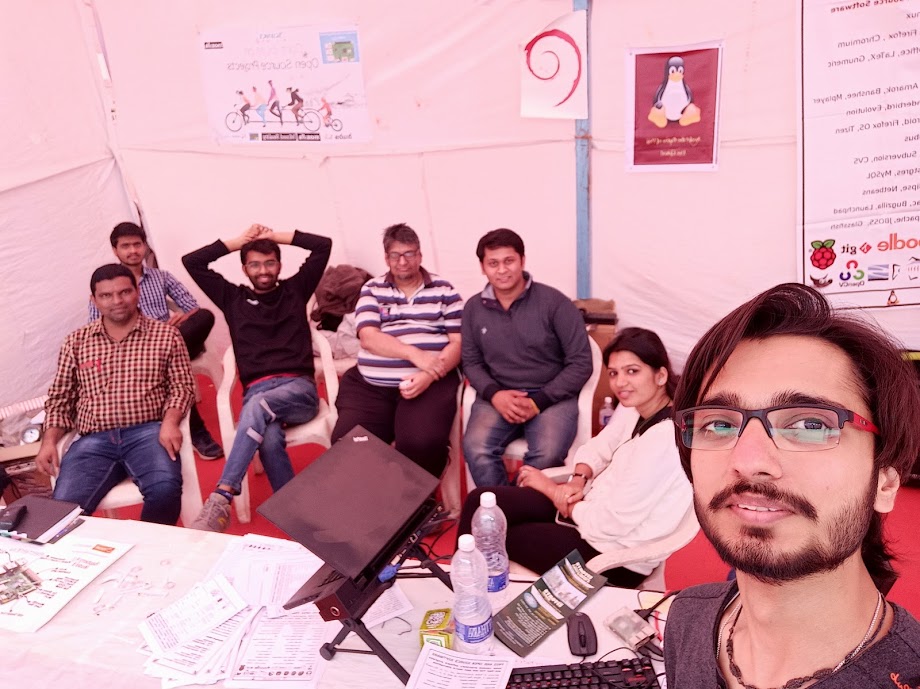 National Science Day, GMRT 2020
 . Of course in another stall few students had used RPI s as part of their projects so at times we did tell some of the newbies to go to those stalls and see and ask about those projects so they would have a much wider experience of things. The Mozilla people were pushing VR as well as Mozilla lite the browser for the mobile.
We also gossiped quite a bit. I shared about indicatelts , a third-party certificate extension although I dunno if I should file a wnpp about it or not. We didn t have a good experience of when I had put an RFP (Request for Package) which was accepted for an extension which had similar functionality which we later come to know was sharing the sites people were using the extension to call home and share both the URL and the IP Address they were using it from. Sadly, didn t leave a good taste in mouth
 Predictions of the outcome of the current 21-day lockdown (Source: Rajesh Singh, R. Adhikari, Cambridge University)
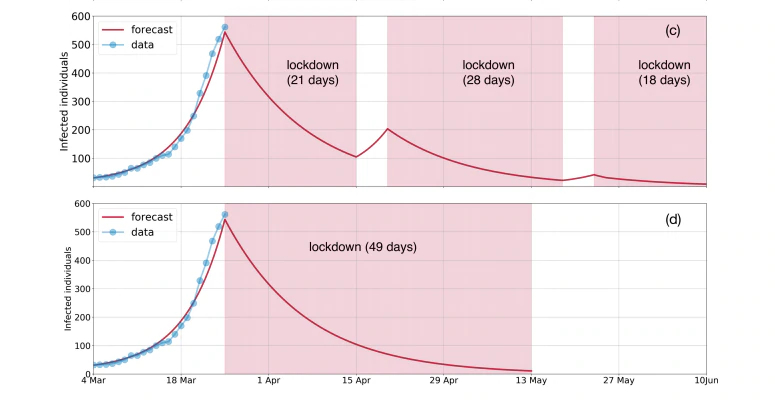 Alternative lockdown strategies suggested by the Cambridge model (Source: Rajesh Singh, R. Adhikari, Cambridge University)









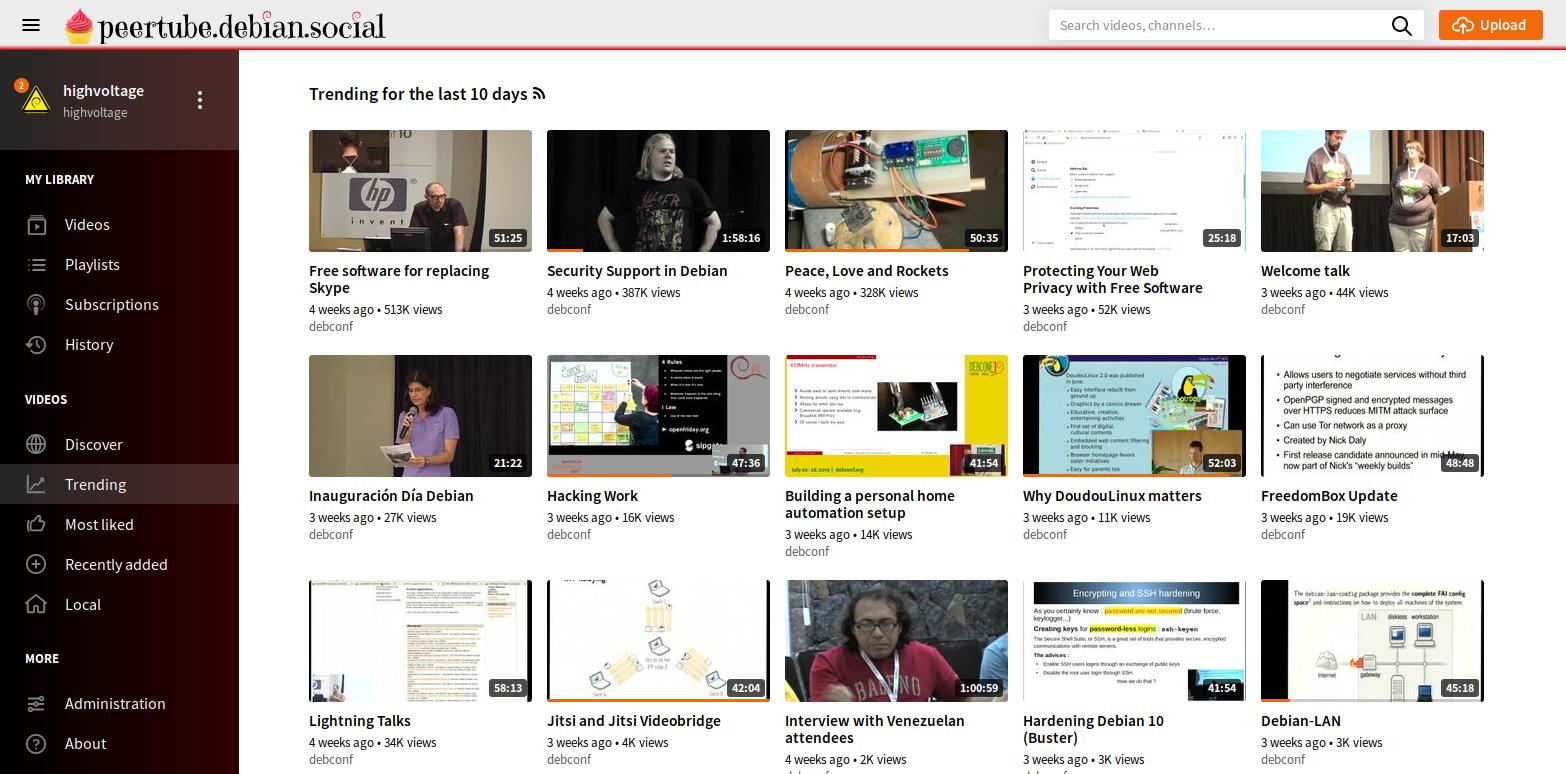

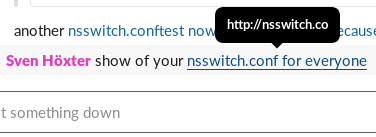 Now I'm not sure if someone enocountered the same issue, or people just registered
random domains just because they could. I found registrations for

 Here is my monthly update covering what I have been doing in the free software world during March 2020 (






 Some further thoughts on
 Some of you might have noticed that I m into keyboards since a few
years ago into mechanical keyboards to be precise.
Preface
It basically started with the


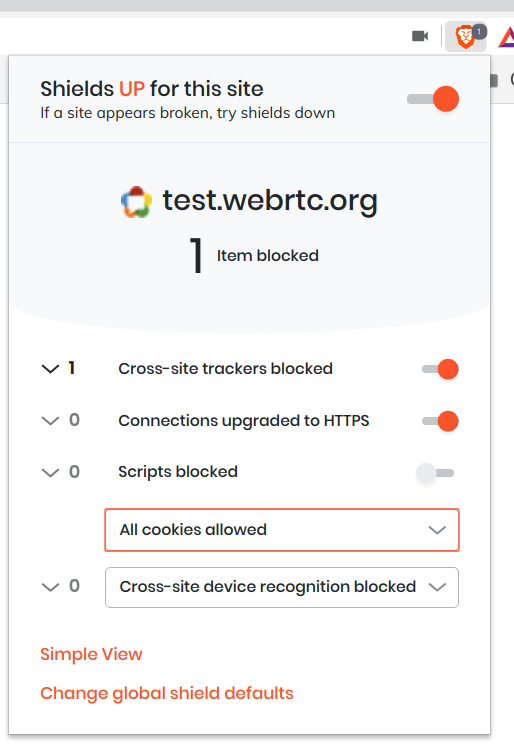
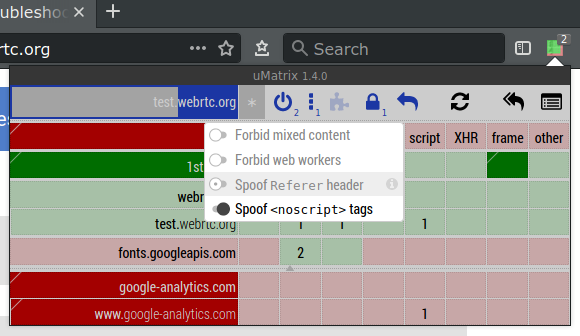
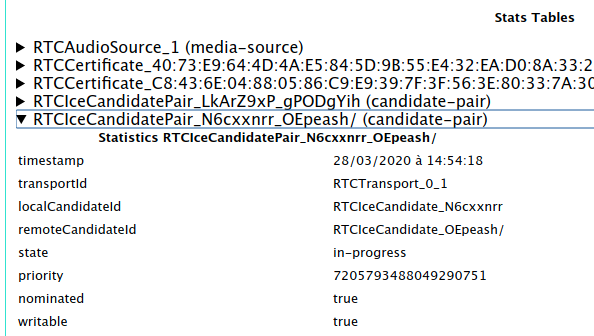 Then from the name of that pair (
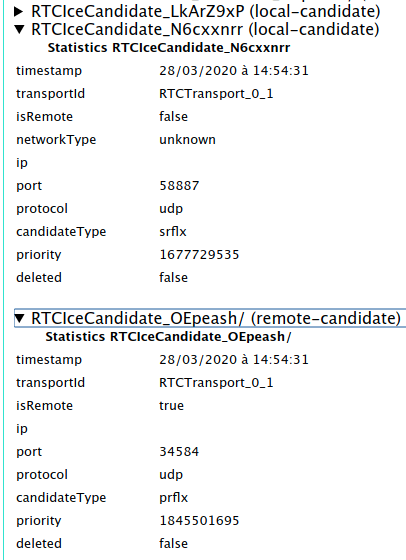 In the case of a direct connection, I saw the following on the
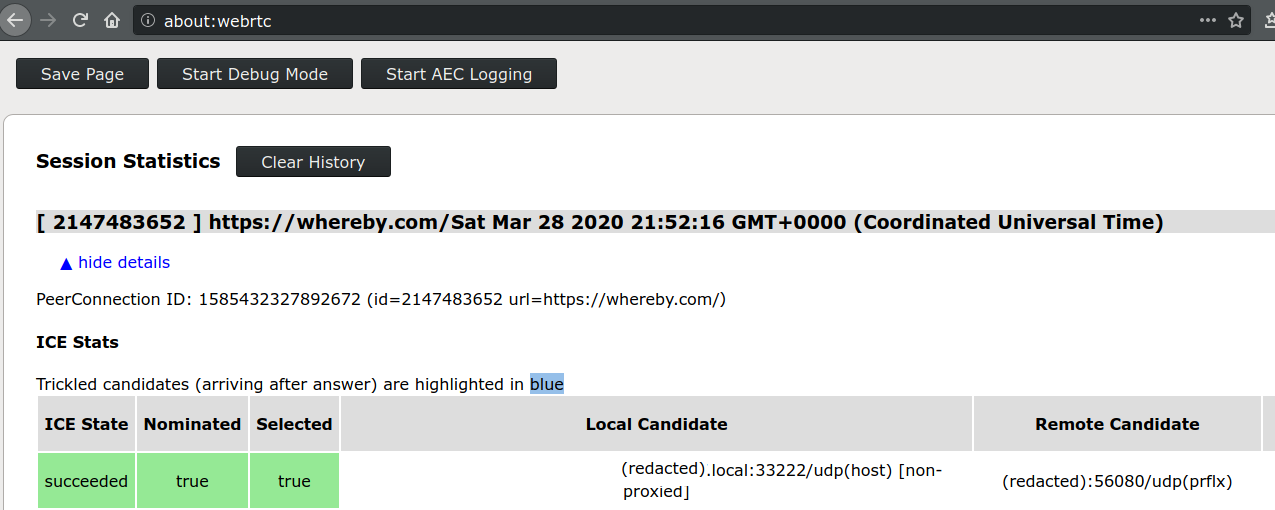


 Like
 Mini-Disclaimer: I ll be talking about

 It has been close to a year now that I've incorporated my new company,

 Example of rule matching returned in GitHub checks
 Some people like to make bots talk to each other.

 GitHub service status is not always green.
