Antoine Beaupr : The rise of Linux-based networking hardware
Linux usage in networking hardware has been on the rise for some time.
During the latest Netdev conference held
in Montreal this April, people talked seriously about Linux running on
high end, "top of rack" (TOR) networking equipment. Those devices have
long been the realm of proprietary hardware and software companies like
Cisco or Juniper, but Linux seems to be making some significant headway
into the domain. According to Shrijeet Mukherjee, VP of Engineering at
Cumulus Networks: "we are seeing a 28% adoption rate in the Fortune 50"
companies.
As someone who has worked in system administration and networking for
over a decade, I was surprised by this: switches have always been black
boxes of proprietary hardware that we barely get a shell into. But as
more and more TOR hardware gets Linux support, some of that work
trickles down outside of that niche. Are we really seeing the rise of
Linux in high-end networking hardware?
Linux as the standard interface
During his
keynote at
Netdev, Jesse Brandeburg explained that traffic is exploding on the
Internet: "From 2006 to 2016 the compound annual growth rate was 78% of
network traffic. So the network traffic is growing like crazy. In 2010
to 2023, it's going to grow by a thousand times."
He also mentioned Intel was working on devices that could do up to 400
Gbps. In his talk, he argued that Linux has a critical place in the
modern world by repeating the mantra that "everything is on the network,
and the network runs Linux", but does it really? Through Android, Linux
has become the most popular end-user device operating system and is also
dominant on the server but what about the actual fabric of the
network: the routers and switches that interconnect all those machines?
Mukherjee, in his own
keynote, argued that
even though Linux has achieved dominance in the server and
virtualization markets, there is a "discontinuity [...] at the
boundary where the host and the network meet" and argued "that the host
without the network will not survive". In other words, proprietary
hardware and software in the network threaten free software in the
server. Even though some manufacturers are already providing a "Linux
interface" in their hardware, it is often only some sort of
compatibility shell which might be compared with the Ubuntu
compatibility layer in Windows: it's not a real
Linux.
Mukherjee pushed this idea further by saying that those companies are
limiting themselves by not using the full Linux stack. He presented
Linux as the "top vehicle for innovation" that provides a featureful
network stack, citing VXLAN, eBPF, and Quagga as prime features used on
switches. Mukherjee also praised the diversity of the user-space Linux
ecosystem as something that commercial alternatives can't rival; he
compared the faster Linux development to the commercial sector where
similar top features stay in the beta stage for up to 3 years.
Because of its dominance in the server market, consumers are expecting a
Linux-like interface on their networking gear now, which means Linux
could be the standard interface all providers strive toward. As a Debian
developer, I can't help but smile at the thought; if there's one thing
we have not been able to do among Linux distributions, it's pretty
much standardize user space in a consistent interface. POSIX is old and
incomplete, the
FHS is
showing its age, and most distributions have abandoned
LSB. Yet, the idea
is certainly enticing: there is a base set of tools and applications,
especially for the Linux kernel, that are standardized:
Linux as the standard interface
During his
keynote at
Netdev, Jesse Brandeburg explained that traffic is exploding on the
Internet: "From 2006 to 2016 the compound annual growth rate was 78% of
network traffic. So the network traffic is growing like crazy. In 2010
to 2023, it's going to grow by a thousand times."
He also mentioned Intel was working on devices that could do up to 400
Gbps. In his talk, he argued that Linux has a critical place in the
modern world by repeating the mantra that "everything is on the network,
and the network runs Linux", but does it really? Through Android, Linux
has become the most popular end-user device operating system and is also
dominant on the server but what about the actual fabric of the
network: the routers and switches that interconnect all those machines?
Mukherjee, in his own
keynote, argued that
even though Linux has achieved dominance in the server and
virtualization markets, there is a "discontinuity [...] at the
boundary where the host and the network meet" and argued "that the host
without the network will not survive". In other words, proprietary
hardware and software in the network threaten free software in the
server. Even though some manufacturers are already providing a "Linux
interface" in their hardware, it is often only some sort of
compatibility shell which might be compared with the Ubuntu
compatibility layer in Windows: it's not a real
Linux.
Mukherjee pushed this idea further by saying that those companies are
limiting themselves by not using the full Linux stack. He presented
Linux as the "top vehicle for innovation" that provides a featureful
network stack, citing VXLAN, eBPF, and Quagga as prime features used on
switches. Mukherjee also praised the diversity of the user-space Linux
ecosystem as something that commercial alternatives can't rival; he
compared the faster Linux development to the commercial sector where
similar top features stay in the beta stage for up to 3 years.
Because of its dominance in the server market, consumers are expecting a
Linux-like interface on their networking gear now, which means Linux
could be the standard interface all providers strive toward. As a Debian
developer, I can't help but smile at the thought; if there's one thing
we have not been able to do among Linux distributions, it's pretty
much standardize user space in a consistent interface. POSIX is old and
incomplete, the
FHS is
showing its age, and most distributions have abandoned
LSB. Yet, the idea
is certainly enticing: there is a base set of tools and applications,
especially for the Linux kernel, that are standardized: iproute2,
ethtool, and iptables are generally consistent across distributions,
even though each distribution has its own way of using them.
Yet Linux is not dominant, why? Mukherjee identified the problem as
"packaging issues" and listed a set of features he would like Linux to
improve:
- Standardization of the
ethtool interface. The idea is to make
ethtool a de-facto standard to manage switches and ports.
Mukherjee gave the example that data centers spend more money on
cables than any other hardware and explained that making it easier
to identify cables is therefore a key functionality. Getting
consistent interface naming was also a key problem identified by
numerous participants at the conference. While systemd tried to fix
this with the predictable network interface
names
specification, the interface names are not necessarily predictable
across virtual machines or on special hardware; in fact, this was
the topic of the first talk of the
conference.
ethtool also needs to support interfaces that run faster than
1 Gbps, something that still has limited support in Linux at
the moment.
- Scaling of the Linux bridge. Through the rise of "software defined
networking", we are likely to see multi-switch virtual environments
that need to scale to hundreds of interfaces and devices easily.
This is something the Linux bridge was never designed to do and it's
showing scalability issues. During the conference, there was hope
that the new XDP and eBPF developments could
help, but also concerns this would create yet another bridge layer
inside the kernel.
Cumulus's goal seems to be to establish Linux as the industry standard
for this new era of networking and it is not alone. Through its Open
Compute project, Facebook is sharing open
designs of data center products and, while we have yet to see commercial
off-the-shelf (COTS) 24 and 48-port gigabit switches trickle down to the
consumer market, the company is definitely deploying new hardware based
on those specifications in its own data centers, and those devices are
often based on Linux.
The Linux switch implementation
So how exactly do switches work in Linux?
The Linux kernel manipulates switches with three different operation
structures: switchdev_ops, which we previously
covered, ethtool_ops, and netdev_ops. Certain
switches, however, also need distributed switch architecture
(DSA)
features to be properly handled. DSA is a more obscure part of the
network stack that allows Linux to represent hardware switches or chains
of switches using regular Linux tools like bridge, ifconfig, and so
on. While switchdev is a new layer, DSA has been in the kernel since
2.6.28 in 2008. Originally developed to support
Marvell switches, DSA is now a generic layer deployed in WiFi access
points, set-top boxes, on-board flight entertainment systems, trains,
and other industrial equipment. Switches that have an Ethernet
controller need DSA, whereas the kernel can support switches without
Ethernet controllers directly with switchdev drivers.
The first years of DSA's development consisted only of basic maintenance
but, in the last three years, DSA has seen a resurgence of
contributions, as part of Linux networking push to support hardware
offloading and network switches. Between 2014 and 2015, DSA added
support for Broadcom hardware, wake on LAN, and hardware port bridging,
among other features.
DSA's development was parallel to
swconfig, written by
the OpenWrt project to support the small office
and home office (SOHO) routers that the project is targeting. The main
difference between swconfig and DSA is that DSA-supported switches show
one network interface per port, whereas swconfig-configured switches
show up as a single port, which limits the amount of information that
can be extracted from the switch. For example, you cannot have per-port
traffic statistics with swconfig. That limitation is what led to the
creation of the switchdev framework, when swconfig was
proposed (then refused) for inclusion in mainline.
Another goal of switchdev was to support bridge hardware offloading and
network interface card (NIC) virtualization.
Also, whereas swconfig uses virtual LAN
(VLAN) tagging to address
ports, DSA enables the use of device-specific tagging headers to address
different ports, which enables DSA to have better control over the
switches. This allows, for example, DSA to do internet group management
protocol
(IGMP)
snooping or implement the spanning tree
protocol, whereas
swconfig doesn't have those features. Some switches are actually
connected to the host CPU through an Ethernet interface instead of
regular PCI-Express interface, and DSA supports this as well.
One advantage that remains in the swconfig approach is that it treats
the internal switch as a simple external switch, and addresses ports
with standard VLAN tags. This is something DSA could do, as well, but no
one has bothered implementing this just yet. For now, DSA drivers use
device-specific tagging mechanisms that limit the number of supported
devices. Other areas of future improvement for DSA are better multi-chip
support, IGMP snooping, and bonding, as well as firewall, NAT, and TC
offloading.
Where is the freedom?
Given all those technical improvements, you might rightfully wonder if
your own wireless router or data center switch runs Linux.
In recent years, we have seen more and more networking devices shipped
with Linux and sometimes even OpenWrt (e.g. in the case of the Turris
Omnia, which we previously covered), and especially
on SOHO routers, but it sometimes means a crippled operating system that
only offers you a proprietary web interface. But at least those efforts
make it easier to deploy free operating systems on those devices.
Based on my experience running OpenWrt on wireless routers to build the
Montreal mesh network, deploying Linux
on routers and switches has always been a manual process. The Ubiquiti
hardware being used in the mesh network comes with an OpenWrt
derivative, but it includes proprietary drivers and a proprietary web
interface. To use the mesh networking protocol that was chosen, it was
necessary to deploy custom OpenWrt images by hand. For years, it was a
continuous struggle for OpenWrt developers to liberate generation after
generation of proprietary hardware with companies like Cisco locking
down the venerable WRT platform in 2006 and the US Federal
Communications Commission (FCC) rules that forced TP-Link to block free
software on its routers, a change that was later
reverted.
Most hardware providers are obviously not dedicated to software freedom:
deploying Linux on their hardware is for them an economic, not political
choice. As you might expect, a "Linux router" these days often means a
closed device and operating system, using Linux as the only free
component. I had the privilege of doing some reverse engineering on the
SmartRG SR603n VDSL modem, which also doubles as a WiFi router and VoIP
phone adapter. I was able to get a shell on that machine, and what I
found was a custom operating system built on top of the Linux kernel. I
wrote a detailed report about
this
two years ago and the situation then was pretty grim.
Another experience I had was working over a decade in data centers,
which tells an even worse story: most switches and routers there are not
running free software at all. We have deployed HP ProCurve switches that
provide free (as in beer) software updates and have struggled for years
to find free (as in speech) software alternatives for those. We built
our own routers using COTS server hardware, at a significant performance
cost over the dedicated application-specific integrated circuits (ASICs)
built into commercial routers, which do not offer us the trust and
flexibility we were looking for.
But Linux is definitely making some headway, and has been for a while.
When we covered switchdev in February 2016, it was just getting started,
but now vendors like Mellanox, Broadcom, Cumulus, and Intel are writing
and shipping code using the framework. Cumulus, in particular, is
developing a Debian-based distribution (Cumulus
Linux) that it
deploys for clients on targeted
hardware.
Most of the hardware in that list, however, is not actually open in the
more radical sense: they are devices that can run free software but are
not generally open-source
hardware. There are
some exceptions, but they sit at the higher end of the spectrum: most
organizations probably don't need a 100 Gbps ports, let alone the 128
ports in the Backpack
switch
that Cumulus is shipping.
How much this translates to actual freedom for the end-user is therefore
questionable. While I have seen encouraging progress on the high end of
the hardware spectrum at Netdev, I'm not sure this will translate into
immediate wins in the data center or even for home users in the short
term. In the long term, however, we will hopefully see some progress in
Linux's rise in general-purpose networking hardware following its
dominance in general-purpose computing.
The author would like to thank the Netdev organizers for travel
assistance. Also, thanks to Andrew Lunn for a technical review of
this article.
Note: this article first appeared in
the Linux Weekly News.
ethtool interface. The idea is to make
ethtool a de-facto standard to manage switches and ports.
Mukherjee gave the example that data centers spend more money on
cables than any other hardware and explained that making it easier
to identify cables is therefore a key functionality. Getting
consistent interface naming was also a key problem identified by
numerous participants at the conference. While systemd tried to fix
this with the predictable network interface
names
specification, the interface names are not necessarily predictable
across virtual machines or on special hardware; in fact, this was
the topic of the first talk of the
conference.
ethtool also needs to support interfaces that run faster than
1 Gbps, something that still has limited support in Linux at
the moment.switchdev_ops, which we previously
covered, ethtool_ops, and netdev_ops. Certain
switches, however, also need distributed switch architecture
(DSA)
features to be properly handled. DSA is a more obscure part of the
network stack that allows Linux to represent hardware switches or chains
of switches using regular Linux tools like bridge, ifconfig, and so
on. While switchdev is a new layer, DSA has been in the kernel since
2.6.28 in 2008. Originally developed to support
Marvell switches, DSA is now a generic layer deployed in WiFi access
points, set-top boxes, on-board flight entertainment systems, trains,
and other industrial equipment. Switches that have an Ethernet
controller need DSA, whereas the kernel can support switches without
Ethernet controllers directly with switchdev drivers.
The first years of DSA's development consisted only of basic maintenance
but, in the last three years, DSA has seen a resurgence of
contributions, as part of Linux networking push to support hardware
offloading and network switches. Between 2014 and 2015, DSA added
support for Broadcom hardware, wake on LAN, and hardware port bridging,
among other features.
DSA's development was parallel to
swconfig, written by
the OpenWrt project to support the small office
and home office (SOHO) routers that the project is targeting. The main
difference between swconfig and DSA is that DSA-supported switches show
one network interface per port, whereas swconfig-configured switches
show up as a single port, which limits the amount of information that
can be extracted from the switch. For example, you cannot have per-port
traffic statistics with swconfig. That limitation is what led to the
creation of the switchdev framework, when swconfig was
proposed (then refused) for inclusion in mainline.
Another goal of switchdev was to support bridge hardware offloading and
network interface card (NIC) virtualization.
Also, whereas swconfig uses virtual LAN
(VLAN) tagging to address
ports, DSA enables the use of device-specific tagging headers to address
different ports, which enables DSA to have better control over the
switches. This allows, for example, DSA to do internet group management
protocol
(IGMP)
snooping or implement the spanning tree
protocol, whereas
swconfig doesn't have those features. Some switches are actually
connected to the host CPU through an Ethernet interface instead of
regular PCI-Express interface, and DSA supports this as well.
One advantage that remains in the swconfig approach is that it treats
the internal switch as a simple external switch, and addresses ports
with standard VLAN tags. This is something DSA could do, as well, but no
one has bothered implementing this just yet. For now, DSA drivers use
device-specific tagging mechanisms that limit the number of supported
devices. Other areas of future improvement for DSA are better multi-chip
support, IGMP snooping, and bonding, as well as firewall, NAT, and TC
offloading.
 In this scenario, instead of doing the traditional transfer from
Netfilter's TPROXY to user space, the kernel directly decapsulates the
HTTP traffic and passes it to BPF rules that can make decisions without
doing expensive context switches or memory copies in the case of simply
wanting to refuse traffic (e.g. issue an HTTP 403 error). This, of
course, requires the

 Like



 Many people have noticed that these latest UK Government posters portray foreigners, Muslims and basically anybody who is not white
 Do the people who create such propaganda appear to have any concern whatsoever for the people they hurt? How would Alan Turing have felt when he encountered propaganda like that from the Sunday Mirror? Do posters like these encourage us to judge people by their gifts in science, the arts or sporting prowess or do they encourage us to lump them all together based on their physical appearance?
It is a basic expectation of scientific methodology that when you repeat the same experiment, you should get the same result. What type of experiment are Theresa May and Nigel Farage conducting and what type of result would you expect?
Playing ping-pong with children
If anybody has any doubt that this evil comes from the top, take a moment to contemplate the 3,000 children who were baited with the promise of resettlement from the Calais "jungle" camp into the UK under the
 Debian Stretch feels like an excellent release by the Debian project.
The final

 The only thing that had to stop is leaving our users in the dark on what is happening.
Sorry for the long post, but there are some subjects which are worth writing more than 140 characters about
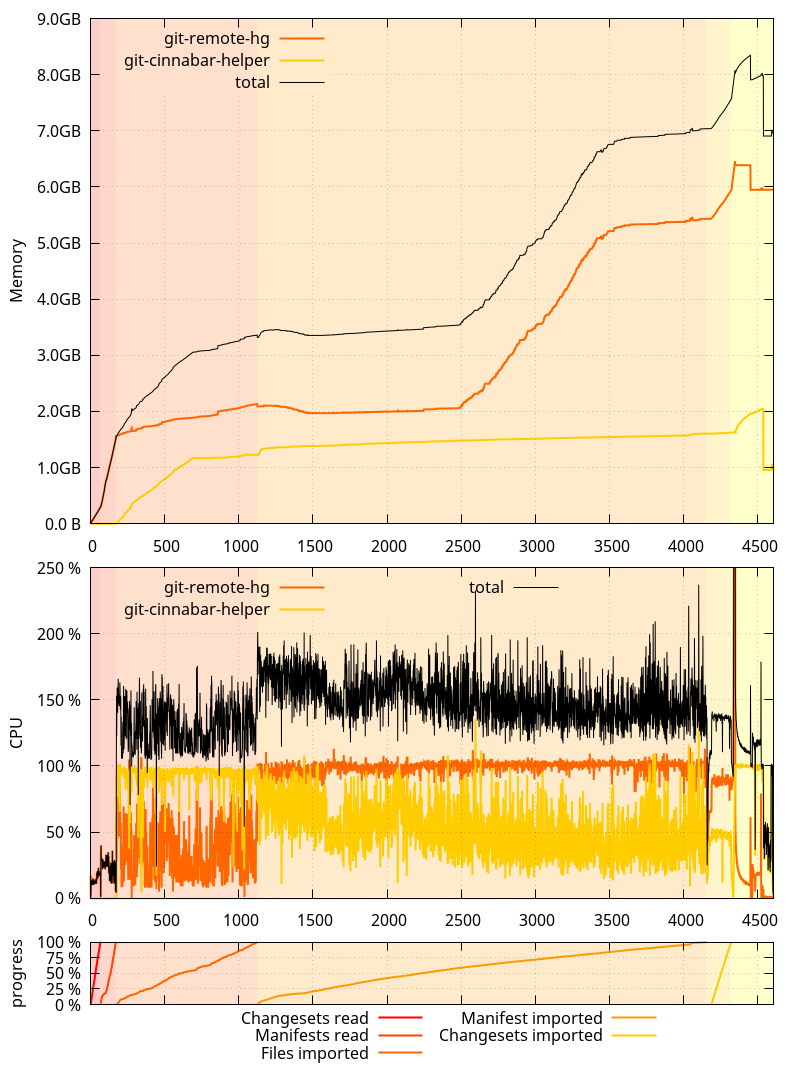 And on the master branch as of
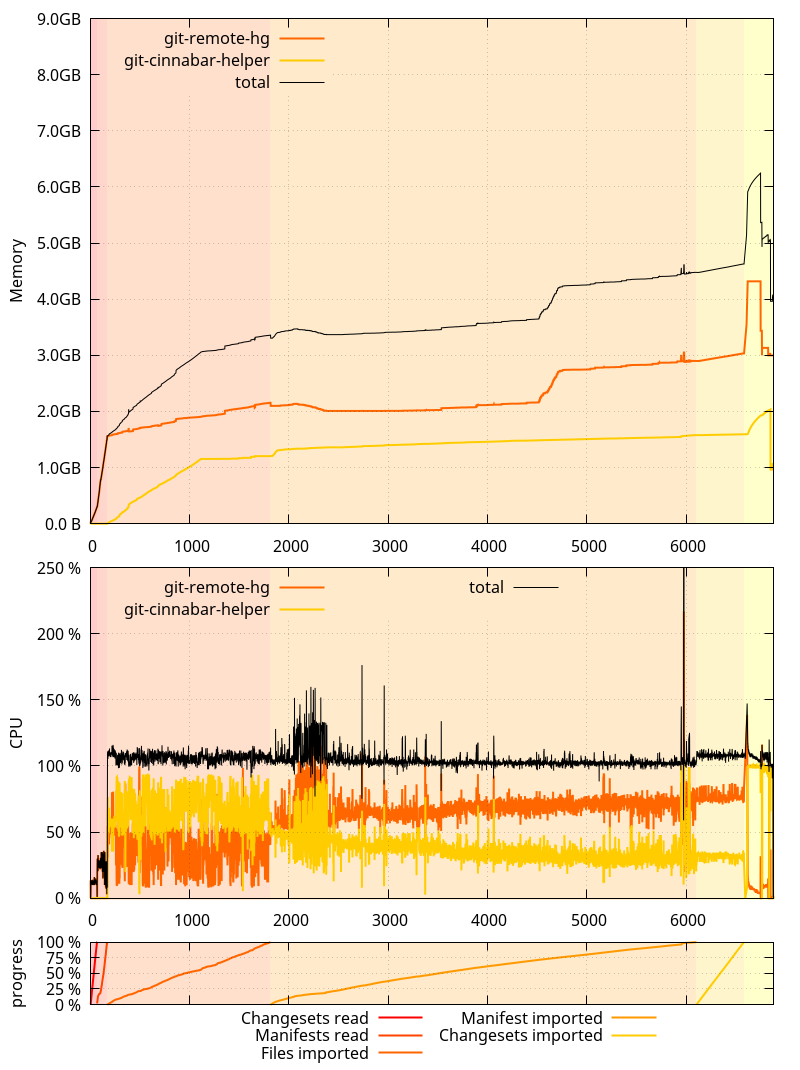 An interesting thing to note here is that the glibc allocator runaway memory use was, this time, more pronounced on 0.4.0 than on master. It was the opposite originally, but as I mentioned in the past ASLR is making it not happen exactly the same way each time.
While I m here, one thing I failed to mention in the previous posts is that all these measurements were done by cloning a local mercurial clone of
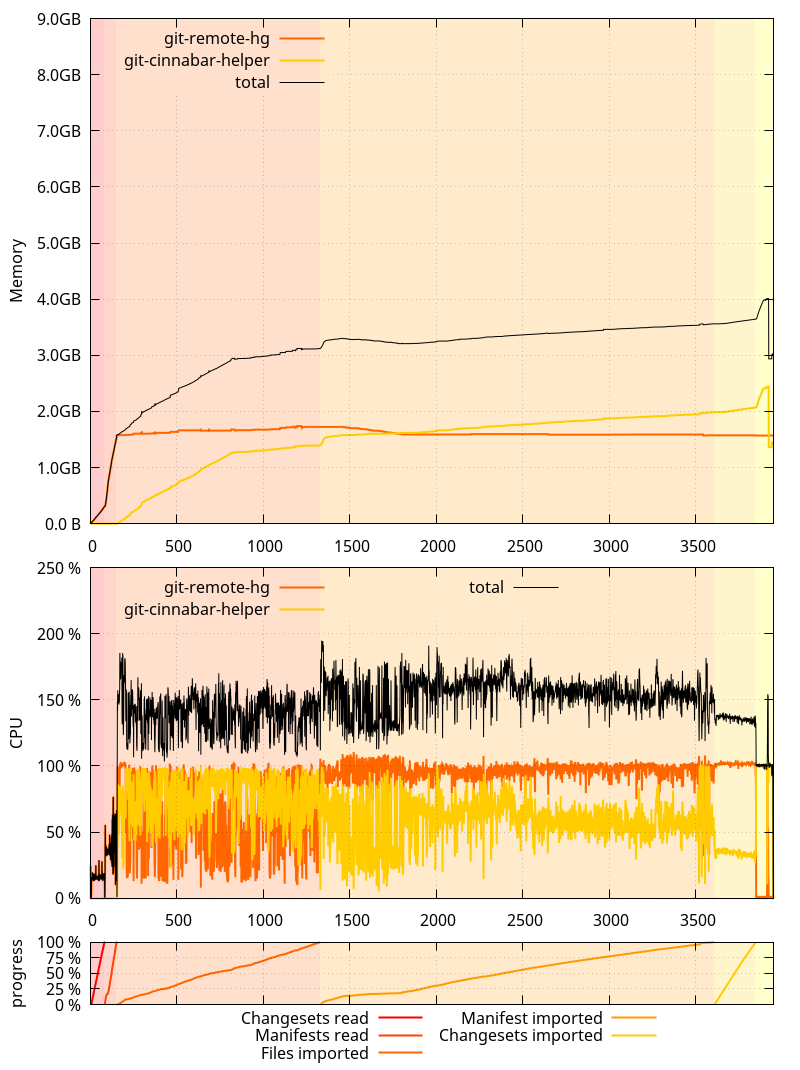 So where does that put us?
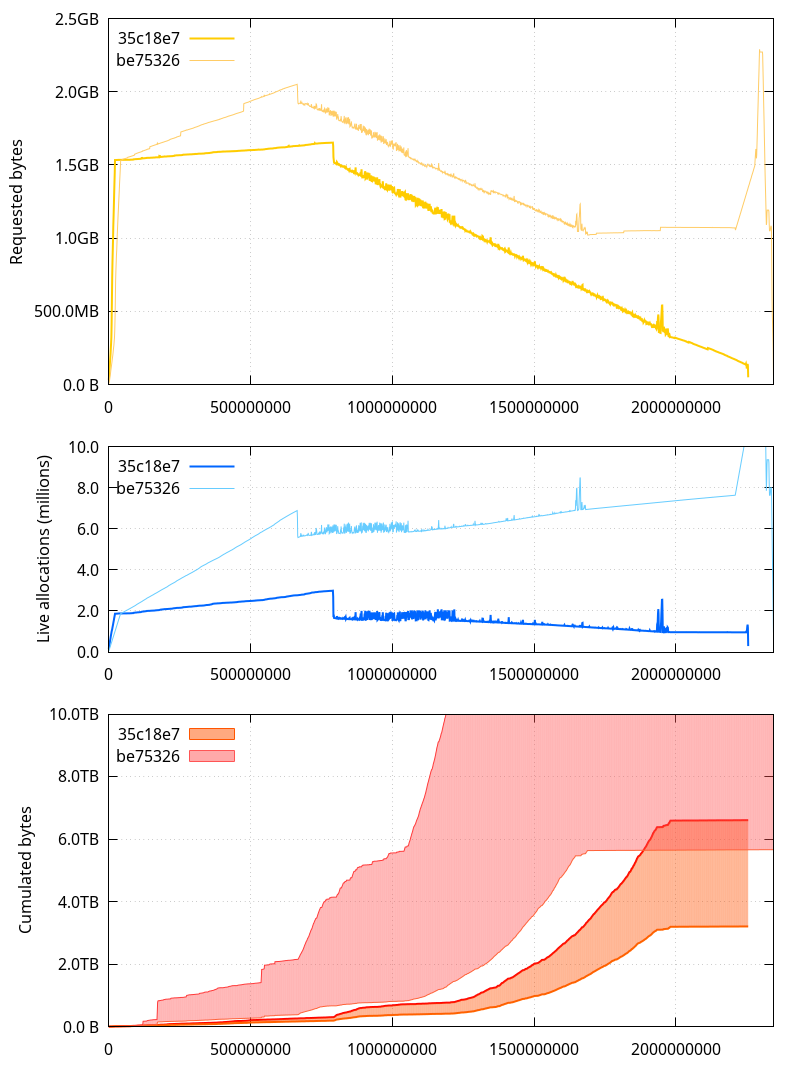 A few observations to make here:
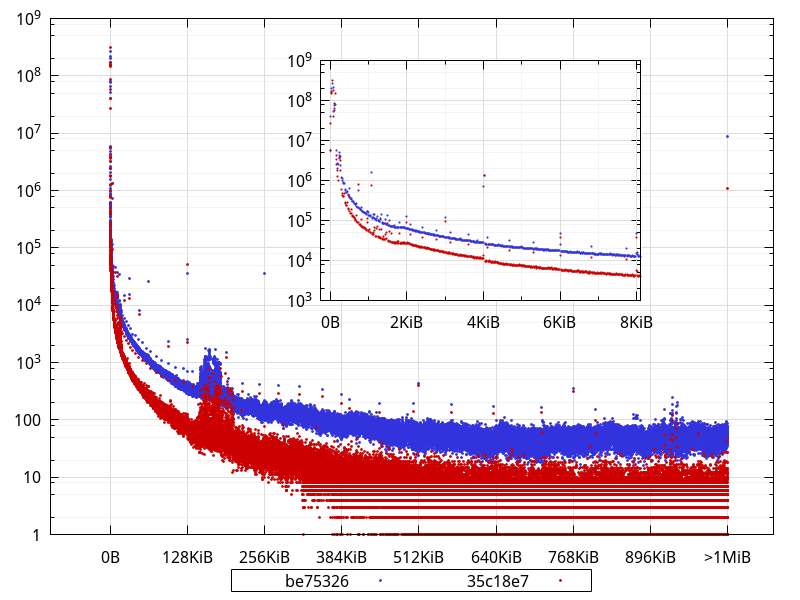 (Bucket size is 16 bytes)
What is not completely obvious from the logarithmic scale is that, in fact, 98.4% of the allocations are less than 512 bytes with the current master (35c18e7), and they were 95.5% with be75326. Interestingly, though, in absolute numbers, there are less allocations smaller than 512 bytes in current master than in be75326 (1,194,268,071 vs 1,214,784,494). This suggests the extra allocations that happen during some phases are larger than that.
There are clearly less allocations across the board (apart from very few exceptions), and close to an order of magnitude less allocations larger than 1MiB. In fact, widening the bucket size to 32KiB shows an order of magnitude difference (or close) for most buckets:
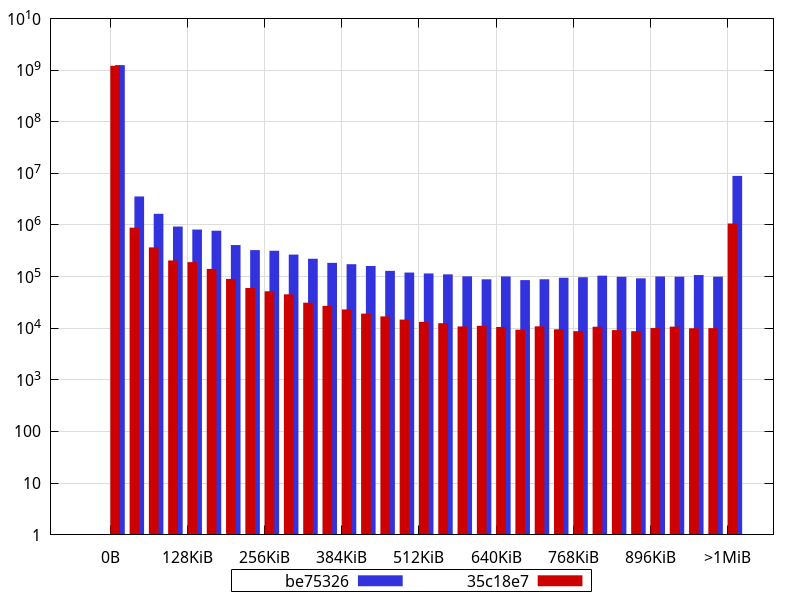 An interesting thing to note is how some sizes are largely overrepresented in the data with buckets of 16 bytes, like 768, 1104, 2048, 4128, with other smaller bumps for e.g. 2144, 2464, 2832, 3232, 3696, 4208, 4786, 5424, 6144, 6992, 7920 While some of those are powers of 2, most aren t, and some of them may actually represent objects sized with a power of 2, but that have an extra PyObject overhead.
While looking at allocation stats, I got to wonder what the lifetimes of those allocations looked like. So I scanned the allocator logs and measured the distance between when an allocation is made and when it is
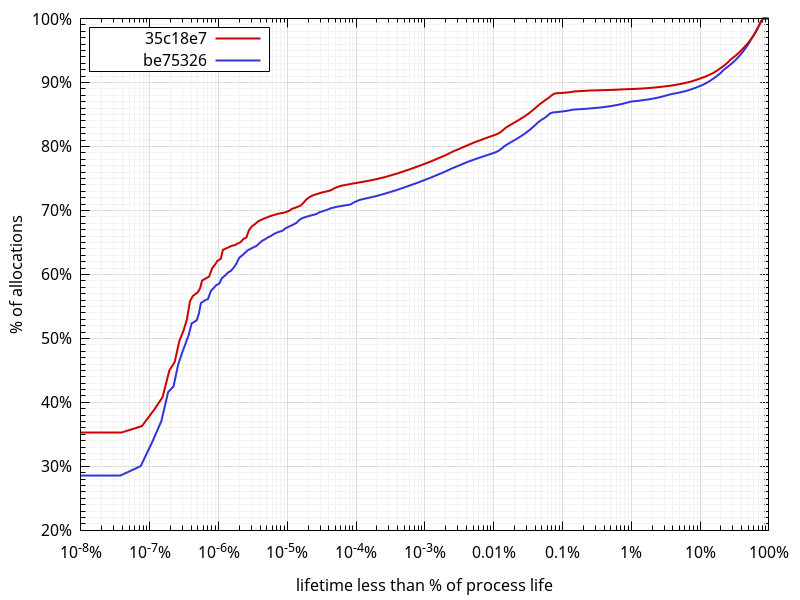 What comes out of this data:
 People that know me know that I do whatever I can in order to avoid watching videos online if there's any other way to get to the content. It may be that I'm too old-fashioned, or that I have low attention and prefer to use a media where I can quickly scroll up and down a paragraph, or that I feel the time between bits of content is just a useless transition or whatever...
But I bit. And I loved it.
A couple of days ago,
 Here is my monthly update covering what I have been doing in the free software world (
 As I have previously blogged, I recently managed to resurrect my old Drupal site that ran in the Amazon AWS cloud, and get it working again on a new host. I have just written up a summary of how I battled through the process, which can be found

 We needed a router and wifi access point in the office, and
simultaneously both I and my co-worker Ivan needed such a thing at our
respective homes. After some discussion, and after reading articles in
Ars Technica about building PCs to act as routers, we decided to do
just that.
 Home office minister Amber Rudd recently suggested British firms should
 All this racism, it's just not cricket. Or is it? One of the most remarkable cricketers to play for England in recent times,
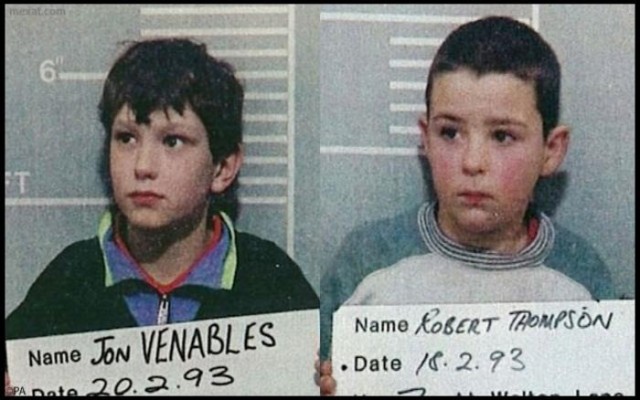 In fact, after Brexit, people like Venables and Thompson will remain in Britain while
 What does "maximum control" over other human beings mean to you?
The new British PM has said she wants "
 Echoes of the Third Reich
Most people associate acts of mass murder with the Germans who lived in the time of Adolf Hitler. These are the stories told over and and over again in movies, books and the press.
Look more closely, however, and it appears that the vast majority of Germans were not in immediate contact with the gas chambers. Even Gobels' secretary writes that
 There is no middle ground between "soft" and "hard" brexit
An important point for British citizens and foreigners in the UK to consider today is that there is no compromise between a "soft" Brexit and a "hard" Brexit. It is one or the other. Anything less (for example, a deal that is "better" for British companies and worse for EU citizens) would imply that the British are a superior species and it is impossible to imagine the EU putting their stamp on such a deal. Anybody from the EU who is trying to make a life in the UK now is playing a game of Russian Roulette - sure, everything might be fine if it morphs into "soft" Brexit, but if Theresa May has her way, at some point in your life, maybe 20 years down the track, you could be rounded up by the gestapo and thrown behind bars for a parking violation.


 Our talk was preceded by a lovely introduction by Mario Behling.