Search Results: "ah"

28 October 2016

Jaldhar Vyas: Get Ready For Bikini Season With These n Weird Tricks

It all started last June when my son had his Janoi (Yagnopavita) ceremony -- the ritual by which a Brahmana boy becomes "twice-born" and eligible to study the Vedas. As well as a profound religious experience, it is also an important social occasion with a reception for as many friends and family as can attend. (I think our final guest total was ~250.) This meant new outfits for everyone which might be exciting for some people but not me. I still don't know why I couldn't just keep wearing the khes and pitambar from the puja but no, apparently that's a faux pas. So I relented and agreed to wear my "darbari" suit from my wedding. And it didn't fit. I knew I had gained some weight in the intermediate 17 years but the thing was sitcom levels of too small. I ended up having to purchase a new one, a snazzy (and shiny!) maroon number with gold stripes (or were they black stripes?) Problem having been solved, much was eaten, more weight was gained and then I forgot about the whole thing. Tip 1: Actually Do Something. I have over the years tried to improve my physical condition but it has never gotten very far. For instance I have a treadmill/coatrack and a couple of years ago I began using it in earnest. I got to the point where I actually ran a 10K race without dying. But I did not train systematically and I ended up in some pain which caused me to stop working out for a while and then I never got around to restarting. Diets have also failed because I don't have a clear idea of what and how much I am eating. All I know is that women go into the kitchen and when they come out they have food. By what eldritch process this occurs is a mystery, I just eat whats given to me thankful that the magic happens. Once I was moved to try and help but quickly fell afoul of the lack of well-defined algorithms in Gujarati home cooking.
"How much saffron should I add?"
"this much."
"How much is this much in SI units?"
"You're annoying me. Get out."
Fast forward to March of this year. For my birthday, my wife got me a Fitbit fitness tracker. This is what I had needed all this time. It measure heart rate, distance travelled, time slept and several other pieces of info you can use to really plan a fitness regimen rationally. For example, I was chagrined to learn that sometimes when I'm at the computer, I am so immobile that the fitbit thought I was asleep. So I started planning to taken more frequent breaks. (A recent firmware upgrade has added the ability to nudge to walk atleast 250 paces each daytime hour which is handy for this.) Also by checking my heart rate I discovered that I went on the treadmill I ran too fast thereby stressing my body for little gain and ending up going too slow to get much aerobic effect. Now I can pace myself appropriately for maximum cardiac efficiency without ending up injuring myself and giving up. I also get a little more activity each day by simple changes such as taking the stairs instead of the lift and instead of getting off at the 14th street PATH I go all the way to 34th street and walk down. Tip 2: You must have data in order to see what you did right or wrong and to plan what you need to do moving forward. One caveat about these fitness trackers. They are not anywhere as accurate as a proper checkup from a doctor who specializes in such things. If you want to do any kind of pro or amateur athletics you probably should not rely on them but for the average shlub who just wants to avoid appearing on the news being winched off his sofa by the fire brigade they are good enough. Another practice I began was keeping a food diary. It can be a real eye-opener to see how much you are actually eating. It is probably much more than you thought. I am fortunate that my diet is pretty good to begin with. Vegetarian, (not vegan, Hindus eat dairy products,) mostly home-cooked with fresh ingredients, not fried or processed, and I don't drink alcohol. However there were a few optimizations I could make. I drink a lot of soda; atleast two cans a day. I really ought to stop altogether but in lieu of that I have atleast switched from Coke to Coke Zero thereby saving a lot of empty calories. I now eat 4 rotlis with my dinner instead of six. We as a family eat more green vegetables instead of potatos, skim milk instead of whole fat, canola oil instead of corn oil, and less rice and don't slather ghee on everything quite so much. One entirely new practice I've adopted that may seem faddish but works for me is intermittent fasting. The idea is to steadily train your body to need less food by eating all your days allowed amount pf calories during a 6-8 hour window and not eating at all during the remaining time. It's hard to get used to for many people but I fast atleast 2-3 times a month for religious reasons anyway so I adapted pretty quickly. The fitbit tells me how many calories I am expending and how many I can eat to maintain a healthy level of weight loss but other than that I don't bother with "food groups" or specific diets such as paleo, or low-carb etc. As long as what you eat is reasonably balanced and you are burning more calories than you are adding, it should be enough for weight loss. Indeed from the end of March to now, I've lost 3 stones (20Kg) even with the occasional "cheat" day. Tip 3: All published diets are bullshit without scientifically proven efficacy. Don't bother with them. Experiment instead and see what works for you and your metabolism. As long as you are getting all the proper nutrients (you shouldn't need a supplement unless you have an actual medical condition.) and you have a net calorie deficit, it's all good. If you eat food you enjoy, you are more likely to stick to your diet. The proper amount of sleep is one area of a healthy lifestyle I am still doing poorly in and the reasons are not all raven-related. I have always had problems with insomnia and was once actually diagnosed with sleep apnea. Losing weight has helped a lot but the fitbit is still reporting that I toss and turn a lot during the night. And that's when I'm in bed in the first place. I stay up much too late which can also lead to subsidiary bad behaviours such as midnight snacking. It's something I need to work on. Tip 4: Stop blogging at all hours of the night, It's not doing you any good. So that's what I'm doing. Moving forward, I need to deal with the sleep thing and I would also like to start some program of strength-training, I'm doing ok in terms of aerobic exercise but from what I've read, you also have to build up muscles to keep weight loss permanent. The difficulty is that it would involve joining a gym and then actually going to that gym so I've put it off for now. The immediate threat is Diwali (and Thanksgiving and Christmas...) My wife bought 4 lbs of sweets today and I can feel their presence in the fridge calling to me.

25 October 2016

Jaldhar Vyas: Aaargh gcc 5.x You Suck

Aaargh gcc 5.x You Suck I had to write a quick program today which is going to be run many thousands of times a day so it has to run fast. I decided to do it in c++ instead of the usual perl or javascript because it seemed appropriate and I've been playing around a lot with c++ lately trying to update my knowledge of its' modern features. So 200 LOC later I was almost done so I ran the program through valgrind a good habit I've been trying to instill. That's when I got a reminder of why I avoid c++.

==37698== HEAP SUMMARY:
==37698==     in use at exit: 72,704 bytes in 1 blocks
==37698==   total heap usage: 5 allocs, 4 frees, 84,655 bytes allocated
==37698== 
==37698== LEAK SUMMARY:
==37698==    definitely lost: 0 bytes in 0 blocks
==37698==    indirectly lost: 0 bytes in 0 blocks
==37698==      possibly lost: 0 bytes in 0 blocks
==37698==    still reachable: 72,704 bytes in 1 blocks
==37698==         suppressed: 0 bytes in 0 blocks
One of things I've learnt which I've been trying to apply more rigorously is to avoid manual memory management (news/deletes.) as much as possible in favor of modern c++ features such as std::unique_ptr etc. By my estimation there should only be three places in my code where memory is allocated and none of them should leak. Where do the others come from? And why is there a missing free (or delete.) Now the good news is that valgrind is saying that the memory is not technically leaking. It is still reachable at exit but that's ok because the OS will reclaim it. But this program will run a lot and I think it could still lead to problems over time such as memory fragmentation so I wanted to understand what was going on. Not to mention the bad aesthetics of it. My first assumption (one which has served me well over the years) was to assume that I had screwed up somewhere. Or perhaps it could some behind the scenes compiler magic. It turned out to be the latter -- sort of as I found out only after two hours of jiggling code in different ways and googling for clues. That's when I found this Stack Overflow question which suggests that it is either a valgrind or compiler bug. The answer specifically mentions gcc 5.1. I was using Ubuntu LTS which has gcc 5.4 so I have just gone ahead and assumed all 5.x versions of gcc have this problem. Sure enough, compiling the same program on Debian stable which has gcc 4.9 gave this...

==6045== 
==6045== HEAP SUMMARY:
==6045==     in use at exit: 0 bytes in 0 blocks
==6045==   total heap usage: 3 allocs, 3 frees, 10,967 bytes allocated
==6045== 
==6045== All heap blocks were freed -- no leaks are possible
==6045== 
...Much better. The executable was substantially smaller too. The time was not a total loss however. I learned that valgrind is pronounced val-grinned (it's from Norse mythology.) not val-grind as I had thought. So I have that going for me which is nice.

22 October 2016

Matthew Garrett: Fixing the IoT isn't going to be easy

A large part of the internet became inaccessible today after a botnet made up of IP cameras and digital video recorders was used to DoS a major DNS provider. This highlighted a bunch of things including how maybe having all your DNS handled by a single provider is not the best of plans, but in the long run there's no real amount of diversification that can fix this - malicious actors have control of a sufficiently large number of hosts that they could easily take out multiple providers simultaneously.

To fix this properly we need to get rid of the compromised systems. The question is how. Many of these devices are sold by resellers who have no resources to handle any kind of recall. The manufacturer may not have any kind of legal presence in many of the countries where their products are sold. There's no way anybody can compel a recall, and even if they could it probably wouldn't help. If I've paid a contractor to install a security camera in my office, and if I get a notification that my camera is being used to take down Twitter, what do I do? Pay someone to come and take the camera down again, wait for a fixed one and pay to get that put up? That's probably not going to happen. As long as the device carries on working, many users are going to ignore any voluntary request.

We're left with more aggressive remedies. If ISPs threaten to cut off customers who host compromised devices, we might get somewhere. But, inevitably, a number of small businesses and unskilled users will get cut off. Probably a large number. The economic damage is still going to be significant. And it doesn't necessarily help that much - if the US were to compel ISPs to do this, but nobody else did, public outcry would be massive, the botnet would not be much smaller and the attacks would continue. Do we start cutting off countries that fail to police their internet?

Ok, so maybe we just chalk this one up as a loss and have everyone build out enough infrastructure that we're able to withstand attacks from this botnet and take steps to ensure that nobody is ever able to build a bigger one. To do that, we'd need to ensure that all IoT devices are secure, all the time. So, uh, how do we do that?

These devices had trivial vulnerabilities in the form of hardcoded passwords and open telnet. It wouldn't take terribly strong skills to identify this at import time and block a shipment, so the "obvious" answer is to set up forces in customs who do a security analysis of each device. We'll ignore the fact that this would be a pretty huge set of people to keep up with the sheer quantity of crap being developed and skip straight to the explanation for why this wouldn't work.

Yeah, sure, this vulnerability was obvious. But what about the product from a well-known vendor that included a debug app listening on a high numbered UDP port that accepted a packet of the form "BackdoorPacketCmdLine_Req" and then executed the rest of the payload as root? A portscan's not going to show that up[1]. Finding this kind of thing involves pulling the device apart, dumping the firmware and reverse engineering the binaries. It typically takes me about a day to do that. Amazon has over 30,000 listings that match "IP camera" right now, so you're going to need 99 more of me and a year just to examine the cameras. And that's assuming nobody ships any new ones.

Even that's insufficient. Ok, with luck we've identified all the cases where the vendor has left an explicit backdoor in the code[2]. But these devices are still running software that's going to be full of bugs and which is almost certainly still vulnerable to at least half a dozen buffer overflows[3]. Who's going to audit that? All it takes is one attacker to find one flaw in one popular device line, and that's another botnet built.

If we can't stop the vulnerabilities getting into people's homes in the first place, can we at least fix them afterwards? From an economic perspective, demanding that vendors ship security updates whenever a vulnerability is discovered no matter how old the device is is just not going to work. Many of these vendors are small enough that it'd be more cost effective for them to simply fold the company and reopen under a new name than it would be to put the engineering work into fixing a decade old codebase. And how does this actually help? So far the attackers building these networks haven't been terribly competent. The first thing a competent attacker would do would be to silently disable the firmware update mechanism.

We can't easily fix the already broken devices, we can't easily stop more broken devices from being shipped and we can't easily guarantee that we can fix future devices that end up broken. The only solution I see working at all is to require ISPs to cut people off, and that's going to involve a great deal of pain. The harsh reality is that this is almost certainly just the tip of the iceberg, and things are going to get much worse before they get any better.

Right. I'm off to portscan another smart socket.

[1] UDP connection refused messages are typically ratelimited to one per second, so it'll take almost a day to do a full UDP portscan, and even then you have no idea what the service actually does.

[2] It's worth noting that this is usually leftover test or debug code, not an overtly malicious act. Vendors should have processes in place to ensure that this isn't left in release builds, but ha well.

[3] My vacuum cleaner crashes if I send certain malformed HTTP requests to the local API endpoint, which isn't a good sign

comment count unavailable comments

Russell Coker: Another Broken Nexus 5

In late 2013 I bought a Nexus 5 for my wife [1]. It s a good phone and I generally have no complaints about the way it works. In the middle of 2016 I had to make a warranty claim when the original Nexus 5 stopped working [2]. Google s warranty support was ok, the call-back was good but unfortunately there was some confusion which delayed replacement. Once the confusion about the IMEI was resolved the warranty replacement method was to bill my credit card for a replacement phone and reverse the charge if/when they got the original phone back and found it to have a defect covered by warranty. This policy meant that I got a new phone sooner as they didn t need to get the old phone first. This is a huge benefit for defects that don t make the phone unusable as you will never be without a phone. Also if the user determines that the breakage was their fault they can just refrain from sending in the old phone. Today my wife s latest Nexus 5 developed a problem. It turned itself off and went into a reboot loop when connected to the charger. Also one of the clips on the rear case had popped out and other clips popped out when I pushed it back in. It appears (without opening the phone) that the battery may have grown larger (which is a common symptom of battery related problems). The phone is slightly less than 3 years old, so if I had got the extended warranty then I would have got a replacement. Now I m about to buy a Nexus 6P (because the Pixel is ridiculously expensive) which is $700 including postage. Kogan offers me a 3 year warranty for an extra $108. Obviously in retrospect spending an extra $100 would have been a benefit for the Nexus 5. But the first question is whether new phone going to have a probability greater than 1/7 of failing due to something other than user error in years 2 and 3? For an extended warranty to provide any benefit the phone has to have a problem that doesn t occur in the first year (or a problem in a replacement phone after the first phone was replaced). The phone also has to not be lost, stolen, or dropped in a pool by it s owner. While my wife and I have a good record of not losing or breaking phones the probability of it happening isn t zero. The Nexus 5 that just died can be replaced for 2/3 of the original price. The value of the old Nexus 5 to me is less than 2/3 of the original price as buying a newer better phone is the option I want. The value of an old phone to me decreases faster than the replacement cost because I don t want to buy an old phone. For an extended warranty to be a good deal for me I think it would have to cost significantly less than 1/10 of the purchase price due to the low probability of failure in that time period and the decreasing value of a replacement outdated phone. So even though my last choice to skip an extended warranty ended up not paying out I expect that overall I will be financially ahead if I keep self-insuring, and I m sure that I have already saved money by self-insuring all my previous devices.

19 October 2016

Reproducible builds folks: Reproducible Builds: week 77 in Stretch cycle

What happened in the Reproducible Builds effort between Sunday October 9 and Saturday October 15 2016: Media coverage Documentation update After discussions with HW42, Steven Chamberlain, Vagrant Cascadian, Daniel Shahaf, Christopher Berg, Daniel Kahn Gillmor and others, Ximin Luo has started writing up more concrete and detailed design plans for setting SOURCE_ROOT_DIR for reproducible debugging symbols, buildinfo security semantics and buildinfo security infrastructure. Toolchain development and fixes Dmitry Shachnev noted that our patch for #831779 has been temporarily rejected by docutils upstream; we are trying to persuade them again. Tony Mancill uploaded javatools/0.59 to unstable containing original patch by Chris Lamb. This fixed an issue where documentation Recommends: substvars would not be reproducible. Ximin Luo filed bug 77985 to GCC as a pre-requisite for future patches to make debugging symbols reproducible. Packages reviewed and fixed, and bugs filed The following updated packages have become reproducible - in our current test setup - after being fixed: The following updated packages appear to be reproducible now, for reasons we were not able to figure out. (Relevant changelogs did not mention reproducible builds.) Some uploads have addressed some reproducibility issues, but not all of them: Some uploads have addressed nearly all reproducibility issues, except for build path issues: Patches submitted that have not made their way to the archive yet: Reviews of unreproducible packages 101 package reviews have been added, 49 have been updated and 4 have been removed in this week, adding to our knowledge about identified issues. 3 issue types have been updated: Weekly QA work During of reproducibility testing, some FTBFS bugs have been detected and reported by: tests.reproducible-builds.org Debian: Openwrt/LEDE/NetBSD/coreboot/Fedora/archlinux: Misc. We are running a poll to find a good time for an IRC meeting. This week's edition was written by Ximin Luo, Holger Levsen & Chris Lamb and reviewed by a bunch of Reproducible Builds folks on IRC.

14 October 2016

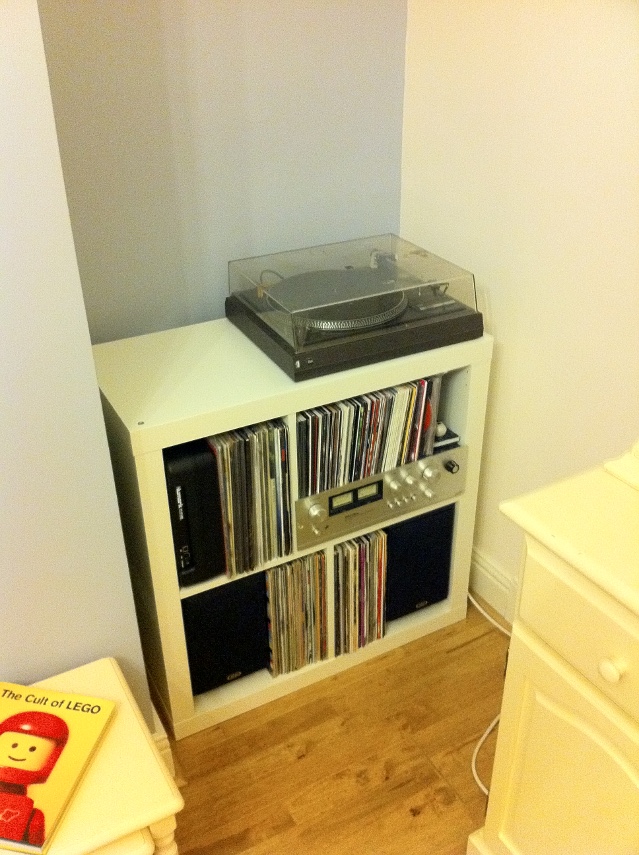
Jonathan Dowland: Hi-Fi Furniture

sadly obsolete sadly obsolete
For the last four years or so, I've had my Hi-Fi and the vast majority of my vinyl collection stored in a self-contained, mildly-customized Ikea unit. Since moving house this has been in my dining room which we have always referred to as the "play room", since we have a second dining room in which we actually dine. The intention for the play room was for it to be the room within which all our future children would have their toys kept, in an attempt to keep the living room from being overrun with plastic. The time has thus come for my Hi-Fi to come out of there, so we've moved it to our living room. Unfortunately, there's not enough room in the living room for the Ikea unit: I need something narrower for the space available.
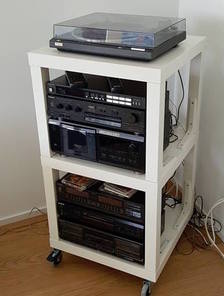
via IkeaHackers.net via IkeaHackers.net
In the spirit of my original hack, I started looking at what others might have achieved with Ikea components. There are some great examples of open-style units built out of the (extremely cheap) Lack coffee tables, such as this ikeahackers article, but I'd prefer something more enclosed. One problem I've had with the Expedit unit was my cat trying to scratch the records. I ended up putting framed records at the front to cover the spines of the records within. If I were keeping the unit, I'd look at fitting hinges (another ikeahackers article) Asides from hacked Ikea stuff, there are a few companies offering traditional enclosed Hi Fi cabinets. I'm going to struggle to fit both the equipment and a subset of records into these, so I might have to look at storing them separately. In some ways that makes life easier: the records could go into a 1x4 Ikea KALLAX unit, leaving the amp and deck to home somewhere. Perhaps I could look at a bigger unit for under the TV. My parents have a nice Hi-Fi unit that pretends to be a chest of drawers. I'm fairly sure my Dad custom-built it, as it has a hinged top to provide access to the turntable and I haven't seen anything like that on the market. That brings me onto thinking about other AV things I'd like to achieve in the living room. I've always been interested in exploring surround sound, but my initial attempt in my prior flat did not go well, either because the room was not terribly suited accoustically, or because the Pioneer unit I bought was rubbish, or both. It seems that there aren't really AV receivers which are designed to satisfy both people wanting to use them in a Hi-Fi and a home cinema setting. I could stick to stereo and run the TV into my existing (or a new) amplifier, subject to some logistics around wiring. A previous house owner ran some phono cables under the hard-wood flooring from the TV alcove to the opposite side of the fire place, which might give me some options. There's also the world of wireless audio, Sonos etcetera. Realistically the majority of my music is digital nowadays, and it would be good to be able to listen to it conveniently in the house. I've heard good reports on the entry level Sonos stuff, but they seem to be Mono, and even the more high-end ones with lots of drivers have very small separation. I did buy a Chromecast Audio on a whim recently, but I haven't looked at it much yet: perhaps that's part of the solution. So, lots of stuff in the melting pot to figure out here!

10 October 2016

Reproducible builds folks: Reproducible Builds: week 76 in Stretch cycle

What happened in the Reproducible Builds effort between Sunday October 2 and Saturday October 8 2016: Media coverage Events Packages reviewed and fixed, and bugs filed Reviews of unreproducible packages 31 package reviews have been added, 27 have been updated and over 20 have been removed in this week, adding to our knowledge about identified issues. 3 issue types have been addded: 1 issue type has been updated: Weekly QA work During of reproducibility testing, some FTBFS bugs have been detected and reported by: tests.reproducible-builds.org Debian: Misc. This week's edition was written by Chris Lamb, Holger Levsen & Vagrant Cascadian and reviewed by a bunch of Reproducible Builds folks on IRC.

9 October 2016

Ben Armstrong: Annual Hike with Ryan: Salt Marsh Trail, 2016

Once again, Ryan Neily and I met last month for our annual hike. This year, to give our aging knees a break, we visited the Salt Marsh Trail for the first time. For an added level of challenge and to access the trail by public transit, we started with the Shearwater Flyer Trail and finished with the Heritage Trail. It was a perfect day both for hiking and photography: cool with cloud cover and a refreshing coastal breeze. The entire hike was over 25 km and took the better part of the day to complete. Good times, great conversations, and I look forward to visiting these beautiful trails again!
Salt Marsh trail hike, 2016. Click to start the slideshow.Salt Marsh trail hike, 2016. Click to start the slideshow.
We start here, on the Shearwater flyer trail.We start here, on the Shearwater flyer trail.
Couldn t ID this bush. The berries are spectacular! A pond to the side of the trail. Different angle for dramatic lighting effect. Rail bridge converted to foot bridge. Cranberries! Reviewing our progress. From the start Map of the Salt Marsh trail ahead. Off we go again! First glimpse through the trees. Appreciating the cloud cover today. Salt-marshy grasses. Never far from rocks in NS. Rocks all laid out in stripes. Lunch & selfie time. Ryan attacking his salad. Vantage point. A bit of causeway coast. Plenty of eel grass. Costal flora. We head for the bridge next. Impressed by the power of the flow beneath. Snapping more marsh shots. Ripples. Gulls, and if you squint, a copter. More ripples. Swift current along this channel. Until it broadens out and slows down. Nearly across. Heron! Sorry it s so tiny. Heron again, before I lost it. Ducks at the head of the Atlantic View trail where we rested and then turned back. Attempt at artsy. Nodding ladies tresses on the way back. Several of them. Sky darkening, but we still have time. A lonely wild rose. The last gasp of late summer. Back across the marshes. A short breather on the Heritage Trail.
Here s the Strava record of our hike:
Facebooktwittergoogle_plusredditpinterestlinkedinmail

6 October 2016

Nathan Handler: FOSSCON

This post is long past due, but I figured it is better late than never. At the start of the year, I set a goal to get more involved with attending and speaking at conferences. Through work, I was able to attend the Southern California Linux Expo (SCALE) in Pasadena, CA in January. I also got to give a talk at O'Relly's Open Source Convention (OSCON) in Austin, TX in May. However, I really wanted to give a talk about my experience contributing in the Ubuntu community. Jos Antonio Rey encouraged me to submit the talk to FOSSCON. While I've been aware of FOSSCON for years thanks to my involvement with the freenode IRC network (which has had a reference to FOSSCON in the /motd for years), I had never actually attended it before. I also wasn't quite sure how I would handle traveling from San Francisco, CA to Philadelphia, PA. Regardless, I decided to go ahead and apply. Fast forward a few weeks, and imagine my surprise when I woke up to an email saying that my talk proposal was accepted. People were actually interested in me and what I had to say. I immediately began researching flights. While they weren't crazy expensive, they were still more money than I was comfortable spending. Luckily, Jos had a solution to this problem as well; he suggested applying for funding through the Ubuntu Community Donations fund. While I've been an Ubuntu Member for over 8 years, I've never used this resource before. However, I was happy when I received a very quick approval. The conference itself was smaller than I was expecting. However, it was packed with lots of friendly and familiar faces of people I've interacted with online and in person over the years at various Open Source events. I started off the day by learning from Jos how to use Juju to quickly setup applications in the cloud. While Juju has definitely come a long way over the last couple of years, and it appears t be quite easy to learn and use, it still appears to be lacking some of the features needed to take full control over how the underlying applications interact with each other. However, I look forward to continuing to watch it grow and mature. Net up, we had a lunch break. There was no catered lunch at this conference, so we decided to get some cheesesteak at Abner's (is any trip to Philadelphia complete without cheesesteak?). Following lunch, I took some time to make a few last minute changes to my presentation and rehearse a bit. Finally, it was time. I got up in front of the audience and gave my presentation. Overall, I was quite pleased. It was not perfect, but for the first time giving the talk, I thought it went pretty well. I will work hard to make it even better for next tme. Following my talk was a series of brief lightning talks prior to the closing keynote. Another long time friend of mine, Elizabeth Krumbach Joseph, was giving the keynote about listening to the needs of your global open source community. While I have seen her speak on several other occassions, I really enjoyed this particular talk. It was full of great examples and anecdotes that were easy for the audience to relate to and start applying to their own communities. After the conference, a few of us went off and played tourist, paying the Liberty Bell a visit before concluding our trip in Philadelpha. Overall, I had a great time as FOSSCON. It was great being re-united with so many friends. A big thank you to Jos for his constant support and encouragement and to Canonical and the Ubuntu Community for helping to make it possible for me to attend this conference. Finally, thanks to the terrific FOSSCON staff for volunteering so much time to put on this great event.

Reproducible builds folks: Reproducible Builds: week 75 in Stretch cycle

What happened in the Reproducible Builds effort between Sunday September 25 and Saturday October 1 2016: Statistics For the first time, we reached 91% reproducible packages in our testing framework on testing/amd64 using a determistic build path. (This is what we recommend to make packages in Stretch reproducible.) For unstable/amd64, where we additionally test for reproducibility across different build paths we are at almost 76% again. IRC meetings We have a poll to set a time for a new regular IRC meeting. If you would like to attend, please input your available times and we will try to accommodate for you. There was a trial IRC meeting on Friday, 2016-09-31 1800 UTC. Unfortunately, we did not activate meetbot. Despite this participants consider the meeting a success as several topics where discussed (eg changes to IRC notifications of tests.r-b.o) and the meeting stayed within one our length. Upcoming events Reproduce and Verify Filesystems - Vincent Batts, Red Hat - Berlin (Germany), 5th October, 14:30 - 15:20 @ LinuxCon + ContainerCon Europe 2016. From Reproducible Debian builds to Reproducible OpenWrt, LEDE & coreboot - Holger "h01ger" Levsen and Alexander "lynxis" Couzens - Berlin (Germany), 13th October, 11:00 - 11:25 @ OpenWrt Summit 2016. Introduction to Reproducible Builds - Vagrant Cascadian will be presenting at the SeaGL.org Conference In Seattle (USA), November 11th-12th, 2016. Previous events GHC Determinism - Bartosz Nitka, Facebook - Nara (Japan), 24th September, ICPF 2016. Toolchain development and fixes Michael Meskes uploaded bsdmainutils/9.0.11 to unstable with a fix for #830259 based on Reiner Herrmann's patch. This fixed locale_dependent_symbol_order_by_lorder issue in the affected packages (freebsd-libs, mmh). devscripts/2.16.8 was uploaded to unstable. It includes a debrepro script by Antonio Terceiro which is similar in purpose to reprotest but more lightweight; specific to Debian packages and without support for virtual servers or configurable variations. Packages reviewed and fixed, and bugs filed The following updated packages have become reproducible in our testing framework after being fixed: The following updated packages appear to be reproducible now for reasons we were not able to figure out. (Relevant changelogs did not mention reproducible builds.) Some uploads have addressed some reproducibility issues, but not all of them: Patches submitted that have not made their way to the archive yet: Reviews of unreproducible packages 77 package reviews have been added, 178 have been updated and 80 have been removed in this week, adding to our knowledge about identified issues. 6 issue types have been updated: Weekly QA work As part of reproducibility testing, FTBFS bugs have been detected and reported by: diffoscope development A new version of diffoscope 61 was uploaded to unstable by Chris Lamb. It included contributions from: Post-release there were further contributions from: reprotest development A new version of reprotest 0.3.2 was uploaded to unstable by Ximin Luo. It included contributions from: Post-release there were further contributions from: tests.reproducible-builds.org Misc. This week's edition was written by Ximin Luo, Holger Levsen & Chris Lamb and reviewed by a bunch of Reproducible Builds folks on IRC.

25 September 2016

Vincent Sanders: I'll huff, and I'll puff, and I'll blow your house in

Sometimes it really helps to have a different view on a problem and after my recent writings on my Public Suffix List (PSL) library I was fortunate to receive a suggestion from my friend Enrico Zini.

I had asked for suggestions on reducing the size of the library further and Enrico simply suggested Huffman coding. This was a technique I had learned about long ago in connection with data compression and the intervening years had made all the details fuzzy which explains why it had not immediately sprung to mind.

A small subset of the Public Suffix List as stored within libnspslHuffman coding named for David A. Huffman is an algorithm that enables a representation of data which is very efficient. In a normal array of characters every character takes the same eight bits to represent which is the best we can do when any of the 256 values possible is equally likely. If your data is not evenly distributed this is not the case for example if the data was english text then the value is fifteen times more likely to be that for e than k.

every step of huffman encoding tree build for the example string tableSo if we have some data with a non uniform distribution of probabilities we need a way the data be encoded with fewer bits for the common values and more bits for the rarer values. To be efficient we would need some way of having variable length representations without storing the length separately. The term for this data representation is a prefix code and there are several ways to generate them.

Such is the influence of Huffman on the area of prefix codes they are often called Huffman codes even if they were not created using his algorithm. One can dream of becoming immortalised like this, to join the ranks of those whose names are given to units or whole ideas in a field must be immensely rewarding, however given Huffman invented his algorithm and proved it to be optimal to answer a question on a term paper in his early twenties I fear I may already be a bit too late.

The algorithm itself is relatively straightforward. First a frequency analysis is performed, a fancy way of saying count how many of each character is in the input data. Next a binary tree is created by using a priority queue initialised with the nodes sorted by frequency.

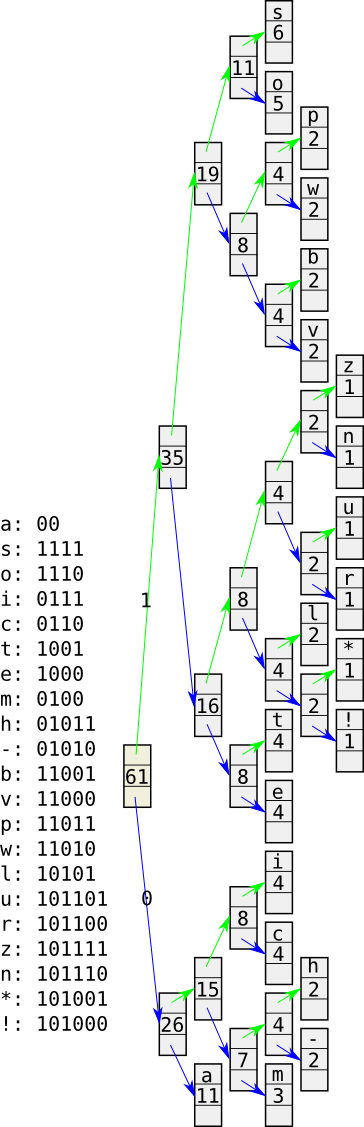
The resulting huffman tree and the binary representation of the input symbols
The two least frequent items count is summed together and a node placed in the tree with the two original entries as child nodes. This step is repeated until a single node exists with a count value equal to the length of the input.

To encode data once simply walks the tree outputting a 0 for a left node or 1 for right node until reaching the original value. This generates a mapping of values to bit output, the input is then simply converted value by value to the bit output. To decode the data the data is used bit by bit to walk the tree to arrive at values.

If we perform this algorithm on the example string table *!asiabvcomcoopitamazonawsarsaves-the-whalescomputebasilicata we can reduce the 488 bits (61 * 8 bit characters) to 282 bits or 40% reduction. Obviously in a real application the huffman tree would need to be stored which would probably exceed this saving but for larger data sets it is probable this technique would yield excellent results on this kind of data.

Once I proved this to myself I implemented the encoder within the existing conversion program. Although my perl encoder is not very efficient it can process the entire PSL string table (around six thousand labels using 40KB or so) in less than a second, so unless the table grows massively an inelegant approach will suffice.

The resulting bits were packed into 32bit values to improve decode performance (most systems prefer to deal with larger memory fetches less frequently) and resulted in 18KB of output or 47% of the original size. This is a great improvement in size and means the statically linked test program is now 59KB and is actually smaller than the gzipped source data.

$ ls -alh test_nspsl
-rwxr-xr-x 1 vince vince 59K Sep 25 23:58 test_nspsl
$ ls -al public_suffix_list.dat.gz
-rw-r--r-- 1 vince vince 62K Sep 1 08:52 public_suffix_list.dat.gz

To be clear the statically linked program can determine if a domain is in the PSL with no additional heap allocations and includes the entire PSL ordered tree, the domain label string table and the huffman decode table to read it.

An unexpected side effect is that because the decode loop is small it sits in the processor cache. This appears to cause the string comparison function huffcasecmp() (which is not locale dependant because we know the data will be limited ASCII) performance to be close to using strcasecmp() indeed on ARM32 systems there is a very modest improvement in performance.

I think this is as much work as I am willing to put into this library but I am pleased to have achieved a result which is on par with the best of breed (libpsl still has a data representation 20KB smaller than libnspsl but requires additional libraries for additional functionality) and I got to (re)learn an important algorithm too.

Julian Andres Klode: Introducing TrieHash, a order-preserving minimal perfect hash function generator for C(++)

Abstract I introduce TrieHash an algorithm for constructing perfect hash functions from tries. The generated hash functions are pure C code, minimal, order-preserving and outperform existing alternatives. Together with the generated header files,they can also be used as a generic string to enumeration mapper (enums are created by the tool). Introduction APT (and dpkg) spend a lot of time in parsing various files, especially Packages files. APT currently uses a function called AlphaHash which hashes the last 8 bytes of a word in a case-insensitive manner to hash fields in those files (dpkg just compares strings in an array of structs). There is one obvious drawback to using a normal hash function: When we want to access the data in the hash table, we have to hash the key again, causing us to hash every accessed key at least twice. It turned out that this affects something like 5 to 10% of the cache generation performance. Enter perfect hash functions: A perfect hash function matches a set of words to constant values without collisions. You can thus just use the index to index into your hash table directly, and do not have to hash again (if you generate the function at compile time and store key constants) or handle collision resolution. As #debian-apt people know, I happened to play a bit around with tries this week before guillem suggested perfect hashing. Let me tell you one thing: My trie implementation was very naive, that did not really improve things a lot Enter TrieHash Now, how is this related to hashing? The answer is simple: I wrote a perfect hash function generator that is based on tries. You give it a list of words, it puts them in a trie, and generates C code out of it, using recursive switch statements (see code generation below). The function achieves competitive performance with other hash functions, it even usually outperforms them. Given a dictionary, it generates an enumeration (a C enum or C++ enum class) of all words in the dictionary, with the values corresponding to the order in the dictionary (the order-preserving property), and a function mapping strings to members of that enumeration. By default, the first word is considered to be 0 and each word increases a counter by one (that is, it generates a minimal hash function). You can tweak that however:
= 0
WordLabel ~ Word
OtherWord = 9
will return 0 for an unknown value, map Word to the enum member WordLabel and map OtherWord to 9. That is, the input list functions like the body of a C enumeration. If no label is specified for a word, it will be generated from the word. For more details see the documentation C code generation
switch(string[0]   32)  
case 't':
    switch(string[1]   32)  
    case 'a':
        switch(string[2]   32)  
        case 'g':
            return Tag;


return Unknown;
Yes, really recursive switches they directly represent the trie. Now, we did not really do a straightforward translation, there are some optimisations to make the whole thing faster and easier to look at: First of all, the 32 you see is used to make the check case insensitive in case all cases of the switch body are alphabetical characters. If there are non-alphabetical characters, it will generate two cases per character, one upper case and one lowercase (with one break in it). I did not know that lowercase and uppercase characters differed by only one bit before, thanks to the clang compiler for pointing that out in its generated assembler code! Secondly, we only insert breaks only between cases. Initially, each case ended with a return Unknown, but guillem (the dpkg developer) suggested it might be faster to let them fallthrough where possible. Turns out it was not faster on a good compiler, but it s still more readable anywhere. Finally, we build one trie per word length, and switch by the word length first. Like the 32 trick, his gives a huge improvement in performance. Digging into the assembler code The whole code translates to roughly 4 instructions per byte:
  1. A memory load,
  2. an or with 32
  3. a comparison, and
  4. a conditional jump.
(On x86, the case sensitive version actually only has a cmp-with-memory and a conditional jump). Due to https://gcc.gnu.org/bugzilla/show_bug.cgi?id=77729 this may be one instruction more: On some architectures an unneeded zero-extend-byte instruction is inserted this causes a 20% performance loss. Performance evaluation I run the hash against all 82 words understood by APT in Packages and Sources files, 1,000,000 times for each word, and summed up the average run-time:
host arch Trie TrieCase GPerfCase GPerf DJB
plummer ppc64el 540 601 1914 2000 1345
eller mipsel 4728 5255 12018 7837 4087
asachi arm64 1000 1603 4333 2401 1625
asachi armhf 1230 1350 5593 5002 1784
barriere amd64 689 950 3218 1982 1776
x230 amd64 465 504 1200 837 693
Suffice to say, GPerf does not really come close. All hosts except the x230 are Debian porterboxes. The x230 is my laptop with a a Core i5-3320M, barriere has an Opteron 23xx. I included the DJB hash function for another reference. Source code The generator is written in Perl, licensed under the MIT license and available from https://github.com/julian-klode/triehash I initially prototyped it in Python, but guillem complained that this would add new build dependencies to dpkg, so I rewrote it in Perl. Benchmark is available from https://github.com/julian-klode/hashbench Usage See the script for POD documentation.
Filed under: General

24 September 2016

Ritesh Raj Sarraf: Laptop Mode Tools 1.70

I'm pleased to announce the release of Laptop Mode Tools, version 1.70. This release adds support for AHCI Runtime PM, introduced in Linux 4.6. It also includes many important bug fixes, mostly related to invocation and determination of power states. Changelog: 1.70 - Sat Sep 24 16:51:02 IST 2016
* Deal harder with broken battery states
* On machines with 2+ batteries, determine states from all batteries
* Limit status message logging frequency. Some machines tend to send
ACPI events too often. Thanks Maciej S. Szmigiero
* Try harder to determine power states. As reports have shown, the
power_supply subsystem has had incorrect state reporting on many machines,
for both, BAT and AC.
* Relax conditional events where Laptop Mode Tools should be executed. This
affected for use cases of Laptop being docked and undocked
Thanks Daniel Koch.
* CPU Hotplug settings extended
* Cleanup states for improved Laptop Mode Tools invocation
Thanks: Tomas Janousek
* Align Intel P State default to what the actual driver (intel_pstate.c)
uses
Thanks: George Caswell and Matthew Gabeler-Lee
* Add support for AHCI Runtime PM in module intel-sata-powermgmt
* Many systemd and initscript fixes
* Relax default USB device list. This avoids the long standing issues with
USB devices (mice, keyboard) that mis-behaved during autosuspend Source tarball, Feodra/SUSE RPM Packages available at:
https://github.com/rickysarraf/laptop-mode-tools/releases Debian packages will be available soon in Unstable. Homepage: https://github.com/rickysarraf/laptop-mode-tools/wiki
Mailing List: https://groups.google.com/d/forum/laptop-mode-tools

Categories:

Keywords:

Like:

21 September 2016

Matthew Garrett: Microsoft aren't forcing Lenovo to block free operating systems

There's a story going round that Lenovo have signed an agreement with Microsoft that prevents installing free operating systems. This is sensationalist, untrue and distracts from a genuine problem.

The background is straightforward. Intel platforms allow the storage to be configured in two different ways - "standard" (normal AHCI on SATA systems, normal NVMe on NVMe systems) or "RAID". "RAID" mode is typically just changing the PCI IDs so that the normal drivers won't bind, ensuring that drivers that support the software RAID mode are used. Intel have not submitted any patches to Linux to support the "RAID" mode.

In this specific case, Lenovo's firmware defaults to "RAID" mode and doesn't allow you to change that. Since Linux has no support for the hardware when configured this way, you can't install Linux (distribution installers will boot, but won't find any storage device to install the OS to).

Why would Lenovo do this? I don't know for sure, but it's potentially related to something I've written about before - recent Intel hardware needs special setup for good power management. The storage driver that Microsoft ship doesn't do that setup. The Intel-provided driver does. "RAID" mode prevents the Microsoft driver from binding and forces the user to use the Intel driver, which means they get the correct power management configuration, battery life is better and the machine doesn't melt.

(Why not offer the option to disable it? A user who does would end up with a machine that doesn't boot, and if they managed to figure that out they'd have worse power management. That increases support costs. For a consumer device, why would you want to? The number of people buying these laptops to run anything other than Windows is miniscule)

Things are somewhat obfuscated due to a statement from a Lenovo rep:This system has a Signature Edition of Windows 10 Home installed. It is locked per our agreement with Microsoft. It's unclear what this is meant to mean. Microsoft could be insisting that Signature Edition systems ship in "RAID" mode in order to ensure that users get a good power management experience. Or it could be a misunderstanding regarding UEFI Secure Boot - Microsoft do require that Secure Boot be enabled on all Windows 10 systems, but (a) the user must be able to manage the key database and (b) there are several free operating systems that support UEFI Secure Boot and have appropriate signatures. Neither interpretation indicates that there's a deliberate attempt to prevent users from installing their choice of operating system.

The real problem here is that Intel do very little to ensure that free operating systems work well on their consumer hardware - we still have no information from Intel on how to configure systems to ensure good power management, we have no support for storage devices in "RAID" mode and we have no indication that this is going to get better in future. If Intel had provided that support, this issue would never have occurred. Rather than be angry at Lenovo, let's put pressure on Intel to provide support for their hardware.

comment count unavailable comments

20 September 2016

Reproducible builds folks: Reproducible Builds: week 73 in Stretch cycle

What happened in the Reproducible Builds effort between Sunday September 11 and Saturday September 17 2016: Toolchain developments Ximin Luo started a new series of tools called (for now) debrepatch, to make it easier to automate checks that our old patches to Debian packages still apply to newer versions of those packages, and still make these reproducible. Ximin Luo updated one of our few remaining patches for dpkg in #787980 to make it cleaner and more minimal. The following tools were fixed to produce reproducible output: Packages reviewed and fixed, and bugs filed The following updated packages have become reproducible - in our current test setup - after being fixed: The following updated packages appear to be reproducible now, for reasons we were not able to figure out. (Relevant changelogs did not mention reproducible builds.) The following 3 packages were not changed, but have become reproducible due to changes in their build-dependencies: jaxrs-api python-lua zope-mysqlda. Some uploads have addressed some reproducibility issues, but not all of them: Patches submitted that have not made their way to the archive yet: Reviews of unreproducible packages 462 package reviews have been added, 524 have been updated and 166 have been removed in this week, adding to our knowledge about identified issues. 25 issue types have been updated: Weekly QA work FTBFS bugs have been reported by: diffoscope development A new version of diffoscope 60 was uploaded to unstable by Mattia Rizzolo. It included contributions from: It also included from changes previous weeks; see either the changes or commits linked above, or previous blog posts 72 71 70. strip-nondeterminism development New versions of strip-nondeterminism 0.027-1 and 0.028-1 were uploaded to unstable by Chris Lamb. It included contributions from: disorderfs development A new version of disorderfs 0.5.1 was uploaded to unstable by Chris Lamb. It included contributions from: It also included from changes previous weeks; see either the changes or commits linked above, or previous blog posts 70. Misc. This week's edition was written by Ximin Luo and reviewed by a bunch of Reproducible Builds folks on IRC.

12 September 2016

Steve Kemp: If your code accepts URIs as input..

There are many online sites that accept reading input from remote locations. For example a site might try to extract all the text from a webpage, or show you the HTTP-headers a given server sends back in response to a request. If you run such a site you must make sure you validate the schema you're given - also remembering to do that if you're sent any HTTP-redirects.
Really the issue here is a confusion between URL & URI.
The only time I ever communicated with Aaron Swartz was unfortunately after his death, because I didn't make the connection. I randomly stumbled upon the html2text software he put together, which had an online demo containing a form for entering a location. I tried the obvious input:
file:///etc/passwd
The software was vulnerable, read the file, and showed it to me. The site gives errors on all inputs now, so it cannot be used to demonstrate the problem, but on Friday I saw another site on Hacker News with the very same input-issue, and it reminded me that there's a very real class of security problems here. The site in question was http://fuckyeahmarkdown.com/ and allows you to enter a URL to convert to markdown - I found this via the hacker news submission. The following link shows the contents of /etc/hosts, and demonstrates the problem: http://fuckyeahmarkdown.example.com/go/?u=file:///etc/hosts&read=1&preview=1&showframe=0&submit=go The output looked like this:
..
127.0.0.1 localhost
255.255.255.255 broadcasthost
::1 localhost
fe80::1%lo0 localhost
127.0.0.1 stage
127.0.0.1 files
127.0.0.1 brettt..
..
In the actual output of '/etc/passwd' all newlines had been stripped. (Which I now recognize as being an artifact of the markdown processing.) UPDATE: The problem is fixed now.

7 September 2016

Reproducible builds folks: Reproducible Builds: week 71 in Stretch cycle

What happened in the Reproducible Builds effort between Sunday August 28 and Saturday September 3 2016: Media coverage Antonio Terceiro blogged about testing build reprodubility with debrepro . GSoC and Outreachy updates The next round is being planned now: see their page with a timeline and participating organizations listing. Maybe you want to participate this time? Then please reach out to us as soon as possible! Packages reviewed and fixed, and bugs filed The following packages have addressed reproducibility issues in other packages: The following updated packages have become reproducible in our current test setup after being fixed: The following updated packages appear to be reproducible now, for reasons we were not able to figure out yet. (Relevant changelogs did not mention reproducible builds.) The following 4 packages were not changed, but have become reproducible due to changes in their build-dependencies: Some uploads have addressed some reproducibility issues, but not all of them: Patches submitted that have not made their way to the archive yet: Reviews of unreproducible packages 706 package reviews have been added, 22 have been updated and 16 have been removed in this week, adding to our knowledge about identified issues. 5 issue types have been added: 1 issue type has been updated: Weekly QA work FTBFS bugs have been reported by: diffoscope development diffoscope development on the next version (60) continued in git, taking in contributions from: strip-nondeterminism development Mattia Rizzolo uploaded strip-nondeterminism 0.023-2~bpo8+1 to jessie-backports. A new version of strip-nondeterminism 0.024-1 was uploaded to unstable by Chris Lamb. It included contributions from: Holger added jobs on jenkins.debian.net to run testsuites on every commit. There is one job for the master branch and one for the other branches. disorderfs development Holger added jobs on jenkins.debian.net to run testsuites on every commit. There is one job for the master branch and one for the other branches. tests.reproducible-builds.org Debian: We now vary the GECOS records of the two build users. Thanks to Paul Wise for providing the patch. Misc. This week's edition was written by Ximin Luo, Holger Levsen & Chris Lamb and reviewed by a bunch of Reproducible Builds folks on IRC.

6 September 2016

Markus Koschany: My Free Software Activities in August 2016

Welcome to gambaru.de. Here is my monthly report that covers what I have been doing for Debian. If you re interested in Android, Java, Games and LTS topics, this might be interesting for you. Debian Android Debian Games Debian Java Debian LTS This was my seventh month as a paid contributor and I have been paid to work 14,75 hours on Debian LTS, a project started by Rapha l Hertzog. In that time I did the following: Non-maintainer uploads QA

5 September 2016

Dirk Eddelbuettel: Rcpp 0.12.7: More updates

The seventh update in the 0.12.* series of Rcpp just arrived on the CRAN network for GNU R as well as in Debian. This 0.12.7 release follows the 0.12.0 release from late July, the 0.12.1 release in September, the 0.12.2 release in November, the 0.12.3 release in January, the 0.12.4 release in March, the 0.12.5 release in May, and the 0.12.6 release in July --- making it the eleventh release at the steady bi-montly release frequency. Keeping with the established pattern, this is again more of a maintenance release which addresses small bugs, nuisances or documentation issues without adding any major new features. One issue that got to a few people was our casual use of NORET in the definition of Rcpp::stop(). We had (ahem) overlooked that NORET is only defined by R 3.2.0 or later, and several folks trying to build on older releases of R (why?) got bitten. Well, at least we have a new record for most frequently reported bug ... Kidding aside, this is now fixed. Rcpp has become the most popular way of enhancing GNU R with C or C++ code. As of today, 759 packages on CRAN depend on Rcpp for making analytical code go faster and further. That is up by well over fifty packages since the last release in mid-July! We are once again fortunate to have a number of pull request, from first-timers to regulars. James "coatless" Balamuta in particular relentlessly pushed for better documentation and cleanup of numerous dangling issue tickets. Artem Klevtsov also contributed again. Qiang, Kevin and I also got some changes in for the Rcpp Core team. More details are again below.
Changes in Rcpp version 0.12.7 (2016-09-04)
  • Changes in Rcpp API:
    • The NORET macro is now defined if it was not already defined by R itself (Kevin fixing issue #512).
    • Environment functions get() & find() now accept a Symbol (James Balamuta in #513 addressing issue #326).
    • Several uses of Rf_eval were replaced by the preferred Rcpp::Rcpp_eval (Qiang in PR #523 closing #498).
    • Improved Autogeneration Warning for RcppExports (James Balamuta in #528 addressing issue #526).
    • Fixed invalid C++ prefix identifiers in auto-generated code (James Balamuta in #528 and #531 addressing issue #387; Simon Dirmeier in #548).
    • String constructors now set default UTF-8 encoding (Qiang Kou in #529 fixing #263).
    • Add variadic variants of the RCPP_RETURN_VECTOR and RCPP_RETURN_MATRIX macro when C++11 compiler used (Artem Klevtsov in #537 fixing #38).
  • Changes in Rcpp build system
    • Travis CI is now driven via run.sh from our fork, and deploys all packages as .deb binaries using our PPA where needed (Dirk in #540 addressing issue #517).
  • Changes in Rcpp unit tests
    • New unit tests for random number generators the R namespace which call the standalone Rmath library. (James Balamuta in #514 addressing issue #28).
  • Changes in Rcpp Examples:
    • Examples that used cxxfunction() from the inline package have been rewritten to use either sourceCpp() or cppFunction() (James Balamuta in #541, #535, #534, and #532 addressing issue #56).
Thanks to CRANberries, you can also look at a diff to the previous release. As always, even fuller details are on the Rcpp Changelog page and the Rcpp page which also leads to the downloads page, the browseable doxygen docs and zip files of doxygen output for the standard formats. A local directory has source and documentation too. Questions, comments etc should go to the rcpp-devel mailing list off the R-Forge page.

This post by Dirk Eddelbuettel originated on his Thinking inside the box blog. Please report excessive re-aggregation in third-party for-profit settings.

3 September 2016

Iustin Pop: Nationalpark Bike Marathon 2016

Nationalpark Bike Marathon 2016 report: gravity rules! "Marathon" is a bit of a misnomer, since I did the short route, not the medium nor the long one. But hey, it's the official name! Setup This race has four possible lengths: "Valader" which is full round-trip Scuol-Scuol (137km/4'026m), "Jauer" (Fuldera-Scuol, 103km/2'934m), "Livignasco" (Livigno-Scuol, 66km/1'871m) and "Put r" (S-chanf to Scuol, 47Km/1'051m). After many debates, I settled on the Livignasco route, as that was what I was reasonably confident to be able to do. The only problem was that this route (and all the longer ones, of course) were going over Pass Chaschauna, which is a quite hard climb. My bike shop person, who did the full length a number of times, just said when hearing the route I was planning: "Chaschauna is a bitch " Bad language, proper characterisation. The route choice also impacts the logistics: except for the full route, the question is where to sleep the night before? One can sleep either at the start place, or sleep in Scuol itself and take the official shuttle to the start place, but this means waking up much earlier. I decided to sleep in Livigno, as with a 7:45 start this would allow me to sleep until ~6:30, have a quick breakfast and be in time for the race. Problem #1 So on Friday (26th) I drove to Scuol, picked up my start number, and then drove over to Livigno and checked in to the hotel. Speaking of picking up the start number, I saw this at the start area: While picking up my start number: the race is so fast that an STI is needed as pacer?? An STI needed as pacer? How fast are these people, I wondered? Day of the race My plan to have a relaxing sleep until relatively late failed. I went to sleep with difficulties: late dinner due to my late arrival in Livigno, and then I was stressed enough about not missing the race that at 05:05 I already woke up, and was checking the clock every five minutes. Finally at 05:30 I gave up and got out of bed, with only about 6 hours of sleep. Problem #2. The other problem was that I na vely thought the hotel will have breakfast from 07:00 or even 07:30. Hah, as if this was Switzerland. The hotel had breakfast from 08:00, no reason to hurry, right? So I had a poor man's breakfast in the room, some energy bars and an ice tea. Problem #3. At least I had time to grab this picture from the hotel room: Good morning Livigno! Not bad. On to the race! But before that, remember to fill my hydration pack with 3L of water, and put it in my not-so-light backpack. Of course I had tools and some spare parts with me, what if something happens? Problem #4, over-planning. The race The setup at the start was pretty easy. Wait near the start until 07:45, then go. For me, not too in front, of course: Ready for the start! Pass Chaschauna About 3 kilometres of easy/flat road, and then it starts. Pass Chaschauna, killing your legs softly Already climbing  on foot! But not everybody. But at least the pictures were nice! The climb is hard, but the view is worth it! Still climbing So high already! Good legs :) Looking back: it's been a loong way up I can see the top!  and the remaining steep meters to climb :( The climb is difficult. It was around 22% for most of the time, and very few people were able to bike up. Not only the absolute meters were the problem, but also the fact that the ground was quite loose, and pushing the bike, or rather climbing up while pushing the bike, was difficult to do in bike shoes with cleats. Proper hiking shoes would have been much more adequate. Maybe this is why despite the effort, some people biked as much as possible? I was careful not to over-exert myself and walked almost all the way up. Hence the pictures But at last, reached the top of the pass, and was very happy to be done with it. The GPX file from my Garmin says it took only 4 minutes (1.2km) after the race start to actually start climbing (it was not obvious we were climbing so early), and then 1h:20m/8Km to get from 1'817m altitude to the highest point at 2'658m. 8Km in 1h:20m, faster than walking pace but quite slower than running pace (on flat terrain, of course). At the top of the pass I was quite happy: Finally at the top! Clipping in and Go! Smilling and happy! And then the descent started: I wonder how steep it will be going down This was an easy section :/ All the way leading to the race I kept thinking only about climbing Chaschauna, and not about going down on it. It was quite an experience, which I won't forget soon. The trail was already well travelled, which means that besides the loose ground in form of large clumps of dried earth, there was a layer of fine, somewhat moist earth, about 3-5 centimetres deep, which made the downhill "interesting". Coupled with what was a much steeper trail than going up I saw most of the time ~33% it's no surprise that many, or even most, of the people were walking their bikes down. The GPX track says that the trail goes 319m down in 1Km (so a 31.9% over one entire kilometre), then another 130m over the next 1.4Km (9.28%), and then (not sure if this is the pass per se or after) another longer segment of ~260m over 3Km (8.56%). The first steep segment needs lots of skill and concentration, the others are normal gradients. But at least things go fast. What took uphill took ~40 minutes for the last 450m up, downhill it took only 15 minutes! Falling I was able, thanks to recent training, to bike down the trail, or at least I thought so. So on the steep segment I was struggling to bike down and keep control of my bike, putting one leg down on some sections but in general being "on the bike", being hit by the dirt I was throwing in the air despite the mud-guards, being careful but at the same time enjoying this difficult section. That is, right up to the point where I got, I think, too comfortable. After the second-to-last curve, the rear wheel slides, I lose balance and fall in the (thankfully soft) dirt a bit more forcefully than I should have, the bike also sliding along in the dirt. No damage to myself, just some trivial scratches; the bike seems a bit shaken (fork was turned 180 , full of dirt, etc.). I get again on the bike and I continue down; however, something seems off: the rear brake level doesn't have a return anymore, I have to push it to go back. Still usable, but strange. So I continue the other two segment of this descent, and over these ~4-5Km I feel the brake issue going worse and worse: it's actually hard to push the brake lever back, and even pressing it doesn't seem to have much effect. And then the realisation dawns on my: I have hydraulic brakes, and the worsening thing leads me to think my brake hose has been punctured (by what? I fell in loose dirt) and I'm losing the brake fluid with every press. Now, on flat road, biking with only the front brake is tricky but doable. On an MTB course, having only one brake is not a smart thing . Not easy, not smart, and definitely dangerous. It also felt very strange to not have both brakes, and then I realised how much I work with the brakes in unison. I knew that there are repair posts in the race, but I didn't know if they can fix such things (and doing a brake fluid refill how complicated is it, how much time does it take?). Anyway, I resolved to try and continue if the terrain allows until I reach the first repair post, and stop if it gets too steep. It would be pretty sad to have to abort the race after only 10Km, right? The terrain did cooperate: up and down, so I was able to bleed speed easily, and even though through forest, the visibility was good enough that I could plan ahead. It was strangely lonely at this time: I was going slowly and thus not reaching from behind anyone, but also not being reached by riders from behind. I did enjoy it a bit, the quietness of the forest, just interrupted by the squeaking of my front brake And then I finally see the sign for "Repair: 1Km". Yaaay! maybe I don't have to quit the race. And then, about 100m further on, another sign: "Danger! Steep descent". Uh-oh tantalisingly close Let's go slow. And yes, here I was overtaken by 3-4 other cyclists. This was the single moment in the race where I did have a moment of real fear: at one point, I was going down with the remaining brake as pressed as I could without compromising stability, and I was still gaining speed. Not smart, and as I was debating how to fall to stop my descent, the terrain started to get less steep, and I finally reached the repair station, at kilometre 21. Difficult repairs There was another person being serviced for a flat rear tire, so I wait in line and discuss with him my problem. Upon hearing I only had the front brake, he said: "Wow, how did you manage to descend this last segment?" "Well, slowly ". My turn came up, I explain my problem and my theory, and the repair guy gives me one look, the bike one look, but doesn't look at the brake hose. Instead, he looks once at the brake lever, sees that another cable guide on my handle bar was bent during the fall and actually was mechanically interfering with the brake lever, unbends that thing, and says "here you go". I was stunned. 15 seconds of looking at the problem without stress, and the problem was solved. I could have done this myself if I took the time to look and think, and not hurry. And I could have enjoyed all the downhill on the pass, with two functioning brakes. Some lessons have to be learned the hard way, and this was one. I got off easy though, as I didn't have a real accident while biking with only one brake. And they say you get wiser as you get older Anyway, brake repaired, I stopped at the Sanit r tent to have my scratches disinfected, and onwards. The following few kilometres until S-chanf I enjoyed very much. S-chanf And then, 2 hours 10 minutes into the race, I exit the forest trail, reach S-chanf, and start climbing and descending and climbing and descending. In the sun, which now (after 10 AM) is not that light anymore. The initial climb at S-chanf, while not much, took away my remaining short-term reserves. The route is 50m ascent, then down and then another 50m ascent, and after a bit of flat another 75m ascent I was getting tired, despite eating energy bars and drinking water (and juice at stops). This goes one for an entire hour, during which I cover about 23Km, so not a bad speed everything considered. But getting more and more tired. There were also some very nice segments, along the river, in the shade of the forest. Some fast downhill, some fast flat. I got overtaken by quite a few real racers, that were going so fast I couldn't keep up with them as in I didn't dare ride that fast even when I had the energy. Clearly they were from the longer segments, and boy were they fast! A number of couples (or pairs?) one woman one man, a number of bigger groups, all going as if they had E-bikes or super-powers, not just biking along tired like me Last climb And then, the last big climb: half an hour of going about 300m up (absolute values, so cumulative number would probably be higher), in the sun, over about 6Km, so only 5% average gradient. But I was tired and even resorted to walking on some portions At least I could take some pictures again: Much later, climbing again. Or have pictures taken: A bit of a smile left. Yes, that's a smile, not a grimace! Nice views: Look, nice castle! Stopping for a picture, and not because I was *dead tired* :) At one point, in a bit of a shade, I stop to catch my breath. Somebody else stopped as well and, seeing as I was checking my GPS, asks: I got overtaken by a lot of cyclists here, although many of them were from S-chanf route (based on the number colour). Sad The thing is, besides the climbing and the sun, this and the previous part was a very nice route: through small towns, high above the valley, beautiful landscapes, etc. Just enjoying it was hard, since I wasn't a) trained well enough and b) prepared well enough. Last segment, last downhill In any case, after that hard half hour, it's flat (or rather said, average gradient zero): Flat route, good pavement. Can catch my breath, and take a another picture. Good road, good views, but I'm on the last virtual bar of my battery, so the remaining 15Km I do in 40 minutes, also "eating" the last ascent meters still about 300 left, I think, but up/down/up/down, so you could reuse kinetic energy to gain potential one. The only question I had now was, the route was at this moment about 400m higher (in absolute altitude) than the finish point, so when do we lose that altitude? The answer was a very very nice answer: in the last 5Km, for an average gradient of 8%, just perfect. I was tired however, so I couldn't really enjoy or go fast here, but it was a good feeling. Finish! And then, entering Scuol, not really believing I'm near the finish, that I will be able to actually stop and relax. My finish picture doesn't do justice to how happy I was at that moment: At the finish, happy happy happy! However, after passing the finish line, it was a bit weird. I just stop now? What next? So weird to just walk, not push pedals, and not go up. Or down. The funny thing here was that I thought I didn't use much of my water (hydration pack) during the race. But soon after finishing, I drank the equivalent of about two glasses (let's say 0.5L) and it was over. So I did manage to drink 2.5L during the race, plus the sport drinks at the stops. Time for stats: my Garmin says 67.07Km, 4h:29m, average speed 15.0kph (hah), 1'615m elevation gain. Official numbers say 66Km, 1'871m elevation, and thus 14.22kph. Ranking-wise: Sigh, could have done better. I was aiming for somewhere around last 33%, not last 25% :-P First classed was ~66% faster than me Going to the train station was hard as in difficult to move my legs. Took one nice picture of Scuol though, so was able to think a bit: After the race: Scuol is not so bad And then the long way back to Livigno. Took me 4 h to bike to Scuol, and about 3 hours to go back via public transport. At least I ate a sandwich in the meantime. Then reached Livigno, which was also looking nice: Took me almost as long by public transport as by bike, but finally back in Livigno. Also nice! Then got on my bike, which at this point was magically light and easy to ride (it seems I was at least partially recovered), rode to the hotel, packed my stuff, and drove home. On the highway I had my first real meal for that day, but I was quite tired so didn't feel like the achievement it should have been Lessons The biggest takeaway from this race was the huge learning experience I got. The race was itself awesome, but the learning even more so. First, for this particular race, it's much better to sleep in Scuol and (if not doing the whole route) take the shuttle to the actual start. Yes, one has to wake up earlier, but you have assured breakfast via the organisers (++++!), and after the race you don't have to get even more tired by taking the train and the bus and Second, I need better logistics: I don't need to carry that heavy load (spare tube, pump, tools, jacket in case it's cold) when the race is well organised. The water in the hydration pack was useful, but carrying it up Chaschauna was a pain. Not sure what I'll do next; it's possible to survive only on water/drinks from the food posts (basically 2.5-2.8L is equivalent to only 4 750ml bottles, and there were I think about 6 stops?), but the hydration pack is so easy to use Keeping one's head cool and not stress about things also would help: had I looked at my brake lever in peace, I could have solved it myself, and not ride ~10Km with only one brake. Also, losing some weight (as in losing fat, not having a lighter bike) would definitely help. I could stand to lose 5Kg easily, probably 10Kg, and that would bring me more in line with other people in the race (at least looking at the pictures). And hey, my Watts/Kg would improve magically! And last but most important, I need better training. Training on how to use my energy, training longer rides so that my body gets used to it and doesn't bonk after 3 hours, training training training. Which I like, but the problem is time to do it Also, in case anybody wonders: yes, I do recommend this race! It was definitely fun, and the route itself is very nice, nicer than the pictures here show. Closing words: gravity rules. Up or down, it's hard and punishing. Still: Ride on!

Next.

Previous.