Search Results: "will"

25 March 2010

Russell Coker: Bose vs Bauhn/Aldi Noise Canceling Headphones
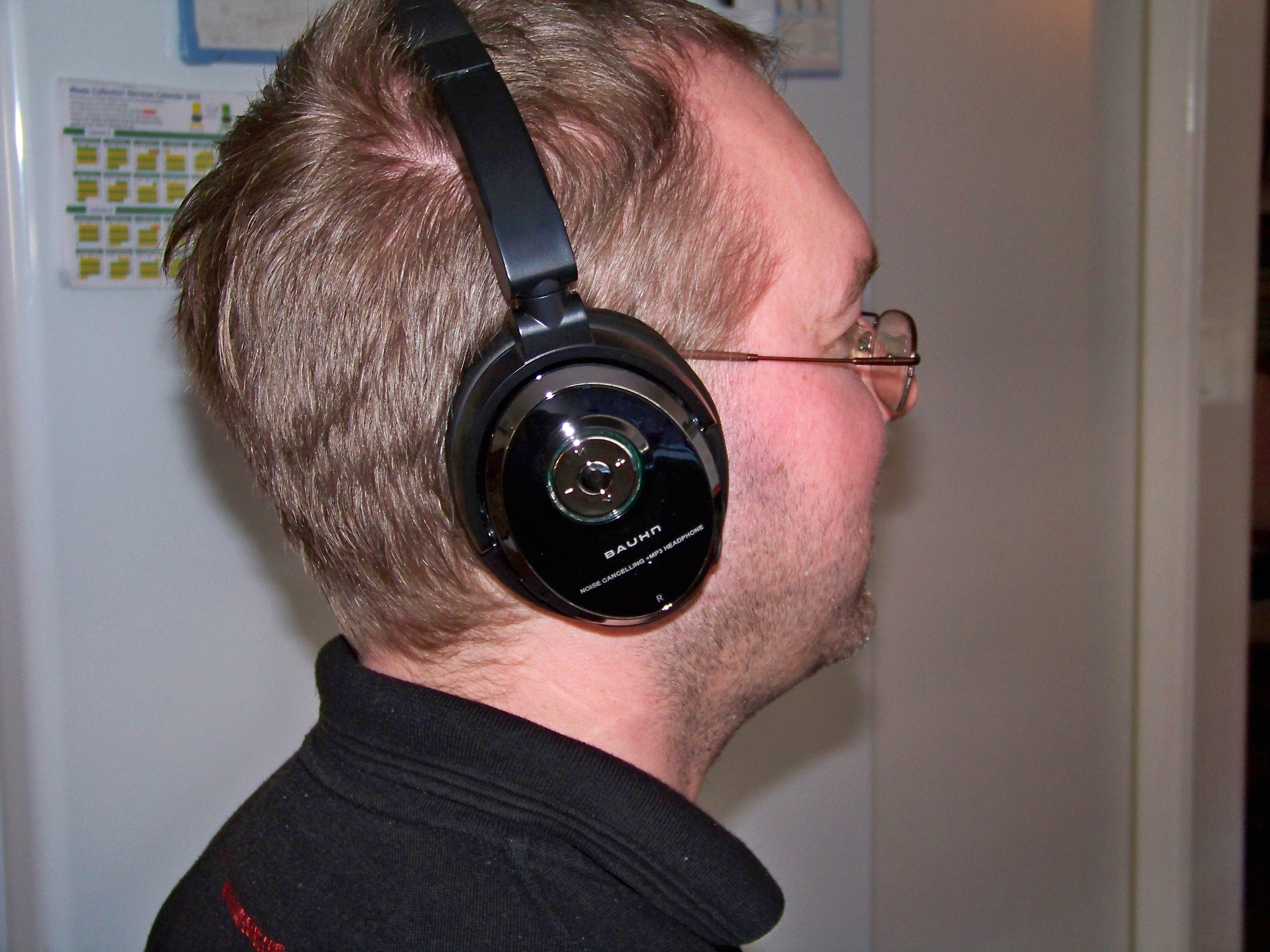
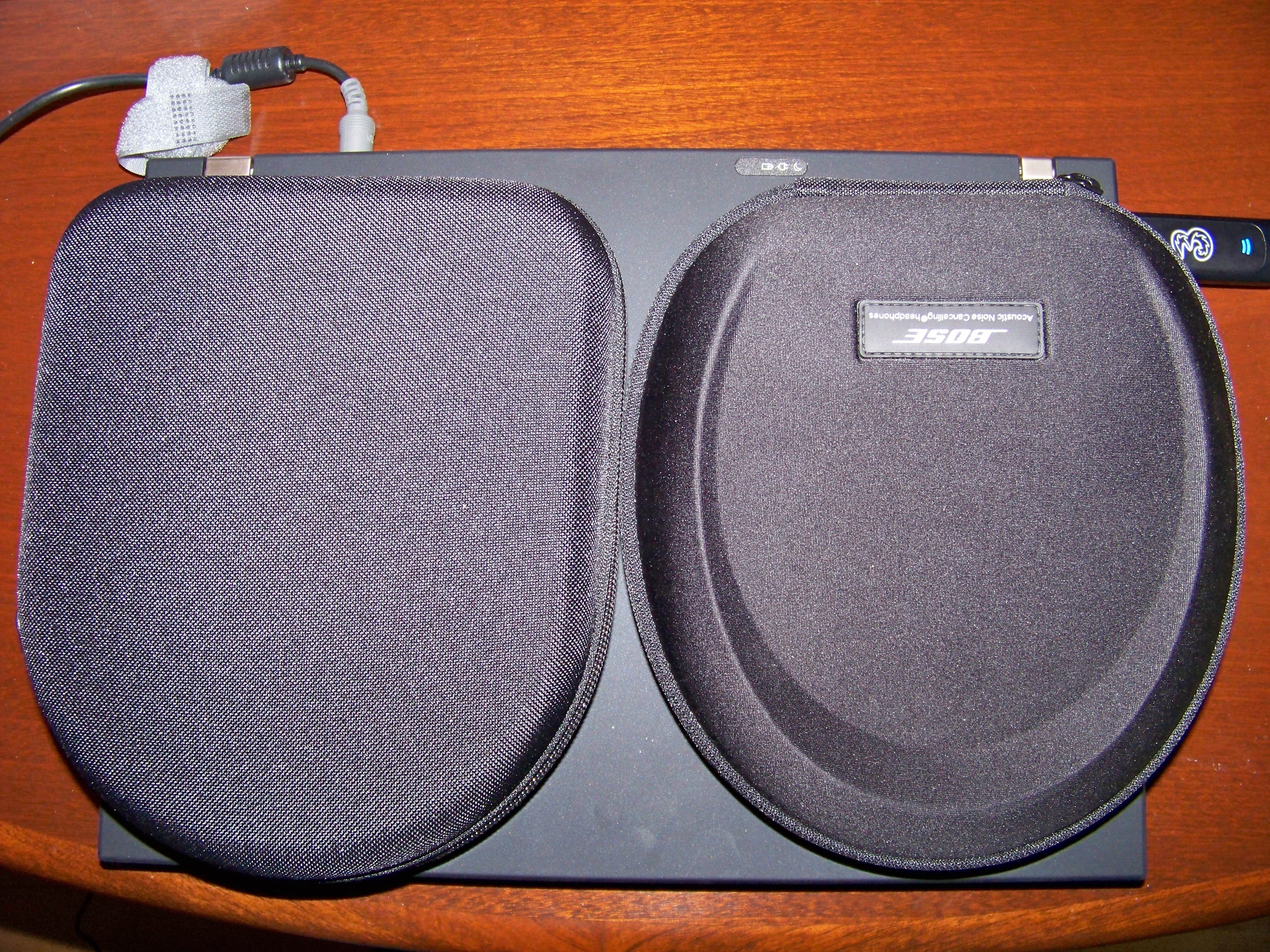
Me wearing Bauhn HeadphonesInside the case of Bauhn Noise Canceling Headphones showing the cable and connectorsOutside of the cases of Bauhn and Bose Headphones Overview The German supermarket chain Aldi has been running in Australia for 8 years now [1]. Their standard practice for a long time has been to offer regular special deals on a few items of consumer electronics every week, my chocolate fridge is one thing I bought from Aldi [2]. Today Aldi have started selling Noise Canceling Headphones [3]. These headphones are badged by Bauhn but that name is apparently applied to random products from cheap manufacturers, it may be an Aldi name that is applied to stuff that they sell. The headphones cost $69AU which is really cheap. But the deal will probably end in less than a week when stock runs out. Noise canceling headphones can be used in server rooms and other noisy environments. Every company that has a server room should buy a few sets. One of the features of noise-canceling is that it works best on low frequencies and on regular sounds it specifically doesn t block human voice well. In some noisy environments it will be easier to hear people talk if you wear such headphones! Noise canceling headphones are also very useful to people who are on the autism spectrum and other people who get more annoyed by noise pollution than average people. I have been wearing my Bose headphones on public transport and when walking around in the city, this not only stops traffic noise but it also helps to avoid people thinking that I want to talk to them. Features The first picture shows me wearing the Bauhn NC headphones, it s from the right to show the controls for the built-in MP3 player. I have not yet tested the MP3 functionality. It appears that as the controls are one power button, buttons for next/previous track, and for controlling the volume. This is fairly poor for MP3 functionality, ideally you would want to have a display to see a list of tracks, maybe have directories to store files, etc. I guess this could be a convenient feature on occasion, but you wouldn t buy the headphones for the MP3 functionality.
The next two pictures show a comparison of the Bauhn headset with the Bose QC-15 headset that I bought last year [4]. The cases of the Bauhn and Bose devices are almost exactly the same size and of a very similar shape, the Bose case is tapered and indented and also has a finer weave on the cloth covering it looks much nicer. Both devices come with an adapter for an airline socket and with a detachable cable. They also both have pouches attached to the inside of the case with velcro. But the Bauhn headphones come with an adapter for the 6.5mm TRS connector which could be convenient if you want to plug them in to a larger amplifier, the basic connector is 3.5mm in both cases. The Bauhn device uses a standard TRS connector at the headphone end while the Bose QC-15 use a special connector that matches the shape of the headset and which has a TRRS plug (to cater for the high/low volume switch), so it seems that a damaged Bauhn cable could be replaced cheaply while a replacement Bose cable would have to be purchased from Bose (presumably at great expense and delay). The Bauhn case also has a velcro attached pocket for storing business cards (or maybe a name tag or something). The supplied cable for the Bauhn is described as being 5 feet long which isn t quite long enough to reach a tower PC that is sitting on the floor. The Bose has a cable that is about a foot longer (maybe 6 feet total), but due to the non-standard connector you can t replace it. I presume that I could easily buy a 4 meter cable for the Bauhn headphones, but I could of course buy an extension cable to use with the Bose. Bose advertise the QC-15 headphones as having 35 hours of battery life from a single AAA battery. Aldi advertise the Bauhn headset as having 5 hours of battery life when NC is turned on and they use two AAA batteries. It s widely regarded that rechargeable batteries don t last as long as the batteries used for estimating the battery life (which presumably are the most expensive long-life batteries available). I ve found a single rechargeable AAA battery to last well over 5 hours in my Bose headphones, so it seems that battery life is considerably worse for the Bauhn device. One feature of the Bauhn device is that it can be used without any batteries for playing external music. The Bose headphones can t be used at all without a battery. So while the Bauhn will use the batteries faster it will at least be usable when the batteries run out. But if you are buying headphones for the purpose of avoiding noise then the Bose headphones are simply better. Comfort The Bose headphones have significantly deeper ear wells than the Bauhn about 23mm vs 18mm. If your ears stick out more than 18mm (as mine apparently do) then this is a good reason for choosing Bose. The Bose headphones are a tighter fit, the spring that pushes the ear-pieces together is stronger. But they have better padding so this doesn t cause me any discomfort. Also the Bose headphones have better passive noise reduction due to having a more snug fit around the ears. I ve worn my Bose headphones on a flight from the US to Australia with hardly a break and they were quite comfortable I would never want to do that with the Bauhn headphones. Noise Reduction I tested the Bose and Bauhn products against three noise scenarios, external music, an air-conditioner, and a car engine. The Bose headphones made good reductions of the noise from the external music (Numb by Linkin Park) and the air-conditioner. The Bauhn headphones did little to stop Linkin Park and was not very effective against the air-conditioner noise. I think that this is largely due to the lack of passive noise reduction, the air-conditioner in question makes little vibration noise and the sound of rushing air is generally immune to active noise cancellation. Both headphones were very effective when in a car with the engine idling. The engine noise of vehicles seems to fall in an ideal frequency range for active cancellation. Music Quality When listening to Youtube music played on my Thinkpad I could not notice any quality difference between the two sets of headphones. I did notice that the Bose headphones seemed to have a greater response in the higher frequency range, but that doesn t necessarily mean that one set is better than the other. Maybe if I was listening to FLAC0 encoded music that I had personally ripped from a CD then I would notice a difference. But for most people the Bauhn music quality should be good enough. Design Quality The Bose product is solidly designed, while the Bauhn product appears cheap in every way. Opening the battery compartment on the Bauhn headphones is difficult and if you do it wrong you could easily break the lid off, I expect that every set of Bauhn headphones that is used by children will be broken in a small amount of time but it should still be fully functional with a broken lid. The matt finish of the Bose headphones should hide minor scratches much better than the shiny Bauhn headphones. The Bauhn headphones also have lower quality plastic parts, it appears that the molds used were designed cheaply and without adequate care to prevent marking the final product. The design flaws that affect usage of the Bauhn product are the shallow ear wells, the poor fit of the cushions around the ears (which is probably mostly due to a weak spring pressing the ear cups to the wearer s head), and the battery compartment lid which is difficult to open and appears prone to breakage. The other flaws are all cosmetic. I wonder whether the Bauhn product was made by one of the big name manufacturers who deliberately reduced the quality to avoid competing with their more expensive products. It seems that the major flaws could have been corrected at design time with almost no increase in manufacturing costs. Recommendations If you can afford the Bose QuietComfort 15 Acoustic Noise Cancelling Headphones then they are really worth the extra expense, I have no regrets at all about spending about $320US (including tax) on my Bose QC-15. The Bauhn product is good for when you want something cheap, for example a set to be used in a server room, or for the use of children. I bought a Bauhn headset for a friend who is a pilot, he spent $1,100 on a noise-canceling headset for his plane but had never got around to buying one for recreational use I expect that he will allow his children to use his new Bauhn headphones, if they get broken it s only a $69 expense. The second cheapest NC headphones I ve seen on offer in Australia is Harvey Norman selling Phillips HN-110 Noise Canceling Headphones for $100AU [5]. Amazon sells Philips HN 110 Folding Noise-Canceling Headphones for $50US but doesn t seem to ship them outside the US (at least not to Australia). JB Hifi also has some NC headphones on sale in Australia [6], but they are more expensive at $219 for AKG and $319 for Sennheiser. Also the models they sell are on-ear which means that they will inherently have very little passive noise reduction and will also annoy anyone who doesn t like having their ears squashed. If I was buying NC headphones for my own use and didn t want to spend $300US then I would either buy the Philips HN 110 Folding Noise-Canceling Headphones from Amazon and get a friend in the US to post them to me or I would buy them from Harvey Norman. But the Bauhn product is good if you want cheap headphones to stop engine noise and give reasonable quality when playing music.

Ben Hutchings: Adding debian/source/format

Neil Williams writes:
The new lintian addition "missing-debian-source-format" is starting to remind me of a pestering nanny. I use source format 3.0 only where I see a technical benefit and that - so far - is restricted to packages that use a .tar.bz2 upstream and one or two with really tricky patching requirements.
You are missing the point - debian/source/format allows you to make it explicit that the source format is 1.0, if you want to stick with that.

24 March 2010

Neil Williams: Ignoring lintian nagging

The new lintian addition "missing-debian-source-format" is starting to remind me of a pestering nanny.

I use source format 3.0 only where I see a technical benefit and that - so far - is restricted to packages that use a .tar.bz2 upstream and one or two with really tricky patching requirements. It is literally one or two as well - out of 67 source packages which I maintain (more than some of those nagging me to change).

Packages for which I am upstream and all my native packages will stick with source format 1.0 - because there is no technical reason to migrate. Packages where I'm not upstream but which continue to use .tar.gz and have minimal or absent patching needs will also stay with 1.0 indefinitely. (I can't see how dpkg can drop 1.0 support, even after multiple stable releases after Squeeze.)

I've no interest in being side-tracked into a pointless "discussion" with those who have already made up their minds that nobody could possibly think that 3.0 is unwelcome or uninteresting. Nagging me won't help - I don't consider 3.0 worth using and I see no technical reasons to adopt it blindly.

Benjamin Drung: Eclipse 3.5.2-1 in Debian unstable

We, the Debian Orbital Alignment Team (DOA team), have released eclipse 3.5.2-1 to Debian unstable today after nearly seven month of work and 612 commit to our git repository. Many thanks to our hero Niels Thykier (222 commits). Without him we wouldn t have eclipse in Debian now. Thanks to Pablo Duboue, Adnan Hodzic, and Adrian Perez for their work on the Debian package. Last but not least, I want to thank Alexander Kurtakov and Andrew Overholt for eclipse-build, which we use to build eclipse. You should have modern hardware, if you want to build eclipse. It will need three gigabytes free disk space, two gigabytes memory, and at least 12 minutes to build, but it can need hours (on old hardware or if you have not enough memory). Update: Four days later we released 3.5.2-2 to Debian unstable. Today eclipse 3.5.2-2 was synced to Ubuntu 10.04 (lucid).

C.J. Adams-Collier: dlr-languages 20090805+git.e6b28d27+dfsg-1 in squeeze, -2 uploaded, nearly in lucid

Yay! The dlr-languages package has been migrated to testing, which means that it will be included in squeeze, the next release of Debian. Jo has uploaded the -2 version and it is now in sid. This version addresses the issues brought up in the Ubuntu Feature Freeze exception (FFe) bug, so I expect that it will be accepted shortly. Still lots of ifs , but this is pretty exciting for me, since this is my first debian package, and I ve been intending to get it in for over two years. I m not just sitting on my hands while this happens. I ve been working with Ivan, Ankit, Dino and Michael to get the next version of the package put together. I m currently merging Ivan s latest branch into the changes I ve made for DFSG compliance. Dino recommended that the next release include IronRuby 1.0 and IronPython 2.6.1, which should be released by upstream around the middle of April.

John Goerzen: Trip part 1: Kansas to Indiana

Note: This post was written March 12, and posting was delayed until our return home. This is the first part of our trip: driving from Kansas to Indiana with Jacob and Oliver. From Indiana, we ll be flying to Germany while the boys stay with their grandparents. We normally don t like long road trips. Our preferred way to travel is by train. By air is second, and car is last. But this time, driving was all that made sense. We planned to make the 11-hour drive in two days to give the boys more of a chance to get out of the car and run around. It s always a bit demoralizing heading east from our place. You drive at highway speeds for an hour and are barely one county over. We left at about noon and made it as far as Kansas City before our first stop much to our surprise. We ate at a Cracker Barrel there. Afterwords, Jacob loved running in front of the restaurant. IMG_2507 Meanwhile, Oliver chilled on a wooden bench. IMG_2494 Jacob was excited to find this chair. He said Here is a chair just the size of me! IMG_2489 We spent the night in a hotel on the eastern edge of the metro area. Then Thursday hit the road again. We stopped for a mid-morning snack, then ate lunch at Pizza Hut. Jacob ran around in the grass outside again. Jacob invented a new game with me. He d ask, How will we get there? I was supposed to guess. With a pickup? No With a boat? No Eventually he d come up with a silly answer: We ll ride a pile of bricks there! or We ll ride on top of a stop sign! Then he d sit there laughing for a little bit. Pretty soon: Hey dad. How will we get there? We had a few toy-throwing episodes, but overall Jacob did very well. Oliver did even better. He slept a good part of the way, and happily watched Jacob for most of the rest. The car trip went well. This morning, it s time to get ready to head to the airport, and to break the news to Jacob that we ll be gone for a few days. We ve learned that he worries a lot about change if he knows about it too much in advance, finding it hard to process and understand, so we ll tell him after he wakes up this morning. Then off to the airport for our flight to Newark. Then we get to sit around in New Jersey for a few hours before our 7.5-hour flight to Hamburg.

Adnan Hodzic: Need help setting up my Linux development platform

Maintaining stable life with unstable distro? This post may sound ludicrous to some of you but please hear me out. I ve been on Debian unstable/Sid for awhile now and it was all cool until yesterday. Besides my work on Debian DebConf/some devel, I m university student, also I do web devel which is my primary source of income, besides all those I try to go out on weekends and have some kind of social life. Somehow I manage to do all these things and I d say I manage them pretty successfully too. Now I m hardcore to the bone, but this is just too much, last week started working on immense web devel project didn t sleep more then 2hrs/day whole week; I also didn t shut down my notebook and just kept it on suspend as I usually do. Either way I was about to print/scan something and I connect my printer and what happens? My whole system freezes, now I ll let you figure out the result of doing hard reset and having a lot of gedit docs open at that time. And yes, I did had that bug reported awhile ago, can t find it now, but it was fixed, seems like it s back again. In the end I m left with weekend completing the lost work + late school work + eclipse 3.5.2-2 ought to be uploaded. I do almost all the work (didn t upload eclipse) and literally pass out on Sunday. Wake up sometime on Monday, wasn t able to get up from bed. Plan: Change my base distro, keep Sid as dualboot or virtual machine
Now, for my time of being Sid user this isn t the first time something like this happened, and by this I mean unexpected/unprovoked bugs. I might not be as hardcore as I used to be, or it s just that I don t have time anymore. So my plan is to get Stable or even Ubuntu for my work/study platform, while I d have dual boot or virtual machine of Debian Unstable/Sid. I m sure I can t be the only one who s doing this, so please give me your advice on this one.
1. Main question is dualboot or virtual machine? Reason I d like it to be a virtual machine instead of dual boot is that my notebook HDD is 64GB SSD (Lenovo X300). By todays standards 64GB is quite small, while the price of SSD is quite opposite of small. So I d like to use this only for my main/base OS, nothing else. Since I use external HDD s having it virtual it s more convenient for me to carry around my image/s. Other day I ordered 4GB of RAM so I shouldn t have problems with performance of this virtual machine. Or even with that much RAM, devel on virtual machine is just not possible? 2. In case I go for Ubuntu, and decide to start packaging for Ubuntu as well, what s the best way to have my work/packages synced within both Debian and Ubuntu (sshfs?). 3. How do I take my PGP keys with me? If I just copy .gnupg and .ssh will that be enough? 4. Can I have same keys both on my host machine and virtual machine at the same time? 5. Some other idea of sticking with Sid?
Input to any of these questions/other suggestions would be greatly appreciated.

23 March 2010

Debian News: Brief updates: release team, eclipse and Debian related events

Russ Allbery: Lintian 2.3.4

It's been nearly two months since the previous release, so lots had accumulated in the bug tracker. This release resolves a bunch of various false positives, fixes a few minor issues with the lintian.debian.org pages, and applies all the patches that were in the BTS that were ready to go in. It doesn't have any of the pending larger changes, since we wanted to get the smaller fixes out quickly. The current tentative plan is that the next release will be 2.4.0 and will include several large structural changes that various people have been working on, including the conversion of the manual to DocBook. All plans are, of course, pending finding enough time. It's amazing how effective Lintian can be given that it uses a bunch of guesswork and loose regexes to parse everything from init scripts to debian/rules files. We do have a bunch of accumulated wishlist bugs that aren't going to be fixed without writing better and more thorough parsing, particularly for shell scripts, but it boggles me just how far you can get with some dead-simple heuristics. Thanks very much to Adam D. Barratt and Raphael Geissert who have kept things going while I've been eaten by work, and particularly to Raphael for doing the last two releases and a ton of work with the security update.

Daniel Kahn Gillmor: Avoiding erroneous OpenPGP certifications

i'm aware that people don't always take proper measures during mass OpenPGP keysignings. Apparently, some keys even get signed with no one at the keysigning present speaking for that key (for example, if the key was submitted to the keysigning via online mechanisms beforehand, but the keyholder failed to show up). Unverified certifications are potentially erroneous, and erroneous certifications are bad for the OpenPGP web of trust. Debian and other projects rely on the OpenPGP web of trust being reasonable and healthy. People should make a habit of doing proper verifications at keysignings. People who make unverified certifications should probably be made aware of better practices. So for future keysignings, i may introduce a key to the set under consideration and see what sort of OpenPGP certifications that key receives. I won't pretend to hold that key in person, won't speak for it, and it won't have my name attached to it. But it may be on the list. Depending on the certifications received on that key (and the feedback i get on this blog post), i'll either publish the list of wayward certifiers, or contact the certifiers privately. Wayward certifiers should review their keysigning practices and revoke any certifications they did not adequately verify. Remember, at a keysigning party, for each key: After the keysigning, when you go to actually make your OpenPGP certifications: Feedback welcome! Tags: keysigning, openpgp, tip

22 March 2010

Russell Coker: Links March 2010

Blaise Aguera y Arcas gave an exciting demonstration of new augmented reality mapping software from Microsoft that combines video (including live video) with static mapping data and pictures [1]. This is a significant advance over current mapping systems such as Google Earth but it s not released yet either. It will be interesting to see whether Google or Microsoft gets this released first. The New York Review of Books has an insightful atricle by Garry Kasparov about human/computer chess [2]. It s surprising the degree to which a combination of human and computer chess playing can give a good result. Amateur human chess players plus regular PCs can beat grandmasters with computers or high-end computers with human help. It s apparently the quality of human-computer interaction that determines the quality of play. But the article contains a lot more, I recommend reading it. Daniel Kahneman gave an interesting TED talk about the difference between experiential and memory happyness [3]. As the concept of the moment is so short (about 3 seconds) apparently most people try to optimise their actions for the best memories of being happy. But to do so requires some different strategies. For example a two week vacation gives a memory that s not much different from a one week vacation. Therefore it seems that you would be better off staying in a five star hotel for a week than a four star hotel for two weeks, and eat dinner at a Michelin Star restaurant at least once per holiday even if it means eating at McDonalds on other occasions due to lack of funds. Temple Grandin gave an interesting TED talk The World Needs all Kinds of Minds [4] which mostly focussed on teaching children who are on the Autism spectrum. She is concerned that autistic children won t end up where they belong in Silicon Valley . Anupam Mishra gave an interesting TED talk about how the people of India s Golden desert built structures to harvest and store water [5]. Some of their ideas should be copied in Australia, due to mismanagement and stupidity Australians are failing to survive in much more hospitable places. Michael Tieman wrote an insightful and well researched article about the OSI s rejection of the IIPA s attacks on Open Source [6]. This is worth reading by anyone who wants to make a business or social case for free software. Mark Shuttleworth wrote an interesting post about the new visual style for Ubuntu and Canonical [7]. Apparently this includes the creation of a new font set which will be available for free use. Divorced Before Puberty an informative New York Times article by Nicholas Kristof about the links between treatment of women and terrorism [8]. The New York Times has an interesting article on Human Flesh Searches on the Internet in China [9]. It s basically crowds targetting people to find private information and harass them (similar to what some griefers are known for doing on the English-language part of the Internet). But they seem more interested in vigilante justice than lulz. The New York Times has an informative article about the Cult of Scientology (Co$) [10]. Among other interesting news it suggests that the number of cult victims in the US has dropped from 55,000 to 25,000 in the 2001-2008 time period. Senator Xenophon has called for an inquiry into the crimes committed by the cult and a review of it s tax-exempt status [11]. As always Xenu.net is the authoritative source for information on the Cult of Scientology AKA the Church of Scientology. The New York Times has an interesting article about formally studying the skills related to school teaching [12]. It largely focuses on Doug Lemov s Taxonomy of Effective Teaching describes 49 techniques that improve school results and some other related research. The article also mentions that increasing teacher salaries is not going to help much due to the large number of teachers, it s only professions that employ small numbers of people that can potentially have their overall skills improved by increasing salaries. Andy Wingo wrote an interesting article about Julius Caesar [13] based on the book The Assassination of Julius Caesar: A People s History of Ancient Rome by Michael Parenti. It seems that Caesar was more of a populist than a despot. Interesting article in The Register about the Large Hadron Collider (LHC) [14]. Apparently one 3.5TeV proton beam has as much energy as a British aircraft carrier running at 8 knots.

Christian Perrier: Amazing week in Khon Kaen for Thailand MiniDebconf

I'm now on my way back from The first miniDebCamp and miniDebconf that happened from March 13th to March 19th in Khon Kaen, Thailand. This even was organized locally by a team of very motivated Thai Debian enthusiasts and contributors, such as Theppitak Karoonboonyanan (*the* Thai DD), Neutron Soutmun, Kitt Tientanopajai, and all those whose name I'm not remembering as of now (I hope they won't mind). The even had kinda the structure of DebConfs, with a few days of "Debcamp" to begin. See the full schedule. We were hosted in Khon Kaen University (KKU), one one the most famous universities in Thailand, a small "town in town" in a city with a few hundred thousand inhabitants (dunno exactly). Lodging was done in a hotel located inside the university. Interestingly, the hotel was also hosting youg students participating to "Summer Camps" (apparently training systems to get good school results) gving to all this a very young atmosphere. The hacking lab and talks location was a 30-seat room in the university library, and meals were brought in there very efficiently, with the very specific way that Thai people have to transport each and every kind of meal (in small plastic bags closed by rubber). I arrived only in the 3rd day because I had commitments at home that made it impossible to me to come for the first day. During these days, people have been very busy hacking and participating to the Bug Squashing Party. During that BSP, about 50 bugs have been touched, without about 15 or so closed. Other non Thai attendees were Andrew Lee from TW, Paul Wise from AU, Daiki Ueno and Yukiharu Yabuki from JP. Organizers were expecting some attendees from neighbouring countries such as Laos, Vietnam or Cambodia. Unfortunately, none of them could come, including Anousak Soupavanh, leader of Lao free software localization efforts, who I was very impatient to meet. Transport difficulties, or visa problems, do not make things easy in that part of the world. On Wednesday we had a "DayTrip" as it is common for such event. We went abotu 50 km away from Khon Kaen, to visit a nice place, close to a dam lake, and climbed a hill surrounded by a big temple and a giant Buddha statue. Then we had a wonderful lunch in a fish restaurant in the very specific Thai way to share stuff: everything is on the table and you pick your food here and there, at you rconvenience. Of course, local advice before trying apparently innocent food is always worth it because the fire might be hidden anywhere (for instance in that soja plate which I tried and that set my mouth as a burning hell for 20 minutes). The journey ended by a visit of a great temple in Khon Kaen and, very noticeably by a dinner in a very popular barbecue restaurant in "all you can eat" style for...100Bath (so, about 2.5 euros). Maybe only vegetarian people had more trouble enjoying the meal as it was mostly made of various meat (and sea food). The talk days were very intense, at least in my opinion. Probably because I ended up giving four talks, some of them completely improvised (about IP-over-DNS, which I was using at the hotel and about which many wanted to learn a little bit more, and GPG keysigning processes). It turned out that the GPG talk was well received and, discussing with Paul later on, we agreed that such a talk, mostly meant to explain the DOs and DON'Ts For good GPG keys signing, could be a good idea even for Debconfs. There were also a few talks about local initiatives and efforts to develop (and not only promote) free software. We have no recordings of these talks as we were infortunately missing some video recording installation (maybe next time, Thep) just like the miniConf that was happening in Panama at about the same time was having. Due to local regulation on the university network, we had some limitations with Internet access (some firewalling that for instance was preventing SIP to work properly, which made a video-conference with a japanese user group fail, unfurtunately). The event ended in a round table discussion about ideas to organize something bigger in the future. The local community in Thailand has apparently the energy, maybe ressources and local support to be able to organize a slightly bigger event as first try (somethign like an Asian DebConf or something similar, targeting mostly Asian contributors and about 50-100 people. Thailand seems to be a good target to host such event, with many things being relatively inexpensive (and not only beer!). And they even think about possibly hosting a Debconf at some time in the future (actually, Martin Krafft should also be credited for bringing this idea). That isn't as crazy as it seems and, provided that potential organizers start involving themselves in the current Debconfs, everything seems to be possible. After all, if we look back to 2005, only one person (hello, Safir) was seriously thinking that Debconf could really happen in Bosnia and Herzegovina, right? After this week (followed by 2.5 days of sightseeing in Bangkok for me, plus a small meeting today with local Thai Linux corporate users and IT company owners), I feel like the mood in Asia about Debian development is high and full of potential. The miniconf last year in Taiwan was already a good success, by establishing a good connection between people.....we need to keep that alive and, hopefully, there will be other miniconfs in this part of the world. And, well, if I can be there, I'll be there.

Andrew McMillan: The cost of crap

For several years now we've been buying our groceries online. It's worked well, and for the last couple of christmases I remember Heather adding a six-pack into the pre-christmas order so she could pull it out and hand it off to the delivery guy. Fair enough too, because he was their front-line man. He was the guy who had to actually meet the customer, and even if only for two minutes face time, the impression he gave with his cheery "seeya mate" on the way out, and his always-happy smile, was that getting the groceries delivered was fun. Well that ongoing encouragement has gone now. His surly replacement who moans about having to carry the boxes up a flight of stairs does nothing to promote a repeat experience, and he brings into sharp focus the disadvantages of online grocery ordering: sometimes the wrong thing is substituted, or sent. Or the fruit doesn't travel quite so well as it does with the personal loving kindness we supply in our own padded wagon. Two visits from the new guy, and we're back to driving to the supermarket ourselves, patrolling the aisles once more in a cereal haze of consumer demand. Distress-purchasing done, and back to the car A.S.A.P. Carrying our own boxes up the stairs. I hate it, which is why I promoted the idea that we try this online grocery thing a few years ago, and it's worked just fine until this sullen bastard came along and destroyed the fun. I wonder how the company feels? Do they realise what this person is doing to their customers? Will they notice, and if they do, will they even be able to tell where the source of the problem is? In these days of increasing online experience, customer service is still important, if not more important than ever before.

Dirk Eddelbuettel: 2010 March Madness Half Marathon in Cary

The annual March Madness Half Marathon in Cary took place this morning. This is both one of Chicagoland's 'early races' to start the season as well as the classic Boston preparation due to the hilly course. I have now run this consecutively for six years (see 2005. 2006, 2007, 2008, and 2009). As for the race conditions, we had fantastic weather all week with temperatures up to the sixties and then all of a sudden a forecast of rain, snow and even sleet for the weekend. Luckily, and while yesterday was sucky, today was allright or better. A little chilly and damp, but neither rain nor snow --- or even wind. So the conditions were good, with the course challenging as usual. The race itself went fine. I ran more or less steadily, never had to stop but was not particularly fast at 1:39:38 or a pace of 7:36.3. I had aimed for beating 1:40, had missed that target by miles 4 to 6 and was about 10 or 15 seconds behind but managed to get a negative split on the second half of the course to reach that goal. Which is nice, but the time is still the slowest I've ever run that race, and my slowest half-marathon since 2004. Training had been sluggish all winter. Oddly enough, already in last year's post I stated pretty much the same and feared that Boston may become tough --- which it did. But this year may well be a lot worse as I had no spring in my step all winter long. No fire in the belly for training will make for a long race. We'll see how it goes. Four weeks to go.

21 March 2010

Robert Collins: LibrePlanet 2010 day 3

Free network services A discussion session led by Bradley Kuhn, Mako & Matt Lee : Libre.fm encouraged last.fm to write an API so they didn t need to screen scrape; outcome of the network services story still unknown netbooks without local productivity apps might now work, most users of network office apps are using them because of collaboration. We have a replacement for twitter status.net, distributed system, but nothing like facebook [yet?]. Bradley says like the original GNU problem, just start writing secure peer to peer network services to offer the things that are currently proprietary. There is perhaps a lack of an architectural vision for replacing these proprietary things: folk are asking how we will replace the cloud aspects of facebook etc tagging photos and other stuff around the web, while not using hosted-by-other-people-services. I stopped at this point to switch sessions the rooms were not in sync session time wise. Mentoring in free software Leslie Hawthorne: Projector not working, so Leslie carried on a discussion carried on from the previous talk about the use of sexual themes in promoting projects/talk content and the like. This is almost certainly best covered by watching the video. A few themes from it though: We then got Leslies actual talk. Sadly I missed the start of it I was outside organising security guards because we had (and boy it was ironic) a very loud, confrontational guy at the front who was replying to every statement and the tone in the room had gotten to the point that a fight was brewing. From where I got back: Chris Ball, Hanna Wallach, Erinn Clark and Denise Paolucci Recruiting/retaining women in free software projects. Not a unique problem to women things that make it better for women can also increase the recruitment and retention of men. Make a lack of diversity a bug; provide onramps small easy bugs in the bug tracker (tagged as such), have a dedicated womens sub project and permit [well behaved :) ] men in there helps build connections into the rest of the project. Make it clear that mistakes are ok. On retention recognise first patches, first commits in newsletters and the like. Call out big things or long wanted features by the person that helped. Regular discussion of patches and fixes rather than just the changelog. CMU did a study on undergrad women participation in CS : Lack of confidence preceeds lack of interest/partipation . Engagement with what they are doing is a key thing too. Women are consistently undervaluing their worth to the free software community . Its the personal touch that seems to make a huge difference . More projects should do a code of conduct kudos to Ubuntu for doing it Chris Ball. I found the mentoring and women-in-free-software talks to have extremely similar themes which is perhaps confirmation or something but it wasn t surprising to me. They were both really good talks though! And thats my coverage of LibrePlanet I m catching a plane after lunch :( . Its a good low-key conference, and well put together.

Gunnar Wolf: Baroque spam, repetition ad nauseam

Sitting at my hotel room in Tijuana, about to hit the bed, quite tired because of a nice, long walk I will write more about tomorrow, I have been listening for at least five minutes to a long, stupid infomerciative spam in the History Channel: A fountain pen, a five-point pen, and three other pen-like implements (plus extra and extra and extra things... They are listing a case with 63 implements now!) Now, what is the hook into getting somebody to call for a classy pen? Elegance, of course! Just for the sake of this exercise, the spam continues to be played. And yes, it's only been two short paragraphs. But believe me, I am very tired, and trying to get some coherent English out of my brain is not as easy as it could. Elegance, I said, right? Good. How do you convey elegance to TV spam/infomercials? Well, what's more classy and refined than a 30 second sample of Haydn? Man, Haydn is *so* classy that the viewer will not even notice the snippets of blabber have incoherent redaction. Anyway... Spam goes on. I cannot stand any more repetitions of this 30 Haydn seconds. They are stronger than me. And that old lady says that anybody is writing in their computer now I will only write with my fountain pen from now on! I will surely follow her wise advise! (STOP IT WITH THE STUPID HORN!)

Russell Coker: Citing Wikipedia

A meme that has been going around is that you can t cite Wikipedia. You can t Cite Wikipedia Academically Now it s well known and generally agreed that you can t cite Wikipedia for a scientific paper or other serious academic work. This makes sense firstly because Wikipedia changes, both in the short term (including vandalism) and in the long term (due to changes in technology, new archaeological discoveries, current events, etc). But you can link to a particular version of a Wikipedia page, you can just click on the history tab at the top of the screen and then click on the date of the version for which you want a direct permanent link. The real reason for not linking to Wikipedia articles in academic publications is that you want to reference the original research not a report on it, which really makes sense. Of course the down-side is that you might reference some data that is in the middle of a 100 page report, in which case you might have to mention the page number as well. Also often the summary of the data you desire simply isn t available anywhere else, someone might for example take some facts from 10 different pages of a government document and summarise them neatly in a single paragraph on Wikipedia. This isn t a huge obstacle but just takes more time to create your own summary with references. When Wikipedia is Suitable The real issue however is how serious the document you are writing is and how much time you are prepared to spend on it. If I m writing a message to a mailing list or a comment on a blog post then I probably won t bother reading all the primary sources of Wikipedia pages, it would just waste too much of my time. Wikipedia is adequate for the vast majority of mailing list discussions. If I m discussing several choices for software with some colleagues we will probably start by reading the Wikipedia pages, if one option doesn t appear to have the necessary features (according to Wikipedia) then we may ask the vendor if those features are really missing and if so whether they will be added in the next version but we may decide that we don t really need the features in question and modify our deployment plans. Many business decisions are made with incomplete data, time is money and there often isn t time to do everything you want to do. Using Wikipedia as a primary source for business decisions is a way of trading off a little accuracy for a huge time saving. This is significantly better than the old fashioned approach of comparing products by reading their brochures companies LIE in their advertising! When writing blog posts the choice of whether to use Wikipedia as a reference depends on the point that you are trying to make and how serious the post is. If the post isn t really serious or contentious or if the Wikipedia reference is for some facts that are not likely to be disputed then Wikipedia will probably do. For some posts a reference to a primary source will be better. A blog post that references data that is behind a pay-wall (such as a significant portion of academic papers and news articles) is practically of less use than a post that cites Wikipedia. In most cases Wikipedia references free primary sources on the Internet (although it does sometimes refer to dead tree products and data that is behind a pay-wall). In the minority of cases where the primary references for a Wikipedia page are not available for free on the Internet there will be people searching for freely available references to replace the non-free ones. So if you refer to a Wikipedia page with non-free references a future reader might find that someone has added free references to it. The Annoying People One thing that often happens is that an Internet discussion contains no references for anything it s all just unsupported assertions. Then if anyone cites Wikipedia someone jumps in with you can t cite Wikipedia . If you want to criticise Wikipedia references then please first start by criticising people who state opinions as fact and people who provide numbers without telling anyone where they came from! The Guinness Book of Records (now known as Guinness World Records ) was devised as a reference to cite in debates in pubs [1]. It seems that most of the people who dismiss references to Wikipedia on the net would prefer that Internet debates have lower requirements for references than a pub debate. When Wikipedia is cited in an online discussion it is usually a matter of one mouse click to check the references for the data in question. If Wikipedia happens to be wrong then anyone who cares can correct it. Saying the Wikipedia page you cited had some transcription errors in copying data from primary sources and some of the other data was not attributed, I ve corrected the numbers and noted that it contains original research would be a very effective rebuttal to an argument that relies on data in Wikipedia. Saying you can t cite Wikipedia means little, particularly if you happen to be strongly advocating an opposing position while not providing any references. If one person cites an academic paper and someone else cites Wikipedia then it seems reasonable to assume that the academic paper is the better reference. But when it s a choice between Wikipedia and no reference then surely Wikipedia should win! Also references to non-free data are not much good for supporting an argument, that s really just unverified claims as far as most people can determine therefore the issue becomes how much the person citing the non-free reference can be trusted to correctly understand and summarise the non-free data. Also it has to be considered that not all primary sources are equal. Opinion pieces should be considered to have a fairly low value and while they are authoritative for representing the opinion of the person who wrote them they often prove little else unless they happen to cite good references which brings them to the same level as Wikipedia. The main benefit for linking to opinion pieces is that it saves time typing and gives a better product for the readers it s sometimes easier to find someone else expressing an opinion well than to express it yourself. So please, don t criticise me for citing Wikipedia unless others in the discussion are citing better references. If most people are not citing any references or only citing opinion pieces then a Wikipedia page may be the best reference that is being provided!

Russell Coker: Xen and Debian/Squeeze

Ben Hutchings announced that the Debian kernel team are now building Xen flavoured kernels for Debian/Unstable [1]. Thanks to Max Attems and the rest of the kernel team for this and all their other great work! Thanks Ben for announcing it. The same release included OpenVZ, updated DRM, and the kernel mode part of Nouveau but Xen is what interests me most. I ve upgraded the Xen server that I use for my SE Linux Play Machine [2] to test this out. To get this working you first need to remove xen-tools as the Testing version of bash-completion has an undeclared conflict, see Debian bug report #550590. Then you need to upgrade to Unstable, this requires upgrading the kernel first as udev won t upgrade without it. If you have an existing system you need to install xen-hypervisor-3.4-i386 and purge xen-hypervisor-3.2-1-i386 as the older Xen hypervisor won t boot the newer kernel. This also requires installing xen-utils-3.4 and removing xen-utils-3.2-1 as the utilities have to match the kernel. You don t strictly need to remove the old hypervisor and utils packages as it should be possible to have dual-boot configured with old and new versions of Xen and matching Linux kernels. But this would be painful to manage as update-grub doesn t know how to match Xen and Linux kernel versions so you will get Grub entries that are not bootable it s best to just do a clean break and keep a non-Xen version of the older kernel installed in case it doesn t initially boot. A apt-get dist-upgrade operation will result in installing the grub-pc package. The update-grub2 command doesn t generate Xen entries. I ve filed Debian bug report #574666 about this. Because the Linux kernel doesn t want to reduce in size to low values I use xenhopt=dom0_mem=142000 in my GRUB 0.98 configuration so that the kernel doesn t allocate as much RAM to it s internal data structures. In the past I ve encountered a kernel memory management bug related to significantly reducing the size of the Dom0 memory after boot [3]. Before I upgraded I had the dom0_mem size set to 122880 but when running Testing that seems to get me a kernel Out Of Memory condition from udev in the early stages of boot which prevents LVM volumes from being scanned and therefore prevents swap from being enabled so the system doesn t work correctly (if at all). I had this problem with 138000M of RAM so I chose 142000 as a safe number. Now I admit that the system would probably boot with less RAM if I disabled SE Linux, but the SE Linux policy size of the configuration I m using in the Dom0 has dropped from 692K to 619K so it seems likely that the increase in required memory is not caused by SE Linux. The Xen Dom0 support on i386 in Debian/Unstable seems to work quite well. I wouldn t recommend it for any serious use, but for something that s inherently designed for testing (such as a SE Linux Play Machine) then it works well. My Play Machine has been offline for the last few days while I ve been working on it. It didn t take much time to get Xen working, it took a bit of time to get the SE Linux policy for Unstable working well enough to run Xen utilities in enforcing mode, and it took three days because I had to take time off to work on other projects.

20 March 2010

Robert Collins: LibrePlanet 2010 Day 2

John Gilmore keynote What do we do next, having produced a free software system for our computers? Perhaps we should aim at Windows? Wine + an extended ndiswrapper to run other hardware drivers + a better system administration interface/resources/manuals. However that means knowing a lot about windows internals something that open source developers don t seem to want to do. We shouldn t just carry on tweaking its not inspiring; whats our stretch goal? Discussion followed reactos, continue integrating software and people with a goal of achieving really close integration: software as human rights issue! Desktop paradigm needs to be replaced : need to move away from a document based desktop to a device based desktop. Concern about the goal of running binary drivers for hardware: encourages manufacturers to sell hardware w/out specs; we shouldn t encourage the idea that that is ok. Lots of concern about cloning, lots of concern about what will bring more freedom to users, and what it will take to have a compelling vision to inspire 50000 free software hackers. Free software in cars lots of safety issues in .e.g brake controllers, accelerators. Eben Moglen We re at the inflection point of free software because any large scale global projects these days are not feasible without free software. Claims that doing something that scales from tiny to huge environment requires us A claim I would (sadly) dispute. Lots of incoming and remaining challenges. Entirely clear that the patent systems relationship to technology is pathological and dangerous that I agree with! Patent muggings are a problem patent holders are unhappy with patents granted to other people :) . Patent pools are helping slowly as they grow. Companies which don t care about the freedom aspect of GPLv3 are adopting it because of the patent protection aspects. Patent system is at the head of the list of causes-of-bad-things affecting free software. SFLC is building coalitions outside the core community to protect the interests of the free software community. We are starting to be taken for granted at the high end of mgmt in companies that build on free software. We face a problem in the erosion of privacy. We need to build a stack, running on commodity hardware that runs federated services rather than folk needing centralised services. Marina Zhurakhinskaya on GNOME Shell: Integrates old and new ideas in an overall comprehensive design. Marina ran through the various goals of the shell growing with users, being delightful, starting simply so new users are not overwhelmed. The activities screen looks pretty nice ;) The workspace rearrangement UI is really good. The notifications thing is interesting; you can respond to a chat message in-line in the notification. Richard Stallman on Software as a Service he presented verbally the case made in the paper. Some key quotes All your data on a server is equivalent to total spyware I think this is a worst-case analogy; it suggests that you can never trust another party: kindof a sad state of paranoia to assume that all network servers are always out to get you all the time. And I have to ask should we get rid of Savannah then (because all the data is stored there) the argument for why Savannah is not SaaS is not convincing: its just file storage, so what makes it different to e.g. Ubuntu One? If there is a server and only a little bit of it is SaaS, perhaps just say don t worry about it because that little bit is often the hardest bit to replace. Lets write systems for collaborative word process that don t involve a central server abiword w/the sharing plugin ? :) RMS seems to be claiming that someone else sysadmining a server for you is better than someone else sysadmining a time-shared server for you: I don t actually see the difference, unless you re also asserting that you ll always have root over your own machine . The argument seems very fuzzy and unclear to me as to why there is really a greater risk in particular when there is a commercial relationship with the operator (as opposed to, say, an advertising supported relationship).

19 March 2010

Jon Dowland: The Dice Man and Generation X

The movie ' Fight Club' had a profound effect on me when I first saw it in 1999. I wasn't as fond of the originating novel, although there was something about the prose that Palahniuk used which I did enjoy. Since then I've read more of Palahniuk's work. My favourite of his books is actually Non-Fiction (a.k.a. Stranger than Fiction ): a collection of essays and interviews. Reading some of the stories in that collection, it becomes very clear where some of the concepts in his fiction originate. There are also a number of pieces on the craft of writing. He writes some really gushing praise about Amy Hempel:
When you study Minimalism in the novelist Tom Spanbauer's workshop, the first story you read is Amy Hempel's The Harvest. After that, you're ruined every other book you ever read will suck.
I recently read a couple of novels, both of which reminded me a lot of Fight Club. 'Generation X: Tales for an Accelerated Culture' by Douglas Coupland is an interesting tale of three or more societal drop-outs. Fight Club was written five years after Generation X and owes it a lot. 'Generation X' has curt, clipped passages and many dictionary-definition-esque side notes decoding hipster-slang, which add a lot of colour to the non-events of the story. These remind me both of the copous asides in Pratchett novels, or the chapter introductions in Philip K Dick's excellent 'Ubik'.
Historical Overdosing: To live in a period of time when too much seems to happen. Major symptoms include addiction to newspapers, magazines, and TV news broadcasts.
The novel goes absolutely nowhere, but that's actually one of the appealing things about it. When I mentioned this to my partner (who, as far as I know, has not read the book), she said that it sounded like the perfect tonic to a stressful life: imagine lying on a sunbed, doing nothing, reading about people lying on sunbeds, doing nothing. This is the first of Coupland's novels that I have read, but I managed to pick up a copy of 'Generation A' (so far as a I can tell, not a sequel, as such) 70% off as part of the closing-down sale at my local Borders store, so I will probably read that too. I also recently finished The Dice Man , by Luke Reinhart. It's a tongue-in-cheek pseudo-autobiography written under a pen-name about a psychiatrist who opts to delegate all life decisions to the throw of dice. Once again, Fight Club owes a lot to this book. The unhinged situations that occur are used to shine a satirical light on modern society. 'modern society' in the book is the 1970s. The distance between society then and now adds something to the novel's value now. Having said that, the narrator is not a particularly likeable character and it's hard to relate to him. Coincidentally my dad recently read this book and described it as 'misogynistic', which might be an understatement. Mind you, most of the characters, female or otherwise, are fairly 2D: perhaps intentionally the only fleshed out human is the narrator. In my favourite scene of the book, the narrator is in a situation under the influence of more than one drug. A TV set is on in the background. As the scene progresses, the events taking place on the TV are written about with increasing prominence compared to the main events of the scene. This escalates to a point where they are of equal importance and you can no longer easily distinguish the events taking place in the real world from those taking place on the television. This is the only part of the book that I can recall that employed any narrative tricks. The rest is by-the-numbers, and mostly internal monologue. The book is also at least 50% too long: the concept just doesn't stretch as far as it's forced to.

Next.

Previous.