Stefano Zacchiroli: new job
LDAP's "Country" entry reads "France"
The correlation among quiet times for a blog and quiet times in
its owner's life is often negative. My past two months are no
exception.
Beside my regular
Debian
activities, I've used a good chunk of my day time to (try)
settle down and stop wandering around Europe, one temporary
academic position after another. In the end, it has turned out very
well. Starting September 1st, I'll be joinining the PPS laboratory as a Ma tre de
Conf rences, a tenured academic position roughly equivalent to
US' Associate Professor (at least according to Wikipedia;
see the high quality references that tenured people resort to
use?).
More specifically, I'll continue to work in the context of
IRILL (Research and Innovation
on Free Software), an exciting new entity that I've helped
bootstraping over the past couple of years. Thanks to IRILL and to
his director Roberto Di
Cosmo, I've been able not only to pursue quite some research on FOSS distros, but
I've also been supported (rather than discriminated) in my Debian
activities, including acting as DPL around the world. Last but not
least, within IRILL I have also been able to offer support to
several Free Software communities such as: Debian itself (hosting
Sprints and sponsoring
DebConf hardware), GNU, OSI,
OCaml,
Darcs, and
many others. I realize how lucky I've been ending up in a place
like IRILL and I'm glad to know I'll be around here for quite some
time.
The main change I'll expect to happen from September on is that
I'll get back to do some teaching,
trading-off time from research activities. I've been teaching only
on and off since I've moved to France in 2008 and I miss that quite
a bit. It looks like that next year I'll be teaching various
classes on FOSS-related (or at the very least UNIX-y) topics. Time
looks scarce, but who knows, maybe I'll also find a way to mix-in
the nice packaging tutorial that Lucas has recently put
together.
Wish me luck!
 In a series of experiments performed over the past few days, I've
determined that the actual mechanism by which "water saving" shower
heads work is not, as you might naively imagine, reducing the amount
of water dispersed per unit time. Instead, they make showering
such an unpleasant experience that you perform amazing feats of
speed washing so you can get out as quickly as possible. In extreme
cases, I can imagine you would save even more water by just not
washing at all.
 Right around the time I immigrated to the US Alex Trebek began a revival of
a TV game show originally hosted by Art Fleming called

 It has been over 5 years since we voted on the GNU FDL.
At the time I was misled by certain people who insisted
that they had inside knowledge and that the GFDL was going
to be fixed within the year.
The FDL is still a bad license, and the successor meant
to be less bad, the GSFDL, has not progressed beyond
a discussion draft from September 2006.
Personally, I feel dirty having voted the way I did.
We compromised our principles and ended up in a stalemate
that many people on either side of the issue are still
unhappy about to this day.
Hopefully I have learned my lesson.
 What is Unknown Horizons?
 As a Debian/Ubuntu user, you re likely to be exposed at some point to an error reported by dpkg. In a series of articles, I ll explain some of the errors that you might encounter.
 Some error messages can be confusing at times. Most of the error strings do not appear very often and developers thus tend to use very terse description of the underlying problem. In other cases the architecture of the software makes it difficult to pin-point the real problem because the part that displays the error is several layers above the one that generated the initial error.
This is for example the case with this error of dpkg:
 I sponsored the upload of fonts-anonymous-pro prepared by Rog rio
Brito. This fixed-width font is especially designed for people who
write code, for instance by making clear differences between
characters such as O and 0, or I, l and 1.
I fixed a few glitches in various l10n scripts related to D-I (those
tthigns that run daily, for which I receive a daily mail). They were
the consequence of Alioth migration and I omitted to fix them until
now....mumbling every morning about the scripts' noisy output..:-)
I worked on only one bug for samba (doh). This was #631118 which I
forwarded upstream in order to get it fixed in 3.5 series (even if 3.6
is due out soon and will be what we target for wheezy).
I tried to follow the flow of translations/reviews in DDTP for
French. The activity is high, here, with about 10 packages translated
every day (most often packages I target for the team...by using
high-popcon stats). We even had a big bump during the week-end when
Georges Khaznadar (who is very active when it comes at educative
software) initiated the translation of many edu-related packages (many
of which he maintains himself).
That's about it. Quiet week, indeed with more time invested in paid
work, including during my spare time..:-). And also a week-end in our
country house in Normandy, which usually means more gardening than hacking.
 I haven t blogged for a while, because I ve been doing so many things that I scarcely had time nor will for it. Among all those things, and during the weekends of the last few months, we have been
 In case you want to know more about all of this (sorry, links are in Spanish):


 Last week I tried switching a library to Gtk3. The needed changes to the code are available through --with-gtk3. However this is generally not enough. Even if your symbol list doesn't change, the ABI changes implicitly. The library in question had a .symbols file, but that's not enough because the resulting GUI application will bail out at runtime if symbols of both Gtk2 and Gtk3 are found in the same address space. That's mostly because C symbols don't contain any signatures with return types and parameters.

 The goal of this lab is to setup a site-to-site IPsec

 The
 I had cause to try and get a core dump from a segfaulting process at work the
other day, and I wanted to figure out if fiddling with
/etc/security/limits.conf was going to do the trick (I didn't) or if I
had to modify the initscript to include a ulimit -c unlimited call.
Of course, on a modern system (>= 2.6.24), one would just take a look at
/proc/PID/limits and get on with life, but unfortunately the
system in question was running 2.6.18, so more fiddling around was required.
I'd found something once before that told me how to do it with GDB, but all I
could find this time around was a
 Conrad Sanderson released version 1.99.5 of
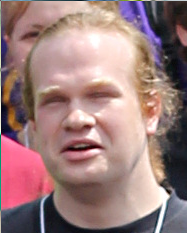 Sam Hartman is a Debian developer since 2000. He has never taken any sort of official role within Debian (that is besides package maintainer), yet I know him for his very thoughtful contributions to discussions both on mailing lists and IRL during Debconf.
Until I met him at Debconf, I didn t know that he was blind, and the first reaction was to be impressed because it must be some tremendous effort to read the volume of information that Debian generates on mailing lists. In truth he s at ease with his computer much like I am although he uses it in a completely different way. Read on to learn more, my questions are in bold, the rest is by Sam.
Raphael: Who are you?
Sam: I m Sam Hartman. I m a 35-year-old software engineer. I am a principal consultant and co-owner of a small consulting company, called