Search Results: "ag"

22 April 2014

Daniel Pocock: Automatically creating repackaged upstream tarballs for Debian

One of the less exciting points in the day of a Debian Developer is the moment they realize they have to create a repackaged upstream source tarball. This is often a process that they have to repeat on each new upstream release too. Wouldn't it be useful to:
  • Scan all the existing repackaged upstream source tarballs and diff them against the real tarballs to catalog the things that have to be removed and spot patterns?
  • Operate a system that automatically produces repackaged upstream source tarballs for all tags in the upstream source repository or all new tarballs in the upstream download directory? Then the DD can take any of them and package them when he wants to with less manual effort.
  • Apply any insights from this process to detect non-free content in the rest of the Debian archive and when somebody is early in the process of evaluating a new upstream project?
Google Summer of Code is back One of the Google Summer of Code projects this year involves recursively building Java projects from their source. Some parts of the project, such as repackaged upstream tarballs, can be generalized for things other than Java. Web projects including minified JavaScript are a common example. Andrew Schurman, based near Vancouver, is the student selected for this project. Over the next couple of weeks, I'll be starting to discuss the ideas in more depth with him. I keep on stumbling on situations where repackaged upstream tarballs are necessary and so I'm hoping that this is one area the community will be keen to collaborate on.

Ritesh Raj Sarraf: Basis B1

Starting yesterday, I am a happy user of the Basis B1 (Carbon Edition) Smart Watch The company recently announced being acquired by Intel. Overall I like the watch. The price is steep, but if you care of a watch like that, you may as well try Basis. In case you want to go through the details, there's a pretty comprehensive review here. Since I've been wearing it for just over 24hrs, there's not much data to showcase a trend. But the device was impressively precise in monitoring my sleep.

Pain points - For now, sync is the core of the pains. You need either a Mac or a Windows PC. I have a Windows 7 VM with USB Passthru, but that doesn't work. There's also an option to sync over mobile (iOS and Android). That again does not work for my Chinese Mobile Handset running MIUI.

AddThis:

Categories:

Keywords:

C.J. Adams-Collier: AD Physical to Virtual conversion Continued!

So I wasn t able to complete the earlier attempt to boot the VM. Something to do with the SATA backplane not having enough juice to keep both my 6-disk array and the w2k8 disk online at the same time. I had to dd the contents off of the w2k8 disk and send it to the SAN via nc. And it wouldn t write at more than 5.5MB/s, so it took all day.
cjac@foxtrot:~$ sudo dd if=/dev/sdb   \
  pv -L 4M -bWearp -s 320G   \
  nc 172.16.9.80 4242
cjac@san0:~$ nc -l 4242   \
  pv -L 4M -bWearp -s 320G   \
  sudo dd of=/dev/vg0/ad0
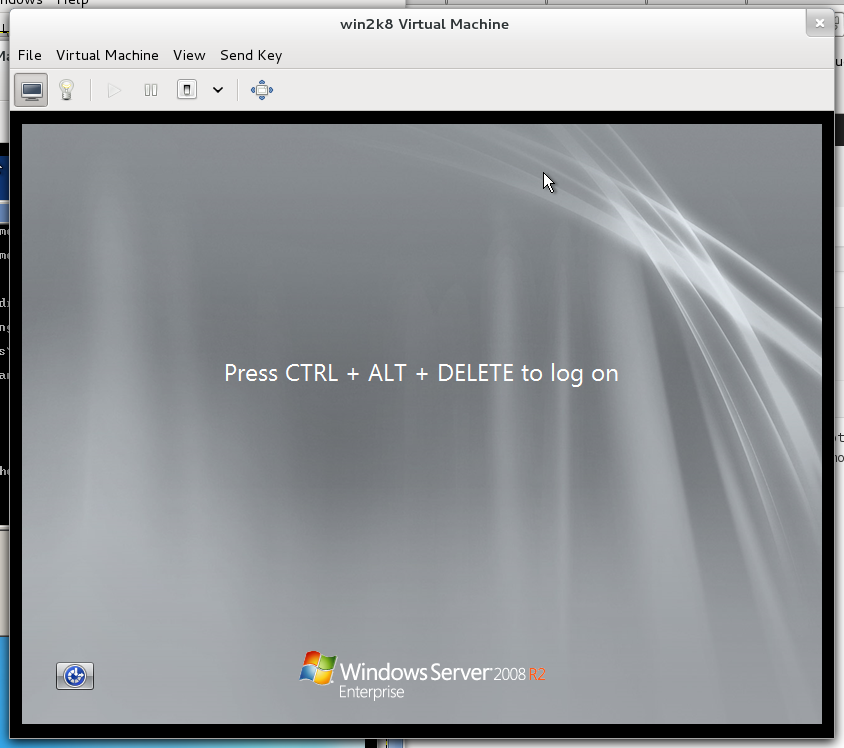
Anyway, I ve got a /dev/vg0/ad0 logical volume all set up now which I m exporting to the guest as USB. Here s the libvirt xml file: win2k8.xml No indication as to how long this will take. But I ll be patient. It will be nice to have the AD server back online. Physical_to_Virtual_Win2k8-Startup_Repair [edit 20140422T172033 -0700]
Physical_to_Virtual_Win2k8-Startup_Repair_Failure
Well, that didn t work [edit 20140422T204322 -0700]
Maybe if I use DISM ? Physical_to_Virtual_Win2k8-Startup_Repair_DISM [edit 20140422T204904 -0700] Yup. That did er!
C:\>dism /image:c:\ /add-driver /driver:d:\win7\amd64\VIOSTOR.INF
Physical_to_Virtual_Win2k8-Login

Axel Beckert: GNU Screen 4.2.0 in Debian Experimental

About a month ago, on 20th of March, GNU Screen had its 27th anniversary. A few days ago, Amadeusz S awi ski, GNU Screen s new primary upstream maintainer, released the status quo of Screen development as version 4.2.0 (probably to distinguish it from all those 4.1.0 labeled development snapshots floating around in most Linux distributions nowadays). I did something similar and uploaded the status quo of Debian s screen package in git as 4.1.0~20120320gitdb59704-10 to Debian Sid shortly afterwards. That upload should hit Jessie soon, too, resolving the following two issues also in Testing: That way I could decouple these packaging fixes/features from the new upstream release which I uploaded to Debian Experimental for now. Testers for the 4.2.0-1 package are very welcome! Oh, and by the way, that upstream comment (or ArchLinux s according announcement) about broken backwards compatibility with attaching to running sessions started with older Screen releases doesn t affected Debian since that has been fixed in Debian already with the package which is in Wheezy. (Thanks again Julien Cristau for the patch back then!) While there are bigger long-term plans at upstream, Amadeusz is already working on the next 4.x release (probably named 4.2.1) which will likely incorporate some of the patches floating around in the Linux distributions packages. At least SuSE and Debian offered their patches explicitly for upstream inclusion. So far already two patches found in the Debian packages have been obsoleted by upstream git commits after the 4.2.0 release. Yay!

Erich Schubert: Kernel-density based outlier detection and the need for customization

Outlier detection (also: anomaly detection, change detection) is an unsupervised data mining task that tries to identify the unexpected.
Most outlier detection methods are based on some notion of density: in an appropriate data representation, "normal" data is expected to cluster, and outliers are expected to be further away from the normal data.
This intuition can be quantified in different ways. Common heuristics include kNN outlier detection and the Local Outlier Factor (which uses a density quotient). One of the directions in my dissertation was to understand (also from a statistical point of view) how the output and the formal structure of these methods can be best understood.
I will present two smaller results of this analysis at the SIAM Data Mining 2014 conference: instead of the very heuristic density estimation found in above methods, we design a method (using the same generalized pattern) that uses a best-practise from statistics: Kernel Density Estimation. We aren't the first to attempt this (c.f. LDF), but we actuall retain the properties of the kernel, whereas the authors of LDF tried to mimic the LOF method too closely, and this way damaged the kernel.
The other result presented in this work is the need to customize. When working with real data, using "library algorithms" will more often than not fail. The reason is that real data isn't as nicely behaved - it's dirty, it seldom is normal distributed. And the problem that we're trying to solve is often much narrower. For best results, we need to integrate our preexisting knowledge of the data into the algorithm. Sometimes we can do so by preprocessing and feature transformation. But sometimes, we can also customize the algorithm easily.
Outlier detection algorithms aren't black magic, or carefully adjusted. They follow a rather simple logic, and this means that we can easily take only parts of these methods, and adjust them as necessary for our problem at hand!
The article persented at SDM will demonstrate such a use case: analyzing 1.2 million traffic accidents in the UK (from data.gov.uk) we are not interested in "classic" density based outliers - this would be a rare traffic accident on a small road somewhere in Scotland. Instead, we're interested in unusual concentrations of traffic accidents, i.e. blackspots.
The generalized pattern can be easily customized for this task. While this data does not allow automatic evaluation, many outliers could be easily verified using Google Earth and search: often, historic imagery on Google Earth showed that the road layout was changed, or that there are many news reports about the dangerous road. The data can also be nicely visualized, and I'd like to share these examples with you. First, here is a screenshot from Google Earth for one of the hotspots (Cherry Lane Roundabout, North of Heathrow airport, which used to be a double cut-through roundabout - one of the cut-throughs was removed since):
Screenshot of Cherry Lane Roundabout hotspot
Google Earth is best for exploring this result, because you can hide and show the density overlay to see the crossroad below; and you can go back in time to access historic imagery. Unfortunately, KML does not allow easy interactions (at least it didn't last time I checked).
I have also put the KML file on Google Drive. It will automatically display it on Google Maps (nice feature of Drive, kudos to Google!), but it should also allow you to download it. I've also explored the data on an Android tablet (but I don't think you can hide elements there, or access historic imagery as in the desktop application).
With a classic outlier detection method, this analysis would not have been possible. However, it was easy to customize the method; and the results are actually more meaningful: instead of relying on some heuristic to choose kernel bandwidth, I opted for choosing the bandwidth by physical arguments: 50 meters is a reasonable bandwidth for a crossroad / roundabout, and for comparison a radius of 2 kilometers is used to model the typical accident density in this region (there should other crossroads within 2 km in Europe).
Since I advocate reproducible science, the source code of the basic method will be in the next ELKI release. For the customization case studies, I plan to share them as a how-to or tutorial type of document in the ELKI wiki; probably also detailing data preprocessing and visualization aspects. The code for the customizations is not really suited for direct inclusion in the ELKI framework, but can serve as an example for advanced usage.
Reference:
E. Schubert, A. Zimek, H.-P. Kriegel
Generalized Outlier Detection with Flexible Kernel Density Estimates
In Proceedings of the 14th SIAM International Conference on Data Mining (SDM), Philadelphia, PA, 2014.
So TLDR of the story: A) try to use more established statistics (such as KDE), and B) don't expect an off-the-shelf solution to do magic, but customize the method for your problem.
P.S. if you happen to know nice post-doc positions in academia:
I'm actively looking for a position to continue my research. I'm working on scaling these methods to larger data and to make them work with various real data that I can find. Open-source, modular and efficient implementations are very important to me, and one of the directions I'd like to investigate is porting these methods to a distributed setting, for example using Spark. In order to get closer to "real" data, I've started to make these approaches work e.g. on textual data, mixed type data, multimedia etc. And of course, I like teaching; which is why I would prefer a position in academia.

Steve McIntyre: Linaro welcomes GSOC 2014 students

After several weeks of review and discussion, the application and selection period for the 2014 Google Summer of Code is over. 4,420 students proposed a total of 6,313 projects for this summer. From those, 1,307 students have been accepted (more details), and Linaro is one of the 190 Open Source projects that will be working with students this year. In our first year as a GSOC mentoring organisation, we received 17 applications and Google allocated us 3 slots for student projects. It was quite a challenge to pick just 3 projects from the excellent field, and it's a shame that the limited number of slots meant we had no choice but to disappoint some people. Thanks to all those who applied! I'm delighted to announce our 3 chosen interns for 2014: Please join me in welcoming these three new engineers to the Linaro team! We have a GSOC wiki ready for our students to use at https://gsoc.linaro.org/ and hopefully they will start adding content there soon about themselves and their projects (hint!). In the meantime, we have more information about our original proposals and the GSOC program in the main Linaro wiki. Starting today, the next phase of the program is the so-called "bonding period". Students are encouraged to get to know people within Linaro (especially their mentors!) and prepare to start work on their projects, whatever is needed. The official start of the work period for GSOC is May 19th, and it runs through to August 18th. We will give updates on progress through the summer, and we're hoping to talk about our results at the next Linaro Connect in September. Good luck, folks!

Bits from Debian: Debian welcomes its 2014 GSoC students!

We're excited to announce that 19 students have been selected to work with Debian during the Google Summer of Code this year! Here is the list of accepted students and projects: As always, you will be able to follow their progress on the SoC coordination mailing-list Congratulations to all the students and let's make sure we all have an amazing summer!

Simon Kainz: Valerie

This will be my one and only off-topic posting, but I just have to share all my joy and happiness with all of you! On monday, April 14th 2014, our beautiful daughter Valerie was born. As we almost live next door to our midwife, we just grabbed our stuff and walked over to the midwife's house, as my wife told me "things are starting". My wife was very glad to be able to give birth in such a beautiful, cosy and comfortable place, with no hassle, no beeping machines and nervous hospital staff running around. This helped her to "let go", and she gave birth to our beautiful daughter after about 2 hours. I took a 4 week break from work to support my wife and daughter. This is quite involving :-) , so please forgive me if I don't reply quickly to your mails. Screenshot: Valerie

Bits from Debian: Debian welcomes its 2014 GSoC students!

We're excited to announce that 19 students have been selected to work with Debian during the Google Summer of Code this year! Here is the list of accepted students and projects: As always, you will be able to follow their progress on the SoC coordination mailing-list Congratulations to all the students and let's make sure we all have an amazing summer!

Joseph Bisch: A Summer of Code

Yesterday I found out that I was accepted into the Google Summer of Code program. I was accepted by Debian and will be working on a Metrics Portal. You can view the announcement on the Debian blog. The Metrics Portal will have a database that stores historical data on Debian. It will have an interface to add/remove metrics and a web interface to show the metrics graphically. It will utilize cron jobs to update the metrics and generate graphs. The web interface will utilize JavaScript to allow the client to overlay graphs for comparison purposes. An optional task is for me to create a Debian Package of the portal code for easy deployment of the portal. I have decided to use jinja2 as the templating language, flot.js as the JavaScript graphing library, JSON for data, SQLAlchemy for database access, and marshmallow to serialize Python objects to JSON for use with flot. You can read more about the Metrics Portal by reading the project listing or by reading my proposal. To keep up to date on my progress, you can either read this blog, or you can read the soc-corrdination mailing list.

Andrew Pollock: [life] Day 84: Kindergarten Term 2 starts, I collapse on the couch for the day

Zoe had her first day back at Kindy this morning for Term 2. I couldn't believe how fast Term 1 flew by, and how little I felt I accomplished on a personal front. The two weeks of school holidays certainly put the brakes on trying to get anything much more done for myself, but Zoe and I had a great time. I was really happy with the variety of activities we were able to do, and it was nice that Zoe and Megan got to spend a reasonable amount of time together too. The weather cooperated for the majority of the time, which was the cherry on top. Zoe only had Kindergarten today this week, but Sarah has the week off, so she's going to be taking Zoe for the next couple of days, which is really convenient timing, as it'll give me time to recover from some minor surgery tomorrow without having to run around after her. I might also manage to finalise my US tax return. I'm hoping to catch a few movies with Anshu too, who also has the week off work. Zoe slept reasonably well last night. Two wake ups, but they were both quickly resolved, so we both got back to sleep quickly. I was absolutely exhausted last night, but felt positively chipper this morning. We biked to Kindergarten, and I decided to leave the trailer there to make things a bit easier for myself in the afternoon. I got home, and just felt like vegging on the couch. Then I remembered Anshu had the day off, so she came over and we hung out and had lunch. It was really nice to have a few hours during the day off. I biked back to Kindergarten, wondering if I'd have to deal with waking up Zoe from a nap, but she hadn't had a nap. We'd had a bit of a talk at breakfast about napping at Kindergarten, and I have no idea if it helped or not, but it meant we could make an orderly departure. Zoe wanted to participate in Megan's tennis class after Kindergarten, and they were down a kid, which made the warm up stuff not work so well, so the teacher was happy for Zoe to take part. I managed to extract her once the real nitty gritty of the class started. I did get a good opportunity to suss out place availability for term 3. We biked home, and I wanted to take my bike in for a service while I'm on lifting restrictions, so we drove over to Cannon Hill to drop it off. The Gold Cross bike shop has now merged into the Super Amart store, so Zoe wanted to look at everything on the way back out. We eventually emerged without buying anything. Next, we went over to Bunnings, because Zoe's been asking if we can grow some veggies and flowers from seed. That ended up being about an hour of trekking around the nursery section trying to find stuff. It was a good way to use up the afternoon. We made it out with a bag of potting mix and a few packets of seeds and a kit for growing stuff that requires a trellis. Unfortunately most of the climbing stuff (like tomatoes) are out of season now, so I'm not sure what we're going to be able to grow with the kit. We got back home, and I put dinner on and we watched a bit of TV together while it cooked. Bath time and bed time went really smoothly, as I think she was pretty tired. Here's hoping she sleeps well tonight.

Martín Ferrari: DNSSEC, DANE, SSHFP, etc

While researching some security-related stuff for a post I am currently writing, I found some interesting bits here and there that I though I should share, as they were new to me, and probably for many others.

DNSSEC The first thing is DNSSEC. I knew about it, of course, but never bothered to dig much into it. While reading about many interesting applications of DNS for key distribution, and thinking of ways to use them, it is clear that DNSSEC is a precondition for any of that to work. In case you don't know about it, it is an extension for the DNS service to make it safer, for example, to avoid the bad guys having you think that google.com points to sniffer.nsa.gov. Apart from these ber-cool applications I was thinking about, avoiding DNS-based attacks becomes more and more relevant these days. And I think Debian and the rest of the Free Software world should work on making this available to all end-users as easily as possible. While adoption still looks pretty low, there are some good news. First, Google claims its public DNS supports DNSSEC. Of course, you need to trust Google servers, and the path between your machine and them. But if your resolver supports DNSSEC, you can use their servers and validate the answers. On the other side, I am not too sure about their implementation, as half of the time, it would return a valid answer to a query for an invalid record: dig +dnssec sigfail.verteiltesysteme.net @8.8.8.8). Also, they have not published DNSSEC records for google.com, which seems crazy. Some packages included in Debian already take advantage of DNSSEC, if available (more on that later), but more importantly, there are a couple of DNSSEC-enabled recursive servers, including bind, unbound, and the more commonly-used dnsmasq (there is a wiki page summarising Debian's status). Sadly, the default configuration for dnsmasq does not enable DNSSEC, and most people will not use it, even if it installed, because DHCP-provided servers are usually preferred. It seems to me that it would be wise to have a package that would install dnsmasq with DNSSEC enabled, and make it the only valid resolver for the system. If you want to check if your resolver is correctly validating DNSSEC, you can use this test web page. Another good news is that many top-level domains already support DNSSEC, and in my case, Gandi.net has support in place to set it up. So I am going to look into enabling it for my own domain.

SSHFP One useful and simple advantage of using DNSSEC, is that you can store information there, and then trust it to be correct. One new DNS RR (resource record) that is useful in this context is the SSHFP RR, which allows the sysadmin of a host to publish the host SSH key fingerprint in the DNS zone. The ssh client, when enabling the VerifyHostKeyDNS option, will use that information to trust unknown hosts. One downside to this, is that either if you set the option to ask, or if your resolver does not support DNSSEC, you get the same message, which does not warn you about the extra risk. To help you create your DNS records, you can just run this command:
$ ssh-keygen -r brie.tincho.org
brie.tincho.org IN SSHFP 1 1 6ac93c63379828b5b75847bc37d8ab2b48983343
brie.tincho.org IN SSHFP 2 1 cf0d11515367e3aa7eeb37056688f11b53c8ef23

DANE, S/MIME and GPG Recently, while at FOSDEM, I attended talks that mentioned DANE. This proposed IETF standard introduces a mechanism to use DNS as a secure key distribution system, which could completely override the CA oligopoly, a very attractive proposition for many people. In short, it is very similar to the SSHFP mechanism, but it is not restricted to SSH host keys: it can be used to distribute public key information for any TLS-enabled service. So, instead (or in addition to) of having a CA sign your certificate, and relying on the chain of trust by means of having a local copy of all root CA certificates, you use the chain of trust embedded in DNSSEC to make sure that the DNS RRs you publish are valid. Then, the client application can trust the fingerprint published for the relevant service to verify that it is talking to the right server. This is a very exciting development, and I hope it gets widespread adoption. It is already supported in Postfix, there seem to be some work going on in Mozilla, as well as in Prosody which is a great start. Another exciting development of this, is the generalisation of DANE for other entities, like email addresses. There are two draft RFCs being worked on right now to deploy S/MIME and OpenPGP key material using DNSSEC. This could also change completely the way we manage the Web of Trust.

21 April 2014

John Goerzen: A Dry Spring

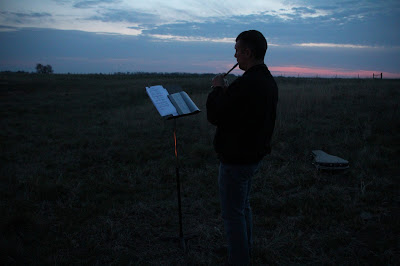
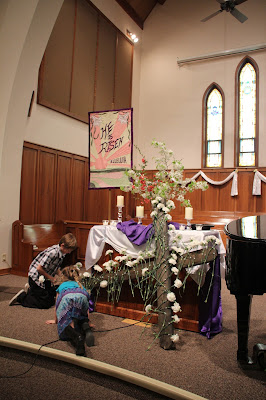
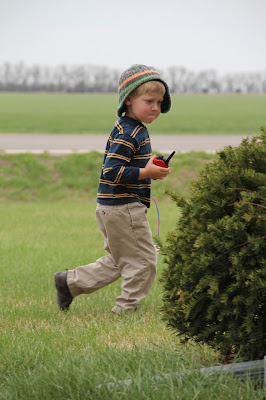
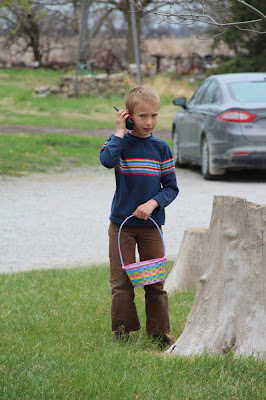
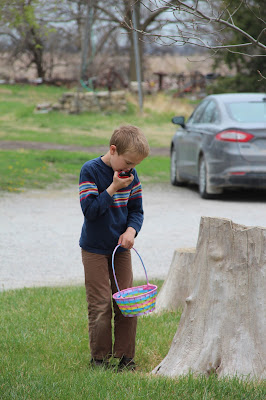
Spring in the prairie is a bit of an odd thing this year. Here and there, near ditches and creeks, a short, soft blanket of lush green grass covers the ground. A few feet away, patches of green are visible between the brown shoots of last year s grass. Some trees are already turning green, purple, red, and white, while others stand still and brown, stubbornly insisting that spring is not here yet. To look at the thermometer may not be much guide either; two days after the temperature was nearly 90, we woke to see a dusting of snow on the ground. It s been dry, terribly try in Kansas. Grass next to a gravel driveway or road often has a chalkish layer of dust on it, kicked up by passing cars or even a stiff wind. The earth thirsts. It is somehow fitting to celebrate Easter, that spring holiday, in the midst of the dry ground, to remember that water is not the only thing that can quench thirst. Easter morning began sleepily, as we got up early to head to a sunrise service. It was in a pasture just outside a small Kansas town, and we gathered there at about 6:15, wearing only light jackets against the breeze. A fire was burning, and there was water on hand to quickly douse any grass that caught first that wasn t supposed to and it was occasionally used. I was doing the prelude for the service, playing on my penny whistle. I enjoyed being able to do that, and was glad that the wind was calm enough that it didn t interfere too much with the music. We sang some hymns, listened to some Bible readings, and just stood in silence, listening to the crackle of the fire, some country dogs playing, and watching the sky to the east transform as the sun came up. Then it was on to church for breakfast, and a break before the Easter service the pipe organ ringing, piano playing with it, and deep trombone and full sanctuary of people singing our 4-part Easter hymns celebrating the day. Laura had the idea of pinning carnations onto the cross, and we got to watch everyone come up and add theirs. Jacob and Oliver enjoyed the sunrise service. They decided they would keep a watchful eye on the first and the dogs, they enjoyed muffins at breakfast and playing in the church after that. But if you are 4 or 7, what is Easter without an Easter egg hunt? And they got in several. Laura and I hid some eggs around the yard. Jacob asked me to use a radio to tell them when the eggs were ready. Here they are, bounding out the door to begin the hunt! And, of course, if you are 4 or 7 and have a geek for a dad, you will naturally think to bring radios with you to the next hunt. To tell your brother what you re finding, of course. It was a good weekend, and in fact, Jacob even volunteered to put up a wet floor sign after he spilled some water: On the last car ride of the day, Jacob decided he would write a story about his Easter. He decided he would publish a big book, and be a famous author and make other children happy. Oliver, of course, decided he needed an Easter story also. We couldn t very well publish a book in the car, but I did manage to use my phone to capture their stories. It s been a long and busy week, but there is much to be joyful about, even when tired.

Russ Allbery: Review: Hyperbole and a Half

Review: Hyperbole and a Half, by Allie Brosh
Publisher: Touchstone
Copyright: November 2013
ISBN: 1-4767-6459-X
Format: Graphic novel
Pages: 373
It's fundamentally pointless to write this review. Some number of you have already heard of Hyperbole and a Half. Most of that group already own this book and are only reading this review so that you can remember how much fun you had reading it. But, even better, you could just stop reading this review and go read the book again. Some of you who have heard of Hyperbole and a Half didn't know that Allie Brosh had published a book. If that's you, you're probably not reading this review any more, since you're now at your favorite book seller buying a copy of the book, rendering the review somewhat pointless. For those of you who have not heard of Hyperbole and a Half, there's no need to read a review, because it's a blog. So, rather than reading this review, you can just follow that link and read it for yourself. If you find yourself laughing uncontrollably (and occasionally crying) and going "where can I get more of this?", well, there's a book. Which you could have also found out from the blog itself. Like I said, not much point. If you read the blog and don't particularly care for it, well, I greatly respect your position. The diversity of taste in the human race is what leads to our wonderful variety of culture, philosophy, and art, and I appreciate your substantial contribution to that diversity. However, you should now make a mental note to never trust my humor recommendations, and you shouldn't let this review change your mind. But, since I'm here, I may as well write a review anyway. Hyperbole and a Half is, as mentioned, a blog by Allie Brosh. Most of the posts are quite long and substantial and in the form of cartoons mixed with text, usually (but not always) telling some sort of story. The cartoon style is what is often called "MS Paint," meaning that it looks like something drawn in Microsoft Paint with its most basic tools. (Other examples of this style are the Oatmeal and Homestuck, although Brosh stays consistently with a rawer art style than either of those.) It looks extremely simple, like child drawings (and early childhood inspires much of Brosh's material), but once one gets used to it, one realizes that Brosh gets amazing expressiveness and character out of the art style. As an aside, yes, I am wholeheartedly recommending a book that is full of material about young children. Brosh is that good. The subtitle of this book is "unfortunate situations, flawed coping mechanisms, mayhem, and other things that happened," and it's mostly based on (exaggerated) incidents that occurred in Brosh's life. Most of them are hilarious. Some of them are both hilarious and stunning psychological insights. She has an amazing knack for storytelling and for exaggerating just the right moments of the story, or summing up emotions in a wonderful turn of phrase or a picture. She's also amazingly good at telling embarrassing stories about herself in a way that makes you empathize rather than just cringe, and then come away feeling like you understand both her and yourself better. If you've wandered around the Internet much, you have probably run across the phrase "clean ALL the things!" and the corresponding picture. That's from Hyperbole and a Half (specifically, "This is Why I'll Never Be an Adult") and is included in this book (improved; see below). It's even better in context. But, beyond storytelling, the other thing Brosh is amazingly good at is capturing internal mental states and emotions in a way that the reader understands and those who have experienced the emotion immediately go "yes, THAT." The apex of this is her two-part post on depression, which is hands-down the best description of depression that I've ever read. That judgment has been echoed by multiple friends of mine with depression. And yes, both of those posts are included in the book as well, although you can also read them on the web. As you've probably noticed, this book is partly a collection of material that's freely available on the web. Unlike some web comics collections, it's not entirely a reprint collection; there are entirely new stories here (which for me was enough by itself to buy the book). Brosh's post on the book says that it's about 50% new material. But the ones that aren't original have been edited and improved, sometimes substantially. For example, I did a quick comparison of the book version with the web version of "This is Why I'll Never be an Adult" and found Brosh redrew all of the cartoons for the story. The book is also gorgeous, if you care about such things like I do: high quality paper, thick pages, vibrant colors, and a comfortable heft to the hardcover version. It's the sort of book that feels like it will survive for decades, which is good since I intend to re-read it for decades. Brosh has a lot of material on-line, so obviously only a small fraction made it into the book and there's more to discover on the blog. I can particularly recommend "The Alot is Better Than You at Everything" and "Boyfriend Doesn't Have Ebola. Probably.". The latter, which is mostly about creating a better pain scale, is my favorite from the blog that didn't make it into the book. And there are two more examples of the sort of thing that you'll getting here. So ends the probably pointless review. I absolutely adore Hyperbole and a Half. It is my favorite web comic, even surpassing XKCD, which is saying something. Even if there were no material, I would have bought this book in hardcover to support Brosh and to have a high-quality printing of the blog posts. The reworkings and improvements of the republished material and the brand new additions are just bonuses. But there's no need to take my word for it; the best possible advertisement for Brosh's work is on-line, from which you can easily determine if you'll enjoy this book as much as I did. Even the back cover and the inside flaps are awesome. Rating: 10 out of 10

C.J. Adams-Collier: Windows is *still* loading files

I m moving the active directory server off of hardware on to the hypervisor. I think if I boot the drive as USB I can install the virtio disk drivers on the system. Fingers crossed! Only thing is that this first boot off of a USB device takes *sooooo* long! Windows_is_STILL_loading_files

Russell Coker: Sociological Images 2014

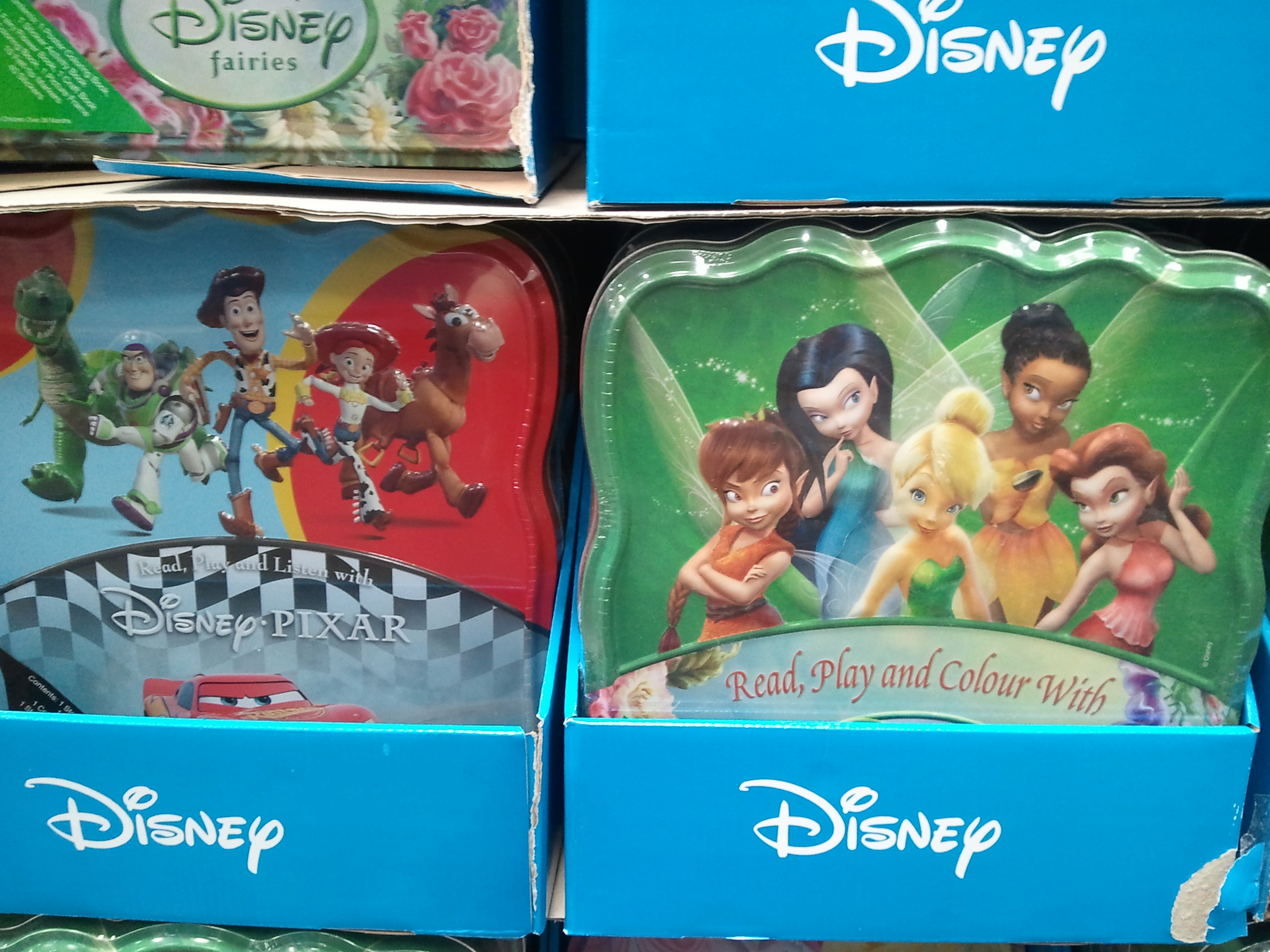
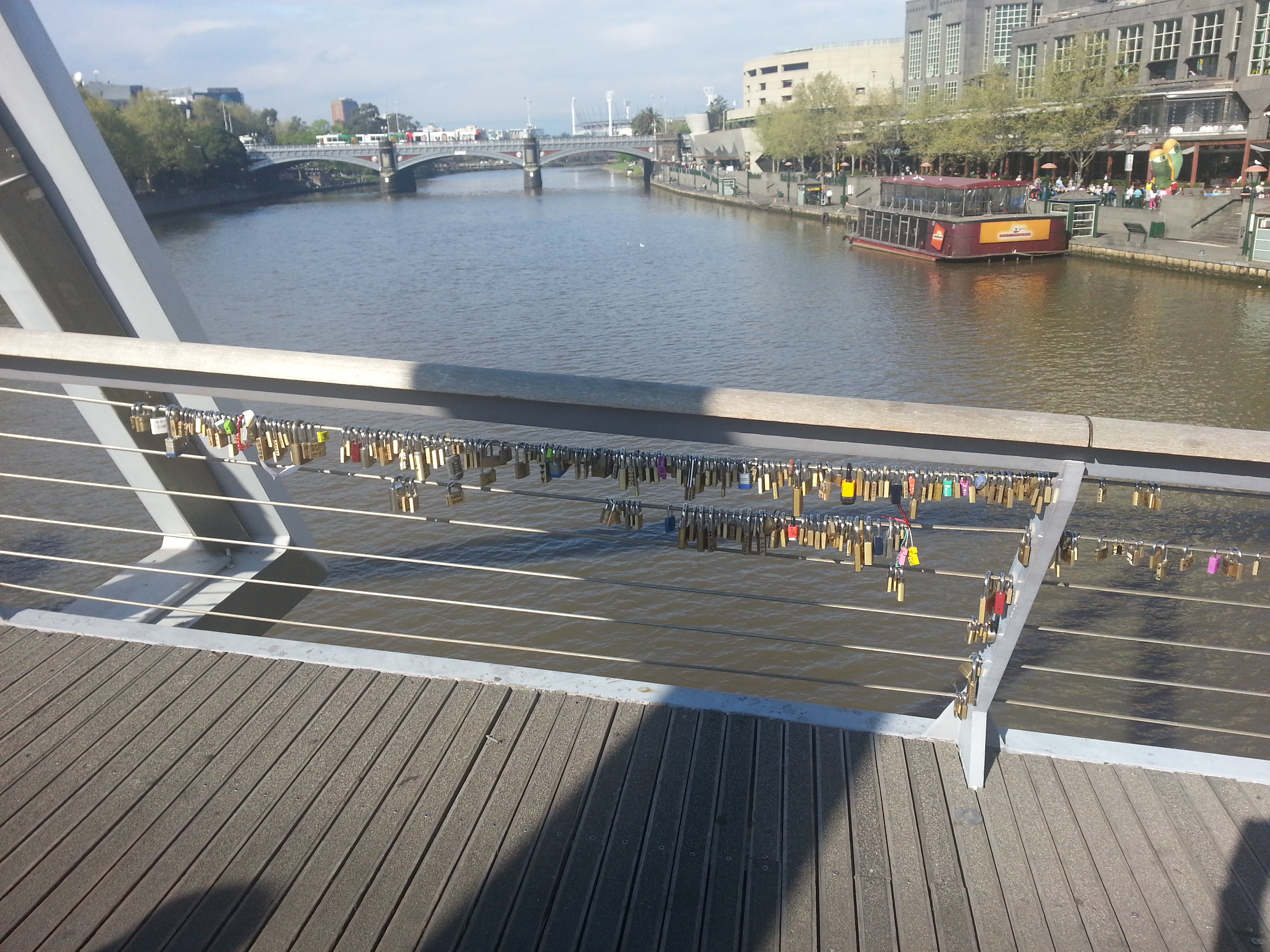
White Trash The above poster was on a bridge pylon in Flinders St in 2012. It s interesting to see what the Fringe Festival people consider to be associated with white trash . They claim homophobia is a white trash thing however lower class people have little political power and the fact that we still don t have marriage equality in Australia is clear evidence that homophobia is prevalent among powerful people. Toys vs Fairies Fairies look pretty while boys toys do things I took the above photo at Costco in 2012. I think it s worth noting the way that the Disney Fairies (all female and marketed to a female audience) are standing around looking pretty while the Toy Story characters (mostly male and marketed to a male audience) are running out to do things. Having those items side by side on the shelf was a clear example of a trend in toys towards girls being encouraged to be passive while boys are doing things. The Toy Story pack has one female character, so it could be interpreted as being aimed at both boys and girls. But even that interpretation doesn t remove the clear gender difference. It seems ironic to me that the descriptions on the boxes are Read, Play, and Listen for the Toy Story pack and Read, Play, and Colour on the Fairies pack. Colouring is more active than listening so the pictures don t match the contents. Make Up vs Tools Girls chocolate is make-up and boys chocolate is tools I took the above photo in an Aldi store in early 2013, today I was in Aldi and noticed that the same chocolate is still on sale. A clear and pointless gender difference. Rumor has it that some of the gender difference in kids clothing is so that a child can t wear the clothes of an older sibling of different gender, but chocolate only gets eaten once so there is no reason for this. Oath The above poster was inside the male toilet at Melbourne University in 2013. It would probably be good to have something like that on display all the time instead of just for one event. Locks Locks with inscriptions on a bridge on the Yarra River in Melbourne I took the above picture early this year, it shows hundreds of padlocks attached to a bridge across the Yarra River in Melbourne. Each padlock has a message written or inscribed in it, mostly declarations of love. I first noticed this last year, I m not sure how long it s been up. There was nothing formal about this (no signs about it), people just see it and decide that they want to add to it. I guess that the council cuts some of them off periodically as the number of locks doesn t seem to be increasing much in recent times. It would be interesting to do some research into how many locks are needed to start one of these. It would also be interesting to discover whether the nature of the inscriptions determines the speed at which it takes off, would a bunch of padlocks with messages like I Love Linux inspire others as well as messages declaring love for random people? All that is required is some old locks and an engraving tool. I wonder what the social norm might be regarding messing with those locks. If I was to use those padlocks to practice the sport of lock-picking (which I learned when in Amsterdam) I wonder whether random bystanders would try to discourage me. It seems likely that picking the locks and taking them away would get a negative reaction but I wonder whether picking them one at a time and replacing them (or maybe moving them to another wire) would get a reaction. Blackface for Schoolkids teachers choice blackface and yellowface masks A craft shop at the Highpoint shopping center in Melbourne is selling Teacher s Choice brand Multicultural Face Masks . Multicultural is a well regarded term in education, teaching children about other cultures is a good concept but can be implemented really badly. When I was in high school the subject Social Studies seemed to have an approach of look how weird people are in other places instead of teaching the kids anything useful. Sociological Images has an informative article on the Australian Hey Hey it s Saturday blackface incident in 2009 [1]. The idea of these masks seems to involve students dressing up as caricatures of other races. The mask which looks like someone s idea of a Geisha is an even bigger WTF, mixing what the package calls culture (really race) with sex work. When I visited Tokyo I got the impression that French maids fill a similar niche to Geisha for younger Japanese men and the maid cafe thing is really popular there. I think it s interesting to consider the way that a French maid costume is regarded differently to a Geisha costume. I expect that Teacher s Choice doesn t sell French maid costumes. Delicious Cow picture of a bovine named Delicious Usually meat is advertised in a way that minimises the connection to living animals. Often adverts just show cuts of meat and don t make any mention of animals and when animals are shown they are in the distance. The above picture was on the wall at a Grill d burger restaurant in Point Cook. It shows a bovine (looks like a bull even though I believe that cows are the ones that are usually eaten) with a name-tag identifying it as Delicious . The name tag personalises the animal which is an uncommon thing to do when parts of an animal are going to be eaten. Of the animals that are commonly eaten it seems that the general trend is to only show fish as complete live animals, presumably because people can identify with mammals such as cattle in a way that they can t identify with fish. Fish are also the only complete animals that are shown dead, adverts for fish that are sold as parts (EG salmon and tuna) often show complete dead fish. But I ve never seen a meat advert that shows a complete dead cow or sheep.

Axel Beckert: Xen: Running a Sid DomU with PyGrub on a Squeeze Dom0

I m running one Debian Sid and one Jessie (Testing) Xen guest domain on a Debian Squeeze (Oldstable) Xen 4.0 running host server. Recently I had to reboot one these virtual machines after more than a year of uptime. But the new 3.14 kernel from Debian Experimental didn t boot. Neither did 3.13 from Debian Unstable. Nor did any other kernel image newer then the 3.5-trunk (from Debian Experimental back than) work. Everytime pygrub bailed out with this error message:
Error: (2, 'Invalid kernel', 'xc_dom_find_loader: no loader found\n')
(Yes, the parentheses and the \n were part of the error message.) After some searching on the web I found hints that this message may be caused by an unsupported compression type in the kernel image. And indeed, if I unpack the vmlinuz with the extract-vmlinux tool which is part of Linux source code (but not yet part of any binary package in Debian), and use the extract file in grub s menu.lst (which is then read by pygrub) instead, the DomU boots Linux kernel 3.14 again, even on a Squeeze-running Dom0.

Matthew Garrett: Home entertainment implementations are pretty appalling

I picked up a Panasonic BDT-230 a couple of months ago. Then I discovered that even though it appeared fairly straightforward to make it DVD region free (I have a large pile of PAL region 2 DVDs), the US models refuse to play back PAL content. We live in an era of software-defined functionality. While Panasonic could have designed a separate hardware SKU with a hard block on PAL output, that would seem like unnecessary expense. So, playing with the firmware seemed like a reasonable start.


Panasonic provide a nice download site for firmware updates, so I grabbed the most recent and set to work. Binwalk found a squashfs filesystem, which was a good sign. Less good was the block at the end of the firmware with "RSA" written around it in large letters. The simple approach of hacking the firmware, building a new image and flashing it to the device didn't appear likely to work.

Which left dealing with the installed software. The BDT-230 is based on a Mediatek chipset, and like most (all?) Mediatek systems runs a large binary called "bdpprog" that spawns about eleventy billion threads and does pretty much everything. Runnings strings over that showed, well, rather a lot, but most promisingly included a reference to "/mnt/sda1/vudu/vudu.sh". Other references to /mnt/sda1 made it pretty clear that it was the mount point for USB mass storage. There were a couple of other constraints that had to be satisfied, but soon attempting to run Vudu was actually setting a blank root password and launching telnetd.

/acfg/config_file_global.txt was the next stop. This is a set of tokens and values with useful looking names like "IDX_GB_PTT_COUNTRYCODE". I tried changing the values, but unfortunately made a poor guess - on next reboot, the player had reset itself to DVD region 5, Blu Ray region C and was talking to me in Russian. More inconveniently, the Vudu icon had vanished and I couldn't launch a shell any more.

But where there's one obvious mechanism for running arbitrary code, there's probably another. /usr/local/bin/browser.sh contained the wonderful line:
export LD_PRELOAD=/mnt/sda1/bbb/libSegFault.so
, so then it was just a matter of building a library that hooked open() and launched inetd and dropping that into the right place, and then opening the browser.

This time I set the country code correctly, rebooted and now I can actually watch Monkey Dust again. Hurrah! But, at the same time, concerning. This software has been written without any concern for security, and it listens on the network by default. If it took me this little time to find two entirely independent ways to run arbitrary code on the device, it doesn't seem like a stretch to believe that there are probably other vulnerabilities that can be exploited with less need for physical access.

The depressing part of this is that there's no reason to believe that Panasonic are especially bad here - especially since a large number of vendors are shipping much the same Mediatek code, and so probably have similar (if not identical) issues. The future is made up of network-connected appliances that are using your electricity to mine somebody else's Dogecoin. Our nightmarish dystopia may be stranger than expected.

comment count unavailable comments

20 April 2014

Russell Coker: Sociological Images 2012

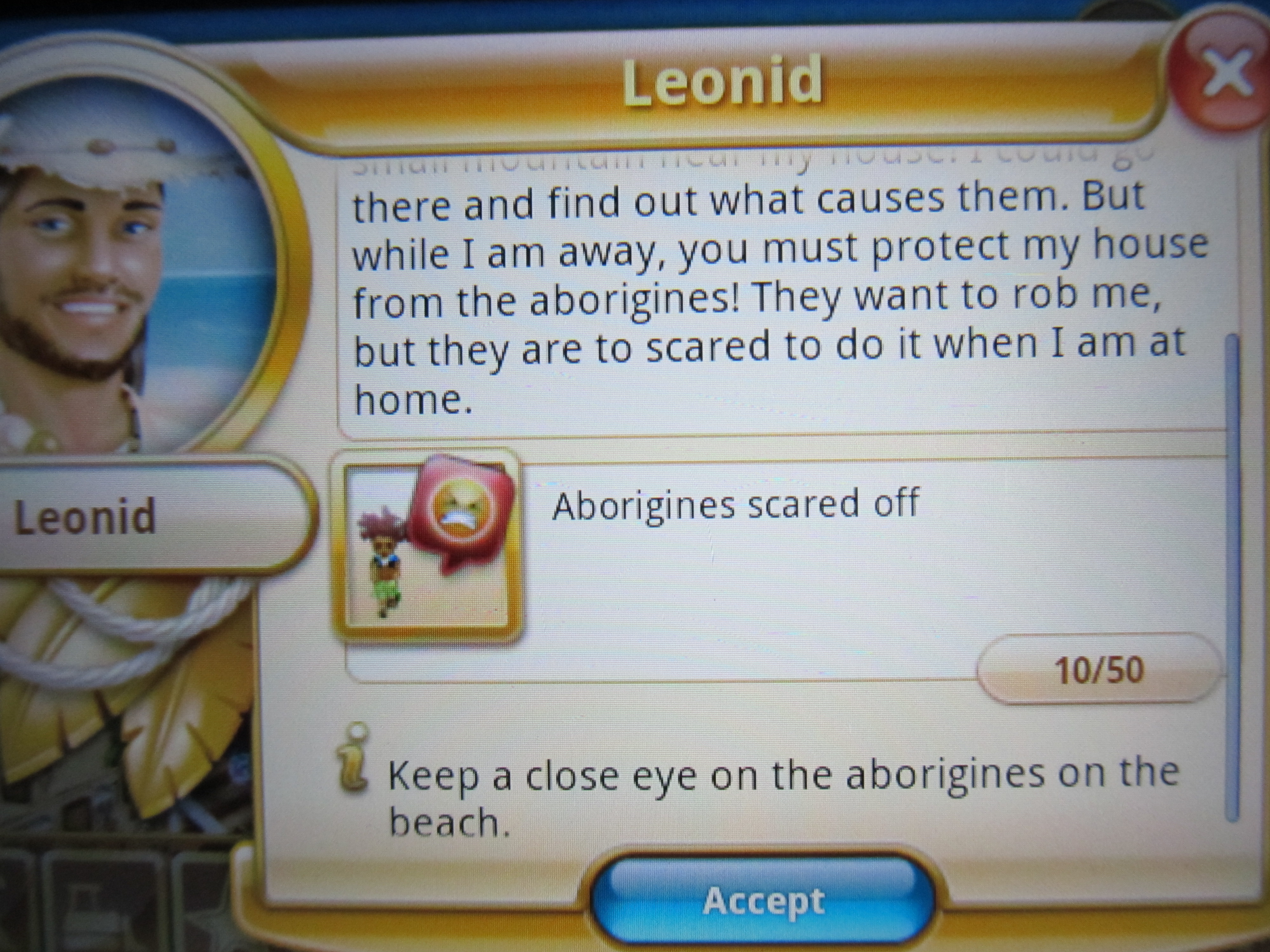
In 2011 I wrote a post that was inspired by the Sociological Images blog [1]. After some delay here I ve written another one. I plan to continue documenting such things. Playground gender segregated playground in 1918 In 2011 I photographed a plaque at Flagstaff Gardens in Melbourne. It shows a picture of the playground in 1918 with segregated boys and girls sections. It s interesting that the only difference between the two sections is that the boys have horizontal bars and a trapeze. Do they still have gender segregated playgrounds anywhere in Australia? If so what is the difference in the sections? Aborigines The Android game Paradise Island [2] has a feature where you are supposed to stop Aborigines from stealing, it plays on the old racist stereotypes about Aborigines which are used to hide the historical record that it s always been white people stealing from the people that they colonise. Angry face icons over AboriginesAborigines described as thieves There is also another picture showing the grass skirts. Nowadays the vast majority of Aborigines don t wear such clothing, the only time they do is when doing some sort of historical presentation for tourists. I took those pictures in 2012, but apparently the game hasn t changed much since then. Lemonade lemonade flavored fizzy drink Is lemonade a drink or a flavour? Most people at the party where I took the above photo regard lemonade as a drink and found the phrase Lemonade Flavoured Soft Drink strange when it was pointed out to them. Incidentally the drink on the right tastes a bit like the US version of lemonade (which is quite different from the Australian version). For US readers, the convention in Australia is that lemonade has no flavor of lemons. Not Sweet maybe gender queer people on bikes In 2012 an apple cider company made a huge advertising campaign featuring people who might be gender queer, above is a picture of a bus stop poster and there were also TV ads. The adverts gave no information at all about what the drink might taste like apart from not being as sweet as you think . So it s basically an advertising campaign with no substance other than a joke about people who don t conform to gender norms. Also it should be noted that some women naturally grow beards and have religious reasons for not shaving [3]. Episode 2 of the TV documentary series Am I Normal has an interesting interview of a woman with a beard. Revolution communist revolution Schweppes drinks A violent political revolution is usually a bad thing, using such revolutions to advertise sugar drinks seems like a bad idea. But it seems particularly interesting to note the different attitudes to such things in various countries. In 2012 Schweppes in Australia ran a marketing campaign based on imagery related to a Communist revolution (the above photo was taken at Southern Cross station in Melbourne), I presume that Schweppes in the US didn t run that campaign. I wonder whether global media will stop such things, presumably that campaign has the potential to do more harm in the US than good in Australia. Racist Penis Size Joke at Southbank racist advert in Southbank paper The above advert was in a free newspaper at Southbank in 2012. Mini Movers thought that this advert was a good idea and so did the management of Southbank who approved the advert for their paper. Australia is so racist that people don t even realise they are being racist.

19 April 2014

Steve Kemp: I was beaten to the punch, but felt nothing

A while back I mented github-backed DNS hosting. Turns out NameCast.net does that already, and there is an interesting writeup on the design of something similar, from the same authors in 2009. Fun to read. In other news applying for jobs is a painful annoyance. Should anybody wish to employ an Edinburgh-based system administrator, with a good Debian record, then please do shout at me. Remote work is an option, as is a local office, if you're nearby. Now I need to go hide from the sun, lest I get burned again... Good news? Going on holiday to Helsinki in a week or so, for Vappu. Anybody local who wants me should feel free to grab me, via the appropriate channels.

Next.

Previous.