Search Results: "nic"

25 August 2023

Ian Jackson: I cycled to all the villages in alphabetical order

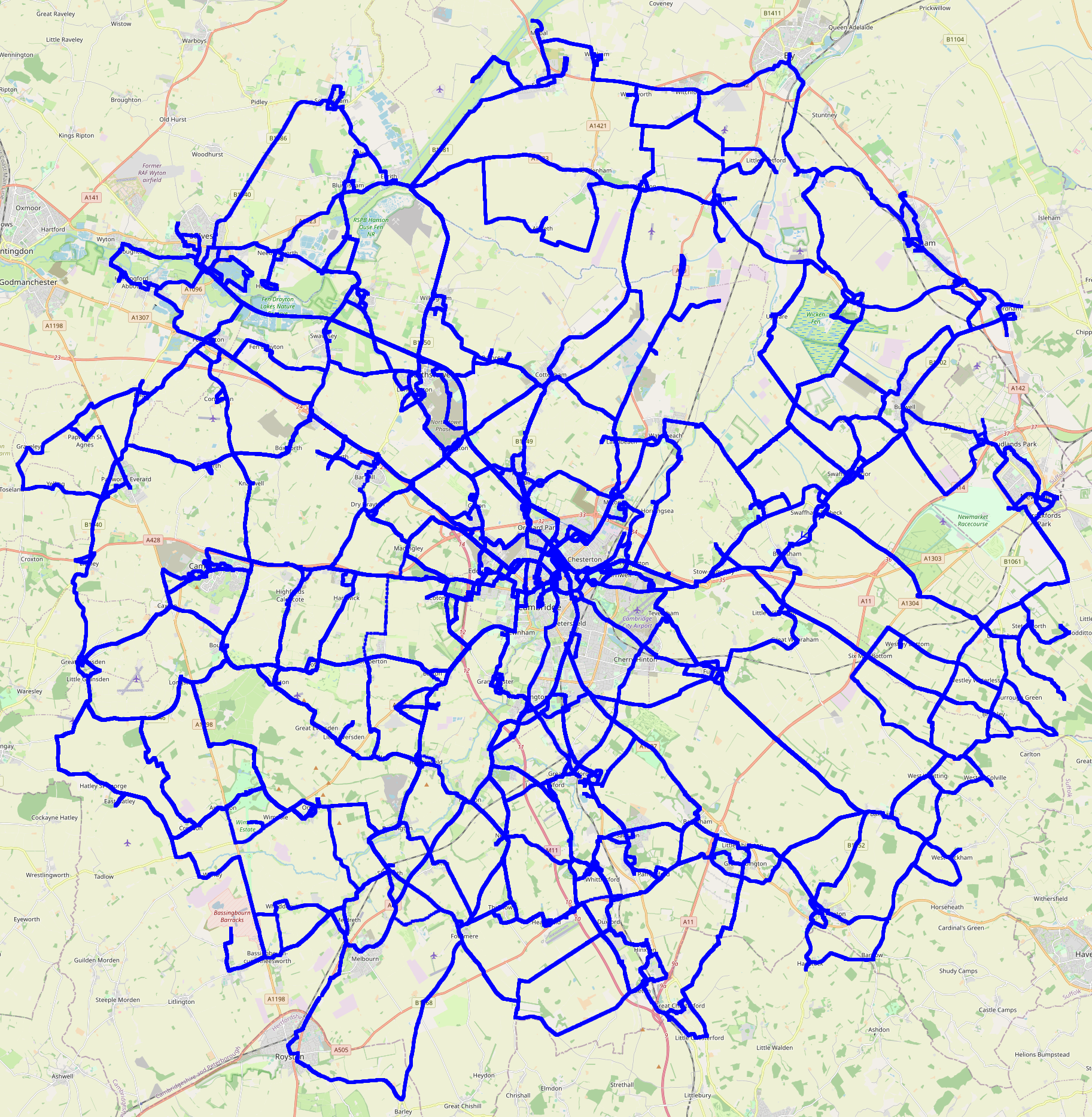
This last weekend I completed a bike rides project I started during the first Covid lockdown in 2020: I ve cycled to every settlement (and radio observatory) within 20km of my house, in alphabetical order. Stir crazy In early 2020, during the first lockdown, I was going a bit stir crazy. Clare said you re going very strange, you have to go out and get some exercise . After a bit of discussion, we came up with this plan: I d visit all the local villages, in alphabetical order. Choosing the radius I decided that I would pick a round number of kilometers, as the crow flies, from my house. 20km seemed about right. 25km would have included Ely, which would have been nice, but it would have added a great many places, all of them quite distant. Software I wrote a short Rust program to process OSM data into a list of places to visit, and their distances and bearings. You can download a tarball of the alphabetical villages scanner. (I haven t published the git history because it has my house s GPS coordinates in it, and because I committed the output files from which that location can be derived.) The Rides I set off on my first ride, to Aldreth, on Sunday the 31st of May 2020. The final ride collected Yelling, on Saturday the 19th of August 2023. I did quite a few rides in June and July 2020 - more than one a week. (I d read the lockdown rules, and although some of the government messaging said you should stay near your house, that wasn t in the legislation. Of course I didn t go into any buildings or anything.) I m not much of a morning person, so I often set off after lunch. For the longer rides I would usually pack a picnic. Almost all of the rides I did just by myself. There were a handful where I had friends along: Dry Drayton, which I collected with Clare, at night. I held my bike up so the light shone at the village sign, so we could take a photo of it. Madingley, Melbourn and Meldreth, which was quite an expedition with my friend Ben. We went out as far as Royston and nearby Barley (both outside my radius and not on my list) mostly just so that my project would have visited Hertfordshire. The Hemingfords, where I had my friend Matthew along, and we had a very nice pub lunch. Girton and Wilburton, where I visited friends. Indeed, I stopped off in Wilburton on one or two other occasions. And, of course, Yelling, for which there were four of us, again with a nice lunch (in Eltisley). I had relatively little mechanical trouble. My worst ride for this was Exning: I got three punctures that day. Luckily the last one was close to home. I often would stop to take lots of photos en-route. My mum in particular appreciated all the pretty pictures. Rules I decided on these rules: I would cycle to each destination, in order, and it would count as collected if I rode both there and back. I allowed collecting multiple villages in the same outing, provided I did them in the right order. (And obviously I was allowed to pass through places out of order, without counting them.) I tried to get a picture of the village sign, where there was one. Failing that, I got a picture of something in the village with the village s name on it. I think the only one I didn t manage this for was Westley Bottom; I had to make do with the word Westley on some railway level crossing equipment. In Barway I had to make do with a planning application, stuck to a pole. I tried not to enter and leave a village by the same road, if possible. Edge cases I had to make some decisions: I decided that I would consider the project complete if I visited everywhere whose centre was within my radius. But the centre of a settlement is rather hard to define. I needed a hard criterion for my OpenStreetMap data mining: a place counted if there was any node, way or relation, with the relevant place tag, any part of which was within my ambit. That included some places that probably oughtn t to have counted, but, fine. I also decided that I wouldn t visit suburbs of Cambridge, separately from Cambridge itself. I don t consider them separate settlements, at least, not if they re conurbated with Cambridge. So that excluded Trumpington, for example. But I decided that Girton and Fen Ditton were (just) separable. Although the place where I consider Girton and Cambridge to nearly touch, is administratively well inside Girton, I chose to look at land use (on the ground, and in OSM data), rather than administrative boundaries. But I did visit both Histon and Impington, and all each of the Shelfords and Stapleford, as separate entries in my list. Mostly because otherwise I d have to decide whether to skip (say) Impington, or Histon. Whereas skipping suburbs of Cambridge in favour of Cambridge itself was an easy decision, and it also got rid of a bunch of what would have been quite short, boring, urban expeditions. I sorted all the Greats and Littles under G and L, rather than (say) Shelford, Great , which seemed like it would be cheating because then I would be able to do Shelford, Great and Shelford, Little in one go. Northstowe turned from mostly a building site into something that was arguably a settlement, during my project. It wasn t included in the output of my original data mining. Of course it s conurbated with Oakington - but happily, Northstowe inserts right before Oakington in the alphabetical list, so I decided to add it, visiting both the old and new in the same day. There are a bunch of other minor edge cases. Some villages have an outlying hamlet. Mostly I included these. There are some individual farms, which I generally didn t count. Some stats I visited 150 villages plus the Lords Bridge radio observatory. The project took 3 years and 3 months to complete. There were 96 rides, totalling about 4900km. So my mean distance was around 51km. The median distance per ride was a little higher, at around 52 km, and the median duration (including stoppages) was about 2h40. The total duration, if you add them all up, including stoppages, was about 275h, giving a mean speed including photo stops, lunches and all, of 18kph. The longest ride was 89.8km, collecting Scotland Farm, Shepreth, and Six Mile Bottom, so riding across the Cam valley. The shortest ride was 7.9km, collecting Cambridge (obviously); and I think that s the only one I did on my Brompton. The rest were all on my trusty Thorn Audax. My fastest ride (ranking by distance divided by time spent in motion) was to collect Haddenham, where I covered 46.3km in 1h39, giving an average speed in motion of 28.0kph. The most I collected in one day was 5 places: West Wickham, West Wratting, Westley Bottom, Westley Waterless, and Weston Colville. That was the day of the Wests. (There s only one East: East Hatley.) Map Here is a pretty picture of all of my tracklogs:
Edited 2023-08-25 01:32 BST to correct a slip.


comment count unavailable comments

24 August 2023

Lukas M rdian: Netplan v0.107 is now available

I m happy to announce that Netplan version 0.107 is now available on GitHub and is soon to be deployed into a Linux installation near you! Six months and more than 200 commits after the previous version (including a .1 stable release), this release is brought to you by 8 free software contributors from around the globe.

Highlights Highlights of this release include the new configuration types for veth and dummy interfaces:
network:
  version: 2
  virtual-ethernets:
    veth0:
      peer: veth1
    veth1:
      peer: veth0
  dummy-devices:
    dm0:
      addresses:
        - 192.168.0.123/24
      ...
Furthermore, we implemented CFFI based Python bindings on top of libnetplan s API, that can easily be consumed by 3rd party applications (see full cffi-bindings.py example):
from netplan import Parser, State, NetDefinition
from netplan import NetplanException, NetplanParserException

parser = Parser()
# Parse the full, existing YAML config hierarchy
parser.load_yaml_hierarchy(rootdir='/')
# Validate the final parser state
state = State()
try:
    # validation of current state + new settings
    state.import_parser_results(parser)
except NetplanParserException as e:
    print('Error in', e.filename, 'Row/Col', e.line, e.column, '->', e.message)
except NetplanException as e:
    print('Error:', e.message)
# Walk through ethernet NetdefIDs in the state and print their backend
# renderer, to demonstrate working with NetDefinitionIterator &
# NetDefinition
for netdef in state.ethernets.values():
    print('Netdef', netdef.id, 'is managed by:', netdef.backend)
    print('Is it configured to use DHCP?', netdef.dhcp4 or netdef.dhcp6)

Changelog:

Bug fixes:

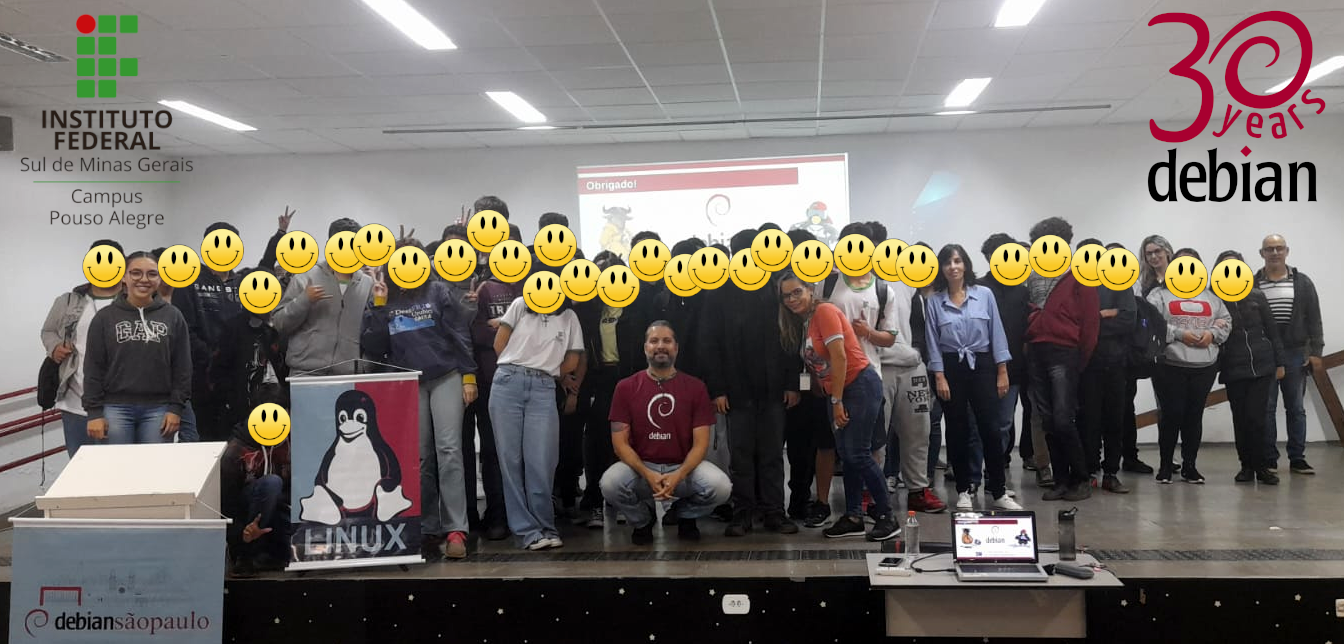
Debian Brasil: Debian Day 30 years at IF Sul de Minas, Pouso Alegre - Brazil

by Thiago Pezzo, Debian contributor, pt_BR localization team This year's Debian Day was a pretty special one, we are celebrating 30 years! Giving the importance of this event, the Brazilian community planned a very special week. Instead of only local gatherings, we had a week of online talks streamed via Debian Brazil's youtube channel (soon the recordings will be uploaded to our team's peertube instance). Nonetheless the local celebrations happened around the country and one was organized in Pouso Alegre, MG, Brazil, at the Instituto Federal de Educa o, Ci ncia e Tecnologia do Sul de Minas Gerais (IFSULDEMINAS - Federal Institute of Education, Science and Technology of the South of Minas Gerais). The Institute, as many of its counterparts in Brazil, specializes in professional and technological curricula to high school and undergraduate levels. All public, free and quality education! The event happened on the afternoon of August 16th at the Pouso Alegre campus. Some 30 students from the High School Computer Technician class attended the presentation about the Debian Project and the Free Software movement in general. Everyone had a great time! And afterwards we had some spare time to chat. I would like to thank all people who helped us: Here goes our group photo: Presentation at IFSULDEMINAS Pouso Alegre campus

21 August 2023

Melissa Wen: AMD Driver-specific Properties for Color Management on Linux (Part 1)

TL;DR: Color is a visual perception. Human eyes can detect a broader range of colors than any devices in the graphics chain. Since each device can generate, capture or reproduce a specific subset of colors and tones, color management controls color conversion and calibration across devices to ensure a more accurate and consistent color representation. We can expose a GPU-accelerated display color management pipeline to support this process and enhance results, and this is what we are doing on Linux to improve color management on Gamescope/SteamDeck. Even with the challenges of being external developers, we have been working on mapping AMD GPU color capabilities to the Linux kernel color management interface, which is a combination of DRM and AMD driver-specific color properties. This more extensive color management pipeline includes pre-defined Transfer Functions, 1-Dimensional LookUp Tables (1D LUTs), and 3D LUTs before and after the plane composition/blending.
The study of color is well-established and has been explored for many years. Color science and research findings have also guided technology innovations. As a result, color in Computer Graphics is a very complex topic that I m putting a lot of effort into becoming familiar with. I always find myself rereading all the materials I have collected about color space and operations since I started this journey (about one year ago). I also understand how hard it is to find consensus on some color subjects, as exemplified by all explanations around the 2015 online viral phenomenon of The Black and Blue Dress. Have you heard about it? What is the color of the dress for you? So, taking into account my skills with colors and building consensus, this blog post only focuses on GPU hardware capabilities to support color management :-D If you want to learn more about color concepts and color on Linux, you can find useful links at the end of this blog post.

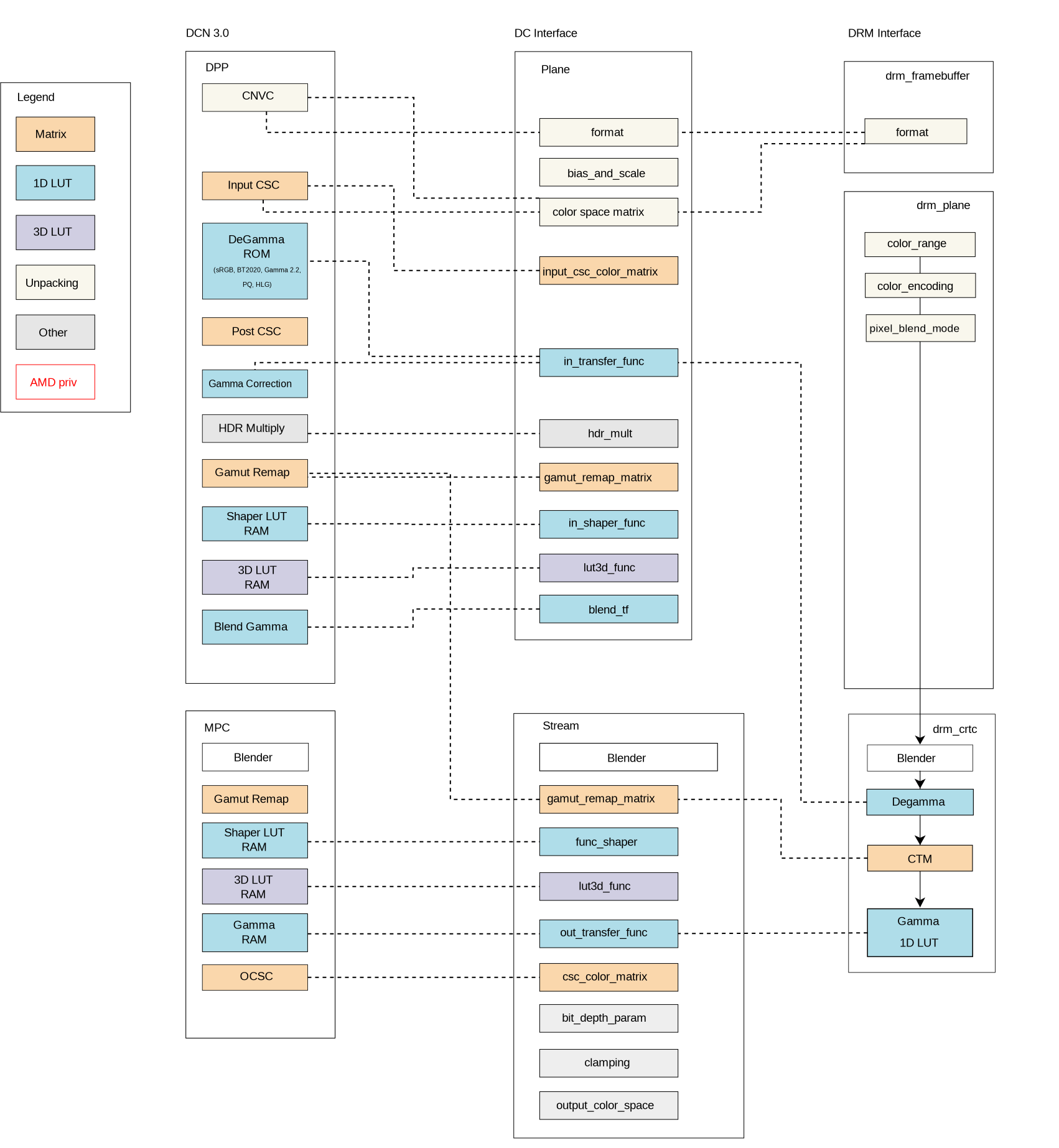
Linux Kernel, show me the colors ;D DRM color management interface only exposes a small set of post-blending color properties. Proposals to enhance the DRM color API from different vendors have landed the subsystem mailing list over the last few years. On one hand, we got some suggestions to extend DRM post-blending/CRTC color API: DRM CRTC 3D LUT for R-Car (2020 version); DRM CRTC 3D LUT for Intel (draft - 2020); DRM CRTC 3D LUT for AMD by Igalia (v2 - 2023); DRM CRTC 3D LUT for R-Car (v2 - 2023). On the other hand, some proposals to extend DRM pre-blending/plane API: DRM plane colors for Intel (v2 - 2021); DRM plane API for AMD (v3 - 2021); DRM plane 3D LUT for AMD - 2021. Finally, Simon Ser sent the latest proposal in May 2023: Plane color pipeline KMS uAPI, from discussions in the 2023 Display/HDR Hackfest, and it is still under evaluation by the Linux Graphics community. All previous proposals seek a generic solution for expanding the API, but many seem to have stalled due to the uncertainty of matching well the hardware capabilities of all vendors. Meanwhile, the use of AMD color capabilities on Linux remained limited by the DRM interface, as the DCN 3.0 family color caps and mapping diagram below shows the Linux/DRM color interface without driver-specific color properties [*]: Bearing in mind that we need to know the variety of color pipelines in the subsystem to be clear about a generic solution, we decided to approach the issue from a different perspective and worked on enabling a set of Driver-Specific Color Properties for AMD Display Drivers. As a result, I recently sent another round of the AMD driver-specific color mgmt API. For those who have been following the AMD driver-specific proposal since the beginning (see [RFC][V1]), the main new features of the latest version [v2] are the addition of pre-blending Color Transformation Matrix (plane CTM) and the differentiation of Pre-defined Transfer Functions (TF) supported by color blocks. For those who just got here, I will recap this work in two blog posts. This one describes the current status of the AMD display driver in the Linux kernel/DRM subsystem and what changes with the driver-specific properties. In the next post, we go deeper to describe the features of each color block and provide a better picture of what is available in terms of color management for Linux.

The Linux kernel color management API and AMD hardware color capabilities Before discussing colors in the Linux kernel with AMD hardware, consider accessing the Linux kernel documentation (version 6.5.0-rc5). In the AMD Display documentation, you will find my previous work documenting AMD hardware color capabilities and the Color Management Properties. It describes how AMD Display Manager (DM) intermediates requests between the AMD Display Core component (DC) and the Linux/DRM kernel interface for color management features. It also describes the relevant function to call the AMD color module in building curves for content space transformations. A subsection also describes hardware color capabilities and how they evolve between versions. This subsection, DC Color Capabilities between DCN generations, is a good starting point to understand what we have been doing on the kernel side to provide a broader color management API with AMD driver-specific properties.

Why do we need more kernel color properties on Linux? Blending is the process of combining multiple planes (framebuffers abstraction) according to their mode settings. Before blending, we can manage the colors of various planes separately; after blending, we have combined those planes in only one output per CRTC. Color conversions after blending would be enough in a single-plane scenario or when dealing with planes in the same color space on the kernel side. Still, it cannot help to handle the blending of multiple planes with different color spaces and luminance levels. With plane color management properties, userspace can get a more accurate representation of colors to deal with the diversity of color profiles of devices in the graphics chain, bring a wide color gamut (WCG), convert High-Dynamic-Range (HDR) content to Standard-Dynamic-Range (SDR) content (and vice-versa). With a GPU-accelerated display color management pipeline, we can use hardware blocks for color conversions and color mapping and support advanced color management. The current DRM color management API enables us to perform some color conversions after blending, but there is no interface to calibrate input space by planes. Note that here I m not considering some workarounds in the AMD display manager mapping of DRM CRTC de-gamma and DRM CRTC CTM property to pre-blending DC de-gamma and gamut remap block, respectively. So, in more detail, it only exposes three post-blending features:
  • DRM CRTC de-gamma: used to convert the framebuffer s colors to linear gamma;
  • DRM CRTC CTM: used for color space conversion;
  • DRM CRTC gamma: used to convert colors to the gamma space of the connected screen.

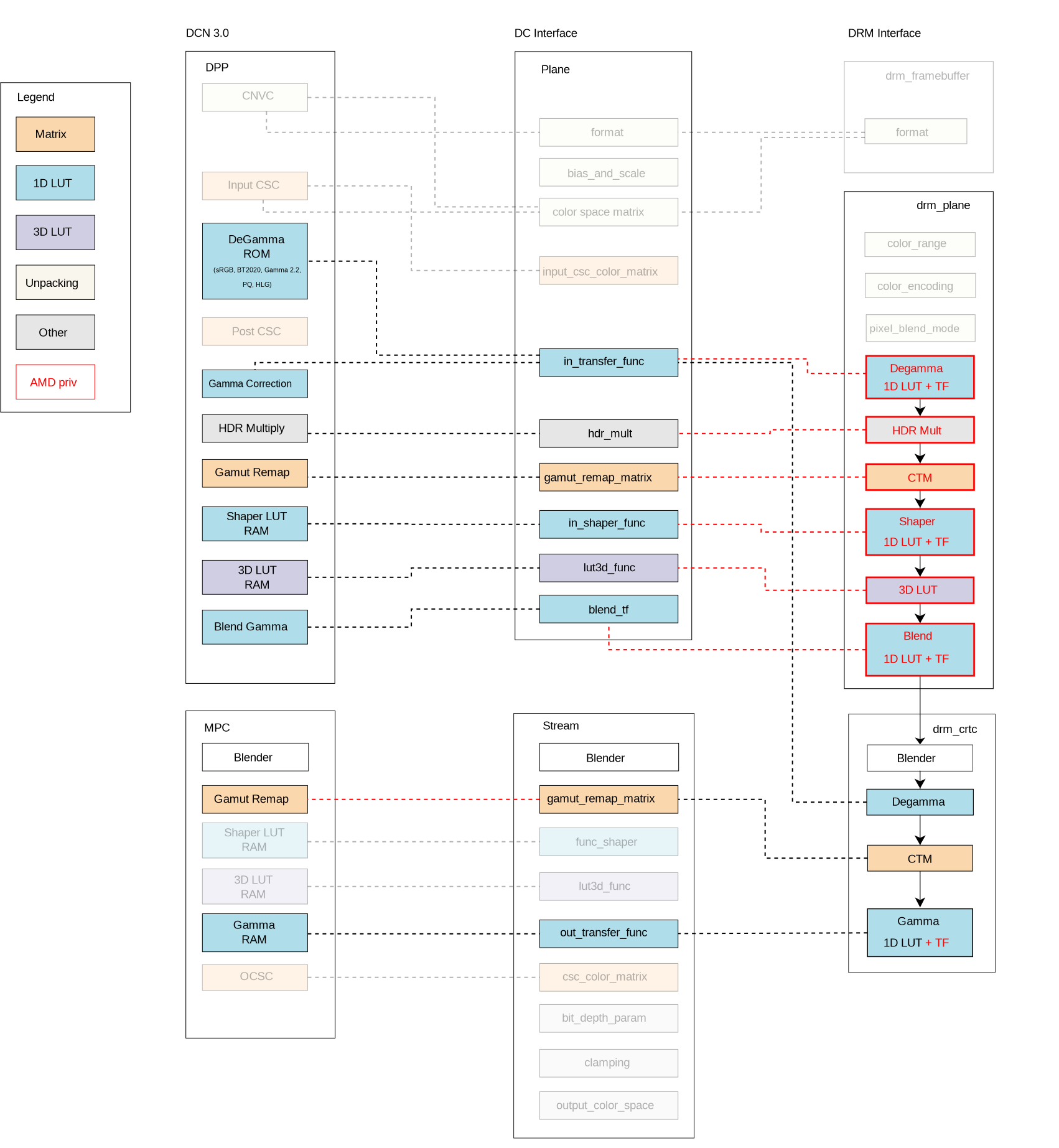
AMD driver-specific color management interface We can compare the Linux color management API with and without the driver-specific color properties. From now, we denote driver-specific properties with the AMD prefix and generic properties with the DRM prefix. For visual comparison, I bring the DCN 3.0 family color caps and mapping diagram closer and present it here again: Mixing AMD driver-specific color properties with DRM generic color properties, we have a broader Linux color management system with the following features exposed by properties in the plane and CRTC interface, as summarized by this updated diagram: The blocks highlighted by red lines are the new properties in the driver-specific interface developed by me (Igalia) and Joshua (Valve). The red dashed lines are new links between API and AMD driver components implemented by us to connect the Linux/DRM interface to AMD hardware blocks, mapping components accordingly. In short, we have the following color management properties exposed by the DRM/AMD display driver:
  • Pre-blending - AMD Display Pipe and Plane (DPP):
    • AMD plane de-gamma: 1D LUT and pre-defined transfer functions; used to linearize the input space of a plane;
    • AMD plane CTM: 3x4 matrix; used to convert plane color space;
    • AMD plane shaper: 1D LUT and pre-defined transfer functions; used to delinearize and/or normalize colors before applying 3D LUT;
    • AMD plane 3D LUT: 17x17x17 size with 12 bit-depth; three dimensional lookup table used for advanced color mapping;
    • AMD plane blend/out gamma: 1D LUT and pre-defined transfer functions; used to linearize back the color space after 3D LUT for blending.
  • Post-blending - AMD Multiple Pipe/Plane Combined (MPC):
    • DRM CRTC de-gamma: 1D LUT (can t be set together with plane de-gamma);
    • DRM CRTC CTM: 3x3 matrix (remapped to post-blending matrix);
    • DRM CRTC gamma: 1D LUT + AMD CRTC gamma TF; added to take advantage of driver pre-defined transfer functions;
Note: You can find more about AMD display blocks in the Display Core Next (DCN) - Linux kernel documentation, provided by Rodrigo Siqueira (Linux/AMD display developer) in a 2021-documentation series. In the next post, I ll revisit this topic, explaining display and color blocks in detail.

How did we get a large set of color features from AMD display hardware? So, looking at AMD hardware color capabilities in the first diagram, we can see no post-blending (MPC) de-gamma block in any hardware families. We can also see that the AMD display driver maps CRTC/post-blending CTM to pre-blending (DPP) gamut_remap, but there is post-blending (MPC) gamut_remap (DRM CTM) from newer hardware versions that include SteamDeck hardware. You can find more details about hardware versions in the Linux kernel documentation/AMDGPU Product Information. I needed to rework these two mappings mentioned above to provide pre-blending/plane de-gamma and CTM for SteamDeck. I changed the DC mapping to detach stream gamut remap matrixes from the DPP gamut remap block. That means mapping AMD plane CTM directly to DPP/pre-blending gamut remap block and DRM CRTC CTM to MPC/post-blending gamut remap block. In this sense, I also limited plane CTM properties to those hardware versions with MPC/post-blending gamut_remap capabilities since older versions cannot support this feature without clashes with DRM CRTC CTM. Unfortunately, I couldn t prevent conflict between AMD plane de-gamma and DRM plane de-gamma since post-blending de-gamma isn t available in any AMD hardware versions until now. The fact is that a post-blending de-gamma makes little sense in the AMD color pipeline, where plane blending works better in a linear space, and there are enough color blocks to linearize content before blending. To deal with this conflict, the driver now rejects atomic commits if users try to set both AMD plane de-gamma and DRM CRTC de-gamma simultaneously. Finally, we had no other clashes when enabling other AMD driver-specific color properties for our use case, Gamescope/SteamDeck. Our main work for the remaining properties was understanding the data flow of each property, the hardware capabilities and limitations, and how to shape the data for programming the registers - AMD color block capabilities (and limitations) are the topics of the next blog post. Besides that, we fixed some driver bugs along the way since it was the first Linux use case for most of the new color properties, and some behaviors are only exposed when exercising the engine. Take a look at the Gamescope/Steam Deck Color Pipeline[**], and see how Gamescope uses the new API to manage color space conversions and calibration (please click on the image for a better view): In the next blog post, I ll describe the implementation and technical details of each pre- and post-blending color block/property on the AMD display driver. * Thank Harry Wentland for helping with diagrams, color concepts and AMD capabilities. ** Thank Joshua Ashton for providing and explaining Gamescope/Steam Deck color pipeline. *** Thanks to the Linux Graphics community - explicitly Harry, Joshua, Pekka, Simon, Sebastian, Siqueira, Alex H. and Ville - to all the learning during this Linux DRM/AMD color journey. Also, Carlos and Tomas for organizing the 2023 Display/HDR Hackfest where we have a great and immersive opportunity to discuss Color & HDR on Linux.

20 August 2023

Dirk Eddelbuettel: RcppRedis 0.2.4 on CRAN: Maintenance

Another minor release, now at 0.2.4, of our RcppRedis package arrived on CRAN yesterday. RcppRedis is one of several packages connecting R to the fabulous Redis in-memory datastructure store (and much more). RcppRedis does not pretend to be feature complete, but it may do some things faster than the other interfaces, and also offers an optional coupling with MessagePack binary (de)serialization via RcppMsgPack. The package has carried production loads on a trading floor for several years. It also supports pub/sub dissemination of streaming market data as per this earlier example. This update is (just like the previous one) fairly mechanical. CRAN noticed a shortcoming of the default per-package help page in a number of packages, in our case it was matter of adding one line for a missing alias to the Rd file. We also demoted the mention of the suggested (but retired) rredis package to a mere mention in the DESCRIPTION file as a formal Suggests: entry, even with an added Additional_repositories, create a NOTE. Life is simpler without those, The detailed changes list follows.
Changes in version 0.2.4 (2023-08-19)
  • Add missing alias for RcppRedis-package to rhiredis.Rd.
  • Remove Suggests: rredis which triggers a NOTE nag as it is only on an Additional_repositories .

Courtesy of my CRANberries, there is also a diffstat report for this this release. More information is on the RcppRedis page. If you like this or other open-source work I do, you can sponsor me at GitHub.

This post by Dirk Eddelbuettel originated on his Thinking inside the box blog. Please report excessive re-aggregation in third-party for-profit settings.

Debian Brasil: Debian Day 30 years in Brazil

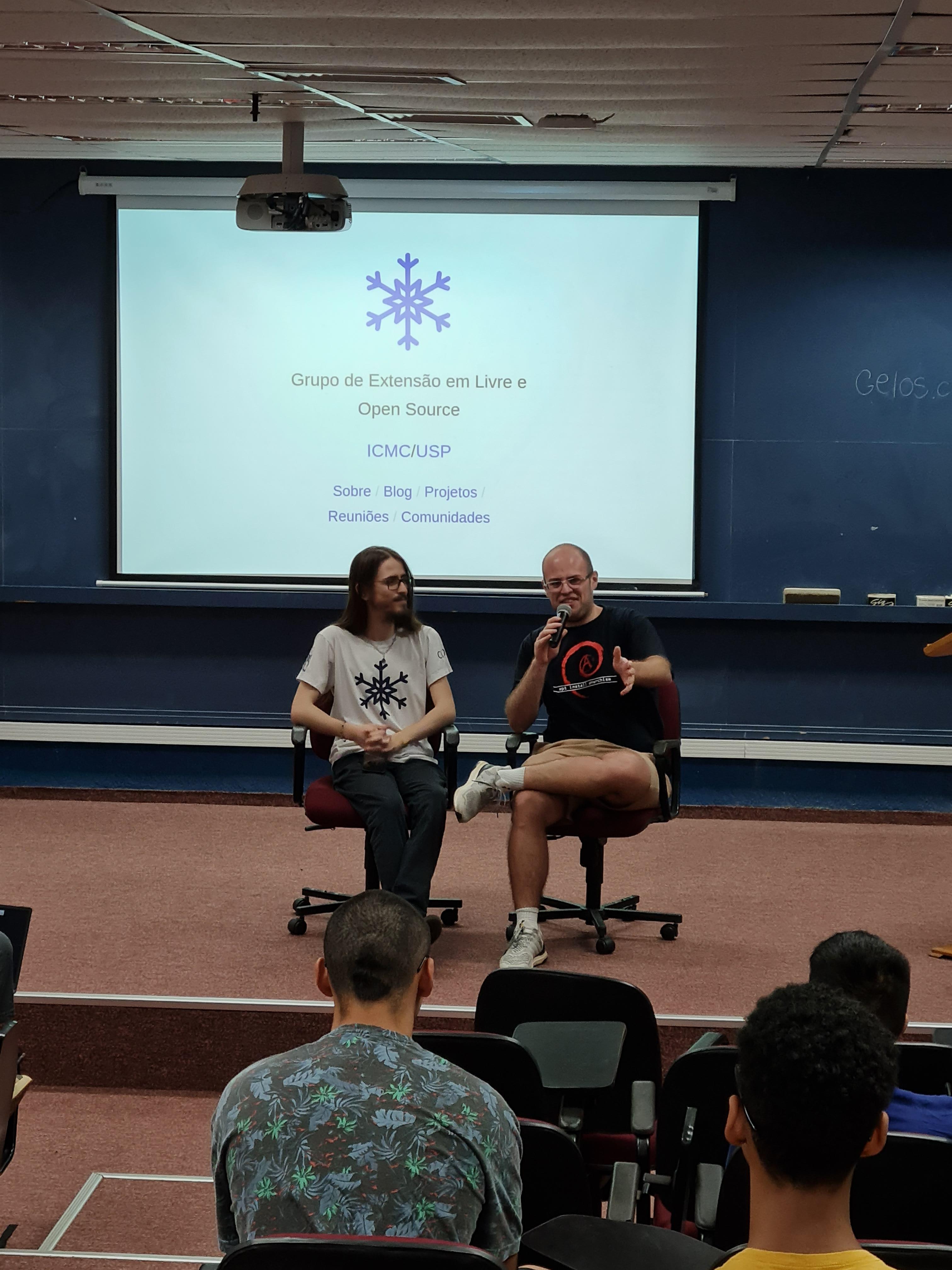
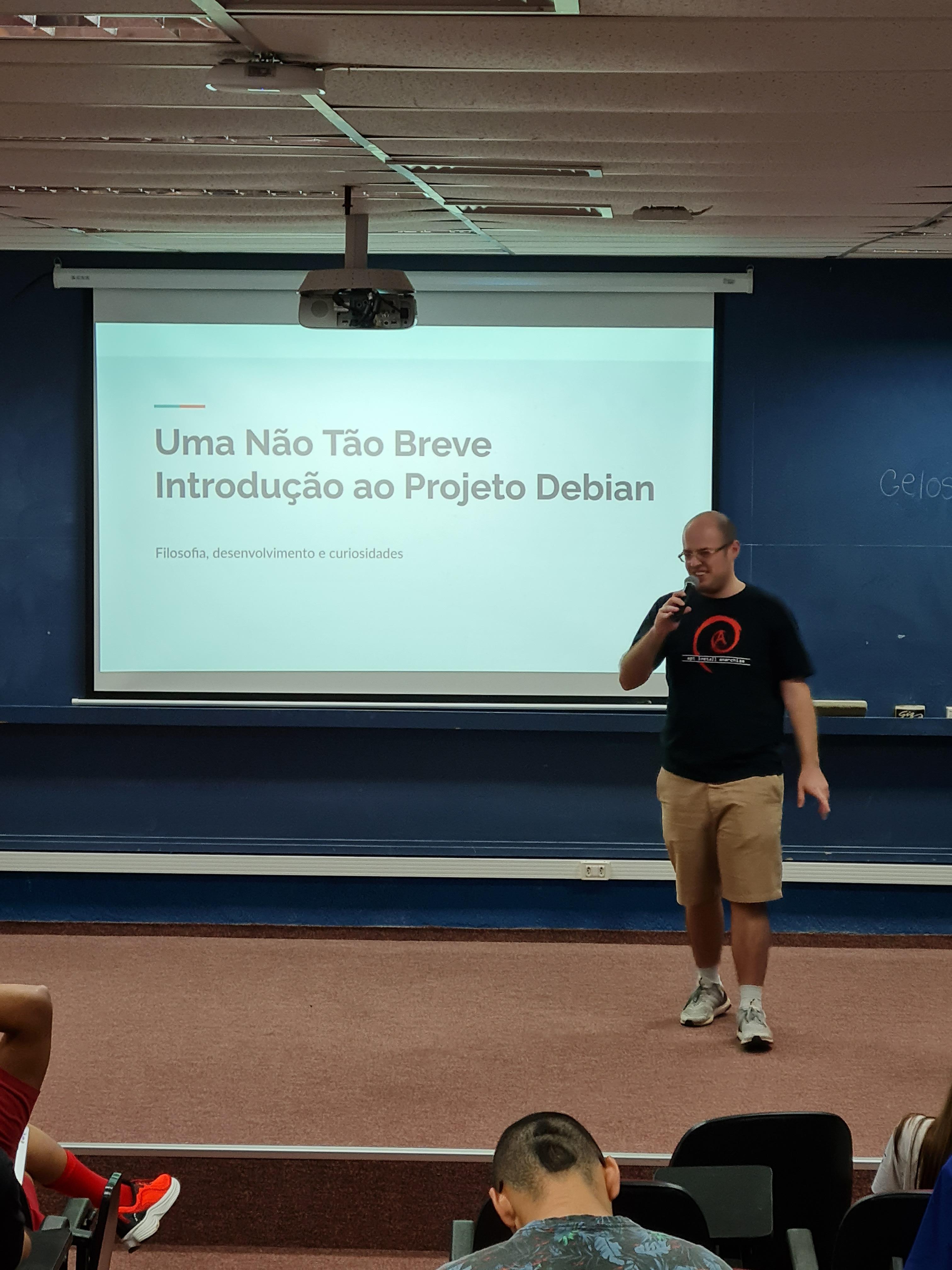
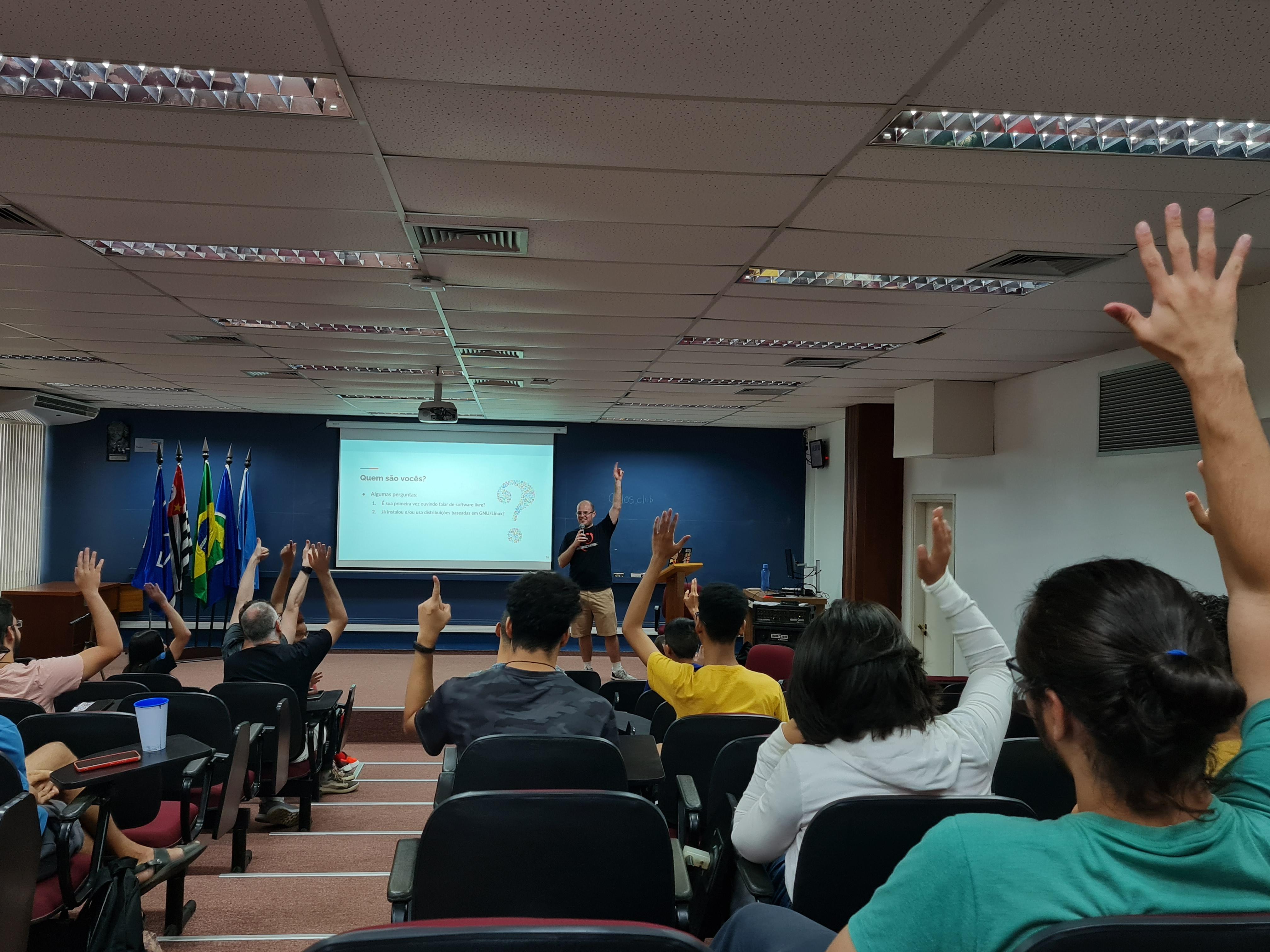
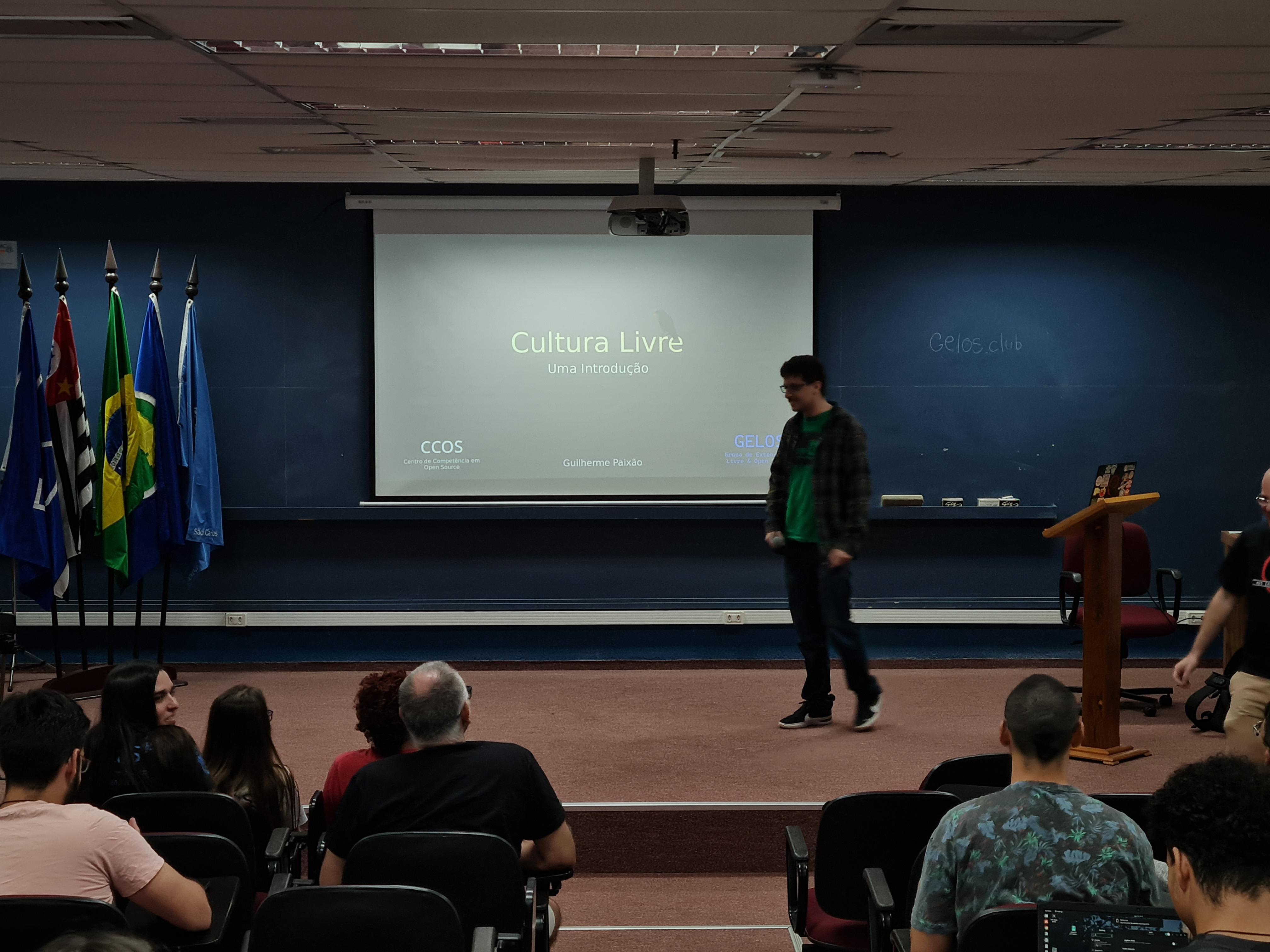
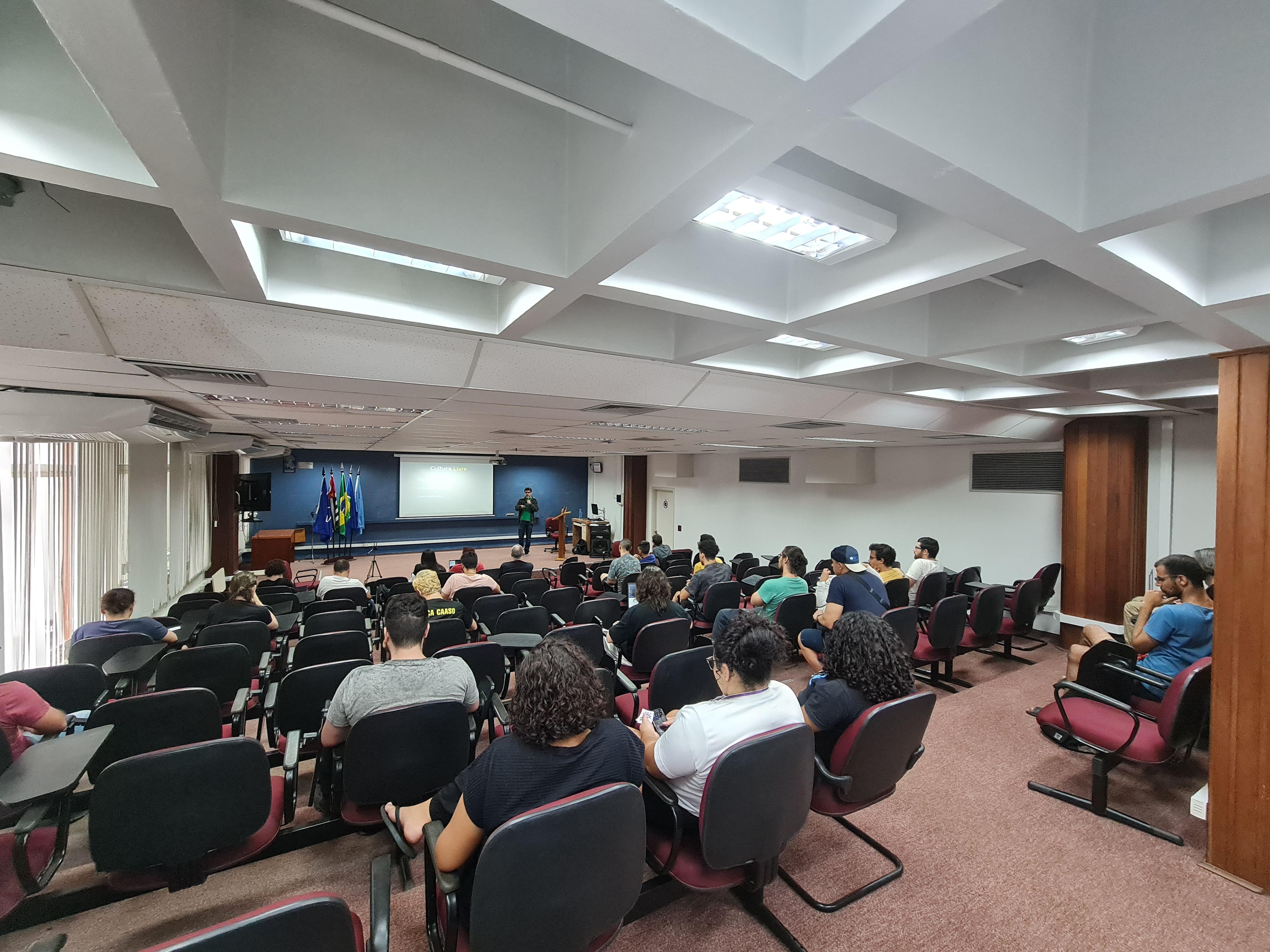
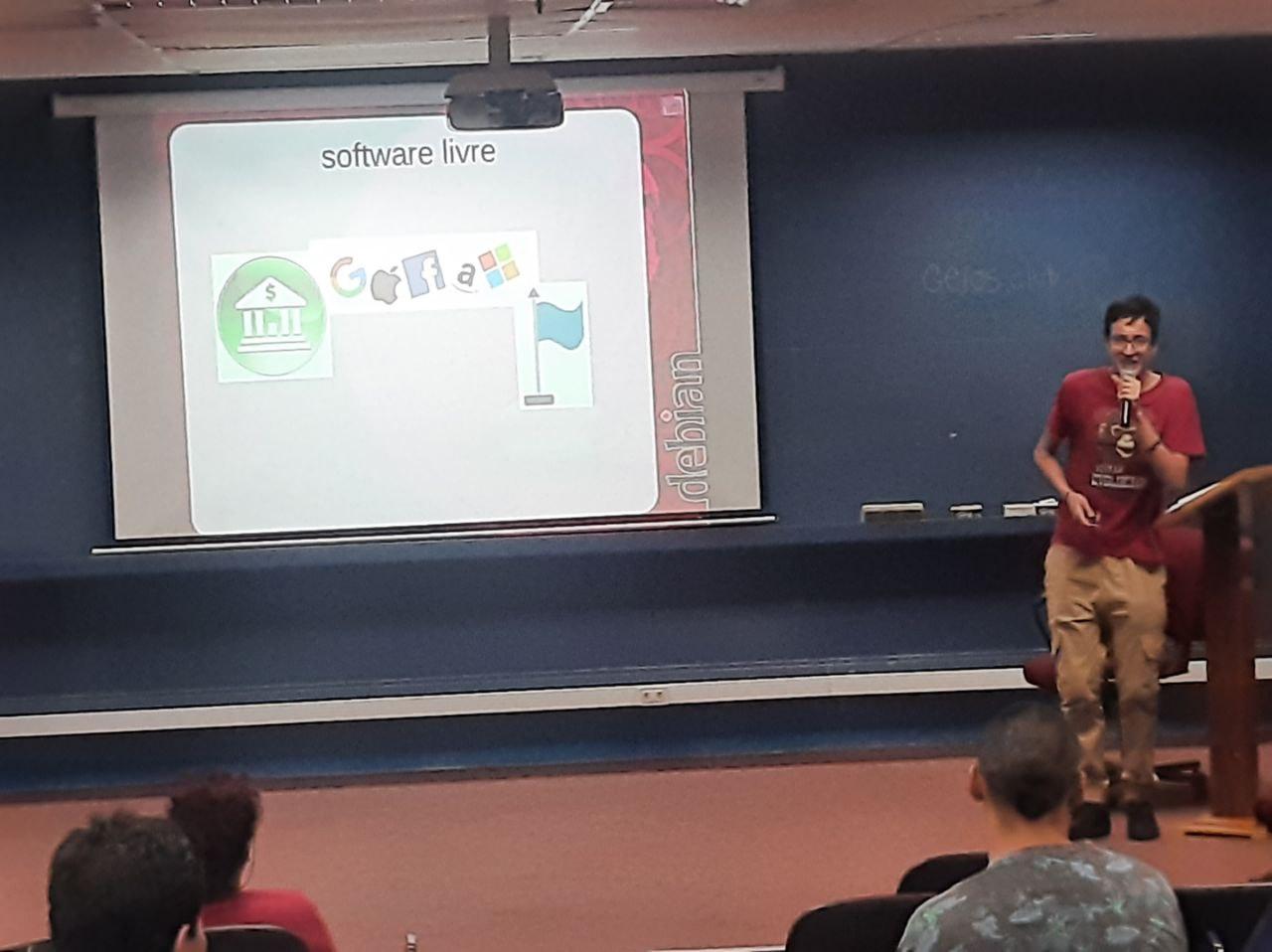
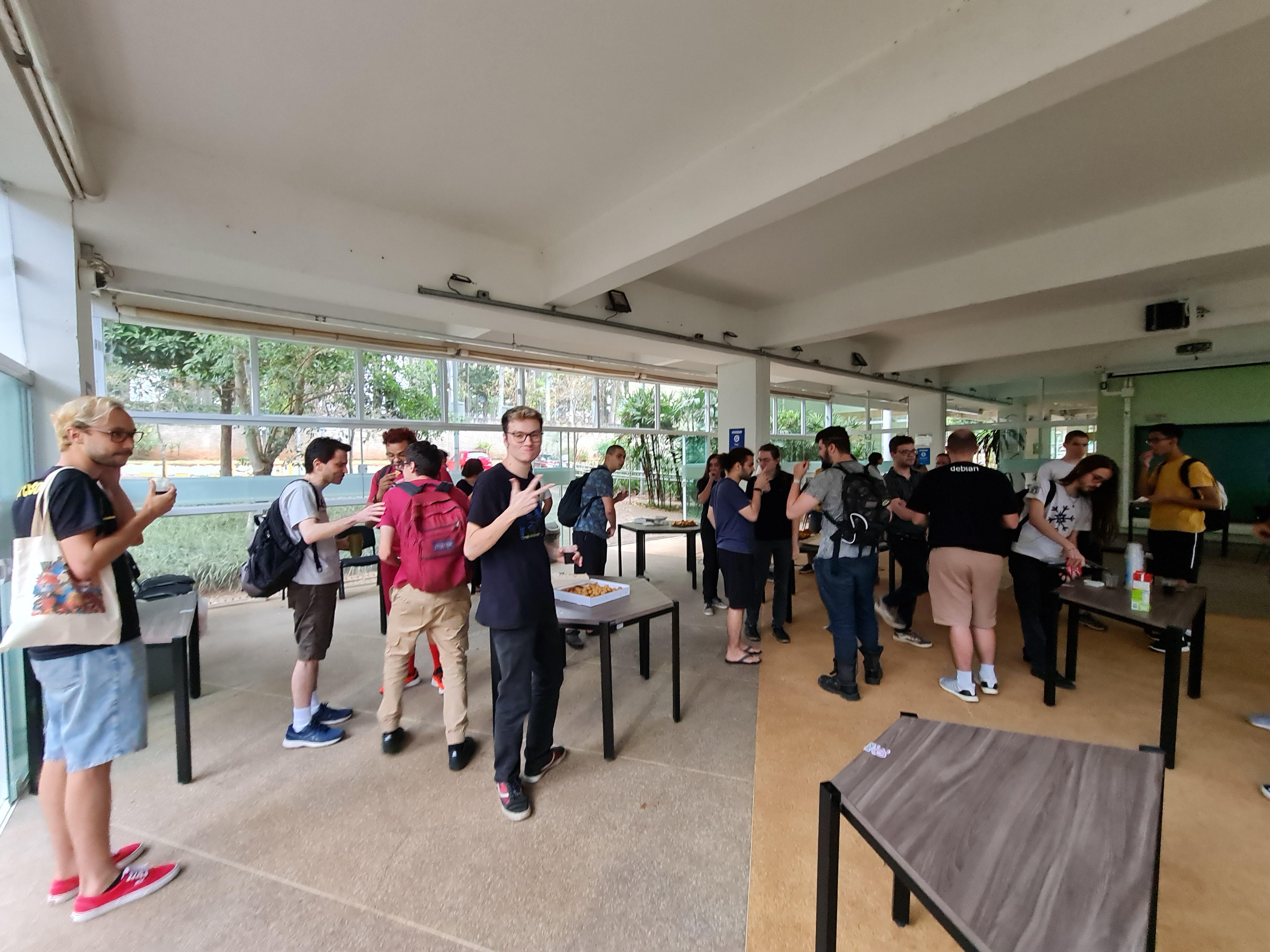
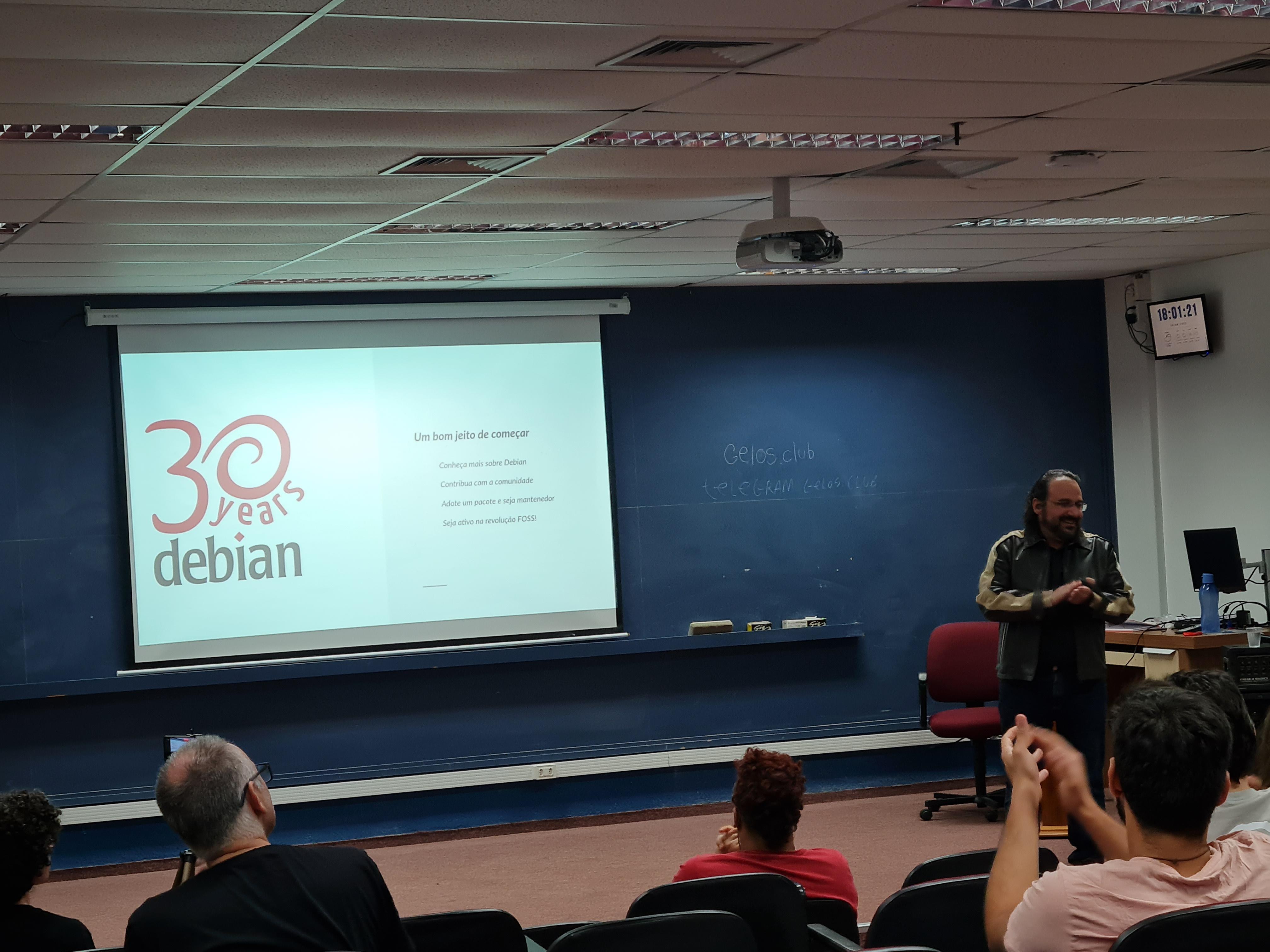
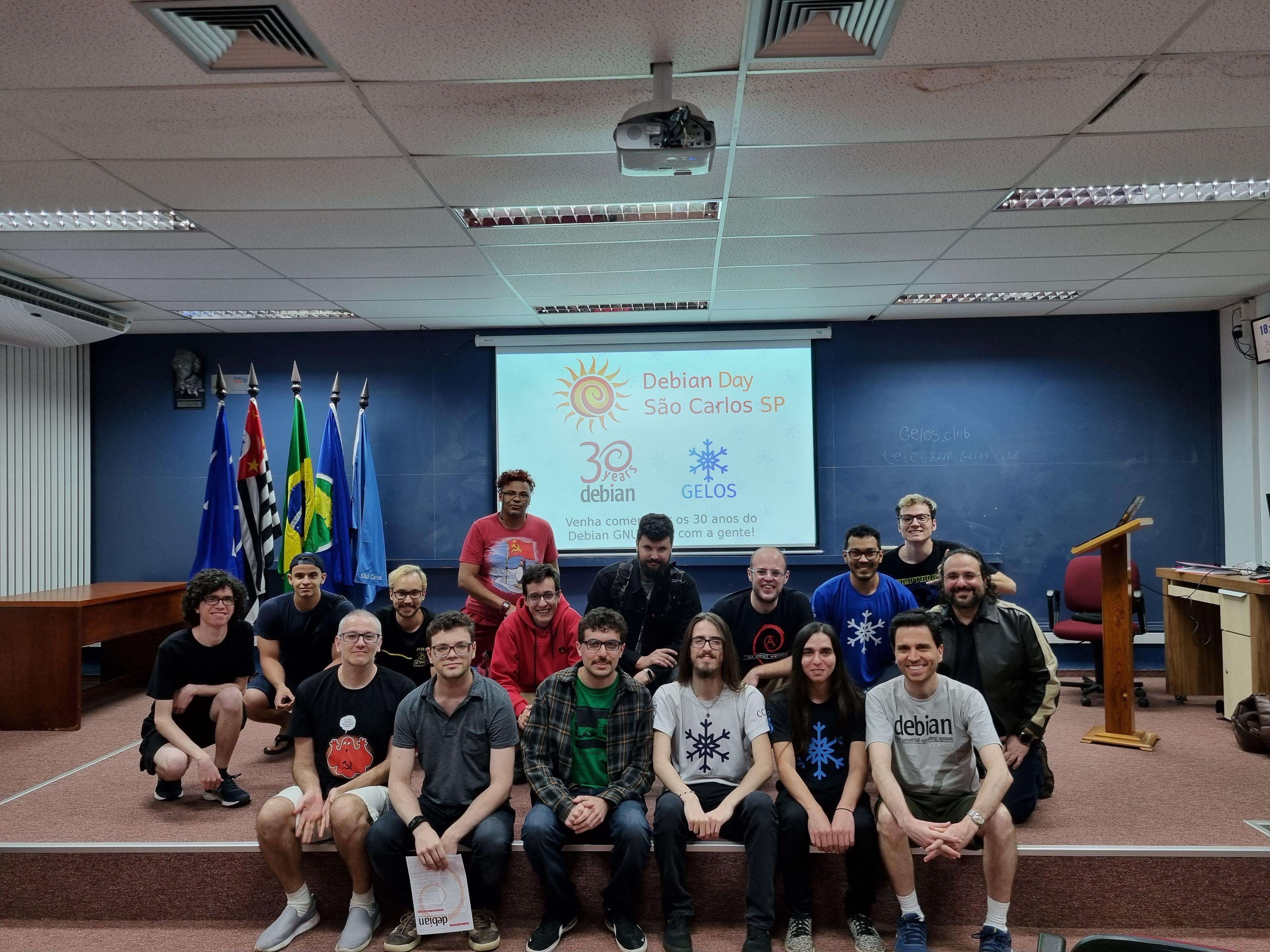
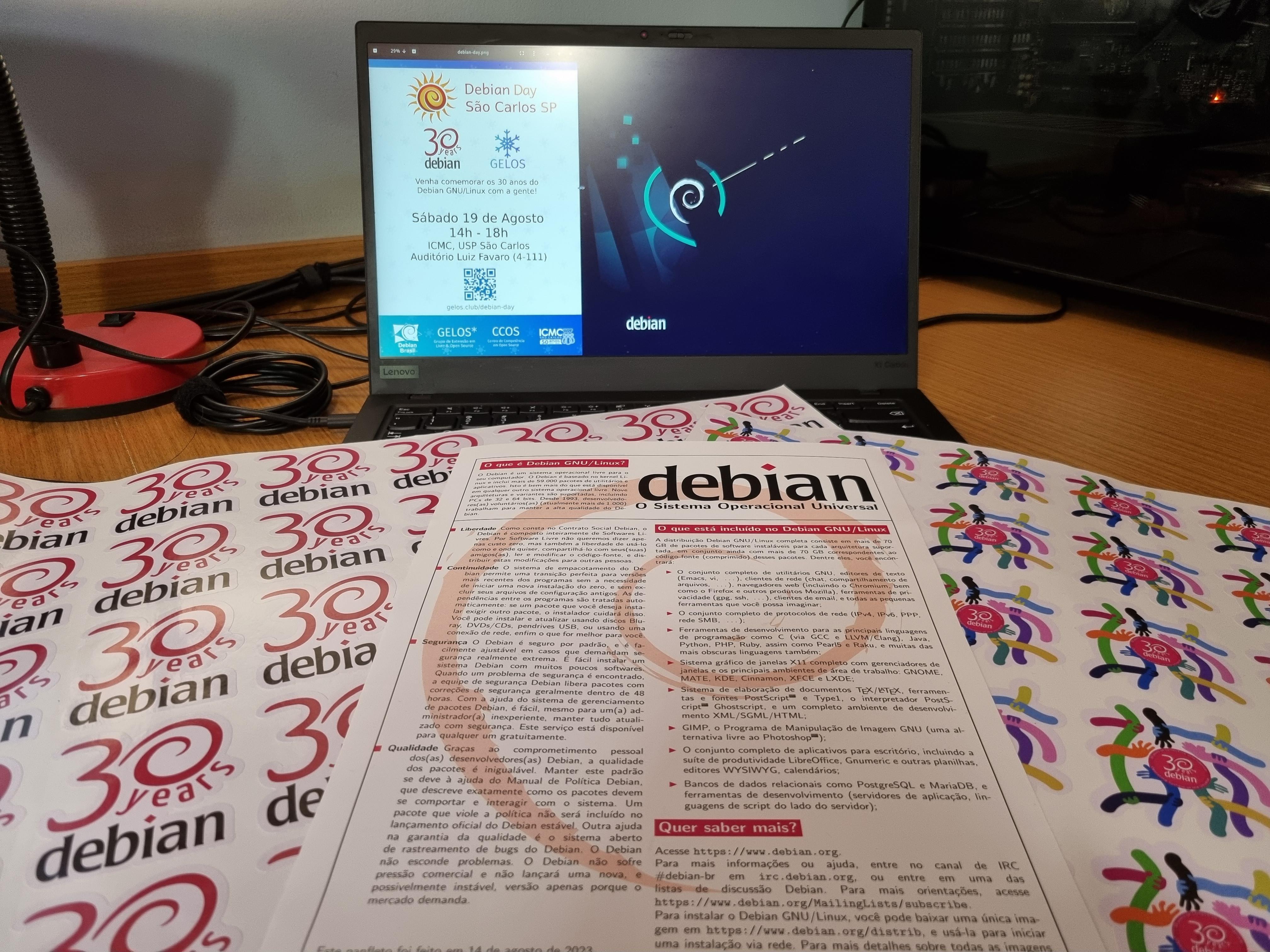
This year's Debian day was a pretty special one, we are celebrating 30 years! Giving the importance of this event, the Brazilian community planned a very special week. Instead of only local gatherings, we had a week of online talks streamed via Debian Brazil's youtube channel (soon the recordings will be uploaded to Debian's peertube instance). Nonetheless the local celebrations happened around the country and I've organized one in S o Carlos with the help of GELOS, the FLOSS group at University of S o Paulo. The event happened on August 19th and went on the whole afternoon. We had some talks about Debian and free software (see table below), a coffee break where we had the chance to talk, and finished with a group photo (check this one and many others below). Actually, it wasn't the end, we carried on the conversation about Debian and free software in a local bar :-) We had around 30 people in the event and reached a greater audience via the announcements across the university's press releases and emails sent to our Brazilian mailing lists. You can check some of them below. Below you can check the list of talks.
Time Author Title
14:10 GELOS Intro to GELOS
14:30 Carlos Melara (Charles) A not so Brief Introdution to the Debian Project
15:15 Guilherme Paix o Debian and the Free Culture
15:45 z Free Software: the paths to a free life
16:15 -- Coffee Break
17:15 Prof. Dr. Francisco Jos Monaco The FOSS Ecosystem and You
Here are some photos taken during the event! Preparation for Debian Day
Getting things ready for the event. Intro to GELOS
Intro to GELOS talk. Debian intro
A not so Brief Introdution to the Debian Project talk. Everyone knows Debian
Everyone already knew Debian! Free software
Debian and the Free Culture talk Auditorium
People in the auditorium space. Free software
Free Software: the paths to a free life talk Coffee Break
Coffee Break. FOSS Ecosystem
The FOSS Ecosystem and You talk. Group photo
Group photo. Celebration afterwards
Celebration goes on in the bar.

17 August 2023

Jonathan Carter: Debian 30th Birthday: Local Group event and Interview

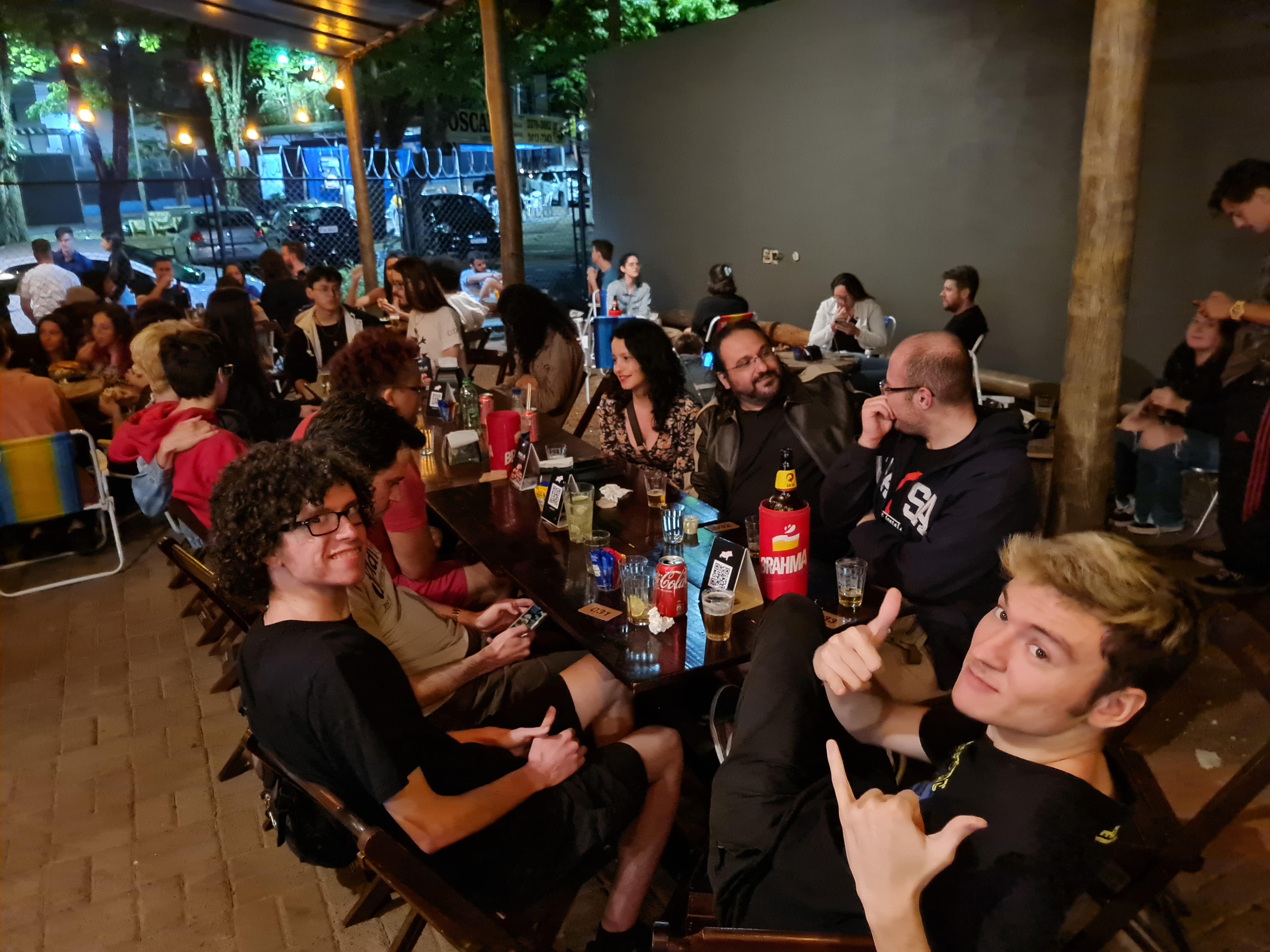
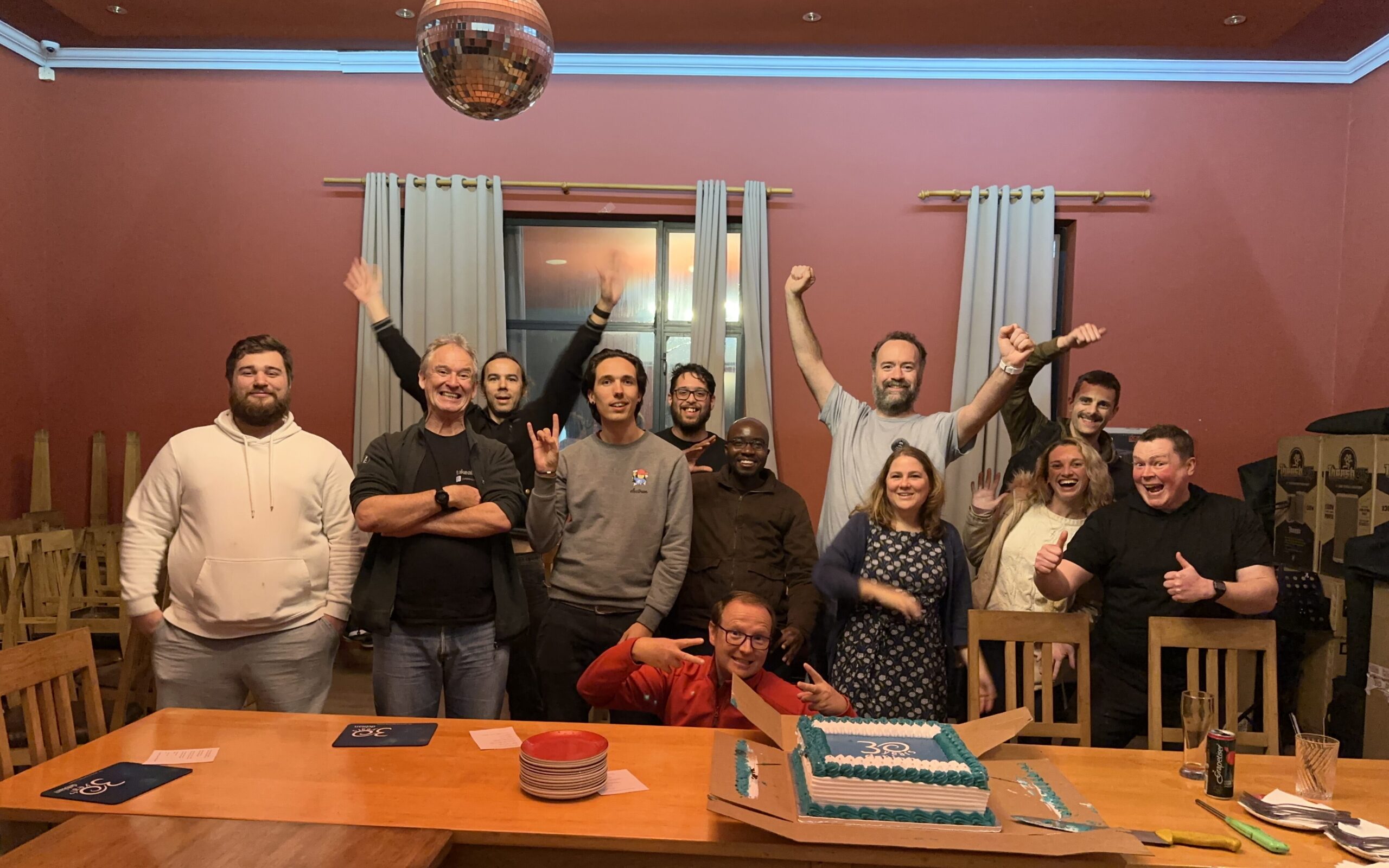
Inspired by the fine Debian Local Groups all over the world, I ve long since wanted to start one in Cape Town. Unfortunately, there s been many obstacles over the years. Shiny distractions, an epidemic, DPL terms these are just some of the things that got in the way. Fortunately, things are starting to gain traction, and we re well on our way to forming a bona fide local group for South Africa. We got together at Woodstock Grill, they have both a nice meeting room, and good food and beverage, also reasonably central for most of us.
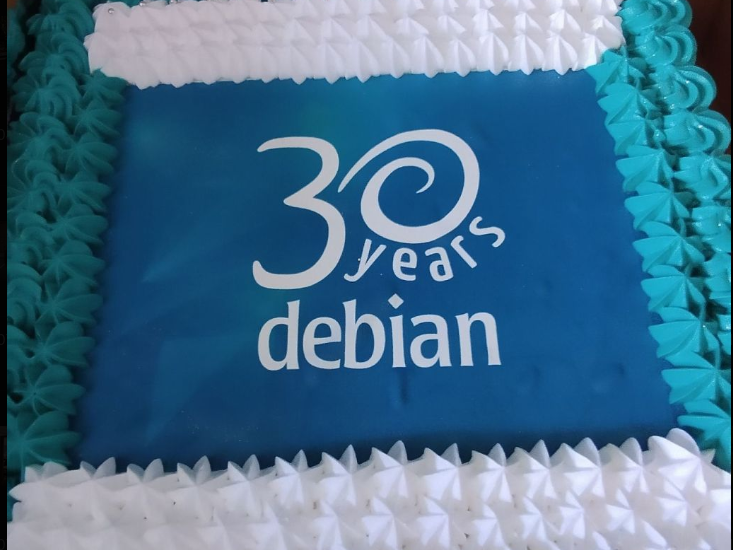
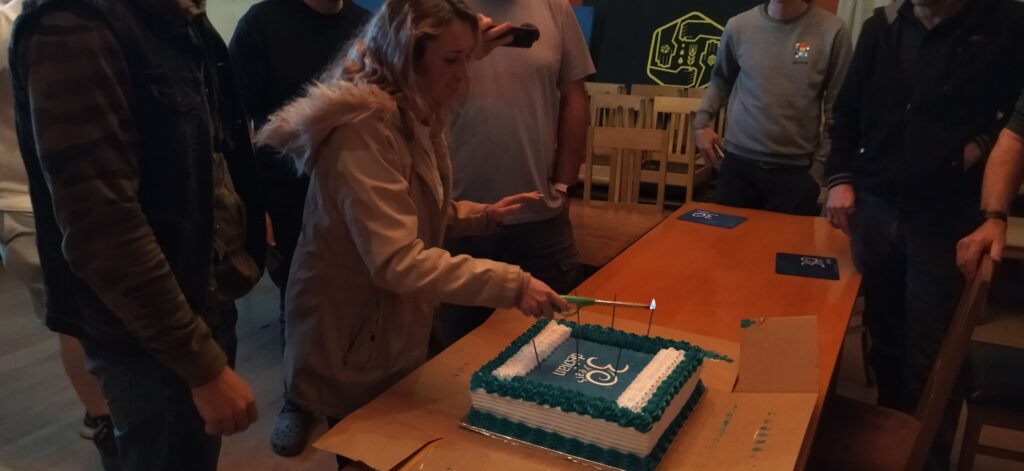
Cake Starting with the important stuff, we got this Debian cake made that ended up much bigger than we expected, at least we all got to take some home too! (it tasted great too)

Yes, cake.

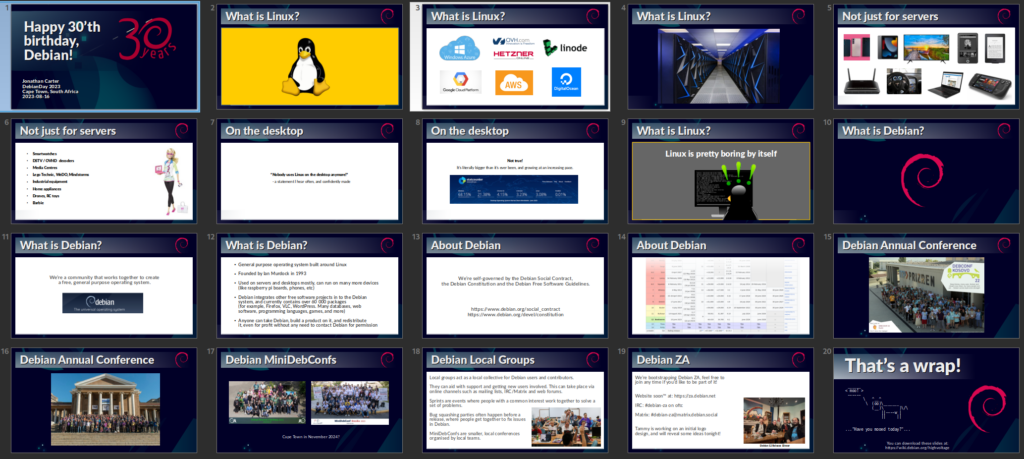
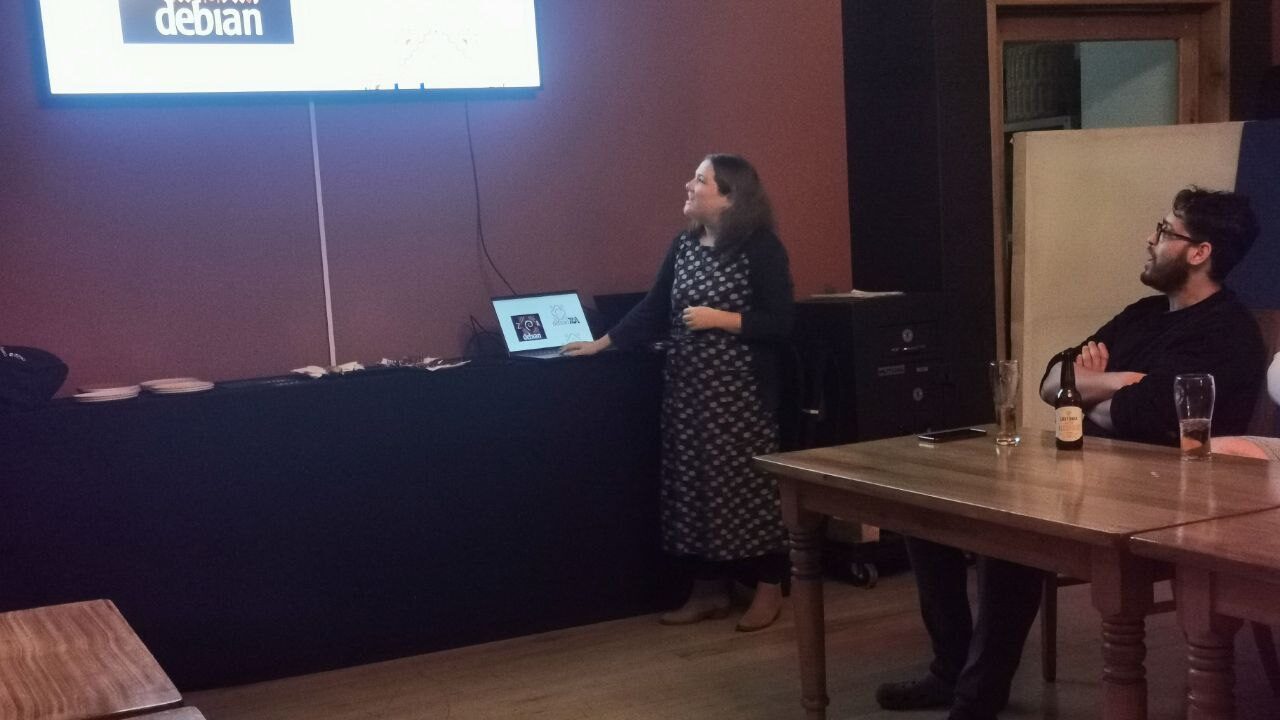
Talk This event was planned very last minute, so we didn t do any kind of RSVP and I had no idea who exactly would show up, so I went ahead and prepared one of my usual introduction to Linux and Debian talks, and how these things are having an impact on the world out there. I also talked a bit about the community and how we intend to grow our local team here in South Africa. It turned out most of the audience were already experienced Linux users, but I was happy to see that they were very enthusiastic about the local group concept!
While reading through some material to find some inspiration for this talk, I came across an old quote from the original Debian Manifesto that I found very poignant again, so I feel compelled to share (didn t use it in my talk this time though since I didn t cover much current events): The time has come to concentrate on the future of Linux rather than on the destructive goal of enriching oneself at the expense of the entire Linux community and its future. Ian Murdock, 1994

Debian-ZA logo Tammy spent some time creating a whole bunch of logo concepts, that she presented to us. They aren t meant as final logo choices, but as initial concepts, and they worked well to invoke a very lively discussion about logos and design!
Here are just some of her designs that I cherry picked since they were the most discussed. We still haven t decided if it will be Debian ZA or Debian-ZA or Debian South Africa, although the latter will probably cause least confusion internationally.
Personally, the last one on this image that I referred to as the carpet is my personal favourite :-)

Happy Birthday Song John and Heila wrote a happy birthday song. After seeing the lyrics (and considering myself an amateur lyricist) I thought it was way too tacky and I told John to put it away. But when the cake came out, someone said we should sing! and the lyrics quickly re-emerged and was handed out to everyone. It s also meant to be a loopy clip for the upcoming DebConf23. I ll concede that it worked out alright in the end! You judge for yourself:

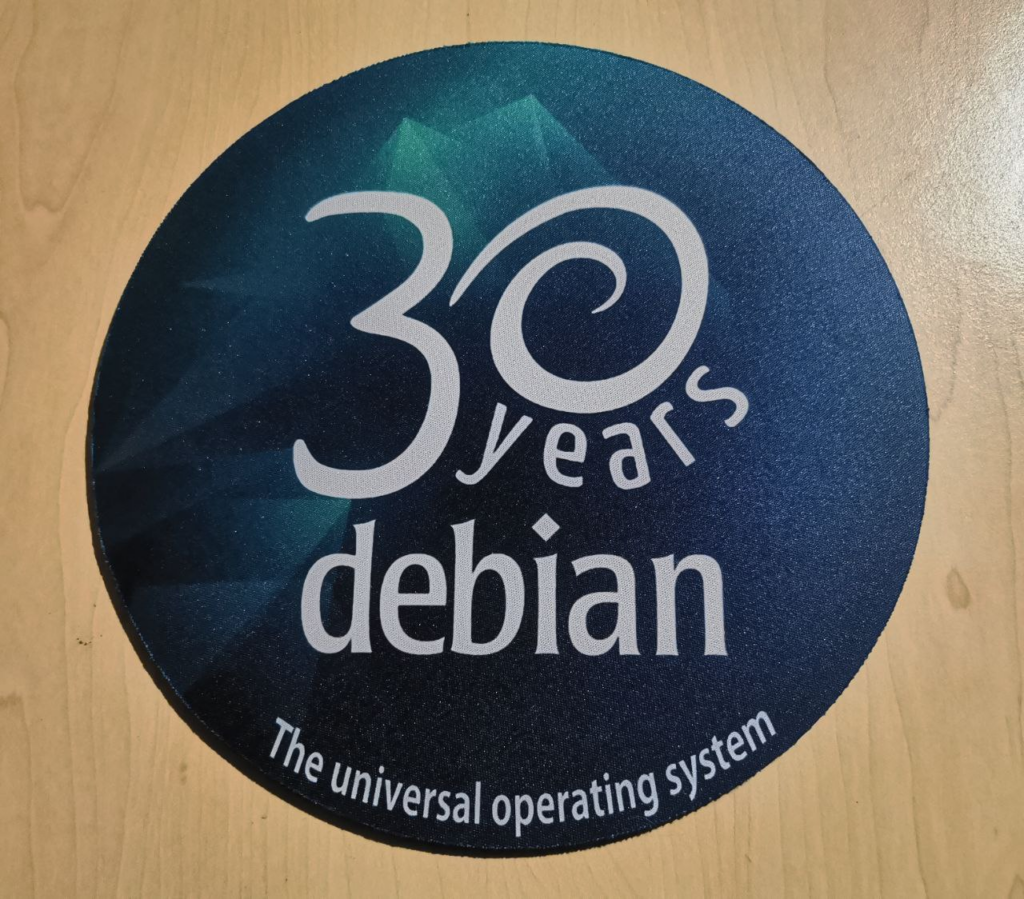
Mousepads People still use mousepads? That was my initial reaction when Heila told me that she was going to make some commemorative 30 year Debian mousepads for our birthday event, and they ended up being popular. It s probably a safer surface to put dev boards on than on my desk directly, so at least I do have a use for one!

Group Photo The group photo, complete with disco ball! We should ve taken this earlier because it was already getting late and some people had to head back home. Lesson learned for next time!

30th Birthday Interview with The Changelog I also did an interview with The Changelog for Debian s 30th birthday. It was late, and I haven t had a chance to listen to it yet, so I hope their producers managed to edit something coherent out of my usual Debian babbling:

More later There s so much more I d like to say about Debian, the last 30 years, local groups, the eco-system that we find ourselves in. And, Lemmy! But I ll see if I can get an instance up over the weekend and will then talk about that some more another time.

16 August 2023

Simon Josefsson: Enforcing wrap-and-sort -satb

For Debian package maintainers, the wrap-and-sort tool is one of those nice tools that I use once in a while, and every time have to re-read the documentation to conclude that I want to use the --wrap-always --short-indent --trailing-comma --sort-binary-package options (or -satb for short). Every time, I also wish that I could automate this and have it always be invoked to keep my debian/ directory tidy, so I don t have to do this manually once every blue moon. I haven t found a way to achieve this automation in a non-obtrusive way that interacts well with my git-based packaging workflow. Ideally I would like for something like the lintian-hook during gbp buildpackage to check for this ideas? Meanwhile, I have come up with a way to make sure I don t forget to run wrap-and-sort for long, and that others who work on the same package won t either: create an autopkgtest which is invoked during the Salsa CI/CD pipeline using the following as debian/tests/wrap-and-sort:
#!/bin/sh
set -eu
TMPDIR=$(mktemp -d)
trap "rm -rf $TMPDIR" 0 INT QUIT ABRT PIPE TERM
cp -a debian $TMPDIR
cd $TMPDIR
wrap-and-sort -satb
diff -ur $OLDPWD/debian debian
Add the following to debian/tests/control to invoke it which is intentionally not indented properly so that the self-test will fail so you will learn how it behaves.
Tests: wrap-and-sort
Depends: devscripts, python3-debian
Restrictions: superficial
Now I will get build failures in the pipeline once I upload the package into Salsa, which I usually do before uploading into Debian. I will get a diff output, and it won t be happy until I push a commit with the output of running wrap-and-sort with the parameters I settled with. While autopkgtest is intended to test the installed package, the tooling around autopkgtest is powerful and easily allows this mild abuse of its purpose for a pleasant QA improvement. Thoughts? Happy hacking!

15 August 2023

Freexian Collaborators: Monthly report about Debian Long Term Support, July 2023 (by Santiago Ruano Rinc n)

Like each month, have a look at the work funded by Freexian s Debian LTS offering.

Debian LTS contributors In July, 18 contributors have been paid to work on Debian LTS, their reports are available:
  • Abhijith PA did 0.0h (out of 0h assigned and 2.0h from previous period), thus carrying over 2.0h to the next month.
  • Adrian Bunk did 24.75h (out of 18.25h assigned and 6.5h from previous period).
  • Anton Gladky did 5.0h (out of 5.0h assigned and 10.0h from previous period), thus carrying over 10.0h to the next month.
  • Bastien Roucari s did 17.0h (out of 17.0h assigned and 3.0h from previous period), thus carrying over 3.0h to the next month.
  • Ben Hutchings did 14.0h (out of 24.0h assigned), thus carrying over 9.5h to the next month.
  • Chris Lamb did 18.0h (out of 18.0h assigned).
  • Emilio Pozuelo Monfort did 24.0h (out of 24.75h assigned), thus carrying over 0.25h to the next month.
  • Guilhem Moulin did 23.25h (out of 24.75h assigned), thus carrying over 1.5h to the next month.
  • Jochen Sprickerhof did 10.0h (out of 20.0h assigned), thus carrying over 10.0h to the next month.
  • Lee Garrett did 16.0h (out of 9.75h assigned and 15.5h from previous period), thus carrying over 9.25h to the next month.
  • Markus Koschany did 24.75h (out of 24.75h assigned).
  • Ola Lundqvist did 0.0h (out of 13.0h assigned and 11.0h from previous period), thus carrying over 24.0h to the next month.
  • Roberto C. S nchez did 19.25h (out of 14.75h assigned and 10.0h from previous period), thus carrying over 5.5h to the next month.
  • Santiago Ruano Rinc n did 25.5h (out of 10.5h assigned and 15.25h from previous period), thus carrying over 0.25h to the next month.
  • Sylvain Beucler did 16.0h (out of 21.25h assigned and 3.5h from previous period), thus carrying over 8.75h to the next month.
  • Thorsten Alteholz did 14.0h (out of 14.0h assigned).
  • Tobias Frost did 16.0h (out of 16.0h assigned).
  • Utkarsh Gupta did 1.5h (out of 0h assigned and 13.75h from previous period), thus carrying over 12.25h to the next month.

Evolution of the situation In July, we have released 35 DLAs. LTS contributor Lee Garrett, has continued his hard work to prepare a testing framework for Samba, that can now provision bootable VMs with little effort, both for Debian and for Windows. This work included the introduction of a new package to Debian, rhsrvany, which allows turning any Windows program or script into a Windows service. As the Samba testing framework matures it will be possible to perform functional tests which cannot be performed with other available test mechanisms and aspects of this framework will be generalizable to other package ecosystems beyond Samba. July included a notable security update of bind9 by LTS contributor Chris Lamb. This update addressed a potential denial of service attack in this critical network infrastructure component.

Thanks to our sponsors Sponsors that joined recently are in bold.

14 August 2023

Jonathan McDowell: listadmin3: An imperfect replacement for listadmin on Mailman 3

One of the annoyances I had when I upgraded from Buster to Bullseye (yes, I m talking about an upgrade I did at the end of 2021) is that I ended up moving from Mailman 2 to Mailman 3. Which is fine, I guess, but it meant I could no longer use listadmin to deal with messages held for moderation. At the time I looked around, couldn t find anything, shrugged, and became incredibly bad at performing my list moderation duties. Last week I finally accepted what I should have done at least a year ago and wrote some hopefully not too bad Python to web scrape the Mailman 3 admin interface. It then presents a list of subscribers and held messages that might need approved or discarded. It s heavily inspired by listadmin, but not a faithful copy (partly because it s been so long since I used it that I m no longer familiar with its interface). Despite that I ve called it listadmin3. It currently meets the bar of extremely useful to me so I ve tagged v0.1. You can get it on Github. I d be interested in knowing if it actually works for / is useful to anyone else (I suspect it won t be happy with interfaces configured to not be in English, but that should be solvable). Comment here or reply to my Fediverse announcement. Example usage, cribbed directly from the README:
$ listadmin3
fetching data for partypeople@example.org ... 200 messages
(1/200) 5303: omgitsspam@example.org / March 31, 2023, 6:39 a.m.:
  The message is not from a list member: TOP PICK
(a)ccept, (d)iscard, (b)ody, (h)eaders, (s)kip, (q)uit? q
Moving on...
fetching data for admins@example.org ... 1 subscription requests
(1/1) "The New Admin" <newadmin@example.org>
(a)ccept, (d)iscard, (r)eject, (s)kip, (q)uit? a
1 messages
(1/1) 6560: anastyspamer@example.org / Aug. 13, 2023, 3:15 p.m.:
  The message is not from a list member: Buy my stuff!
(a)ccept, (d)iscard, (b)ody, (h)eaders, (s)kip, (q)uit? d
0 to accept, 1 to discard, proceed? (y/n) y
fetching data for announce@example.org ... nothing in queue
$
There s Debian packaging in the repository (dpkg-buildpackage -uc -us -b will spit you out a .deb) but I m holding off on filing an ITP + actually uploading until I know if it s useful enough for others before doing so. You only really need the listadmin3 file and to ensure you have Python3 + MechanicalSoup installed. (Yes, I still run mailing lists. Hell, I still run a Usenet server.)

9 August 2023

Antoine Beaupr : OpenPGP key transition

This is a short announcement to say that I have changed my main OpenPGP key. A signed statement is available with the cryptographic details but, in short, the reason is that I stopped using my old YubiKey NEO that I have worn on my keyring since 2015. I now have a YubiKey 5 which supports ED25519 which features much shorter keys and faster decryption. It allowed me to move all my secret subkeys on the key (including encryption keys) while retaining reasonable performance. I have written extensive documentation on how to do that OpenPGP key rotation and also YubiKey OpenPGP operations.

Warning on storing encryption keys on a YubiKey People wishing to move their private encryption keys to such a security token should be very careful as there are special precautions to take for disaster recovery. I am toying with the idea of writing an article specifically about disaster recovery for secrets and backups, dealing specifically with cases of death or disabilities.

Autocrypt changes One nice change is the impact on Autocrypt headers, which are considerably shorter. Before, the header didn't even fit on a single line in an email, it overflowed to five lines:
Autocrypt: addr=anarcat@torproject.org; prefer-encrypt=nopreference;
 keydata=xsFNBEogKJ4BEADHRk8dXcT3VmnEZQQdiAaNw8pmnoRG2QkoAvv42q9Ua+DRVe/yAEUd03EOXbMJl++YKWpVuzSFr7IlZ+/lJHOCqDeSsBD6LKBSx/7uH2EOIDizGwfZNF3u7X+gVBMy2V7rTClDJM1eT9QuLMfMakpZkIe2PpGE4g5zbGZixn9er+wEmzk2mt20RImMeLK3jyd6vPb1/Ph9+bTEuEXi6/WDxJ6+b5peWydKOdY1tSbkWZgdi+Bup72DLUGZATE3+Ju5+rFXtb/1/po5dZirhaSRZjZA6sQhyFM/ZhIj92mUM8JJrhkeAC0iJejn4SW8ps2NoPm0kAfVu6apgVACaNmFb4nBAb2k1KWru+UMQnV+VxDVdxhpV628Tn9+8oDg6c+dO3RCCmw+nUUPjeGU0k19S6fNIbNPRlElS31QGL4H0IazZqnE+kw6ojn4Q44h8u7iOfpeanVumtp0lJs6dE2nRw0EdAlt535iQbxHIOy2x5m9IdJ6q1wWFFQDskG+ybN2Qy7SZMQtjjOqM+CmdeAnQGVwxowSDPbHfFpYeCEb+Wzya337Jy9yJwkfa+V7e7Lkv9/OysEsV4hJrOh8YXu9a4qBWZvZHnIO7zRbz7cqVBKmdrL2iGqpEUv/x5onjNQwpjSVX5S+ZRBZTzah0w186IpXVxsU8dSk0yeQskblrwARAQABzSlBbnRvaW5lIEJlYXVwcsOpIDxhbmFyY2F0QHRvcnByb2plY3Qub3JnPsLBlAQTAQgAPgIbAwULCQgHAwUVCgkICwUWAgMBAAIeAQIXgBYhBI3JAc5kFGwEitUPu3khUlJ7dZIeBQJihnFIBQkacFLiAAoJEHkhUlJ7dZIeXNAP/RsX+27l9K5uGspEaMH6jabAFTQVWD8Ch1om9YvrBgfYtq2k/m4WlkMh9IpT89Ahmlf0eq+V1Vph4wwXBS5McK0dzoFuHXJa1WHThNMaexgHhqJOs
 S60bWyLH4QnGxNaOoQvuAXiCYV4amKl7hSuDVZEn/9etDgm/UhGn2KS3yg0XFsqI7V/3RopHiDT+k7+zpAKd3st2V74w6ht+EFp2Gj0sNTBoCdbmIkRhiLyH9S4B+0Z5dUCUEopGIKKOSbQwyD5jILXEi7VTZhN0CrwIcCuqNo7OXI6e8gJd8McymqK4JrVoCipJbLzyOLxZMxGz8Ki0b9O844/DTzwcYcg9I1qogCsGmZfgVze2XtGxY+9zwSpeCLeef6QOPQ0uxsEYSfVgS+onCesSRCgwAPmppPiva+UlGuIMun87gPpQpV2fqFg/V8zBxRvs6YTGcfcQjfMoBHmZTGb+jk1//QAgnXMO7fGG38YH7iQSSzkmodrH2s27ZKgUTHVxpBL85ptftuRqbR7MzIKXZsKdA88kjIKKXwMmez9L1VbJkM4k+1Kzc5KdVydwi+ujpNegF6ZU8KDNFiN9TbDOlRxK5R+AjwdS8ZOIa4nci77KbNF9OZuO3l/FZwiKp8IFJ1nK7uiKUjmCukL0od/6X2rJtAzJmO5Co93ZVrd5r48oqUvjklzzsBNBFmeC3oBCADEV28RKzbv3dEbOocOsJQWr1R0EHUcbS270CrQZfb9VCZWkFlQ/1ypqFFQSjmmUGbNX2CG5mivVsW6Vgm7gg8HEnVCqzL02BPY4OmylskYMFI5Bra2wRNNQBgjg39L9XU4866q3BQzJp3r0fLRVH8gHM54Jf0FVmTyHotR/Xiw5YavNy2qaQXesqqUv8HBIha0rFblbuYI/cFwOtJ47gu0QmgrU0ytDjlnmDNx4rfsNylwTIHS0Oc7Pezp7MzLmZxnTM9b5VMprAXnQr4rewXCOUKBSto+j4rD5/77DzXw96bbueNruaupb2Iy2OHXNGkB0vKFD3xHsXE2x75NBovtABEBAAHCwqwEGAEIACAWIQSNyQHOZBRsBIrVD7t5IVJSe3WSHgUCWZ4LegIbAgFACRB5IV
 JSe3WSHsB0IAQZAQgAHRYhBHsWQgTQlnI7AZY1qz6h3d2yYdl7BQJZngt6AAoJED6h3d2yYdl7CowH/Rp7GHEoPZTSUK8Ss7crwRmuAIDGBbSPkZbGmm4bOTaNs/gealc2tsVYpoMx7aYgqUW+t+84XciKHT+bjRv8uBnHescKZgDaomDuDKc2JVyx6samGFYuYPcGFReRcdmH0FOoPCn7bMW5mTPztV/wIA80LZD9kPKIXanfUyI3HLP0BPwZG4WTpKzJaalR1BNwu2oF6kEK0ymH3LfDiJ5Sr6emI2jrm4gH+/19ux/x+ST4tvm2PmH3BSQOPzgiqDiFd7RZoAIhmwr3FW4epsK9LtSxsi9gZ2vATBKO1oKtb6olW/keQT6uQCjqPSGojwzGRT2thEANH+5t6Vh0oDPZhrKUXRAAxHMBNHEaoo/M0sjZo+5OF3Ig1rMnI6XbKskLv6hu13cCymW0w/5E4XuYnyQ1cNC3pLvqDQbDx5mAPfBVHuqxJdRLQ3yDM/D2QIsxnkzQwi0FsJuni4vuJzWK/NHHDCvxMCh0YmSgbptUtgW8/niatd2Y6MbfRGxUHoctKtzqzivC8hKMTFrj4AbZhg/e9QVCsh5zSXtpWP0qFDJsxRMx0/432n9d4XUiy4U672r9Q09SsynB3QN6nTaCTWCIxGxjIb+8kJrRqTGwy/PElHX6kF0vQUWZNf2ITV1sd6LK/s/7sH+x4rzgUEHrsKr/qPvY3rUY/dQLd+owXesY83ANOu6oMWhSJnPMksbNa4tIKKbjmw3CFIOfoYHOWf3FtnydHNXoXfj4nBX8oSnkfhLILTJgf6JDFXfw6mTsv/jMzIfDs7PO1LK2oMK0+prSvSoM8bP9dmVEGIurzsTGjhTOBcb0zgyCmYVD3S48vZlTgHszAes1zwaCyt3/tOwrzU5JsRJVns+B/TUYaR/u3oIDMDygvE5ObWxXaFVnCC59r+zl0FazZ0ouyk2AYIR
 zHf+n1n98HCngRO4FRel2yzGDYO2rLPkXRm+NHCRvUA/i4zGkJs2AV0hsKK9/x8uMkBjHAdAheXhY+CsizGzsKjjfwvgqf84LwAzSDdZqLVE2yGTOwU0ESiArJwEQAJhtnC6pScWjzvvQ6rCTGAai6hrRiN6VLVVFLIMaMnlUp92EtgVSNpw6kANtRTpKXUB5fIPZVUrVdfEN06t96/6LE42tgifDAFyFTZY5FdHHri1GG/Cr39MpW2VqCDCtTTPVWHTUlU1ZG631BJ+9NB+ce58TmLr6wBTQrT+W367eRFBC54EsLNb7zQAspCn9pw1xf1XNHOGnrAQ4r9BXhOW5B8CzRd4nLRQwVgtw/c5M/bjemAOoq2WkwN+0mfJe4TSfHwFUozXuN274X+0Gr10fhp8xEDYuQM0qu6W3aDXMBBwIu0jTNudEELsTzhKUbqpsBc9WjwNMCZoCuSw/RTpFBV35mXbqQoQgbcU7uWZslLl9Wvv/C6rjXgd+GeX8SGBjTqq1ZkTv5UXLHTNQzPnbkNEExzqToi/QdSjFMIACnakeOSxc0ckfnsd9pfGv1PUyPyiwrHiqWFzBijzGIZEHxhNGFxAkXwTJR7Pd40a7RDxwbO6p/TSIIum41JtteehLHwTRDdQNMoyfLxuNLEtNYS0uR2jYI1EPQfCNWXCdT2ZK/l6GVP6jyB/olHBIOr+oVXqJh+48ki8cATPczhq3fUr7UivmguGwD67/4omZ4PCKtz1hNndnyYFS9QldEGo+AsB3AoUpVIA0XfQVkxD9IZr+Zu6aJ6nWq4M2bsoxABEBAAHCwXYEGAEIACACGwwWIQSNyQHOZBRsBIrVD7t5IVJSe3WSHgUCWPerZAAKCRB5IVJSe3WSHkIgEACTpxdn/FKrwH0/LDpZDTKWEWm4416l13RjhSt9CUhZ/Gm2GNfXcVTfoF/jKXXgjHcV1DHjfLUPmPVwMdqlf5ACOiFqIUM2ag/OEARh356w
 YG7YEobMjX0CThKe6AV2118XNzRBw/S2IO1LWnL5qaGYPZONUa9Pj0OaErdKIk/V1wge8Zoav2fQPautBcRLW5VA33PH1ggoqKQ4ES1hc9HC6SYKzTCGixu97mu/vjOa8DYgM+33TosLyNy+bCzw62zJkMf89X0tTSdaJSj5Op0SrRvfgjbC2YpJOnXxHr9qaXFbBZQhLjemZi6zRzUNeJ6A3Nzs+gIc4H7s/bYBtcd4ugPEhDeCGffdS3TppH9PnvRXfoa5zj5bsKFgjqjWolCyAmEvd15tXz5yNXtvrpgDhjF5ozPiNp/1EeWX4DxbH2i17drVu4fXwauFZ6lcsAcJxnvCA28RlQlmEQu/gFOx1axVXf6GIuXnQSjQN6qJbByUYrdc/cFCxPO2/lGuUxnufN9Tvb51Qh54laPgGLrlD2huQeSD9Sxa0MNUjNY0qLqaReT99Ygb2LPYGSLoFVx9iZz6sZNt07LqCx9qNgsJwsdmwYsNpMuFbc7nkWjtlEqzsXZHTvYN654p43S+hcAhmmOzQZcew6h71fAJLciiqsPBnCEdgCGFAWhZZdPkMA==
After the change, the entire key fits on a single line, neat!
Autocrypt: addr=anarcat@torproject.org; prefer-encrypt=nopreference;
 keydata=xjMEZHZPzhYJKwYBBAHaRw8BAQdAWdVzOFRW6FYVpeVaDo3sC4aJ2kUW4ukdEZ36UJLAHd7NKUFudG9pbmUgQmVhdXByw6kgPGFuYXJjYXRAdG9ycHJvamVjdC5vcmc+wpUEExYIAD4WIQS7ts1MmNdOE1inUqYCKTpvpOU0cwUCZHZgvwIbAwUJAeEzgAULCQgHAwUVCgkICwUWAgMBAAIeAQIXgAAKCRACKTpvpOU0c47SAPdEqfeHtFDx9UPhElZf7nSM69KyvPWXMocu9Kcu/sw1AQD5QkPzK5oxierims6/KUkIKDHdt8UcNp234V+UdD/ZB844BGR2UM4SCisGAQQBl1UBBQEBB0CYZha2IMY54WFXMG4S9/Smef54Pgon99LJ/hJ885p0ZAMBCAfCdwQYFggAIBYhBLu2zUyY104TWKdSpgIpOm+k5TRzBQJkdlDOAhsMAAoJEAIpOm+k5TRzBg0A+IbcsZhLx6FRIqBJCdfYMo7qovEo+vX0HZsUPRlq4HkBAIctCzmH3WyfOD/aUTeOF3tY+tIGUxxjQLGsNQZeGrQI
Note that I have implemented my own kind of ridiculous Autocrypt support for the Notmuch Emacs email client I use, see this elisp code. To import keys, I pipe the message into this script which is basically just:
sq autocrypt decode   gpg --import
... thanks to Sequoia best-of-class Autocrypt support.

Note on OpenPGP usage While some have claimed OpenPGP's death, I believe those are overstated. Maybe it's just me, but I still use OpenPGP for my password management, to authenticate users and messages, and it's the interface to my YubiKey for authenticating with SSH servers. I understand people feel that OpenPGP is possibly insecure, counter-intuitive and full of problems, but I think most of those problems should instead be attributed to its current flagship implementation, GnuPG. I have tried to work with GnuPG for years, and it keeps surprising me with evilness and oddities. I have high hopes that the Sequoia project can bring some sanity into this space, and I also hope that RFC4880bis can eventually get somewhere so we have a more solid specification with more robust crypto. It's kind of a shame that this has dragged on for so long, but Update: there's a separate draft called openpgp-crypto-refresh that might actually be adopted as the "OpenPGP RFC" soon! And it doesn't keep real work from happening in Sequoia and other implementations. Thunderbird rewrote their OpenPGP implementation with RNP (which was, granted, a bumpy road because it lost compatibility with GnuPG) and Sequoia now has a certificate store with trust management (but still no secret storage), preliminary OpenPGP card support and even a basic GnuPG compatibility layer. I'm also curious to try out the OpenPGP CA capabilities. So maybe it's just because I'm becoming an old fart that doesn't want to change tools, but so far I haven't seen a good incentive in switching away from OpenPGP, and haven't found a good set of tools that completely replace it. Maybe OpenSSH's keys and CA can eventually replace it, but I suspect they will end up rebuilding most of OpenPGP anyway, just more slowly. If they do, let's hope they avoid the mistakes our community has done in the past at least...

5 August 2023

Bits from Debian: Debian Project Bits Volume 1, Issue 1


Debian Project Bits Volume 1, Issue 1 August 05, 2023 Welcome to the inaugural issue of Debian Project Bits! Those remembering the Debian Weekly News (DwN) will recognize some of the sections here which served as our inspiration. Debian Project Bits posts will allow for a faster turnaround of some project news on a monthly basis. The Debian Micronews service will continue to share shorter news items, the Debian Project News remains as our official newsletter which may move to a biannual archive format. News Debian Day The Debian Project was officially founded by Ian Murdock on August 16, 1993. Since then we have celebrated our Anniversary of that date each year with events around the world. We would love it if you could join our revels this very special year as we have the honor of turning 30! Attend or organize a local Debian Day celebration. You're invited to plan your own event: from Bug Squashing parties to Key Signing parties, Meet-Ups, or any type of social event whether large or small. And be sure to check our Debian reimbursement How To if you need such resources. You can share your days, events, thoughts, or notes with us and the rest of the community with the #debianday tag that will be used across most social media platforms. See you then! Events: Upcoming and Reports Upcoming Debian 30 anos The Debian Brasil Community is organizing the event Debian 30 anos to celebrate the 30th anniversary of the Debian Project. From August 14 to 18, between 7pm and 22pm (UTC-3) contributors will talk online in Portuguese and we will live stream on Debian Brasil YouTube channel. DebConf23: Debian Developers Camp and Conference The 2023 Debian Developers Camp (DebCamp) and Conference (DebConf23) will be hosted this year in Infopark, Kochi, India. DebCamp is slated to run from September 3 through 9, immediately followed by the larger DebConf, September 10 through 17. If you are planning on attending the conference this year, now is the time to ensure your travel documentation, visa information, bursary submissions, papers and relevant equipment are prepared. For more information contact: debconf@debconf. MiniDebConf Cambridge 2023 There will be a MiniDebConf held in Cambridge, UK, hosted by ARM for 4 days in November: 2 days for a mini-DebCamp (Thu 23 - Fri 24), with space for dedicated development / sprint / team meetings, then two days for a more regular MiniDebConf (Sat 25 - Sun 26) with space for more general talks, up to 80 people. Reports During the last months, the Debian Community has organized some Bug Squashing Parties:
Tilburg, Netherlands. October 2022. St-Cergue, Switzerland. January 2023 Montreal, Canada. February 2023 In January, Debian India hosted the MiniDebConf Tamil Nadu in Viluppuram, Tamil Nadu, India (Sat 28 - Sun 26). The following month, the MiniDebConf Portugal 2023 was held in Lisbon (12 - 16 February 2023). These events, seen as a stunning success by some of their attendees, demonstrate the vitality of our community.
Debian Brasil Community at Campus Party Brazil 2023 Another edition of Campus Party Brazil took place in the city of S o Paulo between July 25th and 30th. And one more time the Debian Brazil Community was present. During the days in the available space, we carry out some activities such as: For more info and a few photos, check out the organizers' report. MiniDebConf Bras lia 2023 From May 25 to 27, Bras lia hosted the MiniDebConf Bras lia 2023. This gathering was composed of various activities such as talks, workshops, sprints, BSPs (Bug Squashing Party), key signings, social events, and hacking, aimed to bring the community together and celebrate the world's largest Free Software project: Debian. For more information please see the full report written by the organizers. Debian Reunion Hamburg 2023 This year the annual Debian Reunion Hamburg was held from Tuesday 23 to 30 May starting with four days of hacking followed by two days of talks, and then two more days of hacking. As usual, people - more than forty-five attendees from Germany, Czechia, France, Slovakia, and Switzerland - were happy to meet in person, to hack and chat together, and much more. If you missed the live streams, the video recordings are available. Translation workshops from the pt_BR team The Brazilian translation team, debian-l10n-portuguese, had their first workshop of 2023 in February with great results. The workshop was aimed at beginners, working in DDTP/DDTSS. For more information please see the full report written by the organizers. And on June 13 another workshop took place to translate The Debian Administrator's Handbook). The main goal was to show beginners how to collaborate in the translation of this important material, which has existed since 2004. The manual's translations are hosted on Weblate. Releases Stable Release Debian 12 bookworm was released on June 10, 2023. This new version becomes the stable release of Debian and moves the prior Debian 11 bullseye release to oldstable status. The Debian community celebrated the release with 23 Release Parties all around the world. Bookworm's first point release 12.1 address miscellaneous bug fixes affecting 88 packages, documentation, and installer updates was made available on July 22, 2023. RISC-V support riscv64 has recently been added to the official Debian architectures for support of 64-bit little-endian RISC-V hardware running the Linux kernel. We expect to have full riscv64 support in Debian 13 trixie. Updates on bootstrap, build daemon, porterbox, and development progress were recently shared by the team in a Bits from the Debian riscv64 porters post. non-free-firmware The Debian 12 bookworm archive now includes non-free-firmware; please be sure to update your apt sources.list if your systems requires such components for operation. If your previous sources.list included non-free for this purpose it may safely be removed. apt sources.list The Debian archive holds several components: Example of the sources.list file
deb http://deb.debian.org/debian bookworm main
deb-src http://deb.debian.org/debian bookworm main
deb http://deb.debian.org/debian-security/ bookworm-security main
deb-src http://deb.debian.org/debian-security/ bookworm-security main
deb http://deb.debian.org/debian bookworm-updates main
deb-src http://deb.debian.org/debian bookworm-updates main
Example using the components:
deb http://deb.debian.org/debian bookworm main non-free-firmware
deb-src http://deb.debian.org/debian bookworm main non-free-firmware
deb http://deb.debian.org/debian-security/ bookworm-security main non-free-firmware
deb-src http://deb.debian.org/debian-security/ bookworm-security main non-free-firmware
deb http://deb.debian.org/debian bookworm-updates main non-free-firmware
deb-src http://deb.debian.org/debian bookworm-updates main non-free-firmware
For more information and guidelines on proper configuration of the apt source.list file please see the Configuring Apt Sources - Wiki page. Inside Debian New Debian Members Please welcome the following newest Debian Project Members: To find out more about our newest members or any Debian Developer, look for them on the Debian People list. Security Debian's Security Team releases current advisories on a daily basis. Some recently released advisories concern these packages: trafficserver Several vulnerabilities were discovered in Apache Traffic Server, a reverse and forward proxy server, which could result in information disclosure or denial of service. asterisk A flaw was found in Asterisk, an Open Source Private Branch Exchange. A buffer overflow vulnerability affects users that use PJSIP DNS resolver. This vulnerability is related to CVE-2022-24793. The difference is that this issue is in parsing the query record parse_query(), while the issue in CVE-2022-24793 is in parse_rr(). A workaround is to disable DNS resolution in PJSIP config (by setting nameserver_count to zero) or use an external resolver implementation instead. flask It was discovered that in some conditions the Flask web framework may disclose a session cookie. chromium Multiple security issues were discovered in Chromium, which could result in the execution of arbitrary code, denial of service or information disclosure. Other Popular packages gpgv - GNU privacy guard signature verification tool. 99,053 installations. gpgv is actually a stripped-down version of gpg which is only able to check signatures. It is somewhat smaller than the fully-blown gpg and uses a different (and simpler) way to check that the public keys used to make the signature are valid. There are no configuration files and only a few options are implemented. dmsetup - Linux Kernel Device Mapper userspace library. 77,769 installations. The Linux Kernel Device Mapper is the LVM (Linux Logical Volume Management) Team's implementation of a minimalistic kernel-space driver that handles volume management, while keeping knowledge of the underlying device layout in user-space. This makes it useful for not only LVM, but software raid, and other drivers that create "virtual" block devices. sensible-utils - Utilities for sensible alternative selection. 96,001 daily users. This package provides a number of small utilities which are used by programs to sensibly select and spawn an appropriate browser, editor, or pager. The specific utilities included are: sensible-browser sensible-editor sensible-pager. popularity-contest - The popularity-contest package. 90,758 daily users. The popularity-contest package sets up a cron job that will periodically anonymously submit to the Debian developers statistics about the most used Debian packages on the system. This information helps Debian make decisions such as which packages should go on the first CD. It also lets Debian improve future versions of the distribution so that the most popular packages are the ones which are installed automatically for new users. New and noteworthy packages in unstable Toolkit for scalable simulation of distributed applications SimGrid is a toolkit that provides core functionalities for the simulation of distributed applications in heterogeneous distributed environments. SimGrid can be used as a Grid simulator, a P2P simulator, a Cloud simulator, a MPI simulator, or a mix of all of them. The typical use-cases of SimGrid include heuristic evaluation, application prototyping, and real application development and tuning. This package contains the dynamic libraries and runtime. LDraw mklist program 3D CAD programs and rendering programs using the LDraw parts library of LEGO parts rely on a file called parts.lst containing a list of all available parts. The program ldraw-mklist is used to generate this list from a directory of LDraw parts. Open Lighting Architecture - RDM Responder Tests The DMX512 standard for Digital MultipleX is used for digital communication networks commonly used to control stage lighting and effects. The Remote Device Management protocol is an extension to DMX512, allowing bi-directional communication between RDM-compliant devices without disturbing other devices on the same connection. The Open Lighting Architecture (OLA) provides a plugin framework for distributing DMX512 control signals. The ola-rdm-tests package provides an automated way to check protocol compliance in RDM devices. parsec-service Parsec is an abstraction layer that can be used to interact with hardware-backed security facilities such as the Hardware Security Module (HSM), the Trusted Platform Module (TPM), as well as firmware-backed and isolated software services. The core component of Parsec is the security service, provided by this package. The service is a background process that runs on the host platform and provides connectivity with the secure facilities of that host, exposing a platform-neutral API that can be consumed into different programming languages using a client library. For a client library implemented in Rust see the package librust-parsec-interface-dev. Simple network calculator and lookup tool Process and lookup network addresses from the command line or CSV with ripalc. Output has a variety of customisable formats. High performance, open source CPU/GPU miner and RandomX benchmark XMRig is a high performance, open source, cross platform RandomX, KawPow, CryptoNight, and GhostRider unified CPU/GPU miner and RandomX benchmark. Ping, but with a graph - Rust source code This package contains the source for the Rust gping crate, packaged by debcargo for use with cargo and dh-cargo. Once upon a time in Debian: 2014-07-31 The Technical committee choose libjpeg-turbo as the default JPEG decoder. 2010-08-01 DebConf10 starts New York City, USA 2007-08-05 Debian Maintainers approved by vote 2009-08-05 Jeff Chimene files bug #540000 against live-initramfs. Calls for help The Publicity team calls for volunteers and help! Your Publicity team is asking for help from you our readers, developers, and interested parties to contribute to the Debian news effort. We implore you to submit items that may be of interest to our community and also ask for your assistance with translations of the news into (your!) other languages along with the needed second or third set of eyes to assist in editing our work before publishing. If you can share a small amount of your time to aid our team which strives to keep all of us informed, we need you. Please reach out to us via IRC on #debian-publicity on OFTC.net, or our public mailing list, or via email at press@debian.org for sensitive or private inquiries.

4 August 2023

John Goerzen: Try the Last Internet Kermit Server

$ grep kermit /etc/services
kermit          1649/tcp
What is this mysterious protocol? Who uses it and what is its story? This story is a winding one, beginning in 1981. Kermit is, to the best of my knowledge, the oldest actively-maintained software package with an original developer still participating. It is also a scripting language, an Internet server, a (scriptable!) SSH client, and a file transfer protocol. And my first use of it was talking to my HP-48GX calculator over a 9600bps serial link. Yes, that calculator had a Kermit server built in. But let s back up and talk about serial ports and Modems.

Serial Ports and Modems In my piece The PC & Internet Revolution in Rural America, I recently talked about getting a modem what an excitement it was to get one! I realize that many people today have never used a serial line or a modem, so let s briefly discuss. Before Ethernet and Wifi took off in a big way, in the 1990s-2000s, two computers would talk to each other over a serial line and a modem. By modern standards, these were slow; 300bps was a common early speed. They also (at least in the beginning) had no kind of error checking. Characters could be dropped or changed. Sometimes even those speeds were faster than the receiving device could handle. Some serial links were 7-bit, and wouldn t even pass all 7-bit characters; for instance, sending a Ctrl-S could lock up a remote until you sent Ctrl-Q. And computers back in the 1970s and 1980s weren t as uniform as they are now. They used different character sets, different line endings, and even had different notions of what a file is. Today s notion of a file as whatever set of binary bytes an application wants it to be was by no means universal; some systems treated a file as a set of fixed-length records, for instance. So there were a lot of challenges in reliably moving files between systems. Kermit was introduced to reliably move files between systems using serial lines, automatically working around the varieties of serial lines, detecting errors and retransmitting, managing transmit speeds, and adapting between architectures as appropriate. Quite a task! And perhaps this explains why it was supported on a calculator with a primitive CPU by today s standards. Serial communication, by the way, is still commonplace, though now it isn t prominent in everyone s home PC setup. It s used a lot in industrial equipment, avionics, embedded systems, and so forth. The key point about serial lines is that they aren t inherently multiplexed or packetized. Whereas an Ethernet network is designed to let many dozens of applications use it at once, a serial line typically runs only one (unless it is something like PPP, which is designed to do multiplexing over the serial line). So it become useful to be able to both log in to a machine and transfer files with it. That is, incidentally, still useful today.

Kermit and XModem/ZModem I wondered: why did we end up with two diverging sets of protocols, created at about the same time? The Kermit website has the answer: essentially, BBSs could assume 8-bit clean connections, so XModem and ZModem had much less complexity to worry about. Kermit, on the other hand, was highly flexible. Although ZModem came out a few years before Kermit had its performance optimizations, by about 1993 Kermit was on par or faster than ZModem.

Beyond serial ports As LANs and the Internet came to be popular, people started to use telnet (and later ssh) to connect to remote systems, rather than serial lines and modems. FTP was an early way to transfer files across the Internet, but it had its challenges. Kermit added telnet support, as well as later support for ssh (as a wrapper around the ssh command you already know). Now you could easily log in to a machine and exchange files with it without missing a beat. And so it was that the Internet Kermit Service Daemon (IKSD) came into existence. It allows a person to set up a Kermit server, which can authenticate against local accounts or present anonymous access akin to FTP. And so I established the quux.org Kermit Server, which runs the Unix IKSD (part of the Debian ckermit package).

Trying Out the quux.org Kermit Server There are more instructions on the quux.org Kermit Server page! You can connect to it using either telnet or the kermit program. I won t duplicate all of the information here, but here s what it looks like to connect:
$ kermit
C-Kermit 10.0 Beta.08, 15 Dec 2022, for Linux+SSL (64-bit)
 Copyright (C) 1985, 2022,
  Trustees of Columbia University in the City of New York.
  Open Source 3-clause BSD license since 2011.
Type ? or HELP for help.
(/tmp/t/) C-Kermit>iksd /user:anonymous kermit.quux.org
 DNS Lookup...  Trying 135.148.101.37...  Reverse DNS Lookup... (OK)
Connecting to host glockenspiel.complete.org:1649
 Escape character: Ctrl-\ (ASCII 28, FS): enabled
Type the escape character followed by C to get back,
or followed by ? to see other options.
----------------------------------------------------

 >>> Welcome to the Internet Kermit Service at kermit.quux.org <<<

To log in, use 'anonymous' as the username, and any non-empty password

Internet Kermit Service ready at Fri Aug  4 22:32:17 2023
C-Kermit 10.0 Beta.08, 15 Dec 2022
kermit

Enter e-mail address as Password: [redacted]

Anonymous login.

You are now connected to the quux kermit server.

Try commands like HELP, cd gopher, dir, and the like.  Use INTRO
for a nice introduction.

(~/) IKSD>
You can even recursively download the entire Kermit mirror: over 1GB of files!

Conclusions So, have fun. Enjoy this experience from the 1980s. And note that Kermit also makes a better ssh client than ssh in a lot of ways; see ideas on my Kermit page. This page also has a permanent home on my website, where it may be periodically updated.

Shirish Agarwal: Birth Control, Consent, Rape & Violence.

Consent, Violence, Sexual Abuse This again would be somewhat of a mature post. So children, please refrain from reading. When I hear the above words, my first thought goes to Aamir Khan s Season 1 Episode 2 in Satyamev Jayate. This was the first time that the topic of child sexual abuse was bought in the forefront in the hall rather than a topic to be discussed in the corner. Unfortunately, that episode is still in Hindi and no English subtitles available even today shows a lack of sensitivity in Indian s part to still come to terms with Child abuse that happens in India. The numbers that they had shared at that time were shocking. More than 50 per cent children experience sexual abuse and mostly from friends or relatives. That means 1 in every 2 children. And this was in 2012. But the problem of child sexual abuse didn t start then, it started in the 1960 s, 70 s. In the 1960 s, 1970s we didn t have much of cinema and TV and whatever there was pretty limited. There were few B movie producers, but most of them came into their own in the 1980s. So what influenced Indians in those days were softcore magazines that either had a mature aunt or a teen and they would tease and sooner or later the man would sort of overpower them and fulfill his needs. Even mainstream Indian cinema used similar tropes. One of the most memorable songs of that era Wada Karo Nahi Chodoge Tum Meera Saath from Aa Gale Lag jaa. A bit of context for the song. This is where Shashi Kapoor sees, he tries to ask her to date him, she says no. He tries to put an act where he shows he can t skate or rather pretends. And kinda takes a promise from her that she will date him if he is able to skate. And viola, the next moment he is not just skating, but dancing and singing as well. And the whole he touches her and you can see that is uncomfortable and yet after a while he woos her. Now this is problematic today because we are seeing it from today s lens. It might also have problematic with the feminists of that time, but they probably would have been called overly sensitive or something like that. And this is what went in Universal cinema. But this is just tip of the surface. There were and are multiple poems and even art in those times that flirted and even sort of engaged with sexual molestation, rape both in poems as well as literature, both in Hindi and various regional literature. Similar to stuff that Keats and some other poets (problematic stuff) they wrote and where both men and women were in two minds, whether to take all the other good literature out or kinda make the difference between the art and artist. Now, while Aamir spoke about consent it wasn t in any official capacity or even a legal capacity. The interesting thing was that there was an Act that kinda put some safeguards but had been doing rounds for almost a decade. Because the extremists on both sides, Hindus and Muslims were not in favor of that Act, it was still doing rounds. Aamir s episode on 6th May 2012 and the discussions in mainstream media following that forced the Indian legislature to make POSCO as a law on 22nd May 2012. Almost 6 months to 2 weeks, Nirbhaya happened and changes to the law happened in another 6 months. Both voyeurism and stalking were made jailable offenses and consent became part of lingua franca in the Supreme Court. Couple of weeks back, I had shared in the Manipur case the part about fingering . In the same Act, another change that was done that insertion of any part including foreign objects in any of the openings would be classed as rape . So in that Manipur case, at least those 2-3 people who have been identified as clear perpetrators according to the law of land would be rapists and should have the highest punishment. Unfortunately, the system is rigged against women as Vrinda Grover had shared just couple of weeks back. How a 6 month fast track case (to be completed within 6 months) becomes a 10 year old case tells you the efficacy of the system. The reality is far more worse than is shared or known. Just a few months ago, GOI shared some data on Sexual Harassment in 2018-19. And this is after constant pressurizing by Activists that GOI doesn t like. In fact, in 2021, Unicef had shared data about how India was one of the five countries where child brides are still prevalent. India denied but didn t produce any alternative data. The firing of Mr. James over NHFS data sets doesn t give it any brownie points to the present Government. What has happened in the last few years is that the Government for reasons of its own had been scrubbing and censoring a lot of data. I won t go far, just 2 day old story which I had shared just couple of days back. Roughly a 25 year old RPF constable kills his superior and kills 3 Muslims after going to various coaches and then the Government uses the defence of temporary insanity.
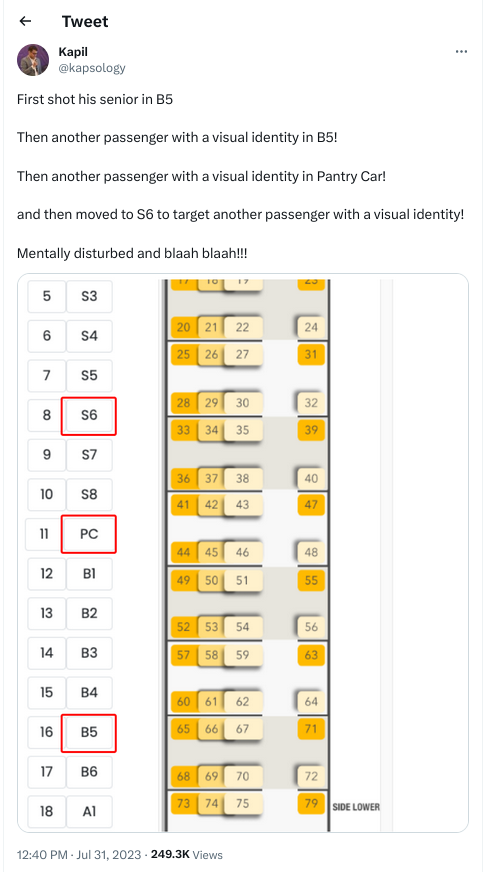
Even the mental instability defence has twists and turns
Incidentally, Press Trust of India is s private organization and not the public broadcaster of the old. And incidentally, just a few days back, it came to light that they hadn t paid Income tax for last 2-3 years. Because of issues in reward money, the public came to know otherwise they wouldn t have known. Coming back to the topic itself, there was a video where you could hear and see the accused stating after killing the three Muslims that if you want to remain in India, then you have to vote for only Modi or Yogi, otherwise this will happen. That video was scrubbed both from Twitter as well as YouTube. All centralized platforms at the very least, whether it is Google (Youtube) or Twitter or Meta uses its own media ID. Meta s being most problematic but that probably being a discussion for another day. The same censorship tools are applied rigorously and lot of incidents are buried. Cases of girls being thrown in lakes just after lakes or low numbers of conviction in case of gang rapes are more often than not disappears.
The above article shared just a few days ago that how low the conviction rates of gang rapes are in Gujarat tells you the story. You might get the story today, but wait for a few weeks and you will find that the story has disappeared. What most people do not know or understand is that the web is increasingly a public repository of idea, imaginations and trust and authoritarian regimes like Government of India is increasingly using both official as well as unofficial methods to suppress the same. To see that in the last 9 odd years, GOI has made the highest number of takedown requests and been either number one or number two tells all. My question is where we do from here ??? If even the Minister and her Ministry can do only whataboutery rather than answer the questions, then how we are supposed to come up solutions. And even if a solution exists, without the state and Center agreeing and co-operating with civil society, any solution will be far off the desired result. I am sorry that I at least have no answers

Louis-Philippe V ronneau: pymonitair: Air Quality Monitoring Display with MicroPython

I've never been a fan of IoT devices for obvious reasons: not only do they tend to be excellent at being expensive vendor locked-in machines, but far too often, they also end up turning into e-waste after a short amount of time. Manufacturers can go out of business or simply decide to shut down the cloud servers for older models, and then you're stuck with a brick. Well, this all changes today, as I've built my first IoT device and I love it. Introducing pymonitair. What pymonitair is a MicroPython project that aims to display weather data from a home weather station (like the ones sold by AirGradient) on a small display. The source code was written for the Raspberry Pi Pico W, the Waveshare Pico OLED 1.3 display and the RevolvAir Revo 1 weather station, but can be adapted to other displays and stations easily, as I tried to keep the code as modular as possible. The general MicroPython code itself isn't specific to the Raspberry Pi Pico and shouldn't need to be modified for other boards. pymonitair features: Here's a demo of me scrolling through the different pages and (somewhat failing) to turn the screen on and off: Why? If you follow my blog, you'll know that my last entry was about building a set of tools to collect and graph data from a weather station my neighbor set up. Why on Earth would I need a separate device to show this data, when the website I've built works perfectly fine and is accessible on any computer or smartphone? Mostly alerts. When the air quality here dropped following forest fires, I found out keeping track of if I had to close my windows and bunker down was quite a hassle. Air quality would degrade during the day and I would only notice it hours later. With the pymonitair, I'll have a little screen flashing angrily at me whenever this happens. A simpler solution would probably have been to forgo hardware altogether and code some icinga2 alert to ping me over Signal whenever the air quality got bad. Hacking on pymonitair was mostly a way to learn to use MicroPython and familiarize myself with this type of embedded hardware device. I'll surely blog about this later this year, but I plan to use a very similar stack to mod my apartment's HVAC unit to stop pulling air from outside when an air quality sensor detects cigarette smoke (or bad air quality in general). Things I've learnt This project was super fun and taught me many things:

  1. PM1, PM2.5, PM10, Temperature, Humidity and Pressure
  2. Part of the screen will flash repeatedly
  3. I did look for other solutions to transfer files to the board, but none of them were actually maintained. I nearly finished packaging ampy before realising it was officially unmaintained and its main alternative, rshell, has had its last release in December 2021. When I caught myself seriously considering writing a script to transfer files over the serial link, I gave up and decided thonny was not that bad after all.

1 August 2023

Jonathan Dowland: Interzone's new home

IZ #294, the latest issue IZ #294, the latest issue
The long running British1 SF Magazine Interzone has a new home and new editor, Gareth Jelley, starting with issue 294. It's also got a swanky new format ("JB6"): a perfect-bound, paperback novel size, perfect for fitting into an oversize coat or jeans pocket for reading on the train. I started reading Interzone in around 2003, having picked up an issue (#176) from Feb 2002 that was languishing on the shelves in Forbidden Planet. Once I discovered it I wondered why it had taken me so long. That issue introduced me to Greg Egan. I bought a number of back issues on eBay, to grab issues with stories by people including Terry Pratchett, Iain Banks, Alastair Reynolds, and others.
IZ #194: The first by TTA press IZ #194: The first by TTA press
A short while later in early 2004, after 22 years, Interzone's owner and editorship changed from David Pringle to Andy Cox and TTA Press. I can remember the initial transition was very jarring: the cover emphasised expanding into coverage of Manga, Graphic Novels and Video Games (which ultimately didn't happen) but after a short period of experimentation it quickly settled down into a similarly fantastic read. I particularly liked the move to a smaller, perfect-bound form-factor in 2012. I had to double-check this but I'd been reading IZ throughout the TTA era and it lasted 18 years! Throughout that time I have discovered countless fantastic authors that I would otherwise never have experienced. Some (but by no means all) are Dominic Green, Daniel Kaysen, Chris Beckett, C cile Cristofari, Aliya Whiteley, Tim Major, Fran oise Harvey, Will McIntosh. Cox has now retired (after 100 issues and a tenure almost as long as Pringle) and handed the reins to Gareth Jelley/MYY Press, who have published their first issue, #294. Jelley is clearly putting a huge amount of effort into revitalizing the magazine. There's a new homepage at interzone.press but also companion internet presences: a plethora of digital content at interzone.digital, Interzone Socials (a novel idea), a Discord server, a podcast, and no doubt more. Having said that, the economics of small magazines have been perilous for a long time, and that hasn't changed, so I think the future of IZ (in physical format at least) is in peril. If you enjoy short fiction, fresh ideas, SF/F/Fantastika; why not try a subscription to Interzone, whilst you still can!

  1. Interzone has always been "British", in some sense, but never exclusively so. I recall fondly a long-term project under Pringle to publish a lot of Serbian writer Zoran ivkovi , for example, and the very first story I read was by Australian Greg Egan. Under Jelley, the magazine is being printed in Poland and priced in Euros. I expect it to continue to attract and publish writers from all over the place.

Reproducible Builds: Supporter spotlight: Simon Butler on business adoption of Reproducible Builds

The Reproducible Builds project relies on several projects, supporters and sponsors for financial support, but they are also valued as ambassadors who spread the word about our project and the work that we do. This is the seventh instalment in a series featuring the projects, companies and individuals who support the Reproducible Builds project. We started this series by featuring the Civil Infrastructure Platform project, and followed this up with a post about the Ford Foundation as well as recent ones about ARDC, the Google Open Source Security Team (GOSST), Bootstrappable Builds, the F-Droid project and David A. Wheeler. Today, however, we will be talking with Simon Butler, an associate senior lecturer in the School of Informatics at the University of Sk vde, where he undertakes research in software engineering that focuses on IoT and open source software, and contributes to the teaching of computer science to undergraduates.

Chris: For those who have not heard of it before, can you tell us more about the School of Informatics at Sk vde University? Simon: Certainly, but I may be a little long-winded. Sk vde is a city in the area between the two large lakes in southern Sweden. The city is a busy place. Sk vde is home to the regional hospital, some of Volvo s manufacturing facilities, two regiments of the Swedish defence force, a lot of businesses in the Swedish computer games industry, other tech companies and more. The University of Sk vde is relatively small. Sweden s large land area and low population density mean that regional centres such as Sk vde are important and local universities support businesses by training new staff and supporting innovation. The School of Informatics has two divisions. One focuses on teaching and researching computer games. The other division encompasses a wider range of teaching and research, including computer science, web development, computer security, network administration, data science and so on.
Chris: You recently had a open-access paper published in Software Quality Journal. Could you tell us a little bit more about it and perhaps briefly summarise its key findings? Simon: The paper is one output of a collaborative research project with six Swedish businesses that use open source software. There are two parts to the paper. The first consists of an analysis of what the group of businesses in the project know about Reproducible Builds (R-Bs), their experiences with R-Bs and their perception of the value of R-Bs to the businesses. The second part is an interview study with business practitioners and others with experience and expertise in R-Bs. We set out to try to understand the extent to which software-intensive businesses were aware of R-Bs, the technical and business reasons they were or were not using R-Bs and to document the business and technical use cases for R-Bs. The key findings were that businesses are aware of R-Bs, and some are using R-Bs as part of their day-to-day development process. Some of the uses for R-Bs we found were not previously documented. We also found that businesses understood the value R-Bs have as part of engineering and software quality processes. They are also aware of the costs of implementing R-Bs and that R-Bs are an intangible value proposition - in other words, businesses can add value through process improvement by using R-Bs. But, that, currently at least, R-Bs are not a selling point for software or products.
Chris: You performed a large number of interviews in order to prepare your paper. What was the most surprising response to you? Simon: Most surprising is a good question. Everybody I spoke to brought something new to my understanding of R-Bs, and many responses surprised me. The interviewees that surprised me most were I01 and I02 (interviews were anonymised and interviewees were assigned numeric identities). I02 described the sceptical perspective that there is a viable, pragmatic alternative to R-Bs - verifiable builds - which I was aware of before undertaking the research. The company had developed a sufficiently robust system for their needs and worked well. With a large archive of software used in production, they couldn t justify the cost of retrofitting a different solution that might only offer small advantages over the existing system. Doesn t really sound too surprising, but the interview was one of the first I did on this topic, and I was very focused on the value of, and need for, trust in a system that motivated the R-B. The solution used by the company requires trust, but they seem to have established sufficient trust for their needs by securing their build systems to the extent that they are more or less tamper-proof. The other big surprise for me was I01 s use of R-Bs to support the verification of system configuration in a system with multiple embedded components at boot time. It s such an obvious application of R-Bs, and exactly the kind of response I hoped to get from interviewees. However, it is another instance of a solution where trust is only one factor. In the first instance, the developer is using R-Bs to establish trust in the toolchain. There is also the second application that the developer can use a set of R-Bs to establish that deployed system consists of compatible components. While this might not sound too significant, there appear to be some important potential applications. One that came to mind immediately is a problem with firmware updates on nodes in IoT systems where the node needs to update quickly with limited downtime and without failure. The node also needs to be able to roll back any update proposed by a server if there are conflicts with the current configuration or if any tests on the node fail. Perhaps the chances of failure could be reduced, if a node can instead negotiate with a server to determine a safe path to migrate from its current configuration to a working configuration with the upgraded components the central system requires? Another potential application appears to be in the configuration management of AI systems, where decisions need to be explainable. A means of specifying validated configurations of training data, models and deployed systems might, perhaps, be leveraged to prevent invalid or broken configurations from being deployed in production.
Chris: One of your findings was that reproducible builds were perceived to be good engineering practice . To what extent do you believe cultural forces affect the adoption or rejection of a given technology or practice? Simon: To a large extent. People s decisions are informed by cultural norms, and business decisions are made by people acting collectively. Of course, decision-making, including assessments of risk and usefulness, is mediated by individual positions on the continuum from conformity to non-conformity, as well as individual and in-group norms. Whether a business will consider a given technology for adoption will depend on cultural forces. The decision to adopt may well be made on the grounds of cost and benefits.
Chris: Another conclusion implied by your research is that businesses are often dealing with software deployment lifespans (eg. 20+ years) that differ from widely from those of the typical hobbyist programmer. To what degree do you think this temporal mismatch is a problem for both groups? Simon: This is a fascinating question. Long-term software maintenance is a requirement in some industries because of the working lifespans of the products and legal requirements to maintain the products for a fixed period. For some other industries, it is less of a problem. Consequently, I would tend to divide developers into those who have been exposed to long-term maintenance problems and those who have not. Although, more professional than hobbyist developers will have been exposed to the problem. Nonetheless, there are areas, such as music software, where there are also long-term maintenance challenges for data formats and software.
Chris: Based on your research, what would you say are the biggest blockers for the adoption of reproducible builds within business ? And, based on this, would you have any advice or recommendations for the broader reproducible builds ecosystem? Simon: From the research, the main blocker appears to be cost. Not an absolute cost, but there is an overhead to introducing R-Bs. Businesses (and thus business managers) need to understand the business case for R-Bs. Making decision-makers in businesses aware of R-Bs and that they are valuable will take time. Advocacy at multiple levels appears to be the way forward and this is being done. I would recommend being persistent while being patient and to keep talking about reproducible builds. The work done in Linux distributions raises awareness of R-Bs amongst developers. Guix, NixOS and Software Heritage are all providing practical solutions and getting attention - I ve been seeing progressively more mentions of all three during the last couple of years. Increased awareness amongst developers should lead to more interest within companies. There is also research money being assigned to supply chain security and R-B s. The CHAINS project at KTH in Stockholm is one example of a strategic research project. There may be others that I m not aware of. The policy-level advocacy is slowly getting results in some countries, and where CISA leads, others may follow.
Chris: Was there a particular reason you alighted on the question of the adoption of reproducible builds in business? Do you think there s any truth behind the shopworn stereotype of hacker types neglecting the resources that business might be able to offer? Simon: Much of the motivation for the research came from the contrast between the visibility of R-Bs in open source projects and the relative invisibility of R-Bs in industry. Where companies are known to be using R-Bs (e.g. Google, etc.) there is no fuss, no hype. They were not selling R-Bs as a solution; instead the documentation is very matter-of-fact that R-Bs are part of a customer-facing process in their cloud solutions. An obvious question for me was that if some people use R-B s in software development, why doesn t everybody? There are limits to the tooling for some programming languages that mean R-Bs are difficult or impossible. But where creating an R-B is practical, why are they not used more widely? So, to your second question. There is another factor, which seems to be more about a lack of communication rather than neglecting opportunities. Businesses may not always be willing to discuss their development processes and innovations. Though I do think the increasing number of conferences (big and small) for software practitioners is helping to facilitate more communication and greater exchange of ideas.
Chris: Has your personal view of reproducible builds changed since before you embarked on writing this paper? Simon: Absolutely! In the early stages of the research, I was interested in questions of trust and how R-Bs were applied to resolve build and supply chain security problems. As the research developed, however, I started to see there were benefits to the use of R-Bs that were less obvious and that, in some cases, an R-B can have more than a single application.
Chris: Finally, do you have any plans to do future research touching on reproducible builds? Simon: Yes, definitely. There are a set of problems that interest me. One already mentioned is the use of reproducible builds with AI systems. Interpretable or explainable AI (XAI) is a necessity, and I think that R-Bs can be used to support traceability in the configuration and testing of both deployed systems and systems used during model training and evaluation. I would also like to return to a problem discussed briefly in the article, which is to develop a deeper understanding of the elements involved in the application of R-Bs that can be used to support reasoning about existing and potential applications of R-Bs. For example, R-Bs can be used to establish trust for different groups of individuals at different times, say, between remote developers prior to the release of software and by users after release. One question is whether when an R-B is used might be a significant factor. Another group of questions concerns the ways in which trust (of some sort) propagates among users of an R-B. There is an example in the paper of a company that rebuilds Debian reproducibly for security reasons and is then able to collaborate on software projects where software is built reproducibly with other companies that use public distributions of Debian.
Chris: Many thanks for this interview, Simon. If someone wanted to get in touch or learn more about you and your colleagues at the School of Informatics, where might they go? Thank you for the opportunity. It has been a pleasure to reflect a little more widely on the research! Personally, you can find out about my work on my official homepage and on my personal site. The software systems research group (SSRG) has a website, and the University of Sk vde s English language pages are also available. Chris: Many thanks for this interview, Simon!


For more information about the Reproducible Builds project, please see our website at reproducible-builds.org. If you are interested in ensuring the ongoing security of the software that underpins our civilisation and wish to sponsor the Reproducible Builds project, please reach out to the project by emailing contact@reproducible-builds.org.

Junichi Uekawa: August.

August.

31 July 2023

Paul Wise: FLOSS Activities July 2023

Focus This month I didn't have any particular focus. I just worked on issues in my info bubble.

Changes

Issues

Debugging

Review

Administration
  • Debian IRC: rescue empty Debian IRC channel
  • Debian wiki: unblock IP addresses, approve accounts

Communication
  • Respond to queries from Debian users and contributors on the mailing lists and IRC

Sponsors The libpst, nmap, sptag, pytest-rerunfailures work was sponsored. All other work was done on a volunteer basis.

30 July 2023

Russell Coker: Links July 2023

Phys.org has an interesting article about finding evidence for nanohertz gravity waves [1]. 1nano-Herz is a wavelength of 31.7 light years! Wired has an interesting story about OpenAI saying that no further advances will be made with larger training models [2]. Bruce Schneier and Nathan Sanders wrote an insightful article about the need for government run GPT type systems [3]. He focuses on the US, but having other countries/groups of countries do it would be good too. We could have a Chinese one, an EU one, etc. I don t think it would necessarily make sense for a small country like Australia to have one but it would make a lot more sense than having nuclear submarines (which are much more expensive). The Roadmap project is a guide for learning new technologies [4]. The content seems quite good. Bigthink has an informative and darkly amusing article Horror stories of cryonics: The gruesome fates of futurists hoping for immortality [5]. From this month in Australia psilocybin (active ingredient in Magic Mushrooms) can be prescribed for depression and MDMA (known as Ecstacy on the streets) can be prescribed for PTSD [6]. That s great news! Slate has an interesting article about the Operation Underground Railroad organisation that purports to help sex trafficed chilren [7]. This is noteworthy now with the controverst over the recent movie about that. Apparently they didn t provide much help for kids after they had been rescued and at least some of the kids were trafficed specifically to fulfill the demand that they created by offering to pay for it. Vigilantes aren t as effective as law enforcement. The ACCC is going to prevent Apple and Google from forcing app developers to give them a share of in-app purchases in Australia [8]. We need this in every country! This site has links to open source versions of proprietary games [9]. Vice has an interesting article about the Hungarian neuroscientist Viktor T th who taught rats to play Doom 2 [10]. The next logical step is to have mini tanks that they can use in real battlefields. Like the Mason s Rats episode of Love Death and Robots on Netflix. Brian Krebs wrote a mind boggling pair of blog posts about the Ashley Adison hack [11]. A Jewish disgruntled ex-employee sending anti-semitic harassment to the Jewish CEO and maybe cooperating with anti-semitic organisations to harass him is one of the people involved, but he killed himself (due to mental health problems) before the hack took place. Long Now has an insightful blog post about digital avatars being used after the death of the people they are based on [12]. Tavis Ormandy s description of the zenbleed bug is interesting [13]. The technique for finding the bug is interesting as well as the information on how the internals of the CPUs in question work. I don t think this means AMD is bad, trying to deliver increasing performance while limited by the laws of physics is difficult and mistakes are sometimes made. Let s hope the microcode updates are well distributed. The Hacktivist documentary about Andrew Bunnie Huang is really good [14]. Bunnie s lecture about supply chain attacks is worth watching [15]. Most descriptions of this issue don t give nearly as much information. However bad you thought this problem was, after you watch this lecture you will realise it s worse than that!

Next.

Previous.