Search Results: "tar"

29 March 2010

Dominique Dumont: V1.0: To release or not to release ?

Hello As the author of Config::Model, I ve often pondered whether my project was mature enough to be released as 1.0. After all, every time I seriously use it, I find new bugs or need to make it easier to use or even add some new features. So I thought that my software was not good enough for V1.0. Then again, all other software have the same issues: fix bugs, improve usage and follow user requirements. Then, I ve realized that wondering about software quality is not the right question. Sure, you need a decent quality level for 1.0. But the more important is not there. The most important is the compatibility pledge. Do I pledge to keep backward compatibility so people can rely on me and my software? Will I do my utmost to preserve the work done by others ? In fact, that s what I ve been doing for several months now, all the changes I ve made are backward compatible (even if warnings are issued) and people have a smooth migration path. So, yesterday, I ve released Config::Model V1.001. Ta-da ! :-D

Andrew Pollock: [tech] Netflix instant streaming on the Nintendo Wii

On Saturday we received the disc from Netflix that enables instant streaming on the Wii. This gave me a good excuse to plug the Wii back in, as I hadn't gotten around to it since we moved house. The set up procedure is very nice. You put in the disc, start the "game", and it spits out a code. You go to http://www.netflix.com/Wii and enter the code. I imagine it looks for a request from the Wii with that code, and an authenticated submission with the same code from a web browser, within a certain period of time, and puts two and two together. It beats having to enter your username and password for your Netflix account on the Wii. The UI is very nice. You get a horizontal list of the titles in your Watch Instantly queue, and you just pick what you want to watch, and away you go. The video quality seemed fine. We'll definitely be watching more stuff from our Watch Instantly queue now. Full disclosure: I am a Netflix shareholder

Jon Dowland: There must be a better way of doing this

14:31:33$ rake
(in /home/jon/wd/web/sup)
rake aborted!
no such file to load -- rubygems
/home/jon/wd/web/sup/Rakefile:33:in  require'
(See full trace by running task with --trace)
So I identify which package is necessary and install it. Then:
14:31:52$ rake
(in /home/jon/wd/web/sup)
rake aborted!
no such file to load -- gettext
/home/jon/wd/web/sup/Rakefile:35
(See full trace by running task with --trace)
So I identify which package is necessary and install it. Then:
14:32:11$ rake
(in /home/jon/wd/web/sup)
rake aborted!
no such file to load -- lockfile
/home/jon/wd/web/sup/Rakefile:35
(See full trace by running task with --trace)
So I identify which package is necessary and install it. Then:
14:32:31$ rake
(in /home/jon/wd/web/sup)
rake aborted!
no such file to load -- mime/types
/home/jon/wd/web/sup/Rakefile:35
(See full trace by running task with --trace)
So I identify which package is necessary and install it. Then:
14:32:39$ rake
(in /home/jon/wd/web/sup)
rake aborted!
no such file to load -- ncurses
/home/jon/wd/web/sup/Rakefile:35
(See full trace by running task with --trace)
So I identify which package is necessary and install it. Then:
14:33:08$ rake
(in /home/jon/wd/web/sup)
rake aborted!
no such file to load -- net/ssh
/home/jon/wd/web/sup/Rakefile:35
(See full trace by running task with --trace)
So I identify which package is necessary and install it. Then:
14:33:19$ rake
(in /home/jon/wd/web/sup)
rake aborted!
no such file to load -- ferret
/home/jon/wd/web/sup/Rakefile:35
(See full trace by running task with --trace)
So I identify which package is necessary and install it. Then:
4:33:31$ rake
(in /home/jon/wd/web/sup)
rake aborted!
Don't know how to build task 'default'
(See full trace by running task with --trace)
Well, at least that's the dependencies sorted! This is how I would have preferred things to have worked:
14:31:33$ rake
(in /home/jon/wd/web/sup)
rake aborted!
missing dependencies:
    rubygems
    gettext
    lockfile
    mime/types
    ncurses
    net/ssh
    ferret
Once I've resolved which rake target I want (rake tarball gave me an installation tree I could use), I'm finally in a position to run the thing:
14:38:12$ sup-config
/usr/lib/ruby/1.8/rubygems/custom_require.rb:31:in  gem_original_require': no
such file to load -- highline/import (LoadError)
    from /usr/lib/ruby/1.8/rubygems/custom_require.rb:31:in  require'
        from /home/jon/wd/web/sup/pkg/sup-999/bin/sup-config:4
Ah.

Russell Coker: Server Costs vs Virtual Server Costs

The Claim I have seen it claimed that renting a virtual server can be cheaper than paying for electricity on a server you own. So I m going to analyse this with electricity costs from Melbourne, Australia and the costs of running virtual servers in the US and Europe as these are the options available to me. The Costs According to my last bill I m paying 18.25 cents per kWh that s a domestic rate for electricity use and businesses pay different rates. For this post I m interested in SOHO and hobbyist use so business rates aren t relevant. I ll assume that a year has 365.25 days as I really doubt that people will change their server arrangements to save some money on a leap year. A device that draws 1W of power if left on for 365.25 days will take 365.25*24/1000 = 8.766kWh which will cost 8.766*0.1825 = $1.5997950. I ll round that off to $1.60 per Watt-year. I ve documented the power use of some systems that I own [1]. I ll use the idle power use because most small servers spend so much time idling that the time that they spend doing something useful doesn t affect the average power use. I think it s safe to assume that someone who really wants to save money on a small server isn t going to buy a new system so I ll look at the older and cheaper systems. The lowest power use there is a Cobalt Qube, a 450MHz AMD K6 is really small, but at 20W when idling means a cost of only $32 per annum. My Thinkpad T41p is a powerful little system, a 1.7GHz Pentium-M with 1.5G of RAM, a 100G IDE disk and a Gig-E port should be quite useful as a server which now that the screen is broken is a good use for it. That Thinkpad drew 23W at idle with the screen on last time I tested it which means an annual cost of $36.80 or something a little less if I leave the screen turned off. A 1.8GHz Celeron with 3 IDE disks drew 58W when idling (but with the disks still spinning), let s assume for the sake of discussion that a well configured system of that era would take 60W on average and cost $96 per annum. So my cost for electricity would vary from as little as $36.80 to as much as $96 per year depending on the specs of the system I choose. That s not considering the possibility of doing something crazy like ripping the IDE disk out of an old Thinkpad and using some spare USB flash devices for storage I ve been given enough USB flash devices to run a RAID array if I was really enthusiastic. For virtual server hosting the cheapest I could find was Xen Europe charges E5 for a virtual server with 128M of RAM, 10G of storage and 1TB of data transfer [2], that is $AU7.38. The next best was Quantact who charges $US15 for a virtual server with 256M of RAM [3], that is $AU16.41. Really for my own use if I was paying I might choose Linode [4] or Slicehost [5], they both charge $US20 ($AU21.89) for their cheapest virtual server which has 360M or 256M of RAM respectively. I ve done a lot of things with Linode and Slicehost and had some good experiences, Xen Europe got some good reviews last time I checked but I haven t used them. The Conclusion When comparing a Xen Europe virtual server at $88.56 per annum it might be slightly cheaper than running my old Celeron system but would be more expensive than buying electricity for my old Thinkpad. If I needed more than 128M of RAM (which seems likely) then the next cheapest option is a 256M XenEurope server for $14.76 per month which is $177.12 per annum which makes my old computers look very appealing. If I needed more than a Gig of RAM then my old Thinkpad would be a clear winner, also if I needed good disk IO capacity (something that always seems poor in virtual servers) then a local server would win. Virtual servers win when serious data transfer is needed. Even if you aren t based in a country like Australia where data transfer quotas are small (see my previous post about why Internet access in Australia sucks [6]) you will probably find that any home Internet connection you can reasonably afford doesn t allow the fast transfer of large quantities of data that you would desire from a server. So I conclude that apart from strange and unusual corner cases it is cheaper in terms of ongoing expenses to run a small server in your own home than to rent a virtual server. If you have to purchase a system to run as a server (let s say $200 for something cheap) and assume hardware depreciation expenses (maybe another $200 every two years) then you might be able to save money. But this also seems like a corner case as the vast majority of people who have the skills to run such servers also have plenty of old hardware, they replace their main desktop systems periodically and often receive gifts of old hardware. One final fact that is worth considering is that if your time has a monetary value and if you aren t going to learn anything useful by running your own local server then using a managed virtual server such as those provided by Linode (who have a really good management console) then you will probably save enough time to make it worth the expense.

John Goerzen: Trip part 6: Prague

Note: this post written on March 20-21 and posted after our return. IMG_2895
(two women looking into the crypt at St. George s Basilica) We ve had a good couple of days in Prague. The city definitely feels more, well, foreign than Germany and that is perhaps accentuated by the fact that I don t know any Czech at all, while I know some basic German. It s been slow going at times, and surprisingly easy at others. Despite my lack of knowledge of Czech, I d say communicating here has been roughly as easy as in Germany. That is perhaps partially due to the fact that, of the places where we ve needed to communicate, we are either making simple requests (buying bread at a bakery) or the people we re talking to know some basic English. (Or, in one case, a guard at a museum at the Prague Castle complex used German to ask me to check a bag at the coat check, mildly surprising me and confusing Terah when I started to comply with instructions she didn t understand, and didn t know how I did.) The very first time we had a situation where it was a bit difficult to communicate, in the bakery, I got into my difficult to communicate mode and accidentally slipped in a couple of German words. Oops. Terah was laughing at me later, and commented that the store owner might have also been laughing at me or perhaps at his employee that also accidentally slipped into basic German mode. On Friday, we visited Vy ehrad Castle, the one that nobody that visits Prague seems to know about. That is perhaps because the palace/castle part of the complex has been mostly destroyed (but we did know that before going there.) It is in a nice, quiet, and beautiful park, and has the beautiful and old Basilica of Saints Peter and Paul, as well as a large ornate cemetery. Then we visited two iconic Prague places: V clavsk n m st (Wenceslas Square) and Starom stsk n m st (Old Town Square). Both were beautiful. And, unfortunately, also packed with tourists and made-in-China plastic trinket shops. There I got my first clue that large tour groups tend to have a detrimental effect on any free site in Prague. They come in, the guides yell, they clog up things, and also generally miss the sites of true interest because buying tickets to them makes the price of the tour uncompetitive. On Saturday, we took the tram out to Pra sk hrad (Prague Castle) the one that everybody knows about. We got there at about 8:15, and although the grounds are open, most of the buildings weren t open until 9. As a result, we had 45 minutes almost to ourselves in the nearly-empty castle complex. We could walk around on the giant squares, take some photos, and generally enjoy a crisp and quiet morning. IMG_2771 At 9, it was still pretty empty and we went into the ticket offices to buy our tickets. By the time we got out a few minutes later, it was packed mostly due to the arrival of innumerable tour groups from all over Europe and, apparently, Japan. We went to the Star kr lovsk pal c (Old Royal Palace) first, since I knew from their website that it would close at noon due to a visit from Prince Charles. That was a beautiful building, and it s amazing to read about the features of it that are centuries old or even almost a thousand years old. The Vladislavsk s l (Vladislav Hall) and chapel particularly caught my eye. Underneath the palace is a museum, including some 1000-year-old jewelry and flooring, and some clothing that is several hundred years old recoverd from burial plots. IMG_2775
(Vladislav Hall) Next, we went to the iconic (and free) Katedr la svat ho V ta (St. Vitus Cathedral). Our audioguides fortunately allowed us to bypass the long line, and we could step inside at a side door. That was one of many times in Europe I stepped inside a building, and suddenly came to a stop with a wow . That building is every bit as much impressive as it is made out to be, even crowded as it was. IMG_2839 We also went to Bazilika Sv. Ji (St. George s Basilica), which one of the guides described as ancient . It was another wow moment, and it felt like the oldest church we were in yet. I think it probably was, actually; last rebuilt in 1142. IMG_2874 For lunch, we asked for a recommendation from our hotel. They suggested one place, which we walked to. It was a nice easy walk down some Prague side streets, but the restaurant and all the others along our walk were closed on Saturday. We eventually made our way back to the hotel and asked for a new recommendation, which was successful this time. Terah ordered some ribs, while I ordered a more traditional Czech goulash, which happened to be served in a bread bowl. A minute later, the waiter brought Terah a fork and knife. And he brought me a bowl of water with a slice of lemon, and announced wash for you. That was a surprise, and a bit puzzling one at that. Turns out that eating bread that had stew served in it is indeed a bit messy, and having some water to clean up with is indeed helpful. We met up with Anna from Leipzig and one of her Czech friends for dinner Saturday night. We found a nice local Czech place. I had ham with sauerkraut in a folded potato cake. It was excellent, and the total bill for Terah and me came to 235 Kc or about $12.50. We had a nice walk back to the hotel in the crisp, dark evening. Sunday morning we had breakfast at our hotel the only time we ate a meal at a hotel this whole trip then got on the tram, the metro, and the bus to the airport. Total cost for that trip for two: 52 Kc, or about $2.75. Far cheaper than a taxi. One weird thing happened to us in Prague. We were riding the tram towards downtown, and as we would be on it for several stops, Terah was sitting. I was standing as there wasn t an available seat for me. Terah and I were both looking out windows, until Terah was startled because her arm was wet. She looked around and it turned out a middle-aged woman had spit on her, and was glaring at her. We never did figure out why. About all we can think of is maybe someone else, such as a very old person, had gotten aboard but Terah hadn t noticed and therefore didn t offer to give up her seat. That was probably the only real rude gesture towards us on the entire trip. We ran the story by Anna s friend (the native Czech) and she was as surprised and baffled as we were. As I wrap this up, we re sitting at our gate in Prague waiting for our flight to Munich. In this airport, in an out of the way corner on the very lowest floor, I spotted only the second drinking fountain I ve seen in Europe this entire time and also perhaps the continent s most expensive cup of coffee. After we get to Munich, it s a flight to Chicago, another to Indianapolis, and finally a drive home Monday.

Roland Mas: FusionForge 5.0

Fourteen months after the renaming of the Free/Open Source code of GForge 4.x to the new FusionForge name, we're pleased to announce version 5.0. As mentioned in the release notes, this is still an incremental step over version 4.8 rather than a revolution, but the changes are important enough, and numerous enough, that we felt it justified to bump the major version number. Major improvements, beyond a host of bugfixes, include: FusionForge 5.0 now also includes new plugins that were previously only floating around (or completely private): These plugins, as well as a large part of the improvements in the trackers and the rewritten Mediawiki plugin, are a direct consequence of the upstreaming of work having been done in private instances of forges. We're happy to note that this goal of ours (to merge local patches into the central repository when it makes sense) seems to be working well. For the record, this 5.0 release includes work and plugins that were reintegrated from sources such as Alcatel-Lucent, Adullact and AdaCore. This release is also the first to have had the benefit of automated testing during the whole cycle. Coverage isn't 100 % yet, but the existing unit tests and functional tests help us be confident in the quality of the release. We'll keep adding more tests as time passes, of course. Looking back at the initial goals stated when the project started, we seem to be on the right track: We still need to work on the database schema and the cross-distro part, as well as cross-forge interoperability. The good news is that work is happening on these fronts already. And with almost 2500 commits, we truly seem to have accomplished at least one of the (implicit) goals: to bring development back to a healthy state. And we're far from being out of ideas for the future, so there's a lot of good stuff still cooking!

Roland Mas: FusionForge news, March 2010

Here's another quick update on the status of FusionForge. We released version 4.8.3. Nothing earth-shattering, but a collection of bugfixes that had accumulated on the 4.8 branch. If you're running a patched version, you might want to merge. We also published the second release candidate for 5.0. It's not final yet (there have been a few commits on that branch since then), but we're running out of known bugs. We're currently down to zero open bugs targeting 5.0, so the actual release is probably going to happen in a matter of days. 5.0rc2 is currently available in Debian experimental for those who want to test it, and the final 5.0 will be uploaded to unstable, and hopefully migrate to Squeeze in due time. Stay tuned

Matt Brown: Initial Review of Xero Personal

I ve been eagerly looking forward to the release of Xero Personal which has been heavily promoted by Xero and BNZ (as MoneyMap) for the last few months. Unfortunately my first impressions of the product today are extremely underwhelming. Xero Personal is definitely not worth anywhere close to $5/month for me at this point in time and I m unlikely to even keep using the free trial. To set the context for that statement, Xero Business set the bar high. I first used the original version of Xero while it was still in beta and even then it was clear that it was an application that took accounting to a new level and would provide an order of magnitude improvement in how I maintained the accounts for our business. That promise held true once we started paying for it, even though the cost of Xero is more than 10% of our annual expenses, the time and hassle it saves makes it a worthwhile investment. By contrast today s release of Xero Personal offers nothing new above existing personal finance websites or desktop packages and would take me extra time to use as it fails to handle many of the basic transactions that a normal household will encounter. The way Xero Personal works is by having you manually upload your bank statements (the automatic import functionality that is so useful in the business version of Xero has been restricted to BNZ MoneyMap customers only). For each transaction you are asked to provide two pieces of information. The first is a category which serves as a basic form of account to track expenses and income. For each category you can set a spending or saving goal which Xero will help you track progress towards. The second is a name to identify the other party in the transaction. Xero Personal comes pre-loaded with some fairly generic categories. Annoyingly you re restricted to no more than 8 additional custom categories and the names associated with each transaction are are simple strings you can t link a transaction to another account or entity. To represent a transfer you need two separate transactions, one in each account, which you assign to the special category Transfer so that Xero knows to essentially ignore it. Nothing links the transactions together or ensures that the values balance. In addition to the basic categorisation functionality the application also attempts to track your assets and liabilities (bank accounts and credit cards show up automatically) so that it can compute your net worth. Unfortunately as soon as you try and use this you hit the problem that there is no way to link transactions from your accounts back to your assets and liabilities. This means unless you regularly and manually update your assets and liabilities the net worth calculation only takes into account changes in your cash position and becomes blatantly incorrect. As an example, take the common case of a household with a weekly mortgage (or other loan) repayment. You want the weekly payment to decrease the balance of your current account, increase the balance of your interest expense category and decrease the value of your mortgage liability. Your net worth should decrease by the value of the interest expense only, as the decrease in the value your mortgage liability offsets the remainder of the decrease in the value of your current account. Xero Personal doesn t come close to being able to handle this example today. The ability to split payments to different categories has also been left out (even though it s present in Xero Business and therefore presumably in the underlying engine) so your only option is to categorise the entire payment as a mortgage or housing expense, decreasing your net worth by the full value of the payment. Even if you could split the payment between two categories, one for the interest and one for the principal the inability to link the category for the principal to the liability account means the net worth calculation will still be incorrect. Maybe I m being to hard on this newly released product? It is a SaaS application after all and Xero has an excellent history of releasing regular updates to the business version of Xero. The reason I m so surprised and disappointed by this initial release is that it essentially lacks any double-entry accounting support many of the missing features are core functionality that is already implemented in the accounting platform that supports the business version. Assuming that Xero Personal is built on the same platform (and that would be the obvious choice wouldn t it?) the fact that Xero Personal has been released and is being heavily promoted without these features (compared to the initial version of Xero Business which was fully functional and obviously awesome even in beta) suggests to me that it s a conscious decision to significantly limit the scope and usefulness of the application rather than simply a limit on what could be implemented before the initial release. I sincerely hope that I m wrong and that the coming months bring significant improvements to the functionality of Xero Personal, but until it can support common transactions like mortgage repayments correctly I won t be using it or recommending it to anyone.

28 March 2010

Clint Adams: DPL Campaign Questions 010

Hector Oron:
Secondly, I was wondering how Debian could make it easier for people to contribute than other (derivatives and non-derivatives) distributions. I came up with a really nice draft howto[1] which I would like to bring up to your attention, so the basic question would be what do you think you could do to make contributions paths easier (take in account not all teams, groups follow such community guidelines)
Human beings are not computers, so I find that applying HOWTOs to them to be misguided at best. As for enforcing a set of arbitrary community guidelines, I would not do that. Frank Lin PIAT:
planet.d.o has became one of the most visible media for Debian, if not the most visible one. Do you think it is a good thing?
I consider it neutral. If people start thinking of blogs or microblogging as important though, I think we might have a problem. I am in favor of our informal policy to never post anything important on blogs unless it is merely a copy of something communicated properly on an official channel. This includes anything that would go into our packages. Consequently I do not think it a valuable goal to respect copyright law by enforcing DFSG-free licenses on blogs, whether they are aggregated or not. Kumar Appaiah:
One of the questions which I've not yet seen exactly in the discussions is on the transparency in the maintenance of non-core but "important" packages, such as python, wherein the maintenance of the package and policy (till a short while ago) has been, poor at best, and we've had near zero communication from the maintainer(s) for over a year. This has led some parts of the "community" (Debian Python, in this case) to knock the doors of the tech-ctte[1] (recommended reading, unless you have done so already).
I think that is a failure of the entire community that the situation has even come to this point. In other analogous situations, the package would have been hijacked by now and the situation resolved. I think it would be appropriate for the DPL either to step in and mediate situations like this before they get anywhere near the tech-ctte, or to delegate someone to do the same. I think it would be equally appropriate for the people involved to resolve this themselves. Of course all of this should be open.

Aigars Mahinovs: Ubuntu 10.04 and NTFS filesystems

subj. don t mix just upgraded a simple Ubuntu 9.10 to Ubuntu 10.04 and it failed to boot. After careful examination, it looks that something replaced the munt line of my NTFS partition in the /etc/fstab and claimed that it is a VFAT partition and mountall that is run during boot gets very, very confused if presented with such dillema, so mach in fact that it hangs and stops the whole boot sequence. The workaround is to boot from a livecd/usb and comment out all NTFS and VFAT lines in /etc/fstab. If that still does not help replace the large UUIDs with device names back. Still have not reported the bug as there look to be several regression in NTFS support, the upgrader corrupting the fstab file and mountall incorrectly handling a case of an unmountable file system. P.S. Also my Firefox would not start that was solved by removing the sessionstore* files in my profile.

Manoj Srivastava: Manoj: Customer obsession: Early days at a new Job

I have been at Amazon.com for a very short while (I have only gotten one paycheck from them so far), but long enough for first impressions to have settled. Dress is casual, Parking is limited. Cafeteria food is merely OK, and is not free. There is a very flat structure at Amazon. The front line work is done by one-or-two pizza teams size measure by the number of large pizzas that can feed the team. Individual experiences with the company largely depend on what team you happen to end up with. I think I lucked out here. I get to work on interesting and challenging problems, at scales I had not experienced before. There is an ownership culture. Every one including developers get to own what they produce. You are responsible for our product down to carrying pagers in rotation with others on your team, so that there is someone on call in case your product has a bug. RC (or customer impacting) bugs result in a conference call being invoked within 10-15 minutes, and all kinds of people and departments being folded in until the issue is resolved. Unlike others, I find the operations burden refreshing (I come from working as a federal government contractor). On call pages are often opportunities to learn thing, and I like the investigation of the current burning issue du jour. I also like the fact that I get to be my own support staff for the most part, though I have not yet installed Debian anywhere here. While it seems corny, customer obsession is a concept that pervades the company. I find ti refreshing. The mantra that it s all about the customer experience is actually true and enforced. Whenever a tie needs to be broken on how something should work the answer to this question is usually sufficient to break it. Most other places the management was responsible for, and worried about budgets for the department this does not seem to be the case for lower to middle management here. We don t get infinite resources, but work is planned based on user experience, customer needs, and technical requirements, not following the drum beat of bean counters. The focus is on the job to be done, not the hours punched in. I can choose to work from home if I wish, modulo meetings (which one could dial in to, at a pinch). But then, I have a 5 mile, 12 minute commute. I have, to my surprise, started coming in to work at 7:30 in the morning (I used to rarely get out of bed before 9:30 before), and I plan on getting a bike and seeing if I can ride my bike to work this summer. All in all, I like it here.

John Goerzen: Trip part 5: Leipzig

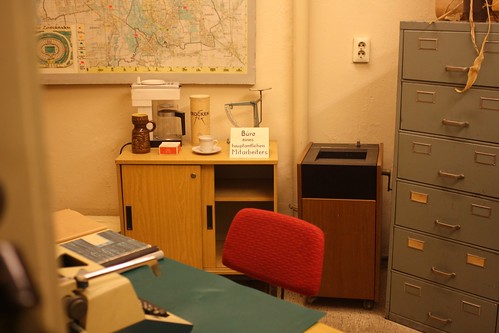
Note: this post written on March 19 for posting after we return. We arrived at Leipzig surprisingly about 5 minutes late on Wednesday morning. My friend Brad was at the Leipzig Hauptbahnhof (central stration) to meet us. As we walked through the city with him, he commented that I hadn t yet tried Currywurst, and there was a stand selling them with different levels of spiciness. I tried one and liked it; Terah was afraid to touch them. After a light lunch with Brad and Anna, we went back into town and saw the V lkerschlachtdenkmal (Monument to the Battle of the Nations). We were warned that it was weird and ugly. And when we arrived, I noticed that it was enormous. And, well, somewhat ugly. And, yes, weird. IMG_2681 After that, we walked through the old trade fair grounds. Leipzig has a long history as a trade center, and after they built the new trade fair grounds, the old ones were reused for other things except for the old Soviet building, which is now both gaudy and abandoned. We picked up Fritzi, who is a very cute 4 years old, from preschool and returned to their house for supper. After that, Brad and I went back into town, intending to hear a reading at the old city pool. When we realized it was a different day, we walked around the city center for awhile and then had a beer at a yes combination cafe/laundromat. Thursday was our day to explore the city. Brad showed us a couple of buildings in the university, including the library, then dropped us off at St. Thomaskirche. That s the church where J. S. Bach was music director for many years, and was buried. Like so many, it was impressive in its height and history. IMG_2703 Next we went to the Stasi museum. The Stasi were the feared and powerful East German secret police during the Communist times. The museum itself was housed in the former Stasi headquarters for Leipzig and was involved with the history of the overthrow of the Communists. The museum covered a lot of the history of the Stasi, including its frantic last days during the 1989 revolution. The level of spying on people was incredible and sophisticated, and they tried to destroy records as the overthrow of the government was imminent. One of the offices in the inner part of the building was left untouched from the Communist years, right down to the typewriter and coffee machine. IMG_2717 After that, we went to the Altes Rathaus (old city hall or townhouse, built in 1556) to do a bit of shopping. Terah was wanting some souvenirs, and I had spotted a shop I thought she might like when walking through the city with Brad the night before. We had already bought some souvenirs at the Schloss Charlottenburg museum store in Berlin (some East German-style crosswalk fridge magnets, and a decorative egg), but wanted something a bit nicer for us and were on the lookout for gifts for others too. We wound up buying a wood carved church scene with a woven wheat tree for us, and another item for others. The shopkeeper spoke no English, and my German vocabulary is small, but we managed to communicate the question of whether or not she could wrap it up in a box for our trip home and she could, and did. Excellent. (I didn t know how to ask about box, but knew how to say that we were Americans, and with a fair bit of gesturing all around, managed to get the idea across.) Then we went in the Altes Rathaus itself, which was both a museum and an interesting cultural experience. We bought our tickets at the booth downstairs, then went upstairs to the entrance. We asked for the English audio guide, which is very common at museums in Germany. (They are small digital audio players that contain recorded information; each room or display has a number you can key in to hear about it in your own language.) We got it, and were told in incredible detail how to use it, even though they are quite easy to figure out and we had used them before. The museum employee told us where the audio tour starts, and in what order it usually goes, which was an effort for her given her limited English. But we all understood and went on our way. It wasn t even 5 minutes later when she had left her desk and came over to us. She was slightly alarmed at two things: one that we didn t have the volume at full blast (which was loud enough for the entire room to hear), and secondly that we weren t looking at the exhibits in the proper order. Never mind that it s easy enough to pull up the audio information about any room just by keying in the number posted in it, I guess. Anyhow, we sort of inwardly shrugged, let her turn the volume up to potentially disturbing the other visitors level, and went through the museum in the order she wanted us to. (Note that this wasn t a museum where there is a one-way flow of traffic or something; you walk into one exhibit, back to the main hall, and then pick your next one.) So we went through the rest of the museum with our English audioguide blaring throughout the large, echoing, wood rooms, feeling a bit rude to the other visitors (maybe 5 of them while we were there) due to its volume. Anyhow, the Altes Rathaus was beautiful and interesting, covering mainly the pre-industrial history of Leipzig. We learned about some of the guilds, the city treasury (vault), and where the town council/parliament met along with rich merchants. There were about as many museum guards as visitors there, and one or two of them sort of followed us around, pointing out the large and completely obvious signs with audio guide numbers in the rooms for us. They are serious about their audio guides in Leipzig. I m glad we went, and I m glad we had the experience we did, too. Terah told me later that she felt reprimanded about the audio guide and visiting order. My take on it was a bit different: the museum is impressive and interesting, but obviously not visited by tourists as much as museums in other cities, or even touristy sites like Thomaskirche in Leipzig. I think they they noticed two people, obviously very foreign (speaking only a little German, and with an American accent) with an interest in their city s history, and took pride in making sure we got the most of our visit and learned as much as possible about something they care about. Here is the main hall of the Altes Rathaus. IMG_2727 We met up with Brad in a cafe near St. Thomaskirche for coffee and cake, then it was on to St. Nikolaikirche (the Church of St. Nicholas), the other large church in town. We stepped out of a passageway to face the large building, and walked in. The interior was decorated in pastels, and was also beautiful and historic. I can t get enough of that sort of building, I think. This building was especially important because it was the site of organizing for the Monday evening protests against the Communist government in 1989. People met at the church, sang a few hymns (to qualify it as a religious service, perhaps), then organized their protest for the evening. Sometimes they would wind through city streets and put flowers at the Stasi headquarters steps, and once the citizens actually overtook the Stasi headquarters. IMG_2745 After awhile we grabbed a bit more for lunch: a pretzel for Terah and a Currywurst for me. (This one wasn t spicy and wasn t all that good.) Then we went to the GDR museum, which was large and interesting, but unfortunately for us, completely in German with no English guide available. That evening, we went to a Bach concert at the Leipzig Gewandhaus, celebrating Bach s 325th birthday. That was fun, and a neat experience with such good music in a very nice venue. The program included Bach s Suite for Orchestra no. 1 in C Major (BWV 1066), Concerto for Violin no. 2 in E major (BWV 1042), Ich habe genug (BWV 82), and Suite for Orchestra no. 4 in D major (BWV 1069). Sir Roger Norrington was conducting, and was rather fun and atypical to watch. He had the audience chuckling a few times with his minimalist conducting or perhaps his flamboyant gestures. Anyhow, the music was excellent and the tickets included free passage on the public transit system 3 hours before and after the concert a nice touch. Due to our schedule, we didn t spend much time with Fritzi, but we did get to play with her a bit. She likes to pretend to be a shopkeeper, and had her store all ready to lay out. We would ask her for some items, which she d put in a basket for us, and then of course there would be a child s twist: we d get our items, and she d pay us for them too. Terah and I brought some books for Fritzi. The particularly enjoyed Goodnight Moon because inside it is an picture of The Runaway Bunny, which she already had. Fritzi chose one of her books to give to Jacob it was a German book (Maulwurf) based on a Czech cartoon mole. That was nice of her, and Jacob really liked it (I ll write about that later). We had a good time in Leipzig, and I was getting fairly good at navigating downtown and with the trams and then, of course, it was time to move on. So Friday morning we caught our 7:50 train from the Leipzig Hauptbahnhof. We took the ICE train to Dresden, then walked a few feet to get onto the EC to Prague. That was a bit of a funny experience. The ICE trains are all sleek, modern, meticulously maintained, and the passengers tend to be very quiet. Talking is barely above a whisper, and people seem alarmed if their cell phone rings, even outside the quiet car. The EC passenger car appears to have been built, or last renovated, in the 1970s, and may have been Hungarian. The seats and curtains are old and faded; some of the seat backs have rips in the vinyl headrests. People were talking or eating loudly, in a very different setting than on the ICE train. As we rode along, we were on the right side the river Elbe for many miles. The scenery was beautiful, with small houses in the river valley, and the occasional house up in the hillside. At one point (a bit before we passed through K nigstein on the way to the Bad Schandau stop), we spotted what looked like an old walled city up on the hill. I figured out later that it was Festung K nigstein (K nigstein Fortress). Update: I forgot to mention a couple of things about Leipzig. One was our walk through a forest yes, a forest in the city. That was a nifty, quiet, and pleasant surprise. Secondly was seeing all the DDR apartment blocks, where the apartments evidently were quite literally blocks. It is interesting to see the Communist architecture.
Clint Adams: DPL Campaign Questions 007

Bernd Zeimetz:
From the other candidates I'd like to know their opinion and plans (if there are any) about license/copyright requirements in Debian.
I believe that intellectual property laws are wrong and should be abolished, so I am not particularly in favor of giving copyrights any more respect than necessary. However, I do not think that Debian is the place to undermine copyright, and that we should attempt to maintain standards which not only protect people from legal liability, but are also in the best interests of our developers and users. I do not know what level of nitpicking best serves our developers and users. A GR seems like an interesting way of determining at part of that. Anthony Towns:
What's your estimate of the current number of Debian users?
I do not have one. While I do acknowledge that the number of users does affect us in terms of potential contributor base, and scaling issues (including bug reporting), I do not think that the exact number is important at all to what we do. Also I would hope that whichever DPL is elected chooses to focus on practical matters rather than academic exercises. Kurt Roeckx:
I think that one of issues we have is that there is alot of work to be done by some teams, some of them even regularaly mail that they need more members, but they seem to have a hard time keeping the numbers up, burning the other team members out. What are your ideas to make sure those teams keep running?
Note that I do not think it appropriate either for core teams to choose their own members or to reserve the privilege of demanding that a new person be able to work with them in a certain way. An ideal team member should be able to work with anyone. If the existing delegates are unable to work with new people, perhaps they are not ideal team members. Charles Plessy:
During the discussions that started after the GR, I suggested that the GR proposer should have more control about the options put to the vote. In particular, it would be useful if he can refuse an option that would disequilibrate the voting system. That would make him responsible for the success of the GR: discarding a popular option is taking the risk that the whole GR is refused and the option is accepted as a separate GR, which is the kind of public failure that I expect that people will avoid.
I do not think GR proposers should have any special control over general resolutions beyond what is Constitutionally granted at present. In fact, I would prefer if people did not try to propose multiple options or strategically craft ballots for any purpose. To me, the only honest method is to propose the outcome one genuinely wants to win, and let our strange and special brand of parliamentary procedure take care of the rest. As for the supermajority issue, I am not a huge fan of political word games. Debian distributes non-free software. We have a non-free section within our normal infrastructure, and while it is segregated and does not receive quite the same love that main does, it is still very much part of what we work on and distribute from our official infrastructure. So there is no amount of word lawyering, cognitive dissonance, or NM indoctrination that can make me believe that it is an honest statement to say that non-free is not part of Debian. Likewise I do not believe in redefining success or the meanings of Foundation Documents. I do not think that we should allow ourselves to pass any kind of magical resolution that contravenes the DFSG or Social Contract without actually modifying them. That seems utterly absurd to me, and I have seen what has become of the United States government.

27 March 2010

Tollef Fog Heen: Why I think you should publish your infrastructure

GNOME's current sysadmin team is entirely voluneer-based, but as they are having problems finding enough (trusted) volunteers they are looking at hiring a part-time sysadmin. From looking at the GNOME wiki, it looks like they have had a meeting about the shortage of sysadmins. Citing from the minutes
The biggest problem that we've always had with the maintaining an active sysadmin team is the need for trust. If somebody shows up and wants to help out with a GNOME coding project, then it's easy to build up trust over time. Suggest a project, have the person send patches, review the patches, if the patches are good, eventually give them direct commit access. However, for sysadmin work, we get a lot of people who want to help out, but it's very hard for someone to contribute without being given a "dangerous" level of access to the GNOME systems.
Without having looked very hard, I would guess at the GNOME infrastructure being about as open as most proprietary software projects. There's no way for me, as a third party to take a look at their infrastructure, take a look at their ticket backlog and submit patches for problems. Similarly, their nagios setup is behind a password prompt, so there's no way for me to look at what services often have performance problems, suggest new monitors or point out any servers or services that are not monitored. I'm not saying this to pick on GNOME, and as I'll touch on below, they do seem to mostly do the right thing, and as one of the Freedesktop.org sysadmins, I know we're not any better at least not yet. One way to make it at least somewhat easier to contribute and get involved is to use a tool like Chef or Puppet and publishing the recipes. This won't magically make everything transparent, but it'll be a big step up. Ideally, the recipes should be complete enough that you can bootstrap a working system from them and so easier reproduce the infrastructure and any problems. It seems like GNOME is using puppet, but I couldn't find the recipes. Moving a complete infrastructure from something managed by hand to something managed using automation tools is a fairly big and involved process. However, if you're serious about getting more people involved in your sysadmin team, I think it's one of the more reasonable ways to opening up. It also means that when one of your servers is stolen, catches fire or suffers other catastrophic failure you can rebuild the service much quicker. My last point is to open up your ticket tracker. Most tickets aren't security sensitive, so provide a way for people to mark those tickets that are sensitive as such and make the rest public. The GNOME wiki makes this a bit confusing as it talks a bit about RT, but it seems like they actually use bugzilla for sysadmin tickets and just hide security-sensitive ones.

Clint Adams: DPL Campaign Questions 002

Raphael Hertzog:
Imagine a DD contacts you, she wants to setup an infrastructure to finance Debian related projects (i.e. paying people to enable them to work on the projects that they'd like to do for Debian) but she wants to avoid the main mistakes made during Dunc-Tank; in her project: - everybody can propose projects to be financed - the projects to be financed are selected by the Debian developers and by the donors - eligible projects can only concern new developements and not recurring tasks
I am imagining that this contact took place in public. I see very few legitimate and good reasons to approach the DPL privately, and as DPL I would encourage people to to work toward transparency unless there were very good reasons to do otherwise. I would begin by telling her about the beauty of Debian as a gift economy community, and point out how great it is that I do not need to pay people to respond to my bug reports, apply my patches, release new versions, or develop any code not funded by corporate sponsors. I would recount my recent experience with a different free software community, where there was much talk of the motivational power of money, and how best to link PayPal to bug tracking systems and write a boilerplate email response template suggesting a donation of $5,000 to help facilitate the development of any feature requests. I would confess my suspicion that if this trend continues, any goodness in that community will be driven elsewhere, and the gift economy, which I believe to be a very important basis for free software, will be severely undermined. When I have completed my feeble attempt at political persuasion, if she is still firm and stubborn in her desire to proceed (and when monetary greed is involved, I expect this kind of stubbornness), I would suggest the following points: Then I would ask her once again not to do anything like this. Dmitrijs Ledkovs:
Please finish "In ten years I'd like Debian...."
In ten years I'd like Debian to still be my favorite operating system. In ten years I'd like Debian to be egalitarian and cooperative. In ten years I'd like Debian to be completely free software, without a non-free section.

John Goerzen: Trip part 4: Berlin

Note: this post was written on March 16 and posted after our return home. Also, I took no photos in Berlin, reasoning that I could leave my camera at the hotel so as to not worry about it, since I m sure there are enough photos of the Brandenburg Gate in the world already. Photos on this story only are from others. We ve had a good time in Berlin it s been adventurous to be out on our own in an unfamiliar city with an unfamiliar language, but has gone well. I feel that I m finally getting used to it a bit, and now tomorrow we move on to Leipzig. Stepping off the train at the Berlin Hauptbahnhof, and seeing all those people connecting to all those trains, I had a feeling of excitement: here is a grand train station that is actively used by so many people. I got a sense of what the beautiful and enormous Kansas City Union Station once felt like, I think; that station at its peak served almost the same number of people in a day at Berlin Hbf does.
(photo by eliotc) Stepping outside in the cold and snow to wait for our bus, I got the first sense that Berlin felt a bit more like an American city than did L beck: a beggar with a suspicious story was working the crowd with Speak English? (We saw many dressed similarly using the exact same tactic during our stay in Berlin.) Our bus ride to the hotel showed us some graffiti a fact of life in many cities in the USA too. Our hotel, the Circus, most definitely did not feel American. The staff was very friendly (I think I ve only seen that level of friendliness and helpfulness at one hotel in the USA: the Portland Doubletree). The room was small (which we expected) but very nice. There was a fresh flower waiting, and a whole printout of information with my name on it waiting in the room: info about the hotel, restaurant, and a multi-page history of this part of the city. They are very energy-conscious there. The hall lights automatically turn off, but you can touch your (apparently RFID-enabled) room card to any switch to turn them on for a few minutes. When in your room, you put your key card in a little holder that keeps it safe and enables the use of the lights. They don t put shampoo in the rooms, but have a selection free for the taking at the front desk: the rationale being that it generates waste when they have to replace it for people that don t need it replaced. They are very environmentally conscious with everything except the showerhead, which appears to use so much water that it would be illegal in the USA. Here s the obligatory surprising to an American comment about Germany: the complete lack of water drinking fountains. In the US, you can get a drink of water at any building of any size airports, train stations, museums, shopping centers, and also in many public places such as parks. I may have seen exactly one water fountain in the Hamburg airport, but that was it. It is odd given the general sense of environmentalism here that so much energy is being wasted on bottling water, not to mention the expense of having to pay for it all over the place. The bus ride to the hotel was interesting. I needed to buy two tickets from the bus driver. I didn t know the German word for ticket, so I just guessed and went with Zwei Ticket, bitte. Wohin? Rosenthaler Str. Then the price came up. I believe that was my first completely successful German-only conversation. (Most Germans hear a couple of words of mine and quickly switch at least partially to English, which probably gets things done a lot faster, and saves me embarrassment, but doesn t give me much chance to practice my German.) We ate dinner Monday night at the Hackesche H fe at Weihenstephaner, a Bavarian restaurant. It was a fun meal, and the tables were long and seated multiple parties. I tried out their special Bavarian beer, and of course had some Wienerschnitzel. I had noticed apple strudel on their website but not on their menu, so when it was time for dessert, I asked our waitress if they had apple strudel today. They did, and it was delicious. Tuesday began with a walk to the Pergamon Museum. From our hotel, this was a walk of about a mile. We had been introduced to excellent German bakeries during our time in L beck. So, since we hadn t had breakfast, when we spotted a bakery along the road, we went in. Terah got a croissant with chocolate on top, which turned out to also have chocolate inside. I found a couple of smaller rolls with various seeds and flavorings on top. All were excellent, and I believe we spent less than EUR 2 all together. We ate our breakfast of rolls as we walked towards the museum. It was a cold and somewhat windy morning, but it was also fun and exciting to be there. The Pergamon was quite the experience. The Pergamon Altar was the first large artifact we saw, and was particularly interesting given that I have recently read The Iliad and The Odyssey.
(photo by *hoodrat*) The Market Gate of Miletus was also impressive, but the true highlight has to be the Ishtar Gate and processional way. Wow. It was built in 575BC by King Nebuchadnezzar II, and importantly was built out of glazed tiles, so the original artwork, color and all, still survives. You can walk through the processional way and get the feeling of kings and armies proceeding there. Truly spectacular.
(photo by Rictor Norton & David Allen) After the Pergamon, we crossed a bridge to the east taking us off Museumsinsel (Museum Island). We walked down a quiet and somewhat forgotten back street and found a small restaurant for lunch. I had the Berlin Wurst , some excellent sausage with excellent and not-so-sour sauerkraut. Terah had some breakfast-type items with fruit. After that, we walked over to the famous Unter den Linden. It wasn t yet spring, so the scenery wasn t all that spectacular yet, but that and the light snow didn t stop the tourists, or the tacky tourist shops, which appear to be a universal global feature. ( Berlin flip-flops and t-shirts made in China, anyone?) The destination of all this walking was the Brandenburger Tor, the famous Berlin icon. The Brandenburg Gate was immense, and the sense of history of standing there was impressive.
(photo by Andrew Mason) We of course walked through the Brandenburg Gate on our way to the Bundestag, which we intended to tour. We didn t, though, due to the cold and very long line snaking out of the building. We then got on the train to Checkpoint Charlie. We saw the outdoor checkpoint still in the middle of the street. We intended to visit the museum Haus am Checkpoint Charlie, but was so packed that it was difficult to even get in the door. We stood in line to buy tickets for a few minutes, but made absolutely no progress; meanwhile, it appeared that an entire school group came in after us somehow and was also waiting to pay. So we decided to go see Schloss Charlottenburg instead.
(photo by Poom!) The Schloss (palace) was a baroque design, intended to impress visitors with the power and wealth of the owners. Only the old wing was open Tuesday, but we had about an hour and a half available to tour it: enough to see the whole thing, but not enough to linger and read all of the information. It was impressive and interesting. Particularly interesting was the chapel, which was this odd state/religion combination decorated both with sacred symbols as well as symbols of the king. After Charlottenburg, we had dinner at the Prussian Restaurant Marjellchen near the Savignyplatz S-bahn. We started with a smoked herring appetizer. Then I had the K nigsberg meatballs, and Terah had creamed ham. Both of us really enjoyed our meals, and Terah s reminded her of Verenike. Wednesday started with an early rise, then we went to Mauerpark to see a remnant of the Berlin Wall. I am glad to have seen it, and was a bit surprised with how small it was at that point compared to my expectations.
(photo by Eichental) Then we had a few minutes back in our hotel to munch on some rolls for breakfast; after that, it was off to the Hauptbahnhof for our train to Leipzig.

Russell Coker: How to Choose a Free Software Mission

Jane McGoningal gave an interesting TED talk about how Online Gaming can Make a Better World [1]. One of her points is that there is no unemployment in games such as World of Warcraft, there is always a world saving mission available to you which is just within reach of your skill level and no-one is assigned a mission that they can t possibly do. It seems to me that the free software development community has a similar issue, there are always missions available at all skill levels. Our challenge is to find ways to encourage people to accept the missions and to provide them appropriate levels of support to encourage them on their path to an epic win . Choosing a suitable mission is a particularly difficult problem as you often don t know how difficult a task will be until you are more than half complete. Jane makes points about humans being happier when working hard and a desire for epic meaning . She says that it s a problem that gamers believe that they can change a virtual world but not the real world . If you change the virtual world of software development then that changes the real-world . Jane cites Herodotus as reporting a kingdom that was gripped in a famine for 18 years where the king instituted a policy of playing games and eating on alternate days with the aim being that the games would distract people from their hunger. I m sure that I m not the only person who s gone without food or water for a day because of being too busy coding She has a lot of other interesting points and I recommend that you read the Institute For The Future [2] web site for more background information. Now my question is, how can we encourage programmers to start doing Free Software and Open Source development and achieving some Epic Wins? I don t claim to have good answers and I would appreciate any suggestions. If you blog about this please leave a comment on this post to direct readers to your blog.

26 March 2010

Clint Adams: DPL Campaign Questions 001

A while back, I promised some people that I would answer the campaign questions on -vote despite not being on the ballot. Many things came up to pre-empt me, including a short-lived surprise stint on the Release Team. I am still a bit behind on bug reports and such, but it might be inappropriate to start answering after the official campaign period has closed, so here is a start. J rg Jaspert:
Do you plan on taking on a "2IC" or a team?
I do not. I do not believe that either option is a good idea to begin with, and even if I did, I would not be in favor of undermining the Constitution by making an end run around it in this fashion. Martin Zobel-Helas:
The Debian Project receives quite a number of monetary donations as well as contributions in kind via several umbrella organization like SPI, ffis, debian.ch, etc. a) What do you think are valid goals to spend this money on? b) How would you think is a valid way to thank (hardware) contributors? b) What qualifies a contributor to become a "Debian Partner"? What qualifies a "Debian Partner"?
a) I think that it is important not to spend money on things that only benefit a single person or small group, such as ex-post facto legal defenses, core team travel expenses, or equipment for select persons. I would consider valid expenditures to be only those that directly benefit Debian as a whole. b) Ideally, contributors, whether they be hardware donors or developers or anything else, would be motivated solely out of doing good for the project and community, and not be seeking recognition, praise, power, or favors in return. However, since it is considered acceptable to have other motives, I think it fairly appropriate to display logos and give recognition on the Partners page. b) If I had my druthers, I would reserve the term Partners for those organizations who were fully aligned with us in a common goal. In the absence of such, though, the current usage seems fine. Paul Wise:
How much time do you currently devote to Debian? How will that amount of time change for the DPL term? How will you balance your DPL time and time for other Debian activities.
My time commitment varies due to a combination of external factors and Debian-related motivation. Since I have been slowly scaling back my involvement over the past several years, and unless you assume that the DPL role is inherently demotivating, I would presume to be spending about the same time or more on Debian if elected. I will be orphaning some more packages after squeeze is released, regardless of the outcome of the election. I would definitely not run if I doubted my ability to muster up the time and energy to be a good and effective DPL for the full length of the term.

John Goerzen: Trip part 3: L beck

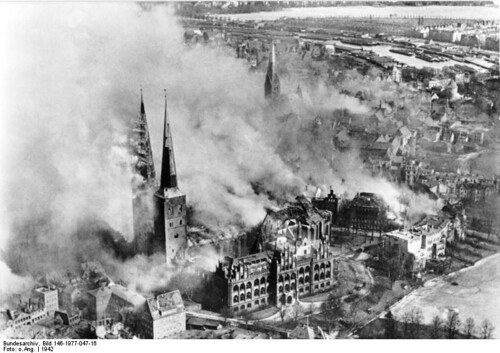
Note: This post was written in March 14-15 and posted after our return. When I think about L beck, the first thing that strikes me is the feeling of history underfoot. It struck me most when we set foot inside the Marienkirche. I had never quite felt a wave of a feeling of stepping back in time like that before. The stones on the floor were uneven and imperfect. L beck has had a wet and snowy winter, so the city had spread sand everywhere: sidewalks and roads. Walking into any grand church, I could hear the sound of sand under the shoes of everyone nearby, and feel it under my own shoes. I think I will long associate with L beck the feeling of walking into a grand old church, looking up at the top of the old building at seemingly impossible heights, while feeling the grit of sand and uneven stone beneath my feet. IMG_2643 Marienkirche isn t perfect, like some American churches I ve been in, such as the Basilica of Notre Dame. It doesn t have a lot of gold, either, and both of these attributes are wonderful. Look at a column of bricks, and you can see that each brick isn t exactly like its neighbor, and the entire column isn t perfectly straight. Lots of things in L beck are so old that they aren t perfectly straight, and it made me think that our American notion of always having to fix such things might be somewhat off sometimes. IMG_2629 Look up, and you see the frescos from the 1300s, revealed after many years after the building was struck by an allied bombing raid in 1942. This heavily damaged the building and knocked down plaster from the walls and ceiling, revealing the old artwork. Many parts of Marienkirche were lost as a result of the bombing, which perhaps adds to its slightly sparse and ancient feel. The church bells were sadly melted and crashed to the ground due to the bombing, and have been left exactly where they fell as a memorial. IMG_2641 Look down, and you see the uneven floor, and the concrete slabs above where important people were buried under the floor an attribute common to many of the churches we visited. It was common to see dates of graves from the 1600s and 1700s, though in some places it would go as far back as the 900s. The main part of the church has no heating or cooling, and visiting it on a day just a bit above freezing adds to the feeling of, well, old. Marienkirche has to be my favorite sight in L beck. Walking around the city, I get a similar feel. Many streets and sidewalks are made of stone. The streets that weren t damaged in the war have rows of beautiful old facades. Walk down many streets, and every so often I d see a little tunnel ( just wide enough for a coffin ) that goes under the street-facing houses to a nice little inner courtyard. These are open to the public, but tend to be very quiet and somewhat private. In the courtyard are smaller houses, which would have originally been used by the less wealthy. We also saw the L beck Dom (cathedral), which had a small museum about the destruction due to the Royal Air Force bombing in 1942. It was very sad to see the photo of the Dom in ruins, still smoking, even now. Burning L beck Cathedral after an air raid in 1942 I can only imagine what it must have felt like to residents of L beck to wake up to see many of their priceless centuries-old landmarks and places of worship so horribly destroyed and all of this for little strategic purpose really focused on the morale of the enemy civil population . It s sad that the allies would do such a short-sighted and terrible thing. Europeans have long had to live with the legacy of war upon war, while we Americans have rarely had to see the consequences of war up close. I think it would be good for more of us to visit these sites and come up face to face with what a bomb can do, and then perhaps we will be more judicious with them in the future. Shifting gears now to where we stayed: Andreas & Sigrid, with whom we stayed, have a beautiful 500-year-old house, with lots of original wood beams exposed, and some very old paintings on the walls and ceilings. Nearby were excellent bakeries and a chocolate shop. Terah and I visited it today and bought some very good chocolate. And this brings me to the second thing I ll remember: Andreas & Sigrid s children, Lukas and Rahel. Now, Terah knows no German, I know only a little bit, and the children know no English. So it was a bit slow getting to know each other to start out, but we managed to work around the communication barrier and had a great time. Terah played board games with Rahel, while with me, she kept inventing games to play: hiding somewhere, saying Hallo! , and laughing at how many unsuccessful attempts I might make to find her. I showed Lukas the camera on my Droid, which he used a lot, though a racing game on Terah s iPod Touch was more exciting. They both enjoyed looking at videos of American trains a bit, but especially pictures of our house and yard with Jacob and Oliver. They tried to teach me the German words for things, and also made futile attempts to correct my pronunciation! When we were leaving today, Rahel came over and gave me a kiss on the hand, then the same to Terah s hand, then a little kiss on one of our suitcases. It was touching and sweet. This was one of those experiences no guidebook prepared me for, and no tour bus would have provided. It is something neat to make friends with children despite the large language barrier. On to the rest of the visit We had arrived a little late into Hamburg. After getting our bags and some Euros at an ATM, the next step was to find the bus to L beck. No signs for it were evident, so I found an information desk. The person at the desk was carrying on a conversation in German with the person ahead of me in line. I figured an information desk person in a busy airport would speak English, and was all ready to ask Sprechen Sie Englisch? , but when I walked up, he got a polite smile, and said, Good morning! How can I help? Guess I m obvious. He directed me to the bus, gave me a brochure about it, and told me what time it would leave. Terah and I found the spot to wait, and for a moment I stepped inside the airport terminal. Terah won t let me forget that someone came up to her and asked a question in German, whereas I was spoken to in English. Anyhow, we found the bus, managed to communicate with the driver that doesn t speak English, and sat next to the friendly person that was talking to Terah. He turned out to be a violin player from Munich, and we had a great conversation for the next hour he asking questions about the USA, us asking questions about Germany and Munich. At one point, he commented, You two are so open minded and you re also Americans! He sounded surprised. We exchanged email addresses at the train station. Andreas found us there, and we walked through the city to his house, with him pointing out the sights along the way. L beck is a beautiful city, and though it was damaged in World War II, much of the really old parts still remain. The famous Holstentor Gate has a museum inside, which was fascinating to visit. On Sunday, we went to church with the family we were staying with, Andreas helpfully translating for us. There I met a British Python programmer, which was fun. His wife is a social worker, which was fun for Terah. Monday it was time to get on the train to Berlin. We again walked through a cold and rainy city to the Hauptbahnhof, ready to head to Berlin. There we got on a train to Hamburg, then an ICE train to Berlin. Despite having just a few minutes for a connection in Hamburg, it all went perfectly smoothly. The train left Leipzig about 10 seconds late the clock inside turned over to the minute, then the doors closed and we were off. Impressive. Note: the rest of my photos from L beck are available on Flickr.

Russell Coker: Hacker Spaces

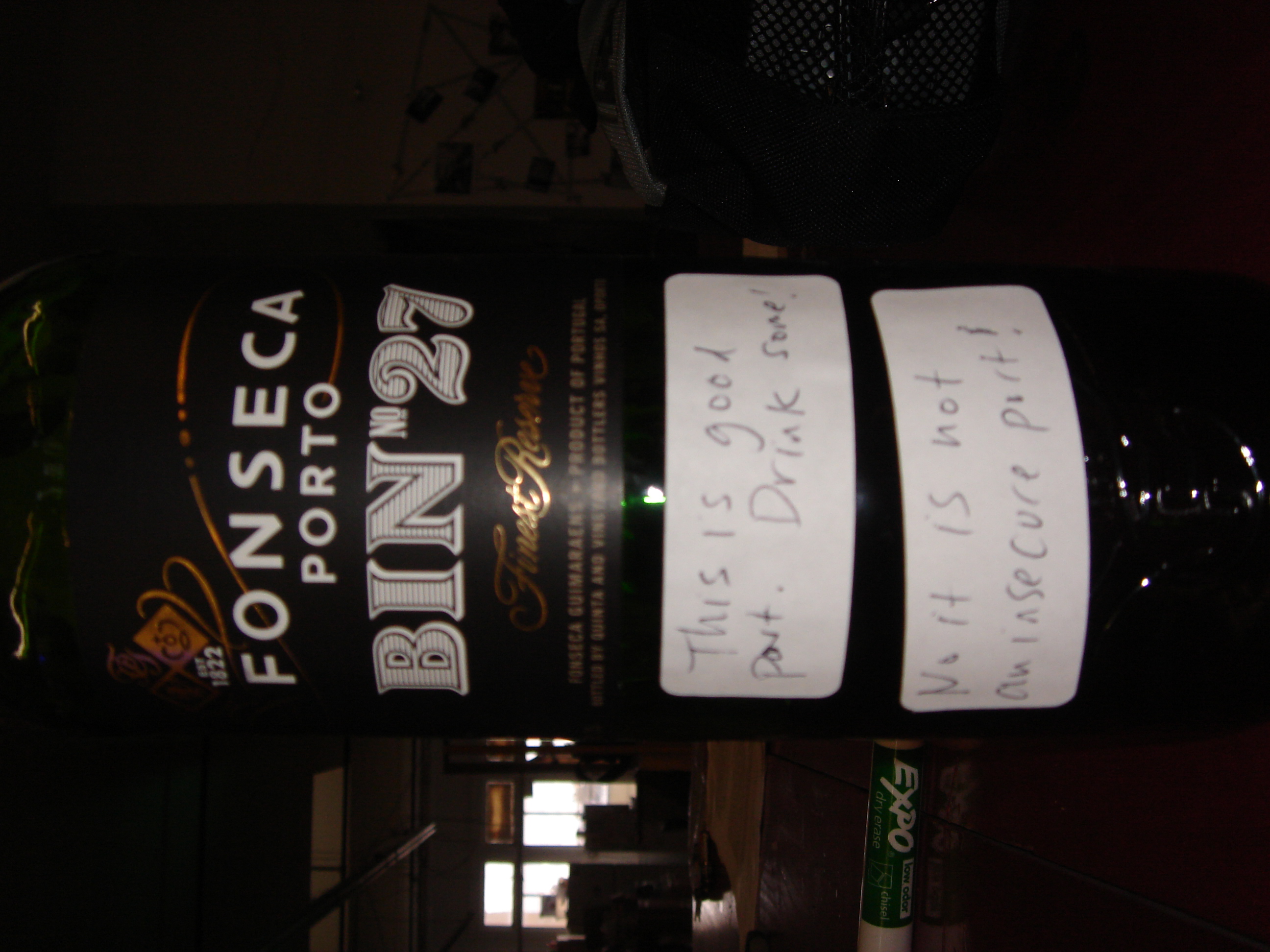
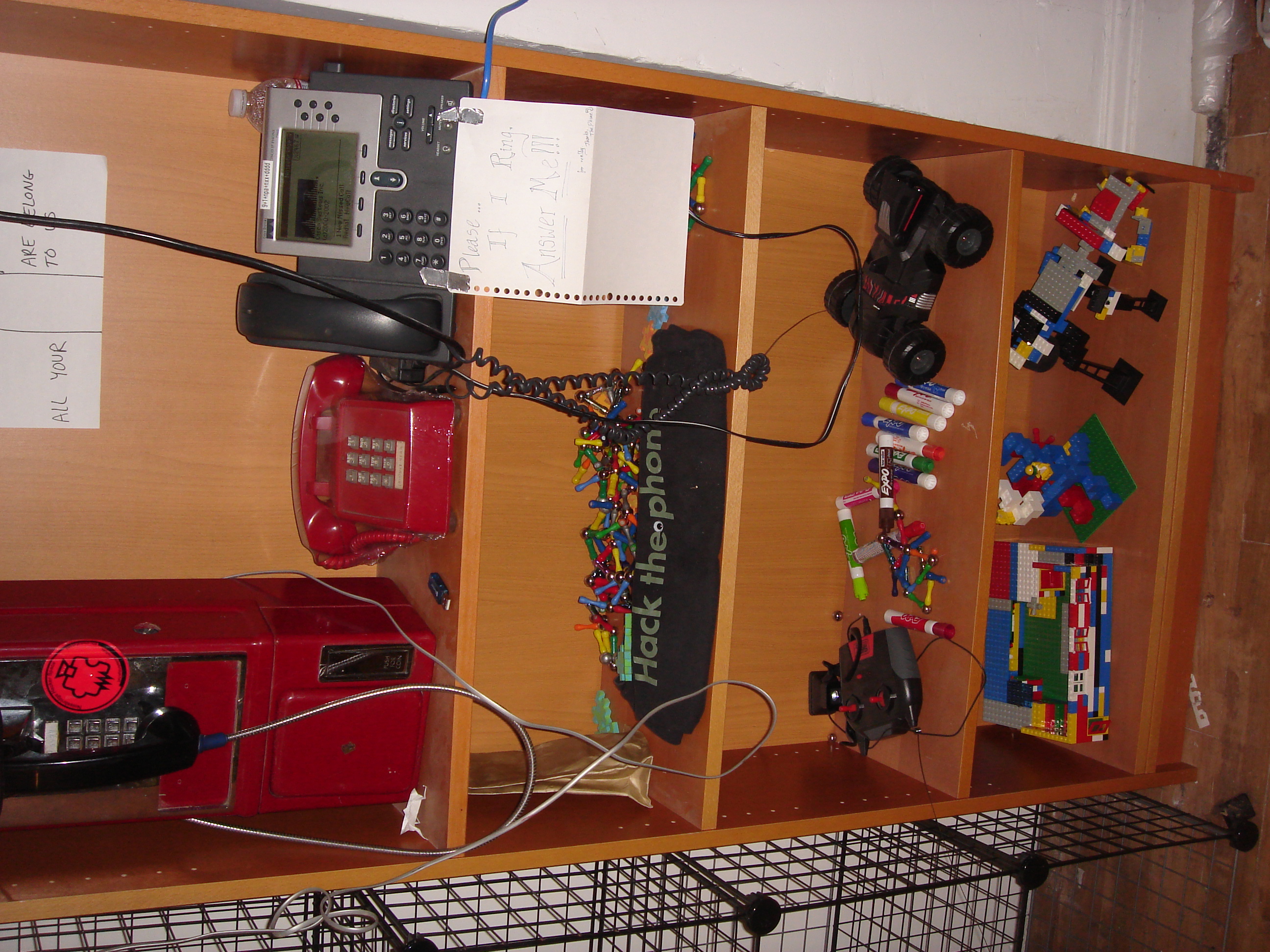
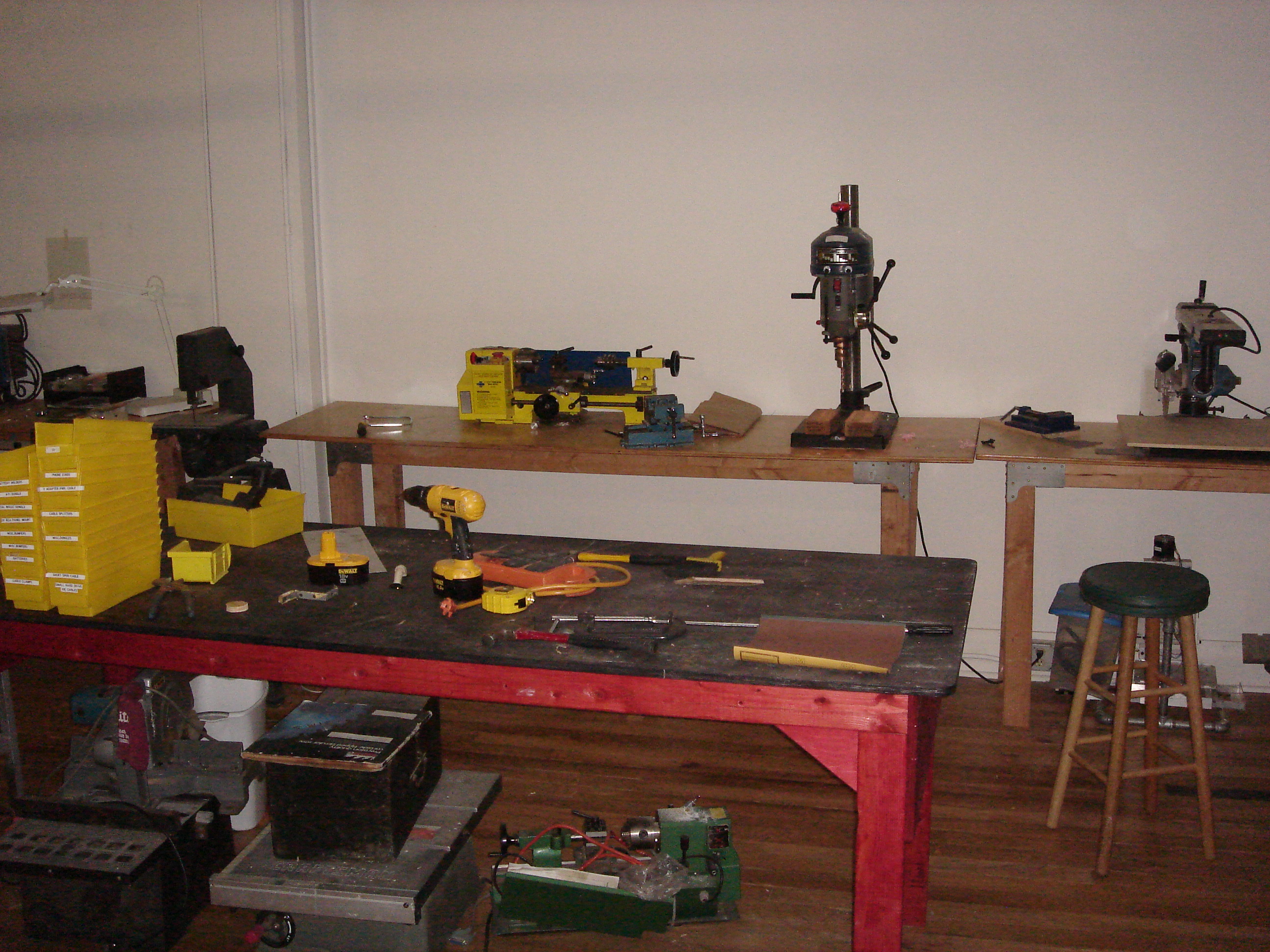
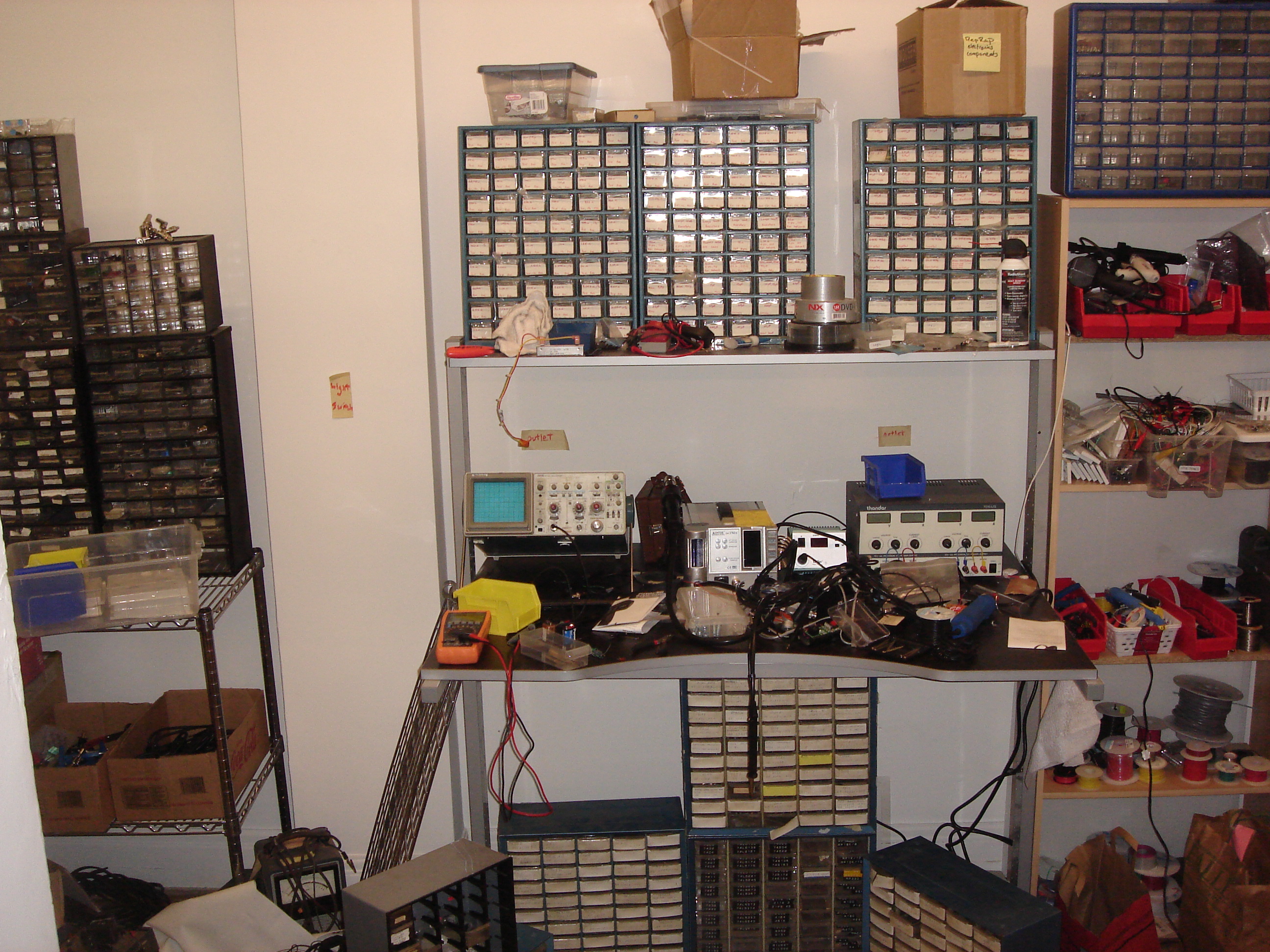
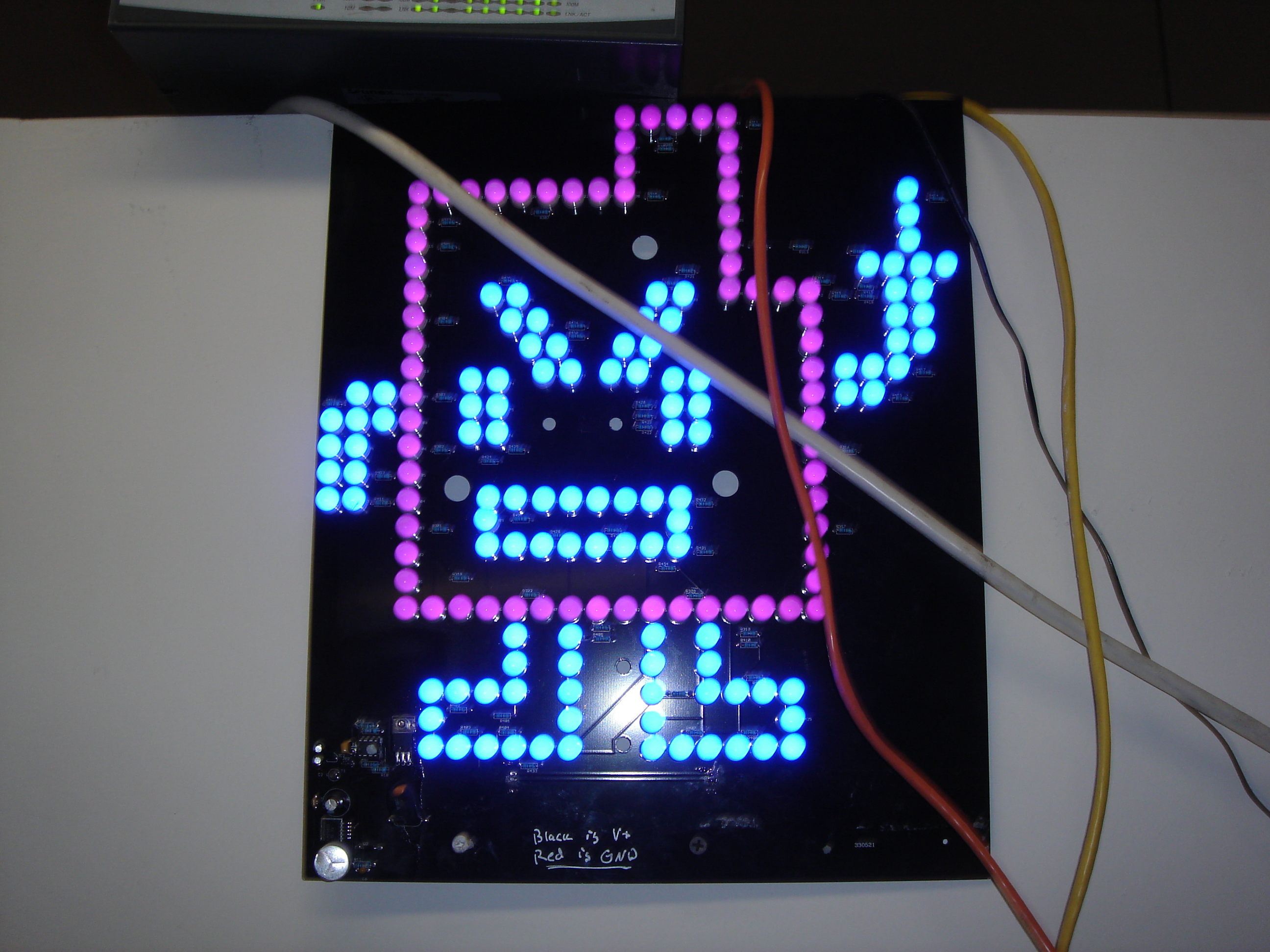
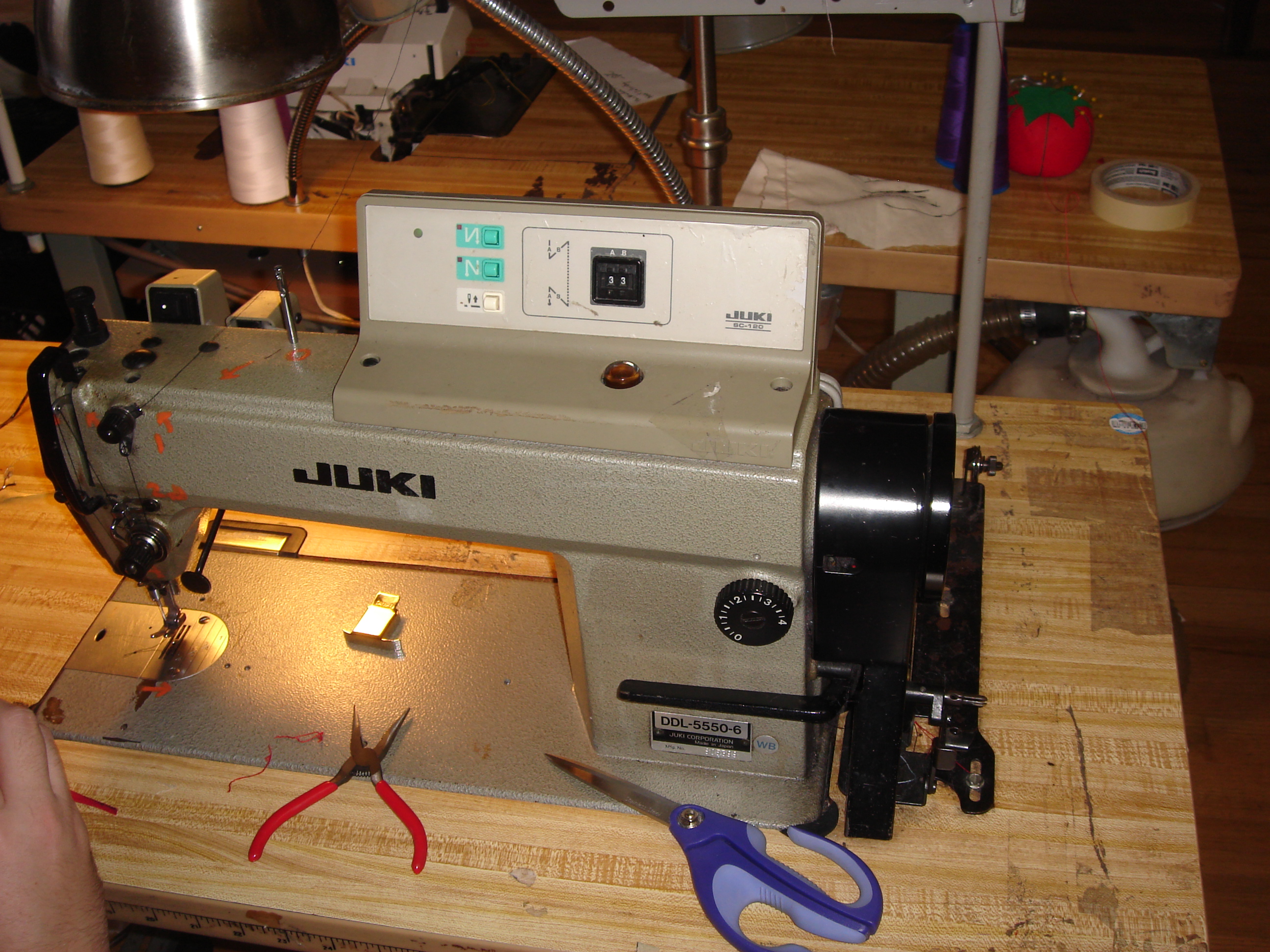
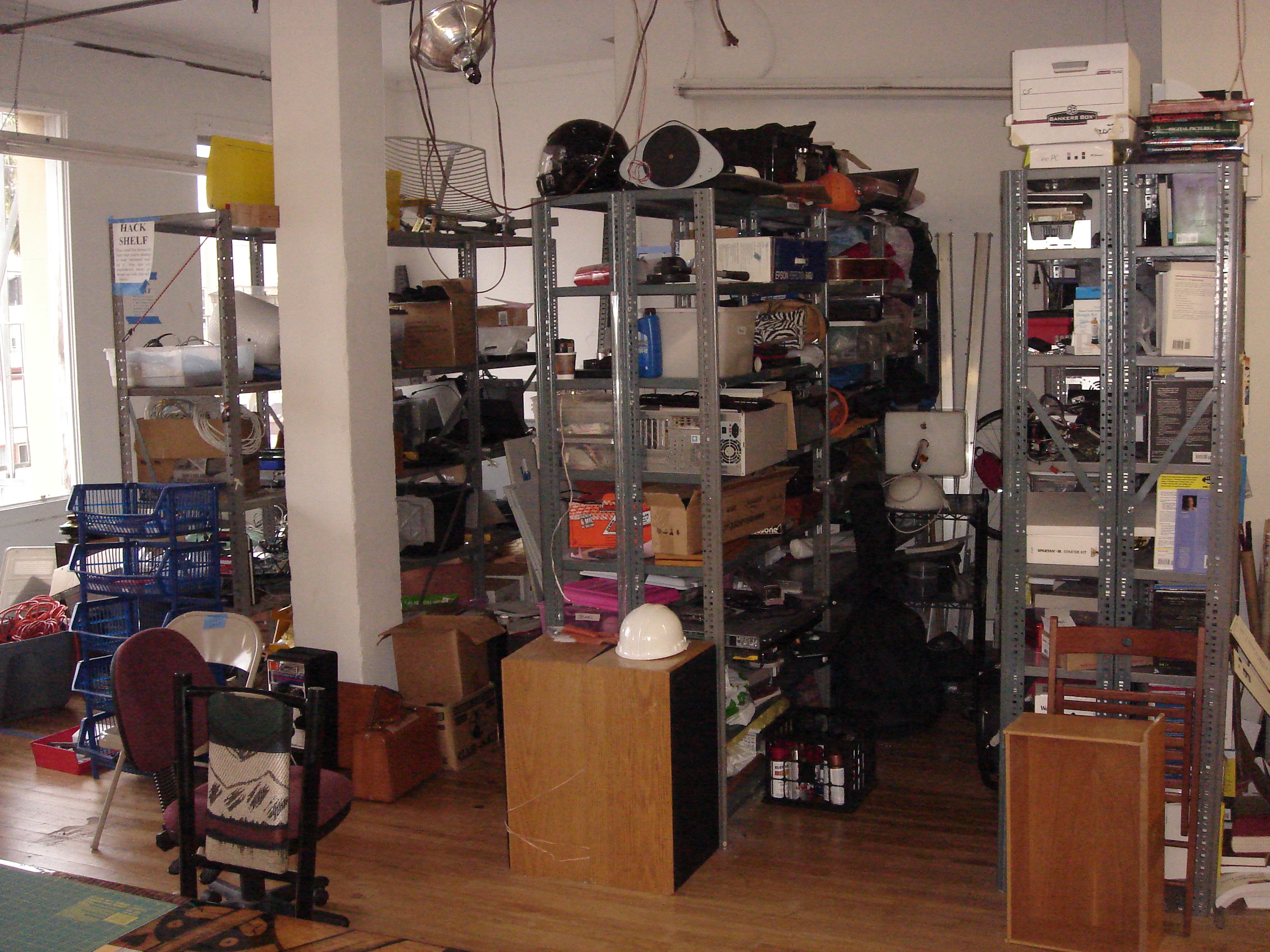
When in California last year I visited the NoiseBridge [1] Hackerspace. I was very impressed with what I saw, good equipment and very friendly people. The general concept of a HackerSpace is that it is an environment to support random creative projects. The first picture is a sign near the door which is clearly visible to anyone who is leaving, it encourages people to be AWESOME and EXCELLENT by cleaning up after themselves (and maybe others). I think that this demonstrates the core of what is needed to get such a community project going. Generosity towards others was on display everywhere, there was some free fruit on a table as well as a bottle of Port for anyone to drink. Someone had written a note saying that it s not an insecure Port (a computer security joke). Someone had created an artwork that resembled an advert which some idiots had mistaken for a terrorist bomb (the creature displaying the Impudent Finger). The main (only?) phone in NoiseBridge is apparently a VOIP phone, it is located next to an old pay-phone along with some Magnetix and other toys that can be used by curious people of any age. Magnetix have had repeated safety problems that caused recalls so maybe such things are best placed in an 18+ environment. When I visited about 10 people were working on electronics projects. There were a number of soldering irons in use and some serious test equipment (including a couple of CROs) was available. The people doing the soldering were eager to teach other people about their work. Other equipment that was available included some serious industrial sewing machines and some drill presses. A lot of that equipment is unreasonably expensive to buy for personal use and is also rather bulky to store, having it available in a central location is a great service for the community. Finally Noisebridge has a lot of space. There are rooms that could be used for giving small lectures and couches in the central area for people to relax and have impromptu meetings. Of course they had wireless net access too. Australian Hacker Spaces Kylie Willison has written about the Adelaide Hackerspace which sounds promising [2]. The Connected Community Hackerspace is a new one in Melbourne [3]. It operates out of the homes of members so it s not nearly as big as Noisebridge (which has a substantial property rented for 24*7 operation). I hope that we can get something running permanently in the Melbourne city area in the near future. The Noisebridge membership dues are $80 per month (or $40 for starving hackers). I would pay that for a comfortable chair in a convenient city location with net access surrounded by cool people! Poster telling people that they are AWESOME and EXCELLENT if they clean upFree bottle of port with sign saying - this is not an insecure portVOIP phone in use, pay-phone for decoration, and MagnetixDrill presses and other heavy equipmentParts and CROs for electronic workRecreation of an advert that some idiots thought was a bombIndustrial sewing machineShelves full of random spare parts

Next.

Previous.