Search Results: "ed"

20 December 2014

Craig Small: WordPress 4.1 for Debian

Release 4.1 of WordPress came out on Friday so after some work to fit in with the Debian standards, the Debian package 4.1-1 of WordPress will be uploaded shortly. WordPress have also updated their themes with a 14-day early theme called twentyfifteen. This is the default theme for WordPress 4.1 on-wards. I have also made some adjustments with the embedded code that WordPress ships. This is the usually JavaScript or PHP code that WordPress has in their release tarballs that comes from other projects. There is a fine line between keeping the WordPress install the same and having to deal with the maintenance of the embedded code. An example of a good one not to use embedded code is php-getid which the Debian maintainer has put in some additional patches for a better security fix while the alternative is jquery which is a little sad in the Debian-word being so many versions behind. php-snoopy got reverted to embedded code because its not exactly the same as upstream. A significant (or invisible, depends on your browser) is the mediaelement components now don t use the un-maintainable silverlight and flash plugins, which is the same how the libjs-mediaelement package works. In fact the code IS from that package. dh_linktree As I was looking into the embedded js/php code in WordPress, I also had to look into how the previous maintainer kept all the versions in order without some horrible mess of patchfiles and symlinks. The answer was dh_linktree. This program plugs into the standard debhelper rules file and can basically use symlinks in the package to use the standard Debian versions of files. It a bit cleverer than symlinks in that you can say use the link always or only if the files are the same. If you need to remove some of your embedded code out of Debian packages, have a look into it. It might save you a lot of agnst or hand-crafted rules files.

19 December 2014

Wouter Verhelst: joytest UI improvements

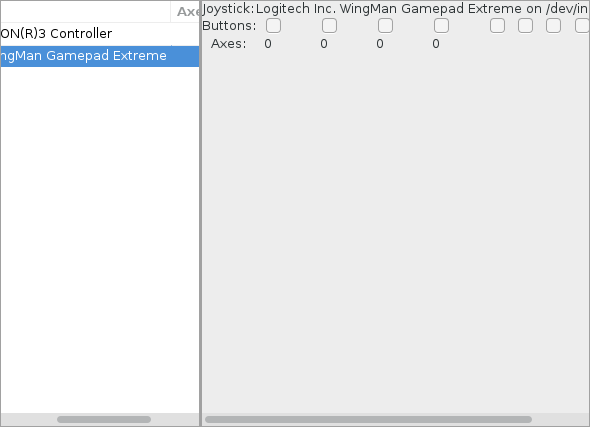
After yesterday's late night accomplishments, today I fixed up the UI of joytest a bit. It's still not quite what I think it should look like, but at least it's actually usable with a 27-axis, 19-button "joystick" (read: a PS3 controller). Things may disappear off the edge of the window, but you can scroll towards it. Also, I removed the names of the buttons and axes from the window, and installed them as tooltips instead. Few people will be interested in the factoid that "button 1" is a "BaseBtn4", anyway. The result now looks like this: If you plug in a new joystick, or remove one from the system, then as soon as udev finishes up creating the necessary device node, joytest will show the joystick (by name) in the treeview to the left. Clicking on a joystick will show that joystick's data to the right. When one pushes a button, the relevant checkbox will be selected; and when one moves an axis, the numbers will start changing. I really should have some widget to actually show the axis position, rather than some boring numbers. Not sure how to do that.

Dirk Eddelbuettel: Rocker is now the official R image for Docker

big deal Something happened a little while ago which we did not have time to commensurate properly. Our Rocker image for R is now the official R image for Docker itself. So getting R (via Docker) is now as simple as saying docker pull r-base. This particular container is essentially just the standard r-base Debian package for R (which is one of a few I maintain there) plus a mininal set of extras. This r-base forms the basis of our other containers as e.g. the rather popular r-studio container wrapping the excellent RStudio Server. A lot of work went into this. Carl and I also got a tremendous amount of help from the good folks at Docker. Details are as always at the Rocker repo at GitHub. Docker itself continues to make great strides, and it has been great fun help to help along. With this post I achieved another goal: blog about Docker with an image not containing shipping containers. Just kidding.

This post by Dirk Eddelbuettel originated on his Thinking inside the box blog. Please report excessive re-aggregation in third-party for-profit settings.

Gregor Herrmann: GDAC 2014/19

yesterday I learned that I can go to FOSDEM in early 2015 because a conflicting event was cancelled. that makes me happy because FOSDEM is great for seeing other debian folks, & especially for meeting friends.
this posting is part of GDAC (gregoa's debian advent calendar), a project to show the bright side of debian & why it's fun for me to contribute.

Richard Hartmann: Release Critical Bug report for Week 51

Real life has been interesting as of late; as you can see, I didn't post bug stats last week. If you have specific data from last Friday, please let me know and I will update. The UDD bugs interface currently knows about the following release critical bugs: How do we compare to the Squeeze release cycle?
Week Squeeze Wheezy Jessie
43 284 (213+71) 468 (332+136) 319 (240+79)
44 261 (201+60) 408 (265+143) 274 (224+50)
45 261 (205+56) 425 (291+134) 295 (229+66)
46 271 (200+71) 401 (258+143) 427 (313+114)
47 283 (209+74) 366 (221+145) 342 (260+82)
48 256 (177+79) 378 (230+148) 274 (189+85)
49 256 (180+76) 360 (216+155) 226 (147+79)
50 204 (148+56) 339 (195+144) ???
51 178 (124+54) 323 (190+133) 189 (134+55)
52 115 (78+37) 289 (190+99)
1 93 (60+33) 287 (171+116)
2 82 (46+36) 271 (162+109)
3 25 (15+10) 249 (165+84)
4 14 (8+6) 244 (176+68)
5 2 (0+2) 224 (132+92)
6 release! 212 (129+83)
7 release+1 194 (128+66)
8 release+2 206 (144+62)
9 release+3 174 (105+69)
10 release+4 120 (72+48)
11 release+5 115 (74+41)
12 release+6 93 (47+46)
13 release+7 50 (24+26)
14 release+8 51 (32+19)
15 release+9 39 (32+7)
16 release+10 20 (12+8)
17 release+11 24 (19+5)
18 release+12 2 (2+0)
Graphical overview of bug stats thanks to azhag:

Petter Reinholdtsen: Of course USA loses in cyber war - NSA and friends made sure it would happen

So, Sony caved in (according to Rob Lowe) and demonstrated that America lost its first cyberwar (according to Newt Gingrich). It should not surprise anyone, after the whistle blower Edward Snowden documented that the government of USA and their allies for many years have done their best to make sure the technology used by its citizens is filled with security holes allowing the secret services to spy on its own population. No one in their right minds could believe that the ability to snoop on the people all over the globe could only be used by the personnel authorized to do so by the president of the United States of America. If the capabilities are there, they will be used by friend and foe alike, and now they are being used to bring Sony on its knees. I doubt it will a lesson learned, and expect USA to lose its next cyber war too, given how eager the western intelligence communities (and probably the non-western too, but it is less in the news) seem to be to continue its current dragnet surveillance practice. There is a reason why China and others are trying to move away from Windows to Linux and other alternatives, and it is not to avoid sending its hard earned dollars to Cayman Islands (or whatever tax haven Microsoft is using these days to collect the majority of its income. :)

Petter Reinholdtsen: Of course USA looses in cyber war - NSA and friends made sure it would happen

So, Sony caved in (according to Rob Lowe) and demonstrated that America lost its first cyberwar (according to Newt Gingrich). It should not surprise anyone, after the whistle blower Edward Snowden documented that the government of USA and their allies for many years have done their best to make sure the technology used by its citizens is filled with security holes allowing the secret services to spy on its own population. No one in their right minds could believe that the ability to snoop on the people all over the globe could only be used by the personnel authorized to do so by the president of the United States of America. If the capabilities are there, they will be used by friend and foe alike, and now they are being used to bring Sony on its knees. I doubt it will a lesson learned, and expect USA to loose its next cyber war too, given how eager the western intelligence communities (and probably the non-western too, but it is less in the news) seem to be to continue its current dragnet surveillance practice. There is a reason why China and others are trying to move away from Windows to Linux and other alternatives, and it is not to avoid sending its hard earned dollars to Cayman Islands (or whatever tax haven Microsoft is using these days to collect the majority of its income. :)

Kenshi Muto: smart "apt" command

During evaluating Jessie, I found 'apt' command and noticed it was pretty good for novice-usual users.
Usage: apt [options] command
CLI for apt.
Basic commands: 
 list - list packages based on package names
 search - search in package descriptions
 show - show package details
 update - update list of available packages
 install - install packages
 remove  - remove packages
 upgrade - upgrade the system by installing/upgrading packages
 full-upgrade - upgrade the system by removing/installing/upgrading packages
 edit-sources - edit the source information file
'apt list' is like a combination of 'dpkg -l' + 'apt-cache pkgnames'. 'apt search' is a bit slower than 'apt-cache search' but provides with useful information. 'apt show' formats bytesizes and hides some (for experts) fields. install/remove/upgrade/full-upgrade are mostly same as apt-get. 'apt edit-sources' opens a editor and checks the integrity. So, I'd like to recommend 'apt' command to Debian users. Well, why did I write this entry...? ;) I found a mistranslation I had made in ja.po of apt. Because it is critical mistranslation (Japanese users will confuse by it), I want to fix it strongly. Dear apt deity maintainers, could you consider to update apt for Jessie? (#772678. FYI there are other translation updates also: #772913, #771982, and #771967)

Enrico Zini: upgrade-encrypted-cyanogenmod

Upgrade Cyanogenmod with an encrypted phone Cyanogenmod found an update, it downloaded it, then it rebooted to install it and nothing happened. It turns out that the update procedure cannot work if the zip file to install is in encrypted media, so a workaround is to move the zip into unencrypted external storage. As far as I know, my Nexus 4 has no unencrypted external storage. This is how I managed to upgrade it, I write it here so I can find it next time:
  1. enable USB debugging
  2. adb pull /cmupdater/cm-11-20141115-SNAPSHOT-M12-mako.zip
  3. adb reboot recovery
  4. choose "install zip from sideload"
  5. adb sideload cm-11-20141115-SNAPSHOT-M12-mako.zip

Steve Kemp: Switched to using attic for backups

Even though seeing the word attic reminds me too much of leaking roofs and CVS, I've switched to using the attic backup tool. I want a simple system which will take incremental backups, perform duplication-elimination (to avoid taking too much space), support encryption, and be fast. I stopped using backup2l because the .tar.gz files were too annoying, and it was too slow. I started using obnam because I respect Lars and his exceptionally thorough testing-regime, but had to stop using it when things started getting "too slow". I'll document the usage/installation in the future. For the moment the only annoyance is that it is contained in the Jessie archive, not the Wheezy one. Right now only 2/19 of my hosts are Jessie.

18 December 2014

Wouter Verhelst: Introducing libjoy

I've owned a Logitech Wingman Gamepad Extreme since pretty much forever, and although it's been battered over the years, it's still mostly functional. As a gamepad, it has 10 buttons. What's special about it, though, is that the device also has a mode in which a gravity sensor kicks in and produces two extra axes, allowing me to pretend I'm really talking to a joystick. It looks a bit weird though, since you end up playing your games by wobbling the gamepad around a bit. About 10 years ago, I first learned how to write GObjects by writing a GObject-based joystick API. Unfortunately, I lost the code at some point due to an overzealous rm -rf call. I had planned to rewrite it, but that never really happened. About a year back, I needed to write a user interface for a customer where a joystick would be a major part of the interaction. The code there was written in Qt, so I write an event-based joystick API in Qt. As it happened, I also noticed that jstest would output names for the actual buttons and axes; I had never noticed this, because due to my 10 buttons and 4 axes, which by default produce a lot of output, the jstest program would just scroll the names off my screen whenever I plugged it in. But the names are there, and it's not too difficult. Refreshing my memory on the joystick API made me remember how much fun it is, and I wrote the beginnings of what I (at the time) called "libgjs", for "Gobject JoyStick". I didn't really finish it though, until today. I did notice in the mean time that someone else released GObject bindings for javascript and also called that gjs, so in the interest of avoiding confusion I decided to rename my library to libjoy. Not only will this allow me all kinds of interesting puns like "today I am releasing more joy", it also makes for a more compact API (compare joy_stick_open() against gjs_joystick_open()). The library also comes with a libjoy-gtk that creates a GtkListStore* which is automatically updated as joysticks are added and removed to the system; and a joytest program, a graphical joystick test program which also serves as an example of how to use the API. still TODO: What's there is functional, though. Update: if you're going to talk about code, it's usually a good idea to link to said code. Thanks, Emanuele, for pointing that out ;-)

Gregor Herrmann: GDAC 2014/18

what constantly fascinates me in debian is that people sit at home, have an idea, work on it, & then suddenly present it to an unexpecting public; all without prior announcements or discussions, & totally apart from any hot discussion-de-jour. the last example I encountered & tried out just now is the option to edit source packages online & submit patches. - I hope we as a project can keep up with this creativity!
this posting is part of GDAC (gregoa's debian advent calendar), a project to show the bright side of debian & why it's fun for me to contribute.

John Goerzen: Aerial Photos: Our Little House on the Prairie

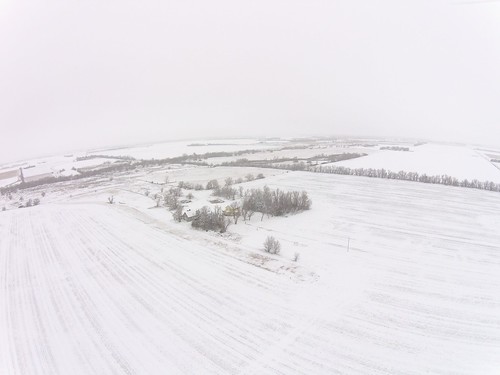
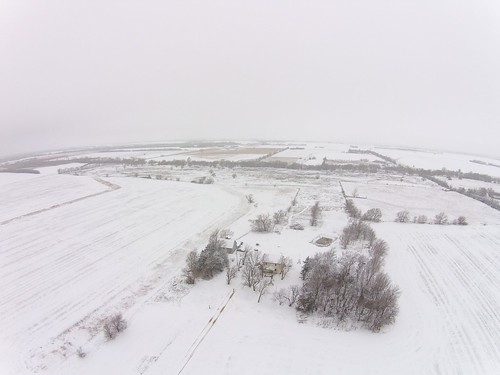
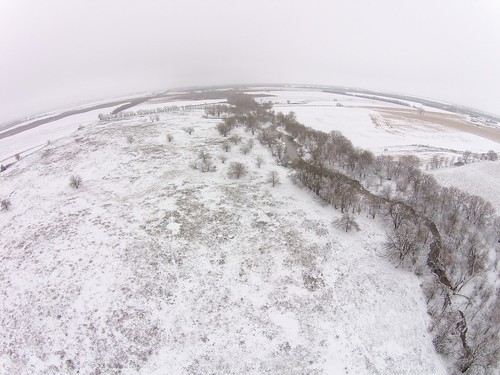
DJI00812 This was my first attempt to send up the quadcopter in winter. It s challenging to take good photos of a snowy landscape anyway. Add to that the fact that the camera is flying, and it s cold, which is hard on batteries and motors. I was rather amazed at how well it did! DJI00816 DJI00830

Mario Lang: deluXbreed #2 is out!

The third installment of my crossbreed digital mix podcast is out! This time, I am featuring Harder & Louder and tracks from Behind the Machine and the recently released Remixes.
  1. Apolloud - Nagazaki
  2. Apolloud - Hiroshima
  3. SA+AN - Darksiders
  4. Im Colapsed - Cleaning 8
  5. Micromakine & Switch Technique - Ascension
  6. Micromakine - Cyberman (Dither Remix)
  7. Micromakine - So Good! (Synapse Remix)
How was DarkCast born and how is it done? I always loved 175BPM music. It is an old thing that is not going away soon :-). I recently found that there is a quite active culture going on, at least on BandCamp. But single tracks are just that, not really fun to listen to in my opinion. This sort of music needs to be mixed to be fun. In the past, I used to have most tracks I like/love as vinyl, so I did some real-world vinyl mixing myself. But these days, most fun music is only available digitally, at least easily. Some people still do vinyl releases, but they are actually rare. So for my personal enjoyment, I started to digitally mix tracks I really love, such that I can listen to them without "interruption". And since I am an iOS user since three years now, using the podcast format to get stuff onto my devices was quite a natural choice. I use SoX and a very small shell script to create these mixes. Here is a pseudo-template:
sox --combine mix-power \
" sox \" sox 1.flac -p\" \" sox 3.flac -p speed 0.987 delay 2:28.31 2:28.31\" -p" \
" sox \" sox 2.flac -p delay 2:34.1 2:34.1\" -p" \
mix.flac
As you can imagine, it is quite a bit of fiddling to get these scripts to do what you want. But it is a non-graphical method to get things done. If you know of a better tool, possibly with a bit of real-time controls, to get the same job done, wihtout having to resort to a damn GUI, let me know.

17 December 2014

Gregor Herrmann: GDAC 2014/17

my list of IRC channels (& the list of people I'm following on micro-blogging platforms) has a heavy debian bias. a thing I noticed today is that I had read (or at least: seen) messages in 6 languages (English, German, Castilian, Catalan, French, Italian). thanks guys for the free language courses :) (& the opportunity to at least catch a glimpse into other cultures)
this posting is part of GDAC (gregoa's debian advent calendar), a project to show the bright side of debian & why it's fun for me to contribute.

Keith Packard: MST-monitors

Multi-Stream Transport 4k Monitors and X I'm sure you've seen a 4k monitor on a friends desk running Mac OS X or Windows and are all ready to go get one so that you can use it under Linux. Once you've managed to acquire one, I'm afraid you'll discover that when you plug it in, you're limited to 30Hz refresh rates at the full size, unless you're running a kernel that is version 3.17 or later. And then... Good Grief! What Is My Computer Doing! Ok, so now you're running version 3.17 and when X starts up, it's like you're using a gigantic version of Google Cardboard. Two copies of a very tall, but very narrow screen greets you. Welcome to MST island. In order to drive these giant new panels at full speed, there isn't enough bandwidth in the display hardware to individually paint each pixel once during each frame. So, like all good hardware engineers, they invented a clever hack. This clever hack paints the screen in parallel. I'm assuming that they've got two bits of display hardware, each one hooked up to half of the monitor. Now, each paints only half of the pixels, avoiding costly redesign of expensive silicon, at least that's my surmise. In the olden days, if you did this, you'd end up running two monitor cables to your computer, and potentially even having two video cards. Today, thanks to the magic of Display Port Multi-Stream Transport, we don't need all of that; instead, MST allows us to pack multiple cables-worth of data into a single cable. I doubt the inventors of MST intended it to be used to split a single LCD panel into multiple "monitors", but hardware engineers are clever folk and are more than capable of abusing standards like this when it serves to save a buck. Turning Two Back Into One We've got lots of APIs that expose monitor information in the system, and across which we might be able to wave our magic abstraction wand to fix this:
  1. The KMS API. This is the kernel interface which is used by all graphics stuff, including user-space applications and the frame buffer console. Solve the problem here and it works everywhere automatically.
  2. The libdrm API. This is just the KMS ioctls wrapped in a simple C library. Fixing things here wouldn't make fbcons work, but would at least get all of the window systems working.
  3. Every 2D X driver. (Yeah, we're trying to replace all of these with the one true X driver). Fixing the problem here would mean that all X desktops would work. However, that's a lot of code to hack, so we'll skip this.
  4. The X server RandR code. More plausible than fixing every driver, this also makes X desktops work.
  5. The RandR library. If not in the X server itself, how about over in user space in the RandR protocol library? Well, the problem here is that we've now got two of them (Xlib and xcb), and the xcb one is auto-generated from the protocol descriptions. Not plausible.
  6. The Xinerama code in the X server. Xinerama is how we did multi-monitor stuff before RandR existed. These days, RandR provides Xinerama emulation, but we've been telling people to switch to RandR directly.
  7. Some new API. Awesome. Ok, so if we haven't fixed this in any existing API we control (kernel/libdrm/X.org), then we effectively dump the problem into the laps of the desktop and application developers. Given how long it's taken them to adopt current RandR stuff, providing yet another complication in their lives won't make them very happy.
All Our APIs Suck Dave Airlie merged MST support into the kernel for version 3.17 in the simplest possible fashion -- pushing the problem out to user space. I was initially vaguely tempted to go poke at it and try to fix things there, but he eventually convinced me that it just wasn't feasible. It turns out that all of our fancy new modesetting APIs describe the hardware in more detail than any application actually cares about. In particular, we expose a huge array of hardware objects: Each of these objects exposes intimate details about the underlying hardware -- which of them can work together, and which cannot; what kinds of limits are there on data rates and formats; and pixel-level timing details about blanking periods and refresh rates. To make things work, some piece of code needs to actually hook things up, and explain to the user why the configuration they want just isn't possible. The sticking point we reached was that when an MST monitor gets plugged in, it needs two CRTCs to drive it. If one of those is already in use by some other output, there's just no way you can steal it for MST mode. Another problem -- we expose EDID data and actual video mode timings. Our MST monitor has two EDID blocks, one for each half. They happen to describe how they're related, and how you should configure them, but if we want to hide that from the application, we'll have to pull those EDID blocks apart and construct a new one. The same goes for video modes; we'll have to construct ones for MST mode. Every single one of our APIs exposes enough of this information to be dangerous. Every one, except Xinerama. All it talks about is a list of rectangles, each of which represents a logical view into the desktop. Did I mention we've been encouraging people to stop using this? And that some of them listened to us? Foolishly? Dave's Tiling Property Dave hacked up the X server to parse the EDID strings and communicate the layout information to clients through an output property. Then he hacked up the gnome code to parse that property and build a RandR configuration that would work. Then, he changed to RandR Xinerama code to also parse the TILE properties and to fix up the data seen by application from that. This works well enough to get a desktop running correctly, assuming that desktop uses Xinerama to fetch this data. Alas, gtk has been "fixed" to use RandR if you have RandR version 1.3 or later. No biscuit for us today. Adding RandR Monitors RandR doesn't have enough data types yet, so I decided that what we wanted to do was create another one; maybe that would solve this problem. Ok, so what clients mostly want to know is which bits of the screen are going to be stuck together and should be treated as a single unit. With current RandR, that's some of the information included in a CRTC. You pull the pixel size out of the associated mode, physical size out of the associated outputs and the position from the CRTC itself. Most of that information is available through Xinerama too; it's just missing physical sizes and any kind of labeling to help the user understand which monitor you're talking about. The other problem with Xinerama is that it cannot be configured by clients; the existing RandR implementation constructs the Xinerama data directly from the RandR CRTC settings. Dave's Tiling property changes edit that data to reflect the union of associated monitors as a single Xinerama rectangle. Allowing the Xinerama data to be configured by clients would fix our 4k MST monitor problem as well as solving the longstanding video wall, WiDi and VNC troubles. All of those want to create logical monitor areas within the screen under client control What I've done is create a new RandR datatype, the "Monitor", which is a rectangular area of the screen which defines a rectangular region of the screen. Each monitor has the following data: There are three requests to define, delete and list monitors. And that's it. Now, we want the list of monitors to completely describe the environment, and yet we don't want existing tools to break completely. So, we need some way to automatically construct monitors from the existing RandR state while still letting the user override portions of it as needed to explain virtual or tiled outputs. So, what I did was to let the client specify a list of outputs for each monitor. All of the CRTCs which aren't associated with an output in any client-defined monitor are then added to the list of monitors reported back to clients. That means that clients need only define monitors for things they understand, and they can leave the other bits alone and the server will do something sensible. The second tricky bit is that if you specify an empty rectangle at 0,0 for the pixel geometry, then the server will automatically compute the geometry using the list of outputs provided. That means that if any of those outputs get disabled or reconfigured, the Monitor associated with them will appear to change as well. Current Status Gtk+ has been switched to use RandR for RandR versions 1.3 or later. Locally, I hacked libXrandr to override the RandR version through an environment variable, set that to 1.2 and Gtk+ happily reverts back to Xinerama and things work fine. I suspect the plan here will be to have it use the new Monitors when present as those provide the same info that it was pulling out of RandR's CRTCs. KDE appears to still use Xinerama data for this, so it "just works". Where's the code As usual, all of the code for this is in a collection of git repositories in my home directory on fd.o:
git://people.freedesktop.org/~keithp/randrproto master
git://people.freedesktop.org/~keithp/libXrandr master
git://people.freedesktop.org/~keithp/xrandr master
git://people.freedesktop.org/~keithp/xserver randr-monitors
RandR protocol changes Here's the new sections added to randrproto.txt
                   
1.5. Introduction to version 1.5 of the extension
Version 1.5 adds monitors
   A 'Monitor' is a rectangular subset of the screen which represents
   a coherent collection of pixels presented to the user.
   Each Monitor is be associated with a list of outputs (which may be
   empty).
   When clients define monitors, the associated outputs are removed from
   existing Monitors. If removing the output causes the list for that
   monitor to become empty, that monitor will be deleted.
   For active CRTCs that have no output associated with any
   client-defined Monitor, one server-defined monitor will
   automatically be defined of the first Output associated with them.
   When defining a monitor, setting the geometry to all zeros will
   cause that monitor to dynamically track the bounding box of the
   active outputs associated with them
This new object separates the physical configuration of the hardware
from the logical subsets  the screen that applications should
consider as single viewable areas.
1.5.1. Relationship between Monitors and Xinerama
Xinerama's information now comes from the Monitors instead of directly
from the CRTCs. The Monitor marked as Primary will be listed first.
                   
5.6. Protocol Types added in version 1.5 of the extension
MONITORINFO   name: ATOM
          primary: BOOL
          automatic: BOOL
          x: INT16
          y: INT16
          width: CARD16
          height: CARD16
          width-in-millimeters: CARD32
          height-in-millimeters: CARD32
          outputs: LISTofOUTPUT  
                   
7.5. Extension Requests added in version 1.5 of the extension.
 
    RRGetMonitors
    window : WINDOW
      
    timestamp: TIMESTAMP
    monitors: LISTofMONITORINFO
 
    Errors: Window
    Returns the list of Monitors for the screen containing
    'window'.
    'timestamp' indicates the server time when the list of
    monitors last changed.
 
    RRSetMonitor
    window : WINDOW
    info: MONITORINFO
 
    Errors: Window, Output, Atom, Value
    Create a new monitor. Any existing Monitor of the same name is deleted.
    'name' must be a valid atom or an Atom error results.
    'name' must not match the name of any Output on the screen, or
    a Value error results.
    If 'info.outputs' is non-empty, and if x, y, width, height are all
    zero, then the Monitor geometry will be dynamically defined to
    be the bounding box of the geometry of the active CRTCs
    associated with them.
    If 'name' matches an existing Monitor on the screen, the
    existing one will be deleted as if RRDeleteMonitor were called.
    For each output in 'info.outputs, each one is removed from all
    pre-existing Monitors. If removing the output causes the list of
    outputs for that Monitor to become empty, then that Monitor will
    be deleted as if RRDeleteMonitor were called.
    Only one monitor per screen may be primary. If 'info.primary'
    is true, then the primary value will be set to false on all
    other monitors on the screen.
    RRSetMonitor generates a ConfigureNotify event on the root
    window of the screen.
 
    RRDeleteMonitor
    window : WINDOW
    name: ATOM
 
    Errors: Window, Atom, Value
    Deletes the named Monitor.
    'name' must be a valid atom or an Atom error results.
    'name' must match the name of a Monitor on the screen, or a
    Value error results.
    RRDeleteMonitor generates a ConfigureNotify event on the root
    window of the screen.
                   

16 December 2014

Raphael Geissert: Editing Debian online with sources.debian.net

How cool would it be to fix that one bug you just found without having to download a source package? and without leaving your browser?

Inspired by github's online code editing, during Debconf 14 I worked on integrating an online editor on debsources (the software behind sources.debian.net). Long story short: it is available today, for users of chromium (or anything supporting chrome extensions).

After installing the editor for sources.debian.net extension, go straight to sources.debian.net and enjoy!

Go from simple debsources:


To debsources on steroids:


All in all, it brings:

Clone it or fork it:
git clone https://github.com/rgeissert/ace-sourced.n.git

For example, head to apt's source code, find a typo and correct it online: open apt.cc, click on edit, make the changes, click on email patch. Yes! it can generate a mail template for sending the patch to the BTS: just add a nice message and your patch is ready to be sent.

Didn't find any typo to fix? how sad, head to codesearch and search Debian for a spelling mistake, click on any result, edit, correct, email! you will have contributed to Debian in less than 5 minutes without leaving your browser.

The editor was meant to be integrated into debsources itself, without the need of a browser extension. This is expected to be done when the requirements imposed by debsources maintainers are sorted out.

Kudos to Harlan Lieberman who helped debug some performance issues in the early implementations of the integration and for working on the packaging of the Ace editor.

15 December 2014

Gustavo Noronha Silva: Web Engines Hackfest 2014

For the 6th year in a row, Igalia has organized a hackfest focused on web engines. The 5 years before this one were actually focused on the GTK+ port of WebKit, but the number of web engines that matter to us as Free Software developers and consultancies has grown, and so has the scope of the hackfest. It was a very productive and exciting event. It has already been covered by Manuel Rego, Philippe Normand, Sebastian Dr ge and Andy Wingo! I am sure more blog posts will pop up. We had Martin Robinson telling us about the new Servo engine that Mozilla has been developing as a proof of concept for both Rust as a language for building big, complex products and for doing layout in parallel. Andy gave us a very good summary of where JS engines are in terms of performance and features. We had talks about CSS grid layouts, TyGL a GL-powered implementation of the 2D painting backend in WebKit, the new Wayland port, announced by Zan Dobersek, and a lot more. With help from my colleague ChangSeok OH, I presented a description of how a team at Collabora led by Marco Barisione made the combination of WebKitGTK+ and GNOME s web browser a pretty good experience for the Raspberry Pi. It took a not so small amount of both pragmatic limitations and hacks to get to a multi-tab browser that can play youtube videos and be quite responsive, but we were very happy with how well WebKitGTK+ worked as a base for that. One of my main goals for the hackfest was to help drive features that were lingering in the bug tracker for WebKitGTK+. I picked up a patch that had gone through a number of iterations and rewrites: the HTML5 notifications support, and with help from Carlos Garcia, managed to finish it and land it at the last day of the hackfest! It provides new signals that can be used to authorize notifications, show and close them. To make notifications work in the best case scenario, the only thing that the API user needs to do is handle the permission request, since we provide a default implementation for the show and close signals that uses libnotify if it is available when building WebKitGTK+. Originally our intention was to use GNotification for the default implementation of those signals in WebKitGTK+, but it turned out to be a pain to use for our purposes. GNotification is tied to GApplication. This allows for some interesting features, like notifications being persistent and able to reactivate the application, but those make no sense in our current use case, although that may change once service workers become a thing. It can also be a bit problematic given we are a library and thus have no GApplication of our own. That was easily overcome by using the default GApplication of the process for notifications, though. The show stopper for us using GNotification was the way GNOME Shell currently deals with notifications sent using this mechanism. It will look for a .desktop file named after the application ID used to initialize the GApplication instance and reject the notification if it cannot find that. Besides making this a pain to test our test browser would need a .desktop file to be installed, that would not work for our main API user! The application ID used for all Web instances is org.gnome.Epiphany at the moment, and that is not the same as any of the desktop files used either by the main browser or by the web apps created with it. For the future we will probably move Epiphany towards this new era, and all users of the WebKitGTK+ API as well, but the strictness of GNOME Shell would hurt the usefulness of our default implementation right now, so we decided to stick to libnotify for the time being. Other than that, I managed to review a bunch of patches during the hackfest, and took part in many interesting discussions regarding the next steps for GNOME Web and the GTK+ and Wayland ports of WebKit, such as the potential introduction of a threaded compositor, which is pretty exciting. We also tried to have Bastien Nocera as a guest participant for one of our sessions, but it turns out that requires more than a notebook on top of a bench hooked up to a TV to work well. We could think of something next time ;D. I d like to thank Igalia for organizing and sponsoring the event, Collabora for sponsoring and sending ChangSeok and myself over to Spain from far away Brazil and South Korea, and Adobe for also sponsoring the event! Hope to see you all next year!

Web Engines Hackfest 2014 sponsors: Adobe, Collabora and Igalia

Web Engines Hackfest 2014 sponsors: Adobe, Collabora and Igalia

Gregor Herrmann: GDAC 2014/15

nothing exciting today in my debian life. just yet another nice example of collaboration around an RC bug where the bug submitter, the maintainer & me investigated via the BTS, & the maintainer also got support on IRC from others. now we just need someone to come up with an actual fix for the problem :)
this posting is part of GDAC (gregoa's debian advent calendar), a project to show the bright side of debian & why it's fun for me to contribute.

Holger Levsen: 20121214-not-everybody-is-equal

We ain't equal in Debian neither and wishful thinking won't help. "White people think calling them white is racist." - "White people think calling them racist is racist." (Thanks to and via 2damnfeisty and blackgirlsparadise!) Posted here (in this white male community...) as a food for thought. What else is invisible for whom? Or hardly visible or distorted or whatever shade of (in)visible... - and how can we know about things we cannot (yet) see...

Next.

Previous.