Search Results: "rra"

27 April 2015

Russ Allbery: rra-c-util 5.7

This release has a somewhat random collection of accumulated fixes. A couple of them are for the PAM libraries: new support for the Mac OS X PAM implementation, which doesn't use the same options and error codes as the rest of the world. It also uses a different pattern of const declaration, which required some additional Autoconf probing for the fake PAM library for testing. There are also a few fixes for the systemd probe framework: libsystemd-daemon has been rolled into libsystemd in current versions, and the probe was using $(), which doesn't work on Solaris 10. The Kerberos Autoconf macros should now hopefully work with the version of Kerberos bundled with Solaris 10. Finally, this release supports checking for Clang as a compiler and choosing compiler warning flags accordingly, although rra-c-util isn't warning-free with Clang -Weverything yet. You can get the latest release from the rra-c-util distribution page.

26 April 2015

Erich Schubert: Your big data toolchain is a big security risk!

This post is a follow-up to my earlier post on the "sad state of sysadmin in the age of containers". While I was drafting this post, that story got picked up by HackerNews, Reddit and Twitter, sending a lot of comments and emails my way. Surprisingly many of the comments are supportive of my impression - I would have expected to see much more insults along the lines "you just don't like my-favorite-tool, so you rant against using it". But a lot of people seem to share my concerns. Thanks, you surprised me!
Here is the new rant post, in the slightly different context of big data:

Everybody is doing "big data" these days. Or at least, pretending to do so to upper management. A lot of the time, there is no big data. People do more data anylsis than before, and therefore stick the "big data" label on them to promote themselves and get green light from management, isn't it?
"Big data" is not a technical term. It is a business term, referring to any attempt to get more value out of your business by analyzing data you did not use before. From this point of view, most of such projects are indeed "big data" as in "data-driven revenue generation" projects. It may be unsatisfactory to those interested in the challenges of volume and the other "V's", but this is the reality how the term is used.
But even in those cases where the volume and complexity of the data would warrant the use of all the new toys tools, people overlook a major problem: security of their systems and of their data.

The currently offered "big data technology stack" is all but secure. Sure, companies try to earn money with security add-ons such as Kerberos authentication to sell multi-tenancy, and with offering their version of Hadoop (their "Hadoop distribution").
The security problem is deep inside the "stack". It comes from the way this world ticks: the world of people that constantly follow the latest tool-of-the-day. In many of the projects, you no longer have mostly Linux developers that co-function as system administrators, but you see a lot of Apple iFanboys now. They live in a world where technology is outdated after half a year, so you will not need to support product longer than that. They love reinstalling their development environment frequently - because each time, they get to change something. They also live in a world where you would simply get a new model if your machine breaks down at some point. (Note that this will not work well for your big data project, restarting it from scratch every half year...)
And while Mac users have recently been surprisingly unaffected by various attacks (and unconcerned about e.g. GoToFail, or the fail to fix the rootpipe exploit) the operating system is not considered to be very secure. Combining this with users who do not care is an explosive mixture...
This type of developer, who is good at getting a prototype website for a startup kicking in a short amount of time, rolling out new features every day to beta test on the live users is what currently makes the Dotcom 2.0 bubble grow. It's also this type of user that mainstream products aim at - he has already forgotten what was half a year ago, but is looking for the next tech product to announced soon, and willing to buy it as soon as it is available...
This attitude causes a problem at the very heart of the stack: in the way packages are built, upgrades (and safety updates) are handled etc. - nobody is interested in consistency or reproducability anymore.
Someone commented on my blog that all these tools "seem to be written by 20 year old" kids. He probably is right. It wouldn't be so bad if we had some experienced sysadmins with a cluebat around. People that have experience on how to build systems that can be maintained for 10 years, and securely deployed automatically, instead of relying on puppet hacks, wget and unzipping of unsigned binary code.
I know that a lot of people don't want to hear this, but:
Your Hadoop system contains unsigned binary code in a number of places, that people downloaded, uploaded and redownloaded a countless number of times. There is no guarantee that .jar ever was what people think it is.
Hadoop has a huge set of dependencies, and little of this has been seriously audited for security - and in particular not in a way that would allow you to check that your binaries are built from this audited code anyway.
There might be functionality hidden in the code that just sits there and waits for a system with a hostname somewhat like "yourcompany.com" to start looking for its command and control server to steal some key data from your company. The way your systems are built they probably do not have much of a firewall guarding against such. Much of the software may be constantly calling home, and your DevOps would not notice (nor would they care, anyway).
The mentality of "big data stacks" these days is that of Windows Shareware in the 90s. People downloading random binaries from the Internet, not adequately checked for security (ever heard of anybody running an AntiVirus on his Hadoop cluster?) and installing them everywhere.
And worse: not even keeping track of what they installed over time, or how. Because the tools change every year. But what if that developer leaves? You may never be able to get his stuff running properly again!
Fire-and-forget.
I predict that within the next 5 years, we will have a number of security incidents in various major companies. This is industrial espionage heaven. A lot of companies will cover it up, but some leaks will reach mass media, and there will be a major backlash against this hipster way of stringing together random components.
There is a big "Hadoop bubble" growing, that will eventually burst.
In order to get into a trustworthy state, the big data toolchain needs to:
  • Consolidate. There are too many tools for every job. There are even too many tools to manage your too many tools, and frontends for your frontends.
  • Lose weight. Every project depends on way too many other projects, each of which only contributes a tiny fragment for a very specific use case. Get rid of most dependencies!
  • Modularize. If you can't get rid of a dependency, but it is still only of interest to a small group of users, make it an optional extension module that the user only has to install if he needs this particular functionality.
  • Buildable. Make sure that everybody can build everything from scratch, without having to rely on Maven or Ivy or SBT downloading something automagically in the background. Test your builds offline, with a clean build directory, and document them! Everything must be rebuildable by any sysadmin in a reproducible way, so he can ensure a bug fix is really applied.
  • Distribute. Do not rely on binary downloads from your CDN as sole distribution channel. Instead, encourage and support alternate means of distribution, such as the proper integration in existing and trusted Linux distributions.
  • Maintain compatibility. successful big data projects will not be fire-and-forget. Eventually, they will need to go into production and then it will be necessary to run them over years. It will be necessary to migrate them to newer, larger clusters. And you must not lose all the data while doing so.
  • Sign. Code needs to be signed, end-of-story.
  • Authenticate. All downloads need to come with a way of checking the downloaded files agree with what you uploaded.
  • Integrate. The key feature that makes Linux systems so very good at servers is the all-round integrated software management. When you tell the system to update - and you have different update channels available, such as a more conservative "stable/LTS" channel, a channel that gets you the latest version after basic QA, and a channel that gives you the latest versions shortly after their upload to help with QA. It covers almost all software on your system, so it does not matter whether the security fix is in your kernel, web server, library, auxillary service, extension module, scripting language etc. - it will pull this fix and update you in no time.
Now you may argue that Hortonworks, Cloudera, Bigtop etc. already provide packages. Well ... they provide crap. They have something they call a "package", but it fails by any quality standards. Technically, a Wartburg is a car; but not one that would pass todays safety regulations...
For example, they only support Ubuntu 12.04 - a three year old Ubuntu is the latest version they support... Furthermore, these packages are roughly the same. Cloudera eventually handed over their efforts to "the community" (in other words, they gave up on doing it themselves, and hoped that someone else would clean up their mess); and Hortonworks HDP (any maybe Pivotal HD, too) is derived from these efforts, too. Much of what they do is offering some extra documentation and training for the packages they built using Bigtop with minimal effort.
The "spark" .deb packages of Bigtop, for example, are empty. They forgot to include the .jars in the package. Do I really need to give more examples of bad packaging decisions? All bigtop packages now depend on their own version of groovy - for a single script. Instead of rewriting this script in an already required language - or in a way that it would run on the distribution-provided groovy version - they decided to make yet another package, bigtop-groovy.
When I read about Hortonworks and IBM announcing their "Open Data Platform", I could not care less. As far as I can tell, they are only sticking their label on the existing tools anyway. Thus, I'm also not surprised that Cloudera and MapR do not join this rebranding effort - given the low divergence of Hadoop, who would need such a label anyway?
So why does this matter? Essentially, if anything does not work, you are currently toast. Say there is a bug in Hadoop that makes it fail to process your data. Your business is belly-up because of that, no data is processed anymore, your are vegetable. Who is going to fix it? All these "distributions" are built from the same, messy, branch. There is probably only a dozen of people around the world who have figured this out well enough to be able to fully build this toolchain. Apparently, none of the "Hadoop" companies are able to support a newer Ubuntu than 2012.04 - are you sure they have really understood what they are selling? I have doubts. All the freelancers out there, they know how to download and use Hadoop. But can they get that business-critical bug fix into the toolchain to get you up and running again? This is much worse than with Linux distributions. They have build daemons - servers that continuously check they can compile all the software that is there. You need to type two well-documented lines to rebuild a typical Linux package from scratch on your workstation - any experienced developer can follow the manual, and get a fix into the package. There are even people who try to recompile complete distributions with a different compiler to discover compatibility issues early that may arise in the future.
In other words, the "Hadoop distribution" they are selling you is not code they compiled themselves. It is mostly .jar files they downloaded from unsigned, unencrypted, unverified sources on the internet. They have no idea how to rebuild these parts, who compiled that, and how it was built. At most, they know for the very last layer. You can figure out how to recompile the Hadoop .jar. But when doing so, your computer will download a lot of binaries. It will not warn you of that, and they are included in the Hadoop distributions, too.
As is, I can not recommend to trust your business data into Hadoop.
It is probably okay to copy the data into HDFS and play with it - in particular if you keep your cluster and development machines isolated with strong firewalls - but be prepared to toss everything and restart from scratch. It's not ready yet for prime time, and as they keep on adding more and more unneeded cruft, it does not look like it will be ready anytime soon.

One more examples of the immaturity of the toolchain:
The scala package from scala-lang.org cannot be cleanly installed as an upgrade to the old scala package that already exists in Ubuntu and Debian (and the distributions seem to have given up on compiling a newer Scala due to a stupid Catch-22 build process, making it very hacky to bootstrap scala and sbt compilation).
And the "upstream" package also cannot be easily fixed, because it is not built with standard packaging tools, but with an automagic sbt helper that lacks important functionality (in particular, access to the Replaces: field, or even cleaner: a way of splitting the package properly into components) instead - obviously written by someone with 0 experience in packaging for Ubuntu or Debian; and instead of using the proven tools, he decided to hack some wrapper that tries to automatically do things the wrong way...

I'm convinced that most "big data" projects will turn out to be a miserable failure. Either due to overmanagement or undermanagement, and due to lack of experience with the data, tools, and project management... Except that - of course - nobody will be willing to admit these failures. Since all these projects are political projects, they by definition must be successful, even if they never go into production, and never earn a single dollar.

Petter Reinholdtsen: First Jessie based Debian Edu beta release

I am happy to report that the Debian Edu team sent out this announcement today:
the Debian Edu / Skolelinux project is pleased to announce the first
*beta* release of Debian Edu "Jessie" 8.0+edu0~b1, which for the first
time is composed entirely of packages from the current Debian stable
release, Debian 8 "Jessie".
(As most reading this will know, Debian "Jessie" hasn't actually been
released by now. The release is still in progress but should finish
later today ;)
We expect to make a final release of Debian Edu "Jessie" in the coming
weeks, timed with the first point release of Debian Jessie. Upgrades
from this beta release of Debian Edu Jessie to the final release will
be possible and encouraged!
Please report feedback to debian-edu@lists.debian.org and/or submit
bugs: http://wiki.debian.org/DebianEdu/HowTo/ReportBugs
Debian Edu - sometimes also known as "Skolelinux" - is a complete
operating system for schools, universities and other
organisations. Through its pre- prepared installation profiles
administrators can install servers, workstations and laptops which
will work in harmony on the school network.  With Debian Edu, the
teachers themselves or their technical support staff can roll out a
complete multi-user, multi-machine study environment within hours or
days.
Debian Edu is already in use at several hundred schools all over the
world, particularly in Germany, Spain and Norway. Installations come
with hundreds of applications pre-installed, plus the whole Debian
archive of thousands of compatible packages within easy reach.
For those who want to give Debian Edu Jessie a try, download and
installation instructions are available, including detailed
instructions in the manual explaining the first steps, such as setting
up a network or adding users.  Please note that the password for the
user your prompted for during installation must have a length of at
least 5 characters!
== Where to download ==
A multi-architecture CD / usbstick image (649 MiB) for network booting
can be downloaded at the following locations:
    http://ftp.skolelinux.org/skolelinux-cd/debian-edu-8.0+edu0~b1-CD.iso
    rsync -avzP ftp.skolelinux.org::skolelinux-cd/debian-edu-8.0+edu0~b1-CD.iso . 
The SHA1SUM of this image is: 54a524d16246cddd8d2cfd6ea52f2dd78c47ee0a
Alternatively an extended DVD / usbstick image (4.9 GiB) is also
available, with more software included (saving additional download
time):
    http://ftp.skolelinux.org/skolelinux-cd/debian-edu-8.0+edu0~b1-USB.iso
    rsync -avzP ftp.skolelinux.org::skolelinux-cd/debian-edu-8.0+edu0~b1-USB.iso 
The SHA1SUM of this image is: fb1f1504a490c077a48653898f9d6a461cb3c636
Sources are available from the Debian archive, see
http://ftp.debian.org/debian-cd/8.0.0/source/ for some download
options.
== Debian Edu Jessie manual in seven languages ==
Please see https://wiki.debian.org/DebianEdu/Documentation/Jessie/ for
the English version of the Debian Edu jessie manual.
This manual has been fully translated to German, French, Italian,
Danish, Dutch and Norwegian Bokm l. A partly translated version exists
for Spanish.  See http://maintainer.skolelinux.org/debian-edu-doc/ for
online version of the translated manual.
More information about Debian 8 "Jessie" itself is provided in the
release notes and the installation manual:
- http://www.debian.org/releases/jessie/releasenotes
- http://www.debian.org/releases/jessie/installmanual
== Errata / known problems ==
    It takes up to 15 minutes for a changed hostname to be updated via
    DHCP (#780461).
    The hostname script fails to update LTSP server hostname (#783087). 
Workaround: run update-hostname-from-ip on the client to update the
hostname immediately.
Check https://wiki.debian.org/DebianEdu/Status/Jessie for a possibly
more current and complete list.
== Some more details about Debian Edu 8.0+edu0~b1 Codename Jessie released 2015-04-25 ==
=== Software updates ===
Everything which is new in Debian 8 Jessie, e.g.:
 * Linux kernel 3.16.7-ctk9; for the i386 architecture, support for
   i486 processors has been dropped; oldest supported ones: i586 (like
   Intel Pentium and AMD K5).
 * Desktop environments KDE Plasma Workspaces 4.11.13, GNOME 3.14,
   Xfce 4.12, LXDE 0.5.6
   * new optional desktop environment: MATE 1.8
   * KDE Plasma Workspaces is installed by default; to choose one of
     the others see the manual.
 * the browsers Iceweasel 31 ESR and Chromium 41
 * LibreOffice 4.3.3
 * GOsa 2.7.4
 * LTSP 5.5.4
 * CUPS print system 1.7.5
 * new boot framework: systemd
 * Educational toolbox GCompris 14.12
 * Music creator Rosegarden 14.02
 * Image editor Gimp 2.8.14
 * Virtual stargazer Stellarium 0.13.1
 * golearn 0.9
 * tuxpaint 0.9.22
 * New version of debian-installer from Debian Jessie.
 * Debian Jessie includes about 43000 packages available for installation.
 * More information about Debian 8 Jessie is provided in its release
   notes and the installation manual, see the link above.
=== Installation changes ===
    Installations done via PXE now also install firmware automatically
    for the hardware present.
=== Fixed bugs ===
A number of bugs have been fixed in this release; the most noticeable
from a user perspective:
 * Inserting incorrect DNS information in Gosa will no longer break
   DNS completely, but instead stop DNS updates until the incorrect
   information is corrected (710362)
 * shutdown-at-night now shuts the system down if gdm3 is used (775608). 
=== Sugar desktop removed ===
As the Sugar desktop was removed from Debian Jessie, it is also not
available in Debian Edu jessie.
== About Debian Edu / Skolelinux ==
Debian Edu, also known as Skolelinux, is a Linux distribution based on
Debian providing an out-of-the box environment of a completely
configured school network. Directly after installation a school server
running all services needed for a school network is set up just
waiting for users and machines being added via GOsa , a comfortable
Web-UI. A netbooting environment is prepared using PXE, so after
initial installation of the main server from CD or USB stick all other
machines can be installed via the network. The provided school server
provides LDAP database and Kerberos authentication service,
centralized home directories, DHCP server, web proxy and many other
services.  The desktop contains more than 60 educational software
packages and more are available from the Debian archive, and schools
can choose between KDE, GNOME, LXDE, Xfce and MATE desktop
environment.
== About Debian ==
The Debian Project was founded in 1993 by Ian Murdock to be a truly
free community project. Since then the project has grown to be one of
the largest and most influential open source projects. Thousands of
volunteers from all over the world work together to create and
maintain Debian software. Available in 70 languages, and supporting a
huge range of computer types, Debian calls itself the universal
operating system.
== Thanks ==
Thanks to everyone making Debian and Debian Edu / Skolelinux happen!
You rock.

20 April 2015

Russ Allbery: Review: The Girls from Alcyone

Review: The Girls from Alcyone, by Cary Caffrey
Series: Girls from Alcyone #1
Publisher: Tealy
Copyright: 2011
ISBN: 1-105-33727-8
Format: Kindle
Pages: 315
Sigrid is a very special genetic match born to not particularly special parents, deeply in debt in the slums of Earth. That's how she finds herself being purchased by a mercenary corporation at the age of nine, destined for a secret training program involving everything from physical conditioning to computer implants, designed to make her a weapon. Sigrid, her friend Suko, and the rest of their class are a special project of the leader of the Kimura corporation, one that's controversial even among the corporate board, and when the other mercenary companies unite against Kimura's plans, they become wanted contraband. This sounds like it could be a tense SF thriller, but I'll make my confession at the start of the review: I had great difficulty taking this book seriously. Initially, it had me wondering what horrible alterations and mind control Kimura was going to impose on the girls, but it very quickly turned into, well, boarding school drama, with little of the menace I was expecting. Not that bullying, or the adults who ignore it to see how the girls will handle it themselves, are light-hearted material, but it was very predictable. As was the teenage crush that grows into something deeper, the revenge on the nastiest bully that the protagonist manages to not be responsible for, and the conflict between unexpectedly competent girls and an invasion of hostile mercenaries. I'm not particularly well-read or informed about the genre, so I'm not the best person to make this comparison, but the main thing The Girls from Alcyone reminded me of was anime or manga. The mix of boarding-school interpersonal relationships, crushes and passionate love, and hypercompetent female action heroes who wear high heels and have constant narrative attention on their beauty had that feel to it. Add in the lesbian romance and the mechs (of sorts) that show up near the end of the story, and it's hard to shake the feeling that one is reading SF yuri as imagined by a North American author. The other reason why I had a hard time taking this seriously is that it's over-the-top action sequences (it's the Empire Strikes Back rescue scene!) mixed with rather superficial characterization, with one amusing twist: female characters almost always end up being on the side of the angels. Lady Kimura, when she appears, turns into exactly the sort of mentor figure that one would expect given the rest of the story (and the immediate deference she got felt like it was lifted from anime). The villains, meanwhile, are hissable and motivated by greed or control. While there's a board showdown, there's no subtle political maneuvering, just a variety of more or less effective temper tantrums. I found The Girls from Alcyon amusing, and even fun to read in places, but that was mostly from analyzing how closely it matched anime and laughing at how reliably it delivered characteristic tropes. It thoroughly embraces its action-hero story full of beautiful, deadly women, but it felt more like a novelization of a B-grade sci-fi TV show than serious drama. It's just not well-written or deep enough for me to enjoy it as a novel. None of the characters were particularly engaging, partly because they were so predictable. And the deeper we got into the politics behind the plot, the less believable I found any of it. I picked this up, along with several other SFF lesbian romances, because sometimes it's nice to read a story with SFF trappings, a positive ending, and a lack of traditional gender roles. The Girls from Alcyone does have most of those things (the gender roles are tweaked but still involve a lot of men looking at beautiful women). But unless you really love anime-style high-tech mercenary boarding-school yuri, want to read it in book form, and don't mind a lot of cliches, I can't recommend it. Followed by The Machines of Bellatrix. Rating: 3 out of 10

18 April 2015

Russ Allbery: Review: The Long Way to a Small, Angry Planet

Review: The Long Way to a Small, Angry Planet, by Becky Chambers
Publisher: CreateSpace
Copyright: 2014
ISBN: 1-5004-5330-7
Format: Kindle
Pages: 503
The Wayfarer is a tunneling ship: one of the small, unremarked construction ships that help build the wormhole network used for interstellar transport. It's a working ship with a crew of eight (although most people would count seven and not count the AI). They don't all like each other particularly not the algaeist, who is remarkably unlikeable but they're used to each other. It's not a bad life, although a more professional attention to paperwork and procedure might help them land higher-paying jobs. That's where Rosemary Harper comes in. At the start of the book, she's joining the ship as their clerk: nervous, hopeful, uncertain, and not very experienced. But this is a way to get entirely away from her old life and, unbeknownst to the ship she's joining, her real name, identity, and anyone who would know her. Given that introduction, I was expecting this book to be primarily about Rosemary. What is she fleeing? Why did she change her identity? How will that past come to haunt her and the crew that she joined? But that's just the first place that Chambers surprised me. This isn't that book at all. It's something much quieter, more human, more expansive, and more joyful. For one, Chambers doesn't stick with Rosemary as a viewpoint character, either narratively or with the focus of the plot. The book may open with Rosemary and the captain, Ashby, as focal points, but that focus expands to include every member of the crew of the Wayfarer. We see each through others' eyes first, and then usually through their own, either in dialogue or directly. This is a true ensemble cast. Normally, for me, that's a drawback: large viewpoint casts tend to be either jarring or too sprawling, mixing people I want to read about with people I don't particularly care about. But Chambers avoids that almost entirely. I was occasionally a touch disappointed when the narrative focus shifted, but then I found myself engrossed in the backstory, hopes, and dreams of the next crew member, and the complex ways they interweave. Rosemary isn't the center of this story, but only because there's no single center. It's very hard to capture in a review what makes this book so special. The closest that I can come is that I like these people. They're individual, quirky, human (even the aliens; this is from more the Star Trek tradition of alien worldbuilding), complicated, and interesting, and it's very easy to care about them. Even characters I never expected to like. The Long Way to a Small, Angry Planet does have a plot, but it's not a fast-moving or completely coherent one. The ship tends to wander, even when the mission that gives rise to the title turns up. And there are a lot of coincidences here, which may bother you if you're reading for plot. At multiple points, the ship ends up in exactly the right place to trigger some revelation about the backstory of one of the crew members, even if the coincidence strains credulity. Similar to the algae-driven fuel system, some things one just has to shrug about and move past. On other fronts, though, I found The Long Way to be refreshingly willing to take a hard look at SF assumptions. This is not the typical space opera: humans are a relatively minor species in this galaxy, one that made rather a mess of their planet and are now refugees. They are treated with sympathy or pity; they're not somehow more flexible, adaptable, or interesting than the rest of the galaxy. More fascinatingly to me, humans are mostly pacifists, a cultural reaction to the dire path through history that brought them to their current exile. This is set against a backdrop of a vibrant variety of alien species, several of whom are present onboard the Wayfinder. The history and background of the other species are not, sadly, as well fleshed out as the humans, but each with at least a few twists that add interest to the story. But the true magic of this book, the thing that it has in overwhelming abundance, is heart. Not everyone in this book is a good person, but most of them are trying. I've rarely read a book full of so much empathy and willingness to reach out to others with open hands. And, even better, they're all nice in different ways. They bring their own unique personalities and approaches to their relationships, particularly the complex web of relationships that connects the crew. When bad things happen, and, despite the overall light tone, a few very bad things happen, the crew rallies like friends, or like chosen family. I have to say it again: I like these people. Usually, that's not a good sign for a book, since wholly likeable people don't generate enough drama. But this is one of the better-executed "protagonist versus nature" plots I've read. It successfully casts the difficulties of making a living at a hard and lonely and political job as the "nature" that provides the conflict. This is a rather unusual book. It's probably best classified as space opera, but it doesn't fit the normal pattern of space opera and it doesn't have enough drama. It's not a book about changing the universe; at the end of the book, the universe is in pretty much the same shape as we found it. It's not even about the character introduced in the first pages, or really that much about her dilemma. And it's certainly not a book about winning a cunning victory against your enemies. What it is, rather, is a book about friendships, about chosen families and how they form, about being on someone else's side, about banding together while still being yourself. It's about people making a living in a hard universe, together. It's full of heart, and I loved it. I'm unsurprised that The Long Way to a Small, Angry Planet had to be self-published via a Kickstarter campaign to find its audience. I'm also unsurprised that, once it got out there, it proved very popular and has now been picked up by a regular publisher. It's that sort of book. I believe it's currently out of print, at least in the US, as its new publisher spins up that process, but it should be back in print by late 2015. When that happens, I recommend it to your attention. It was the most emotionally satisfying book I've read so far this year. Rating: 9 out of 10

15 April 2015

Mike Hommey: Announcing git-cinnabar 0.2.1

Git-cinnabar is a git remote helper to interact with mercurial repositories. It allows to clone, pull and push from/to mercurial remote repositories, using git. Get it on github. What s new since 0.2.0? Not much, but this felt important enough to warrant a release, even though the issue has been there since before 0.1.0: Mercurial can be slower when cloning or pulling a list of heads that contain non-topological heads. On repositories like the mercurial repository, it s not so much of a big deal, taking 7s instead of 4s. But on big repositories like mozilla-central, it s taking 23 minutes instead of 2 minutes and 20s (on my machine). And that s with 100% CPU use on the server side. The problem is that mozilla-central recently merged some old closed heads, such that it now has branch heads that aren t topological heads. Git-cinnabar, until this release, would request those branch heads, leading the server to use the slow path mentioned above. This release works around the issue. It also fixes an issue pushing to a remote empty mercurial repository.

9 April 2015

Daniel Pocock: Never fly Etihad again?

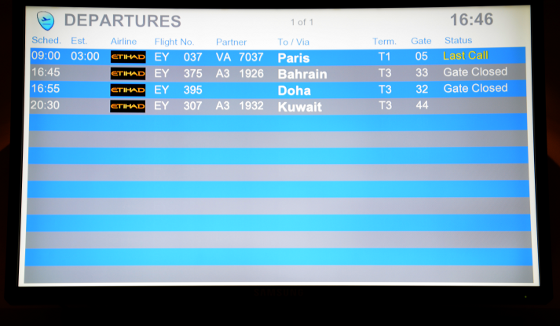
This is the first time we've flown out to Australia with Etihad and it may also be the last. We were due to fly back into Europe at CDG and head down to Lyon for the mini-DebConf this weekend. departure board, 18 hour delay for Paris Lets look at how our Etihad experience has worked out: 21:00 UTC Tuesday - waking up on Wednesday morning in Melbourne (UTC+10) 13:00 UTC Wednesday - leaving Melbourne about 11pm Wednesday night, a 12-13 hour flight to Abu Dhabi. We had heard about the air traffic control strikes in France (where we are going) and asked the airline if we should fly and they told us everything would be OK. 02:30 UTC Thursday - touchdown in Abu Dhabi, 6:30 am local time. Go to the transfer counter to ask for our boarding passes to CDG. At this stage, we were told that the connecting flight to CDG had been delayed 20 hours due to French strikes. As we are trying to reach Lyon for the mini-DebConf this weekend, we asked if we could leave Abu Dhabi on a 09:00 flight to Geneva. The Etihad staff told us to contact our travel agent (the flight was booked through Expedia) and for the next hour everybody's time was wasted making calls to Expedia who kept telling us to speak to Etihad. Whenever the Etihad customer service staff tried to speak to Expedia, the Expedia call center would hang up. Eventually, the Etihad staff told us that the deadline for putting us on the Geneva flight had passed and we would be stuck in Abu Dhabi for at least 20 hours. For flights to and from Europe, airlines have a responsibility to arrange hotels for passengers if there is a lengthy delay. If the airline is at fault, they must also pay some extra cash compensation but for a strike situation that is not applicable. Etihad has repeatedly fobbed us off. Initially we were given vouchers for Burger King or a pizza slice and told to hang around the transfer counter. By about 12:00 UTC (4pm local time, nine hours of waiting around the transfer counter) there was still no solution. One passenger was so upset that the airport security were called to speak to him and he was taken away. The airline staff kept giving excuses. Some passengers had been sent to a hotel but others left behind. I asked them again about our hotel and they kept trying to fob me off. Faced with the possibility that I would miss two nights of sleep and eight hours time difference coming into Europe, I continued asking the Etihad staff to own up to their responsibilities and they eventually offered us access to their airport lounge. We discovered some other passengers in the lounge too, including the passenger who had earlier been escorted away by security. This is unlike anything we've experienced with any other airline. At every opportunity (the check-in at Melbourne, or when the Geneva flight was boarding), the airline has failed to make arrangements that would have avoided cost and inconvenience. Assuming the flight goes ahead with a 20 hour delay, we will arrive in CDG some time Friday morning and not really sleep in a proper bed again until Friday night, about 70 hours after getting up in Melbourne on Wednesday morning. Thanks Etihad, you are a waking nightmare. The airline has been evasive about how they will deal with our onward travel from CDG to Lyon. We had booked a TGV train ticket already but it is not valid after such a long delay and it seems quite possible that trains will be busier than usual thanks to the air traffic control strike. So we don't even know if we will be loitering around a Paris airport or railway station for hours on Friday and nobody from the airline or Expedia really seems to care. Conclusion The only conclusion I can reach from this experience is that Etihad can't be trusted, certainly not for long journies such as Australia to Europe. Having flown through Singapore, Kuala Lumpur and Hong Kong, I know that air passengers have plenty of options available and there are many airlines that do go the extra mile to look after passengers especially on such long journeys. The airline missed opportunities to re-route us at every opportunity. It looks like they help some passengers (like those who did get to hotels) but leave many others high and dry just to stay within their budget.

5 April 2015

Daniel Pocock: Australian wildlife

Here are some of the animals we have seen so far during our trip to Australia. Kookaburra Some kookaburras flying into the trees around a friend's beach house at Kennett River on the Great Ocean Road. Koala's in the wild It is easy to find koala bears in many of the trees around Kennett River: Python At the Moonlit Sanctuary, we were introduced to a python: BBQ My cousin Hagen prepares the BBQ for lunch at the sanctuary: More koala bears It was also possible to get up close to one of the koala bears at the sanctuary. Be careful not to get so close to them in the wild. Wallaby The wallaby is like a small kangaroo: Kangaroo Carla was able to get up close to a family of kangaroos and feed them some snacks: Tasmanian Devil Saving the best for last, the Tasmanian devil is not just a cartoon character. His jaw is strong enough to crush your finger as if you had been run over by a train and he can run faster than just about anybody except for a trained sprinter. Consequently, we didn't jump in the enclosure to pose with him for this photo:

1 April 2015

Lars Wirzenius: Obnam 4.1 released

It is with great pleasure and satisfaction that I release version 4.1 of Obnam, my backup program. This version includes a radically innovative approaches to data compression and de-duplication, as well as some other changes and bug fixes. Major user-visible changes: Minor user-visible changes: Bug fixes:

31 March 2015

Zlatan Todori : Interviews with FLOSS developers: Francesca Ciceri

Debian and FLOSS community don't only occupy coding developers. They occupy people who write news, who talk about FLOSS, who help on booths and conferences, who create artistic forms of the community and so many others that contribute in countless ways. A lady, that is doing many of that is Francesca Ciceri, known in Debian as MadameZou. She is non-packaging Debian Developer, a fearless warrior for diversity and a zombie fan. Although it sounds intimidating, she is deep caring and great human being. So, what has MadaZou to tell us? Picture of MadameZou Who are you? My name is Francesca and I'm totally flattered by your intro. The fearless warrior part may be a bit exaggerated, though. What have you done and what are you currently working on in FLOSS world? I've been a Debian contributor since late 2009. My journey in Debian has touched several non-coding areas: from translation to publicity, from videoteam to www. I've been one of the www.debian.org webmasters for a while, a press officer for the Project as well as an editor for DPN. I've dabbled a bit in font packaging, and nowadays I'm mostly working as a Front Desk member. Setup of your main machine? Wow, that's an intimate question! Lenovo Thinkpad, Debian testing. Describe your current most memorable situation as FLOSS member? Oh, there are a few. One awesome, tiring and very satisfying moment was during the release of Squeeze: I was member of the publicity and the www teams at the time, and we had to pull a 10 hours of team work to put everything in place. It was terrible and exciting at the same time. I shudder to think at the amount of work required from ftpmaster and release team during the release. Another awesome moment was my first Debconf: I was so overwhelmed by the sense of belonging in finally meeting all these people I've been worked remotely for so long, and embarassed by my poor English skills, and overall happy for just being there... If you are a Debian contributor I really encourage you to participate to Debian events, be they small and local or as big as DebConf: it really is like finally meeting family. Some memorable moments from Debian conferences? During DC11, the late nights with the "corridor cabal" in the hotel, chatting about everything. A group expedition to watch shooting stars in the middle of nowhere, during DC13. And a very memorable videoteam session: it was my first time directing and everything that could go wrong, went wrong (including the speaker deciding to take a walk outside the room, to demonstrate something, out of the cameras range). It was a disaster, but also fun: at the end of it, all the video crew was literally in stitches. But there are many awesome moments, almost too many to recall. Each conference is precious on that regard: for me the socializing part is extremely important, it's what cements relationships and help remote work go smoothly, and gives you motivation to volunteer in tasks that sometimes are not exactly fun. You are known as Front Desk member for DebConf's - what work does it occupy and why do you enjoy doing it? I'm not really a member of the team: just one of Nattie's minions! You had been also part of DebConf Video team - care to share insights into video team work and benefits it provides to Debian Project? The video team work is extremely important: it makes possible for people not attending to follow the conference, providing both live streaming and recording of all talks. I may be biased, but I think that DebConf video coverage and the high quality of the final recordings are unrivaled among FLOSS conferences - especially since it's all volunteer work and most of us aren't professional in the field. During the conference we take shifts in filming the various talks - for each talk we need approximately 4 volunteers: two camera operators, a sound mixer and the director. After the recording, comes the boring part: reviewing, cutting and sometimes editing the videos. It's a long process and during the conference, you can sometimes spot the videoteam members doing it at night in the hacklab, exhausted after a full day of filming. And then, the videos are finally ready to be uploaded, for your viewing pleasure. During the last years this process has become faster thanks to the commitment of many volunteers, so that now you have to wait only few days, sometimes a week, after the end of the conference to be able to watch the videos. I personally love to contribute to the videoteam: you get to play with all that awesome gear and you actually make a difference for all the people who cannot attend in person. You are also non-packaging Debian Developer - how does that feel like? Feels awesome! The mere fact that the Debian Project decided - in 2009 via a GR - to recognize the many volunteers who contribute without doing packaging work is a great show of inclusiveness, in my opinion. In a big project like Debian just packaging software is not enough: the final result relies heavily on translators, sysadmins, webmasters, publicity people, event organizers and volunteers, graphic artists, etc. It's only fair that these contributions are deemed as valuable as the packaging, and to give an official status to those people. I was one of the firsts non-uploading DD, four years ago, and for a long time it was just really an handful of us. In the last year I've seen many others applying for the role and that makes me really happy: it means that finally the contributors have realized that they deserve to be an official part of Debian and to have "citizenship rights" in the project. You were the leading energy on Debian's diversity statement - what gave you the energy to drive into it? It seemed the logical conclusion of the extremely important work that Debian Women had done in the past. When I first joined Debian, in 2009, as a contributor, I was really surprised to find a friendly community and to not be discriminated on account of my gender or my lack of coding skills. I may have been just lucky, landing in particularly friendly teams, but my impression is that the project has been slowly but unequivocally changed by the work of Debian Women, who raised first the need for inclusiveness and the awareness about the gender problem in Debian. I don't remember exactly how I stumbled upon the fact that Debian didn't have a Diversity Statement, but at first I was very surprised by it. I asked zack (Stefano Zacchiroli), who was DPL at the time, and he encouraged me to start a public discussion about it, sending out a draft - and helped me all the way along the process. It took some back and forth in the debian-project mailing list, but the only thing needed was actually just someone to start the process and try to poke the discussion when it stalled - the main blocker was actually about the wording of the statement. I learned a great deal from that experience, and I think it changed completely my approach in things like online discussions and general communication within the project. At the end of the day, what I took from that is a deep respect for who participated and the realization that constructive criticism does require certainly a lot of work for all parts involved, but can happen. As for the statement in itself: these things are as good as you keep them alive with best practices, but I think that are better stated explicitly rather than being left unsaid. You are involved also with another Front Desk, the Debian's one which is involved with Debian's New Members process - what are tasks of that FD and how rewarding is the work on it? The Debian Front Desk is the team that runs the New Members process: we receive the applications, we assign the applicant a manager, and we verify the final report. In the last years the workflow has been simplified a lot by the re-design of the nm.debian.org website, but it's important to keep things running smoothly so that applicants don't have too lenghty processes or to wait too much before being assigned a manager. I've been doing it for a less more than a month, but it's really satisfying to usher people toward DDship! So this is how I feel everytime I send a report over to DAM for an applicant to be accepted as new Debian Developer: Crazy pic How do you see future of Debian development? Difficult to say. What I can say is that I'm pretty sure that, whatever the technical direction we'll take, Debian will remain focused on excellence and freedom. What are your future plans in Debian, what would you like to work on? Definetely bug wrangling: it's one of the thing I do best and I've not had a chance to do that extensively for Debian yet. Why should developers and users join Debian community? What makes Debian a great and happy place? We are awesome, that's why. We are strongly committed to our Social Contract and to users freedom, we are steadily improving our communication style and trying to be as inclusive as possible. Most of the people I know in Debian are perfectionists and outright brilliant in what they do. Joining Debian means working hard on something you believe, identifying with a whole project, meeting lots of wonderful people and learning new things. It ca be at times frustrating and exhausting, but it's totally worth it. You have been involved in Mozilla as part of OPW - care to share insights into Mozilla, what have you done and compare it to Debian? That has been a very good experience: it meant have the chance to peek into another community, learn about their tools and workflow and contribute in different ways. I was an intern for the Firefox QA team and their work span from setting up specific test and automated checks on the three version of Firefox (Stable, Aurora, Nightly) to general bug triaging. My main job was bug wrangling and I loved the fact that I was a sort of intermediary between developers and users, someone who spoke both languages and could help them work together. As for the comparison, Mozilla is surely more diverse than Debian: both in contributors and users. I'm not only talking demographic, here, but also what tools and systems are used, what kind of skills people have, etc. That meant reach some compromises with myself over little things: like having to install a proprietary tool used for the team meetings (and getting crazy in order to make it work with Debian) or communicating more on IRC than on mailing lists. But those are pretty much the challenges you have to face whenever you go out of your comfort zone . You are also volunteer of the Organization for Transformative Works - what is it, what work do you do and care to share some interesting stuff? OTW is a non profit organization to preserve fan history and cultures, created by fans. Its work range from legal advocacy and lobbying for fair use and copyright related issues, developing and maintaining AO3 -- a huge fanwork archive based on open-source software --, to the production of a peer-reviewed academic journal about fanworks. I'm an avid fanfiction reader and writer, and joining the OTW volunteers seemed a good way to give back to the community - in true Debian fashion . As a volunteer, I work for the Translation Committee: we are more than a hundred people - divided in several language teams - translating the OTW website, the interface of AO3 archive, newsletter, announcements and news posts. We have a orga-wide diversity statement, training for recruits, an ever growing set of procedures to smooth our workflow, monthly meetings and movie nights. It's an awesome group to work with. I'm deeply invested in this kind of work: both for the awesomeness of OTW people and for the big role that fandom and fanworks have in my life. What I find amazing is that the same concept we - as in the FLOSS ecosystem - apply to software can be applied to cultural production: taking a piece of art you love and expand, remix, explore it. Just for the fun of it. Protect and encourage the right to play in this cultural sandbox is IMO essential for our society. Most of the participants in the fandom come from marginalised group or minorities whose point of view is usually not part of the mainstream narratives. This makes the act of writing, remixing and re-interpreting a story not only a creative exercise but a revolutionary one. As Elizabeth Minkel says: "My preferred explanation is the idea that the vast majority of what we watch is from the male perspective authored, directed, and filmed by men, and mostly straight white men at that. Fan fiction gives women and other marginalised groups the chance to subvert that perspective, to fracture a story and recast it in her own way." In other words, "fandom is about putting debate and conversation back into an artistic process". On a personal side - you do a lot of DIY, handmade works. What have you done, what joy does it bring to you and share with us a picture of it? I like to think that the hacker in me morphs in a maker whenever I can actually manipulate stuff. The urge to explore ways of doing things, of create and change is probably the same. I've been blessed with curiousity and craftiness and I love to learn new DIY techniques: I cannot describe it, really, but if I don't make something for a while I actually feel antsy. I need to create stuff. Nowadays, I'm mostly designing and sewing clothes - preferably reproductions of dresses from the 40s and the 50s - and I'm trying to make a living of that. It's a nice challenge: there's a lot of research involved, as I always try to be historically accurate in design, sewing tecniques and material, and many hours of careful attention to details. I'm right in the process of make photoshoots for most of my period stuff, so I'll share with you something different: a t-shirt refashion done with the DebConf11 t-shirt! (here's the tutorial) T-shirt pic

Dirk Eddelbuettel: R / Finance 2015 Open for Registration

The annoucement below just went to the R-SIG-Finance list. More information is as usual at the R / Finance page.
Registration for R/Finance 2015 is now open! The conference will take place on May 29 and 30, at UIC in Chicago. Building on the success of the previous conferences in 2009-2014, we expect more than 250 attendees from around the world. R users from industry, academia, and government will joining 30+ presenters covering all areas of finance with R. We are very excited about the four keynote presentations given by Emanuel Derman, Louis Marascio, Alexander McNeil, and Rishi Narang.
The conference agenda (currently) includes 18 full presentations and 19 shorter "lightning talks". As in previous years, several (optional) pre-conference seminars are offered on Friday morning. There is also an (optional) conference dinner at The Terrace at Trump Hotel. Overlooking the Chicago river and skyline, it is a perfect venue to continue conversations while dining and drinking. Registration information and agenda details can be found on the conference website as they are being finalized.
Registration is also available directly at the registration page. We would to thank our 2015 sponsors for the continued support enabling us to host such an exciting conference: International Center for Futures and Derivatives at UIC Revolution Analytics
MS-Computational Finance and Risk Management at University of Washington Ketchum Trading
OneMarketData
RStudio
SYMMS On behalf of the committee and sponsors, we look forward to seeing you in Chicago! For the program committee:
Gib Bassett, Peter Carl, Dirk Eddelbuettel, Brian Peterson,
Dale Rosenthal, Jeffrey Ryan, Joshua Ulrich
See you in Chicago in May!

This post by Dirk Eddelbuettel originated on his Thinking inside the box blog. Please report excessive re-aggregation in third-party for-profit settings.

30 March 2015

Yves-Alexis Perez: 3.2.68 Debian/grsec kernel and update on the process

It's been a long time since I updated my repository with a recent kernel version, sorry for that. This is now done, the kernel (sources, i386 and amd64) is based on the (yet unreleased) 3.2.68-1 Debian kernel, patched with grsecurity 3.1-3.2.68-201503251805, and has the version 3.2.68-1~grsec1. It works fine here, but as always, no warranty. If any problem occurs, try to reproduce using vanilla 3.2.68 + grsec patch before reporting here. And now that Jessie release approaches, the question of what to do with those Debian/grsec kernel still arrise: the Jessie kernel is based on the 3.16 branch, which is not a (kernel.org) long term branch. Actually, the support already ended some times ago, and the (long term) maintainance is now assured by the Canonical Kernel Team (thus the -ckt suffix) with some help from the Debian kernel maintainers. So there's no Grsecurity patch following 3.16, and there's no easy way to forward-port the 3.14 patches. At that point, and considering the support I got the last few years on this initiative, I don't think it's really worth it to continue providing those kernels. One initiative which might be interesting, though, is the Mempo kernels. The Mempo team works on kernel reproducible builds, but they also include the grsecurity patch. Unfortunately, it seems that building the kernel their way involves calling a bash script which calls another one, and another one. A quick look at the various repositories is only enough to confuse me about how actually they build the kernel, in the end, so I'm unsure it's the perfect fit for a supposedly secure kernel. Not that the Debian way of building the kernel doesn't involves calling a lot of scripts (either bash or python), but still. After digging a bit, it seems that they're using make-kpkg (from the kernel-package package), which is not the recommended way anymore. Also, they're currently targeting Wheezy, so the 3.2 kernel, and I have no idea what they'll chose for Jessie. In the end, for myself, I might just do a quick script which takes a git repository at the right version, pick the latest grsec patch for that branch, applies it, then run make deb-pkg and be done with it. That still leaves the problem of which branch to follow: There's also the config file question, but if I'm just using the kernels for myself and not sharing them, it's also easier, although if some people are actually interested it's not hard to publish them.

27 March 2015

Olivier Berger: New short paper : Designing a virtual laboratory for a relational database MOOC with Vagrant, Debian, etc.

Here s a short preview of our latest accepted paper (to appear at CSEDU 2015), about the construction of VMs for the Relational Database MOOC using Vagrant, Debian, PostgreSQL (previous post), etc. :

Designing a virtual laboratory for a relational database MOOC Olivier Berger, J Paul Gibson, Claire Lecocq and Christian Bac Keywords: Remote Learning, Virtualization, Open Education Resources, MOOC, Vagrant Abstract: Technical advances in machine and system virtualization are creating opportunities for remote learning to provide significantly better support for active education approaches. Students now, in general, have personal computers that are powerful enough to support virtualization of operating systems and networks. As a conse- quence, it is now possible to provide remote learners with a common, standard, virtual laboratory and learning environment, independent of the different types of physical machines on which they work. This greatly enhances the opportunity for producing re-usable teaching materials that are actually re-used. However, configuring and installing such virtual laboratories is technically challenging for teachers and students. We report on our experience of building a virtual machine (VM) laboratory for a MOOC on relational databases. The architecture of our virtual machine is described in detail, and we evaluate the benefits of using the Vagrant tool for building and delivering the VM. TOC :
  • Introduction
    • A brief history of distance learning
    • Virtualization : the challenges
    • The design problem
  • The virtualization requirements
    • Scenario-based requirements
    • Related work on requirements
    • Scalability of existing approaches
  • The MOOC laboratory
    • Exercises and lab tools
    • From requirements to design
  • Making the VM as a Vagrant box
    • Portability issues
    • Delivery through Internet
    • Security
    • Availability of the box sources
  • Validation
    • Reliability Issues with VirtualBox
    • Student feedback and evaluation
  • Future work
    • Laboratory monitoring
    • More modular VMs
  • Conclusions
Bibliography
  • Alario-Hoyos et al., 2014
    Alario-Hoyos, C., P rez-Sanagust n, M., Kloos, C. D., and Mu oz Merino, P. J. (2014).
    Recommendations for the design and deployment of MOOCs: Insights about the MOOC digital education of the future deployed in Mir adaX.
    In Proceedings of the Second International Conference on Technological Ecosystems for Enhancing Multiculturality, TEEM 14, pages 403-408, New York, NY, USA. ACM.
  • Armbrust et al., 2010
    Armbrust, M., Fox, A., Griffith, R., Joseph, A. D., Katz, R., Konwinski, A., Lee, G., Patterson, D., Rabkin, A., Stoica, I., and Zaharia, M. (2010).
    A view of cloud computing.
    Commun. ACM, 53:50-58.
  • Billingsley and Steel, 2014
    Billingsley, W. and Steel, J. R. (2014).
    Towards a supercollaborative software engineering MOOC.
    In Companion Proceedings of the 36th International Conference on Software Engineering, pages 283-286. ACM.
  • Brown and Duguid, 1996
    Brown, J. S. and Duguid, P. (1996).
    Universities in the digital age.
    Change: The Magazine of Higher Learning, 28(4):11-19.
  • Bullers et al., 2006
    Bullers, Jr., W. I., Burd, S., and Seazzu, A. F. (2006).
    Virtual machines an idea whose time has returned: Application to network, security, and database courses.
    SIGCSE Bull., 38(1):102-106.
  • Chen and Noble, 2001
    Chen, P. M. and Noble, B. D. (2001).
    When virtual is better than real [operating system relocation to virtual machines].
    In Hot Topics in Operating Systems, 2001. Proceedings of the Eighth Workshop on, pages 133-138. IEEE.
  • Cooper, 2005
    Cooper, M. (2005).
    Remote laboratories in teaching and learning-issues impinging on widespread adoption in science and engineering education.
    International Journal of Online Engineering (iJOE), 1(1).
  • Cormier, 2014
    Cormier, D. (2014).
    Rhizo14-the MOOC that community built.
    INNOQUAL-International Journal for Innovation and Quality in Learning, 2(3).
  • Dougiamas and Taylor, 2003
    Dougiamas, M. and Taylor, P. (2003).
    Moodle: Using learning communities to create an open source course management system.
    In World conference on educational multimedia, hypermedia and telecommunications, pages 171-178.
  • Gomes and Bogosyan, 2009
    Gomes, L. and Bogosyan, S. (2009).
    Current trends in remote laboratories.
    Industrial Electronics, IEEE Transactions on, 56(12):4744-4756.
  • Hashimoto, 2013
    Hashimoto, M. (2013).
    Vagrant: Up and Running.
    O Reilly Media, Inc.
  • Jones and Winne, 2012
    Jones, M. and Winne, P. H. (2012).
    Adaptive Learning Environments: Foundations and Frontiers.
    Springer Publishing Company, Incorporated, 1st edition.
  • Lowe, 2014
    Lowe, D. (2014).
    MOOLs: Massive open online laboratories: An analysis of scale and feasibility.
    In Remote Engineering and Virtual Instrumentation (REV), 2014 11th International Conference on, pages 1-6. IEEE.
  • Ma and Nickerson, 2006
    Ma, J. and Nickerson, J. V. (2006).
    Hands-on, simulated, and remote laboratories: A comparative literature review.
    ACM Computing Surveys (CSUR), 38(3):7.
  • Pearson, 2013
    Pearson, S. (2013).
    Privacy, security and trust in cloud computing.
    In Privacy and Security for Cloud Computing, pages 3-42. Springer.
  • Prince, 2004
    Prince, M. (2004).
    Does active learning work? A review of the research.
    Journal of engineering education, 93(3):223-231.
  • Romero-Zaldivar et al., 2012
    Romero-Zaldivar, V.-A., Pardo, A., Burgos, D., and Delgado Kloos, C. (2012).
    Monitoring student progress using virtual appliances: A case study.
    Computers & Education, 58(4):1058-1067.
  • Sumner, 2000
    Sumner, J. (2000).
    Serving the system: A critical history of distance education.
    Open learning, 15(3):267-285.
  • Watson, 2008
    Watson, J. (2008).
    Virtualbox: Bits and bytes masquerading as machines.
    Linux J., 2008(166).
  • Winckles et al., 2011
    Winckles, A., Spasova, K., and Rowsell, T. (2011).
    Remote laboratories and reusable learning objects in a distance learning context.
    Networks, 14:43-55.
  • Yeung et al., 2010
    Yeung, H., Lowe, D. B., and Murray, S. (2010).
    Interoperability of remote laboratories systems.
    iJOE, 6(S1):71-80.

24 March 2015

Russ Allbery: Review: Fukushima

Review: Fukushima, by David Lochbaum, et al.
Author: David Lochbaum
Author: Edwin Lyman
Author: Susan Q. Stranahan
Author: Union of Concerned Scientists
Publisher: The New Press
Copyright: 2014
ISBN: 1-59558-927-9
Format: Kindle
Pages: 320
This is a very interesting book, and I can recommend it, but there are two things you should be aware of up-front. The packaging does not necessarily make clear what expectations you should have of it going in. First, the subtitle (The Story of a Nuclear Disaster) should have appended to it And Its Implications for US Nuclear Power Policy. This book is very concerned with the impact of the Fukushima disaster on US policy and nuclear regulation, to the point where I think more than half of the book is about US agencies, nuclear regulatory history, and US reaction. There's nothing wrong with that, of course: the US should take a hard look at its own nuclear energy policy given the events at Fukushima, and it's a worthy topic for a book. But if you go into this book expecting a broader perspective, you will be disappointed. For example, I think the fact that France has a lot of nuclear power was mentioned maybe twice in the whole book, and French reaction was never discussed at all. There is a very detailed examination of exactly what happened at Fukushima (more on that in a moment), but most of the policy implications are examined purely from a US perspective. Even Japanese nuclear policy gets somewhat short shrift. Second, note that the fourth listed co-author is the Union of Concerned Scientists. For those not familiar with US environmental groups, the UCS has a reputation as an anti-nuclear advocacy organization. I don't think that's entirely fair; I think the UCS's position on nuclear power is better summarized as holding that it is theoretically possible to run a nuclear power plant safely, but the actual US nuclear power industry is not very close to that standard, and it would require much tighter regulation and more investment in safety systems to reach that standard. But be aware that the authors of this book have a clear position on the adequacy of current nuclear power safety standards, namely that they aren't. And they don't try to conceal that position in this book. Personally, I prefer authors to be open about their perspective in books like this, but your mileage may vary. There, disclaimers out of the way. I bought this book for a specific reason: I had followed some of the news coverage at the time of the earthquake and tsunami, and then (like many people, I suspect) lost track of the final outcome as the story fell out of the news and I started ignoring people who didn't understand how large the Pacific Ocean is. Now that we've had the benefit of several years of analysis and thoughtful reconstruction of events, I wanted to know what had actually happened. I'm happy to say that this book delivers quite well on that front. Roughly the first half of the book is a detailed blow-by-blow description of exactly what happened at Fukushima, at least as well as we've been able to reconstruct, told as an engrossing and dramatic narrative. There may be a little too much interleaving of reactions within the US government, which I suspect will particularly annoy non-US readers, but the level of factual detail is excellent, clear, and well-explained. What I wasn't expecting, but was pleasantly surprised by, is that it's also a great story. There's tension, conflict, heroism, hard choices, and moral quandries, and the authors do a great job conveying factual information while still giving the reader the sense of being in the middle of the unfolding drama. They resist the urge to disclose all the results of later analysis in the middle of the story, which may provide a slightly less clear view of the disaster, but which makes the telling far more compelling. I usually read non-fiction more slowly than fiction, but Fukushima dragged me in. I found myself grabbing moments to read just another few pages. Unfortunately, this is only about half the book. The other half is a mix of other things that won't have as broad of appeal: an analysis of the challenges of US nuclear regulation, a history of the US nuclear power industry, and a presentation of the authors' opinions about the best path forward for regulation of nuclear power in the US. Since I'm a US citizen and resident with an interest in both nuclear power and regulation of nuclear power in my country, I found this interesting, if not as engrossing as the rest of the book. But it felt a bit oddly tacked on, and I think it's a stretch to say that it's part of the story of Fukushima. The authors try to draw that link by presenting the Japanese nuclear power industry as heavily influenced by their US counterparts, and their regulatory problems as similar to the problems in the US, but there is nowhere near enough detail about Japanese regulatory practices here to support that conclusion. I think the largest weakness, and the most obvious gap, in this book is the lack of detailed analysis of the history and players in the Japanese nuclear regulatory environment. This is an odd miss. If one is concerned about regulatory inadequacy, Japanese government policy is far more obviously part of the story of Fukushima than US policy. I can only speculate that the authors had inside sources for the US policy discussions but not for the Japanese policy discussions (and, sadly, fall back on painting with a rather broad brush and making unsupported generalizations about Japanese regulatory approaches in a few spots). The result feels like two partly-unrelated books stacked and partly shuffled together. So, there are parts of Fukushima that are rather disappointing, particularly for non-US readers. But I still recommend it as a great detailed history of the actual incident and a summary of what we now think happened. That summary is unfortunately sketchy and still very unclear, but I don't think that's the fault of the authors. The inside of a nuclear power plant during a meltdown is a very difficult environment to measure or analyze, and there's a lot of data that we will probably never have. Some details may never be known. But what we do know, and how that knowledge unfolded, is told very well. This is the only book-length treatment on Fukushima I've read, so I can't compare it against other books on the same topic. But it satisfied my curiousity nicely. If you have a similar curiosity, I recommend this book to your attention, although be aware of its approach and its US-centric analysis going in so that you're not surprised by a mismatch of expectations. Rating: 8 out of 10

20 March 2015

Steve McIntyre: Tour of Australia

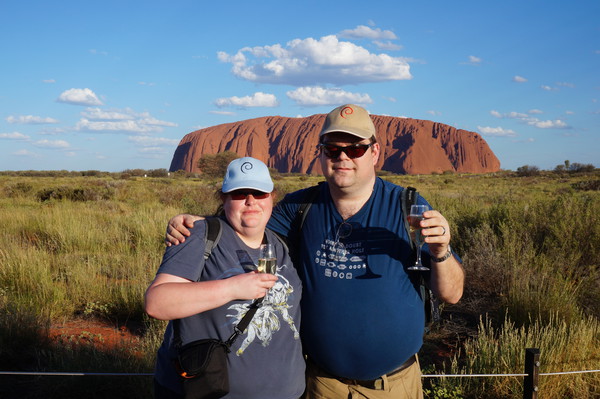
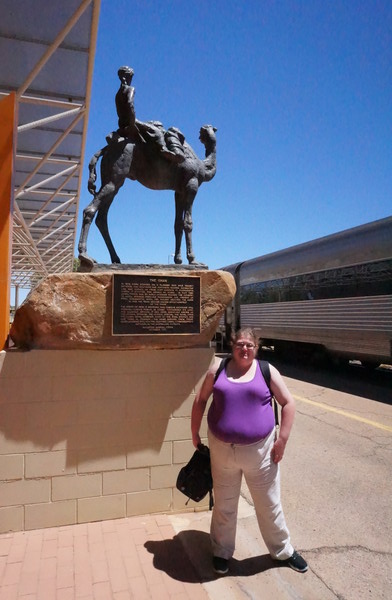
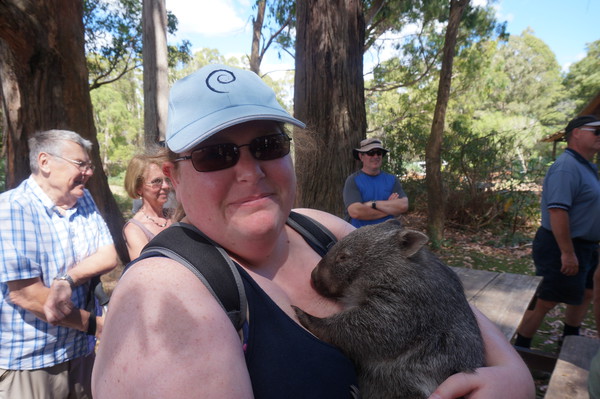
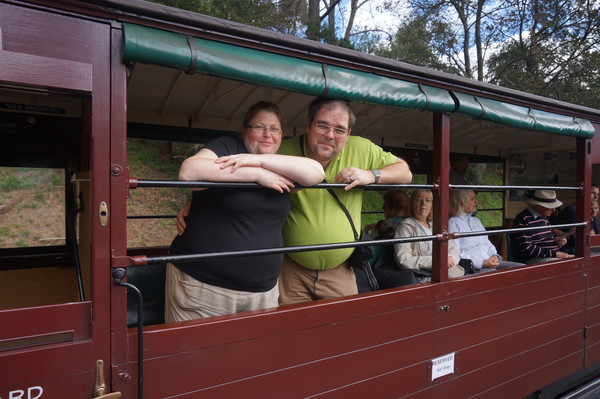
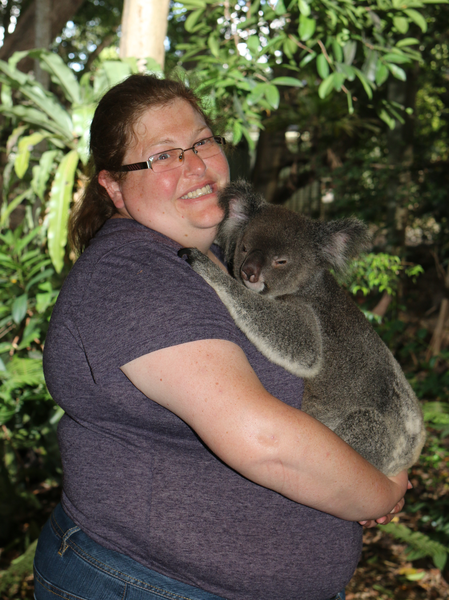
Jo and I just got back from our massive holiday in Australia. We had an awesome time overall, fitting in lots of stuff in 4 weeks. Time for a quick write-up and some photos! Ayers Rock We flew into Sydney, then straight onto Uluru for the obligatory sunset and sunrise viewings. We didn't climb the Rock, both for sensitivity reasons and (to be more honest!) it looked way too much like hard work in 40-plus degree heat. Ghan train Coach over to Alice Springs, where we had a very quick look around before taking the Ghan train down to Adelaide. The train was fun for a day, and we got to see a lot of desert. In Adelaide, we had a look around the city (lovely colonial feel!) and got a couple of evenings in fun comedy shows at the Fringe. Great fun! Cuddling a sleepy wombat! On to Tasmania, where we did a quick (3 days) run around the island by car: into Hobart, up the east coast. Stopped in Swansea (a nice version!) for some heavenly Devonshire teas, then on up to Grindelwald near Launceston. Visited Trowunna Wildlife Park to see (and cuddle!) lots of local animals, which was amazing - Jo's favourite day of the holiday. Then on to Queenstown and drive back down to Hobart past some impossibly beautiful views around Cradle Mountain. Tassie's gorgeous - like the best bits of Scotland, Wales and Cornwall but with even fewer people and better weather. Sydney Opera House Next, on to Sydney for Harry and Cath's wedding. We stayed up in Chatswood. Not knowing anything about the area beforehand, we were a little surprised to basically find ourselves back in Hong Kong! We spent most of the weekend catching up with friends from the wedding group, and the wedding itself was at Quarantine Station, overlooking the harbour. It couldn't have been a more perfect location / weather / view for our friends' big day! We squeezed in a couple of the open-top bus tours of Sydney on the Sunday, but got caught in the horrendous storm that hit and ended up sheltering downstairs under cover on the bus. I'm told Bondi is lovely, but it all looked grey from the bus. :-P Puffing Billy, Yarra Valley Down to Melbourne on the train (bit of a wasted day, in hindsight), where we wandered around the city quite a bit. Caught up with an old friend who lives there for a day, and we did a wine tour up the Yarra Valley which was fun too. Snorkelling at the Reef - all OK! Up to Port Douglas, where we headed out to the Reef for my highlight of the holiday: a snorkelling tour with some local marine experts who showed us the local flora and fauna. We also visited a local Aboriginal cultural centre, skyrail and scenic railway around Kuranda village. Koala! :-) Down to Hervey Bay and a 1-day tour of Fraser Island - an amazing place in combination with quite a thrill-ride experience just being driven around on the sand tracks. Finally, down to Brisbane where we wandered around and visited both the Lone Pine Koala Sanctuary (more cuddles!) and the Gold Coast. Then the long flights home. Whew! We're knackered now. We knew we could't fit everything in, but we're glad we travelled all over and got tastes of almost everything. Now we can work out where we want to spend more time on our future visit(s). We'll definitely want to head over and see Perth and some of WA next time, and definitely more time in Tasmania, Sydney and Adelaide.

16 March 2015

Enrico Zini: screen-dependent-geometry

Screen-dependent window geometry I have an external monitor for my laptop in my work desk at home, and when I work I keep a few windows like IRC on my laptop screen, and everything else on the external monitor. Then maybe I transfer on the sofa to watch a movie or in the kitchen to cook, and I unplug from the external monitor to bring the laptop with me. Then maybe I go back to the external monitor to resume working. The result of this (with openbox) is that when I disconnect the external monitor all the windows on my external monitor get moved to the right edge of the laptop monitor, and when I reconnect the external monitor I need to rearrange them all again. I would like to implement something that does the following:
  1. it keeps a dictionary mapping screen geometry to window geometries
  2. every time a window geometry and virtual desktop number changes, it gets recorded in the hash for the current screen geometry
  3. every time the screen geometry changes, for each window, if there was a saved window geometry + wirtual desktop number for it for the new screen geometry, it gets restored.
Questions:
  1. Is anything like this already implemented? Where?
  2. If not, what would be a convenient way to implement it myself, ideally in a wmctrl-like way that does not depend on a specific WM?
Note: I am not interested in switching to a different WM unless it is openbox with this feature implemented in it.

13 March 2015

Wouter Verhelst: New toy: Fujitsu Lifebook e734

My Lenovo x220, which I've owned for almost four years now (I remember fetching it from the supplier shortly before driving off to Banja Luka), was getting somewhat worn out. The keyboard and the screen had both been replaced at some point already, and the wwan interface had given up as well. The case was all cracked, and the NIC connector wasn't doing very well anymore either; there have been a few cases of me trying to configure the wireless network at a customer, but this being harder than it needs to be because the NIC will only work if I put in the network cable just so, and someone dropped a piece of paper onto the cable. In other words, it was time for a new one. At first I wanted to buy a Lenovo x250, but then I noticed that the Fujitsu came with an i7 4712MQ, which I liked (as today it is still quite exceptional for an ultrabook to have a quadcore processor). Fujitsu also claims up to 9 hours of battery life, but it's not clear to me whether this is supposed to be the case with the default battery only. They also have a battery for the modular bay, which I bought as well (to replace the optical drive whic I sometimes use, but only rarely), and on top of that it came with a free port replicator. Not all is well, however. In the x220, getting the WWAN interface to work involved some creative use of chat against /dev/ttyACM0 wherein I issue a few AT commands to put the WWAN interface into a particular mode, and from then on the WWAN interface is just a regular Ethernet interface on which I can do DHCP. The new laptop has a "Sierra Wireless, Inc." WWAN interface (USB id 1199:9041) which annoyingly doesn't seem to expose the ttyACM (or similar) devices, and I'm not sure what to use instead. Just trying to do DHCP doesn't work -- yes, I tried. Unfortunately, the keyboard isn't very good; it's of the bubble gum type, and I keep getting annoyed at it not picking up my keystrokes all the time. When I'm at home or at my main customer, I have a Das Keyboard Ultimate S (3rd (customer) and 4th (home) generation), so it's only a problem when I'm not at home, but it's still extremely annoying. There is a "backlight" function in that keyboard, but that's not something I think I'll ever use (hint: "das keyboard ultimate s"). The display can't do more than 1366x768, which is completely and utterly wrong for a computer -- but it's the same thing as my x220, so it's not really a regression. The "brightness" ACPI keys don't seem to work. I may have to fiddle with some ACPI settings at some point, I suppose, but it's not a major problem. When I plugged it in, I noticed that fdpowermon ignored the second battery. I had originally written fdpowermon with support for such a second battery, but as my x220 had only one, I never tested it. Apparently there was a bug, but that's been fixed now -- at least in unstable. On the good side of the equation, it has three USB3 ports in the laptop, and four in the port replicator, with no USB2; this is a major leap forwards from the one USB3 and six USB2 in the x220. A positive surprise was the CCID smartcard reader that I somehow missed while reading the specs, but which -- given my current major customer, is very welcome, indeed. Update: After having used it a few days, there were a few minor annoyances:

12 March 2015

Bits from Debian: DebConf15: Call for Proposals

The DebConf Content team is pleased to announce the Call for Proposals for the DebConf15 conference, to be held in Heidelberg, Germany from the 15th through the 22nd of August, 2015. Submitting an Event In order to submit an event, you must be registered as an attendee of DebConf15. If you have any questions about the registration process, please check the related information on the conference website. Once registered, go to "Propose an event" and describe your proposal. Please note, events are not limited to traditional presentations or informal sessions (BoFs). We welcome submissions of tutorials, performances, art installations, debates, or any other format of event that you think would be beneficial to the Debian community. Please include a short title, suitable for a compact schedule, and an engaging description of the event. You should use the field "Notes for Content Team" to provide us information such as additional speakers, scheduling restrictions, or any special requirements we should consider for your event. Regular sessions may either be 20 or 45 minutes long (including time for questions) and will be followed by a 10 or 15 minutes break, respectively. Other kinds of sessions (like workshops) could have different durations. Please make sure to choose the most suitable duration for your event and justify any special requests. Timeline The first batch of accepted proposals will be announced in May. If you depend on having your proposal accepted in order to attend the conference, please submit it as soon as possible so that it can be considered during this first evaluation period. All proposals must be submitted before June 15th, 2015 to be evaluated for the official schedule. Topics and Tracks Though we invite proposals on any Debian or FLOSS related subject, we will have some broad topics arranged as tracks for which we encourage people to submit proposals. The currently proposed list is: If you have ideas for further tracks, or would like to volunteer as a track coordinator, please contact content@debconf.org. In order for a track to take place during DebConf15, we must have received a sufficient amount of proposals on that specific theme. Track coordinators will play an important role in inviting people to submit events. Video Coverage Providing video of sessions amplifies DebConf achievements and is one of the conference goals. Unless speakers opt-out, official events will be streamed live over the Internet to promote remote participation. Recordings will be published later under the DebConf license, as well as presentation slides and papers whenever available. Contact and Thanks to Sponsors DebConf would not be possible without the generous support of all our sponsors, especially our platinum sponsor HP. DebConf15 is still accepting sponsors; if you are interested, please get in touch! You are welcome to contact the Content Team with any concerns about your event, or with any ideas or questions ambout DebConf events in general. You can reach us at content@debconf.org. We hope to see you all in Heidelberg!

4 March 2015

Zlatan Todori : Interviews with FLOSS developers: Paul Wise

After starting with Joey Hess, we continue with Paul Wise. What makes his star to shine are many things such as being a DSA (Debian System Administrator), a helpful hand on mailings list, encouraging people to join Debian teams but most of all - he has encyclopedia knowledge on Debian as a whole which he gladly shares with anyone who asks (very fast response on IRC channels). It is almost impossible for any single person to count all Debian teams, work and places - to know most of those things, you can image the vast knowledge which Paul has. The legend says that his brain has better and faster search engine algorithm on Debian related queries than all other engines combined. So lets see what he has to share with world. me: Who are you? pabs: Paul Wise (pabs) and I have to say that I'm no-where near as knowledgeable as your intro suggests. me: How did you start programming? pabs: Messing around with fractals and graphics things in MS BASIC. me: How would you now advise others to start programming? pabs: Pick an issue in a tool you use, investigate how the tool works and how you can change it, fix that and contribute the change back to the project that created that tool. In the process you will learn skills, interact with the community and contribute to the project. me: Setup of your development machine? pabs: Lenovo Thinkpad with external monitor, Debian testing and some tweaks me What is your preferable language (for hacking)? Why? How do you compare it to other languages? pabs: I currently prefer Python for its readability. It still has some rough edges though the documentation covers them fairly well. I generally pick up new languages when working on projects written in them. Haskell is next on the horizon due to Nikki and the Robots. me: Describe your current most memorable situation as software developer/hacker? pabs: I had a great time creating fractals in BASIC, learning about the Mandelbrot set, L-systems and more. My days and nights of hacking on frhed (a GPLed hex editor for Windows) to help me cheat at Civilisation were pretty memorable. frhed led to my work on reverse engineering the CHM file format (a documentation format for Windows programs). A stand-out moment during my time with Debian was hacking on the derivates census patch generation code during the Debian UK BBQ weekend, surrounded by geeks playing Portal, cooking things, hacking on Debian and generally having a good time (thanks Steve!). me: Some memorable moments from Debian conferences? pabs: There are so many; meeting Debian folks, playing Mao once and then never again, late night games of werewolf, both delectably delicious and hideously disgusting cheeses, fried insects, day trips to beautiful landscapes, inspiring keynotes, exciting BoFs, secret IRC channels for planning surprise birthday parties, blue hair, wet air, blocks of fried cheese, a vast quantity of icecream, pants, geeks in the surf, volcanoes, hiking, a wonderful view, a uni-cycling stormtrooper & more. me: How do you see future of Debian development? pabs: I hope we will continue to exist and uphold our principles for the foreseeable future. I don't have any crystal balls though. me: You recently became member of Debian DSA - what is that like, what roles do you have and what tasks are in front of DSA? pabs: We wrote a bit of text about that for DPN recently. me: You have large knowledge on Debian and you share it with anyone who wants to know more. What motivates you to do so? pabs: I want the operating system I personally rely on to exist into the future, helping folks work on and join Debian can help with that. me: Why should developers and users join Debian community? What makes Debian a great and happy place? pabs: Every Debian contributor has different reasons for joining the community. Personally the Social Contract, the DFSG and the spirit and culture behind them are the main reason to be involved. I also like our many efforts towards technical excellence and correctness. Of course I've made a number of good friends over the years, especially as a result of attending DebConf every year since 2007. me: You are member of Debian publicity team which writes Debian news - do you need more people to join that team and how can they start? pabs: Since there is an infinite amount of work to do, pretty much every part of Debian always needs help, that includes the publicity team. We published a post about ways to help here. me: If someone wants to contribute to Debian in terms of packaging, can they do it anonymously (for example over Tor network, does Debian have .onion address)? pabs: Due to Debian's penchant for transparency it is harder but there are definitely package maintainers who have built up a reputation for good work under a pseudonym over the years and become Debian contributors as a result. I'm not aware of completely anonymous package maintainers but there are definitely people who file bugs using one-off pseudonyms, which is almost the same thing as anonymously. There are definitely Debian contributors and members who use Tor while contributing to Debian. In fact, as Debian is very highly dependent on OpenPGP and the best practices for OpenPGP include refreshing your keyring slowly over Tor, so probably quite a number of Debian contributors use Tor. As far as I know Debian itself does not run any Tor relays or onion services. me: What are places that non-packaging developers and people could join and help spread Debian even more? pabs: There are many ways to help Debian, including non-technical ones. Unfortunately our web page about helping Debian isn't quite up-to-date with all of them but a few more are to volunteer at DebConf, helo with artwork requests, speak about Debian at events or even come up with ideas for projects. Whatever skills you have, Debian can probably make use of them. If you aren't sure where to start, jump on the debian-mentors mailing list or IRC channel and we can probably guide you to the right place within Debian. Don't worry about not being skilled enough, everyone starts somewhere. me: How do you see Debian will manage webapps? pabs: Personally I prefer locally installed software, standard data formats and standard data transfer protocols to the wild webapps world but I understand they are becoming very popular to produce and use due to the ubiquity of the web browser platform. Antonio Terceiro is mentoring a project for this year's newcomer mentorship programs (outreachy/gsoc) that aims to improve support for installing web apps on Debian installations. I hope it succeeds as it could help make Debian more popular on servers and home servers in particular. me: How would you advise Debian (and other FLOSS users) to setup their machine in terms of security and anonymity? pabs: All technology has upsides and downsides. I would advise anyone to analyse their situation and protect themselves accordingly. For example if you have a bad memory, full disk encryption, which is based on pass-phrases might lead to data loss and physical security might be a better choice for protecting your data. The right choices around technology are very much a personal thing. me: Is it better to setup xmonad (because it is Haskell based WM) with small dependency chain or GNOME (because it is getting sandboxed apps) in term of security and privacy implications? pabs: Again, the right choices around technology are very much a personal thing. Due to the design of X11, both of these are approximately equivalent from a window-manager security properties point of view, that is to say, pretty bad. Wayland is one of the possible X11 successors and offers much better security properties. GNOME folks are working on switching to Wayland. Ultimately though it comes down to how each person uses their window manager and which software they run under it. me: Should Debian join Tor project as distro that installs Tor relays by default - should it offer that as option in installer in Debian 9? pabs: Running a Tor relay requires a reasonably fast and reliable Internet connection and should be a conscious decision on behalf of the sysadmin for a computer so Debian probably shouldn't install them by default. If tasksel gets support for installing tasks from Debian Pure Blends, then we could add a Tor relay task to the Debian Sanctuary Pure Blend. me: Have you ever considered joining initiatives such as FreedomBox? pabs: I was quite moved by Eben Moglen's talk at DebConf10 in New York and the resulting BoF. It seemed like a very ambitious project but I didn't really have the knowledge, skills or time to contribute yet. me: Are you a gamer? Valve Steam games are offered for free to Debian Developers - do you use steam and play Valve games? Your thoughts on Steam and non-free Linux gaming? pabs: I play computer games occasionally, all from Debian main or ones that I'm packaging. 0ad is my current go-to for a bit of gaming. I don't have any experience with Steam or non-free games on Linux. me: Is there something you would change in FLOSS ecosystem? pabs: Various folks have highlighted new and ongoing challenges for the FLOSS ecosystem in various places in recent years. Something that I would like to highlight that does not get talked about enough is the choices we make around our digital artefacts. This is the discussion around "preferred form for modification" or "source". The "source" for a particular digital artefact is a deliberate choice on behalf of the authors. Often generated files are distributed alongside the "source" without any instructions for reproducing the generated files from the "source". It sometimes happens that FLOSS contributors forget to distriute what they have chosen as "source", instead just distributing the generated files. This is a fairly well known issue but still happens. What isn't thought about quite as much is that the choice of "source" has consequences for future development possibilities of that "source". Some forms of "source" are more expressive than others, can be modified in a wider variety of ways and are better choices in general. Sometimes the consequences of choosing less expressive forms are mild and other times they are quite important. I hope more people will start to think about these choices. Some examples where, in my opinion, various people could have made better choices are listed in the mail I sent to the games team list last year. Another thing I would like to highlight is the work that organisations like Software Freedom Conservancy and Software in the Public Interest do to protect, defend, promote and support FLOSS projects. It is very important work that needs our interest and support. me: Can FLOSS world create great alternatives to Viber, Dropbox, WhatsUp, Facebook, Skype and other non-free services? pabs: I think that the FLOSS world has already created alternatives to all of those. The success of non-free services doesn't take these alternatives away but it does mean some of them are less useful because some of them are the kind of tools that become more useful with a larger amount of people using them. I don't know what it would take for the FLOSS alternatives to achieve similar success as network effects are hard to overcome. Hopefully mako is right and the network effects are overrated. me: Your thoughts and compare Cloud, IaaS, PaaS, SaaSS? To what should the FLOSS world pay more attention and energy? pabs: Initially I dismissed these as buzzwords and a threat to Free Software. These days I view them as potential opportunities for Free Software. Cloud-related technologies such as OpenStack and virtual machines can make private compute farm hardware more flexible and useful to their owners. IaaS providers can be used to run Debian more simply and cheaply and therefore bring Debian to more people than possible with hardware. PaaS providers can be used to run Free Software services. SaaSS can be based entirely on Free Software and respect users. Of course, just like running Free Software on hardware (proprietary or libre), cloud technology, IaaS, PaaS and SaaSS all come with downsides. The FLOSS world should aim to inform users of our software of these downsides. For example, the Debian installer could note that it is running on Intel CPUs with a proprietary BIOS and various proprietary software running, that it is running on a mobile phone with a locked bootloader, that it is running in a Xen VM on machines owned by Amazon. Free Software services could note they are running on Google App Engine etc. Free Software web browsers, chat clients etc could note when they are connecting to proprietary network services. All these notes could inform users about the downsides present in the particular situation encountered. There is also much work to be done making it easier to run Free Software on top of or use Free Software to connect to all manner of platforms from lowRISC to UEFI to VMware to Google App Engine to GitHub to Facebook. The more places Free Software can reach, the more people will be exposed to the philosophy behind it and the more potential there is for folks to join the community. While co-option of the FLOSS world is a dangerous certainty, co-option of proprietary platforms might be able to expand the reach of the philosophy behind Free Software. me: Your thoughts on Purism (the open hardware laptop initiative that got recently funded on CrowdSupply)? pabs: I don't know enough about that to comment but personally I am more interested in a laptop based on a libre CPU architecture. The RISC-V ISA and the lowRISC project seems to be one of the more promising possibilities at this point in time. me: Did you watch Citizenfour - comments on it? pabs: I've seen the trailer and look forward to watching it at some point, I read there might be a screening at DebConf15.

19 February 2015

Matthew Garrett: It has been 0 days since the last significant security failure. It always will be.

So blah blah Superfish blah blah trivial MITM everything's broken.

Lenovo deserve criticism. The level of incompetence involved here is so staggering that it wouldn't be a gross injustice for the company to go under as a result[1]. But let's not pretend that this is some sort of isolated incident. As an industry, we don't care about user security. We will gladly ship products with known security failings and no plans to update them. We will produce devices that are locked down such that it's impossible for anybody else to fix our failures. We will hide behind vague denials, we will obfuscate the impact of flaws and we will deflect criticisms with announcements of new and shinier products that will make everything better.

It'd be wonderful to say that this is limited to the proprietary software industry. I would love to be able to argue that we respect users more in the free software world. But there are too many cases that demonstrate otherwise, even where we should have the opportunity to prove the benefits of open development. An obvious example is the smartphone market. Hardware vendors will frequently fail to provide timely security updates, and will cease to update devices entirely after a very short period of time. Fortunately there's a huge community of people willing to produce updated firmware. Phone manufacturer is never going to fix the latest OpenSSL flaw? As long as your phone can be unlocked, there's a reasonable chance that there's an updated version on the internet.

But this is let down by a kind of callous disregard for any deeper level of security. Almost every single third-party Android image is either unsigned or signed with the "test keys", a set of keys distributed with the Android source code. These keys are publicly available, and as such anybody can sign anything with them. If you configure your phone to allow you to install these images, anybody with physical access to your phone can replace your operating system. You've gained some level of security at the application level by giving up any real ability to trust your operating system.

This is symptomatic of our entire ecosystem. We're happy to tell people to disable security features in order to install third-party software. We're happy to tell people to download and build source code without providing any meaningful way to verify that it hasn't been tampered with. Install methods for popular utilities often still start "curl sudo bash". This isn't good enough.

We can laugh at proprietary vendors engaging in dreadful security practices. We can feel smug about giving users the tools to choose their own level of security. But until we're actually making it straightforward for users to choose freedom without giving up security, we're not providing something meaningfully better - we're just providing the same shit sandwich on different bread.

[1] I don't see any way that they will, but it wouldn't upset me

comment count unavailable comments

Next.

Previous.