Search Results: "az"

10 July 2017

Markus Koschany: My Free Software Activities in June 2017

Welcome to gambaru.de. Here is my monthly report that covers what I have been doing for Debian. If you re interested in Java, Games and LTS topics, this might be interesting for you. Debian Games Debian Java + Android Debian LTS This was my sixteenth month as a paid contributor and I have been paid to work 16 hours on Debian LTS, a project started by Rapha l Hertzog. In that time I did the following: Misc Thanks for reading and see you next time.

6 July 2017

Urvika Gola: Speaking at Open Source Bridge 17

Recently, I and my Co speaker Pranav Jain, got a chance to speak at Open Source Bridge conference which was held in Portland, Oregon! Pranav talked about GSoC and I talked about Outreachy , together we talked about Free RTC project Lumicall.
OSB conference was much more than just a conference . More than content in the talks, it had meaning. I am referring to the amazing keynote session by Nicole Sanchez on Tech Reform. She explained wonderfully the need of the hour, i.e Diversity inclusion is not just inclusion . Focus should be on what comes after the inclusion, Growth. We also met several Debian developers and Debian mentor for Outreachy (Hoping to meet my mentors someday!! ) Thanks to OSB, I got to meet Outreachy co-ordinator Sarah Sharp! It was wonderful meeting an Outreachy-person!  We talked and exchanged ideas about the programme. and.. she clicked beautiful pictures of us delivering the talk.
Urvika Gola at Open Source BridgePicture Courtesy Sarah Sharp
The talk ended with an unexpected and very precious hand written note written by Audrey Eschright.. 20170622_114118-1 Thank you Debian for giving us a chance to speak at Open Source Bridge and to meet wonderful people in Open Source.

Holger Levsen: 20170706-fcmc.tv

a media experiment: fcmc.tv / G20 not welcome Our view currently every day and night: No one is illegal! No football for fascists! The FC/MC is a collective initiative to change the perception of the G20 in Hamburg - the summit itself and the protests surrounding it. FC/MC is a media experiment, located in the stadium of the amazing St.Pauli football club. We will operate until this Sunday, providing live coverage (text, photos, audio, video), back stories and much much more. Another world is possible! Disclaimer: I'm not involved in content generation, I'm just doing computer stuff as usual, but that said, I really like the work of those who are! :-)

5 July 2017

Shirish Agarwal: Debian 9 release party at Co-hive

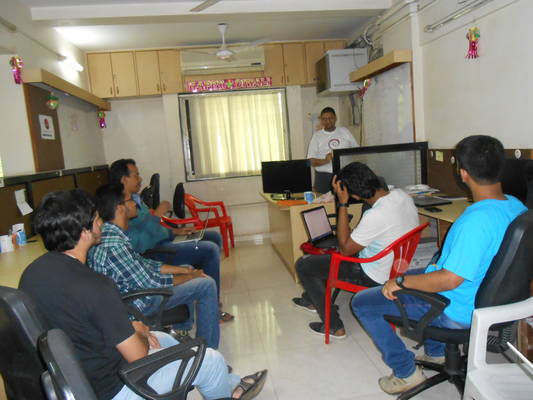
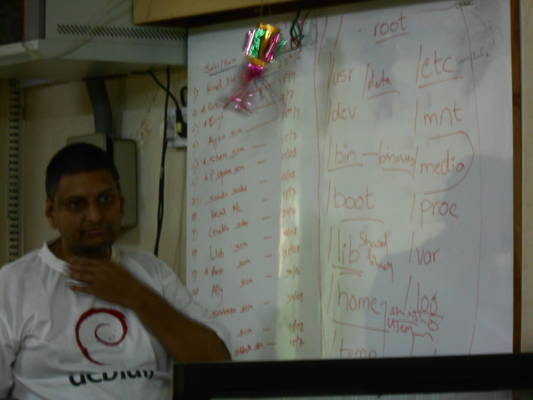
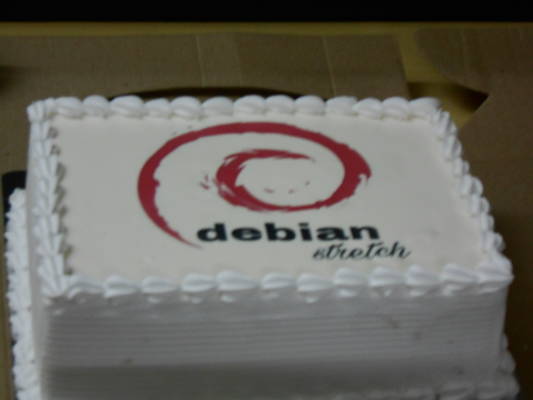
Dear all, This would be a biggish one so please have a chai/coffee or something stronger as it would take a while. I would start with attempt at some alcohol humor. While some people know that I have had a series of convulsive epileptic seizure I had shared bits about it in another post as well. Recovery is going through allopathic medicines as well as physiotherapy which I go to every alternate day. One of the exercises that I do in physiotherapy sessions is walk cross-legged on a line. While doing it today, it occurred to me that this is the same test that a Police inspector would do if they caught you drinking or are suspected of drunk driving. While some in the police force have now also have breath analyzer machines to determine alcohol content in the breath and body (and ways to deceive it are also there) the above exercise is still an integral part of examination. Now few of my friends who do drink have and had made expertise of walking on a line, while I due to this neurological disorder still have issues of walking on a line. So while I don t think of a drinking party in the near future (6 months at least), if I ever do get caught with a friend who is drunk (by association I would also be a suspect) by a policeman who doesn t have a breath analyzer machine, I could be in a lot of trouble. In addition if I tell him I have a neurological disorder I am bound to land up in a cell as he will think I m trying to make a fool of him. If you are able to picturize the situation, I m sure you will get a couple of laughs. Now coming to the release party, I was a bit apprehensive. It s been quite a while I had faced an audience and just coming out of illness didn t know how well or ill-prepared I would be for the session. I had forsaken/given up exercising two days earlier before the event as I wanted to have loose body, loose limbs all over. I also took a mild sedative (1mg) the day before just so I will have a fit night sleep and be able to focus all my energies on the big day. (I don t recommend sedatives unless the doctor prescribes) and I did have a doctor prescription so was able to have a nice sleep. I didn t do any Debian study as I hoped my somewhat long experience with both Ubuntu and Debian should help me. On the d-day, I had asked dhanesh (the organizer of the event) to accompany me from home to venue and back as I was unsure of the journey as it was around 9-10 kms. from my place and while I had been to the venue about couple of years back, I had just a mild remembrance of the place. Anyways, Dhanesh compiled with my request and together we reached the venue before the appointed 1500 hrs. As it was a Sunday I was unsure as how many people would turn up as people usually like to cozy up on a Sunday. Around 1530 hrs everybody showed up The whole group It included couple of co-organizers with most people being newbies so while I had thought of showing how to contribute via reporting bugs or putting up patches, had to set that aside and explain how things work in free software and open-source world. We didn t get into the debate of free vs open-source or free/open-source/open-core as that would have been counter-productive and probably confusing for newbies. We did however share the debian tree structure debian-tree-structure-discussion I was stumped by /var and /proc . I hadn t taken my lappy as it is expensive (a lenovo thinkpad I love very dearly) and I was unsure if I would be able to take care of it (weight wise). Dhanesh had told me that he had Debian on his lappy + zsh both of which are my favourites. While back at home I realized /var has been relegated to having apache/server logs and stuff like that, I do recall (vaguely) a thread on debian-devel about removing /var although that discussion went nowhere. One of the bugs that we hit early on is that nobody had enough space on their hdd to have Debian comfortably. It took a while to get an external hdd and push some of the content from somebody s lappy to the external drive to have space for the installation. I did share the /. /home, optional swap while Dhanesh helped by sharing about having a separate /boot partition as well which I had forgotten. I can t even begin to remember the number of times having a separate /boot partition has helped me in all of my systems. That done, we did try to install/show Debian 9 without network but were hit with #866629 so wasn t able to complete the installation. We had got the latest 9.0.1 as I had seen Steve s message about issues with the live images but even then we were hit with the above bug. As shared in the bug history, it might be a good idea to have the last couple of RC s (Release Candidate releases) as pre-release parties so people have a chance to report bugs and get them fixed. It was also nice to see Praveen raising the seriousness of the bug shared above. The next day I also filed #866971 as I had mistaken the release to be a regular release and not the live instance. I have pushed my rationale and hope the right thing happens. As installation takes a bit of time, we used the time to share about Google s Summer of Code and absence of Debian from GSoC this year. I should have directed them to an itfoss article I wrote sometime ago and also shared that Debian is also looking to having a similar apprenticeship within Debian itself. There were questions about why Debian would like to take the administrative overhead, my response was that it probably had to do with Debian wanting more control over the process. While Debian has had some great luck getting all number of seats that it asks for in GSoC, the ball is always in Google s court. Having that uncertainty off would be beneficial to Debian both in short-term as well as long-term. One interesting stat that was shared with me was that something akin to 89 students from India had been selected this year to GSoC even with the lower stipend and that is a far cry from the 10-15 students who are able to complete GSoC every year. Let s see what happens this year. One of the interesting fact/gossip I shared with them is that Google uses a modified/forked Debian internally which it probably would never release ever. There were quite a few queries about GSoC which resulted into how contributions are made and how git had become the master of all VCS (Version Control Systems). While I do have pet bugs about git (the biggest one being for places/countries having not big bandwidth git fails many a times while cloning). I *think* the bug has been reported enough times but haven t seen any improvements yet. There is a need of a solution like wget and wget -c so git just works even under the most trying circumstances (bandwidth wise) We also shared what a repo is and Dhanesh helpfully did a git shortlog to show people how commits are commented. It was from his official work so he couldn t show anything apart from the shortlog. I also shared how non-technical people can help with regard to documentation, artwork but didn t get into any concrete examples although wiki.debian.org would have been a good start. I also don t know if it s a fact or not but it seems/seemed that moinmoin (the current wiki solution used by debian) seems to have got sectional edit feature which I used sometime back. If moinmoin has got this feature then it is on par with mediawiki, although do know that mediawiki has lot more features going for it. Dhanesh did manage to install a Debian 8.0.7 (while 8.8.0 was the last release) which might have been better. The debian-installer (d-i) looks the same even though I know there are improvements with respect to UEFI and many updated components. There are and were many bugs which I wanted to share but didn t know if it was the right forum or not, for e.g. #597176 which probably needs improvements in other libraries along with the JPEG 2000 support #604859 all of which I m subscribed to. We also had a talk about code documentation and code readability, python (as almost everything in Debian is based on python) I had actually wanted to show metrics.debian.net but had seen it was down the day before and again checked to see it is down now as well, hence reported it, will hopefully come on Debian BTS some time soonish. The idea was to share that Debian does have/uses other programming languages as well and is only limited by people interested in a specific language and be willing to package and maintain packages in that specific programming language. As Dhanesh was part of Firefox OS and a Campus Ambassador we did discuss what went wrong in Firefox OS deployment and Firefox as a whole, specifically between the community and Mozilla the Corporation. In this there were lots that was lot that I wasn t able to share as had become tired otherwise would have shared that ncurses debian-installer interface although bit ugly to look at is still good as it has speech for visually differently abled people as well as people with poor sight. There is and was lots to share about Debian but was conscious that I might over-burden the audience and my stamina was also stretched. We also shared about automated builds bud didn t show either travis.debian.net or jeankins.debian.net We also had a small discussion about Artificial Intelligence, Robotics and how the outlook for people coming in Computer Science looks today. One thing I forgot to share we did do the cake-cutting together Dhanesh-Shirish cutting cake together Dhanesh is on the left while I m on the right. We did have a cute 3-4 year old boy as our guest as well bud didn t get good pictures of him. Lastly, the Debian cake itself Debian 9 cake We also talked about the kernel and subsystem maintainers and how Linus is the overlord. Look forward to comments. I am hoping Dhanesh might recollect some points that I might have missed/forgotten. Update 07/07/17 All programming languages stats. can be seen here
Filed under: Miscellenous Tagged: #alcohol humor, #co-hive, #crystal-gazing, #Debian bugs, #Debian cake, #Debian-release-party-9-pune, #live-installer, #moinmoin, #planet-debian, debian-installer, Pune

1 July 2017

Paul Wise: FLOSS Activities June 2017

Changes

Issues

Review

Administration
  • Debian: redirect 2 users to support channels, redirect 1 person to the mirrors team, investigate SMTP TLS question, fix ACL issue, restart dead exim4 service
  • Debian mentors: service restarts, security updates & reboot
  • Debian QA: deploy my changes
  • Debian website: release related rebuilds, rebuild installation-guide
  • Debian wiki: whitelist several email addresses, whitelist 1 domain
  • Debian package tracker: deploy my changes
  • Debian derivatives census: deploy my changes
  • Openmoko: security updates & reboots.

Communication

Sponsors All work was done on a volunteer basis.

28 June 2017

Steve Kemp: Yet more linux security module craziness ..

I've recently been looking at linux security modules. My first two experiments helped me learn:
My First module - whitelist_lsm.c
This looked for the presence of an xattr, and if present allowed execution of binaries. I learned about the Kernel build-system, and how to write a simple LSM.
My second module - hashcheck_lsm.c
This looked for the presence of a "known-good" SHA1 hash xattr, and if it matched the actual hash of the file on-disk allowed execution. I learned how to hash the contents of a file, from kernel-space.
Both allowed me to learn things, but both were a little pointless. They were not fine-grained enough to allow different things to be done by different users. (i.e. If you allowed "alice" to run "wget" you'd also allow www-data to do the same.) So, assuming you wanted to do your security job more neatly what would you want? You'd want to allow/deny execution of commands based upon: So your local users could run "bad" commands, but "www-data" (post-compromise) couldn't. Obviously you don't want to have to recompile your kernel to change the rules of who can execute what. So you think to yourself "I'll write those rules down in a file". But of course reading a file from kernel-space is tricky. And parsing any list of rules, in a file, from kernel-space would prone to buffer-related problems. So I had a crazy idea: Calling userspace? Every time a command is to be executed? Crazy. But it just might work. One problem I had with this approach is that userspace might not even be available, when you're booting. So I setup a flag to enable this stuff:
# echo 1 >/proc/sys/kernel/can-exec/enabled
Now the kernel will invoke the following on every command:
/sbin/can-exec $UID $PATH
Because the kernel waits for this command to complete - as it reads the exit-code - you cannot execute any child-processes from it as you'd end up in recursive hell, but you can certainly read files, write to syslog, etc. My initial implementionation was as basic as this:
int main( int argc, char *argv[] )
 
...
  // Get the UID + Program
  int uid = atoi( argv[1] );
  char *prg = argv[2];
  // syslog
  openlog ("can-exec", LOG_CONS   LOG_PID   LOG_NDELAY, LOG_LOCAL1);
  syslog (LOG_NOTICE, "UID:%d CMD:%s", uid, prg );
  // root can do all.
  if ( uid == 0 )
    return 0;
  // nobody
  if ( uid == 65534 )  
    if ( ( strcmp( prg , "/bin/sh" ) == 0 )  
         ( strcmp( prg , "/usr/bin/id" ) == 0 ) )  
      fprintf(stderr, "Allowing 'nobody' access to shell/id\n" );
      return 0;
     
   
  fprintf(stderr, "Denied\n" );
  return -1;
 
Although the UIDs are hard-code it actually worked! Yay! I updated the code to convert the UID to a username, then check executables via the file /etc/can-exec/$USERNAME.conf, and this also worked. I don't expect anybody to actually use this code, but I do think I've reached a point where I can pretend I've written a useful (or non-pointless) LSM at last. That means I can stop.

27 June 2017

Reproducible builds folks: Reproducible Builds: week 113 in Stretch cycle

Here's what happened in the Reproducible Builds effort between Sunday June 18 and Saturday June 24 2017: Upcoming and Past events Our next IRC meeting is scheduled for the 6th of July at 17:00 UTC with this agenda currently:
  1. Introductions
  2. Reproducible Builds Summit update
  3. NMU campaign for buster
  4. Press release: Debian is doing Reproducible Builds for Buster
  5. Reproducible Builds Branding & Logo
  6. should we become an SPI member
  7. Next meeting
  8. Any other business
On June 19th, Chris Lamb presented at LinuxCon China 2017 on Reproducible Builds. On June 23rd, Vagrant Cascadian held a Reproducible Builds question and answer session at Open Source Bridge. Reproducible work in other projects LEDE: firmware-utils and mtd-utils/mkfs.jffs2 now honor SOURCE_DATE_EPOCH. Toolchain development and fixes There was discussion on #782654 about packaging bazel for Debian. Dan Kegel wrote a patch to use ar determinitiscally for Homebrew, a package manager for MacOS. Dan Kegel worked on using SOURCE_DATE_EPOCH and other reproduciblity fixes in fpm, a multi plattform package builder. The Fedora Haskell team disabled parallel builds to achieve reproducible builds. Bernhard M. Wiedemann submitted many patches upstream: Packages fixed and bugs filed Patches submitted upstream: Other patches filed in Debian: Reviews of unreproducible packages 573 package reviews have been added, 154 have been updated and 9 have been removed in this week, adding to our knowledge about identified issues. 1 issue type has been updated: Weekly QA work During our reproducibility testing, FTBFS bugs have been detected and reported by: diffoscope development Version 83 was uploaded to unstable by Chris Lamb. It also moved the previous changes from experimental (to where they were uploaded) to unstable. It included contributions from previous weeks. You can read about these changes in our previous weeks' posts, or view the changelog directly (raw form). We plan to maintain a backport of this and future versions in stretch-backports. Ximin Luo also worked on better html-dir output for very very large diffs such as those for GCC. So far, this includes unreleased work on a PartialString data structure which will form a core part of a new and more intelligent recursive display algorithm. strip-nondeterminism development Versions 0.035-1 was uploaded to unstable from experimental by Chris Lamb. It included contributions from: Later in the week Mattia Rizzolo uploaded 0.035-2 with some improvements to the autopkgtest and to the general packaging. We currently don't plan to maintain a backport in stretch-backports like we did for jessie-backports. Please speak up if you think otherwise. reproducible-website development tests.reproducible-builds.org Misc. This week's edition was written by Ximin Luo, Holger Levsen, Bernhard M. Wiedemann, Mattia Rizzolo, Chris Lamb & reviewed by a bunch of Reproducible Builds folks on IRC & the mailing lists.

Joey Hess: 12 to 24 volt house conversion

Upgrading my solar panels involved switching the house from 12 volts to 24 volts. No reasonably priced charge controllers can handle 1 KW of PV at 12 volts. There might not be a lot of people who need to do this; entirely 12 volt offgrid houses are not super common, and most upgrades these days probably involve rooftop microinverters and so would involve a switch from DC to AC. I did not find a lot of references online for converting a whole house's voltage from 12V to 24V. To prepare, I first checked that all the fuses and breakers were rated for > 24 volts. (Actually, > 30 volts because it will be 26 volts or so when charging.) Also, I checked for any shady wiring, and verified that all the wires I could see in the attic and wiring closet were reasonably sized (10AWG) and in good shape. Then I:
  1. Turned off every light, unplugged every plug, pulled every fuse and flipped every breaker.
  2. Rewired the battery bank from 12V to 24V.
  3. Connected the battery bank to the new charge controller.
  4. Engaged the main breaker, and waited for anything strange.
  5. Screwed in one fuse at a time.
lighting The house used all fluorescent lights, and they have ballasts rated for only 12V. While they work at 24V, they might blow out sooner or overheat. In fact one died this evening, and while it was flickering before, I suspect the 24V did it in. It makes sense to replace them with more efficient LED lights anyway. I found some 12-24V DC LED lights for regular screw-in (edison) light fixtures. Does not seem very common; Amazon only had a few models and they shipped from China. Also, I ordered a 15 foot long, 300 LED strip light, which runs on 24V DC and has an adhesive backing. Great stuff -- it can be cut to different lengths and stuck anywhere. I installed some underneath the cook stove hood and the kitchen cabinets, which didn't have lights before. Similar LED strips are used in some desktop lamps. My lamp was 12V only (barely lit at 24V), but I was able to replace its LED strip, upgrading it to 24V and three times as bright. (Christmas lights are another option; many LED christmas lights run on 24V.) appliances My Lenovo laptop's power supply that I use in the house is a vehicle DC-DC converter, and is rated for 12-24V. It seems to be running fine at 26V, did not get warm even when charging the laptop up from empty. I'm using buck converters to run various USB powered (5V) ARM boxes such as my sheevaplug. They're quarter sized, so fit anywhere, and are very efficient. My satellite internet receiver is running with a large buck converter, feeding 12V to an inverter, feeding to a 30V DC power supply. That triple conversion is inneficient, but it works for now. The ceiling fan runs on 24V, and does not seem to run much faster than on 12V. It may be rated for 12-24V. Can't seem to find any info about it. The radio is a 12V car radio. I used a LM317 to run it on 24V, to avoid the RF interference a buck converter would have produced. This is a very inneficient conversion; half of the power is wasted as heat. But since I can stream internet radio all day now via satellite, I'll not use the FM radio very often. Fridge... still running on propane for now, but I have an idea for a way to build a cold storage battery that will use excess power from the PV array, and keep a fridge at a constant 34 degrees F. Next home improvement project in the queue.

Benjamin Mako Hill: Learning to Code in One s Own Language

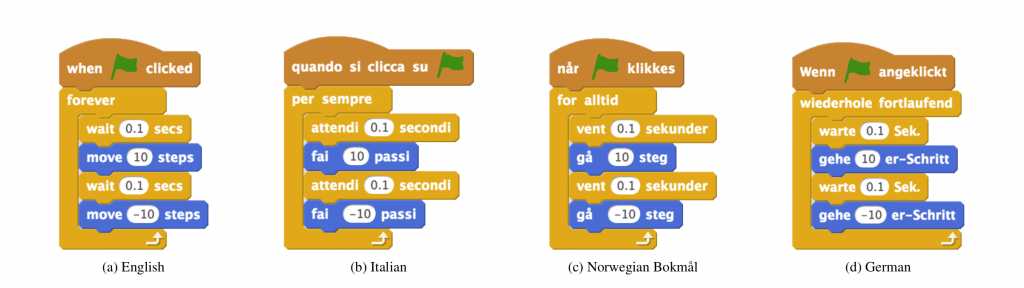
I recently published a paper with Sayamindu Dasgupta that provides evidence in support of the idea that kids can learn to code more quickly when they are programming in their own language. Millions of young people from around the world are learning to code. Often, during their learning experiences, these youth are using visual block-based programming languages like Scratch, App Inventor, and Code.org Studio. In block-based programming languages, coders manipulate visual, snap-together blocks that represent code constructs instead of textual symbols and commands that are found in more traditional programming languages. The textual symbols used in nearly all non-block-based programming languages are drawn from English consider if statements and for loops for common examples. Keywords in block-based languages, on the other hand, are often translated into different human languages. For example, depending on the language preference of the user, an identical set of computing instructions in Scratch can be represented in many different human languages:
Examples of a short piece of Scratch code shown in four different human languages: English, Italian, Norwegian Bokm l, and German.
Although my research with Sayamindu Dasgupta focuses on learning, both Sayamindu and I worked on local language technologies before coming back to academia. As a result, we were both interested in how the increasing translation of programming languages might be making it easier for non-English speaking kids to learn to code. After all, a large body of education research has shown that early-stage education is more effective when instruction is in the language that the learner speaks at home. Based on this research, we hypothesized that children learning to code with block-based programming languages translated to their mother-tongues will have better learning outcomes than children using the blocks in English. We sought to test this hypothesis in Scratch, an informal learning community built around a block-based programming language. We were helped by the fact that Scratch is translated into many languages and has a large number of learners from around the world. To measure learning, we built on some of our our own previous work and looked at learners cumulative block repertoires similar to a code vocabulary. By observing a learner s cumulative block repertoire over time, we can measure how quickly their code vocabulary is growing. Using this data, we compared the rate of growth of cumulative block repertoire between learners from non-English speaking countries using Scratch in English to learners from the same countries using Scratch in their local language. To identify non-English speakers, we considered Scratch users who reported themselves as coming from five primarily non-English speaking countries: Portugal, Italy, Brazil, Germany, and Norway. We chose these five countries because they each have one very widely spoken language that is not English and because Scratch is almost fully translated into that language. Even after controlling for a number of factors like social engagement on the Scratch website, user productivity, and time spent on projects, we found that learners from these countries who use Scratch in their local language have a higher rate of cumulative block repertoire growth than their counterparts using Scratch in English. This faster growth was despite having a lower initial block repertoire. The graph below visualizes our results for two prototypical learners who start with the same initial block repertoire: one learner who uses the English interface, and a second learner who uses their native language.
Summary of the results of our model for two prototypical individuals.
Our results are in line with what theories of education have to say about learning in one s own language. Our findings also represent good news for designers of block-based programming languages who have spent considerable amounts of effort in making their programming languages translatable. It s also good news for the volunteers who have spent many hours translating blocks and user interfaces. Although we find support for our hypothesis, we should stress that our findings are both limited and incomplete. For example, because we focus on estimating the differences between Scratch learners, our comparisons are between kids who all managed to successfully use Scratch. Before Scratch was translated, kids with little working knowledge of English or the Latin script might not have been able to use Scratch at all. Because of translation, many of these children are now able to learn to code.
This blog post and the work that it describes is a collaborative project with Sayamindu Dasgupta. Sayamindu also published a very similar version of the blog post in several places. Our paper is open access and you can read it here. The paper was published in the proceedings of the ACM Learning @ Scale Conference. We also recently gave a talk about this work at the International Communication Association s annual conference. We received support and feedback from members of the Scratch team at MIT (especially Mitch Resnick and Natalie Rusk), as well as from Nathan TeBlunthuis at the University of Washington. Financial support came from the US National Science Foundation.

21 June 2017

Vincent Bernat: IPv4 route lookup on Linux

TL;DR: With its implementation of IPv4 routing tables using LPC-tries, Linux offers good lookup performance (50 ns for a full view) and low memory usage (64 MiB for a full view).
During the lifetime of an IPv4 datagram inside the Linux kernel, one important step is the route lookup for the destination address through the fib_lookup() function. From essential information about the datagram (source and destination IP addresses, interfaces, firewall mark, ), this function should quickly provide a decision. Some possible options are: Since 2.6.39, Linux stores routes into a compressed prefix tree (commit 3630b7c050d9). In the past, a route cache was maintained but it has been removed1 in Linux 3.6.

Route lookup in a trie Looking up a route in a routing table is to find the most specific prefix matching the requested destination. Let s assume the following routing table:
$ ip route show scope global table 100
default via 203.0.113.5 dev out2
192.0.2.0/25
        nexthop via 203.0.113.7  dev out3 weight 1
        nexthop via 203.0.113.9  dev out4 weight 1
192.0.2.47 via 203.0.113.3 dev out1
192.0.2.48 via 203.0.113.3 dev out1
192.0.2.49 via 203.0.113.3 dev out1
192.0.2.50 via 203.0.113.3 dev out1
Here are some examples of lookups and the associated results:
Destination IP Next hop
192.0.2.49 203.0.113.3 via out1
192.0.2.50 203.0.113.3 via out1
192.0.2.51 203.0.113.7 via out3 or 203.0.113.9 via out4 (ECMP)
192.0.2.200 203.0.113.5 via out2
A common structure for route lookup is the trie, a tree structure where each node has its parent as prefix.

Lookup with a simple trie The following trie encodes the previous routing table: Simple routing trie For each node, the prefix is known by its path from the root node and the prefix length is the current depth. A lookup in such a trie is quite simple: at each step, fetch the nth bit of the IP address, where n is the current depth. If it is 0, continue with the first child. Otherwise, continue with the second. If a child is missing, backtrack until a routing entry is found. For example, when looking for 192.0.2.50, we will find the result in the corresponding leaf (at depth 32). However for 192.0.2.51, we will reach 192.0.2.50/31 but there is no second child. Therefore, we backtrack until the 192.0.2.0/25 routing entry. Adding and removing routes is quite easy. From a performance point of view, the lookup is done in constant time relative to the number of routes (due to maximum depth being capped to 32). Quagga is an example of routing software still using this simple approach.

Lookup with a path-compressed trie In the previous example, most nodes only have one child. This leads to a lot of unneeded bitwise comparisons and memory is also wasted on many nodes. To overcome this problem, we can use path compression: each node with only one child is removed (except if it also contains a routing entry). Each remaining node gets a new property telling how many input bits should be skipped. Such a trie is also known as a Patricia trie or a radix tree. Here is the path-compressed version of the previous trie: Patricia trie Since some bits have been ignored, on a match, a final check is executed to ensure all bits from the found entry are matching the input IP address. If not, we must act as if the entry wasn t found (and backtrack to find a matching prefix). The following figure shows two IP addresses matching the same leaf: Lookup in a Patricia trie The reduction on the average depth of the tree compensates the necessity to handle those false positives. The insertion and deletion of a routing entry is still easy enough. Many routing systems are using Patricia trees:

Lookup with a level-compressed trie In addition to path compression, level compression2 detects parts of the trie that are densily populated and replace them with a single node and an associated vector of 2k children. This node will handle k input bits instead of just one. For example, here is a level-compressed version our previous trie: Level-compressed trie Such a trie is called LC-trie or LPC-trie and offers higher lookup performances compared to a radix tree. An heuristic is used to decide how many bits a node should handle. On Linux, if the ratio of non-empty children to all children would be above 50% when the node handles an additional bit, the node gets this additional bit. On the other hand, if the current ratio is below 25%, the node loses the responsibility of one bit. Those values are not tunable. Insertion and deletion becomes more complex but lookup times are also improved.

Implementation in Linux The implementation for IPv4 in Linux exists since 2.6.13 (commit 19baf839ff4a) and is enabled by default since 2.6.39 (commit 3630b7c050d9). Here is the representation of our example routing table in memory3: Memory representation of a trie There are several structures involved: The trie can be retrieved through /proc/net/fib_trie:
$ cat /proc/net/fib_trie
Id 100:
  +-- 0.0.0.0/0 2 0 2
      -- 0.0.0.0
        /0 universe UNICAST
     +-- 192.0.2.0/26 2 0 1
         -- 192.0.2.0
           /25 universe UNICAST
         -- 192.0.2.47
           /32 universe UNICAST
        +-- 192.0.2.48/30 2 0 1
            -- 192.0.2.48
              /32 universe UNICAST
            -- 192.0.2.49
              /32 universe UNICAST
            -- 192.0.2.50
              /32 universe UNICAST
[...]
For internal nodes, the numbers after the prefix are:
  1. the number of bits handled by the node,
  2. the number of full children (they only handle one bit),
  3. the number of empty children.
Moreover, if the kernel was compiled with CONFIG_IP_FIB_TRIE_STATS, some interesting statistics are available in /proc/net/fib_triestat4:
$ cat /proc/net/fib_triestat
Basic info: size of leaf: 48 bytes, size of tnode: 40 bytes.
Id 100:
        Aver depth:     2.33
        Max depth:      3
        Leaves:         6
        Prefixes:       6
        Internal nodes: 3
          2: 3
        Pointers: 12
Null ptrs: 4
Total size: 1  kB
[...]
When a routing table is very dense, a node can handle many bits. For example, a densily populated routing table with 1 million entries packed in a /12 can have one internal node handling 20 bits. In this case, route lookup is essentially reduced to a lookup in a vector. The following graph shows the number of internal nodes used relative to the number of routes for different scenarios (routes extracted from an Internet full view, /32 routes spreaded over 4 different subnets with various densities). When routes are densily packed, the number of internal nodes are quite limited. Internal nodes and null pointers

Performance So how performant is a route lookup? The maximum depth stays low (about 6 for a full view), so a lookup should be quite fast. With the help of a small kernel module, we can accurately benchmark5 the fib_lookup() function: Maximum depth and lookup time The lookup time is loosely tied to the maximum depth. When the routing table is densily populated, the maximum depth is low and the lookup times are fast. When forwarding at 10 Gbps, the time budget for a packet would be about 50 ns. Since this is also the time needed for the route lookup alone in some cases, we wouldn t be able to forward at line rate with only one core. Nonetheless, the results are pretty good and they are expected to scale linearly with the number of cores. The measurements are done with a Linux kernel 4.11 from Debian unstable. I have gathered performance metrics accross kernel versions in Performance progression of IPv4 route lookup on Linux . Another interesting figure is the time it takes to insert all those routes into the kernel. Linux is also quite efficient in this area since you can insert 2 million routes in less than 10 seconds: Insertion time

Memory usage The memory usage is available directly in /proc/net/fib_triestat. The statistic provided doesn t account for the fib_info structures, but you should only have a handful of them (one for each possible next-hop). As you can see on the graph below, the memory use is linear with the number of routes inserted, whatever the shape of the routes is. Memory usage The results are quite good. With only 256 MiB, about 2 million routes can be stored!

Routing rules Unless configured without CONFIG_IP_MULTIPLE_TABLES, Linux supports several routing tables and has a system of configurable rules to select the table to use. These rules can be configured with ip rule. By default, there are three of them:
$ ip rule show
0:      from all lookup local
32766:  from all lookup main
32767:  from all lookup default
Linux will first lookup for a match in the local table. If it doesn t find one, it will lookup in the main table and at last resort, the default table.

Builtin tables The local table contains routes for local delivery:
$ ip route show table local
broadcast 127.0.0.0 dev lo proto kernel scope link src 127.0.0.1
local 127.0.0.0/8 dev lo proto kernel scope host src 127.0.0.1
local 127.0.0.1 dev lo proto kernel scope host src 127.0.0.1
broadcast 127.255.255.255 dev lo proto kernel scope link src 127.0.0.1
broadcast 192.168.117.0 dev eno1 proto kernel scope link src 192.168.117.55
local 192.168.117.55 dev eno1 proto kernel scope host src 192.168.117.55
broadcast 192.168.117.63 dev eno1 proto kernel scope link src 192.168.117.55
This table is populated automatically by the kernel when addresses are configured. Let s look at the three last lines. When the IP address 192.168.117.55 was configured on the eno1 interface, the kernel automatically added the appropriate routes:
  • a route for 192.168.117.55 for local unicast delivery to the IP address,
  • a route for 192.168.117.255 for broadcast delivery to the broadcast address,
  • a route for 192.168.117.0 for broadcast delivery to the network address.
When 127.0.0.1 was configured on the loopback interface, the same kind of routes were added to the local table. However, a loopback address receives a special treatment and the kernel also adds the whole subnet to the local table. As a result, you can ping any IP in 127.0.0.0/8:
$ ping -c1 127.42.42.42
PING 127.42.42.42 (127.42.42.42) 56(84) bytes of data.
64 bytes from 127.42.42.42: icmp_seq=1 ttl=64 time=0.039 ms
--- 127.42.42.42 ping statistics ---
1 packets transmitted, 1 received, 0% packet loss, time 0ms
rtt min/avg/max/mdev = 0.039/0.039/0.039/0.000 ms
The main table usually contains all the other routes:
$ ip route show table main
default via 192.168.117.1 dev eno1 proto static metric 100
192.168.117.0/26 dev eno1 proto kernel scope link src 192.168.117.55 metric 100
The default route has been configured by some DHCP daemon. The connected route (scope link) has been automatically added by the kernel (proto kernel) when configuring an IP address on the eno1 interface. The default table is empty and has little use. It has been kept when the current incarnation of advanced routing has been introduced in Linux 2.1.68 after a first tentative using classes in Linux 2.1.156.

Performance Since Linux 4.1 (commit 0ddcf43d5d4a), when the set of rules is left unmodified, the main and local tables are merged and the lookup is done with this single table (and the default table if not empty). Moreover, since Linux 3.0 (commit f4530fa574df), without specific rules, there is no performance hit when enabling the support for multiple routing tables. However, as soon as you add new rules, some CPU cycles will be spent for each datagram to evaluate them. Here is a couple of graphs demonstrating the impact of routing rules on lookup times: Routing rules impact on performance For some reason, the relation is linear when the number of rules is between 1 and 100 but the slope increases noticeably past this threshold. The second graph highlights the negative impact of the first rule (about 30 ns). A common use of rules is to create virtual routers: interfaces are segregated into domains and when a datagram enters through an interface from domain A, it should use routing table A:
# ip rule add iif vlan457 table 10
# ip rule add iif vlan457 blackhole
# ip rule add iif vlan458 table 20
# ip rule add iif vlan458 blackhole
The blackhole rules may be removed if you are sure there is a default route in each routing table. For example, we add a blackhole default with a high metric to not override a regular default route:
# ip route add blackhole default metric 9999 table 10
# ip route add blackhole default metric 9999 table 20
# ip rule add iif vlan457 table 10
# ip rule add iif vlan458 table 20
To reduce the impact on performance when many interface-specific rules are used, interfaces can be attached to VRF instances and a single rule can be used to select the appropriate table:
# ip link add vrf-A type vrf table 10
# ip link set dev vrf-A up
# ip link add vrf-B type vrf table 20
# ip link set dev vrf-B up
# ip link set dev vlan457 master vrf-A
# ip link set dev vlan458 master vrf-B
# ip rule show
0:      from all lookup local
1000:   from all lookup [l3mdev-table]
32766:  from all lookup main
32767:  from all lookup default
The special l3mdev-table rule was automatically added when configuring the first VRF interface. This rule will select the routing table associated to the VRF owning the input (or output) interface. VRF was introduced in Linux 4.3 (commit 193125dbd8eb), the performance was greatly enhanced in Linux 4.8 (commit 7889681f4a6c) and the special routing rule was also introduced in Linux 4.8 (commit 96c63fa7393d, commit 1aa6c4f6b8cd). You can find more details about it in the kernel documentation.

Conclusion The takeaways from this article are:
  • route lookup times hardly increase with the number of routes,
  • densily packed /32 routes lead to amazingly fast route lookups,
  • memory use is low (128 MiB par million routes),
  • no optimization is done on routing rules.

  1. The routing cache was subject to reasonably easy to launch denial of service attacks. It was also believed to not be efficient for high volume sites like Google but I have first-hand experience it was not the case for moderately high volume sites.
  2. IP-address lookup using LC-tries , IEEE Journal on Selected Areas in Communications, 17(6):1083-1092, June 1999.
  3. For internal nodes, the key_vector structure is embedded into a tnode structure. This structure contains information rarely used during lookup, notably the reference to the parent that is usually not needed for backtracking as Linux keeps the nearest candidate in a variable.
  4. One leaf can contain several routes (struct fib_alias is a list). The number of prefixes can therefore be greater than the number of leaves. The system also keeps statistics about the distribution of the internal nodes relative to the number of bits they handle. In our example, all the three internal nodes are handling 2 bits.
  5. The measurements are done in a virtual machine with one vCPU. The host is an Intel Core i5-4670K running at 3.7 GHz during the experiment (CPU governor was set to performance). The benchmark is single-threaded. It runs a warm-up phase, then executes about 100,000 timed iterations and keeps the median. Timings of individual runs are computed from the TSC.
  6. Fun fact: the documentation of this first tentative of more flexible routing is still available in today s kernel tree and explains the usage of the default class .

20 June 2017

Norbert Preining: TeX Live 2017 hits Debian/unstable

Yesterday I uploaded the first packages of TeX Live 2017 to Debian/unstable, meaning that the new release cycle has started. Debian/stretch was released over the weekend, and this opened up unstable for new developments. The upload comprised the following packages: asymptote, cm-super, context, context-modules, texlive-base, texlive-bin, texlive-extra, texlive-extra, texlive-lang, texworks, xindy.
I mentioned already in a previous post the following changes: The last two changes are described together with other news (easy TEXMF tree management) in the TeX Live release post. These changes more or less sum up the new infra structure developments in TeX Live 2017. Since the last release to unstable (which happened in 2017-01-23) about half a year of package updates have accumulated, below is an approximate list of updates (not split into new/updated, though). Enjoy the brave new world of TeX Live 2017, and please report bugs to the BTS! Updated/new packages:
academicons, achemso, acmart, acro, actuarialangle, actuarialsymbol, adobemapping, alkalami, amiri, animate, aomart, apa6, apxproof, arabluatex, archaeologie, arsclassica, autoaligne, autobreak, autosp, axodraw2, babel, babel-azerbaijani, babel-english, babel-french, babel-indonesian, babel-japanese, babel-malay, babel-ukrainian, bangorexam, baskervaldx, baskervillef, bchart, beamer, beamerswitch, bgteubner, biblatex-abnt, biblatex-anonymous, biblatex-archaeology, biblatex-arthistory-bonn, biblatex-bookinother, biblatex-caspervector, biblatex-cheatsheet, biblatex-chem, biblatex-chicago, biblatex-claves, biblatex-enc, biblatex-fiwi, biblatex-gb7714-2015, biblatex-gost, biblatex-ieee, biblatex-iso690, biblatex-manuscripts-philology, biblatex-morenames, biblatex-nature, biblatex-opcit-booktitle, biblatex-oxref, biblatex-philosophy, biblatex-publist, biblatex-shortfields, biblatex-subseries, bibtexperllibs, bidi, biochemistry-colors, bookcover, boondox, bredzenie, breqn, bxbase, bxcalc, bxdvidriver, bxjalipsum, bxjaprnind, bxjscls, bxnewfont, bxorigcapt, bxpapersize, bxpdfver, cabin, callouts, chemfig, chemformula, chemmacros, chemschemex, childdoc, circuitikz, cje, cjhebrew, cjk-gs-integrate, cmpj, cochineal, combofont, context, conv-xkv, correctmathalign, covington, cquthesis, crimson, crossrefware, csbulletin, csplain, csquotes, css-colors, cstldoc, ctex, currency, cweb, datetime2-french, datetime2-german, datetime2-romanian, datetime2-ukrainian, dehyph-exptl, disser, docsurvey, dox, draftfigure, drawmatrix, dtk, dviinfox, easyformat, ebproof, elements, endheads, enotez, eqnalign, erewhon, eulerpx, expex, exsheets, factura, facture, fancyhdr, fbb, fei, fetamont, fibeamer, fithesis, fixme, fmtcount, fnspe, fontmfizz, fontools, fonts-churchslavonic, fontspec, footnotehyper, forest, gandhi, genealogytree, glossaries, glossaries-extra, gofonts, gotoh, graphics, graphics-def, graphics-pln, grayhints, gregoriotex, gtrlib-largetrees, gzt, halloweenmath, handout, hang, heuristica, hlist, hobby, hvfloat, hyperref, hyperxmp, ifptex, ijsra, japanese-otf-uptex, jlreq, jmlr, jsclasses, jslectureplanner, karnaugh-map, keyfloat, knowledge, komacv, koma-script, kotex-oblivoir, l3, l3build, ladder, langsci, latex, latex2e, latex2man, latex3, latexbug, latexindent, latexmk, latex-mr, leaflet, leipzig, libertine, libertinegc, libertinus, libertinust1math, lion-msc, lni, longdivision, lshort-chinese, ltb2bib, lualatex-math, lualibs, luamesh, luamplib, luaotfload, luapackageloader, luatexja, luatexko, lwarp, make4ht, marginnote, markdown, mathalfa, mathpunctspace, mathtools, mcexam, mcf2graph, media9, minidocument, modular, montserrat, morewrites, mpostinl, mptrees, mucproc, musixtex, mwcls, mweights, nameauth, newpx, newtx, newtxtt, nfssext-cfr, nlctdoc, novel, numspell, nwejm, oberdiek, ocgx2, oplotsymbl, optidef, oscola, overlays, pagecolor, pdflatexpicscale, pdfpages, pdfx, perfectcut, pgfplots, phonenumbers, phonrule, pkuthss, platex, platex-tools, polski, preview, program, proofread, prooftrees, pst-3dplot, pst-barcode, pst-eucl, pst-func, pst-ode, pst-pdf, pst-plot, pstricks, pstricks-add, pst-solides3d, pst-spinner, pst-tools, pst-tree, pst-vehicle, ptex2pdf, ptex-base, ptex-fontmaps, pxbase, pxchfon, pxrubrica, pythonhighlight, quran, ran_toks, reledmac, repere, resphilosophica, revquantum, rputover, rubik, rutitlepage, sansmathfonts, scratch, seealso, sesstime, siunitx, skdoc, songs, spectralsequences, stackengine, stage, sttools, studenthandouts, svg, tcolorbox, tex4ebook, tex4ht, texosquery, texproposal, thaienum, thalie, thesis-ekf, thuthesis, tikz-kalender, tikzmark, tikz-optics, tikz-palattice, tikzpeople, tikzsymbols, titlepic, tl17, tqft, tracklang, tudscr, tugboat-plain, turabian-formatting, txuprcal, typoaid, udesoftec, uhhassignment, ukrainian, ulthese, unamthesis, unfonts-core, unfonts-extra, unicode-math, uplatex, upmethodology, uptex-base, urcls, variablelm, varsfromjobname, visualtikz, xassoccnt, xcharter, xcntperchap, xecjk, xepersian, xetexko, xevlna, xgreek, xsavebox, xsim, ycbook.

18 June 2017

Simon Josefsson: OpenPGP smartcard under GNOME on Debian 9.0 Stretch

I installed Debian 9.0 Stretch on my Lenovo X201 laptop today. Installation went smooth, as usual. GnuPG/SSH with an OpenPGP smartcard I use a YubiKey NEO does not work out of the box with GNOME though. I wrote about how to fix OpenPGP smartcards under GNOME with Debian 8.0 Jessie earlier, and I thought I d do a similar blog post for Debian 9.0 Stretch . The situation is slightly different than before (e.g., GnuPG works better but SSH doesn t) so there is some progress. May I hope that Debian 10.0 Buster gets this right? Pointers to which package in Debian should have a bug report tracking this issue is welcome (or a pointer to an existing bug report). After first login, I attempt to use gpg --card-status to check if GnuPG can talk to the smartcard.
jas@latte:~$ gpg --card-status
gpg: error getting version from 'scdaemon': No SmartCard daemon
gpg: OpenPGP card not available: No SmartCard daemon
jas@latte:~$ 
This fails because scdaemon is not installed. Isn t a smartcard common enough so that this should be installed by default on a GNOME Desktop Debian installation? Anyway, install it as follows.
root@latte:~# apt-get install scdaemon
Then try again.
jas@latte:~$ gpg --card-status
gpg: selecting openpgp failed: No such device
gpg: OpenPGP card not available: No such device
jas@latte:~$ 
I believe scdaemon here attempts to use its internal CCID implementation, and I do not know why it does not work. At this point I often recall that want pcscd installed since I work with smartcards in general.
root@latte:~# apt-get install pcscd
Now gpg --card-status works!
jas@latte:~$ gpg --card-status
Reader ...........: Yubico Yubikey NEO CCID 00 00
Application ID ...: D2760001240102000006017403230000
Version ..........: 2.0
Manufacturer .....: Yubico
Serial number ....: 01740323
Name of cardholder: Simon Josefsson
Language prefs ...: sv
Sex ..............: male
URL of public key : https://josefsson.org/54265e8c.txt
Login data .......: jas
Signature PIN ....: not forced
Key attributes ...: rsa2048 rsa2048 rsa2048
Max. PIN lengths .: 127 127 127
PIN retry counter : 3 3 3
Signature counter : 8358
Signature key ....: 9941 5CE1 905D 0E55 A9F8  8026 860B 7FBB 32F8 119D
      created ....: 2014-06-22 19:19:04
Encryption key....: DC9F 9B7D 8831 692A A852  D95B 9535 162A 78EC D86B
      created ....: 2014-06-22 19:19:20
Authentication key: 2E08 856F 4B22 2148 A40A  3E45 AF66 08D7 36BA 8F9B
      created ....: 2014-06-22 19:19:41
General key info..: sub  rsa2048/860B7FBB32F8119D 2014-06-22 Simon Josefsson 
sec#  rsa3744/0664A76954265E8C  created: 2014-06-22  expires: 2017-09-04
ssb>  rsa2048/860B7FBB32F8119D  created: 2014-06-22  expires: 2017-09-04
                                card-no: 0006 01740323
ssb>  rsa2048/9535162A78ECD86B  created: 2014-06-22  expires: 2017-09-04
                                card-no: 0006 01740323
ssb>  rsa2048/AF6608D736BA8F9B  created: 2014-06-22  expires: 2017-09-04
                                card-no: 0006 01740323
jas@latte:~$ 
Using the key will not work though.
jas@latte:~$ echo foo gpg -a --sign
gpg: no default secret key: No secret key
gpg: signing failed: No secret key
jas@latte:~$ 
This is because the public key and the secret key stub are not available.
jas@latte:~$ gpg --list-keys
jas@latte:~$ gpg --list-secret-keys
jas@latte:~$ 
You need to import the key for this to work. I have some vague memory that gpg --card-status was supposed to do this, but I may be wrong.
jas@latte:~$ gpg --recv-keys 9AA9BDB11BB1B99A21285A330664A76954265E8C
gpg: failed to start the dirmngr '/usr/bin/dirmngr': No such file or directory
gpg: connecting dirmngr at '/run/user/1000/gnupg/S.dirmngr' failed: No such file or directory
gpg: keyserver receive failed: No dirmngr
jas@latte:~$ 
Surprisingly, dirmngr is also not shipped by default so it has to be installed manually.
root@latte:~# apt-get install dirmngr
Below I proceed to trust the clouds to find my key.
jas@latte:~$ gpg --recv-keys 9AA9BDB11BB1B99A21285A330664A76954265E8C
gpg: key 0664A76954265E8C: public key "Simon Josefsson " imported
gpg: no ultimately trusted keys found
gpg: Total number processed: 1
gpg:               imported: 1
jas@latte:~$ 
Now the public key and the secret key stub are available locally.
jas@latte:~$ gpg --list-keys
/home/jas/.gnupg/pubring.kbx
----------------------------
pub   rsa3744 2014-06-22 [SC] [expires: 2017-09-04]
      9AA9BDB11BB1B99A21285A330664A76954265E8C
uid           [ unknown] Simon Josefsson 
sub   rsa2048 2014-06-22 [S] [expires: 2017-09-04]
sub   rsa2048 2014-06-22 [E] [expires: 2017-09-04]
sub   rsa2048 2014-06-22 [A] [expires: 2017-09-04]
jas@latte:~$ gpg --list-secret-keys
/home/jas/.gnupg/pubring.kbx
----------------------------
sec#  rsa3744 2014-06-22 [SC] [expires: 2017-09-04]
      9AA9BDB11BB1B99A21285A330664A76954265E8C
uid           [ unknown] Simon Josefsson 
ssb>  rsa2048 2014-06-22 [S] [expires: 2017-09-04]
ssb>  rsa2048 2014-06-22 [E] [expires: 2017-09-04]
ssb>  rsa2048 2014-06-22 [A] [expires: 2017-09-04]
jas@latte:~$ 
I am now able to sign data with the smartcard, yay!
jas@latte:~$ echo foo gpg -a --sign
-----BEGIN PGP MESSAGE-----
owGbwMvMwMHYxl2/2+iH4FzG01xJDJFu3+XT8vO5OhmNWRgYORhkxRRZZjrGPJwQ
yxe68keDGkwxKxNIJQMXpwBMRJGd/a98NMPJQt6jaoyO9yUVlmS7s7qm+Kjwr53G
uq9wQ+z+/kOdk9w4Q39+SMvc+mEV72kuH9WaW9bVqj80jN77hUbfTn5mffu2/aVL
h/IneTfaOQaukHij/P8A0//Phg/maWbONUjjySrl+a3tP8ll6/oeCd8g/aeTlH79
i0naanjW4bjv9wnvGuN+LPHLmhUc2zvZdyK3xttN/roHvsdX3f53yTAxeInvXZmd
x7W0/hVPX33Y4nT877T/ak4L057IBSavaPVcf4yhglVI8XuGgaTP666Wuslbliy4
5W5eLasbd33Xd/W0hTINznuz0kJ4r1bLHZW9fvjLduMPq5rS2co9tvW8nX9rhZ/D
zycu/QA=
=I8rt
-----END PGP MESSAGE-----
jas@latte:~$ 
Encrypting to myself will not work smoothly though.
jas@latte:~$ echo foo gpg -a --encrypt -r simon@josefsson.org
gpg: 9535162A78ECD86B: There is no assurance this key belongs to the named user
sub  rsa2048/9535162A78ECD86B 2014-06-22 Simon Josefsson 
 Primary key fingerprint: 9AA9 BDB1 1BB1 B99A 2128  5A33 0664 A769 5426 5E8C
      Subkey fingerprint: DC9F 9B7D 8831 692A A852  D95B 9535 162A 78EC D86B
It is NOT certain that the key belongs to the person named
in the user ID.  If you *really* know what you are doing,
you may answer the next question with yes.
Use this key anyway? (y/N) 
gpg: signal Interrupt caught ... exiting
jas@latte:~$ 
The reason is that the newly imported key has unknown trust settings. I update the trust settings on my key to fix this, and encrypting now works without a prompt.
jas@latte:~$ gpg --edit-key 9AA9BDB11BB1B99A21285A330664A76954265E8C
gpg (GnuPG) 2.1.18; Copyright (C) 2017 Free Software Foundation, Inc.
This is free software: you are free to change and redistribute it.
There is NO WARRANTY, to the extent permitted by law.
Secret key is available.
pub  rsa3744/0664A76954265E8C
     created: 2014-06-22  expires: 2017-09-04  usage: SC  
     trust: unknown       validity: unknown
ssb  rsa2048/860B7FBB32F8119D
     created: 2014-06-22  expires: 2017-09-04  usage: S   
     card-no: 0006 01740323
ssb  rsa2048/9535162A78ECD86B
     created: 2014-06-22  expires: 2017-09-04  usage: E   
     card-no: 0006 01740323
ssb  rsa2048/AF6608D736BA8F9B
     created: 2014-06-22  expires: 2017-09-04  usage: A   
     card-no: 0006 01740323
[ unknown] (1). Simon Josefsson 
[ unknown] (2)  Simon Josefsson 
gpg> trust
pub  rsa3744/0664A76954265E8C
     created: 2014-06-22  expires: 2017-09-04  usage: SC  
     trust: unknown       validity: unknown
ssb  rsa2048/860B7FBB32F8119D
     created: 2014-06-22  expires: 2017-09-04  usage: S   
     card-no: 0006 01740323
ssb  rsa2048/9535162A78ECD86B
     created: 2014-06-22  expires: 2017-09-04  usage: E   
     card-no: 0006 01740323
ssb  rsa2048/AF6608D736BA8F9B
     created: 2014-06-22  expires: 2017-09-04  usage: A   
     card-no: 0006 01740323
[ unknown] (1). Simon Josefsson 
[ unknown] (2)  Simon Josefsson 
Please decide how far you trust this user to correctly verify other users' keys
(by looking at passports, checking fingerprints from different sources, etc.)
  1 = I don't know or won't say
  2 = I do NOT trust
  3 = I trust marginally
  4 = I trust fully
  5 = I trust ultimately
  m = back to the main menu
Your decision? 5
Do you really want to set this key to ultimate trust? (y/N) y
pub  rsa3744/0664A76954265E8C
     created: 2014-06-22  expires: 2017-09-04  usage: SC  
     trust: ultimate      validity: unknown
ssb  rsa2048/860B7FBB32F8119D
     created: 2014-06-22  expires: 2017-09-04  usage: S   
     card-no: 0006 01740323
ssb  rsa2048/9535162A78ECD86B
     created: 2014-06-22  expires: 2017-09-04  usage: E   
     card-no: 0006 01740323
ssb  rsa2048/AF6608D736BA8F9B
     created: 2014-06-22  expires: 2017-09-04  usage: A   
     card-no: 0006 01740323
[ unknown] (1). Simon Josefsson 
[ unknown] (2)  Simon Josefsson 
Please note that the shown key validity is not necessarily correct
unless you restart the program.
gpg> quit
jas@latte:~$ echo foo gpg -a --encrypt -r simon@josefsson.org
-----BEGIN PGP MESSAGE-----
hQEMA5U1Fip47NhrAQgArTvAykj/YRhWVuXb6nzeEigtlvKFSmGHmbNkJgF5+r1/
/hWENR72wsb1L0ROaLIjM3iIwNmyBURMiG+xV8ZE03VNbJdORW+S0fO6Ck4FaIj8
iL2/CXyp1obq1xCeYjdPf2nrz/P2Evu69s1K2/0i9y2KOK+0+u9fEGdAge8Gup6y
PWFDFkNj2YiVa383BqJ+kV51tfquw+T4y5MfVWBoHlhm46GgwjIxXiI+uBa655IM
EgwrONcZTbAWSV4/ShhR9ug9AzGIJgpu9x8k2i+yKcBsgAh/+d8v7joUaPRZlGIr
kim217hpA3/VLIFxTTkkm/BO1KWBlblxvVaL3RZDDNI5AVp0SASswqBqT3W5ew+K
nKdQ6UTMhEFe8xddsLjkI9+AzHfiuDCDxnxNgI1haI6obp9eeouGXUKG
=s6kt
-----END PGP MESSAGE-----
jas@latte:~$ 
So everything is fine, isn t it? Alas, not quite.
jas@latte:~$ ssh-add -L
The agent has no identities.
jas@latte:~$ 
Tracking this down, I now realize that GNOME s keyring is used for SSH but GnuPG s gpg-agent is used for GnuPG. GnuPG uses the environment variable GPG_AGENT_INFO to connect to an agent, and SSH uses the SSH_AUTH_SOCK environment variable to find its agent. The filenames used below leak the knowledge that gpg-agent is used for GnuPG but GNOME keyring is used for SSH.
jas@latte:~$ echo $GPG_AGENT_INFO 
/run/user/1000/gnupg/S.gpg-agent:0:1
jas@latte:~$ echo $SSH_AUTH_SOCK 
/run/user/1000/keyring/ssh
jas@latte:~$ 
Here the same recipe as in my previous blog post works. This time GNOME keyring only has to be disabled for SSH. Disabling GNOME keyring is not sufficient, you also need gpg-agent to start with enable-ssh-support. The simplest way to achieve that is to add a line in ~/.gnupg/gpg-agent.conf as follows. When you login, the script /etc/X11/Xsession.d/90gpg-agent will set the environment variables GPG_AGENT_INFO and SSH_AUTH_SOCK. The latter variable is only set if enable-ssh-support is mentioned in the gpg-agent configuration.
jas@latte:~$ mkdir ~/.config/autostart
jas@latte:~$ cp /etc/xdg/autostart/gnome-keyring-ssh.desktop ~/.config/autostart/
jas@latte:~$ echo 'Hidden=true' >> ~/.config/autostart/gnome-keyring-ssh.desktop 
jas@latte:~$ echo enable-ssh-support >> ~/.gnupg/gpg-agent.conf 
jas@latte:~$ 
Log out from GNOME and log in again. Now you should see ssh-add -L working.
jas@latte:~$ ssh-add -L
ssh-rsa AAAAB3NzaC1yc2EAAAADAQABAAABAQDFP+UOTZJ+OXydpmbKmdGOVoJJz8se7lMs139T+TNLryk3EEWF+GqbB4VgzxzrGjwAMSjeQkAMb7Sbn+VpbJf1JDPFBHoYJQmg6CX4kFRaGZT6DHbYjgia59WkdkEYTtB7KPkbFWleo/RZT2u3f8eTedrP7dhSX0azN0lDuu/wBrwedzSV+AiPr10rQaCTp1V8sKbhz5ryOXHQW0Gcps6JraRzMW+ooKFX3lPq0pZa7qL9F6sE4sDFvtOdbRJoZS1b88aZrENGx8KSrcMzARq9UBn1plsEG4/3BRv/BgHHaF+d97by52R0VVyIXpLlkdp1Uk4D9cQptgaH4UAyI1vr cardno:000601740323
jas@latte:~$ 
Topics for further discussion or research include 1) whether scdaemon, dirmngr and/or pcscd should be pre-installed on Debian desktop systems; 2) whether gpg --card-status should attempt to import the public key and secret key stub automatically; 3) why GNOME keyring is used by default for SSH rather than gpg-agent; 4) whether GNOME keyring should support smartcards, or if it is better to always use gpg-agent for GnuPG/SSH, 5) if something could/should be done to automatically infer the trust setting for a secret key. Enjoy!

Eriberto Mota: Como migrar do Debian Jessie para o Stretch

Bem vindo ao Debian Stretch! Ontem, 17 de junho de 2017, o Debian 9 (Stretch) foi lan ado. Eu gostaria de falar sobre alguns procedimentos b sicos e regras para migrar do Debian 8 (Jessie). Passos iniciais
# apt-get update
# apt-get dist-upgrade
Migrando
deb http://ftp.br.debian.org/debian/ stretch main
deb-src http://ftp.br.debian.org/debian/ stretch main
   
deb http://security.debian.org/ stretch/updates main
deb-src http://security.debian.org/ stretch/updates main
# apt-get update
# apt-get dist-upgrade
Caso haja algum problema, leia as mensagens de erro e tente resolver o problema. Resolvendo ou n o tal problema, execute novamente o comando:
# apt-get dist-upgrade
Havendo novos problemas, tente resolver. Busque solu es no Google, se for necess rio. Mas, geralmente, tudo dar certo e voc n o dever ter problemas. Altera es em arquivos de configura o Quando voc estiver migrando, algumas mensagens sobre altera es em arquivos de configura o poder o ser mostradas. Isso poder deixar alguns usu rios pedidos, sem saber o que fazer. N o entre em p nico. Existem duas formas de apresentar essas mensagens: via texto puro em shell ou via janela azul de mensagens. O texto a seguir um exemplo de mensagem em shell:
Ficheiro de configura o '/etc/rsyslog.conf'
 ==> Modificado (por si ou por um script) desde a instala o.
 ==> O distribuidor do pacote lan ou uma vers o atualizada.
 O que deseja fazer? As suas op es s o:
 Y ou I : instalar a vers o do pacote do maintainer
 N ou O : manter a vers o actualmente instalada
 D : mostrar diferen as entre as vers es
 Z : iniciar uma shell para examinar a situa o
 A a o padr o   manter sua vers o atual.
*** rsyslog.conf (Y/I/N/O/D/Z) [padr o=N] ?
A tela a seguir um exemplo de mensagem via janela: Nos dois casos, recomend vel que voc escolha por instalar a nova vers o do arquivo de configura o. Isso porque o novo arquivo de configura o estar totalmente adaptado aos novos servi os instalados e poder ter muitas op es novas ou diferentes. Mas n o se preocupe, pois as suas configura es n o ser o perdidas. Haver um backup das mesmas. Assim, para shell, escolha a op o "Y" e, no caso de janela, escolha a op o "instalar a vers o do mantenedor do pacote". muito importante anotar o nome de cada arquivo modificado. No caso da janela anterior, trata-se do arquivo /etc/samba/smb.conf. No caso do shell o arquivo foi o /etc/rsyslog.conf. Depois de completar a migra o, voc poder ver o novo arquivo de configura o e o original. Caso o novo arquivo tenha sido instalado ap s uma escolha via shell, o arquivo original (o que voc tinha anteriormente) ter o mesmo nome com a extens o .dpkg-old. No caso de escolha via janela, o arquivo ser mantido com a extens o .ucf-old. Nos dois casos, voc poder ver as modifica es feitas e reconfigurar o seu novo arquivo de acordo com as necessidades. Caso voc precise de ajuda para ver as diferen as entre os arquivos, voc poder usar o comando diff para compar -los. Fa a o diff sempre do arquivo novo para o original. como se voc quisesse ver como fazer com o novo arquivo para ficar igual ao original. Exemplo:
# diff -Naur /etc/rsyslog.conf /etc/rsyslog.conf.dpkg-old
Em uma primeira vista, as linhas marcadas com "+" dever o ser adicionadas ao novo arquivo para que se pare a com o anterior, assim como as marcadas com "-" dever o ser suprimidas. Mas cuidado: normal que haja algumas linhas diferentes, pois o arquivo de configura o foi feito para uma nova vers o do servi o ou aplicativo ao qual ele pertence. Assim, altere somente as linhas que realmente s o necess rias e que voc mudou no arquivo anterior. Veja o exemplo:
+daemon.*;mail.*;\
+ news.err;\
+ *.=debug;*.=info;\
+ *.=notice;*.=warn  /dev/xconsole
+*.* @sam
No meu caso, originalmente, eu s alterei a ltima linha. Ent o, no novo arquivo de configura o, s terei interesse em adicionar essa linha. Bem, se foi voc quem fez a configura o anterior, voc saber fazer a coisa certa. Geralmente, n o haver muitas diferen as entre os arquivos. Outra op o para ver as diferen as entre arquivos o comando mcdiff, que poder ser fornecido pelo pacote mc. Exemplo:
# mcdiff /etc/rsyslog.conf /etc/rsyslog.conf.dpkg-old
Problemas com ambientes e aplica es gr ficas poss vel que voc tenha algum problema com o funcionamento de ambientes gr ficos, como Gnome, KDE etc, ou com aplica es como o Mozilla Firefox. Nesses casos, prov vel que o problema seja os arquivos de configura o desses elementos, existentes no diret rio home do usu rio. Para verificar, crie um novo usu rio no Debian e teste com ele. Se tudo der certo, fa a um backup das configura es anteriores (ou renomeie as mesmas) e deixe que a aplica o crie uma configura o nova. Por exemplo, para o Mozilla Firefox, v ao diret rio home do usu rio e, com o Firefox fechado, renomeie o diret rio .mozilla para .mozilla.bak, inicie o Firefox e teste. Est inseguro? Caso voc esteja muito inseguro, instale um Debian 8, com ambiente gr fico e outras coisas, em uma m quina virtual e migre para Debian 9 para testar e aprender. Sugiro VirtualBox como virtualizador. Divirta-se!

14 June 2017

Antoine Beaupr : Alioth moving toward pagure

Since 2003, the Debian project has been running a server called Alioth to host source code version control systems. The server will hit the end of life of the Debian LTS release (Wheezy) next year; that deadline raised some questions regarding the plans for the server over the coming years. Naturally, that led to a discussion regarding possible replacements. In response, the current Alioth maintainer, Alexander Wirt, announced a sprint to migrate to pagure, a free-software "Git-centered forge" written in Python for the Fedora project, which LWN covered last year. Alioth currently runs FusionForge, previously known as GForge, which is the free-software fork of the SourceForge code base when that service closed its source in 2001. Alioth hosts source code repositories, mainly Git and Subversion (SVN) and, like other "forge" sites, also offers forums, issue trackers, and mailing list services. While other alternatives are still being evaluated, a consensus has emerged on a migration plan from FusionForage to a more modern and minimal platform based on pagure.

Why not GitLab? While this may come as a surprise to some who would expect Debian to use the more popular GitLab project, the discussion and decision actually took place a while back. During a lengthy debate last year, Debian contributors discussed the relative merits of different code-hosting platforms, following the initiative of Debian Developer "Pirate" Praveen Arimbrathodiyil to package GitLab for Debian. At that time, Praveen also got a public GitLab instance running for Debian (gitlab.debian.net), which was sponsored by GitLab B.V. the commercial entity behind the GitLab project. The sponsorship was originally offered in 2015 by the GitLab CEO, presumably to counter a possible move to GitHub, as there was a discussion about creating a GitHub Organization for Debian at the time. The deployment of a Debian-specific GitLab instance then raised the question of the overlap with the already existing git.debian.org service, which is backed by Alioth's FusionForge deployment. It then seemed natural that the new GitLab instance would replace Alioth. But when Praveen directly proposed to move to GitLab, Wirt stepped in and explained that a migration plan was already in progress. The plan then was to migrate to a simpler gitolite-based setup, a decision that was apparently made in corridor discussions surrounding the Alioth Git replacement BoF held during Debconf 2015. The first objection raised by Wirt against GitLab was its "huge number of dependencies". Another issue Wirt identified was the "open core / enterprise model", preferring a "real open source system", an opinion which seems shared by other participants on the mailing list. Wirt backed his concerns with an hypothetical example:
Debian needs feature X but it is already in the enterprise version. We make a patch and, for commercial reasons, it never gets merged (they already sell it in the enterprise version). Which means we will have to fork the software and keep those patches forever. Been there done that. For me, that isn't acceptable.
This concern was further deepened when GitLab's Director of Strategic Partnerships, Eliran Mesika, explained the company's stewardship policy that explains how GitLab decides which features end up in the proprietary version. Praveen pointed out that:
[...] basically it boils down to features that they consider important for organizations with less than 100 developers may get accepted. I see that as a red flag for a big community like debian.
Since there are over 600 Debian Developers, the community seems to fall within the needs of "enterprise" users. The features the Debian community may need are, by definition, appropriate only to the "Enterprise Edition" (GitLab EE), the non-free version, and are therefore unlikely to end up in the "Community Edition" (GitLab CE), the free-software version. Interestingly, Mesika asked for clarification on which features were missing, explaining that GitLab is actually open to adding features to GitLab CE. The response from Debian Developer Holger Levsen was categorical: "It's not about a specific patch. Free GitLab and we can talk again." But beyond the practical and ethical concerns, some specific features Debian needs are currently only in GitLab EE. For example, debian.org systems use LDAP for authentication, which would obviously be useful in a GitLab deployment; GitLab CE supports basic LDAP authentication, but advanced features, like group or SSH-key synchronization, are only available in GitLab EE. Wirt also expressed concern about the Contributor License Agreement that GitLab B.V. requires contributors to sign when they send patches, which forces users to allow the release of their code under a non-free license. The debate then went on going through a exhaustive inventory of different free-software alternatives:
  • GitLab, a Ruby-based GitHub replacement, dual-licensed MIT/Commercial
  • Gogs, Go, MIT
  • Gitblit, Java, Apache-licensed
  • Kallithea, in Python, also supports Mercurial, GPLv3
  • and finally, pagure, also written Python, GPLv2
A feature comparison between each project was created in the Debian wiki as well. In the end, however, Praveen gave up on replacing Alioth with GitLab because of the controversy and moved on to support the pagure migration, which resolved the discussion in July 2016. More recently, Wirt admitted in an IRC conversation that "on the technical side I like GitLab a lot more than pagure" and that "as a user, GitLab is much nicer than pagure and it has those nice CI [continuous integration] features". However, as he explained in his blog "GitLab is Opencore, [and] that it is not entirely opensource. I don't think we should use software licensed under such a model for one of our core services" which leaves pagure as the only stable candidate. Other candidates were excluded on technical grounds, according to Wirt: Gogs "doesn't scale well" and a quick security check didn't yield satisfactory results; "Gitblit is Java" and Kallithea doesn't have support for accessing repositories over SSH (although there is a pending pull request to add the feature). In an email interview, Sid Sijbrandij, CEO of GitLab, did say that "we want to make sure that our open source edition can be used by open source projects". He gave examples of features liberated following requests by the community, such as branded login pages for the VLC project and GitLab Pages after popular demand. He stressed that "There are no artificial limits in our open source edition and some organizations use it with more than 20.000 users." So if the concern of the Debian community is that features may be missing from GitLab CE, there is definitely an opening from GitLab to add those features. If, however, the concern is purely ethical, it's hard to see how an agreement could be reached. As Sijbrandij put it:
On the mailinglist it seemed that some Debian maintainers do not agree with our open core business model and demand that there is no proprietary version. We respect that position but we don't think we can compete with the purely proprietary software like GitHub with this model.

Working toward a pagure migration The issue of Alioth maintenance came up again last month when Boyuan Yang asked what would happen to Alioth when support for Debian LTS (Wheezy) ends next year. Wirt brought up the pagure migration proposal and the community tried to make a plan for the migration. One of the issues raised was the question of the non-Git repositories hosted on Alioth, as pagure, like GitLab, only supports Git. Indeed, Ben Hutchings calculated that while 90% (\~19,000) of the repositories currently on Alioth are Git, there are 2,400 SVN repositories and a handful of Mercurial, Bazaar (bzr), Darcs, Arch, and even CVS repositories. As part of an informal survey, however, most packaging teams explained they either had already migrated away from SVN to Git or were in the process of doing so. The largest CVS user, the web site team, also explained it was progressively migrating to Git. Mattia Rizzolo then proposed that older repository services like SVN could continue running even if FusionForge goes down, as FusionForge is, after all, just a web interface to manage those back-end services. Repository creation would be disabled, but older repositories would stay operational until they migrate to Git. This would, effectively, mean the end of non-Git repository support for new projects in the Debian community, at least officially. Another issue is the creation of a Debian package for pagure. Ironically, while Praveen and other Debian maintainers have been working for 5 years to package GitLab for Debian, pagure isn't packaged yet. Antonio Terceiro, another Debian Developer, explained this isn't actually a large problem for debian.org services: "note that DSA [Debian System Administrator team] does not need/want the service software itself packaged, only its dependencies". Indeed, for Debian-specific code bases like ci.debian.net or tracker.debian.org, it may not make sense to have the overhead of maintaining Debian packages since those tools have limited use outside of the Debian project directly. While Debian derivatives and other distributions could reuse them, what usually happens is that other distributions roll their own software, like Ubuntu did with the Launchpad project. Still, Paul Wise, a member of the DSA team, reasoned that it was better, in the long term, to have Debian packages for debian.org services:
Personally I'm leaning towards the feeling that all configuration, code and dependencies for Debian services should be packaged and subjected to the usual Debian QA activities but I acknowledge that the current archive setup (testing migration plus backporting etc) doesn't necessarily make this easy.
Wise did say that "DSA doesn't have any hard rules/policy written down, just evaluation on a case-by-case basis" which probably means that pagure packaging will not be a blocker for deployment. The last pending issue is the question of the mailing lists hosted on Alioth, as pagure doesn't offer mailing list management (nor does GitLab). In fact, there are three different mailing list services for the Debian project: Wirt, with his "list-master hat" on, explained that the main mailing list service is "not really suited as a self-service" and expressed concern at the idea of migrating the large number mailing lists hosted on Alioth. Indeed, there are around 1,400 lists on Alioth while the main service has a set of 300 lists selected by the list masters. No solution for those mailing lists was found at the time of this writing. In the end, it seems like the Debian project has chosen pagure, the simpler, less featureful, but also less controversial, solution and will use the same hosting software as their fellow Linux distribution, Fedora. Wirt is also considering using FreeIPA for account management on top of pagure. The plan is to migrate away from FusionForge one bit at a time, and pagure is the solution for the first step: the Git repositories. Lists, other repositories, and additional features of FusionForge will be dealt with later on, but Wirt expects a plan to come out of the upcoming sprint. It will also be interesting to see how the interoperability promises of pagure will play out in the Debian world. Even though the federation features of pagure are still at the early stages, one can already clone issues and pull requests as Git repositories, which allows for a crude federation mechanism. In any case, given the long history and the wide variety of workflows in the Debian project, it is unlikely that a single tool will solve all problems. Alioth itself has significant overlap with other Debian services; not only does it handle mailing lists and forums, but it also has its own issue tracker that overlaps with the Debian bug tracking system (BTS). This is just the way things are in Debian: it is an old project with lots of moving part. As Jonathan Dowland put it: "The nature of the project is loosely-coupled, some redundancy, lots of legacy cruft, and sadly more than one way to do it." Hopefully, pagure will not become part of that "legacy redundant cruft". But at this point, the focus is on keeping the services running in a simpler, more maintainable way. The discussions between Debian and GitLab are still going on as we speak, but given how controversial the "open core" model used by GitLab is for the Debian community, pagure does seem like a more logical alternative.
Note: this article first appeared in the Linux Weekly News.

12 June 2017

Sven Hoexter: UEFI PXE preseeded Debian installation on HPE DL120

We bought a bunch of very cheap low end HPE DL120 server. Enough to warrant a completely automated installation setup. Shouldn't be that much of a deal, right? Get dnsmasq up and running, feed it a preseed.cfg and be done with it. In practise it took us more hours then we expected. Setting up the hardware Our hosts are equipped with an additional 10G dual port NIC and we'd like to use this NIC for PXE booting. That's possible, but it requires you to switch to UEFI boot. Actually it enables you to boot from any available NIC. Setting up dnsmasq We decided to just use the packaged debian-installer from jessie and do some ugly things like overwritting files in /usr/lib via ansible later on. So first of all install debian-installer-8-netboot-amd64 and dnsmasq, then enroll our additional config for dnsmasq, ours looks like this:
domain=int.foobar.example
dhcp-range=192.168.0.240,192.168.0.242,255.255.255.0,1h
dhcp-boot=bootnetx64.efi
pxe-service=X86-64_EFI, "Boot UEFI PXE-64", bootnetx64.efi
enable-tftp
tftp-root=/usr/lib/debian-installer/images/8/amd64/text
dhcp-option=3,192.168.0.1
dhcp-host=00:c0:ff:ee:00:01,192.168.0.123,foobar-01
Now you've to link /usr/lib/debian-installer/images/8/amd64/text/bootnetx64.efi to /usr/lib/debian-installer/images/8/amd64/text/debian-installer/amd64/bootnetx64.efi. That got us of the ground and we had a working UEFI PXE boot that got us into debian-installer. Feeding d-i the preseed file Next we added some grub.cfg settings and parameterized some basic stuff to be handed over to d-i via the kernel command line. You'll find the correct grub.cfg in /usr/lib/debian-installer/images/8/amd64/text/debian-installer/amd64/grub/grub.cfg. We added the following two lines to automate the start of the installer:
set default="0"
set timeout=5
and our kernel command line looks like this:
 linux    /debian-installer/amd64/linux vga=788 --- auto=true interface=eth1 netcfg/dhcp_timeout=60 netcfg/choose_interface=eth1 priority=critical preseed/url=tftp://192.168.0.2/preseed.cfg quiet
Important points: preseeed.cfg, GPT and ESP One of the most painful points was the fight to find out the correct preseed values to install with GPT to create a ESP (EFI system partition) and use LVM for /. Relevant settings are:
# auto method must be lvm
d-i partman-auto/method string lvm
d-i partman-lvm/device_remove_lvm boolean true
d-i partman-md/device_remove_md boolean true
d-i partman-lvm/confirm boolean true
d-i partman-lvm/confirm_nooverwrite boolean true
d-i partman-basicfilesystems/no_swap boolean false
# Keep that one set to true so we end up with a UEFI enabled
# system. If set to false, /var/lib/partman/uefi_ignore will be touched
d-i partman-efi/non_efi_system boolean true
# enforce usage of GPT - a must have to use EFI!
d-i partman-basicfilesystems/choose_label string gpt
d-i partman-basicfilesystems/default_label string gpt
d-i partman-partitioning/choose_label string gpt
d-i partman-partitioning/default_label string gpt
d-i partman/choose_label string gpt
d-i partman/default_label string gpt
d-i partman-auto/choose_recipe select boot-root-all
d-i partman-auto/expert_recipe string \
boot-root-all :: \
538 538 1075 free \
$iflabel  gpt   \
$reusemethod    \
method  efi   \
format    \
. \
128 512 256 ext2 \
$defaultignore    \
method  format   format    \
use_filesystem    filesystem  ext2   \
mountpoint  /boot   \
. \
1024 4096 15360 ext4 \
$lvmok    \
method  format   format    \
use_filesystem    filesystem  ext4   \
mountpoint  /   \
. \
1024 4096 15360 ext4 \
$lvmok    \
method  format   format    \
use_filesystem    filesystem  ext4   \
mountpoint  /var   \
. \
1024 1024 -1 ext4 \
$lvmok    \
method  format   format    \
use_filesystem    filesystem  ext4   \
mountpoint  /var/lib   \
.
# This makes partman automatically partition without confirmation, provided
# that you told it what to do using one of the methods above.
d-i partman-partitioning/confirm_write_new_label boolean true
d-i partman/choose_partition select finish
d-i partman-md/confirm boolean true
d-i partman/confirm boolean true
d-i partman/confirm_nooverwrite boolean true
# This is fairly safe to set, it makes grub install automatically to the MBR
# if no other operating system is detected on the machine.
d-i grub-installer/only_debian boolean true
d-i grub-installer/with_other_os boolean true
d-i grub-installer/bootdev  string /dev/sda
I hope that helps to ease the processes to setup automated UEFI PXE installations for some other people out there still dealing with bare metal systems. Some settings took us some time to figure out, for example d-i partman-efi/non_efi_system boolean true required some searching on codesearch.d.n (amazing ressource if you're writing preseed files and need to find the correct templates) and reading scripts on git.d.o where you'll find the source for partman-* and grub-installer. Kudos Thanks especially to P.P. and M.K. to figure out all those details.

Petter Reinholdtsen: Updated sales number for my Free Culture paper editions

It is pleasing to see that the work we put down in publishing new editions of the classic Free Culture book by the founder of the Creative Commons movement, Lawrence Lessig, is still being appreciated. I had a look at the latest sales numbers for the paper edition today. Not too impressive, but happy to see some buyers still exist. All the revenue from the books is sent to the Creative Commons Corporation, and they receive the largest cut if you buy directly from Lulu. Most books are sold via Amazon, with Ingram second and only a small fraction directly from Lulu. The ebook edition is available for free from Github.
Title / languageQuantity
2016 jan-jun2016 jul-dec2017 jan-may
Culture Libre / French 3 6 15
Fri kultur / Norwegian 7 1 0
Free Culture / English 14 27 16
Total 24 34 31
A bit sad to see the low sales number on the Norwegian edition, and a bit surprising the English edition still selling so well. If you would like to translate and publish the book in your native language, I would be happy to help make it happen. Please get in touch.

Eriberto Mota: Debian Developers living in South America

Well, I made this map using data from http://db.debian.org. As an example, currently, there are 27 Brazilian DDs. However, there are 23 DDs living in Brazil.

8 June 2017

Norbert Preining: Running in the Kanazawa hills

Sometimes I needed a short break from work, and usually I go a bit running. Normally I run between five and ten km, just around our flat. But yesterday I somehow thought it might be a good idea to run through the hills near by. I usually drive up there to a climbing spot or a cafe, so it will for sure not be that long. Well, my estimation was wrong
Turned out to be 20km and quite a trip up and down, in fact 560mH running up wasn t what I could actually do, so I walked the steeper parts. Due to the permanent rain the views weren t that great, but one gets a feeling how far it is back to town. I used my new fenix 5x for the run (was helpful with the built-in map, report later), so I got very detailed data from Garmin Connect. Not that I really understand what it is all for, but Garmin told me that I am overtraining and that I am not a good runner (due to vertical oscillation etc). I guess there is a whole lot to learn and improve. Anyway, I made it back alive, and the first thing I needed was loads of water to drink
6 June 2017

Gunnar Wolf: Made with Creative Commons: Starting a translation project

Dear Lazyweb, About a week ago, I learnt about the release of an interesting book by the fine people at Creative Commons: Made with Creative Commons. The book itself is, of course, CC BY-SA-licensed. I downloaded it and started reading right away. Some minutes later, I ordered a dead-tree copy, which arrived a couple of days ago. (I'm linking to the publisher's page, but bought it from Amazon M xico... Shipping it from Denmark would not have been as cheap and fast, I guess). Anyway, given my workplace, given the community I know, given I know something like this is much needed... I will start a Spanish translation of the content. There are at least two other people interested in participating, and I haven't yet publicized my intentions (this is the first public statement about it). So, dear Lazyweb: What I need is a good framework for doing this. I started by creating a Git repository, and we were discussing to translate to Markdown (to later format according to the desired output) but then I thought... If we want the translation to be updateable, and to be able to properly accept other people's work, maybe a better format is warranted? So, my current idea is to create a Markdown version for the English original, and find a way to shoehorn^Wseparate it by paragraphs and feed it to Gettext, which is the best translation framework I have used (but is meant for code translation, not for full-text)... Dear lazyweb: What tools do you recommend me to use? Quite important to me: Are they Free tools? Are they easy to use by third-parties, maybe incorporating work via Git? Or, at least, via a Web front-end that allows me as a project lead to review and approve/fix/reject strings? Thanks, lazyweb!

3 June 2017

Holger Levsen: 20170603-stretch

Stretch So I have done my (hopefully) last uploads for Stretch (r0) today and want to share how pleased I've been with this release cycle. It was the smoothest freeze I've witnessed so far, I really liked the clear and documented rules from the Release Team, their regular release infos on d-d-a and publically logged IRC meetings plus the easy-to-remember URL http://release.debian.org (nicely redirecting to https), where one can easily find those relevant dates, emails and rules. Plus, useful bug views via https://udd.debian.org. There is more, but to me the last (and probably most important) factor to all this has been that most of this actually hasn't been new in this release cycle, but rather that by now a significant number of developers are aware of this and mostly have acted accordingly and communicated this further. Kudos and many thanks to the Release team, you have been amazing! Many thanks also to everyone who has contributed nicely to those 24838 source packages! You rock as well. And then I'll also like the upcoming quieter two weeks, also to prepare the Debian Edu Stretch announcement :) And then, finally, I really really look forward to the next development cycle and being able to meaningful start working on reproducible Buster!

Next.

Previous.