Search Results: "tim"

26 September 2011

Benjamin Mako Hill: Science as Dance

The following selected bibliography showcases only a small portion of the academics who have demonstrated that while it may take two to tango, it only takes one to give a scholarly paper a silly cliche title:
Briganti, G. 2006. It Takes Two to Tango-The CH-53K is arguably the first serious US attempt to open the defense cooperation NATO has been seeking. Rotor and Wing 40(7):60 63.
Coehran, J. 2006. It Takes Two to Tango: Problems with Community Property Ownership of Copyrights and Patents in Texas. Baylor L. Rev. 58:407.
Diamond, M.J. 1984. It takes two to tango: Some thoughts on the neglected importance of the hypnotist in an interactive hypnotherapeutic relationship. American Journal of Clinical Hypnosis 27(1):3 13.
Kraack, A. 1999. It takes two to tango: The place of women in the construction of hegemonic masculinity in a student pub. Masculinities in Aotearoa/New Zealand 153 165.
Lackey, J. 2006. It takes two to tango: beyond reductionism and non-reductionism in the epistemology of testimony. The Epistemology of testimony 160 89.
Miller, C.A. 1998. It takes two to tango: understanding and acquiring symmetrical verbs. Journal of psycholinguistic research 27(3):385 411.
Modiano, N. 1984. It Takes Two to Tango, or Transmission is a Two-Way Street. Anthropology & Education Quarterly 15(4):326 330.
Ott, M.A. 2008. It Takes Two to Tango: Ethical Issues Raised by the Study of Topical Microbicides with Adolescent Dyads. The Journal of adolescent health: official publication of the Society for Adolescent Medicine 42(6):541.
Rubenstein, J.H. 2009. It takes two to tango: dance steps for diagnosing Barrett s esophagus. Respiratory Care Clinics of North America 69(6):1011 1013.
Settersten Jr, R.A. 2009. It takes two to tango: the (un) easy dance between life-course sociology and life-span psychology. Advances in Life Course Research 14(1-2):74 81.
Skaerbaek, E. 2004. It takes two to tango on knowledge production and intersubjectivity. NORA: Nordic Journal of Women's Studies 12(2):93 101.
Spencer, M. 2005. It takes two to tango. Journal of Business Strategy 26(5):62 68.
Vanaerschot, G. 2004. It Takes Two to Tango: On Empathy With Fragile Processes. Psychotherapy: Theory, Research, Practice, Training 41(2):112.
Viskochil, D.H. 2003. It takes two to tango: mast cell and Schwann cell interactions in neurofibromas. Journal of Clinical Investigation 112(12):1791 1792.
Weiner, A. 2001. It Takes Two to Tango:: Information, Metabolism, and the Origins of Life. Cell 105(3):307 308.
Wittman, M.L. 1990. It Takes Two to Tango: Your Simplistic System for Self-survival. Witmark Pub. Co.
There are also a few hundred groups who have demonstrated that larger groups can so as well.

Biella Coleman: Now for the harder photo request: Free Dmitry!

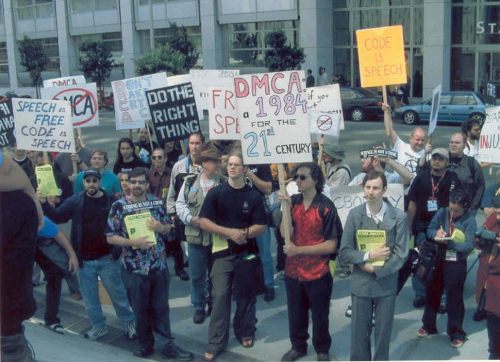
Free Dmitry! So one my favorite fieldwork photos is the one above and I would love to include it in my book but I have no idea where I got it from much less who took it. The photo was taken during a San Francisco protest against the DMCA, and more urgently at the time, also calling for the release of Dimitry Sklyrov (and we were all listening to Richard Stallman who was giving a small speech and I am on the right hand side of the photo, furiously scribbling notes) I am looking for a high quality photo from one of the many Dmitry Sklyarov protests that were held in San Francisco or San Jose a photo that is either under CC license or given to me with formal permission to publish (I have forms to get official permissions). As I mentioned in my previous post, the book will be published with Princeton University Press with a CC license.

Biella Coleman: Photos for Coding Freedom

So my first book, Coding Freedom: The Ethics and Aesthetics of Hacking is mostly sort of done. All the arguments are in place and I am doing the final, very annoying, seemingly endless work of adding a few final citations, hunting for permissions, and tweaking about 10 paragraphs that I feel can be slightly improved (down from about 20 last week). The book is based on the dissertation but re-framed significantly with lots of new material and best of all a lot of the cruft has been zapped away, I think. The book will include two published pieces, although slightly revised. One of them is one of my all time favorite pieces on the hacker conference (which is the least academic/jargony of the peer reviewed articles). I thought it might be fun to change some of the photos for my book: so if you have some awesome, high quality photos that exude the joy of conferencing from past Debconfs or ANY hacker conference (preferably with computers in the background) please share. I am open to anything although I am looking for a high quality/sharp photo of people hacking away in the hack lab. The photo I have is good but I would like one with better lighting/sharper focus. The book will be published under a CC license (the most restrictive one, but heck as a junior scholar, I took what I could get and it is the first book that Princeton University Press is releasing under such a license). If you hold the copyright, I will need more official permission, otherwise, if it is under a CC or copyleft license, I will be adding the correct attribution/notice in the book.

25 September 2011

Gregor Herrmann: RC bugs 2011/38

quick overview over my RC bug activities during the last week: random notes:

Christian Perrier: [life] [running] Berlin marathon: I ran in the world record race...

...but I didn't break it myself. Still, Patrick Makau broke today Haile Gebresselassie's world record by 21 seconds, lowering it down to 2h03'38". This is an impressive performance, considering the quite "high" temporature today in Berlain (about 23 C). My own race was quite good, though not perfect. My goal was targeting 3h36', to break my own record (3h40'24"). However, my preparation was complicated by an hurted ankle in early August, then a very shaky September month at work with a lot of stress and work days up to 12 hours. Not the best way to prepare a marathon. Last two weeks were fairly good wrt running, with an half-marathon run in 1h43' two weeks ago. Still, we complicated this by speding a few days to do sightseeing in Berlin (you can't really be in such a nice city and not try to see it!). So, that means a lot of walking here or there, with museum visits and quite long days. Again, not the best way to prepare a marathon..:-) Still, my watch was set on a 5'07"/km pace. My goal was starting like this, work to avoid going faster over the first 20K ad see what happens. At the beginning, it worked fairly well. Contrary to Paris marathon, Berlin's start in Strasse des 17. Juni is very cool for the first 3 kilometers with an incredibly wide avenue, whilst Paris marathon shrinks in Rue de Rivoli after km 1.5, making it fairly complicated to pass. Also, runners in Germany are much more respectful of running principles and very few register for starting blocks that are nont their real performance (like registering for 3h30 while your best time if 4h). So less passing and a much more costant pace. Up to km15 in Kreuzbeg, everything went well, though the heat was growing, which already made me suspect that I would not make it (0-5K in 25'31", 5-10K in 25'54", 10-15K in 25'55") . From this point, I had to "fight" a bit more to keep the pace...and a few streets without shade had their effect. Moreover, I already had to refill my belt bottle after drinking 0,8l for the first 17KM. The pace thus went down to about 5'10-5'15" and I reached half-marathon in 1h50'28", already not really on time for less than 3h40). 15-20K in 26'41", including a bottle refill. Then 20-25 in 25'44", so small drop after all. However, the wall hit me on km28. For the first time in my marathon life, I think I considered abandoning because I was feeling without any energy and still 1/3 of a marathon to run. Well, that was only the 30K wall which they apparently moved 2K earlier..:-) After calming myself down, I decided to do what has to be done in such case: refill with energy. So long for the gels I had and particularly the hyper-glucidic "Coup de Fouet". Finally, around KM30, I found more motivation to complete the race. Anyway, we were then very very far away, at the end of Hohenzollendamm, so the only option was to come back anyway! Despite all this, I kept a very decent pace, after all: 26'45" for 25-30K. Each kilometer, my watch was beeping to remind me that I was not crawling on the street but more keeping about 5'20". Still, the last kilometers on these giants avenues (oh, endless Leipziger Strasse after Postdamer Platz!) needed a lot of motivation to be completed. It's indeed only at Gendarmenmarkt that I finally could be reliefed and know that I would not only finish, but also do it in a very decent time. 30-35K in 27'43", 35-40K in 27'38". Then we turned in Unter den Linden and, even better, at KM41, my beloved Elizabeth was there yelling. This, plus Brandenburder Tor not so far away....I could then "sprint" at 5'08" for the last kilometer. Finally, this marathon (my 6th official) was completed in 3h44'50", which is my second best. I'm really happy with this result, finally. OK, I didn't break my record as I was intending to (I think I can go down to 3h35 with a normal preparation and good conditions), but the way I managed the difficulty was finally good. So, now, let's prepare the next goal, a 67km night race in November, the longest distance I have ever run. Yet another different thing to prepare. And what about Berlin in all this? Well, in short, that city is *great*. What could I tell more?

Tanguy Ortolo: Increase your productivity with two spaces

Shell prompts are often designed to provide a reminder of useful context information such user name, host and current directory:
PS1="\u@\h:\w\$"
tanguy@muscat:~/public_html$
Such a prompt is sufficient to serve its original purpose, but it can be enhances in at least one useful way. Sometimes you have to copy the path of the current directory: with this prompt, it means selecting it by precisely dragging the mouse over it. Well, by adding spaces around the current directory you can become able to select it with a simple double click:
PS1="\u@\h: \w \$"
tanguy@muscat: ~/public_html $
Indeed, with such a prompt, you can now roughly point to the path, double click, and let your terminal emulator's word detection feature select the whole path for you. This simple modification may save you several tenths of seconds!

24 September 2011

Sylvain Beucler: Smooth lighting

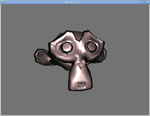
phong After some restless hours of debugging, here's Phong lighting :)
http://en.wikibooks.org/wiki/GLSL_Programming/GLUT/Smooth_Specular_Highlights
The code can be optimized, but should give you a clear understanding on how to make smooth OpenGL lighting. And you can admire the stunning results with a mere basic material and one lamp!

Biella Coleman: Hack Week On the Media

So much reporting on hacking is . so bad (no surprise to readers here). Worse is that term term was bandied out constantly during the News of the World Scandal. In contrast to this historical tradition, On the Media has curated a stellar Hack Week that provides depth, breath, and nuance; the producer of the show, Alex Goldman, poured an enormous amount of time, labor, and thought in compiling a rich set of materials to get at the term hackers, the many facets of hacking (from phreaking to hardware hacking) and best of all, interviewed the fantastic Marcia Hoffman from the EFF on one of the laws, the Computer and Fraud Abuse Act, whose massiveness (and vagueness) has the potential to do a lot of damage and which is often wielded against hackers (and many non-hackers as well). There is also an audio section on the term hacker, which I myself might have done slightly differently, emphasizing, that alongside the MIT hacker (covered so well by Steven Levy) phone phreaking (only called as such in 1973 but well and alive before then) fed into a transgressive tradition that was not simply about malicious hacking nor about the media portrayals that started to explode in the 1980s. The interview gets at the fact that there are differences and hackers can be quite sectarian but I might have pushed this fact a little further. All in all and after the ad nauseum use and abuse of the term hacking during the News of the World scandal (and its overabuse with Anonymous), this collection is the perfect antidote.

Biella Coleman: On Leaving NYU/NYC for Montreal/McGill

funny-pictures-cat-is-canadian Despite being on sabbatical last academic year, life was hectic and chaotic leaving me with next to no time to write entries here. Anonymous, which I had worked on for a few years, exploded. I was excommunicated from my house (due to a flood/something likely mold making be very sick) and had to commute to Princeton from the far reaches of Manhattan where I crashed at a friends house for 5 months, while fighting my landlords. I then decided to go on a job hunt primarily as I did not know what would happen with my housing situation in NYC but I was also pursuing some interesting opportunities. Though the housing issue was eventually resolved, in May a rare and enticing opportunity arose. Come January 2012 I will be joining the Art History and Communication Department at McGill University as the Wolfe Chair in Scientific and Technological Literacy. The decision to leave MCC NYU was torturous. The faculty is stellar. The graduate students are top notch and cream of the crop. And the digital media faculty is a force of nature, perhaps one of the deepest and most dynamic departments when it comes to the study of digital media. They also know how to treat their junior faculty right, which made it a place I respected and am deeply indebted to. But this type of opportunity is rare and it helped that NYC as wonderful as it is, is not my cup of tea. I wanted to eventually settle in one of the large Canadian cities, and Montreal was on the top of my list. I get to join one of the best universities in the world and a department whose work on digital media, STS, and politics converges with much of my own. The position provides resources, time, and room to cultivate scholarly work, help build a program of some sort in Science Technology Studies at McGill, and also engage with the public about the ethics and politics of science and technology. I will be teaching a class to joint BA/BS majors on scientific and technological controversies, a topic close to my heart. I also hope to create an open courseware website for my hacker course, which I will teach sometime in the 2012-2013 academic year. It is all that I can ask for, well, except for the weather. I would be lying if I did not admit that the winter scares the heck out of me I know some days I will feel just like this . lolcat4823558

22 September 2011

Axel Beckert: Emacs Macros: Repeat on Steroids

vi users have their . (dot) redo command for repeating the last command. The article Repeating Commands in Emacs in Mickey Petersen s blog Mastering Emacs explained Emacs equivalent for that, namely the command repeat, by default bound to C-x z. I though seldomly use it as I mostly have to repeat a chain of commands. What I use are so called Keyboard Macros. For example for the CVE-2011-3192 vulnerability in Apache I added a line like Include /etc/apache2/sites-common/CVE-2011-3192.conf to all VirtualHosts. So I started Emacs with all the relevant files: grep CVE-2011-3192 -l /etc/apache2/sites-available/*[^~] xargs emacs & To remove those Include lines again M-x flush-lines is probably the easiest way in Emacs. So for every file I had to call flush-lines with always the same parameter, save the buffer and then close the file or in Emacsish kill the buffer. So while working on the first file I recorded my doing as a keyboard macro:
C-x (
Start recording
M-x flush-lines<Enter>CVE-2011-3192<Enter>
flush all lines which contain the string CVE-2011-3192
C-x C-s
save the current buffer
C-x C-k<Enter>
kill the current buffer, i.e. close the file
C-x )
Stop recording
Then I just had to call the saved macro with C-x e. It flushed all lines, saved the changes and switched to the next remaining file by closing the current file with three key-strokes. And to make it even easier, from the second occasion on I only had to press e to call the macro directly again. So I just pressed e for a bunch of time and had all files edited. (In this case I used git diff afterwards to check that I didn t wreck anything by half-automating my editing. :-) Of course there are other ways to do this, too, e.g. use sed or so, but I still think it s a neat example for showing the power of keyboard macros in Emacs. More things you can do with Emacs Keyboard Macros are described in the EmacsWiki entry Keyboard Macros. And if you still miss vi s . command in Emacs, you can use the dot-mode, an Emacs mode currently maintained by Robert Wyrick which more or less automatically defines keyboard macros and lets you call them with C-..

21 September 2011

Ian Wienand: Exploring $ORIGIN

Anyone who works with building something with a few libraries will quickly become familiar with rpath's; that is the ability to store a path inside a binary for finding dependencies at runtime. Slightly less well known is that the dynamic linker provides some options for this path specification; one in particular is a path with the special variable $ORIGIN. ld.so man page has the following to say about the an $ORIGIN appearing in the rpath:
  ld.so understands the string $ORIGIN (or equivalently $ ORIGIN )
  in  an  rpath specification to mean the directory containing the
  application  executable.  Thus,  an   application   located   in
  somedir/app   could   be  compiled  with  gcc  -Wl,-rpath,'$ORI 
  GIN/../lib' so that it finds an  associated  shared  library  in
  somedir/lib  no matter where somedir is located in the directory
  hierarchy.
  
As a way of a small example, consider the following:
$ cat Makefile
main: main.c lib/libfoo.so
	gcc -g -Wall -o main -Wl,-rpath='$$ORIGIN/lib' -L ./lib -lfoo main.c
lib/libfoo.so: lib/foo.c
	gcc -g -Wall -fPIC -shared -o lib/libfoo.so lib/foo.c
$ cat main.c
void function(void);
int main(void)
 
   function();
   return 0;
 
$ cat lib/foo.c
#include <stdio.h>
void function(void)
 
   printf("called!\n");
 
$ make
gcc -g -Wall -fPIC -shared -o lib/libfoo.so lib/foo.c
gcc -g -Wall -o main -Wl,-rpath='$ORIGIN/lib' -L ./lib -lfoo main.c
$ ./main
called!
Now, wherever you should choose to locate main, as long as the library is in the right relative location it will be found correctly. If you are wondering how this works, examining the back-trace from the linker function that expands it is helpful:
$ gdb ./main
(gdb) break _dl_get_origin
Function "_dl_get_origin" not defined.
Make breakpoint pending on future shared library load? (y or [n]) y
Breakpoint 1 (_dl_get_origin) pending.
(gdb) r
Starting program: /tmp/test-origin/main 
Breakpoint 1, _dl_get_origin () at ../sysdeps/unix/sysv/linux/dl-origin.c:37
37	../sysdeps/unix/sysv/linux/dl-origin.c: No such file or directory.
	in ../sysdeps/unix/sysv/linux/dl-origin.c
(gdb) bt
#0  _dl_get_origin () at ../sysdeps/unix/sysv/linux/dl-origin.c:37
#1  0x00007ffff7de61f4 in expand_dynamic_string_token (l=0x7ffff7ffe128, 
    s=<value optimized out>) at dl-load.c:331
#2  0x00007ffff7de62ea in decompose_rpath (sps=0x7ffff7ffe440, 
    rpath=0xffffffc0 <Address 0xffffffc0 out of bounds>, l=0x0, 
    what=0x7ffff7df780a "RPATH") at dl-load.c:554
#3  0x00007ffff7de7051 in _dl_init_paths (llp=0x0) at dl-load.c:722
#4  0x00007ffff7de2124 in dl_main (phdr=0x7ffff7ffe6b8, 
    phnum=<value optimized out>, user_entry=0x7ffff7ffeb28) at rtld.c:1391
#5  0x00007ffff7df3647 in _dl_sysdep_start (
    start_argptr=<value optimized out>, dl_main=0x7ffff7de14e0 <dl_main>)
    at ../elf/dl-sysdep.c:243
#6  0x00007ffff7de0423 in _dl_start_final (arg=0x7fffffffe7c0) at rtld.c:338
#7  _dl_start (arg=0x7fffffffe7c0) at rtld.c:564
#8  0x00007ffff7ddfaf8 in _start () from /lib64/ld-linux-x86-64.so.2
Just from a first look we can divine that this has found the RPATH header in the dynamic section and has decided to expand the string $ORIGIN.
$ readelf --dynamic ./main
Dynamic section at offset 0x7d8 contains 23 entries:
  Tag        Type                         Name/Value
 0x0000000000000001 (NEEDED)             Shared library: [libfoo.so]
 0x0000000000000001 (NEEDED)             Shared library: [libc.so.6]
 0x000000000000000f (RPATH)              Library rpath: [$ORIGIN/lib]
 0x000000000000000c (INIT)               0x4004d8
 0x000000000000000d (FINI)               0x4006f8
At this point it proceeds to do a readlink on /proc/self/exe to get the path to the currently running binary, effectively does a basename on it and replaces the value of $ORIGIN. Interestingly, if this should fail, it will fall back on the environment variable LD_ORIGIN_PATH for unknown reasons. This might be useful if you were in a bad situation where /proc was not mounted and you still had to run your binary, although you could probably achieve the same thing via the use of LD_LIBRARY_PATH just as well. This feature should be used with some caution to avoid turning your application in a mess that can't be packaged in any standard manner. One common example of use is probably your java virtual machine to find its implementation libraries.
$ readelf --dynamic /usr/lib/jvm/java-6-sun/bin/java
Dynamic section at offset 0x9a28 contains 25 entries:
  Tag        Type                         Name/Value
 0x0000000000000001 (NEEDED)             Shared library: [libpthread.so.0]
 0x0000000000000001 (NEEDED)             Shared library: [libjli.so]
 0x0000000000000001 (NEEDED)             Shared library: [libdl.so.2]
 0x0000000000000001 (NEEDED)             Shared library: [libc.so.6]
 0x000000000000000e (SONAME)             Library soname: [lib.so]
 0x000000000000000f (RPATH)              Library rpath: [$ORIGIN/../lib/amd64/jli:$ORIGIN/../jre/lib/amd64/jli]
 ...
There is a small but interesting security issue. If an attacker can hardlink to your binary that is using $ORIGIN then any path expansion is now relative to the attackers directory. Hence it is possible to make the linker read in arbitrary libraries and hence run arbitrary code. Clearly if your program is running setuid as someone else, such as root, you've just given up the keys to the house! Luckily, the dynamic linker will not let you shoot yourself in the foot like this, and prevents expansion of the $ORIGIN field if the program is running setuid.
$ sudo chown root ./main
$ sudo chmod +s ./main
$ ./main
./main: error while loading shared libraries: libfoo.so: cannot open shared object file: No such file or directory
However, this is a good example of why you might want to keep users home and temp directories on separate file systems away from where binaries live. There is also a similar variable $PLATFORM, which describes the current running system. This is gained via the auxiliary vector, which I have written about here and here. Setting LD_SHOW_AUXV=1 will allow you to examine this value.
$ LD_SHOW_AUXV=1 ls
...
AT_PLATFORM:     x86_64
...

20 September 2011

Junichi Uekawa: I've not been updating this for a while.

I've not been updating this for a while. I'm using Google+ and most of my time is spent over there.
John Goerzen: Mexico Part 6: Conclusion

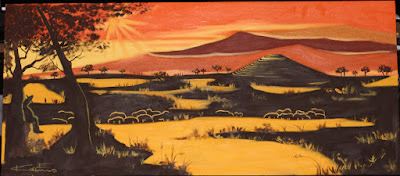
The sixth in a series; see also parts 1, 2, 3, 4, and 5. It s been about two weeks now since we got back home. Every few days, our boys still talk about Mexico. Jacob talks about what he will want to do when we go back and how he d like to see Jonathan over there again. Jacob, Oliver, and I look at photos from our trip a few times a week. This is all a sure sign that our boys loved the trip. And I keep trying to find Mexican food that tastes as good as the real thing (and, so far, failing). Another sign of a good trip! I think it is possible to have fun, relax, and enjoy new experiences all at the same time. We did that in Mexico. We had a lazy afternoon or two with the boys taking naps or playing with other children at the house we stayed at. And we stayed in a beautiful hotel without air conditioning, explored old downtown areas and ancient ruins, and bought things from crowded markets and people selling things from a table along a road. To anyone thinking about visiting: Go. Enjoy it, bring back memories, and live a little more serendipitously than usual. That s what I hope to do when we visit Greece before too long. Finally, here s a photo of the painting I bought from a roadside vendor for $17. Make sure to view it full screen. I think it says more about Mexico than 6 blog posts do.

Kai Wasserb ch: TNEF or how to lock-up your e-mails

As the administrator for several MTAs I've received my fair share of support requests for "unreadable" e-mails. They generally have an attachment called winmail.dat. This is what all (for exceptions see the rest of this blog post) non-Outlook MUAs can display, when they receive an e-mail with the application/ms-tnef (or application/vnd.ms-tnef) MIME type. TNEF is a propietary format cooked up in Redmond. When chosen, the e-mail in question isn't sent as text/plain or at least text/html, but the entire e-mail is put into an TNEF-encoded attachment, most often called winmail.dat, in which you (most commonly) find the content of the e-mail in RTF, possible attachments are also put into the winmail.dat. The easieast solution for all involved parties is to convince the sender, that her Outlook and/or Exchange setup needs fixing (disabling TNEF in Outlook and Exchange 2003). Sadly this won't work all the time. The other solutions are to either filter the e-mails on your e-mail server and run them through something like ytnef_smtpd.py (please note, that this might be legally problematic for you as a service provider, opening an e-mail, even automatically, is a violation of communication privacy rights in many jurisdictions). Or, if the legal problem is too big or can't be solved through an local server installation (e.g. because there is no server running 24/7), you're left with either using Outlook (probably what Microsoft intended) or you can use a plug-in/add-on for your client. I've tested the LookOut add-on for icedove and it seems to work well. There are of course plug-ins for many other clients, but I can't honestly tell whether they work or not. [UPDATE 2011-09-20]: Fellow Debian Developer Josselin Mouette wrote me, that Evolution is capable of reading TNEF-encoded e-mails out of the box, but he also said that [TNEF e-mails should] be banned by all means.[/UPDATE 2011-09-20] Now, before I close, please always try to convince the sender/postmaster to fix their setup. It has only advantages: text/plain e-mails are smaller, they're less likely to contain malicious code (i.e. no parts hidden away from the virus scanner on the mail server (amavis can read TNEF e-mails, if libconvert-tnef-perl is installed)) and all recipients can open the e-mails with the client of their choice.

19 September 2011

Joey Hess: happy haskell hacker

There are certian things haskell is very good at, and I had the pleasure of using it for one such thing yesterday. I wanted to support expressions like find(1) does, in git-annex. Something like:
git-annex drop --not --exclude '*.mp3' --and \
    -\( --in usbdrive --or --in archive -\) --and \
    --not --copies 3
So, parens and booleans and some kind of domain-specific operations. It's easy to build a data structure in haskell that can contain this sort of expression.
 - A Token can either be a single word, or an Operation of an arbitrary type. - 
data Token op = Token String   Operation op
        deriving (Show, Eq)
data Matcher op = Any
          And (Matcher op) (Matcher op)
          Or (Matcher op) (Matcher op)
          Not (Matcher op)
          Op op
        deriving (Show, Eq)
(The op could just be a String, but is parameterized for reasons we'll see later.) As command-line options, the expression is already tokenised, so all I needed to do to parse it is consume a list of the Tokens. The only mildly tricky thing is handling the parens right -- I chose to not make it worry if there were too many, or too few closing parens.
generate :: [Token op] -> Matcher op
generate ts = generate' Any ts
generate' :: Matcher op -> [Token op] -> Matcher op
generate' m [] = m
generate' m ts = uncurry generate' $ consume m ts
consume :: Matcher op -> [Token op] -> (Matcher op, [Token op])
consume m [] = (m, [])
consume m ((Operation o):ts) = (m  And  Op o, ts)
consume m ((Token t):ts)
          t == "and" = cont $ m  And  next
          t == "or" = cont $ m  Or  next
          t == "not" = cont $ m  And  (Not next)
          t == "(" = let (n, r) = consume next rest in (m  And  n, r)
          t == ")" = (m, ts)
          otherwise = error $ "unknown token " ++ t
        where
                (next, rest) = consume Any ts
                cont v = (v, rest)
Once a Matcher is built, it can be used to check if things match the expression the user supplied. This next bit of code almost writes itself.
 - Checks if a Matcher matches, using a supplied function to check
 - the value of Operations. - 
match :: (op -> v -> Bool) -> Matcher op -> v -> Bool
match a m v = go m
        where
                go Any = True
                go (And m1 m2) = go m1 && go m2
                go (Or m1 m2) = go m1   go m2
                go (Not m1) = not (go m1)
                go (Op o) = a o v
And that's it! This is all nearly completly generic and could be used for a great many things that need support for this sort of expression, as long as they can be checked in pure code. A trivial example:
*Utility.Matcher> let m = generate [Operation True, Token "and", Token "(", Operation False, Token "or", Token, "not", Operation False, Token ")"]
*Utility.Matcher> match (const . id) m undefined 
True
For my case though, I needed to run some IO actions to check if expressions about files were true. This is where I was very pleased to see a monadic version of match could easily be built.
 - Runs a monadic Matcher, where Operations are actions in the monad. - 
matchM :: Monad m => Matcher (v -> m Bool) -> v -> m Bool
matchM m v = go m
        where
                go Any = return True
                go (And m1 m2) = liftM2 (&&) (go m1) (go m2)
                go (Or m1 m2) =  liftM2 ( ) (go m1) (go m2)
                go (Not m1) = liftM not (go m1)
                go (Op o) = o v
With this and about 100 lines of code to implement specific tests like --copies and --in, git-annex now supports the example at the top. Just for comparison, find(1) has thousands of lines of C code to build a similar parse tree from the command line parameters and run it. Although I was surprised to see that it optimises expressions by eg, reordering cheaper tests first. The last time I wrote this kind of thing was in perl, and there the natural way was to carefully translate the expression into perl code, which was then evaled. Meaning the code was susceptible to security holes. Anyway, this is nothing that has not been done a hundred times in haskell before, but it's very nice that it makes it so clean, easy, and generic.

Sylvain Beucler: Building Android NDK samples

I searched forever for a way to just build the examples in the Android NDK, preferably from the command line. Here's how. First step: build the C++ code:
cd /usr/src/android-ndk-r6/samples/san-angeles/
/usr/src/android-ndk-r6/ndk-build
Simple enough. Second step:
You will then need to generate your final .apk through the usual means. -- Android NDK Dev Guide
Thanks a ****ing lot! In addition the documentation is very much Eclipse-centered - and I can't be bothered to install and configure all the Eclipse stack for a mere Java wrapper for the above-generated .so file XD We first need to use the 'android' wrapper and download the "SDK Platform Android 2.2, API 8, revision 3" - aka "android-8", the first environment to support OpenGL ES 2.
/usr/src/android-sdk-linux_x86/tools/android
It appears we first need to "manage the project", more precisely import from an existing project: http://developer.android.com/guide/developing/projects/projects-cmdline.html So we create a project by importing the sources from the current directory:
/usr/src/android-sdk-linux_x86/tools/android update project \
  --name san-angeles --path . --target "android-8"
Then we use ant to build the thing: http://developer.android.com/guide/developing/building/building-cmdline.html
apt-get install ant openjdk-6-jdk
ant debug  # avoid messing with signing
We now have a bin/san-angeles-debug.apk and we can run it in the emulator. Create a new "Virtual device" using the "android-8" platform we downloaded above, and launch it. Given the time needed to boot the OS, I suggest enabling snapshots. Scaling to display resulted in a very tiny, dark and slow display, in a first step I suggest using a non-scaled one.
/usr/src/android-sdk-linux_x86/tools/android
At last we can run it! Install it in the emulator:
/usr/src/android-sdk-linux_x86/platform-tools/adb install -r bin/san-angeles-debug.apk
You'll find a DemoActivity in your apps directory :)
Note: I tried to compile the "hello-gl2", showcasing OpenGL ES 2.0, but sadly it crashes:
Sorry! The application GL2JNI (process com.android.gl2jni) has stopped unexpectedly. Please try again.
The emulator apparently doesn't advertise EGL_OPENGL_ES2_BIT (checked in in GL2JNIView.java). If you try to by-pass it, you'll get loads of:
E/libEGL ( 333): called unimplemented OpenGL ES API
It's worth noting the OpenGLES20 sample from the "API Demos" application uses a fall-back OpenGL ES 1 renderer if v2 is not available - it made me mistakenly believe that OpenGL ES 2 was supported only from Java >( OpenGL ES 2 is not supported in the emulator as of 2011-09-17 - period.

Stefano Zacchiroli: why there are so many debian derivatives

A while ago I've been interviewed for a forthcoming article in the LinuxUser magazine on the topic of why there are so many Debian derivatives and on the potential impact, on them, of the (potential) advent of the so called "Debian Rolling" experiment. Below you can find my take on those topics. Questions are by Ferdinand Thommes, who has been involved in various Debian derivatives, including the forthcoming Siduction.
1.) Why do you think people base distributions on Debian? Looking at how many there is, since Corel and Libranet set sail in 1999, there must be a reason why, for one, people fork Debian in the first place, and secondly, why they choose Debian to do so and not some other distribution.
There are always advantages in creating a so called "derivative" distribution with respect to creating one from scratch. The main one is the possibility of reusing the packaging work which is already done in the "upstream" distro, focusing derivatives' efforts on customization, usually with clear target public in mind. Debian pushes most of those advantages (for derivatives) at their extremes. But there are also a couple of "political" reasons for basing derivatives on Debian. One is quite subtle and applies mostly to commercial distributions. If you are designing one such commercial distro, you have to be based on an independent distro with no commercial interests, lest risking that petty (technical or otherwise) choices might be made just to undermine your business. Among "popular" GNU/Linux distros, Debian is essentially the only one which is both volunteer-based and not ascribable to any specific company. The last reason why I think many derivatives are based on Debian is our vocation to universality. Since we are not targeting any specific public, but rather trying to provide an operating system suitable for several different use cases (e.g. the tasks supported by the Debian installer or the choice of Debian Pure Blends), we offer an ideal starting point for those who are going to have customization as their main business.
2.) What could be the benefits for Debian and for its Derivates, if the discussions about a second Debian Release based on the Testing branch really come to be reality?
We are considering the possibility of adding a new Debian suite which is "rolling" like Testing, in the sense that new software releases flow in regularly rather than only at periodic bumps corresponding to major distribution releases. There seem to be user demand for that and I personally believe that such a scheme could address the needs of both advanced desktop users and of developers, which are now strand to mix and match Debian suites ending up using package combinations which benefit, as a whole, of very little quality check. The main issues to face to get there is how to make sure that adding such a suite would not get in the way of preparing high quality Stable releases, in terms of quality control, developer focus, etc. Note that such a hypothetical "rolling" suite needs does not necessarily need to be based on Debian Testing, although that is a good starting point. The reason why it's not a good endpoint is that Testing has been created (circa 2000), and is still used, as an internal tool to prepare the forthcoming Debian Stable release. As such, it is not entirely suitable for final user consumption. For instance, during the Debian "freeze" period the flow of new software releases that reach Testing is greatly reduced up to stopping completely just before the release of a new Debian Stable. I've been told that users of testing-based (derivative) rolling releases regularly complain about this aspect during Debian freezes, which is not surprising. The main advantage for derivatives which are already offering a Debian-based "rolling" release will then be the possibility of basing their work on a suite less bound to the life cycle of Debian Stable than Testing is at present. On the converse side, that would also mean that derivatives will need to differentiate more from Debian than by just saying they are "rolling", which is a good thing: differences among distros are healthy and drive innovation. With those derivatives, on the other hand, which will recognize their goals as being aligned with Debian's goals---Debian Stable today, maybe Debian "rolling" tomorrow---we will be happy to join efforts.

Keith Packard: MacBook-Air-2

Fixing the Sandbrige MacBook Air display initialization We left our hero with Debian installed on the MacBook Air, but with the display getting scrambled as soon as the i915 driver loaded. As was reported to Matthew, the problem is as simple as a lack of the right mode for the eDP panel in the machine. This mode is supposed to come from the panel EDID data, but for some reason the driver wasn t able to query the EDID data, and so it decided to try some random panel timings it dug out of the VBT tables, which are generally supposed to be used by LVDS panels. Apple helpfully stuck valid data there, but for some other panel one that is 1280x800 pixels instead of the 1366x768 pixel panel in the MacBook Air. I heard rumors that some machines would get a black screen when the i915 driver loaded. I was fortunate my machine simply displayed a 1366x768 subset of the programmed 1280x800 mode. A bit of garbage on the right side, and a few scanlines missing at the bottom. Quite workable, especially after I ran fbset -yres 768 to keep the console in the visible portion of the screen. DDC failure Looking through the kernel logs, the Intel driver tries to access the EDID data and times out, as if DDC is just completely broken. This is rather unexpected; the eDP spec says that the panel is required to support DDC and provide EDID. Now, we ve seen a lot of panels which don t quite live up to the rigorous eDP specifications, but it s a bit surprising from Apple, who generally do VESA stuff pretty well. We ve heard reports about panels reporting invalid EDID data, or EDID data which didn t actually match the panel (causing us to prefer the VBT data on LVDS machines). But I ve not heard of an eDP panel which didn t have anything hanging off of the DDC channel. But X works fine? During early debugging, I happened to start X up. Much to my surprise, X came up at the native 1366x768 mode. Digging through the kernel logs after that, I discovered that EDID was successfully fetched from the eDP panel while X started up. At this point, I knew it was all downhill the EDID data was present, it just wasn t getting picked up during the early part of the driver initialization when the console mode is initialized. eDP power management The CPU is given complete control over the power management of the eDP panel; sequencing through various power states and waiting appropriate amounts of time when things change. Given the goal of keeping power usage as low as possible, this makes a huge amount of sense. The eDP spec is quite clear though, without power, the panel will not respond to anything over the aux channel, and that includes EDID data. The eDP panel power hardware in the Sandybridge chip has a special mode for dealing with this requirement. If the panel is not displaying data, you can supply power for the aux channel stuff by setting a magic bit in the panel power registers. When initializing the frame buffer, the kernel driver turns off the panel completely so that it has all of the hardware in a known state (yeah, this is not optimal, but that s another bug). When X started, the panel was already running with the console mode. Given the difference between these two states EDID querying with the panel off failed, while EDID querying with the panel on worked, it seemed pretty clear that the panel power wasn t getting managed correctly. So, it seemed pretty clear that the magic power the panel bit wasn t getting turned on at the right times. Getting the power turned on. I stuck a check inside all of the aux channel communication functions to see where things were broken. This pointed out several places missing the panel power calls. This wasn t quite sufficient to get EDID data flowing. The remaining problem was that the code wasn t waiting long enough after turning the panel power on before starting the aux channel communication. A few msleep calls and huzzah! EDID at boot time and the console had the right mode. Making it faster However, it turns out that the driver does this a lot, and the msleeps required were fairly long the eDP panel wants a 500ms delay from turning the panel power off before you can turn it back on. I fix this by simply delaying the panel power off until things were idle for a long time. Now mode setting goes zipping through, and a few seconds later, the bit to force panel power on gets turned off. Getting these bits for yourself I ve pushed out the code to my (temporary) kernel repository git://people.freedesktop.org/~keithp/linux in the fix-edp-vdd-power branch. I d love to hear if you ve tried this on either a MacBook Air or any other eDP machine from Ironlake onwards.

Dirk Eddelbuettel: Fox Valley Marathon 2011

This morning, I was one of a mere 900 or so marathoners in the second (?) annual Fox Valley Marathon, along with a 20 mile training race (as Chicago's big marathon is coming up) and a half marathon. This all took place along the Fox river, which is about an hour west of Chicago. The race went well enough. I had been racing twice a year at this distance, but took a break after running with some minor injury and generally not too well (see e.g. my writeup from last year's Boston and Chicago marathons). So I wasn't even sure I'd run one this year at all, but the bug got me again when two friends signed up for this, and off we went to train over the summer. So with a few more miles from training, I was pretty antsy and went out too fast as usual, and paid with an as-usual slower half and few short walking breaks past mile 20. But I beat the hope-for target time of 3:25 quite handily with a 3:19:03 -- or a 7:36 min/mile pace. Which (as I noted in a quick post to Google+ started right after the race, and since edited/expanded -- prods to Google+) should hopefully get me back to Boston next spring.

18 September 2011

Philipp Kern: python-gnucash, historic build stats

Two tiny bits:

Next.

Previous.