Search Results: "tim"

2 October 2011

Theppitak Karoonboonyanan: Myanmar Visit

Quite a belated English blog (after the Thai version), due to busy personal life lately. I had visited Yangon during 4-11 Sep. to give some talks and tutorials on Debian packaging and mirroring. And I've shared some information with community. The visit was initiated by Ngwe Tun and the Myanmar L10N team. I found later that a Facebook event had been created for this. Localization The first day was a comparison between Myanmar and Thai supports in GNU/Linux, in which I briefed the status on Thai side, and Thura Hlaing on Myanmar side. It was nice that we had the Myanmar Computer Federation (MCF) director presiding the meeting til the end. That means GNU/Linux support has been awared at executive level. According to Thura, Burmese has gained support in GNU/Linux quite well. On the rendering side, all the reordering for the logical order is normally done with pure GSUB in the fonts, without special processing on the rendering engine. This is suboptimal in principle, but it's the most effective way, as Windows redering engine itself does not yet support Myanmar, either. For input method, Myanmar XKB map has been available in xkb-data for a long time, but to serve users' familarity with visual order typing, some reordering input methods have been developed, based on keymagic and ibus. But all are not context-sensitive like what's done for Thai in other frameworks. Fortunately, with the surrounding text API recently added to ibus, this has become possible. One unusual requirement for Myanmar script editing is the caret movements. It needs to move syllable-wise, not character-wise nor cluster-wise. So, I suggested them to have a look on UAX #29 to see how it should be amended. Myanmar locales are already done, both for GNU C library and CLDR. And even a GNOME applet for Myanmar lunar calendar is also available. This latter thing is what Thai can learn from. Burmese word segmentation is not supported in general. But R&D works have been done for this in its NLP lab. A serious issue left to solve is the existing abuses of Unicode. In Myanmar, there exist at least 14 variations of font hacks, abusing some free slots in Unicode charts as pre-composed clusters for information interchange (not for font internals), making plain text interchange impossible without the proper font for rendering. For program translation, the new Myanmar L10N team is trying to request for a mass submission to the current GNOME team. And for Debian, Thura Hlaing and Ngwe Tun has already started the translation process with Christian's help. Along my stay, I could see the team actively discussing on the IT glossary, trying to settle down the translated terms. This looked very fun. Debian Then, the next three days were a workshop on Debian packaging, where I have presented the basics of Debian package building, uploading, quality-controlling, modifying, creating and delivering. This aimed toward the development of a local distribution based on Debian. Each day in the afternoon was the time for setting up a Debian mirror, not only for convenient local distro developement, but also for general users. This is important because internet penetration is still low in Myanmar. The main media for software distribution is CD/DVD, which means only stable version of Debian can be spread, which is not good for desktop users. Having a mirror should improve the situation somehow. It should make dist-upgrading to testing/unstable easier. And it should make CD snapshotting using local distributions easier, too. For this, I also presented another quick slide on Debian mirroring & caching. In the last day, I was introduced to the staffs of Myanmar NLP Lab and their projects, which include Myanmar OCR (based on tesseract), information retrieval, machine translation, and other lingustic resources like dictionary, lexicon and text corpus. Furthermore, I was also offerred technical helps on developing a Lao/Esaan Tham font for a Lao and North Eastern Thailand variation of Tham script, which is Mon-based and is closely related to Myanmar script. (See some sample transliterations if you are curious how it looks like. It was part of my hacking during DebConf11 travelling.) Currently, its OpenType support is quite sufficient, but it still renders poorly on Mac OSX. To cope with this, I was given a Mac Mini as a present from Myanmar for its development, as well as some explanations on AAT features from a Myanmar font developer. And I am very grateful for that.

1 October 2011

Sergio Talens-Oliag: Static website generators

The last month I was supposed to work on a OpenStack related project, but for administrative reasons it has been delayed and I've tried to do small tasks to be able to finish them quickly and start the work on the main project when the issues get solved. As the delay has been longer than expected last Wednesday I've realized than on the last weeks I did a lot of small system administration tasks: With all the changes I did I noticed that I had to do something with our Intranet server; it is just a reverse proxy for a lot of different web services and its main page was one static HTML page with links to them, nothing else. In the long term maybe we will replace it with something based on Drupal or Lifeay, but for now I just wanted something to be able to organize the links and provide some information about the services for the new users without having to write HTML (I really like Agile Documentation Tools that let me focus on the content and forget about the markup), and started to look at some of them. My first idea was to use ikiwiki, as it has all the features I was looking for: I can use Markdown or reStructuredText to write the contents, the source pages are easily handled on a Version Control System, it supports the use of templates for the HTML, etc., but it seemed to me that using ikiwiki was like killing flies with a cannon (that's a Spanish say, I guess it's easy to understand it in English, no?) and I decided to review other tools to build static web sites. To make a long story short, I selected some tools that met my requirements and looked nice on their demo sites; after my first review I thought that Hyde was going to be my bet, as it uses technologies I'm already familiar with, but after trying it I saw that I was going to have a problem with documentation (the current Hyde version lacks it) and it was going to be more complicated that using ikiwiki. Before giving up I decided to review simpler tools, just in case, and after looking some of them I ended up using poole, a simple python script (the source is just one file and it only requires python-markdown to work). Before moving to the content I tried to adapt a couple of free themes to be used by the tool, but I didn't liked the result, so I went back to the plain style provided by the tool and added a logo and a background. With that simple look and feel I started to work with the content, splitting it into eight markdown files and a python macro to include a file that has all the links used on the site. While trying to make the main page look good I noticed how little I know about CSS, but using search engines I was able to build a two column block into the main page and publish the contents and with the help of some CSS enabled co-workers I changed the look and feel of the site in about 30 minutes. In summary, if you want a really simple website, you know a little bit of python and don't want to spend much time learning how to use a website generator then Poole is a good option. If you want something more complex I still think that ikiwiki is a good option, but YMMV.

Sylvain Beucler: Multiple glUseProgram

3D programming is great, but when something goes wrong, it can be quite hard to debug! I was trying to launch two different OpenGL programs one after another, the first for the normal rendering, the second for a post-processing effect (motion blur, etc.). It seemed the first program's output was cleared as soon as the second one was activated. I eventually found a behavior that is well summed up at http://www.gamedev.net/topic/541571-glsl-changing-between-shaders/page__view__findpost__p__4495411. You don't write:
glUseProgram( shader-A );
modelA->Draw();
glUseProgram( shader-B );
modelB->Draw();
glutSwapBuffers();
You write:
modelA->Draw();
glUseProgram( shader-B );
modelB->Draw();
glUseProgram( shader-A );
glutSwapBuffers();
and since the code is called multiple times (at each frame), this will cycle OK. (There seem to be an GL_INVALID_OPERATION error the very first time I call glUseProgram, too.) Anybody has an idea on why we have this behavior?

Dirk Eddelbuettel: Reminder: One week til Rcpp class in San Francisco

Just a quick note to remind everyone that the Rcpp class in San Francisco, which I am holding together with Revolution Analytics, will take place a week from today. We are happy to report that the number of registrations has met our initial targets. But as a number of open slots remain, we have decided to offer a few places at discounts of 25% for academics (with code acad1) and 50% for students (with code student). Course details are at the Revolution course page, registration is at the Eventbrite page. And just for completeness, here is what I wrote in the previous announcement:
The format will follow the workshop Romain and I gave during the tutorial day preceding this year's R/Finance conference. The style will once again be hands-on, with copious concrete examples and solid coverage of most aspects of Rcpp and related packages such as RInside, RcppArmadillo and others. The eight-hour schedule contains about six hours of instruction, split into four sessions of around ninety minutes. This leaves ample time for both lunch and coffee breaks, and for informal discussions and Q+A. The one-day class will be offered in San Franciso on Saturday, October 8, 2011. Please see the official course page for more details, concrete location info and maps as well as registration details.
Feel free to contact me at the usual email address with questions. Or with suggestions for the after-party in San Francisco :)

Wouter Verhelst: Bugs filed versus the phase of the moon.

One of the more classic jokes about not yet understood bugs is that the phase of the moon is somehow involved in causing it. Being bored, I decided to spend some time to see whether "date of bug filed" could somehow be correlated with "phase of the moon" for a given source package. Fast forward an hour of perl experimenting, and here we are:

#!/usr/bin/perl -w
use strict;
use warnings;
use constant PI => 3.1415926535;
use feature "say";
use SOAP::Lite;
use Astro::Coord::ECI::Moon;
my $soap = SOAP::Lite->uri('Debbugs/SOAP')->proxy('http://bugs.debian.org/cgi-bin/soap.cgi');
if (!defined($ARGV[0]))  
	die "E: must have a source package!\n";
 
my @bugs = $soap->get_bugs(src=>$ARGV[0])->result();
my $bugsdata = $soap->get_status(@bugs)->result();
my $moon = Astro::Coord::ECI::Moon->new();
my %count = ( 'new' => 0, 'first' => 0, 'full' => 0, 'last' => 0);
foreach my $bug (keys %$bugsdata)  
	my $time = $$bugsdata $bug -> date ;
	my $phase = $moon->phase($time);
	if ($phase <= 45 * PI / 180   $phase > 315 * PI / 180)  
		$count 'new'  = $count 'new'  + 1;
	  elsif ($phase <= 135 * PI / 180 && $phase > 45 * PI / 180)  
		$count 'first'  = $count 'first'  + 1;
	  elsif ($phase <= 225 * PI / 180 && $phase > 135 * PI / 180)  
		$count 'full'  = $count 'full'  + 1;
	  elsif ($phase <= 315 * PI / 180 && $phase > 225 * PI / 180)  
		$count 'last'  = $count 'last'  + 1;
	 
 
say "Number of bug submissions during new moon     : " . $count new ;
say "Number of bug submissions during first quarter: " . $count first ;
say "Number of bug submissions during full moon    : " . $count full ;
say "Number of bug submissions during last quarter : " . $count last ;
This uses the (not packaged in Debian) Astro::Coord::ECI::Moon perl module. Use like so:
wouter@carillon:~code/perl$ ./debbugsmoon nbd
Number of bug submissions during new moon     : 2
Number of bug submissions during first quarter: 10
Number of bug submissions during full moon    : 1
Number of bug submissions during last quarter : 3
Apparently there's a reasonable correlation between 'the moon is in the first quarter' and 'people file bugs on nbd'. Note: no, the above is probably not very scientific. That's not the point.

30 September 2011

Axel Beckert: Fun facts from the UDD

After spotting an upload of mira, who in turn spotted an upload of abe (the package, not an upload by me aka abe@d.o), mira (mirabilos aka tg@d.o) noticed that there are Debian packages which have same name as some Debian Developers have as login name. Of course I noticed a long time ago that there is a Debian package with my login name abe . Another well-known Debian login and former package name is amaya. But since someone else came up with that thought, too, it was time for finding the definite answer to the question which are the DD login names which also exist as Debian package names. My first try was based on the list of trusted GnuPG keys:
$ apt-cache policy $(gpg --keyring /etc/apt/trusted.gpg --list-keys 2>/dev/null   \
                     grep @debian.org   \
        	     awk -F'[<@]' ' print $2 '   \
                     sort -u) 2>/dev/null   \
                   egrep -o '^[^ :]*'
alex
tor
ed
bam
ng
But this was not satisfying as my own name didn t show up and gpg also threw quite a lot of block reading errors (which is also the reason for redirecting STDERR). mira then had the idea of using the Ultimate Debian Database to answer this question more properly:
udd=> SELECT login, name FROM carnivore_login, carnivore_names
      WHERE carnivore_login.id=carnivore_names.id AND login IN
      (SELECT package AS login FROM packages, active_dds
       WHERE packages.package=active_dds.login UNION
       SELECT source AS name FROM sources, active_dds
       WHERE sources.source=active_dds.login)
      ORDER BY login;
 login                   name
-------+---------------------------------------
 abe     Axel Beckert
 alex    Alexander List
 alex    Alexander M. List  4402020774 9332554
 and     Andrea Veri
 ash     Albert Huang
 bam     Brian May
 ed      Ed Boraas
 ed      Ed G. Boraas [RSA Compatibility Key]
 ed      Ed G. Boraas [RSA]
 eric    Eric Dorland
 gq      Alexander GQ Gerasiov
 iml     Ian Maclaine-cross
 lunar   J r my Bobbio
 mako    Benjamin Hill
 mako    Benjamin Mako Hill
 mbr     Markus Braun
 mlt     Marcela Tiznado
 nas     Neil A. Schemenauer
 nas     Neil Schemenauer
 opal    Ola Lundkvist
 opal    Ola Lundqvist
 paco    Francisco Moya
 paul    Paul Slootman
 pino    Pino Toscano
 pyro    Brian Nelson
 stone   Fredrik Steen
(26 rows)
Interestingly tor (Tor Slettnes) is missing in this list, so it s not complete either At least I m quite sure that nobody maintains a package with his own login name as package name. :-) We also have no packages ending in -guest , so there s no chance that a package name matches an Alioth guest account either

Dirk Eddelbuettel: Rcpp 0.9.7

A fresh maintenance release version 0.9.7 of Rcpp went onto CRAN and into Debian earlier today. This release contains two contributed fixes. The first, suggested by Darren Cook via the rcpp-devel mailing list, corrects how we had set up exceptions specifications, reflecting a bit of Java-think on our part. The idiom is generally discouraged in C++, and we now conform. The second came in two excellent patches by R Core member Martyn Plummer which finally get us compilation on Solaris. This is much appreciated as our hands were tied here for lack of access to such a box. Otherwise, two new examples and a new unit test were added. The complete NEWS entry is below; more details are in the ChangeLog file in the package and on the Rcpp Changelog page.
0.9.7   2011-09-29
    o   Applied two patches kindly provided by Martyn Plummer which provide
        support for compilation on Solaris using the SunPro compiler
    o   Minor code reorganisation in which exception specifiers are removed;
        this effectively only implements a run-time (rather than compile-time) 
        check and is generally seen as a somewhat depreated C++ idiom. Thanks
        to Darren Cook for alerting us to this issue.
    o   New example 'OpenMPandInline.r' in the OpenMP/ directory, showing how
        easily use OpenMP by modifying the RcppPlugin output
    o   New example 'ifelseLooped.r' showing Rcpp can accelerate loops that may
        be difficult to vectorise due to dependencies
    o   New example directory examples/Misc/ regrouping the new example as
        well as the fibonacci example added in Rcpp 0.9.6
    o   New Rcpp-FAQ example warning of lossy conversion from 64-bit long
        integer types into a 53-bit mantissa which has no clear fix yet.
    o   New unit test for accessing a non-exported function from a namespace
Thanks to CRANberries, you can also look at a diff to the previous release 0.9.6. As always, even fuller details are on the Rcpp Changelog page and the Rcpp page which also leads to the downloads, the browseable doxygen docs and zip files of doxygen output for the standard formats. A local directory has source and documentation too. Questions, comments etc should go to the rcpp-devel mailing list off the R-Forge page

Mark Brown: regmap a register map abstraction for the Linux kernel

A good proportion of I2C and SPI device drivers in the kernel contain some very similar code for accessing the register maps of hardware connected to those buses most hardware designers have solved the problem of providing very similar ways. Linux 3.1 introduces a new kernel API called regmap which factors out this code from the drivers, saving code and making it much easier to share infrastructure. There s been an implementation of this in ASoC for some time now, the regmap API makes it available to all drivers. The version of this API in version 3.1 is very simple, just factoring out the simplest level of physical I/O from the devices. Devices register with the regmap API by providing a struct regmap_config (which currently only allows the sizes of the register addresses and values to be specified) and the bus-specific structure to it. They can then use simple read and write operations on the device:
int regmap_read(struct regmap *map, unsigned int reg, unsigned int *val);
int regmap_write(struct regmap *map, unsigned int reg, unsigned int val);
The API handles everything to do with formatting the data for transmission and parsing data coming back from the device. Block functions are also provided to allow multiple registers to be read or written simultaneously. Even with this basic level of support we end up saving quite a bit of code as drivers are converted to use the API. The changes sitting in -next for version 3.2 take this a step further, adding support for more variations on SPI registers, a debugfs interface for dumping the device registers, register cache support courtesy of my colleague Dimitris Papastamos and trace points for dynamic instrumentation of the system.

Posted from Santa Rosa, California, United States.

29 September 2011

Bdale Garbee: AltOS 1.0.2 Released

Keith and I released version 1.0.2 of AltOS, the open source firmware and software system associated with our Altus Metrum hobby rocket avionics systems. This release includes a fix for the defect in version 1.0.1 that prevented rebooting an altimeter from idle to pad mode over the radio link. This affects both TeleMetrum and TeleMini boards, and re-flashing the altimeter firmware is required to pick up this fix. We also restored the pre-1.0 mode selection behavior for TeleMetrum at power on. This is also an altimeter firmware change, but does not affect TeleMini.

Martin F. Krafft: Liable for other peoples' debts

Today, German politicians decided, that Germany be liable for up to 211 billion Euros for the debts of other EU countries. Or, put differently: the politicians put the money of the current and future generations on the line for a country that lived way above its capabilities for too many years. When the EU was founded, it was explicitly stated that no country needs ever be liable for any other. I understand that politics is hard, and letting Greece (and others) fall down might carry heavy, unforeseen consequences. Also, I understand that the Greek people are mostly innocent in all this and that the fault lies with their politicians and other corrupt entities in the nation. However, what s happening these days is beyond the comprehensible. If I were in a non-Germany EU country, I d rejoice and continue making debts. It is likely that this won t be the last time that our politicians cave in to pressure by other nations who have a lesser understanding of budgeting and saving. Since I am German, I can only shake my head, look to Berlin and ask myself whether this is the final straw that broke the camel s back. How the heck do the people over there ever want to regain the trust of their people? Politics has become the game of pleasing each other, who cares about the people? And the German politicians are (once again, remember credit default swaps?) at the forefront of this stupidity. To me, there is only one solution to Greece s debts: make sure that what happened can never happen again, and then cut the debts, or slice them in half. Let the banks carry the weight, for it was them who gave out the loans too liberally. And if this forces a bank or two to default, let it happen, for fuck s sake. The consequences might be dire, but they ll subside. And that s surely better than trying to pretend that we can keep juggling this heavily inflated financial system. Instead, the executives, elected to carry the trust of the people, are setting precedents for other countries to follow Greece, for it is likely that they wil be bailed out. By us. That is not the way to teach anyone the basics of economy: you can only spend as much as you earn, without exceptions. Debts will only come around to hurt you. I could puke. NP: Godspeed You Black Emperor!: F# A#

Roland Mas: Non-FusionForge, September 2011

Besides FusionForge stuff, I also kept busy with other things.

28 September 2011

Erich Schubert: Privacy in the public opinion

Many people in the united states seem to have the opinion, that the "public is willing to give up most of their privacy" in particular when dealing with online services such as Facebook. I believe in his keynote at ECML-PKDD, Albert-L szl Barab si of Harvard University expessed such a view, that this data will just become more and more available. I'm not sure if it was him or someone else (I believe it was someone else) that essentially claimed "privacy is irrelevant". Another popular opinion is that "it's only old people caring for privacy".
However, just like politics, these things tend to oscillate from one extreme to another. For example, the recent years in Europe, conservative parties were winning one election after another. Now in France, the socialist parties have just won the senate, the conservative parties in Germany are losing in one state after the other and so on. And this will change back again, too. Democracy also lives from changing roles in government, as this drives both progress and fights corruption.
We might be seeing the one extreme in the united states right now, where people are readily giving away their location and interests for free access to a web site. This can swing back any time.
In Germany, one of the government parties - the liberal democrats, FDP - just dropped out of the Berlin city government, down to 1.8% of voters. Yes, this is the party the German foreign minister, Guido Westerwelle is from. The pirate party [en.wikipedia.org] - much of their program is about privacy, civil rights, copyright reforms and the internet - which didn't even participate in the previous elections since they were was founded just 5 years ago jumped to 8.9%, scoring higher than the liberal democrats did in the previous elections. In 2009 they scored a surprising high 2% in the federal elections - current polls see them anywhere from 4% to 7% at the federal level, so they will probably get seats in parliament in 2013. (There are also other reasons why the liberal democrats have been losing voters so badly, though! Their current numbers indicate they might drop out of parliament in 2013.)
The Greens in Germany, which are also very much oriented towards privacy and civil rights, are also on the rise, and in march just became the second strongest party and senior partner in the governing coalition of Baden-W rttemberg, which historically was a heartland of the conservatives.
So don't assume that privacy is irrelevant nowadays. The public opinion can swing quickly. In particular in democratic systems that have room for more than two parties - so probably not in the united states - such topics can actually influence elections a lot. Within 30 years, the Greens now frequently reach values of 20% in federal polls and up to 30% in some states. It doesn't look as if they are going to go away soon.
Also don't assume that it's just old people caring about privacy - in Germany, in particular the pirate party and the Greens are very much favored by the young people. The typical voter for the pirates is less than 30 years old, male, has a higher education and works in the media or internet business.
In Germany, much of the protest for more privacy - and against the too readily data collection by companies such as Facebook and Google - is driven by the young internet-users and -workers. I believe this will be similar in other parts of Europe - there are other pirate parties all over Europe. And this can happen to the united states any time, too.
Electronic freedom - e.g. pushed by the Electronic Frontier Foundation, but also the open source movement - does have quite a history in the united states. But in particular open source has made such a huge progress the last decade, these movements in the US could just be a bit out of breath right now. I'm sure they will come back with a strong push against the privacy invasions we're seeing right now. And that can likely take down a giant like Facebook, too. So don't bet on people continuing to give up their privacy!

MJ Ray: Help Bring KohaCon to Edinburgh

Our co-op has put in a bid to bring KohaCon to Edinburgh in 2012. Edinburgh is a great Free and Open Source Software (FOSS) conference city, with libraries of national and international importance, a huge choice of hotels, restaurants and entertainments and good international transport links. 2012 is also a great time for our co-op to host, because it ll be the International Year of Co-operatives and our co-op s tenth anniversary. So please, if you d like a library FOSS conference here next year, head over to KohaCon2012 voting straight away. I ll announce the result after the vote closes on Saturday 1st October.

27 September 2011

Sylvain Beucler: 3D OpenGL plotting

gnuplot? Here's the fourth tutorial from Guus on Scientific OpenGL, this time going 3D, plotting the "Mexican Hat" function, and covering various line drawing methods as well as Index Buffer Objects.
http://en.wikibooks.org/wiki/OpenGL_Programming/Scientific_OpenGL_Tutorial_04

Vincent Bernat: Speeding up SSL: enabling session reuse

Session reuse is one of the most important mechanism to improve SSL performance: by submitting an appropriate blob to the server, a client is able to trigger an abbreviated handshake, improving latency and computation time. There exists two distinct ways to achieve session reuse: session identifiers as described in RFC 5246 and session tickets as depicted in RFC 5077. A quick note: when I say SSL, unless I mention a version number, you should read TLS instead. Look at the article for TLS on Wikipedia for some background on this.

Theory of operation To establish a SSL connection, four messages need to be exchanged between client and server. With a latency of 50 ms, we have a 200 ms overhead to establish the connection (plus TCP handshake). Moreover, to share a common secret, both the client and the server needs to achieve some public-key cryptographic operations which are costly, computation-wise. SSL full handshake To avoid a full SSL handshake each time a client request a resource, it is possible for the client to request an abbreviated handshake, saving a complete round-trip (100 ms) and avoiding the costliest part of the full SSL handshake. SSL abbreviated handshake Two mechanisms can be used to accomplish an abbreviated handshake:
  1. When the server sends the Server Hello message, it can include a session identifier. The client should store it and present it in the Client Hello message of the next session. If the server finds the corresponding session in its cache and accepts to resume the session, it will send back the same session identifier and will continue with the abbreviated SSL handshake. Otherwise, it will issue a new session identifier and switch to a full handshake. This mechanism is detailed in RFC 5246. It is the most common mechanism because it exists since earlier versions of SSL.
  2. In the last exchange of a full SSL handshake, the server can include a New Session Ticket message (not represented in the handshake described in the picture) which will contain the complete session state (including the master secret negotiated between the client and the server and the cipher suite used). Therefore, this state is encrypted and integrity-protected by a key known only by the server. This opaque datum is known as a session ticket. The details lie in RFC 5077 which supersedes RFC 4507.
The ticket mechanism is a TLS extension. The client can advertise its support by sending an empty Session Ticket extension in the Client Hello message. The server will answer with an empty Session Ticket extension in its Server Hello message if it supports it. If one of them does not support this extension, they can fallback to the session identifier mechanism built into SSL. RFC 5077 identifies situations where tickets are desirable over session identifiers. The main improvement is to avoid to maintain a server-side session cache since the whole session state is remembered by the client, not the server. A session cache can be costly in term of memory and difficult to share between multiple hosts when requests are load-balanced across servers.

Browser support Session identifiers are part of SSL and are therefore supported since a long time by clients and servers. However, session tickets are an optional TLS extension and therefore, the support is not as widespread as for session identifiers. Support for tickets was added in OpenSSL 0.9.8f (October 2007). In GnuTLS, this is version 2.9.3 (August 2009). For NSS, the set of libraries behind most browsers, support of RFC 5077 is in version 3.12 (June 2008). Schannel, Microsoft implementation of TLS, does not currently supports tickets. To check if a browser supports session resume without and with tickets, I have written a web server listening to several ports with different configurations (session cache disabled or enabled, ticket support disabled or enabled). With the help of some Javascript, it is possible to interact with this server to determine what kind of session resume a browser support. Checking for browser support for session resume It is difficult to get extensive results this way since you need to install a lot of browsers to get something valuable. Surprisingly, Android 2.3.4 browser (as shipped by Cyanogen Mod) does not support any session resume. Another way to check if a browser supports session resume is to use a sniffer and to spot Client Hello messages. If a client tries to resume a session, it will use an appropriate session identifier or send a ticket. A simple program parsing PCAP files allows to automate this task and get some interesting statistics. Here are random facts from more than 300 000 requests (38 000 clients) to a customer care service of an important French telco:
  • 35% of requests exhibit support of tickets;
  • 53.3% of requests ask to resume without tickets; 25.6% with tickets;
  • 67.2% of requests exhibit support of SNI;
  • 86.7% of requests use TLS 1.0; the remaining uses SSL 3.0; almost no TLS 1.1/1.2;
  • in average, a client execute 8 SSL handshakes;
  • ciphers supported by all clients are 3DES-SHA, RC4-MD5 and RC4-SHA.
With some log analysis to match each requests with the appropriate user agent, we can split the world in two parts: browsers supporting RFC 5077 (Chrome and Firefox) and browsers not supporting RFC 5077 (Internet Explorer, Opera 9.80, Safari for MacOS and iOS and Android browser).

Web server support There is no unique recipe to configure a web server to handle appropriately and efficiently session resume. Here are some generic directions :
  • if the web server uses multiple processes, you need to configure a shared memory session cache; usually, tickets will work just fine in this setup;
  • if you use local load-balancing, one easy way to avoid any problem is to use ensure that one IP is mapped to one server (either statically with hashing or dynamically with a stick table); if your load-balancer understands SSL, you can also use session identifier (and disable tickets1) to build a stick table;
  • if you don t want to apply the previous advice, you need to share the session cache between the servers with something like memcached and disable tickets;
  • if you use global load-balancing (DNS based), there is no need to ensure that session resumption works across geographic pools since a user will usually stick to one pool.
Remember that only one client out of three supports TLS tickets. Therefore, you cannot rely on them to ensure proper session resume. You need a session cache.

Setting a session cache with Apache & nginx Apache features two different SSL engines. The first one is mod_ssl and uses OpenSSL as backend. It is possible to setup a shared session cache with SSLSessionCache but the memcached-enabled session cache is available only in the development branch. You can also get one by switching to mod_gnutls backend. The cache is enabled with GnuTLSCache. In this case, do not enable tickets because they cannot be shared. With nginx, you need to enable the shared session cache with ssl_session_cache. Currently, it lacks a memcached-enabled session cache but Matt Palmer has some patches to add it to the 0.8 branch. However, those patches can have a serious impact on nginx performance since retrieving a session from memcached is done synchronously (mostly because a limitation in OpenSSL design who does not allow to register asynchronous callbacks with SSL_CTX_sess_set_get_cb()). As a proof of concept, I have also added a similar feature to stud, the scalable TLS unwrapping daemon, a very efficient network proxy terminating SSL connections. The same limitation as for nginx applies: performances will suffer. Look at the pull request for more details.

Sharing tickets RFC 5077 tells tickets allow to load-balance requests across servers. However, to the best of my knowledge, there is currently no web server able to share tickets across a pool. Actually, when a server initializes its SSL stack, it will randomly generate some keys that will be used to protect and encrypt tickets. In OpenSSL, from ssl/ssl_lib.c:
    /* Setup RFC4507 ticket keys */
    if ((RAND_pseudo_bytes(ret->tlsext_tick_key_name, 16) <= 0)
              (RAND_bytes(ret->tlsext_tick_hmac_key, 16) <= 0)
              (RAND_bytes(ret->tlsext_tick_aes_key, 16) <= 0))
            ret->options  = SSL_OP_NO_TICKET;
Therefore, with a round-robin load-balanced pool of servers, tickets have to be disabled because servers would not accept tickets from neighbors. One way to solve this is to generate keys deterministically by hashing some common secret with the private key. I have implemented this approach for stud. Here is a simplified version (no error handling, no allocation) of the pull request for this feature:
    unsigned char keys[48];
    EVP_PKEY *pkey = grab_private_key();
    /* To get our key, we sign the seed with the private key */
    unsigned int siglen;
    unsigned char sign[LARGE_ENOUGH];
    EVP_MD_CTX mdctx;
    EVP_MD_CTX_init(&mdctx);
    EVP_SignInit(&mdctx, EVP_sha256());
    EVP_SignUpdate(&mdctx, some_secret, strlen(some_secret));
    EVP_SignFinal(&mdctx, sign, &siglen, pkey);
    /* And we keep only the first bytes. */
    memcpy(keys, sign, sizeof(keys));
    /* Tell OpenSSL to use those keys */
    SSL_CTX_set_tlsext_ticket_keys(ctx, keys, sizeof(keys));

Testing While tests can be done with just openssl s_client and openssl sess_id, testing all aspects can take a lot of time. For this purpose, I have written a client testing session resume with and without tickets. Here is a typical result: twitter.com RFC session resume The program will try to establish five consecutive SSL connections for each IP without and with tickets. For each IP, the last four SSL connections should always reuse the first SSL session. Here, Twitter web servers seem properly configured: for each IP, session resume is successful. Their web servers do not support tickets or they may have disabled it because they share the session cache between servers inside the same pool.

  1. RFC 5077 describes interactions between session identifiers and session tickets. When using tickets, the server should send back an empty session identifier. The client may present an empty session identifier or generate one. However, for all practical purposes, it seems that servers send back a non-empty session identifier and clients just stick to this identifier. Please, investigate if you want to use SSL session identifiers for load-balancing while keeping tickets enabled.

Christian Perrier: Stop making sense...

Hope a few of my readers got it from the title of this blog post. And maybe many others didn't. So let's talk about "Stop Making Sense". You're warned: nothing to do with free software...or running, this time. This is all about music. Music from the 80's. "Stop Making Sense" is indeed, in my opinion, one of the best achieved musical movie. It is simple: it features a gig by the Talking Heads, back in 1983, when this band was among the most innovative ones that ever appeared in the late 70's. And I finally managed to take time to actually buy the DVD and see it again as I didn't see it since 1985. For many people, Talking Heads is the incredible person that's David Byrne. That's certainly true for some parts (and this is what lead to their split in 1991), but the movie really gives credit to all members of the band, either the "regular" ones (Tina Weymouth, Chris Frantz, Jerry Harrison) or the tour musicians (Bernie Worrell, Alex Weir, Steven Scales, Lynn Mabry, Edna Holt). The construction of the movie is simple: it just starts with Byrne bringing a music box on an empty stage, with his acoustic guitar and playing an incredible tense "Psycho Killer" (there are so many different version of that mythical piece but this one is among the best). Then Tina joins for a not-so-often played "Heaven" and brings her so inimitable bass line (I count Tina among my very favourite bass player, immediately after Tony Levin). At the end of the piece, the crew quietly brings a full drum set, then Chris Frantz joins, smiling as ever, and the rhythm increases with "Thank you for sending me an angel". Then Jerry Harrison joins, to make the original Heads line-up for a really funky "Found a Job", where Jerry shows that he was THE Heads lead guitar (and Tina is still keeping the foundations so strong). Continuing the increasing tension, the rest of the musicians join for Slippery People, then Burning Down the House ("Who's got a match?"). All this culmminates in a crazy joggin on stage during "Life During Wartime" and Byrne performing incredible and stellar movements on stage. THis one surely makes the band entirely exhausted. How can they survive this? The few next songs are a little bit less stunning (oh, well, "Making Flippy Floppy" still features a dream bass line)...until a really special "Once in a Lifetime" that...has just to be seen (SAME AS IT EVER WAS), then a break where....the Tom Tom Club (namely Chris, Tina and the rest of the band) perform a giant "Genius of Love", so funky. All this is indeed meant for Byrne to prepare for his top appearance, in "Girlfriend is Better", in a giant suit, that makes his head over his long neck yet more...strange. This leads to a crazy "Take me to the River" which has always been the top of the Heads shows during the 80's and a tireless encore on "Crosseyed and Painless". The movie ends up and you nearly never had a breath. So, yes, if you think you enjoy the Heads music and have never seen that movie, just try doing it once. That's how music was in the 80's..and, doh, these folks were so good! By the way, all parts of the movie can be seen on YouTube in case you just want to see what *I* enjoy. Ah, and yes I share the love of the Heads with Danese "we never meet often enough" Cooper, by the way. We once made a promise ourselves to sing Psycho Killer in karaoke if we're happy (and drunk) enough to meet again before we're too old for this..:-).

Kartik Mistry: Updates

* Life: As usual. * Debian: Lots of stuffs going on. We ve yet another MiniDebConf edition, this time at Mangalore. (Not really, it is at: NMAM Institute of Technology, Nitte) And, yes, we ve some nice international guests this time. (Ah, hello, bubulle!). I ve booked ticket etc. even I m heading there during Diwali time, I hope that it will be more fun than usual crackers + sweets etc this time! gwibber still sucks. * There is nothing apart from Life, Debian that needs update. Aye. Aye.

Michal &#268;iha&#345;: GePeS continued

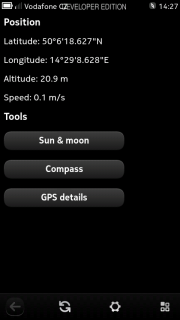
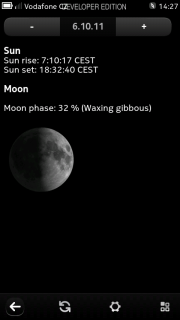
Continuing on my Hackweek project, I've polished GePeS a bit today. I started with better display of GPS coordinates and added some more GPS details to separate page. Adding images for moon phase was also part of the plan, though it force me to learn how to switch application to black theme, which looks much better with moon image. Rest of time was spent on cleaning up the code and adding preferences (for now only refresh rate). Updated screenshots: Main screen Sun and moon screen Compass screen GPS details screen PS: Some numbers look weird (altitude and speed), though I'm pretty sure this is what phone reports me.

Filed under: English Meego Suse 4 comments Flattr this!

Rapha&#235;l Hertzog: Do You Want a Free Debian Book? Read This.

A bit more than a year elapsed since we announced our plans to translate our Debian book into English and to try to get it published under a license compatible with the Debian Free Software Guidelines. But we re now ready to go to the next step. Completing the translation of 450 pages book is a huge work, we estimate it s going to take roughly 3 full time months for both Roland and me. Since we re freelancers, we can take the required time provided that we have a minimum income during that period. That s where you come into play: we have setup a crowdfunding campaign on Ulule.com and we need your support to raise 15000 (this is the absolute minimum for us to be able to commit the required time). Even if a good and up-to-date book on Debian is a great perspective, we want to go further than that by adding the perspective of getting a DFSG-free Debian book. That s why we have transformed the crowfunding campaign in a liberation campaign. When you support the project, you can pledge money towards a liberation fund and if this fund reaches 25000 then the book will be published under the GPL-2+ and CC-BY-SA 3.0 licenses. On top of this, when you support this project you can select a reward that goes from a copy of the ebook to a dinner with the authors (only 10 places for the latter)! Among the other rewards, there s obviously a paperback version of the book, but also an individual one-hour mentoring session with me a nice way to get you hooked as a new Debian contributor (limited to 40 persons, don t miss the opportunity!).
Wait no longer, click here and pledge some money to bring this reference book to Debian and the rest of the world.
We also need your help to spread the news and get as many supporters as possible. Share the link with your friends, write an article on your blog, put a widget on your website, etc. Thank you very much!

Click here to go to the fundraising page and to learn more about this project.

10 comments Liked this article? Click here. My blog is Flattr-enabled.

26 September 2011

John Goerzen: Five

Dad, will you and mom stay up all night decorating the house for me?
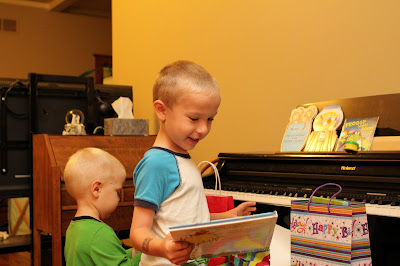
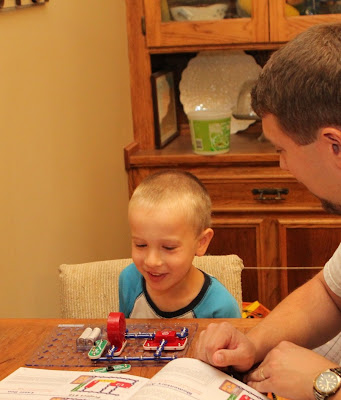
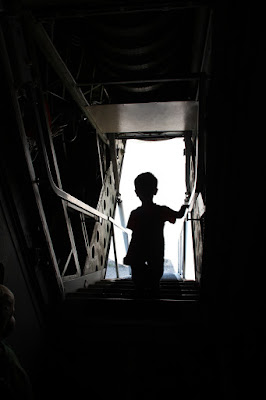
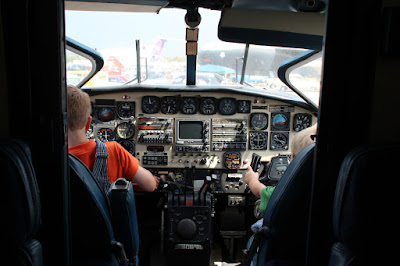
That was Jacob s question to me at bedtime the evening before his fifth birthday. Jacob had already had his birthday party a few weeks ago. When scheduling means that parties happen that far away from the boys real birthdays, they get a smaller celebration with just Terah and me where we open their presents from us. A low-key thing, so we weren t planning to decorate the house. I said, Well, I don t think we ll be doing all that since you already had your birthday party. And the look of eager anticipation on his face turned to a very sad and disappointed look, and made me feel really bad. Uhoh. So while Jacob was sleeping, I mentioned it to Terah. We decided we should improvise something simple, so she found some old streamers and we taped them up, running them through several rooms in the house and across his door. It took a few minutes using supplies we already had, but the joy the next morning was priceless. Oh dad, you said you wouldn t stay up all night, BUT YOU DID! Oh I am SO HAPPY! YAY YAY YAY! And he ran through the house to discover what else was set up. Then he ran to find Oliver and gave him a tour of everything. Then we sat down to open his presents. Here he is, holding a present from Terah and me: That s a copy of The Lorax. My friend Jonathan had brought a copy along during our road trip in Mexico, and Jacob was really excited about it. And didn t really want to give it up, because You can only get The Lorax in Mexico. He (and Oliver) really enjoyed all his presents he also got a train book from us (which he said, Oh, yay, it s the book they have at preschool! ), and a game and some other presents from the distant relatives. But the highlight was something of an impulse buy. I was at the RadioShack in Derby a place I ve written about before, It is what a RadioShack should (and used to) be. It has a large amateur radio section, sells all sorts of coax by the foot, and provides astonishingly good post-sale service. Well, I was there with a radio question, and Mark (the owner) who is an excellent salesman in a positive way pointed me to a display of snap kits. I noticed their Electronics 101 Snap-Kit (a rebranded Snap Circuits Jr. SC-100). A ham in Pennsylvania had suggested them to me once, and as Jacob s birthday was coming up, I gave it some thought. The kit said ages 8 and up. I asked Mark what he thought about a boy just turning 5. He said, Well, probably not normally. But knowing you, if you re there to work on them with him, I think he d enjoy it. But I wouldn t have him work on it by himself. I agreed and we bought it. I pondered how to explain the concept of this thing to Jacob. Eventually I decided I would call it a toy-building kit. He understood that. Jacob and I spent hours together working with it. He would flip through the book, either picking circuits that looked interesting or telling me what kind of circuit he wanted to build. Then I would tell him what to put where, and he d snap them together and play with them. He only played with each finished product a few minutes before he was ready to try another. Once I got him very excited with my offer to show him how to hook up two switches in parallel for the fan he built (and later introduced the parallel vs. series concept by hooking them up in series instead.) Here we are working on it together. Jacob repeatedly called Terah over to look at the things he built. He was very excited that he assembled it himself. Eventually, Oliver (age 2) came over wanting to help. So he sat on my lap, and handed parts to Jacob, then Jacob put them on the grid. Oliver really enjoyed being involved in this way, even though I had to keep him from doing things like ripping the capacitor off its mount. We tend to be modest in terms of the number of things we give the boys and their cost, reasoning that we, like many, already have too many toys in our house, and that greater cost doesn t necessarily equate with a better experience for the boys. I particularly look for things with lasting value and unique experiences for them, and I think we succeeded this year. But I realized quickly that the greatest value of this kit wasn t electronics. It was having a great way for me to spend a lot of time doing things with the boys which all of us enjoyed. Those hours building things together were as much a present for me as for Jacob, I m quite sure. Jacob s real party was a few weeks ago at the Great Plains Transportation Museum in Wichita. They let people rent a historic caboose to use for a birthday party for children. So we did that for Jacob this year. That was a huge hit for the boys. Jacob got to help his grandpa make some pie (instead of cake) for the party. He enjoyed eating it, of course. He enjoyed opening his presents high up on the observation chair in the caboose. And the boys got to play on all the other equipment in the museum. Jacob enjoyed playing tour guide for family since most of them hadn t been there. He also enjoyed watching freight trains pass on the other side of the fence from the museum preferably while sitting in one of the museum s engines. Oliver certainly didn t get left out. Train-watching is serious business, after all. Jacob has long talked about going to the train museum and the airplane museum (Kansas Aviation Museum) on the same day, so one of his birthday surprises was that we went to the airplane museum after his party. His favorite item there is a retired FedEx 727. Here he is walking down the rear of the plane. And, of course, they played captain and co-pilot in several different planes.

Next.

Previous.