Search Results: "ed"

26 January 2015

Tanguy Ortolo: Scale manufacturers

Dear manufacturers of kitchen scales, could you please stop considering your clients as idiots, and start developing useful features?Liquid measurement: this is one feature that is available on almost every electronic scale available. Except it is completely useless to people that use the metric system, as all it does is replace the usual display in grammes by centilitres and divide the number on display by ten. Thank you, but no person that has been to school in a country that uses the metric system needs electronic assistance to determine the volume corresponding to a given weight of water, and for people that have not, a simple note written on the scale, stating that for water or milk, divide the weight in grammes by ten to get the volume in centilitres should be enough. Now, there is still one thing that an electronic scale could be useful for, which is determining the volume of liquids other than water (density 1 g/ml) or milk (density approx. equal to 1 g/ml), most importantly: oil (density approx. equal to .92 g/ml for edible oils like sunflower, peanut, olive and canola).

Francois Marier: Using unattended-upgrades on Rackspace's Debian and Ubuntu servers

I install the unattended-upgrades package on almost all of my Debian and Ubuntu servers in order to ensure that security updates are automatically applied. It works quite well except that I still need to login manually to upgrade my Rackspace servers whenever a new rackspace-monitoring-agent is released because it comes from a separate repository that's not covered by unattended-upgrades. It turns out that unattended-upgrades can be configured to automatically upgrade packages outside of the standard security repositories but it's not very well documented and the few relevant answers you can find online are still using the old whitelist syntax.

Initial setup The first thing to do is to install the package if it's not already done:
apt-get install unattended-upgrades
and to answer yes to the automatic stable update question. If you don't see the question (because your debconf threshold is too low -- change it with dpkg-reconfigure debconf), you can always trigger the question manually:
dpkg-reconfigure -plow unattended-upgrades
Once you've got that installed, the configuration file you need to look at is /etc/apt/apt.conf.d/50unattended-upgrades.

Whitelist matching criteria Looking at the unattended-upgrades source code, I found the list of things that can be used to match on in the whitelist:
  • origin (shortcut: o)
  • label (shortcut: l)
  • archive (shortcut: a)
  • suite (which is the same as archive)
  • component (shortcut: c)
  • site (no shortcut)
You can find the value for each of these fields in the appropriate _Release file under /var/lib/apt/lists/. Note that the value of site is the hostname of the package repository, also present in the first part these *_Release filenames (stable.packages.cloudmonitoring.rackspace.com in the example below). In my case, I was looking at the following inside /var/lib/apt/lists/stable.packages.cloudmonitoring.rackspace.com_debian-wheezy-x86%5f64_dists_cloudmonitoring_Release:
Origin: Rackspace
Codename: cloudmonitoring
Date: Fri, 23 Jan 2015 18:58:49 UTC
Architectures: i386 amd64
Components: main
...
which means that, in addition to site, the only things I could match on were origin and component since there are no Suite or Label fields in the Release file. This is the line I ended up adding to my /etc/apt/apt.conf.d/50unattended-upgrades:
 Unattended-Upgrade::Origins-Pattern  
         // Archive or Suite based matching:
         // Note that this will silently match a different release after
         // migration to the specified archive (e.g. testing becomes the
         // new stable).
 //      "o=Debian,a=stable";
 //      "o=Debian,a=stable-updates";
 //      "o=Debian,a=proposed-updates";
         "origin=Debian,archive=stable,label=Debian-Security";
         "origin=Debian,archive=oldstable,label=Debian-Security";
+        "origin=Rackspace,component=main";
  ;

Testing To ensure that the config is right and that unattended-upgrades will pick up rackspace-monitoring-agent the next time it runs, I used:
unattended-upgrade --dry-run --debug
which should output something like this:
Initial blacklisted packages: 
Starting unattended upgrades script
Allowed origins are: ['origin=Debian,archive=stable,label=Debian-Security', 'origin=Debian,archive=oldstable,label=Debian-Security', 'origin=Rackspace,component=main']
Checking: rackspace-monitoring-agent (["<Origin component:'main' archive:'' origin:'Rackspace' label:'' site:'stable.packages.cloudmonitoring.rackspace.com' isTrusted:True>"])
pkgs that look like they should be upgraded: rackspace-monitoring-agent
...
Option --dry-run given, *not* performing real actions
Packages that are upgraded: rackspace-monitoring-agent

Making sure that automatic updates are happening In order to make sure that all of this is working and that updates are actually happening, I always install apticron on all of the servers I maintain. It runs once a day and emails me a list of packages that need to be updated and it keeps doing that until the system is fully up-to-date. The only thing missing from this is getting a reminder whenever a package update (usually the kernel) requires a reboot to take effect. That's where the update-notifier-common package comes in. Because that package will add a hook that will create the /var/run/reboot-required file whenever a kernel update has been installed, all you need to do is create a cronjob like this in /etc/cron.daily/reboot-required:
#!/bin/sh
cat /var/run/reboot-required 2> /dev/null   true
assuming of course that you are already receiving emails sent to the root user (if not, add the appropriate alias in /etc/aliases and run newaliases).

NOKUBI Takatsugu: Weak ssh public keys in github

A presentation slide, named Attacking against 5 millions SSH public keys 500 SSH is published, it is a lightning talk in Edomae security seminar in Jan 24, 2015. He grabbed ssh public keys with GitHub API (https://github.com/$ user .key), the API is obsoleted, but not closed. He found short (<= 512 bit) DSA/RSA keys and can solve prime decomposition 256bit RSA key in 3 seconds. And he repoted there are 208 weak ssh keys generated by Debian/Ubuntu (CVE-2008-0166). It was already announced by GitHub. On the other hand, such ssh keys couldn t solve prime decomposition with fastgcd. It means almost ssh keys in GitHub has no bias in almost random number generators implementations, it is a good news.

25 January 2015

Richard Hartmann: KDE battery monitor

Dear lazyweb, using a ThinkPad X1 Carbon with Debian unstable and KDE 4.14.2, I have not had battery warnings for a few weeks, now. The battery status can be read out via acpi -V as well as via the KDE widget. Hibernation via systemctl hibernate works as well. What does not work is the warning when my battery is low, or automagic hibernation when shutting the lid or when the battery level is critical. From what I gather, something in the communication between upower and KDE broke down, but I can't find what it is. I have also been told that Cinnamon is affected as well, so this seems to be a more general problem Sadly, me and anyone else who's affected has been unable to fix this. So, dear lazyweb, please help. In loosely related news, this old status is still valid. UMTS is stable-ish now but even though I saved the SIM's PIN, KDE always displays a "SIM PIN unlock request" prompt after booting or hibernating. Once I enter that PIN, systemd tells me that a system policy prevents the change and wants my user password. If anyone knows how to get rid of that, I would also appreciate any pointers.

Chris Lamb: Recent Redis hacking

I've done a bunch of hacking on the Redis key/value database server recently:
I also made the following changes to the Debian packaging:

Dirk Eddelbuettel: RcppArmadillo 0.4.600.4.0

Conrad put up a maintenance release 4.600.4 of Armadillo a few days ago. As in the past, we tested this with number of pre-releases and test builds against the now over one hundred CRAN dependents of our RcppArmadillo package. The tests passed fine as usual, and results are as always in the rcpp-logs repository. Changes are summarized below based on the NEWS.Rd file.
Changes in RcppArmadillo version 0.4.600.4.0 (2015-01-23)
  • Upgraded to Armadillo release Version 4.600.4 (still "Off The Reservation")
    • Speedups in the transpose operation
    • Small bug fixes
Courtesy of CRANberries, there is also a diffstat report for the most recent release. As always, more detailed information is on the RcppArmadillo page. Questions, comments etc should go to the rcpp-devel mailing list off the R-Forge page.

This post by Dirk Eddelbuettel originated on his Thinking inside the box blog. Please report excessive re-aggregation in third-party for-profit settings.

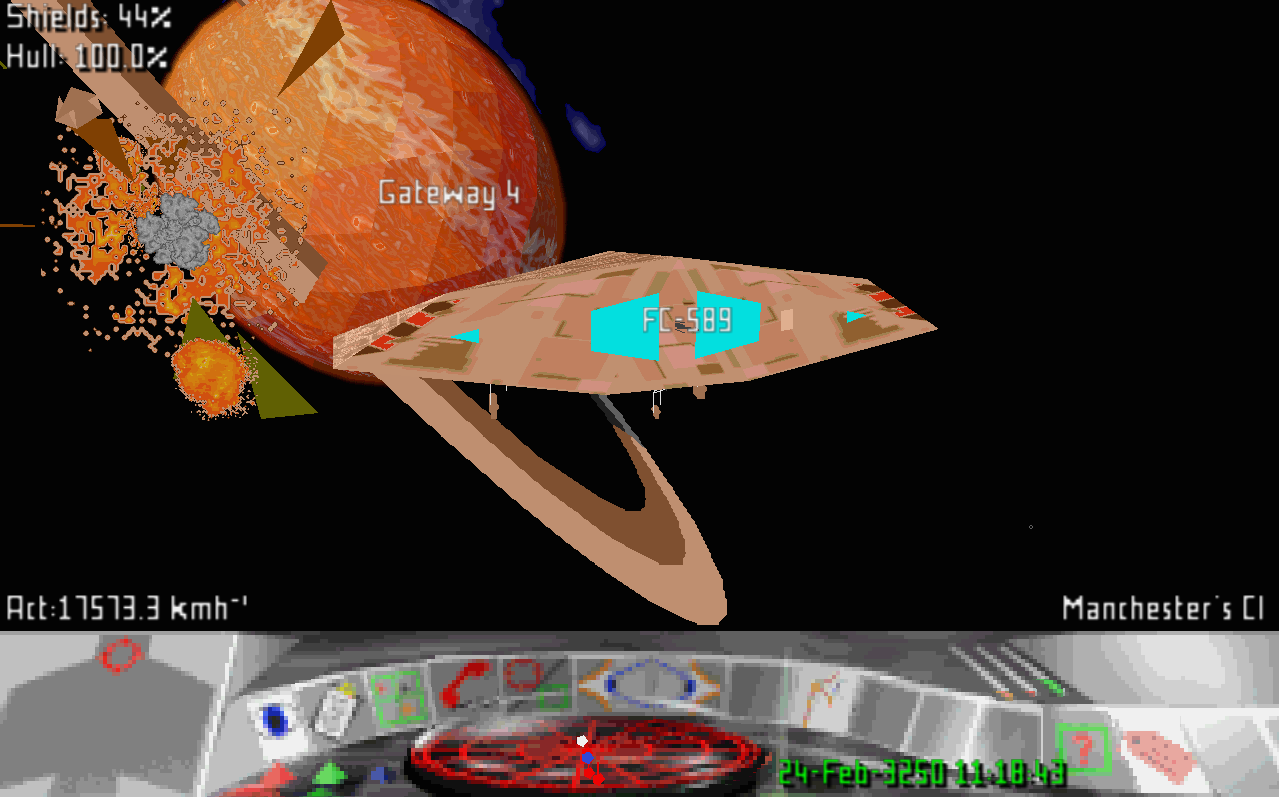
Jonathan Dowland: Frontier: First Encounters

Cobra mk. 3 Cobra mk. 3
Four years ago, whilst looking for something unrelated, I stumbled across Tom Morton's port of "Frontier: Elite II" for the Atari to i386/OpenGL. This took me right back to playing Frontier on my Amiga in the mid-nineties. I spent a bit of time replaying Frontier and its sequel, First Encounters, for which there exists an interesting family of community-written game engines based on a reverse-engineering of the original DOS release. I made some scrappy notes about engines, patches etc. at the time, which are on my frontier page. With the recent release of Elite: Dangerous, I thought I'd pick up where I left in 2010 and see if I could get the Thargoid ship. I'm nowhere near yet, but I've spent some time trying to maximize income during the game's initial Soholian Fever period. My record in a JJFFE-derived engine (and winning the Wiccan Ware race during the same period) is currently 727,800. Can you do better?

Joey Hess: making propellor safer with GADTs and type families

Since July, I have been aware of an ugly problem with propellor. Certain propellor configurations could have a bug. I've tried to solve the problem at least a half-dozen times without success; it's eaten several weekends. Today I finally managed to fix propellor so it's impossible to write code that has the bug, bending the Haskell type checker to my will with the power of GADTs and type-level functions. the bug Code with the bug looked innocuous enough. Something like this:
foo :: Property
foo = property "foo" $
    unlessM (liftIO $ doesFileExist "/etc/foo") $ do
        bar <- liftIO $ readFile "/etc/foo.template"
        ensureProperty $ setupFoo bar
The problem comes about because some properties in propellor have Info associated with them. This is used by propellor to introspect over the properties of a host, and do things like set up DNS, or decrypt private data used by the property. At the same time, it's useful to let a Property internally decide to run some other Property. In the example above, that's the ensureProperty line, and the setupFoo Property is run only sometimes, and is passed data that is read from the filesystem. This makes it very hard, indeed probably impossible for Propellor to look inside the monad, realize that setupFoo is being used, and add its Info to the host. Probably, setupFoo doesn't have Info associated with it -- most properties do not. But, it's hard to tell, when writing such a Property if it's safe to use ensureProperty. And worse, setupFoo could later be changed to have Info. Now, in most languages, once this problem was noticed, the solution would probably be to make ensureProperty notice when it's called on a Property that has Info, and print a warning message. That's Good Enough in a sense. But it also really stinks as a solution. It means that building propellor isn't good enough to know you have a working system; you have to let it run on each host, and watch out for warnings. Ugh, no! the solution This screams for GADTs. (Well, it did once I learned how what GADTs are and what they can do.) With GADTs, Property NoInfo and Property HasInfo can be separate data types. Most functions will work on either type (Property i) but ensureProperty can be limited to only accept a Property NoInfo.
data Property i where
    IProperty :: Desc -> ... -> Info -> Property HasInfo
    SProperty :: Desc -> ... -> Property NoInfo
data HasInfo
data NoInfo
ensureProperty :: Property NoInfo -> Propellor Result
Then the type checker can detect the bug, and refuse to compile it. Yay! Except ... Property combinators There are a lot of Property combinators in propellor. These combine two or more properties in various ways. The most basic one is requires, which only runs the first Property after the second one has successfully been met. So, what's it's type when used with GADT Property?
requires :: Property i1 -> Property i2 -> Property ???
It seemed I needed some kind of type class, to vary the return type.
class Combine x y r where
    requires :: x -> y -> r
Now I was able to write 4 instances of Combines, for each combination of 2 Properties with HasInfo or NoInfo. It type checked. But, type inference was busted. A simple expression like
foo  requires  bar
blew up:
   No instance for (Requires (Property HasInfo) (Property HasInfo) r0)
      arising from a use of  requires'
    The type variable  r0' is ambiguous
    Possible fix: add a type signature that fixes these type variable(s)
    Note: there is a potential instance available:
      instance Requires
                 (Property HasInfo) (Property HasInfo) (Property HasInfo)
        -- Defined at Propellor/Types.hs:167:10
To avoid that, it needed ":: Property HasInfo" appended -- I didn't want the user to need to write that. I got stuck here for an long time, well over a month. type level programming Finally today I realized that I could fix this with a little type-level programming.
class Combine x y where
    requires :: x -> y -> CombinedType x y
Here CombinedType is a type-level function, that calculates the type that should be used for a combination of types x and y. This turns out to be really easy to do, once you get your head around type level functions.
type family CInfo x y
type instance CInfo HasInfo HasInfo = HasInfo
type instance CInfo HasInfo NoInfo = HasInfo
type instance CInfo NoInfo HasInfo = HasInfo
type instance CInfo NoInfo NoInfo = NoInfo
type family CombinedType x y
type instance CombinedType (Property x) (Property y) = Property (CInfo x y)
And, with that change, type inference worked again! \o/ (Bonus: I added some more intances of CombinedType for combining things like RevertableProperties, so propellor's property combinators got more powerful too.) Then I just had to make a massive pass over all of Propellor, fixing the types of each Property to be Property NoInfo or Property HasInfo. I frequently picked the wrong one, but the type checker was able to detect and tell me when I did. A few of the type signatures got slightly complicated, to provide the type checker with sufficient proof to do its thing...
before :: (IsProp x, Combines y x, IsProp (CombinedType y x)) => x -> y -> CombinedType y x
before x y = (y  requires  x)  describe  (propertyDesc x)
onChange
    :: (Combines (Property x) (Property y))
    => Property x
    => Property y
    => CombinedType (Property x) (Property y)
onChange = -- 6 lines of code omitted
fallback :: (Combines (Property p1) (Property p2)) => Property p1 -> Property p2 -> Property (CInfo p1 p2)
fallback = -- 4 lines of code omitted
.. This mostly happened in property combinators, which is an acceptable tradeoff, when you consider that the type checker is now being used to prove that propellor can't have this bug. Mostly, things went just fine. The only other annoying thing was that some things use a [Property], and since a haskell list can only contain a single type, while Property Info and Property NoInfo are two different types, that needed to be dealt with. Happily, I was able to extend propellor's existing (&) and (!) operators to work in this situation, so a list can be constructed of properties of several different types:
propertyList "foos" $ props
    & foo
    & foobar
    ! oldfoo    
conclusion The resulting 4000 lines of changes will be in the next release of propellor. Just as soon as I test that it always generates the same Info as before, and perhaps works when I run it. (eep) These uses of GADTs and type families are not new; this is merely the first time I used them. It's another Haskell leveling up for me. Anytime you can identify a class of bugs that can impact a complicated code base, and rework the code base to completely avoid that class of bugs, is a time to celebrate!

24 January 2015

Daniel Pocock: Get your Github issues as an iCalendar feed

I've just whipped up a Python script that renders Github issue lists from your favourite projects as an iCalendar feed. The project is called github-icalendar. It uses Python Flask to expose the iCalendar feed over HTTP. It is really easy to get up and running. All the dependencies are available on a modern Linux distribution, for example:
$ sudo apt-get install python-yaml python-icalendar python-flask python-pygithub
Just create an API token in Github and put it into a configuration file like this:
api_token: 6b36b3d7579d06c9f8e88bc6fb33864e4765e5fac4a3c2fd1bc33aad
bind_address: ::0
bind_port: 5000
filter: all
Run it from the shell:
$ ./github_icalendar/main.py github-ics.cfg
and connect to it with your favourite iCalendar client. Consolidating issue lists from Bugzilla, Github, Debian BTS and other sources A single iCalendar client can usually support multiple sources and thereby consolidate lists of issues from multiple bug trackers. This can be much more powerful than combining RSS bug feeds because iCalendar has built-in support for concepts such as priority and deadline. The client can use these to help you identify the most critical issues across all your projects, no matter which bug tracker they use. Bugzilla bugtrackers already expose iCalendar feeds directly, just look for the iCalendar link at the bottom of any search results page. Here is an example URL from the Mozilla instance of Bugzilla. The Ultimate Debian Database consolidates information from the Debian and Ubuntu universe and can already export it as an RSS feed, there is discussion about extrapolating that to an iCalendar feed too. Further possibilities
  • Prioritizing the issues in Github and mapping these priorities to iCalendar priorities
  • Creating tags in Github that allow issues to be ignored/excluded from the feed (e.g. excluding wishlist items)
  • Creating summary entries instead of listing all the issues, e.g. a single task entry with the title Fix 2 critical bugs for project foo
Screenshots The screenshots below are based on the issue list of the Lumicall secure SIP phone for Android. Screenshot - Mozilla Thunderbird/Lightning (Icedove/Iceowl-extension on Debian)

Dirk Eddelbuettel: Rcpp 0.11.4

A new release 0.11.4 of Rcpp is now on the CRAN network for GNU R, and an updated Debian package will be uploaded in due course. Rcpp has become the most popular way of enhancing GNU R with C++ code. As of today, 323 packages on CRAN depend on Rcpp for making analyses go faster and further; BioConductor adds another 41 packages, and casual searches on GitHub suggests dozens mores. This release once again adds a large number of small bug fixes, polishes and enhancements. And like the last time, these changes were made by a group of seven different contributors (counting code commits) plus three more providing concrete suggestions. This shows that the Rcpp development and maintenance rests a large number of (broad) shoulders. See below for a detailed list of changes extracted from the NEWS file.
Changes in Rcpp version 0.11.4 (2015-01-20)
  • Changes in Rcpp API:
    • The ListOf<T> class gains the .attr and .names methods common to other Rcpp vectors.
    • The [dpq]nbinom_mu() scalar functions are now available via the R:: namespace when R 3.1.2 or newer is used.
    • Add an additional test for AIX before attempting to include execinfo.h.
    • Rcpp::stop now supports improved printf-like syntax using the small tinyformat header-only library (following a similar implementation in Rcpp11)
    • Pairlist objects are now protected via an additional Shield<> as suggested by Martin Morgan on the rcpp-devel list.
    • Sorting is now prohibited at compile time for objects of type List, RawVector and ExpressionVector.
    • Vectors now have a Vector::const_iterator that is 'const correct' thanks to fix by Romain following a bug report in rcpp-devel by Martyn Plummer.
    • The mean() sugar function now uses a more robust two-pass method, and new unit tests for mean() were added at the same time.
    • The mean() and var() functions now support all core vector types.
    • The setequal() sugar function has been corrected via suggestion by Qiang Kou following a bug report by S ren H jsgaard.
    • The macros major, minor, and makedev no longer leak in from the (Linux) system header sys/sysmacros.h.
    • The push_front() string function was corrected.
  • Changes in Rcpp Attributes:
    • Only look for plugins in the package's namespace (rather than entire search path).
    • Also scan header files for definitions of functions to be considerd by Attributes.
    • Correct the regular expression for source files which are scanned.
  • Changes in Rcpp unit tests
    • Added a new binary test which will load a pre-built package to ensure that the Application Binary Interface (ABI) did not change; this test will (mostly or) only run at Travis where we have reasonable control over the platform running the test and can provide a binary.
    • New unit tests for sugar functions mean, setequal and var were added as noted above.
  • Changes in Rcpp Examples:
    • For the (old) examples ConvolveBenchmarks and OpenMP, the respective Makefile was renamed to GNUmakefile to please R CMD check as well as the CRAN Maintainers.
Thanks to CRANberries, you can also look at a diff to the previous release As always, even fuller details are on the Rcpp Changelog page and the Rcpp page which also leads to the downloads page, the browseable doxygen docs and zip files of doxygen output for the standard formats. A local directory has source and documentation too. Questions, comments etc should go to the rcpp-devel mailing list off the R-Forge page.

This post by Dirk Eddelbuettel originated on his Thinking inside the box blog. Please report excessive re-aggregation in third-party for-profit settings.

Dirk Eddelbuettel: RcppGSL 0.2.4

A new version of RcppGSL is now on CRAN. This package provides an interface from R to the GNU GSL using our Rcpp package. This follows on the heels on the recent RcppGSL 0.2.3 release and extends the excellent point made by Qiang Kou in a contributed section of the vignette: We now not only allow to turn the GSL error handler off (to not abort() on error) but do so on package initialisation. No other user-facing changes were made. The NEWS file entries follows below:
Changes in version 0.2.4 (2015-01-24)
  • Two new helper function to turn the default GSL error handler off (and to restore it) were added. The default handler is now turned off when the package is attached so that GSL will no longer abort an R session on error. Users will have to check the error code.
  • The RcppGSL-intro.Rnw vignette was expanded with a short section on the GSL error handler (thanks to Qiang Kou).
Courtesy of CRANberries, a summary of changes to the most recent release is available. More information is on the RcppGSL page. Questions, comments etc should go to the rcpp-devel mailing list off the R-Forge page.

This post by Dirk Eddelbuettel originated on his Thinking inside the box blog. Please report excessive re-aggregation in third-party for-profit settings.

Dirk Eddelbuettel: RcppAnnoy 0.0.5

A new version of RcppAnnoy is now on CRAN. RcppAnnoy wraps the small, fast, and lightweight C++ template header library Annoy written by Erik Bernhardsson for use at Spotify. RcppAnnoy uses Rcpp Modules to offer the exact same functionality as the Python module wrapped around Annoy. This version contains a trivial one-character change requested by CRAN to cleanse the Makevars file of possible GNU Make-isms. Oh well. This release also overcomes an undefined behaviour sanitizer bug noticed by CRAN that took somewhat more effort to deal with. As mentioned recently in another blog post, it took some work to create a proper Docker container with the required compiler and subsequent R setup, but we have one now, and the aforementioned blog post has details on how we replicated the CRAN finding of an UBSAN issue. It also took Erik some extra efforts to set something up for his C++/Python side, but eventually an EC2 instance with Ubuntu 14.10 did the task as my Docker sales skills are seemingly not convincing enough. In any event, he very quickly added the right fix, and I synced RcppAnnoy with his Annoy code. Courtesy of CRANberries, there is also a diffstat report for this release. More detailed information is on the RcppAnnoy page page.

This post by Dirk Eddelbuettel originated on his Thinking inside the box blog. Please report excessive re-aggregation in third-party for-profit settings.

Diego Escalante Urrelo: Link Pack #05

Lever Rukhin Photographs Los Angeles From His Car
Lever Rukhin shoots the sketchiest parts of Los Angeles from his car, taking a really unique perspective that helps you perceive what LA looks like, if you were in a car An experience that is apparently common to all LA people. People drive too much in the US :-). It s a very interesting interview that goes well with his full site: Lev Rukhin. What I love about this, besides the whole premise, is that Lev went the extra mile and actually hacked his car to make the images he wanted:
Phoblographer: It looks like many of these images have artificial lighting in them. What s your gear setup, and how do you introduce so much light into the scene from your car? Lever: About 9 months ago, I affixed a Mola beauty dish onto the roof rack of my 75 Volvo and juice it with a profoto bi-tube. This takes a bit of practice, as making a turn changes the light completely, which I always try to keep balanced. The Canon 5D3 with a 24mm f1.4 is set up on a tripod. The strobe has allowed me to capture more detail as well as creating a somewhat surreal feel to the sets.
Lev Rukhin Lev Rukhin http://www.levrukhin.com/
The Invisible Woman: A conversation with Bj rk
Bj rk is that Icelandic singer we all hear about but never really pay much attention to because her music is too smart for our simple ears. In this interview she goes over how her latest album is a very personal work, and unexpectedly (?) ends talking about how problematic it s been to be a female auteur in her generation. I have seen the same problem she denounces about people assuming that the male members of a team did all the work while the women just sticked to making coffee and sandwiches. I ve worked with exceptional women that don t get enough credit, but I ve also worked with potentially exceptional women who don t give themselves enough credit. It s a very interesting read, specially since it comes from someone who couldn t be higher in the art food chain. Bj rk is god-damn Bj rk. Only thing that bugs me is that Pitchfork decided to hold back most of the interview for publishing next month. I ll try to go back and read it in full, but I wonder if the technique works for them or if perhaps they are missing the opportunity for a bigger impact. But I digress.
Pitchfork: The world has a difficult time with the female auteur. B: I have nothing against Kanye West. Help me with this I m not dissing him this is about how people talk about him. With the last album he did, he got all the best beatmakers on the planet at the time to make beats for him. A lot of the time, he wasn t even there. Yet no one would question his authorship for a second. If whatever I m saying to you now helps women, I m up for saying it. For example, I did 80% of the beats on Vespertine and it took me three years to work on that album, because it was all microbeats it was like doing a huge embroidery piece. Matmos came in the last two weeks and added percussion on top of the songs, but they didn t do any of the main parts, and they are credited everywhere as having done the whole album. [Matmos ] Drew [Daniel] is a close friend of mine, and in every single interview he did, he corrected it. And they don t even listen to him. It really is strange.
In Defense of the Selfie Stick
Miguel proposes a different take on the consequences of the selfies stick:
When you ask someone to take a picture of you, technically, they are the photographer, and they own the copyright of your picture. ( ) All of a sudden, your backpacking adventure in Europe requires you to pack a stack of legal contracts. Now your exchange goes from Can you take a picture of us? to Can you take a picture of us, making sure that the church is on the top right corner, and also, I am going to need you to sign this paper .
I don t know what s with the selfie stick hate. Let people have fun, it doesn t hurt. If anything, it prevents them from asking you to take their photo, and if we already established you are the kind of people not a big fan of strangers, all the better, right? Why Top Tech CEOs Want Employees With Liberal Arts Degrees
Here s a small extra. When I decided to pursue a humanities/art formal training, I got many naysayers telling me that I was screwing up not specializing even more as a formal (titled) engineer. I argued then, and now, that if I was gonna pay for training, I might as well pay for training outside my comfort zone. The result resonates perfectly with this article. Of course, it s not like the thing is settled, but I can back the various quotes in there. Working with purely technical/engineering types can be an echo chamber, and having trained myself in the humanities and arts I have become incredibly much more sensitive to the human factor of things. I used to think I was already good at this (because we hacker types have lots of confidence), but studying humanities like human communication, social conflict and development, film language, etc; it all has made me a much more capable hacker of things. There s also a nice argument to be made about joining the arts when you are already highly skilled on technical matters. Like Robert Rodr guez s teacher (mentioned in his diary/book Rebel Without a Cause, which I also have to review soon) used to say (generous paraphrasing here): the world is of those who can be their own creative and their own technician.
Both Yi and Sheer recognize that the scientific method is valuable, with its emphasis on logic and reason, especially when dealing with data or engineering problems. But they believe this approach can sometimes be limiting. When I collaborate with people who have a strictly technical background, says Yi, the perspective I find most lacking is an understanding of what motivates people and how to balance multiple factors that are at work outside the realm of technology.
Interesting food for thought, specially if you know an engineer that ditches the arts as of little value for personal growth in their careers/life.
Read more Link Pack, you ll love it

23 January 2015

Chris Lamb: Slack integration for Django

I recently started using the Slack group chat tool in a few teams. Wishing to add some vanity notifications such as sales and user growth milestones from some Django-based projects, I put together an easy-to-use integration between the two called django-slack. Whilst you can use any generic Python-based method of sending messages to Slack, using a Django-specific integration has some advantages:
Here is an example of how to send a message from a Django view:
from django_slack import slack_message
@login_required
def view(request, item_id):
    item = get_object_or_404(Item, pk=item_id)
    slack_message('items/viewed.slack',  
        'item': item,
        'user': request.user,
     )
    return render(request, 'items/view.html',  
        'item': item,
     )
Where items/viewed.slack (in your templates directory) might contain:
 % extends django_slack % 
 % block text % 
  user.get_full_name   just viewed   item.title   (  item.content urlize  ).
 % endblock % 
.slack files are regular Django templates text is automatically escaped as appropriate and that you can use the regular template filters and tags such as urlize, loops, etc. By default, django-slack posts to the #general channel, but it can be overridden on a per-message basis by specifying a channel block:
 % block channel % 
#mychannel
 % endblock % 
You can also set the icon, URL and emoji in a similar fashion. You can set global defaults for all of these attributes to avoid DRY violations within .slack templates as well. For more information please see the project homepage or read the documentation. Patches and other contributions are welcome via the django-slack GitHub project.

Richard Hartmann: Release Critical Bug report for Week 04

The UDD bugs interface currently knows about the following release critical bugs: >How do we compare to the Squeeze and Wheezy release cycles?
Week Squeeze Wheezy Jessie
43 284 (213+71) 468 (332+136) 319 (240+79)
44 261 (201+60) 408 (265+143) 274 (224+50)
45 261 (205+56) 425 (291+134) 295 (229+66)
46 271 (200+71) 401 (258+143) 427 (313+114)
47 283 (209+74) 366 (221+145) 342 (260+82)
48 256 (177+79) 378 (230+148) 274 (189+85)
49 256 (180+76) 360 (216+155) 226 (147+79)
50 204 (148+56) 339 (195+144) ???
51 178 (124+54) 323 (190+133) 189 (134+55)
52 115 (78+37) 289 (190+99) 147 (112+35)
1 93 (60+33) 287 (171+116) 140 (104+36)
1 93 (60+33) 287 (171+116) 140 (104+36)
2 82 (46+36) 271 (162+109) 157 (124+33)
3 25 (15+10) 249 (165+84) 172 (128+44)
4 14 (8+6) 244 (176+68) 187 (132+55)
5 2 (0+2) 224 (132+92)
6 release! 212 (129+83)
7 release+1 194 (128+66)
8 release+2 206 (144+62)
9 release+3 174 (105+69)
10 release+4 120 (72+48)
11 release+5 115 (74+41)
12 release+6 93 (47+46)
13 release+7 50 (24+26)
14 release+8 51 (32+19)
15 release+9 39 (32+7)
16 release+10 20 (12+8)
17 release+11 24 (19+5)
18 release+12 2 (2+0)
Graphical overview of bug stats thanks to azhag:

Enrico Zini: mozilla-facepalm

Mozilla marketplace facepalm This made me sad. My view, which didn't seem to be considered in that discussion, is that people concerned about software freedom and security are likely to stay the hell away from such an app market and its feedback forms. Also, that thread made me so sad about the state of that developer community that I seriously do not feel like investing energy into going through the hoops of getting an account in their bugtracker to point this out. Sigh.

Jaldhar Vyas: Mini-Debconf Mumbai 2015

Last weekend I went to Mumbai to attend the Mini-Debconf held at IIT-Bombay. These are my impressions of the trip. Arrival and Impressions of Mumbai Getting there was a quite an adventure in itself. Unlike during my ill-fated attempt to visit a Debian event in Kerala last year when a bureaucratic snafu left me unable to get a visa, the organizers started the process much earlier at their end this time and with proper permissions. Yet in India, the wheels only turn as fast as they want to turn so despite their efforts, it was only literally at the last minute that I actually managed to secure my visa. I should note however that Indian government has done a lot to improve the process compared to the hell I remember from, say, a decade ago. It's fairly straightforward for tourist visas now and I trust they will get around to doing the same for conference visas in the fullness of time. I didn't want to commit to buying a plane ticket until I had the visa so I became concerned that the only flights left would be either really expensive or on the type of airline that flies you over Syria or under the Indian Ocean. I lucked out and got a good price on a Swiss Air flight, not non-stop but you can't have everything. So Thursday afternoon I set off for JFK. With only one small suitcase getting there by subway was no problem and I arrived and checked in with plenty of time. Even TSA passed me through with only a minimal amount of indignity. The first leg of my journey took me to Zurich in about eight hours. We were only in Zurich for an hour and then (by now Friday) it was another 9 hours to Mumbai. Friday was Safala Ekadashi but owing to the necessity of staying hydrated on a long flight I drank a lot of water and ate some fruit which I don't normally do on a fasting day. It was tolerable but not too pleasant; I definitely want to try and make travel plans to avoid such situations in the future. Friday evening local time I got to Mumbai. Chhattrapati Shivaji airport has improved a lot since I saw t last and now has all the amenities an international traveller needs including unrestricted free wifi (Zurich airport are you taking notes?) But here my first ominous piece of bad luck began. No sign of my suitcase. Happily some asking around revealed that it had somehow gotten on some earlier Swiss Air flight instead of the one I was on and was actually waiting for me. I got outside and Debian Developer Praveen Arimbrathodiyil was waiting to pick me up. Normally I don't lke staying in Mumbai very much even though I have relatives there but that's because we usually went during July-August the monsoon season when Mumbai reverts back to the swampy archipelago it was originally built on. This time the weather was nice, cold by local standards, but lovely and spring-like to someone from snowy New Jersey. There have been a lot of improvements to the road infrastructure and people are actually obeying the traffic laws. (Within reason of course. Whether or not a family of six can arrange themselves on one Bajaj scooter is no business of the cops.) The Hotel Tuliip (yes, two i's. Manager didn't know why.) Residency where I was to stay while not quite a five star establishment was adequate for my needs with a bed, hot water shower, and air conditioning. And a TV which to the bellhops great confusion I did not want turned on. (He asked about five times.) There was no Internet access per se but the manager offered to hook up a wireless router to a cable. Which on closer inspection turned out to have been severed at the base. He assured me it would be fixed tomorrow so I didn't complain and decided to do something more productive thank checking my email like sleeping. The next day I woke up in total darkness. Apparently there had been some kind of power problem during the night which tripped a fuse or something. A call to the front desk got them to fix that and then the second piece of bad luck happened. I plugged my Thinkpad in and woke it up from hibernation and a minute later there was a loud pop from the power adapter. Note I have a travel international plug adapter with surge protector so nothing bad ought to have happened but the laptop would on turning on display the message "critical low battery error" and immediately power off. I was unable to google what that meant without Internet access but I decided not to panic and continue getting ready. I would have plenty of opportunity to troubleshoot at the conference venue. Or so I thought... I took an autorickshaw to IIT. There also there have been positive improvements. Being quite obviously a foreigner I was fully prepared to be taken along the "scenic route." But now there are fair zones and the rickshaws all have (tamperproof!) digital fare meters so I was deposited at the main gate without fuss. After reading a board with a scary list of dos and don'ts I presented myself at security only to be inexplicably waved through without a second glance. Later I found out they've abandoned all the security theatre but not got around to updating the signs yet. Mumbai is one of the biggest, densely populated cities in the world but the IIT campus is an oasis of tranquility on the shores of Lake Powai. It's a lot bigger than it looked on the map so I had to wander around a bit before I reached the conference venue but I did make for the official registration time. Registration I was happy to meet several old friends (Such as Kartik Mistry and Kumar Appiah who along with Praveen and myself were the other DDs there,) people who I've corresponded with but never met, and many new people. I'm told 200+ people registered altogether. Most seemed to be students from IIT and elsewhere in Mumbai but there were also some Debian enthusiasts from further afield and most hearteningly some "civilians" who wanted to know what this was all about. With the help of a borrowed Thinkpad adapter I got my laptop running again. (Thankfully, despite the error message, the battery itself was unharmed.) However, my streak of bad luck was not yet over. It was that very weekend that IIT had a freak campus-wide network outage something that had never happened before. And as the presentation for the talk I was to give had apparently been open when I hibernated my laptop the night before, the sudden forced shutdown had trashed the file. (ls showed it as 0 length. An fsck didn't help.) I possibly had a backup on my server but with no Internet access I had no way to retrieve it. I still remained cool. The talk was scheduled for the second day so I could recover it at the hotel. Keynotes Professor Kannan Maudgalya of the FOSSEE (Free and Open Source Software for Education) Project which is part of the central government Ministry for Human Resource Development spoke about various activities of his project. Of particular interest to us are: FOSSEE is well funded, backed by the government and has enthusiastic staff so we should be seeing a lot more from them in the future. Veteran Free Software activist Venky Hariharan spoke about his experiences in lobbying the government on tech issues. He noted that there has been a sea change in attitudes towards Linux and Open source in the bureacracy of late. Several states have been aggressively mandating the use of it as have several national ministries and agencies. We the community can provide a valuable service by helping them in the transition. They also need to be educated on how to work with the community (contributing changes back, not working behind closed doors etc.) Debian History and Debian Cycle Shirish Agarwal spoke about the Debian philosophy and foundational documents such as the social contract and DFSG and how the release cycle works. Nothing new to an experienced user but informative to the newcomers in the audience and sparked some questions and discussion. Keysigning One of my main missions in attending was to help get as many isolated people as possible into the web of trust. Unfortunately the keysigning was not adequately publicized and few people were ready. I would have led them through the process of creating a new key there and then but with the lack of connectivity that idea had to be abandoned. I did manage to sign about 8-10 keys during other times. Future Directions for Debian-IN BOF I led this one. Lots of spirited discussion and I found feedback from new users in particular to be very helpful. Some take aways are: Lil' Debi Kumar Sukhani was a Debian GSoC student and his project which he demonstrated was to be able to install Debian on an Android phone. Why would you want to do this? Apart from the evergreen "Because I can", you can run server software such as sshd on your phone or even use it as an ARM development board. Unfortunately my phone uses Blackberry 10 OS which can run android apps (emulated under QNX) but wouldn't be able to use this. When I get a real Android phone I will try it out. Debian on ARM Siji Sunny gave this talk which was geared more towards hardware types which I am not but one thing I learned was thee difference between all the different ARM subarchitectures. I knew Siji first from a previous incarnation when he worked at CDAC with the late and much lamented Prof. R.K. Joshi. We had a long conversation about those days. Prof. Joshi/CDAC had developed an Indic rendering system called Indix which alas became the Betamax to Pango's VHS but he was also very involved in other Indic computing issues such as working with the Unicode Consortium and the preseration of Sanskrit manuscripts which is also an interest of mine. One good thing that cameout of Indix was some rather nice fonts. I had thought they were still buried in the dungeons of CDAC but apparently they were freed at one point. That's one more thing for me to look into. Evening/Next morning< My cousin met me and we had a leisurely dinner together. It was quite late by the time I got back to the hotel. FOSSEE had kindly lent me one of their tablets (which incidently are powerful enough to run LibreOffice comfortably.) so I thought I might be able to quickly redo my presentation before bedtime. Well, wouldn't you know it the wifi was not fixed. As I should have guessed but all the progress I'd had made me giddily optimistic. There was an option of trying to find an Internet cafe in a commercial area 15-20 minutes walk away. If this had been Gujarat I would have tried it but although I can more or less understand Hindi I can barely put together two sentences and Marathi I don't know at all. So I gave up that idea. I redid the slides from memory as best I could and went to sleep. In the morning I checked out and ferried myself and my suitcase via rickshaw back to the IIT campus. This time I got the driver to take me all the way in to the conference venue. Prof. Maudgalya kindly offered to let me keep the tablet to develop stuff on. I respectfully had to decline because although I love to collect bits of tech the fact it is it would have just gathered dust and ought to go to someone who can make a real contribution with it. I transferred my files to a USB key and borrowed a loaner laptop for my talk. Debian Packaging Workshop While waiting to do my talk I sat in on a workshop Praveen ran taking participants through the whole process of creating a Debian package (a ruby gem was the example.) He's done this before so it was a good presentation and well attended but the lack of connectivity did put a damper on things. Ask Me Anything It turned out the schedule had to be shuffled a bit so my talk was moved later from the announced time. A few people had already showed up so I took some random questions about Debian from them instead. GNOME Shell Accessibility With Orca Krishnakant Mane is remarkable. Although he is blind, he is a developer and a major contributor to Open Source projects. He talked about the Accessibility features of GNOME and compared them (favorably I might add) with proprietary screen readers. Not a subject that's directly useful to me but I found it interesting nonetheless. Rust: The memory safe language Manish Goregaokar talked about one of the new fad programming languages that have gotten a lot of buzz lately. This one is backed by Mozilla and it's interesting enough but I'll stick with C++ and Perl until one of the new ones "wins." Building a Mail Server With Debian Finally I got to give my talk and, yup, the video out on my borrowed laptop was incompatible with the projector. A slight delay to transfer everything to another laptop and I was able to begin. I talked about setting up BIND, postfix, and of course dovecot along with spamassassin, clamav etc. It turned out I had more than enough material and I went atleast 30 minutes over time and even then I had to rush at the end. People said they liked it so I'm happy. The End I gave the concluding remarks. Various people were thanked (including myself) mementos were given and pictures were taken. Despite a few mishaps I enjoyed myself and I am glad I attended. The level of enthusiasm was very high and lessons were learned so the next Debian-IN event should be even better. My departing flight wasn't due to leave until 1:20AM so I killed a few hours with my family before the flight. Once again I was stopping in Zurich, this time for most of a day. The last of my blunders was not to take my coat out of my suitcase and the temperature outside was 29F so I had to spend that whole time enjoing the (not so) many charms of Zurich airport. Atleast the second flight took me to Newark instead of JFK so I was able to get home a little earlier on Monday evening, exhausted but happy I made the trip.

Michael Prokop: check-mk: monitor switches for GBit links

For one of our customers we are using the Open Monitoring Distribution which includes Check_MK as monitoring system. We re monitoring the switches (Cisco) via SNMP. The switches as well as all the servers support GBit connections, though there are some systems in the wild which are still operating at 100MBit (or even worse on 10MBit). Recently there have been some performance issues related to network access. To make sure it s not the fault of a server or a service we decided to monitor the switch ports for their network speed. By default we assume all ports to be running at GBit speed. This can be configured either manually via:
cat etc/check_mk/conf.d/wato/rules.mk
[...]
checkgroup_parameters.setdefault('if', [])
checkgroup_parameters['if'] = [
  (  'speed': 1000000000 , [], ['switch1', 'switch2', 'switch3', 'switch4'], ALL_SERVICES,  'comment': u'GBit links should be used as default on all switches'  ),
] + checkgroup_parameters['if']
or by visting Check_MK s admin web-interface at WATO Configuration -> Host & Service Parameters -> Parameters for Inventorized Checks -> Networking -> Network interfaces and switch ports and creating a rule for the Explicit hosts switch1, switch2, etc and setting Operating speed to 1 GBit/s there. So far so straight forward and this works fine. Thanks to this setup we could identify several systems which used 100Mbit and 10MBit links. Definitely something to investigate on the according systems with their auto-negotiation configuration. But to avoid flooding the monitoring system and its notifications we want to explicitly ignore those systems in the monitoring setup until those issues have been resolved. First step: identify the checks and their format by either invoking cmk -D switch2 or looking at var/check_mk/autochecks/switch2.mk:
OMD[synpros]:~$ cat var/check_mk/autochecks/switch2.mk
[
  ("switch2", "cisco_cpu", None, cisco_cpu_default_levels),
  ("switch2", "cisco_fan", 'Switch#1, Fan#1', None),
  ("switch2", "cisco_mem", 'Driver text', cisco_mem_default_levels),
  ("switch2", "cisco_mem", 'I/O', cisco_mem_default_levels),
  ("switch2", "cisco_mem", 'Processor', cisco_mem_default_levels),
  ("switch2", "cisco_temp_perf", 'SW#1, Sensor#1, GREEN', None),
  ("switch2", "if64", '10101',  'state': ['1'], 'speed': 1000000000 ),
  ("switch2", "if64", '10102',  'state': ['1'], 'speed': 1000000000 ),
  ("switch2", "if64", '10103',  'state': ['1'], 'speed': 1000000000 ),
  [...]
  ("switch2", "snmp_info", None, None),
  ("switch2", "snmp_uptime", None,  ),
]
OMD[synpros]:~$
Second step: translate this into the according format for usage in etc/check_mk/main.mk:
checks = [
  ( 'switch2', 'if64', '10105',  'state': ['1'], 'errors': (0.01, 0.1), 'speed': None ), # MAC: 00:42:de:ad:be:af,  10MBit
  ( 'switch2', 'if64', '10107',  'state': ['1'], 'errors': (0.01, 0.1), 'speed': None ), # MAC: 00:23:de:ad:be:af, 100MBit
  ( 'switch2', 'if64', '10139',  'state': ['1'], 'errors': (0.01, 0.1), 'speed': None ), # MAC: 00:42:de:ad:be:af, 100MBit
  [...]
]
Using this configuration we ignore the operation speed on ports 10105, 10107 and 10139 of switch2 using the the if64 check. We kept the state setting untouched where sensible ( 1 means that the expected operational status of the interface is to be up ). The errors settings specifies the error rates in percent for warnings (0.01%) and critical (0.1%). For further details refer to the online documentation or invoke cmk -M if64 . Final step: after modifying the checks configuration make sure to run cmk -IIu switch2 ; cmk -R to renew the inventory for switch2 and apply the changes. Do not forget to verify the running configuration by invoking cmk -D switch2 : Screenshot of 'cmk -D switch2' execution

22 January 2015

Erich Schubert: Year 2014 in Review as Seen by a Trend Detection System

We ran our trend detection tool Signi-Trend (published at KDD 2014) on news articles collected for the year 2014. We removed the category of financial news, which is overrepresented in the data set. Below are the (described) results, from the top 50 trends (I will push the raw result to appspot if possible due to file limits).
I have highlighted the top 10 trends in bold, but otherwise ordered them chronologically.
Updated: due to an error in a regexp, I had filtered out too many stories. The new results use more articles.

January
2014-01-29: Obama's state of the union address
February
2014-02-07: Sochi Olympics gay rights protests
2014-02-08: Sochi Olympics first results
2014-02-19: Violence in Ukraine and Maidan in Kiev
2014-02-20: Wall street reaction to Facebook buying WhatsApp
2014-02-22: Yanukovich leaves Kiev
2014-02-28: Crimea crisis begins
March
2014-03-01: Crimea crisis escalates futher
2014-03-02: NATO meeting on Crimea crisis
2014-03-04: Obama presents U.S. fiscal budget 2015 plan
2014-03-08: Malaysia Airlines MH-370 missing in South China Sea
2014-03-08: MH-370: many Chinese on board of missing airplane
2014-03-15: Crimean status referencum (upcoming)
2014-03-18: Crimea now considered part of Russia by Putin
2014-03-21: Russian stocks fall after U.S. sanctions.
April
2014-04-02: Chile quake and tsunami warning
2014-04-09: False positive? experience + views
2014-04-13: Pro-russian rebels in Ukraine's Sloviansk
2014-04-17: Russia-Ukraine crisis continues
2014-04-22: French deficit reduction plan pressure
2014-04-28: Soccer World Cup coverage: team lineups
May
2014-05-14: MERS reports in Florida, U.S.
2014-05-23: Russia feels sanctions impact
2014-05-25: EU elections
June
2014-06-06: World cup coverage
2014-06-13: Islamic state Camp Speicher massacre in Iraq
2014-06-14: Soccer world cup: Spain surprisingly destoyed by Netherlands
July
2014-07-05: Soccer world cup quarter finals
2014-07-17: Malaysian Airlines MH-17 shot down over Ukraine
2014-07-18: Russian blamed for 298 dead in airline downing
2014-07-19: Independent crash site investigation demanded
2014-07-20: Israel shelling Gaza causes 40+ casualties in a day
August
2014-08-07: Russia bans food imports from EU and U.S.
2014-08-08: Obama orders targeted air strikes in Iraq
2014-08-20: IS murders journalist James Foley, air strikes continue
2014-08-30: EU increases sanctions against Russia
September
2014-09-05: NATO summit with respect to IS and Ukraine conflict
2014-09-11: Scottish referendum upcoming - poll results are close
2014-09-23: U.N. on legality of U.S. air strikes in Syria against IS
2014-09-26: Star manager Bill Gross leaves Allianz/PIMCO for Janus
October
2014-10-22: Ottawa parliament shooting
2014-10-26: EU banking review
November
2014-11-05: U.S. Senate and governor elections
2014-11-12: Foreign exchange manipulation investigation results
2014-11-17: Japan recession
December
2014-12-11: CIA prisoner and U.S. torture centers revieled
2014-12-15: Sydney cafe hostage siege
2014-12-17: U.S. and Cuba relations improve unexpectedly
2014-12-18: Putin criticizes NATO, U.S., Kiev
2014-12-28: AirAsia flight QZ-8501 missing

As you can guess, we are really happy with this result - just like the result for 2013 it mentiones (almost) all the key events.
There probably is one "false positive" there: 2014-04-09 has a lot of articles talking about "experience" and "views", but not all refer to the same topic (we did not do topic modeling yet).
There are also some events missing that we would have liked to appear; many of these barely did not make it into the top 50, but do appear in the top 100, such as the Sony cyberattack (#51) and the Fergusson riots on November 11 (#66).
You can also explore the results online in a snapshot.

MJ Ray: Outsourcing email to Google means SPF allows phishing?

I expect this is obvious to many people but bahumbug To Phish, or Not to Phish? just woke me up to the fact that if Google hosts your company email then its Sender Policy Framework might make other Google-sent emails look legitimate for your domain. When combined with the unsupportive support of the big free webmail hosts, is this another black mark against SPF?

Next.

Previous.