Search Results: "spa"

25 July 2006

Joey Hess: moreutils musings

I have an important decision to make about moreutils, my collection of new unix tools. The question is whether to stand firm behind the idea of only adding tools to moreutils that are truely unique and not available in similar form in other packages, or whether to collect good tools to fill in missing gaps in the standard unix toolset, even if they are similar to already existing, but possibly hard to find tools. So far I've had an easy time deciding to reject some tools like add, todist and tostats, which are somewhat special purpose and which turn out to already be mostly implemented in the numutils package. And I'm also fairly comfortable with Lars's and my decision to not include mime, which is similar to File::MimeInfo's mimetype program, if only because implementing that requires a lot of code or a long dependency chain. The decision is harder for things like shuffle/unsort, which both fill in the gap of a file randomisation tool. There already are packages in Debian (bogosort and randomise-lines) that provide this functionality. Another example is srename, which is similar to the rename program hidden in perl, which is insanely useful and rather underused. It's also tricky since I could well be missing existing tools that overlap with moreutils. For example I just learned of the renameutils package, which contains a qmv. That is close to the same thing as vidir, although limited to filename removals (no deletions), and rather more complex, with an interactive command line mode. I've decided that it's worth keeping vidir despite this, if only for the delation support and the possible broader scope later, but it does point to a more general issue. I've already concluded earlier that:
Maybe the problem isn't that no-one is writing them, or that the unix toolspace is covered except for specialised tools, but that the most basic tools fall through the cracks and are never noticed by people who could benefit from them.
One way that tools fall between the cracks, after all, is by being spread amoung lots of little obscure packages like File::MimeInfo, bogosort, randomise-lines, odd corners of perl, mmv, renameutils, etc. You might know about some of these packages, but you probably didn't know about all of them -- I know I didn't. I suspect that the authors of some of them didn't know about others and duplicated work. A single package that collected good generic, consistent, and simple implementations of tools, even if some of them were not unique to it, could benefit from getting more attention than lots of small packages like those, and both help users find out about these tools as well as focus development energy on them to make them better. So which is more important, focusing on collecting and writing unique tools or promoting slightly less unique tools?

24 July 2006

Alexander Sack: 2nd proposed mozilla suite security update for sarge uploaded

You can get a second proposed security build for mozilla suite from my security archive. Version is 2:1.7.8-1sarge7.1. The last one I released in this blog entry contained a serious regression, making all bookmark folders displaying as empty. In order to fix this regression, I added two more patches for issue CVE-2006-2775. So now this issue comprises three patches:
CODE:
1_0005-mfsa2006-35-329677.txt
1_0023-mfsa2006-35-335142-regression-1-2-for-329677.txt
1_0024-mfsa2006-35-337841-regression-part-2-2-for-329677.txt

Alexander Sack: mozilla-thunderbird security update

mozilla-thunderbird 1.0.2-2.sarge1.0.8a has been uploaded to the security buildds. It addresses the same issues recently fixed in DSA-1118 for mozilla and DSA-1120 for mozilla-firefox. I don’t expect hard regressions, but if you find any, please let me know. Otherwise, this package will enter stable-security soon. You can obtain this build from: http://people.debian.org/~asac/security/

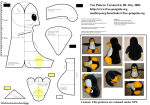
Amaya Rodrigo: DIY plush Tux


A GPLed Tux sewing pattern project that describes itself like this: "The starting point of this project was the question: "Why is it that on the one hand in the Linux world all code of software is freely available and on the other hand the code to compile a soft toy penguin is still not open source?" This project will try to publish code that will enable people to sew soft toy penguins themselves provided they meet certain hardware requirements". 

Blog

Make your own soft-toy Linux  penguin


There is even a submissions blog with lots of inspiration for your own project. Click on the Penguin to see more. Click on the pattern to go to the website.

Bdale Garbee: Flag Burning

It's rare that I find a letter to the editor of a newspaper profound enough to be worth tearing out and saving. Today was one of those days. I am pleased to discover that the full text is visible online, so I can share Ashley Frohwein's letter Insight on Fourth of July flag burning here. Sadly, I'm not always proud of my country... but some of the principles on which it was founded remain as noble and inspiring as ever!

Bdale Garbee: Another Year, Another Post?

Occasionally, the list of things I really should be working on gets a little overwhelming. Late last night was one of those times. So, I spent a couple hours playing with the pile of PDP-11 parts... Took the BA-11N apart far enough to extract the backplane, and added the wires necessary to support 22-bit addressing. Put everything back together, and had a bit of a scare since I couldn't seem to get the console talking to me again. Found a problem in my serial cabling, after which all was well. Dug the DELQA out of the stack, stuck it in the chassis below the KDJ11-D/S, and confirmed that the Decserver 550 firmware still in the CPU board was able to discover it. Extracted the CQD-223/TM SCSI board from the s-box front panel it came in, and realized it's not going to fit into the slot spacing of the BA11-N as-is. The problem is that the 50-pin header for the drive cable is straight, so by the time you put a cable on it the stack is too thick for a backplane slot. So, either I need to scare up a Qbus continuity card or something to let me skip a slot and give the card double height, or alternatively I can replace the 50-pin header with a right-angle box header and the card should fit... At that point, I decided I'd made enough progress, and called it a night.

Bdale Garbee: elilo in Debian

In a recent work-related conversation, Matthew Wilcox pointed out that EFI partitions are mountable on Linux and many distributions keep ia64 system partitions mounted at /boot/efi by default, but Debian does not. Since that behavior is mostly my fault, I recounted the history by way of explaining why it worked that way... and on suggestion from Martin Pool am repeating it here to document all this for posterity. When we were making ia64 bootstrap decisions, the default bootloader on i386 was lilo, and the closest example to what we needed for ia64 in Debian was powerpc. This is because systems using EFI only understand FAT partitions by default, and thus need a FAT partition somewhere that the firmware can read from... often the first partition on the first disk. The Debian model for handling such things at the time seemed to be to craft a command to hook from kernel package postinst scripts that did the heavy lifting in association with a config file. What went on behind the curtain wasn't something to bother the user with on an average day if you could avoid it cleanly. Some bootloaders know how to read a config file from /boot directly, and we started out thinking we'd use elilo that way, but it was hard to match up paths/naming in EFI to what they would look like under Linux. It was also clear to me that most ia64 systems were going to have large system partitions so there'd be plenty of space. So we punted and copy the elilo executable, config file, and any kernels or initrd files referenced in the config to the system partition. I also thought the default location other distributions had chosen for mounting the EFI partition once the kernel was up, /boot/efi, was pretty ugly, but I couldn't think of anything better. The problem is that the standard says you need an \efi\"whatever" directory as the root of your content in the system partition, so mounting the partition at /boot/efi yields paths like /boot/efi/efi/debian. Some distributions didn't adhere to the standard at first, and so didn't see the ugliness until they started to comply... but I was on a team at HP making disk partitioning and content decisions that caused me to be very aware of these details. Putting that all together, I decided there wasn't any point in having the EFI partition mounted by default... anyone who cared and wanted it mounted could just add a line to /etc/fstab to put it wherever they wanted. If I were doing it again today, I'd have an entry in /fstab marked noauto delivered during system installation. I haven't cared enough to tackle that change, though. Sadly, there's one detail of the current implementation that can get in the way of complete happiness. The Debian-specific 'elilo' script that runs in user space to manage the EFI boot partition contents based on the content of /etc/elilo.conf expects to have to mount the EFI partition, and exits with a complaint if the partition is already mounted. For typical users, this script only gets called during installation and from kernel package postinsts, and the actual elilo bootloader remains oblivious to all this. If other distros have picked up the Debian script, I'm not aware of it. So, you're no worse off mounting the EFI partition in Debian than with some other distro, you just get treated poorly if you try to use our elilo script while the partition is mounted. Clearly, we could handle this better. If someone wants to offer up a patch to the elilo script that asks the user if it's OK to scribble in the already-mounted partition instead of doing a mount / scribble / unmount cycle in the presence of an existing mount, I'll be happy to include it in the Debian elilo package. Meanwhile, a lot of us have switched from lilo to grub on our i386 systems, and I'd love for my ia64 systems to work more like my grub-equipped systems. But making a substantive change like teaching elilo to know where /boot is so that it can read a config file from there and do things more like grub, without symlinks, etc, has several issues. We'd need to get the right set of file systems supported from EFI/elilo, we'd need to address the naming issues, and we would require either user intervention on upgrade, or some clever automatic parsing and rewriting of the relevant config files. I can think of other things that would be more rewarding to work on, so don't anyone hold their breath...

23 July 2006

David Nusinow: burp

What a couple of weeks.

So I went off to Europe. I had planned to meet up with Daniel Stone and many others in Paris, but fate decided to piss in my cornflakes and delay my flight out of Boston so that we missed the connecting flight to Paris. I spent the whole next day in Montreal's airport, and while I got a lot of reading about Norse mythology done, I didn't have nearly as much time in Paris and didn't get to meet up with anyone. Daniel and I will have to postpone drinking and bashing X in person until a latter date. The time that I did spend there, was great though, and I got to do some of the tourist things that I didn't get to do last time I was there. Nicole, my girlfriend, had never been to Europe, so she was thrilled to see things for the first time.

Then it was off to Munich, where I did get to spend some time with Michael Banck, who is even more awesome in person than on the internets. Michael was my sponsor in Debian for well over a year, as well as my advocate, and now we're both ops in #debian together, so it was a real thrill to finally meet up with him. He was too polite to let me buy him dinner or a drink as thanks, so I'm hoping he comes to visit so I can repay him. I also got to meet several others, including release manager extraordinare Andreas Barth, which was a lot of fun. We were in town when Germany was playing Sweden in the world cup, and Germany actually won, so the whole city was singing until dawn. Ever since I've been back I've been drinking lots of Hefeveisens and wishing that they were served in 1 liter form.

Surprisingly, since I've been back, I've had the opportunity to do some programming at work and push Free Software at the same time. A co-worker of mine recently did an experiment that got her a list of 900 genes, and she wanted to narrow that list by comparing them to another list or two, but had no idea how to get this done in a reasonable amount of time. So one afternoon I wrote a small ruby script to do this, and all of a sudden my boss is looking at me wondering what other sort of neat computer things I could whip up. I also had to start doing some statistics, and I found a test that I needed to do which Excel couldn't do, so I started learning and coding a bit of R, which is pretty nice so far. The co-worker of mine just invested $800 in a two day class on learning to use an add-on for R, which is cool because I've totally failed until now to get anyone to use Free Software in the lab. The whole thing is making my labmates look at me a little funny though, since this stuff is way out of their league for the most part.

The bad news is that a few days after I came back, I found that my laptop's hard drive started making some very bad noises. I moved my data to backup computer that I'd inherited but not really used, only to find that the backup machine was prone to weird random errors. That left me without a functional computer at home. I took the opportunity to order a new machine for myself, but for now I'm kind of stuck with a web browser at work. In the meanwhile, I've taken to teaching myself statistics, and in order to do that, I've been re-learning calculus. I find it a little weird that I'm going home at night and picking up a calculus text book in my free time.

As far as X work goes, not having a working computer has caused a bit of a problem. Luckily, just before my machine died, Andres Salomon had nearly finished work on backporting Xorg 7.1 to sarge. Afterwards, he decided that he wanted to join the XSF, so since then he's been spearheading getting 7.1 in to experimental. He's been continuing the work that I haven't been able to do lately, and I'm excited to work with him in the future. In addition, Jurij Smakov joined the team as sparc driver maintainer, and Drew Parsons is officially joining the team, bringing Xprint officially in to the XSF. So even though I haven't been able to do much, things are moving forward, which is wonderful to see. As soon as I can get set up, I'm going to keep working with Andres to get 7.1 ready to ship in December.

Surprisingly, I drink far more lately than when I had a working computer. I think something is wrong with me if working on Debian helps to keep me from seeking chemical modification.

Martin F. Krafft: X cut-'n'-paste gripe

I sometimes wonder how amazingly b0rken the X window system is, and most of the time it's me swearing about cut-and-paste. Or is it by design that I open a terminal, select some text, close the terminal, and find the paste buffer to be empty? I can't imagine... I'll leave it at that for now and won't bitch about Firefox, OpenOffice.org, and most GTK apps with respect to pasting what I previously copied by selecting stuff with the mouse. Update: many people responded, pointing me to clipboard managers that work around the basic design limitation, because X "cut-n-paste" is actually more of a "drag-n-drop" implementation. Chris Siebenmann explained it best:
The short answer is 'by (bad) design'. The X people were reacting to the problem of not wanting to shove (potentially) large amounts of data into the X server and require the X server to hold onto things, so they designed cut & paste (the second time around) so that the program that created the cut had to hold onto the data.
The longer answer, with some history, is at
http://utcc.utoronto.ca/~cks/space/blog/sysadmin/XCutAndPasteHistory
In retrospect it's probably an over-engineered solution, and it does have the big flaw you ran into. (Arguably everything from that era of X is very complicated and overengineered.)
Other than that, I've also been pointed to the FreeDesktop ClipBoard standard. Somehow I doubt this will have any influence on Fluxbox in the short run.

Evan Prodromou: 4 Thermidor CCXIV

I finally got around to doing a kernel upgrade on this server for CVE-2006-3626, the recently-announced security vulnerability in the Linux kernel. I've been using the simple workarounds for a few days, but I got around to installing a patched kernel this morning, so I did a remote reboot to restart the server. Which, of course, hiccuped. I thought the server wasn't coming up and filed a SR with iWeb, my server host, but by the time they got to it, the server was up and running again. Sometimes it just takes time. I've got a theory that the probability of a server successfully power-cycling is inversely proportional to its physical distance from the operator. iWeb is only about 15 blocks away, so I guess I lucked out this time. tags:

WikiBios del.icio.us served up a tasty wiki treat today: WikiBios. No, it's not a project to code up a Basic Input Output System collaboratively using Wiki -- although that would be real cool. Rather, it's an effort to create biographies for every living person on Earth -- whether or not they're notable. wp:Paul Auster, in his book wp:Brooklyn Follies, described a plan for creating biographies for everyday people as a business. The idea being that people like to know about each others' lives -- their family, their friends. Memorializing someone in a biography keeps them alive and immortal in a way, yet only a tiny fraction of human beings have this privilege. I hope WikiBios takes off. It seems like a good idea. tags:

Limited single sign-on on Wikitravel So, after about a week of testing on our review site, I've rolled out a single sign-on system on Wikitravel. I'm starting with a very limited test: users of any of our language versions (English, German, French, Spanish, dot dot dot) can log in to our Wikitravel Shared repository with their account from their "home" wiki. The project uses OpenID, the URL-based SSO solution that's implemented on LiveJournal, Movable Type, Zooomr, and a few other systems. Although this trial is very limited, my hope is to allow sign-on between all the language versions of Wikitravel soon, and sign-on with external OpenID-enabled services soon after. Wikimedia, Wikia, and WikiHow admins have expressed interest in installing the [[$$vote abstain http://www.mediawiki.org/ extension that makes OpenID work on Wikitravel, so with luck we'll have some very nice Interwiki Interlogin very soon. tags:

22 July 2006

Junichi Uekawa: iSight probably working on MacBook.

Since there was a report on MacBook iSight working, I'd liketo make it into a Debian package.linux-uvc module withfirmware extractor. It should be doable pretty quickly.I've asked the upstream author to add necessary copyingstatement since it currently has nothing on it.I hope it'sresolved soon.Of course, it so happens that this particular gnome developer is also using SORBS to detect SPAM or whatever it is he thinks, and my mail bounces. Ouch.This SORBS thing is very annoying.

Erich Schubert: Students' Triathlon

Summary: Think, Bike, Dance. Best grade in final exam for my previous six years of life. Biked 20 km in 50 minutes in city after-work traffic. Partied 9:30 hours, dancing most of that. Biked 20 km back, in 55 minutes.

21 July 2006

Mike Hommey: Firefox 2.0b1 in experimental

After quite some work on packaging it, Firefox 2.0b1 is finally being uploaded to experimental. It is linked to the system libmyspell instead of the bundled one, and can use system dictionaries like Thunderbird already does. I’m also working on using the system libsqlite3, but it first requires some build changes in the debian sqlite3 package and some more work to see if it’s really feasible… you see, they like to take external libraries and modify them so much as adding symbols, changing some internals… and these changes only exist in the mozilla codebase… (the 2 main examples of that being expat and sqlite3) It also includes a working DOM Inspector which upstream didn’t include in their release because they are in the process of moving the component in the core. I also had to fix some more the build system so that some things would be installed by make install (they tend to forget it), others would just be installed (mistakenly removed rules…) or make clean would do its work: cleaning (they tend to forget to flag files for removal when they create it in a Makefile). All that makes me wonder what their review/super-review thing is worth. Anyways, please give it a try, especially if you reported a bug on earlier versions, it would be helpful if you closed bugs that are fixed by this release (don’t forget the ‘Version:’ in the closing message so that the BTS version tracking would do its work). Update: Upstream Firefox 2.0b1 has a working DOM Inspector. It only appears it just doesn’t build correctly the way we build Firefox… might be some missing changes to the Makefiles. Again. *sigh* Update 2: It was trickier: missing something to make the inspector symbols public instead of having a hidden visibility… Update 3: It was actually my fault. /me goes hiding under a rock. And I managed to remove a comment to this post when removing spam… *sigh*. I think I need to take a break.

20 July 2006

Evan Prodromou: 2 Thermidor CCXIV

I talked with Raymond King and Mark Dilley at RecentChangesCamp in February (uh... I mean Pluvi se) about their plans to develop Mark's excellent SwitchWiki wiki directory into something... more. I'm glad to see that WikiIndex is really picking up steam. It's becoming my first-stop for getting information on what's wiki, what's not, and who's doing what. The site uses MediaWiki, but the principles and community are very much rooted in the traditions of Ward's Wiki, MeatballWiki and CommunityWiki. I really hope this site keeps up it's momentum and growth. tags:

CC Salon in Montreal Tonight is the first Creative Commons Salon in Montreal. The get-together is at Caf l tranger, 680 Sainte-Catherine Ouest (at Alymer) at 19h30. More details on the Creative Commons Canada blog: http://creativecommons.ca/blog/?p=185 . Maj and I are trying to get a sitter for the event -- Amita June is starting to get grumpier and grumpier about going to sleep after 8PM. But I'll be there regardless. tags:

Great camping Website So, maybe I just haven't been camping a lot in other places outside Quebec in a while, but I'm extremely impressed with the quality of the S paq Web site. You can search the entire network for available campsites based on various criteria (size of tent vs. RV, for example), and then use a map-based interface to browse possible sites. The maps go down to the individual site level, and have popup descriptions of each and every site -- how much sun, how close to water, how private, etc. It's really nice. I have my quibbles -- we tend to do road-trip camping, where we'll stay in a different campground each night for a few days. It'd be nice to do all those reservations at once, but the site doesn't support that. And there are some search criteria I'd like to be able to specify (number of neighbors, access by car) that aren't possible. But as far as it goes, this is a real good site. tags:

Wikispam lockdown I've been having a real problem with Wikispam on my site lately -- several of my pages have nothing-to-sniff-at wp:PageRank values of 6 or 7, and I think that attracts a certain spammity crowd. I think that dealing with Wikispam is something most wiki sites do very well-- an active community is the best counter-measure against spam. And there are lots of good tools, like regexp filters, per-page locking, email and IM notification, and ip blocking that make it easier to maintain a site. But I don't have an active community working on this site -- it's pretty much just me. And WiLiKi, as beautiful and Scheme-y as it is, doesn't have many of the anti-spam tools that users of other wiki engines take for granted. I plan on building more anti-spam tools into the site, but for now I've just been locking the site up when I'm not writing something. It's not as wiki-ish, but it does keep my writing up more often. I'd feel pretty bad about it, but it looks like Alex locks up CommunityWiki for days at a time. tags:

Amazon man at the door Just got an order from Amazon in... full of CDs and books. When I used to live in my car (long story, there), I had my 100 favorite CDs in a box in the back. It was safe there in tons of cities -- wt:Chicago, wt:Saint Louis, wt:New York City, even wt:Monterrey and wt:Guanajuato. But I parked it about a block from It's Tops in San Francisco one night while visiting home, and one of my windows was smashed and the discs were taken. Devastating. Slowly but surely I've been re-stocking my music collection, but it's painful to buy the same album twice (and, yes, I know... I shoulda made backups! I do that now). Today's shipment contained a lot of stuff I re-bought: ''wp:The Last Waltz'', a bunch of wp:Neil Young (including the DVD of wp:Greendale), and one of my favorite albums ever, the eponymous first album from Lamb. Also in the box were a bunch of Lost paperbacks ("inspired by the hit series") and the hardback copy of Bad Twin, the mystery novel supposedly written by one of the people who died in the crash of Flight 815. Yeah, I know -- but I like the show, dangit. tags:

Best thing ever Vaguely reminiscent of the very fine Good or Bad? feature from Brunching Shuttlecocks, bestthing.info, by the enigmatic but talented xkcd, is a good way to waste a few minutes. tags:

Arnaud Vandyck: Everybody wants to open source

It’s strange to follow state of minds of big companies about open source (they rarely speak about Free Software but that’s another story;-)). Dalibor Topic, Mark Wielaard and all friends from GNU Classpath spent a lot of time talking with Sun to try to open source Java (or even just be able to get the tools to make open source java virtual machines and API). They are some moves in that direction and people like Tom Marble is working hard to make Sun’s JDK license DFSG compatible and integrate Sun’s JDK in the Debian distribution. Robert Brewin, co-CTO of Sun Microsystems’ software group, said: “I believe that we will have components of Java released into open source within the year,” meaning by next June, Brewin said. “I think [release of] the whole thing will take a little bit longer.” One more step. Another amazing interview is the one of David Kaefer, director of Business Development, Intellectual Property and Licensing at Microsoft who called the open source software movement a “very powerful force in the industry.” He also wants us to believe that Microsoft will be more and more open… Wait and See ;-)

Amaya Rodrigo: In the news

Merc Molist interviewed me for El Pais, one of the biggest Spanish newspapers, which also happens to be my favourite one, in their weekly technology special, El CiberPais.

The interview, in Spanish, is here. Ugly pic of me wearing the Debian Women Tshirt in the printed version only.

I must say Merc made a great job out of a difficult subject, sexism in IT.

Update: Zobel provided me with a link to an Engrish version of it. Google 's Translation is not much better.


The ugly pic

Ross Burton: Crap Speakers Of Doom

I just discovered a use for the Treble Booster EQ on my iPod... Now that I'm working in the spare room study pretty much all the time I really miss not sitting in the sweet spot for the hifi downstairs. Hanging around I had some cheap Logitech computer speakers, so I've dug those out and plugged my iPod in. This morning I fancied a bit of Sigur Rós so I slapped on Ágætis Bryjun and after two minutes was enjoying the bass (the speakers are sub/sat) but was left wondering what happened to the drums. If I listened very carefully I could just make out a snare, but the cymbals... totally inaudible. Thus Treble Booster, which has at made this album listenable too at least. It's a pain that these speakers are so bass-heavy as my laptop doesn't have bass/treble controls. The irony is that the sub doesn't even go that low, on Flugufrelsarinn the bass drum is totally drowned out by the organ. The mid-bass is just very, very loud. Oh well, I'm planning to get a pair of small speakers (MS Avant 902i are looking good) and one of those super-cheap Super-T amps for this room at some point. NP: Ágætis Bryjun, Sigur Rós

John Goerzen: Am I being scammed?

So today my auction for the tc1100 tablet PC ended. The winning bidder:


I replied to the buyer's e-mail giving shipping prices to Nigeria and Malaysia, and restating my policy of shipping to only PayPal Verified Addresses.

So what do you all think? Is this a scam?

I was shocked at the amount of scams that sellers on eBay are exposed to these days. I've never seen this before, even just a few months ago when I sold my last item on eBay. But with this one, spammers and scammers are using the "ask seller a question" interface. One person tried to get me to use an eBay phishing clone site. Quite a few tried to get me to sell to them off eBay, to people in China, using a non-reputable billpay service. And there was just some generic spam.

So all that, plus the fact that they want me to ship to Nigeria, plus the fact that the person just registered on eBay today, is making me nervous.

So it seems odd, but I can't quite work out how somebody would actually defraud me here. Also, I'm interested in what I should do if it is a scam.

19 July 2006

Simon Richter: Fighting collateral damage from spam

One of the biggest problems in fighting spam is that of false positives. I regularly have to scan my Junk folder for legitimate mail, which takes a great amount of my time, but otherwise I'd miss important stuff, like my provider telling me about a network outage, or a message from eBay. Now what I'd like to see is a mechanism to hand those people legitimately sending bulk emails a token which allows them to go through my spam filters. Obviously, everyone would get a different token. The interesting bit about this is less of a technical thing though: having a token could be interpreted as a prior business relationship, which is a requirement for sending business email in most jurisdictions.

Andrew Pollock: [tech] Gadgets always seem to arrive in bulk

Whenever I get stuff, I always seem to get lots of stuff all at once. So tonight we went to the lovely Fry's, with a mission to acquire an Ethernet switch to plug in the new printer, which was due to arrive any day now. A co-worker had also recently bought a 160Gb hard drive that cost $40 after rebate, so I was on the lookout for one of them too. Instead, I came home with 1.6Tb of hard drive. Oh well. There were some Seagate 400Gb hard drives going for around 30 cents a gigabyte (that figure still blows me away, I remember when it was dollars per megabyte), so I couldn't pass that up. Hopefully it'll motivate me into getting a wriggle-on with building the MythTV box. I figure I'll try to get a USB-2 card and stick it in my 1RU server, attach the four disks to that, and export them via ATA over Ethernet, and I should be able to have an essentially diskless MythTV front-end (maybe boot it from a 1Gb USB key I've got lying around spare, or PXE boot). Should be fun, if I ever get around to it...

Next.

Previous.