Search Results: "pm"

1 January 2021

Dmitry Shachnev: A review of endianness bugs in Qt, and how they were fixed

As you may know, I am Qt 5 maintainer in Debian. Maintaning Qt means not only bumping the version each time a new version is released, but also making sure Qt builds successfully on all architectures that are supported in Debian (and for some submodules, the automatic tests pass). An important sort of build failures are endianness specific failures. Most widely used architectures (x86_64, aarch64) are little endian. However, Debian officially supports one big endian architecture (s390x), and unofficially a few more ports are provided, such as ppc64 and sparc64. Unfortunately, Qt upstream does not have any big endian machine in their CI system, so endianness issues get noticed only when the packages fail to build on our build daemons. In the last years I have discovered and fixed some such issues in various parts of Qt, so I decided to write a post to illustrate how to write really cross-platform C/C++ code. Issue 1: the WebP image format handler (code review) The relevant code snippet is:
if (srcImage.format() != QImage::Format_ARGB32)
    srcImage = srcImage.convertToFormat(QImage::Format_ARGB32);
// ...
if (!WebPPictureImportBGRA(&picture, srcImage.bits(), srcImage.bytesPerLine()))  
    // ...
 
The code here is serializing the images into QImage::Format_ARGB32 format, and then passing the bytes into WebP s import function. With this format, the image is stored using a 32-bit ARGB format (0xAARRGGBB). This means that the bytes will be 0xBB, 0xGG, 0xRR, 0xAA or little endian and 0xAA, 0xRR, 0xGG, 0xBB on big endian. However, WebPPictureImportBGRA expects the first format on all architectures. The fix was to use QImage::Format_RGBA8888. As the QImage documentation says, with this format the order of the colors is the same on any architecture if read as bytes 0xRR, 0xGG, 0xBB, 0xAA. Issue 2: qimage_converter_map structure (code review) The code seems to already support big endian. But maybe you can spot the error?
#if Q_BYTE_ORDER == Q_LITTLE_ENDIAN
        0,
        convert_ARGB_to_ARGB_PM,
#else
        0,
        0
#endif
It is the missing comma! It is present in the little endian block, but not in the big endian one. This was fixed trivially. Issue 3: QHandle, part of Qt 3D module (code review) QHandle class uses a union that is declared as follows:
struct Data  
    quint32 m_index : IndexBits;
    quint32 m_counter : CounterBits;
    quint32 m_unused : 2;
 ;
union  
    Data d;
    quint32 m_handle;
 ;
The sizes are declared such as IndexBits + CounterBits + 2 is always equal to 32 (four bytes). Then we have a constructor that sets the values of Data struct:
QHandle(quint32 i, quint32 count)
 
    d.m_index = i;
    d.m_counter = count;
    d.m_unused = 0;
 
The value of m_handle will be different depending on endianness! So the test that was expecting a particular value with given constructor arguments was failing. I fixed it by using the following macro:
#if Q_BYTE_ORDER == Q_BIG_ENDIAN
#define GET_EXPECTED_HANDLE(qHandle) ((qHandle.index() << (qHandle.CounterBits + 2)) + (qHandle.counter() << 2))
#else /* Q_LITTLE_ENDIAN */
#define GET_EXPECTED_HANDLE(qHandle) (qHandle.index() + (qHandle.counter() << qHandle.IndexBits))
#endif
Issue 4: QML compiler (code review) The QML compiler used a helper class named LEUInt32 (based on QLEInteger) that always stored the numbers in little endian internally. This class can be safely mixed with native quint32 on little endian systems, but not on big endian. Usually the compiler would warn about type mismatch, but here the code used reinterpret_cast, such as:
quint32 *objectTable = reinterpret_cast<quint32*>(data + qmlUnit->offsetToObjects);
So this was not noticed on build time, but the compiler was crashing. The fix was trivial again, replacing quint32 with QLEUInt32. Issue 5: QModbusPdu, part of Qt Serial Bus module (code review) The code snippet is simple:
QModbusPdu::FunctionCode code = QModbusPdu::Invalid;
if (stream.readRawData((char *) (&code), sizeof(quint8)) != sizeof(quint8))
    return stream;
QModbusPdu::FunctionCode is an enum, so code is a multi-byte value (even if only one byte is significant). However, (char *) (&code) returns a pointer to the first byte of it. It is the needed byte on little endian systems, but it is the wrong byte on big endian ones! The correct fix was using a temporary one-byte variable:
quint8 codeByte = 0;
if (stream.readRawData((char *) (&codeByte), sizeof(quint8)) != sizeof(quint8))
    return stream;
QModbusPdu::FunctionCode code = (QModbusPdu::FunctionCode) codeByte;
Issue 6: qt_is_ascii (code review) This function, as the name says, checks whether a string is ASCII. It does that by splitting the string into 4-byte chunks:
while (ptr + 4 <= end)  
    quint32 data = qFromUnaligned<quint32>(ptr);
    if (data &= 0x80808080U)  
        uint idx = qCountTrailingZeroBits(data);
        ptr += idx / 8;
        return false;
     
    ptr += 4;
 
idx / 8 is the number of trailing zero bytes. However, the bytes which are trailing on little endian are actually leading on big endian! So we can use qCountLeadingZeroBits there. Issue 7: the bundled copy of tinycbor (upstream pull request) Similar to issue 5, the code was reading into the wrong byte:
if (bytesNeeded <= 2)  
    read_bytes_unchecked(it, &it->extra, 1, bytesNeeded);
    if (bytesNeeded == 2)
        it->extra = cbor_ntohs(it->extra);
 
extra has type uint16_t, so it has two bytes. When we need only one byte, we read into the wrong byte, so the resulting number is 256 times higher on big endian than it should be. Adding a temporary one-byte variable fixed it. Issue 8: perfparser, part of Qt Creator (code review) Here it is not trivial to find the issue just looking at the code:
qint32 dataStreamVersion = qToLittleEndian(QDataStream::Qt_DefaultCompiledVersion);
However the linker was producing an error:
undefined reference to QDataStream::Version qbswap(QDataStream::Version)'
On little endian systems, qToLittleEndian is a no-op, but on big endian systems, it is a template function defined for some known types. But it turns out we need to explicitly convert enum values to a simple type, so the fix was passing qint32(QDataStream::Qt_DefaultCompiledVersion) to that function. Issue 9: Qt Personal Information Management (code review) The code in test was trying to represent a number as a sequence of bytes, using reinterpret_cast:
static inline QContactId makeId(const QString &managerName, uint id)
 
    return QContactId(QStringLiteral("qtcontacts:basic%1:").arg(managerName), QByteArray(reinterpret_cast<const char *>(&id), sizeof(uint)));
 
The order of bytes will be different on little endian and big endian systems! The fix was adding this line to the beginning of the function:
id = qToLittleEndian(id);
This will cause the bytes to be reversed on big endian systems. What remains unfixed There are still some bugs, which require deeper investigation, for example: P.S. We are looking for new people to help with maintaining Qt 6. Join our team if you want to do some fun work like described above!

Keith Packard: kgames

Reviving Very Old X Code I've taken the week between Christmas and New Year's off this year. I didn't really have anything serious planned, just taking a break from the usual routine. As often happens, I got sucked into doing a project when I received this simple bug report Debian Bug #974011
I have been researching old terminal and X games recently, and realized
that much of the code from 'xmille' originated from the terminal game
'mille', which is part of bsdgames.
...
[The copyright and license information] has been stripped out of all
code in the xmille distribution.  Also, none of the included materials
give credit to the original author, Ken Arnold.
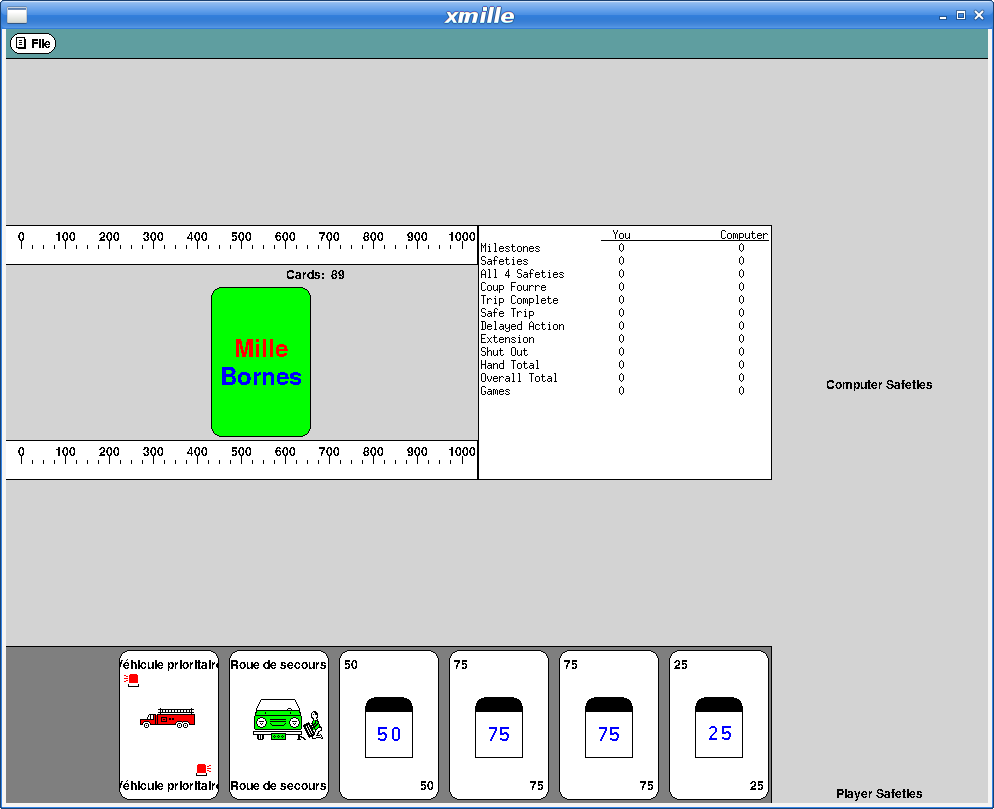
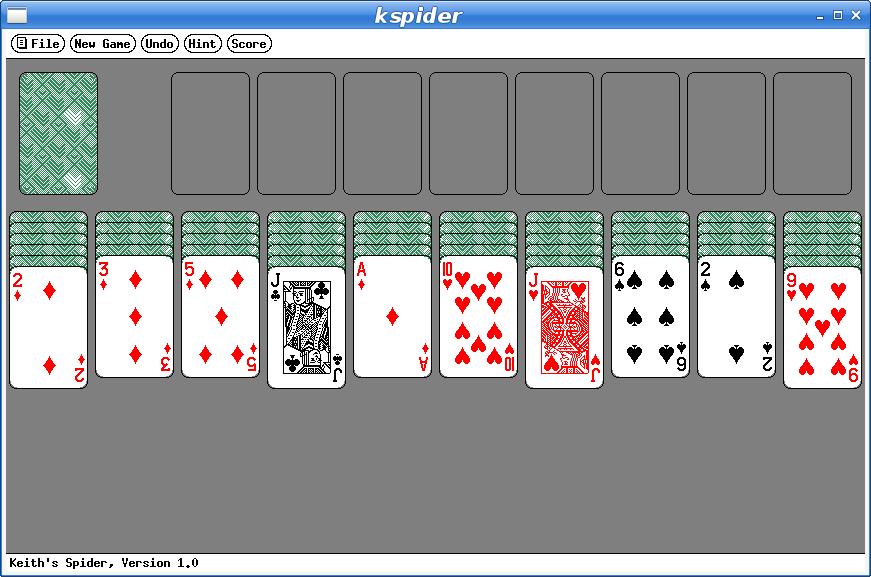
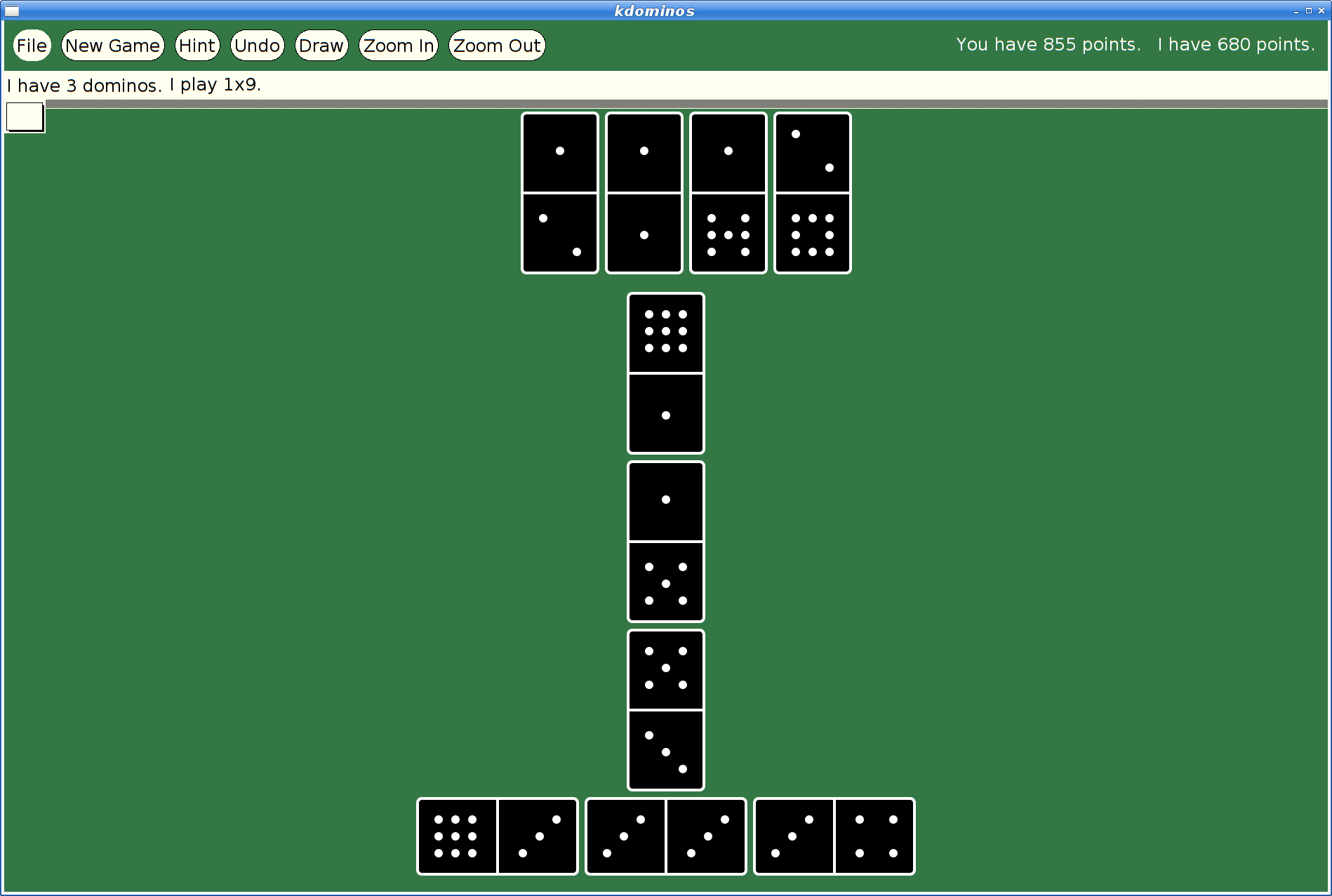
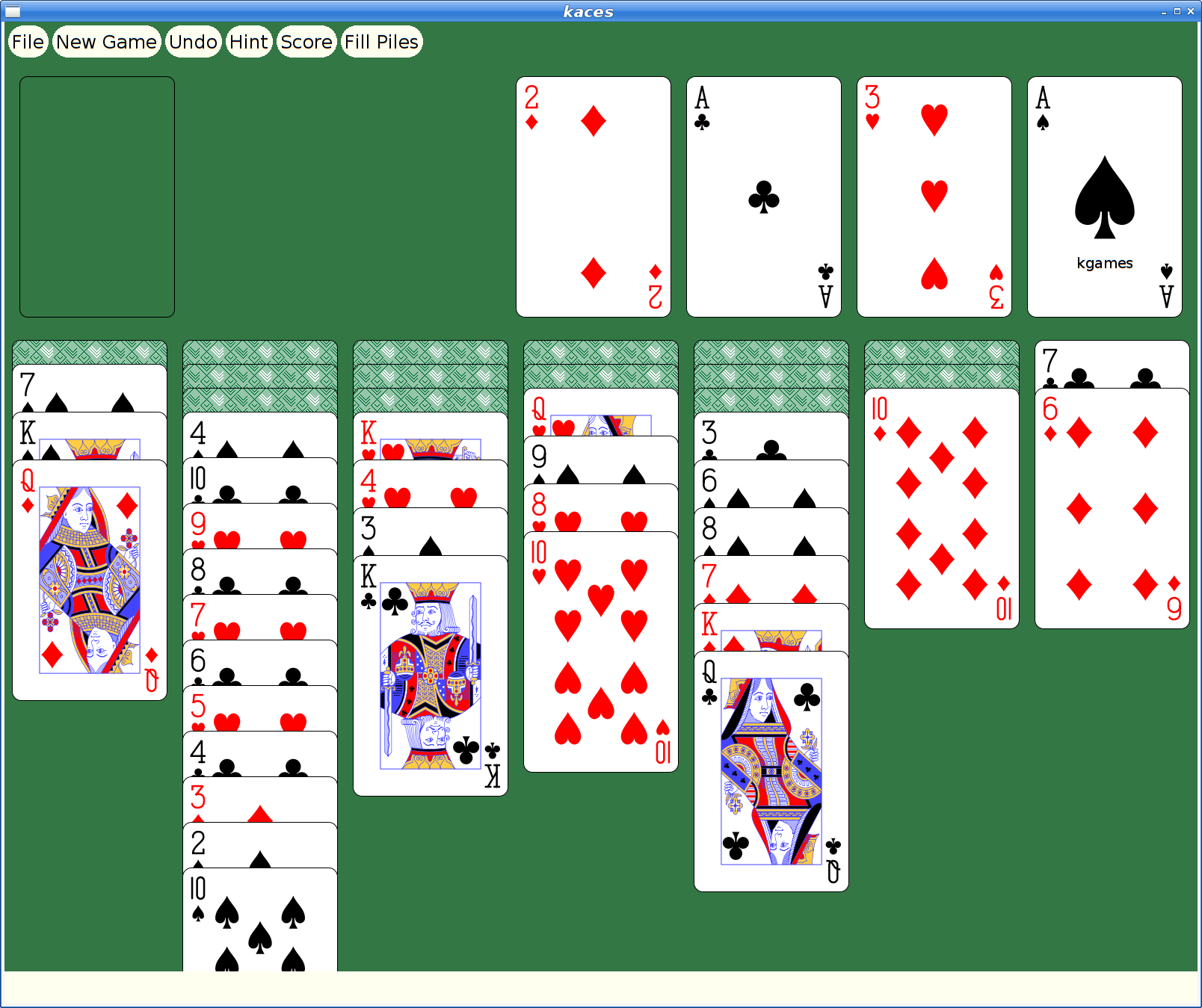
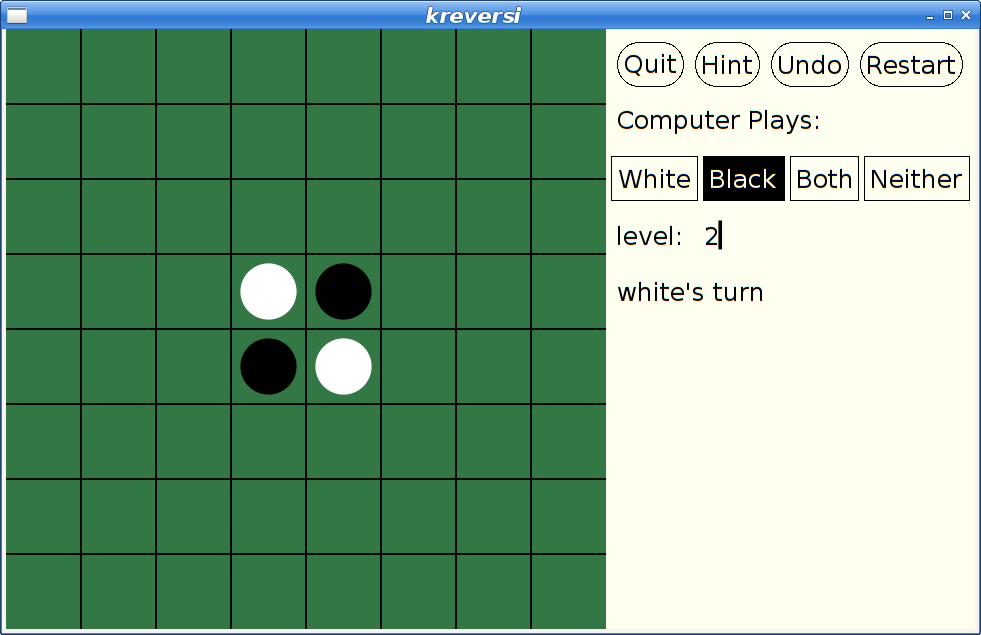
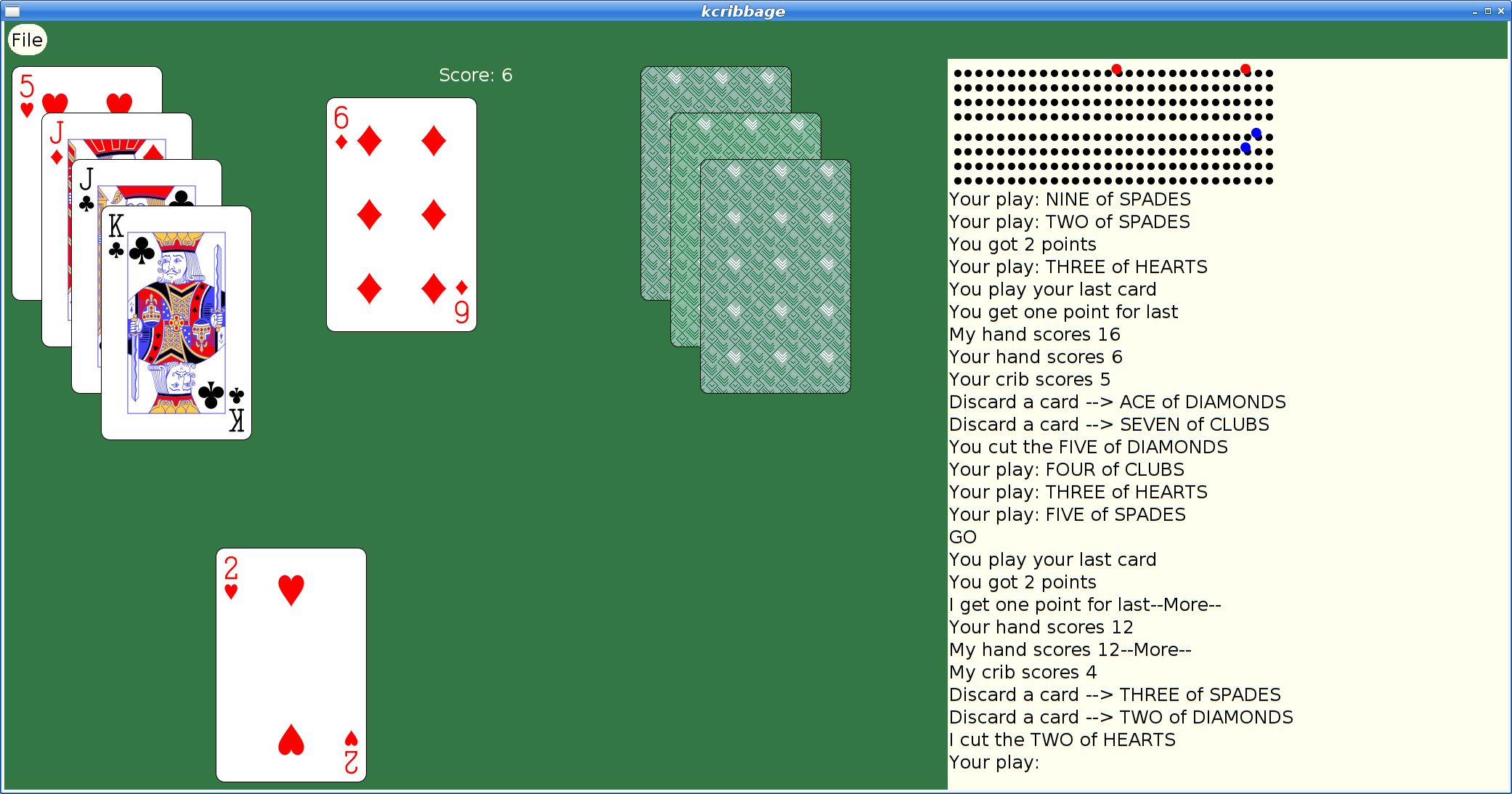
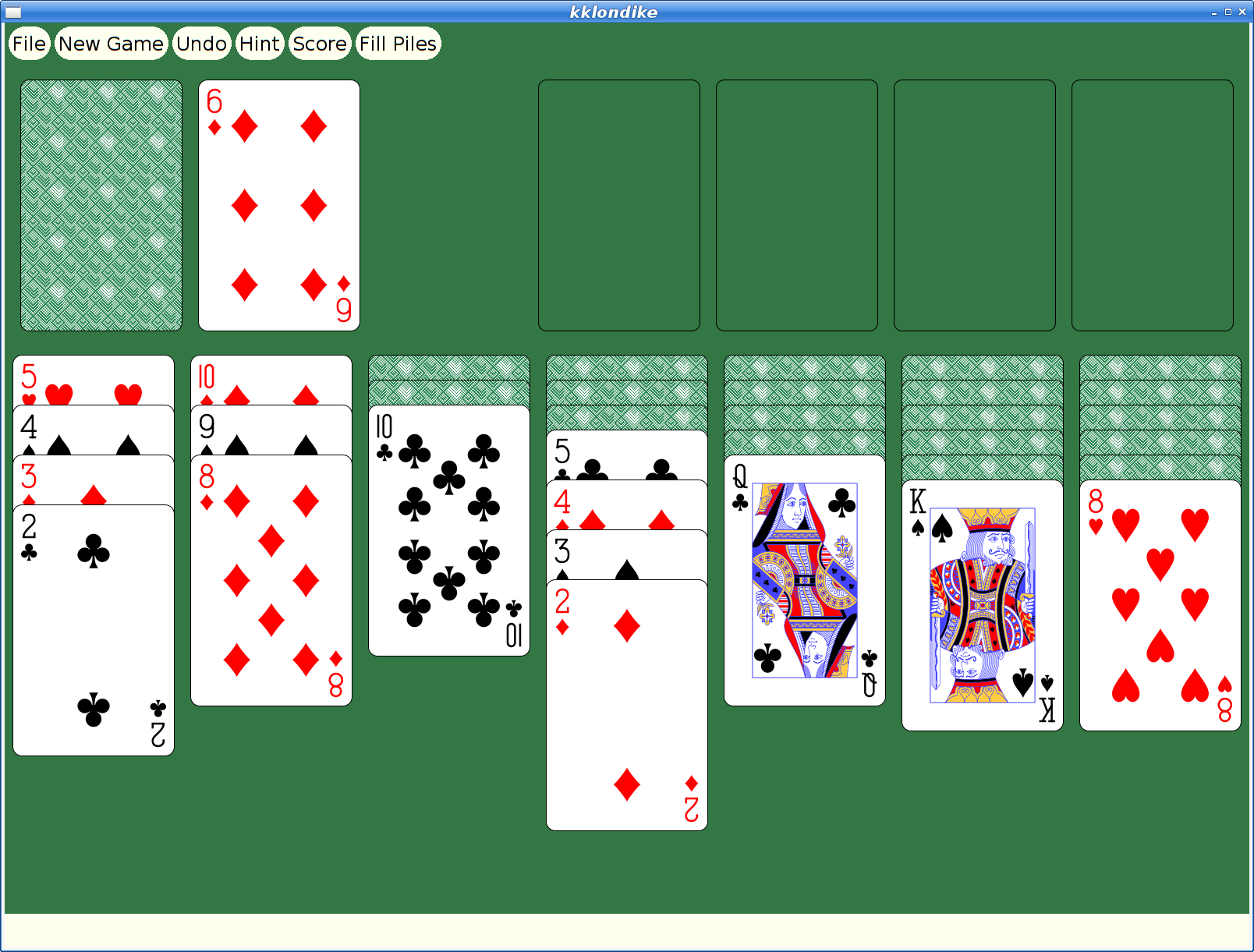
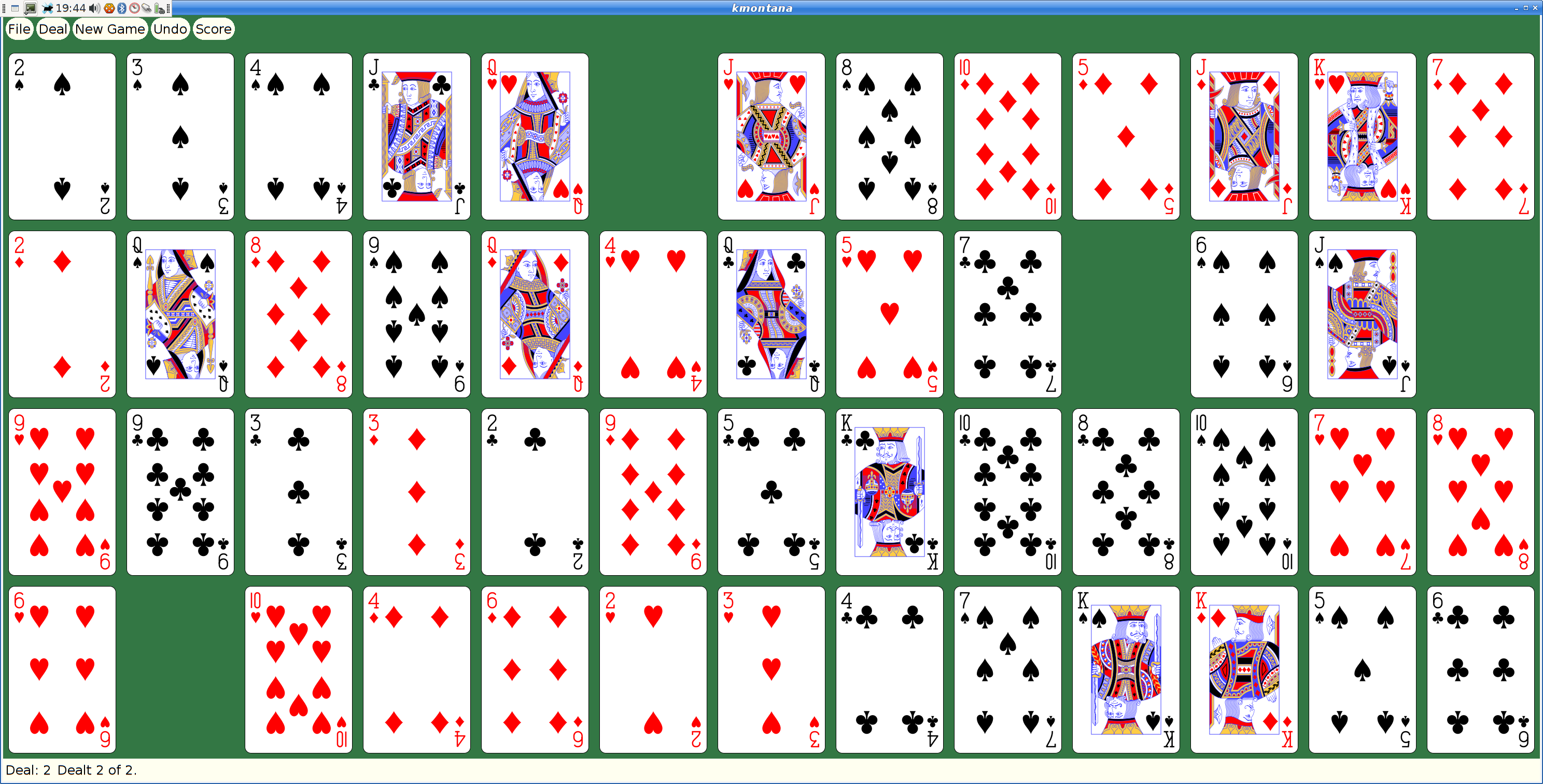
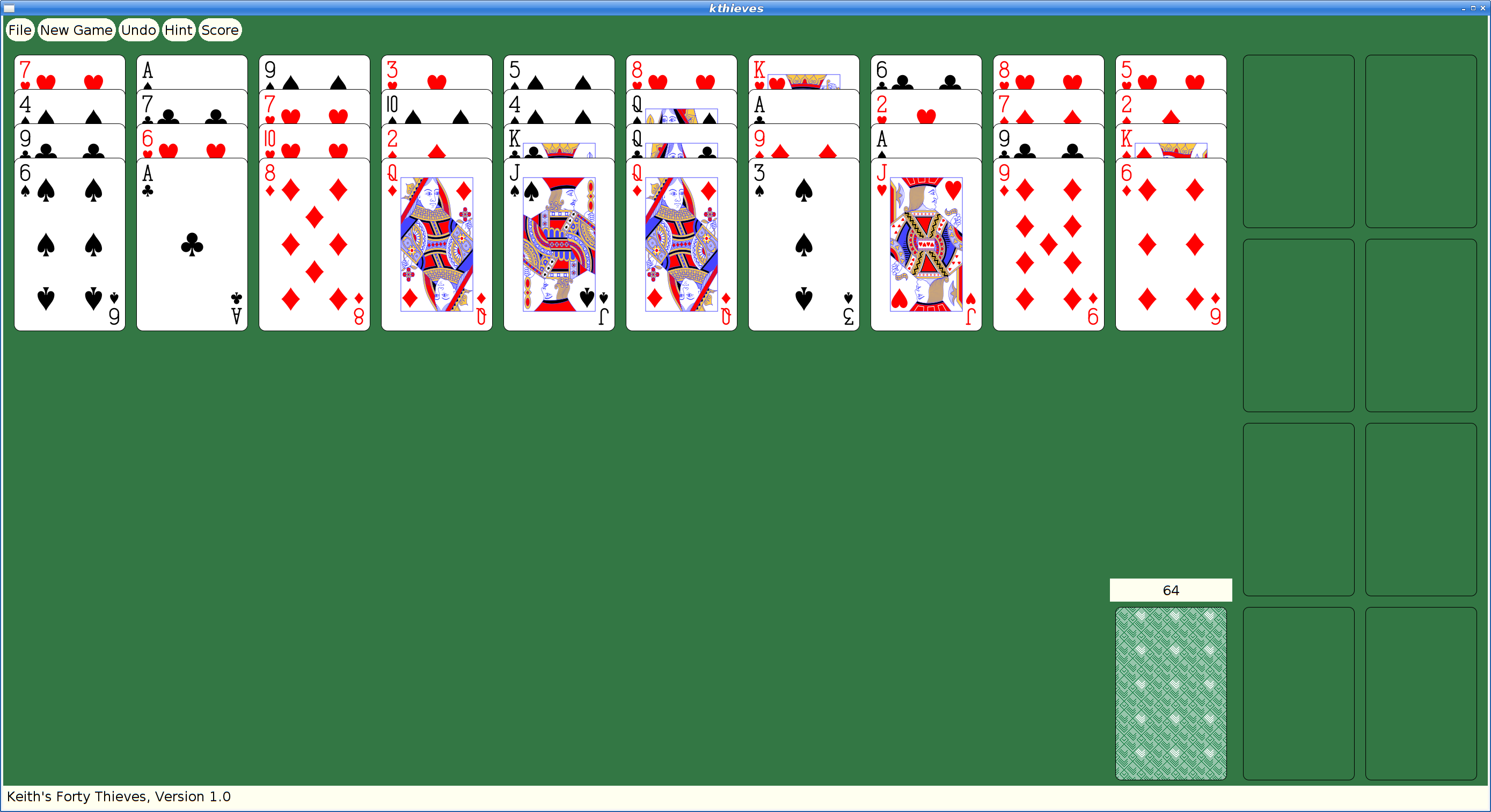
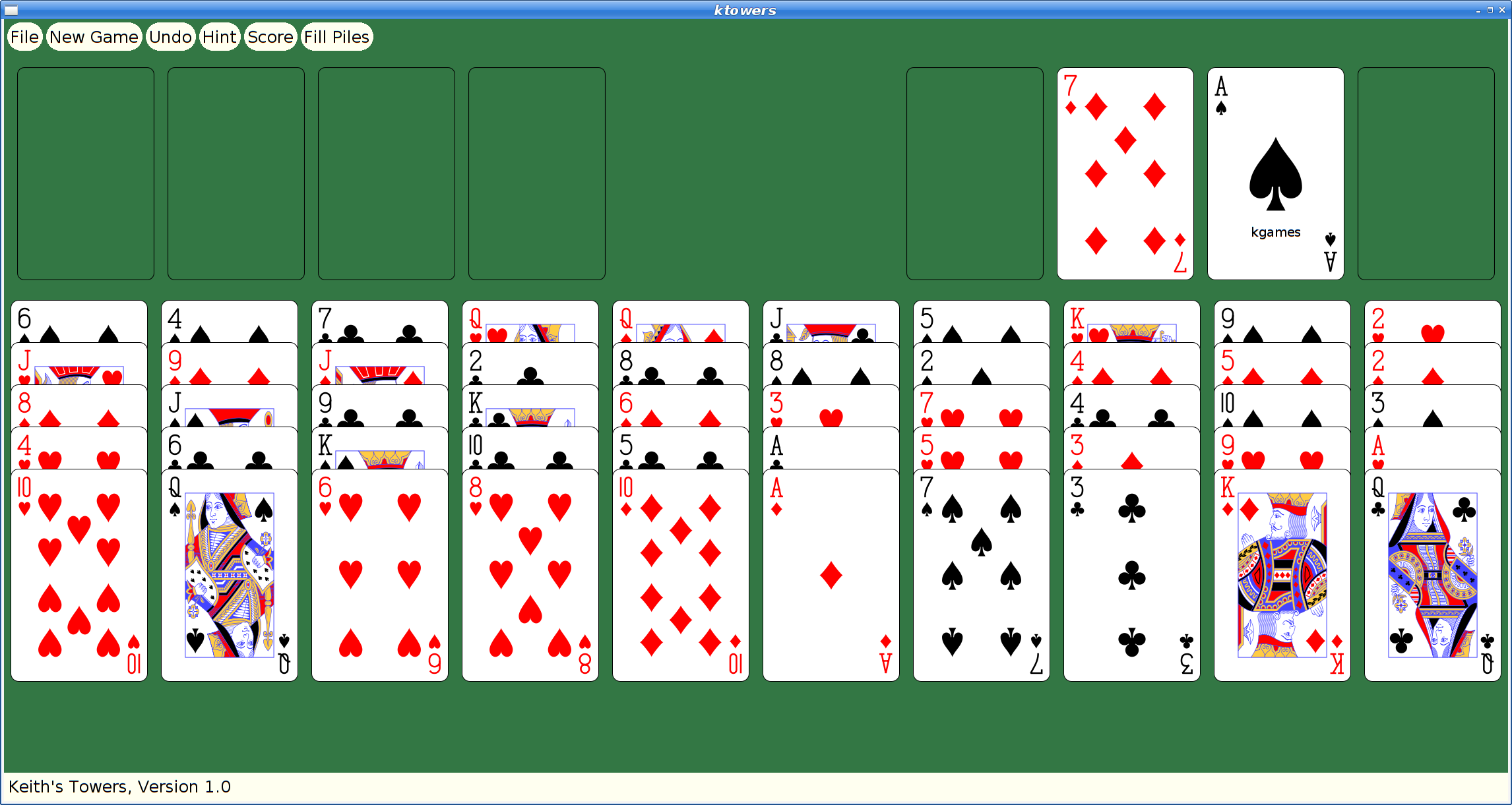
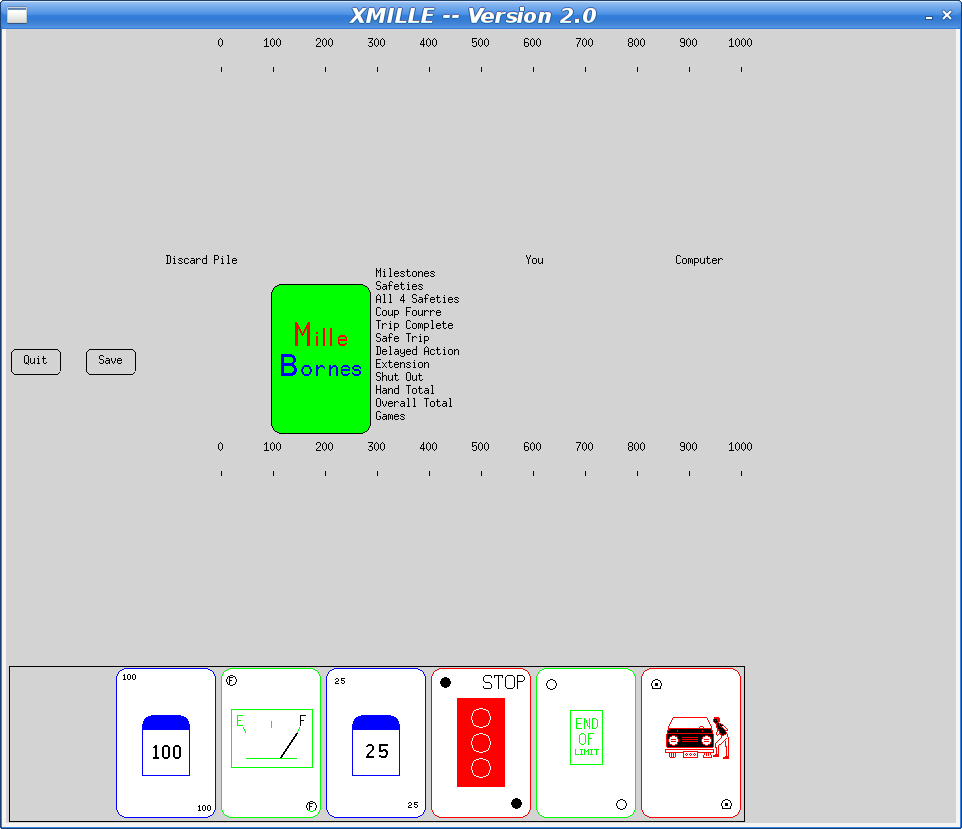
The reason the 'xmille' source is missing copyright and license information from the 'mille' files is that they were copied in before that information was added upstream. Xmille forked from Mille around 1987 or so. I wrote the UI parts for the system I had at the time, which was running X10R4. A very basic port to X11 was done at some point, and that's what Debian has in the archive today. At some point in the 90s, I ported Xmille to the Athena widget set, including several custom widgets in an Xaw extension library, Xkw. It's a lot better than the version in Debian, including displaying the cards correctly (the Debian version has some pretty bad color issues). Here's what the current Debian version looks like: Fixing The Bug To fix the missing copyright and license information, I imported the mille source code into the "latest" Xaw-based version. The updated mille code had a number of bug fixes and improvements, along with the copyright information. That should have been sufficient to resolve the issue and I could have constructed a suitable source package from whatever bits were needed and and uploaded that as a replacement 'xmille' package. However, at some later point, I had actually merged xmille into a larger package, 'kgames', which also included a number of other games, including Reversi, Dominoes, Cribbage and ten Solitaire/Patience variants. (as an aside, those last ten games formed the basis for my Patience Palm Pilot application, which seems to have inspired an Android App of the same name...) So began my yak shaving holiday. Building Kgames in 2020 Ok, so getting this old source code running should be easy, right? It's just a bunch of C code designed in the 80s and 90s to work on VAXen and their kin. How hard could it be?
  1. Everything was a 32-bit computer back then; pointers and ints were both 32 bits, so you could cast them with wild abandon and cause no problems. Today, testing revealed segfaults in some corners of the code.
  2. It's K&R C code. Remember that the first version of ANSI-C didn't come out until 1989, and it was years later that we could reliably expect to find an ANSI compiler with a random Unix box.
  3. It's X11 code. Fortunately (?), X11 hasn't changed since these applications were written, so at least that part still works just fine. Imagine trying to build Windows or Mac OS code from the early 90's on a modern OS...
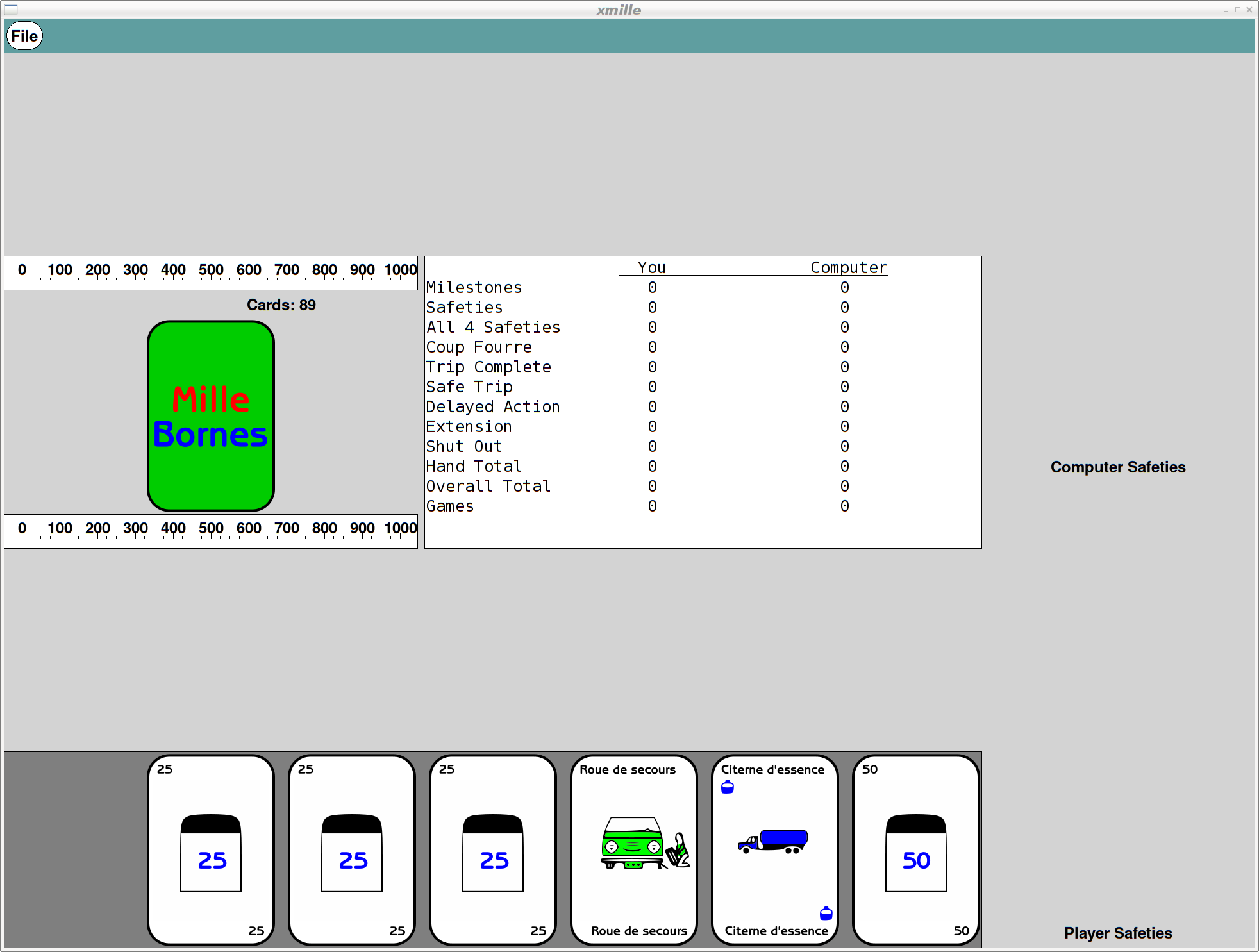
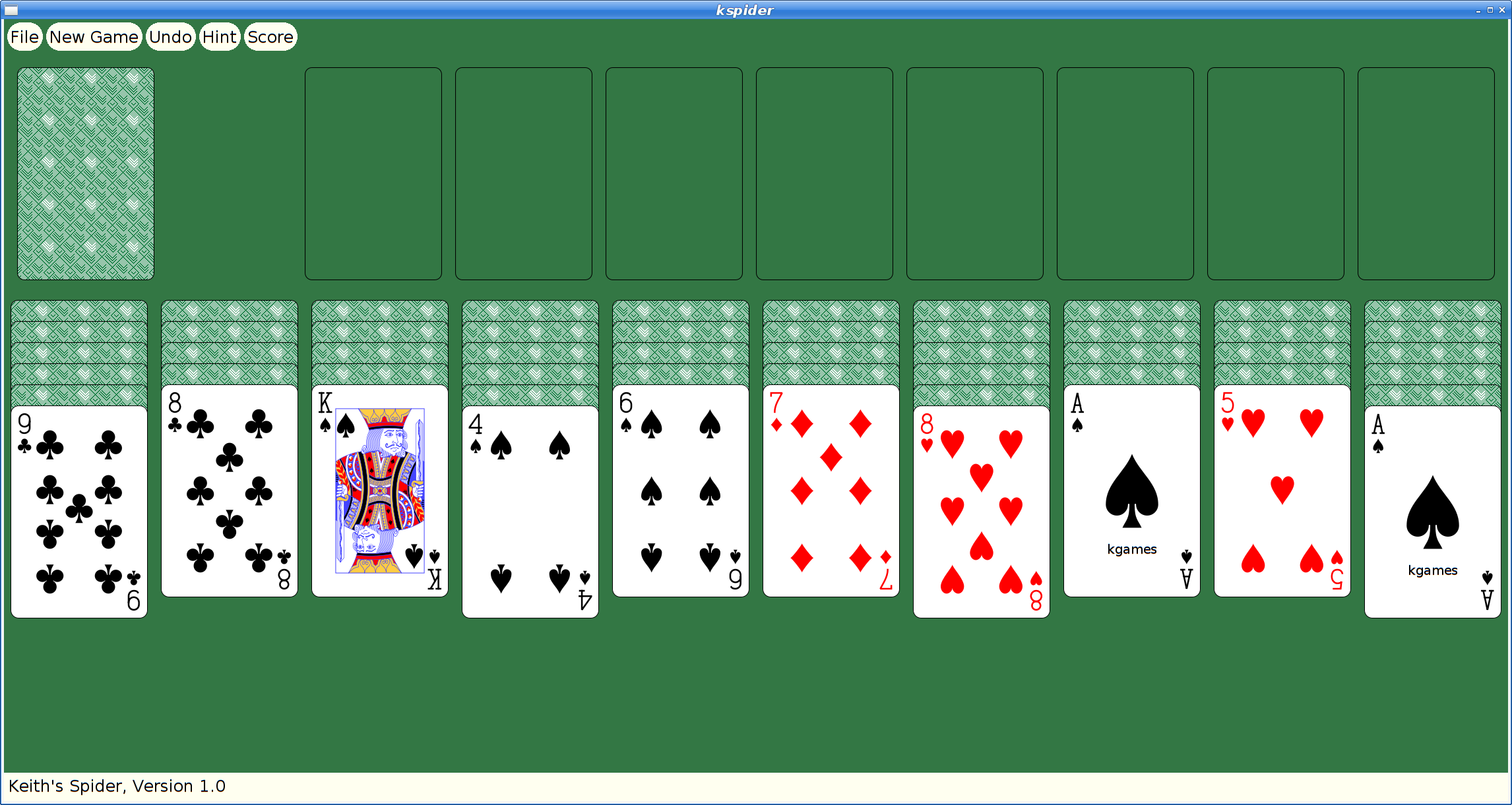
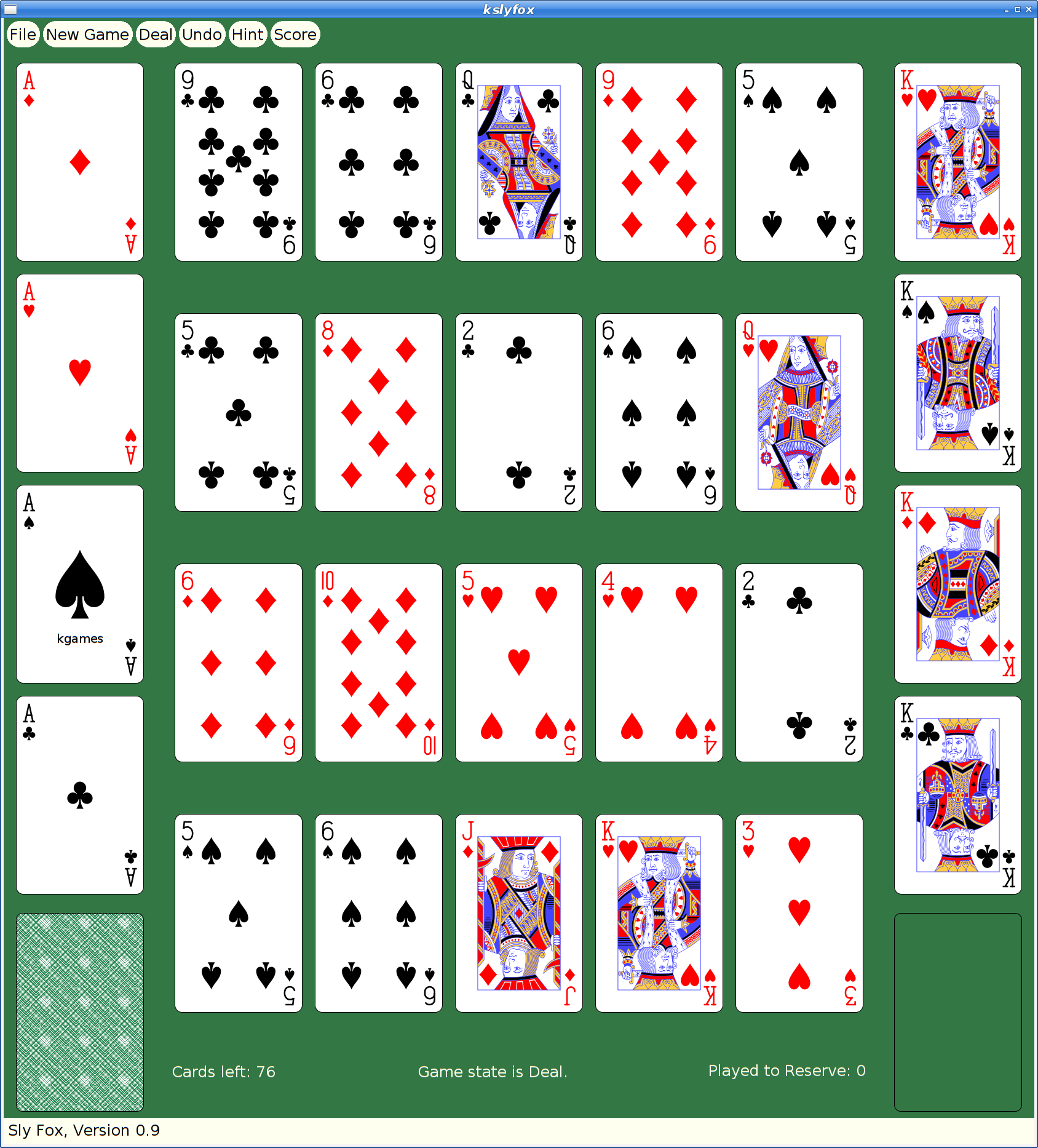
I decided to dig in and add prototypes everywhere; that found a lot of pointer/int casting issues, as well as several lurking bugs where the code was just plain broken. After a day or so, I had things building and running and was no longer hitting crashes. Kgames 1.0 uploaded to Debian New Queue With that done, I decided I could at least upload the working bits to the Debian archive and close the bug reported above. kgames 1.0-2 may eventually get into unstable, presumably once the Debian FTP team realizes just how important fixing this bug is. Or something. Here's what xmille looks like in this version: And here's my favorite solitaire variant too: But They Look So Old Yeah, Xaw applications have a rustic appearance which may appeal to some, but for people with higher resolution monitors and well seasoned eyesight, squinting at the tiny images and text makes it difficult to enjoy these games today. How hard could it be to update them to use larger cards and scalable fonts? Xkw version 2.0 I decided to dig in and start hacking the code, starting by adding new widgets to the Xkw library that used cairo for drawing instead of core X calls. Fortunately, the needs of the games were pretty limited, so I only needed to implement a handful of widgets: The other Xkw widgets all got their rendering switched to using cairo, plus using double buffering to make updates look better. SVG Playing Cards Looking on wikimedia, I found a page referencing a large number of playing cards in SVG form That led me to Adrian Kennard's playing card web site that let me customize and download a deck of cards, licensed using the CC0 Public Domain license. With these cards, I set about rewriting the Xkw playing card widget, stripping out three different versions of bitmap playing cards and replacing them with just these new SVG versions. SVG Xmille Cards Ok, so getting regular playing cards was good, but the original goal was to update Xmille, and that has cards hand drawn by me. I could just use those images, import them into cairo and let it scale them to suit on the screen. I decided to experiment with inkscape's bitmap tracing code to see what it could do with them. First, I had to get them into a format that inkscape could parse. That turned out to be a bit tricky; the original format is as a set of X bitmap layers; each layer painting a single color. I ended up hacking the Xmille source code to generate the images using X, then fetching them with XGetImage and walking them to construct XPM format files which could then be fed into the portable bitmap tools to create PNG files that inkscape could handle. The resulting images have a certain charm: I did replace the text in the images to make it readable, otherwise these are untouched from what inkscape generated. The Results Remember that all of these are applications built using the venerable X toolkit; there are still some non-antialiased graphics visible as the shaped buttons use the X Shape extension. But, all rendering is now done with cairo, so it's all anti-aliased and all scalable. Here's what Xmille looks like after the upgrades: And here's spider: Once kgames 1.0 reaches Debian unstable, I'll upload these new versions.

31 December 2020

Chris Lamb: Free software activities in December 2020

Here is my monthly update covering what I have been doing in the free software world during December 2020 (previous month):

Reproducible Builds One of the original promises of open source software is that distributed peer review and transparency of process results in enhanced end-user security. However, whilst anyone may inspect the source code of free and open source software for malicious flaws, almost all software today is distributed as pre-compiled binaries. This allows nefarious third-parties to compromise systems by injecting malicious code into ostensibly secure software during the various compilation and distribution processes. The motivation behind the Reproducible Builds effort is to ensure no flaws have been introduced during this compilation process by promising identical results are always generated from a given source, thus allowing multiple third-parties to come to a consensus on whether a build was compromised. This month, I: I also made the following changes to diffoscope, our in-depth and content-aware diff utility that can locate and diagnose reproducibility issues, including releasing version 163:

Debian Uploads I also sponsored an upload of adminer (4.7.8-2) on behalf of Alexandre Rossi and performed two QA uploads of sendfile (2.1b.20080616-7 and 2.1b.20080616-8) to make the build the build reproducible (#776938) and to fix a number of other unrelated issues. Debian LTS This month I have worked 18 hours on Debian Long Term Support (LTS) and 12 hours on its sister Extended LTS project. You can find out more about the Debian LTS project via the following video:

30 December 2020

Russ Allbery: Review: The House in the Cerulean Sea

Review: The House in the Cerulean Sea, by TJ Klune
Publisher: Tor
Copyright: March 2020
ISBN: 1-250-21732-6
Format: Kindle
Pages: 398
Linus Baker is a case worker for the Department in Charge of Magical Youth. His job is to evaluate the orphanages to which children with magical powers are sent and ensure those children are treated properly. This must be done properly, with professional care and detachment and careful documentation so that his superiors can make the correct choices. Linus has no ambition or desire to be anything other than a case worker. He does his job meticulously by the book, namely the DICOMY Rules and Regulations, which he studies religiously. Linus is therefore caught entirely by surprise when he is summoned without explanation to the offices of Extremely Upper Management on the intimidating 5th floor. That summons turns out to be a new assignment for which Extremely Upper Management believes Linus to be ideal: an orphanage on an island far from the city, home to some highly unusual (and, in one case, disturbing) children and a headmaster who is as odd as his charges. Management is correct about Linus up to a point. He is a bureaucrat and a stickler for rules. However, Extremely Upper Management did not account for the possibility that Linus does the work that he does because he cares deeply about children, or that, if the two come into conflict, the children might matter more than the rules. The House in the Cerulean Sea is the sort of book that tells you exactly what it's doing, assures you that you'll enjoy it anyway, and then you actually do. The plot developments are obvious well in advance, the tugs on the heart-strings are telegraphed and obvious, and there are very few surprises. But the story is told with such charm and feeling that I at least didn't mind at all, and indeed would have been furious at the author if he hadn't delivered the expected ending. This is not the book to read if you want to delve deep into the implications of the world-building. It follows children's book logic in several important places: intentions matter more than institutional structure, sincerity is persuasive, and courage is rewarded. A few reviews compare it to Nineteen Eighty-Four, but this is wildly misleading beyond a few trappings of the setting. The internal logic of the book is closer to a cross between Good Omens and Dr. Seuss. It's a "good people are rewarded" sort of book and wears that on its sleeve. One of the things that Klune does extremely well is subtlety of characterization despite the relative lack of subtlety in the plot. Linus starts the book as a caricature whose life is nearly a blank canvas, and by the end of the book he feels like someone you know. Klune pulls this off less by filling in the canvas than by making careful use of all that negative space to put emotional weight and depth behind a few telling details like Linus's pyjamas, records, and cat. He also does an exceptional job with the mannerisms and habits of speech of both Linus and the headmaster of the orphanage. To say much more would be a spoiler; suffice it to say that Klune captures an interaction style that I have rarely seen in novels and certainly not in a fantasy novel of this type, and does it so well that I was strongly reminded of people I've known. Anyone who knows me is unlikely to be surprised that my favorite character in the book is Zoe, the sarcastic and fiercely protective sprite who owns the island on which the orphanage is located, but almost all of the characters are wonderful. One or two of the children are a bit one-note, but the group dynamics make up for that, and the suspicious, thoughtful, and respectful interplay between the three adults is beautifully done. My only real complaints on the characterization front are that some of the confrontations in the nearby village felt a bit strained, and I think Helen got short shrift and could have been fleshed out some more. I will say that the motives of the villains never made much sense, but they didn't have to; they're essentially monsters in Linus's story, and they do enough to serve that purpose. I now want to read the story of how Zoe and the headmaster met, although I'm not sure Klune is the right person to write it, and I'm not sure he left enough emotional space for another novel. Sometimes I want to read a positive, hopeful book in which people learn and grow and good things happen to good people, one where the author is unapologetically manipulating my emotions and I don't care because I want these people to be happy. If you feel the same way, I cannot recommend this book highly enough. It's lovely. Rating: 9 out of 10

28 December 2020

Guido G nther: phosh overview

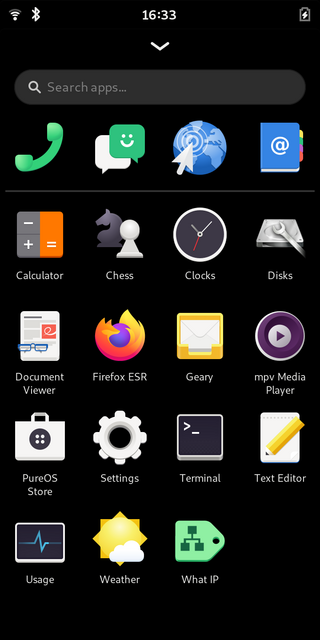
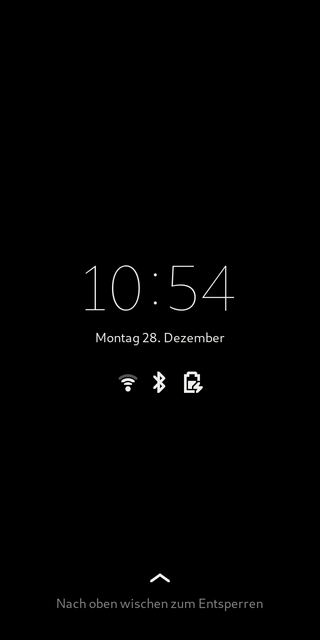
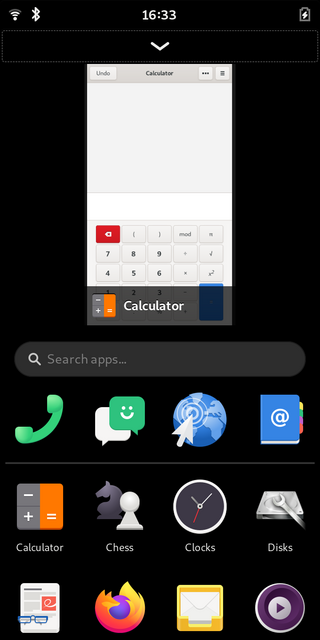
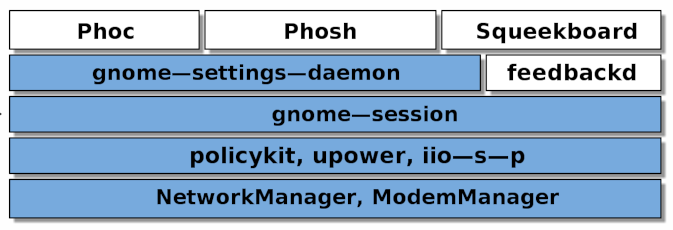
phosh is graphical shell for mobile, touch based devices like smart phones. It's the default graphical shell on Purism's Librem 5 (and that's where it came to life) but projects like postmarketOS, Mobian and Debian have picked it up putting it into use on other devices as well and contributing patches. This post is meant as a short overview how things are tied together so further posts can provide more details. A PHone SHell As mobile shell phosh provides the interface components commonly found on mobile devices to phosh's overview 2 phosh's lockscreen phosh's overview 1 It uses GObject object system and GTK to build up the user interface components. Mobile specific patterns are brought in via libhandy. Since phosh is meant to blend into GNOME as seamlessly as possible it uses the common interfaces present there via D-Bus like org.gnome.Screensaver or org.gnome.keyring.SystemPrompter and retrieves user configuration like keybindings via GSettings from preexisting schema. The components of a running graphical session roughly look like this: phosh session The blue boxes are the very same found on GNOME desktop sessions while the white ones are currently only found on phones. feedbackd is explained quickly: It's used for providing haptic or visual user feedback and makes your phone rumble and blink when applications (or the shell) want to notify the user about certain events like incoming phone calls or new messages. What about phoc and squeekboard? phoc and squeekboard Although some stacks combine the graphical shell with the display server (the component responsible for drawing applications and handling user input) this isn't the case for phosh. phosh relies on a Wayland compositor to be present for that. Keeping shell and compositor apart has some advantages like being able to restart the shell without affecting other applications but also adds the need for some additional communication between compositor and shell. This additional communication is implemented via Wayland protocols. The Wayland compositor used with phosh is called phoc for PHone Compositor. One of these additional protocols is wlr-layer-shell. It allows the shell to reserve space on the screen that is not used by other applications and allows it to draw things like the top and bottom bar or lock screen. Other protocols used by phosh (and hence implemented by phoc) are wlr-output-management to get information on and control properties of monitors or wlr-foreign-toplevel-management to get information about other windows on the display. The later is used to allow to switch between running applications. However these (and other) Wayland protocols are not implemented in phoc from scratch. phoc leverages the wlroots library for that. The library also handles many other compositor parts like interacting with the video and input hardware. The details on how phoc actually puts things up on the screen deserves a separate post. For the moment it's sufficient to note that phosh requires a Wayland compositor like phoc. We've not talked about entering text without a physical keyboard yet - phosh itself does not handle that either. squeekboard is the on screen keyboard for text (and emoji) input. It again uses Wayland protocols to talk to the Wayland compositor and it's (like phosh) a component that wants exclusive access to some areas of the screen (where the keyboard is drawn) and hence leverages the layer-shell protocol. Very roughly speaking it turns touch input in that area into text and sends that back to the compositor that then passes it back to the application that currently gets the text input. squeekboard's main author dcz has some more details here. The session So how does the graphical session in the picture above come into existence? As this is meant to be close to a regular GNOME session it's done via gnome-session that is invoked somewhat like:
phoc -E 'gnome-session --session=phosh'
So the compositor phoc is started up, launches gnome-session which then looks at phosh.session for the session's components. These are phosh, squeekboard and gnome-settings-daemon. These then either connect to already running services via D-Bus (e.g. NetworkManager, ModemManager, ...) or spawn them via D-Bus activation when required (e.g. feedbackd). Calling conventions So when talking about phosh it's good to keep several things apart: On top of that people sometimes refer to 'Phosh' as the software collection consisting of the above plus more components from GNOME (Settings, Contacs, Clocks, Weather, Evince, ...) and components that currently aren't part of GNOME but adapt to small screen sizes, use the same technologies and are needed to make a phone fun to use e.g. Geary for email, Calls for making phone calls and Chats for SMS handling. Since just overloading the term Phosh is confusing GNOME/Phosh Mobile Environment or Phosh Mobile Environment have been used to describe the above collection of software and I've contacted GNOME on how to name this properly, to not infringe on the GNOME trademark but also give proper credit and hopefully being able to move things upstream that can live upstream. That's it for a start. phosh's development documentation can be browsed here but is also available in the source code. Besides the projects mentioned above credits go to Purism for allowing me and others to work on the above and other parts related to moving Free Software on mobile Linux forward.

27 December 2020

Russ Allbery: Review: King of the Murgos

Review: King of the Murgos, by David Eddings
Series: The Malloreon #2
Publisher: Del Rey
Copyright: April 1988
Printing: November 1991
ISBN: 0-345-35880-5
Format: Mass market
Pages: 403
This is the second book of the Malloreon, which in turn is a sequel trilogy to The Belgariad. You could start here, since Eddings does a good job at summarizing previous volumes, but I'm not sure why you'd want to. This is the sort of book that gives epic fantasy series a bad name. After a lot of action in Guardians of the West, our band of heroes has been mostly assembled. They set out after the villain through the novel strategy of exploring the parts of the world map we have not yet seen. By the end of 400 pages of traveling they... are on the trail of the villain while exploring parts of the world map we have not yet seen. What I'm saying is that you'd better be really enjoying Silk's nose twitching and Belgarath being grumpy at Polgara, because that's about all you get. The protagonists collect a few important plot coupons and set up some emotional conflicts whose resolutions are already telegraphed, and that's about it. After wasting a bunch of time getting to and wandering around Nyissa, all of which felt pointless except for one moment of Errand doing something nifty (often the best parts of this series), the band of heroes ventures into enemy territory as foreshadowed by the title. The structure of Eddings's series is basically Suikoden (collect all the protagonists), so as one might expect the point of this excursion is to pick up another protagonist. In the process, we get to see a bit more of the Murgos than we have before. I've commented before that Eddings takes racial essentialism to such an absurd degree that these books start feeling like animal fairy tales, which is why I'm willing to tolerate all of the stereotyping. It's Planet of Hats except with fantasy countries. That tolerance is stretched rather thin when it comes to the bad guys, since the congruence with real-life racism and dehumanization of enemies is a bit too strong. Eddings dodges this mostly by not putting many of the bad guys in the page, but in King of the Murgos he has a golden opportunity to undercut his racial structure and surprise the reader. What if one of the Murgos is a protagonist and is vital to the series plot? I won't spoil what Eddings actually does, but if you imagine the stupidest and most obvious way to avoid having to acknowledge his fantasy races are not uniform, you probably just guessed the big reveal in this book. It's sadly not surprising, since Eddings is all in on his racial construction of this fantasy world, but it's still disgusting. The main reason why I decided to re-read this series, which is notorious for being a re-run of the Belgariad, is because I think what Eddings does here with prophecy, the voice in Garion's head, and the meddling of the seers is hilarious. The plot is openly on rails to the point that the characters actively grumble about it. I find that oddly entertaining, a bit like watching a Twitch streamer play an RPG. In this installment, Errand does something random in the middle of a Murgo temple, Garion gets a level-up chime, the prophecy gets very smug about how well things are going, and no one knows why. It's an absolute delight, and I don't know of any other series that isn't pure parody that would be willing to use that as a plot element. Sadly, King of the Murgos has only one or two enjoyable moments like that, a whole lot of frankly boring map exploration, some truly egregious racist claptrap, and no plot development worth speaking of. I probably should have skipped this one when re-reading this series. Followed by Demon Lord of Karanda. Rating: 4 out of 10

23 December 2020

John Goerzen: How & Why To Use Airgapped Backups

A good backup strategy needs to consider various threats to the integrity of data. For instance: It s that last one that is of particular interest today. A lot of backup strategies are such that if a user (or administrator) has their local account or network compromised, their backups could very well be destroyed as well. For instance, do you ssh from the account being backed up to the system holding the backups? Or rsync using a keypair stored on it? Or access S3 buckets, etc? It is trivially easy in many of these schemes to totally ruin cloud-based backups, or even some other schemes. rsync can be run with delete (and often is, to prune remotes), S3 buckets can be deleted, etc. And even if you try to lock down an over-network backup to be append-only, still there are vectors for attack (ssh credentials, OpenSSL bugs, etc). In this post, I try to explore how we can protect against them and still retain some modern conveniences. A backup scheme also needs to make a balance between: My story so far About 20 years ago, I had an Exabyte tape drive, with the amazing capacity of 7GB per tape! Eventually as disk prices fell, I had external disks plugged in to a server, and would periodically rotate them offsite. I ve also had various combinations of partial or complete offsite copies over the Internet as well. I have around 6TB of data to back up (after compression), a figure that is growing somewhat rapidly as I digitize some old family recordings and videos. Since I last wrote about backups 5 years ago, my scheme has been largely unchanged; at present I use ZFS for local and to-disk backups and borg for the copies over the Internet. Let s take a look at some options that could make this better. Tape The original airgapped backup. You back up to a tape, then you take the (fairly cheap) tape out of the drive and put in another one. In cost per GB, tape is probably the cheapest medium out there. But of course it has its drawbacks. Let s start with cost. To get a drive that can handle capacities of what I d be needing, at least LTO-6 (2.5TB per tape) would be needed, if not LTO-7 (6TB). New, these drives cost several thousand dollars, plus they need LVD SCSI or Fibre Channel cards. You re not going to be hanging one off a Raspberry Pi; these things need a real server with enterprise-style connectivity. If you re particularly lucky, you might find an LTO-6 drive for as low as $500 on eBay. Then there are tapes. A 10-pack of LTO-6 tapes runs more than $200, and provides a total capacity of 25TB sufficient for these needs (note that, of course, you need to have at least double the actual space of the data, to account for multiple full backups in a set). A 5-pack of LTO-7 tapes is a little more expensive, while providing more storage. So all-in, this is going to be in the best possible scenario nearly $1000, and possibly a lot more. For a large company with many TB of storage, the initial costs can be defrayed due to the cheaper media, but for a home user, not so much. Consider that 8TB hard drives can be found for $150 $200. A pair of them (for redundancy) would run $300-400, and then you have all the other benefits of disk (quicker access, etc.) Plus they can be driven by something as cheap as a Raspberry Pi. Fancier tape setups involve auto-changers, but then you re not really airgapped, are you? (If you leave all your tapes in the changer, they can generally be selected and overwritten, barring things like hardware WORM). As useful as tape is, for this project, it would simply be way more expensive than disk-based options. Fundamentals of disk-based airgapping The fundamental thing we need to address with disk-based airgapping is that the machines being backed up have no real-time contact with the backup storage system. This rules out most solutions out there, that want to sync by comparing local state with remote state. If one is willing to throw storage efficiency out the window maybe practical for very small data sets one could just send a full backup daily. But in reality, what is more likely needed is a way to store a local proxy for the remote state. Then a runner device (a USB stick, disk, etc) could be plugged into the network, filled with queued data, then plugged into the backup system to have the data dequeued and processed. Some may be tempted to short-circuit this and just plug external disks into a backup system. I ve done that for a long time. This is, however, a risk, because it makes those disks vulnerable to whatever may be attacking the local system (anything from lightning to ransomware). ZFS ZFS is, it should be no surprise, particularly well suited for this. zfs send/receive can send an incremental stream that represents a delta between two checkpoints (snapshots or bookmarks) on a filesystem. It can do this very efficiently, much more so than walking an entire filesystem tree. Additionally, with the recent addition of ZFS crypto to ZFS on Linux, the replication stream can optionally reflect the encrypted data. Yes, as long as you don t need to mount them, you can mostly work with ZFS datasets on an encrypted basis, and can directly tell zfs send to just send the encrypted data instead of the decrypted data. The downside of ZFS is the resource requirements at the destination, which in terms of RAM are higher than most of the older Raspberry Pi-style devices. Still, one could perhaps just save off zfs send streams and restore them later if need be, but that implies a periodic resend of a full stream, an inefficient operation. dedpulicating software such as borg could be used on those streams (though with less effectiveness if they re encrypted). Tar Perhaps surprisingly, tar in listed incremental mode can solve this problem for non-ZFS users. It will keep a local cache of the state of the filesystem as of the time of the last run of tar, and can generate new tarballs that reflect the changes since the previous run (even deletions). This can achieve a similar result to the ZFS send/receive, though in a much less elegant way. Bacula / Bareos Bacula (and its fork Bareos) both have support for a FIFO destination. Theoretically this could be used to queue of data for transfer to the airgapped machine. This support is very poorly documented in both and is rumored to have bitrotted, however. rdiff and xdelta rdiff and xdelta can be used as sort of a non-real-time rsync, at least on a per-file basis. Theoretically, one could generate a full backup (with tar, ZFS send, or whatever), take an rdiff signature, and send over the file while keeping the signature. On the next run, another full backup is piped into rdiff, and on the basis of the signature file of the old and the new data, it produces a binary patch that can be queued for the backup target to update its stored copy of the file. This leaves history preservation as an exercise to be undertaken on the backup target. It may not necessarily be easy and may not be efficient. rsync batches rsync can be used to compute a delta between two directory trees and express this as a single-file batch that can be processed by a remote rsync. Unfortunately this implies the sender must always keep an old tree around (barring a solution such as ZFS snapshots) in order to compute the delta, and of course it still implies the need for history processing on the remote. Getting the Data There OK, so you ve got an airgapped system, some sort of runner device for your sneakernet (USB stick, hard drive, etc). Now what? Obviously you could just copy data on the runner and move it back off at the backup target. But a tool like NNCP (sort of a modernized UUCP) offer a lot of help in automating the process, returning error reports, etc. NNCP can be used online over TCP, over reliable serial links, over ssh, with offline onion routing via intermediaries or directly, etc. Imagine having an airgapped machine at a different location you go to frequently (workplace, friend, etc). Before leaving, you put a USB stick in your pocket. When you get there, you pop it in. It s despooled and processed while you want, and return emails or whatever are queued up to be sent when you get back home. Not bad, eh? Future installment I m going to try some of these approaches and report back on my experiences in the next few weeks.

22 December 2020

Andrej Shadura: Vendoring Rust dependencies for a Debian derivative

Recently, I needed to package a Rust crate libslirp for a Apertis, a Debian derivative. libslirp is used by the newly release UML backend of debos, our Debian image build tool. Unfortunately, this crate hasn t yet been properly packaged for Debian proper, so I could not simply pull the packaging from Debian. Even worse, its build dependencies haven t all been packaged yet. Most importantly, I have only uploaded zbus to Debian today, and at that time none of its dependencies were in Debian either. Another issue with this were that each crate is packaged for Debian as a separate package, making the process a bit more tricky since I d need to import all of the crates into Apertis separately. Doing that takes time and is further complicated by the CI loop we re using which requires the full build process to complete for a package before a pipeline a dependent package can run. Having all that considered, I took a shortcut: I vendored all the build dependencies with the package itself, and here s how. I started with debcargo-conf, where the not-yet-complete packaging lives. With debcargo, I generated the source package as if I were to upload to Debian. Since I ll be vendoring the dependencies, I have removed most of the Rust dependencies and replaced them with those extra dependencies needed by those crates. So, I replaced this:
Build-Depends: debhelper (>= 12),
 dh-cargo (>= 24),
 cargo:native,
 rustc:native,
 libstd-rust-dev,
 librust-enumflags2-0.6+default-dev (>= 0.6.4-~~),
 librust-ipnetwork-0.17+default-dev,
 librust-lazy-static-1+default-dev (>= 1.4-~~),
 librust-libc-0.2+default-dev,
 librust-libslirp-sys-4+default-dev (>= 4.2.0-~~),
 librust-libsystemd-0.2+default-dev,
 librust-mio-0.6+default-dev,
 librust-mio-extras-2+default-dev (>= 2.0.5-~~),
 librust-nix-0.17+default-dev,
 librust-slab-0.4+default-dev,
 librust-structopt-0.3+default-dev,
 librust-url-2+default-dev (>= 2.1-~~),
 librust-zbus-1+default-dev,
 librust-zvariant-2+default-dev
By this:
Build-Depends: debhelper (>= 12),
 dh-cargo (>= 17),
 cargo:native,
 rustc:native,
 libstd-rust-dev,
 pkg-config,
 libglib2.0-dev,
 libslirp-dev
I wanted to keep the delta to the future Debian package at a bare minimum, so I kept the original dh-cargo build process, only making sure the vendored dependencies are found in the right place. The cleanest approach in my view was to use the fact that the 3.0 (quilt) source format allows multiple original tarballs: the main tarball would be the same orig tarball as in Debian, and an extra tarball would contain the vendored code. When we sync with Debian, the extra tarball would be dropped, just as the adjustments to the debian/rules. To generate the vendor tarball, I added this to the rules file:
include /usr/share/dpkg/pkg-info.mk
vendor:
        -[ -d vendor ] && rm -rf vendor
        rm -rf Cargo.lock
        cargo vendor
        tar Jcf ../$(DEB_SOURCE)_$(DEB_VERSION_UPSTREAM).orig-vendor.tar.xz vendor/
.PHONY: vendor
This target, being run manually and not as part of the build process, download the latest dependencies satisfying the requirements in Cargo.toml and rolls them into a vendor tarball. Now, to make dh-cargo use the vendored code, we need to link it into the right place. dh-cargo creates a Cargo registry tree in a subdirectly under debian/ where it symlinks crates from the Rust development packages. This extra code makes sure the vendored dependencies are available there too:
override_dh_auto_configure:
        dh_auto_configure $@
        for d in vendor/* ; \
        do \
                [ -L debian/cargo_registry/$$(basename $$d) ] && rm debian/cargo_registry/$$(basename $$d) ; \
                ln -rs $$d debian/cargo_registry ; \
        done
An important thing here is that if the build happens on a non-clean system, dh-cargo may have symlinked a system crate already installed so we need to remove that symlink and replace it by ours. We build packages in clean chroots, so this is not that important, otherwise for reproducibility reasons it would be better to create the registry directory from scratch. The final package can be found at the Apertis GitLab.

21 December 2020

Chris Lamb: Interview: Reproducibility and the future of free software

I recently took part in an interview with Vladimir Bejdo, an intern at the Software Freedom Conservancy, in order to talk about the Reproducible Builds project, my own participation in software freedom, the importance of reproducibility in software development and to have a brief discussion on the issues facing free software as a whole:
VB: To start off with, it might be useful to first ask you this how would you relate the importance of reproducibility to a user who is non-technical? CL: I sometimes use the analogy of the food supply chain to quickly relate our work to non-technical audiences. The multiple stages of how our food reaches our plates today (such as seeding, harvesting, picking, transportation, packaging, etc.) can loosely translate to how software actually ends up on our computers, particularly in the way that if any of the steps in the multi-stage food supply chain has an issue then it quickly becomes a serious problem. For example, even if we could guarantee that only the most wholesome apples were picked in our orchards, if they became tainted on the way to the supermarket it will be a real problem for us at the end of the day. We may not even be able to even tell by simply inspecting our Pink Ladies or Honeycrisps, and washing them thoroughly under the tap may not be enough either. In an ideal world, we would be able to personally inspect the provenance of our food at all of the stages of manufacturing and transportation. But at some point, we must place our trust in the process and in brands, as well as various regulatory bodies to ensure that potential problems in our food are minimized, possibly even paying a time/effort premium by growing our own or buying direct from local markets in order to minimize the number of steps, etc. However, when we use free software we can do better: Reproducible builds are a set of software development practices, ideas and tools that create an independently-verifiable path all the way from the original source code to what actually runs on our machines. Reproducible builds can reveal the injection of back-doors introduced by the hacking of developers own computers, build servers and package repositories, and also expose where volunteers or companies have been coerced into making changes via blackmail, court order, and so on. With reproducible builds, there is no longer any need to trust any particular source of authority. In the same way that, say, a Mr Smith might check that his calculator is giving him the right answer to 2+2=4 by asking enough of his friends to check theirs too, users and developers of a reproducible build can verify the software they are using by creating a collective consensus instead.
The full interview can be found on the Conservancy webpages.

Sven Hoexter: docker buildx sugar - dumping results to disk

The latest docker 20.10.x release unlocks the buildx subcommands which allow for some sugar, like building something in a container and dumping the result to your local directory in one command. Dockerfile
FROM docker-registry.mycorp.com/debian-node:lts as builder
USER service
COPY . /opt/service
RUN cd /opt/service; npm install; npm run build
FROM scratch as dist
COPY --from=builder /opt/service/dist /
build with
docker buildx build --target=dist --output type=local,dest=$(pwd)/pages/ .
Here we build a page, copy the result with all assets from the /opt/service/dist directory to an empty image and dump it into the local pages directory.

20 December 2020

Shirish Agarwal: Insane Logic and Farming in other countries

The people who are pro-Government and in this case pro-Corporate do not have any success stories that they can share. Hence, most of the time the arguments are that the other are bad. For e.g. quite a few people argue that we don t need farmers, we can just order from restaurant. They have completely disassociated the idea that even then you need farmers as unless the farmers put the seed in, till the soil and wait for the rains or have irrigation you won t get ripe vegetables which then has to be taken out, and somehow sold to the wholesaler from where it comes to the restaurant and then to your plate. Sadly, even the farm-to-fork infographics are so depressingly sad, you want to look away. If you see the infographic you see it is just not non-veg but also vegetarian food grains which go under lot of questionable practices. Even, with such scenarios that is done by corporations our people want to go ahead. I will share stories from other countries which tell how they are doing more. The Soldier-Farmer Another sad part of these protests have been soldiers who have been returning their medals. The ones who oppose have the gall to say they should return the cash rewards they got. So just like farmers, seems soldiers also do not need money to survive. They are supposed to live only on air and water. This is after the present Govt. has reduced their pensions after retirement and that too without any discussion
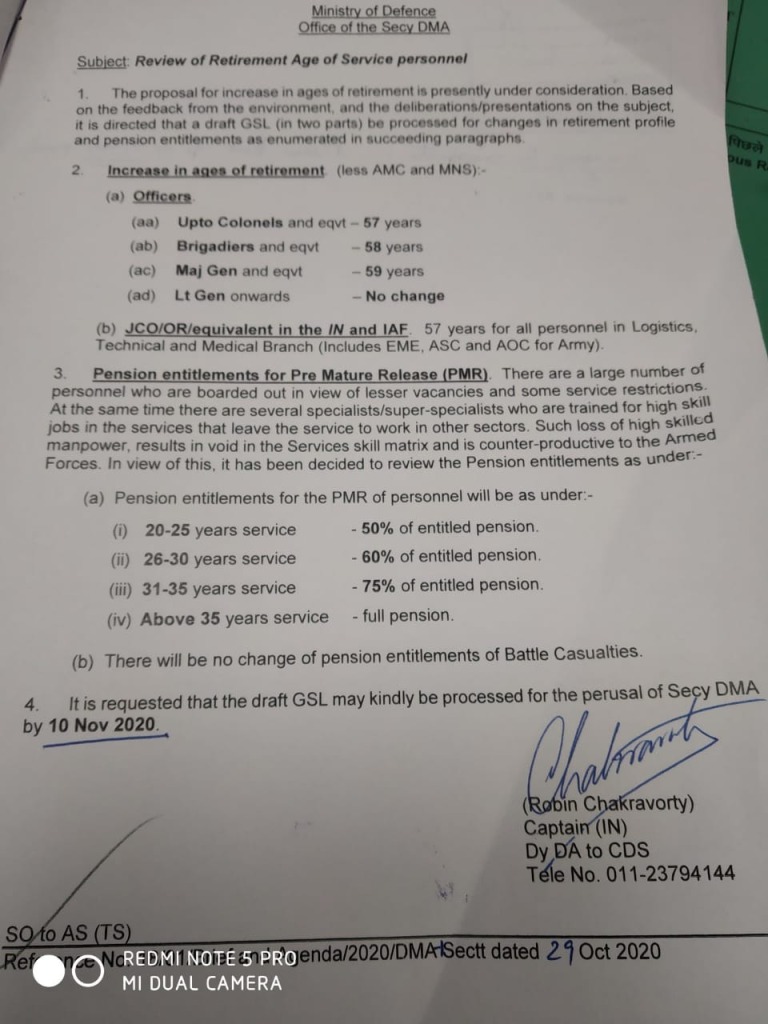
GOI pensions to ex-servicemen
Now I nor anybody else would have minded if these conditions were shared going forward rather than doing it retrospectively. People who usually go to the army are not in it for money but for the adventure and glory they bring. But they do also have a family and have a family responsibility. In most other countries, the soldier and his families are well-looked after. If you know that even after you die, the Government would look after your family, you will do your best. Unfortunately, many veterans in India themselves are asked to help by many war widows as the widows don t get family pensions. The proposal naturally has left many miffed. In fact many of the veterans who used to advise people to join the armed forces now advise young people to pursue civilian life and careers. This is when Indian Army has been ironically having shortage of officers from well over a decade and stresses felt by Army personnel also known for a long time. Even under this nationalistic Government, if it cannot take care of its soldiers, then forget about others.
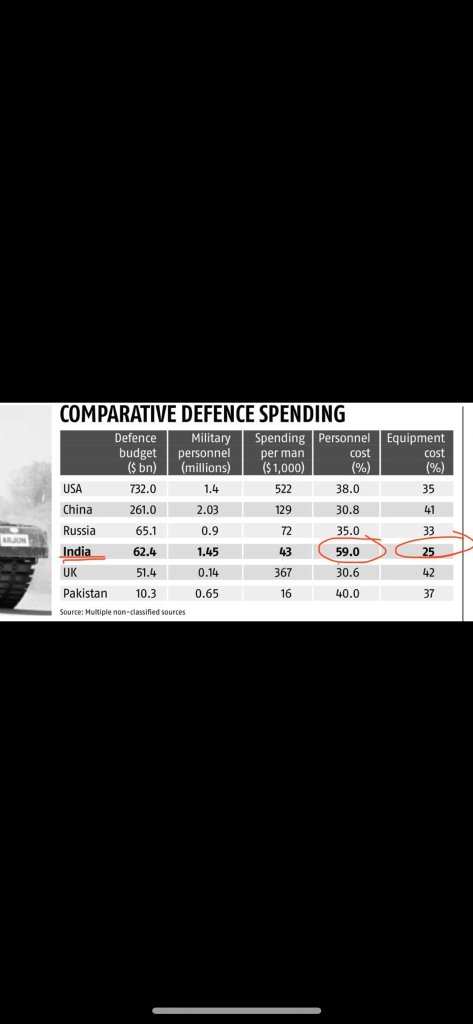
India Defence Spending vis-a-vis other countries.
Now it is nobody s argument that India needs to improve its tooth-to-tail ratio but this is the wrong way to go about it. I would probably talk about that some other time as that totally needs its whole place. Even OROP, which was the mandate of this Government hasn t had been done in full as there are quite a few cases in the Supreme Court. Almost all the cases have been heard and only decisions have to be given which the SC for whatever reason doesn t want to give. They just keep changing the date of the hearing. Nowadays, in many suits/cases, the SC asks for fresh hearings even though all the old records are there. This is a newish phenomena which is being observed in SC. Why is it being done? Your guess is as good as mine. One thing for sure has changed, the SC which used to be citizen-focussed or enabler of human rights and used to be held as a beacon for judicial activism has changed but these are other topics which need their own space. Update 16/12/2020 The SC recommends setting up a committee to discuss farmer issues. And this is nothing new. This is called death by committee. When there is already so much literature on the subject, including the works done by Swaminathan Commission. There has been 6 reports which do look at farmer issues in a holistic manner. This is the Supreme Court giving an escape route to GOI. They also have abstained from having a whole session citing Covid. This is when the ruling Govt. is putting a massive 1000 crore on a new building on which the SC has put on hold. And even then the GOI went ahead and did a Bhoomi-Pujan (traditional ceremony when making a new construction from scratch.) Naturally due to the double whammy of both the pension reforms and now the laws to make corporate farming more aggressive has left a deep impact on the soldier-farmer that the state does not think or feel for him. Even the United States farm-aid eloquently describes how corporate farming has made independent farmers suffer. You read that, and it seems it is as the state of our farmers here in India. Even their average land-holding has dropped a bit. I have shared about the state of farmers in India, in two blog posts previously. And it is not just farm owners who have had it bad, even farm workers in U.S. The issue may look to be about the pandemic but goes far deeper. The Israeli Model The Israelis have always used collective farming and do have a large share in farming there. The old model called Kibbutz is what made Israelis self-sufficient in food and water and actually are world-leaders where they export their services to other nations on the same thing. France Just like many other countries, France also seems to have favored farmer co-operatives. Almost 75% of all farmers are in co-operatives. Italy The country world-famous for its wines and cheese are made by its co-operatives. In fact co-ops are the buzzword it seems in Italy, more so in Northern Italy. Asian economies Even Asian economies, especially East Asian economies by and large have been turning to co-operatives. Brazil Now Brazil is almost 40% more than India. In fact, in most of the indices, Brazil beats India handsomely. So one would be forgiven to think that Brazil must have corporate farming. But nothing could be further from the truth. The only downer is that they have high crime in some areas. Otherwise, they are in many ways better than India. In fact, I was surprised a few years ago to learn about Mercsour. I would have to admit though I learned much about Brazil when Debian was holding a debconf about a year back. Otherwise, I had known about the country for number of years but apart from its carnival and samba, hadn t known much about it. I did come to know that most of Latin America also loves spices as much as Indians do. They show that love by using hot sauces. I do one day wanna try one of their sauces to see what makes it tick. I do know they like to barbecue vegetables as much as barbecuing non-veg food. This is going a bit OT but then that s the foodie in me  Conclusion I could have shared more countries which have chosen the co-operative way rather than corporate farming and that is simply because they know what is best for their people and what is best even politically. The new farm laws are neither grounded in farmer s welfare nor anything else. The Govt. has been trying to undermine the farmers for years together. In fact, Madhya Pradesh has openly said that they will not allow farmers from other states to sell in their state. Although, even before these laws there was nothing to restrict the farmer from selling his produce anywhere in the country. Angering the farmers is not good politics as was found sometime back but guessing some lessons need to be re-learned. One comment though, on social media I have seen many people especially youngsters having no real understanding of what inflation is all about. For e.g. if you ask them how come we are having a sort of record inflation in a technical recession (there has been a contraction, actually) and you see them putting themselves into bigger and bigger ditches. This does explain in part why the BJP wins in elections. If you do more rhetoric, which BJP is good as, rather than educating people than you are bound to win. You don t need plans, you don t need a vision, just rhetoric will do. What more evidence is needed when the economy is and was in a worse shape even before the pandemic and BJP won. I would probably write about that as that again needs lot of background and understanding as well as related terms.

16 December 2020

Jonathan McDowell: DeskPi Pro + 8GB Pi 4

DeskPi Pro Raspberry Pi case Despite having worked on a number of ARM platforms I ve never actually had an ARM based development box at home. I have a Raspberry Pi B Classic (the original 256MB rev 0002 variant) a coworker gave me some years ago, but it s not what you d choose for a build machine and generally gets used as a self contained TFTP/console server for hooking up to devices under test. Mostly I ve been able to do kernel development with the cross compilers already built as part of Debian, and either use pre-built images or Debian directly when I need userland pieces. At a previous job I had a Marvell MACCHIATObin available to me, which works out as a nice platform - quad core A72 @ 2GHz with 16GB RAM, proper SATA and a PCIe slot. However they re still a bit pricey for a casual home machine. I really like the look of the HoneyComb LX2 - 16 A72 cores, up to 64GB RAM - but it s even more expensive. So when I saw the existence of the 8GB Raspberry Pi 4 I was interested. Firstly, the Pi 4 is a proper 64 bit device (my existing Pi B is ARMv6 which means it needs to run Raspbian instead of native Debian armhf), capable of running an upstream kernel and unmodified Debian userspace. Secondly the Pi 4 has a USB 3 controller sitting on a PCIe bus rather than just the limited SoC USB 2 controller. It s not SATA, but it s still a fairly decent method of attaching some storage that s faster/more reliable than an SD card. Finally 8GB RAM is starting to get to a decent amount - for a headless build box 4GB is probably generally enough, but I wanted some headroom. The Pi comes as a bare board, so I needed a case. Ideally I wanted something self contained that could take the Pi, provide a USB/SATA adaptor and take the drive too. I came across the pre-order for the DeskPi Pro, decided it was the sort of thing I was after, and ordered one towards the end of September. It finally arrived at the start of December, at which point I got round to ordering a Pi 4 from CPC. Total cost ~ 120 for the case + Pi.

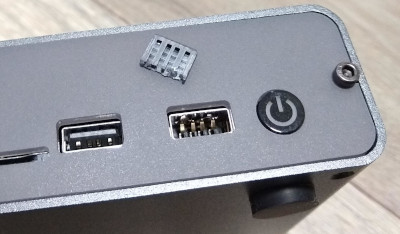
The Bad First, let s get the bad parts out of the way. Broken USB port (right) I managed to break a USB port on the Desk Pi. It has a pair of forward facing ports, I plugged my wireless keyboard dongle into it and when trying to remove it the solid spacer bit in the socket broke off. I ve never had this happen to me before and I ve been using USB devices for 20 years, so I m putting the blame on a shoddy socket. The first drive I tried was an old Crucial M500 mSATA device. I have an adaptor that makes it look like a normal 2.5 drive so I used that. Unfortunately it resulted in a boot loop; the Pi would boot its initial firmware, try to talk to the drive and then reboot before even loading Linux. The DeskPi Pro comes with an m2 adaptor and I had a spare m2 drive, so I tried that and it all worked fine. This might just be power issues, but it was an unfortunate experience especially after the USB port had broken off. (Given I ended up using an M.2 drive another case option would have been the Argon ONE M.2, which is a bit more compact.)
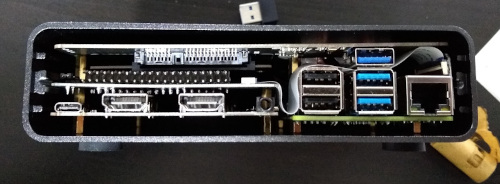
The Annoying DeskPi Pro without rear bezel The case is a little snug; I was worried I was going to damage things as I slid it in. Additionally the construction process is a little involved. There s a good set of instructions, but there are a lot of pieces and screws involved. This includes a couple of FFC cables to join things up. I think this is because they ve attempted to make a compact case rather than allowing a little extra room, and it does have the advantage that once assembled it feels robust without anything loose in it. DeskPi Pro with rear bezel and USB3 dongle I hate the need for an external USB3 dongle to bridge from the Pi to the USB/SATA adaptor. All the cases I ve seen with an internal drive bay have to do this, because the USB3 isn t brought out internally by the Pi, but it just looks ugly to me. It s hidden at the back, but meh. Fan control is via a USB/serial device, which is fine, but it attaches to the USB C power port which defaults to being a USB peripheral. Raspbian based kernels support device tree overlays which allows easy reconfiguration to host mode, but for a Debian based system I ended up rolling my own dtb file. I changed

#include "bcm283x-rpi-usb-peripheral.dtsi"
to
#include "bcm283x-rpi-usb-host.dtsi"
in arch/arm/boot/dts/bcm2711-rpi-4-b.dts and then I did:
cpp -nostdinc -I include -I arch -undef -x assembler-with-cpp \
    arch/arm/boot/dts/bcm2711-rpi-4-b.dts > rpi4.preprocessed
dtc -I dts -O dtb rpi4.preprocessed -o bcm2711-rpi-4-b.dtb
and the resulting bcm2711-rpi-4-b.dtb file replaced the one in /boot/firmware. This isn t a necessary step if you don t want to use the cooling fan in the case, or the front USB ports, and it s not really anyone s fault, but it was an annoying extra step to have to figure out. The DeskPi came with a microSD card that was supposed to have RaspiOS already on it. It didn t, it was blank. In my case that was fine, because I wanted to use Debian, but it was a minor niggle.

The Good I used Gunnar s pre-built Pi Debian image and it Just Worked; I dd d it to the microSD as instructed and the Pi 4 came up with working wifi, video and USB enabling me to get it configured for my network. I did an apt upgrade and got updated to the Buster 10.7 release, as well as the latest 5.9 backport kernel, and everything came back without effort after a reboot. It s lovely to be able to run Debian on this device without having to futz around with self-compiled kernels. The DeskPi makes a lot of effort to route things externally. The SD slot is brought out to the front, making it easy to fiddle with the card contents without having to open the case to replace it. All the important ports are brought out to the back either through orientation of the Pi, or extenders in the case. That means the built in Pi USB ports, the HDMI sockets (conveniently converted to full size internally), an audio jack and a USB-C power port. The aforementioned USB3 dongle for the bridge to the drive is the only external thing that s annoying. Thermally things seem good too. I haven t done a full torture test yet, but with the fan off the system is sitting at about 40 C while fairly idle. Some loops in bash that push load up to above 2 get the temperature up to 46 C or so, and turning the fan on brings it down to 40 C again. It s audible, but quieter than my laptop and not annoying. I liked the way the case came with everything I needed other than the Pi 4 and a suitable disk drive. There was an included PSU (a proper USB-C PD device, UK plug), the heatsink/fan is there, the USB/SATA converter is there and even an SD card is provided (though that s just because I had a pre-order). Speaking of the SD, I only needed it for initial setup. Recent Pi 4 bootloaders are capable of booting directly from USB mass storage devices. So I upgraded using the RPi EEPROM Recovery image (which just needs extracted to the SD FAT partition, no need for anything complicated - boot with it and the screen goes all green and you know it s ok), then created a FAT partition at the start of the drive for the kernel / bootloader config and a regular EXT4 partition for root. Copies everything over, updated paths, took out the SD and it all just works happily.

Summary My main complaint is the broken USB port, which feels like the result of a cheap connector. For a front facing port expected to see more use than the rear ports I think there s a reasonable expectation of robustness. However I m an early adopter and maybe future runs will be better. Other than that I m pretty happy. The case is exactly the sort of thing I wanted; I was looking for something that would turn the Pi into a box that can sit on my desk on the network and that I don t have to worry about knocking wires out of or lots of cables hooking bits up. Everything being included made it very convenient to get up and running. I still haven t poked the Pi that hard, but first impressions are looking good for it being a trouble free ARM64 dev box in the corner, until I can justify a HoneyComb.

14 December 2020

Rapha&#235;l Hertzog: Funding Debian development projects with Freexian, first project received!

After an unexpectedly short discussion on debian-project, we re moving forward with this new initiative. The Debian security team submitted a project proposal requesting some improvements to tracker.debian.org, and since nobody of the security team wants to be paid to implement the project, we have opened a request for bids to find someone to implement this on a contractor basis. If you can code in Python following test-driven development and know the Django framework, feel free to submit a bid! Ideally you have some experience with the security tracker too but that s not a strong requirement. About the project If you haven t read the discussion on debian-project, Freexian is putting aside part of the money collected for Debian LTS to use it to fund generic Debian development projects. The goal is two-fold:
  1. First, the LTS work necessarily had an impact on other Debian teams that made the project possible (security team, DSA, buildd, ftpmasters, debian-www mainly) and we wanted to be able to give back to those teams by funding improvements to their infrastructure.
  2. We have always allowed paid contributors to go beyond just preparing security updates for the LTS release. They can pick tasks that improve the LTS project at large (we try to collect such tasks here: https://salsa.debian.org/lts-team/lts-extra-tasks/-/issues) but they should not go over 25% of their allocated monthly hours so this limits their ability to tackle bigger projects and we would like to be able to tackle bigger projects that can have a meaningful impact on the LTS project and/or Debian in general.
We have tried to formalize a process to follow from project submission up to its implementation in this salsa project:
https://salsa.debian.org/freexian-team/project-funding
https://salsa.debian.org/freexian-team/project-funding/-/blob/master/Rules-LTS.md We highly encourage the above-mentioned Debian teams to make proposals. A member of those teams can implement the project and be paid for it. Or they can decide to let someone else implement it (we expect some of the paid LTS contributors to be willing to implement such projects), and just play the reviewer role driving the person doing the work in the right direction. Contrary to Google s Summer of code and other similar projects, we put the focus on the results (and not in recruiting new volunteers), so we expect to work with experienced persons to implement the project. But if the reviewer is happy to be a mentor and spend more time, then it s OK for us too. The reviewer is (usually) not a paid position. If you re not among those teams, but if you have a project that can have a positive impact on Debian LTS (even if only indirectly in the distant future), feel free to try your chance and to submit a proposal.

No comment Liked this article? Click here. My blog is Flattr-enabled.

Vincent Fourmond: Version 3.0 of QSoas is out

After almost two years of development, version 3.0 of QSoas is finally out ! It brings in a number of new features. An expert mode for fitting Undoubtedly the most important feature in the new version is a complete upgrade of the fit system, which now features an expert mode, turned on by using the /expert=true option with the fit commands. The expert mode features a command prompt that looks like the normal command prompt, in which it is possible: The latter feature is very important when running fits with many parameters. In that case, there are a number of local minima, and it is necessary to try a number of different starting parameters to really find the best parameters. The new parameter space exploration feature makes it much easier than before, with an interface that allows easily finding the best parameters tried so far and reuse them.
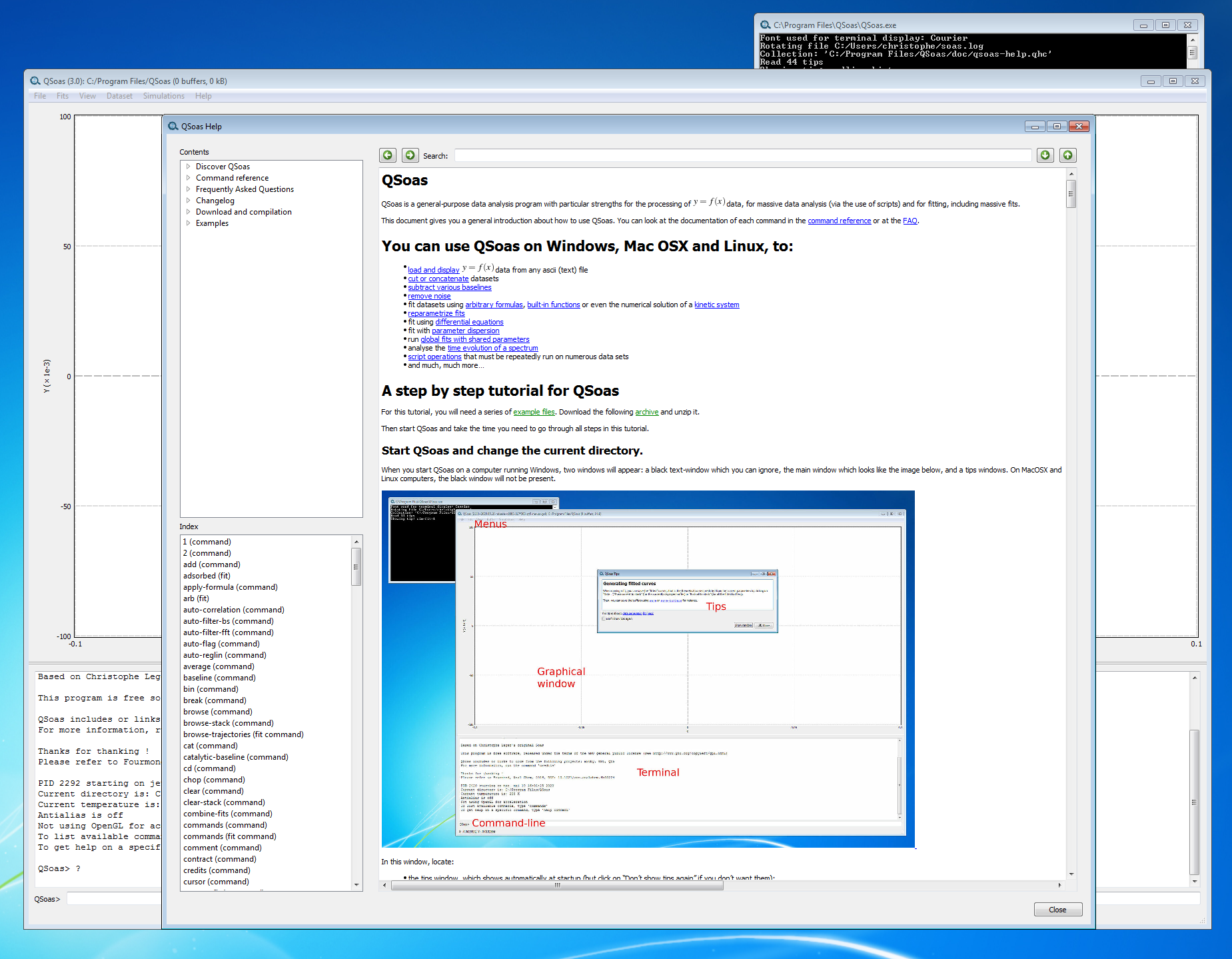
A new documentation system Another very important update is the inclusion of a new, offline, documentation system. The documentation features browsing via table of contents, a command index and text search. It also features the possibility to copy commands from the help to the command prompt, or even run them directly. To top it all, it comes with a series of startup tips that might teach you a thing or two about QSoas (try hitting Show random to learn new tricks !).
Many other features For the full list of changes, please see the changelog. Apart from the changes described above, these are my favorites:
To get the new version, you can just download the source code from the downloads page, where you can also purchase precompiled versions for Windows and MacOS. You can also clone the source from the GitHub repository. About QSoasQSoas is a powerful open source data analysis program that focuses on flexibility and powerful fitting capacities. It is released under the GNU General Public License. It is described in Fourmond, Anal. Chem., 2016, 88 (10), pp 5050 5052. Current version is 3.0. You can download its source code there (or clone from the GitHub repository) and compile it yourself, or buy precompiled versions for MacOS and Windows there.

13 December 2020

Jan Wagner: Monitoring Plugins 2.3 released

While our last release has matured for quite a little time, there raised demands within our community for a new release. The development has settled this fall and @sni was already using master for a while in production, so we thought about to release. Anyway Debian Freeze is coming, let's cut a new upstream release! The last question was: Who should cut the release? The last releases was done by @JeremyHolger, but these days everybody is short on time. Fortunately Holger has documented the whole release process very well, so I jumped on the band wagon and slipped into the release wizard role.
Surprisingly it seems I was able to fix all faults I've done in the release process (beside using the 2.2 link in the release announcement mail) and kicked the release of monitoring-plugins 2.3 successfully. Grab the new Monitoring Plugins release while it's hot (and give the new check_curl a try)!
Hopefully monitoring-plugins 2.3 will hit Debian experimental soon.

11 December 2020

Markus Koschany: My Free Software Activities in November 2020

Welcome to gambaru.de. Here is my monthly report (+ the first week in December) that covers what I have been doing for Debian. If you re interested in Java, Games and LTS topics, this might be interesting for you. Debian Games

Debian Java Misc Debian LTS This was my 57. month as a paid contributor and I have been paid to work 12 hours on Debian LTS, a project started by Rapha l Hertzog. In that time I did the following: ELTS Extended Long Term Support (ELTS) is a project led by Freexian to further extend the lifetime of Debian releases. It is not an official Debian project but all Debian users benefit from it without cost. The current ELTS release is Debian 8 Jessie . This was my 30. month and I have been paid to work 15 hours on ELTS. Thanks for reading and see you next time.

10 December 2020

Jonathan Carter: CentOS Stream, or Debian?

It s the end of CentOS as we know it Earlier this week, the CentOS project announced the shift to CentOS stream. In a nutshell, this means that they will discontinue being a close clone of RHEL along with security updates, and instead it will serve as a development branch of RHEL. As you can probably imagine (or gleam from the comments in that post I referenced), a lot of people are unhappy about this. One particular quote got my attention this morning while catching up on this week s edition of Linux Weekly News, under the distributions quotes section:

I have been doing this for 17 years and CentOS is basically my life s work. This was (for me personally) a heart wrenching decision. However, i see no other decision as a possibility. If there was, it would have been made.Johnny Hughes
I feel really sorry for this person and can empathize, I ve been in similar situations in my life before where I ve poured all my love and energy into something and then due to some corporate or organisational decisions (and usually poor ones), the project got discontinued and all that work that went into it vanishes into the ether. Also, 17 years is really long to be contributing to any one project so I can imagine that this must have been especially gutting.

Throw me a freakin bone here I m also somewhat skeptical of how successful CentOS Stream will really be in any form of a community project. It seems that Red Hat is expecting that volunteers should contribute to their product development for free, and then when these contributors actually want to use that resulting product, they re expected to pay a corporate subscription fee to do so. This seems like a very lop-sided relationship to me, and I m not sure it will be sustainable in the long term. In Red Hat s announcement of CentOS Stream, they kind of throw the community a bone by saying In the first half of 2021, we plan to introduce low- or no-cost programs for a variety of use cases - it seems likely that this will just be for experimental purposes similar to the Windows Insider program and won t be of much use for production users at all. Red Hat does point out that their Universal Base Image (UBI) is free to use and that users could just use that on any system in a container, but this doesn t add much comfort to the individuals and organisations who have contributed huge amounts of time and effort to CentOS over the years who rely on a stable, general-purpose Linux system that can be installed on bare metal.

Way forward for CentOS users Where to from here? I suppose CentOS users could start coughing up for RHEL subscriptions. For many CentOS use cases that won t make much sense. They could move to another distribution, or fork/restart CentOS. The latter is already happening. One of the original founders of the CentOS project, Gregory Kurtzer, is now working on Rocky Linux, which aims to be a new free system built from the RHEL sources. Some people from Red Hat and Canonical are often a bit surprised or skeptical when I point out to them that binary licenses are also important. This whole saga is yet another data point, but it proves that yet again. If Red Hat had from the beginning released RHEL with free sources and unobfuscated patches, then none of this would ve been necessary in the first place. And while I wish Rocky Linux all the success it aims to achieve, I do not think that working for free on a system that ultimately supports Red Hat s selfish eco-system is really productive or helpful. The fact is, Debian is already a free enterprise-scale system already used by huge organisations like Google and many others, which has stable releases, LTS support and ELTS offerings from external organisations if someone really needs it. And while RHEL clones have come and gone through the years, Debian s mission and contract to its users is something that stays consistent and I believe Debian and its ideals will be around for as long as people need Unixy operating systems to run anywhere (i.e. a very long time). While we sometimes fall short of some of our technical goals in Debian, and while we don t always agree on everything, we do tend to make great long-term progress, and usually in the right direction. We ve proved that our method of building a system together is sustainable, that we can do so reliably and timely and that we can collectively support it. From there on it can only get even better when we join forces and work together, because when either individuals or organisations contribute to Debian, they can use the end result for both private or commercial purposes without having to pay any fee or be encumbered by legal gotchas. Don t get caught by greedy corporate motivations that will result in you losing years of your life s work for absolutely no good reason. Make your time and effort count and either contribute to Debian or give your employees time to do so on company time. Many already do and reap the rewards of this, and don t look back. While Debian is a very container and virtualization friendly system, we ve managed to remain a good general-purpose operating system that manages to span use cases so vast that I d have to use a blog post longer than this one just to cover them. And while learning a whole new set of package build chain, package manager and new organisational culture and so on can be uhm, really rocky at the start, I d say that it s a good investment with Debian and unlikely to be time that you ll ever felt was wasted. As Debian project leader, I m personally available to help answer any questions that someone might have if they are interested in coming over to Debian. Feel free to mail leader_AT_debian.org (replace _AT_ with @) or find me on the oftc IRC network with the nick highvoltage. I believe that together, we can make Debian the de facto free enterprise system, and that it would be to the benefit of all its corporate users, instead of tilting all the benefit to just one or two corporations who certainly don t have your best interests in mind.

9 December 2020

Shirish Agarwal: Farm Laws and Too much Democracy

Issues with Farm Laws While I have written about the farm laws a bit sometime back. The issue is still in the nation s eye and that is due to the policies which have been done. I have been reading up on it quite a bit and also have been seeing what has been happening in here and now. The problems are with the three bills themselves which I have shared as below Click to access farmers-produce-trade-and-commerce-promotion-and-facilation-bill.pdf Click to access farmers-empowerment-and-protection-bill.pdf Click to access essential-commodities-bill-2020.pdf Biggest issue with the laws While there are many issues with the laws themselves but for me the biggest issue is that the fundamental right of the farmer to get justice via civil courts has been railroaded. From the laws itself. Standard disclaimer not a lawyer, please consult one for any issues per-se.

Farmers-produce-trade-and-commerce (promotion and facilitation-bill) 2020 Page 4 Chapter 3 Section 8 (1)8. (1) In case of any dispute arising out of a transaction between the farmer and a trader under section 4, the parties may seek a mutually acceptable solution through conciliation by filing an application to the Sub-Divisional Magistrate who shall refer such dispute to a Conciliation Board to be appointed by him for facilitating the binding settlement of the dispute. (2) Every Board of Conciliation appointed by the Sub-Divisional Magistrate under sub-section (1), shall consist of a chairperson and such members not less than two and not more than four, as the Sub-Divisional Magistrate may deem fit.10 (5) If the parties to the transaction under sub-section (1) are unable to resolve the dispute within thirty days in the manner set out under this section, they may approach the Sub-Divisional Magistrate concerned who shall be the Sub-Divisional Authority for settlement of such dispute. (8) Any party aggrieved by the order of the Sub-Divisional Authority may prefer an appeal before the Appellate Authority (Collector or Additional Collector nominated by the Collector) within thirty days of such order who shall dispose of the appeal within thirty days from the date of filing of such appeal. 10. (1) Any person aggrieved by an order under section 9 may, prefer an appeal within sixty days from the date of such order, to an officer not below the rank of Joint Secretary to the Government of India to be nominated by the Central Government for this purpose: Page 6 of the bill. 13. No suit, prosecution or other legal proceedings shall lie against the Central Government or the State Government, or any officer of the Central Government or the State Government or any other person in respect of anything which is in good faith done or intended to be done under this Act or of any rules or orders made thereunder. Page 7 of the bill, 15. No civil court shall have jurisdiction to entertain any suit or proceedings in respect of any matter, the cognizance of which can be taken and disposed of by any authority empowered by or under this Act or the rules made thereunder. Now the same laws have been reiterated for the farmers (Empowerment and Protection) Agreement on Price Assurance and Farm Services Bill, 2020. The problem is that too much power is being put into the hands of the executive. All the three, whether it is SDM (Sub-Divisional Magistrate) , the Appellate Authority or the Government Secretary directly are subservient to the whims and fancies of the Central Govt. They after all get their salaries from the Govt. itself. So there will be no independent oversight to any injustices done to the farmer. The third bill i.e. the Essential Commodities Bill, 2020 does away with stock limits on traders and big players like Adani and Ambani. This means that both these players can take and keep produce at their end thereby forcing consumers like you and me who at the retail end would have to pay higher prices for fruits and vegetables while from the producer they will take at the lowest price possible. While I have shared is just one of the points. That is the reason why even the Supreme Court bar association which almost never takes part in politics has been forced to take sides with the farmers. In many ways, one is forced to remember the Emergency  Update 11/12/20 Came across this article on the wire which tells how everybody s rights, not just the farmer s rights are being shod over. I think it depicts correctly the signs of time to come. While arguing on SM, also came to know about Article 300 (1), thanks to Sachin Kumar which shows multiple instances where Government was sued because somebody was working in official capacity and did mistakes, malafide or otherwise and it was the state who was made to pay. FWIW, today farmers from Maharashtra, my state arrived at Delhi border where they were also kept at bay. I did come across an infographic which shows how the various states have fared. Most tellingly, is the state of Bihar. It was in 2006 (one of the most backward states) where APMC was taken off. While others have tried to paint a flattering picture of Bihar, they have failed to share that in the interim 15 odd years, there hasn t been any sort of infrastructure created for farmers which is the reason it is still the lowest earner. These are the last available figures we have about the farmer s income. From 2014 to 2020 there hasn t been any update.
Situation Assessment Survey of Agricultural Household 2013 Copyright GOI,
This concludes just one portion of the bill. I will take other parts of the bill. I may dwell on some other parts as and when I have the time. A cartoon which depicts the current issue
I stand with farmers Copyright Sanitary Panels
Too much democracy Amitabh Kant Yesterday, the Niti Aayog chief Amitabh Kant remarked that we are too much of a democracy at an event called for Atmanirbhar Bharat which is basically a coinage for import substitution. Whether this is desirable or not I have argued and if needed will re-argue the same later as well. What is and was interesting were the gentleman s context, the media reactions and our overall Democracy Index which has been going downhill for quite some years. Now the gentleman who is the Niti Aayog chief and who is supposed to have the ear of the Prime Minister had opined it in an event organized by Swarajya Magazine (a far-right magazine) known to be Islamophobic and all things undemocratic. It has been a target of defundthehate campaign and with good reason. But that s a different story altogether. His full statement was as below

Tough reforms are very difficult in the Indian context, as we are too much of a democracy but the government has shown courage and determination in pushing such reforms across sectors, including mining, coal, labour and agriculture. Niti Aayog chief. The upper quotation remarks and the statement has been from the article in Indian Express which I have linked to. I have archived it as a pdf just in case the link goes dead. Yesterday, after the statement became viraled, tweets of media houses which shared the tweet suddenly become unavailable. Seems too much democracy, became too little democracy all of a sudden. I think Mr. Amitabh Kant didn t visualize as the opposition as well as most people who are on Twitter to share their opinion on the same. Few examples
Too much Democracy copyright Satish Acharya
Too much democracy Illustration and Copyright Alok
Sterlite protest 13 dead, 100 injured Copyright Business Standard too much democracy
Erosion of Democracy V-dem institute Copyright The Hindu Web Team
The last one requires a bit more information. This comes from V-Dem Institute which is an independent research institute based out of Department of Political Science, University of Gothenburg, Sweden. I am gonna leave the methods they use for another day as the blog post itself has become rather big/large. Apart from that is the Economists own Democracy Index -2019 Click to access democracy-index-2019.pdf Now for many people, both the V-Dem report and the Economist Index are some sort of attack against India. Doesn t matter that in V-Dem 200+ countries have been taken a variety of indicators and data or the Economist which has data from 150+- countries. Somehow India is supposed to be bigger than all these countries, they do think that other countries data specifically our neighbor China or any other neighbor, those are all accurate. How the dissonance is, has to be gauged from statements of various people. Update 11/12/20 Sadly, the newest V-Dem report marks India as getting into authoritarianism. Gag on Press and Media owners I had shared about the gag on the press especially with respect to western media or reports or anything. This news made its way to straitstimes which normally covers a wide-range of stories covering East Asia vis-a-vis India/South-East Asia. What has also been a big worry that most of the media has been in the hands of a few people. Caravan ran a story on the same in 2016, it has been four years, god only knows what the current situation might be. Any wonder that there is dearth of investigative journalism in India.
India media ownership 2016 Copyright Caravan
Incidentally, a reporter called Akarshan Uppal, who is a reporter on a channel called IBN24 had showecased just few days back how Adani has got land which was shot down for land change use in 2017 to 2020 around 100 acres. There seem to be very less details as to how the land was acquired, whose land it was etc. etc. The reporter was supposedly following a story on drugs on which he was attacked and is now lying in hospital.
Akarshan Uppal Reporter, IBN24 Copyright IBN24
While it would take a whole article/blog post to talk about either Adani or Ambani, in the recent case, the land that has been taken over by Adani is 100 acres and there are private rail lines. And all of this was secret till few days back. The place where these massive godowns/silos have been made are Panipat s Jondhan Kalan and Naultha villages in Haryana. This is Adani AgiLogistics. Almost 7 odd companies have registered and come up in the last couple of years. As can be seen, almost all have come up within the last 2-3 years. Seems to be a lot of coincidence, isn t it?
Personal Anecdote on Data Collection and child marriages in India.

Around 1995 -96 when Internet had started to become a thing in India, there had been quite a few non-profits which were working on various issues. One of those which I initially came in contact with and which I found to be a bit absurd was non-profit which was working in the field of women against Violence. Now it is and was not the concept or the idea which was absurd to me, it was what these women were doing. Instead of the traditional ways in which you counsel women and try and figure out issues, these women were collecting data points from newspapers and magazines. This was way way before data science became a thing in India. They had their own structure where a story about violence against women which would be above the fold would be 5 points, the one below 2.5 points, in inner pages, it would be less and less. Patriarchy at that time was so strong, even today is but at that time it was such, that it felt a waste of time. I did consult them but never said that but did privately feel the above. In hindsight, they were doing the right thing and yet even today crimes against women goes unreported and is suppressed by both State and Central Governments as well as NCRB (National Crime Records Bureau). Interestingly, just few days back, the case against M.J. Akbar by Priya Ramani had taken a back seat and the defamation case by M.J. Akbar was taken forward. Even then, Priya Ramani s counsel s arguments were such that the court wound up in half an hour when they were expecting to do a whole day hearing. The next hearing would be happening today which I will look at in few hours from now. Why Priya Ramani was singled out rather than other tweets may probably be because she is an NRI and most NRI s usually do not want to be part of the bureaucratic Indian court system. This is also the reason that most companies from outside India especially those who are into startups prefer to change ownership, IPR etc. to their own or any country outside India which does make a loss to the exchequer. But this again is a story for another day. At the end, while I did not want to end on a negative note, it seems in many ways status-quo remains. For e.g. 2 years back, a BJP candidate (part of the ruling dispensation) had made a controversy saying that if they win the police won t interfere in child marriages. This is and was in Rajasthan where they have been trying to eradicate it forever. Till date, neither the NHRC (National Human Rights Commission) nor NCW (National Commission for Women) has taken cognizance of the statement. This is our state of democracy.

8 December 2020

Russell Coker: Links December 2020

Business Insider has an informative article about the way that Google users can get locked out with no apparent reason and no recourse [1]. Something to share with clients when they consider putting everything in the cloud . Vice has an interestoing article about people jailbreaking used Teslas after Tesla has stolen software licenses that were bought with the car [2]. The Atlantic has an interesting article titled This Article Won t Change Your Mind [3]. It s one of many on the topic of echo chambers but has some interesting points that others don t seem to cover, such as regarding the benefits of groups when not everyone agrees. Inequality.org has lots of useful information about global inequality [4]. Jeffrey Goldberg has an insightful interview with Barack Obama for the Atlantic about the future course of American politics and a retrospective on his term in office [5]. A Game Designer s Analysis Of QAnon is an insightful Medium article comparing QAnon to an augmented reality game [6]. This is one of the best analysis of QAnon operations that I ve seen. Decrypting Rita is one of the most interesting web comics I ve read [7]. It makes good use of side scrolling and different layers to tell multiple stories at once. PC Mag has an article about the new features in Chrome 87 to reduce CPU use [8]. On my laptop I have 1/3 of all CPU time being used when it is idle, the majority of which is from Chrome. As the CPU has 2 cores this means the equivalent of 1 core running about 66% of the time just for background tabs. I have over 100 tabs open which I admit is a lot. But it means that the active tabs (as opposed to the plain HTML or PDF ones) are averaging more than 1% CPU time on an i7 which seems obviously unreasonable. So Chrome 87 doesn t seem to live up to Google s claims. The movie Bad President starring Stormy Daniels as herself is out [9]. Poe s Law is passe. Interesting summary of Parler, seems that it was designed by the Russians [10]. Wired has an interesting article about Indistinguishability Obfuscation, how to encrypt the operation of a program [11]. Joerg Jaspert wrote an interesting blog post about the difficulties packagine Rust and Go for Debian [12]. I think that the problem is many modern languages aren t designed well for library updates. This isn t just a problem for Debian, it s a problem for any long term support of software that doesn t involve transferring a complete archive of everything and it s a problem for any disconnected development (remote sites and sites dealing with serious security. Having an automatic system for downloading libraries is fine. But there should be an easy way of getting the same source via an archive format (zip will do as any archive can be converted to any other easily enough) and with version numbers.

5 December 2020

Thorsten Alteholz: My Debian Activities in November 2020

FTP master Unfortunately a day only has 24h. As the freeze is approaching, I had to concentrate a bit more on keeping my packages in shape. So this month I only accepted nine packages. The good news, I rejected no package. The overall number of packages that got accepted was 328. Debian LTS This was my seventy-seventh month that I did some work for the Debian LTS initiative, started by Raphael Hertzog at Freexian. This month my all in all workload has been 22.75h. During that time I did LTS uploads of: I also started to work on x11vnc and slirp. Last but not least I did some days of frontdesk duties. Debian ELTS This month was the twenty ninth ELTS month. During my allocated time I uploaded: Unfortunately I also had to give back some hours. Last but not least I did some days of frontdesk duties. Other stuff This month I uploaded new upstream versions of: I fixed one or two bugs in: I improved packaging of: and there have been even some new packages: As it is again this time of the year, I would also like to draw some attention to the Debian Med Advent Calendar. Like the past years, the Debian Med team starts a bug squashing event from the December 1st to 24th. Every bug that is closed will be registered in the calendar. So instead of taking something from the calendar, this special one will be filled and at Christmas hopefully every Debian Med related bug is closed. Don t hesitate, start to squash :-). The announcement on the mailing list can be found here.

Next.

Previous.