Search Results: "pa"

12 July 2025

Freexian Collaborators: Debian Contributions: unschroot, DebConf 25 preparations and more! (by Anupa Ann Joseph)

Debian Contributions: 2025-06 Contributing to Debian is part of Freexian s mission. This article covers the latest achievements of Freexian and their collaborators. All of this is made possible by organizations subscribing to our Long Term Support contracts and consulting services.

unschroot, by Helmut Grohne Quite a while back, the sbuild maintainers added the unshare backend to enable better isolation of builds, but in doing so sbuild now effectively bundles a container runtime. unschroot is an attempt to separate containment from sbuild by implementing the same features and more in a schroot-compatible way. Last year, vague feature parity was achieved, but going beyond required changing the model from keeping state in the filesystem to keeping Linux namespaces as session state. A proof of concept is now available. While it still has sharp corners, it enables building packages on a squashfs with an overlayfs or id-mapped bind mounting of your ccache neither of which is possible with sbuild s unshare backend. There shall be a DebConf25 presentation about this work.

DebConf 25, by Stefano Rivera, Santiago Ruano Rinc n and Lucas Kanashiro DebConf 25 is now under way in Brest, France. Santiago is part of the local team running the event, and Stefano Rivera is part of the DebConf committee, supporting the event, as well as the video team. Both have spent considerable time in the last month, getting things ready for DebConf. Lucas Kanashiro built the schedule for DebConf 25. Also followed-up on multiple requests from speakers and stakeholders.

Miscellaneous contributions
  • Carles did general maintenance on simplemonitor, qnetload and qdacco packages; provided simplemonitor upstream feedback on new feature.
  • Carles s updates about po-debconf-manager: prepared for DebCamp/DebConf, used it for reviewing and merging different packages. Also fixed multispeech po-debconf templates.
  • Colin Watson found a crash in pterm (PuTTY s terminal emulator) when running in a Wayland session, and backported the resulting upstream fix to trixie.
  • Colin responded to an upstream groff bug report about URLs being dropped from PDF output in some cases on Debian, and backported the fix to trixie.
  • Helmut dealt with issues related to /usr-move. Most prominently Christian Hofstaedler reported an upgrade failure. /usr-move is a contributing factor here as that s what caused systemd to upgrade a number of Breaks and Replaces to Conflicts. dumat needed some help with dropping mips64el from testing and Theodore Ts o forwarded a fuse2fs upgrade failure.
  • Helmut sent patches for 25 cross build failures.
  • Helmut debugged rebootstrap failures and worked around build failures related to gcc-15 when they had patches and sent ones otherwise.
  • Thorsten Alteholz uploaded cups to fix a FTBFS-bug. This bug was introduced by a change in systemd, which bumped the maximum number of open files. This resulted in a longer test duration that triggered a timeout so that the build failed. Thorsten also uploaded mtink and lprng, which got new translation files.
  • Lucas Kanashiro followed-up on multiple unblock requests for ruby packages due to reproducible builds fixes. All of them were accepted into trixie.
  • Lucas Kanashiro discussed license issues with upstream involving Redis 8 new license and the possibility of backporting patches to old versions with a different license. Outcome is that upstream is adding a new paragraph to their license to allow the backport for security fixes.
  • Lucas Kanashiro fixed multiple CVEs reported against valkey in unstable and trixie.
  • Lucas Kanashiro gave a Debian packaging course of 8 hours for students at a free software development course at the University of Sao Paulo.
  • Lucas Kanashiro fixed a couple of cross building issues in the ruby ecosystem with Helmut s help.
  • Lucas Kanashiro is working on a debci fix for #1107645 (ongoing).
  • Stefano Rivera updated python-mitogen to the latest beta releases with upstream support for Ansible 12.
  • Stefano Rivera spent some time winding up DebConf 24 books.
  • Stefano Rivera fixed packages that were blocking cPython 3.13.5 from migrating to trixie, and filed an unblock request.
  • Stefano Rivera investigated a regression in cPython 3.13 that was breaking OpenStack Nova. There is a patch in progress for cPython, but it is not ready for use, yet.
  • Santiago reviewed different MRs in Salsa CI. For example, the MR !605 proposed by Aquila that aims to introduce a new debdiff job, as well as the autopkgtest MR !33 to extend the support to architectures other than amd64. Also reviewed MR !611 by Aayush Raj that fixes the autopkgtest images cleanup. And the MR !614, prepared by Charles, to change the suffix name used to bump the version used in the pipeline.
  • Anupa procured supplies needed for the DebConf ID tag for the DebConf registration team and co-ordinated its transport to the venue.
  • Anupa joined Nattie to complete the registration team tasks.

11 July 2025

Jamie McClelland: Avoiding Apache Max Request Workers Errors

Wow, I hate this error:
AH00484: server reached MaxRequestWorkers setting, consider raising the MaxRequestWorkers setting
For starters, it means I have to relearn how MaxRequestWorkers functions in Apache:
For threaded and hybrid servers (e.g. event or worker), MaxRequestWorkers restricts the total number of threads that will be available to serve clients. For hybrid MPMs, the default value is 16 (ServerLimit) multiplied by the value of 25 (ThreadsPerChild). Therefore, to increase MaxRequestWorkers to a value that requires more than 16 processes, you must also raise ServerLimit.
Ok remind me what ServerLimit refers to?
For the prefork MPM, this directive sets the maximum configured value for MaxRequestWorkers for the lifetime of the Apache httpd process. For the worker and event MPMs, this directive in combination with ThreadLimit sets the maximum configured value for MaxRequestWorkers for the lifetime of the Apache httpd process. For the event MPM, this directive also defines how many old server processes may keep running and finish processing open connections. Any attempts to change this directive during a restart will be ignored, but MaxRequestWorkers can be modified during a restart. Special care must be taken when using this directive. If ServerLimit is set to a value much higher than necessary, extra, unused shared memory will be allocated. If both ServerLimit and MaxRequestWorkers are set to values higher than the system can handle, Apache httpd may not start or the system may become unstable. With the prefork MPM, use this directive only if you need to set MaxRequestWorkers higher than 256 (default). Do not set the value of this directive any higher than what you might want to set MaxRequestWorkers to. With worker, use this directive only if your MaxRequestWorkers and ThreadsPerChild settings require more than 16 server processes (default). Do not set the value of this directive any higher than the number of server processes required by what you may want for MaxRequestWorkers and ThreadsPerChild. With event, increase this directive if the process number defined by your MaxRequestWorkers and ThreadsPerChild settings, plus the number of gracefully shutting down processes, is more than 16 server processes (default).
Got it? In other words, you can consider raising the MaxRequestWorkers setting all you want, but you can t just change that setting, you have to read about several other compliated settings, do some math, and spend a lot of time wondering if you are going to remember what you just did and how to undo it if you blow up your server. On the plus side, typically, nobody should increase this limit - because if the server runs out of connections, it usually means something else is wrong. In our case, on a shared web server running Apache2 and PHP-FPM, it s usually because a single web site has gone out of control. But wait! How can that happen, we are using PHP-FPM s max_children setting to prevent a single PHP web site from taking down the server? After years of struggling with this problem I have finally made some headway. Our PHP pool configuration typically looks like this:
user = site342999writer
group = site342999writer
listen = /run/php/8.1-site342999.sock
listen.owner = www-data
listen.group = www-data
pm = ondemand
pm.max_children = 12
pm.max_requests = 500
php_admin_value[memory_limit] = 256M
And we invoke PHP-FPM via this apache snippet:
<FilesMatch \.php$>
        SetHandler "proxy:unix:/var/run/php/8.1-site342999.sock fcgi://localhost"
</FilesMatch>
With these settings in place, what happens when we use up all 12 max_children? According to the docs:
By default, mod_proxy will allow and retain the maximum number of connections that could be used simultaneously by that web server child process. Use the max parameter to reduce the number from the default. The pool of connections is maintained per web server child process, and max and other settings are not coordinated among all child processes, except when only one child process is allowed by configuration or MPM design.
The max parameter seems to default to the ThreadsPerChild, so it seems that the default here is to allow any web site to consume ThreadsPerChild (25) x ServerLimit (16), which is also the max number of over all connections. Not great. To make matter worse, there is another setting available which is mysteriously called acquire:
If set, this will be the maximum time to wait for a free connection in the connection pool, in milliseconds. If there are no free connections in the pool, the Apache httpd will return SERVER_BUSY status to the client.
By default this is not set which seems to suggest Apache will just hang on to connections forever until a free PHP process becomes available (or some other time out happens). So, let s try something different:
 <Proxy "fcgi://localhost">
    ProxySet acquire=1 max=12
  </proxy>
This snippet is the way you can configure the proxy configuration we setup in the SetHandler statement above. It s documented on the Apache mod_proxy page. Now we limit the maximum pool size per process to half of what is available for the entire server and we tell Apache to immediately throw a 503 error if we have exceeded our maximum number of connecitons. Now, if a site is overwhelmed with traffic, instead of maxing out the available Apache connections while leaving user with constantly spinning browsers, the users will get 503 ed and the server will be able to server other sites.

David Bremner: Hibernate on the pocket reform 5/n

Context

A Kernel Patch
  • The follow patch looks potentially relevant:
https://patchwork.kernel.org/project/linux-rockchip/patch/20250509-b4-pci_dwc_reset_support-v3-1-37e96b4692e7@wdc.com/
  • git clone https://github.com/torvalds/linux.git (Is there a better place? kernel.org is pretty opaque)
  • are the pre-reqs in mnt kernel? The patch header contains
    base-commit: 08733088b566b58283f0f12fb73f5db6a9a9de30
    change-id: 20250430-b4-pci_dwc_reset_support-d720dbafb7ea
    prerequisite-change-id: 20250404-pcie-reset-slot-730bfa71a202:v4
    prerequisite-patch-id: 2dad85eb26838d89569b12c19d70f392fa592667
    prerequisite-patch-id: 6238a682bd8e9476e5911b7a59263c3fc618d63e
    prerequisite-patch-id: 37cab00bc255a62b1e8396a48a3afba5e1751abd
    prerequisite-patch-id: ff711f65cf9926374646b76cd38bdd823d576764
    prerequisite-patch-id: 1654cca919d024b9a9190b28e90f722975c797e8
  • First check and see what is upstream. I had to remember how to use git-patch-id and also how to split a long regex disjunction into multiple lines.
git log --patch --no-merges v6.13..   \
  git patch-id --stable   \
  grep -F -e 2dad85eb26838d89569b12c19d70f392fa592667 \
    -e 6238a682bd8e9476e5911b7a59263c3fc618d63e \
    -e 37cab00bc255a62b1e8396a48a3afba5e1751abd \
    -e ff711f65cf9926374646b76cd38bdd823d576764 \
    -e 1654cca919d024b9a9190b28e90f722975c797e8
yields
37cab00bc255a62b1e8396a48a3afba5e1751abd d1c696dba120624256ab335ab8247f535b872309
2dad85eb26838d89569b12c19d70f392fa592667 b06d125e6280603a34d9064cd9c12748ca2edb04
The two commits that are actually found, are only in tag 'v6.16~rc1'
  • The discussion on LKML mentions pci/slot-reset. Where does that branch live?
git remote add pci https://git.kernel.org/pub/scm/linux/kernel/git/pci/pci.git
git fetch pci
git for-each-ref refs/remotes/pci --format "%(refname)"   \
    while read branch
    do
        echo "checking $branch"
        git log --patch --no-merges --since 2025-01-01 $branch   \
            git patch-id --stable   \
            grep -F -e 2dad85eb26838d89569b12c19d70f392fa592667 \
                 -e 6238a682bd8e9476e5911b7a59263c3fc618d63e \
                 -e 37cab00bc255a62b1e8396a48a3afba5e1751abd \
                 -e ff711f65cf9926374646b76cd38bdd823d576764 \
                 -e 1654cca919d024b9a9190b28e90f722975c797e8
    done
This did not find any more commits, but I did learn how to use git-for-each-ref, so I guess not a total loss. previous episode next episode

Reproducible Builds (diffoscope): diffoscope 301 released

The diffoscope maintainers are pleased to announce the release of diffoscope version 301. This version includes the following changes:
[ Chris Lamb ]
* Avoid spurious differences in h5dump output caused by exposure of absolute
  internal extraction paths. (Closes: #1108690)
* Use our_check_output in the ODT comparator.
* Memoize a number of calls to --version. Thanks, Jade! (Closes: #412)
* Update copyright years.
You find out more by visiting the project homepage.

10 July 2025

David Bremner: Hibernate on the pocket reform 4/n

Context

Log from (failed) platform test After some fun I got the serial console working and re-ran the platform test. After a bit of reading the serial console, I realized that rmmod dwc3 was causing more problems than it solved, in particularly reliable hard lockup on one of the CPUs. My revised test script is
set -x
echo platform >  /sys/power/pm_test
echo reboot > /sys/power/disk
sleep 2
rmmod mt76x2u
sleep 2
echo disk >  /sys/power/state
sleep 2
modprobe mt76x2u
The current problem seems to be pcie not resuming properly.
[   65.306842] usbcore: deregistering interface driver mt76x2u
[   65.343606] wlx000a5205eb2d: deauthenticating from 20:05:b7:00:2d:89 by local choice (Reason: 3=DEAUTH_LEAVING)
[   67.995239] PM: hibernation: hibernation entry
[   68.048103] Filesystems sync: 0.022 seconds
[   68.049005] Freezing user space processes
[   68.051075] Freezing user space processes completed (elapsed 0.001 seconds)
[   68.051760] OOM killer disabled.
[   68.052597] PM: hibernation: Basic memory bitmaps created
[   68.053108] PM: hibernation: Preallocating image memory
[   69.719040] PM: hibernation: Allocated 366708 pages for snapshot
[   69.719650] PM: hibernation: Allocated 1466832 kbytes in 1.66 seconds (883.63 MB/s)
[   69.720370] Freezing remaining freezable tasks
[   69.723558] Freezing remaining freezable tasks completed (elapsed 0.002 seconds)
[   69.728002] rk_gmac-dwmac fe1b0000.ethernet end0: Link is Down
[   69.992324] rockchip-dw-pcie a40c00000.pcie: Failed to receive PME_TO_Ack
[   69.993405] PM: hibernation: debug: Waiting for 5 seconds.
[   76.059484] rockchip-dw-pcie a40c00000.pcie: Phy link never came up
[   76.060043] rockchip-dw-pcie a40c00000.pcie: fail to resume
[   76.060546] rockchip-dw-pcie a40c00000.pcie: PM: dpm_run_callback(): genpd_restore_noirq returns -110
[   76.061363] rockchip-dw-pcie a40c00000.pcie: PM: failed to restore noirq: error -110
previous episode next episode

Russell Coker: Bad Product Comparisons and EVs

When companies design products a major concern seems to be what the reviewers will have to say about it. For any product of significant value the users are unable to perform any reasonable test before buying, for a casual user some problems may only be apparent after weeks of use so professional reviews are important to many people. The market apparently doesn t want reviews of the form here s a list of products that are quite similar and all do the job well, you can buy any of them, it s no big deal which would be the most technically accurate way of doing it. So the reviewers compare the products on the criteria that are easiest to measure, this lead to phones being compared by how light and thin they are. I think it s often the case that users would be better served by thicker heavier phones that have larger batteries but instead they are being sold phones that have good battery life in a fresh installation but which don t last a day with a full load of apps installed. The latest issue with bad reviews driving poor product design is electric cars. For a while the advocates of old fashioned cars have touted the range of petrol cars which has become an issue for comparing EVs. I have been driving cars for 35 years and so far I have never driven anywhere that s out of range of the current electric charging network, even with the range of the LEAF (which is smaller than many other EVs). If I ever felt the need to drive across the Nullarbor Plain then I could rent a car to do that and the costs of such car rental would be small compared to the money I m saving by driving an EV and also small when compared to the premium I would have to pay for an EV with a larger range. Some of the recent articles I ve seen about EVs have covered vehicles with a battery range over 700Km which is greater than the legal distance a commercial driver can drive without a break. I ve also seen articles about plans to have a small petrol or Diesel motor in an EV to recharge the battery without directly driving the wheels. A 9KW Diesel motor could provide enough electricity on average to keep the charge maintained in a LEAF battery and according to the specs of Diesel generators would take about 55Kg of fuel to provide the charge a LEAF needs to drive 1000Km. The idea of a mostly electric hybrid car that can do 1000Km on one tank of fuel is interesting as a thought experiment but doesn t seem to have much actual use. Apparently a Chinese company is planning to release a car that can do 1400Km one one tank of fuel using such technology which is impressive but not particularly useful. The next issue of unreasonable competition is in charge speed. Charging a car at 2KW from a regular power socket is a real limit to what you can do with a car. It s a limit that hasn t bothered me so far because the most driving I typically do in a week is less than one full charge, so at most I have to charge overnight twice in a week. But if I was going to drive to another city without hiring a car that has better range I d need a fast charger. Most current models of the Nissan LEAF support charging speeds up to 50KW which means fully charging the battery in under an hour (or slightly over an hour for the long range version). If I was to drive from Melbourne to Canberra in my LEAF I d have to charge twice which would be an annoyance at those speeds. There are a variety of EVs that can charge at 100KW and some as high as 350KW. 350KW is enough to fully charge the largest EV batteries in half an hour which seems to be as much as anyone would need. But there are apparently plans for 1MW car chargers which would theoretically be able to charge a Hummer (the EV with the largest battery) in 12 minutes. One obvious part of the solution to EV charging times is to not drive a Hummer! Another thing to note is that batteries can t be charged at a high rate for all charge levels, this is why advertising for fast chargers makes claims like 80% charge in half an hour which definitely doesn t mean 100% charge in 37.5 minutes ! There are significant engineering issues with high power applications. A 1MW cable is not just a bigger version of a regular power cable, there are additional safety issues, user training is required and cooling of the connector is probably required. That s a lot to just get a better number in the table at the end of a review. There is research in progress on the Megawatt Charging System which is designed to charge heavy vehicles (presumably trucks and buses) at up to 3.75MW. Charging a truck at that rate is reasonable as the process of obtaining and maintaining a heavy vehicle license requires a significant amount of effort and some extra training in 3.75MW charging probably doesn t make much difference. A final issue with fast charging is the capacity of the grid. A few years ago I attended a lecture by an electrical engineer who works for the Victorian railway system which was very interesting. The Vic rail power setup involved about 100MW of grid connectivity with special contracts with the grid operators due to the fact that 1MW trains suddenly starting and stopping causes engineering problems that aren t trivial to solve. They were also working on battery packs and super capacitors to deal with regenerative braking and to avoid brownouts in long sections of track. For a medium size petrol station 14 bays for fuelling cars is common. If 6 such petrol stations were replaced with fast charging stations that can charge cars at 1MW each that would draw the same power as the train network for the entire state! There is a need for significant engineering work to allow most cars to be electric no matter how it s done, but we don t need to make that worse just for benchmarks.

Tianon Gravi: Yubi Whati? (YubiKeys, ECDSA, and X.509)

Off-and-on over the last several weeks, I've been spending time trying to learn/understand YubiKeys better, especially from the perspective of ECDSA and signing. I had a good mental model for how "slots" work (canonically referenced by their hexadecimal names such as 9C), but found that it had a gap related to "objects"; while closing that, I was annoyed that the main reference table for this gap lives primarily in either a PDF or inside several implementations, so I figured I should create the reference I want to see in the world, but that it would also be useful to write down some of my understanding for my own (and maybe others') future reference. So, to that end, I'm going to start with a bit ( ) of background information, with the heavy caveat that this only applies to "PIV" ("FIPS 201") usage of YubiKeys, and that I only actually care about ECDSA, although I've been reassured that it's the same for at least RSA (anything outside this is firmly Here Be Not Tianon; "gl hf dd"). (Incidentally, learning all this helped me actually appreciate the simplicity of cloud-based KMS solutions, which was an unexpected side effect. ) At a really high level, ECDSA is like many other (asymmetric) cryptographic solutions you've got a public key and a private key, the private key can be used to "sign" data (tiny amounts of data, in fact, like P-256 can only reasonably sign 256 bits of data, which is where cryptographic hashes like SHA256 come in as secure analogues for larger data in small bit sizes), and the public key can then be used to verify that the data was indeed signed by the private key, and only someone with the private key could've done so. There's some complex math and RNGs involved, but none of that's actually relevant to this post, so find that information elsewhere. Unfortunately, this is where things go off the rails: PIV is X.509 ("x509") heavy, and there's no X.509 in the na ve view of my use case. In a YubiKey (or any other PIV-signing-supporting smart card? do they actually have competitors in this specific niche? ), a given "slot" can hold one single private key. There are ~24 slots which can hold a private key and be used for signing, although "Slot 9c" is officially designated as the "Digital Signature" slot and is encouraged for signing purposes. One of the biggest gotchas is that with pure-PIV (and older YubiKey firmware ) the public key for a given slot is only available at the time the key is generated, and the whole point of the device in the first place is that the private key is never, ever available from it (all cryptographic operations happen inside the device), so if you don't save that public key when you first ask the device to generate a private key in a particular slot, the public key is lost forever (asterisk).
$ # generate a new ECDSA P-256 key in "slot 9c" ("Digital Signature")
$ # WARNING: THIS WILL GLEEFULLY WIPE SLOT 9C WITHOUT PROMPTING
$ yubico-piv-tool --slot 9c --algorithm ECCP256 --action generate
-----BEGIN PUBLIC KEY-----
MFkwEwYHKoZIzj0CAQYIKoZIzj0DAQcDQgAEtGoWRGyjjUlJFXpu8BL6Rnx8jjKR
5+Mzl2Vepgor+k7N9q7ppOtSMWefjFVR0SEPmXqXINNsCi6LpLtNEigIRg==
-----END PUBLIC KEY-----
Successfully generated a new private key.
$ # this is the only time/place we (officially) get this public key
With that background, now let's get to the second aspect of "slots" and how X.509 fits. For every aforementioned slot, there is a corresponding "object" (read: place to store arbitrary data) which is corresponding only by convention. For all these "key" slots the (again, by convention) corresponding "object" is explicitly supposed to be an X.509 certificate (see also the PDF reference linked above). It turns out this is a useful and topical place to store that public key we need to keep handy! It's also an interesting place to shove additional details about what the key in a given slot is being used for, if that's your thing. Converting the raw public key into a (likely self-signed) X.509 certificate is an exercise for the reader, but if you want to follow the conventions, you need some way to convert a given "slot" to the corresponding "object", and that is the lookup table I wish existed in more forms. So, without further ado, here is the anti-climax:
Slot Object Description
0x9A 0x5FC105 X.509 Certificate for PIV Authentication
0x9E 0x5FC101 X.509 Certificate for Card Authentication
0x9C 0x5FC10A X.509 Certificate for Digital Signature
0x9D 0x5FC10B X.509 Certificate for Key Management
0x82 0x5FC10D Retired X.509 Certificate for Key Management 1
0x83 0x5FC10E Retired X.509 Certificate for Key Management 2
0x84 0x5FC10F Retired X.509 Certificate for Key Management 3
0x85 0x5FC110 Retired X.509 Certificate for Key Management 4
0x86 0x5FC111 Retired X.509 Certificate for Key Management 5
0x87 0x5FC112 Retired X.509 Certificate for Key Management 6
0x88 0x5FC113 Retired X.509 Certificate for Key Management 7
0x89 0x5FC114 Retired X.509 Certificate for Key Management 8
0x8A 0x5FC115 Retired X.509 Certificate for Key Management 9
0x8B 0x5FC116 Retired X.509 Certificate for Key Management 10
0x8C 0x5FC117 Retired X.509 Certificate for Key Management 11
0x8D 0x5FC118 Retired X.509 Certificate for Key Management 12
0x8E 0x5FC119 Retired X.509 Certificate for Key Management 13
0x8F 0x5FC11A Retired X.509 Certificate for Key Management 14
0x90 0x5FC11B Retired X.509 Certificate for Key Management 15
0x91 0x5FC11C Retired X.509 Certificate for Key Management 16
0x92 0x5FC11D Retired X.509 Certificate for Key Management 17
0x93 0x5FC11E Retired X.509 Certificate for Key Management 18
0x94 0x5FC11F Retired X.509 Certificate for Key Management 19
0x95 0x5FC120 Retired X.509 Certificate for Key Management 20
See also "piv-objects.json" for a machine-readable copy of this data. (Major thanks to paultag and jon gzip johnson for helping me learn and generally putting up with me, but especially dealing with my live-stream-of-thoughts while I stumble through the dark. )

8 July 2025

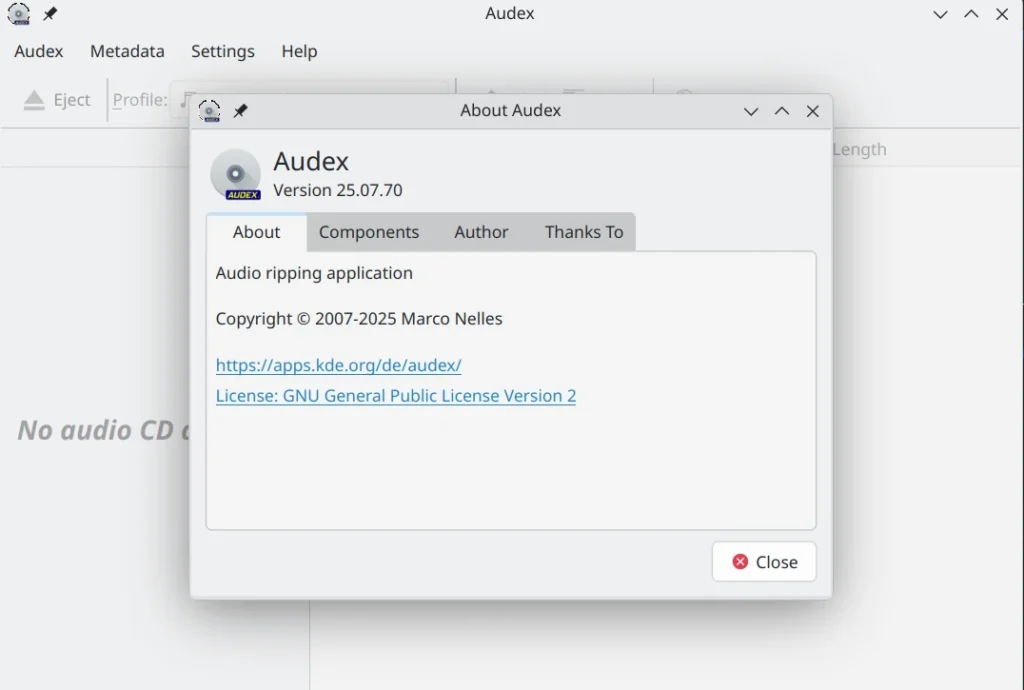
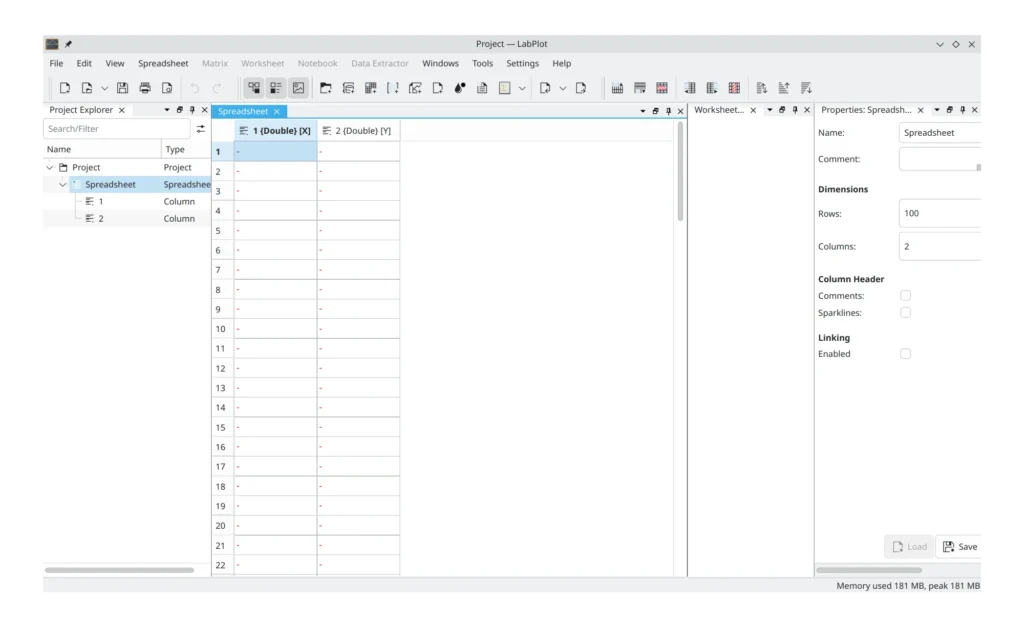
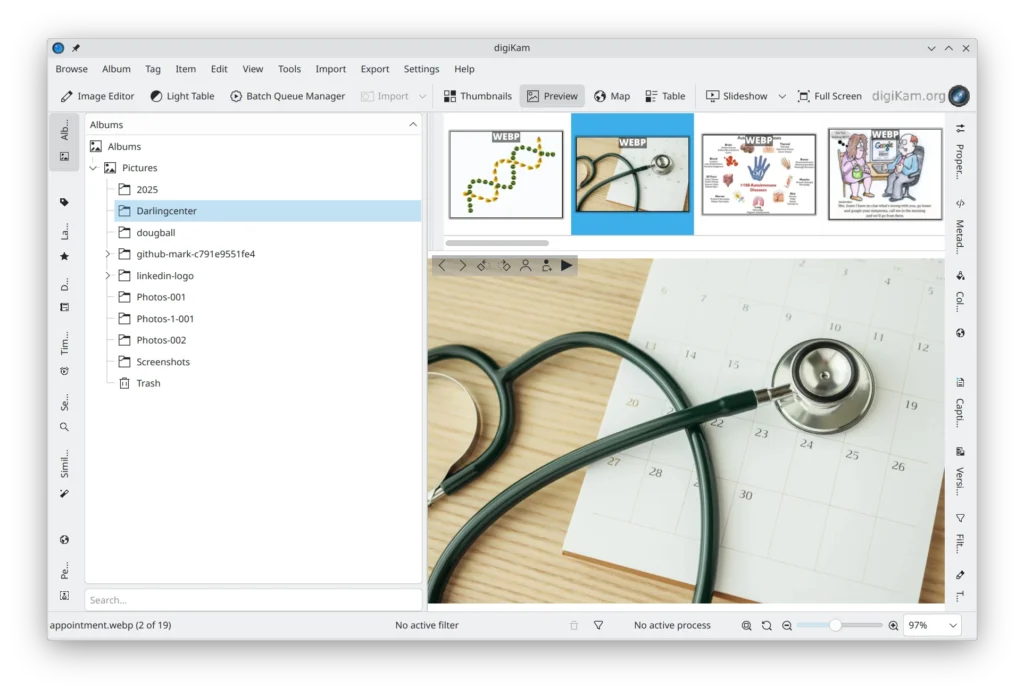
Scarlett Gately Moore: KDE Applications snaps 25.04.3 released, plus new snaps and fixes!

I have released 25.04.3 I have upgraded the QT6 content snap to 6.9! Fixed a bug in kde-neon* extensions with cmake prefix path. New snaps!
Audex: A CD ripping application.
GCompris An excellent childrens education application
Labplot Scientific plotting
Digikam 8.7.0 with exiftool bug fixed https://bugs.kde.org/show_bug.cgi?id=501424
Krita 5.2.11 Excellent Graphic art platform ( compares to Photoshop ) kgraphviewer Graphiz .dot file viewer I am happy to report my arm is mostly functional! Unfortunately, maintaining all these snaps is an enormous amount of work, with time I don t have! Please consider a donation for the time I should be spending job hunting / getting a website business off the ground. Thank you for your consideration!

David Bremner: Hibernate on the pocket reform 3/n

Context

Serial console hardware
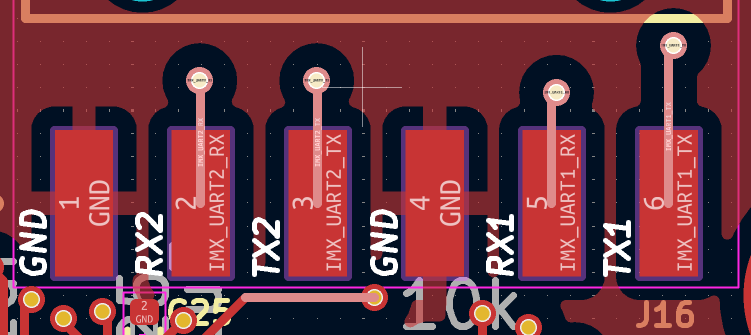
  • Manual is unclear about name of connector (J16 in schematics, J17 in manual).
  • Also numbering of pins is not given afaict.
  • Clone https://source.mnt.re/reform/pocket-reform.git
  • Look at pocket-reform-motherboard.kicad_pcb
  • From the PCB I can confirm J16 and pins numbered left (sysctl) to right.
  • attach "dtech" prolific PL2303 based serial to usb cable per serial console section of PR manual
  • lsusb shows ID 067b:23a3 Prolific Technology, Inc. ATEN Serial Bridge
  • install tio
  • add my user to group dialout
  • newgrp dialout
  • tio /dev/ttyUSB0 -b 1500000
  • A closer look at the PCB in kicad makes me realize the pin labels in the manual are wrong. 4 = GND, 5 = UART1_RX, 6= UART1_TX. With that change I have U-boot output on boot.

Serial console software With some help from minute on ircs://irc.libera.chat:6697/#mnt-reform, I got the kernel boot arguments right to have not just u-boot output but linux kernel output on the serial console. In consfigurator notation
(on-change
      (file:has-content "/etc/flash-kernel/ubootenv.d/00reform2_serial_console"
        "setenv bootargs \"$ bootargs  console=ttyS2,1500000 keep_bootcon\"")
    (cmd:single "flash-kernel"))
The filename should sort before "00reform2_ubootenv" so that the existing "console=tty1" still ends up at the end. previous episode next episode

Sahil Dhiman: Five Years of Writing - Now What?

Okay, here s the deal, I pushed my first post on Reimagined Doodle - Alias Command, five years ago on July 8th, 2020. Don t think I ever mentioned that post started out as a Github Gist which I later transferred here seeking a more long-term home on an independent platform. Writing about writings, motivations, and the blog itself has been a recurring theme here over the years. 1 2 3 4 5 6 7 8 9 I m unsure how I sustained expressing myself and writing here for this long. Now and then, I go months without any thought of writing, and then all of a sudden I start in bursts with sequential posts one after another. There isn t a pattern per se in topics other than whatever burning question I have at the moment. So here s to a milestone and then some.

7 July 2025

Thorsten Alteholz: My Debian Activities in June 2025

Debian LTS This was my hundred-thirty-second month that I did some work for the Debian LTS initiative, started by Raphael Hertzog at Freexian. During my allocated time I uploaded or worked on: This month I also did a week of FD duties and attended the monthly LTS/ELTS meeting. Debian ELTS This month was the eighty-third ELTS month. During my allocated time I uploaded or worked on: This month I also did a week of FD duties and attended the monthly LTS/ELTS meeting. Debian Printing This month I uploaded bugfix versions of: Thanks a lot again to the Release Team who quickly handled all my unblock bugs! This work is generously funded by Freexian! Debian Astro This month I uploaded bugfix versions of: Debian Mobcom Unfortunately I didn t found any time to work on this topic. misc This month I uploaded bugfix versions of: Unfortunately I stumbled over a discussion about RFPs. One part of those involved wanted to automatically close older RFPs, the other part just wanted to keep them. But nobody suggested to really take care of those RFPs. Why is it easier to spend time on talking about something instead of solving the real problem? Anyway, I had a look at those open RFPs. Some of them can be just closed because they haven t been closed when uploading the corresponding package. For some others the corresponding software has not seen any upstream activity for several years and depends on older software no longer in Debian (like Python 2). Such bugs can be just closed. Some requested software only works together with long gone technology (for example the open Twitter API). Such bugs can be just closed. Last but not least, even the old RFPs contain nice software, that is still maintained upstream and useful. One example is ta-lib that I uploaded in June. So, please, let s put our money where out mouths are. My diary of closed RFP bugs is on people.d.o. If only ten people follow suit, all bugs can be closed within a year. FTP master It is still this time of the year when just a few packages arrive in NEW: it is Hard Freeze. So please don t hold it against me that I enjoy the sun more than processing packages in NEW. This month I accepted 104 and rejected 13 packages. The overall number of packages that got accepted was 105.

Birger Schacht: Debian on Framework 12

For some time now I was looking for a device to replace my Thinkpad. Its a 14" device, but thats to big for my taste. I am a big fan of small notebooks, so when frame.work announced their 12" laptop, I took the chance and ordered one right away. I was in one of the very early batches and got my package a couple of days ago. When ordering, I chose the DIY edition, but in the end there was not that much of DIY to do: I had to plug in the storage and the memory, put the keyboard in and tighten some screws. There are very detailed instructions with a lot of photos that tell you which part to put where, which is nice. Image of the Framework 12 laptop, assembled but powered off My first impressions of the device are good - it is heavier than I anticipated, but very vell made. It is very easy to assemble and disassemble and it feels like it can take a hit. When I started it the first time it took some minutes to boot because of the new memory module, but then it told me right away that it could not detect an operating system. As usual when I want to install a new system, I created a GRML live usb system and tried to boot from this USB device. But the Framwork BIOS did not want to let me boot GRML, telling me it is blocked by the current security policy. So I started to look in the BIOS where I could find the SecureBoot configuration, but there was no such setting anywhere. I then resorted to a Debian Live image, which was allowed to boot. Image of the screen of the Framework 12 laptop, saying it could not detect an operating system I only learned later, that the SecureBoot setting is in a separate section that is not part of the main BIOS configuration dialog. There is an Administer Secure Boot icon which you can choose when starting the device, but apparently only before you try to load an image that is not allowed. I always use my personal minimal install script to install my Debian systems, so it did not make that much of a difference to use Debian Live instead of GRML. I only had to apt install debootstrap before running the script. I updated the install script to default to trixie and to also install shim-signed and after successful installation booted into Debian 13 on the Framwork 12. Everthing seems to work fine so far. WIFI works. For sway to start I had to install firmware-intel-graphics. The touchscreen works without me having to configure anything (though I don t have frame.work stylus, as they are not yet available), also changing the brightness of the screen worked right away. The keyboard feels very nice, likewise the touchpad, which I configured to allow tap-to-click using the tap enabled option of sway-input. Image of the a Framework 12 laptop, showing the default Sway background image One small downside of the keyboard is that it does not have a backlight, which was a surprise. But given that this is a frame.work laptop, there are chances that a future generation of the keyboard will have backlight support. The screen of the laptop can be turned all the way around to the back of the laptops body, so it can be used as a tablet. In this mode the keyboard gets disabled to prevent accidently pushing keys when using the device in tablet mode. For online meetings I still prefer using headphones with cables over bluetooth once, so I m glad that the laptop has a headphone jack on the side. Above the screen there are a camera and a microphone, which both have separate physical switches to disable them. I ordered a couple of expansion cards, in the current setup I use two USB-C, one HDMI and one USB-A. I also ordered a 1TB expansion card and only used this to transfer my /home, but I soon realized that the card got rather hot, so I probably won t use it as a permanent expansion. I can not yet say a lot about how long the battery lasts, but I will bring the laptop to DebConf 25, I guess there I ll find out. There I might also have a chance to test if the screen is bright enough to be usable outdoors ;)

5 July 2025

Bits from Debian: Bits from the DPL

Dear Debian community, This is bits from the DPL for June. The Challenge of Mentoring Newcomers In June there was an extended discussion about the ongoing challenges around mentoring newcomers in Debian. As many of you know, this is a topic I ve cared about deeply--long before becoming DPL. In my view, the issue isn t just a matter of lacking tools or needing to try harder to attract contributors. Anyone who followed the discussion will likely agree that it s more complex than that. I sometimes wonder whether Debian s success contributes to the problem. From the outside, things may appear to just work , which can lead to the impression: Debian is doing fine without me--they clearly have everything under control. But that overlooks how much volunteer effort it takes to keep the project running smoothly. We should make it clearer that help is always needed--not only in packaging, but also in writing technical documentation, designing web pages, reaching out to upstreams about license issues, finding sponsors, or organising events. (Speaking from experience, I would have appreciated help in patiently explaining Free Software benefits to upstream authors.) Sometimes we think too narrowly about what newcomers can do, and also about which tasks could be offloaded from overcommitted contributors. In fact, one of the most valuable things a newcomer can contribute is better documentation. Those of us who ve been around for years may be too used to how things work--or make assumptions about what others already know. A person who just joined the project is often in the best position to document what s confusing, what s missing, and what they wish they had known sooner. In that sense, the recent "random new contributor s experience" posts might be a useful starting point for further reflection. I think we can learn a lot from positive user stories, like this recent experience of a newcomer adopting the courier package. I'm absolutely convinced that those who just found their way into Debian have valuable perspectives--and that we stand to learn the most from listening to them. We should also take seriously what Russ Allbery noted in the discussion: "This says bad things about the project's sustainability and I think everyone knows that." Volunteers move on--that s normal and expected. But it makes it all the more important that we put effort into keeping Debian's contributor base at least stable, if not growing. Project-wide LLM budget for helping people Lucas Nussbaum has volunteered to handle the paperwork and submit a request on Debian s behalf to LLM providers, aiming to secure project-wide access for Debian Developers. If successful, every DD will be free to use this access--or not--according to their own preferences. Kind regards Andreas.

Taavi V n nen: Tracking my train travel by parsing tickets in emails

Rumour has it that I might be a bit of a train nerd. At least I want to collect various nerdy data about my travels. Historically that data has lived in manual form in several places,1 but over the past year and a half I've been working on a toy project to collect most of that information into a custom tool. That toy project2 uses various sources to get information about trains to fill up its database: for example, in Finland Fintraffic, the organization responsible for railway traffic management, publishes very comprehensive open data about almost everything that's moving on the Finnish railway network. Unfortunately, I cannot be on all of the trains.3 Thus I need to tell the system details about my journeys. The obvious solution is to make a form that lets me save that data. Which I did, but I got very quickly bored of filling out that form, and as regular readers of this blog know, there is no reason to settle for a simple but boring solution when the alternative is to make something that is ridiculously overengineered.

Parsing data out of my train tickets Finnish long-distance trains generally require train-specific seat reservations, which means VR (the train company) knows which trains I am on. We just need to find a way to extract that information in some machine-readable format. So my plan for the ridiculously overengineered solution was to parse the booking emails to get the details I need. Now, VR ticket emails include the data I want in a couple of different formats: they're included as text in the HTML email body, they're in the embedded calendar invite, as text in the included PDF ticket, and encoded in the Aztec Code in the included PDF ticket. I chose to parse the last option with the hopes of building something that could be ported to parse other operators' tickets with relative ease.
Example Aztec code
Example Aztec code
After a bit of digging (thank you to the KDE Itinerary people for documenting this!) I stumbled upon an European Union Agency for Railways PDF titled ELECTRONIC SEAT/BERTH RESERVATION AND ELECTRONIC PRODUCTION OF TRANSPORT DOCUMENTS - TRANSPORT DOCUMENTS (RCT2 STANDARD) which, in its Appendix C.1, describes how the information is encoded in the code.4 (As a side note, various sources call these codes SSB version 1 codes, although that term isn't used in this specification. So maybe there are more specifications about the format that I haven't discovered yet!) I then wrote a parser in Go for the binary data embedded in these codes. So far it works, although I wouldn't be surprised if there are some edge cases that it doesn't handle. In particular, the spec specifies a custom lookup table for converting between text and binary data, and that only has support for characters 0-9 and A-Z. But Finnish railway station codes can also use and .. maybe I need to buy a ticket to a station with one of those.

Extracting barcodes out of emails A parser just for the binary format isn't enough here if the intended source input is the emails that VR sends upon making a booking. Time to write a single-purpose email server! In short, the logic in the server, again written in Go and with the help of go-smtp and go-message, is:
  • Accept any mail with a reasonable body size
  • Process through all body parts
  • For all PDF parts, extract all images
  • For all images, run them through ZXing
  • For all decoded barcodes, try to parse them with my new ticket parsing library I mentioned earlier
  • If any tickets are found, send the data from them and any metadata to the main backend, which will save them to a database
The custom mail server exposes an LMTP interface over TCP for my internet-facing mail servers to forward to. I chose LMTP for this because it seemed like a better fit in theory than normal (E)SMTP. I've since discovered that curl doesn't support LMTP which makes development much harder, and in practice there's no benefit of LMTP here as all mails are being sent to the backend in a single request regardless of the number of recipients, so maybe I'll migrate it to regular SMTP at some point.

Side quest time The last missing part is automatically forwarding the ticket mails to the new service. I've routed a dedicated subdomain to the new service, and the backend is configured to allocate addresses like i2v44g2pygkcth64stjgyuqz@somedomain.example for each user. That's great if we wanted to manually forward mails to the service, but we can go one step above that. I created a dedicated email alias in my mail server config that routes both to my regular mailbox and the service address. That way I can update my VR account to use the alias and have mails automatically processed while still receiving backup copies of the tickets (and any other important mail that VR might send me). Unfortunately that last part turns out something that's easier said than done. Logging in on the website, I'm greeted by this text stating I need to contact customer service by phone to change the address associated with my account.5 After a bit of digging, I noticed that the mobile app suggests filling out a feedback form in order to change the address. So I filled that, and after a day or two I got a "confirm you want to change your email" mail. Success!

  1. Including (but not limited to): a page of this website, the notes app on my phone, and an uMap map.
  2. Which I'm not directly naming here because I still think it needs a lot more work before being presentable, but if you're really interested it's not that hard to find out.
  3. Someone should invent human cloning so that we can fix this.
  4. People who know much more about railway ticketing than I do were surprised when I told them this format is still in use somewhere. So, uh, sorry if you were expecting a nice universal worldwide standard!
  5. In case you have not guessed yet, I do not like making phone calls.

4 July 2025

Russell Coker: Function Keys

For at least 12 years laptops have been defaulting to not having the traditional PC 101 key keyboard function key functionality and instead have had other functions like controlling the volume and have had a key labelled Fn to toggle the functions. It s been a BIOS option to control whether traditional function keys or controls for volume etc are the default and for at least 12 years I ve configured all my laptops to have the traditional function keys as the default. Recently I ve been working in corporate IT and having exposure to many laptops with the default BIOS settings for those keys to change volume etc and no reasonable option for addressing it. This has made me reconsider the options for configuring these things. Here s a page listing the standard uses of function keys [1]. Here is a summary of the relevant part of that page: The keys F1, F3, F4, F7, F9, F10, and F12 don t get much use for me and for the people I observe. The F2 and F8 keys aren t useful in most programs, F6 is only really used in web browsers but the web browser counts as most programs nowadays. Here s the description of Thinkpad Fn keys [2]. I use Thinkpads for fun and Dell laptops for work, so it would be nice if they both worked in similar ways but of course they don t. Dell doesn t document how their Fn keys are laid out, but the relevant bit is that F1 to F4 are the same as on Thinkpads which is convenient as they are the ones that are likely to be commonly used and needed in a hurry. I have used the KDE settings on my Thinkpad to map the function F1 to F3 keys to the Fn equivalents which are F1 to mute-audio, F2 for vol-down, and F3 for vol-up to allow using them without holding down the Fn key while having other function keys such as F5 and F6 have their usual GUI functionality. Now I have to could train myself to use F8 in situations where I usually use F2, at least when using a laptop. The only other Fn combinations I use are F5 and F6 for controlling screen brightness, but that s not something I use much. It s annoying that the laptop manufacturers forced me to this. Having a Fn key to get extra functions and not need 101+ keys on a laptop size device is a reasonable design choice. But they could have done away with the PrintScreen key to make space for something else. Also for Thinkpads a touch pad is something that could obviously be removed to gain some extra space as the Trackpoint does all that s needed in that regard.

Sahil Dhiman: Secondary Authoritative Name Server Options for Self-Hosted Domains

In the past few months, I have moved authoritative name servers (NS) of two of my domains (sahilister.net and sahil.rocks) in house using PowerDNS. Subdomains of sahilister.net see roughly 320,000 hits/day across my IN and DE mirror nodes, so adding secondary name servers with good availability (in addition to my own) servers was one of my first priorities. I explored the following options for my secondary NS, which also didn t cost me anything:

1984 Hosting

Hurriance Electric

Afraid.org

Puck

NS-Global

Asking friends Two of my friends and fellow mirror hosts have their own authoritative name server setup, Shrirang (ie albony) and Luke. Shirang gave me another POP in IN and through Luke (who does have an insane amount of in-house NS, see dig ns jing.rocks +short), I added a JP POP. If we know each other, I would be glad to host a secondary NS for you in (IN and/or DE locations).

Some notes
  • Adding a third-party secondary is putting trust that the third party would serve your zone right.
  • Hurricane Electric and 1984 hosting provide multiple NS. One can use some or all of them. Ideally, you can get away with just using your own with full set from any of these two. Play around with adding and removing secondaries, which gives you the best results. . Using everyone is anyhow overkill, unless you have specific reasons for it.
  • Moving NS in-house isn t that hard. Though, be prepared to get it wrong a few times (and some more). I have already faced partial outages because:
    • Recursive resolvers (RR) in the wild behave in a weird way and cache the wrong NS response for longer time than in TTL.
    • NS expiry took more than time. 2 out of 3 of my Netim s NS (my domain registrar) had stopped serving my domain, while RRs in the wild hadn t picked up my new in-house NS. I couldn t really do anything about it, though.
    • Dot is pretty important at the end.
    • With HE.net, I forgot to delegate my domain on their panel and just added in my NS set, thinking I ve already done so (which I did but for another domain), leading to a lame server situation.
  • In terms of serving traffic, there s no distinction between primary and secondary NS. RR don t really care who they re asking the query to. So one can have hidden primary too.
  • I initially thought of adding periodic RIPE Atlas measurements from the global set but thought against it as I already host a termux mirror, which brings in thousands of queries from around the world leading to a diverse set of RRs querying my domain already.
  • In most cases, query resolution time would increase with out of zone NS servers (which most likely would be in external secondary). 1 query vs. 2 queries. Pay close attention to ADDITIONAL SECTION Shrirang s case followed by mine:
$ dig ns albony.in
; <<>> DiG 9.18.36 <<>> ns albony.in
;; global options: +cmd
;; Got answer:
;; ->>HEADER<<- opcode: QUERY, status: NOERROR, id: 60525
;; flags: qr rd ra; QUERY: 1, ANSWER: 4, AUTHORITY: 0, ADDITIONAL: 9
;; OPT PSEUDOSECTION:
; EDNS: version: 0, flags:; udp: 65494
;; QUESTION SECTION:
;albony.in.			IN	NS
;; ANSWER SECTION:
albony.in.		1049	IN	NS	ns3.albony.in.
albony.in.		1049	IN	NS	ns4.albony.in.
albony.in.		1049	IN	NS	ns2.albony.in.
albony.in.		1049	IN	NS	ns1.albony.in.
;; ADDITIONAL SECTION:
ns3.albony.in.		1049	IN	AAAA	2a14:3f87:f002:7::a
ns1.albony.in.		1049	IN	A	82.180.145.196
ns2.albony.in.		1049	IN	AAAA	2403:44c0:1:4::2
ns4.albony.in.		1049	IN	A	45.64.190.62
ns2.albony.in.		1049	IN	A	103.77.111.150
ns1.albony.in.		1049	IN	AAAA	2400:d321:2191:8363::1
ns3.albony.in.		1049	IN	A	45.90.187.14
ns4.albony.in.		1049	IN	AAAA	2402:c4c0:1:10::2
;; Query time: 29 msec
;; SERVER: 127.0.0.53#53(127.0.0.53) (UDP)
;; WHEN: Fri Jul 04 07:57:01 IST 2025
;; MSG SIZE  rcvd: 286
vs mine
$ dig ns sahil.rocks
; <<>> DiG 9.18.36 <<>> ns sahil.rocks
;; global options: +cmd
;; Got answer:
;; ->>HEADER<<- opcode: QUERY, status: NOERROR, id: 64497
;; flags: qr rd ra; QUERY: 1, ANSWER: 11, AUTHORITY: 0, ADDITIONAL: 1
;; OPT PSEUDOSECTION:
; EDNS: version: 0, flags:; udp: 65494
;; QUESTION SECTION:
;sahil.rocks.			IN	NS
;; ANSWER SECTION:
sahil.rocks.		6385	IN	NS	ns5.he.net.
sahil.rocks.		6385	IN	NS	puck.nether.net.
sahil.rocks.		6385	IN	NS	colin.sahilister.net.
sahil.rocks.		6385	IN	NS	marvin.sahilister.net.
sahil.rocks.		6385	IN	NS	ns2.afraid.org.
sahil.rocks.		6385	IN	NS	ns4.he.net.
sahil.rocks.		6385	IN	NS	ns2.albony.in.
sahil.rocks.		6385	IN	NS	ns3.jing.rocks.
sahil.rocks.		6385	IN	NS	ns0.1984.is.
sahil.rocks.		6385	IN	NS	ns1.1984.is.
sahil.rocks.		6385	IN	NS	ns-global.kjsl.com.
;; Query time: 24 msec
;; SERVER: 127.0.0.53#53(127.0.0.53) (UDP)
;; WHEN: Fri Jul 04 07:57:20 IST 2025
;; MSG SIZE  rcvd: 313
  • Theoretically speaking, a small increase/decrease in resolution would occur based on the chosen TLD and the popularity of the TLD in query originators area (already cached vs. fresh recursion).
  • One can get away with having only 3 NS (or be like Google and have 4 anycast NS or like Amazon and have 8 or like Verisign and make it 13 :P).
  • Nowhere it s written, your NS needs not to be called dns* or ns1, ns2 etc. Get creative with naming NS; be deceptive with the naming :D.
  • A good understanding of RR behavior can help engineer a good authoritative NS system.

Further reading

Valhalla's Things: Emergency Camisole

Posted on July 4, 2025
Tags: madeof:atoms, craft:sewing, FreeSoftWear
A camisole of white linen fabric; the sides have two vertical strips of filet cotton lace, about 5 cm wide, the top of the front is finished with another lace with triangular points and the straps are made with another insertion lace, about 2 cm wide. And this is the time when one realizes that she only has one white camisole left. And it s summer, so I m wearing a lot of white shirts, and I always wear a white camisole under a white shirt (unless I m wearing a full chemise). Not a problem, I have a good pattern for a well fitting camisole that I ve done multiple times, I don t even need to take my measurements and draft things, I can get some white jersey from the stash and quickly make a few. From the stash. Where I have a roll of white jersey and one of off-white jersey. It s in the inventory. With the position field set to a place that no longer exists. uooops. But I have some leftover lightweight (woven) linen fabric. Surely if I cut the pattern as is with 2 cm of allowance and then sew it with just 1 cm of allowance it will work even in a woven fabric, right? Wrong. I mean, it would have probably fit, but it was too tight to squeeze into, and would require adding maybe a button closure to the front. feasible, but not something I wanted. But that s nothing that can t be solved with the Power of Insertion Lace, right? One dig through the Lace Stash1 and some frantic zig-zag sewing later, I had a tube wide enough for me to squiggle in, with lace on the sides not because it was the easiest place for me to put it, but because it was the right place for it to preserve my modesty, of course. Encouraged by this, I added a bit of lace to the front, for the look of it, and used some more insertion lace for the straps, instead of making them out of fabric. And, it looks like it can work. I plan to wear it tonight, so that I can find out whether there is something that chafes or anything, but from a quick test it feels reasonable. a detail of the side of the camisole, showing the full pattern of the filet lace (alternating Xs and Os), the narrow hem on the back (done with an hemming foot) and the fact that the finishing isn't very neat (but should be stable enough for long term use). At bust level it s now a bit too wide, and it gapes a bit under the arms, but I don t think that it s going to cause significant problems, and (other than everybody on the internet) nobody is going to see it, so it s not a big deal. I still have some linen, but I don t think I m going to make another one with the same pattern: maybe I ll try to do something with a front opening, but I ll see later on, also after I ve been looking for the missing jersey in a few more potential places. As for now, the number of white camisoles I have has doubled, and this is progress enough for today.

  1. with many thanks to my mother s friend who gave me quite a bit of vintage cotton lace.

3 July 2025

Matthias Geiger: Using the debputy language server in Debian (with neovim)

Since some time now debputy is available in the archive. It is a declarative buildsystem for debian packages, but also includes a Language Server (LS) part. A LS is a binary can hook into any client (editor) supporting the LSP (Language Server Protocol) and deliver syntax highlighting, completions, warnings and

Russell Coker: The Fuss About AI

There are many negative articles about AI (which is not about actual Artificial Intelligence also known as AGI ). Which I think are mostly overblown and often ridiculous. Resource Usage Complaints about resource usage are common, training Llama 3.1 could apparently produce as much pollution as 10,000 round trips by car between Los Angeles and New York City . That s not great but when you compare to the actual number of people doing such drives in the US and the number of people taking commercial flights on that route it doesn t seem like such a big deal. Apparently commercial passenger jets cause CO2 emissions per passenger about equal to a car with 2 people. Why is it relevant whether pollution comes from running servers, driving cars, or steel mills? Why not just tax polluters for the damage they do and let the market sort it out? People in the US make a big deal about not being communist, so why not have a capitalist solution, make it more expensive to do undesirable things and let the market sort it out? ML systems are a less bad use of compute resources than Bitcoin, at least ML systems give some useful results while Bitcoin has nothing good going for it. The Dot-Com Comparison People often complain about the apparent impossibility of AI companies doing what investors think they will do. But this isn t anything new, that all happened before with the dot com boom . I m not the first person to make this comparison, The Daily WTF (a high quality site about IT mistakes) has an interesting article making this comparison [1]. But my conclusions are quite different. The result of that was a lot of Internet companies going bankrupt, the investors in those companies losing money, and other companies then bought up their assets and made profitable companies. The cheap Internet we now have was built on the hardware from bankrupt companies which was sold for far less than the manufacture price. That allowed it to scale up from modem speeds to ADSL without the users paying enough to cover the purchase of the infrastructure. In the early 2000s I worked for two major Dutch ISPs that went bankrupt (not my fault) and one of them continued operations in the identical manner after having the stock price go to zero (I didn t get to witness what happened with the other one). As far as I m aware random Dutch citizens and residents didn t suffer from this and employees just got jobs elsewhere. There are good things being done with ML systems and when companies like OpenAI go bankrupt other companies will buy the hardware and do good things. NVidia isn t ever going to have the future sales that would justify a market capitalisation of almost 4 Trillion US dollars. This market cap can support paying for new research and purchasing rights to patented technology in a similar way to the high stock price of Google supported buying YouTube, DoubleClick, and Motorola Mobility which are the keys to Google s profits now. The Real Upsides of ML Until recently I worked for a company that used ML systems to analyse drivers for signs of fatigue, distraction, or other inappropriate things (smoking which is illegal in China, using a mobile phone, etc). That work was directly aimed at saving human lives with a significant secondary aim of saving wear on vehicles (in the mining industry drowsy drivers damage truck tires and that s a huge business expense). There are many applications of ML in medical research such as recognising cancer cells in tissue samples. There are many less important uses for ML systems, such as recognising different types of pastries to correctly bill bakery customers technology that was apparently repurposed for recognising cancer cells. The ability to recognise objects in photos is useful. It can be used for people who want to learn about random objects they see and could be used for helping young children learn about their environment. It also has some potential for assistance for visually impaired people, it wouldn t be good for safety critical systems (don t cross a road because a ML system says there are no cars coming) but could be useful for identifying objects (is this a lemon or a lime). The Humane AI pin had some real potential to do good things but there wasn t a suitable business model [2], I think that someone will develop similar technology in a useful way eventually. Even without trying to do what the Humane AI Pin attempted, there are many ways for ML based systems to assist phone and PC use. ML systems allow analysing large quantities of data and giving information that may be correct. When used by a human who knows how to recognise good answers this can be an efficient way of solving problems. I personally have solved many computer problems with the help of LLM systems while skipping over many results that were obviously wrong to me. I believe that any expert in any field that is covered in the LLM input data could find some benefits from getting suggestions from an LLM. It won t necessarily allow them to solve problems that they couldn t solve without it but it can provide them with a set of obviously wrong answers mixed in with some useful tips about where to look for the right answers. Jobs and Politics Noema Magazine has an insightful article about how AI can allow different models of work which can enlarge the middle class [3]. I don t think it s reasonable to expect ML systems to make as much impact on society as the industrial revolution, and the agricultural revolutions which took society from more than 90% farm workers to less than 5%. That doesn t mean everything will be fine but it is something that can seem OK after the changes have happened. I m not saying apart from the death and destruction everything will be good , the death and destruction are optional. Improvements in manufacturing and farming didn t have to involve poverty and death for many people, improvements to agriculture didn t have to involve overcrowding and death from disease. This was an issue of political decisions that were made. The Real Problems of ML Political decisions that are being made now have the aim of making the rich even richer and leaving more people in poverty and in many cases dying due to being unable to afford healthcare. The ML systems that aim to facilitate such things haven t been as successful as evil people have hoped but it will happen and we need appropriate legislation if we aren t going to have revolutions. There are documented cases of suicide being inspired by Chat GPT systems [4]. There have been people inspired towards murder by ChatGPT systems but AFAIK no-one has actually succeeded in such a crime yet. There are serious issues that need to be addressed with the technology and with legal constraints about how people may use it. It s interesting to consider the possible uses of ChatGPT systems for providing suggestions to a psychologist, maybe ChatGPT systems could be used to alleviate mental health problems. The cases of LLM systems being used for cheating on assignments etc isn t a real issue. People have been cheating on assignments since organised education was invented. There is a real problem of ML systems based on biased input data that issue decisions that are the average of the bigotry of the people who provided input. That isn t going to be worse than the current situation of bigoted humans making decisions based on hate and preconceptions but it will be more insidious. It is possible to search for that so for example a bank could test it s mortgage approval ML system by changing one factor at a time (name, gender, age, address, etc) and see if it changes the answer. If it turns out that the ML system is biased on names then the input data could have names removed. If it turns out to be biased about address then there could be weights put in to oppose that. For a long time there has been excessive trust in computers. Computers aren t magic they just do maths really fast and implement choices based on the work of programmers who have all the failings of other humans. Excessive trust in a rule based system is less risky than excessive trust in a ML system where no-one really knows why it makes the decisions it makes. Self driving cars kill people, this is the truth that Tesla stock holders don t want people to know. Companies that try to automate everything with AI are going to be in for some nasty surprises. Getting computers to do everything that humans do in any job is going to be a large portion of an actual intelligent computer which if it is achieved will raise an entirely different set of problems. I ve previously blogged about ML Security [5]. I don t think this will be any worse than all the other computer security problems in the long term, although it will be more insidious. How Will It Go? Companies spending billions of dollars without firm plans for how to make money are going to go bankrupt no matter what business they are in. Companies like Google and Microsoft can waste some billions of dollars on AI Chat systems and still keep going as successful businesses. Companies like OpenAI that do nothing other than such chat systems won t go well. But their assets can be used by new companies when sold at less than 10% the purchase price. Companies like NVidia that have high stock prices based on the supposed ongoing growth in use of their hardware will have their stock prices crash. But the new technology they develop will be used by other people for other purposes. If hospitals can get cheap diagnostic ML systems because of unreasonable investment into AI then that could be a win for humanity. Companies that bet their entire business on AI even when it s not necessarily their core business (as Tesla has done with self driving) will have their stock price crash dramatically at a minimum and have the possibility of bankruptcy. Having Tesla go bankrupt is definitely better than having people try to use them as self driving cars.

2 July 2025

Dirk Eddelbuettel: RcppArmadillo 14.6.0-1 on CRAN: New Upstream Minor Release

armadillo image Armadillo is a powerful and expressive C++ template library for linear algebra and scientific computing. It aims towards a good balance between speed and ease of use, has a syntax deliberately close to Matlab, and is useful for algorithm development directly in C++, or quick conversion of research code into production environments. RcppArmadillo integrates this library with the R environment and language and is widely used by (currently) 1241 other packages on CRAN, downloaded 40.4 million times (per the partial logs from the cloud mirrors of CRAN), and the CSDA paper (preprint / vignette) by Conrad and myself has been cited 634 times according to Google Scholar. Conrad released a minor version 4.6.0 yesterday which offers new accessors for non-finite values. And despite being in Beautiful British Columbia on vacation, I had wrapped up two rounds of reverse dependency checks preparing his 4.6.0 release, and shipped this to CRAN this morning where it passed with flying colours and no human intervention even with over 1200 reverse dependencies. The changes since the last CRAN release are summarised below.

Changes in RcppArmadillo version 14.6.0-1 (2025-07-02)
  • Upgraded to Armadillo release 14.6.0 (Caffe Mocha)
    • Added balance() to transform matrices so that column and row norms are roughly the same
    • Added omit_nan() and omit_nonfinite() to extract elements while omitting NaN and non-finite values
    • Added find_nonnan() for finding indices of non-NaN elements
    • Added standalone replace() function
  • The fastLm() help page now mentions that options to solve() can control its behavior.

Courtesy of my CRANberries, there is a diffstat report relative to previous release. More detailed information is on the RcppArmadillo page. Questions, comments etc should go to the rcpp-devel mailing list off the Rcpp R-Forge page.

This post by Dirk Eddelbuettel originated on his Thinking inside the box blog. If you like this or other open-source work I do, you can sponsor me at GitHub.

Next.

Previous.