David Welton: Linux in Sardinia
This was a pleasant surprise:
La Sardegna adotta il software libero
What that means is that the region of Sardinia (Sardegna, in Italian) will be adopting "software libero" for their IT infrastructure.
 So Facebook pretty much missed the German market. There is StudiVZ which
has about 10 times as many users in Germany than Facebook has, and which
is sometimes called "red facebook" because of the similarities. Then there
is "green facebook", Lokalisten, which had started quite regional (and
invitation-only), but expanded since, and also is like 2-3 times the size
of german Facebook.So apaprently Facebook now decided they need to compete more in the German
market, and started a marketing campaign. As part of this campaign, Mark
Zuckerberg, founder and CEO, gave a talk in Berlin and Munich. The
marketing company uses a strategy where they try to push these two cities
to compete for having the largest fb userbase in Germany.The talk was okay, I would have wished for more entrepreneural chat; but
only a few of the questions were along these lines (e.g.: "when did you
know you had something big?"), instead some usual feature requests came
up ("Why can't I prevent others from tagging me on photos?")But the largest kudos I have to give to facebook is for actually finding so
many "ambassadors" that will do advertisement for them for free.
Well, they got a T-Shirt (that does a word play on "blue" and "taking a day
off", although it should probably say "I'm doing free promotion for fb and
all I got is this T-Shirt")It probably only works because Facebook on one hand has always been free,
is a "hip web2.0 thing", and they're trying to play "good guys" just like
Google does ("don't be evil"). Many people don't understand how despite
the privacy functions in Facebook people can still get their data with
just some old-style social engineering very easily (so no actual data
manipulation or abuse required, but when you do it the right way, just
about everybody on facebook will just give you his data voluntarily).Sometimes all this Web2.0 fanboying can be quite scary, but I figure that
is just the way people and societies work.
 Yesterday, a small commi tin D-I SVN marked the beginning of the work
on the translation of Debian Installer to Breton.
First French regional language to be worked on (if we except Basque
where the effort mostly comes from South Basque country, namely the
spanish part of "Pays Basque".
There have been discussion about support for Occitan. Some
translations are rotting in Launchpad even though the translators have
been notified that nothing can happen in Ubuntu when the language
isn't first supproted in Debian Installer.
Among the 'major' regional languages in France, we'd need people to
catch up with Alsacian and Corsican as well.... Maybe some day....
 Data ordered by entry data is not a data file, and thus not protected by the law regarding personal data files, because it’s hard to do searches in them. I know it sounds ridiculous, but that’s the argument that the highest court in Spain (Tribunal Supremo) has used to prevent the Catholic Church from losing believers. Many children are automatically baptisted by their parents when they’re just babies, without having any decision in that, and thus they names are written down in the Church files^Wlists of baptisted people. That’s the numbers they will use later when asking for privileges for the Catholic Church, and that’s why it’s so important for them that all of us are counted as catholics, whether we are or not believers. Fewer than half of Spanish youth consider themselves Catholic, so it’s important for them to keep appearances to keep their power intact.
In Spain thousands of non believers are demanding that the Church cancel their baptism records, in order to annul any official connection with Catholicism. And church leaders in turn have gone to the courts to try to stop parishioners deserting. The Tribunal Supremo seems to be taking a political side with their decision trying to vulnerate non-believers rights to artificially promote the Catholic Church.
Apostasy is the formal religious disaffiliation or abandonment or renunciation of one’s religion. The United Nations Commission on Human Rights, considers the recanting of a person’s religion a human right legally protected by the International Covenant on Civil and Political Rights: “The Committee observes that the freedom to ‘have or to adopt’ a religion or belief necessarily entails the freedom to choose a religion or belief, including the right to replace ones current religion or belief with another or to adopt atheistic views […] Article 18.2 bars coercion that would impair the right to have or adopt a religion or belief, including the use of threat of physical force or penal sanctions to compel believers or non-believers to adhere to their religious beliefs and congregations, to recant their religion or belief or to convert.”. Anyway, many religious groups and even some states punish apostates. For Catholics, the word “apostasy” signifies the desertion of faith, which had been one of the three unpardonable sins in the early years of the Church.
AEPD, the national agency for data protection, is pondering now whether to appeal against the sentence. I hope they do. There are other legitimate subjects that could appeal against it, too. No one should be forced to belong to a Church they don’t believe in.
We got an interesting experiment this weekend as Bill Maher’s anti-religious screed Religulous and David Zucker’s right-wing satire An American Carol both opened. The two films were about tied in terms of total revenue but Carol was on three times as many screens, so basically Religulous was far more successful. I think this mostly reflects something I wrote about a couple of years ago — the moviegoing audience is very demographically similar to the Democratic Party voting audience. It’s disproportionately young, disproportionately childless, and tilted toward residents of big cities and away from residents of rural communities. Conversely, the audience for television news is demographically very conservative (older, white, and a bit more prosperous than average) which is one major reason TV news coverage tilts right. The big screen audience for what looks like a witless screed against God is just a lot bigger than the big screen audience for what looks like a witless screed against Michael Moore.Actually, since total revenue for both movies was about the same, it would appear that the “big screen audience” for crappy polemical Bill Maher movies is about the same as the “big screen audience” for crappy polemical David Zucker movies. Further, since I’d guess Carol probably played in theaters with lower ticket prices on average than Religulous, the former probably did a little better in terms of the total audience. Yglesias also makes the rather faulty assumption that the per-screen average revenue would remain flat as screens increased. This result only obtains if moviegoers don’t select theaters based on what movies are playing at them or if screens are very distant from each other geographically; while surely there are some people who just go to the movies to see something without deciding beforehand which movie to see, I doubt there are enough of these people to ensure Maher’s movie would gain a substantially larger audience, except in the relatively uncommon cases where the film just isn’t on at any theater in a metropolitan area and there is a substantial number of people who want to see it. Besides, all the discerning moviegoers were at Nick and Norah’s Infinite Playlist this weekend anyway.
 I just got a new bug titled Very weird translation template, need
comments in .pot file to clarify, and giggled to myself. I was
wondering how long it would be for this bug to be filed. The problem is that
whilst most of the translatable strings in Tasks are pretty boring: "Tasks",
"today", "Priority" and so on, all of a sudden the template goes a bit mental:
"^(?<task>.+) (?:by due on)? (?<month>\\w+) (?<day>\\d 1,2 )(?:st nd rd th)?$"Apparently the average translator doesn't think that learning PCRE-style regular expressions, and reading the source that uses this string to understand how it is to be used, is appropriate. [note: this is sarcasm] Maybe I should have added some translator comments to clarify exactly what I meant by this. These monster strings (all in koto-date-parser.c) are GRegex regular expressions which are used to parse the user's input to try and extract meaningful date information. To translate these strings you'll need to have a basic understanding of regular expressions: if you don't then skip them and hopefully someone who does will finish the translation. If you know regular expressions then translating these strings is easy, honest. The golden rule is to never translate the words which look like this: (?<foo>. These are markers which identify portions of the input (such as task or month) and need to remain in English, although they can be moved around if required. The rest of the strings are translatable. I'll give an example using the French translation by Stéphane Raimbault. First, the string in English and a worked example:
"^(?<task>.+) (?:by due on)? (?<day>\\d 1,2 )(?:st nd rd th)? (?<month>\\w+)$"First, we have a sequence of any characters identified as task, which magically expands to be as many as possible. This is optionally followed by one of the words "by", "due" or "on". This is followed by one or two digits identified as day followed by "st", "nd", "rd" or "th". Finally a sequence of characters which is identified as month. If the user had entered "pay bills on 2nd june" then task would be "pay bills", day would be "2", and month would be "june". Tasks can then turn "june" into a month number through other translations, and it now knows what date the user entered. In French, this translates as follows:
"^(?<task>.+) (?:pour pr vu pour le)? (?<day>\\d 1,2 )(?:er e)? (?<month>\\w+)$"See, I said it was easy! All I need now is a legion of translators who understand regular expressions enough to correctly translate the new Tasks... [this, again, is sarcasm] Luckily, plans are afoot to move the Tasks source to the GNOME Subversion server, so the full fury of the GNOME translation team can attack this. NP: Trailer Park, Beth Orton
"Are you saved ?"
"yes"
"Are you prepared to die ?"
The Night Sessions, Ken MacLeod's latest novel is set in the near future, after the "faith" (or oil) wars, when religion is barely tolerated by political society, distained and tainted; and the police and state have a policy of 'official non-cognisance' of religious activities. It's a police thriller, where the victims are, apparently, being killed for their religious beliefs.
 I bought an EEE 901. More on that later.
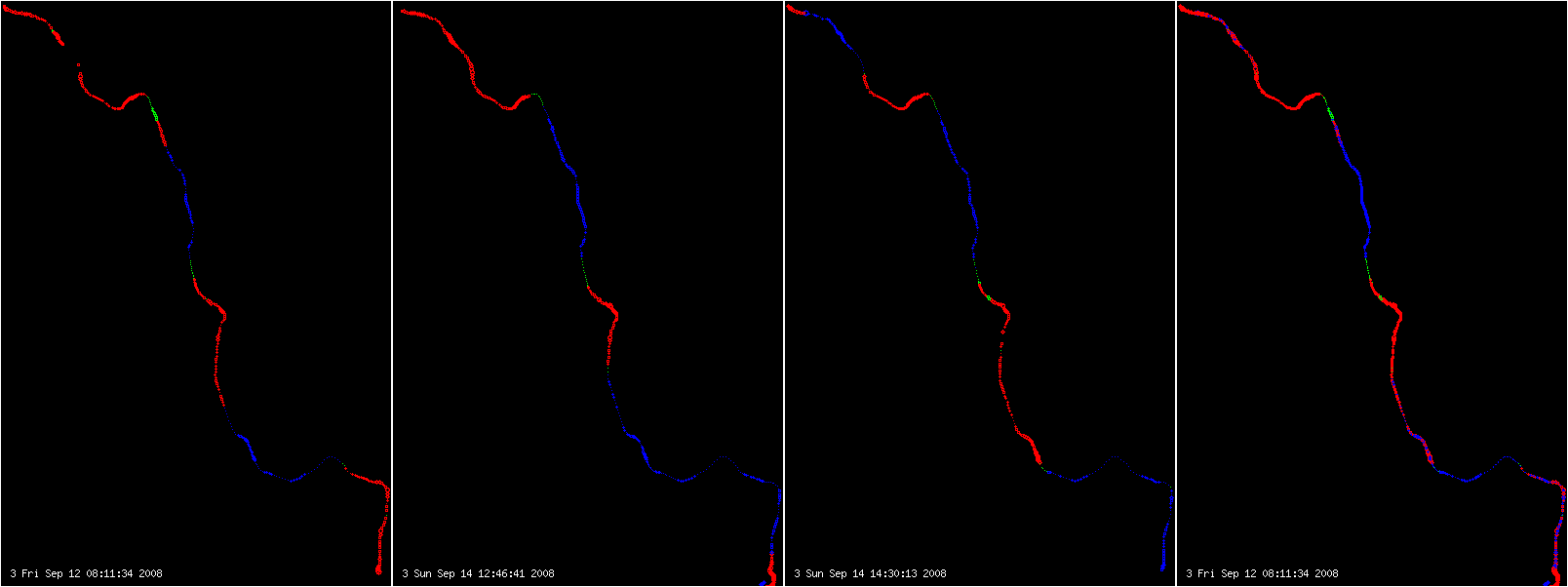
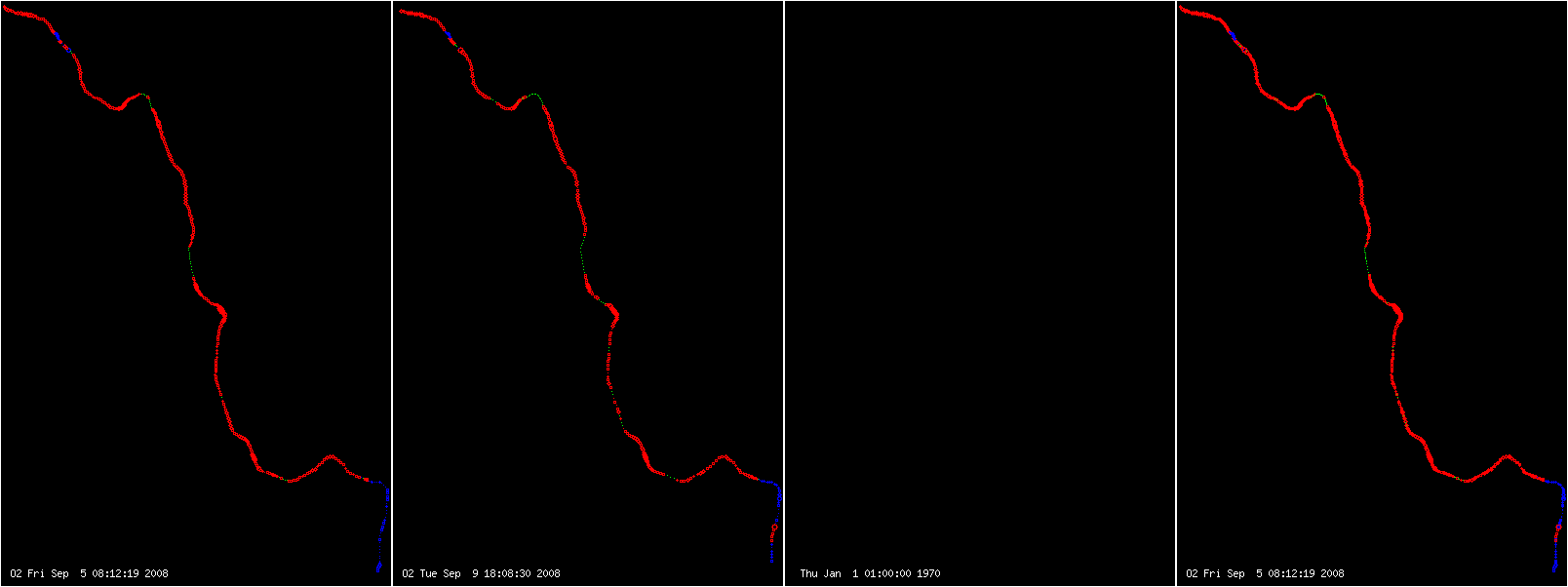
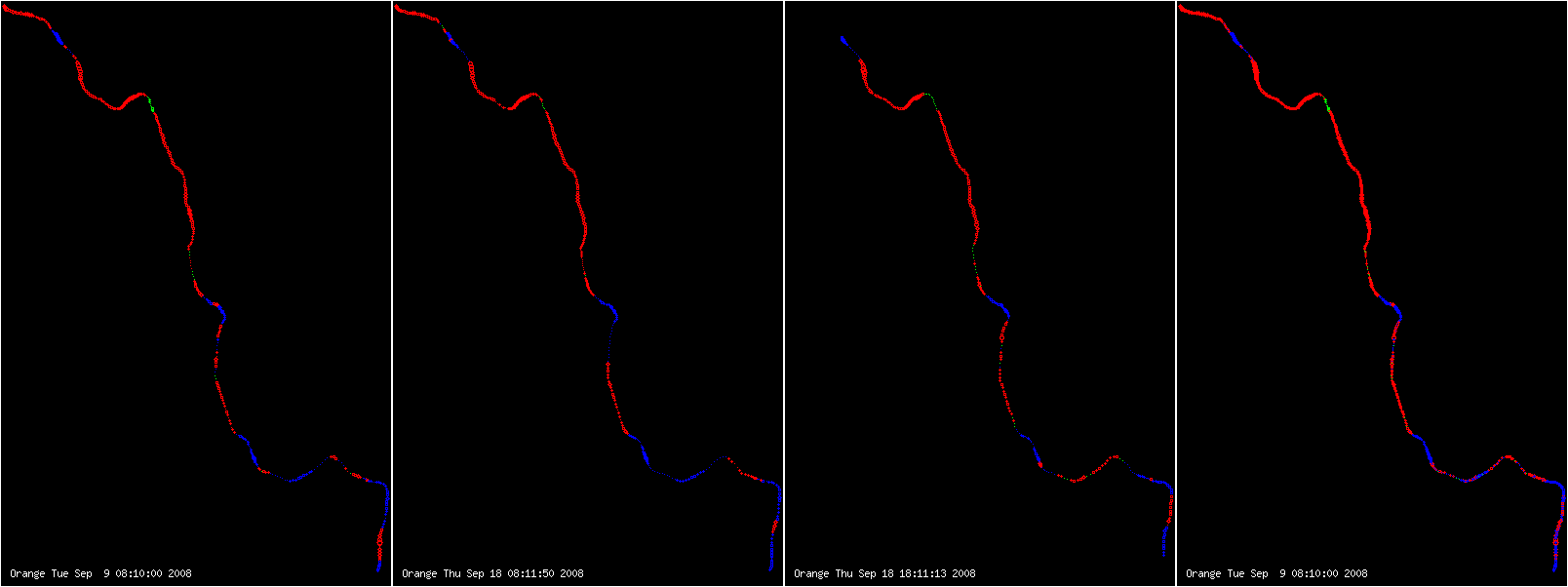
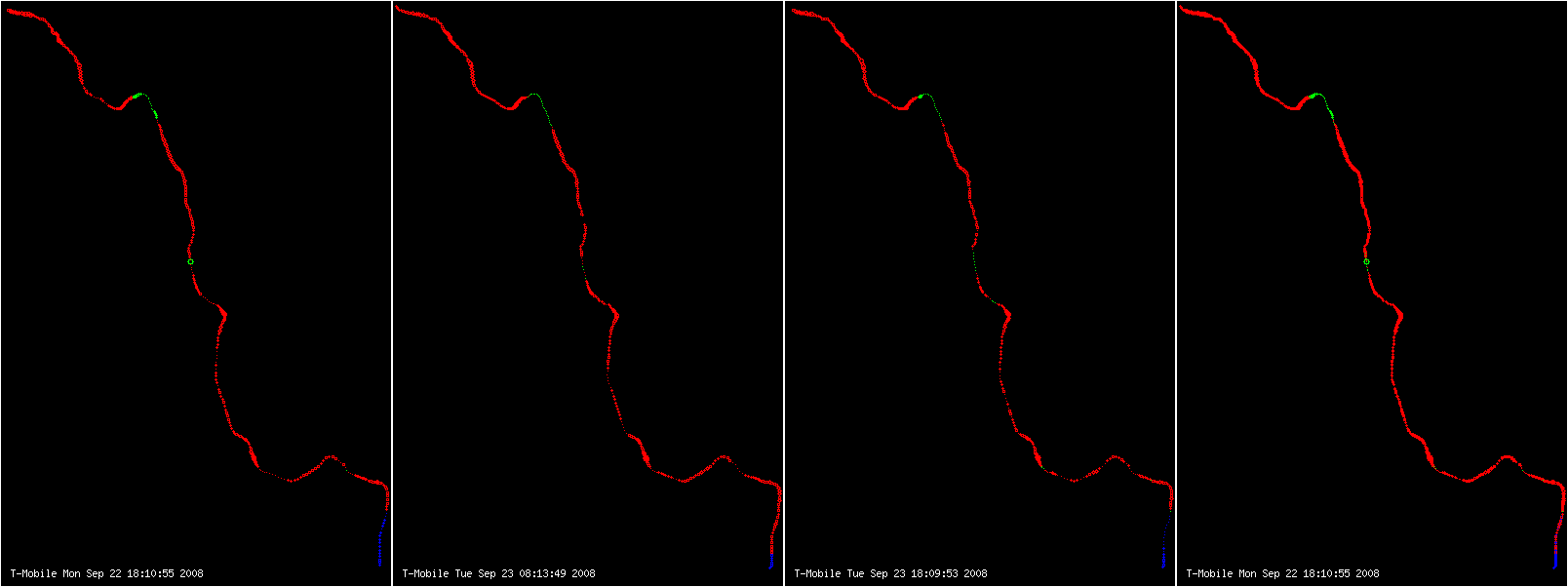
 DISCLAIMER: Paranoid rant ahead. You ve been warned.
Every two years, around this time of the year, I feel concerned: it s voting time in Brazil. For quite some time now, Brazil has had electronic voting, but that doesn t make me more confortable with it. Yes, having the results within the same day is an enormous advantage, but I am not sure about the security of the whole process. You can call me paranoid (and surely I am a bit), but there are some things that give me the creeps about it.
For a start, let s look at the operational process. The voting machines are certified and sealed by Electoral Justice officers the week before the voting. They are opened in the electoral section by those officers in the presence of common citizens. Those citizens are called to work in the Electoral process usually for four or five elections in a row, being replaced after that by newcomers .
The voting machines are not connected to any network. During the day, voters come with the voting document (voting is mandatory in Brazil), one of those citizens enable the voting machine by typing the document unique number in it, the voter give his vote and go home. Then the voting machine is unable to receive votes if not enabled by entering another document number, and it goes on and on the whole day long (pretty boring work ).
At the end of the day, the president of the section (usually the most experienced of those citizens) close the voting machine, prints a tally sheet , hand a colored 3 -inch floppy disk to the Electoral Justice officer with the votes and go home. Other officers will pick up the voting machines later on. The first officer then goes to the voting processing central of the Electoral Justice and within hours we will know the result of the election.
As you can see, there are lots of points of failure in the whole process! All this sealing of voting machines are just a matter of trust. First point: there s no way we can know for sure if the machine does what it s suppose to do. Even if officers say that they randomly choose machines to be tested, there s no way to know how random is that. There s a report [pt-BR] made by a prestigious university (English summary here), stating that 1/3 of the voting machines in a particular studied state had corrupted log-files (among other important security problems!). This study also showed differences in the countings (sometimes as large as 20-thousand votes!)... Hey! This is supposed to be a deterministic system: if nothing in the conditions changed, counts should always match!
Until recently, closed-source software were used in the voting machines, but that has changed recently. I doubt that it makes any difference, since we ll never really know what is actually running in the machine. Surely, Electoral Justice officers know (or should know), so we d have to trust them So second point: we don t know how the voting is processed within the machine.
(Also, we don t know for sure the machine doesn t have a network connection. It may have a wireless connection we don t know about and can be passing all the votes to someone else, or even receiving instructions But since that can be spotted with a scanner, I ll trust other paranoids have already done that.)
Surely the machine must be enabled before every vote with the voters document number. If it were not, how could we know that no one voted twice, or that a non-voter have voted? But we don t know how the machine records that! Third point: we cannot know if the voting machine database doesn t link the voter to the vote. That is a nasty one it opens up the possibility of voting by intimidation .
Also, the tally sheet that is printed at the end of the day only brings the total of votes, the total of absent-voters, and the votes each candidate (or party) have received. So, on to the fourth point: there s no way of knowing for sure that your vote was counted right (or was counted at all!). At least a copy of this tally sheet is glued at the entrance of the voting section, so an independent audit only on the numbers is do-able (although hard to do!).
What happens to the colored disk between the voting section and the voting processing central is not known. It goes with the officer and what he does with it is just a matter of trust. Now for the most insteresting point: the security is based on the color of the disk!. The Electoral Justice checks if the officer handed the right colored disk and puts the data in the system. Surely (?) they might have some way to check data integrity other than that On the same issue, maybe even worse: even if the disk is not tampered, but just read (or copied) by the officer before being handed, and if the database links the voter to the vote, this information is valuable, and may be sold.
Finally, since we don t know (and have no way to know for sure) what the machine does, we don t know if the machine keeps a copy of the voting database in it. So when it is taken back by other officers, we cannot know whether the same thing that may happen to the disk also could happen with the machine.
I am missing a lot of things about the whole Brazilian E-Voting process, and also I surely have missed other points of failure. I heard of fraud in the past, with paper ballots, and those were pretty nasty frauds. But this whole tale of impossible fraud in e-voting is nothing but a tale (as fraud is more than possible!). I think we have to begin investigating other systems, surely with cryptography involved. A system like Debian s, far from perfect (we all have to trust secretary s word on the secrecy of the voting system key), is much better, for instance. I understand that it s not simple enough for non-geeks, but there might be a way!
It doesn t need to be a whole new system! I would be happy if, as an example, the tally sheet printed a hash of my vote that I could verify later on or if the security of the disk is not just color-based or if the tally sheets had a way of being validated and be available on-line for auditing (and not just glued at the entrance of every voting section). Look! I am not distrusting any officer a priori... I think the message is auditing should be made easy... then I could trust a version of Linus s Law adapted to E-Voting: Given enough eyeballs, all frauds can be discovered .
 I was invited to participate at Festival Internacional de Software Libre (FISOL), in Tapchula, Chiapas. The other invited speakers were Sandino Flores (tigrux), Alexandro Colorado (jza), Eric Herrera (crac), John Hall (maddog) and Fernando Romo (pop), all well-known due to very different contributions to the Free Software movement in Mexico and abroad. Several other people also presented tutorials, but I was not involved in that part, and mentioning one while not the rest would be unfair.
 Yesterday I sent a message to the Nginx list to announce the
availability of my first module for that web server.
The module is used to do HTTP Basic Authentication agains PAM instead of using
an htpasswd file; I wrote it because I wanted to authenticate against OpenLDAP
and PostgreSQL and PAM already has support for that ;)
The code is available here and on the readme there are
instructions on how to build a patched debian package with the module
included.
 Sometimes you're just flat out
wrong.
While I can understand your position of 'all fear-mongerers
and religious fanatics should just commit suicide', I do not agree with
it. However, this time, the girl you refer to didn't actually commit
suicide because she fell in any of those categories.
Had you actually read that BBC story you link to in some
detail, you'd have found that:
 For the last few days I’ve been in the city Badajoz in region Extremadura of Spain at the FAI developer meeting. Check out the Linex Euronews Video at youtube to get a short impression of Linux in the region.
Lessions learnt:

 For about eight years, I was a very happy WindowMaker user. It was very lightweight, aesthetically pleasing, and I had interiorized its behaviour and keybindings so much, I didn't feel I'd ever switch away. I periodically tried (forced myself even!) to use any of the other, more en vogue environments... Experimented using Gnome for a week, KDE for a week, XFCE for a week (so I would have enough time to learn their ways)... And always came back to my good, well-known wmaker.
Ion is not perfect and certainly not for everyone, but neither is any user interface. Usability is subjective.Using a keyboard-oriented, tiling window manager represented -for the first time in 20 years (I had my first contact with a Macintosh in 1986)- a radical user interface change. For my way of working, I just don't need a desktop, I don't need having a background space or overlapping windows. What I need is a way to functionally organize the windows I have open at any given time, quickly switch between them (and not depending on the mouse, please!), maximizing screen space and all that. ion3 was godsent.
I wish I had a good analogy to explain to my nontechnical readers what changing to a new window manager is about.So, what's so different?
One way to think about it is that it's like driving a car down the road, and suddenly swapping the steering wheel and brakes out for a tiller and gear shifter. And having to downshift for braking until you learn that the brakes moved to the turn indicator lever. By trial and error.
But that's really only part of it. Another way to look at it is adopting a new philosophy. Or, in some cases a cult. (In some cases, with crazy cult leaders.) Whether they use Windows or a Mac, or Linux, most computer users are members of a big established religion, with some implicit assumptions, like "thy windows shall be overlapping, like papers on the desktop, and thou shalt move them with thy mouse".
So, changing to a new window manager is a process of being dumped into a different environment, where nothing works like you've come to expect, and trying to construct a mental model that you can use to make sense of it. But it's also a process of modifying that environment to behave the way you like.
And when done whole-heartedly, this doesn't just mean trying to make it like the environment you were used to before. It means trying to absorb the underlying philosopy of the window manager, and think up new ways of doing things, inspired by that philosopy, and modify the environment to allow doing those things.
So ideally, "I switched to a new window manager" doesn't mean "my screen has some different widgets on it now". It means "I'm looking at the screen with new eyes."
Our Belfast office has finally got large enough to have to partake in the NI Equality Commission monitoring. This covers religion and gender. The options for religion are:
Next.
