Search Results: "eric"

12 May 2013

Dirk Eddelbuettel: Recent Rcpp talks at U of C and MCW

A couple of days ago, I had an opportunity to give a guest lecture on our Rcpp package for R and C++ integration. This was in CMSC 12300 Computer Science with Applications-3 in the Department of Computer Science at University of Chicago. The course is the final part of a three term sequence introducing students to data-centric work in R, Python, Java and C++. I tried to keep it brief and engaging in order to motivate the why or R/C++ integration while providing plenry of useful examples. And yesterday I got to spend a day giving an invited day-long workshop at the Medical College of Wisconsin as part of a two-day R workshop sponsored by the Milwaukee Chapter of the American Statistical Assocation as well as the CTSI and PCOR centers at the Medical College of Wisconsin. In the workshop, I followed the previously-used setup of four parts on introduction, Rcpp details, advanced topics and last-but-not-least applications, but also updated and extended to more recent topics. Pdf slides from both events are now on my presentations page.

11 May 2013

Joachim Breitner: How to play Rock-Paper-Scissors online?

There was an interesting question by Fool recently on the StackExchange site for Boardgames: How do you play a game like Rock-Paper-Scissors with friends online? Or any other game where players have to simultaneously submit their moves (e.g. Diplomacy, or Rock-Paper-Scissors-Lizzard-Spock), which, as I just learned, are simultaneous action selection games. While there are websites dedicated to playing specific games, such as webdiplomacy.net, we could not find a generic one that you can use if you, for example, invent your own variants of a game.
So I created one: At you-say-first.nomeata.de you can enter rooms and share the URL with your friends. On the one hand, you have a regular chat room there. But there is also the possibility to enter moves (whatever a move may be to you) and only when all players have done that and marked the move as final, it is shown to everyone. If you want to try it out: There is an integrated, not very fancy Rock-Paper-Scissors-playing bot. Just enter a room, join and say I want to play!
Note that this site can be used for more than just for games. Have you ever observed that persons would often want other to express their preference (e.g. where to dine) first to not reveal their own preference, so that they can (or pretend to) change their mind if they would contradict? In such situations simultaneous action selection can be a fairer method. A technical note: I created this web app using meteor (a JavaScript framework building on node.js and MongoDB that allows for reactive programming), and it is also hosted on meteor.com. I chose Meteor after someone mentioned Firebase to me, which looked very slick, but was not Free Software, so I looked for alternatives. I did not do any cross-browser-testing, and the UI design could be improved, so if you want to help out (or just complain), please use the GitHub code repository and issue tracker.

9 May 2013

Benjamin Mako Hill: The Remixing Dilemma: The Trade-off Between Generativity and Originality

This post was written with Andr s Monroy-Hern ndez. It is a summary of a paper just published in American Behavioral Scientist. You can also read the full paper: The remixing dilemma: The trade-off between generativity and originality. It is part of a series of papers I have written with Monroy-Hern ndez using data from Scratch. You can find the others on my academic website.
Remixing the reworking and recombination of existing creative artifacts represents a widespread, important, and controversial form of social creativity online. Proponents of remix culture often speak of remixing in terms of rich ecosystems where creative works are novel and highly generative. However, examples like this can be difficult to find. Although there is a steady stream of media being shared freely on the web, only a tiny fraction of these projects are remixed even once. On top of this, many remixes are not very different from the works they are built upon. Why is some content more attractive to remixers? Why are some projects remixed in deeper and more transformative ways?
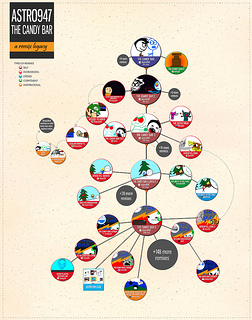
Remix Diagram
We try to shed light on both of these questions using data from Scratch a large online remixing community. Although we find support for several popular theories, we also present evidence in support of a persistent trade-off that has broad practical and theoretical implications. In what we call the remixing dilemma, we suggest that characteristics of projects that are associated with higher rates of remixing are also associated with simpler and less transformative types of derivatives.

Our study is focused on two interrelated research questions. First, we ask why some projects shared in remixing communities are more or less generative than others. Generativity a term we borrow from Jonathan Zittrain describes creative works that are likely to inspire follow-on work. Several scholars have offered suggestions for why some creative works might be more generative than others. We focus on three central theories:
  1. Projects that are moderately complicated are more generative. The free and open source software motto release early and release often suggests that simple projects will offer more obvious opportunities for contribution than more polished projects. That said, projects that are extremely simple (e.g., completely blank slates) may also uninspiring to would-be contributors.
  2. Projects by prominent creators are more generative. The reasoning for this claim comes from the suggestion that remixing can act as a form of cultural conversation and that the work of popular creators can act like a common medium or language.
  3. Projects that are remixes themselves are more generative. The reasoning for this final claim comes from the idea that remixing thrives through the accumulation of contributions from groups of people building on each other s work.
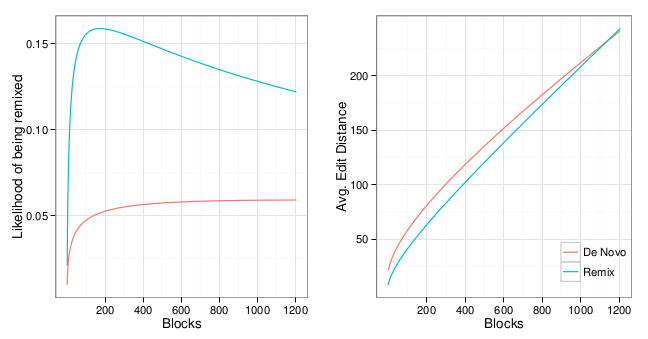
Our second question focuses on the originality of remixes and asks when more or less transformative remixing occurs. For example, highly generative projects may be less exciting if the projects produced based on them are all near-identical copies of antecedent projects. For a series of reasons including the fact that increased generativity might come by attracting less interested, skilled, or motivated individuals we suggest that each of the factors associated with generativity will also be associated with less original forms of remixing. We call this trade-off the remixing dilemma. We answer both of our research questions using a detailed dataset from Scratch, where young people build, share, and collaborate on interactive animations and video games. The community was built to support users of the Scratch programming environment, a desktop application with functionality similar to Flash created by the Lifelong Kindergarten Group at the MIT Media Lab. Scratch is designed to allow users to build projects by integrating images, music, sound, and other media with programming code. Scratch is used by more than a million users, most of them under 18 years old. To test our three theories about generativity, we measure whether or not, as well as how many times, Scratch projects were remixed in a dataset that includes every shared project. Although Scratch is designed as a remixing community, only around one tenth of all Scratch projects are ever remixed. Because more popular projects are remixed more frequently simply because of exposure, we control for the number of times each project is viewed. Our analysis shows at least some support for all three theories of generativity described above. (1) Projects with moderate amounts of code are remixed more often than either very simple or very complex projects. (2) Projects by more prominent creators are more generative. (3) Remixes are more likely to attract remixers than de novo projects. To test our theory that there is a trade-off between generativity and originality, we build a dataset that includes every Scratch remix and its antecedent. For each pair, we construct a measure of originality by comparing the remix to its antecedent and computing an edit distance (a concept we borrow from software engineering) to determine how much the projects differ. We find strong evidence of a trade-off: (1) Projects of moderate complexity are remixed more lightly than more complicated projects. (2) Projects by more prominent creators tend to be remixed in less transformative ways. (3) Cumulative remixing tends to be associated with shallower and less transformative derivatives. That said, our support for (1) is qualified in that we do not find evidence of the increased originality for the simplest projects as our theory predicted.
Two plots of estimated values for prototypical projects. Panel 1 (left) display predicted probabilities of being remixed. Panel 2 (right) display predicted edit distances. Both panels show predicted values for both remixes and de novo projects from 0 to 1,204 blocks (99th percentile).

Two plots of estimated values for prototypical projects. Panel 1 (left) displays predicted probabilities of being remixed. Panel 2 (right) displays predicted edit distances. Both panels show predicted values for both remixes and de novo projects from 0 to 1,204 blocks (99th percentile).

We feel that our results raise difficult but important challenges, especially for the designers of social media systems. For example, many social media sites track and display user prominence with leaderboards or lists of aggregate views. This technique may lead to increased generativity by emphasizing and highlighting creator prominence. That said, it may also lead to a decrease in originality of the remixes elicited. Our results regarding the relationship of complexity to generativity and originality of remixes suggest that supporting increased complexity, at least for most projects, may have fewer drawbacks. As supporters and advocates of remixing, we feel that although highly generative works that lead to highly original derivatives may be rare and difficult for system designers to support, understanding remixing dynamics and encouraging these rare projects remain a worthwhile and important goal. Benjamin Mako Hill, Massachusetts Institute of Technology
Andr s Monroy-Hern ndez, Microsoft Research
For more, see our full paper, The remixing dilemma: The trade-off between generativity and originality. Published in American Behavioral Scientist. 57-5, Pp. 643 663. (Official Link, Pay-Walled ).

Gunnar Wolf: Still more e-voting related rants

Some weeks ago, I contacted Rosa Mart nez, a tech journalist with some questions regarding what I regarded as a trick interview with an e-voting salesman. Well, not only she offered me to publish an answer to that interview, but she also offered me to write another article on a second site she also works with. So, I accepted. Being quite time-deprived, although I managed to send her the first answer quickly, by April 22, I only sent the second article yesterday night. Anyway, the links. The texts are published in Spanish:

4 May 2013

Russ Allbery: Review: Democracy at Work

Review: Democracy at Work, by Richard Wolff
Publisher: Haymarket
Copyright: 2012
ISBN: 1-60846-247-1
Format: Kindle
Pages: 220
I've been reading (mostly on-line) and thinking quite a bit lately about workplace governance models, economic structure, and why the current organization of the US workplace bothers me so intensely, partly triggered by reading John Kenneth Galbraith's The Affluent Society. The economic monoculture has made that process particularly frustrating. It's rare to find a discussion, even in the context of organizational strategies that are considered radical, that avoids the standard frame of productivity and business value. Most discussion is long on tactics and short on strategy and examination of goals. Wolff's appearance on Moyers & Company was a rare breath of fresh air, enough so that I grabbed his book shortly afterwards. Wolff is a Marxian economist (meaning that he makes use of Marxist analysis of economics and capitalism while separating them from Marxist politics and Marx's advocacy of revolutionary socialism), which for me was part of the interest. Marxist thought of any branch is not common in the United States; we're regularly deprived of several sides in the international conversation on economic models. I was taught Marxist theory in elementary and high school (in retrospect, surprisingly even-handedly and well, despite the biases of my schooling), but none of the later developments of Marxist thought. I think that's a typical experience here; in the United States, Marxism culminated in Mao and Stalin, and no further development of the underlying theories is ever mentioned. Democracy at Work is subtitled A Cure for Capitalism and does indeed advocate a concrete alternative to capitalist business structures. But this is only the last third of the book (and in some ways the least useful, as I'll discuss in a moment). The first two-thirds of the book is basically a remedial education in modern, as opposed to historic, Marxian economics for US readers like myself who have never heard it before, cast in the context of the current financial crisis. This may well be old hat for Europeans, but if you've been wondering what (at least some) modern-day Marxists actually believe, or are saying to yourself "there are modern-day Marxists after the collapse of the Soviet Union?", I recommend this book to your attention. It's an excellent summary, which I read with the delightful feeling of an expanding viewpoint and the discovery of new directions from which to look at a problem. There's quite a bit in this section that's worth thinking about, including another take on the nature of the recent economic collapse and how that fits into a Marxian analysis of capitalist crises. But there was one point in Wolff's explanation that I found particularly helpful. He completely restructured my understanding of the Marxian analysis of worker exploitation and profit allocation. There are two angles of Marxist economic thought and socialist economics that get a great deal of attention, at least in the United States, in history and economics classes: the role (or lack thereof) of markets in price setting, and the ownership of the means of production. Defenders of capitalism like to focus on the former, since it's quite easy to identify the advantages of theoretical free markets in finding ideal prices and balancing supply and demand, whereas central planning of prices and production has resulted in some catastrophic and deadly failures. (Although I will note, with passing interest, that those failures predate large-scale computing, and there are now large corporations that manage budgets larger than some countries via centralized command-and-control economic practices.) Defenders of socialism are more likely to focus on the ownership of the means of production, since it's easy to show prima facie unfairness in owners of capital extracting vast profits without having to do any work themselves, only be lucky enough to start with large quantities of money. Wolff, however, argues that both of these focuses misses a core critique by Marx of the workplace structure in capitalism, and that, by ignoring that critique, supposedly Marxist countries did not create anything that was actually Marxist in implementation. The Soviet Union was just as much a capitalist country as the United States is. It was state capitalism rather than private capitalism, but the core capitalist structure was intact. Wolff arrives at this conclusion, which may be well-trodden ground in parts of the world that include active Marxist thought but which was quite startling to this American, by treating the ownership of capital as a partial distraction. He focuses on a more direct question and practical question: who determines what a worker does on a day-to-day basis and how that product is used? Who determines what profits are collected and how they are spent? In private capitalism, this is done by the owners of the capital: large shareholders, major investors, and the managerial class that they hire. In Soviet state capitalism, this is done by national politicians, bureaucrats, and the managerial class that they hire. In neither model is it done by the workers themselves. The Soviet model gives theoretical ownership of the capital to the workers, but that ownership is diffused, centralized, and politicized, redirected through the mechanisms of the state, and therefore is effectively ignored. Ownership and control is entirely captured by the political class. Both of these systems are capitalist in Wolff's view of Marx: there is a class of owners and managers, who control the terms and nature of work and who allocate the profits, and a class of workers, who have to do what they're told, are not paid full value for their labor, and don't have a say in how the profits their work generates are spent. At the most important level of day-to-day autonomy and empowerment, they are functionally identical. They are both equally hierarchical and exploitative; the only difference is in whether the system is controlled by rich individuals or by well-connected politicians. (And, as any study of modern politics quickly reveals, the distinction between those two groups in most countries is murky at best.) Wolff convincingly recasts modern economic history as a constant pendulum swing between private capitalism and state capitalism. Crises in one system push countries towards the other system; subsequent crises push the country back towards the first system. Regulation grows and shrinks, companies are nationalized and then privatized, but both systems are united in excluding the worker from any meaningful control over their work life. The first two-thirds of the book was full of insights like this for me. I didn't agree with all of it, but all of it was worthwhile and thought-provoking. But I was a bit leery of Wolff's proposed solution. My past experience with critics of capitalism is that the critique is often quite compelling, but the proposed solution is much less believable. And, sadly, that concern was warranted here as well. The core of Wolff's proposal is predictable but possibly sound: a restructuring of the workplace to be radically democratic. The business would be owned entirely and exclusively by the people who work for it, equally regardless of the job of the worker, and the workers would decide democratically or via elected repesentatives from among the workers how to allocate the profits of the business, what standards and business practices should be followed, and how the work is to be done. I was particularly interested to hear that this model (workers' self-directed enterprises) has apparently been successful in Spain in the form of the Mondragon Cooperative. Given all the tricky, small details that have to be resolved in an actual workplace, an existence proof is worth more than pounds of theory. Unfortunately, like a lot of proposed alternatives, Wolff's description of WSDEs is quite fuzzy and involves a lot of hand-waving. I was never able to build, from this book, a coherent and complete mental model of how such a workplace would function. Wolff tends to surround every specific in a halo of contingencies, possibilities, and alternative models, and is maddeningly nonspecific on such practical matters as how line management would work, how such a business would do financial planning or project approval, how competing interests in different parts of the organization would be balanced, and other practical governance matters that fill my work life. Maybe the answer to all of that is just "democracy," but I'm dubious. Democracy has a number of well-known flaws that I thought weren't adequately addressed. For example, democracies are often quite happy to further and reinforce existing prejudice (such as sexism or racism), and are prone to yielding control to the most charismatic. Democracies also have an informed voter problem, which seems like it would be particularly acute if democracy is going to make detailed business decisions. And, for larger organizations, control by pre-existing money could re-enter the equation via propaganda and campaigning around votes. Some of this gap in the book could be addressed via a more in-depth look at how Mondragon and any other real-life examples work, but that is sadly missing here. (I am interested enough now, though, that I'd read a good popular treatment of the history and methodology of Mondragon, although I don't think I'm up to working through an academic study.) The hierarchical, dictatorial management structure imposed by capitalism is so awful that WSDEs don't have a particularly high bar to meet to be fairer and more empowering than what we have today. The question, rather, is would they function sufficiently well that the business would be able to make effective decisions, and that's unclear to me from this book. This is, as Wolff spends some time discussing, particularly difficult when in direct competition with capitalist enterprises. This sort of endeavor will probably trade some degree of economic efficiency and raw marketplace power for improvements to fairness and empowerment, but that means it's going to require support from the surrounding society, which is a huge obstacle. I doubt there's a free lunch here: true fairness and equity also leading to improved economic efficiency in a capitalist context is a nice dream, but not horribly practical. Wolff also seems to suffer from something else I associate with Marxist thought: a preferential focus on a very narrowly-defined type of productive worker, apparently left over from Marx's original critique in the context of industrialization. Wolff inserts a very odd and quite awkward distinction in his WSDE model between workers who directly produce the product that's sold, and who in his model therefore produce the profits of the business, and all other workers in the business. He then gives special privileges to the former group to decide how much profit to return in worker compensation and how much to use for other purposes, thus making the supporting workers second-class citizens within this supposedly equal workplace. Speaking as someone who works in IT, and hence would be classified by Wolff into the supporting rather than directly productive category, I do not find this division at all convincing, and Wolff never provides a coherent explanation for why he introduced it. He only says that it's necessary for the governance of the business to not be exploitative, which seems to assume that there is a special economic role played by the workers who work directly on a saleable product. Maybe there is some analysis that could convince me of this, but, if so, it's not present in this book. It struck me as a recipe for continuing the exploitation of the most invisible and powerless workers in capitalism: janitors, groundskeepers, and other low-paid service jobs. I wish the whole book were as insightful and pointed as the first two-thirds, but alas I found the WSDE discussion to be somewhat muddled and utopian. "How do we get there from here" is always the hardest part of this type of discussion, and Wolff has no special skill in that department. But, despite that, I got a lot of fascinating ideas and new conceptual frameworks out of this book, and I'm tempted to read it again. I suspect some of this, similar to my discovery of promises and infinite streams in programming, is filling in of odd gaps in my personal education rather than a discovery of unusual, new ideas. But if you too have gotten your political education within the US capitalism ber alles bubble, this book may fill in similar gaps in your knowledge. If so, it's a very rewarding experience. If you're curious about a preview of Wolff's perspective without paying for the book, I recommend watching the first episode of Moyers & Company in which he appeared. Wolff is a clear and engaging speaker, and his interview provides a good feel for his discussion style and his general perspective. Rating: 8 out of 10

2 May 2013

Russ Allbery: Review: The System of the World

Review: The System of the World, by Neal Stephenson
Series: The Baroque Cycle #3
Publisher: William Morrow
Copyright: 2004
ISBN: 0-06-052387-5
Format: Hardcover
Pages: 892
This is the third book of the three-volume Baroque Cycle. I think you could, if you really wanted, read it without reading the previous volumes; Stephenson is certainly long-winded enough that you can pick up most of what's going on while you read. It's been a year since I read the second volume, and I only resorted to Wikipedia a couple of times to remember plot elements (and mostly from the first book). However, I wouldn't recommended starting here. Many of the character relationships, and most of the underpinning of the plot, is established in the previous volumes and given more significance by them. You would also miss The Confusion, which is the best book of the series, although none of this series rises to the level at which I'd recommend it except under specific circumstances. Quicksilver establishes the characters of Daniel Waterhouse, a fictional Puritan whose family was close to Cromwell and who became a friend to Isaac Newton in the days following the Restoration; Jack Shaftoe, a vagabond who wanders Europe in a sequence of improbable adventures; and Eliza, who becomes a friend to Leibniz and a spy for William of Orange. The Waterhouse sections are prominent in Quicksilver: full of the early history of the Royal Society, alchemy, and a small amount of politics. Of those three characters, Eliza is by far the most interesting, which meant that I was delighted when The Confusion dropped Waterhouse almost entirely and mixed Eliza's further story with more improbable but entertaining sea adventures of Jack Shaftoe. You will immediately sense my root problem with The System of the World when you hear that it is almost entirely about Daniel Waterhouse. While Eliza and Jack both appear, they play supporting roles at best, and Eliza's wonderful sharp intelligence and pragmatic survival skills are left out almost entirely. Instead, this is a novel about Waterhouse's return to England after spending quite a bit of time in the American colonies working on calculating machines. He is almost immediately entangled in dangerous politics from multiple directions: the precarious national politics in England near the end of the reign of Queen Anne, Isaac Newton's attempts to maintain the currency of England as Master of the Mint, and a bombing attempt that may have been aimed at him, may have been aimed at Newton, and may have been aimed at someone else entirely. Much of the book consists of an extended investigation of this bombing plot, skullduggery involving counterfeiters, and attempts to use the currency and the Mint as part of the political conflict between Whigs and Tories, mixed in with attempts to construct a very early computer (this is Stephenson, after all). Leibniz and Eliza come into this only as confidants of the Hanoverians. All this may sound exciting, and there are parts of it that hold the attention. But this book sprawls as badly as Quicksilver did. There's just too much detail without either enough plot or enough clarity. Stephenson tries to make you feel, smell, and hear the streets of London and the concerns of an idiosyncratic group of semi-nobles during one of the more interesting junctures of British history, but he does that by nearly drowning you in it, and without providing enough high-level guidance. For most of the book, I felt like I was being given a tour of a house on my hands and knees with a magnifying glass. It's a bad sign when the reader of a historical novel is regularly resorting to Wikipedia, not to follow interesting tangents of supporting material, but to try to get a basic sense of the players and the politics involved because the author never explains them clearly. If you're more familiar with the details of British history than I am, and can more easily follow the casual intermixing of two or three forms of address for the same historical figure, you may not have that problem. But I think other structural issues remain, and one of the largest is Waterhouse himself. Jack Shaftoe, and particularly Eliza, are more interesting characters because they're characters. They're not always particularly believable, but they attack the world with panache and are constantly squirming into the center of things. Stephenson's portrayals of Newton, Leibniz, the Duke of Marlborough, Sophia of Hanover, Peter the Great, and the other historical figures who show up here are interesting for different reasons: Stephenson has history to draw on and elaborate, and it's fascinating to meet those people from a different angle than dry lists of accomplishments. History has a way of providing random details that are too bizarre to make up; Isaac Newton, for example, actually did disguise himself to infiltrate London criminal society in pursuit of counterfeiters while he was Master of the Mint! Waterhouse, for me, has none of these advantages. He is an invented character in whom I have no pre-existing interest. He drifts through events largely through personal connections, all of which seem to be almost accidental. He's welcome in the councils of the Royal Society because he's apparently a scientist, but the amount of actual science we see him doing is quite limited. His nonconformist background allies him squarely with the Whigs, but his actual position on religious matters seems much less set than the others around him. What he seems to want, more than anything else, is to help Leibniz in the development of a computer and to reconcile Newton and Leibniz. And he's not particularly effective at either. In short, he has little in the way of memorable character or dynamism, despite being the primary viewpoint character, and seems to exist mostly to know everyone and be everywhere that's important to the story. He feels like an authorial insertion more than a character. It's quite easy to believe that Stephenson himself would have loved to be in exactly the role and situation that Waterhouse finds himself in throughout the book, in the middle of the councils of the wise and powerful, in just the right position to watch the events of history. I can sympathize, but it doesn't make for engrossing reading. Novels live and die by the strength of their characters, particularly their protagonists; I want more than just a neutral viewpoint. The third major structural problem that I had with this book is that I think Stephenson buries his lede. After finishing it, I think this is a book with a point, a central premise around which all the events of the story turn, and which is the philosophical culmination of The Baroque Cycle as a whole. But Stephenson seems oddly unwilling to state that premise outright until the very end of the book. For the first half, one could be forgiven in thinking this is a story about alchemy and the oddly heavy gold that's been a part of the story since The Confusion, or perhaps about foundational but forgotten work on computation that preceded Babbage by a century. But those all turn out to be side stories, sometimes even without a proper conclusion. I appreciate honoring the intelligence of the reader, and I presume that Stephenson would like to guide the reader through the same process of realization that the characters go through, but I think he takes this much too far and fails to make the realization clear. I'll therefore state what I believe is the premise outright, since I think it's a stronger book with this idea in mind: The System of the World is a continuation of the transformational economics shown in The Confusion into the realm of politics. Specifically, it's about the replacement of people with systems, about the journey towards Parliamentary supremacy, central banking, and the persistent state, and about the application of scientific principles of consistency and reproducibility to politics and economics (however fitfully and arbitrarily). Quicksilver was about the rise of science; The Confusion was, in retrospect, about the rise of economics; and The System of the World tries to be about the rise of technocratic modern politics, barely perceptible among the squabbles between Tories and Whigs. I think that's a fascinating premise, and I would have loved to read a book that tackles it head-on. That's a concept that is much more familiar from the late 19th and early 20th centuries in the context of Marxism, early socialism, technological utopianism, and similar attempted applications of scientific analysis to political and human behavior for the betterment of human civilization. Shifting that 200 years earlier and looking at a similar question from the perspective of the giants of the Enlightenment feels full of of potential. There are moments when I think Stephenson captures the sense of a seismic shift in how economies are run, knowledge is established, and civilizations are knit together. But, most of the time, it just isn't clear. There's so much other stuff in this book, and in the whole series: so many false starts, digressions, abandoned plots, discarded characters, and awkward attempts at romance (as much as I like the characters, Stephenson's portrayal of the relationship between Eliza and Jack is simply ridiculous and not particularly funny) that the whole weight of the edifice crushes what I think is the core concept. Stephenson is never going to be sparse. When you start a Stephenson novel, you know it's going to be full of chunks of partly digested encyclopedia and random research findings that may have nothing to do with the plot. But his best books (Snow Crash, The Diamond Age, even Cryptonomicon) have an underlying structure off of which all of those digressions are hung. You can see the bones beneath the flesh, and the creature they create is one you want to get to know. I'm not sure there are any bones here, and that may be the peril, for Stephenson, of writing historical fiction. I wonder if he felt that the structure of history would provide enough structure by itself that he could wrap a few plots around the outside of it and call it good. If so, it didn't work, at least for me. A lot of things happen. Some of them are even exciting and tense. A lot of people meet, interact, and show off their views of the world. A great deal of history, research, and sense of place is described in painstaking detail. But at the end of the book, I felt like I had to reach for some sort of point and try to retrofit it to the story. Lots happened, but there wasn't a novel. And that makes it quite hard to get enthused by the book. If you adored Quicksilver, I suspect you will also like this. I think they're the most similar. If, like I did, you thought The Confusion was a significant step up in enjoyment in the series and were hoping the trend will continue, I'm sad to report that it didn't. If you were considering whether to read the whole series and were waiting to see what I thought of the end, my advice is to give The Baroque Cycle a pass unless you absolutely love Stephenson's digressions, don't care if they're about history instead of current technology, and cannot live without 3,000 pages of them. It's not that they're bad books, but they're very long books, they take a significant investment of time and attention, and I think that, for most readers, there are other books that would repay a similar investment with more enjoyment. Rating: 5 out of 10

17 April 2013

Daniel Pocock: Switzerland Schilthorn with 007 (leg 3)

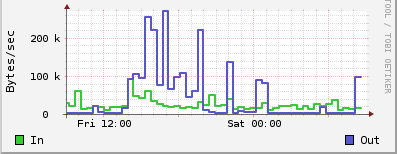
Friday's video of the 2nd leg of the cable car journey was quite popular, Ganglia stats for the video server can't be wrong: The first leg was skipped because of the low cloud cover. Weather reports in Switzerland, such as www.meteosuisse.ch often show a distinction between the low clouds and high clouds, because many Swiss mountain resorts are high enough to enjoy ample sunshine by virtue of their altitude even when cities like Zurich and Geneva are overcast. Now for the third leg, rising up to Berg. In the video, it is hard to gauge the size of the rocky cliffs along the route, but looking at the cable car's shadow will give a clue. As the cable car approaches the station in Berg, it feels like it takes forever to complete the journey. That is because the rocks are so much bigger than they appear from a distance. <video controls="" height="340" poster="http://upload.wikimedia.org/wikipedia/commons/thumb/0/03/Schilthorn_with_Bernese_Alps%2C_2012_August.jpg/800px-Schilthorn_with_Bernese_Alps%2C_2012_August.jpg" width="560">
<source src="http://video.danielpocock.com/VID_20121025_122453.m4v" type="video/mp4"></source>
<source src="http://video.danielpocock.com/VID_20121025_122453.webm" type="video/webm"></source>
</video> The final leg to the Schilthorn summit will appear shortly. I understand many people are starting to contemplate their DebConf13 travel and summer holidays - please feel free to email me if you'd like me to post a video of some other feature in Switzerland.
AttachmentSize
ganglia-schilthorn2.png8.71 KB

7 April 2013

Rapha&#235;l Hertzog: My Free Software Activities in March 2013

This is my monthly summary of my free software related activities. If you re among the people who made a donation to support my work (114.19 , thanks everybody!), then you can learn how I spent your money. Otherwise it s just an interesting status update on my various projects. Simple-CDD and debian-cd I tried to use wheezy s version of debian-cd and simple-cdd to generate an automatic installer. In this process, I filed a couple of bugs on simple-cdd (#701963: type-handling package is gone and should not be listed in default.downloads, and #701998: the --keyboard parameter is not working with wheezy s debian-installer) and I commited fixes for a few issues in debian-cd: Debian France I completed the new website for Debian France and I put it online. Later I merged some supplementary enhancements prepared by Tanguy Ortolo (and I gave him commits rights at the same time). I tried to update our Galette installation to the latest upstream version but I reverted to the former version after having encountered two problems (filed here and here). In the process, I created a Debian package for galette (you can grab it on git.debian.org). I also suggested an idea of improvement for Galette s paypal plugin and it has been quickly implemented. Thus I updated the plugin installed on france.debian.net. Kali related work It s been a few months that I have been helping the Kali team to prepare this new Debian derivative. Now that the derivative has gone public, I can attribute some of my Debian work to my collaboration with the Kali team. This month I contributed a few features and fixes to debian-installer and live-build: After the launch, we registered Kali in the derivative census. Paul Wise quickly reported some misfiled bugs from early Kali users and I discovered that reportbug was not behaving properly even though we correctly updated base-files (see #703678 on reportbug and #703677 on lsb-release). Misc packaging work DPL election I also spent quite some time to read and participate to the discussions on debian-vote since it was campaigning time for the DPL candidates Thanks This was a rather active month if you take into account the fact that I got a second son Lucas on March 6th. See you next month for a new summary of my activities.

4 comments Liked this article? Click here. My blog is Flattr-enabled.

1 April 2013

Russ Allbery: Review: Echo

Review: Echo, by Jack McDevitt
Series: Alex Benedict #5
Publisher: Ace
Copyright: November 2010
Printing: November 2011
ISBN: 1-937007-00-6
Format: Mass market
Pages: 367
This is the fifth book in the ongoing Alex Benedict series, but reading the previous volumes is generally optional. While there are references to earlier events (and indeed I resorted to Wikipedia at one point to refresh my memory of the plot of the the first book in the series), they aren't critical to the plot. They mostly are background for the reactions of other characters to Benedict and his firm. Echo opens with the now-familiar prologue, giving us a fleeting and limited glimpse into the mystery that Benedict and Chase Kolpath will be pursuing for the rest of the book. This time, it features the explorer Somerest Tuttle, who has spent most of his life looking for intelligent alien life. (In the far future setting of these books, humanity has spread through a large region of the galaxy but has only encountered one other alien race.) In the twilight of his career and life, a friend who works as a tour guide for astronomical tours comes to him with a story about something she saw. What, we don't know, and won't for most of the book. But, whatever it is, Tuttle never goes public with it, which is directly contrary to what everyone would expect him to do with any news about alien life. Benedict and Kolpath get involved some years later, after Tuttle's death, when a stone slab with unknown markings that was part of his estate shows up on the future equivalent of Craigslist, free to the first person who will haul it away. Benedict finds that interesting enough to go pick up, but then is really hooked when someone else goes to considerable lengths to try to make the slab disappear before anyone can get a good look at it. This, slowly, leads into poking around Tuttle's life and connections, the star tour industry, and the possible origins of the slab. If you've read any of the previous books in this series, Echo is more of the same, and I mean that in a good way. I think McDevitt is at his best when writing this sort of cross between scientific puzzle, mystery, and non-military adventure, full of people who care deeply about knowing and understanding things and don't like to be thwarted in their efforts. There is McDevitt's trademark halting and red-herring-ridden investigation that succeeds in being engrossing and compelling, plenty of opportunities to guess what's really going on (a bit easier this book than in some others), and a bit of action that I thought was better-handled than the somewhat strained action scenes of The Devil's Eye. The book moves right along, despite multiple reversals in the progress of the investigation, and the final revelation does indeed justify the strange behavior of the various people Benedict encounters. As with McDevitt in general and this series in particular, there is one caveat: the astronomical details are often interesting, but the world building in general is not terribly believable. Despite supposedly taking place millennia into the future, the society is a straight transplant (projection would imply more change than exists) of middle-class American culture, with bonus air cars, space ships, and slightly better computers. Similarly, alien ecologies suffer from severe Star Trek problems: all the planets feel like copies of Earth with a few minor tweaks. This just goes with the territory, and if you're up to the fifth book of the series, you've probably gotten used to it, but the unrealistic lack of divergence is actually used as a plot point here. That strained my suspension of disbelief a bit. That said, this sort of extremely familiar social context does give the books an oddly calm, comfortable feeling. It's tempting to describe McDevitt as cozy science fiction. There's a bit of danger, a bit of suspense, but one is fairly certain that everything will work out in the end and the reader will leave the book knowing the solutions to most of the mysteries raised without having to work very hard at understanding the society or the puzzle. If that's what you're in the mood for (and I was when I read Echo), McDevitt delivers reliably. If you like the Alex Benedict series in general, recommended, as this is an excellent example of the type. Rating: 8 out of 10

30 March 2013

Joey Hess: Goodreads vs LibraryThing vs Free software

Four years ago I started using Goodreads to maintain the list of books I've read (which had lived in a flat text file for a decade+ before that). Now it's been aquired by Amazon. I doubt it will survive in its current form for more than 2 years. Anyway, while Goodreads has been a quite good way to find what my friends are reading, I've been increasingly annoyed by the quality of its recommendations, and its paucity of other features I need. It really doesn't seem to help me keep up with new and interesting fiction at all, unless my friends happen to read it. So I looked at LibraryThing. Actually, I seem to have looked at it several times before, since it had accounts named "joey", "joeyh", and "joeyhess" that were all mine. Which is what happens to me on sites that lack Openid or Browserid. Digging a little deeper this time, I am finding its recommendations much better than Goodreads' -- although it seems to sometimes recommend books I've already read. And it has some nice features like tracking series, so you can easily tell when you've read all the books in a series or not. The analytics overall seem quite impressive. The UI is cluttered and it seems to take 5 clicks to add and rate a single book. It supports half stars. Overall I get the feeling this was designed for a set of needs that doesn't quite match mine. For example, it seems it doesn't have a single database entry per book; instead each time I add a book, it seems to pull in data from primary sources (library of congress, Amazon cough) and treat this as a separate (but related) entry somehow. Weird. Perhaps this makes sense to say, librarians. I'm willing to adjust how I think about things if there's an underlying reason that can be grasped. There's a quite interesting thread on LibraryThing where the founder says:
Don't say we should open-source the code. That would be a nightmare! And I have limited confidence in APIs. LibraryThing has the book geeks, but not so much the computers geeks.
I assume that the nightmare is that there would be dozens of clones of the site, all balkanized, with no data transfer, no federation between them. Except, that's the current situation, as every Goodreads user who is now trying to use LibraryThing is discovering. Before I ever started using Goodreads, I made sure it met my minimum criteria for putting my data into a proprietary silo: That I could get the data back out. I can, and have. LibraryThing can import it. But the import process loses data! And it's majorly clunky. If I want to continue using Goodreads due to its better UI, and get the data into LibraryThing, for its better analytics, I have to do periodic dumps and loads of CSV files with manual fixups. This is why we have standards. This is why we're building federated social networks like status.net and the upcoming pump.io that can pass structured data between nodes transparently. It doesn't have to be a nightmare. It doesn't have to rely on proprietary APIs. We have the computer geeks. Thing is, sites like GoodReads and LibraryThing need domain-specific knowledge, and communities to curate data, and stuff like that. Things that work well in a smallish company. (LibraryThing even has a business model that makes sense, yearly payments to store more books in it.) With free software, it's much more appealing to sink the time we have into the most general-purpose solution we can. Why build a LibraryThing when we could build something that tracks not only books but movies and music? Why build that when we could build a generic federated network for structured social data? And that's great, as infrastructure, but if that infrastructure is only used to build a succession of proprietary data silos, what was the point? So, could some computer & book geeks please build a free software alternative to these things, focused on books, that federates using any of the fine APIs we have available? Bear in mind that there is already a nice start at a comprehensive collection of book data in the Open Library. I'd happily contribute to a crowd funded project doing this.

29 March 2013

Olivier Berger: Managing Python code with UTF-8 (french chars) in org-mode + babel + minted for LaTeX export

The goal of this article is to illustrate how to manage Python code which includes comments in UTF-8 characters inside a latin-1 source org-mode for LaTeX export. Note that I ve pasted in wordpress the HTML generated by org-mode, so I hope it isn t broken too much. My typical use case is a french lecture on Python where the text is written in french, as well as some of the code comments and examples We ll use org-mode s babel module to include and manage the Python

examples. The goal is to write the source of the Python programs
directly in the same org source as the class book s text, and to extract them into a subdir (with the tangle feature), so that they can be shipped to the students to experiment with. The minted LaTeX environment is used, for babel, to make the Python syntax highlighting.

1.1 Issues
  • The source org-mode is in latin-1 so that it compiles with pdflatex
  • The examples source-code will be in UTF-8 so that Python 2.7 executes them well on a modern Linux desktop
  • Minted relies on pygmentize wich doesn t seem to handle UTF-8 so well

1.2 Solution
We ll show how to patch minted s use of pygmentize to take advantage
of its conversion capacity to convert the Python sources from UTF-8 to
latin-1 at document rendering time (LaTeX compilation). It s a hack, but works. The current document s source shows how this works

1.2.1 Customization
The org document should contain the following headers :
#+LANGUAGE:  fr
#+LaTeX_HEADER: \usepackage[latin1] inputenc 
#+LaTeX_HEADER: \usepackage[french] babel 
#+LaTeX_HEADER: \usepackage color \usepackage minted 
and the footers :
# Local Variables:
# coding: latin-1
# org-src-preserve-indentation: true
# tab-width: 4
# End:
Also note that pdflatex should use the -shell-escape option necessary for minted Now, the document should also include the following patch for minted :
#+LATEX_HEADER: \makeatletter
#+LATEX_HEADER: \renewcommand\minted@pygmentize[2][\jobname.pyg] 
#+LATEX_HEADER:   \def\minted@cmd pygmentize -l #2 -f latex -F tokenmerge
#+LATEX_HEADER:     \minted@opt gobble  \minted@opt texcl  \minted@opt mathescape 
#+LATEX_HEADER:     \minted@opt startinline  \minted@opt funcnamehighlighting 
#+LATEX_HEADER:     \minted@opt linenos  -P "verboptions=\minted@opt extra "
#+LATEX_HEADER:     -O encoding=UTF-8,outencoding=iso-8859-1 -o \jobname.out.pyg #1 
#+LATEX_HEADER:   \immediate\write18 \minted@cmd 
#+LATEX_HEADER:   % For debugging, uncomment:
#+LATEX_HEADER:   %\immediate\typeout \minted@cmd 
#+LATEX_HEADER:   \ifthenelse \equal \minted@opt@bgcolor 
#+LATEX_HEADER:     
#+LATEX_HEADER:     \begin minted@colorbg \minted@opt@bgcolor 
#+LATEX_HEADER:   \input \jobname.out.pyg 
#+LATEX_HEADER:   \ifthenelse \equal \minted@opt@bgcolor 
#+LATEX_HEADER:     
#+LATEX_HEADER:     \end minted@colorbg 
#+LATEX_HEADER:   \DeleteFile \jobname.out.pyg 
#+LATEX_HEADER: \makeatother
The important change is the addition of the -O encoding=UTF-8,outencoding=iso-8859-1 option of pygmentize, that will convert the UTF-8 source code to latin-1. Hopefully most of the characters will convert fine, for a document written in french.

2 Examples

2.1 Basic Python
This is a generic verbatim example, which doesn t use babel / minted.
$ python
Python 2.7.3 (default, Jan  2 2013, 16:53:07) 
[GCC 4.7.2] on linux2
Type "help", "copyright", "credits" or "license" for more information.
>>> print "Hello, world!"
Hello, world!
>>>

2.2 Python source code for french speakers
Here, we first include the source code, so that it can be exported to
an examples/ subdir, with the following (note that the #+ BEGIN_src / #+ END_src should be changed to get rid of the space
character between + and BEGIN / END, and that the :shebang and following text should be on the BEGIN_SRC line I seem to have not quoted
these properly in this document):
#+name: helloworld
#+ BEGIN_src python :tangle examples/helloworld.py :noweb yes \\
:shebang #!/usr/bin/python :padline no :exports none
# -*- coding: utf-8 -*-
# Ceci est un exemple d'affichage d'une cha ne accentu e
name = raw_input("Quel est v tre nom ? ")
print "J'esp re que  a va bien aujourd'hui", name
#+ END_src
Editing it with C-c will open an UTF-8 buffer, so hopefully, this will be consistent with the utf-8 coding system declared on the second line. The regeneration of the examples/helloworld.py file is made with C-c C-v t (babel tangling ). Note that we don t add the #!/usr/bin/python first line in the source, as we want it to be added by the tangling process (which will also make the script executable). Once this is done, the script may be run :
$ python examples/helloworld.py 
Quel est v tre nom ? Fran ois
J'esp re que  a va bien aujourd'hui, cher Fran ois
Now, to add the colorized rendering in the lecture book, we do (here again, remove the spaces):
# +BEGIN_latex
\inputminted python examples/helloworld.py 
# +END_latex
And here it is, rendered by minted:
# -*- coding: utf-8 -*-
# Ceci est un exemple d'affichage d'une cha ne accentu e
name = raw_input("Quel est v tre nom ? ")
print "J'esp re que  a va bien aujourd'hui, cher", name
Here are links to : the source, the PDF result, and the generated Python program.

23 March 2013

Dirk Eddelbuettel: Rcpp 0.10.3

A new relase 0.10.3 of Rcpp is now on CRAN and in Debian. This is the fourth release in the 0.10.* series, and further extends and solidifies the excellent Rcpp attributes. A few other bugs were fixed as well, and support for wide character strings has been added. We once again tested this fairly rigorously by checking against 86 of the 100 CRAN packages depending on Rcpp. All of these passed. So we do not expect any issues with dependent packages, but one never knows. The complete NEWS entry for 0.10.3 is below; more details are in the ChangeLog file in the package and on the Rcpp Changelog page.
Changes in Rcpp version 0.10.3 (2013-03-23)
  • Changes in R code:
    • Prevent build failures on Windowsn when Rcpp is installed in a library path with spaces (transform paths in the same manner that R does before passing them to the build system).
  • Changes in Rcpp attributes:
    • Rcpp modules can now be used with sourceCpp
    • Standalone roxygen chunks (e.g. to document a class) are now transposed into RcppExports.R
    • Added Rcpp::plugins attribute for binding directly to inline plugins. Plugins can be registered using the new registerPlugin function.
    • Added built-in cpp11 plugin for specifying the use of C++11 in a translation unit
    • Merge existing values of build related environment variables for sourceCpp
    • Add global package include file to RcppExports.cpp if it exists
    • Stop with an error if the file name passed to sourceCpp has spaces in it
    • Return invisibly from void functions
    • Ensure that line comments invalidate block comments when parsing for attributes
    • Eliminated spurious empty hello world function definition in Rcpp.package.skeleton
  • Changes in Rcpp API:
    • The very central use of R API R_PreserveObject and R_ReleaseObject has been replaced by a new system based on the functions Rcpp_PreserveObject, Rcpp_ReleaseObject and Rcpp_ReplaceObject which shows better performance and is implemented using a generic vector treated as a stack instead of a pairlist in the R implementation. However, as this preserve / release code is still a little rough at the edges, a new #define is used (in config.h) to disable it for now.
    • Platform-dependent code in Timer.cpp now recognises a few more BSD variants thanks to contributed defined() test suggestions
    • Support for wide character strings has been added throughout the API. In particular String, CharacterVector, wrap and as are aware of wide character strings
Thanks to CRANberries, you can also look at a diff to the previous release 0.10.2. As always, even fuller details are on the Rcpp Changelog page and the Rcpp page which also leads to the downloads, the browseable doxygen docs and zip files of doxygen output for the standard formats. A local directory has source and documentation too. Questions, comments etc should go to the rcpp-devel mailing list off the R-Forge page

21 March 2013

Benjamin Mako Hill: Lookalikes

Is Croatian kiberkomunist (i.e., cyber-communist ) artist and hacker Marcell Mars living a secret life as a Nantucket Reds -wearing preppie from the American northeast? Marcell Mars and Nantucket Preppy Lookalikes

12 March 2013

Richard Hartmann: Gitify your life

These Open Source Days were kind of a mixed experience. The social part Things started off quite nicely; the speaker dinner was very pleasant and the people at my table interesting to talk with. The way back to the hotel and breakfast on Saturday were even more interesting; talking with Amelia Andersdotter, a member of the European Parliament for the Swedish Pirate Party, about anti-trust measures, privacy protection, lobbyists, and creating the right incentives for companies to actually protect user data was fun and engaging. My own claim to fame is that I told her that while Microsoft is willing to sign UEFI payloads for x86, they refuse to do so for ARM which she didn't know. From my understanding, their interpretation is that any anti-trust rulings apply to PCs only, and not general computing devices like tablets. It will be interesting to see how that plays out in the long run, especially once ARM processors start appearing in laptops and desktops as main CPUs where Microsoft clearly still has a near monopoly. It was fascinating to discuss all those issues with someone who's actively involved with legislation, mainly because her style of talking was markedly different from what I am used to. One point which she stressed repeatedly is that the most important skill within the context of political work in the EU is to be able to track down, read, and then reference all the content that's being produced in Brussels and Strasbourg. Maybe that tidbit is useful to people who want to try themselves at political activism. She nicely, and maybe unknowingly, emphasized that point by always referring to specific papers, directives, and studies after making any point. Statement of opinion, reference to supporting document. Statement of opinion, reference to supporting document. Statement of opinion, reference to supporting document. Rinse, repeat. It's no secret that I'm continuously disappointed by the political process in general and politicians in particular. Yet, I have to say that this encounter had a lasting and positive impression on me. Amelia has an incredible amount of energy and genuinely cares about the issues which too many other politicians ignore completely. It's good to know someone like this is on our side. If you're Swedish, please inform yourself about her and consider voting in her favour. Other than that, I met several other people, new and old. This year's OSD felt a lot more relaxed and there were more informal and spontaneous conversations going on in hallways and at tables. Even though I failed to have any intense discussion of Mercurial vs git this year, all those conversation were still really interesting. The "workshop" I already knew that the room assignment for my workshop on Saturday afternoon would be a last-minute thing. What I didn't expect was that the final confirmation by Copenhagen Business School would be given on Friday evening. Mixed with a very cumbersome process to update the slides of the CBS-owned and -operated information beamer in the lobby, this resulted in the official schedule showing my room as "Workshop" instead of "SP 214". The official schedule repeatedly stated that people had to pre-register for the workshop which was a left-over from last year where they actually had to plan the amount of hardware kits needed; the registration itself was was very well hidden behind a rather generic link you saw exactly once after purchasing your ticket. Add to this that my room was literally in the farthest corner of the building and on the top floor and things start to turn sour real quick. All other rooms were either close to the main entrance or on the ground floor. Helpers at the front desk had a lot of people asking where my room was and gave out directions, yet... ...the grand total of six people who arrived were all telling me how they couldn't find the room and almost gave up on finding it. As more people asked for directions than turned up at the workshop, this means that even with directions, the room was really hard to find. Myself, it took me two attempts to find the room after which I was led there by one of the helpers who wasn't completely sure we were going in the right direction, himself. Still, I managed to get everyone who had a laptop and access to a UNIX-based system set up with working mr and vcsh repositories they can work from as well as a demo git-annex repository to play with. Sadly, not everyone had a laptop, or access to UNIX, or the tools installed, or even an idea where to install them from, even though I had noted these "requirements" in the description. Next time I do this workshop, I will need to make sure to include information on what distributions have the relevant packages and how to find and install the software on Max OS X in the workshop description. Feedback from the very few people who actually managed to find me was very good and one of the attendants asked if I would be willing to hold the workshop again at another conference in Denmark. I am still awaiting details on this, but I would obviously enjoy having the chance to reach more people. At least I fared better than the guys who did the workshop on "Binary exploitation 101" in yet another room. Two guys held a workshop with a total attendance of... one... I know the organizers of OSD were really unhappy with how this turned out and I believe them when they say that something like this will never happen again. It's the second year that this team is running the conference, running conferences is an incredible amount of work, and things were smoother this year than last year. Iterate and improve, etc. The talk Saturday evening, Alex offered me the chance to hold a reparation talk on Sunday morning to compensate for the botched workshop. Said talk was scheduled for the first slot and not really announced (but the schedule on both www and the beamer was changed over night). Additionally, this was merely an updated and extended version of the talk which I already held at OSD 2012 so at least part of the visitors knew most of what I had to say, already. To be honest I didn't expect too much, but more than twenty people turned up which is a very decent turnout, all things considered. Same as with the workshop, feedback was extremely positive and I was told afterwards by Bryan that several people mentioned my talk as one of the highlights, or even the highlight, of OSD when he was talking to them. To make things even better this talk has, finally, been videotaped; I will update this blog with a link as soon as the video is online.

4 March 2013

Bastian Blank: Using SECCOMP to filter sync operations

Linux includes a syscall filter since a long time. It was restricted to a pre-defined set of syscalls. Since some versions Linux got a more generic filter. Linux can use a BPF-filter to define actions for syscalls. This allows a fine granular specification on which syscalls to act. Also it supports different outcomes assigned to the filter. This filter can be used to filter out sync operations. Debian already got a tool to do this called eatmydata. It is pretty limited as it uses a shared library to drop the library functions. It needs to be available at all times, or it will not do anything. I wrote a small tool that asks the kernel to filter out sync operations for all children. It sets a filter with all currently supported sync-like operations and makes them return success. However it can't filter the O_SYNC-flag from the open-syscall, so it just makes it return an error. It executes the command given on the command-line after that. This is just a proof of concept, but lets see.
/*
 * Copyright (C) 2013 Bastian Blank <waldi@debian.org>
 *
 * Redistribution and use in source and binary forms, with or without
 * modification, are permitted provided that the following conditions are met:
 *
 * 1. Redistributions of source code must retain the above copyright notice, this
 *    list of conditions and the following disclaimer.
 * 2. Redistributions in binary form must reproduce the above copyright notice,
 *    this list of conditions and the following disclaimer in the documentation
 *    and/or other materials provided with the distribution.
 *
 * THIS SOFTWARE IS PROVIDED BY THE COPYRIGHT HOLDERS AND CONTRIBUTORS "AS IS" AND
 * ANY EXPRESS OR IMPLIED WARRANTIES, INCLUDING, BUT NOT LIMITED TO, THE IMPLIED
 * WARRANTIES OF MERCHANTABILITY AND FITNESS FOR A PARTICULAR PURPOSE ARE
 * DISCLAIMED. IN NO EVENT SHALL THE COPYRIGHT OWNER OR CONTRIBUTORS BE LIABLE FOR
 * ANY DIRECT, INDIRECT, INCIDENTAL, SPECIAL, EXEMPLARY, OR CONSEQUENTIAL DAMAGES
 * (INCLUDING, BUT NOT LIMITED TO, PROCUREMENT OF SUBSTITUTE GOODS OR SERVICES;
 * LOSS OF USE, DATA, OR PROFITS; OR BUSINESS INTERRUPTION) HOWEVER CAUSED AND
 * ON ANY THEORY OF LIABILITY, WHETHER IN CONTRACT, STRICT LIABILITY, OR TORT
 * (INCLUDING NEGLIGENCE OR OTHERWISE) ARISING IN ANY WAY OUT OF THE USE OF THIS
 * SOFTWARE, EVEN IF ADVISED OF THE POSSIBILITY OF SUCH DAMAGE.
 */
#define _GNU_SOURCE 1
#include <errno.h>
#include <fcntl.h>
#include <seccomp.h>
#include <stdio.h>
#include <stdlib.h>
#include <string.h>
#include <unistd.h>
#define filter_rule_add(action, syscall, count, ...) \
  if (seccomp_rule_add(filter, action, syscall, count, ##__VA_ARGS__)) abort();
static int filter_init(void)
 
  scmp_filter_ctx filter;
  if (!(filter = seccomp_init(SCMP_ACT_ALLOW))) abort();
  if (seccomp_attr_set(filter, SCMP_FLTATR_CTL_NNP, 1)) abort();
  filter_rule_add(SCMP_ACT_ERRNO(EINVAL), SCMP_SYS(open), 1, SCMP_A1(SCMP_CMP_MASKED_EQ, O_SYNC, O_SYNC));
  filter_rule_add(SCMP_ACT_ERRNO(0), SCMP_SYS(fsync), 0);
  filter_rule_add(SCMP_ACT_ERRNO(0), SCMP_SYS(fdatasync), 0);
  filter_rule_add(SCMP_ACT_ERRNO(0), SCMP_SYS(msync), 0);
  filter_rule_add(SCMP_ACT_ERRNO(0), SCMP_SYS(sync), 0);
  filter_rule_add(SCMP_ACT_ERRNO(0), SCMP_SYS(syncfs), 0);
  filter_rule_add(SCMP_ACT_ERRNO(0), SCMP_SYS(sync_file_range), 0);
  return seccomp_load(filter);
 
int main(__attribute__((unused)) int argc, char *argv[])
 
  if (argc <= 1)
   
    fprintf(stderr, "usage: %s COMMAND [ARG]...\n", argv[0]);
    return 2;
   
  if (filter_init())
   
    fprintf(stderr, "%s: can't initialize seccomp filter\n", argv[0]);
    return 1;
   
  execvp(argv[1], &argv[1]);
  if (errno == ENOENT)
   
    fprintf(stderr, "%s: command not found: %s\n", argv[0], argv[1]);
    return 127;
   
  fprintf(stderr, "%s: failed to execute: %s: %s\n", argv[0], argv[1], strerror(errno));
  return 1;
 

28 February 2013

Erich Schubert: ELKI data mining in 2013

ELKI, the data mining framework I use for all my research, is coming along nicely, and will see continued progress in 2013. The next release is scheduled for SIGMOD 2013, where we will be presenting the novel 3D parallel coordinates visualization we recently developed. This release will bear the version number 0.6.0.
Version 0.5.5 of ELKI is in Debian unstable since december (Version 0.5.0 will be in the next stable release) and Ubuntu raring. The packaged installation can share the dependencies with other Debian packages, so they are smaller than the download from the ELKI web site.
If you are developing cluster analysis or outlier detection algorithm, I would love to see them contributed to ELKI. If I get a clean and well-integrated code by mid june, your algorithm could be included in the next release, too. Publishing your algorithms in source code in a larger framework such as ELKI will often give you more citations. Because it is easier to compare with your algorithm then and to try it on new problems. And, well, citations counts are a measure that administration loves to judge researchers ...
So what else is happening with ELKI:
  • The new book "Outlier Analysis" by C. C. Aggarwal mentions ELKI for visual evaluation of outlier results as well as in the "Resources for the Practioner" section and cites around 10 publications closely related to ELKI.
  • Some classes for color feature extraction of ELKI have been contributed to jFeatureLib, a Java library for feature detection in image data.
  • I'd love to participate in the Google Summer of Code, but I need a contact at Google to "vouch" for the project, otherwise it is hard to get in. I've been sending a couple of emails, but so far have not heard back much yet.
  • As the performance of SVG/Batik is not too good, I'd like to see more OpenGL based visualizations. This could also lead to an Android based version for use on tablets.
  • As I'm not an UI guy, I would love to have someone make a fancier UI that still exposes all the rich functions we have. The current UI is essentially an automatically generated command line builder - which is nice, as new functionality shows up without the need to modify UI code. It's good for experienced users like me, but hard for beginners to get started.
  • I'd love to see integration of ELKI with e.g. OpenRefine / Google Refine to make it easier to do appropriate data cleaning and preprocessing
  • There is work underway for a distributed version running on Hadoop/YARN.

27 February 2013

Matthew Garrett: Supporting third-party keys in a Secure Boot world

It's fairly straightforward to boot a UEFI Secure Boot system using something like Shim or the Linux Foundation's loader, and for distributions using either the LF loader or the generic version of Shim that's pretty much all you need to care about. The physically-present end user has had to explicitly install new keys or hashes, and that means that you no longer need to care about Microsoft's security policies or (assuming there's no exploitable flaws in the bootloader itself) fear any kind of revocation.

But what about if you're a distribution that cares about booting without the user having to install keys? There's several reasons to want that (convenience for naive users, ability to netboot, that kind of thing), but it has the downside that your system can now be used as an attack vector against other operating systems. Do you care about that? It depends how you weigh the risks. First, someone would have to use your system to attack another. Second, Microsoft would have to care enough to revoke your signature. The first hasn't happened yet, so we have no real idea how likely the second is. However, it doesn't seem awfully unlikely that Microsoft would be willing to revoke a distribution signature if that distribution were being used to attack Windows.

How do you avoid that scenario? There's various bits of security work you need to do, but one of them is to require that all your kernel modules be signed. That's easy for the modules in the distribution, since you just sign them all before shipping them. But how about third party modules? There's three main options here:

  1. Don't support third party modules on Secure Boot systems
  2. Have the distribution sign the modules
  3. Have the vendor sign the modules

The first option is easy, but not likely to please users. Or hardware vendors. Not ideal.

The second option is irritating for a bunch of reasons, and a pretty significant one is license-related. If you sign a module, does that mean you're endorsing it in some way? Does signing the nvidia driver mean that you think there's no license concerns? Even ignoring that, how do you decide whose drivers to sign? We can probably assume that companies like AMD and nvidia are fairly reputable, but how about Honest John's Driver Emporium? Verifying someone's identity is astonishingly expensive to do a good job of yourself, and not hugely cheaper if you farm it out to a third party. It's also irritating for the driver vendor, who needs a separate signature for every distribution they support. So, while possible, this isn't an attractive solution.

The third option pushes the responsibility out to other people, and it's always nice to get other people to do work instead of you. The problem then is deciding whose keys you trust. You can push that off to the user, but it's not the friendliest solution. The alternative is to trust any keys that are signed with a trusted key. But what is a trusted key? Having the distribution sign keys just pushes us back to option (2) - you need to verify everyone's identity, and they need a separate signing key for every distribution they support. In an ideal world, there'd be a key that we already trust and which is owned by someone willing to sign things with it.

The good news is that such a key exists. The bad news is that it's owned by Microsoft.

The recent discussion on LKML was about a patchset that allowed the kernel to install new keys if they were inside a PE/COFF binary signed by a trusted key. It's worth emphasising that this patchset doesn't change the set of keys that the kernel trusts - the kernel trusts keys that are installed in your system firmware, so if your system firmware trusts the Microsoft key then your kernel already trusts the Microsoft key. The reasoning here is pretty straightforward. If your firmware trusts things signed by Microsoft, and if a bad person can get things signed by Microsoft, the bad person can already give you a package containing a backdoored bootloader. Letting them sign kernel modules doesn't alter the power they already have over your system. Microsoft will sign PE/COFF binaries, so a vendor would just have to sign up with Microsoft, pay $99 to Symantec to get their ID verified, wrap their key in a PE/COFF binary and then get it signed by Microsoft. The kernel would see that this object was signed by a trusted key and extract and install the key.

Linus is, to put it mildly, unenthusiastic about this idea. It adds some extra complexity to the kernel in the form of a binary parser that would only be used to load keys from userspace, and the kernel already has an interface for that in the form of X509 certificates. The problem we have is that Microsoft won't sign X509 certificates, and there's no way to turn a PE/COFF signature into an X509 signature. Someone would have to re-sign the keys, which starts getting us back to option (2). One way around this would be to have an automated service that accepts PE/COFF objects, verifies that they're signed by Microsoft, extracts the key, re-signs it with a new private key and spits out an X509 certificate. That avoids having to add any new code to the kernel, but it means that there would have to be someone to run that service and it means that their public key would have to be trusted by the kernel by default.

Who would that third party be? The logical choice might be the Linux Foundation, but since we have members of the Linux Foundation Technical Advisory Board saying that they think module signing is unnecessary and that there's no real risk of revocation, it doesn't seem likely that they'll be enthusiastic. A distribution could do it, but there'd be arguments about putting one distribution in a more privileged position than others. So far, nobody's stood up to do this.

A possible outcome is that the distributions who care about signed modules will all just carry this patchset anyway, and the ones who don't won't. That's probably going to be interpreted by many as giving too much responsibility to Microsoft, but it's worth emphasising that these patches change nothing in that respect - if your firmware trusts Microsoft, you already trust Microsoft. If your firmware doesn't trust Microsoft, these patches will not cause your kernel to trust Microsoft. If you've set up your own chain of trust instead, anything signed by Microsoft will be rejected.

What's next? It wouldn't surprise me too much if nothing happens until someone demonstrates how to use a signed Linux system to attack Windows. Microsoft's response to that will probably determine whether anyone ends up caring.

comment count unavailable comments

26 February 2013

Ingo Juergensmann: Xen problems with VMs on 2.6.32-5-xen-amd64?

On Saturday there were some updates for Squeeze/Stable, for example a new/updated version of Xen hypervisor and kernels were downloaded and installed:
gate:~# dir /var/cache/apt/archives/
base-files_6.0squeeze7_amd64.deb                 libxenstore3.0_4.0.1-5.6_amd64.deb
bind9-host_1%3a9.7.3.dfsg-1~squeeze9_amd64.deb   linux-base_2.6.32-48_all.deb
dbus_1.2.24-4+squeeze2_amd64.deb                 linux-image-2.6.32-5-amd64_2.6.32-48_amd64.deb
dbus-x11_1.2.24-4+squeeze2_amd64.deb             linux-image-2.6.32-5-xen-amd64_2.6.32-48_amd64.deb
firmware-linux-free_2.6.32-48_all.deb            lock
gzip_1.3.12-9+squeeze1_amd64.deb                 openssh-client_1%3a5.5p1-6+squeeze3_amd64.deb
host_1%3a9.7.3.dfsg-1~squeeze9_all.deb           openssh-server_1%3a5.5p1-6+squeeze3_amd64.deb
libbind9-60_1%3a9.7.3.dfsg-1~squeeze9_amd64.deb  openssl_0.9.8o-4squeeze14_amd64.deb
libcups2_1.4.4-7+squeeze3_amd64.deb              partial
libdbus-1-3_1.2.24-4+squeeze2_amd64.deb          perl_5.10.1-17squeeze5_amd64.deb
libdbus-glib-1-2_0.88-2.1+squeeze1_amd64.deb     perl-base_5.10.1-17squeeze5_amd64.deb
libdns69_1%3a9.7.3.dfsg-1~squeeze9_amd64.deb     perl-modules_5.10.1-17squeeze5_all.deb
libisc62_1%3a9.7.3.dfsg-1~squeeze9_amd64.deb     ssh_1%3a5.5p1-6+squeeze3_all.deb
libisccc60_1%3a9.7.3.dfsg-1~squeeze9_amd64.deb   tzdata_2012g-0squeeze1_all.deb
libisccfg62_1%3a9.7.3.dfsg-1~squeeze9_amd64.deb  xen-hypervisor-4.0-amd64_4.0.1-5.6_amd64.deb
libldap-2.4-2_2.4.23-7.3_amd64.deb               xen-linux-system-2.6.32-5-xen-amd64_2.6.32-48_amd64.deb
liblwres60_1%3a9.7.3.dfsg-1~squeeze9_amd64.deb   xenstore-utils_4.0.1-5.6_amd64.deb
libperl5.10_5.10.1-17squeeze5_amd64.deb          xen-utils-4.0_4.0.1-5.6_amd64.deb
libssl0.9.8_0.9.8o-4squeeze14_amd64.deb
Unfortunately this update appears to be problematic on my Xen hosting server. This night it happened the second time that some of the virtual network interfaces disappeared or turned out to be non-working. For example I have two VMs: one running the webserver and one running the databases. Between these two VMs there's a bridge on the dom0 and both VMs have a VIF to that (internal) bridge. What happens is that this bridge becomes inaccessible from within the webserver VM. Sadly there's not much to see in the log files. I just spotted this on dom0:
Feb 26 01:01:29 gate kernel: [12697.907512] vif3.1: Frag is bigger than frame.
Feb 26 01:01:29 gate kernel: [12697.907550] vif3.1: fatal error; disabling device
Feb 26 01:01:29 gate kernel: [12697.919921] xenbr1: port 3(vif3.1) entering disabled state
Feb 26 01:22:00 gate kernel: [13928.644888] vif2.1: Frag is bigger than frame.
Feb 26 01:22:00 gate kernel: [13928.644920] vif2.1: fatal error; disabling device
Feb 26 01:22:00 gate kernel: [13928.663571] xenbr1: port 2(vif2.1) entering disabled state
Feb 26 01:40:44 gate kernel: [15052.629280] vif7.1: Frag is bigger than frame.
Feb 26 01:40:44 gate kernel: [15052.629314] vif7.1: fatal error; disabling device
Feb 26 01:40:44 gate kernel: [15052.641725] xenbr1: port 6(vif7.1) entering disabled state
This corresponds to the number of VMs having lost their internal connection to the bridge. On the webserver VM I see this output:
Feb 26 01:59:01 vserv1 kernel: [16113.539767] IPv6: sending pkt_too_big to self
Feb 26 01:59:01 vserv1 kernel: [16113.539794] IPv6: sending pkt_too_big to self
Feb 26 02:30:54 vserv1 kernel: [18026.407517] IPv6: sending pkt_too_big to self
Feb 26 02:30:54 vserv1 kernel: [18026.407546] IPv6: sending pkt_too_big to self
Feb 26 02:30:54 vserv1 kernel: [18026.434761] IPv6: sending pkt_too_big to self
Feb 26 02:30:54 vserv1 kernel: [18026.434787] IPv6: sending pkt_too_big to self
Feb 26 03:39:16 vserv1 kernel: [22128.768214] IPv6: sending pkt_too_big to self
Feb 26 03:39:16 vserv1 kernel: [22128.768240] IPv6: sending pkt_too_big to self
Feb 26 04:39:51 vserv1 kernel: [25764.250170] IPv6: sending pkt_too_big to self
Feb 26 04:39:51 vserv1 kernel: [25764.250196] IPv6: sending pkt_too_big to self
Rebooting the VMs will result in a non-working VM as it will get paused on creation and Xen scripts complain about not working hotplug scripts and Xen logs shows this:
[2013-02-25 13:06:34 5470] DEBUG (XendDomainInfo:101)
XendDomainInfo.create(['vm', ['name', 'vserv1'], ['memory', '2048'],
['on_poweroff', 'destroy'], ['on_reboot', 'restart'], ['on_crash',
'restart'], ['on_xend_start', 'ignore'], ['on_xend_stop', 'ignore'],
['vcpus', '2'], ['oos', 1], ['bootloader', '/usr/lib/xen-4.0/bin/pygrub'],
['bootloader_args', ''], ['image', ['linux', ['root', '/dev/xvdb '],
['videoram', 4], ['tsc_mode', 0], ['nomigrate', 0]]], ['s3_integrity', 1],
['device', ['vbd', ['uname', 'phy:/dev/lv/vserv1-boot'], ['dev', 'xvda'],
['mode', 'w']]], ['device', ['vbd', ['uname', 'phy:/dev/lv/vserv1-disk'],
['dev', 'xvdb'], ['mode', 'w']]], ['device', ['vbd', ['uname',
'phy:/dev/lv/vserv1-swap'], ['dev', 'xvdc'], ['mode', 'w']]], ['device',
['vbd', ['uname', 'phy:/dev/lv/vserv1mirror'], ['dev', 'xvdd'], ['mode',
'w']]]])
[2013-02-25 13:06:34 5470] DEBUG (XendDomainInfo:2508)
XendDomainInfo.constructDomain
[2013-02-25 13:06:34 5470] DEBUG (balloon:220) Balloon: 2100000 KiB free;
need 16384; done.
[2013-02-25 13:06:34 5470] DEBUG (XendDomain:464) Adding Domain: 39
[2013-02-25 13:06:34 5470] DEBUG (XendDomainInfo:2818)
XendDomainInfo.initDomain: 39 256
[2013-02-25 13:06:34 5781] DEBUG (XendBootloader:113) Launching bootloader
as ['/usr/lib/xen-4.0/bin/pygrub', '--args=root=/dev/xvdb  ',
'--output=/var/run/xend/boot/xenbl.6040', '/dev/lv/vserv1-boot'].
[2013-02-25 13:06:39 5470] DEBUG (XendDomainInfo:2845)
_initDomain:shadow_memory=0x0, memory_static_max=0x80000000,
memory_static_min=0x0.
[2013-02-25 13:06:39 5470] INFO (image:182) buildDomain os=linux dom=39
vcpus=2
[2013-02-25 13:06:39 5470] DEBUG (image:721) domid	    = 39
[2013-02-25 13:06:39 5470] DEBUG (image:722) memsize	    = 2048
[2013-02-25 13:06:39 5470] DEBUG (image:723) image	    =
/var/run/xend/boot/boot_kernel.xj7W_t
[2013-02-25 13:06:39 5470] DEBUG (image:724) store_evtchn   = 1
[2013-02-25 13:06:39 5470] DEBUG (image:725) console_evtchn = 2
[2013-02-25 13:06:39 5470] DEBUG (image:726) cmdline	    =
root=UUID=ed71a39f-fd2e-4035-8557-493686baa151 ro root=/dev/xvdb
[2013-02-25 13:06:39 5470] DEBUG (image:727) ramdisk	    =
/var/run/xend/boot/boot_ramdisk.QavuAo
[2013-02-25 13:06:39 5470] DEBUG (image:728) vcpus	    = 2
[2013-02-25 13:06:39 5470] DEBUG (image:729) features	    =
[2013-02-25 13:06:39 5470] DEBUG (image:730) flags	    = 0
[2013-02-25 13:06:39 5470] DEBUG (image:731) superpages     = 0
[2013-02-25 13:06:40 5470] INFO (XendDomainInfo:2367) createDevice: vbd :
 'uuid': '04d99772-cf27-aecf-2d1b-c73eaf657410', 'bootable': 1, 'driver':
'paravirtualised', 'dev': 'xvda', 'uname': 'phy:/dev/lv/vserv1-boot',
'mode': 'w' 
[2013-02-25 13:06:40 5470] DEBUG (DevController:95) DevController: writing
 'virtual-device': '51712', 'device-type': 'disk', 'protocol':
'x86_64-abi', 'backend-id': '0', 'state': '1', 'backend':
'/local/domain/0/backend/vbd/39/51712'  to
/local/domain/39/device/vbd/51712.
[2013-02-25 13:06:40 5470] DEBUG (DevController:97) DevController: writing
 'domain': 'vserv1', 'frontend': '/local/domain/39/device/vbd/51712',
'uuid': '04d99772-cf27-aecf-2d1b-c73eaf657410', 'bootable': '1', 'dev':
'xvda', 'state': '1', 'params': '/dev/lv/vserv1-boot', 'mode': 'w',
'online': '1', 'frontend-id': '39', 'type': 'phy'  to
/local/domain/0/backend/vbd/39/51712.
[2013-02-25 13:06:40 5470] INFO (XendDomainInfo:2367) createDevice: vbd :
 'uuid': 'e46cb89f-3e54-41d2-53bd-759ed6c690d2', 'bootable': 0, 'driver':
'paravirtualised', 'dev': 'xvdb', 'uname': 'phy:/dev/lv/vserv1-disk',
'mode': 'w' 
[2013-02-25 13:06:40 5470] DEBUG (DevController:95) DevController: writing
 'virtual-device': '51728', 'device-type': 'disk', 'protocol':
'x86_64-abi', 'backend-id': '0', 'state': '1', 'backend':
'/local/domain/0/backend/vbd/39/51728'  to
/local/domain/39/device/vbd/51728.
[2013-02-25 13:06:40 5470] DEBUG (DevController:97) DevController: writing
 'domain': 'vserv1', 'frontend': '/local/domain/39/device/vbd/51728',
'uuid': 'e46cb89f-3e54-41d2-53bd-759ed6c690d2', 'bootable': '0', 'dev':
'xvdb', 'state': '1', 'params': '/dev/lv/vserv1-disk', 'mode': 'w',
'online': '1', 'frontend-id': '39', 'type': 'phy'  to
/local/domain/0/backend/vbd/39/51728.
[2013-02-25 13:06:40 5470] INFO (XendDomainInfo:2367) createDevice: vbd :
 'uuid': 'e2d61860-7448-1843-3935-6b63c5d2878e', 'bootable': 0, 'driver':
'paravirtualised', 'dev': 'xvdc', 'uname': 'phy:/dev/lv/vserv1-swap',
'mode': 'w' 
[2013-02-25 13:06:40 5470] DEBUG (DevController:95) DevController: writing
 'virtual-device': '51744', 'device-type': 'disk', 'protocol':
'x86_64-abi', 'backend-id': '0', 'state': '1', 'backend':
'/local/domain/0/backend/vbd/39/51744'  to
/local/domain/39/device/vbd/51744.
[2013-02-25 13:06:40 5470] DEBUG (DevController:97) DevController: writing
 'domain': 'vserv1', 'frontend': '/local/domain/39/device/vbd/51744',
'uuid': 'e2d61860-7448-1843-3935-6b63c5d2878e', 'bootable': '0', 'dev':
'xvdc', 'state': '1', 'params': '/dev/lv/vserv1-swap', 'mode': 'w',
'online': '1', 'frontend-id': '39', 'type': 'phy'  to
/local/domain/0/backend/vbd/39/51744.
[2013-02-25 13:06:40 5470] INFO (XendDomainInfo:2367) createDevice: vbd :
 'uuid': 'd314a46e-1ce9-0e8d-b009-3f08e29735f5', 'bootable': 0, 'driver':
'paravirtualised', 'dev': 'xvdd', 'uname': 'phy:/dev/lv/vserv1mirror',
'mode': 'w' 
[2013-02-25 13:06:40 5470] DEBUG (DevController:95) DevController: writing
 'virtual-device': '51760', 'device-type': 'disk', 'protocol':
'x86_64-abi', 'backend-id': '0', 'state': '1', 'backend':
'/local/domain/0/backend/vbd/39/51760'  to
/local/domain/39/device/vbd/51760.
[2013-02-25 13:06:40 5470] DEBUG (DevController:97) DevController: writing
 'domain': 'vserv1', 'frontend': '/local/domain/39/device/vbd/51760',
'uuid': 'd314a46e-1ce9-0e8d-b009-3f08e29735f5', 'bootable': '0', 'dev':
'xvdd', 'state': '1', 'params': '/dev/lv/vserv1mirror', 'mode': 'w',
'online': '1', 'frontend-id': '39', 'type': 'phy'  to
/local/domain/0/backend/vbd/39/51760.
[2013-02-25 13:06:40 5470] DEBUG (XendDomainInfo:3400) Storing VM details:
 'on_xend_stop': 'ignore', 'shadow_memory': '0', 'uuid':
'04541225-6d3c-3cae-a4c4-0b6d4ccfac7a', 'on_reboot': 'restart',
'start_time': '1361794000.37', 'on_poweroff': 'destroy', 'bootloader_args':
'', 'on_xend_start': 'ignore', 'on_crash': 'restart', 'xend/restart_count':
'0', 'vcpus': '2', 'vcpu_avail': '3', 'bootloader':
'/usr/lib/xen-4.0/bin/pygrub', 'image': "(linux (kernel ) (args
'root=/dev/xvdb  ') (superpages 0) (tsc_mode 0) (videoram 4) (pci ())
(nomigrate 0) (notes (HV_START_LOW 18446603336221196288) (FEATURES
'!writable_page_tables pae_pgdir_above_4gb') (VIRT_BASE
18446744071562067968) (GUEST_VERSION 2.6) (PADDR_OFFSET 0) (GUEST_OS linux)
(HYPERCALL_PAGE 18446744071578882048) (LOADER generic) (SUSPEND_CANCEL 1)
(PAE_MODE yes) (ENTRY 18446744071584289280) (XEN_VERSION xen-3.0)))",
'name': 'vserv1' 
[2013-02-25 13:06:40 5470] DEBUG (XendDomainInfo:1804) Storing domain
details:  'console/ring-ref': '2143834', 'image/entry':
'18446744071584289280', 'console/port': '2', 'store/ring-ref': '2143835',
'image/loader': 'generic', 'vm':
'/vm/04541225-6d3c-3cae-a4c4-0b6d4ccfac7a',
'control/platform-feature-multiprocessor-suspend': '1',
'image/hv-start-low': '18446603336221196288', 'image/guest-os': 'linux',
'cpu/1/availability': 'online', 'image/virt-base': '18446744071562067968',
'memory/target': '2097152', 'image/guest-version': '2.6', 'image/pae-mode':
'yes', 'description': '', 'console/limit': '1048576', 'image/paddr-offset':
'0', 'image/hypercall-page': '18446744071578882048',
'image/suspend-cancel': '1', 'cpu/0/availability': 'online',
'image/features/pae-pgdir-above-4gb': '1',
'image/features/writable-page-tables': '0', 'console/type': 'xenconsoled',
'name': 'vserv1', 'domid': '39', 'image/xen-version': 'xen-3.0',
'store/port': '1' 
[2013-02-25 13:06:40 5470] DEBUG (DevController:95) DevController: writing
 'protocol': 'x86_64-abi', 'state': '1', 'backend-id': '0', 'backend':
'/local/domain/0/backend/console/39/0'  to
/local/domain/39/device/console/0.
[2013-02-25 13:06:40 5470] DEBUG (DevController:97) DevController: writing
 'domain': 'vserv1', 'frontend': '/local/domain/39/device/console/0',
'uuid': 'c8819aed-c78f-02b8-0ef7-1600abd15add', 'frontend-id': '39',
'state': '1', 'location': '2', 'online': '1', 'protocol': 'vt100'  to
/local/domain/0/backend/console/39/0.
[2013-02-25 13:06:40 5470] DEBUG (XendDomainInfo:1891)
XendDomainInfo.handleShutdownWatch
[2013-02-25 13:06:40 5470] DEBUG (DevController:139) Waiting for devices
vif2.
[2013-02-25 13:06:40 5470] DEBUG (DevController:139) Waiting for devices
vif.
[2013-02-25 13:06:40 5470] DEBUG (DevController:139) Waiting for devices
vscsi.
[2013-02-25 13:06:40 5470] DEBUG (DevController:139) Waiting for devices
vbd.
[2013-02-25 13:06:40 5470] DEBUG (DevController:144) Waiting for 51712.
[2013-02-25 13:06:40 5470] DEBUG (DevController:628) hotplugStatusCallback
/local/domain/0/backend/vbd/39/51712/hotplug-status.
From my point of view, either Xen hypervisor or the kernel seems to be broken, but it's hard to tell for me. Maybe it would be easier to update the system from Squeeze to Wheezy and get rid off this problem that way? On the other hand this would solve the problem. Are there any other people experiencing problems with that latest update of Xen and kernel? UPDATE: Bug #701744 filed. UPDATE 2: Downgrading kernel and hypervisor on dom0 to the following packages from snapshot.debian.org seems to have solved that problem.
  • xen-hypervisor-4.0-amd64_4.0.1-5.4_amd64.deb
  • linux-image-2.6.32-5-xen-amd64_2.6.32-46_amd64.deb
Note that I haven't tested yet with the newest kernel update from DSA-2632-1. UPDATE 3: After running with older versions of hypervisor and kernel I now have upgraded the hypervisor to xen-hypervisor-4.0-amd64_4.0.1-5.6_amd64.deb and rebooted. Let's see whether it's running stable or not. If not it's the hypervisor, if yes, it's the kernel. UPDATE 4: apparently it's the kernel which is buggy. And the kernel from DSA-2632-1 is affected as well. So, the current workaround is to downgrad to linux-image-2.6.32-5-xen-amd64_2.6.32-46_amd64.deb.
Kategorie:

24 February 2013

Andrew Pollock: [life] Zip lining

Ever since I saw some videos from a team offsite somewhere on the East Coast, I've wanted to go zip lining. I have vague memories of riding what we call in Australia a "flying fox" in Scouts as a kid, and this looked even more fun than that. I found the Mount Hermon Adventures Redwood Canopy Tours nearby in the Santa Cruz Mountains, and so I booked it for yesterday. Eric was the only one of my friends who ended up being able to join me. It was good fun. It took about 2 hours all up, but that included gearing up and getting the safety training. I think there were 7 lines in total, of varying lengths and speeds and heights. I rented a helmet with a GoPro to capture the experience for posterity, and I'm currently in the process of uploading the videos here.

Andrew Pollock: [tech] On owning a Nissan Leaf

I'll soon be disposing of the Nissan Leaf that we leased a few months ago, so I thought it a useful exercise to write about my experiences with it. I am not a car man. I am a gadget man. For me, driving is a means to an end, and I'm much more interested in what I call the "cabin" experience, than the "driving" experience, so this is going to slanted much more that way. That said, I found the Nissan Leaf a fun car to drive, from my limited experiences of having fun driving cars. I liked how responsive it was when you put your foot down. It has two modes of operation, "D" and "Eco". I've actually taken to driving it in "Eco" mode most of the time, as it squeezes more range out of the batteries, but occasionally I'll pop it back into "D" to have a bit of fun. The main difference between the two modes, from a driving perspective, is it seems to limit the responsiveness of the accelerator. In "Eco" mode it feels more like you're driving in molasses, whereas in "D" mode, when you put your foot down, it responses instantly. "D" is great for dragging people off at the lights. It's a very zippy little car in "D" mode. It feels lighter. I've noticed that it has a bit of a penchant for over steering. Or maybe that's just my driving. If I have floored it a bit to take a right turn into oncoming traffic, I've noticed slight over steering. That's about all the driving type "real car stuff" I'll talk about. Now to the driver's "cabin experience". It's absolutely fabulous. I love sitting in the driver's seat of this car. Firstly, the seat itself is heated (in fact all of them are). As is the steering wheel. Nissan has gone to great lengths to allow you to avoid needing to run the car's heating system to heat the car, as doing so immediately drops at least 10 miles off the range. Unfortunately I found the windscreen had a tendency to fog up in the winter rainy periods, so I'd have to intermittently fire up the air conditioning to defog the windscreen. Of course, in the summer months, you're going to want to run the AC to cool down, so the range hit in that situation is unavoidable. I've only had this car from late Autumn until late Winter so far, so that hasn't been an issue I've had to contend with. The dashboard is all digital, and looks relatively high tech, which appeals to my inner geek. It's a dashboard. It tells you stuff. The stuff you'd expect it to tell you. Enough said. The audio system is nice. It supports Bluetooth audio, so one can be streaming Pandora from one's phone, through the sound system, for example. Or listening to audio from the phone. There's also a USB port, and it will play various audio files from USB storage. I found the way it chose to sort the files on a USB stick to be slightly surprising though. I haven't invested the time to figure out how I should be naming files so that they play in the order I expect them to play. The ability to play from USB storage compensates nicely for the fact that it only has a single CD player. (We have a 6 disc stacker in our 2006 Prius). The car also came with a 3 month free trial of Sirius XM satellite radio. This was fun. The only dance music FM station in the Bay Area has a weak signal in Mountain View, and I hate dance music with static, whereas there was an excellent electronic music station that I could listen to in glorious high definition. As long as I wasn't driving under a bridge. There's no way I'd pay money for satellite radio, but it was a fun gimmick to try out. The navigation system is really, really good. I haven't bothered using Google Maps on my phone at all. It gives such good spoken directions, that you don't even need to have the map on the screen. It names all the streets. I couldn't figure out a way to get distances in metric. The telematics service, Carwings, is probably my favourite feature. This is what really makes it feel like a car of the future. Through the companion Android application, I can view the charging status (if it's plugged in) or just check the available range (if it's not plugged in). From a web browser, I can plan a route, and push the route to the vehicle's navigation system. If the car is plugged in, I can also remotely turn on the vehicle's climate control system, pre-warming or cooling the car. It's a little thing, but the door unlocking annoyed me a little bit. I'm used to the Prius, where if you unlock the boot (that's trunk, Americans), or the front passenger door, all the doors unlocked. This was a convenient way of unlocking the car for multiple people as you approached it. With the Leaf, unlocking the boot only unlocks the boot. Unlocking the front passenger door only unlocks that door. It requires a second unlock action to unlock all the doors. I've found this to be slightly cumbersome when trying to unlock the car for everyone all at once, quickly (like when it's raining). Another minor annoyance is the headlights. I've gotten into the habit of driving with the headlights on all the time, because I believe it's safer. In the Prius, one could just leave the headlights switched to the "on" position, and they'd turn off whenever the driver's door was opened after the car was switched off. If you try that in the Leaf, the car beeps at you to warn you you've left the headlights on. It has an "auto" mode, where the car will choose when to turn the headlights on, based on ambient light conditions. In that case, when you turn the car off, it'll leave the headlights on for a configurable period of time and then turn them off. This is actually slightly unsettling, because it makes you think you've left your headlights on. The default timeout was quite long as well, something like 60 seconds. The way multiple Bluetooth phones are handled is just as annoying in the Leaf as it is in the Prius, which disappoints me, given 6 years have passed. The way I'd like to see multiple phones handled is the car chooses to pair with whichever phone is in range, or if multiple phones are in range, it asks or uses the last one it paired with. In reality, it tries to pair with whatever it paired with last time, and one has to press far too many buttons to switch it to one of the other phones it knows about. Range anxiety is definitely something of a concern. It can be managed by using the GPS navigation for long or otherwise anxiety-inducing trips, and then one can compare the "miles remaining" on the GPS with the "miles remaining" on the battery range, and reassure oneself that they will indeed make it to where they're trying to go. The worst case I had was getting to within 5 miles of empty. The car started complaining at me. The charging infrastructure in the Bay Area is pretty good. There are plenty of charging stations in San Francisco and San Jose. I'm spoiled in that I have free charging available at work (including a building at the end of my street, so I never bothered with getting a home charger installed). I've almost never had to pay for charging, so it's been great while gas prices have been on the rise. The car's navigation system knows about some charging stations, so you can plan a route with the charging stations it knows about in mind. The only problem is it doesn't know if the charging stations are in use. If you use the ChargePoint Android app, you can see if the charging stations are in use, but then you have to do this cumbersome dance to find an available charging station and plug the address into the vehicle's navigation system. Of course, what can then happen is in the time you're driving to the charging station, someone else starts using it. I actually got bitten by this yesterday. Would I buy a Leaf again? Not as my sole car. It makes a perfect second/commuter car, but as a primary vehicle, it's too limited by its range. They're also ridiculously expensive in Australia, and Brisbane has absolutely no charging infrastructure.

Next.

Previous.