Two weeks ago I decided to make myself a combined birthday and Christmas present and upgrade my coffee gear.
I ve got my first espresso machine back in 2013, it was a cheap Saeco Philips Poemia, which made reasonably
drinkable coffee, but not being able to make good coffee made me increasingly unhappy about it. However,
since it worked, I wasn t motivated enough to change anything until it stopped working. One day the nut holding
the shower screen broke, and I couldn t replace it.
Having no coffee machine is arguably worse than having a mediocre one, so I started looking for a new one in the budget
range. Having spent about two months reading reviews for all sorts of manual espresso machines, I realised the best
thing I can probably do for the money I was willing to spend at the time was to buy a second-hand Gaggia Classic.
Which is what I did: I paid 260 to a person who apparently decided they prefer to press a button to get their espresso
rather than have to prepare it themselves.
My first attempts at making espresso weren t very much successful, as my hand grinder couldn t produce the right grind for
espresso (without using pressurised baskets), so I quickly upgraded it to the 50 De Longhi electric grinder, which was much
better for espresso.
Gaggia Classic 2015 and De Longhi grinder
This setup has worked for me for nearly 4 years, but over the time the Gaggia started malfunctioning.
See, this particular Gaggia Classic is the 2015 model, which resulted in the overhaul of the design after Gaggia was acquired by
Philips. They replaced the boiler, changed the exterior design a bit, and importantly for me replaced the fully metal group
head with the metal and plastic version typically found in cheap espresso machines like my old Poemia.
The Gaggia Classic 2015 group head
The trouble with this one is that the plastic bit (barely seen on the picture, but it s inserted into the notches on the sides
of the group head) is that it gets damaged over the time, especially when the portafilter is inserted very tightly. The more
damaged it gets, the tigher it is necessary to insert the portafilter to avoid leakage, the more damaged it gets and so on.
At one point, the Gaggia was leaking water every time I was making coffee, affecting the quality of the brew and making a mess
in the kitchen. I made a mistake and removed the plastic bit only to realise it cannot be purchased separately and nobody knows
how to put it back once it s been removed; I ended up paying more than a hundred euro to replace the group head as a whole.
Once I ve got the Gaggia back, I became too conscious of the potential damage I can make by overengaging the portafilter, I decided
it s probably the time to get a new coffee machine.
Gaggia Classic 2015 vs 2019
The makers of Gaggia listened to the critics and undid the 2015 changes to the Gaggia Classic design, reverting to the previous one
and fixing it they basically merged the fixes many of the owners of the old Gaggia did themselves. The group head is now without
any plastic, so I don t have to worry that much about damaging it accidentally.
A friend pointed out that my grinder is probably not good enough and recommended a couple of models to me; I checked
Kev s Coffee Blog and found a grinder, Sage Dose Control Pro,
which was available on sale in my local shop for a reasonable price.
I ve also got a portafilter holder to make tamping more comfortable I used to tamp against an edge of the sink:
The final setup:
Gaggia Classic 2019 and Sage BCG600 Dose Control Pro
What I learnt from this is that the grinder does indeed make a huge difference. I am now able to consistently produce brews I would only occasionally
get with the old De Longhi grinder. There is one downside to the new grinder.
Happy with my new purchase, I went to read this review and thought to myself: lucky me, my grinder is absolutely quiet! And then I realised that
the noise in my kitchen is not, in fact, produced by the fridge, but the grinder. Well, a cheap switched plug solved the issue completely (I wish
sockets here each had a switch like they usually to in the UK!)
As a follow on to a previous blog entry of mine, Free and Open, I feel it
worthwhile to do my bit to dismantle the pseudo-science and over
simplification in the idea that gender is binary at a biological level.
TL;DR: Science simply does not support binary sexes or binary genders.
Truth is a bit more complicated.
There is certainty and there are binary answers in mathematics. Things
get less definitive in physics, certainly as soon as quantum is
broached. Processes become more of an equilibrium between states in
chemistry, never wholly one or the other. Yes, there is the oddity of
absolute zero but no experiment has yet achieved that fully. It is
accurate to describe physics as a development of applied mathematics
and to view chemistry as applied physics. Biology, at the biochemical
level, is applied chemistry. The sciences build on each other, "on the
shoulders of giants", but at each level, some certainty is lost, some
amount of uncertainty is expanded and measurements become
probabilities, proportions and percentages.
Biology is dependent on biochemistry - chemistry is how a biological
change results in a different organism. Physics is how that chemical
change occurs - temperature, pressure and physical states are inherent
to all chemical changes.
Outside laboratory constraints, few chemical reactions, especially in
organic chemistry, produce one and only one result from two or more
known reagents.
In biology, everyone is familiar with genetic mutations but a genetic
mutation only happens because a biochemical reaction (hydrogen bonding
of nucleobases) does not always produce the expected result. Every cell
division, every viral infection, there is a finite probability that a
change will occur. It might be a small number but it is never zero and
can never be dismissed. This is obvious in the current Covid pandemic -
genetic mutations result in new variants. Some variants are inviable,
some variants produce no net change in the way that the viral particles
infect adjacent cells. Sometimes, a mutation happens that changes
everything. These mutations are not mistakes - these are simply changes
with undetermined outcomes. Genetic changes are the foundation of
biodiversity and variety is what allows lifeforms of all kinds to
survive changes in environmental factors and/or changes in prevalent
diseases.
It is precisely the same in humans, particularly in one of the
principle spheres of human life that involves replicating genetic
material - the creation of gametes for sexual reproduction. Every
single time any DNA is copied, there is a finite chance that a
different base will be put in place compared to the original. Copying
genetic material is therefore non-binary. Given precisely the same
initial conditions, the result is not always predictable and the range
of how the results vary from one to another increases with every
iteration.
Let me stress that - at the molecular level, no genetic operation in
any biological lifeform has a truly binary result. Repeat that
operation sufficiently often and an unexpected result WILL inevitably
occur. It is a mathematical certainty that genetic changes will arise
by attempting precisely the same genetic operation enough times.
Genetic changes are fundamental to how lifeforms survive changing
conditions. Life would likely have died out a long time ago on this
planet if every genetic operation was perfect. Diversity is life.
Similarity leads to extinction.
Viral load is interesting at this point. Someone can be infected with a
virus, including coronavirus, by encountering a small number of viral
particles. Some viruses, it may be a few hundred, some viruses may need
a few thousand particles to infect a vulnerable host. But here's the
thing, for that host to be at risk of infecting another host, the virus
needs the host to produce billions upon billions of copies of the virus
by taking over the genetic machinery within a huge number of cells in
the host. This, as is accepted with Covid, is before the virus has been
copied enough times to produce symptoms in the host. Before those
symptoms become serious, billions more copies will be made. The numbers
become unimaginable - and that is within a single host, let alone the
265 million (and counting) hosts in the current Covid19 pandemic. It's
also no wonder that viral infections cause tiredness, the infection is
diverting huge resources to propagating itself - before even
considering the activity of the immune system.
It is idiocy of the highest order to expect all those copies to be
identical. The rise of variants is inevitable - indeed essential - in
all spheres of biology. A single viral particle is absolutely no threat
of any kind - it must first get inside and then copy the genetic
information in a host cell. This is where the complexity lies in the
definition of life itself. A virus can be considered a lifeform but it
is only able to reproduce using another, more complex, lifeform. In
truth, a viral particle does not and cannot mutate. The infected host
mutates the virus. The longer it takes that host to clear the
infection, the more mutations that host will create and then
potentially spread to others.
Now apply this to the creation of gametes in humans. With seven billion
humans, the amount of copying of genetic material is not as large as
the pandemic but it is still easy for everyone to understand that
children do not merely combine the DNA of both parents. Changes happen.
Human sexual reproduction is not as simple as 1 + 1 = 2. Sometimes, the
copying of the genetic material produces an unexpected result. Sexual
reproduction itself is non-binary. Sexual reproduction is not easy or
simple for lifeforms to adopt - the diversity which results from the
non-binary operations are exactly why so many lifeforms invest so much
energy in reproducing in this way.
Whilst many genetic changes in humans will be benign or beneficial, I d
like to take an example of a genetic disorder that results from the
non-binary nature of sex. Humans can be born with the XY phenotype -
i.e. at a genetic level, the individual has the same combination of
chromosomes as another XY individual but there are changes within the
genes in those chromosomes. We accept this, some children of blonde
parents do not have blonde hair, etc. There are also genetic changes
where an XY phenotype is not binary. Some people, who at a genetic
level would be almost identical to another person who is genetically
male, have a genetic mutation which makes it impossible for the cells
of that individual to respond to androgens (testosterone). (See
Androgen insensitivity syndrome). Genetically, that individual has an X
and a Y chromosome, just like many other individuals. However, due to a
change in how the genes on those chromosomes were copied, that
individual is biologically incapable of constructing the secondary
sexual characteristics of a male. At a genetic level, the individual
has the XY phenotype of a male. At the physical level, the individual
has all the sexual characteristics of a female and none of the sexual
characteristics of a male. The gender of that individual is not binary.
Treatment is centred on supporting the individual and minimising some
risks from the inactive genes on the Y chromosome.
Human sexual reproduction is non-binary. The results of any sexual
reproduction in humans will not always produce the binary option of
male or female. It is a lie to claim that human gender is binary. The
science is in plain view and cannot be ignored.
Identifying as non-binary is not a "cop out" - it can be a biological,
genetic, scientific fact.
Human sexuality and gender are malleable. Where genetic changes result
in symptoms, these can be ameliorated by treatment with human sex
hormones, like oestrogen and testosterone. There are valid medical uses
for anabolic steroids and hormone replacement therapies to help
individuals who, at a genetic level, have non-binary gender. These
treatments can help align the physical outer signs with the personality
and identity of the individual, whether with or without surgery. It is
unacceptable to abandon such people to suffer life long discrimination
and harassment by imposing a binary definition that has no basis in
science.
When a human being has an XY phenotype, that human being is not
necessarily male. That individual will be on a spectrum from female
(left unaffected by sex hormones in the womb, the foetus will be
female, even with an X and a Y chromosome), to various degrees of male.
So, at a genetic, biological level, it is a scientific fact that human
beings do not have binary gender. There is no evidence that this is new
to the modern era, there is no scientific basis for thinking that
copying of genetic material was somehow perfectly reliable in earlier
history, or that such mutations are specific to homo sapiens. Changes
in genetic material provide the diversity to fight infections and adapt
to changing environmental factors. Species have and will continue to go
extinct if this diversity is absent.
With that out of the way, it is no longer a stretch to encompass other
aspects of human non-binary genders beyond the known genetic syndromes
based on changes in the XY phenotype. Science has not uncovered all of
the ways that genes affect personality, behaviour, or identity.
How other, less studied, genetic changes affect the much more subtle
human facets, especially anything to do with consciousness, identity,
personality, sexuality and behaviour, is guesswork. All of these facets
can and likely are being affected by genetic factors as well as
environmental factors in an endless range of permutations. Personality
traits are a beautiful and largely unknowable blend of genes and
environment. Genetic information has a finite probability of changes at
each and every iteration. Environmental factors are more akin to chaos
theory. The idea that the results will fit into binary constructs is
laughable.
Human society puts huge emphasis on societal norms. Individuals who do
not fit into those norms suffer discrimination. The norms themselves
have evolved over time as a response to various influences on human
civilisation but most are not based on science. It is up to all humans
in that society to call out discrimination, to call for changes in the
accepted norms and support those who are marginalised. It is a
precarious balance, one that humans rarely get right, but it must be
based on an acceptance that variation is the natural state. Artificial
constraints, like binary genders, must be dismantled because human
beings and human sexual reproduction are not binary.
To those who think, "well it is for 99%", think again about Covid. 99%
(or closer to 98%) of infected humans recover without notable after
effects. That has still crippled the nations of the globe and humbled
all those who tried to deny it. Five million human beings are dead
because "most infected people recover".
Just because something only affects a proportion of human beings does
not invalidate the suffering of those humans and the discrimination
that those humans will face.
Societal norms are not necessarily correct. Religious and other
influences typically obscure and ignore scientific fact and undermine
human kindness.
The scientific truth of life on this planet is that gender is not
binary.
The more complex the lifeform, the more factors will affect where on
the spectrum any one individual will appear.
Just because we do not yet fully understand how genes affect human
personality and sexuality, does not invalidate the science that
variation is the natural order.
My previous blog about diversity is not just about male vs female, one
nationality vs another, one ethnicity compared to another. Diversity is
diverse. Diversity requires accepting that every facet of humanity is
subject to variation. That leads to tension at times, it is inevitable.
Tension against societal norms, tension against discrimination, tension
around those individuals who would abuse the tolerance of others for
their own gratification or from their own ignorance.
None of us are perfect, none of us have any of this fully sorted and
all of us will make mistakes. Personally, I try to respect those around
me. I will use whatever pronouns and other conventions that the person
requests, from their perspective and not mine. To do otherwise is to
deny the natural order and to deny the science.
Celebrate all diversity, it is the very stuff of life.
Final comments:
The discussions around (typically female) bathroom facilities often
miss the point. The concern is not about individuals who describe
themselves as non-binary. The concern is about individuals who are
fully certain of their own sexuality and who act as sexual predators
for their own gratification. These people are acting out a lie for
their own ends. The problem people are the predators, so stop blaming
the victims who are just as at risk as anyone else who identifies as
female. Maybe the best people to spot such predators are those who are
non-binary, who have had to pretend to fit into societal norms. Just as
travel can be a good antidote to racism, openness and discussion can be
a tool to undermine the lies of sexual predators and reassure those who
are justifiably fearful. There can never be a biological binary test of
gender, there can never be any scientific justification for binary
division of facilities.
Humanity itself is not binary, even life itself has blurry borders
around comas, suspended animation and locked-in syndrome. Legal
definitions of human death vary around the world.
The only common thread I have ever found is: Be kind to each other.
If you find anything above objectionable, then I can only suggest that
you reconsider the science and learn to be kind to your fellow humans.
None of us are getting out of this alive.
My degree is in pharmaceutical sciences and I practised community and
hospital pharmacy for 20 years before moving into programming. I have
direct experience of supporting people who were prescribed hormones to
transition their physical characteristics to match their personal
identity. I had a Christian upbringing but my work showed me that those
religious norms were incompatible with being kind to others, so I
rejected religion and I now consider myself a secular humanist.
Advent of Code 2021Advent of Code, for those not in the know,
is a yearly Advent calendar (since 2015) of coding puzzles many people
participate in for a plenary of reasons ranging from speed coding to code
golf with stops at learning a new language or practicing already known
ones.
I usually write boring C++, but any language and then some can be used.
There are reports of people implementing it in hardware, solving them by
hand on paper or using Microsoft Excel
so, after solving a puzzle the easy way yesterday, this time
I thought: CHALLENGE ACCEPTED! as I somehow remembered an old 2008
article about solving Sudoku with aptitude
(Daniel Burrows via archive.org as the blog is long gone)
and the good same old a package management system that can solve [puzzles] based on package dependency rules is not something that I think would be useful or worth having (Russell Coker).
Day 8 has a rather lengthy
problem description and can reasonably be approached in a bunch of
different way. One unreasonable approach might be to massage the
problem description into Debian packages and let apt help me solve the
problem (specifically Part 2, which you unlock by solving Part 1. You
can do that now, I will wait here.)
Be warned: I am spoiling Part 2 in the following, so solve it yourself
first if you are interested.
I will try to be reasonable consistent in naming things in the following
and so have chosen: The input we get are lines like acedgfb cdfbe gcdfa fbcad dab cefabd cdfgeb eafb cagedb ab cdfeb fcadb cdfeb cdbaf.
The letters are wires mixed up and connected to the segments of the
displays: A group of these letters is hence a digit (the first 10)
which represent one of the digits 0 to 9 and (after the pipe) the four
displays which match (after sorting) one of the digits which means
this display shows this digit. We are interested in which digits are
displayed to solve the puzzle. To help us we also know which segments
form which digit, we just don't know the wiring in the back.
So we should identify which wire maps to which segment!
We are introducing the packages wire-X-connects-to-Y for this which
each provide & conflict1 with the virtual packages segment-Y and
wire-X-connects.
The later ensures that for a given wire we can only pick one segment and
the former ensures that not multiple wires map onto the same segment.
As an example: wire a's possible association with segment b is
described as:
Note that we do not know if this is true! We generate packages for
all possible (and then some) combinations and hope dependency resolution
will solve the problem for us. So don't worry, the hard part will be
done by apt, we just have to provide all (im)possibilities!
What we need now is to translate the 10 digits (and 4 outputs) from
something like acedgfb into digit-0-is-eight and not, say
digit-0-is-one. A clever solution might realize that a one consists
only of two segments so a digit wiring up seven segments can not be
a 1 (and must be 8 instead), but again we aren't here to be clever:
We want apt to figure that out for us! So what we do is simply making
every digit-0-is-N (im)possible choice available as a package and
apply constraints: A given digit-N can only display one number and
each N is unique as digit so for both we deploy Provides
& Conflicts again.
We also need to reason about the segments in the digits: Each of the
digit packages gets Depends on wire-X-connects-to-Y where X is each
possible wire (e.g. acedgfb) and Y each segment forming the digit
(e.g. cf for one). The different choices for X are or'ed together,
so that either of them satisfies the Y.
We know something else too through: The segments which are not used by
the digit can not be wired to any of the Xs. We model this with
Conflicts on wire-X-connects-to-Y.
As an example: If digit-0s acedgfb would be displaying a one
(remember, it can't) the following package would be installable:
Repeat such stanzas for all 10 possible digits for digit-0 and then
repeat this for all the other nine digit-N. We produce pretty much the
same stanzas for display-0(-is-one), just that we omit the second
Provides & Conflicts from above (digit-is-one) as in the display
digits can be repeated. The rest is the same (modulo using display
instead of digit as name of course).
Lastly we create a package dubbed solution which depends on all 10
digit-N and 4 display-N all of them virtual packages apt will have
to choose an installable provider from and we are nearly done!
The resulting Packages file2 we can give to apt while requesting to
install the package solution and it will spit out not only the display
values we are interested in but also which number each digit represents
and which wire is connected to which segment. Nifty!
$ ./skip-aoc 'acedgfb cdfbe gcdfa fbcad dab cefabd cdfgeb eafb cagedb ab   cdfeb fcadb cdfeb cdbaf'
[ ]
The following additional packages will be installed:
  digit-0-is-eight digit-1-is-five digit-2-is-two digit-3-is-three
  digit-4-is-seven digit-5-is-nine digit-6-is-six digit-7-is-four
  digit-8-is-zero digit-9-is-one display-1-is-five display-2-is-three
  display-3-is-five display-4-is-three wire-a-connects-to-c
  wire-b-connects-to-f wire-c-connects-to-g wire-d-connects-to-a
  wire-e-connects-to-b wire-f-connects-to-d wire-g-connects-to-e
[ ]
0 upgraded, 22 newly installed, 0 to remove and 0 not upgraded.
We are only interested in the numbers on the display through, so grepping
the apt output (-V is our friend here) a bit should let us end up with
what we need as calculating3 is (unsurprisingly) not a strong suit of
our package relationship language so we need a few shell commands to
help us with the rest.
$ ./skip-aoc 'acedgfb cdfbe gcdfa fbcad dab cefabd cdfgeb eafb cagedb ab   cdfeb fcadb cdfeb cdbaf' -qq
5353
I have written the skip-aoc script as a testcase for apt,
so to run it you need to place it in
/path/to/source/of/apt/test/integration and built apt first, but that
is only due to my laziness. We could write a standalone script
interfacing with the system installed apt directly and in any apt
version since
~2011.
To hand in the solution for the puzzle we just need to run this on each
line of the input (~200 lines) and add all numbers together. In other
words: Behold this beautiful shell one-liner:
parallel -I ' ' ./skip-aoc ' ' -qq < input.txt paste -s -d'+' - bc
(You may want to run parallel with -P to properly grill your CPU as
that process can take a while otherwise and it still does anyhow as
I haven't optimized it at all the testing framework does a lot of
pointless things wasting time here, but we aren't aiming for the
leaderboard so )
That might or even likely will fail through as I have so far omitted a
not unimportant detail: The default APT resolver is not able to solve
this puzzle with the given problem description we need another solver!
Thankfully that is as easy as installing apt-cudf (and with it aspcud)
which the script is using via --solver aspcud to make apt hand over the
puzzle to a "proper" solver (or better: A solver who is supposed to be
good at "answering set" questions). The buildds are using this for
experimental and/or backports builds and also for installability checks
via dose3 btw, so you might have encountered it before.
Be careful however: Just because aspcud can solve this puzzle doesn't
mean it is a good default resolver for your day to day apt. One of the
reasons the default resolver has such a hard time solving this here is
that or-groups have usually an order in which the first is preferred over
every later option and so fort. This is of no concern here as all these
alternatives will collapse to a single solution anyhow, but if there are
multiple viable solutions (which is often the case) picking the "wrong"
alternative can have bad consequences. A classic example would be
exim4 postfix nullmailer. They are all MTAs
but behave very different. The non-default solvers also tend to lack
certain features like keeping track of auto-installed packages or
installing Recommends/Suggests. That said, Julian is working on
another solver
as I write this which might deal with more of these issues.
And lastly: I am also relatively sure that with a bit of massaging the
default resolver could be made to understand the problem, but I can't
play all day with this maybe some other day.
Disclaimer: Originally posted in the daily megathread
on reddit, the version here is just slightly better understandable as
I have hopefully renamed all the packages to have more conventional
names and tried to explain what I am actually doing.
No cows were harmed in this improved version, either.
If you would upload those packages somewhere, it would be good
style to add Replaces as well, but it is of minor concern for apt
so I am leaving them out here for readability.
We have generated 49 wires, 100 digits, 40 display and 1 solution
package for a grant total of 190 packages. We are also making use of
a few purely virtual ones, but that doesn't add up to many packages
in total. So few packages are practically childs play for apt given it
usually deals with thousand times more. The instability for those
packages tends to be a lot better through as only 22 of 190 packages
we generated can (and will) be installed. Britney will hate you if
your uploads to Debian unstable are even remotely as bad as this.
What we could do is introduce 10.000 packages which denote every
possible display value from 0000 to 9999. We would then need to
duplicate our 10.190 packages for each line (namespace them) and then
add a bit more than a million packages with the correct dependencies
for summing up the individual packages for apt to be able to display
the final result all by itself. That would take a while through as at
that point we are looking at working with ~22 million packages with
a gazillion amount of dependencies probably overworking every solver
we would throw at it a bit of shell glue seems the better option for
now.
This article was written by David Kalnischkies on apt-get a life and republished here by pulling it from a syndication feed. You should check there for updates and more articles about apt and EDSP.
One might think, this blog is exclusively about weirdlanguage behavior and yelling at computers Well, welcome to another episode of Jackass!
Today's opponent is Ruby, or maybe minitest , or maybe Mocha. I'm not exactly sure, but it was a rather amusing exercise and I like to share my nightmares ;)
It all started with the classical "you're using old and unmaintained software, please switch to something new".
The first attempt was to switch from the ci_reporter_minitest plugin to the minitest-ci plugin. While the change worked great for Foreman itself, it broke the reporting in Katello - the tests would run but no junit.xml was generated and Jenkins rightfully complained that it got no test results.
While investigating what the hell was wrong, we realized that Katello was already using a minitest reporting plugin: minitest-reporters. Loading two different reporting plugins seemed like a good source for problems, so I tried using the same plugin for Foreman too.
Guess what? After a bit of massaging (mostly to disable the second minitest-reporters initialization in Katello) reporting of test results from Katello started to work like a charm. But now the Foreman tests started to fail. Not fail to report, fail to actually run. WTH
The failure was quite interesting too:
test/unit/parameter_filter_test.rb:5:in  block in <class:ParameterFilterTest>':
  Mocha methods cannot be used outside the context of a test (Mocha::NotInitializedError)
Yes, this is a single test file failing, all others were fine.
The failing code doesn't look problematic on first glance:
The failing line (5) is mock('Example').tap and for some reason Mocha thinks it's not initialized here.
This certainly has something to do with how the various reporting plugins inject themselves, but I really didn't want to debug how to run two reporting plugins in parallel (which, as you remember, didn't expose this behavior). So the only real path forward was to debug what's happening here.
Calling the test on its own, with one of the working reporter was the first step:
Wait, what? #<Mocha::Mock: >? Shouldn't this read more like ParameterFilterTest:: as it happens for every single other test in our test suite? It definitely should! That's actually great, as it tells us that there is really something wrong with the test and the change of the reporting plugin just makes it worse.
What comes next is sheer luck. Well, that, and years of experience in yelling at computers.
We use let(:klass) to define an object called klass and this object is a Mocha::Mock that we'll use in our tests later. Now klass is a very common term in Ruby when talking about classes and needing to store them mostly because one can't use class which is a keyword. Is something else in the stack using klass and our let is overriding that, making this whole thing explode?
It was! The moment we replaced klass with klass1 (silly, I know, but there also was a klass2 in that code, so it did fit), things started to work nicely.
I really liked Tomer's comment in the PR: "no idea why, but I am not going to dig into mocha to figure that out."
Turns out, I couldn't let (HAH!) the code rest and really wanted to understand what happened there.
What I didn't want to do is to debug the whole Foreman test stack, because it is massive.
So I started to write a minimal reproducer for the issue.
All starts with a Gemfile, as we need a few dependencies:
And a test! I took the liberty to replace ActiveSupport::TestCase with Minitest::Test, as the test won't be using any Rails features and I wanted to keep my environment minimal.
Wait, I didn't change anything and it's already failing?! Fuck! I mean, cool!
But the test isn't minimal yet. What can we reduce? let is just a fancy, lazy def, right? So instead of let(:klass) we should be able to write def class and achieve a similar outcome and drop that Minitest::Spec.
$ bundle exec rake testTESTOPTS=-v
/home/evgeni/Devel/minitest-wtf/test/parameter_filter_test.rb:5:in klass': Mocha methods cannot be used outside the context of a test (Mocha::NotInitializedError) from /home/evgeni/Devel/minitest-wtf/vendor/bundle/ruby/3.0.0/gems/railties-6.1.4.1/lib/rails/test_unit/reporter.rb:68:in format_line' from /home/evgeni/Devel/minitest-wtf/vendor/bundle/ruby/3.0.0/gems/railties-6.1.4.1/lib/rails/test_unit/reporter.rb:15:in record' from /home/evgeni/Devel/minitest-wtf/vendor/bundle/ruby/3.0.0/gems/minitest-5.10.3/lib/minitest.rb:682:in block in record' from /home/evgeni/Devel/minitest-wtf/vendor/bundle/ruby/3.0.0/gems/minitest-5.10.3/lib/minitest.rb:681:in each' from /home/evgeni/Devel/minitest-wtf/vendor/bundle/ruby/3.0.0/gems/minitest-5.10.3/lib/minitest.rb:681:in record' from /home/evgeni/Devel/minitest-wtf/vendor/bundle/ruby/3.0.0/gems/minitest-5.10.3/lib/minitest.rb:324:in run_one_method' from /home/evgeni/Devel/minitest-wtf/vendor/bundle/ruby/3.0.0/gems/minitest-5.10.3/lib/minitest.rb:311:in block (2 levels) in run' from /home/evgeni/Devel/minitest-wtf/vendor/bundle/ruby/3.0.0/gems/minitest-5.10.3/lib/minitest.rb:310:in each' from /home/evgeni/Devel/minitest-wtf/vendor/bundle/ruby/3.0.0/gems/minitest-5.10.3/lib/minitest.rb:310:in block in run' from /home/evgeni/Devel/minitest-wtf/vendor/bundle/ruby/3.0.0/gems/minitest-5.10.3/lib/minitest.rb:350:in on_signal' from /home/evgeni/Devel/minitest-wtf/vendor/bundle/ruby/3.0.0/gems/minitest-5.10.3/lib/minitest.rb:337:in with_info_handler' from /home/evgeni/Devel/minitest-wtf/vendor/bundle/ruby/3.0.0/gems/minitest-5.10.3/lib/minitest.rb:309:in run' from /home/evgeni/Devel/minitest-wtf/vendor/bundle/ruby/3.0.0/gems/minitest-5.10.3/lib/minitest.rb:159:in block in __run' from /home/evgeni/Devel/minitest-wtf/vendor/bundle/ruby/3.0.0/gems/minitest-5.10.3/lib/minitest.rb:159:in map' from /home/evgeni/Devel/minitest-wtf/vendor/bundle/ruby/3.0.0/gems/minitest-5.10.3/lib/minitest.rb:159:in __run' from /home/evgeni/Devel/minitest-wtf/vendor/bundle/ruby/3.0.0/gems/minitest-5.10.3/lib/minitest.rb:136:in run' from /home/evgeni/Devel/minitest-wtf/vendor/bundle/ruby/3.0.0/gems/minitest-5.10.3/lib/minitest.rb:63:in block in autorun'rake aborted!
Oh nice, this is even better! Instead of the mangled class name, we now get the very same error the Foreman tests aborted with, plus a nice stack trace! But wait, why is it pointing at railties? We're not loading that! Anyways, lets look at railties-6.1.4.1/lib/rails/test_unit/reporter.rb, line 68
defformat_line(result)klass=result.respond_to?(:klass)?result.klass:result.class"%s#%s = %.2f s = %s"%[klass,result.name,result.time,result.result_code]end
Heh, this is touching result.klass, which we just messed up. Nice!
But quickly back to railties What if we only add that to the Gemfile, not full blown Rails?
Yepp, same failure. Also happens with require => false added to the line, so it seems railties somehow injects itself into rake even if nothing is using it?! "Cool"!
By the way, why are we still pinning minitest to < 5.11? Oh right, this was the original reason to look into that whole topic. And, uh, it's pointing at klass there already! 4 years ago!
So lets remove that boundary and funny enough, now tests are passing again, even if we use klass!
Minitest 5.11 changed how Minitest::Test is structured, and seems not to rely on klass at that point anymore. And I guess Rails also changed a bit since the original pin was put in place four years ago.
I didn't want to go another rabbit hole, finding out what changed in Rails, but I did try with 5.0 (well, 5.0.7.2) to be precise, and the output with newer (>= 5.11) Minitest was interesting:
It's leaking Minitest::Result as klass now, instead of Mocha::Mock. So probably something along these lines was broken 4 years ago and triggered this pin.
What do we learn from that?
klass is cursed and shouldn't be used in places where inheritance and tooling might decide to use it for some reason
inheritance is cursed - why the heck are implementation details of Minitest leaking inside my tests?!
tooling is cursed - why is railties injecting stuff when I didn't ask it to?!
dependency pinning is cursed - at least if you pin to avoid an issue and then forget about said issue for four years
Welcome to the November 2021 report from the Reproducible Builds project.
As a quick recap, whilst anyone may inspect the source code of free software for malicious flaws, almost all software is distributed to end users as pre-compiled binaries. The motivation behind the reproducible builds effort is therefore to ensure no flaws have been introduced during this compilation process by promising identical results are always generated from a given source, thus allowing multiple third-parties to come to a consensus on whether a build was compromised. If you are interested in contributing to our project, please visit our Contribute page on our website.
On November 6th, Vagrant Cascadian presented at this year s edition of the SeaGL conference, giving a talk titled Debugging Reproducible Builds One Day at a Time:
I ll explore how I go about identifying issues to work on, learn more about the specific issues, recreate the problem locally, isolate the potential causes, dissect the problem into identifiable parts, and adapt the packaging and/or source code to fix the issues.
In the role of a packager, updating packages is a recurring task. For some projects, a packager is involved in upstream maintenance, or well written release notes make it easy to figure out what changed between the releases. This isn t always the case, for instance with some small project maintained by one or two people somewhere on GitHub, and it can be useful to verify what exactly changed. Diffoscope can help determine the changes between package releases. []
diffoscopediffoscope is our in-depth and content-aware diff utility. Not only can it locate and diagnose reproducibility issues, it can provide human-readable diffs from many kinds of binary formats. This month, Chris Lamb made the following changes, including preparing and uploading versions 190, 191, 192, 193 and 194 to Debian:
New features:
Continue loading a .changes file even if the referenced files do not exist, but include a comment in the returned diff. []
Log the reason if we cannot load a Debian .changes file. []
Bug fixes:
Detect XML files as XML files if file(1) claims if they are XML files or if they are named .xml. (#999438)
Don t duplicate file lists at each directory level. (#989192)
Don t raise a traceback when comparing nested directories with non-directories. []
Re-enable test_android_manifest. []
Don t reject Debian .changes files if they contain non-printable characters. []
Codebase improvements:
Avoid aliasing variables if we aren t going to use them. []
Use isinstance over type. []
Drop a number of unused imports. []
Update a bunch of %-style string interpolations into f-strings or str.format. []
When pretty-printing JSON, mark the difference as being reformatted, additionally avoiding including the full path. []
Import itertools top-level module directly. []
Chris Lamb also made an update to the command-line client to trydiffoscope, a web-based version of the diffoscope in-depth and content-aware diff utility, specifically only waiting for 2 minutes for try.diffoscope.org to respond in tests. (#998360)
In addition Brandon Maier corrected an issue where parts of large diffs were missing from the output [], Zbigniew J drzejewski-Szmek fixed some logic in the assert_diff_startswith method [] and Mattia Rizzolo updated the packaging metadata to denote that we support both Python 3.9 and 3.10 [] as well as a number of warning-related changes[][]. Vagrant Cascadian also updated the diffoscope package in GNU Guix [][].
Software development
The Reproducible Builds project detects, dissects and attempts to fix as many currently-unreproducible packages as possible. We endeavour to send all of our patches upstream where appropriate. This month, we wrote a large number of such patches, including:
Elsewhere, in software development, Jonas Witschel updated strip-nondeterminism, our tool to remove specific non-deterministic results from a completed build so that it did not fail on JAR archives containing invalid members with a .jar extension []. This change was later uploaded to Debian by Chris Lamb.
reprotest is the Reproducible Build s project end-user tool to build the same source code twice in widely different environments and checking whether the binaries produced by the builds have any differences. This month, Mattia Rizzolo overhauled the Debian packaging [][][] and fixed a bug surrounding suffixes in the Debian package version [], whilst Stefano Rivera fixed an issue where the package tests were broken after the removal of diffoscope from the package s strict dependencies [].
Testing framework
The Reproducible Builds project runs a testing framework at tests.reproducible-builds.org, to check packages and other artifacts for reproducibility. This month, the following changes were made:
Holger Levsen:
Document the progress in setting up snapshot.reproducible-builds.org. []
Extend testing to include Debian bookworm too.. []
Automatically create the Jenkins view to display jobs related to building the Live images. []
Vagrant Cascadian:
Add a Debian package set group for the packages and tools maintained by the Reproducible Builds maintainers themselves. []
If you are interested in contributing to the Reproducible Builds project, please visit our Contribute page on our website. However, you can get in touch with us via:
This post is part of a series called "PACKRAT". If this is the first post
you've found, it'd be worth reading the
intro post first and then looking over
all posts in the series.
In the last post, we worked through how to generate
a BPSK signal, and hopefully transmit it using one of our SDRs.
Let s take that and move on to Receiving BPSK and turning that back
into symbols!
Demodulating BPSK data is a bit more tricky than transmitting BPSK data, mostly
due to tedious facts of life such as space, time, and hardware built with
compromises because not doing that makes the problem impossible. Unfortunately,
it s now our job to work within our imperfect world to recover perfect data. We
need to handle the addition of noise, differences in frequency, clock
synchronization and interference in order to recover our information. This
makes life a lot harder than when we transmit information, and as a result, a
lot more complex.
Coarse Sync
Our starting point for this section will be working from a capture of a number
of generated PACKRAT packets
as heard by a PlutoSDR at (xz compressed interleaved int16, 2,621,440 samples per second)
Every SDR has its own oscillator, which eventually controls a number of
different components of an SDR, such as the IF (if it s a superheterodyne
architecture) and the sampling rate. Drift in oscillators lead to drifts in
frequency such that what one SDR may think is 100MHz may be 100.01MHz for
another radio. Even if the radios were perfectly in sync, other artifacts such
as doppler time dilation due to motion
can cause the frequency to appear higher or lower in frequency than it was
transmitted.
All this is a long way of saying, we need to determine when we see a strong
signal that s close-ish to our tuned frequency, and take steps to roughly
correct it to our center frequency (in the order of 100s of Hz to kHz) in order
to acquire a phase lock on the signal to attempt to decode information contained
within.
The easiest way of detecting the loudest signal of interest is to use an
FFT. Getting into how
FFTs work is out of scope of this post, so if this is the first time you re
seeing mention of an FFT, it may be a good place to take a quick break to learn
a bit about the time domain (which is what the IQ data we ve been working with
so far is), frequency domain, and how the FFT and iFFT operations can convert
between them.
Lastly, because FFTs average power over the window, swapping phases such that
the transmitted wave has the same number of in-phase and inverted-phase symbols
the power would wind up averaging to zero. This is not helpful, so I took a tip
from Dr. Marc Lichtman s PySDR
project
and used complex squaring to drive
our BPSK signal into a single detectable carrier by squaring the IQ data.
Because points are on the unit circle and at tau/2 (specifically, tau/(2^1)
for BPSK, 2^2 for QPSK) angles, and given that squaring has the effect of
doubling the angle, and angles are all mod tau, this will drive our wave
comprised of two opposite phases back into a continuous wave effectively
removing our BPSK modulation, making it much easier to detect in the
frequency domain. Thanks to Tom Bereknyei
for helping me with that!
...variq []complexvarfreq []complexfori:=rangeiqiq[i] = iq[i] *iq[i]
// perform an fft, computing the frequency
// domain vector in freq given the iq data
// contained in iq .
fft(iq, freq)
// get the array index of the max value in the
// freq array given the magnitude value of the
// complex numbers.
varbinIdx = max(abs(freq))
...
Now, most FFT operations will lay the frequency domain data out a bit
differently than you may expect (as a human), which is that the 0th element of
the FFT is 0Hz, not the most negative number (like in a waterfall). Generally
speaking, zero first is the most common frequency domain layout (and
generally speaking the most safe assumption if there s no other documentation
on fft layout). Negative first is usually used when the FFT is being rendered
for human consumption such as a waterfall plot.
Given that we now know which FFT bin (which is to say, which index into the
FFT array) contains the strongest signal, we ll go ahead and figure out what
frequency that bin relates to.
In the time domain, each complex number is the next time instant. In the
frequency domain, each bin is a discrete frequency or more specifically a
frequency range. The bandwidth of the bin is a function of the sampling rate
and number of time domain samples used to do the FFT operation. As you increase
the amount of time used to preform the FFT, the more precise the FFT
measurement of frequency can be, but it will cover the same bandwidth, as
defined by the sampling rate.
...varsampleRate = 2,621,440// bandwidth is the range of frequencies
// contained inside a single FFT bin,
// measured in Hz.
varbandwidth = sampleRate/len(freq)
...
Now that we know we have a zero-first layout and the bin bandwidth,
we can compute what our frequency offset is in Hz.
...// binIdx is the index into the freq slice
// containing the frequency domain data.
varbinIdx = 0// binFreq is the frequency of the bin
// denoted by binIdx
varbinFreq = 0ifbinIdx > len(freq)/2// This branch covers the case where the bin
// is past the middle point - which is to say,
// if this is a negative frequency.
binFreq = bandwidth* (binIdx- len(freq))
else// This branch covers the case where the bin
// is in the first half of the frequency array,
// which is to say - if this frequency is
// a positive frequency.
binFreq = bandwidth*binIdx...
However, sice we squared the IQ data, we re off in frequency by twice the
actual frequency if we are reading 12kHz, the bin is actually 6kHz. We
need to adjust for that before continuing with processing.
...varbinFreq = 0...// [compute the binFreq as above]
...// Adjust for the squaring of our IQ data
binFreq = binFreq/2...
Finally, we need to shift the frequency by the inverse of the binFreq
by generating a carrier wave at a specific frequency and rotating every
sample by our carrier wave so that a wave at the same frequency will
slow down (or stand still!) as it approaches 0Hz relative to the carrier
wave.
vartau = pi*2// ts tracks where in time we are (basically: phase)
vartsfloat// inc is the amount we step forward in time (seconds)
// each sample.
varincfloat = (1/sampleRate)
// amount to shift frequencies, in Hz,
// in this case, shift +12 kHz to 0Hz
varshift = -12,000fori:=rangeiqts+=incifts > tau// not actually needed, but keeps ts within
// 0 to 2*pi (since it is modulus 2*pi anyway)
ts-=tau// Here, we're going to create a carrier wave
// at the provided frequency (in this case,
// -12kHz)
cwIq = complex(cos(tau*shift*ts), sin(tau*shift*ts))
iq[i] = iq[i] *cwIq
Now we ve got the strong signal we ve observed (which may or may not be
our BPSK modulated signal!) close enough to 0Hz that we ought to be able
to Phase Lock the signal in order to begin demodulating the signal.
Filter
After we re roughly in the neighborhood of a few kHz, we can now take some
steps to cut out any high frequency components (both positive high frequencies
and negative high frequencies). The normal way to do this would be to do an
FFT, apply the filter in the frequency domain, and then do an iFFT to turn it
back into time series data. This will work in loads of cases, but I ve
found it to be incredibly tricky to get right when doing PSK. As such, I ve
opted to do this the old fashioned way in the time domain.
I ve again opted to go simple rather than correct, and haven t used
nearly any of the advanced level trickery I ve come across for fear of using
it wrong. As a result, our process here is going to be generating a
sinc filter by computing a
number of taps, and applying that in the time domain directly on the IQ
stream.
...// Apply sinc taps to an IQ stream
variq []complex// taps as created in dst above
vartaps []floatvardelay = make([]complex, len(taps))
fori:=rangeiq// let's shift the next sample into
// the delay buffer
copy(delay[1:], delay)
delay[0] = iq[i]
varphasorcomplexforj:=rangedelay// for each sample in the buffer, let's
// weight them by the tap values, and
// create a new complex number based on
// filtering the real and imag values.
phasor+= complex(
taps[j] * real(delay[j]),
taps[j] * imag(delay[j]),
)
// now that we've run this sample
// through the filter, we can go ahead
// and scale it back (since we multiply
// above) and drop it back into the iq
// buffer.
iq[i] = complex(
real(phasor) / len(taps),
imag(phasor) / len(taps),
)
...
After running IQ samples through the taps and back out, we ll have a signal
that s been filtered to the shape of our designed Sinc filter which will
cut out captured high frequency components (both positive and negative).
Astute observers will note that we re using the real (float) valued taps
on both the real and imaginary values independently. I m sure there s a way
to apply taps using complex numbers, but it was a bit confusing to work
through without being positive of the outcome. I may revisit this in the
future!
Downsample
Now, post-filter, we ve got a lot of extra RF bandwidth being represented in
our IQ stream at our high sample rate All the high frequency values are now
filtered out, which means we can reduce our sampling rate without losing much
information at all. We can either do nothing about it and process at the fairly
high sample rate we re capturing at, or we can drop the sample rate down and
help reduce the volume of numbers coming our way.
There s two big ways of doing this; either you can take every Nth sample (e.g.,
take every other sample to half the sample rate, or take every 10th to decimate
the sample stream to a 10th of what it originally was) which is the easiest to
implement (and easy on the CPU too), or to average a number of samples to
create a new sample.
A nice bonus to averaging samples is that you can trade-off some CPU time for a
higher effective number of bits
(ENOB) in your IQ
stream, which helps reduce noise, among other things. Some hardware does
exactly this (called Oversampling ), and like many things, it has
some pros and some cons.
I ve opted to treat our IQ stream like an oversampled IQ stream
and average samples to get a marginal bump in ENOB.
Taking a group of 4 samples and averaging them results in a bit of added
precision. That means that a stream of IQ data at 8 ENOB can be bumped to 9
ENOB of precision after the process of oversampling and averaging. That
resulting stream will be at 1/4 of the sample rate, and this process can be
repeated 4 samples can again be taken for a bit of added precision; which is
going to be 1/4 of the sample rate (again), or 1/16 of the original sample
rate. If we again take a group of 4 samples, we ll wind up with another bit and
a sample rate that s 1/64 of the original sample rate.
Phase Lock
Our starting point for this section is the same capture as above, but
post-coarse sync, filtering downsampling (xz compressed interleaved float32, 163,840 samples per second)
The PLL in PACKRAT was one
of the parts I spent the most time stuck on. There s no shortage of discussions
of how hardware PLLs work, or even a few software PLLs, but very little by way
of how to apply them and/or troubleshoot them. After getting frustrated trying
to follow the well worn path, I decided to cut my own way through the bush
using what I had learned about the concept, and hope that it works well enough
to continue on.
PLLs, in concept are fairly simple you generate a carrier wave at a
frequency, compare the real-world SDR IQ sample to where your carrier wave is
in phase, and use the difference between the local wave and the observed wave
to adjust the frequency and phase of your carrier wave. Eventually, if all goes
well, that delta is driven as small as possible, and your carrier wave can be
used as a reference clock to determine if the observed signal changes in
frequency or phase.
In reality, tuning PLLs is a total pain, and basically no one outlines how to
apply them to BPSK signals in a descriptive way. I ve had to steal an approach
I ve seen in hardware to implement my software PLL, with any hope it s close
enough that this isn t a hazard to learners. The concept is to generate the
carrier wave (as above) and store some rolling averages to tune the carrier
wave over time. I use two constants, alpha and beta (which appear to be
traditional PLL variable names for this function) which control how quickly the
frequency and phase is changed according to observed mismatches. Alpha is set
fairly high, which means discrepancies between our carrier and observed data
are quickly applied to the phase, and a lower constant for Beta, which will
take long-term errors and attempt to use that to match frequency.
This is all well and good. Getting to this point isn t all that obscure, but
the trouble comes when processing a BPSK signal. Phase changes kick the PLL
out of alignment and it tends to require some time to get back into phase lock,
when we really shouldn t even be loosing it in the first place. My attempt is
to generate two predicted samples, one for each phase of our BPSK signal. The
delta is compared, and the lower error of the two is used to adjust the PLL,
but the carrier wave itself is used to rotate the sample.
varalpha = 0.1varbeta = (alpha*alpha) /2varphase = 0.0varfrequency = 0.0...fori:=rangeiqpredicted = complex(cos(phase), sin(phase))
sample = iq[i] *conj(predicted)
delta = phase(sample)
predicted2 = complex(cos(phase+pi), sin(phase+pi))
sample2 = iq[i] *conj(predicted2)
delta2 = phase(sample2)
ifabs(delta2) < abs(delta)
// note that we do not update 'sample'.
delta = delta2phase+=alpha*deltafrequency+=beta*delta// adjust the iq sample to the PLL rotated
// sample.
iq[i] = sample...
If all goes well, this loop has the effect of driving a BPSK signal s imaginary
values to 0, and the real value between +1 and -1.
Average Idle / Carrier Detect
Our starting point for this section is the same capture as above, but
post-PLL (xz compressed interleaved float32, 163,840 samples per second)
When we start out, we have IQ samples that have been mostly driven to an
imaginary component of 0 and real value range between +1 and -1 for each symbol
period. Our goal now is to determine if we re receiving a signal, and if so,
determine if it s +1 or -1. This is a deceptively hard problem given it spans a
lot of other similarly entertaining hard problems. I ve opted to not solve the
hard problems involved and hope that in practice my very haphazard
implementation works well enough. This turns out to be both good (not solving a
problem is a great way to not spend time on it) and bad (turns out it does
materially impact performance). This segment is the one I plan on revisiting,
first. Expect more here at some point!
Given that I want to be able to encapsulate three states in the output from
this section (our Symbols are no carrier detected ( 0 ), real value 1 ( 1 ) or
real value -1 ("-1")), which means spending cycles to determine what the
baseline noise is to try and identify when a signal breaks through the noise
becomes incredibly important.
varidleThresholdvarthresholdFactor = 10...// sigThreshold is used to determine if the symbol
// is -1, +1 or 0. It's 1.3 times the idle signal
// threshold.
varsigThreshold = (idleThreshold*0.3) +idleThreshold// iq contains a single symbol's worth of IQ samples.
// clock alignment isn't really considered; so we'll
// get a bad packet if we have a symbol transition
// in the middle of this buffer. No attempt is made
// to correct for this yet.
variq []complex// avg is used to average a chunk of samples in the
// symbol buffer.
varavgfloatvarmid = len(iq) /2// midNum is used to determine how many symbols to
// average at the middle of the symbol.
varmidNum = len(iq) /50forj:=mid; j < mid+midNum; j++avg+= real(iq[j])
avg/=midNumvarsymbolfloatswitchcaseavg > sigThreshold:
symbol = 1caseavg < -sigThreshold:
symbol = -1default:
symbol = 0// update the idleThreshold using the thresholdFactor
// to average the idleThreshold over more samples to
// get a better idea of average noise.
idleThreshold = (
(idleThreshold*(thresholdFactor-1) +symbol) \
/thresholdFactor
)
// write symbol to output somewhere
...
Next Steps
Now that we have a stream of values that are either +1, -1 or 0, we
can frame / unframe the data contained in the stream, and decode Packets
contained inside, coming next in Part 4!
I hope you enjoyed my last post about Ansible Galaxy Namespaces. In there I noted that I originally looked for something completely different and the namespace takeover was rather accidental.
Well, originally I was looking at how the different Ansible content hosting services and their client (ansible-galaxy) behave in regard to clashes in naming of the hosted content.
"Ansible content hosting services"?! There are currently three main ways for users to obtain Ansible content:
Ansible Galaxy - the original, community oriented, free hosting platform
Automation Hub - the place for Red Hat certified and supported content, available only with a Red Hat subscription, hosted by Red Hat
Ansible Automation Platform - the on-premise version of Automation Hub, syncs content from there and allows customers to upload own content
Now the question I was curious about was: how would the tooling behave if different sources would offer identically named content?
This was inspired by Alex Birsan: Dependency Confusion: How I Hacked Into Apple, Microsoft and Dozens of Other Companies and zofrex: Bundler is Still Vulnerable to Dependency Confusion Attacks (CVE - 2020 - 36327), who showed that the tooling for Python, Node.js and Ruby can be tricked into fetching content from "the wrong source", thus allowing an attacker to inject malicious code into a deployment.
For the rest of this article, it's not important that there are different implementations of the hosting services, only that users can configure and use multiple sources at the same time.
The problem is that, if the user configures their server_list to contain multiple Galaxy-compatible servers, like Ansible Galaxy and Automation Hub, and then asks to install a collection, the Ansible Galaxy CLI will ask every server in the list, until one returns a successful result. The exact order seems to differ between versions, but this doesn't really matter for the issue at hand.
Imagine someone wants to install the redhat.satellite collection from Automation Hub (using ansible-galaxy collection install redhat.satellite). Now if their configuration defines Galaxy as the first, and Automation Hub as the second server, Galaxy is always asked whether it has redhat.satellite and only if the answer is negative, Automation Hub is asked. Today there is no redhat namespace on Galaxy, but there is a redhat user on GitHub, so
The canonical answer to this issue is to use a requirements.yml file and setting the source parameter. This parameter allows you to express "regardless which sources are configured, please fetch this collection from here". That's is nice, but I think this not being the default syntax (contrary to what e.g. Bundler does) is a bad approach. Users might overlook the security implications, as the shorter syntax without the source just "magically" works.
However, I think this is not even the main problem here. The documentation says: Once a collection is found, any of its requirements are only searched within the same Galaxy instance as the parent collection. The install process will not search for a collection requirement in a different Galaxy instance. But as it turns out, the source behavior waschanged and now only applies to the exact collection it is set for, not for any dependencies this collection might have.
For the sake of the example, imagine two collections: evgeni.test1 and evgeni.test2, where test2 declares a dependency on test1 in its galaxy.yml. Actually, no need to imagine, both collections are available in version 1.0.0 from galaxy.ansible.com and test1 version 2.0.0 is available from galaxy-dev.ansible.com.
Now, given our recent reading of the docs, we craft the following requirements.yml:
In a perfect world, following the documentation, this would mean that both collections are fetched from galaxy.ansible.com, right? However, this is not what ansible-galaxy does. It will fetch evgeni.test2 from the specified source, determine it has a dependency on evgeni.test1 and fetch that from the "first" available source from the configuration.
Take for example the following ansible.cfg:
And try to install collections, using the above requirements.yml:
% ansible-galaxy collection install -r requirements.yml -vvv
ansible-galaxy 2.9.27 config file = /home/evgeni/Devel/ansible-wtf/collections/ansible.cfg configured module search path = ['/home/evgeni/.ansible/plugins/modules', '/usr/share/ansible/plugins/modules'] ansible python module location = /usr/lib/python3.10/site-packages/ansible executable location = /usr/bin/ansible-galaxy python version = 3.10.0 (default, Oct 4 2021, 00:00:00) [GCC 11.2.1 20210728 (Red Hat 11.2.1-1)]Using /home/evgeni/Devel/ansible-wtf/collections/ansible.cfg as config fileReading requirement file at '/home/evgeni/Devel/ansible-wtf/collections/requirements.yml'Found installed collection theforeman.foreman:3.0.0 at '/home/evgeni/.ansible/collections/ansible_collections/theforeman/foreman'Process install dependency mapProcessing requirement collection 'evgeni.test2'Collection 'evgeni.test2' obtained from server explicit_requirement_evgeni.test2 https://galaxy.ansible.com/api/Opened /home/evgeni/.ansible/galaxy_tokenProcessing requirement collection 'evgeni.test1' - as dependency of evgeni.test2Collection 'evgeni.test1' obtained from server test_galaxy https://galaxy-dev.ansible.com/apiStarting collection install processInstalling 'evgeni.test2:1.0.0' to '/home/evgeni/.ansible/collections/ansible_collections/evgeni/test2'Downloading https://galaxy.ansible.com/download/evgeni-test2-1.0.0.tar.gz to /home/evgeni/.ansible/tmp/ansible-local-133/tmp9uqyjgkiInstalling 'evgeni.test1:2.0.0' to '/home/evgeni/.ansible/collections/ansible_collections/evgeni/test1'Downloading https://galaxy-dev.ansible.com/download/evgeni-test1-2.0.0.tar.gz to /home/evgeni/.ansible/tmp/ansible-local-133/tmp9uqyjgki
As you can see, evgeni.test1 is fetched from galaxy-dev.ansible.com, instead of galaxy.ansible.com. Now, if those servers instead would be Galaxy and Automation Hub, and somebody managed to snag the redhat namespace on Galaxy, I would be now getting the wrong stuff Another problematic setup would be with Galaxy and on-prem Ansible Automation Platform, as you can have any namespace on the later and these most certainly can clash with namespaces on public Galaxy.
I have reported this behavior to Ansible Security on 2021-08-26, giving a 90 days disclosure deadline, which expired on 2021-11-24.
So far, the response was that this is working as designed, to allow cross-source dependencies (e.g. a private collection referring to one on Galaxy) and there is an issue to update the docs to match the code. If users want to explicitly pin sources, they are supposed to name all dependencies and their sources in requirements.yml. Alternatively they obviously can configure only one source in the configuration and always mirror all dependencies.
I am not happy with this and I think this is terrible UX, explicitly inviting people to make mistakes.
This post is part of a series called "PACKRAT". If this is the first post
you've found, it'd be worth reading the
intro post first and then looking over
all posts in the series.
When working with SDRs, information about the signals your radio is receiving
are communicated by streams of
IQ
data. IQ is short for In-phase and Quadrature , which means 90 degrees
out of phase. Values in the IQ stream are
complex numbers, so
converting them to a native complex type in your language
helps greatly when processing the IQ data for meaning.
I won t get too deep into what IQ is or why complex numbers (mostly since I
don t think I fully understand it well enough to explain it yet), but here s
some basics in case this is your first interaction with IQ data before
going off and reading more.
Before we get started
at any point, if you feel lost in this post, it's OK to take a break to do
a bit of learning elsewhere in the internet. I'm still new to this, so I'm
sure my overview in one paragraph here won't help clarify things too much.
This took me months to sort out on my own. It's not you, really! I particularly
enjoyed reading
visual-dsp.switchb.org
when it came to learning about how IQ represents signals, and
Software-Defined Radio for Engineers
for a more general reference.
Each value in the stream is taken at a precisely spaced sampling interval
(called the sampling rate of the radio). Jitter in that sampling interval, or a
drift in the requested and actual sampling rate (usually represented in PPM, or
parts per million how many samples out of one million are missing) can cause
errors in frequency. In the case of a PPM error, one radio may think it s
100.1MHz and the other may think it s 100.2MHz, and jitter will result in added
noise in the resulting stream.
A single IQ sample is both the real and imaginary values, together. The complex
number (both parts) is the sample. The number of samples per second is the
number of real and imaginary value pairs per second.
Each sample is reading the electrical energy coming off the antenna at that
exact time instant. We re looking to see how that goes up and down over time to
determine what frequencies we re observing around us. If the IQ stream is only
real-valued measures (e.g., float values rather than complex values reading
voltage from a wire), you can still send and receive signals, but those signals
will be mirrored across your 0Hz boundary. That means if you re tuned to
100MHz, and you have a nearby transmitter at 99.9MHz, you d see it at 100.1MHz.
If you want to get an intuitive understanding of this concept before getting
into the heavy math, a good place to start is looking at how Quadrature
encoders
work. Using complex numbers means we can see up in frequency as well as
down in frequency, and understand that those are different signals.
The reason why we need negative frequencies is that our 0Hz is the center of
our SDR s tuned frequency, not actually at 0Hz in nature. Generally speaking,
it s doing loads in hardware (and firmware!) to mix the raw RF signals with a
local oscillator to a frequency that can be sampled at the requested rate
(fundamentally the same concept as a superheterodyne
receiver), so a
frequency of -10MHz means that signal is 10 MHz below the center of our SDR s
tuned frequency.
The sampling rate dictates the amount of frequency representable in the data
stream. You ll sometimes see this called the
Nyquist frequency. The Nyquist
Frequency is one half of the sampling rate. Intuitively, if you think about the
amount of bandwidth observable as being 1:1 with the sampling rate of the stream,
and the middle of your bandwidth is 0 Hz, you would only have enough space to
go up in frequency for half of your bandwidth or half of your sampling rate.
Same for going down in frequency.
Float 32 / Complex 64
IQ samples that are being processed by software are commonly processed as
an interleaved pair of 32 bit floating point numbers, or a 64 bit complex
number. The first float32 is the real value, and the second is the imaginary
value.
I#0
Q#0
I#1
Q#1
I#2
Q#2
The complex number 1+1i is represented as 1.0 1.0 and the complex number
-1-1i is represented as -1.0 -1.0. Unless otherwise specified, all the
IQ samples and pseudocode to follow assumes interleaved float32 IQ data
streams.
Example interleaved float32 file (10Hz Wave at 1024 Samples per Second)
RTL-SDR
IQ samples from the RTL-SDR are encoded as a stream of interleaved unsigned
8 bit integers (uint8 or u8). The first sample is the real (in-phase or I)
value, and the second is the imaginary (quadrature or Q) value. Together each
pair of values makes up a complex number at a specific time instant.
I#0
Q#0
I#1
Q#1
I#2
Q#2
The complex number 1+1i is represented as 0xFF 0xFF and the complex number
-1-1i is represented as 0x00 0x00. The complex number 0+0i is not easily
representable since half of 0xFF is 127.5.
Complex Number
Representation
1+1i
[]uint8 0xFF, 0xFF
-1+1i
[]uint8 0x00, 0xFF
-1-1i
[]uint8 0x00, 0x00
0+0i
[]uint8 0x80, 0x80 or []uint8 0x7F, 0x7F
And finally, here s some pseudocode to convert an rtl-sdr style IQ sample
to a floating point complex number:
HackRF
IQ samples from the HackRF are encoded as a stream of interleaved signed
8 bit integers (int8 or i8). The first sample is the real (in-phase or I)
value, and the second is the imaginary (quadrature or Q) value. Together each
pair of values makes up a complex number at a specific time instant.
I#0
Q#0
I#1
Q#1
I#2
Q#2
Formats that use signed integers do have one quirk due to
two s complement,
which is that the smallest negative number representable s absolute
value is one more than the largest positive number. int8 values can
range between -128 to 127, which means there s bit of ambiguity in
how +1, 0 and -1 are represented. Either you can create perfectly symmetric
ranges of values between +1 and -1, but 0 is not representable, have more
possible values in the negative range, or allow values above (or just below)
the maximum in the range to be allowed.
Within my implementation, my approach has been to scale based on the max
integer value of the type, so the lowest possible signed value is actually
slightly smaller than -1. Generally, if your code is seeing values that low
the difference in step between -1 and slightly less than -1 isn t very
significant, even with only 8 bits. Just a curiosity to be aware of.
Complex Number
Representation
1+1i
[]int8 127, 127
-1+1i
[]int8 -128, 127
-1-1i
[]int8 -128, -128
0+0i
[]int8 0, 0
And finally, here s some pseudocode to convert a hackrf style IQ sample to a
floating point complex number:
PlutoSDR
IQ samples from the PlutoSDR are encoded as a stream of interleaved signed
16 bit integers (int16 or i16). The first sample is the real (in-phase or I)
value, and the second is the imaginary (quadrature or Q) value. Together each
pair of values makes up a complex number at a specific time instant.
Almost no SDRs capture at a 16 bit depth natively, often you ll see 12 bit
integers (as is the case with the PlutoSDR) being sent around as 16 bit
integers. This leads to the next possible question, which is are values LSB
or MSB aligned? The PlutoSDR sends data LSB aligned (which is to say, the
largest real or imaginary value in the stream will not exceed 4095), but
expects data being transmitted to be MSB aligned (which is to say the lowest
set bit possible is the 5th bit in the number, or values can only be set in
increments of 16).
As a result, the quirk observed with the HackRF (that the range of values
between 0 and -1 is different than the range of values between 0 and +1) does
not impact us so long as we do not use the whole 16 bit range.
Complex Number
Representation
1+1i
[]int16 32767, 32767
-1+1i
[]int16 -32768, 32767
-1-1i
[]int16 -32768, -32768
0+0i
[]int16 0, 0
And finally, here s some pseudocode to convert a PlutoSDR style IQ sample to a
floating point complex number, including moving the sample from LSB to MSB
aligned:
...in = []int16-15072, 496// shift left 4 bits (16 bits - 12 bits = 4 bits)
// to move from LSB aligned to MSB aligned.
in[0] = in[0] <<4in[1] = in[1] <<4real = (float(in[0]))/32767imag = (float(in[1]))/32767out = complex(real, imag)
....
Next Steps
Now that we can read (and write!) IQ data, we can get started first on the
transmitter, which we can (in turn) use to test receiving our own BPSK signal,
coming next in Part 2!
FTP master
This month I accepted 564 and rejected 93 packages. The overall number of packages that got accepted was 591.
Debian LTS
This was my eighty-ninth month that I did some work for the Debian LTS initiative, started by Raphael Hertzog at Freexian.
This month my all in all workload has been 40h. During that time I did LTS and normal security uploads of:
[DLA 2820-1] atftp security update for two CVEs
[DLA 2821-1] axis security update for one CVE
[DLA 2822-1] netkit-rsh security update for two CVEs
[DLA 2825-1] libmodbus security update for two CVEs
I also started to work on pgbouncer to get an update for each release and had to process packages from NEW on security-master.
Further I worked on a script to automatically publish DLAs on the Debian website, that are posted to debian-lts-announce. The script can be found on salsa. It only publishes stuff from people on a whitelist. At the moment it is running on a computer at home. You might run your own copy, or just send me an email to be put on the whitelist as well.
Last but not least I did some days of frontdesk duties.
Debian ELTS
This month was the forty-first ELTS month.
During my allocated time I uploaded:
ELA-517-1 for atftp
ELA-519-1 for qtbase-opensource-src
ELA-520-1 for libsdl1.2
ELA-521-1 for libmodbus
Last but not least I did some days of frontdesk duties.
Debian Printing
Unfortunately I did not do as much as I wanted this month. At least I looked at some old bugs and uploaded new upstream versions of
A World Without Email is the latest book by computer science
professor and productivity writer Cal Newport. After a detour to comment
on the drawbacks of social media in Digital Minimalism, Newport is back to writing about focus and
concentration in the vein of Deep Work.
This time, though, the topic is workplace structure and collaborative
process rather than personal decisions.
This book is a bit hard for me to review because I spoiled myself for the
contents by listening to a lot of Newport's podcast, where he covers the
same material. I therefore didn't enjoy it as much as I otherwise would
have because the ideas were familiar. I recommend the book over the
podcast, though; it's tighter, more coherent, and more comprehensive.
The core contention of this book is that knowledge work (roughly, jobs
where one spends significant time working on a computer processing
information) has stumbled into a superficially tempting but inefficient
and psychologically harmful structure that Newport calls the hyperactive
hive mind. This way of organizing work is a local maxima: it feels
productive, it's flexible and very easy to deploy, and most minor changes
away from it make overall productivity worse. However, the incentive
structure is all wrong. It prioritizes quick responses and coordination
overhead over deep thinking and difficult accomplishments.
The characteristic property of the hyperactive hive mind is free-flowing,
unstructured communication between co-workers. If you need something from
someone else, you ask them for it and they send it to you. The "email" in
the title is not intended literally; Slack and related instant messaging
apps are even more deeply entrenched in the hyperactive hive mind than
email is. The key property of this workflow is that most collaborative
work is done by contacting other people directly via ad hoc, unstructured
messages.
Newport's argument is that this workflow has multiple serious problems,
not the least of which is that it makes us miserable. If you have read
his previous work, you will correctly expect this to tie into his concept
of deep work. Ad hoc, unstructured communication creates a constant
barrage of unimportant small tasks and interrupts, most of which require
several asynchronous exchanges before your brain can stop tracking the
task. This creates constant context-shifting, loss of focus and
competence, and background stress from ever-growing email inboxes, unread
message notifications, and the semi-frantic feeling that you're forgetting
something you need to do.
This is not an original observation, of course. Many authors have
suggested individual ways to improve this workflow: rules about how often
to check one's email, filtering approaches, task managers, and other
personal systems. Newport's argument is that none of these individual
approaches can address the problem due to social effects. It's all well
and good to say that you should unplug from distractions and ignore
requests while you concentrate, but everyone else's workflow assumes that
their co-workers are responsive to ad hoc requests. Ignoring this social
contract makes the job of everyone still stuck in the hyperactive hive
mind harder. They won't appreciate that, and your brain will not be able
to relax knowing that you're not meeting your colleagues' expectations.
In Newport's analysis, the necessary solution is a comprehensive redesign
of how we do knowledge work, akin to the redesign of factory work that
came with the assembly line. It's a collective problem that requires a
collective solution. In other industries, organizing work for efficiency
and quality is central to the job of management, but in knowledge work
(for good historical reasons) employees are mostly left to organize their
work on their own. That self-organization has produced a system that
doesn't require centralized coordination or decisions and provides a lot
of superficial flexibility, but which may be significantly inferior to a
system designed for how people think and work.
Even if you find this convincing (and I think Newport makes a good case),
there are reasons to be suspicious of corporations trying to make people
more productive. The assembly line made manufacturing much more
efficient, but it also increased the misery of workers so much that
Henry Ford had to offer substantial raises to retain workers. As one of
Newport's knowledge workers, I'm not enthused about that happening to my
job.
Newport recognizes this and tries to address it by drawing a distinction
between the workflow (how information moves between workers) and the work
itself (how individual workers solve problems in their area of expertise).
He argues that companies need to redesign the former, but should leave the
latter to each worker. It's a nice idea, and it will probably work in
industries like tech with substantial labor bargaining power. I'm more
cynical about other industries.
The second half of the book is Newport's specific principles and
recommendations for designing better workflows that don't rely on
unstructured email. Some of this will be familiar (and underwhelming) to
anyone who works in tech; Newport recommends ticket systems and thinks
agile, scrum, and kanban are pointed in the right direction. But there
are some other good ideas in here, such as embracing specialization.
Newport argues (with some evidence) that the drastic reduction in
secretarial jobs, on the grounds that workers with computers can do the
same work themselves, was a mistake. Even with new automation, this
approach increased the range of tasks required in every other job. Not
only was this a drain on the time of other workers, it caused more context
switching, which made everyone less efficient and undermined work quality.
He argues for reversing that trend: where the work cannot be automated,
hire more support workers and more specialized workers in general, stop
expecting everyone to be their own generalist admin, and empower support
workers to create better systems rather than using the hyperactive hive
mind model to answer requests.
There's more here, ranging from specifics of how to develop a structured
process for a type of work to the importance of enabling sustained
concentration on a task. It's a less immediately actionable book than
Newport's previous writing, but I welcome the partial shift in focus to
more systemic issues. Newport continues to be relentlessly apolitical,
but here it feels less like he's eliding important analysis and more like
he thinks the interests of workers and good employers are both served by
the approach he's advocating.
I will warn that Newport leans heavily on evolutionary psychology in his
argument that the hyperactive hive mind is bad for us. I think he has
some good arguments about the anxiety that comes with not responding to
requests from others, but I'm not sure intrusive experiments on
spectacularly-unusual remnant hunter-gatherer groups, who are treated like
experimental animals, are the best way of making that case. I realize
this isn't Newport's research, but I think he could have made his point
with more directly relevant experiments.
He also continues his obsession with the superiority of in-person
conversation over written communication, and while he has a few good
arguments, he has a tendency to turn them into sweeping generalizations
that are directly contradicted by, well, my entire life. It would be nice
if he were more willing to acknowledge that it's possible to express deep
emotional nuance and complex social signaling in writing; it simply
requires a level of practice and familiarity (and shared vocabulary)
that's often missing from the workplace.
I was muttering a lot near the start of this book, but thankfully those
sections are short, and I think the rest of his argument sits on a
stronger foundation.
I hope Newport continues moving in the direction of more systemic
analysis. If you enjoyed Deep Work, you will probably find A
World Without Email interesting. If you're new to Newport, this is not a
bad place to start, particularly if you have influence on how
communication is organized in your workplace. Those who work in tech will
find some bits of this less interesting, but Newport approaches the topic
from a different angle than most agile books and covers a broader range if
ideas.
Recommended if you like reading this sort of thing.
Rating: 7 out of 10
Debian BTS:
unarchive/reopen/triage bugs for reintroduced packages
Debian wiki:
unblock IP addresses,
approve accounts
Communication
Respond to queries from Debian users and contributors on the mailing lists and IRC
Sponsors
The SPTAG, visdom, gensim, purple-discord, plac, fail2ban, uvloop work was sponsored by my employer.
All other work was done on a volunteer basis.
I ve just started a Samsung tablet downloading a 770MB update, the description says:
Overall stability of your device has been improved
The security of your device has been improved
Technically I have no doubt that both those claims are true and accurate. But according to common understanding of the English language I think they are both misleading.
By stability improved they mean fixed some bugs that made it unstable and no technical person would imagine that after a certain number of such updates the number of bugs will ever reach zero and the tablet will be perfectly reliable. In fact if you should consider yourself lucky if they fix more bugs than they add. It s not THAT uncommon for phones and tablets to be bricked (rendered unusable by software) by an update. In the past I got a Huawei Mate9 as a warranty replacement for a Nexus 6P because an update caused so many Nexus 6P phones to fail that they couldn t be replaced with an identical phone [1].
By security improved they usually mean fixed some security flaws that were recently discovered to make it almost as secure as it was designed to be . Note that I deliberately say almost as secure because it s sometimes impossible to fix a security flaw without making significant changes to interfaces which requires more work than desired for an old product and also gives a higher probability of things going wrong. So it s sometimes better to aim for almost as secure or alternatively just as secure but with some features disabled.
Device manufacturers (and most companies in the Android space make the same claims while having the exact same bugs to deal with, Samsung is no different from the others in this regards) are not making devices more secure or more reliable than when they were initially released. They are aiming to make them almost as secure and reliable as when they were released. They don t have much incentive to try too hard in this regard, Samsung won t suffer if I decide my old tablet isn t reliable enough and buy a new one, which will almost certainly be from Samsung because they make nice tablets.
As a thought experiment, consider if car repairers did the same thing. Getting us to service your car will improve fuel efficiency , great how much more efficient will it be than when I purchased it?
As another thought experiment, consider if car companies stopped providing parts for car repair a few years after releasing a new model. This is effectively what phone and tablet manufacturers have been doing all along, software updates for stability and security are to devices what changing oil etc is for cars.
Soul Music is the sixteenth Discworld novel and something of a plot
sequel to Reaper Man (although more of a
sequel to the earlier Mort). I would
not start reading the Discworld books here.
Susan is a student in the Quirm College for Young Ladies with an uncanny
habit of turning invisible. Well, not invisible exactly; rather, people
tend to forget that she's there, even when they're in the middle of
talking to her. It's disconcerting for the teachers, but convenient when
one is uninterested in Literature and would rather read a book.
She listened with half an ear to what the rest of the class was doing.
It was a poem about daffodils.
Apparently the poet had liked them very much.
Susan was quite stoic about this. It was a free country. People
could like daffodils if they wanted to. They just should not, in
Susan's very definite opinion, be allowed to take up more than a page
to say so.
She got on with her education. In her opinion, school kept on trying
to interfere with it.
Around her, the poet's vision was being taken apart with inexpert
tools.
Susan's determinedly practical education is interrupted by the Death of
Rats, with the help of a talking raven and Binky the horse, and without a
lot of help from Susan, who is decidedly uninterested in being the sort of
girl who goes on adventures. Adventures have a different opinion, since
Susan's grandfather is Death. And Death has wandered off again.
Meanwhile, the bard Imp y Celyn, after an enormous row with his father,
has gone to Ankh-Morpork. This is not going well; among other things, the
Guild of Musicians and their monopoly and membership dues came as a
surprise. But he does meet a dwarf and a troll in the waiting room of the
Guild, and then buys an unusual music instrument in the sort of mysterious
shop that everyone knows has been in that location forever, but which no
one has seen before.
I'm not sure there is such a thing as a bad Discworld novel, but there is
such a thing as an average Discworld novel. At least for me, Soul
Music is one of those. There are some humorous bits, a few good jokes,
one great character, and some nice bits of philosophy, but I found the
plot forgettable and occasionally annoying. Susan is great. Imp is...
not, which is made worse by the fact the reader is eventually expected to
believe Susan cares enough about Imp to drive the plot.
Discworld has always been a mix of parody and Pratchett's own original
creation, and I have always liked the original creation substantially more
than the parody. Soul Music is a parody of rock music, complete
with Cut-Me-Own-Throat Dibbler as an unethical music promoter. The troll
Imp meets makes music by beating rocks together, so they decide to call
their genre "music with rocks in it." The magical instrument Imp buys has
twelve strings and a solid body. Imp y Celyn means "bud of the holly."
You know, like Buddy Holly. Get it?
Pratchett's reference density is often on the edge of overwhelming the
book, but for some reason the parody references in this one felt unusually
forced and obvious to me. I did laugh occasionally, but by the end of the
story the rock music plot had worn out its welcome. This is not helped by
the ending being a mostly incoherent muddle of another parody (admittedly
featuring an excellent motorcycle scene). Unlike
Moving Pictures, which is a similar
parody of Hollywood, Pratchett didn't seem to have much insightful to say
about music. Maybe this will be more your thing if you like constant
Blues Brothers references.
Susan, on the other hand, is wonderful, and for me is the reason to read
this book. She is a delightfully atypical protagonist, and her
interactions with the teachers and other students at the girl's school are
thoroughly enjoyable. I would have happily read a whole book about her,
and more broadly about Death and his family and new-found curiosity about
the world. The Death of Rats was also fun, although more so in
combination with the raven to translate. I wish this part of her story
had a more coherent ending, but I'm looking forward to seeing her in
future books.
Despite my complaints, the parody part of this book wasn't bad. It just
wasn't as good as the rest of the book. I wanted a better platform for
Susan's introduction than a lot of music and band references. If you
really like Pratchett's parodies, your mileage may vary. For me, this
book was fun but forgettable.
Followed, in publication order, by Interesting Times. The next
Death book is Hogfather.
Rating: 7 out of 10
Review: A Psalm for the Wild-Built, by Becky Chambers
Series:
Monk & Robot #1
Publisher:
Tordotcom
Copyright:
July 2021
ISBN:
1-250-23622-3
Format:
Kindle
Pages:
160
At the start of the story, Sibling Dex is a monk in a monastery in Panga's
only City. They have spent their entire life there, love the buildings,
know the hidden corners of the parks, and find the architecture beautiful.
They're also heartily sick of it and desperate for the sound of crickets.
Sometimes, a person reaches a point in their life when it becomes
absolutely essential to get the fuck out of the city.
Sibling Dex therefore decides to upend their life and travel the outlying
villages doing tea service. And they do. They commission an ox-bike
wagon, throw themselves into learning cultivation and herbs, experiment
with different teas, and practice. It's a lot to learn, and they don't
get it right from the start, but Sibling Dex is the sort of person who
puts in the work to do something well. Before long, they have a new life
as a traveling tea monk.
It's better than living in the City. But it still isn't enough.
We don't find out much about the moon of Panga in this story. Humans live
there and it has a human-friendly biosphere with recognizable species, but
it is clearly not Earth. The story does not reveal how humans came to
live there. Dex's civilization is quite advanced and appears to be at
least partly post-scarcity: people work and have professions, but money is
rarely mentioned, poverty doesn't appear to be a problem, and Dex, despite
being a monk with no obvious source of income, is able to commission the
construction of a wagon home without any difficulty. They follow a
religion that has no obvious Earth analogue.
The most fascinating thing about Panga is an event in its history. It
previously had an economy based on robot factories, but the robots became
sentient. Since this is a Becky Chambers story, the humans reaction was
to ask the robots what they wanted to do and respect their decision. The
robots, not very happy about having their whole existence limited to human
design, decided to leave, walking off into the wild. Humans respected
their agreement, rebuilt their infrastructure without using robots or
artificial intelligence, and left the robots alone. Nothing has been
heard from them in centuries.
As you might expect, Sibling Dex meets a robot. Its name is Mosscap, and
it was selected to check in with humans. Their attempts to understand
each other is much of the story. The rest is Dex's attempt to find what
still seems to be missing from life, starting with an attempt to reach a
ruined monastery out in the wild.
As with Chambers's other books, A Psalm for the Wild-Built contains
a lot of earnest and well-meaning people having thoughtful conversations.
Unlike her other books, there is almost no plot apart from those
conversations of self-discovery and a profile of Sibling Dex as a
character. That plus the earnestness of two naturally introspective
characters who want to put their thoughts into words gave this story an
oddly didactic tone for me. There are moments that felt like the moral of
a Saturday morning cartoon show (I am probably dating myself), although
the morals are more sophisticated and conditional. Saying I disliked the
tone would be going too far, but it didn't flow as well for me as
Chambers's other novels.
I liked the handling of religion, and I loved Sibling Dex's efforts to
describe or act on an almost impossible to describe sense that their life
isn't quite what they want. There are some lovely bits of description,
including the abandoned monastery. The role of a tea monk in this
imagined society is a neat, if small, bit of world-building: a bit like a
counselor and a bit like a priest, but not truly like either because of
the different focus on acceptance, listening, and a hot cup of tea. And
Dex's interaction with Mosscap over offering and accepting food is a
beautiful bit of characterization.
That said, the story as a whole didn't entirely gel for me, partly because
of the didactic tone and partly because I didn't find Mosscap or the
described culture of the robots as interesting as I was hoping that I
would. But I'm still invested enough that I would read the sequel.
A Psalm for the Wild-Built feels like a prelude or character
introduction more than a complete story. When we leave the characters,
they're just getting started. You know more about the robots (and Sibling
Dex) at the end than you did at the beginning, but don't expect much in
the way of resolution.
Followed by A Prayer for the Crown-Shy, scheduled for 2022.
Rating: 7 out of 10
I m finally paying up a certain amount of household technical debt, including investigating some exciting mystery cabling and insulating the space it inhabits. This has meant pulling down large chunks of ceiling (eventually, most or all of it for the insulation) on a cable hunt.
Turns out the best tool for this part of the job is a decent length of 4 by 2, some borrowed muscle, and a certain amount of bravery. Once a couple of holes have been cut the old-fashioned way to be sure there s nothing crucial above the ceiling (like the other side of the felt roof), the 4 2 really comes into its own:
To use the 4 2, aim for a gap between two joists and imagine you re holding a caber. Launch it. The ceiling will come off far worse than the lump of wood you re holding.
We found the mystery cable, but didn t really solve the mystery it creates and in the process uncovered another bizarre installation. The local lighting circuit is mostly a spur system in that white junction box by the RSJ. The overhead supplies dive under the RSJ through the junction box to the light switch including a full 3-core feed, not the usual loop-in system used in the rest of the house (I am not sure how prevalent loop-in systems are in other countries, they re sometimes called three-plate systems but they re very common in the UK).
It does at least explain why I could never reverse-engineer the setup from the ceiling roses alone, which had only half the cores in the fitting than expected throughout the room (it wasn t even that the first fitting was looped in and being a supply for the others).
On the other hand, normalising everything to a loop-in system and removing that awful rats nest of TPE should be straightforward. Neutral isn t required in that switch so that s one less problem.
I couldn t resist labelling the switch in its relocated position:
Unfortunately, as valuable as that exercise was, I still have to get to the bottom of the original mystery cable which is at varying points 6mm2, 2.5mm2 and 1.5mm2 with apparently no current limiter or switch separation. Time for a bit more 4 by 2
Halloween is over, but I still have some nightmares to share with you, so sit down, take some hot chocolate and enjoy :)
When working with Jenkins, there is almost no way to avoid writing Groovy. Well, unless you only do old style jobs with shell scripts, but y'all know what I think about shell scripts
Anyways, Eric have been rewriting the jobs responsible for building Debian packages for Foreman to pipelines (and thus Groovy).
Our build process for pull requests is rather simple:
Setup sources - get the orig tarball and adjust changelog to have an unique version for pull requests
Call pbuilder
Upload the built package to a staging archive for testing
For merges, it's identical, minus the changelog adjustment.
And if there are multiple packages changed in one go, it runs each step in parallel for each package.
Now I've been doing mass changes to our plugin packages, to move them to a shared postinst helper instead of having the same code over and over in every package. This required changes to many packages and sometimes I'd end up building multiple at once. That should be fine, right?
Well, yeah, it did build fine, but the upload only happened for the last package. This felt super weird, especially as I was absolutely sure we did test this scenario (multiple packages in one PR) and it worked just fine
So I went on a ride though the internals of the job, trying to understand why it didn't work.
This requires a tad more information about the way we handle packages for Foreman:
it has suites like buster, focal and plugins (that one is a tad special)
each suite has components that match Foreman releases, so 2.5, 3.0, 3.1, nightly etc
core packages (Foreman etc) are built for all supported distributions (right now: buster and focal)
plugin packages are built only once and can be used on every distribution
As generating the package index isn't exactly fast in freight, we tried not not run it too often. The idea was that when we build two packages for the same target (suite/version combination), we upload both at once and run import only once for both. That means that when we build Foreman for buster and focal, this results in two parallel builds and then two parallel uploads (as they end up in different suites). But if we build Foreman and Foreman Installer, we have four parallel builds, but only two parallel uploads, as we can batch upload Foreman and Installer per suite. Well, or so was the theory.
The Groovy code, that was supposed to do this looked roughly like this:
defpackages_to_build=find_changed_packages()defrepos=[:]packages_to_build.eachpkg->suite='buster'component='3.0'target="$ suite -$ component "if(!repos.containsKey(target))repos[target]=[]repos[target].add(pkg)do_the_build(packages_to_build)do_the_upload(repos)
That's pretty straight forward, no? We create an empty Map, loop over a list of packages and add them to an entry in the map which we pre-create as empty if it doesn't exist.
Well, no, the resulting map always ended with only having one element in each target list. And this is also why our original tests always worked: we tested with a PR containing changes to Foreman and a plugin, and plugins go to this special target we have
So I started playing with the code (https://groovyide.com/playground is really great for that!), trying to understand why the heck it erases previous data.
The first finding was that it just always ended up jumping into the "if map entry not found" branch, even though the map very clearly had the correct entry after the first package was added.
The second one was weird. I was trying to minimize the reproducer code (IMHO always a good idea) and switched target = "$ suite -$ component " to target = "lol". Two entries in the list, only one jump into the "map entry not found" branch. What?!
So this is clearly related to the fact that we're using String interpolation here. But hey, that's a totally normal thing to do, isn't it?!
Admittedly, at this point, I was lost. I knew what breaks, but not why.
Luckily, I knew exactly who to ask: Jens.
After a brief "well, that's interesting", Jens quickly found the source of our griefs: Double-quoted strings are plain java.lang.String if there s no interpolated expression, but are groovy.lang.GString instances if interpolation is present.. And when we do repos[target] the GString target gets converted to a String, but when we use repos.containsKey() it remains a GString. This is because GStrings get converted to Strings, if the method wants one, but containsKey takes any Object while the repos[target] notation for some reason converts it. Maybe this is because using GString as Map keys should be avoided.
We can reproduce this with simpler code:
With that knowledge, the fix was to just use the same repos[target] notation also for checking for existence Groovy helpfully returns null which is false-y when it can't find an entry in a Map absent.
So yeah, a String is not always a String, and it'll bite you!
A few scenarios have been problematic with git and I've now discovered
git worktrees which help with each.
If you've wanted to compare multiple files in different branches of
the same tree - without needing to commit on either side.
If you want to work on two (or more) versions of the same file at
the same time, again without needing to commit.
You have a file or a bunch of files that aren't ready to be
committed, even locally.
You are working on a development branch and an urgent fix is required
on an old git tag.
You have a large git repository which is a burden to clone (or
has complex submodules).
You could go to the trouble of making a new directory and re-cloning
the same tree. However, a local commit in one tree is then not
accessible to the other tree.
You could commit everything every time, but with a dirty tree, that
involves sorting out the .gitignore rules as well. That could well
be pointless with an experimental change.
Git worktrees allow multiple filesystems from a single git tree.
Commits on any branch are visible from other branches, even when the
commit was on a different worktree. This makes things like
cherry-picking easy, without needing to push pointless changes or
branches.
Branches on a worktree can be rebased as normal, with the benefit that
commit hashes from other local changes are available for reference and
cherry-picks.
I'm sure git worktrees are not new. However, I've only started using
them recently and others have asked about how the worktree operates.
Creating a new tree can be done with a new or existing branch. To make
it easier, set the new directory at the same time, usually in ../
New branch (branched from the current branch):
git worktree add -b branch_name ../branch_name
Existing branch - note, slightly different syntax here, specify the
commit-ish last (branch name, tag or hash):
git worktree add ../branch_name branch_name
git worktree list
/home/neil/Documents/testing/testrepo        0612677 [master]
/home/neil/Documents/testing/testtree        d38f5a3 [testtree]
Use git worktree remove <name> to drop the entire directory for that
tree and the git tracking.
I'm using this for work on the Debian Security Tracker. I have two
local branches and having two worktrees allows me to have three
terminals open, using the same files and the same git repository.
One to run make serve and update the local SQLite database.
One to access master to run git pull
One to make local changes without risking collisions on master.
git add data/CVE/list
git commit
# pre commit hook runs here
git log -n 1
# copy the hash
# switch to master terminal
git pull
git cherry-pick <HASH>
git push
# switch to server terminal
git rebase master
# no git pull or fetch, it's all local
make
# switch back to changes terminal
git rebase master
Sadly, one area where this isn't as easy is with importing a new DSC
into Salsa with git-buildpackage as that uses several branches at the
same time. It would be possible but you'll need to have a separate
upstream and possibly pristine-tar branches and supply the relevant
options. Possibly something git-buildpackage to adopt - it is
common to need to make changes to the packaging with a new upstream
release & a lot of those changes are currently done outside git.
For the rest of the support, see git worktree (1)
Our project funding work continues with an active bid on the work of packaging gradle in Debian. The next steps are reviewing the bid and formal approval.
We re looking forward to receiving more projects from various Debian teams! Learn more about the rationale behind this initiative in this article.
Debian LTS contributors
In October 12 contributors were paid to work on Debian LTS, their reports are available below.
Adrian Bunk did 40.5h in October (out of 28.5h assigned and 18h remaining, thus keeping 6h for November).
Evolution of the situation
In October we released 34 DLAs.
Also, we would like to remark once again that we are constantly looking for new contributors. Please contact Jeremiah if you are interested!
The security tracker currently lists 37 packages with a known CVE and the dla-needed.txt file has 22 packages needing an update.
Thanks to our sponsors
Sponsors that joined recently are in bold.
Over the last few years, I ve often wondered what the true power output of my
SDRs are. It s a question with a shocking amount of complexity in the
response, due to a number of factors (mostly Frequency). The ranges given in
spec sheets are often extremely vague, and if I m being honest with myself,
not incredibly helpful for being able to determine what specific filters and
amplifiers I ll need to get a clean signal transmitted.
Hey, heads up! - This post contains extremely unvalidated and back of
the napkin quality work to understand how my equipment works. Hopefully this
work can be of help to others, but please double check any information you need
for your own work!
I was specifically interested in what gain output (in dBm) looks like across
the frequency range in particular, how variable the output dBm is when I
change frequencies. The second question I had was understanding how linear the
output gain is when adjusting the requested gain from the radio. Does a 2 dB
increase on a HackRF API mean 2 dB of gain in dBm, no matter what the absolute
value of the gain stage is?
I ve finally bit the bullet and undertaken work to characterize the hardware I
do have, with some outdated laboratory equipment I found on eBay. Of course, if
it s worth doing, it s worth overdoing, so I spent a bit of time automating
a handful of components in order to collect the data that I need from my
SDRs.
I bought an HP 437B, which is the cutting edge of 30 years ago, but still
accurate to within 0.01dBm. I paired this Power Meter with an Agilent 8481A
Power Sensor (-30 dBm to 20 dBm from 10MHz to 18GHz). For some of my radios, I
was worried about exceeding the 20 dBm mark, so I used a 20db attenuator while
I waited for a higher power power sensor. Finally, I was able to find a GPIB to
USB interface, and get that interface working with the GPIB Kernel driver on my
system.
With all that out of the way, I was able to write Go bindings to my HP
437B to allow for totally headless and automated
control in sync with my SDR s RF output. This allowed me to script the
transmission of a sine wave at a controlled amplitude across a defined gain
range and frequency range and read the Power Sensor s measured dBm output to
characterize the Gain across frequency and configured Gain.
HackRF
Looking at configured Gain against output power, the requested gain appears to
have a fairly linear relation to the output signal power. The measured dBm
ranged between the sensor noise floor to approx +13dBm. The average standard
deviation of all tested gain values over the frequency range swept was +/-2dBm,
with a minimum standard deviation of +/-0.8dBm, and a maximum of +/-3dBm.
When looking at output power over the frequency range swept, the HackRF
contains a distinctive (and frankly jarring) ripple across the Frequency range,
with a clearly visible jump in gain somewhere around 2.1GHz. I have no idea
what is causing this massive jump in output gain, nor what is causing these
distinctive ripples. I d love to know more if anyone s familiar with HackRF s
RF internals!
PlutoSDR
The power output is very linear when operating above -20dB TX channel
gain, but can get quite erratic the lower the output power is configured. The
PlutoSDR s output power is directly related to the configured power level,
and is generally predictable once a minimum power level is reached. The
measured dBm ranged from the noise floor to 3.39 dBm, with an average standard
deviation of +/-1.98 dBm, a minimum standard deviation of +/-0.91 dBm and a
maximum standard deviation of +/-3.37 dBm.
Generally, the power output is quite stable, and looks to have very even and
wideband gain control. There s a few artifacts, which I have not confidently
isolated to the SDR TX gain, noise (transmit artifacts such as intermodulation)
or to my test setup. They appear fairly narrowband, so I m not overly worried
about them yet. If anyone has any ideas what this could be, I d very much
appreciate understanding why they exist!
Ettus B210
The power output on the Ettus B210 is higher (in dBm) than any of my other
radios, but it has a very odd quirk where the power becomes nonlinear
somewhere around -55dB TX channel gain. After that point, adding gain has no
effect on the measured signal output in dBm up to 0 dB gain. The measured dBm
ranged from the noise floor to 18.31 dBm, with an average standard deviation of
+/-2.60 dBm, a minimum of +/-1.39 dBm and a maximum of +/-5.82 dBm.
When the Gain is somewhere around the noise floor, the measured gain is
incredibly erratic, which throws the maximum standard deviation significantly.
I haven t isolated that to my test setup or the radio itself. I m inclined to
believe it s my test setup. The radio has a fairly even and wideband gain, and
so long as you re operating between -70dB to -55dB, fairly linear as well.
Summary
Of all my radios, the Ettus B210 has the highest output (in dBm) over the
widest frequency range, but the HackRF is a close second, especially after the
gain bump kicks in around 2.1GHz. The Pluto SDR feels the most predictable and
consistent, but also a very low output, comparatively - right around 0 dBm.
 Gaggia Classic 2015 and De Longhi grinder
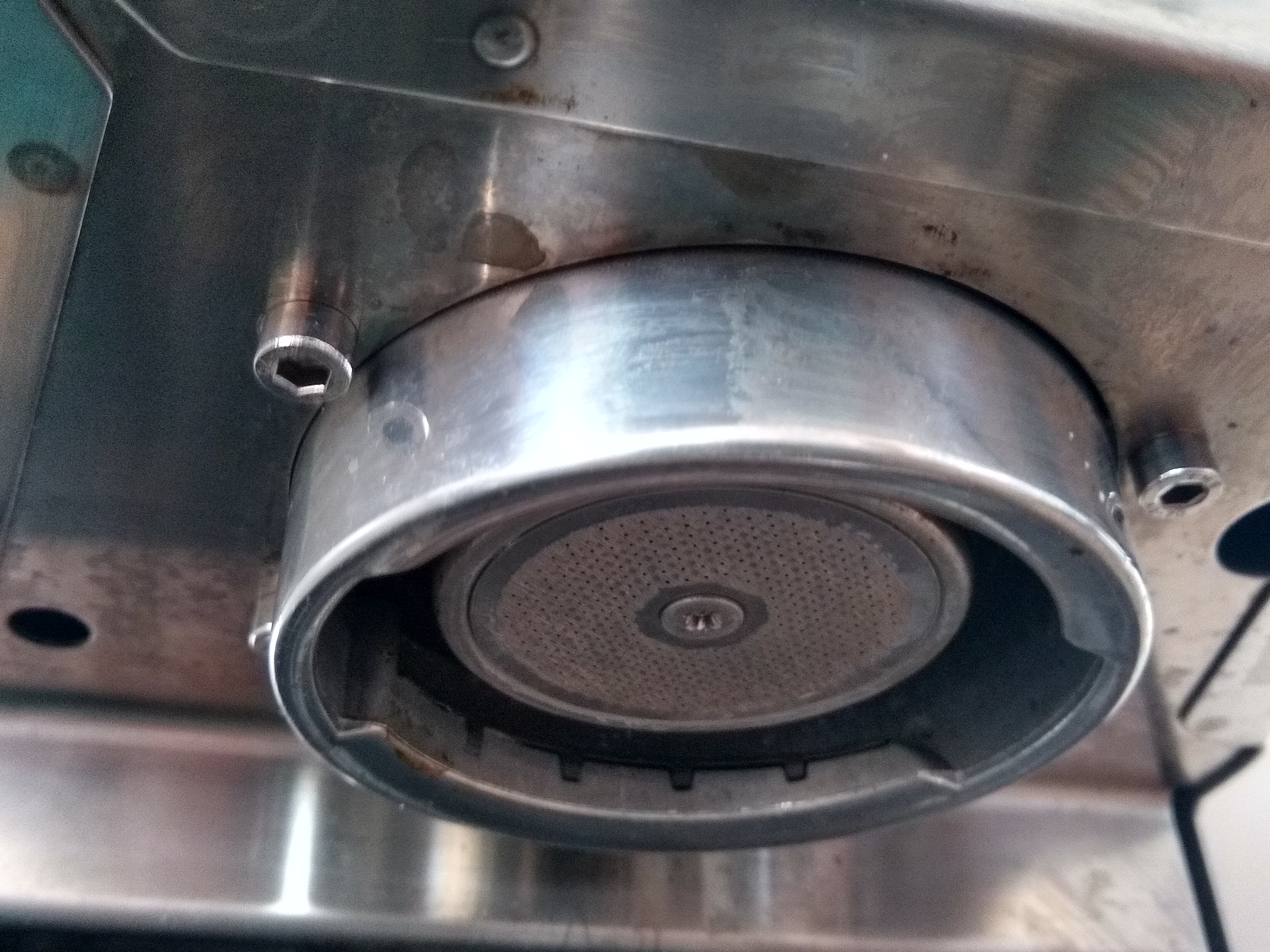 The Gaggia Classic 2015 group head
 Gaggia Classic 2015 vs 2019
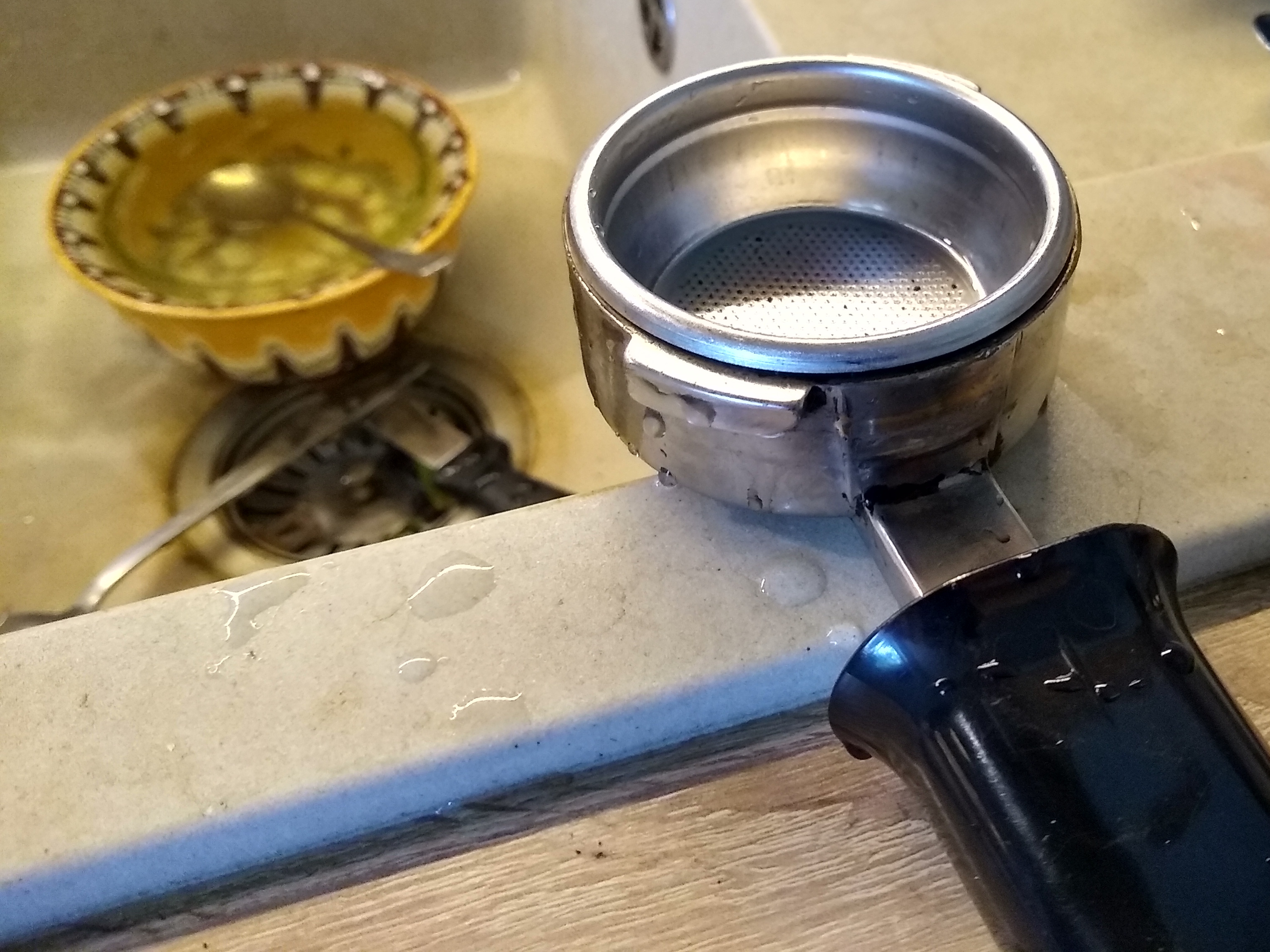
 Gaggia Classic 2019 and Sage BCG600 Dose Control Pro
 Happy with my new purchase, I went to read this review and thought to myself: lucky me, my grinder is absolutely quiet! And then I realised that
the noise in my kitchen is not, in fact, produced by the fridge, but the grinder. Well, a cheap switched plug solved the issue completely (I wish
sockets here each had a switch like they usually to in the UK!)
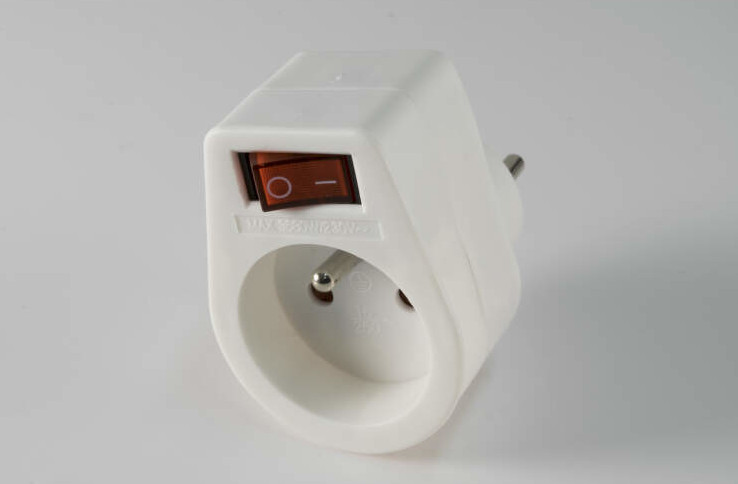
 As a follow on to a previous blog entry of mine,









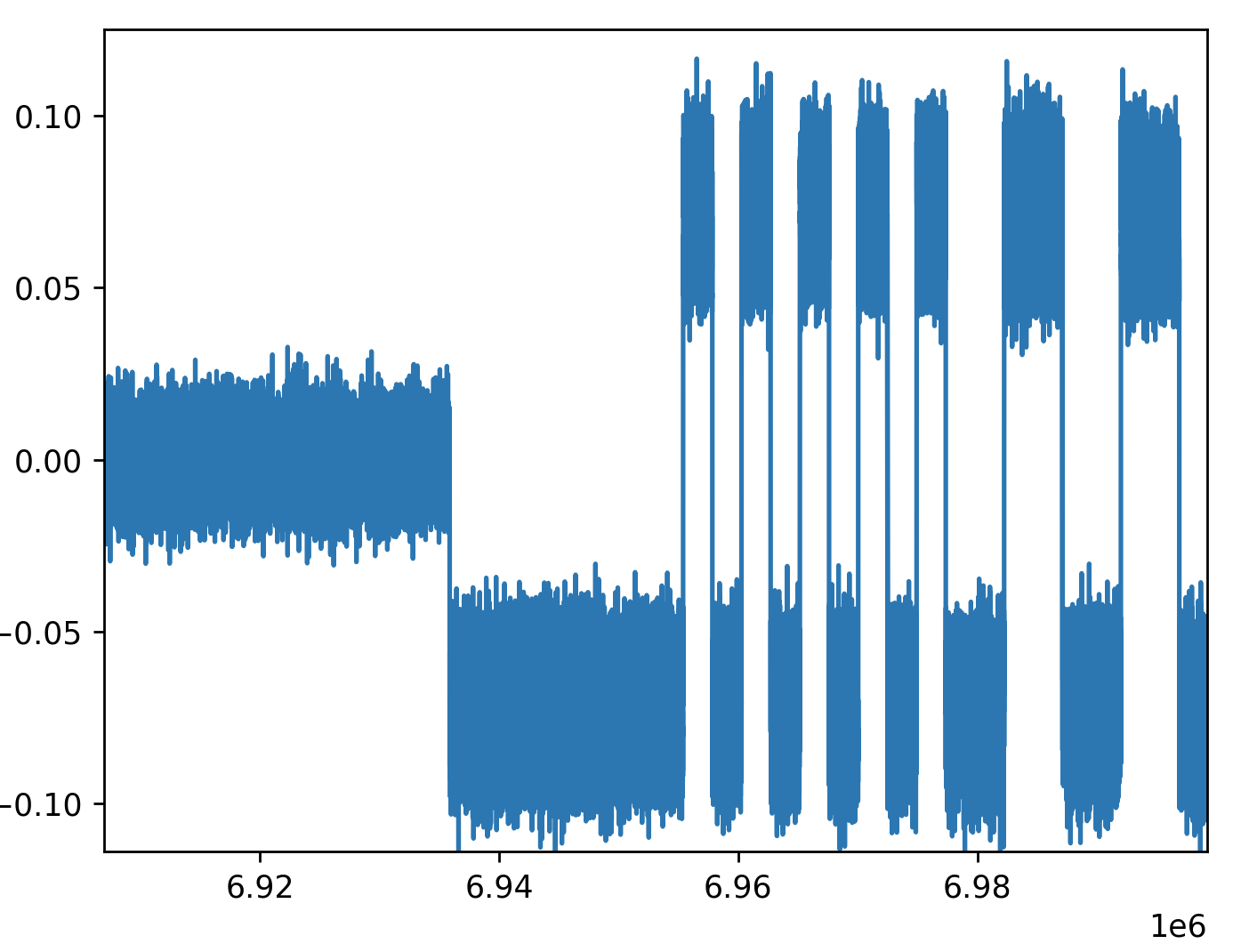
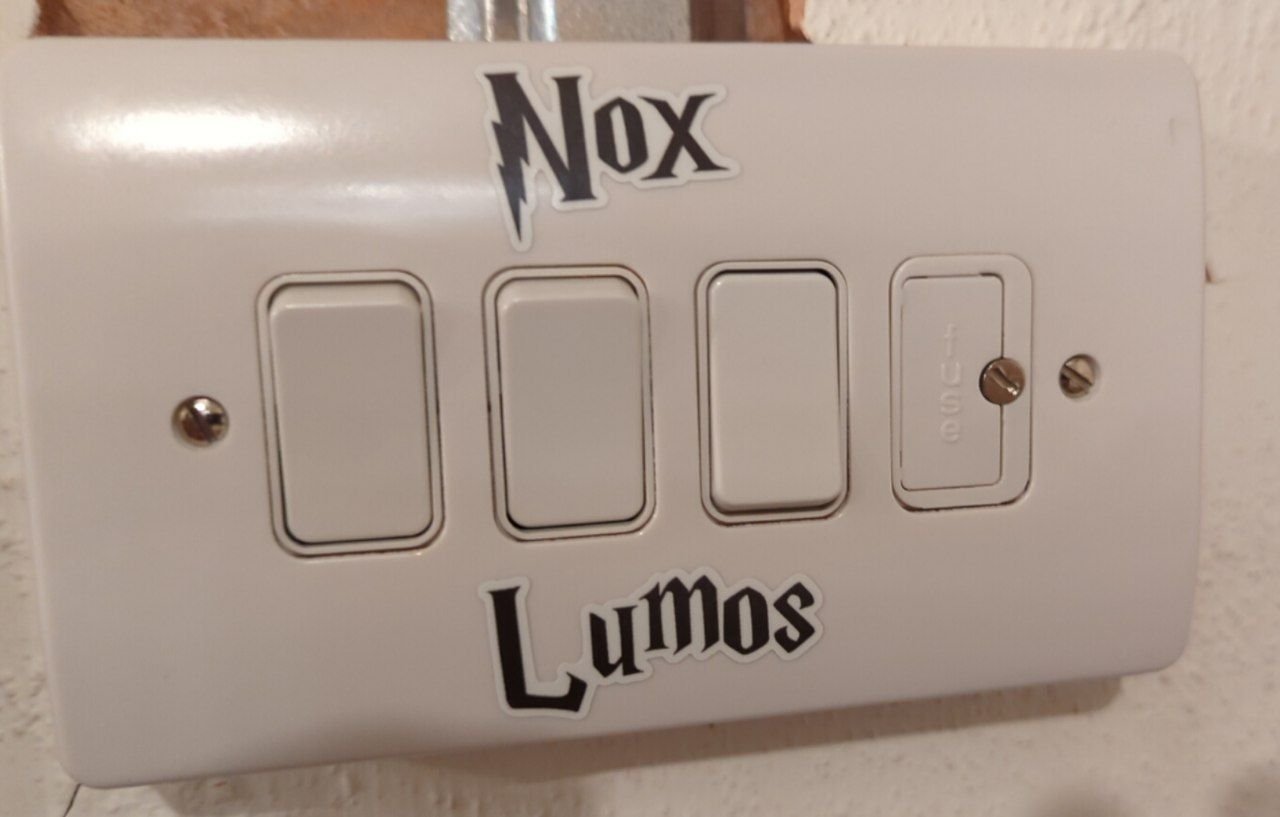


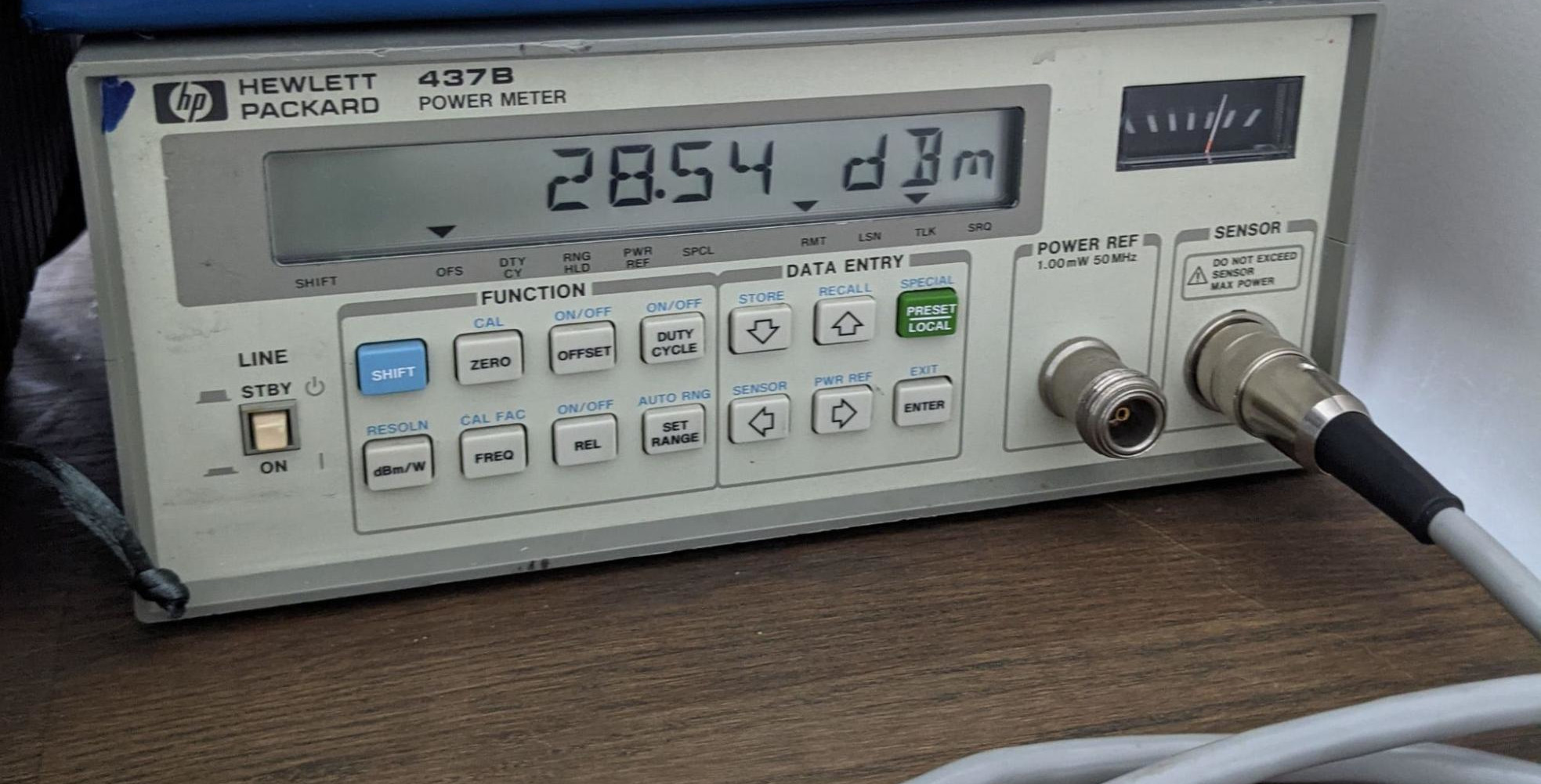 I bought an HP 437B, which is the cutting edge of 30 years ago, but still
accurate to within 0.01dBm. I paired this Power Meter with an Agilent 8481A
Power Sensor (-30 dBm to 20 dBm from 10MHz to 18GHz). For some of my radios, I
was worried about exceeding the 20 dBm mark, so I used a 20db attenuator while
I waited for a higher power power sensor. Finally, I was able to find a GPIB to
USB interface, and get that interface working with the GPIB Kernel driver on my
system.
With all that out of the way, I was able to write
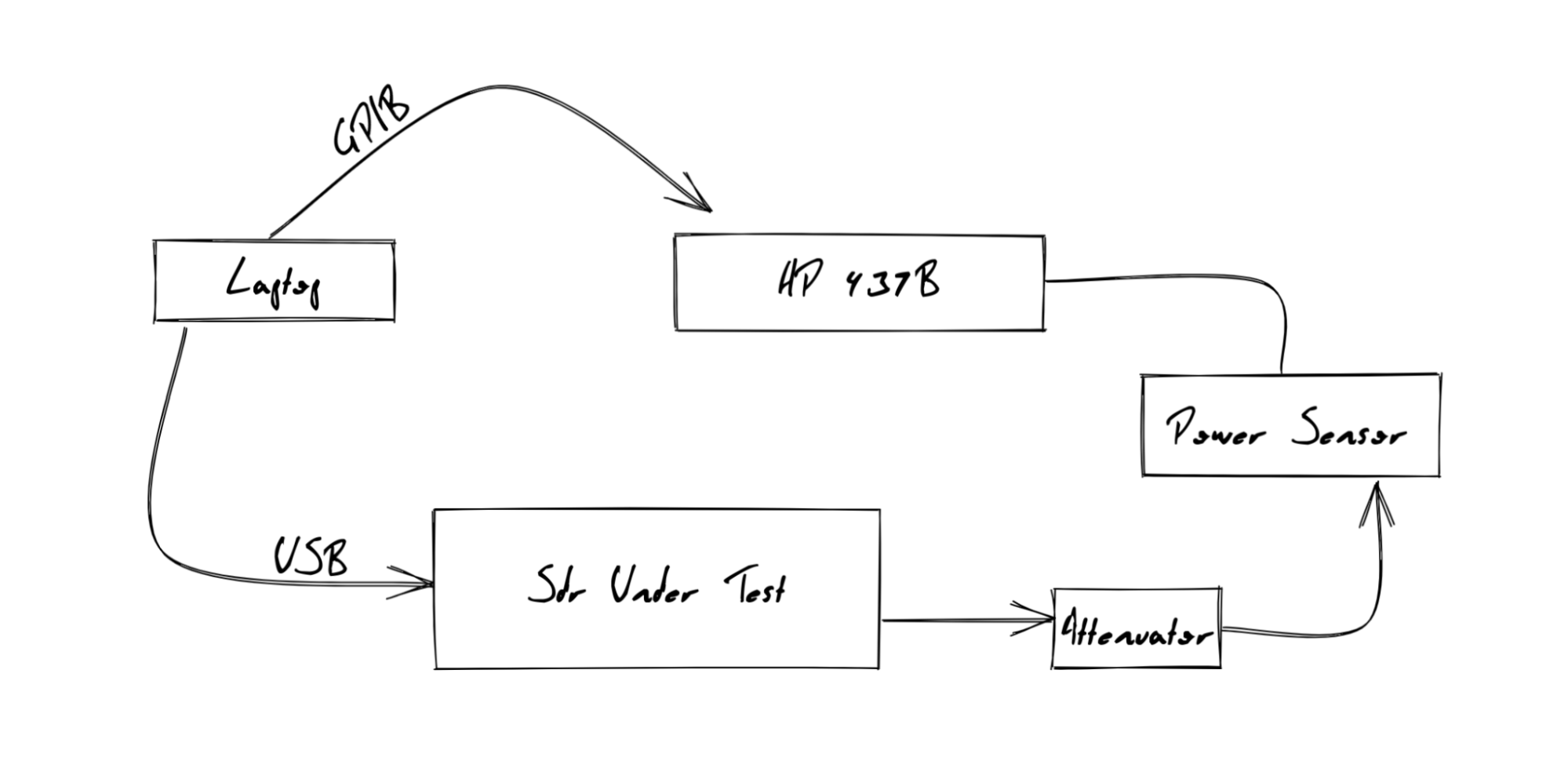
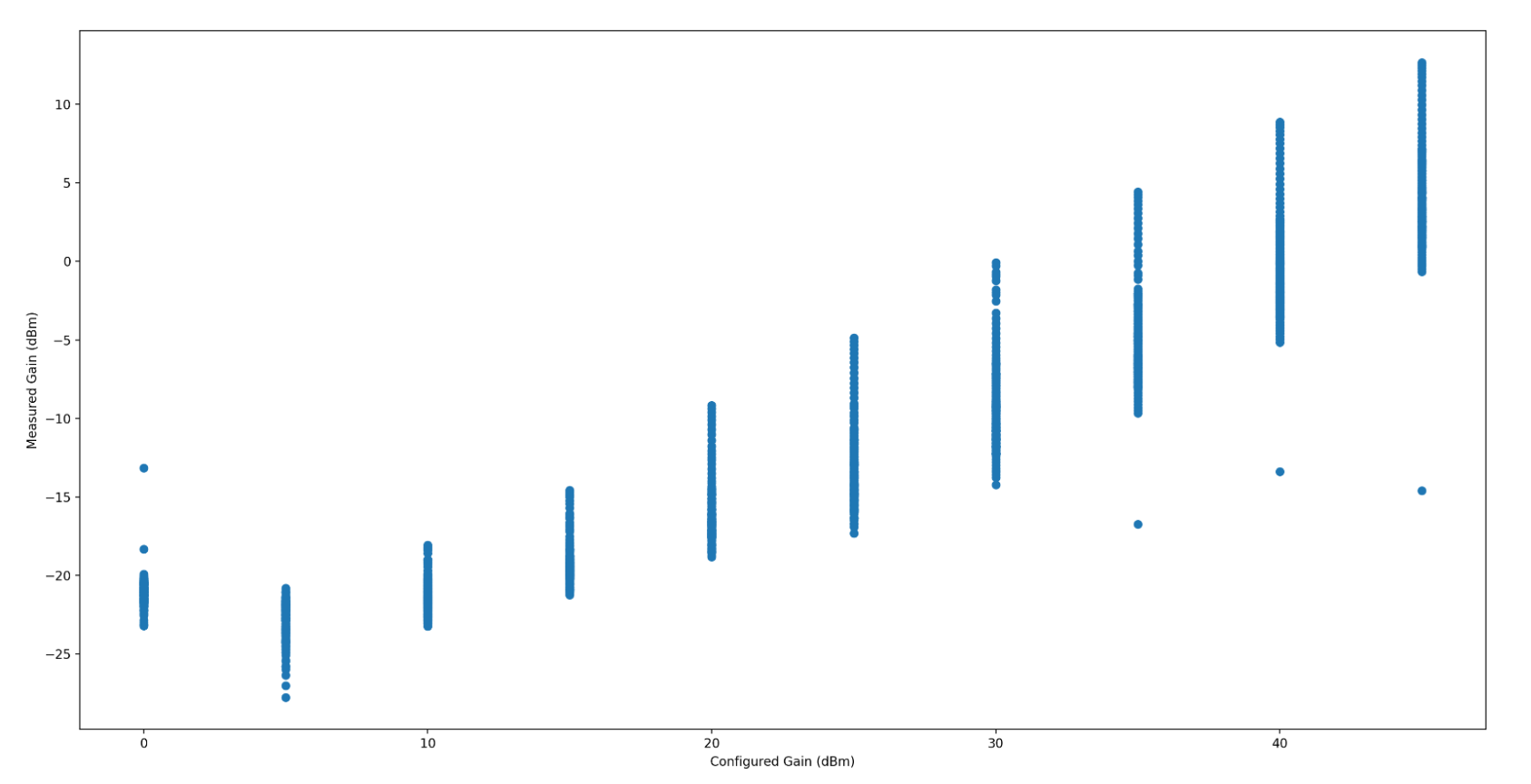 When looking at output power over the frequency range swept, the HackRF
contains a distinctive (and frankly jarring) ripple across the Frequency range,
with a clearly visible jump in gain somewhere around 2.1GHz. I have no idea
what is causing this massive jump in output gain, nor what is causing these
distinctive ripples. I d love to know more if anyone s familiar with HackRF s
RF internals!
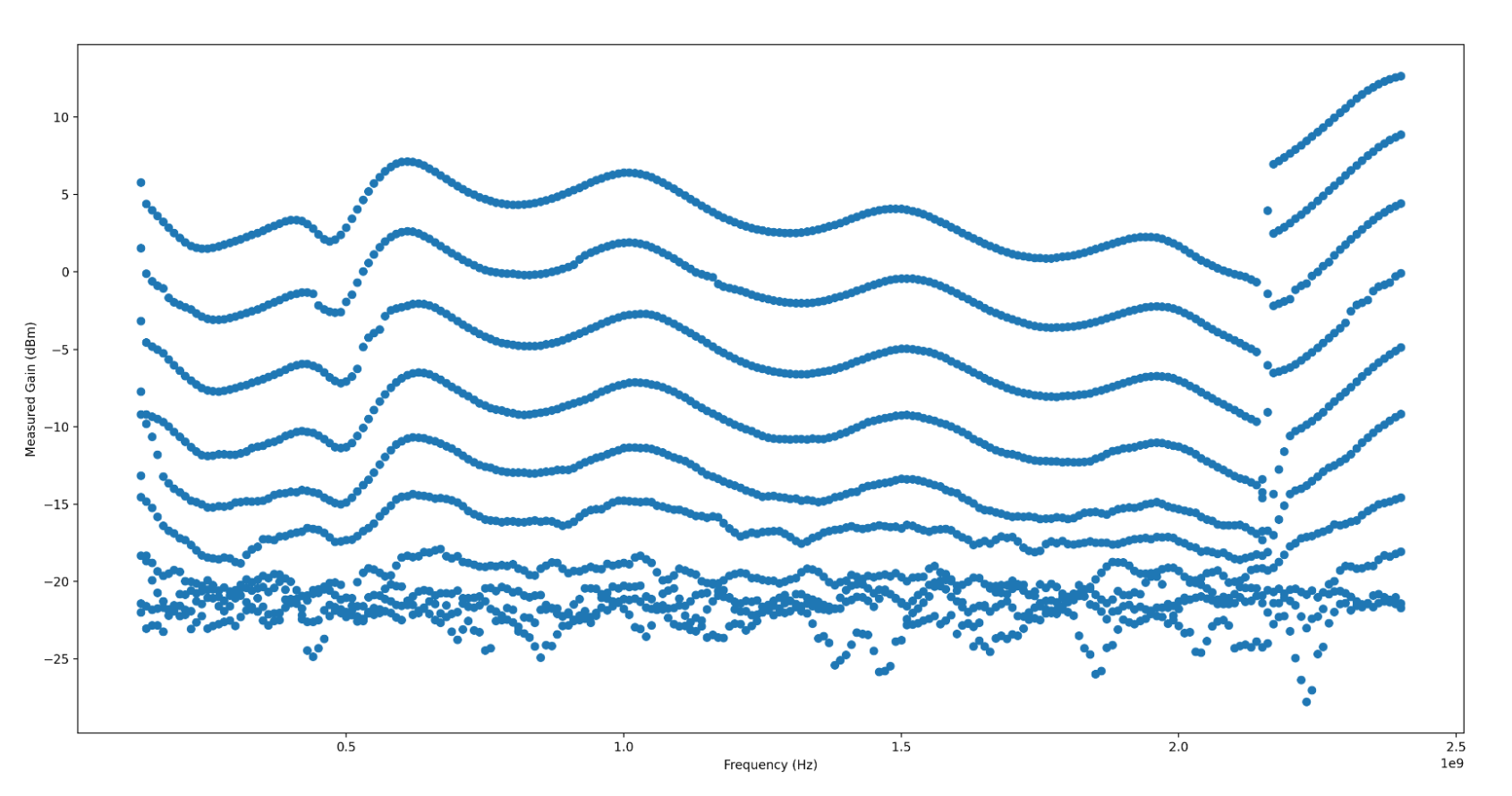
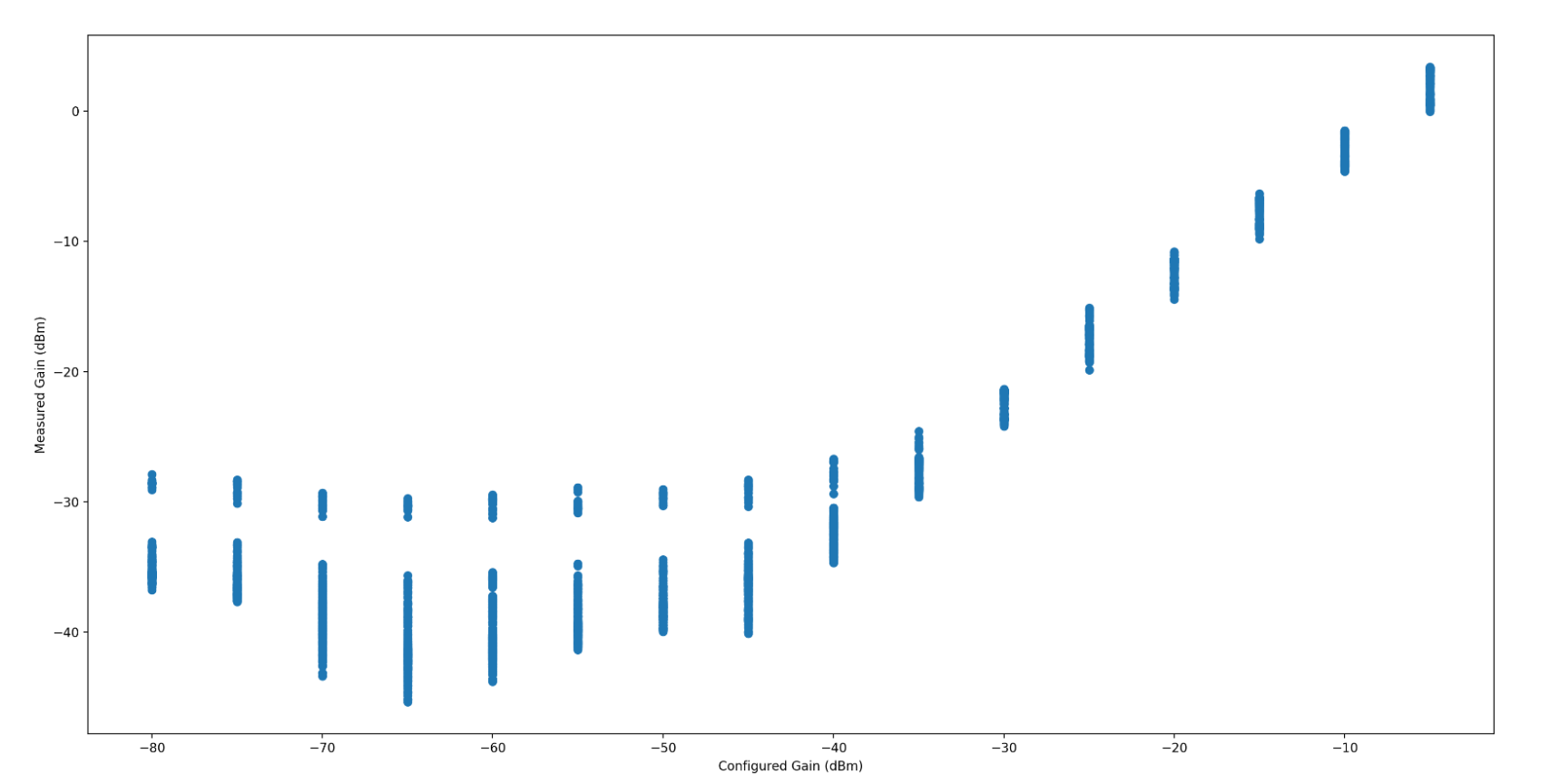 Generally, the power output is quite stable, and looks to have very even and
wideband gain control. There s a few artifacts, which I have not confidently
isolated to the SDR TX gain, noise (transmit artifacts such as intermodulation)
or to my test setup. They appear fairly narrowband, so I m not overly worried
about them yet. If anyone has any ideas what this could be, I d very much
appreciate understanding why they exist!
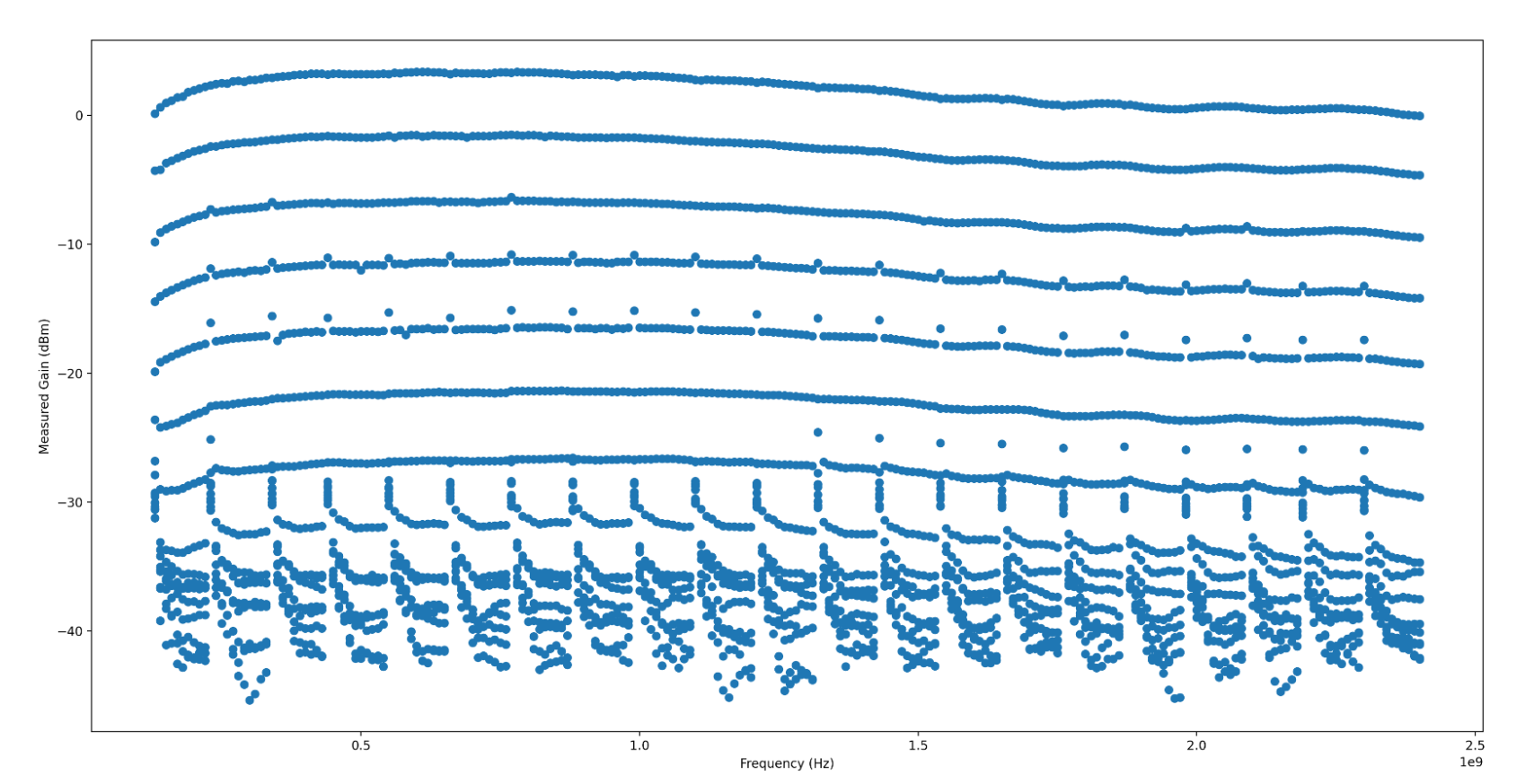
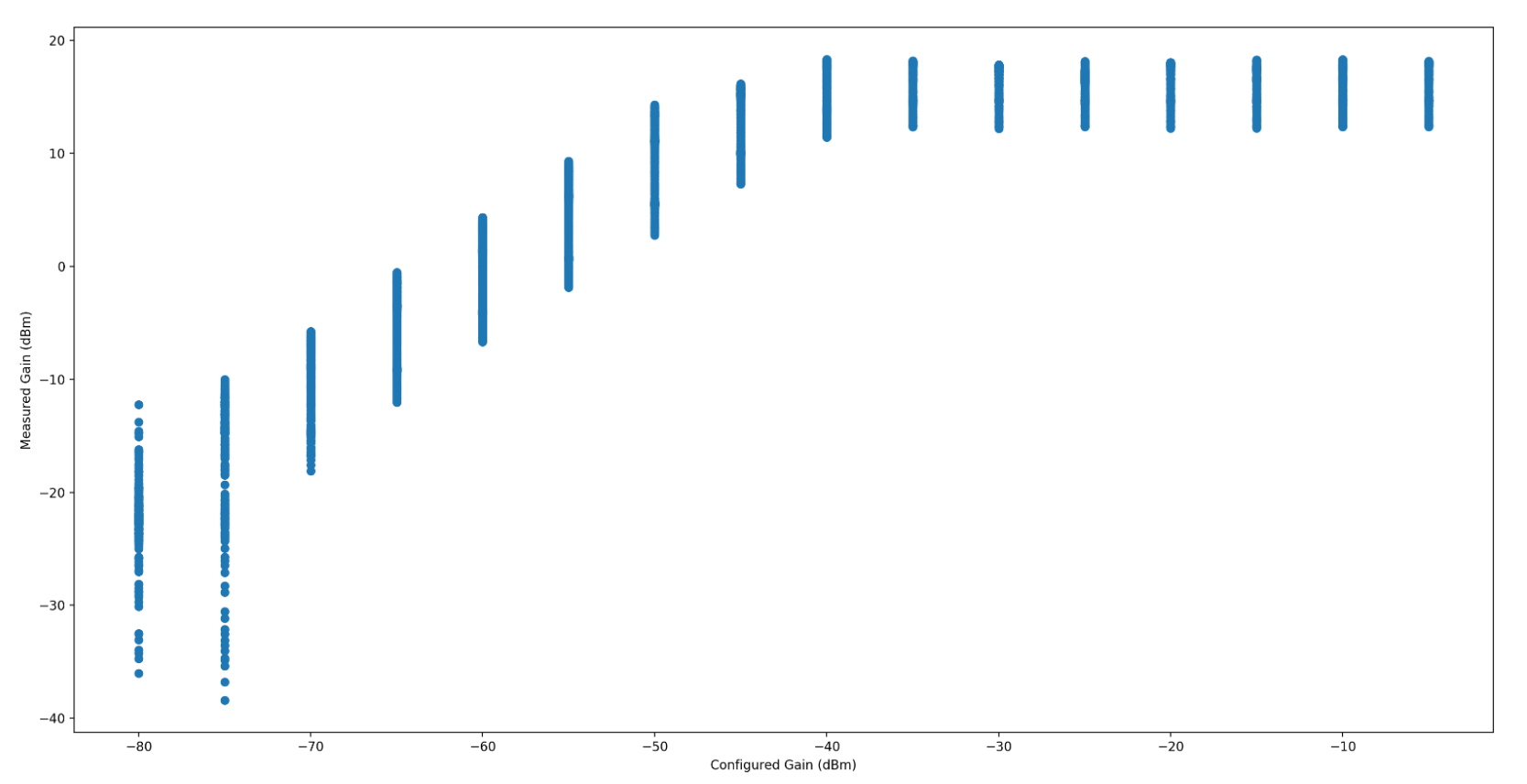 When the Gain is somewhere around the noise floor, the measured gain is
incredibly erratic, which throws the maximum standard deviation significantly.
I haven t isolated that to my test setup or the radio itself. I m inclined to
believe it s my test setup. The radio has a fairly even and wideband gain, and
so long as you re operating between -70dB to -55dB, fairly linear as well.