Search Results: "tar"

2 August 2010

Gunnar Wolf: We have released!

If you have seen me anywhere near my computer at DebConf, you probably have seen the face of a hurried, worried developer. Still, if you monitor my Debian-related activity, you will notice it is still quite low, even given my (much needed and very much enjoyed) vacations pre-DebConf. Yes, orga-team work is very time consuming, even if my role is far from central this year. And yes, DebCamp+DebConf are known for sucking time into social interaction, which is great but not so (formally) productive. And yes, I even took 1.5 days off to visit my family and a friend who live in the area... Still, I managed to release! \ / Release what? I have been working with Pooka for the last ~2 years on the Seminary on Collaborative Knowledge Construction. We assembled a group of ~10 speakers/authors, each of whom prepared a chapter for a book meant for publication. Pooka and me coordinated the work, which took a long time because it was also an interaction experiment (and because we both did it only in our free time). After the coordination work started fading, I took up the task of coming up with a way to translate it all into LaTeX (and fix a host of conversion bugs, and play with the available packages, and... Hey, I'm after all just a LaTeX newbie, and had to learn to tame the beast!), I stumbled upon that precious fact that makes so many projects release. I stumbled upon a deadline. We want to publish the book under the seal of IIEc-UNAM. Besides my workplace, it is a very well regarded university, and having its seal in our work is definitively a big plus. And the Publications Committee of my Institute is meeting this week - So I had to send our final manuscript by today. Having a deadline overlapping with DebConf sucks. But somehow, I managed to do the needed work to my complete satisfaction. The work is now in the Committee's hands, and I expect to have more news soon(ish). Oh, and where can you get our work? Well, if you register in our site, you will be able to read the whole contents. And once the book is approved and published, the whole work will be published online under a free (CC-BY-SA) license. BTW, that probably means I will have more time to fix my Debian bugs and pending stuff! \ /

Michael Banck: 2 Aug 2010

DebConf's Law If you hang out with local team people at some place, they must not have to buy beer themselves.

1 August 2010

Raphaël Hertzog: First Flattr FOSS Suggestions

Flattr FLOSS LogoThe Flattr FOSS project is quite young so very few free software are currently listed in the dedicated directories. It s still advocacy time: if there are free software that you d like to flattr, please tell them and point them to Flattr FOSS. It s too early for any conclusion, but the feedback from users is good and it looks like that people using flattr to support free software are more generous than the average flattr user. You re great people! :-) Anyway, it s time for me to give a few suggestions of projects to flattr.
  1. My first recommendation is Project Hamster, it s a time-tracking application for GNOME but it has come a long way thanks to the work of Toms Bau is. I use everyday and it rocks.
  2. My second recommendation is verallt, it s a Firefox extension that allows usage of Flattr even in places where it was not designed to be used: forums, mailing list archives, etc. The persons using Flattr just put [Flattr=20693] in their signature and the Firefox extension automatically replaces this text with a real Flattr button ready to be clicked. Thanks to Paul Da Silva for the nice idea and the first implementation!
  3. My third recommendation is Mustard, it s a StatusNet client for the Android platform. More concretely you can install it on your Android phone to send updates to identi.ca while traveling. I have no Android phone but Mustard seems to be popular among owners of such phones!
  4. My fourth recommendation is moreutils from Joey Hess. It s set of unix (command line) tools that nobody else thought of writing when unix was young (according to Joey himself). They are all very useful, I use more or less regularly isutf8 (verify if a file is UTF-8 compliant), combine (logical operations on lines of two files), pee (send standard input to two programs, very useful in git hooks when you want to run two programs that both consume the same data), sponge (ever tried grep -v foo file >file and lost your data? now you can use grep -v foo file sponge file ). And Joey is a long time Debian developer who has truly shaped Debian, he s behind several major Debian projects (debconf, debian-installer, debhelper, ). Big kudos to him!
  5. My last recommendation is to flattr Andreas Gohr for his work as dokuwiki lead developer. There s no flattr button on dokuwiki s website but you ll find some in Andreas blog, just pick a dokuwiki related article like this one: Dokuwiki Birthday Bughunting Weekend. Dokuwiki is a simple wiki that works without any database (the pages are stored in flat files) and it s even commonly used to setup simple websites thanks to the numerous themes available.
Okay, that s it for this month. I ll try to keep a broad panel of software (desktop, command line, mobile, web, etc.). Since I have promoted a GNOME desktop application, I would like to be able to promote a KDE or XFCE application next month but I did not discover any KDE/XFCE project using Flattr do you know any? Please share in the comments if you find some. Also I wonder if you have decided of a flattr strategy Personally I m likely to flattr my favorites projects/persons each month and to flattr a few other occasionally as I discover them. What s your own strategy? Flattr this Share/Bookmark 4 comments Support my work

31 July 2010

Wouter Verhelst: Wouter Verhelst, Tourist

So for one day a few days ago, I wasn't Wouter Verhelst, Debian Developer, but rather the above. I'm not usually very much interested in doing touristy things, but then on the other hand I'm of the opinion that you can't really claim to have been somewhere if all you've seen is the inside of a certain specific university campus. So, well, touristy things. I took the subway to about 10 blocks away from the very south of Manhattan, and then walked. I passed by city hall and what used to be the world trade center, but there wasn't much to see there construction sites are the same everywhere in the world. I moved on to "the battery", the south tip of Manhattan, and had an... interesting look at the Statue of Liberty in the distance. I thought about going there, but the tickets were sold out, so scratch that. Wall Street from Trinity Church Instead, I walked on to the Brooklyn Bridge (passing by Wall Street on the way), spent some time looking for the pedestrian's entrance to that bridge (which was slightly harder than would've thought it to be), and walked partway up the bridge. I wasn't interested in crossing over to Brooklyn, but it's an interesting bridge to walk on, and I had an interesting time. Brooklyn Bridge When I left the bridge again, it started raining. I don't mind a few drips on a warm day like that day, but this was more than that, and it started to bother me. So, rather than walking to the Empire State building, as I'd been planning, I decided to take the subway there. This did mean I missed out on the SOHO area, which I would've liked to see, but well, you can't have it all. dsc_6639 The Empire State building is something you grow up hearing about, and I'd seen pictures of it. It has a somewhat distinctive silhouette, shown on several comparative graphics of high-profile skyscrapers. But none of that is even close to the real thing. Not that it's higher than I expected; on the contrary. But it does look different; its color is much lighter than I thought, and the distinctive silhouette isn't as distinctive once you're standing right next to the building. But, well, going up the building clearly shows that it is the tallest building of New York. There are other skyscrapers, but most of those seem to be little dwarves in comparison. The view is nice, up there, and I took some interesting pictures. The tickets aren't very cheap ($20), but not insanely expensive either. I don't regret doing this. Going down... (in case you were wondering: yes, the above picture is in the point of view of the one above that, and vice versa) By that time it was around 4 pm already, and I thought about going back to the Columbia campus. As I checked out my map for the most efficient route, I found that it probably would've been easier to walk to Times Square and take the number 1 train there which stops right in front of Columbia (but below the surface, obviously). So since I was going to have to go there, I figured I could just visit Times Square while I was at it. Times "Square" I must say I'm not very impressed by it. For starters, Times Square isn't actually a square, at least not as I'm used to that word. Broadway and 7th avenue happen to cross at a, for Manhattan, uncharacteristically sharp angle, which results in more space between buildings than usual. But it's still fairly small as a "square". They've fenced off a part of that space and put a bunch of chairs and tables there. This would be a cosy and inviting, "gezellig" place, if not for the very audible noise of the traffic still going on all around it, and the fact that everywhere you see, there's three layers of brustling and visually noisy adverts. It could have been a relaxing oasis in the middle of the city, but instead it's just as busy as everywhere else in Manhattan. But then, I guess that's what New York City is all about. At any rate, after spending about half an hour or so there, I walked over to the subway to get back to the venue just in time for dinner. The end of a nice, touristy, day.

Aigars Mahinovs: Debcamp 10 the early days

After I finished an re-read my epic post describing my first day and a half at Debconf10 I suddenly realised that if I continue to describe the rest of 13 days here in such style and verbosity this would become a book, a boring one at that, so I decided to limit myself to 2 posts for Debcamp and then a post a day for the Debconf. But about the first half of the Debcamp week there are things that are as usual and there are things that are not. Let s start with the usual bits: more people arriving every day, evening parties are getting more and more fun and wild (or so people say) and the Internet and power at the hacklabs magically becomes more and more reliable day by day, the cabling mess grows organically trying to spread out evenly and not overload any individual socket, extension cords with non-local plugs appear and spread the load some more, people stress out, volunteer, crash out and repeat. All in all nothing can stop the freight train of few hundred Debian developers determined to have fun. With out own DFSG-free definition of fun. (But this year we appear to be running very close to the edge on volunteers if we run out of those, there will be a train-wreck, so please volunteer!) Now off to the unusual stuff. The City is well it is cool and very, very impressive. It is not terribly different to me at least I am used to such structure of the city: grid based layout of the downtown city (with some parks) and then branching out to separate, but different across-the-river districts and then sprawling out to slightly chaotic suburbs. Riga is very much like New York in the design. The difference is that New York is 10-20 times larger: the areas are 10 times larger, the buildings are 3-4 times higher on average, the streets are 2-3 times wider and yet have more traffic and there are far, far more shops, shows and restaurants. Also there is the subway. It is a great thing in that it hides the size of the city take a bus downtown once, to find out what I mean it takes ages to drive the distance that takes 20 minutes on the subway. I like this city, I am getting a feeling, that I could live here without much problem for me. So far I ve only had this feeling in Riga and Berlin. On the other hand this is USA. I ve so far only encountered one bad thing about it, but it is a pretty big one food. Basically all food that I ve tried so far in the USA has been crap. It was tasty salt, sugars and fat took care on my brain thinking it s food, but underneath that it was pretty crap: there was no texture, no content, no soul. The John Jay cafeteria where we are eating lunch and dinner is better than the most other options, because it is an all-you-can-eat buffet where you can choose your poison and it was also the place where I had the best piece of food in USA so far a slice of pepperoni pizza, that had a bit of taste behind the fat. Also, surprisingly, the fast food options (McDonalds, Burger King, ) are better than the equivalents in Europe, far better. In fact the fast food is cheap and in some cases tastes better than regular food, so there is no wonder why people might prefer it in some situations. So it is easy to see how people just accept shoving bland fast food or bland all-you-can-eat food into their mouths and not think much about it and thus become fat and put undue stress on their health. I expect the average weight of Debian developers to increase by 5 kg by the end of the conference. If you want to prove me wrong, running with bubulle would help you a lot with that. Events downtown. New York is a huge city with a lot of events going on every day, so everyone should be able to find something of interest for them. For me it was the free tickets for tapeings of The Daily Show and The Colbert Report. I got into both of those and for me The Colbert Report was by far the better experience. For one you can not get into Daily Show without a ticket (some tickets show up on the web site on the morning of the shoot around 11am), while 18 people from the stand-by list at Colbert Report got in. At The Daily Show you stand in a live line with ticket holders in one line and stand-by line separate. If you have tickets and arrive around 3pm you should be fine any later than that and you risk to be standing outside even with a ticket. You find that out around 4.30pm when they hand out physical tickets you have one, you get in. If not you might rush over to Colbert Report where a more humane system is used a staffer takes down your name and email on a numbered list and then you can walk around until 5.30pm then they let the ticket holders in and after that call the names of stand-by people that get in. The Colbert Report studio is brighter, more colourful and closer to the action, also it is very rare that cameras block the view from the audience (which is common on The Daily Show). It might have also been my luck when I got on the most boring The Daily Show episode I can remember, ever. The best joke was a woman asking John is she could get a ticket for her friend in August. The warm-up act and crowd control at The Colbert Report was also way better: Colbert staff was hyper, security was ever-present, warm-up was funnier and very engaging (he grilled me for several minutes and I replied making the audience laugh very hard explaining that Latvia was like India of Eastern Europe in regards to IT exports) and Colbert himself was very gracious talking to us out-of-character before the show for a good 10 minutes. Location, location, location. The talk rooms and event rooms and hacklabs are spread out across multiple buildings and there is a lot of other activities going on in those buildings besides Debconf, so moving between place might be confusing for the first day or two. Also the rooms are quite dark that might cause a noise problem for me and the video team as we ll have to up the sensitivity settings on our gear. The video team is working on fixing that by throwing a bit more light on to the speakers. Elevators are wicked fast, but can also be confusing, because the ground floor is on a different number for different buildings it can be G, 1 or even 4. Usually on campus there is a star next to the level with the exit. The dorms. I am in the Carman building and it looks like its interior has not been updated since it was built large ceramic bricks with very visible gaps (for the interior walls), raise-to-open windows, huge aircon fans that take up the whole bottom of the window, plumbing from the 60ies (at least). The security is weird on one hand you have to give your room card to the guard when entering the building, but on the other hand the room cleaning crew can simply forget to close your door after they are done. Like this Thursday I returned to the dorm just before lunch only to find the door of my room open. No one was around and nothing was missing, but it s still worrying. In any case I am steadily uploading photos from Debconf 10 to my Flickr page and new stuff should show up every day.

Torsten Werner: The Debian freeze has already begun


Don't get me wrong. We didn't freeze the development yet but we are freezing our developers! The air condition at the Columbia University in New York City is quite cold. Bring some warm clothes if you going to attend the DebConf that will start soon.

30 July 2010

Biella Coleman: Holy Debconf10 is awesome


nycsubway-heart, originally uploaded by the biella.
So an email went out to Debconf-announce with all this and MORE information but it is worth highlighting the talks/events as they are great. We look forward to having you in New York City! ********************************************************************************************************** exciting schedule highlights
- Have a look at the DebConf10 schedule,
there are a lot of really interesting things planned, both during Debian Day and DebConf
itself. We have a great line-up of speakers, and other events that are
sure to make this DebConf one to remember! A couple notable events that we wanted to highlight: Be sure to come to the DebConf Welcoming Plenary in the evening of Debian Day. This opening plenary will be the first thing that kicks
off DebConf and will be brief, important, and fun. General information
about DebConf, important logistical bits, and prizes(!) will be
had. Also, this gives you a chance to ask some questions before we get
started. Be there at 7:30pm in Davis Auditorium on August 1st! The much anticipated Cheese and Wine party will be happening in the
evening on the 2nd. This will be your chance to see what mixture of
fermented, cultured and alcoholic things your stomach can handle! Also exciting to mention is Eben Moglen who will be speaking on the
3rd during DebConf at 9:30am about Freedom and Privacy in the Cloud
and how we (yes us!) here at DebConf, can be the silver lining. If you
don t already know Eben Moglen
he is Professor of Law at Columbia Law School and founding Director of the Software Freedom Law
Center. Since 1993 he has served pro bono publico as General
Counsel of the Free Software Foundation. Moglen was part of Philip
Zimmermann s defense team when Zimmermann was being investigated over
the export of PGP. As counsel to the FSF, Moglen was charged with
enforcing the GNU General Public License (GPL) and later became
heavily involved with drafting version 3 of the GPL. Also in the evening of the 3rd at 7:30pm we will be treated to not
only a screening of the brilliant and beautiful and (award winning!)
film Sita Sings the Blues in
Pupin 301, but also a Q&A afterwards with the acclaimed animator Nina
Paley! She will describe how the process of making this film caused
her to question the wisdom of copyright monopolies in the arts. The
film is under a Creative Commons ShareAlike license, and her
distribution mechanism is unique as Paley consciously adopted the
methods of the free software movement to distribute the film. The
discussion with the artist after the screening will explain in depth
how and why, and discuss what Paley and QuestionCopyright.org are
doing next to encourage more artists to try the Free route. After the film, at 9:00PM the Columbia University Astronomy
Department will host a guided stargazing event, which includes use
of several different optical telescopes on their roof. There will be
astronomers on hand to answer any questions about the stars,
telescopes, or any other topics of scientific interest. There are many talks that are going to be exciting at Debian Day, even
for Debian Developers! One track will be showcasing general Free
Software themes and issues, and many of these talks will be really
interesting to Debian Developers, so be sure to check out the schedule and come On Debian Day we are excited to have the Honorable Gale Brewer speak at 4pm. She is part of the New York City Council and was the
former Chair of the Committee on Technology in Government, current
Chair on Committee on Governmental Operations and will discuss the
ways that government can foster freedom in technology. Its both
exciting and a privilege to have her speak at DebConf! day trip
This year, the day trip is going to be a blast, a crazy adventure at
the bizarre and fun Coney Island! Explore the historic RussianBrighton Beach! Ride the Cyclone rollercoaster, 82-years old this
year! Swim in the ocean! See the circus sideshow! Eat delicious food
or if unlucky, not so good food. Or do none of the above and just hang
out with your friends outside and have a good time. At the end of the day we are going to go to a unique cultural event:
the Brooklyn Cyclones baseball game where we will have the chance to
watch our beloved DPL humiliate himself as he throws out the first
pitch, in his Debian kilt! Don t like baseball, or sports? Don t worry, neither do we, but the point really isn t the baseball game,
the point is hanging out with all your closest Debian friends and
having a good laugh as Zack tries really hard not to trip, also a good
chance to experience some local culture and to relax after a hard day at the beach. free things in the city
There are an amazing number of free events happening in New York City during the summer! If you are looking for something to do, we ve
compiled a list of various events from a number of different locations
for you to easily view in one spot.

Lucas Nussbaum: Debcamp+Debconf again!

As I did since 2007, I will be attending Debconf again this year. I have been quite busy recently, and am lagging behind in some of my Debian work, so I plan to use Debconf to get stuff done, not just socialize and attend talks. Here is my TODO list, basically by order of willingness to do the work . It s probably too much for 9 days, so don t hesitate to talk to me if you want to help with some items.

29 July 2010

Stefano Zacchiroli: DebConf BoF HOWTO

Here at DebConf10 the schedule is starting to get really packed of events, which is great! About a half of those events are BoFs (in the IETF sense), i.e. discussion sessions among people interested in specific topics. (Other conferences use "BoF" to refer to impromptu, non-scheduled, and spontaneous events, while at DebConf we have traditionally submitted, reviewed, and scheduled BoFs in advance.) As most DebConf regulars, I've attended quite some BoFs in the past and I share with others the impression that the quality and usefulness for the project of BoFs varies substantially from BoF to BoF. That's why I'd like to share a BoF recipe, which comes from possibly the best organized BoF I've ever attended. As it happens with all good recipes (and with free software), I've took the liberty of customizing it a bit.
DebConf BoF HOWTO have a coordinator A good BoF should have a coordinator, which is usually (but not necessarily) the person who proposed the BoF in the first place. The role of the coordinator encompasses at least 2 tasks: preparing the BoF in advance (read below) and moderating the discussion to ensure everybody get a chance to participate. prepare in advance A good BoF is more than just getting together, vaguely knowing the BoF topic, and ... discuss. Mind you, it might work very well that way too, but the chances of having a successful BoF are much higher if attendees arrive prepared. That is quite simple to achieve. It just takes the BoF coordinator to prepare some working questions and/or detailed discussion topics, and advertise them as such. That way potential participants can make up their minds, recall experiences that they want to share, note down comments they want to bring into the discussion, etc. In my experience, the BoF time will then be used in a much more productive, exciting, and ultimately fun way. Most BoFs can also benefit from a few introductory slides on the BoF topic, to ensure all participants start from a common ground. The last slide could contain a brief recap of the working questions, so that the audience have them handy. don't be exclusive Debian is not a company and Debian contributors are not employees, therefore we cannot expect all relevant people to attend a specific BoF, just if they had to. As usual, the risk of cutting off community members who cannot attend should be mitigated as much as possible. To that end, minutes are just great; after the BoF, minutes should be posted where appropriate, and possibly uploaded to Penta as event attachments. ... but taking minutes is just boring and not everyone is good at that (for instance, yours truly used to suck at taking minutes, even if I'm trying to get better ...). If you have a trusted participant which is good at taking minutes, great, go for it! If you don't, use collaboration. During past DebConfs as well as at UDS this year, I've been shown a nice way of doing that. It takes a dedicated projector in the BoF room showing some real-time, collaborative editing facility (e.g. gobby). With such a setup, people usually just start taking minutes collaboratively, although explicitly inviting the audience to do that is a very good idea. Ideally, the room should have two projectors, one for supporting slides, another for collaborative minutes taking. In case there is only one, as it is usually the case for DebConf, it's probably better to use it for minutes and switch to them as soon as supporting slides are over.
gobby.debian.net for BoF minutes at DebConf10 For DebConf10, the DebConf team has setup a gobby (infinote) server at gobby.debian.net. Just do the following in order to be ready for collaborative minutes taking:
    # apt-get install gobby-0.5
    $ gobby-0.5 -c gobby.debian.net

(Note: you shouldn't use the non versioned gobby package as it uses a different protocol and doesn't support undo, which is quite risky; see Debian bug #590753 for more background.) As the naming convention for DebConf10 minutes, using document names that start with dc10- sounds sensible.
comments welcome! So, what do you think of the above suggestions? Do you have further best practices to share on BoF organization at DebConf? Leave a comment or mail me. In the end it would be nice to author a proper "DebConf BoF HOWTO" document for further reference. Thanks to Gregor for his feedback on early versions of this post.

Gintautas Miliauskas: Python course projects

This spring I read a course on Python in Vilnius University, Department of Mathematics and informatics. The course was not mandatory, which I suspect is one of the reasons why my students were quite a bright and motivated bunch. I began the course with a brief introduction to the Python language and the standard library, then dedicated a few lectures to Django and in the remainder I covered various libraries (GUI toolkits, Pygame) and techniques (testing, debugging, optimization). One of the major tasks of the course (and the deciding factor in the final valuation) was to develop a project using Python. The students were given complete freedom over the topic of the project and the tools used, as long as Python was involved. The quality of the result varied, of course; had I given concrete tasks, the low bar would definitely have been higher. However, I am happy with how things turned out. Probably the best-executed project was 1000 Online, an online multiplayer card game (see rules). It was developed by Vytautas Karpavi ius. Vytautas apparently had prior experience with Python and Django, nevertheless, the quality of the app (and the code behind it) is impressive. Among the other projects, Gegute.lt, a Lithuanian clone of Reddit is still up and running. It's nothing too fancy, but looks quite clean for a university project. Other projects perhaps were not perfectly executed, but were very interesting conceptually. Jonas Keturka developed a bot (BitBucket) for the online strategy game Travian. Marius Damarackas developed a web-based guess-the-song game. He used YouTube for the song material and Last.fm (IIRC) to make you guess among similar songs, so that it would not be too easy. Andrius Chamentauskas developed a Puyo Pop clone (GitHub) with PyGame, complete with multiplayer and an AI. Paulius Budzinskas worked towards his course paper by developing a bacteria movement modelling and visualisation app (GitHub; Lithuanian only). David Abdurachmanov developed a spell-checker bot for WikiAnswers.com, with a really baroque and sophisticated architecture. I believe he has applied to Google Summer of Code with that project; I wonder how that is working out. For reference, you can find links to all student repositories on GitHub/BitBucket in this list. Beware: some of them may be documented/commented in Lithuanian. Another interesting effect of the course was that people started using Python in other related courses, for example in Mathematical Modelling and Numeric Methods. I even heard that the lecturer was impressed and expressed interest in learning Python. Another lecturer, this time a statistician, was interested in teaching and using SAGE at lab practice. Feeling such 'ripples' going through the department sure felt nice. By the way, the university also offers lectures on Ruby, read by Saulius Grigaitis. I took some inspiration from him for the course form and content.

Olivier Berger: Weaving a Semantic Web Across OSS Repositories: Unleashing a New Potential for Academia and Practice published

A new paper of ours was just published. If you re curious about all that Semantic Web and Linked Data hype and how it would impact forges and other software development tools, and the link with Open Source development platforms, then, read this :
Weaving a Semantic Web Across OSS Repositories: Unleashing a New Potential for Academia and Practice
(DOI: 10.4018/jossp.2010040103)
Authors: Olivier Berger (Institut Telecom, France); Valentin Vlasceanu (Institut Telecom, France); Christian Bac (Institut Telecom, France); Quang Vu Dang (Institut Telecom, France); St phane Lauriere (Mandriva, France)
in International Journal of Open Source Software & Processes (IJOSSP) Volume: 2, Issue: 2 (2010), Pages: 29-40 pp.
Here s the abstract:
Several public repositories and archives of facts about libre software projects, maintained either by open source communities or by research communities, have been flourishing over the Web in recent years. These have enabled new analysis and support for new quality assurance tasks.
This paper presents some complementary existing tools, projects and models proposed both by OSS actors or research initiatives that are likely to lead to useful future developments in terms of study of the FLOSS phenomenon, and also to the very practitioners in the FLOSS development projects.
A goal of the research conducted within the HELIOS project is to address bugs traceability issues. In this regard, the authors investigate the potential of using Semantic Web technologies in navigating between many different bugtracker systems scattered all over the open source ecosystem.
By using Semantic Web techniques, it is possible to interconnect the databases containing data about open-source software projects development, which enables OSS partakers to identify resources, annotate them, and further interlink those using dedicated properties and collectively designing a distributed semantic graph.
Keywords : RDF, forge, archive, bug, semantic, semantic Web, ontology, database, repository of repositories,
interoperability, bugtracker, OSLC-CM, Debian. The journal is published as closed content on paid access, but you may ask us, should you need to read a draft version. This is an extended version of an earlier position paper presented at WOPDASD 2009. This work was conducted in the frame of the System@tic Paris-Region cluster (http://www.systematic-paris-region.org/), with funding of the Paris Region council.

Tim Retout: Reverse build-depends

I've started to build up to actually doing some development-related activities. Maybe. But first, we've got QR Codes dotted around the hacklab and on our namebadges if we're taking part in the keysigning - I persuaded zbarcam (from the zbar-tools package) to reveal their mysterious secrets. I'm looking into packaging some Java libraries that use maven. Fun. I think I'll be attending some of the talks in the Java track, although I feel like I'm three years late to the party. While trying to find a good example, I wanted to list all packages which reverse-build-depended on maven-debian-helper. This must be a common task? With some stuff stolen from lamby, I hacked together a shell alias:
rbuilddep()  
    grep-dctrl -sPackage -i -r -F Build-Depends,Build-Depends-Indep "\b$1\b" \
            /var/lib/apt/lists/*_Sources \
          awk '  print $2  ' \
          sort \
          uniq
 
But this surely can't be the last word on this. For one thing, it might also be useful to recursively find these reverse dependencies. I hope I've missed some obvious way of doing this. I reckon my attention span has got really poor over the last couple of years. More running tomorrow morning. But first, ice cream, I think.

28 July 2010

Raphaël Hertzog: Do You Want a Free Debian Book? Read on.

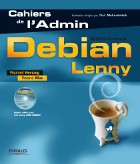
Cover of my French Debian BookWhile I have made good progress on many of my Debian goals for this year, it s not the case for the goal number #1: translating my Debian book into English. The picture on the left is the cover of the current French version based on Debian Lenny (450 pages). But the translation would be based on the next edition that we re currently preparing and it s based on Debian Squeeze of course! We have already translated the table of contents so that you can get an idea of what s in the book. Note that many parts of the book apply to Ubuntu as well. It s quite difficult for Roland and me to allocate several months of our life to such a huge task without any income in that period and without knowing if our book will sell enough to cover for the time invested. For those reasons, we re considering using a service like kickstarter.com or ulule.com or yooook.net to get this project funded. If you don t know those services, they allow you to present your project and to collect pledges so that you can safely complete your project. The money pledged is distributed only if the total amount pledged exceeds the minimal funding level (set by the project creator). Furthermore you can select nice rewards depending on the amount of money pledged. To make things even more exciting we are ready to publish the book under a DFSG-compatible license at the sole condition that we reach 25 000 of donations. That might look like a lot but in fact it s only 5 donated by 5000 persons and then everybody benefits! And for the authors, you have to remove ~10% of fees taken by the funding service (including card processing fees), 16.4% VAT, 9% social taxes and if you consider that the project represents a minimum of 6 months of work, that ends up to at most 2850 /month. We believe this to be reasonable. The next step for us is to pick the service to use and setup the fundraising. We need your input. Please answer a few questions by filling this form. In all cases, we will have those rewards and probably more: A few considerations about the various services: Kickstarter.com is a great service but it s restricted to US-residents so it s complicated for us to use that service since we re French (and live in France) and the supporters need to have an Amazon (payments) account. Ulule.com is open to anyone for project creation but uses a paypal API to deal with the pledge mechanism and thus imposes that all supporters have a paypal account. Is that requirement likely to scare you away? Yooook.net is specialized in liberation fundraising but the interface is not very polished, they don t offer (many) social features nor do they give a public listing of the projects hosted. The choice is difficult and thus we re seeking your feedback to make the right one, take a few minutes and answer our questions: click here to go to the form. Thank you for your help and please spread the word so that we get enough answers to have meaningful results. Update: it has been brought to my attention that kickstarter requires an Amazon (payments) account. I fixed my article and the form to document this. I have also been asked what license we re going to use. It s likely to be dual-licensed GPL2+ / CC-BY-SA 3.0. Flattr this Share/Bookmark 4 comments Support my work

Russell Coker: Yubikeys Have Arrived

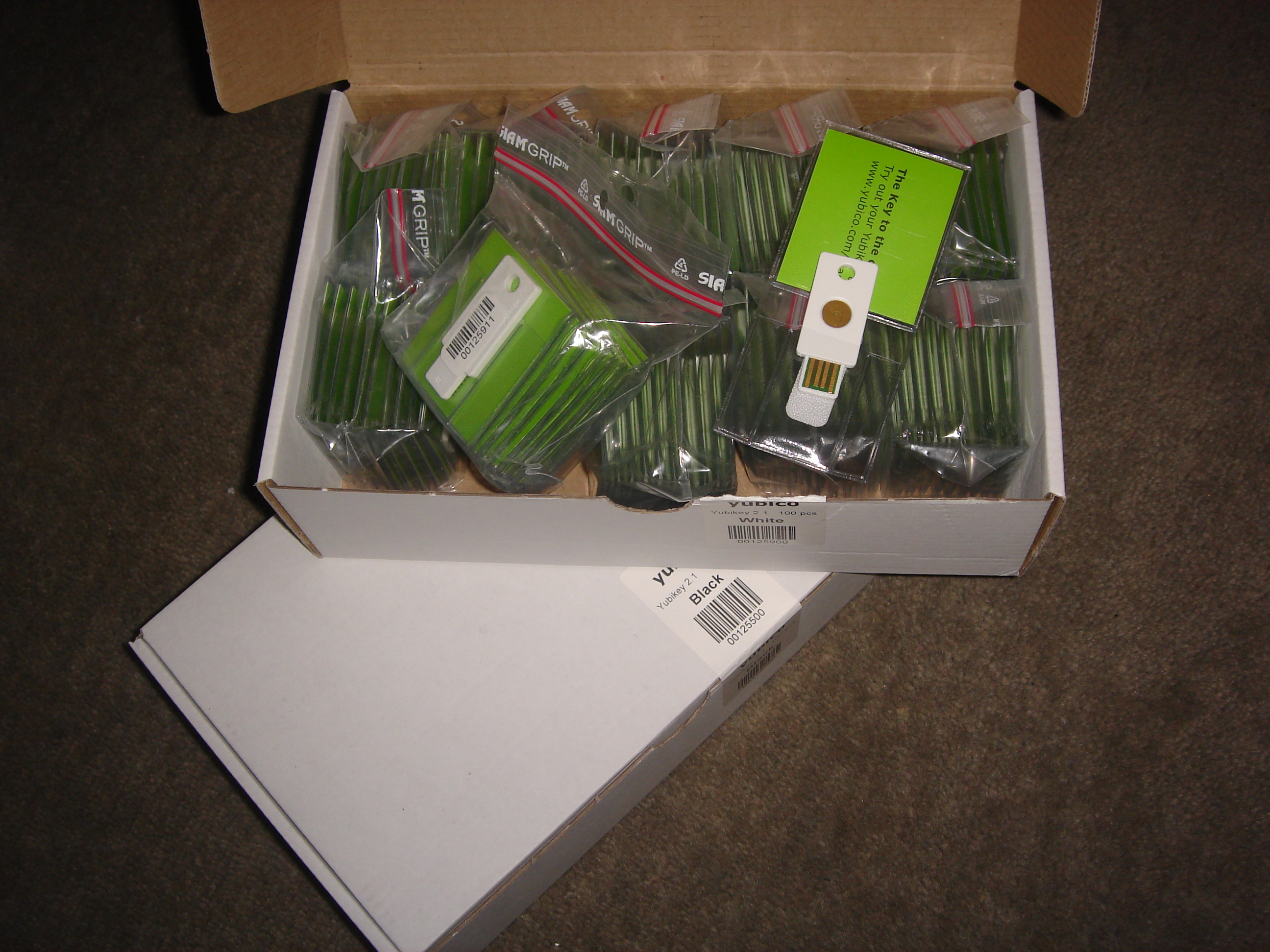
Picture of lots of Yubikeys In my previous post about the Yubikey I suggested that computer users groups should arrange bulk purchases to get the best prices [1]. I ran such a buying club for Linux users in Australia as well as members of SAGE-AU [2]. The keys have arrived and I now have to start posting them out. Above is a picture of two boxes that each contain 100 keys. Presumably if you buy a smaller number of keys then you get more fancy packing. Thanks to Yubico for giving us a greater discount than the usual discount rate for boxes of 100 keys!

Aigars Mahinovs: Debconf 10 arrival and first days

I had planned long for this Debconf and with the experience from the previous times I did all I could to reach one goal minimise stress. I think I got it right this time. First of all I got my company (Accenture) pay for the whole thing, so I did not have to worry about sponsorship queue (but instead I must gather and deliver them back some knowledge gained from the conference should be easy). I also managed to get a direct flight there is a weekly flight Tashkent-Riga-New York on Sundays and I got a ticket for that both ways. This took many hours off the travel time and reduced the stress a ton. Then I also did all the prudent travelling things: mostly reading the New York page on Wikitravel. This told me (among other things) what metro line to take to get the best view of the city. And for luggage I took a backpack (for the laptop and walking around) and a roller (for the clothes). I learned a lot from the Up in the air movie, it really teaches one how to take stress out of travel. This went very well in the beginning I took a bus to the airport early, checked in, breezed trough security and then waited and waited. The boarding only started half an hour after we were scheduled to depart. But I can not complain, because the flight attendant called my name (among a few others) just before boarding and changed my ticket I was bumped up to business class :) . It has been many years since I ve flown a regular (non-budget) airline and now first time ever in the business class! We got regular class meals, but at least we got to sit in the big chairs with lots of leg room. It was great! I bought a paper book (from Charles Stross) to read during the flight, because that is the only thing you can do during take-off and landing and I had some stuff to listen to in my iPhone. I tried sleeping and I think I managed to kill a couple hours that way too. It sure helped combat jet lag later on. When I arrived, I had my immigration and customs forms filled out. Latvia is on the USA Visa Waiver program, so I just had to fill out a form online prior to the trip to get a permission to enter USA. I only had one printout of the Waiver confirmation page and my airline took that before giving me a boarding pass, so I had no paper copy to give to the guy at the USA border, but he did not even ask for it he only took the two forms I filled out, scanned my passport, took my fingerprints (all fingers) and a photo. Then he gave me back the customs for (stamped) and I could go get my luggage. After that it was just a matter of walking trough customs and giving the customs official the pre-filled and stamped customs form. I was not stopped further. The AirTrain was a bit confusing you just get on the AirTrain and go where you need to go, you actually pay at the place where AirTrain connects to metro, so when you are coming from the airport you are actually paying ($5) when you are exiting the AirTrain system. There are plenty of AirTrain people that will give you an AirTrain ticked for $5 cash right there or you can use a machine to get it (where you can also pay with a card). The machines also take AmEx, but you must know the PIN code, if your don t know the PIN of you AmEx card (like I don t know the PIN of my corporate AmEx) you can only buy MetroCards at news stands, but there you will not find the unlimited ride tickets only 5 or 10 ride tickets are available. Next I screwed up a bit and thus got a bit lost in the New York metro system. The Wikitravel recommends to take the AirTrain to Jamaica station and from there take J or Z line into the city for the best views. I went to Jamaica and got into the first metro train that came on to the platform. Unfortunately, that was the E line train and it does not cross with J or Z lines after that, so I was stuck. To complicate the situation E line is under repair, so after a few stops the trains diverted to the F line and I had to scramble to figure out where to get out to get to the 1 line where Columbia University is. I ended up spending more than an hour in the metro, but I got there in the end. So I emerge from the 116th street metro station directly in front of the campus entrance gate and it starts raining. A thunderstorm swept across New York as soon as I stepped outside the metro station, so I took shelter a the side of the building. It kept raining. After a few minutes decided that I don t want to wait any more, so I put all my electronics into my backpack and went towards the dorm where my room was. The rain was warm, people around me were playing and running around in the wet grass, it was fun. The guard showed me where to go to check in. It was really simple sign here, here is you magnetic stripe key, have fun. And the room was just as spartan bed, desk, chair, closet, bathroom and a large fan under the window. The first night I did not know that I could actually turn that fan down, so I slept to the sound of full fan blasting, much like on the airplane. The dorm looks ancient it looks like it was build in the 60s and never changed since then. I mean, I ve lived in worse places, but people would at least change wall sockets or faucets or ceiling paint every other decade or so. The newest things here were the magnetic locks on the doors and a TV and a mini fridge in the hallway. After dropping my things I went off to the Mudd building across the campus to check in with people in the hacklab. It was just starting to take shape, but many great and familiar people were already there. It was like walking into a family home same warm welcome smiles and that great feel of belonging to the group. After I quick chat I went off downtown. The plan was that I left my old Canon 400D camera back at home and that I would buy a new Canon 550D here in New York on arrival. Unfortunately I underestimated the travel time on subway and by the time I got back downtown most shops where already closed. I got to checking out a Best Buy and was told there that they don t have 550D in stock. Next morning I went for a full scale search B&H Photo Video store, J&R Express, another BestBuy none of them had the Canon 550D (aka T2i) in stock in a body-only configuration. BestBuy had a few sets with the kit lens, but I did not want paying 100$ extra for something I already have. The last option was Adorama and I got lucky I nabbed the last 550D they had and it was body-only. Now I was back, with a camera in my hands and the Debconf10 could really begin!

Gunnar Wolf: Running around

If Tim can report his movements around New York, so can I! ;-) Sadly, due to Nokia deprecating my still-quite-new N95 phone by not allowing me to use their service anymore, I won't be able to share my routes with you But anyway This morning I decided to take a quick run to start off the day on Riverside Park (the park where we had dinner yesterday). I went South for about 3Km and headed back (for, you guessed right, a grand total of 6Km), and decided that 45 minutes of exercising are enough to declare my day started - As I started at ~8:15, it was getting warm (specially when running under the sun). I am quite heath-intolerant; it's not unpleasant at all, but I will try to run earlier on future days. Riverside is a long and narrow park. I ran Southwards by the lower trail, in the park itself, but ran Northwards by the upper trail, in the wide sidewalk between the street and the park. The way South was also way flatter, while the way back goes up and down repeatedly. I don't think I will run on a daily basis, but that will be determined by my mood when I open my eyes in the morning ;-) Anyway, riverside is a very nice run, and I expect to head North. I still am not back to running ~10Km, so I won't do the Central Park trail Tim did - But I'll surely go run there as well a bit. And rent a bike one of this days for a ~2hr morning ride, of course!

27 July 2010

Petter Reinholdtsen: First Debian Edu test release (alpha0) based on Squeeze is released

I just posted this announcement culminating several months of work with the next Debian Edu release. Not nearly done, but one major step completed.
This is the first test release based on Squeeze. The focus of this release is to test the user application selection. To have a look, install the standalone profile and let the developers know if the set of installed packages i.e. applications should be modified. If some user application is missing, or if there are some applications that no longer make sense to be included in Debian Edu, please let us know. Also, if a useful application is missing the translation for your language of choice, please let us know too. In addition, feedback and help to polish the desktop (menus, artwork, starters, etc.) is appreciated. We would like to ship a nice and handy KDE4 desktop targeted for schools out of the box. The other profiles should be installable, but there is a lot more work left to be done before they are ready, so do not expect to much. Changes compared to the lenny based version
  • Everything from Debian Squeeze
    • Desktop environment KDE 4.4 => the new KDE desktop in combination with some new artwork
    • Web browser Iceweasel 3.5
    • OpenOffice.org 3.2
    • Educational toolbox GCompris 9.3
    • Music creator Rosegarden 10.04.2
    • Image editor Gimp 2.6.10
    • Virtual universe Celestia 1.6.0
    • Virtual stargazer Stellarium 0.10.4
    • 3D modeler Blender 2.49.2 (new application)
    • Video editor Kdenlive 0.7.7 (new application)
  • Now using Kerberos for password checking (migration not finished). Enabled for:
    • PAM
    • LDAP
    • IMAP
    • SMTP (sender verification)
  • New experimental roaming workstation profile for laptops.
  • Show welcome page to users when they first log in. The URL is fetched from LDAP.
  • New LXDE desktop option, in addition to KDE (default) and Gnome.
  • General cleanup (not finished)
The following features are not working as they should
  • No web based administration tool for creating users and groups. The scripts ldap-createuser-krb and ldap-add-user-to-group can be used for testing.
  • DVD installs are missing debian-installer images for the PXE boot, and do not set up the PXE menu on eth0 because of this. LTSP clients should still boot from eth1 on thin client servers.
  • The restructured KDE menu is not implemented.
  • The LDAP server setup need to be reviewed for security.
  • The LDAP directory structure need to be reworked.
  • Different sets of packages are installed when using the DVD and the netinst CD. More packages are installed using the netinst CD.
  • The jackd package fail to install. This is believed to be caused by some ongoing transition, and hopefully should be solved soon. The jackd1 package can be installed manually for those that need it.
  • Some packages lack translations. See http://wiki.debian.org/DebianEdu/Status/Squeeze for updated status, and help out with translations.
To download this multiarch netinstall release you can use To download this multiarch dvd release you can use There is no source DVD available yet. It will be prepared when we get closer to the final release. The MD5SUM of these images are
  • 3dbf45d59f42a53518b6e3c9ec3b5eb6 debian-edu-6.0.0+edua0-CD.iso
  • 22f2cbfce281d1c6e478be452638675d debian-edu-6.0.0+edua0-DVD.iso
The SHA1SUM of these images are
  • c53d1b69b40cf37cd27aefaf33f6f6a3821bedf0 debian-edu-6.0.0+edua0-CD.iso
  • 2ec29d7db676d59d32197b05c277ffe16348376c debian-edu-6.0.0+edua0-DVD.iso
How to report bugs: http://wiki.debian.org/DebianEdu/HowTo/ReportBugsInBugzilla Please direct replies to debian-edu@lists.debian.org

Daniel Baumann: The World's most powerful Wireless Network Card

About two weeks ago I got a Wifly-City G2000, the world's most powerful 802.11bg wireless network card. It features 2000mW which is 10 times more than the legally allowed limit of 200mW in Switzerland (or 2 times more than the allowed 1000mW in the USA, 5 times more than the allowed 400mW in Brazil, or 20 times more than the allowed 100mW in the EU). Contents The adapter is sold as a set named Wifly-City AVATAR-4PA with some accessories.
click on the images for full resolution The box prominelty lists Linux compatibility and contains the following part: The adapter has a Realtek 8187L chipset. This is particulary nice since there is no firmware needed for this chipset (therefore no questinable binary-only firmware blob). Also, it works out of the box with any Linux as of kernel version 2.6.30 and newer. I tested it on lenny with kernel backports, vanilla squeeze and vanilla sid. In all of these setups, it works out of the box without any configuration whatsoever - just plug it in and it works. I know that this is how it is supposed to be but still, I am always surprised again when things just work. For those who care, this is the output of dmesg when plugging in the card...
[...]
usb 1-1: new high speed USB device using ehci_hcd and address 6
usb 1-1: New USB device found, idVendor=0bda, idProduct=8187
usb 1-1: New USB device strings: Mfr=1, Product=2, SerialNumber=3
usb 1-1: Product: RTL8187_Wireless_LAN_Adapter
usb 1-1: Manufacturer: Manufacturer_Realtek_RTL8187_
usb 1-1: SerialNumber: xxxxxxxxxxxx
usb 1-1: configuration #1 chosen from 1 choice
phy1: Selected rate control algorithm 'minstrel'
phy1: hwaddr xx:xx:xx:xx:xx:xx, RTL8187vB (default) V1 + rtl8225z2, rfkill mask 2
rtl8187: Customer ID is 0xFF
Registered led device: rtl8187-phy1::tx
Registered led device: rtl8187-phy1::rx
rtl8187: wireless switch is on
usbcore: registered new interface driver rtl8187
ADDRCONF(NETDEV_UP): wlan1: link is not ready
wlan1: direct probe to AP xx:xx:xx:xx:xx:xx (try 1)
wlan1: direct probe responded
wlan1: authenticate with AP xx:xx:xx:xx:xx:xx (try 1)
wlan1: authenticated
wlan1: associate with AP xx:xx:xx:xx:xx:xx (try 1)
wlan1: RX AssocResp from xx:xx:xx:xx:xx:xx (capab=0x411 status=0 aid=5)
wlan1: associated
ADDRCONF(NETDEV_CHANGE): wlan1: link becomes ready
wlan1: no IPv6 routers present
[...]
...and this is the output of lsusb:
Bus 001 Device 006: ID 0bda:8187 Realtek Semiconductor Corp. RTL8187 Wireless Adapter
Special Offer I have played with the card for some time now and am really pleased with it. It works nicely with all the standard tools (aircrack-ng, kismet, etc.). The only bummer is that the card is quite expensive. Fortunately, we could arrange a good deal for Free Software people where the store selling it does not make any money on it: instead of 89 USD you can get it for 68 USD (including everything). If you are interested in getting one and you are comming to DebConf 10 in New York between 2010-07-25 and 2010-08-08, you can write an email to Ralph Amissah or speak to Ralph personally during the event. 1 I have no idea why they are shipping with a Y cable because the adapter does not need one. However, it does not disturb and in case I ever need an Y cable, I now have one :)

Steve Kemp: Sometimes you just wonder would other people like this?

Sometimes I write things that are for myself, and later decide to release on the off-chance other people might be interested. I've hated procmail for a long time, but it is extremely flexible, and for the longest time I figured since I'd got things working the way I wanted there was little point changing. When it comes to procmail there are few alternatives: Unfortunately both Exim and Email::Filter suffer from a lack of "pipe" support. To be more specific Exim filters and Email::Filter allow you to pipe an incoming message to an external program - but they regard that as the end of the delivery process. So, for example, you cannot receive a message (on STDIN), pipe it through crm114, then process that updated message. (i.e. The output of crm114). Maildrop does allow pipes, but suffers from other problems which makes me "not like it". My own approach is to have a simple mail-sieve command which is configured thusly:
set maildir=/home/steve/Maildir
set logfile=/home/.trash.d/mail-sieve.log
#
#  Null-senders
#
Return-Path: /<>/        save .Automated.bounces/
#
#  Spam filter
#
filter /usr/bin/crm -u /home/steve/.crm /usr/share/crm114/mailreaver.crm
#
#  Spam?
#
X-CRM114-Status: /SPAM/   save .CRM.Spam/
X-CRM114-Status: /Unsure/ save .CRM.Unsure/
#
#  People / Lists
#
From: /foo@example.com/  save .people.foo/
From: /bar@example.com/  save .people.bar/
..
..
#
#  Domains
#
To: /steve.org.uk$/               save .steve.org.uk/
To: /debian-administration.org$/  save .debian-administration.org.personal/
#
#  All done.
#
save .inbox.unfiled/
On the one hand this is simple, readable, and complete enough for myself. On the other hand if I were going to make it releasable I think I'd probably want to add both conditionals and the ability to match upon multiple header values. Getting there would probably involve something like this on the ~/.mail-filter side :
if ( ( From: /foo@example.com )  
     ( From: /bar@example.com ) )
 
   save .people.example.com/
   exit
 
# ps. remind me how much I hate parsers and lexers?
That starts to look very much like Exim's filter language, at which point I think "why should I bother". Pragmatically the simplest solution would be to add a "Filter" primitive to Email::Filter - and pretend I understood the nasty "Exit" settings. ObQuote: Andre, we don't use profanity or double negatives here at True Directions. - "But I'm a Cheerleader".

Next.

Previous.