Search Results: "spa"

22 August 2006

Jordi Mallach: XFS nightmares

Following up to madduck's and gwolf's recent horror stories on XFS, last Thursday, my desktop greeted me after the fantastic week around Asturies with a series of I/O errors whenever I tried to execute something. I rebooted, and then the kernel wasn't happy.
I/O error in filesystem ("hda1") meta-data dev hda1 block 0x4a9778  ("xlog_iodone") error 5 buf count 1024
/dev/hda1 is my / partition, and the machine would not boot at all. To make things more interesting, the box refused to boot from any of my old CD and DVD drives. Yesterday, with my mail piling up already at Sindominio's mailserver, I managed to find a spare CD writer, which would not open its tray, and a DVD reader which managed to boot a Breezy Live CD I had around. The good guys at #xfs were helpful as always and helped me in the process of not fucking up my valuable root filesystem while trying to fix it. The filesystem ended up having quite some corruption here and there, but after xfs_repair, nubol was able to boot again. Only it was missing libldap.so.2, libX11.so.6, debconf programs and other minor details like those. Some reinstall rounds later, GNOME was able to startup without errors and now the box is up and running. Does anyone know of some script that compares dpkg's contents database with that the filesystem has, so I can easily find the rest of damaged packages to reinstall them?
21 August 2006

Gustavo Franco: GNOME 2.14 and more

Well, it's Friday and i've tons of small Debian related things in my TODO list for the weekend. I'll probably just stop to watch F1, oh wait there's no F1 race this Sunday!<br /><span style="font-weight: bold;"><br />Gnome 2.14 in Debian<br /></span> There are some others around but i like watch this <a href="http://www.0d.be/debian/debian-gnome-2.14-status.html">status page</a>, i was there from the start so it's easier to me see the progress. Hopefully i'll join the team helping with gnome-media maintenance, until now i helped tracking <a href="http://bugs.debian.org/cgi-bin/pkgreport.cgi?users=stratus@debian.org;tag=gslice">some application bugs</a> and i plan to start a small transition from gtkhtml3.6 to gtkhtml3.8 that seb128 suggested. Well, some builds during the weekend, opening bugs with patches when necessary.<br /><br />Before you ask about metacity and composite, the answer is no. The package won't be built with a useless flag. If in doubt, please read the configure.in into metacity code, see:<span style="font-family:monospace;"><br /></span>(...)<br />echo "Not building compositing manager by default now, must enable explicitly to get \<span style="font-family:monospace;"><br /></span>it. And it doesn't work, so don't bother unless you want to hack on it..."<br />(...)<br /><br />By the way, if you want to help with GNOME 2.14 sarge backport drop me a comment. I'm unsure if i've enough time to do that, but with more people around probably yes.<br /><br /><span style="font-weight: bold;">mess deployment</span><br />Debian aims to be a universal operating system so we should at least understand that probably LTSP has its use cases and FAI, d-i preseeding and others has its own different use cases. <a href="http://natalian.org/archives/2006/03/24/mass-deployment/#comment-10214">mess deployment sucks</a>!

Gustavo Franco: Theo did it again

"<span style="">I will say it here -- if an OpenSSH hole is found that applies to SunSSH, Sun will not be informed. Or maybe that has happened already." -- Theo de Raadt</span>. Well, the fact is that he doesn't need to inform Sun about a hole, but the whole community and i think he does, no?<br /><br />By the way, for the second time (to say the least) i think that Theo is right and raised some good points but close <a href="http://os.newsforge.com/article.pl?sid=06/03/20/2050223&amp;from=rss">his last interview</a> with a weird phrase. Well, let me comment about what i think is Debian related in that interview:<br /><span style=""></span><span style=""><br /></span><span style="">"We often run into vendors who have signed NDA agreements with Linux developers, who will then happily write a Linux driver filled with magic numbers, which only one developer in the world understands. Having signed the NDA ensured that Linux got a working driver, sure, but the internals are indistinguishable from magic. It cannot be fixed by anyone else, because it is full of secrets. It is a source code version of a blob."</span><br /><span style=""><br /></span><span style="">It push us into the blob business again. I think we should team up with OpenBSD folks, and tell them that some Linux people care about free software as a whole. If upstream (read Linus) doesn't care about unmaintanable drivers that are written by one person under a NDA we should. Does anyone have or wants to prepare a list of these drivers ? If some of them are already in a cleaner form into the OpenBSD kernel we should prepare a new list and a linux kernel hacker with free time could redo the drivers in a cleaner way, no ?<br /><br />It's need to point out that Theo said many Asian vendors are more documentation friendly than the Americans. Are you surprised?</span><br /><br />Closing, if you feel lost in this post probably you will understand me when you buy your next laptop cointaining a cool, new wireless chipset made by a american company.

Gustavo Franco: epiphany 2.14 in Debian

<a onblur="try parent.deselectBloggerImageGracefully(); catch(e) " href="http://www.telecable.es/personales/algarcia/img/epiphany-88x31.png"><img style="margin: 0pt 10px 10px 0pt; float: left; cursor: pointer; width: 89px; height: 31px;" src="http://www.telecable.es/personales/algarcia/img/epiphany-88x31.png" alt="" border="0" /></a>If you're using GNOME as your desktop environment, it's possible that you're using the wrong browser or just using one that isn't doing everything you want as i was, right ? Well, when Firefox came into the scene with one of its previous names i was using Galeon. Galeon worked for me, but it lacked some features that the new browser was offering. I would like to tell you that the same thing is happening again, and it's now time to give <a href="http://www.gnome.org/projects/epiphany/">epiphany</a> a try. If you did it before, do it again with the latest epiphany (2.14.0) in Debian sid, my reasons are below:<br /><span style="font-weight: bold;"><br /><span style="font-weight: bold;">Gecko<br /><span style="font-weight: bold;"></span></span></span>Yes, it uses Gecko 1.8 as backend and not gtkhtml so don't worry about page rendering. For those 'in the loop', it's already linked against <a href="http://developer.mozilla.org/en/docs/XULRunner">xulrunner</a><span style="font-weight: bold;"><span style="font-weight: bold;"><span style="font-weight: bold;"> </span></span></span>library. Firefox (in Debian sid) isn't yet.<br /><br /><span style="font-weight: bold;"><span style="font-weight: bold;"><span style="font-weight: bold;"></span></span>Bookmarks</span><br />You can attach tags (epiphany calls them 'topics') to the bookmarks and it will organize everything in a tree for you. The bookmark manager looks good for me too, i'm not too much into the bookmark thing but together with deskbar-applet and epiphany topics i can find what i want.<br /><br />The most interesting feature is that epiphany can look up to bookmarks published using avahi (mdns/dns-sd daemon) and show them as "local sites". In other words, you can setup a centralized bookmark server and all the epiphany users in your network will be able to see them. I've a mt-daapd server, and epiphany recognize that there's a admin website around, just like rhythmbox does.<br /><br /><span style="font-weight: bold;">Extensions<br /></span>Yes, it has extensions and is able to do ad-block and all that. Unfortunately the latest <a href="http://packages.debian.org/epiphany-extensions">epiphany-extensions</a> package still needs to be built for i386, but it's already ok for amd64 arm hppa powerpc s390.<br /><span style="font-weight: bold;"><br /></span><span style="font-weight: bold;">RSS<br /></span>I had some rss apps around, but wasn't really using them because what i needed was subscribe from the browser, organize the feeds in the app using topics/tags or folders and see some interesting integration between that app and the browser. It's now done, try epiphany and liferea. =)<br /><span style="font-weight: bold;"><br /></span><span style="font-weight: bold;">Memory<br /></span>After eight hours using epiphany it won't eat all your memory to 'optimize page loading' and even with this "bug" i don't see epiphany (and the rest of my desktop) too slow to open a new page after all this time.<br /><br />I think that a lot of users and developers will just look to epiphany as a serious Firefox alternative, after a big "user oriented" distribution pick it as the default browser. Thanks to the epiphany developers anyway, keep the good work.

Gustavo Franco: DMs and the experimental

This post is based on the <a href="http://azure.humbug.org.au/%7Eaj/blog/2006/04/12#2006-04-11-maintainers">DPL blog entry</a> about Debian Maintainers (DMs), that should be basically people with different privileges to upload just some packages to our archive. Well, someone already pointed out that with just one package a DM can hurt too much. That's right, so discussing this subject at work, i came up with the following idea:<br /><br />We could give rights to these DMs, as aj described them, to upload their packages to experimental (and only there).<br /><br />Read a interesting experimental description:<br />"Warning: The <span class="pred">experimental</span> distribution contains software that is likely unstable or buggy and may even cause data loss. If you ignore this warning and install it nevertheless, you do it on your own risk."<br />Source: http://packages.debian.org/experimental/<br /><br />It solves the motivation problem where we've a DM that just wants to see his cool app packaged into Debian but he doesn't want to be a DD. We've a new one, the DM probably will want to see his package in our next release, so it will need to enter sid and after that testing early or late. In my scenario, he can do that in different ways:<br /><br />- Ask a DD to move (and keep pushing new versions) into sid. It's a different sponsor scheme and we should ask DDs to just move packages from experimental to sid, after X days in experimental and testing (of course). DD will move the package into sid, so no need to worry about package problems, the problem here is security. We trust a DD more than a DM, so...;<br /><br />- Some AMs, and "old world" sponsors could reunite in a project in alioth to review and do "experimental->sid" moves;<br /><br />- A DM that enters the NM process, should ask his AM to move his packages from experimental->sid, during the "t&amp;s" tests. Waiting for DAM he should use the two solutions above.<br /><br />We can consider these "experimental->sid" moves, RC bugs before Etch+1 freeze. How ? We should do a "cleanup" in experimental moving the packages to sid or remove them from experimental.<br /><br />Closing, giving rights to DMs upload to experimental is the key in my post. The rest are just drafted guidelines. Comments? :)

Gustavo Franco: 7th International Free Software Forum

I'll be in Porto Alegre, Brazil <a href="http://fisl.softwarelivre.org/7.0/www/?q=en">for the event</a> (FISL, in portuguese) from 19 may until 22, the last day. There will be some interesting Debian related activities there:<br /><br /><span style="font-weight: bold;">Debian stand<br /><span style="font-weight: bold;"></span></span>We will have a stand in the event, and there we plan to coordinate a Key Signing Party (KSP) and a Bug Squashing Party (BSP). Since we will have many DDs and NMs there, it sounds promising. If you want to join us in the BSP, keep an eye at debian-qa mailing list and irc.freenode.net - #debian-bugs.<span style="font-weight: bold;"><br /><br />Sacix<br /></span>I will talk about a CDD called <a href="http://www.sacix.org/">Sacix</a>, that aims to be the default choice for telecentres and counts with more than 15000 end-users in Brazil right now. The project wasn't a CDD until i jumped in and released with a team the 5.11 (November, last year). The next release is scheduled to May and will be Sarge based again, but with a interesting telecentre management system developed in PHP, some "in house made" backports and stuff from backports.org. Stay tuned or just go there and watch my talk.<br /><br /><span style="font-weight: bold;">Debian-BR-CDD<br /></span>Unlike Sacix, <a href="http://cdd.debian-br.org/">Debian-BR-CDD</a> has no clear goal in terms of audience and in its first release ships the most user-friendly GNU/Linux desktop for Portuguese speakers until now. The 1.0 announcement was made, but the release party and Otavio Salvador (DD and Debian-BR-CDD starter) talk will happen during the event.<br /><br />I'm sure that i will have some time to keep uploading <a href="http://python-modules.alioth.debian.org">python-modules</a> and meet with Otavio to talk about some new stuff for LTSP package and discuss it with <a href="http://alioth.debian.org/projects/pkg-ltsp">pkg-ltsp</a> members. Hopefully i'll be more involved in GNOME too, due to the evil <a href="http://qa.debian.org/developer.php?login=guilherme.pastore@terra.com.br">Guilherme</a> influence, that just received his account. Isn't it cool when you see a 15yr old hacker joining the project ? That's the real "fresh blood" we need.<br /><span style="font-weight: bold;"><br /></span>

Gustavo Franco: dpmt update and more

<span style="font-weight: bold;">Debian Python Modules Team</span> <span style="font-weight: bold;"><span style="font-weight: bold;"><br /></span></span>The group is receiving new members, old packages from these new members and of course brand new packages every week, to say the least. I would like to say thanks for those who joined and for buxy, fatalerror and arnaud. We're working on a lot of interesting stuff and QA in the packages, you will notice the difference in Etch. Btw, i hope to see just Python 2.4 (and not 2.3 too, since we already dropped 2.1 and 2.2) in our upcoming release and a lot of interesting modules already packaged and well supported (dpmt is working on this, right now).<br /><br /><span style="font-weight: bold;">pkg-gnome</span><br />I'm a newbie in the group, i'm cleaning up bugs (pinging submitters) and already did some work on the packages on our svn repository. Unfortunately my first upload (totem) was rejected due to some naming and compatibility issues with the browsers plugins (mozilla vs libxul). seb128 jumped in and saved us. totem 1.4 is still almost ready to go and the rest of the gnome 2.14 is entering the archive.<br /><br />Well, i'm counting the days to the debcamp. Hopefully i'll participate in: ltsp modularization (pkg-ltsp), cleaning up bugs (pkg-gnome) and do some utnubu (read desktop) related work on tasksel. Since utnubu-meta was rejected. :/<span style="font-weight: bold;"><br /><br /></span>

Gustavo Franco: Meet our GNOME Debian Desktop

Being improved as we speak for Etch, but needing testers...<br /><br />Quick howto:<br /><span style="font-weight: bold;">aptitude install gnome-desktop</span> <span style="font-weight: bold;">desktop</span><br />or<br /><span style="font-weight: bold;">tasksel install gnome-desktop<br /><br /></span>You can download the <a href="http://www.us.debian.org/devel/debian-installer/">testing weekly images</a> and select "Desktop environment" after base installation, if you want to help testing this from scratch.<br /><br />Some known issues are:<br />- It could boot faster;<br />- There's no visual consistency yet (login screen, splash and wallpaper);<br />- It doesn't fit in the first CD (it should, really).<br /><span style="font-weight: bold;"><br /></span>I'm helping with the current known issues and probably some more useful packages will be added soon in the desktop. By the way thanks to joeyh, kov and joss.<br /><br />Suggestions and general feedback to my email are welcome. That would be good if the people that i've contacted and once worked for a better Debian desktop start replying my emails.<br /><br />Closing, i don't want to work for extend the supermarket catalog. I prefer to focus on some fridges and if it isn't enough for all the users, they're free to install something more from the next fridge. Hint: Pick your fridge in Debian and work there, avoid this supermarket bloat!

Gustavo Franco: Tectonic verdict: It sucks

Well, two days ago Jason Norwood-Young published in Tectonic the worst article about Ubuntu, Debian and the Ubuntu latest release Dapper Drake until now. I would like to point out where he's wrong here, just to clarify for Debian users my view on the subject.<br /><br />Source: http://www.tectonic.co.za/view.php?id=1026<br /><br /><span style="font-style: italic;" class="viewbody">"I can only guess where Ubuntu went wrong. The first mistake, I think, was its desire to be a bleeding edge distribution, rather than a leading edge distro. Basing itself on Etch, Debian's unstable release, could be a problem. When the early versions of Ubuntu used the then-unstable Sarge as their foundations, it wasn't a risk -- Sarge was on the cusp of being released. Etch, on the other hand, is brand-new, and far from getting a thumbs-up as a stable distribution."</span><br /><br />The truth is that Ubuntu Dapper Drake was never based on Debian testing that we will be our next release, that we already call Etch. Ubuntu spend some time importing packages from Debian Unstable (that we always call sid too) and merging them with the changes they had and applying new changes, adding more packages software and all that. For more information about Debian release cycle, check our <a href="http://www.us.debian.org/releases/">Debian release page</a>.<br /><br /><span style="font-style: italic;" class="viewbody">"I also wonder who is doing the up-stream support. Shuttleworth poached the best-of-the-best Debian developers for Ubuntu. So who's working on Debian? The hald bug has been identified as an up-stream problem -- a Debian problem in other words. Perhaps Debian doesn't have the man-power to run around fixing Ubuntu bugs. "<br /><br /></span>Mr. Jason failed miserably here. Considering that he's right and Mark hired the best-of-the-best Debian developers for Ubuntu, the hald bug that is a software <a href="http://www.freedesktop.org/wiki/Software_2fhal">from freedesktop</a> and not Debian, should be solved by the best-of-the-best, no? Perhaps Ubuntu doesn't have the man-power to run around fixing every freedesktop bug.<br /><br /><span style="font-style: italic;" class="viewbody">"Finally, there's the problem of prioritising. Ubuntu, at its heart, is a community project. Many of the developers are not Canonical employees and don't get paid to work on Ubuntu -- they do it because the want to."<br /><br /><span style="font-style: italic;"></span></span><span class="viewbody">Great, Ubuntu at its heart, is a community project and what Debian is?<br /><br />I think the guy isn't a troll, but he should be more polite with both projects, after all he likes the previous Ubuntu release without considering that we (Debian) had some input there. In other words if it works it's Ubuntu, if it breaks is it upstream's fault? He can't recognize that Ubuntu upstream isn't always Debian.<br /><br />Meanwhile:<br /></span> <span class="body"><b>"Comment added</b></span><br /><span class="body">Thank you for your contribution <b>Gustavo Franco</b>. <br />Your comments will be posted on the site as soon as they have been moderated by the editors."<br /><br />We will see which kind of moderation i'll receive there.<br /></span>

Gustavo Franco: Userspace bootsplash utilities for Desktop?

I wonder if usplash (sitting in NEW, uploaded by the kernel team) or <a href="http://packages.debian.org/splashy">splashy</a> could be added in desktop environment task, and which is more recommended and if at least one of them is stable enough for Etch desktops.

Gunnar Wolf: Caps Lock becomes useful again! / Is this a farewell, my dear Window Maker?

I have always hated and despised the Caps Lock key. Not only it is useless to anybody who works writing code, sysadmining, or plainly writing real text, but its mere existence has degraded the work quality of millions of people's work. Suddenly, IT GETS NORMAL TO WRITE LIKE THIS - It's just a magic spell that allows you to get rid of those old-fashioned rules about the language, about where to write in which case. Even worse, in Spanish some people tend to think that uppercase letters do not carry accents, so they produce text that is, um... Lets say it is readable, but that's often an overstatement.
[switch context]
I have been a happy and loyal user of Window Maker since 1997, when Juan Pablo Romero pointed me to it (BTW, I found Juan Pablo's homepage after searching for some links to post here and finding his, very old and probably unmaintained, WindowMaker page), back in the time where one of my favorite webpages was Window managers for X - clear sign that I didn't really like anything I had been using. And with WMaker, I was happy for (WOW) almost ten years. I still am. But after last week's ugly XFS corruption episode, I decided to follow the trend among some Debian people, and installed ion3.
My impression so far, with two and a half days of usage? I LOVE IT. It is the only WM I've met that really comes from a different point of view, stating that what most so-called modern WMs offer is just counter-productive. It just stays out of your way, not providing any visual distractions, and limiting to providing screens and frames to organize your windows. It acknowledges that its target audience (in my life I'd never set up ion3 for my mother ;-) ) usually hates using the mouse if unneeded, and that there is little point in wasting screen real estate with docks and desktops with functionality. It just sits there waiting for you to command its working via the keyboard - of course, the mouse is also an option, but not the natural one.
Anyway, I won't discuss the beauty of ion3 here - mostly because I have only scratched the surface so far. I have loved it, let me tell you. A little more on this in a couple of lines... Just for my Spanish-prefering friends, I found this piece of text explaining what ion3 is about: Ion3: Rompiendo con los entornos gr ficos convencionales
[merge contexts]
My only grudge is that in its default configuration, ion3 becomes the 0wn3r of Meta. What is Meta? What some people call "the Alt key". That key that is not Ctrl, but has become a controlling key. And I'm a heavy Meta user - Remember that my favorite way of interacting with the computer is Emacs. Yup, the nice OS without a decent editor, nicknamed after "Escape-Meta-Alt-Ctrl-Shift". Rob me of my Meta, and the gained productivity might as well go down the drain.
Here comes the link to my first paragraph: Ion3 is very configurable. No, it's not configurable - it's programmable. The configuration files are pieces of Lua, a full programming language. Of course, this means you can do mostly anything with it... But you have to do it in the end. Editing ion3's behaviour is not just clicking on selectors - You can take a dive to get the feeling. It looks quite easy, but I yet have to get around it and start poking the configuration.
After mourning my lack of Meta, I came across a very useful post in Gregor Hermann's blog. Gregor, I owe you a beer or three - You not only gave me back my productivity, you also gave use to the most despised key in my keyboard. Two lines into XModmap, one line into a couple of Ion3 files (I have yet to be sure it is needed in all of them), and I now have a perfectly useful CapsLock key, which is the key I will manage my WM with. It just rocks! It stands in nobody's way, and I am sure I'll very soon grow used to it.

19 August 2006

Ben Hutchings: Video, video, video

I fixed the known bugs in WebDVD, renamed it to VideoLink and uploaded it to Debian. To get it into Debian, I had to make it work with Mozilla/XULRunner 1.8 (roughly the same code base as Firefox 1.5) since Mozilla 1.7 is no longer supported. In the process of doing that I also fixed a bug in setting the nominal screen resolution - I tell Mozilla it's 40 dpi because I reckon that's the average resolution when the video is played full-screen - which is likely to change existing layouts. The sarge version still seems to ignore the claimed screen resolution which I'll need to investigate and fix as I really don't want layout to depend on which version of Mozilla was used. I have stopped procrastinating on finishing off the DebConf video files, put all the information I have into a database and used that to work out what's left to do. The answer to that was, not that much really. Based on the database you can see the status of all the recordings and final files which shows that we have all the final files for all the official sessions. About 20 of the final files (mostly Theora unscaled versions) have still to be uploaded, which will take a few days over my 448 kbps uplink. (Due to a deficiency of my schema, the lightning talks are shown as not having final files. Actually they just weren't split up into separate files.) I'm intending to produce 3 DVDs this time - two for DebConf sessions and one for Debian Day plus any Spanish-language material from DebConf - because these recordings just won't fit on 2 single-layer DVDs. There should be room for some extras such as Biella's recordings and the day trip, which I have still to deal with. I need to sort out menus for the DVDs. Please suggest good background pictures that can be distributed under the DebConf video licence.

18 August 2006

Joey Hess: vimoutliner

I've been using hnb ever since I blogged about it early last year. It has been getting on my nerves though, the UI is ok for outlining, but gets annoying for text entry, and the file format, being a nasty xml thing, is hard to keep in sync and I've sometimes lost a few entries of data. It also has a lot of open bugs, including really obvious things like support for encryption. So today I found vimoutliner and gave it a try:

Jonathan McDowell: Bodies in the Attic

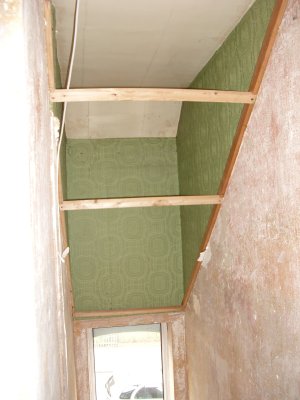
Kathy and I have finally started stripping the wallpaper from our hall/stairs/landing (it's only been on our todo list since we moved in over 3 years ago). This includes removing it from the ceiling. Now, the ceiling above our stairs was parallel to the stairs (ie not horizontal, diagonal). Which left us wondering what was in the gap, which we had no access to. As we started to remove the wallpaper on it some hardboard was revealed. Which I eventually decided should come down, if only because it would be easier to cleanup and repaint that way. The result? The Hidden Space Obviously the last time someone wanted to repaint/paper they decided to cut down on the amount of work they had to do...

Martin F. Krafft: Talk on Debian "etch"

Tomorrow I will deliver a talk on Debian "etch" at the University of Limerick Computer Society. Staying true to my principles, I held back the preparation of slides until the last minute, but now I actually ended up having them done well in advance, with enough time to invite you to take a look [*] and provide feedback. In this talk, I introduce Debian, give a status update on the "etch" release, talk a little bit about the future and how I see Debian's strategies evolving/developing/changing, and finally relate a bit to Ubuntu. That latter point was added on request, and I will remain objective and talk about the status quo, problems, and benefits (so it won't be a subjective take like this, although I certainly will address some of the issues). Comments welcome!
[*]the slides were prepared for S5 and can be viewed directly in modern browsers. The best experience is with a 1024x768 or higher resolution. Here are instructions on how to browse them (though you probably don't need them).
Update: the talk went well. I planned it to be 40 minutes (which is ambitious for 25 slides, but I can zip through them at high speed if I need to), and I learnt that the room was scheduled for two hours, so I added about 5 slides and went into it without a clock... and totally enjoyed delivering a talk with almost no time restrictions, which turned out to last just under 2 hours in the end. I talked a bit too much about what Debian is, then delivered the status report on the "etch" release, and in the end also had quite some time to spare on talking about our current and future challenges, as well as discussing some of the problems with the distribution and the project, as I see them. I would like to thank the attendants for making their way to the campus on a Saturday, and for their attention throughout the two hours of presentation without a single one of them giving me the impression of disinterest! We ended in a bar with beer in the afternoon, of which I probably had a little more than I should have had, given that I needed to be a little more productive that day. But even that worked out well. Laura, the society's president, offered me an honorary membership with skynet.ie, which I gladly accepted [ ], and I enjoyed hearing some of their stories about the past and the present. Given that university computer societies may be somewhat in decline, I think they still have their rightful purpose, and they are definitely a great place to gain experience and have a lot of fun. Thanks, skynet.ie for a good time! And now on to meet them at a pub...
[ ]If nothing else, then an account on skynet.ie should allow me to port-forward or even use VPN from Zurich, to access some of the electronic library resources available here, to which the University of Zurich has not subscribed.

17 August 2006

Wouter Verhelst: SMTP-time bayes filtering

Russell, ... but I ranted on those two before already on this blog, so won't repeat that. What I wanted to say: Of course it's possible to do bayesian filtering at SMTP time. If you use the exiscan features of Exim 4 (available in the mainline since exim 4.50, or as a separate patch before that), you can run external programs (virusscanners and/or SpamAssassin's spamd) on the mail data. Read section 40, "Content scanning at ACL time", of the exim4 info file for the documentation.

Aigars Mahinovs: Secure flying

If one really wants to make international flying perfectly safe (at least safe from terrorists masquerading as passengers), it is in fact very simple and quite cheap: * No carry-on or check-in luggage at all (all kinds of chemical, bacteriological or radioactive materials could be hidden there, for example it can be trivial to make a laptop burn up in flames mid-flight and make in in non-detectable way). * No personal items of clothes (clothes can be soaked in certain chemicals to make them explosive). * Secure passengers during the flight ( so that they can not actually do any terrorist activity). So, the optimal way of securing air transportation would be to have people come in without any luggage at all, remove all items and clothing at check-in, dress in uniform one-time paper clothing where one can not hide anything, sedate them, feed them trough introspective inspection to detect in-body foreign objects and check the chemistry of skin and hair, pack them into the airplane on secured padded shelves, fly them to the destination, reverse the sedative and give them a standard set of clothes and essential personal items. In addition to perfect security, this plan will also reduce the overall cost of air travel by allowing to pack more people into an airplane of the same size - the padded shelves can go from the bottom of the airplane to the very top with minimal spacing (all passengers are sedated - they will not walk around), no separate cargo hold will be needed (no luggage) and no in-flight entertainment or food will be required. If the current security craze continues, we might reach this perfection by 2020. Congratulations! Note: All software by that time will be Web-based, so there will be no sense in taking your “personal” laptop with you.

Mark Brown: Postfix SMTP rejection

Russel, Postfix does support SMTP time rejection using either a SMTP based mechanism Postfix provides or Sendmail Milters. It’s particularly nice to see the Milter support in there - the amount of wheel reinvention with things like antispam support always depressed me.

16 August 2006

Erich Schubert: Liquid bombs unrealistic

This is a very interesting read on using liquids to bomb an airplane. It seems to be very well informed about the chemistry you'd need. It boils down to: yes, you could make explosive liquids, but it would take too long, too much cooling and too much space. Oh and every average airport staffer can tell it apart from shampoo, because shampoo just doesn't smell of nail polish or highly concentrated sulfuric acid. So they're just doing security theatre (Wikipedia). I believe that they arrested people who planned to do some attacks. I can't tell if they had workable plans. But the new "security measures" are bullshit. If you need weapons on an airplane, just buy some duty-free whiskey, smash the glass and there you go. And while you think about that, stop the paranoia, please.

Manoj Srivastava: Burninating spam

It is funny that people say that no one has written software that does Beysian filtering in order to reject Spam at the SMTP level, just when I felt like writing up my mimedefang setup. I am of the school of thought that the only acceptable method of dealing with spam is to reject it at the SMTP protocol level. To accomplish this, I run crm114 and spamassassin from my mimedefang-filter, which runs as a milter while my sendmail is processing mail. I also do conditional grey listing, more on that below. The reason for running two different Spam detection mechanisms is that while one or the other is often fooled and mis-categorizes mail, the score or confidence level of such mis-categorization is low, and the mechanism that is not fooled enables the combined system to do the right thing in most cases. I tend to quarantine and keep even the messages I reject for about a month, and do spot checks, so out of roughly a 800 mails a day volume, I get about one or two spam messages a day, and did not ever reject a mail I manually would classify as ham in the 6 months n which I double checked every decision taken by my system, and in the spot checks I continue to perform. While this is not as good a record as the author of crm114 reports, it is good enough for me. The grey listing: since I try to be conservative, and opt to lean towards not discarding any email that is legitimate at the expense of not trapping all spam, and since I do not discard any mail I accept unread based on an automated decision, I was getting more Spam than I cared for still. So, I added the grey listing layer – but only for mail that were not ambiguously spam or viruses (which are rejected), or ham, which are accepted for delivery. Most of the Spam that was slipping through came from the grey area. So, I implemented grey listing only for these mails. Grey listing happens on a triplet of the class C domain of the senders IP, the sender, and recipient. A grey listed email encounters processing problems, and is temporarily rejected with a 503 for 30 minutes, and then retries are allowed through for 4 hours, in which case the triplet is white-listed for 35 days (catches monthly announcement messages). Known Spam resets the white-listing, and retrying past the window does too. Doing it this way, known good correspondents suffer no delay, unambiguous mail from strangers flows right through, and I improve my filters based on the results all the time, so my discriminator improves. My filter is available for examination. See also the older posting, like the time honoured tradition of /., this posting is a duplicate.

Next.

Previous.