Search Results: "mak"

24 December 2009

Jonathan McDowell: Neat find of the day: inputlirc

I've recently been fixing up my VDR setup to work with FreeSat and make it brother/parent friendly. I've applied the EPG patches to get the 7 day guide, setup an autologging in user under gdm with vdr-sxfe running and that left getting the remote working. For some reason my old serial dongle wasn't happy with lirc - it got detected ok, and would show some signal when buttons were pressed but didn't work with the old config. The entire hardware of the box has changed, so it seems likely something isn't quite right (in particular the lirc drivers spew out warnings about SMP bits so I should probably try the dongle under a single core setup to rule that out, but there's also a move to 64 bit involved).

The easy solution to have something sorted for Christmas was to pickup a cheap remote from eBay. This ended up being a Cyberlink remote + USB dongle combo. Worked just fine when plugged in, turning up as a normal input device and the obvious keys doing the obvious things. I wanted all the keys to work though, as I'd got used to having a lot of the VDR functions instantly accessible rather than having to work my way through the menus. Various searches suggested I'd need to use LIRC to access the odder keys. That seemed a lot of hassle for something that was doing the decoding itself. Some playing with xev turned up keycodes for a number of the keys, but there were still a few missing (and important ones at that, such as Red/Green/Yellow/Blue). Further digging found me a suggestion of an Xorg keyboard map that would map the KEY_RED etc from the evdev device into something workable under X. And then I found inputlirc via the Debian package. This is really bloody neat - point it at an evdev device and it will present all of the KEY_* codes out as lirc keys. If you pass the -g parameter it makes sure the key presses only go to lirc as well. Exactly what I want and a doddle to setup - no messing with a big configuration file, just edit /etc/defaults/inputlirc to point to the correct /dev/input/by-id/ file, add the -g to the options in that file and restart.

Now the main remaining task is to get it working with BBC/ITV HD.

23 December 2009

Robert Collins: bzr selftest uses testtools


the emperor has new clothes bzr has just changed the base class for its test suite from unittest.TestCase to testtools.TestCase . This change has cleaned up a bunch of test logic, deleted a significant amount of code (much of which was redundant with Python unittest) and added some useful and important features. bzr has only been able to make this change due to testtools expanding its mission from a simple aggregation of proven unittest extensions into one where new extensions that *make unittest more extensible*. My deepest thanks to Jonathan for permitting me to use testtools as the vehicle to put these extension-enabling-extensions (and for his patience in reviewing said changes!). The change was pretty easy: The bulk of the changes were in bzrlib.tests and bzrlib.tests.test_selftest. I chose to cleanup an ugly API at the same time which added a little scattershot across a number of tests. And there are more changes that can be done to take better advantage of testtools the amount of deleted and cleaned up code isn t complete. Even so, its a pretty clear win:
18 files changed, 228 insertions(+), 496 deletions(-)
What went? bzr had an implementation of TestCase.run. This function is the main workhorse of Python s unittest module, and yet sadly it has to be replaced to change the exceptions that can be raised(to signal new outcomes), or to improve on test cleanup. Testtools provides an API to permit registering new exception types and handlers for them. Like python 2.7 testtools also provides the TestCase.addCleanup API, and these two things combined mean that bzr no longer needs to reimplement the run method. For expected failures, bzr uses a helper method TestCase.expectFailure to perform an existing assertion and convert the test into an expected failure if that assertion does not trigger. This was another feature testtools already provides and thus got deleted. All the custom code for skipping and expected failures got deleted, and the other outcomes bzr uses turned into extensions (as per the run discussion above). In bzr test cases generate a log (because bzr generates a log) and previously the TestResult in bzrlib inspected each test that had been executed to extract the log. This was made simpler by using the details API that testtools provides (see testtools.TestCase.addDetail), which permits tests to add arbitrary data in a semi-structured fashion. This is supported by subunit and a long standing bug with bzr selftest --parallel was fixed as a result logs from tests run in other processes are now carried across the process barrier intact and are presented cleanly. Some other minor cleanups are in unittest compatibility code, where bzr would degrade gracefully with unittest runners, and testtools provides such logic comprehensively, so all that got deleted too. Whats new? I think the most significant new facility that testtools offers bzrlib is assertThat. This assertion is inspired by the very nice assertThat in JUnit (which has changed substantially since Python s unittest was written based on it). This assertion separates the two concerns of raise an exception and decide if an exception should be raised . The separation allows for better reuse of custom checking code, because it permits composition in a cleaner way than extra assertion methods permit. Testtools does not include many matchers as yet, but matchers are easy to write, and if one were to write a small adapter to the hamcrest library, there are a bunch of ready made matchers there (though they have a very Java feel such as is not meaning is which is why Testtools did not use that library). Secondly, the addDetail API referenced above, in combination with testtools.TestCase.addOnException will permit capturing the entire working area when a test fails, something that developers currently have to fiddle about with breakpoints to achieve. This hasn t been done, but is a straight forward patch I hope to do in the new year. Lastly, Testtools offers testtools.TestCase.getUniqueInteger and testtools.TestCase.getUniqueString, which are not as yet used in bzr tests, but we may start using them soon. Beyond that, the other features of testtools are already present in bzrlib, and we simply need to find and delete more duplicated code.

Benjamin Mako Hill: What's in a name?

Over the summer, there was a bit of a tussle at the highest level of Ubuntu governance over whether or not Canonical Ltd., the company that funds the majority of work done directly in Ubuntu, should name its file syncing and backup service Ubuntu One. Canonical's service involved a freely licensed client included in the Ubuntu distribution but, as a network service running on Canonical servers, it was not clearly a part of Ubuntu (the GNU/Linux distribution) or Ubuntu (the community) in the way the term was usually used within the community. Although the network service itself was not Franklin Street Statement free, this was not the most important issue for everyone who objected to the name. The major issue for many seemed to boil down to the fact that, free or not, Ubuntu One is a service run entirely by Canonical outside the reaches of the Ubuntu governance structures. Decisions were made and not everybody -- and maybe not anybody -- was absolutely happy with the outcome. My goal is not try to revive old arguments here. As far as I'm concerned, the issues are settled and the service is called Ubuntu One. That said, the questions raised during the episode are fundamental to Ubuntu and to other firm-sponsored FLOSS projects. Now that the dust has settled, they are worth reflecting on. From a legal perspective, there never was any ambiguity. Canonical "owns" the Ubuntu trademark. In this important sense, "Ubuntu" means whatever Canonical says it means. This is hardly new. As just one example, the Official Ubuntu Book (of which I am an author) was written by community members but became official because Canonical blessed it. But despite the fact that they don't need to, Canonical has often consulted with the community and its governance structures about trademark licensing policy. This was also not a case of Canonical not listening to the community. Canonical employees approached the Ubuntu Community Council (Ubuntu's highest governance board of which I am a member), listened carefully to concerns, and responded thoughtfully. The question was not even about a clash between what Canonical and the CC thought about the issue. An unambiguous majority of the board, including all the Canonical employees and several of the community members, supported the idea of Canonical using the trademark. The question was one about who gets to make the decisions about the Ubuntu name and about what role the community and Canonical would each play. Despite the fact that a majority of the Ubuntu community council was likely to support the proposed name, the CC was told by Canonical CEO Mark Shuttleworth that a vote was irrelevant. Canonical made it clear that decisions about the Ubuntu trademark were simply not in the CC's purview. The decision on how the name was to be used was something that Canonical was not willing to delegate to an "outside" (the firm) governance body. Few businesses would. And although I don't agree with the decision as a community representative, I might have even made the same call from Canonical's shoes. In traditional firms, it's usually pretty clear where the organization's boundary lies. In FLOSS projects -- and especially in FLOSS project like Ubuntu who are sponsored in very large part by a single for-profit company -- boundaries are fuzzier. The conversation about "Ubuntu One" can be seen as a fight over what "Ubuntu" refers to, and, more importantly, who gets to answer that question. In deciding whether to call a service "Ubuntu", a decision is made on what Ubuntu is. Names are powerful. Is Ubuntu just a Canonical project? Are Ubuntu's contributors really just Canonical contributors by proxy? I think the answer to both questions is "no" but the boundary issues involved are complicated and under constant negotiation. Every time Canonical uses the Ubuntu name itself or grants others the ability to do so, these boundary issues are negotiated, one way or another. This boundary setting work reveals an important tension that firms releasing FLOSS must all struggle with. To what extent and in what ways do communities get to decide what a FLOSS project is and to what extent do sponsoring firms get to do so? How should projects and firms do this most effectively? What should we even be optimizing for? I think that any resulting balance has a huge effect on whether a FLOSS project is, on one hand, released under a free license but run like any old corporate project or, on the other, a true "bazaar" style project where no single firm dominates -- or where they fall on that spectrum. Names and trademarks are one way that projects define their own identities and act as an important frontier in this balancing act. As every firm/project negotiates their own answers to questions of names and boundaries, there are important implications for the project's ability to attract volunteers, solicit contributions from other firms, and more. The confusion around conversations about Ubuntu One shows that we still have a lot to learn.

Dirk Eddelbuettel: RInside release 0.2.0

RInside, a set of convenience classes to facilitate embedding of R inside of C++ applications, was updated to release 0.2.0 over the weekend. Sources as well as binary packages are at CRAN; sources are also at my RInside page The biggest news is that we now support builds on Windows -- if and only if you use the R toolchain -- more on that below. Since I had first released RInside people had emailed about support on Windows. However, Richard Holbrey deserves special mention as he actually sat down and tried to build it. Over a few email exchanges we made decent progress, but stalled. More recently, I sat down and had another go and lo and behold, it works. This required a few #ifdef statements here and there, as well as a function setenv() which Windows does not have -- Richard kindly helped here and borrowed most of the code from R itself. Now, to make this plain: you need gcc (as this is how R itself is built). This gcc compiler is the native compiler on Linux and OS X. But on Windows this requires installing the Rtools compiled by Duncan Murdoch as detailed in the The Windows Toolset appendix to the R Installation manual. Do not, I repeat, do not report an error if you fail to build this with another compiler as this is not supported. That said, if you have the proper tools, things are peachy. Install the package, change into the examples directory installed with it and say make (or on Windows: make -f Makefile.win). That's it -- now run the examples (which on Windows will most likely require setting the environment variable R_HOME). Now you can run simple examples like the one from the previous blog post or any of the other ones. Happy embedding!

22 December 2009

Benjamin Mako Hill: Center For Future Irony

My sister just got a lower back tattoo that says "No Regrets." She does not seem to appreciate the potential for irony. That's too bad. In my book, that potential is the best reason to get such a tattoo.

Gustavo Noronha Silva: WebKitGTK+ HackFest!

The WebKit hackfest is now over, and I think it was a very productive week. Thank you very much to all who attended, to Igalia for organizing the hackfest, and hosting us so well, to Collabora for having sponsored the event, and allowed me to spend the week working on it, and to the GNOME foundation for having payed all of my costs!
Xan blogged about day 0, and also a summary of all that was done, so I ll focus on the stuff he forgot to mention ;D. The hackfest, for me, started on day -1 with me not allowing Xan to go sleep before he had reviewed a couple patches of mine to fix DOM context menu handling. It always bothered me that Epiphany failed to open right-click menus in some pages, or let pages handle the right click. Well, this is fixed now, and Zimbra users can now have their right click menus, and WoW players can remove talent points from their calculators =P. It turns out that many of the attendees don t like pages messing with their context menus, though, and they had some good points to back up their positions (like pages making it hard to save images, for instance), so I implemented a way to force openning the custom menu: Ctrl-rightclick. We wanted to use a GtkInfoBar to display questions regarding the form saving - our initial implementation always saved all credentials, but that didn t sound good enough. Xan and I thought it would be very complicated to make this work, because there were assumptions in the code regarding which widget contains which, but it turned out to be quite trivial - making EphyEmbed a descendant of GtkVBox instead of GtkScrolledWindow, fixing a small number of assumptions, and that was it. The passwords are saved in the GNOME Keyring. It s interesting to point out that GNOME Keyring seems to be unhappy with the number of passwords a browser stores - Xan s daemon was hanging, crashing, and spawning a large number of threads. My daemon decided to take up some 300MB of RAM at one point. It s somewhat funny to see how much a browser pushes the limits of our platform. We are hoping this will improve with the new keyring APIs, and the rewrite that is ongoing. It s nice to see my browser form passwords in seahorse, though, and be able to manage them like any other. One more thing worth of notice, although this post is already a bit too big: one of the main concerns people had during the Hackfest was on making build time smaller. Touching a single file in WebCore causes a debug build of 10 minutes on my laptop. Evan Martin and Benjamin Otte made a push at removing unnecessary includes from WebCore, and WebKitGTK+ files, which brough the build time down a bit. They end up inspiring Aroben, from Apple, to go even further into this, and remove many includes from files all over WebKit. Evan was also able to bring linking time down by making it possible to link libwebkit without having to build all the intermediate libraries, which brought build time down to 1 minute, when touching a single file in WebCore. Behdad and I also started looking into breaking WebCore up into lots of shared libraries for Debug builds, since we don t care too much about speed penalties in those. None of these experiments got committed yet, but I am hoping we will be having a better time hacking on WebKitGTK+ in the near future. It was awesome meeting everyone, by the way! See you around =).

Julien Danjou: Python cairo and XCB support

cairo has a Python binding (pycairo) since a long time, and some months ago a Python binding for XCB (xpyb) has been released. Pycairo has no support for creating Xlib surfaces. You can get a Xlib surface from PyGTK and then use Pycairo to draw on it, but there's no way to create one directly. What I've done is make Pycairo aware of xpyb so it can creates directly an XCB surface from a XCB connection and a drawable. As said in my mail to the XCB list, I'm now waiting for a review before pushing this upstream. :-) For the first time, I guess, XCB has beat Xlib support! ;-)

Ian Wienand: An open letter to the bald-headed salesman in Harvey Norman, Norwest, Castle Hill

I usally find blog rants useless, but sometimes something is just so annoying one is sufficiently inspired. Today I went with my parents to buy them a Tivo at Harvey Norman, Norwest, Castle Hill, NSW, Australia. I am a big Tivo fan; the interface is good and it "just works". I don't mind paying for (or in this recommending paying for) good products. After selecting the Tivo model, I asked for a HDMI cable. The salesman made a series of questions about what sort of HD TV it was being plugged into; I quickly sensed this as a probe to see what sort of suckers we were, and requested just a "normal" cable. At this point, he insisted on a $130 (you guessed it) Monster cable, and had the audacity to say that we didn't need one of the really expensive cables because our TV wasn't good enough! I openly expressed my concern, but the annoying high-pressure sales pitch had just begun. The amount of, frankly, crap that he spewed about 4-bit this, 10-bit that, legislating of labels, DA signal levels, mythical customers who regretted buying the cheap cables and who knows what else was to the point of being comical if it weren't so insistent and said with such seeming authority. There is only one thing that matters - if the cable has passed the functional requirements for being certified to have the distinctive HDMI logo plastered on it. From the HDMI FAQ:
Q. What testing is required? Prior to mass producing or distributing any Licensed Product or component that claims compliance with the HDMI Specification (or allowing someone else to do such activities), each Adopter must test a representative sample for HDMI compliance. First, the Adopter must self test as specified in the then-current HDMI Compliance Test Specification. The HDMI Compliance Test Specification provides a suite of testing procedures, and establishes certain minimum requirements specifying how each HDMI Adopter should test Licensed Products for conformance to the HDMI Specification.
Now, I can understand that if you buy any old HDMI cable off Ebay for $1, it may be a knock-off that uses the HDMI logo illegally. But there is no way that the certified $50 Philips cable (still very over-priced, but at least not insane, and discounted to $35) performs any differently to some overpriced Monster model certified to exactly the same standard. The thing that annoyed me most was his analogy to buying a tyre. He stated that "if you walked up to a tyre salesman and I said don't want the Pirelli's, just put the cheap-o tires on my Ferrari" I'd be insane, and thus by extension of that logic I was insane for not buying a Monster cable for my great new Tivo. This analogy is completely flawed and really just dishonest. A Ferrari is much more powerful and goes much faster than a standard car. It is plausible it needs a better engineered tyre to perform adequately given the additional stresses it undergoes. A Tivo doesn't put out any more or any less bits than any other HDMI certified equipment, no matter what you do. If the cable is certified as getting all the bits to the other end under whatever environmental conditions specified by the HDMI people, then it's going to work for the 99% of people with normal requirements. Nobody wants to make a significant investment in a piece of audio-visual equipment and feel they are getting something that isn't optimal. Harvey Norman's use of this understandable consumer sentiment to sell ridiculously over-priced cables that do nothing is extremely disappointing. I'm sure the commissions on these things encourage this behaviour, so it is useless expecting the retailer or individual sales assistant to change their policy to reccommend reasonably priced cables. However, it is really Tivo and other manufactuers who get the raw end of this deal; a $130 cable is over 20% of the price the actual Tivo! That is surely affecting people's purchasing decisions. If Tivo and others included a certified HDMI cable with their device, as they do with component cables, and had "Certified HDMI 1.3 cable included" plastered on the box, it would be a harder sell to explain why the manufactuer would bother shipping a certified cable that is supposedly insufficient, and consumers would hopefully avoid the very distasteful high-pressure theatrics I was subjected to today.

Lior Kaplan: Oracle removes gnome packages from its database requirements


As a sysadmin I try to make sure my servers will have the minimal installation needed in order for them to work. In most cases this policy works fine, but some applications depend on too much unneeded software like GUI or sound packages. Two years ago I wrote about Why does Oracle s applications needs xscreensaver in order to run ? . It seems that finally things have changed. In it s latest version of the 10g r2 release notes (B15666-14), Oracle dropped the control-center and gnome-libs packages from the software requirements. This change is only relevant for RHEL5, as the list for RHEL4 (x86_64) haven t changed except from dropping xscreensaver and adding some other packages. Notice that for RHEL5, 3 packages were added in order to let the installer display it s graphical interface:
  • libXp-1.0.0 (i386)
  • libXt-1.0.2 (i386)
  • libXtst-1.0.1 (i386)
I m glad to see Oracle update it s software requirements as a lot of people in the databases world are afraid to make changes which are against the official documentation, regardless of how wrong it might be. Posted in Proprietary software, Red Hat Enterprise Linux, System Administration Tagged: Oracle, software requirements

21 December 2009

Benjamin Mako Hill: Center for Future Names of Media Lab Centers

A few years ago, the MIT Media Lab, working with the Comparative Media Studies program at MIT, created the Center for Future Civic Media. It's a great project and one I've been involved in since the beginning. Not too long after, the lab announced the Center for Future Banking through a partnership with Bank of America. One couldn't help but notice the similarity between the names. The meme became further entrenched when, not too long after, the lab announced the Center for Future Storytelling in collaboration with Plymouth Rock Studios. But perhaps the very first in the pattern is the the Okawa Center for Future Children announced in 1998 as a way of bringing together and supporting the labs work with kids. And no, it has nothing to do with zygotes.

20 December 2009

Jose Luis Rivas Contreras: awesome s awful.spawn grr!

Yesterday I was trying to get some of my old keybindings (from awesome 2.x) to work on awesome 3.4 and it was awful the process. With 2.x I worked with awful.spawn and got any bash command I wanted running. Now it changed to awful.util.spawn but if I wanted anything ran on a shell I had to use awful.util.spawn_with_shell but, at least for me, didn t worked. So I got commands like:
scrot ~/tmp/screenshots/$(date +%Y%m%d-%k%M%S).png
That one didn t ran directly. Nor my commands for volume management. So I got a workaround, used only awful.util.spawn calling scripts on my ~/bin path. So if any of you has got issues with this just put your line on a bash script file, make it executable and use a line like:
awful.key( , "Print", function () awful.util.spawn("scriptpath") end),
BTW, don t use ~ nor any thing needs a shell, use full paths to avoid confusion and bad functioning. I used ~/bin/d/anything and didn t worked nor with awful.util.spawn_with_shell. I hope this help anyone with my same issues.

Gregor Herrmann: RC bugs 2009/51

after attending the Munich BSP 3 weeks ago (thanks for inviting me, & thanks especially to Stefan for hosting me) I've tasted blood & started to look at our RC bugs more often. I'm still far from zack's RCBW frequency; but I thought I'd give a short overview anyway; maybe it motivates others to chime in? So here's a list of RC bugs I've touched in the last weeks (not counting some merges in the BTS): remarks:

Wouter Verhelst: Good, not evil

There is a bit of a fluff online currently about the following clause in the "jsmin" code (whatever that is):
The software shall be used for good, not evil
This seems to have started when Google rejected a project based on that code due to its license being not free or open source according to their standards, and therefore not welcome anymore. The arguments then quickly degenerated into things like 'when did google stop being against evil'. But those are all besides the point. One of the most important properties of free and open source software is that anyone can use it for any purpose; there are no restrictions to using them. The DFSG (and hence, the OSD which was derived from the DFSG) encode this as follows:
No Discrimination Against Fields of Endeavor
The license must not restrict anyone from making use of the program in a specific field of endeavor. For example, it may not restrict the program from being used in a business, or from being used for genetic research.
You may think "how is 'evil' a field of endeavor", but that is the wrong question. To "use software for evil" can mean any of a number of things, including "nuclear research", "weapons development", "abortion", or, heck "the cash register in a butchery shop", depending on the ethical and moral framework through which the person writing the license sees the world. The ability to give someone a CD or DVD with a bunch of software on there, being able to tell them that they can just use this in any which way they see fit, is a very strong and important feature of the free and open source community. Every time someone comes up with a clause like the above, however, this ability is diluted somewhat; and if it is readily accepted within the greater free and open source movement, then eventually everyone interested in using a piece of software must first check whether they're not trying to use software that forbids someone's pet evil, and we lose one of the greatest strenghts that does exist for free software, but not for proprietary software. The sad thing is, the jsmin author seems to agree. From a video/transcript on which he talks about his absurd license clause is the following quote:
Also about once a year, I get a letter from a lawyer, every year a different lawyer, at a company I don't want to embarrass the company by saying their name, so I'll just say their initials IBM
[laughter]
saying that they want to use something I wrote. Because I put this on everything I write, now. They want to use something that I wrote in something that they wrote, and they were pretty sure they weren't going to use it for evil, but they couldn't say for sure about their customers. So could I give them a special license for that? Of course. So I wrote back this happened literally two weeks ago "I give permission for IBM, its customers, partners, and minions, to use JSLint for evil."
Or, in other words, all you have to do if you want to use this software for evil is set up a second company, tell Douglas that this second company wants to sell software that uses his software to people who might use it for "evil", even though the first company won't, and you're in business. Because Douglas doesn't really oppose evildoers. So the question is, why is that clause in there in the first place? There are only two possibilities; either Douglas didn't really think about those issues, in which case I hope he will one day see the light and remove the clause; or he did, and decided to go ahead and put that clause there anyway. And that would be evil.

Robert Collins: Various releases


Recently I ve been working on the Python unittest API in my spare time, with a long term goal of making it possible to safely and sensibly glue many different plugins together into the core. Two important components of that goal are being able to extend the data included in a test result, and being able to change how a test is run (such as adding new exceptions that should be treated as specific outcomes python unittest uses exceptions to signal outcomes). In testtools 0.9.2 we have an answer to both those issues. I m really happy with the data included in outcomes API, TestCase.addDetail . The API for extending outcomes works, but only addresses part of that issue for now. Subunit 0.0.4, which is available for older Ubuntu releases in the Subunit releases PPA now, and mostly built on Debian (so it will propogate through to Lucid in due course) has support for the addDetail API. Subunit now depends on testtools, reducing the non-protocol related code and generally making things simpler. Using those two together, bzr s parallelised test suite has been improved as well, allowing it to include the log file for tests run in separate processes (previously it was silently discarded). The branch to do this will be merged soon, its just waiting on some sysadmin love to get these new versions into its merge-test environment. This change also provides complete capturing of the log when users want to supply a subunit log containing failed tests. The python code to do this is pretty simple:
def setUp(self):
    super(TestCase, self).setUp()
    self.addDetail("log", content.Content(content.ContentType("text", "plain",
         "charset": "utf8" ), lambda:[self._get_log(keep_log_file=True)]))
I ve made a couple of point releases to python-junitxml recently, fixing some minor bugs. I need to figure out how to add the extra data that addDetails permits to the xml output. I suspect its a strict superset and so I ll have to filter stuff down. If anyone knows about similar extensions done to junit s XML format before, please leave a comment :)

Russell Coker: I Bought the Bose QC-15

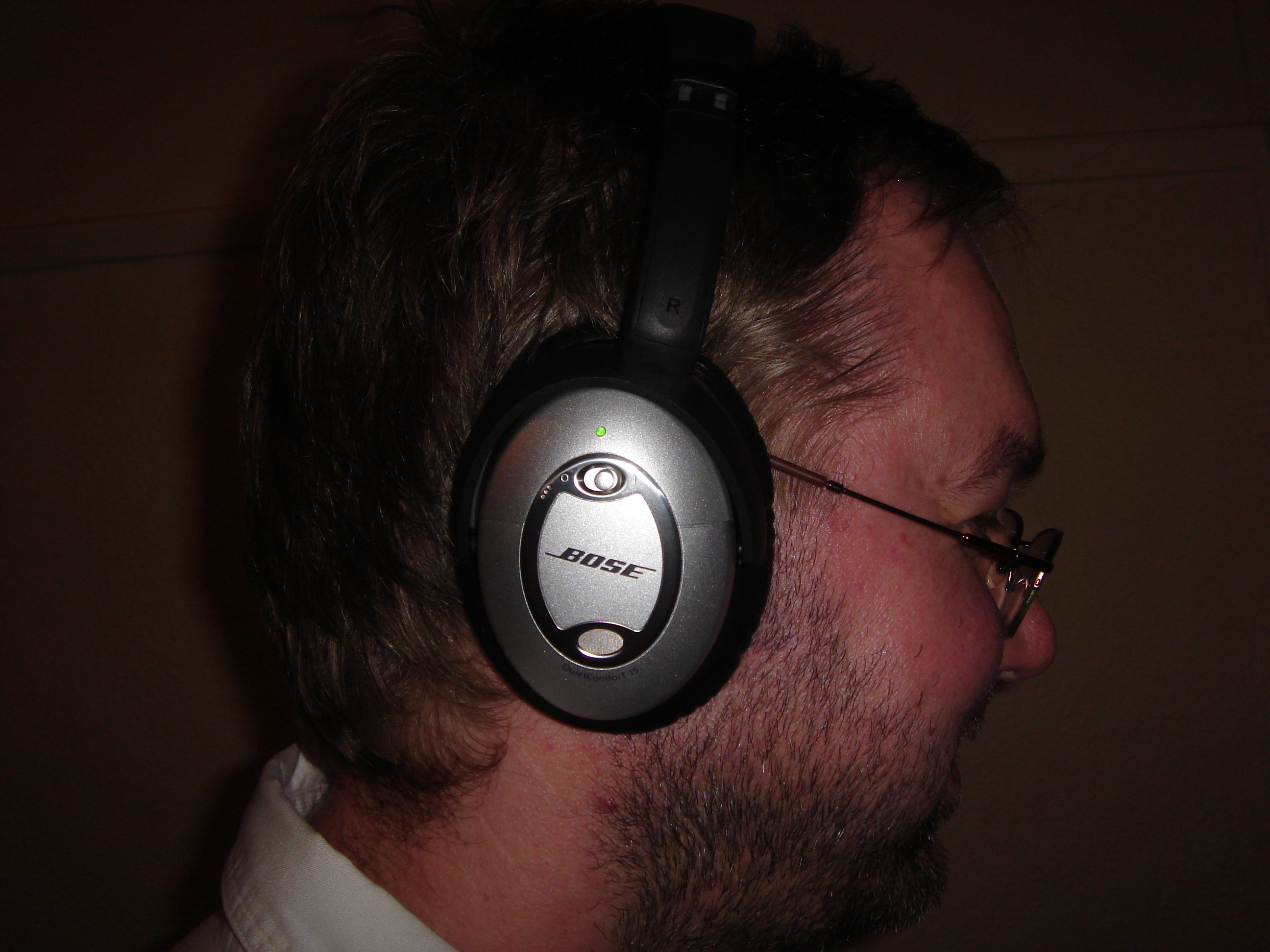
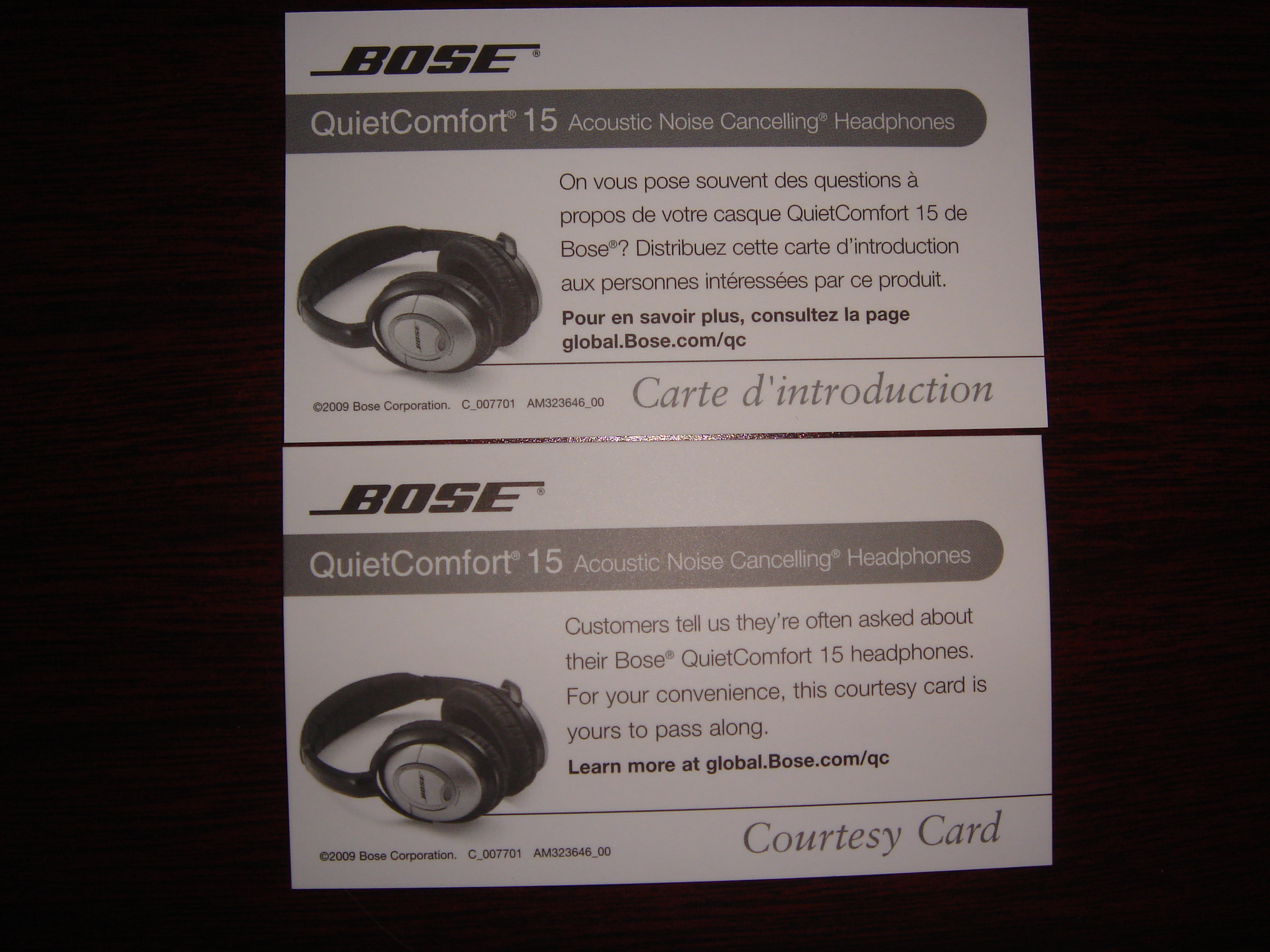
I bought the Bose QC15 noise canceling headphones for my trip back from the US. See my previous posts about Noise Canceling Headphones [1] and Testing Noise Canceling Headphones [2] for the details of my search. I first tried my new headphones in my hotel room and they worked really well at blocking the noise from the nearby road (El Camino Real in Menlo Park) as well as the noise from the heater in my room. At the airport they entirely blocked the sound of the airport air conditioning system (which was surprisingly loud I didn t realise how loud until I tried the headphones). On the flight the headphones worked really well. I used them for hours when they weren t plugged in to any source, just stopping the noise was a huge benefit. I was also able to listen to music (both MP3s on my laptop and the plane sound system) at a relatively low volume with an apparent high quality. The Bose store I visited in Stanford mall has a sound system set up to emulate the noise you experience inside a jet to demonstrate what the headset can do. It really lives up to this demonstration! I recommend them to anyone who wants over-ear noise canceling headphones and can afford $US300 + tax. But one thing to note is that not everyone likes such things my wife didn t like the sound that they generate (the least bad way to describe it is as a soft hiss). This is definitely not something you would want to buy based on reviews alone, it must be tested in-store. The main technical suggestion I can make for improvement to the QC-15 is for it to have slightly softer and thicker padding where it contacts the sides of the wearer s head. I find that my glasses prevent it from making as good contact as I would like, and that when wearing it while eating the contact is significantly broken with every jaw movement which is really annoying. A minor suggestion is that every pair of headphones should have the left and right ear pieces clearly marked, I really shouldn t have to read an instruction manual to discover which way to wear it. One thing that surprised me was the inclusion of business cards for the headset! Here is a picture:

The picture links to a larger picture that also shows the French version of the same text on the other side. I was astonished by this, encouraging happy customers to help sell your products is a reasonable and effective form of product promotion (really this is what I m doing for Bose with this blog post). But giving customers business cards is going too far anyone who wants me to hand out their business cards can offer to pay me to do so (and I probably won t accept). But if such things are considered to be a good idea then here are a few suggestions for other things that they could do:
  1. Create a Bose dating site where one can meet people who like music and traveling (this does sound appealing). In about 10 years the children of people who meet that way would start buying audio gear
  2. Start a Bose fan club.
  3. Create a template that be used by a tattoo parlor to make a Bose tattoo.
  4. Sell Bose fan t-shirts to people who aren t dedicated enough to get a tattoo.
  5. Register Bose as a religion, that gets tax free status among other benefits.
It s a pity that Bose doesn t make any water-proof noise canceling headphones. It would be something for their marketing people to wear while jumping over a shark on water skis [3]. But seriously the best thing that Bose could do to have their products promoted would be to start by printing the web site for each product on the item, my headset has two patent numbers listed which seem unlikely to provide any benefit for anyone, in that space they could have printed the global.bose.com/qc URL that is on the business card. Of course providing the URL really doesn t do any good when the URL actually is useless. It starts by giving me a page asking which country I am in the correct thing to do is to use geoip to determine the country and then give the user the option of selecting another country if that one is not ideal. Then after I select a country it doesn t take me to a specific page for the product! I could have typed in www.bose.com and got the same result (in terms of US shopping at least) while typing six fewer characters! Next like most corporate web sites the Bose site doesn t appear to be configured for longevity of URLs URLs which are clearly designed for the computer rather than humans are expected to change without warning. This discourages linking to any page that one might discover through web searches or navigating the site, and causes them to lose a lot of potential links. Having specific URLs for all the products (including the obsolete ones) that are designed firstly for humans to read and write would be a good idea. It would be really useful to be able to compare the features of new products with the ones that are going cheap on eBay. For someone who is considering buying a new product now the purchase decision would be easier if they knew that the company would provide resources to help them get a better price on eBay in a few years if they want to upgrade to a newer model. One thing to keep in mind is the fact that the reputation of a company (which makes a dramatic impact on the prices customers are prepared to pay) depends largely on a long history of making quality products. Telling customers about those historic products is one of the most sensible things that most corporations fail to do on the Internet.

Christian Perrier: Font packages moved to source v3

Today, Hideki Yamane completed his work on the last four packages maintained by the Font packaging Team to make them switch to source v3. Along with these changes, we also moved all our packages to debhelper v7 and minimal rules files. We also dropped the dependency on the obsoleted defoma. The team maintains 77 source packages for fonts and has now built a quite solid experience in this. In the upcoming weeks, I'll try to get in touch with other people who maintain fonts, inviting them to join the team and maintain their packages in our SVN (we don't do very fancy things so SVN is very well suited for such work). The maingoals will be to continue dropping support for defoma (dropping defoma hints files: you can see good examples on how to do this properly in packages maintained by the team, such as ttf-dejavu). We also intend to drop useless Recommends or Suggests that appear in some font packages (often on "x-ttcidfontconf fontconfig" which is now completely useless) as well as harmonizing package naming schemes (with a "(ttf otf)-<foundry>-<fontname>" scheme). Feel free to join and share your advice and thoughts about The Right Way To Maintain Font Packages on our mailing list.

Joerg Jaspert: Dinstall status

If you are one of the majority of people that have no access to Debians ftp-master host, but still do want to know in which state our main archive update, the dinstall run, is: http://ftp-master.debian.org/dinstall.status to the rescue. This file is now updated during dinstall. It is not telling exactly which function is currently running, that would be too much detail (we have over 50), but it is giving a good overview of the area dinstall is in. There are currently 6 states it reports: The format of the file is pretty simple, it consists of 3 lines, at the time of writing this blog post it looks like
Dinstall start: Sun Dec 20 07:52:01 UTC 2009 (1261295521)
Current action: scripts
Action start: Sun Dec 20 09:12:08 UTC 2009 (1261300328)
It tells when dinstall started, what the current action is and when that one started. In case you want to do some math on the dates it is also provided as an epoch. Have fun.

Francois Marier: Debugging logcheck rule files

logcheck is a neat little log file monitoring tool I use on all of my machines.

I recently noticed however that I hadn't received any logcheck messages in a while from one of my servers. Either that was a sign that things were going really well or, more likely, that logcheck wasn't producing any output anymore.

Manually logging an error to syslogHere's what I did to force a message to be printed to the logs:
logger -p kern.error This is a test
Which I would expect to produce this logcheck notice:
Dec 20 15:34:08 hostname username: This is a test
Unfortunately, that didn't happen on the next scheduled run.

Forcing a logcheck runTo rule out the following:
I ran logcheck manually:
sudo -u logcheck /usr/sbin/logcheck -o -d >& logcheck.out
Looking at the output file however, my test message still wasn't there. Either logcheck was broken or one of my rule files was swallowing everything.

Finding the broken rule fileTo find the broken rule, I started by ignoring rules defined in /etc/logcheck/ignore.d.server/ and /etc/logcheck/ignore.d.workstation/ by running logcheck in paranoid mode:
logger -p kern.error This is a test
sudo -u logcheck /usr/sbin/logcheck -o -d -p >& logcheck.out
This worked, so I then ran logcheck in server mode:
logger -p kern.error This is a test
sudo -u logcheck /usr/sbin/logcheck -o -d -s >& logcheck.out
Given that this also worked, it meant that the offending rule file was in /etc/logcheck/ignore.d.workstation/. So I moved all of my custom local-* rule files out of the way and ran logcheck in workstation mode:
logger -p kern.error This is a test
sudo -u logcheck /usr/sbin/logcheck -o -d -w >& logcheck.out
Once I verified that this worked, I started to put my local files back one by one until it broke again. Then slowly removed lines from the offending file until it worked.

Solution to my problemIt turns out that one of my rule files had a line like this:
path != NULL   column != NULL
Escaping the pipe symbols with backslashes solved the problem:
path != NULL \ \  column != NULL

Maybe I should periodically print a message to syslog to make sure that logcheck is still working...

19 December 2009

Stephan Peijnik: Rest in peace Flo: 13.11.1986 16.12.2009

Today is a sad day. Everything feels like I am having a bad nightmare. That's because today I learnt from the too early death of my friend Florian Hufksy.

I am sitting here and do not really know what to write. I keep on thinking about the great times we spent together. The time we started programming when we were twelve. The time we spent learning BASIC. All the times you knew more than me and could teach me a thing or two. I remember our geek talks. How we would discuss latest games. How we lost contact and how we met again. I am thinking about how sorry I am for not having met you often enough. I keep on trying to understand what drove you that far. How you could just end it all. More and more memories come to my mind, like the moment when you showed me one of your projects, Super Mario War. The moments we had playing video games together. All those moments, all that time, I miss you my friend. You were a genius, always a step ahead, not only of me, but seemingly the whole world. I can't stop thinking about your brilliant ideas and how you always finished your projects. You were a real hacker, a real genius, a person trying to make the world a better place, a person who will be missed, not only by me.

You were a genius and I always respected you, not only as a hacker, but as a beloved friend. Why did we not spend more time together? Why did you have to go? Why do I have to write this now, sitting here in my chair with tears in my eyes? And all those memories come up again and again. There is so much more that comes to my mind, but I can't keep on writing, it just hurts too much.

The world is a sad place today. I am sad. I am mourning the too early death of my beloved friend, Florian. You will always have a special place in my heart.

Frans Pop: debmirror IV

The Debian FTP-masters recently changed the way gzipped meta files are compressed in order to make them more efficient to update using the rsync option. This was done by adding the --rsyncable option when calling gzip. Consequence was however that when debmirror compressed Packages, Sources and Contents files after updating them by applying diffs, the md5sum of the gzipped file created by debmirror no longer matched the md5sum listed in the Release file (because debmirror did not use --rsyncable). Result was that debmirror would also download the full gzipped Packages, Sources and Contents files from the parent mirror, something the diffs are meant to avoid. Not nice. Anyway, this has been fixed in debmirror 2.4 which now by default also uses --rsyncable when gzipping the updated meta files. I've also uploaded a fixed version for Lenny (20070123lenny1), which should soon be available from proposed-updates and will be included in the next stable point release. For archives that also provide diffs (most archives don't have them) but do not have rsyncable gzipped files, the default options used when calling gzip can be overruled using the new option --gzip-options (only in version 2.4). Tip: if you are using the rsync method to download files, using --diff=none may well be more efficient now that the archive has rsyncable gzipped meta files. Version 2.4 also has a few other improvements and fixes. If you're currently using version 2.3.x an update to the new version is probably a good idea.

Next.

Previous.