Search Results: "will"

14 May 2024

Freexian Collaborators: Monthly report about Debian Long Term Support, April 2024 (by Roberto C. S nchez)

Like each month, have a look at the work funded by Freexian s Debian LTS offering.

Debian LTS contributors In April, 19 contributors have been paid to work on Debian LTS, their reports are available:
  • Abhijith PA did 0.5h (out of 0.0h assigned and 14.0h from previous period), thus carrying over 13.5h to the next month.
  • Adrian Bunk did 35.75h (out of 17.25h assigned and 40.5h from previous period), thus carrying over 22.0h to the next month.
  • Bastien Roucari s did 25.0h (out of 25.0h assigned).
  • Ben Hutchings did 24.0h (out of 9.0h assigned and 15.0h from previous period).
  • Chris Lamb did 18.0h (out of 18.0h assigned).
  • Daniel Leidert did 10.0h (out of 10.0h assigned).
  • Emilio Pozuelo Monfort did 46.0h (out of 12.0h assigned and 34.0h from previous period).
  • Guilhem Moulin did 14.75h (out of 20.0h assigned), thus carrying over 5.25h to the next month.
  • Lee Garrett did 51.25h (out of 0.0h assigned and 60.0h from previous period), thus carrying over 8.75h to the next month.
  • Markus Koschany did 40.0h (out of 40.0h assigned).
  • Ola Lundqvist did 22.5h (out of 19.5h assigned and 4.5h from previous period), thus carrying over 1.5h to the next month.
  • Roberto C. S nchez did 11.0h (out of 9.25h assigned and 2.75h from previous period), thus carrying over 1.0h to the next month.
  • Santiago Ruano Rinc n did 20.0h (out of 20.0h assigned).
  • Sean Whitton did 9.5h (out of 4.5h assigned and 5.5h from previous period), thus carrying over 0.5h to the next month.
  • Stefano Rivera did 1.5h (out of 0.0h assigned and 10.0h from previous period), thus carrying over 8.5h to the next month.
  • Sylvain Beucler did 12.5h (out of 22.75h assigned and 35.0h from previous period), thus carrying over 45.25h to the next month.
  • Thorsten Alteholz did 14.0h (out of 14.0h assigned).
  • Tobias Frost did 10.0h (out of 12.0h assigned), thus carrying over 2.0h to the next month.
  • Utkarsh Gupta did 3.25h (out of 28.5h assigned and 29.25h from previous period), thus carrying over 54.5h to the next month.

Evolution of the situation In April, we have released 28 DLAs. During the month of April, there was one particularly notable security update made in LTS. Guilhem Moulin prepared DLA-3782-1 for util-linux (part of the set of base packages and containing a number of important system utilities) in order to address a possible information disclosure vulnerability. Additionally, several contributors prepared updates for oldstable (bullseye), stable (bookworm), and unstable (sid), including:
  • ruby-rack: prepared for oldstable, stable, and unstable by Adrian Bunk
  • wpa: prepared for oldstable, stable, and unstable by Bastien Roucari s
  • zookeeper: prepared for stable by Bastien Roucari s
  • libjson-smart: prepared for unstable by Bastien Roucari s
  • ansible: prepared for stable and unstable, including autopkgtest fixes to increase future supportability, by Lee Garrett
  • wordpress: prepared for oldstable and stable by Markus Koschany
  • emacs and org-mode: prepared for oldstable and stable by Sean Whitton
  • qtbase-opensource-src: prepared for oldstable and stable by Thorsten Alteholz
  • libjwt: prepared for oldstable by Thorsten Alteholz
  • libmicrohttpd: prepared for oldstable by Thorsten Alteholz
These fixes were in addition to corresponding updates in LTS. Another item to highlight in this month s report is an update to the distro-info-data database by Stefano Rivera. This update ensures that Debian buster systems have the latest available information concerning the end-of-life dates and other related information for all releases of Debian and Ubuntu. As announced on the debian-lts-announce mailing list, it is worth to point out that we are getting close to the end of support of Debian 10 as LTS. After June 30th, no new security updates will be made available on security.debian.org. However, Freexian and its team of paid Debian contributors will continue to maintain Debian 10 going forward for the customers of the Extended LTS offer. If you still have Debian 10 servers to keep secure, it s time to subscribe!

Thanks to our sponsors Sponsors that joined recently are in bold.

Matthew Palmer: "Is This Project Still Maintained?"

If you wander around a lot of open source repositories on the likes of GitHub, you ll invariably stumble over repos that have an issue (or more than one!) with a title like the above. Sometimes sitting open and unloved, often with a comment or two from the maintainer and a bunch of I ll help out! followups that never seemed to pan out. Very rarely, you ll find one that has been closed, with a happy ending. These issues always fascinate me, because they say a lot about what it means to maintain an open source project, the nature of succession (particularly in a post-Jia Tan world), and the expectations of users and the impedence mismatch between maintainers, contributors, and users. I ve also recently been thinking about pre-empting this sort of issue, and opening my own issue that answers the question before it s even asked.

Why These Issues Are Created As both a producer and consumer of open source software, I completely understand the reasons someone might want to know whether a project is abandoned. It s comforting to be able to believe that there s someone on the other end of the line , and that if you have a problem, you can ask for help with a non-zero chance of someone answering you. There s also a better chance that, if the maintainer is still interested in the software, that compatibility issues and at least show-stopper bugs might get fixed for you. But often there s more at play. There is a delusion that maintained open source software comes with entitlements an expectation that your questions, bug reports, and feature requests will be attended to in some fashion. This comes about, I think, in part because there are a lot of open source projects that are energetically supported, where generous volunteers do answer questions, fix reported bugs, and implement things that they don t personally need, but which random Internet strangers ask for. If you ve had that kind of user experience, it s not surprising that you might start to expect it from all open source projects. Of course, these wonders of cooperative collaboration are the exception, rather than the rule. In many (most?) cases, there is little practical difference between most projects that are maintained and those that are formally declared unmaintained . The contributors (or, most often, contributor singular) are unlikely to have the time or inclination to respond to your questions in a timely and effective manner. If you find a problem with the software, you re going to be paddling your own canoe, even if the maintainer swears that they re still maintaining it.

A Thought Appears With this in mind, I ve been considering how to get ahead of the problem and answer the question for the software projects I ve put out in the world. Nothing I ve built has anything like what you d call a community ; most have never seen an external PR, or even an issue. The last commit date on them might be years ago. By most measures, almost all of my repos look unmaintained . Yet, they don t feel unmaintained to me. I m still using the code, sometimes as often as every day, and if something broke for me, I d fix it. Anyone who needs the functionality I ve developed can use the code, and be pretty confident that it ll do what it says in the README. I m considering creating an issue in all my repos, titled Is This Project Still Maintained? , pinning it to the issues list, and pasting in something I m starting to think of as The Open Source Maintainer s Manifesto . It goes something like this:

Is This Project Still Maintained? Yes. Maybe. Actually, perhaps no. Well, really, it depends on what you mean by maintained . I wrote the software in this repo for my own benefit to solve the problems I had, when I had them. While I could have kept the software to myself, I instead released it publicly, under the terms of an open licence, with the hope that it might be useful to others, but with no guarantees of any kind. Thanks to the generosity of others, it costs me literally nothing for you to use, modify, and redistribute this project, so have at it!

OK, Whatever. What About Maintenance? In one sense, this software is maintained , and always will be. I fix the bugs that annoy me, I upgrade dependencies when not doing so causes me problems, and I add features that I need. To the degree that any on-going development is happening, it s because I want that development to happen. However, if maintained to you means responses to questions, bug fixes, upgrades, or new features, you may be somewhat disappointed. That s not maintenance , that s support , and if you expect support, you ll probably want to have a support contract , where we come to an agreement where you pay me money, and I help you with the things you need help with.

That Doesn t Sound Fair! If it makes you feel better, there are several things you are entitled to:
  1. The ability to use, study, modify, and redistribute the contents of this repository, under the terms stated in the applicable licence(s).
  2. That any interactions you may have with myself, other contributors, and anyone else in this project s spaces will be in line with the published Code of Conduct, and any transgressions of the Code of Conduct will be dealt with appropriately.
  3. actually, that s it.
Things that you are not entitled to include an answer to your question, a fix for your bug, an implementation of your feature request, or a merge (or even review) of your pull request. Sometimes I may respond, either immediately or at some time long afterwards. You may luck out, and I ll think hmm, yeah, that s an interesting thing and I ll work on it, but if I do that in any particular instance, it does not create an entitlement that I will continue to do so, or that I will ever do so again in the future.

But I ve Found a Huge and Terrible Bug! You have my full and complete sympathy. It s reasonable to assume that I haven t come across the same bug, or at least that it doesn t bother me, otherwise I d have fixed it for myself. Feel free to report it, if only to warn other people that there is a huge bug they might need to avoid (possibly by not using the software at all). Well-written bug reports are great contributions, and I appreciate the effort you ve put in, but the work that you ve done on your bug report still doesn t create any entitlement on me to fix it. If you really want that bug fixed, the source is available, and the licence gives you the right to modify it as you see fit. I encourage you to dig in and fix the bug. If you don t have the necessary skills to do so yourself, you can get someone else to fix it everyone has the same entitlements to use, study, modify, and redistribute as you do. You may also decide to pay me for a support contract, and get the bug fixed that way. That gets the bug fixed for everyone, and gives you the bonus warm fuzzies of contributing to the digital commons, which is always nice.

But My PR is a Gift! If you take the time and effort to make a PR, you re doing good work and I commend you for it. However, that doesn t mean I ll necessarily merge it into this repository, or even work with you to get it into a state suitable for merging. A PR is what is often called a gift of work . I ll have to make sure that, at the very least, it doesn t make anything actively worse. That includes introducing bugs, or causing maintenance headaches in the future (which includes my getting irrationally angry at indenting, because I m like that). Properly reviewing a PR takes me at least as much time as it would take me to write it from scratch, in almost all cases. So, if your PR languishes, it might not be that it s bad, or that the project is (dum dum dummmm!) unmaintained , but just that I don t accept this particular gift of work at this particular time. Don t forget that the terms of licence include permission to redistribute modified versions of the code I ve released. If you think your PR is all that and a bag of potato chips, fork away! I won t be offended if you decide to release a permanent fork of this software, as long as you comply with the terms of the licence(s) involved. (Note that I do not undertake support contracts solely to review and merge PRs; that reeks a little too much of pay to play for my liking)

Gee, You Sound Like an Asshole I prefer to think of myself as forthright and plain-speaking , but that brings to mind that third thing you re entitled to: your opinion. I ve written this out because I feel like clarifying the reality we re living in, in the hope that it prevents misunderstandings. If what I ve written makes you not want to use the software I ve written, that s fine you ve probably avoided future disappointment.

Opinions Sought What do you think? Too harsh? Too wishy-washy? Comment away!

Taavi V n nen: Wikimedia Hackathon Tallinn 2024

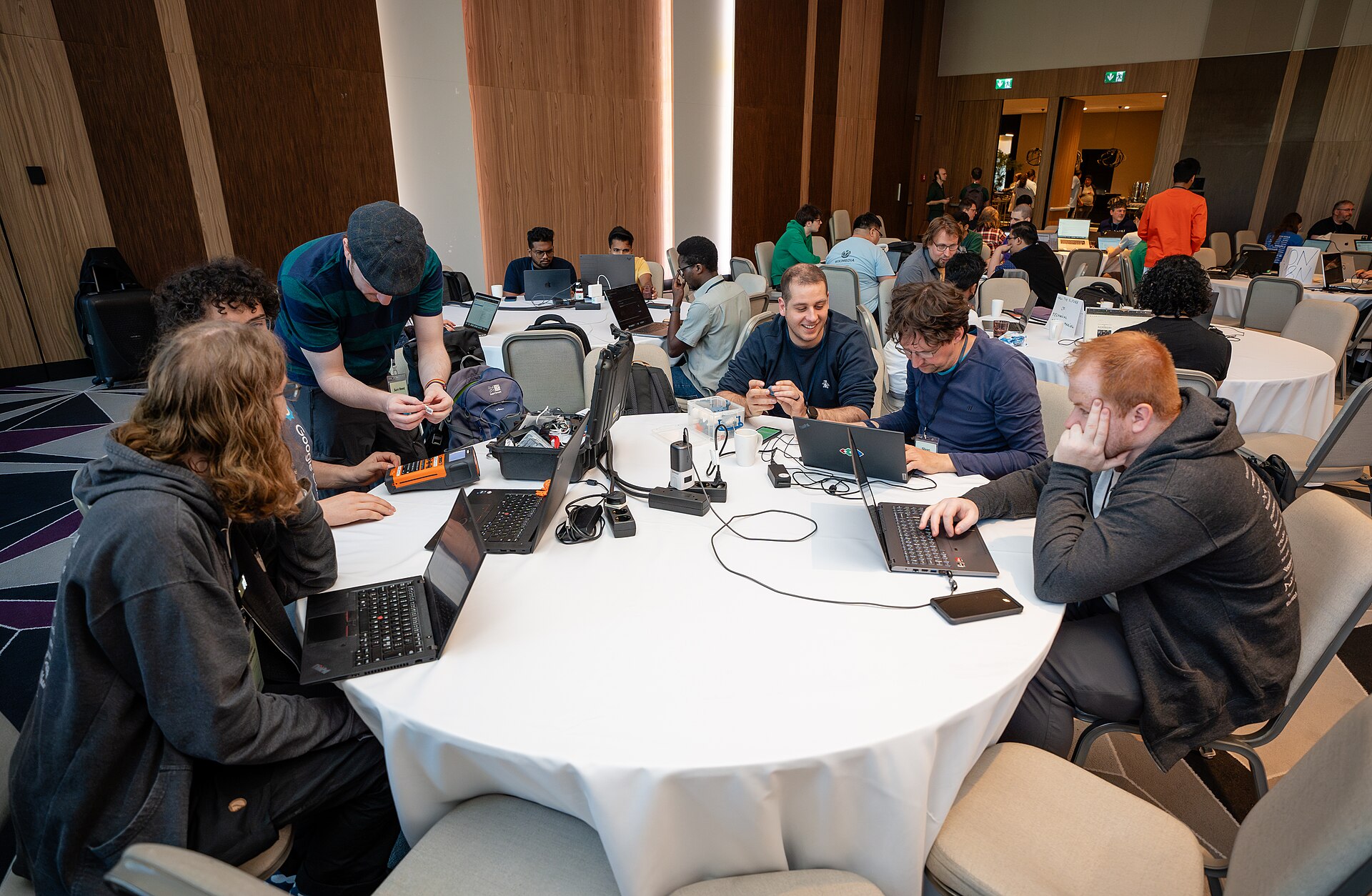
This year's Wikimedia Hackathon was held in early May in Tallinn, Estonia. Like last year, it was a great opportunity to both see people I work with regularly, including people in my own team that I had not seen in person before, and to work with and help people that I have had very limited interactions with before. Me talking with Addshore at the Wikimedia Hackathon 2024 hacking room.
Image by Olari Pilnik is licensed under CC BY-SA 4.0.
I presented a session about Puppet (slides), the configuration management tool used on Wikimedia infrastructure (and some other projects I've been involved on) which I think went quite well. I also organized (read: picked a spot for in the schedule) the cuteness meetup. In addition to the sessions, the main focus of the event was, of course, hacking. As usual, I didn't make any major plans beforehand, and instead ended up working on several smaller projects as they popped up. Here is a list of things I can remember working on: Finally, a conversation I had at the hackathon resulted in me nominating Novem Linguae for mediawiki/* +2 access a few days after the hackathon. I had a great time, and the ferry trip to Tallinn was much nicer than the very early flight I had last year. I can't wait to see you all again :-) Disclosure: I am currently a Wikimedia Foundation contractor, and the Foundation did pay for my travel to Tallinn. This is my personal blog and these are my own opinions.

  1. Since backporting this change felt too risky to do on the weekend, and also I have a feeling I'd get in troble if I ran an unapproved bot that edited on random wikis on our production wiki farm.
  2. Anyone who got 5 or more patches to core.git merged during the Hackathon got a cool MediaWiki T-shirt.

12 May 2024

Elana Hashman: I am very sick

I have not been able to walk since February 18, 2023. When people ask me how I'm doing, this is the first thing that comes to mind. "Well, you know, the usual, but also I still can't walk," I think to myself. If I dream at night, I often see myself walking or running. In conversation, if I talk about going somewhere, I'll imagine walking there. Even though it's been over a year, I remember walking to the bus, riding to see my friends, going out for brunch, cooking community dinners. But these days, I can't manage going anywhere except by car, and I can't do the driving, and I can't dis/assemble and load my chair. When I'm resting in bed and follow a guided meditation, I might be asked to imagine walking up a staircase, step by step. Sometimes, I do. Other times, I imagine taking a little elevator in my chair, or wheeling up ramps. I feel like there is little I can say that can express the extent of what this illness has taken from me, but it's worth trying. To an able-bodied person, seeing me in a power wheelchair is usually "enough." One of my acquaintances cried when they last saw me in person. But frankly, I love my wheelchair. I am not "wheelchair-bound" I am bed-bound, and the wheelchair gets me out of bed. My chair hasn't taken anything from me. *** In October of 2022, I was diagnosed with myalgic encephalomyelitis. Scientists and doctors don't really know what myalgic encephalomyelitis (ME) is. Diseases like it have been described for over 200 years.1 It primarily affects women between the ages of 10-39, and the primary symptom is "post-exertional malaise" or PEM: debilitating, disproportionate fatigue following activity, often delayed by 24-72 hours and not relieved by sleep. That fatigue has earned the illness the misleading name of "Chronic Fatigue Syndrome" or CFS, as though we're all just very tired all the time. But tired people respond to exercise positively. People with ME/CFS do not.2 Given the dearth of research and complete lack of on-label treatments, you may think this illness is at least rare, but it is actually quite common: in the United States, an estimated 836k-2.5m people3 have ME/CFS. It is frequently misdiagnosed, and it is estimated that as many as 90% of cases are missed,4 due to mild or moderate symptoms that mimic other diseases. Furthermore, over half of Long COVID cases likely meet the diagnostic criteria for ME,5 so these numbers have increased greatly in recent years. That is, ME is at least as common as rheumatoid arthritis,6 another delightful illness I have. But while any doctor knows what rheumatoid arthritis is, not enough7 have heard of "myalgic encephalomylitis." Despite a high frequency and disease burden, post-viral associated conditions (PASCs) such as ME have been neglected for medical funding for decades.8 Indeed, many people, including medical care workers, find it hard to believe that after the acute phase of illness, severe symptoms can persist. PASCs such as ME and Long COVID defy the typical narrative around common illnesses. I was always told that if I got sick, I should expect to rest for a bit, maybe take some medications, and a week or two later, I'd get better, right? But I never got better. These are complex, multi-system diseases that do not neatly fit into the Western medical system's specializations. I have seen nearly every specialty because ME/CFS affects nearly every system of the body: cardiology, nephrology, pulmonology, neurology, opthalmology, and, many, many more. You'd think they'd hand out frequent flyer cards, or a medical passport with fun stamps, but nope. Just hundreds of pages of medical records. And when I don't fit neatly into one particular specialist's box, then I'm sent back to my primary care doctor to regroup while we try to troubleshoot my latest concerning symptoms. "Sorry, can't help you. Not my department." With little available medical expertise, a lot of my disease management has been self-directed in partnership with primary care. I've read hundreds of articles, papers, publications, CME material normally reserved for doctors. It's truly out of necessity, and I'm certain I would be much worse off if I lacked the skills and connections to do this; there are so few ME/CFS experts in the US that there isn't one in my state or any adjacent state.9 So I've done a lot of my own work, much of it while barely being able to read. (A text-to-speech service is a real lifesaver.) To facilitate managing my illness, I've built a mental model of how my particular flavour of ME/CFS works based on the available research I've been able to read and how I respond to treatments. Here is my best attempt to explain it: The best way I have learned to manage this is to prevent myself from doing activities where I will exceed that aerobic threshold by wearing a heartrate monitor,12 but the amount of activity that permits in my current state of health is laughably restrictive. Most days I'm unable to spend more than one to two hours out of bed. Over time, this has meant worsening from a persistent feeling of tiredness all the time and difficulty commuting into an office or sitting at a desk, to being unable to sit at a desk for an entire workday even while working from home and avoiding physically intense chores or exercise without really understanding why, to being unable to leave my apartment for days at a time, and finally, being unable to stand for more than a minute or two or walk. But it's not merely that I can't walk. Many folks in wheelchairs are able to live excellent lives with adaptive technology. The problem is that I am so fatigued, any activity can destroy my remaining quality of life. In my worst moments, I've been unable to read, move my arms or legs, or speak aloud. Every single one of my limbs burned, as though I had caught fire. Food sat in my stomach for hours, undigested, while my stomach seemingly lacked the energy to do its job. I currently rely on family and friends for full-time caretaking, plus a paid home health aide, as I am unable to prep meals, shower, or leave the house independently. This assistance has helped me slowly improve from my poorest levels of function. While I am doing better than I was at my worst, I've had to give up essentially all of my hobbies with physical components. These include singing, cooking, baking, taking care of my houseplants, cross-stitching, painting, and so on. Doing any of these result in post-exertional malaise so I've had to stop; this reduction of activity to prevent worsening the illness is referred to as "pacing." I've also had to cut back essentially all of my volunteering and work in open source; I am only cleared by my doctor to work 15h/wk (from bed) as of writing. *** CW: severe illness, death, and suicide (skip this section) The difficulty of living with a chronic illness is that there's no light at the end of the tunnel. Some diseases have a clear treatment path: you take the medications, you complete the procedures, you hit all the milestones, and then you're done, perhaps with some long-term maintenance work. But with ME, there isn't really an end in sight. The median duration of illness reported in one 1997 study was over 6 years, with some patients reporting 20 years of symptoms.13 While a small number of patients spontaneously recover, and many improve, the vast majority of patients are unable to regain their baseline function.14 My greatest fear since losing the ability to walk is getting worse still. Because, while I already require assistance with nearly every activity of daily living, there is still room for decline. The prognosis for extremely ill patients is dismal, and many require feeding tubes and daily nursing care. This may lead to life-threatening malnutrition;15 a number of these extremely severe patients have died, either due to medical neglect or suicide.16 Extremely severe patients cannot tolerate light, sound, touch, or cognitive exertion,17 and often spend most of their time lying flat in a darkened room with ear muffs or an eye mask.18 This is all to say, my prognosis is not great. But while I recognize that the odds aren't exactly in my favour, I am also damn stubborn. (A friend once cheerfully described me as "stubbornly optimistic!") I only get one shot at life, and I do not want to spend the entirety of it barely able to perceive what's going on around me. So while my prognosis is uncertain, there's lots of evidence that I can improve somewhat,19 and there's also lots of evidence that I can live 20+ years with this disease. It's a bitter pill to swallow, but it also means I might have the gift of time something that not all my friends with severe complex illnesses have had. I feel like I owe it to myself to do the best I can to improve; to try to help others in a similar situation; and to enjoy the time that I have. I already feel like my life has been moving in slow motion for the past 4 years there's no need to add more suffering. Finding joy, as much as I can, every day, is essential to keep up my strength for this marathon. Even if it takes 20 years to find a cure, I am convinced that the standard of care is going to improve. All the research and advocacy that's been happening over the past decade is plenty to feel hopeful about.20 Hope is a discipline,21 and I try to remind myself of this on the hardest days. *** I'm not entirely sure why I decided to write this. Certainly, today is International ME/CFS Awareness Day, and I'm hoping this post will raise awareness in spaces that aren't often thinking about chronic illnesses. But I think there is also a part of me that wants to share, reach out in some way to the people I've lost contact with while I've been treading water, managing the day to day of my illness. I experience this profound sense of loss, especially when I think back to the life I had before. Everyone hits limitations in what they can do and accomplish, but there is so little I can do with the time and energy that I have. And yet, I understand even this precious little could still be less. So I pace myself. Perhaps I can inspire you to take action on behalf of those of us too fatigued to do the advocacy we need and deserve. Should you donate to a charity or advocacy organization supporting ME/CFS research? In the US, there are many excellent organizations, such as ME Action, the Open Medicine Foundation, SolveME, the Bateman Horne Center, and the Workwell Foundation. I am also happy to match any donations through the end of May 2024 if you send me your receipts. But charitable giving only goes so far, and I think this problem deserves the backing of more powerful organizations. Proportionate government funding and support is desperately needed. It's critical for us to push governments22 to provide the funding required for research that will make an impact on patients' lives now. Many organizers are running campaigns around the world, advocating for this investment. There is a natural partnership between ME advocacy and Long COVID advocacy, for example, and we have an opportunity to make a great difference to many people by pushing for research and resources inclusive of all PASCs. Some examples I'm aware of include: But outside of collective organizing, there are a lot of sick individuals out there that need help, too. Please, don't forget about us. We need you to visit us, care for us, be our confidantes, show up as friends. There are a lot of people who are very sick out here and need your care. I'm one of them.

Freexian Collaborators: Debian Contributions: Salsa CI updates, OpenSSH option review, and more! (by Utkarsh Gupta)

Contributing to Debian is part of Freexian s mission. This article covers the latest achievements of Freexian and their collaborators. All of this is made possible by organizations subscribing to our Long Term Support contracts and consulting services. P.S. We ve completed over a year of writing these blogs. If you have any suggestions on how to make them better or what you d like us to cover, or any other opinions/reviews you might have, et al, please let us know by dropping an email to us. We d be happy to hear your thoughts. :)

Salsa CI updates & GSoC candidacy, by Santiago Ruano Rincon In the context of Google Summer of Code (GSoC), Santiago continued the mentoring work, following the applications of three of the candidates. This work started in March, but Aquila Macedo, Ahmed Siam and Piyush Raj continued in April to propose and review MRs. For example, Update CI pipeline to utilize specific blhc image per release and Remove references to buster-backports by Aquila, or the reviews the candidates made to Document the structure of the different components of the pipeline (see below). Unfortunately, the Salsa CI project didn t get any slot from the GSoC program in the end. Along with the Salsa CI related work, Santiago improved the documentation of Salsa CI, to make it easier for newcomers (as the GSoC candidates) or people willing to fork the project to understand its internals. Documentation is an aspect where a lot of improvements can be made.

OpenSSH option review, by Colin Watson In light of last month s xz-utils backdoor, Colin did an extensive review of some of the choices in Debian s OpenSSH packaging. Some work on this has already been done (removing uses of libsystemd and reducing tcp-wrappers linkage); the next step is likely to be to start work on the plan to split out GSS-API key exchange again.

Miscellaneous contributions
  • Utkarsh Gupta started to put together and kickstart the bursary team ahead of DebConf 24, to be held in Busan, South Korea.
  • Utkarsh Gupta reviewed some MRs and docs for the bursary team for the DC24 website.
  • Helmut Grohne sent patches for 19 cross build failures and submitted a gcc patch removing LIMITS_H_TEST upstream.
  • Helmut sent 8 bug reports with 3 patches related to the /usr-move.
  • Helmut diagnosed why /dev/stdout is not accessible in sbuild --mode=unshare.
  • Helmut diagnosed the time64-induced glibc FTBFS.
  • Helmut sent patches for fixing initramfs triggers on firmware removal.
  • Thorsten Alteholz uploaded foo2zjs and fixed two bugs, one related to /usr-merge. Likewise the upload of cups-filters (from the 1.x branch) fixed three bugs. In order to fix an RC bug in cpdb-backends-cups, which was updated to the 2.x branch, the new package libcupsfilters has been introduced. Last but not least an upload of hplip fixed one RC bug and an upload of gutenprint fixed two of them. All of these RC bugs were more or less related to the time_t transition.
  • Santiago continued to work in the DebConf organization tasks, including some for the DebConf 24 Content Team, and looking to build a local community for DebConf 25.
  • Stefano Rivera made a couple of uploads of dh-python to Debian, and a few other general package update uploads.
  • Stefano did some winding up of DebConf 23 finances, including closing bursary claims and recording the amounts spent on travel bursaries.
  • Stefano opened DebConf 24 registration, which always requires some last-minute work on the website.
  • Colin released man-db 2.12.1.
  • Colin fixed a regression in groff s PDF output.
  • In the Python team, Colin fixed build/autopkgtest failures in seven packages, and updated ten packages to new upstream versions.

11 May 2024

Sven Hoexter: xdg and mime types - stuff I would've loved to know a week ago

Learned a few things about xdg and mimetype registration in the last week that could be helpful to have condensed in a single place. No Need to Ship a Mailcap Mime File If you already ship a .desktop file (that is what ends up in /usr/share/applications/) which has a MimeType declared, there is no need to also ship a mailcap file (that is what ends up in /usr/lib/mime/packages/). Some triggers will do the conversion work for you. See also Debian Policy 4.9. Reverse DNS Naming Convention for .desktop Files Seems to be a closely guarded secret, maybe mainly known inside the Gnome world, but it's in the spec. Also not very widely known inside Debian if I look at my local system as not very representative sample. Your hicolor Theme App Icon can be a Mime Type Icon as Well In case you didn't know the hicolor icon theme is the default fallback theme. Many of us already install application icons e.g. in /usr/share/icons/hicolor/48x48/apps/ which is used in conjunction with the Icon field in the .desktop file to locate the application icon. Now the next step, and there it seems quite of few us miss out, is to create a symlink to also provide a mime type icon, so it's displayed in graphical file managers for the application data files. The schema here is simple: Take the MimeType e.g. application/x-vymand replace the / with a - and use that as file name in e.g. /usr/share/icons/hicolor/48x48/mimetypes/. In the vym case that is /usr/share/icons/hicolor/48x48/mimetypes/application-x-vym.png. If you have one use a scalable .svg file instead of .png. This seems to be an area where Debian lacks a bit of tooling to automatically convert application icons to all the different sizes and install it in all the appropriate places. What is already there is a trigger to run gtk-update-icon-cache when you install new icons into one of the icon theme folder so they're picked up. No Priority or Order in .desktop Files Likely something that hapens on all my fresh installations: Libreoffice is installed and xdg-open starts to open pdf files with Libreoffice instead of evince. Now I've to figure out again to run xdg-mime default org.gnome.Evince.desktop application/pdf to change that (at least for my user). Background here is that the desktop file spec explicitly mandates "Priority for applications is handled external to the .desktop files.". That's why we got in addition to all of that mimeapps.list files. And now, after running the xdg-mime command from above, we've a ~/.config/mimeapps.list defining
[Default Applications]
application/pdf=org.gnome.Evince.desktop
Debian as whole seems to be not very keen on shipping something like a sensible default mimeapps.list outside of desktop environment specific ones. A quick search gave me just
$ apt-file search mimeapps.list
cinnamon-desktop-data: /usr/share/applications/x-cinnamon-mimeapps.list
gdm3: /usr/share/gdm/greeter/applications/mimeapps.list
gnome-session-common: /usr/share/applications/gnome-mimeapps.list
plasma-workspace: /usr/share/applications/kde-mimeapps.list
sxmo-utils: /usr/share/applications/mimeapps.list
sxmo-utils: /usr/share/sxmo/xdg/mimeapps.list
While it's a bit anoying to run into that pdf vs Libreoffice thing every now and then, it's maybe better to not have long controversial threads about default pdf viewer, like the ones we already had about the default MTA choices. ;) And while we're at it: everyone using Libreoffice should give a virtual hug to rene@ for taming that beast since 2010 and OpenOffice.org before.

10 May 2024

Reproducible Builds: Reproducible Builds in April 2024

Welcome to the April 2024 report from the Reproducible Builds project! In our reports, we attempt to outline what we have been up to over the past month, as well as mentioning some of the important things happening more generally in software supply-chain security. As ever, if you are interested in contributing to the project, please visit our Contribute page on our website. Table of contents:
  1. New backseat-signed tool to validate distributions source inputs
  2. NixOS is not reproducible
  3. Certificate vulnerabilities in F-Droid s fdroidserver
  4. Website updates
  5. Reproducible Builds and Insights from an Independent Verifier for Arch Linux
  6. libntlm now releasing minimal source-only tarballs
  7. Distribution work
  8. Mailing list news
  9. diffoscope
  10. Upstream patches
  11. reprotest
  12. Reproducibility testing framework

New backseat-signed tool to validate distributions source inputs kpcyrd announced a new tool called backseat-signed, after:
I figured out a somewhat straight-forward way to check if a given git archive output is cryptographically claimed to be the source input of a given binary package in either Arch Linux or Debian (or both).
Elaborating more in their announcement post, kpcyrd writes:
I believe this to be the reproducible source tarball thing some people have been asking about. As explained in the README, I believe reproducing autotools-generated tarballs isn t worth everybody s time and instead a distribution that claims to build from source should operate on VCS snapshots instead of tarballs with 25k lines of pre-generated shell-script.
Indeed, many distributions packages already build from VCS snapshots, and this trend is likely to accelerate in response to the xz incident. The announcement led to a lengthy discussion on our mailing list, as well as shorter followup thread from kpcyrd about bootstrapping Autotools projects.

NixOS is not reproducible Morten Linderud posted an post on his blog this month, provocatively titled, NixOS is not reproducible . Although quickly admitting that his title is indeed clickbait , Morten goes on to clarify the precise guarantees and promises that NixOS provides its users. Later in the most, Morten mentions that he was motivated to write the post because:
I have heavily invested my free-time on this topic since 2017, and met some of the accomplishments we have had with Doesn t NixOS solve this? for just as long and I thought it would be of peoples interest to clarify[.]

Certificate vulnerabilities in F-Droid s fdroidserver In early April, Fay Stegerman announced a certificate pinning bypass vulnerability and Proof of Concept (PoC) in the F-Droid fdroidserver tools for managing builds, indexes, updates, and deployments for F-Droid repositories to the oss-security mailing list.
We observed that embedding a v1 (JAR) signature file in an APK with minSdk >= 24 will be ignored by Android/apksigner, which only checks v2/v3 in that case. However, since fdroidserver checks v1 first, regardless of minSdk, and does not verify the signature, it will accept a fake certificate and see an incorrect certificate fingerprint. [ ] We also realised that the above mentioned discrepancy between apksigner and androguard (which fdroidserver uses to extract the v2/v3 certificates) can be abused here as well. [ ]
Later on in the month, Fay followed up with a second post detailing a third vulnerability and a script that could be used to scan for potentially affected .apk files and mentioned that, whilst upstream had acknowledged the vulnerability, they had not yet applied any ameliorating fixes.

Website updates There were a number of improvements made to our website this month, including Chris Lamb updating the archive page to recommend -X and unzipping with TZ=UTC [ ] and adding Maven, Gradle, JDK and Groovy examples to the SOURCE_DATE_EPOCH page [ ]. In addition Jan Zerebecki added a new /contribute/opensuse/ page [ ] and Sertonix fixed the automatic RSS feed detection [ ][ ].

Reproducible Builds and Insights from an Independent Verifier for Arch Linux Joshua Drexel, Esther H nggi and Iy n M ndez Veiga of the School of Computer Science and Information Technology, Hochschule Luzern (HSLU) in Switzerland published a paper this month entitled Reproducible Builds and Insights from an Independent Verifier for Arch Linux. The paper establishes the context as follows:
Supply chain attacks have emerged as a prominent cybersecurity threat in recent years. Reproducible and bootstrappable builds have the potential to reduce such attacks significantly. In combination with independent, exhaustive and periodic source code audits, these measures can effectively eradicate compromises in the building process. In this paper we introduce both concepts, we analyze the achievements over the last ten years and explain the remaining challenges.
What is more, the paper aims to:
contribute to the reproducible builds effort by setting up a rebuilder and verifier instance to test the reproducibility of Arch Linux packages. Using the results from this instance, we uncover an unnoticed and security-relevant packaging issue affecting 16 packages related to Certbot [ ].
A PDF of the paper is available.

libntlm now releasing minimal source-only tarballs Simon Josefsson wrote on his blog this month that, going forward, the libntlm project will now be releasing what they call minimal source-only tarballs :
The XZUtils incident illustrate that tarballs with files that are not included in the git archive offer an opportunity to disguise malicious backdoors. [The] risk of hiding malware is not the only motivation to publish signed minimal source-only tarballs. With pre-generated content in tarballs, there is a risk that GNU/Linux distributions [ship] generated files coming from the tarball into the binary *.deb or *.rpm package file. Typically the person packaging the upstream project never realized that some installed artifacts was not re-built[.]
Simon s post goes into further details how this was achieved, and describes some potential caveats and counters some expected responses as well. A shorter version can be found in the announcement for the 1.8 release of libntlm.

Distribution work In Debian this month, Helmut Grohne filed a bug suggesting the removal of dh-buildinfo, a tool to generate and distribute .buildinfo-like files within binary packages. Note that this is distinct from the .buildinfo generation performed by dpkg-genbuildinfo. By contrast, the entirely optional dh-buildinfo generated a debian/buildinfo file that would be shipped within binary packages as /usr/share/doc/package/buildinfo_$arch.gz. Adrian Bunk recently asked about including source hashes in Debian s .buildinfo files, which prompted Guillem Jover to refresh some old patches to dpkg to make this possible, which revealed some quirks Vagrant Cascadian discovered when testing. In addition, 21 reviews of Debian packages were added, 22 were updated and 16 were removed this month adding to our knowledge about identified issues. A number issue types have been added, such as new random_temporary_filenames_embedded_by_mesonpy and timestamps_added_by_librime toolchain issues. In openSUSE, it was announced that their Factory distribution enabled bit-by-bit reproducible builds for almost all parts of the package. Previously, more parts needed to be ignored when comparing package files, but now only the signature needs to be deleted. In addition, Bernhard M. Wiedemann published theunreproduciblepackage as a proper .rpm package which it allows to better test tools intended to debug reproducibility. Furthermore, it was announced that Bernhard s work on a 100% reproducible openSUSE-based distribution will be funded by NLnet. He also posted another monthly report for his reproducibility work in openSUSE. In GNU Guix, Janneke Nieuwenhuizen submitted a patch set for creating a reproducible source tarball for Guix. That is to say, ensuring that make dist is reproducible when run from Git. [ ] Lastly, in Fedora, a new wiki page was created to propose a change to the distribution. Titled Changes/ReproduciblePackageBuilds , the page summarises itself as a proposal whereby A post-build cleanup is integrated into the RPM build process so that common causes of build irreproducibility in packages are removed, making most of Fedora packages reproducible.

Mailing list news On our mailing list this month:
  • Continuing a thread started in March 2024 about the Arch Linux minimal container now being 100% reproducible, John Gilmore followed up with a post about the practical and philosophical distinctions of local vs. remote storage of the various artifacts needed to build packages.
  • Chris Lamb asked the list which conferences readers are attending these days: After peak Covid and other industry-wide changes, conferences are no longer the must attend events they previously were especially in the area of software supply-chain security. In rough, practical terms, it seems harder to justify conference travel today than it did in mid-2019. The thread generated a number of responses which would be of interest to anyone planning travel in Q3 and Q4 of 2024.
  • James Addison wrote to the list about a quirk in Git related to its core.autocrlf functionality, thus helpfully passing on a slightly off-topic and perhaps not of direct relevance to anyone on the list today note that might still be the kind of issue that is useful to be aware of if-and-when puzzling over unexpected git content / checksum issues (situations that I do expect people on this list encounter from time-to-time) .

diffoscope diffoscope is our in-depth and content-aware diff utility that can locate and diagnose reproducibility issues. This month, Chris Lamb made a number of changes such as uploading versions 263, 264 and 265 to Debian and made the following additional changes:
  • Don t crash on invalid .zip files, even if we encounter their badness halfway through the file and not at the time of their initial opening. [ ]
  • Prevent odt2txt tests from always being skipped due to an (impossibly) new version requirement. [ ]
  • Avoid parens-in-parens in test skipping messages. [ ]
  • Ensure that tests with >=-style version constraints actually print the tool name. [ ]
In addition, Fay Stegerman fixed a crash when there are (invalid) duplicate entries in .zip which was originally reported in Debian bug #1068705). [ ] Fay also added a user-visible note to a diff when there are duplicate entries in ZIP files [ ]. Lastly, Vagrant Cascadian added an external tool pointer for the zipdetails tool under GNU Guix [ ] and proposed updates to diffoscope in Guix as well [ ] which were merged as [264] [265], fixed a regression in test coverage and increased verbosity of the test suite[ ].

Upstream patches The Reproducible Builds project detects, dissects and attempts to fix as many currently-unreproducible packages as possible. We endeavour to send all of our patches upstream where appropriate. This month, we wrote a large number of such patches, including:

reprotest reprotest is our tool for building the same source code twice in different environments and then checking the binaries produced by each build for any differences. This month, reprotest version 0.7.27 was uploaded to Debian unstable) by Vagrant Cascadian who made the following additional changes:
  • Enable specific number of CPUs using --vary=num_cpus.cpus=X. [ ]
  • Consistently use 398 days for time variation, rather than choosing randomly each time. [ ]
  • Disable builds of arch:any packages. [ ]
  • Update the description for the build_path.path option in README.rst. [ ]
  • Update escape sequences for compatibility with Python 3.12. (#1068853). [ ]
  • Remove the generic upstream signing-key [ ] and update the packages signing key with the currently active team members [ ].
  • Update the packaging Standards-Version to 4.7.0. [ ]
In addition, Holger Levsen fixed some spelling errors detected by the spellintian tool [ ] and Vagrant Cascadian updated reprotest in GNU Guix to 0.7.27.

Reproducibility testing framework The Reproducible Builds project operates a comprehensive testing framework running primarily at tests.reproducible-builds.org in order to check packages and other artifacts for reproducibility. In April, an enormous number of changes were made by Holger Levsen:
  • Debian-related changes:
    • Adjust for changed internal IP addresses at Codethink. [ ]
    • Automatically cleanup failed diffoscope user services if there are too many failures. [ ][ ]
    • Configure two new nodes at infomanik.cloud. [ ][ ]
    • Schedule Debian experimental even less. [ ][ ]
  • Breakage detection:
    • Exclude currently building packages from breakage detection. [ ]
    • Be more noisy if diffoscope crashes. [ ]
    • Health check: provide clickable URLs in jenkins job log for failed pkg builds due to diffoscope crashes. [ ]
    • Limit graph to about the last 100 days of breakages only. [ ]
    • Fix all found files with bad permissions. [ ]
    • Prepare dealing with diffoscope timeouts. [ ]
    • Detect more cases of failure to debootstrap base system. [ ]
    • Include timestamps of failed job runs. [ ]
  • Documentation updates:
    • Document how to access arm64 nodes at Codethink. [ ]
    • Document how to use infomaniak.cloud. [ ]
    • Drop notes about long stalled LeMaker HiKey960 boards sponsored by HPE and hosted at ETH. [ ]
    • Mention osuosl4 and osuosl5 and explain their usage. [ ]
    • Mention that some packages are built differently. [ ][ ]
    • Improve language in a comment. [ ]
    • Add more notes how to query resource usage from infomaniak.cloud. [ ]
  • Node maintenance:
    • Add ionos4 and ionos14 to THANKS. [ ][ ][ ][ ][ ]
    • Deprecate Squid on ionos1 and ionos10. [ ]
    • Drop obsolete script to powercycle arm64 architecture nodes. [ ]
    • Update system_health_check for new proxy nodes. [ ]
  • Misc changes:
    • Make the update_jdn.sh script more robust. [ ][ ]
    • Update my SSH public key. [ ]
In addition, Mattia Rizzolo added some new host details. [ ]

If you are interested in contributing to the Reproducible Builds project, please visit our Contribute page on our website. However, you can get in touch with us via:

9 May 2024

Thorsten Alteholz: My Debian Activities in April 2024

FTP master This month I accepted 386 and rejected 39 packages. The overall number of packages that got accepted was 386.

I also added lots of +moreinfo tags to some RM bugs. Is it that hard to check the reverse dependencies on your own? Debian LTS This was my hundred-eighteenth month that I did some work for the Debian LTS initiative, started by Raphael Hertzog at Freexian. During my allocated time I uploaded:

Gunnar Wolf: Hacks, leaks, and revelations The art of analyzing hacked and leaked data

This post is a review for Computing Reviews for Hacks, leaks and revelations The art of analyzing hacked and leaked data , a book published in No Starch Press
Imagine you ve come across a trove of files documenting a serious deed and you feel the need to blow the whistle. Or maybe you are an investigative journalist and this whistleblower trusts you and wants to give you said data. Or maybe you are a technical person, trusted by said journalist to help them do things right not only to help them avoid being exposed while leaking the information, but also to assist them in analyzing the contents of the dataset. This book will be a great aid for all of the above tasks. The author, Micah Lee, is both a journalist and a computer security engineer. The book is written entirely from his experience handling important datasets, and is organized in a very logical and sound way. Lee organized the 14 chapters in five parts. The first part the most vital to transmitting the book s message, in my opinion begins by talking about the care that must be taken when handling a sensitive dataset: how to store it, how to communicate it to others, sometimes even what to redact (exclude) so the information retains its strength but does not endanger others (or yourself). The first two chapters introduce several tools for encrypting information and keeping communication anonymous, not getting too deep into details and keeping it aimed at a mostly nontechnical audience. Something that really sets this book apart from others like it is that Lee s aim is not only to tell stories about the hacks and leaks he has worked with, or to present the technical details on how he analyzed them, but to teach readers how to do the work. From Part 2 onward the book adopts a tutorial style, teaching the reader numerous tools for obtaining and digging information out of huge and very timely datasets. Lee guides the reader through various data breaches, all of them leaked within the last five years: BlueLeaks, Oath Keepers email dumps, Heritage Foundation, Parler, Epik, and Cadence Health. He guides us through a tutorial on using the command line (mostly targeted at Linux, but considering MacOS and Windows as well), running Docker containers, learning the basics of Python, parsing and filtering structured data, writing small web applications for getting at the right bits of data, and working with structured query language (SQL) databases. The book does an excellent job of fulfilling its very ambitious aims, and this is even more impressive given the wide range of professional profiles it is written for; that being said, I do have a couple critiques. First, the book is ideologically loaded: the datasets all exhibit the alt-right movement that has gained strength in the last decade. Lee takes the reader through many instances of COVID deniers, rioters for Donald Trump during the January 2021 attempted coup, attacks against Black Lives Matter activists, and other extremism research; thus this book could alienate right-wing researchers, who might also be involved in handling important whistleblowing cases. Second, given the breadth of the topic and my 30-plus years of programming experience, I was very interested in the first part of each chapter but less so in the tutorial part. I suppose a journalist reading through the same text might find the sections about the importance of data handling and source protection to be similarly introductory. This is unavoidable, of course, given the nature of this work. However, while Micah Lee is an excellent example of a journalist with the appropriate technical know-how to process the types of material he presents as examples, expecting any one person to become a professional in both fields is asking too much. All in all, this book is excellent. The writing style is informal and easy to read, the examples are engaging, and the analysis is very good. It will certainly teach you something, no matter your background, and it might very well complement your professional skills.

7 May 2024

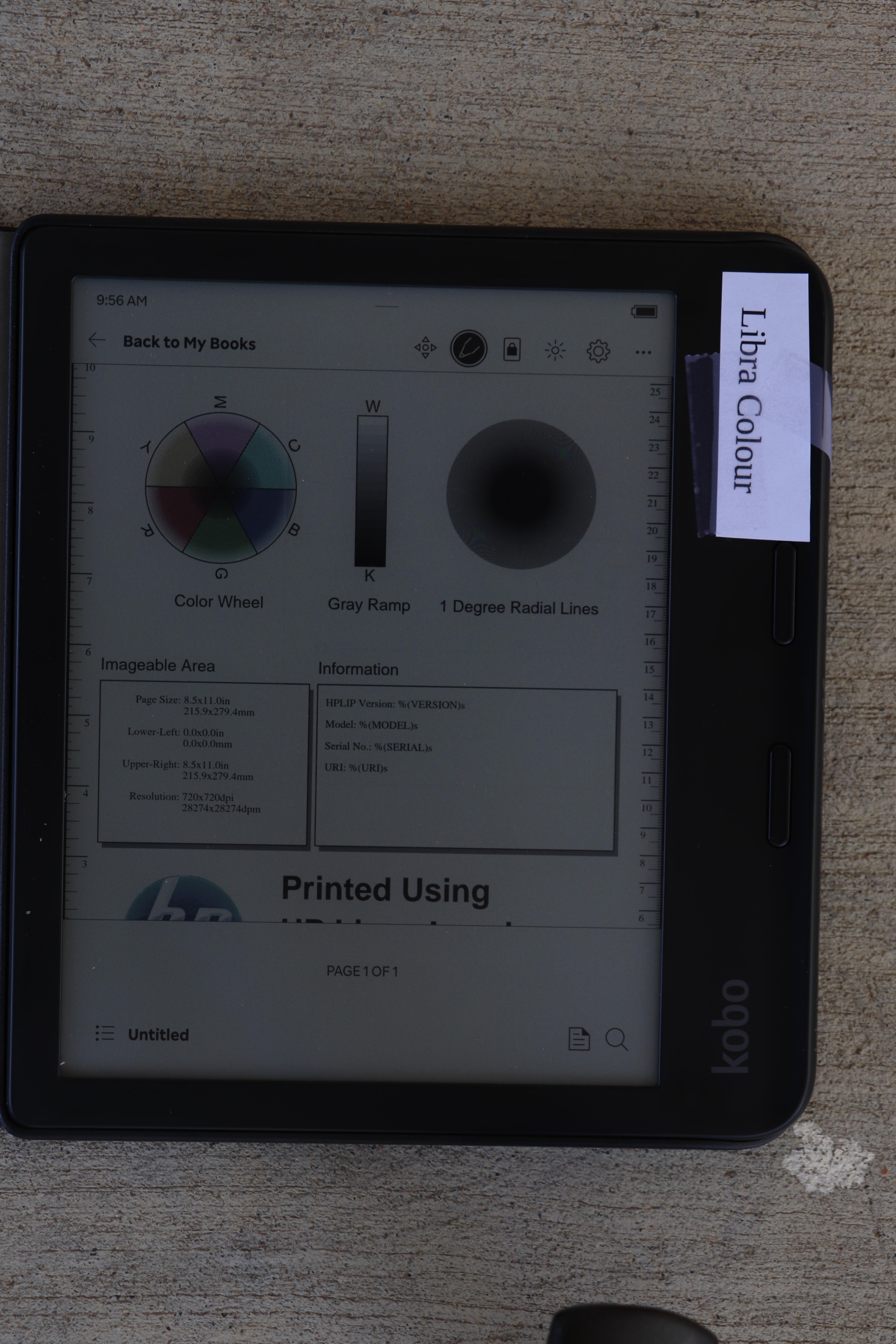
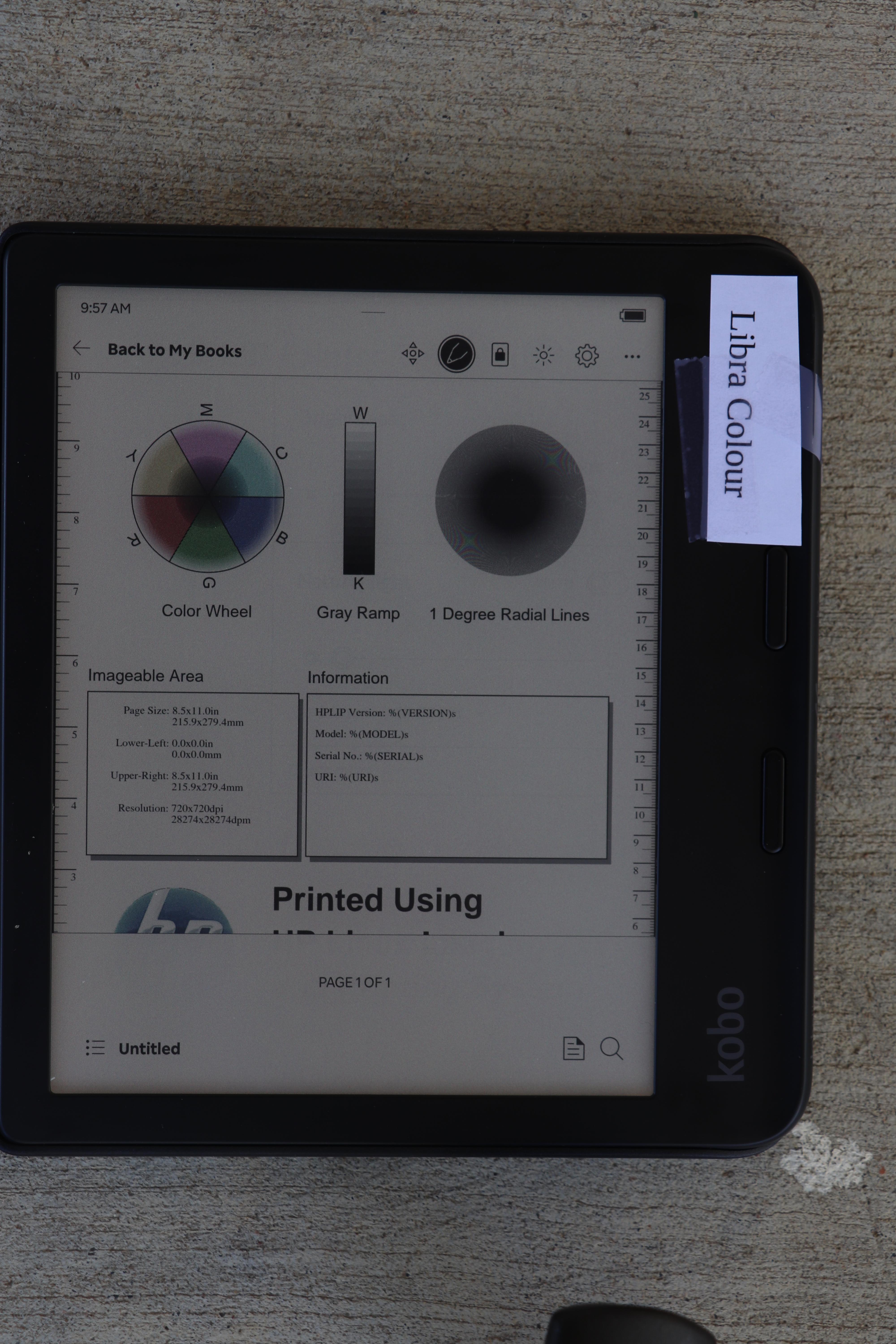
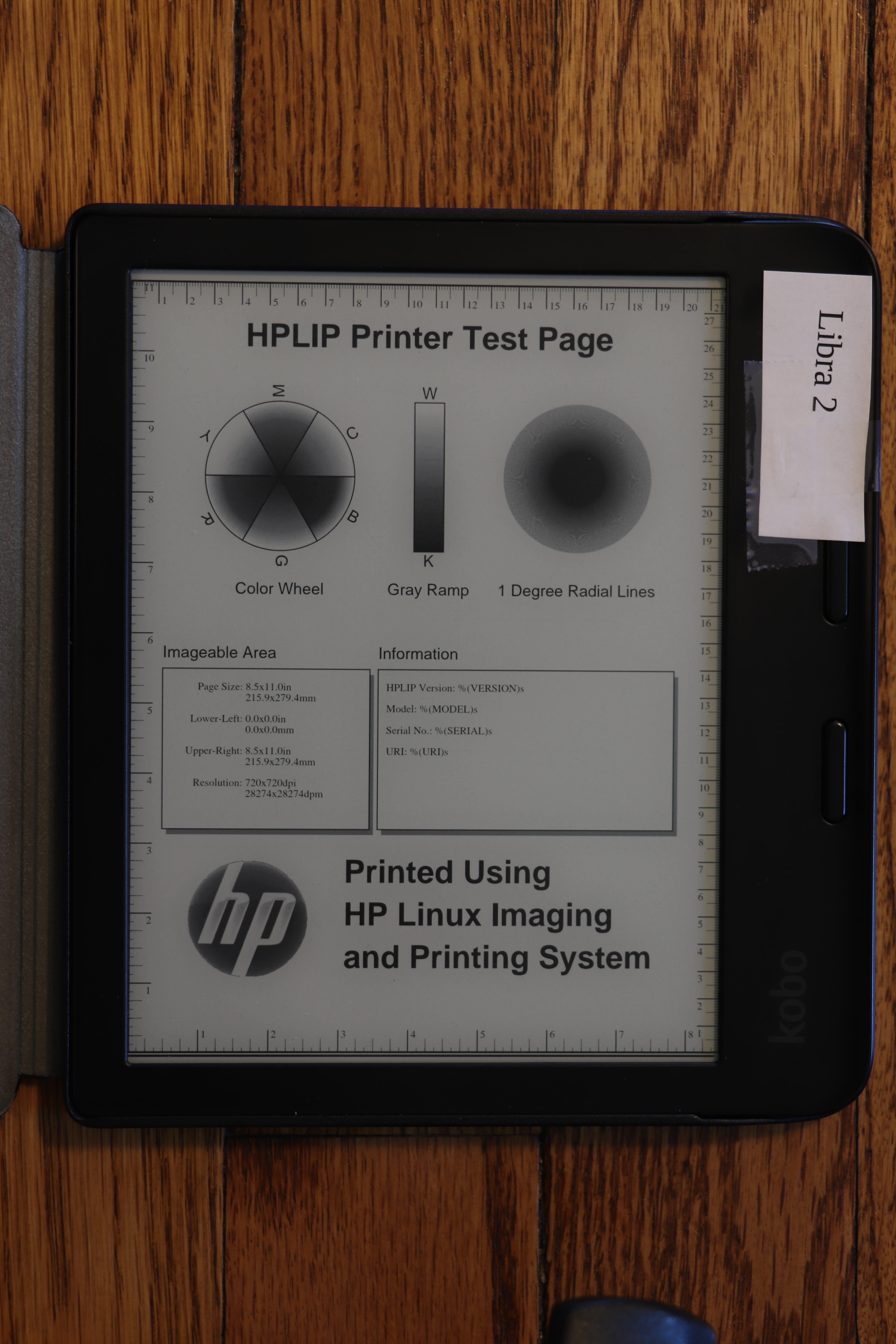
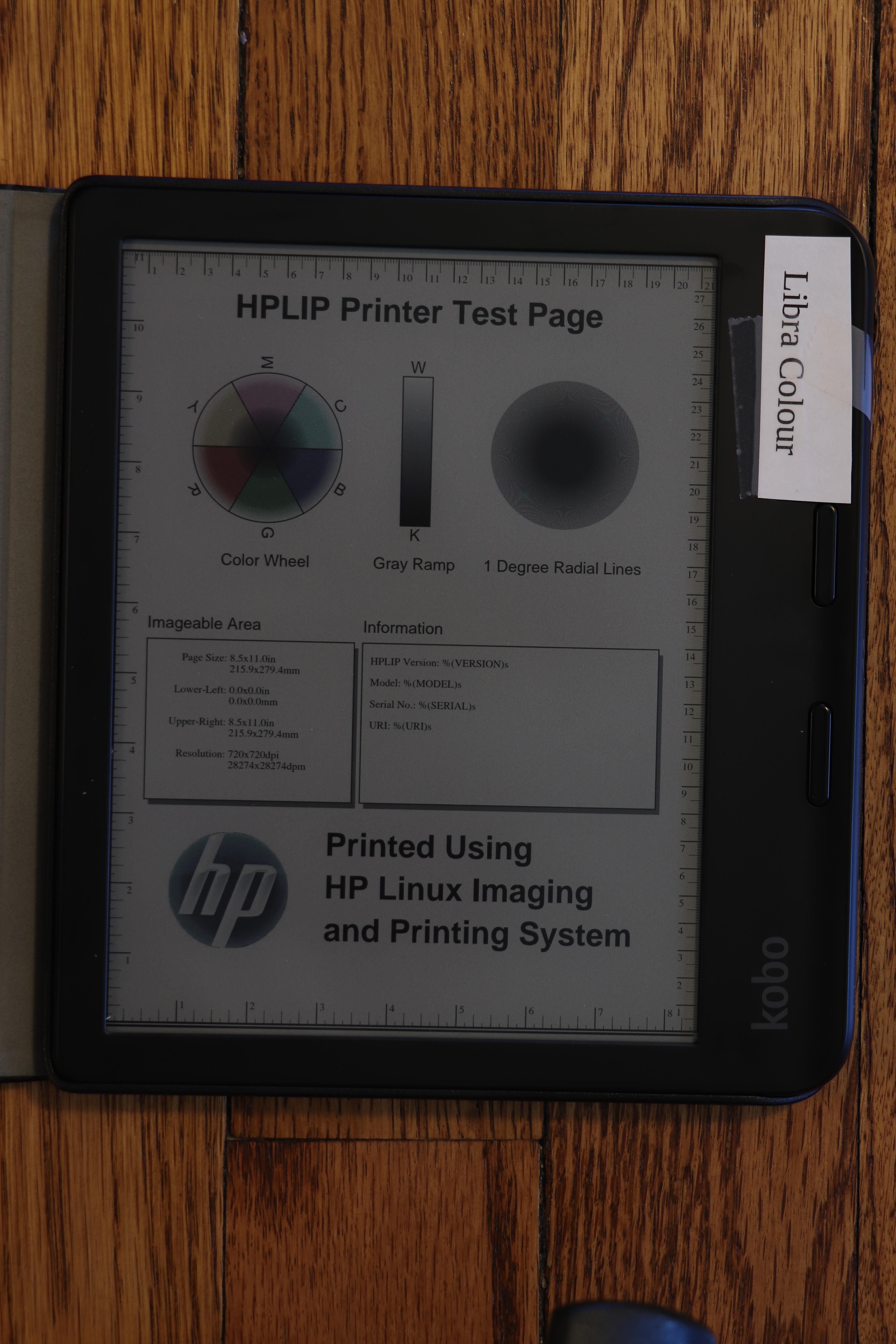
John Goerzen: Photographic comparison: Is the Kobo Libra Colour display worse than the Kobo Libra 2?

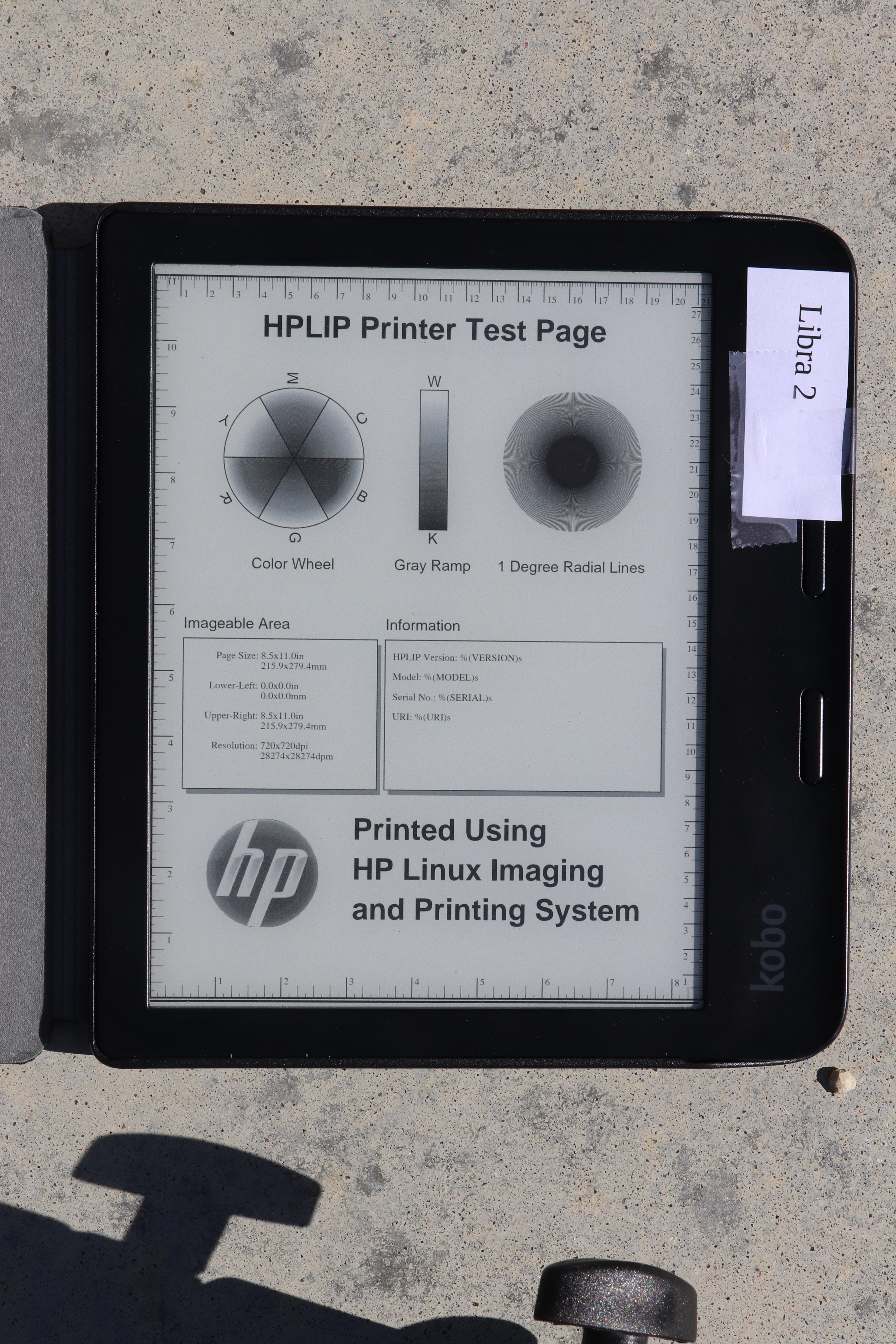
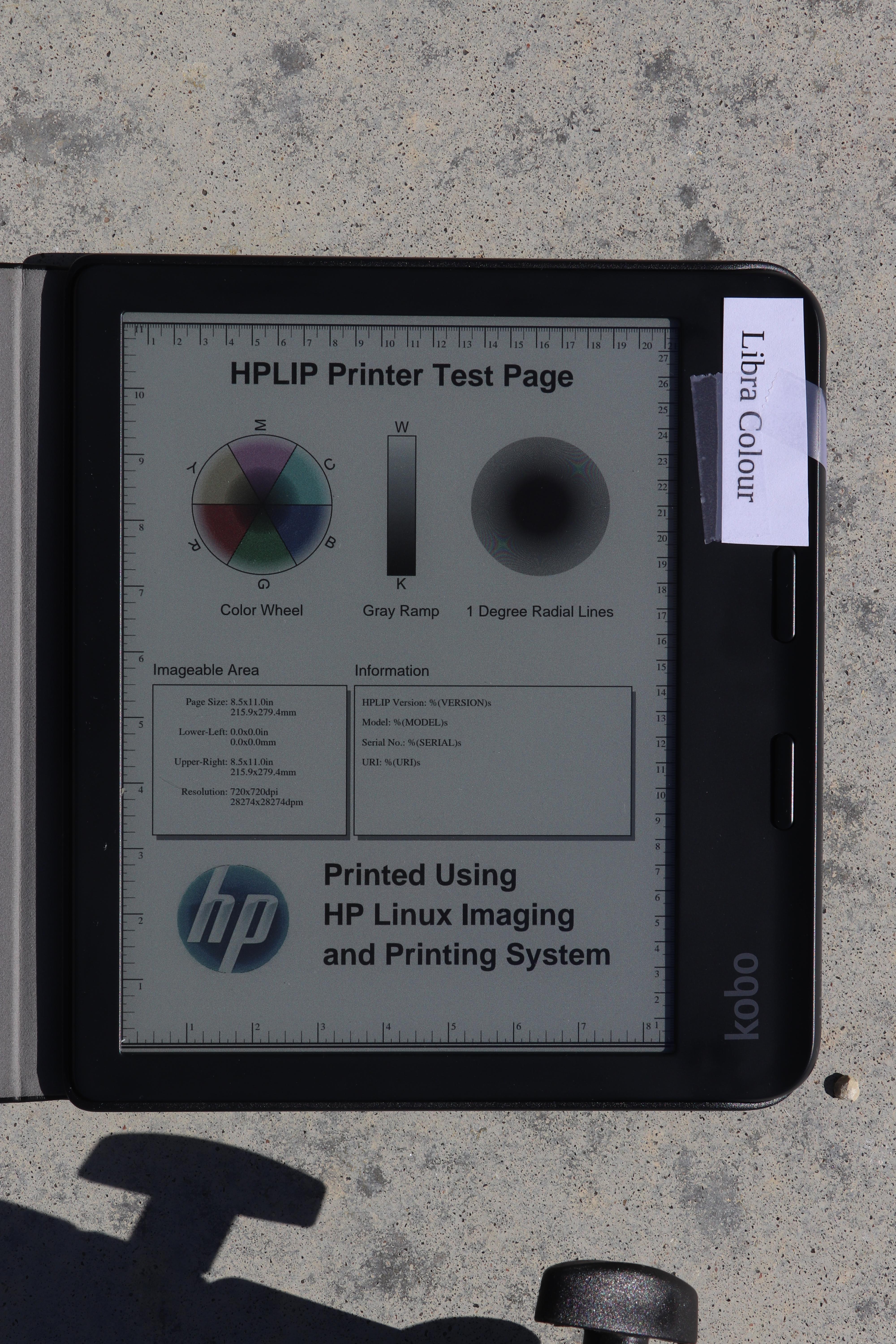
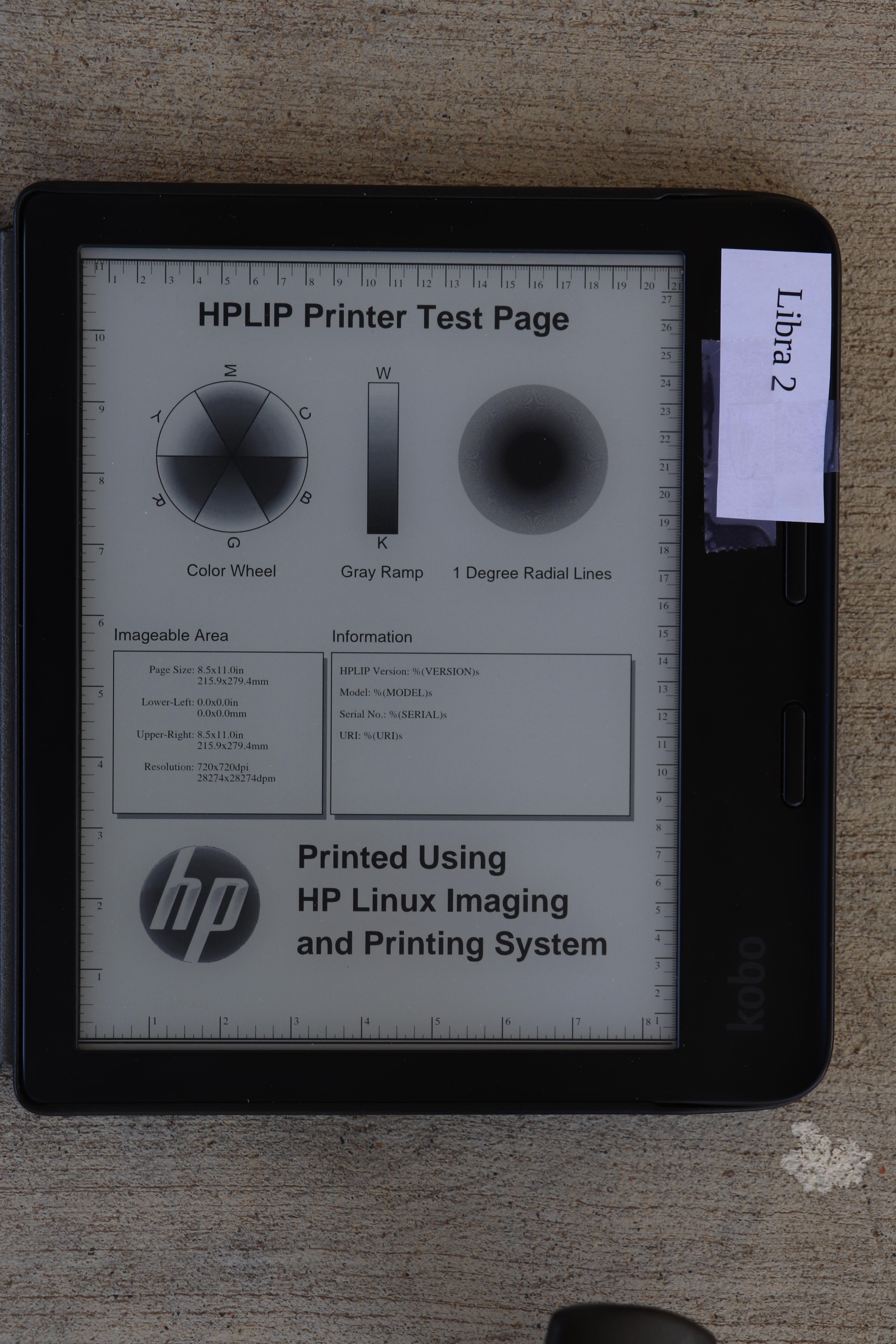
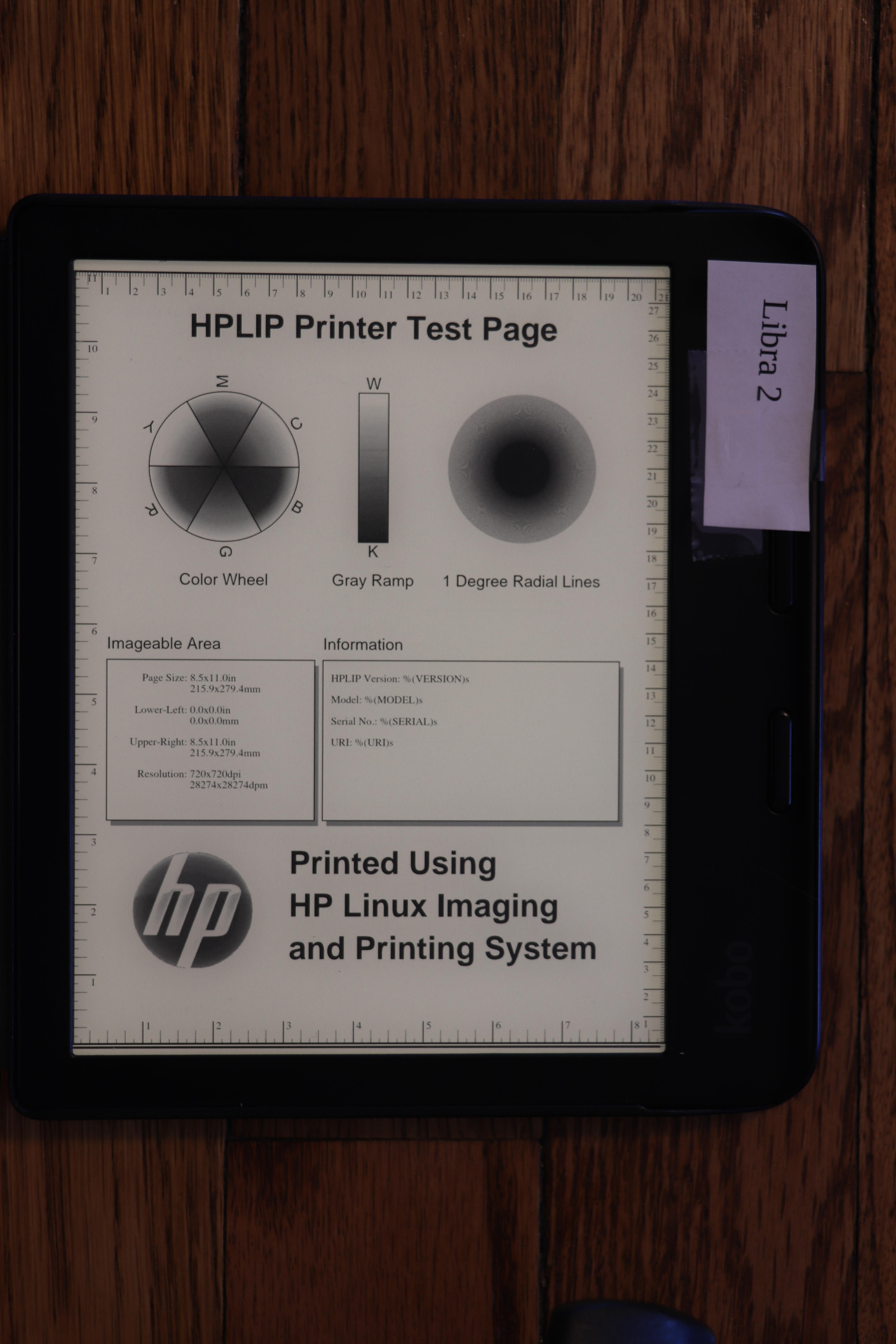
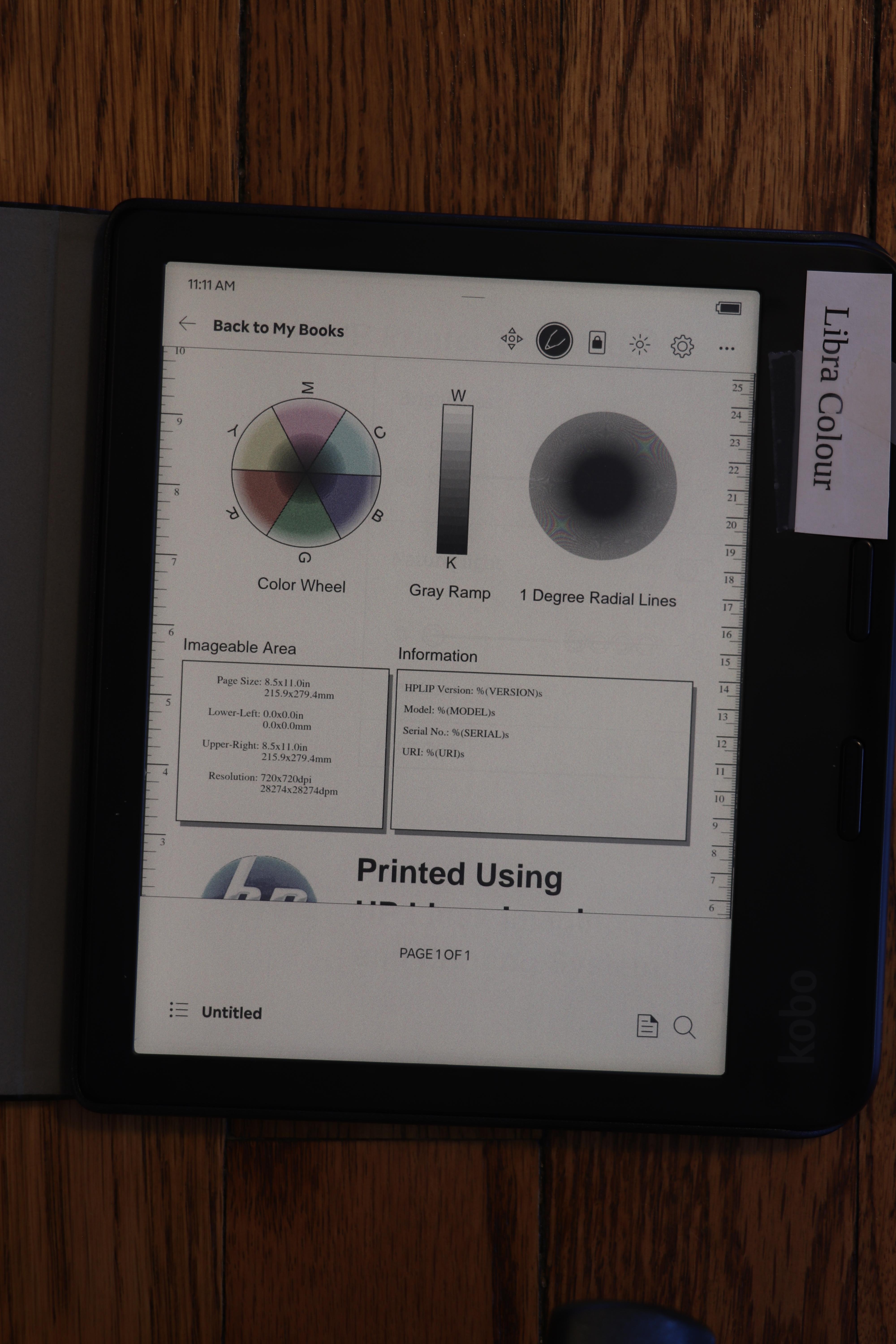
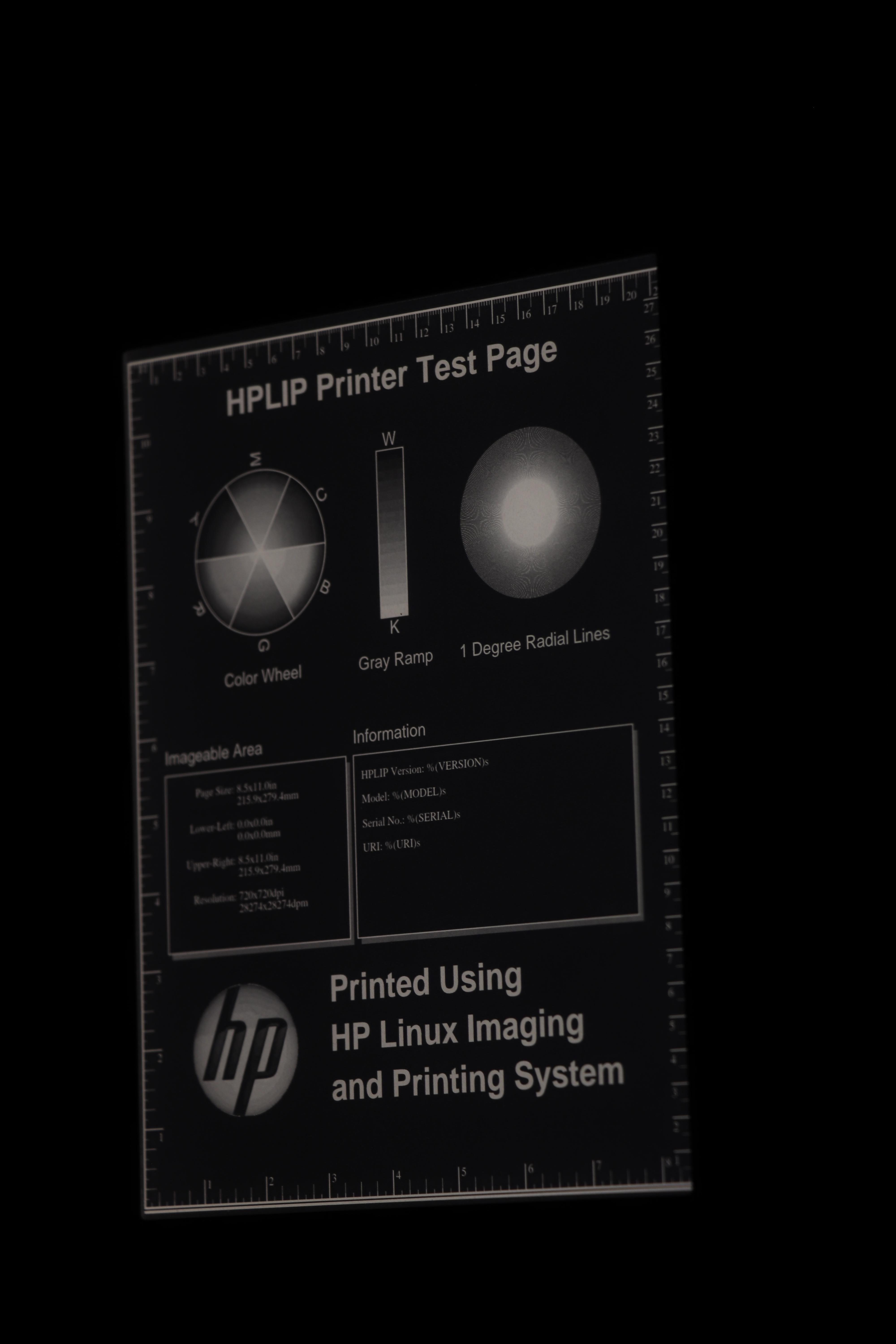
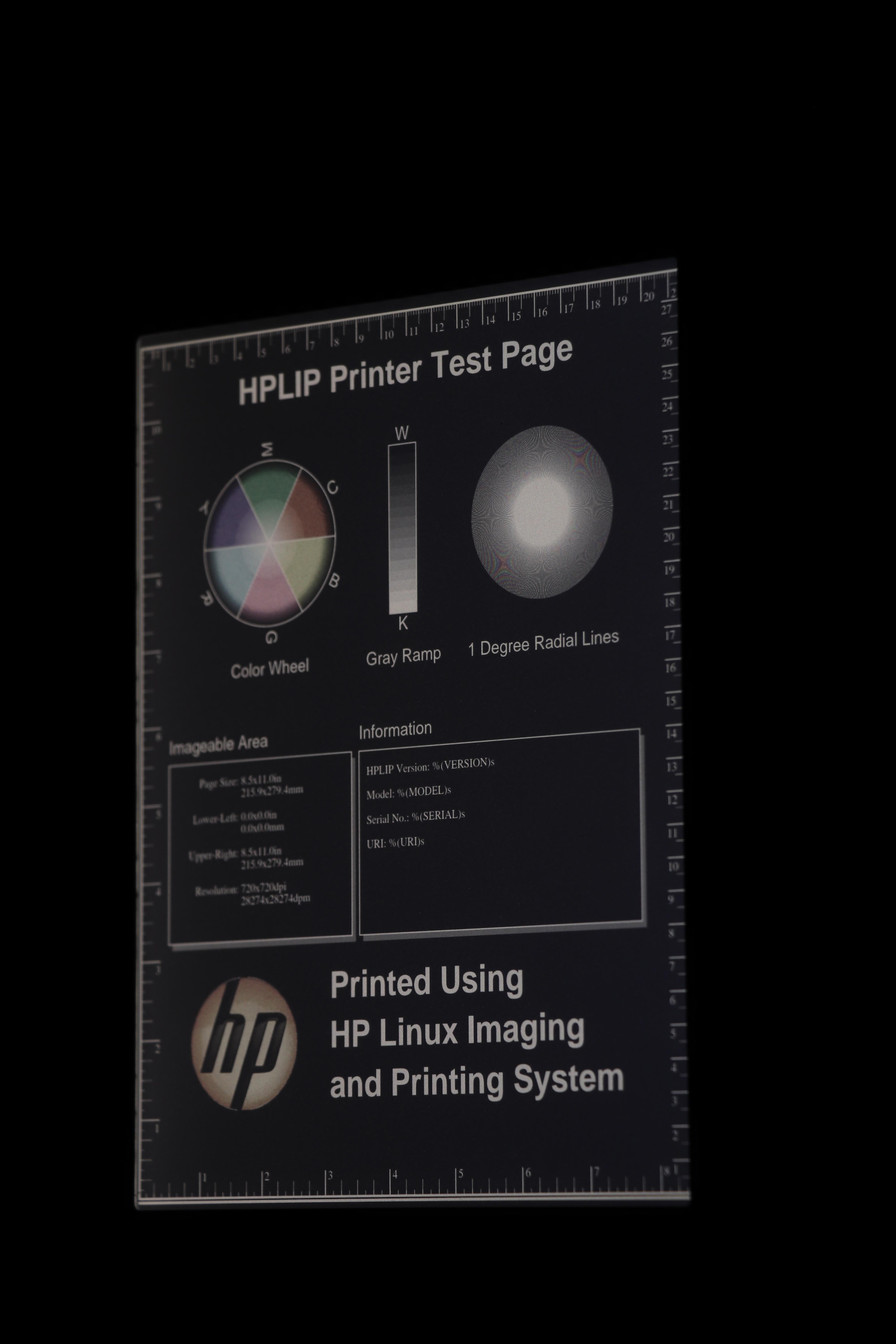
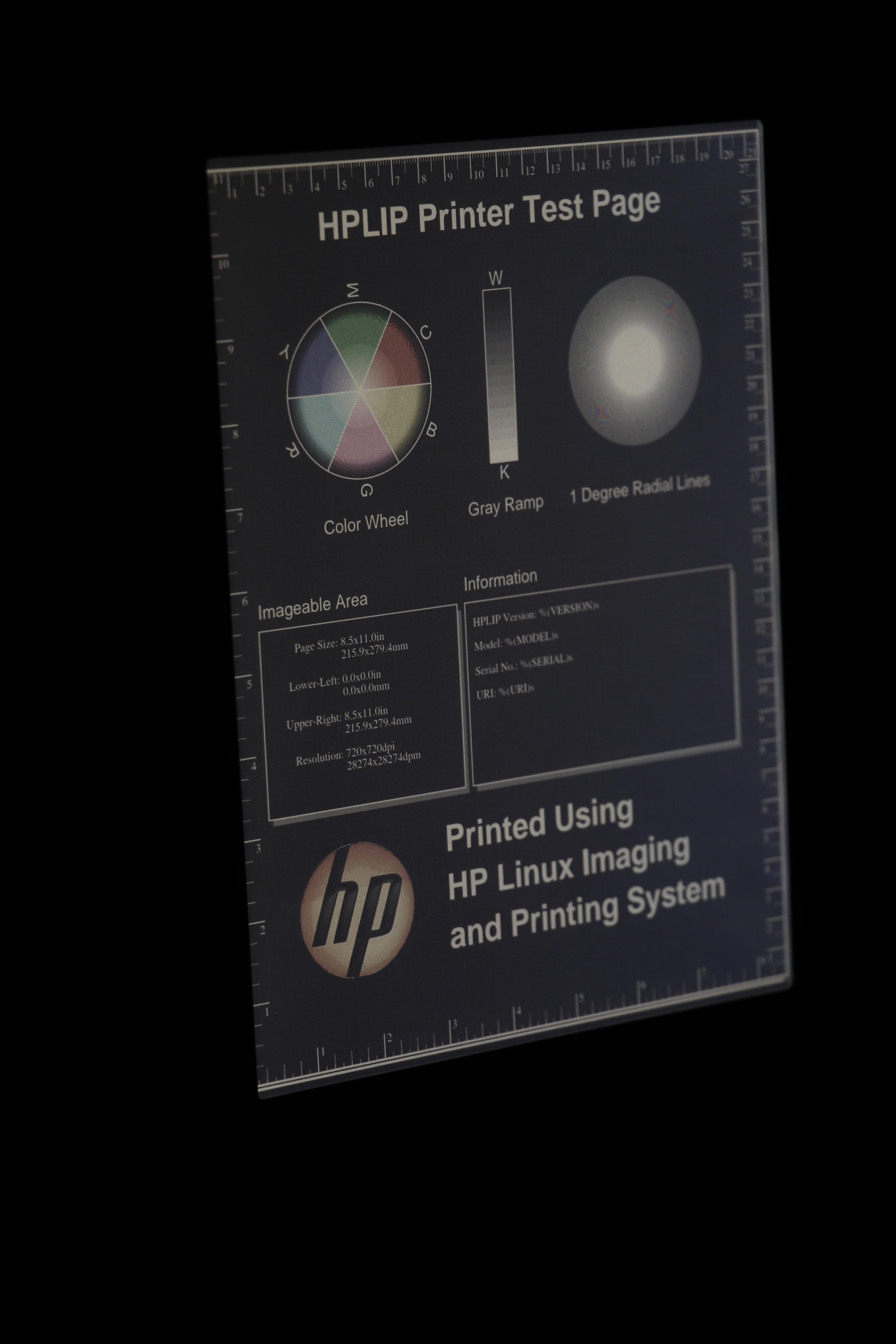
I ve been using E Ink-based ereaders for quite a number of years now. I ve had my Kobo Libra 2 for a few years, and was looking forward to the Kobo Libra Colour the first color E Ink display in a mainstream ereader line. I found the display to be a mixed bag; contrast seemed a lot worse on B&W images, and the device backlight (it s not technically a back light) seemed to cause a particular contrast reduction in dark mode. I went searching for information on this. I found a lot of videos on Kobo Libra 2 vs Libra Colour and so forth, but they were all pretty much useless. These were the mistakes they made: So I dug out my Canon DSLR, tripod, and set up shots. Every shot here is set at ISO 100. Every shot in the same setting has the same exposure settings, which I document. The one thing I forgot to shut off was automatic white balance; you can notice it is active if you look closely at the backgrounds, but WB isn t really relevant to this comparison anyhow. Because there has also been a lot of concern about how well fine B&W details will show up on the Kobo Libra Colour screen, I shot all photos using a PDF test image from the open source hplip package (testpage.ps.gz converted to PDF). This also rules out font differences between the devices. I ensured a full screen refresh before each shot. This is all because color E Ink is effectively a filter called Kaleido over the B&W layer. This causes dimming and some other visual effects. You can click on any image here to see a full-resolution view. The full-size images are the exact JPEG coming from the camera, with only two modifications: 1) metadata has been redacted for privacy reasons, and 2) some images were losslessly rotated after the shoot. OK, onwards! Outdoors, bright sun, shot from directly overhead Bright sun is ideal lighting for an E Ink display. They need no lighting at all in this scenario, and in fact, if you turn on their internal display light, it will probably not be very noticeable. Of course, this is in contrast to phone LCD screens, for which bright sunlight is the worst. Scene: Morning sunlight reaching the ereaders at an angle. The angle was sufficient so that no shadows were cast by the camera or tripod. Device light: Off on both Exposure: 1/160, f16, ISO 100 You can see how much darker the Libra Colour is here. Though in these bright conditions, it is still plenty bright. There may actually be situations in which the Libra 2 is too bright in direct sunlight, requiring a person to squint or whatnot. Looking at the radial lines, it is a bit difficult to tell because the difference in brightness, but I don t see a hugely obvious reduction in quality in the Libra 2. Later I have a shot where I try to match brightness, and we ll check it out again there. Outdoors, shade, shot from directly overhead For the next shot, I set the ereaders in shade, but still well-lit with the diffuse sunlight from all around. The first two have both device lights off. For the third, I set the device light on the Kobo Colour to 100%, full cool shade, to try to see how close I could get it to the Libra 2 brightness. (Sorry it looks like I forgot to close the toolbar on the Colour for this set, but it doesn t modify the important bits of the underlying image.) Device light: Initially off on both Exposure: 1/60, f6.4, ISO 100 Here you can see the light on the Libra Colour was nearly able to match the brightness on the Libra 2. Indoors, room lit with overhead and window light, device light off We continue to move into dimmer light with this next shot. Device light: Off on both Exposure: 1/4, f5, ISO 100 Indoors, room lit with overhead and window light, device light on Now we have the first head-to-head with the device light on. I set the Libra 2 to my favorite warmth setting, found a brightness that looked good, and then tried my best to match those settings on the Libra Colour. My camera s light meter aided in matching brightness. Device light: On (Libra 2 at 40%, Libra Colour at 59%) Exposure: 1/8, f5, ISO 100 (Apparently I am terrible at remembering to dismiss menus, sigh.) Indoors, dark room, dark mode, at an angle The Kobo Libra Colour surprised me with its dark mode. When viewed at an oblique angle, the screen gets pretty washed out. I maintained the same brightness settings here as I did above. It is much more noticeable when the brightness is set down to my preferred nighttime level (4%), or with a more significant angle. Since you can t see my tags, the order of the photos here will be: Libra 2 (standard orientation), Colour (standard orientation), Colour (turned around. Device light: On (as above) Exposure: 1/4, f5.6, ISO 100 Notice how I said I maintained the same brightness settings as before, and yet the Libra Colour looks brighter than the Libra 2 here, whereas it looked the same in the prior non-dark mode photos. Here s why. I set the exposure of each set of shots based on camera metering. As we have seen from the light-off photos, the brightness of a white pixel is a lot less on a Libra Colour than on the Libra 2. However, it is likely that the brightness of a black pixel is about that same. Therefore, contrast on the Libra Colour is lower than on the Libra 2. The traditional shot is majority white pixels, so to make the Libra Colour brightness match that of the Libra 2, I had to crank up the brightness on the Libra Colour to compensate for the darker white background. With me so far? Now with the inverted image, you can see what that does. It doesn t just raise the brightness of the white pixels, but it also raises the brightness of the black pixels. This is expected because we didn t raise contrast, only brightness. Also, in the last image, you can see it is brighter to the right. Again, other conditions that are more difficult to photograph make that much more pronounced. Viewing the Libra Colour from one side (but not the other), in dark mode, with the light on, produces noticeably worse contrast on one side. Conclusions This isn t a slam dunk. Let s walk through this: I don t think there is any noticeable loss of detail on the Libra Colour. The radial lines appeared as well defined on it as on the Libra 2. Oddly, with the backlight, some striations were apparent in the gray gradient test, but I wouldn t be using an E Ink device for clear photographic reproduction anyhow. If you read mostly black and white: If you had been using a Kobo Libra Colour and were handed a Libra 2, you would go, Wow! What an upgrade! The screen is so much brighter! There s little reason to get a Libra Colour. The Libra 2 might be hard to find these days, but the new Clara BW (with a 6 instead of the 7 screen on the Libra series) might be just the thing for you. The Libra 2 is at home in any lighting, from direct sun to pitch black, and has all the usual E Ink benefits (eg, battery life measured in weeks) and drawbacks (slower refresh rate) that we re all used to. If you are interested in photographic color reproduction mostly indoors: Consider a small tablet. The Libra Colour s 4096 colors are going to appear washed out compared to what you re used to on a LCD screen. If you are interested in color content indoors and out: The Libra Colour might be a good fit. It could work well for things where superb color rendition isn t essential for instance, news stories (the Pocket integration or Calibre s news feature could be nice there), comics, etc. In a moderately-lit indoor room, it looks like the Libra Colour s light can lead it to results that approach Libra 2 quality. So if most of your reading is in those conditions, perhaps the Libra Colour is right for you. As a final aside, I wrote in this article about the Kobo devices. I switched from Kindles to Kobos a couple of years ago due to the greater openness of the Kobo devices (you can add things like Nickel Menu and KOReader to them, and they have built-in support for more useful formats), their featureset, and their cost. The top-of-the-line Kindle devices will have a screen very similar if not identical to the Libra 2, so you can very easily consider this to be a comparison between the Oasis and the Libra Colour as well.

Melissa Wen: Get Ready to 2024 Linux Display Next Hackfest in A Coru a!

We re excited to announce the details of our upcoming 2024 Linux Display Next Hackfest in the beautiful city of A Coru a, Spain! This year s hackfest will be hosted by Igalia and will take place from May 14th to 16th. It will be a gathering of minds from a diverse range of companies and open source projects, all coming together to share, learn, and collaborate outside the traditional conference format.

Who s Joining the Fun? We re excited to welcome participants from various backgrounds, including:
  • GPU hardware vendors;
  • Linux distributions;
  • Linux desktop environments and compositors;
  • Color experts, researchers and enthusiasts;
This diverse mix of backgrounds are represented by developers from several companies working on the Linux display stack: AMD, Arm, BlueSystems, Bootlin, Collabora, Google, GravityXR, Igalia, Intel, LittleCMS, Qualcomm, Raspberry Pi, RedHat, SUSE, and System76. It ll ensure a dynamic exchange of perspectives and foster collaboration across the Linux Display community. Please take a look at the list of participants for more info.

What s on the Agenda? The beauty of the hackfest is that the agenda is driven by participants! As this is a hybrid event, we decided to improve the experience for remote participants by creating a dedicated space for them to propose topics and some introductory talks in advance. From those inputs, we defined a schedule that reflects the collective interests of the group, but is still open for amendments and new proposals. Find the schedule details in the official event webpage. Expect discussions on:

KMS Color/HDR
  • Proposal with new DRM object type:
    • Brief presentation of GPU-vendor features;
    • Status update of plane color management pipeline per vendor on Linux;
  • HDR/Color Use-cases:
    • HDR gainmap images and how should we think about HDR;
    • Google/ChromeOS GFX view about HDR/per-plane color management, VKMS and lessons learned;
  • Post-blending Color Pipeline.
  • Color/HDR testing/CI
    • VKMS status update;
    • Chamelium boards, video capture.
  • Wayland protocols
    • color-management protocol status update;
    • color-representation and video playback.
Display control
  • HDR signalling status update;
  • backlight status update;
  • EDID and DDC/CI.
Strategy for video and gaming use-cases
  • Multi-plane support in compositors
    • Underlay, overlay, or mixed strategy for video and gaming use-cases;
    • KMS Plane UAPI to simplify the plane arrangement problem;
    • Shared plane arrangement algorithm desired.
  • HDR video and hardware overlay
Frame timing and VRR
  • Frame timing:
    • Limitations of uAPI;
    • Current user space solutions;
    • Brainstorm better uAPI;
  • Cursor/overlay plane updates with VRR;
  • KMS commit and buffer-readiness deadlines;
Power Saving vs Color/Latency
  • ABM (adaptive backlight management);
  • PSR1 latencies;
  • Power optimization vs color accuracy/latency requirements.
Content-Adaptive Scaling & Sharpening
  • Content-Adaptive Scalers on display hardware;
  • New drm_colorop for content adaptive scaling;
  • Proprietary algorithms.
Display Mux
  • Laptop muxes for switching of the embedded panel between the integrated GPU and the discrete GPU;
  • Seamless/atomic hand-off between drivers on Linux desktops.
Real time scheduling & async KMS API
  • Potential benefits: lower latency input feedback, better VRR handling, buffer synchronization, etc.
  • Issues around async uAPI usage and async-call handling.

In-person, but also geographically-distributed event This year Linux Display Next hackfest is a hybrid event, hosted onsite at the Igalia offices and available for remote attendance. In-person participants will find an environment for networking and brainstorming in our inspiring and collaborative office space. Additionally, A Coru a itself is a gem waiting to be explored, with stunning beaches, good food, and historical sites.

Semi-structured structure: how the 2024 Linux Display Next Hackfest will work
  • Agenda: Participants proposed the topics and talks for discussing in sessions.
  • Interactive Sessions: Discussions, workshops, introductory talks and brainstorming sessions lasting around 1h30. There is always a starting point for discussions and new ideas will emerge in real time.
  • Immersive experience: We will have coffee-breaks between sessions and lunch time at the office for all in-person participants. Lunches and coffee-breaks are sponsored by Igalia. This will keep us sharing knowledge and in continuous interaction.
  • Spaces for all group sizes: In-person participants will find different room sizes that match various group sizes at Igalia HQ. Besides that, there will be some devices for showcasing and real-time demonstrations.

Social Activities: building connections beyond the sessions To make the most of your time in A Coru a, we ll be organizing some social activities:
  • First-day Dinner: In-person participants will enjoy a Galician dinner on Tuesday, after a first day of intensive discussions in the hackfest.
  • Getting to know a little of A Coru a: Finding out a little about A Coru a and current local habits.
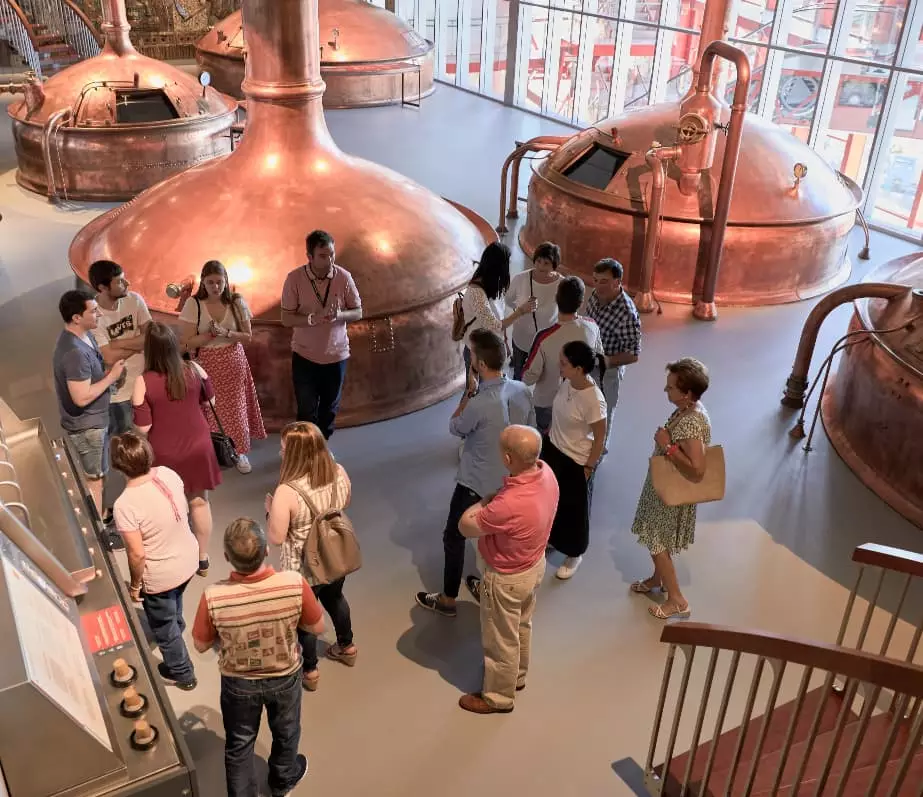
Participants of a guided tour in one of the sectors of the Museum of Estrella Galicia (MEGA). Source: mundoestrellagalicia.es
  • On Thursday afternoon, we will close the 2024 Linux Display Next hackfest with a guided tour of the Museum of Galicia s favorite beer brand, Estrella Galicia. The guided tour covers the eight sectors of the museum and ends with beer pouring and tasting. After this experience, a transfer bus will take us to the Maria Pita square.
  • At Maria Pita square we will see the charm of some historical landmarks of A Coru a, explore the casual and vibrant style of the city center and taste local foods while chatting with friends.

Sponsorship Igalia sponsors lunches and coffee-breaks on hackfest days, Tuesday s dinner, and the social event on Thursday afternoon for in-person participants. We can t wait to welcome hackfest attendees to A Coru a! Stay tuned for further details and outcomes of this unconventional and unique experience.

4 May 2024

Sven Hoexter: vym - view your mind

Had a need for a mindmapping application and found view your mind in the archive. Works but the version is a bit rusty. Sadly my Debian packaging skills are a bit rusty as well, especially when it comes to bigger GUI applications. Thus I spent a good chunk of yesterday afternoon to rip out cdbs and package the last source release on github which is right now 2.9.22 (the release branch already has 2.9.27, still sorting that out). Git repository and a amd64 build of the current state. It still deserves some additional love, e.g. creating a -common package for arch indep content. Proposed a few changes upstream: Also pinged pollux@ who uploaded vym up to 2019 if he'd be fine if I pick it up. If someone else is interested, I'm also fine to put it up on salsa in the general "Debian" group for shared maintenance. I guess I will use it in the future, but time is still a scarce resource for all of us.

1 May 2024

Antoine Beaupr : Tor migrates from Gitolite/GitWeb to GitLab

Note: I've been awfully silent here for the past ... (checks notes) oh dear, 3 months! But that's not because I've been idle, quite the contrary, I've been very busy but just didn't have time to write about anything. So I've taken it upon myself to write something about my work this week, and published this post on the Tor blog which I copy here for a broader audience. Let me know if you like this or not.
Tor has finally completed a long migration from legacy Git infrastructure (Gitolite and GitWeb) to our self-hosted GitLab server. Git repository addresses have therefore changed. Many of you probably have made the switch already, but if not, you will need to change:
https://git.torproject.org/
to:
https://gitlab.torproject.org/
In your Git configuration. The GitWeb front page is now an archived listing of all the repositories before the migration. Inactive git repositories were archived in GitLab legacy/gitolite namespace and the gitweb.torproject.org and git.torproject.org web sites now redirect to GitLab. Best effort was made to reproduce the original gitolite repositories faithfully and also avoid duplicating too much data in the migration. But it's possible that some data present in Gitolite has not migrated to GitLab. User repositories are particularly at risk, because they were massively migrated, and they were "re-forked" from their upstreams, to avoid wasting disk space. If a user had a project with a matching name it was assumed to have the right data, which might be inaccurate. The two virtual machines responsible for the legacy service (cupani for git-rw.torproject.org and vineale for git.torproject.org and gitweb.torproject.org) have been shutdown. Their disks will remain for 3 months (until the end of July 2024) and their backups for another year after that (until the end of July 2025), after which point all the data from those hosts will be destroyed, with only the GitLab archives remaining. The rest of this article expands on how this was done and what kind of problems we faced during the migration.

Where is the code? Normally, nothing should be lost. All repositories in gitolite have been either explicitly migrated by their owners, forcibly migrated by the sysadmin team (TPA), or explicitly destroyed at their owner's request. An exhaustive rewrite map translates gitolite projects to GitLab projects. Some of those projects actually redirect to their parent in cases of empty repositories that were obvious forks. Destroyed repositories redirect to the GitLab front page. Because the migration happened progressively, it's technically possible that commits pushed to gitolite were lost after the migration. We took great care to avoid that scenario. First, we adopted a proposal (TPA-RFC-36) in June 2023 to announce the transition. Then, in March 2024, we locked down all repositories from any further changes. Around that time, only a handful of repositories had changes made after the adoption date, and we examined each repository carefully to make sure nothing was lost. Still, we built a diff of all the changes in the git references that archivists can peruse to check for data loss. It's large (6MiB+) because a lot of repositories were migrated before the mass migration and then kept evolving in GitLab. Many other repositories were rebuilt in GitLab from parent to rebuild a fork relationship which added extra references to those clones. A note to amateur archivists out there, it's probably too late for one last crawl now. The Git repositories now all redirect to GitLab and are effectively unavailable in their original form. That said, the GitWeb site was crawled into the Internet Archive in February 2024, so at least some copy of it is available in the Wayback Machine. At that point, however, many developers had already migrated their projects to GitLab, so the copies there were already possibly out of date compared with the repositories in GitLab. Software Heritage also has a copy of all repositories hosted on Gitolite since June 2023 and have continuously kept mirroring the repositories, where they will be kept hopefully in eternity. There's an issue where the main website can't find the repositories when you search for gitweb.torproject.org, instead search for git.torproject.org. In any case, if you believe data is missing, please do let us know by opening an issue with TPA.

Why? This is an old project in the making. The first discussion about migrating from gitolite to GitLab started in 2020 (almost 4 years ago). But going further back, the first GitLab experiment was in 2016, almost a decade ago. The current GitLab server dates from 2019, replacing Trac for issue tracking in 2020. It was originally supposed to host only mirrors for merge requests and issue trackers but, naturally, one thing led to another and eventually, GitLab had grown a container registry, continuous integration (CI) runners, GitLab Pages, and, of course, hosted most Git repositories. There were hesitations at moving to GitLab for code hosting. We had discussions about the increased attack surface and ways to mitigate that, but, ultimately, it seems the issues were not that serious and the community embraced GitLab. TPA actually migrated its most critical repositories out of shared hosting entirely, into specific servers (e.g. the Puppet Git repository is just on the Puppet server now), leveraging Git's decentralized nature and removing an entire attack surface from our infrastructure. Some of those repositories are mirrored back into GitLab, but the authoritative copy is not on GitLab. In any case, the proposal to migrate from Gitolite to GitLab was effectively just formalizing a fait accompli.

How to migrate from Gitolite / cgit to GitLab The progressive migration was a challenge. If you intend to migrate between hosting platforms, we strongly recommend to make a "flag day" during which you migrate all repositories at once. This ensures a smoother transition and avoids elaborate rewrite rules. When Gitolite access was shutdown, we had repositories on both GitLab and Gitolite, without a clear relationship between the two. A priori, the plan then was to import all the remaining Gitolite repositories into the legacy/gitolite namespace, but that seemed wasteful, particularly for large repositories like Tor Browser which uses nearly a gigabyte of disk space. So we took special care to avoid duplicating repositories. When the mass migration started, only 71 of the 538 Gitolite repositories were Migrated to GitLab in the gitolite.conf file. So, given that we had hundreds of repositories to migrate:, we developed some automation to "save time". We already automate similar ad-hoc tasks with Fabric, so we used that framework here as well. (Our normal configuration management tool is Puppet, which is a poor fit here.) So a relatively large amount of Python code was produced to basically do the following:
  1. check if all on-disk repositories are listed in gitolite.conf (and vice versa) and either add missing repositories or delete them from disk if garbage
  2. for each repository in gitolite.conf, if its category is marked Migrated to GitLab, skip, otherwise;
  3. find a matching GitLab project by name, prompt the user for multiple matches
  4. if a match is found, redirect if the repository is non-empty
    • we have GitLab projects that look like the real thing, but are only present to host migrated Trac issues
    • in such cases we cloned the Gitolite project locally and pushed to the existing repository instead
  5. otherwise, a new repository is created in the legacy/gitolite namespace, using the "import" mechanism in GitLab to automatically import the repository from Gitolite, creating redirections and updating gitolite.conf to document the change
User repositories (those under the user/ directory in Gitolite) were handled specially. First, the existing redirection map was checked to see if a similarly named project was migrated (so that, e.g. user/dgoulet/tor is properly treated as a fork of tpo/core/tor). Then the parent project was forked in GitLab and the Gitolite project force-pushed to the fork. This allows us to show the fork relationship in GitLab and, more importantly, benefit from the "pool" feature in GitLab which deduplicates disk usage between forks. Sometimes, we found no such relationships. Then we simply imported multiple repositories with similar names in the legacy/gitolite namespace, sometimes creating forks between user repositories, on a first-come-first-served basis from the gitolite.conf order. The code used in this migration is now available publicly. We encourage other groups planning to migrate from Gitolite/GitWeb to GitLab to use (and contribute to) our fabric-tasks repository, even though it does have its fair share of hard-coded assertions. The main entry point is the gitolite.mass-repos-migration task. A typical migration job looked like:
anarcat@angela:fabric-tasks$ fab -H cupani.torproject.org gitolite.mass-repos-migration 
[...]
INFO: skipping project project/help/infra in category Migrated to GitLab
INFO: skipping project project/help/wiki in category Migrated to GitLab
INFO: skipping project project/jenkins/jobs in category Migrated to GitLab
INFO: skipping project project/jenkins/tools in category Migrated to GitLab
INFO: searching for projects matching fastlane
INFO: Successfully connected to https://gitlab.torproject.org
import gitolite project project/tor-browser/fastlane into gitlab legacy/gitolite/project/tor-browser/fastlane with desc 'Tor Browser app store and deployment configuration for Fastlane'? [Y/n] 
INFO: importing gitolite project project/tor-browser/fastlane into gitlab legacy/gitolite/project/tor-browser/fastlane with desc 'Tor Browser app store and deployment configuration for Fastlane'
INFO: building a new connect to cupani
INFO: defaulting name to fastlane
INFO: importing project into GitLab
INFO: Successfully connected to https://gitlab.torproject.org
INFO: loading group legacy/gitolite/project/tor-browser
INFO: archiving project
INFO: creating repository fastlane (fastlane) in namespace legacy/gitolite/project/tor-browser from https://git.torproject.org/project/tor-browser/fastlane into https://gitlab.torproject.org/legacy/gitolite/project/tor-browser/fastlane
INFO: migrating Gitolite repository project/tor-browser/fastlane to GitLab project legacy/gitolite/project/tor-browser/fastlane
INFO: uploading 399 bytes to /srv/git.torproject.org/repositories/project/tor-browser/fastlane.git/hooks/pre-receive
INFO: making /srv/git.torproject.org/repositories/project/tor-browser/fastlane.git/hooks/pre-receive executable
INFO: adding entry to rewrite_map /home/anarcat/src/tor/tor-puppet/modules/profile/files/git/gitolite2gitlab.txt
INFO: modifying gitolite.conf to add: "config gitweb.category = Migrated to GitLab"
INFO: rewriting gitolite config /home/anarcat/src/tor/gitolite-admin/conf/gitolite.conf to change project project/tor-browser/fastlane to category Migrated to GitLab
INFO: skipping project project/bridges/bridgedb-admin in category Migrated to GitLab
[...]
In the above, you can see migrated repositories skipped then the fastlane project being archived into GitLab. Another example with a later version of the script, processing only user repositories and showing the interactive prompt and a force-push into a fork:
$ fab -H cupani.torproject.org  gitolite.mass-repos-migration --include 'user/.*' --exclude '.*tor-?browser.*'
INFO: skipping project user/aagbsn/bridgedb in category Migrated to GitLab
[...]
INFO: skipping project user/phw/atlas in category Migrated to GitLab
INFO: processing project user/phw/obfsproxy (Philipp's obfsproxy repository) in category Users' development repositories (Attic)
INFO: Successfully connected to https://gitlab.torproject.org
INFO: user repository detected, trying to find fork phw/obfsproxy
WARNING: no existing fork found, entering user fork subroutine
INFO: found 6 GitLab projects matching 'obfsproxy' (https://gitweb.torproject.org/user/phw/obfsproxy.git)
0 legacy/gitolite/debian/obfsproxy
1 legacy/gitolite/debian/obfsproxy-legacy
2 legacy/gitolite/user/asn/obfsproxy
3 legacy/gitolite/user/ioerror/obfsproxy
4 tpo/anti-censorship/pluggable-transports/obfsproxy
5 tpo/anti-censorship/pluggable-transports/obfsproxy-legacy
select parent to fork from, or enter to abort: ^G4
INFO: repository is not empty: in-pack: 2104, packs: 1, size-pack: 414
fork project tpo/anti-censorship/pluggable-transports/obfsproxy into legacy/gitolite/user/phw/obfsproxy^G [Y/n] 
INFO: loading project tpo/anti-censorship/pluggable-transports/obfsproxy
INFO: forking project user/phw/obfsproxy into namespace legacy/gitolite/user/phw
INFO: waiting for fork to complete...
INFO: fork status: started, sleeping...
INFO: fork finished
INFO: cloning and force pushing from user/phw/obfsproxy to legacy/gitolite/user/phw/obfsproxy
INFO: deleting branch protection: <class 'gitlab.v4.objects.branches.ProjectProtectedBranch'> =>  'id': 2723, 'name': 'master', 'push_access_levels': [ 'id': 2864, 'access_level': 40, 'access_level_description': 'Maintainers', 'deploy_key_id': None ], 'merge_access_levels': [ 'id': 2753, 'access_level': 40, 'access_level_description': 'Maintainers' ], 'allow_force_push': False 
INFO: cloning repository git-rw.torproject.org:/srv/git.torproject.org/repositories/user/phw/obfsproxy.git in /tmp/tmp6orvjggy/user/phw/obfsproxy
Cloning into bare repository '/tmp/tmp6orvjggy/user/phw/obfsproxy'...
INFO: pushing to GitLab: https://gitlab.torproject.org/legacy/gitolite/user/phw/obfsproxy
remote: 
remote: To create a merge request for bug_10887, visit:        
remote:   https://gitlab.torproject.org/legacy/gitolite/user/phw/obfsproxy/-/merge_requests/new?merge_request%5Bsource_branch%5D=bug_10887        
remote: 
[...]
To ssh://gitlab.torproject.org/legacy/gitolite/user/phw/obfsproxy
 + 2bf9d09...a8e54d5 master -> master (forced update)
 * [new branch]      bug_10887 -> bug_10887
[...]
INFO: migrating repo
INFO: migrating Gitolite repository https://gitweb.torproject.org/user/phw/obfsproxy.git to GitLab project https://gitlab.torproject.org/legacy/gitolite/user/phw/obfsproxy
INFO: adding entry to rewrite_map /home/anarcat/src/tor/tor-puppet/modules/profile/files/git/gitolite2gitlab.txt
INFO: modifying gitolite.conf to add: "config gitweb.category = Migrated to GitLab"
INFO: rewriting gitolite config /home/anarcat/src/tor/gitolite-admin/conf/gitolite.conf to change project user/phw/obfsproxy to category Migrated to GitLab
INFO: processing project user/phw/scramblesuit (Philipp's ScrambleSuit repository) in category Users' development repositories (Attic)
INFO: user repository detected, trying to find fork phw/scramblesuit
WARNING: no existing fork found, entering user fork subroutine
WARNING: no matching gitlab project found for user/phw/scramblesuit
INFO: user fork subroutine failed, resuming normal procedure
INFO: searching for projects matching scramblesuit
import gitolite project user/phw/scramblesuit into gitlab legacy/gitolite/user/phw/scramblesuit with desc 'Philipp's ScrambleSuit repository'?^G [Y/n] 
INFO: checking if remote repo https://git.torproject.org/user/phw/scramblesuit exists
INFO: importing gitolite project user/phw/scramblesuit into gitlab legacy/gitolite/user/phw/scramblesuit with desc 'Philipp's ScrambleSuit repository'
INFO: importing project into GitLab
INFO: Successfully connected to https://gitlab.torproject.org
INFO: loading group legacy/gitolite/user/phw
INFO: creating repository scramblesuit (scramblesuit) in namespace legacy/gitolite/user/phw from https://git.torproject.org/user/phw/scramblesuit into https://gitlab.torproject.org/legacy/gitolite/user/phw/scramblesuit
INFO: archiving project
INFO: migrating Gitolite repository https://gitweb.torproject.org/user/phw/scramblesuit.git to GitLab project https://gitlab.torproject.org/legacy/gitolite/user/phw/scramblesuit
INFO: adding entry to rewrite_map /home/anarcat/src/tor/tor-puppet/modules/profile/files/git/gitolite2gitlab.txt
INFO: modifying gitolite.conf to add: "config gitweb.category = Migrated to GitLab"
INFO: rewriting gitolite config /home/anarcat/src/tor/gitolite-admin/conf/gitolite.conf to change project user/phw/scramblesuit to category Migrated to GitLab
[...]
Acute eyes will notice the bell used as a notification mechanism as well in this transcript. A lot of the code is now useless for us, but some, like "commit and push" or is-repo-empty live on in the git module and, of course, the gitlab module has grown some legs along the way. We've also found fun bugs, like a file descriptor exhaustion in bash, among other oddities. The retirement milestone and issue 41215 has a detailed log of the migration, for those curious. This was a challenging project, but it feels nice to have this behind us. This gets rid of 2 of the 4 remaining machines running Debian "old-old-stable", which moves a bit further ahead in our late bullseye upgrades milestone. Full transparency: we tested GPT-3.5, GPT-4, and other large language models to see if they could answer the question "write a set of rewrite rules to redirect GitWeb to GitLab". This has become a standard LLM test for your faithful writer to figure out how good a LLM is at technical responses. None of them gave an accurate, complete, and functional response, for the record. The actual rewrite rules as of this writing follow, for humans that actually like working answers provided by expert humans instead of artificial intelligence which currently seem to be, glorified, mansplaining interns.

git.torproject.org rewrite rules Those rules are relatively simple in that they rewrite a single URL to its equivalent GitLab counterpart in a 1:1 fashion. It relies on the rewrite map mentioned above, of course.
RewriteEngine on
# this RewriteMap connects the gitweb projects to their GitLab
# equivalent
RewriteMap gitolite2gitlab "txt:/etc/apache2/gitolite2gitlab.txt"
# if this becomes a performance bottleneck, convert to a DBM map with:
#
#  $ httxt2dbm -i mapfile.txt -o mapfile.map
#
# and:
#
# RewriteMap mapname "dbm:/etc/apache/mapfile.map"
#
# according to reports lavamind found online, we hit such a
# performance bottleneck only around millions of entries, which is not our case
# those two rules can go away once all the projects are
# migrated to GitLab
#
# this matches the request URI so we can check the RewriteMap
# for a match next
#
# WARNING: this won't match URLs without .git in them, which
# *do* work now. one possibility would be to match the request
# URI (without query string!) with:
#
# /git/(.*)(.git)?/(((branches hooks info objects/).*) git-.* upload-pack receive-pack HEAD config description)?.
#
# I haven't been able to figure out the actual structure of
# those URLs, so it's really hard to figure out the boundaries
# of the project name here. I stopped after pouring around the
# http-backend.c code in git
# itself. https://www.git-scm.com/docs/http-protocol is also
# kind of incomplete and unsatisfying.
RewriteCond % REQUEST_URI  ^/(git/)?(.*).git/.*$
# this makes the RewriteRule match only if there's a match in
# the rewrite map
RewriteCond $ gitolite2gitlab:%2 NOT_FOUND  !NOT_FOUND
RewriteRule ^/(git/)?(.*).git/(.*)$ https://gitlab.torproject.org/$ gitolite2gitlab:$2 .git/$3 [R=302,L]
# Fallback everything else to GitLab
RewriteRule (.*) https://gitlab.torproject.org [R=302,L]

gitweb.torproject.org rewrite rules Those are the vastly more complicated GitWeb to GitLab rewrite rules. Note that we say "GitWeb" but we were actually not running GitWeb but cgit, as the former didn't actually scale for us.
RewriteEngine on
# this RewriteMap connects the gitweb projects to their GitLab
# equivalent
RewriteMap gitolite2gitlab "txt:/etc/apache2/gitolite2gitlab.txt"
# special rule to process targets of the old spec.tpo site and
# bring them to the right redirect on the new spec.tpo site. that should turn, for example:
#
# https://gitweb.torproject.org/torspec.git/tree/address-spec.txt
#
# into:
#
# https://spec.torproject.org/address-spec
RewriteRule ^/torspec.git/tree/(.*).txt$ https://spec.torproject.org/$1 [R=302]
# list of endpoints taken from cgit's cmd.c
# those two RewriteCond are necessary because we don't move
# all repositories at once. once the migration is completed,
# they can be removed.
#
# and yes, they are copied all over the place below
#
# create a match for the project name to check if the project
# has been moved to GitLab
RewriteCond % REQUEST_URI  ^/(.*).git(/.*)?$
# this makes the RewriteRule match only if there's a match in
# the rewrite map
RewriteCond $ gitolite2gitlab:%1 NOT_FOUND  !NOT_FOUND
# main project page, like summary below
RewriteRule ^/(.*).git/?$ https://gitlab.torproject.org/$ gitolite2gitlab:$1 / [R=302,L]
# summary
RewriteCond % REQUEST_URI  ^/(.*).git/.*$
RewriteCond $ gitolite2gitlab:%1 NOT_FOUND  !NOT_FOUND
RewriteRule ^/(.*).git/summary/?$ https://gitlab.torproject.org/$ gitolite2gitlab:$1 / [R=302,L]
# about
RewriteCond % REQUEST_URI  ^/(.*).git/.*$
RewriteCond $ gitolite2gitlab:%1 NOT_FOUND  !NOT_FOUND
RewriteRule ^/(.*).git/about/?$ https://gitlab.torproject.org/$ gitolite2gitlab:$1 / [R=302,L]
# commit
RewriteCond % REQUEST_URI  ^/(.*).git/.*$
RewriteCond $ gitolite2gitlab:%1 NOT_FOUND  !NOT_FOUND
RewriteCond "% QUERY_STRING " "(.*(?:^ &))id=([^&]*)(&.*)?$"
RewriteRule ^/(.*).git/commit/? https://gitlab.torproject.org/$ gitolite2gitlab:$1 /-/commit/%2 [R=302,L,QSD]
RewriteCond % REQUEST_URI  ^/(.*).git/.*$
RewriteCond $ gitolite2gitlab:%1 NOT_FOUND  !NOT_FOUND
RewriteRule ^/(.*).git/commit/? https://gitlab.torproject.org/$ gitolite2gitlab:$1 /-/commits/HEAD [R=302,L]
# diff, incomplete because can diff arbitrary refs and files in cgit but not in GitLab, hard to parse
RewriteCond % REQUEST_URI  ^/(.*).git/.*$
RewriteCond $ gitolite2gitlab:%1 NOT_FOUND  !NOT_FOUND
RewriteCond % QUERY_STRING  id=([^&]*)
RewriteRule ^/(.*).git/diff/? https://gitlab.torproject.org/$ gitolite2gitlab:$1 /-/commit/%1 [R=302,L,QSD]
# patch
RewriteCond % REQUEST_URI  ^/(.*).git/.*$
RewriteCond $ gitolite2gitlab:%1 NOT_FOUND  !NOT_FOUND
RewriteCond % QUERY_STRING  id=([^&]*)
RewriteRule ^/(.*).git/patch/? https://gitlab.torproject.org/$ gitolite2gitlab:$1 /-/commit/%1.patch [R=302,L,QSD]
# rawdiff, incomplete because can show only one file diff, which GitLab cannot
RewriteCond % REQUEST_URI  ^/(.*).git/.*$
RewriteCond $ gitolite2gitlab:%1 NOT_FOUND  !NOT_FOUND
RewriteCond % QUERY_STRING  id=([^&]*)
RewriteRule ^/(.*).git/rawdiff/?$ https://gitlab.torproject.org/$ gitolite2gitlab:$1 /-/commit/%1.diff [R=302,L,QSD]
# log
RewriteCond % REQUEST_URI  ^/(.*).git/.*$
RewriteCond $ gitolite2gitlab:%1 NOT_FOUND  !NOT_FOUND
RewriteCond % QUERY_STRING  h=([^&]*)
RewriteRule ^/(.*).git/log/?$ https://gitlab.torproject.org/$ gitolite2gitlab:$1 /-/commits/%1 [R=302,L,QSD]
RewriteCond % REQUEST_URI  ^/(.*).git/.*$
RewriteCond $ gitolite2gitlab:%1 NOT_FOUND  !NOT_FOUND
RewriteRule ^/(.*).git/log/?$ https://gitlab.torproject.org/$ gitolite2gitlab:$1 /-/commits/HEAD [R=302,L]
RewriteCond % REQUEST_URI  ^/(.*).git/.*$
RewriteCond $ gitolite2gitlab:%1 NOT_FOUND  !NOT_FOUND
RewriteRule ^/(.*).git/log(/?.*)$ https://gitlab.torproject.org/$ gitolite2gitlab:$1 /-/commits/HEAD$2 [R=302,L]
# atom
RewriteCond % REQUEST_URI  ^/(.*).git/.*$
RewriteCond $ gitolite2gitlab:%1 NOT_FOUND  !NOT_FOUND
RewriteCond % QUERY_STRING  h=([^&]*)
RewriteRule ^/(.*).git/atom/?$ https://gitlab.torproject.org/$ gitolite2gitlab:$1 /-/commits/%1 [R=302,L,QSD]
RewriteCond % REQUEST_URI  ^/(.*).git/.*$
RewriteCond $ gitolite2gitlab:%1 NOT_FOUND  !NOT_FOUND
RewriteRule ^/(.*).git/atom/?$ https://gitlab.torproject.org/$ gitolite2gitlab:$1 /-/commits/HEAD [R=302,L,QSD]
# refs, incomplete because two pages in GitLab, defaulting to "tags"
RewriteCond % REQUEST_URI  ^/(.*).git/.*$
RewriteCond $ gitolite2gitlab:%1 NOT_FOUND  !NOT_FOUND
RewriteRule ^/(.*).git/refs/?$ https://gitlab.torproject.org/$ gitolite2gitlab:$1 /-/tags [R=302,L]
RewriteCond % REQUEST_URI  ^/(.*).git/.*$
RewriteCond $ gitolite2gitlab:%1 NOT_FOUND  !NOT_FOUND
RewriteCond % QUERY_STRING  h=([^&]*)
RewriteRule ^/(.*).git/tag/? https://gitlab.torproject.org/$ gitolite2gitlab:$1 /-/tags/%1 [R=302,L,QSD]
# tree
RewriteCond % REQUEST_URI  ^/(.*).git/.*$
RewriteCond $ gitolite2gitlab:%1 NOT_FOUND  !NOT_FOUND
RewriteCond % QUERY_STRING  id=([^&]*)
RewriteRule ^/(.*).git/tree(/?.*)$ https://gitlab.torproject.org/$ gitolite2gitlab:$1 /-/tree/%1$2 [R=302,L,QSD]
RewriteCond % REQUEST_URI  ^/(.*).git/.*$
RewriteCond $ gitolite2gitlab:%1 NOT_FOUND  !NOT_FOUND
RewriteRule ^/(.*).git/tree(/?.*)$ https://gitlab.torproject.org/$ gitolite2gitlab:$1 /-/tree/HEAD$2 [R=302,L]
# /-/tree has no good default in GitLab, revert to HEAD which is a good
# approximation (we can't assume "master" here anymore)
RewriteCond % REQUEST_URI  ^/(.*).git/.*$
RewriteCond $ gitolite2gitlab:%1 NOT_FOUND  !NOT_FOUND
RewriteRule ^/(.*).git/tree/?$ https://gitlab.torproject.org/$ gitolite2gitlab:$1 /-/tree/HEAD [R=302,L]
# plain
RewriteCond % REQUEST_URI  ^/(.*).git/.*$
RewriteCond $ gitolite2gitlab:%1 NOT_FOUND  !NOT_FOUND
RewriteCond % QUERY_STRING  h=([^&]*)
RewriteRule ^/(.*).git/plain(/?.*)$ https://gitlab.torproject.org/$ gitolite2gitlab:$1 /-/raw/%1$2 [R=302,L,QSD]
RewriteCond % REQUEST_URI  ^/(.*).git/.*$
RewriteCond $ gitolite2gitlab:%1 NOT_FOUND  !NOT_FOUND
RewriteRule ^/(.*).git/plain(/?.*)$ https://gitlab.torproject.org/$ gitolite2gitlab:$1 /-/raw/HEAD$2 [R=302,L]
# blame: disabled
#RewriteCond % REQUEST_URI  ^/(.*).git/.*$
#RewriteCond $ gitolite2gitlab:%1 NOT_FOUND  !NOT_FOUND
#RewriteCond % QUERY_STRING  h=([^&]*)
#RewriteRule ^/(.*).git/blame(/?.*)$ https://gitlab.torproject.org/$ gitolite2gitlab:$1 /-/blame/%1$2 [R=302,L,QSD]
# same default as tree above
#RewriteCond % REQUEST_URI  ^/(.*).git/.*$
#RewriteCond $ gitolite2gitlab:%1 NOT_FOUND  !NOT_FOUND
#RewriteRule ^/(.*).git/blame(/?.*)$ https://gitlab.torproject.org/$ gitolite2gitlab:$1 /-/blame/HEAD/$2 [R=302,L]
# stats
RewriteCond % REQUEST_URI  ^/(.*).git/.*$
RewriteCond $ gitolite2gitlab:%1 NOT_FOUND  !NOT_FOUND
RewriteRule ^/(.*).git/stats/?$ https://gitlab.torproject.org/$ gitolite2gitlab:$1 /-/graphs/HEAD [R=302,L]
# still TODO:
# repolist: once migration is complete
#
# cannot be done:
# atom: needs a feed token, user must be logged in
# blob: no direct equivalent
# info: not working on main cgit website?
# ls_cache: not working, irrelevant?
# objects: undocumented?
# snapshot: pattern too hard to match on cgit's side
# special case, we keep a copy of the main index on the archive
RewriteRule ^/?$ https://archive.torproject.org/websites/gitweb.torproject.org.html [R=302,L]
# Fallback: everything else to GitLab
RewriteRule .* https://gitlab.torproject.org [R=302,L]
The reference copy of those is available in our (currently private) Puppet git repository.

Bits from Debian: Infomaniak Platinum Sponsor of DebConf24

infomaniaklogo We are pleased to announce that Infomaniak has committed to sponsor DebConf24 as a Platinum Sponsor. Infomaniak is an independent cloud service provider recognised throughout Europe for its commitment to privacy, the local economy and the environment. Recording growth of 18% in 2023, the company is developing a suite of online collaborative tools and cloud hosting, streaming, marketing and events solutions. Infomaniak uses exclusively renewable energy, builds its own data centers and develops its solutions in Switzerland at the heart of Europe, without relocating. The company powers the website of the Belgian radio and TV service (RTBF) and provides streaming for more than 3,000 TV and radio stations in Europe. With this commitment as Platinum Sponsor, Infomaniak is contributing to the Debian annual Developers' conference, directly supporting the progress of Debian and Free Software. Infomaniak contributes to strengthen the community that collaborates on Debian projects from all around the world throughout all of the year. Thank you very much, Infomaniak, for your support of DebConf24! Become a sponsor too! DebConf24 will take place from 28th July to 4th August 2024 in Busan, South Korea, and will be preceded by DebCamp, from 21st to 27th July 2024. DebConf24 is accepting sponsors! Interested companies and organizations should contact the DebConf team through sponsors@debconf.org, or viisit the DebConf24 website at https://debconf24.debconf.org/sponsors/become-a-sponsor/.

Guido G nther: Free Software Activities April 2024

A short status update of what happened on my side last month. Maintenance and code review keep to be the top time sinks (in a positive way). If you want to support my work see donations.

Russ Allbery: Review: To Each This World

Review: To Each This World, by Julie E. Czerneda
Publisher: DAW
Copyright: November 2022
ISBN: 0-7564-1543-8
Format: Kindle
Pages: 676
To Each This World is a standalone science fiction novel. Henry m'Yama t'Nowak is the Arbiter of New Earth. This is somewhat akin to a president, but only in very specific ways. Henry's job is to deal with the Kmet. New Earth was settled by a slower-than-light colony ship from old Earth, our Earth. It is, so far as they know, the last of humanity in the universe. Origin Earth fell silent hundreds of years previous, before the colonists even landed. New Earth is now a carefully and thoughtfully managed world where humans survived, thrived, and at one point sent out six slower-than-light colony ships of its own. All were feared lost after a rushed launch due to a solar storm. As this story opens, a probe from one of those ships arrives. This is cause for rejoicing, but there are two small problems. The first is that the culture of New Earth has changed drastically since the days when they launched the Halcyon colony ships. New Earth is now part of the Duality, a new alliance with aliens painstakingly negotiated after their portal appeared in orbit. The Kmet were peaceful, eager to form an alliance and offer new technology, although they struggled with concepts such as individuality and insisted on interacting only with the Arbiter. Their technological gifts and the apparent loss of the Halcyon colony ships refocused New Earth on safety and caution. This unexpected message is a somewhat tricky political problem, a reminder of the path not taken. The other small problem is that the reaction of the Kmet to this message is... dramatic. This book has several problems, but the most serious is that it is simply too long. If you have read any other Czerneda novels, you know that she tends towards sprawling world-building, but usually there are enough twists and turns in the plot to keep the story moving while the protagonists slowly puzzle out the scientific mysteries. To Each This World is not sufficiently twisty for 676 pages. I think you could have cut half the novel without losing any major plot points. The interesting parts of this book, to me, were figuring out what's going on with the Kmet, some of the political tensions within the New Earth government, and understanding what Henry and Pilot Killian's story had to do with the apparently-unrelated but intriguing interludes following Beth Seeker in a strange place called Doublet. All that stuff is in here, but it's alongside a whole lot of Henry wrestling with lifeboat ethics in situations where he thinks he needs to lie to and manipulate people for their own good. We also get several extended tours of societies that, while vaguely interesting in a science fiction world-building way, have essentially nothing to do with the plot. We also get a whole lot of Henry's eagerly helpful AI polymorph Flip. I wanted to like this character, and I occasionally managed, but I felt like there was a constant mismatch between, in hindsight, how Czerneda meant for me to see Flip and what I thought she was signaling while I was reading. I wanted Flip to either be a fascinatingly weird companion or to be directly relevant to the plot, but instead there were hundreds of pages of unnerving creepiness mixed with obsequiousness and emotional neediness, all of which I think I read more into than Czerneda had intended. The overall experience was more exhausting than fun. The core of the plot is solid, and if you like SF novels built around world-building and scientific mysteries, there's a lot here to enjoy. I think Czerneda's Species Imperative series (starting with Survival) is a better execution of some of the same ideas, but I liked that series a lot and was willing to read another take on it. Czerneda is one of the SF writers who takes biology seriously and is willing to write very alien aliens, and that leads to a few satisfying twists. Also, Beth Seeker is a great character (I wish we'd seen more of her), and Killian, while a bit generic, is a serviceable protagonist when Czerneda needs someone to go poke things with a stick. Henry... I'm not sure what I think of Henry, and your enjoyment of this book may depend on how much you click with him. Henry is a diplomat and an extrovert. His greatest joy and talent is talking to people, navigating political situations, and negotiating. Science fiction is full of protagonists who should be this character, but they rarely are this character, probably because a lot of writers are introverts. I think Czerneda deserves real credit for making her charismatic politician sufficiently accurate that his thought processes occasionally felt alien. For me, Henry was easiest to appreciate when Killian was the viewpoint protagonist and I could look at him through someone else's eyes, but Henry's viewpoint mostly worked as well. There's a lot of competence porn enjoyment in watching him do his thing. The problem for me is that I thought several of his actions were unforgivably unethical, but no one in the book who matters seems to agree. I can see why he reached those unethical decisions, but they were profound violations of consent. He directly lies to people because he thinks telling the truth would be too risky and not get them to do what he wants them to do, and Czerneda sets up the story to imply that he might be right. This is not necessarily a bad choice in a novel, but the author has to do some work to bring me along, and Czerneda didn't do enough of that work. I kept wanting there to be some twist or sting or complication that forced Henry to come to terms with what he was doing, but it never happens. He has to pick between two moral principles that I consider rather finely balanced, if not tilted in the opposite direction that he does, and he treats one principle as inviolable and the other as mostly unimportant. The plans he makes on that basis work fine, and those on the other side of that decision are never heard from again. It left a bad taste in my mouth, particularly given how much of the book is built around Henry making tough, tricky decisions under pressure. I don't know about this book. I have a lot of mixed feelings. Parts of it I quite enjoyed. Parts of it I mostly enjoyed but wish were much less dragged out. Parts of it frustrated or bored me. It's one of those books where the more I thought about it after reading it, the more the parts I disliked annoyed me. If you like Czerneda's style of world-building and biology, and if you have more tolerance for Henry's decisions than I did, you may well like this, but read Species Imperative first. I should probably also warn that there is a lot of magical technology in this book that blatantly violates some core principles of physics. I have a high tolerance for that sort of thing, but if you don't, you're going to be grumbling. Rating: 6 out of 10

Matthew Palmer: The Mediocre Programmer's Guide to Rust

Me: Hi everyone, my name s Matt, and I m a mediocre programmer. Everyone: Hi, Matt. Facilitator: Are you an alcoholic, Matt? Me: No, not since I stopped reading Twitter. Facilitator: Then I think you re in the wrong room.
Yep, that s my little secret I m a mediocre programmer. The definition of the word hacker I most closely align with is someone who makes furniture with an axe . I write simple, straightforward code because trying to understand complexity makes my head hurt. Which is why I ve always avoided the more academic languages, like OCaml, Haskell, Clojure, and so on. I know they re good languages people far smarter than me are building amazing things with them but the time I hear the word endofunctor , I ve lost all focus (and most of my will to live). My preferred languages are the ones that come with less intellectual overhead, like C, PHP, Python, and Ruby. So it s interesting that I ve embraced Rust with significant vigour. It s by far the most complicated language that I feel at least vaguely comfortable with using in anger . Part of that is that I ve managed to assemble a set of principles that allow me to almost completely avoid arguing with Rust s dreaded borrow checker, lifetimes, and all the rest of the dark, scary corners of the language. It s also, I think, that Rust helps me to write better software, and I can feel it helping me (almost) all of the time. In the spirit of helping my fellow mediocre programmers to embrace Rust, I present the principles I ve assembled so far.

Neither a Borrower Nor a Lender Be If you know anything about Rust, you probably know about the dreaded borrow checker . It s the thing that makes sure you don t have two pieces of code trying to modify the same data at the same time, or using a value when it s no longer valid. While Rust s borrowing semantics allow excellent performance without compromising safety, for us mediocre programmers it gets very complicated, very quickly. So, the moment the compiler wants to start talking about explicit lifetimes , I shut it up by just using owned values instead. It s not that I never borrow anything; I have some situations that I know are borrow-safe for the mediocre programmer (I ll cover those later). But any time I m not sure how things will pan out, I ll go straight for an owned value. For example, if I need to store some text in a struct or enum, it s going straight into a String. I m not going to start thinking about lifetimes and &'a str; I ll leave that for smarter people. Similarly, if I need a list of things, it s a Vec<T> every time no &'b [T] in my structs, thank you very much.

Attack of the Clones Following on from the above, I ve come to not be afraid of .clone(). I scatter them around my code like seeds in a field. Life s too short to spend time trying to figure out who s borrowing what from whom, if I can just give everyone their own thing. There are warnings in the Rust book (and everywhere else) about how a clone can be expensive . While it s true that, yes, making clones of data structures consumes CPU cycles and memory, it very rarely matters. CPU cycles are (usually) plentiful and RAM (usually) relatively cheap. Mediocre programmer mental effort is expensive, and not to be spent on premature optimisation. Also, if you re coming from most any other modern language, Rust is already giving you so much more performance that you re probably ending up ahead of the game, even if you .clone() everything in sight. If, by some miracle, something I write gets so popular that the expense of all those spurious clones becomes a problem, it might make sense to pay someone much smarter than I to figure out how to make the program a zero-copy masterpiece of efficient code. Until then clone early and clone often, I say!

Derive Macros are Powerful Magicks If you start .clone()ing everywhere, pretty quickly you ll be hit with this error:

error[E0599]: no method named  clone  found for struct  Foo  in the current scope

This is because not everything can be cloned, and so if you want your thing to be cloned, you need to implement the method yourself. Well sort of. One of the things that I find absolutely outstanding about Rust is the derive macro . These allow you to put a little marker on a struct or enum, and the compiler will write a bunch of code for you! Clone is one of the available so-called derivable traits , so you add #[derive(Clone)] to your structs, and poof! you can .clone() to your heart s content. But there are other things that are commonly useful, and so I ve got a set of traits that basically all of my data structures derive:

#[derive(Clone, Debug, Default)]
struct Foo  
    // ...
 

Every time I write a struct or enum definition, that line #[derive(Clone, Debug, Default)] goes at the top. The Debug trait allows you to print a debug representation of the data structure, either with the dbg!() macro, or via the :? format in the format!() macro (and anywhere else that takes a format string). Being able to say what exactly is that? comes in handy so often, not having a Debug implementation is like programming with one arm tied behind your Aeron. Meanwhile, the Default trait lets you create an empty instance of your data structure, with all of the fields set to their own default values. This only works if all the fields themselves implement Default, but a lot of standard types do, so it s rare that you ll define a structure that can t have an auto-derived Default. Enums are easily handled too, you just mark one variant as the default:

#[derive(Clone, Debug, Default)]
enum Bar  
    Something(String),
    SomethingElse(i32),
    #[default]   // <== mischief managed
    Nothing,
 

Borrowing is OK, Sometimes While I previously said that I like and usually use owned values, there are a few situations where I know I can borrow without angering the borrow checker gods, and so I m comfortable doing it. The first is when I need to pass a value into a function that only needs to take a little look at the value to decide what to do. For example, if I want to know whether any values in a Vec<u32> are even, I could pass in a Vec, like this:

fn main()  
    let numbers = vec![0u32, 1, 2, 3, 4, 5];
    if has_evens(numbers)  
        println!("EVENS!");
     
 
fn has_evens(numbers: Vec<u32>) -> bool  
    numbers.iter().any( n  n % 2 == 0)
 

Howver, this gets ugly if I m going to use numbers later, like this:

fn main()  
    let numbers = vec![0u32, 1, 2, 3, 4, 5];
    if has_evens(numbers)  
        println!("EVENS!");
     
    // Compiler complains about "value borrowed here after move"
    println!("Sum:  ", numbers.iter().sum::<u32>());
 
fn has_evens(numbers: Vec<u32>) -> bool  
    numbers.iter().any( n  n % 2 == 0)
 

Helpfully, the compiler will suggest I use my old standby, .clone(), to fix this problem. But I know that the borrow checker won t have a problem with lending that Vec<u32> into has_evens() as a borrowed slice, &[u32], like this:

fn main()  
    let numbers = vec![0u32, 1, 2, 3, 4, 5];
    if has_evens(&numbers)  
        println!("EVENS!");
     
 
fn has_evens(numbers: &[u32]) -> bool  
    numbers.iter().any( n  n % 2 == 0)
 

The general rule I ve got is that if I can take advantage of lifetime elision (a fancy term meaning the compiler can figure it out ), I m probably OK. In less fancy terms, as long as the compiler doesn t tell me to put 'a anywhere, I m in the green. On the other hand, the moment the compiler starts using the words explicit lifetime , I nope the heck out of there and start cloning everything in sight. Another example of using lifetime elision is when I m returning the value of a field from a struct or enum. In that case, I can usually get away with returning a borrowed value, knowing that the caller will probably just be taking a peek at that value, and throwing it away before the struct itself goes out of scope. For example:

struct Foo  
    id: u32,
    desc: String,
 
impl Foo  
    fn description(&self) -> &str  
        &self.desc


Returning a reference from a function is practically always a mortal sin for mediocre programmers, but returning one from a struct method is often OK. In the rare case that the caller does want the reference I return to live for longer, they can always turn it into an owned value themselves, by calling .to_owned().

Avoid the String Tangle Rust has a couple of different types for representing strings String and &str being the ones you see most often. There are good reasons for this, however it complicates method signatures when you just want to take some sort of bunch of text , and don t care so much about the messy details. For example, let s say we have a function that wants to see if the length of the string is even. Using the logic that since we re just taking a peek at the value passed in, our function might take a string reference, &str, like this:

fn is_even_length(s: &str) -> bool  
    s.len() % 2 == 0
 

That seems to work fine, until someone wants to check a formatted string:

fn main()  
    // The compiler complains about "expected  &str , found  String "
    if is_even_length(format!("my string is  ", std::env::args().next().unwrap()))  
        println!("Even length string");


Since format! returns an owned string, String, rather than a string reference, &str, we ve got a problem. Of course, it s straightforward to turn the String from format!() into a &str (just prefix it with an &). But as mediocre programmers, we can t be expected to remember which sort of string all our functions take and add & wherever it s needed, and having to fix everything when the compiler complains is tedious. The converse can also happen: a method that wants an owned String, and we ve got a &str (say, because we re passing in a string literal, like "Hello, world!"). In this case, we need to use one of the plethora of available turn this into a String mechanisms (.to_string(), .to_owned(), String::from(), and probably a few others I ve forgotten), on the value before we pass it in, which gets ugly real fast. For these reasons, I never take a String or an &str as an argument. Instead, I use the Power of Traits to let callers pass in anything that is, or can be turned into, a string. Let us have some examples. First off, if I would normally use &str as the type, I instead use impl AsRef<str>:

fn is_even_length(s: impl AsRef<str>) -> bool  
    s.as_ref().len() % 2 == 0
 

Note that I had to throw in an extra as_ref() call in there, but now I can call this with either a String or a &str and get an answer. Now, if I want to be given a String (presumably because I plan on taking ownership of the value, say because I m creating a new instance of a struct with it), I use impl Into<String> as my type:

struct Foo  
    id: u32,
    desc: String,
 
impl Foo  
    fn new(id: u32, desc: impl Into<String>) -> Self  
        Self   id, desc: desc.into()  


We have to call .into() on our desc argument, which makes the struct building a bit uglier, but I d argue that s a small price to pay for being able to call both Foo::new(1, "this is a thing") and Foo::new(2, format!("This is a thing named name ")) without caring what sort of string is involved.

Always Have an Error Enum Rust s error handing mechanism (Results everywhere), along with the quality-of-life sugar surrounding it (like the short-circuit operator, ?), is a delightfully ergonomic approach to error handling. To make life easy for mediocre programmers, I recommend starting every project with an Error enum, that derives thiserror::Error, and using that in every method and function that returns a Result. How you structure your Error type from there is less cut-and-dried, but typically I ll create a separate enum variant for each type of error I want to have a different description. With thiserror, it s easy to then attach those descriptions:

#[derive(Clone, Debug, thiserror::Error)]
enum Error  
    #[error(" 0  caught fire")]
    Combustion(String),
    #[error(" 0  exploded")]
    Explosion(String),
 

I also implement functions to create each error variant, because that allows me to do the Into<String> trick, and can sometimes come in handy when creating errors from other places with .map_err() (more on that later). For example, the impl for the above Error would probably be:

impl Error  
    fn combustion(desc: impl Into<String>) -> Self  
        Self::Combustion(desc.into())
     
    fn explosion(desc: impl Into<String>) -> Self  
        Self::Explosion(desc.into())


It s a tedious bit of boilerplate, and you can use the thiserror-ext crate s thiserror_ext::Construct derive macro to do the hard work for you, if you like. It, too, knows all about the Into<String> trick.

Banish map_err (well, mostly) The newer mediocre programmer, who is just dipping their toe in the water of Rust, might write file handling code that looks like this:

fn read_u32_from_file(name: impl AsRef<str>) -> Result<u32, Error>  
    let mut f = File::open(name.as_ref())
        .map_err( e  Error::FileOpenError(name.as_ref().to_string(), e))?;
    let mut buf = vec![0u8; 30];
    f.read(&mut buf)
        .map_err( e  Error::ReadError(e))?;
    String::from_utf8(buf)
        .map_err( e  Error::EncodingError(e))?
        .parse::<u32>()
        .map_err( e  Error::ParseError(e))
 

This works great (or it probably does, I haven t actually tested it), but there are a lot of .map_err() calls in there. They take up over half the function, in fact. With the power of the From trait and the magic of the ? operator, we can make this a lot tidier. First off, assume we ve written boilerplate error creation functions (or used thiserror_ext::Construct to do it for us)). That allows us to simplify the file handling portion of the function a bit:

fn read_u32_from_file(name: impl AsRef<str>) -> Result<u32, Error>  
    let mut f = File::open(name.as_ref())
        // We've dropped the  .to_string()  out of here...
        .map_err( e  Error::file_open_error(name.as_ref(), e))?;
    let mut buf = vec![0u8; 30];
    f.read(&mut buf)
        // ... and the explicit parameter passing out of here
        .map_err(Error::read_error)?;
    // ...

If that latter .map_err() call looks weird, without the e and such, it s passing a function-as-closure, which just saves on a few characters typing. Just because we re mediocre, doesn t mean we re not also lazy. Next, if we implement the From trait for the other two errors, we can make the string-handling lines significantly cleaner. First, the trait impl:

impl From<std::string::FromUtf8Error> for Error  
    fn from(e: std::string::FromUtf8Error) -> Self  
        Self::EncodingError(e)
     
 
impl From<std::num::ParseIntError> for Error  
    fn from(e: std::num::ParseIntError) -> Self  
        Self::ParseError(e)


(Again, this is boilerplate that can be autogenerated, this time by adding a #[from] tag to the variants you want a From impl on, and thiserror will take care of it for you) In any event, no matter how you get the From impls, once you have them, the string-handling code becomes practically error-handling-free:

    Ok(
        String::from_utf8(buf)?
            .parse::<u32>()?
    )

The ? operator will automatically convert the error from the types returned from each method into the return error type, using From. The only tiny downside to this is that the ? at the end strips the Result, and so we ve got to wrap the returned value in Ok() to turn it back into a Result for returning. But I think that s a small price to pay for the removal of those .map_err() calls. In many cases, my coding process involves just putting a ? after every call that returns a Result, and adding a new Error variant whenever the compiler complains about not being able to convert some new error type. It s practically zero effort outstanding outcome for the mediocre programmer.

Just Because You re Mediocre, Doesn t Mean You Can t Get Better To finish off, I d like to point out that mediocrity doesn t imply shoddy work, nor does it mean that you shouldn t keep learning and improving your craft. One book that I ve recently found extremely helpful is Effective Rust, by David Drysdale. The author has very kindly put it up to read online, but buying a (paper or ebook) copy would no doubt be appreciated. The thing about this book, for me, is that it is very readable, even by us mediocre programmers. The sections are written in a way that really clicked with me. Some aspects of Rust that I d had trouble understanding for a long time such as lifetimes and the borrow checker, and particularly lifetime elision actually made sense after I d read the appropriate sections.

Finally, a Quick Beg I m currently subsisting on the kindness of strangers, so if you found something useful (or entertaining) in this post, why not buy me a refreshing beverage? It helps to know that people like what I m doing, and helps keep me from having to sell my soul to a private equity firm.

28 April 2024

Russell Coker: USB PSUs

I just bought a new USB PSU from AliExpress [1]. I got this to reduce the clutter in my bedroom, I charge my laptop, PineTime, and a few phones at the same time and a single PSU with lots of ports makes it easier. Also I bought a couple of really short USB-C cables as it s been proven by both real life tests and mathematical modelling that shorter cables get tangled less. This power supply is based on Gallium Nitride (GaN) [2] technology which makes it efficient and cool. One thing I only learned about after that purchase is the new USB PPS standard (see the USB Wikipedia page for details [3]). The PPS (Programmable Power Supply) standard allows (quoting Wikipedia) allowing a voltage range of 3.3 to 21 V in 20 mV steps, and a current specified in 50 mA steps, to facilitate constant-voltage and constant-current charging . What this means in practice (when phones support it which for me will probably be 2029 or something) is that the phone could receive power exactly matching the voltage needed for the battery and not have any voltage conversion inside the phone. Phones are designed to stop charging at a certain temperature, this probably doesn t concern people in places like Northern Europe but in Australia it can be an issue. Removing the heat dissipation from inefficiencies in voltage change circuitry means the phone will be cooler when charging and can charge at a higher rate. There is a Certified USB Fast Charger logo for chargers which do this, but it seems that at the moment they just include PPS in the feature list. So I highly recommend that GaN and PPS be on your feature list for your next USB PSU, but failing that the 240W PSU I bought for $36 was a good deal.

Evgeni Golov: Running Ansible Molecule tests in parallel

Or "How I've halved the execution time of our tests by removing ten lines". Catchy, huh? Also not exactly true, but quite close. Enjoy! Molecule?! "Molecule project is designed to aid in the development and testing of Ansible roles." No idea about the development part (I have vim and mkdir), but it's really good for integration testing. You can write different test scenarios where you define an environment (usually a container), a playbook for the execution and a playbook for verification. (And a lot more, but that's quite unimportant for now, so go read the docs if you want more details.) If you ever used Beaker for Puppet integration testing, you'll feel right at home (once you've thrown away Ruby and DSLs and embraced YAML for everything). I'd like to point out one thing, before we continue. Have another look at the quote above. "Molecule project is designed to aid in the development and testing of Ansible roles." That's right. The project was started in 2015 and was always about roles. There is nothing wrong about that, but given the Ansible world has moved on to collections (which can contain roles), you start facing challenges. Challenges using Ansible Molecule in the Collections world The biggest challenge didn't change since the last time I looked at the topic in 2020: running tests for multiple roles in a single repository ("monorepo") is tedious. Well, guess what a collection is? Yepp, a repository with multiple roles in it. It did get a bit better though. There is pytest-ansible now, which has integration for Molecule. This allows the execution of Molecule and even provides reasonable logging with something as short as:
% pytest --molecule roles/
That's much better than the shell script I used in 2020! However, being able to execute tests is one thing. Being able to execute them fast is another one. Given Molecule was initially designed with single roles in mind, it has switches to run all scenarios of a role (--all), but it has no way to run these in parallel. That's fine if you have one or two scenarios in your role repository. But what if you have 10 in your collection? "No way?!" you say after quickly running molecule test --help, "But there is "
% molecule test --help
Usage: molecule test [OPTIONS] [ANSIBLE_ARGS]...
 
  --parallel / --no-parallel      Enable or disable parallel mode. Default is disabled.
 
Yeah, that switch exists, but it only tells Molecule to place things in separate folders, you still need to parallelize yourself with GNU parallel or pytest. And here our actual journey starts! Running Ansible Molecule tests in parallel To run Molecule via pytest in parallel, we can use pytest-xdist, which allows pytest to run the tests in multiple processes. With that, our pytest call becomes something like this:
% MOLECULE_OPTS="--parallel" pytest --numprocesses auto --molecule roles/
What does that mean? However, once we actually execute it, we see:
% MOLECULE_OPTS="--parallel" pytest --numprocesses auto --molecule roles/
 
WARNING  Driver podman does not provide a schema.
INFO     debian scenario test matrix: dependency, cleanup, destroy, syntax, create, prepare, converge, idempotence, side_effect, verify, cleanup, destroy
INFO     Performing prerun with role_name_check=0...
WARNING  Retrying execution failure 250 of: ansible-galaxy collection install -vvv --force ../..
ERROR    Command returned 250 code:
 
OSError: [Errno 39] Directory not empty: 'roles'
 
FileExistsError: [Errno 17] File exists: b'/home/user/namespace.collection/collections/ansible_collections/namespace/collection'
 
FileNotFoundError: [Errno 2] No such file or directory: b'/home/user/namespace.collection//collections/ansible_collections/namespace/collection/roles/my_role/molecule/debian/molecule.yml'
You might see other errors, other paths, etc, but they all will have one in common: they indicate that either files or directories are present, while the tool expects them not to be, or vice versa. Ah yes, that fine smell of race conditions. I'll spare you the wild-goose chase I went on when trying to find out what the heck was calling ansible-galaxy collection install here. Instead, I'll just point at the following line:
INFO     Performing prerun with role_name_check=0...
What is this "prerun" you ask? Well "To help Ansible find used modules and roles, molecule will perform a prerun set of actions. These involve installing dependencies from requirements.yml specified at the project level, installing a standalone role or a collection." Turns out, this step is not --parallel-safe (yet?). Luckily, it can easily be disabled, for all our roles in the collection:
% mkdir -p .config/molecule
% echo 'prerun: false' >> .config/molecule/config.yml
This works perfectly, as long as you don't have any dependencies. And we don't have any, right? We didn't define any in a molecule/collections.yml, our collection has none. So let's push a PR with that and see what our CI thinks.
OSError: [Errno 39] Directory not empty: 'tests'
Huh?
FileExistsError: [Errno 17] File exists: b'remote.sh' -> b'/home/runner/work/namespace.collection/namespace.collection/collections/ansible_collections/ansible/posix/tests/utils/shippable/aix.sh'
What?
ansible_compat.errors.InvalidPrerequisiteError: Found collection at '/home/runner/work/namespace.collection/namespace.collection/collections/ansible_collections/ansible/posix' but missing MANIFEST.json, cannot get info.
Okay, okay, I get the idea But why? Well, our collection might not have any dependencies, BUT MOLECULE HAS! When using Docker containers, it uses community.docker, when using Podman containers.podman, etc So we have to install those before running Molecule, and everything should be fine. We even can use Molecule to do this!
$ molecule dependency --scenario <scenario>
And with that knowledge, the patch to enable parallel Molecule execution on GitHub Actions using pytest-xdist becomes:
diff --git a/.config/molecule/config.yml b/.config/molecule/config.yml
new file mode 100644
index 0000000..32ed66d
--- /dev/null
+++ b/.config/molecule/config.yml
@@ -0,0 +1 @@
+prerun: false
diff --git a/.github/workflows/test.yml b/.github/workflows/test.yml
index 0f9da0d..df55a15 100644
--- a/.github/workflows/test.yml
+++ b/.github/workflows/test.yml
@@ -58,9 +58,13 @@ jobs:
       - name: Install Ansible
         run: pip install --upgrade https://github.com/ansible/ansible/archive/$  matrix.ansible  .tar.gz
       - name: Install dependencies
-        run: pip install molecule molecule-plugins pytest pytest-ansible
+        run: pip install molecule molecule-plugins pytest pytest-ansible pytest-xdist
+      - name: Install collection dependencies
+        run: cd roles/repository && molecule dependency -s suse
       - name: Run tests
-        run: pytest -vv --molecule roles/
+        run: pytest -vv --numprocesses auto --molecule roles/
+        env:
+          MOLECULE_OPTS: --parallel
   ansible-lint:
     runs-on: ubuntu-latest
But you promised us to delete ten lines, that's just a +7-2 patch! Oh yeah, sorry, the +10-20 (so a net -10) is the foreman-operations-collection version of the patch, that also migrates from an ugly bash script to pytest-ansible. And yes, that cuts down the execution from ~26 minutes to ~13 minutes. In the collection I originally tested this with, it's a more moderate "from 8-9 minutes to 5-6 minutes", which is still good though :)

Russell Coker: Galaxy Note 9 Droidian

Droidian Support for Note 9 Droidian only supported the version of this phone with the Exynos chipset. The GSM Arena specs page for the Note 9 shows that it s the SM-N960F part number [1]. In Australia all Note 9 phones should have the Exynos but it doesn t hurt to ask for the part number before buying. The status of the Note9 in Droidian went from fully supported to totally unsupported in the time I was working on this blog post. Such a rapid change is disappointing, it would be good if they at least kept the old data online. It would also be good if they didn t require a hash character in the URL for each phone which breaks the archive.org mirroring. Installing Droidian Firstly Power+VolumeDown will reboot in some situations where Power button on its own won t. The Note 9 hardware keys are: The Droidian install document for the Galaxy Note 9 9 now deleted is a bit confusing and unclear. Here is the install process that worked for me.
  1. The doc says to start by installing Android 10 (Q) stock firmware , but apparently a version of Android 10 that s already on the phone will do for that.
  2. Download the rescue.img file and the Droidian s image files from the Droidian page and extract the Droidian s image zip.
  3. Connect your phone to your workstation by USB, preferably USB 3 because it will take a few minutes to transfer the image at USB 2 speed. Install the Debian package adb on the workstation.
  4. To Unlock the bootloader you can apparently use a PC and the Samsung software but the unlock option in the Android settings gives the same result without proprietary software, here s how to do it:
    1. Connect the phone to Wifi. Then in settings go to Software update , then click on Download and install . Refuse to install if it offers you a new version (the unlock menu item will never appear unless you do this, so you can t unlock without Internet access).
    2. In settings go to About phone , then Software information , then tap on Build number repeatedly until Developer mode is enabled.
    3. In settings go to the new menu Developer options then turn on the OEM unlocking option, this does a factory reset of the phone.
  5. To flash the recovery.img you apparently use Odin on Windows. I used the heimdall-flash package on Debian. On your Linux workstation run the commands:
    adb reboot download
    heimdall flash --RECOVERY recovery.img
    Then press VOLUME-UP+BIXBY+POWER as soon as it reboots to get into the recovery image. If you don t do it soon enough it will do a default Android boot which will wipe the recovery.img you installed and also do a factory reset which will disable Developer mode and you will need to go back to step 4.
  6. If the above step works correctly you will have a RECOVERY menu where the main menu has options Reboot system now , Apply update , Factory reset , and Advanced in a large font. If you failed to install recovery.img then you would get a similar menu but with a tiny font which is the Samsung recovery image which won t work so reboot and try again.
  7. When at the main recovery menu select Advanced and then Enter fastboot . Note that this doesn t run a different program or do anything obviously different, just gives a menu that s OK we want it at this menu.
  8. Run ./flash_all.sh on your workstation.
  9. Then it should boot Droidian! This may take a bit of time.
First Tests Battery The battery and its charge and discharge rates are very important to me, it s what made the PinePhonePro and Librem5 unusable as daily driver phones. After running for about 100 minutes of which about 40 minutes were playing with various settings the phone was at 89% battery. The output of upower -d isn t very accurate as it reported power use ranging from 0W to 25W! But this does suggest that the phone might last for 400 minutes of real use that s not CPU intensive, such as reading email, document editing, and web browsing. I don t think that 6.5 hours of doing such things non-stop without access to a power supply or portable battery is something I m ever going to do. Samsung when advertising the phone claimed 17 hours of video playback which I don t think I m ever going to get or want. After running for 11 hours it was at 58% battery. Then after just over 21 hours of running it had 13% battery. Generally I don t trust the upower output much but the fact that it ran for over 21 hours shows that its battery life is much better than the PinePhonePro and the Librem5. During that 21 hours I ve had a ssh session open with the client set to send ssh keep-alive messages every minute. So it had to remain active. There is an option to suspend on Droidian but they recommend you don t use it. There is no need for the caffeine mode that you have on Mobian. For comparison my previous tests suggested that when doing nothing a PinePhonePro might last for 30 hours on battery while the Liberem5 might only list 10 hours [2]. This test with Droidian was done with the phone within my reach for much of that time and subject to my desire to fiddle with new technology so it wasn t just sleeping all the time. When charging from the USB port on my PC it went from 13% to 27% charge in half an hour and then after just over an hour it claimed to be at 33%. It ended up taking just over 7 hours to fully charge from empty that s not great but not too bad for a PC USB port. This is the same USB port that my Librem5 couldn t charge from. Also the discharge:charge ratio of 21:7 is better than I could get from the PinePhonePro with Caffeine mode enabled. rndis0 The rndis0 interface used for IP over USB doesn t work. Droidian bug #36 [3]. Other Hardware The phone I bought for testing is the model with 6G of RAM and 128G of storage, has a minor screen crack and significant screen burn-in. It s a good test system for $109. The screen burn-in is very obvious when running the default Android setup but when running the default Droidian GNOME setup set to the Dark theme (which is a significant power saving with an AMOLED screen) I can t see it at all. Buying a cheap phone with screen burn-in is something I recommend. The stylus doesn t work, this isn t listed on the Droidian web page. I m not sure if I tested the stylus when the phone was running Android, I think I did. D State Processes I get a kernel panic early in the startup for unknown reasons and some D state kernel threads which may or may not be related to that. Droidian bug #37 [4]. Second Phone The Phone I ordered a second Note9 on ebay, it had been advertised at $240 for a month and the seller accepted my offer of $200. With postage that s $215 for a Note9 in decent condition with 8G of RAM and 512G of storage. But Droidian dropped support for the Note9 before I got to install it. At the moment I m not sure what I ll do with this, maybe I ll keep it on Android. I also bought four phone cases for $16. I got spares because of the high price of postage relative to the case cost and the fact that they may be difficult to get in a few years. The Tests For the next phone my plan was to do more tests on Android before upgrading it to Debian. Here are the ones I can think of now, please suggest any others I should do. Droidian and Security When I tell technical people about Droidian a common reaction is great you can get a cheap powerful phone and have better security than Android . This is wrong in several ways. Firstly Android has quite decent security. Android runs most things in containers and uses SE Linux. Droidian has the Debian approach for most software (IE it all runs under the same UID without any special protections) and the developers have no plans to use SE Linux. I ve previously blogged about options for Sandboxing for Debian phone use, my blog post is NOT a solution to the problem but an analysis of the different potential ways of going about solving it [5]. The next issue is that Droidian has no way to update the kernel and the installation instructions often advise downgrading Android (running a less secure kernel) before the installation. The Android Generic Kernel Image project [6] addresses this by allowing a separation between drivers supplied by the hardware vendor and the kernel image supplied by Google. This also permits running the hardware vendor s drivers with a GKI kernel released by Google after the hardware vendor dropped security support. But this only applies to Android 11 and later, so Android 10 devices (like the Note 9 image for Droidian) miss out on this.

Next.

Previous.