Search Results: "uli"

19 January 2011

Dirk Eddelbuettel: RcppBDT 0.1.0

The family of Rcpp packages just grew by one: the first 0.1.0 release of RcppBDT is now on CRAN. RcppBDT stands for Rcpp Boost Date_Time. It employs what we call Rcpp modules: a mechanism which provides easier ways to expose C++ functions and classes to R (and which bears some resemblance to Boost.Python---see this vignette about Rcpp modules for more details). And thus RcppBDT provides R users with access to (some) Boost Date.Time functionality. I used Boost Date.Time because it is widely known, useful and well tested. It can also be used in pure template mode not requiring linking (if one foregoes string parsing and formatting which is fine here as we get this from R already; it can be added via a #define in the header file). With that, the package is rather portable as it only needs to find the Boost headers. (And no, I have not yet added a configure option for that.) Basic usage follows Rcpp modules and provides the C++ class via a Reference Class in R. That means using a new constructor and assessing functions via the $ operator. Here is an example:
R> library(RcppBDT)
Creating a new generic function for "print" in "RcppBDT"
Creating a new generic function for "format" in "RcppBDT"
R> d <- new(bdtMod$date, 2011, 1, 18)
R> format(d)
[1] "2011-01-18"
R>
Not very exiting yet: we create a date, using explicit year, months and date arguments and then format it. Something more useful follows:
R> d$getDayOfWeek()
[1] 2
R> d$getModJulian()
[1] 55579
R> d$getFirstOfNextMonth()
[1] "2011-02-01"
R>
We can use accessors to extracts parts of the date, or use functions to convert the date to different representations such as a modified Julian date. Moreover, given a date, we can apply helper functions such as get me the date of the beginning of the next month. More interesting still are helper functions such as the ones below. Note that this also shows the alternate access method using wrapper functions I added for the package, this may be more familiar to most R users:
R> getNthDayOfWeek(third, Wed, Dec, 2010)
[1] "2010-12-15"
R> getLastDayOfWeekInMonth(Sat, Dec, 2010)
[1] "2010-12-25"
R> getFirstDayOfWeekInMonth(Sat, Dec, 2010)
[1] "2010-12-04"
R> getFirstDayOfWeekAfter(Wed, as.Date("2010-12-31"))
[1] "2011-01-05"
R>
This uses some of the constants Jan, Feb, ... , Dec; Sun, Mon, ..., Sat and first ... fifth defined in the package; normal integers can also be used. The third Wednesday in a month is also known as the IMM Date to Finance-heads; the example was borrowed from Whit's earlier rboostdatetime code on github. More examples are in the demo available with the package and accessible via demo(RcppBDT) once you install the package. As always, feedback would be welcome, both on the usefulness (or lack thereof) of the Boost Date.Time functionality as well as on the Rcpp modules wrapping. Additional Boost Date.Time functionality (durations, times, ...) may be added; contributions would be welcome. The rcpp-devel mailing list off the R-Forge page for Rcpp is the best place to start a discussion.

17 January 2011

Julien Viard de Galbert: Triaging bugs is not that hard !

There is a big thread on -devel that started about Forwarding bugs upstream, the idea is that it should be the maintainer s job. While it s true in general, some understaffed teams are so flooded by bugs that they just can t do it.
I ve seen more than once the X Strike Force asking a user to report upstream (pointing to the relevant BTS) and come back with the tracking URL to be attached to the bug. This was mostly for driver issue if I remember well.
And most users did it, so thanks! Then the thread evolved in lots of directions, I m not following all of it, but there was the question of the bug triaging and as I m doing it for the X packages, I want to share about my experience here. The available triaging docs The debian wiki already have a general Bug Triage page.
The thread pointed to the KDE Bug triaging page.
The X Strike Force has some pages, one on the wiki and a new one more specific to bug triaging on the alioth project s doc.
And when it comes to closing bugs with version information, there is a good read on the wiki: Bugs Version Tracking.
Finally don t hesitate to reopen the BTS documentation whenever you need to write to control@b.d.o ! Now if all those docs don t help you, then try to improve the docs as a first step ! ;) Talk with the maintainer(s) Well I did met Julien Cristau and Cyril Brulebois in person during mini-DebConf Paris/2010 that certainly helped. But we exchanged several mails, or met on IRC channel #debian-x.
But the triaging rules of the X Strike Force (linked above) were pretty clear anyway. My current process This process has evolved over time with the response of several contributors either to help or to fix to my mistakes, thanks!
  1. List bug from UDD: XSF unstable bugs sorted by date.
  2. Pick an old bug (once you answer and UDD runs, the bug moves down the list, so there are always old bugs on the top).
  3. Read the report, don t be afraid by the subject, it might be unrelated, the bug might be merged with other bugs, then reading the other bugs can help.
  4. If relevant try to reproduce it. (most bugs in X are hardware related or specific to one setup, so it s not that often that I have something to test).
  5. Decide what to do, most of the time, I will ping the submitter.
  6. I m a mutt user, and to my help the bts command as a way to open the bug mbox in mutt, that makes it really easy to answer the bug.
    So I launch bts -m show $n where $n is the bug number, and I can then answer the bug from mutt.
    The triaging procedure suggest to ping -submitter, but using mutt it s easier to just reply and add a -quiet to the bug number (this avoid spamming the debian-x with all my pings).
  7. In the message, always try to be kind and helpful, most of the time ask to test newer versions.
  8. Keep track of the pinged bugs, well I do it for my blog but it will be useful anyway, see below.
  9. When the submitter answers, just react accordingly, if the bug can be closed, then close it ! ;)
  10. If after some time, the bug are still not answered, consider closing them (I haven t started that yet, but this will probably get the bug number down faster:) ).
Note: Sometime I don t send the bug to -quiet so that other debian-x subscriber can have a look at the bug. They then can give me advices, or close the bug directly with a stronger reason than any I could have found. ;) To submitters, please keep the bug CCed when you answer, thanks. For the skeptics Yes as a newbie I did some mistakes, but I was always corrected in a nice way, with explanations. Also I try to have a conservative approach, I don t close bugs if I m not sure, I ask if I can close them, so it might take longer, but in the end the effect is the same for the bug, but not the same to the submitter ! ;) Also this work might look boring, but it s actually rewarding, most of the answers I received included a cheerful message thanking me for following up on the bug. Not to mention all I ve learned on Xorg. Conclusion As long as I have time for it, I ll continue to triage bugs and I d love to see others coming to help me on X or probably better go and help some other teams that also need help, and flood the planet with bug triaging reports ! ;) Get involved !

Julien Danjou: OrgCamp 2011

I'll be at the OrgCamp 2011 in Paris next Saturday. Flattr this

12 January 2011

Julien Danjou: Emacs snapshot Debian packages

I've decided to take over the maintenance of the unofficial emacs-snapshot Debian packages that were maintained by Romain Francoise. They are available on a dedicated page. Flattr this

6 January 2011

Eugene V. Lyubimkin: cupt: 2.0.0~alpha3

Notable changes since 2.0.0~alpha2:

Full changelog is available in debian/changelog, as usual.

binary packages for i386, source package and README

5 January 2011

Christoph Berg: Julia

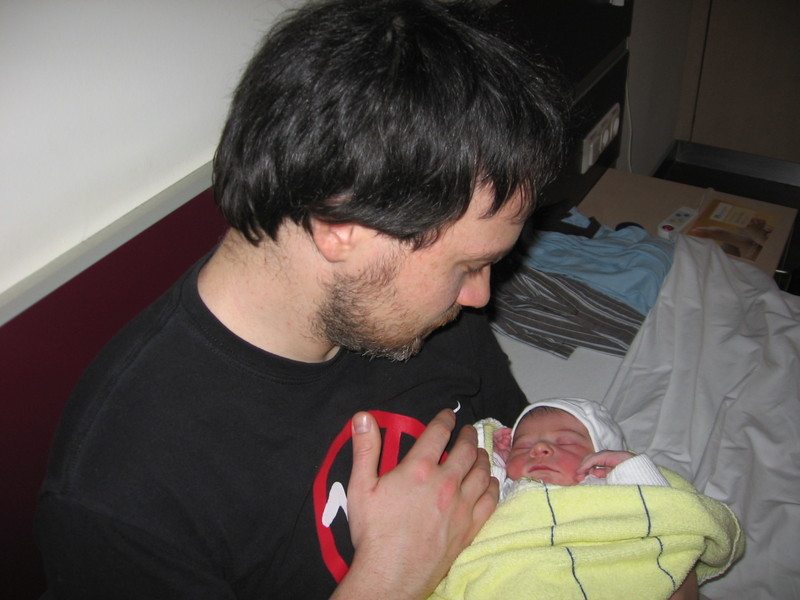
Jan 5 2011, 3070g, 54cm Julia, Mom and Dad are all well and very happy.

31 December 2010

Julien Viard de Galbert: Triage X Bugs of the last 2010 Week (TXBW8)

Happy new year ! The X Strike Force (still) needs you ! You can have a look at the X Strike Force Bug Closing Procedure and check XSF unstable bugs sorted by date.

Dirk Eddelbuettel: R / Finance 2011 Call for Papers: Updated and expanded

One week ago, I sent the updated announcement below to the r-sig-finance list; this was kindly blogged about by fellow committee member Josh and by our pal Dave @ REvo. By now. I also updated the R / Finance conference website. So to round things off, a quick post here is in order as well. It may even get a few of the esteemed reader to make a New Year's resolution about submitting a paper :) Dear R / Finance community, The preparations for R/Finance 2011 are progressing, and due to favourable responses from the different sponsors we contacted, we are now able to offer

  1. a competition for best paper, which given the focus of the conference will award for both an 'academic' paper and an 'industry' paper
  2. availability of travel grants for up to two graduate students provided suitable papers were accepted for presentations
More details are below in the updated Call for Papers. Please feel free to re-circulate this Call for Papers with collegues, students and other associations. Cheers, and Season's Greeting, Dirk (on behalf of the organizing / program committee) Call for Papers: R/Finance 2011: Applied Finance with R April 29 and 30, 2011 Chicago, IL, USA The third annual R/Finance conference for applied finance using R will be held this spring in Chicago, IL, USA on April 29 and 30, 2011. The two-day conference will cover topics including portfolio management, time series analysis, advanced risk tools, high-performance computing, market microstructure and econometrics. All will be discussed within the context of using R as a primary tool for financial risk management, portfolio construction, and trading. Complete papers or one-page abstracts (in txt or pdf format) are invited to be submitted for consideration. Academic and practitioner proposals related to R are encouraged. We welcome submissions for full talks, abbreviated lightning talks, and for a limited number of pre-conference (longer) seminar sessions. Presenters are strongly encouraged to provide working R code to accompany the presentation/paper. Data sets should also be made public for the purposes of reproducibility (though we realize this may be limited due to contracts with data vendors). Preference may be given to presenters who have released R packages. The conference will award two $1000 prizes for best paper: one for best practitioner-oriented paper and one for best academic-oriented paper. Further, to defray costs for graduate students, two travel and expense grants of up to $500 each will be awarded to graduate students whose papers are accepted. To be eligible, a submission must be a full paper; extended abstracts are not eligible. Please send submissions to: committee at RinFinance.com The submission deadline is February 15th, 2011. Early submissions may receive early acceptance and scheduling. The graduate student grant winners will be notified by February 23rd, 2011. Submissions will be evaluated and submitters notified via email on a rolling basis. Determination of whether a presentation will be a long presentation or a lightning talk will be made once the full list of presenters is known. R/Finance 2009 and 2010 included attendees from around the world and featured keynote presentations from prominent academics and practitioners. 2009-2010 presenters names and presentations are online at the conference website. We anticipate another exciting line-up for 2011---including keynote presentations from John Bollinger, Mebane Faber, Stefano Iacus, and Louis Kates. Additional details will be announced via the conference website as they become available. For the program committee:
Gib Bassett, Peter Carl, Dirk Eddelbuettel, Brian Peterson,
Dale Rosenthal, Jeffrey Ryan, Joshua Ulrich

23 December 2010

Julien Viard de Galbert: Triage X Bugs of the Christmas Week (TXBW7)

For some reason1 bug #607242 did not make it to the debian-x@d.o mailing list, I got aware of it only by the message shirish sent to my blog.
If he didn t write to me, this bug will have waited for what about 3 years until I got all the 800+ bugs triaged ? So please you can help triaging X bugs, first subscribe to the debian-x mailing list so you can get the feeling of what to respond to some bugs, and join the TXBW effort ;) The X Strike Force (still) needs you ! You can have a look at the X Strike Force Bug Closing Procedure and check XSF unstable bugs sorted by date. Note 1: The Xorg.0.log file was so huge that the mailing list did not accept the mail.

Rapha&#235;l Hertzog: People behind Debian: Mehdi Dogguy, release assistant

Mehdi Dogguy

Picture of Mehdi taken by Antoine Madet

Mehdi is a Debian developer for a bit more than a year, and he s already part of the Debian Release Team. His story is quite typical in that he started there by trying to help while observing the team do its work. That s a recurrent pattern for people who get co-opted in free software teams. Read on for more info about the release team, and Mehdi s opinion on many topics. My questions are in bold, the rest is by Mehdi (except for the additional information that I inserted in italics). Who are you? I m 27 years old. I grew up in Ariana in northern Tunisia, but have been living in Paris, France, since 2002. I m a PhD Student at the PPS laboratory where I study synchronous concurrent process calculi. I became interested in Debian when I saw one of my colleagues, Samuel Mimram (first sponsor and advocate) trying to resolve #440469, which is a bug reported against a program I wrote. We have never been able to resolve it but my intent to contribute was born there. Since then, I started to maintain some packages and help where I can. What s your biggest achievement within Debian? I don t think I had time to accomplish a lot yet :) I ve been mostly active in the OCaml team where we designed a tool to compute automatically the dependencies between OCaml packages, called dh-ocaml. This was a joint work with St phane Glondu, Sylvain Le Gall and Stefano Zacchiroli. I really appreciated the time spent with them while developing dh-ocaml. Some of the bits included in dh-ocaml have been included upstream in their latest release. I ve also tried to give a second life to the Buildd Status Pages because they were (kind of) abandoned. I intend to keep them alive and add new features to them. If you had a wand and could change one thing in Debian, what would that be? Make OCaml part of a default Debian installation :D But, since I m not a magician yet, I d stick to more realistic plans:
  1. A lot of desktop users fear Debian. I think that the Desktop installation offered by Debian today is very user-friendly and we should be able to attract more and more desktop users. Still, there is some work to be done in various places to make it even more attractive. The idea is trying to enhance the usability and integration of various tools together. Each fix could be easy or trivial but the final result would be an improved Desktop experience for our users. Our packaged software run well. So, each person can participate since the most difficult part is to find the broken scenarios. Fixes could be found together with maintainers, upstream or other interested people.

    I ll try to come up with a plan, a list of things that need polishing or fixes and gather a group of people to work on it. I d definitely be interested in participating in such a project and I hope that I ll find other people to help. If the plan is clear enough and has well described objectives and criteria, it could be proposed to the Release Team to consider it as a Release Goal for Wheezy.

  2. NMUs are a great way to make things move forward. But, sometimes, an NMU could break things or have some undesirable effects. For now, NMUers have to manually track the package s status for some time to be sure that everything is alright. It could be a good idea to be auto-subscribed to the bugs notifications of NMUed packages for some period of time (let s say for a month) to be aware of any new issues and try to fix them. NMUing a package is not just applying a patch and hitting enter after dput. It s also about making sure that the changes are correct and that no regressions have been introduced, etc

  3. Orphaned packages: It could be considered as too strict and not desired, but what about not keeping orphaned and buggy packages in Testing? What about removing them from the archive if they are buggy and still unmaintained for some period? Our ftp archive is growing. It could make sense to do some (more strict) housekeeping. I believe that this question can be raised during the next QA meeting. We should think about what we want to do with those packages before they rot in the archive.
[Raphael Hertzog: I would like to point out that pts-subscribe provided by devscripts makes it easy to temporarily subscribe to bug notifications after an Non-Maintainer Upload (NMU).] You re a Debian developer since August 2009 and you re already an assistant within the Release Management team. How did that happen and what is this about? In the OCaml team, we have to start a transition each time we upload a new version of the OCaml compiler (actually, for each package). So, some coordination with the Release Team is needed to make the transition happen. When we are ready to upload a new version of the compiler, we ask the Release Team for permission and wait for their ack. Sometimes, their reply is fast (e.g. if their is no conflicting transition running), but it s not always the case. While waiting for an ack, I used to check what was happening on debian-release@l.d.o. It made me more and more interested in the activities of the Release Team. Then (before getting my Debian account), I had the chance to participate in DebConf9 where I met Luk and Phil. It was a good occasion to see more about the tools used by the Release Team. During April 2010, I had some spare time and was able to implement a little tool called Jamie to inspect the relations between transitions. It helps us to quickly see which transitions can run in parallel, or what should wait. And one day (in May 2010, IIRC), I got offered by Adam to join the team. As members of the Release Team, we have multiple areas to work on:
  1. Taking care of transitions during the development cycle, which means making sure that some set of packages are correctly (re-)built or fixed against a specific (to each transition) set of packages, and finding a way to tell Britney that those packages can migrate and it would be great if she also shared the same opinion. [Raphael Hertzog: britney is the name of the software that controls the content of the Testing distribution.]
  2. Paying attention to what is happening in the archive (uploads, reported RC bugs, etc ). The idea is to try to detect unexpected transitions, blocked packages, make sure that RC bug fixes reach Testing in a reasonable period of time, etc
  3. During a freeze, making sure that unblock requests and freeze exceptions are not forgotten and try to make the RC bug count decrease.
There are other tasks that I ll let you discover by joining the game. Deciding what goes (or not) in the next stable release is a big responsibility and can be incredibly difficult at times. You have to make judgement calls all the time. What are your own criteria? That s a very hard to answer question (at least, for me). It really depends on the case . I try to follow the criteria that we publish in each release update. Sometimes, an unblock request doesn t match those criteria and we have to decide what to accept from the set of proposed changes. Generally, new features and non-fixes (read new upstream versions) changes are not the kind of changes that we would accept during the freeze. Some of them could be accepted if they are not intrusive, easy and well defended. When, I m not sure I try to ask other members of the Release Team to see if they share my opinion or if I missed something important during the review. The key point is to have a clear idea on what s the benefit of the proposed update, and compare it to the current situation. For example, accepting a new upstream release (even if it fixes some critical bugs) is taking a risk to break other features and that s why we (usually) ask for a backported fix. It s also worth noticing that (most of the time) we don t decide what goes in, but (more specifically) what version of a given package goes in and try to give to the contributors an idea on what kind of changes are acceptable during the freeze. There are some exceptions though. Most of them are to fix a critical package or feature. Do you have plans to improve the release process for Debian Wheezy? We do have plans to improve every bit in Debian. Wheezy will be the best release ever. We just don t know the details yet :) During our last meeting in Paris last October, the Release Team agreed to organize a meeting after Squeeze s release to discuss (among other questions) Wheezy s cycle. But the details of the meeting are not fixed yet (we still have plenty of time to organize it and other more important tasks to care about). We would like to be able to announce a clear roadmap for Wheezy and enhance our communication with the rest of the project. We certainly want to avoid what happened for Squeeze. Making things a bit more predictable for developers is one of our goals. Do you think the Constantly Usable Testing project will help? The original idea by Joey Hess is great because it allows d-i developers to work with a stable version of the archive. It allows them to focus on the new features they want to implement or the parts they want to fix (AIUI). It also allows to have constantly available and working installation images. Then, there is the idea of having a constantly usable Testing for users. The idea seems nice. People tend to like the idea behind CUT because they miss some software disappearing from Testing and because of the long delays for security fixes to reach Testing. If the Release Team has decided to remove a package from Testing, I think that there must be a reason for that. It either means that the software is broken, has unfixed security holes or was asked for the removal by its maintainer. I think that we should better try to spend some time to fix those packages, instead of throwing a broken version in a new suite. It could be argued that one could add experimental s version in CUT (or sid s) but every user is free to cherry-pick packages from the relevant suite when needed while still following Testing as a default branch. Besides, it s quite easy to see what was removed recently by checking the archive of debian-testing-changes or by querying UDD. IMO, It would be more useful to provide a better interface of that archive for our users. We could even imagine a program that alerts the user about installed software that got recently removed from Testing, to keep the user constantly aware any issue that could affect his machine. About the security or important updates, one has to recall the existence of Testing-security and testing-proposed-updates that are used specifically to let fixes reach Testing as soon as possible when it s not possible to go through Unstable. I m sure that the security team would appreciate some help to deal with security updates for Testing. We also have ways to speed migrate packages from Unstable to Testing. I have to admit that I m not convinced yet by the benefits brought by CUT for our users.
Thank you to Mehdi for the time spent answering my questions. I hope you enjoyed reading his answers as I did. Subscribe to my newsletter to get my monthly summary of the Debian/Ubuntu news and to not miss further interviews. You can also follow along on Identi.ca, Twitter and Facebook.

2 comments Liked this article? Click here. My blog is Flattr-enabled.

17 December 2010

Julien Viard de Galbert: Triage X Bugs of the Week 6 (TXBW6)

An other week, a few more bugs looked, unfortunately in the mean time the number of bug grew to 875 The X Strike Force (still) needs you ! You can have a look at the X Strike Force Bug Closing Procedure and check XSF unstable bugs sorted by date.

Tiago Bortoletto Vaz: S o Paulo police treat street artists like criminals

This guy is very known by people who use to walk around the Paulista Avenue at night. This week Gilberto Kassab mayor of S o Paulo authorized the local police to arrest him and all other artists in order to replace them by one more crap christmas tree playing those well known depressed songs. SAD :_(
street artist treated like shit in S o Paulo - Brazil

street artist treated like shit in S o Paulo - Brazil


13 December 2010

Stefano Zacchiroli: Doctor jcristau

we release when it's ready ... Members of the Debian release team clearly take very seriously Debian release mantras such as we release when it's ready and good things come to those who wait. Julien Cristau is no exception. After a freeze period used to improve the quality of his research work bringing down to 0 the number of release critical bugs affecting it, Julien has just released his PhD thesis titled Jeux et automates sur les ordres: Congrats, Doctor! PS earlier on today, Julien has promised that, as a gift to the Debian project for his new title, he will fix 50 Squeeze RC bugs by the end of the week. \o/
(Not. But that would indeed be a nice gift to him from all of us, don't you think?)

MJ Ray: Initial Citylink Make Me Wish I Paid Treble

So, last week I bricked a device and I think I can fix it over a RS-232 cable from a borrowed Windows computer. However, I don t have the right cable in my office and the Windows computers I can borrow no longer have old-style serial ports. So I had two choices:
  1. Order a USB-serial converter and the right cable from an online supplier and pay a premium for next-day delivery (so it doesn t arrive when I m on the trip);
  2. Make a half-hour detour on a trip two days later to visit a high street electronics store and pay fairly high prices (like three times the online price).
Of course, I ordered online. And that s where the trouble started. My order was sent by Initial Citylink, who make Parcelfarce look good. Next day came and went with no delivery. About 2pm, the parcel s web page changed to say There was no one to receive the goods at the delivery point so a card was left and that it would be delivered today, Monday. Of course, there had been someone here all day and no card was left. Phoning Citylink gets a recorded message saying they re too busy to take calls. No offer to call me back. Just suggests trying the useless website. Over the weekend, the page changed again. Now it says Thank you for your rescheduling request. Your parcel(s) will be delivered on Tuesday 14th December between 07:30 and 17:30 . I didn t request that, I don t know who did and there s no way to tell from the web page. There s no way to undo that request and ask for it to be delivered on Monday instead. I wanted the device fixed by today if possible. Now I m going to have to bodge something together from spares (for once I m glad I have a cupboard of old kit here ). Still no answer from Citylink s phones and the supplier doesn t seem to know what s going on either. I m not paying for next-day delivery from anyone who uses Citylink again.

11 December 2010

Colin Watson: libpipeline 1.1.0 released

I've released libpipeline 1.1.0, and uploaded it to Debian unstable. The changes are mostly just to add a few occasionally useful interfaces: The shared library actually ends up being a few kilobytes smaller on Debian than 1.0.0, probably because I tweaked the set of Gnulib modules I'm using.

10 December 2010

Julian Andres Klode: sbuild on a tmpfs

As some already know, is that I use sbuild to build all my packages in clean chroot environments. For this, I use the aufs mode of schroot, that allows you to setup a chroot with one read-only base directory and one writeable overlay where changes are written to. One thing I had problems with was the time required to install build dependencies due to disk I/O. Given that I have 4G RAM in my computer, I decided to use a tmpfs as the writable overlay. For those of you who want to do the same, putting the following in /etc/fstab makes it work:
overlay                     /var/lib/schroot/union/overlay tmpfs         defaults                    0       0
Build times are much faster this way because all write I/O is directed to the RAM
Filed under: Debian

Rapha&#235;l Hertzog: People behind Debian: David Kalnischkies, an APT developer

The two first interviews were dedicated to long-time Debian developers. This time I took the opposite approach, I interviewed David Kalnischkies who is not (yet) a Debian developer. But he s contributing to one of the most important software within Debian the APT package manager since 2009. You can already see him in many places in Debian sharing his APT knowledge when needed. English is not his native language and he s a bit shy, but he accepted the interview nevertheless. I would like to thank him for the efforts involved and I hope his story can inspire some people to take the leap and just start helping My questions are in bold, the rest is by David. Who are you? I am David Kalnischkies, 22 years old, living in the small town Erbach near Wiesbaden in Germany and I m studying computer science at the TU Darmstadt. Furthermore I am for more than half a decade now young group leader of my hometown. I never intended to get into this position, but it has similarities with my career in this internet-thingy here. I don t remember why, but in April 2009 I was at a stage that some simple bugs in APT annoyed me so much that I grabbed the source, and most importantly I don t know why I did it but I published my changes in Mai with #433007, a few more bugs and even a branch on launchpad. And this public branch got me into all this trouble in June: I got a mail from Mr. package managment Michael Vogt regarding this branch A few days later I joined an IRC session with him and closely after that my name appeared for the first time in a changelog entry. It s a strange but also addicting feeling to read your own name in an unfamiliar place. And even now after many IRC discussions, bugfixes and features, three Ubuntu Developer Summits and a Google Summer of Code in Debian, my name still appear in places I have never even thought about e.g. in an interview. What s your biggest achievement within Debian? I would like to answer MultiArch in APT as it was my Google Summer of Code project, but as it has (not much) use for the normal user at this point will hopefully change for wheezy I chose three smaller things in squeeze s APT that many people don t even know yet: If your impression is now that I only do APT stuff: that s completely right, but that s already more than enough for me for now as the toolchain behind the short name APT contains so many tools and use cases that you always have something different. You re an active member of the APT development team. Are there plans for APT in Debian Wheezy? What features can we expect? That s very hard to answer, as the team is too small to be able to really plan something. I mean, you can have fancy plans and everything and half a second later someone arrives on the mailing list with a small question which eats days of development time just for debugging But right now the TODO list contains (in no particular order): We will see what will get real for wheezy and what is postponed, but one thing is sure: more will be done for wheezy if you help! If you could spend all your time on Debian, what would you work on? I would spend it on APT s debbugs count zero would be cool to look at! We make progress in this regard, but with the current velocity we will reach it in ten years or so. Reading more mailing lists would be interesting, as I am kind of an information junky. Maintaining a package could be interesting to share the annoyance of a maintainer with handcrafted dependencies just to notice that APT doesn t get it in the way I intended it to be. Through, to make it feel real I need to train a few new APT contributors before so they can point my mistake out, but this unfortunately doesn t depend so much on time but on victims Maybe I could even be working on getting an official status. Beside that, I would love to be able to apt-get dist-upgrade the increasing mass of systems I and many others carry around in their pockets. In regards to my phone, this is already fixed, but there is much room for improvements. What s the biggest problem of Debian? You need to be lucky. You need to talk at the right time to the right person. That s not really a debian-only problem as such, but in a global project full of volunteers you can see it clearly as there are plenty of opportunities to be unlucky. For example, it s unlikely that an interview would be made with me now if Michael had not contacted me in June 2009. In a big project like Debian, you are basically completely lost without a mentor guiding you, so things like the debian-mentors list are good projects, but I am pretty certain they could benefit from some more helping hands. The other thing which I consider a problem is that and I read from time to time some people don t care for translations. That s bad. Yes, a developer is able to read English, otherwise s/he couldn t write code or participate on the mailinglists. Still, I personally prefer to use a translated application if I have the chance as it s simply easier for me to read in my mother tongue, not only because I am dyslexic, but because my mind still thinks in German and not in English. Yes, I could personally fix that by thinking in English only from now on, but its a quite big problem to convince my family which is not really familiar with tech-stuff to use something if they can t understand what is written on screen. It was hard enough to tell my mother how to write an SMS in a German interface. My phone with English words all over the place would be completely unusable for her despite the fact that my phone is powered by Debian and better for the task from a technical point of view. You are not yet an official Debian developer/maintainer, but you re already perceived in the community as one the most knowledgeable person about APT. It s a great start! What s your advice to other people who want to start contributing to Debian in general, and to APT in particular? It was never a goal in my life to start contributing . My goal was and still is to make my life easier by letting the computer work for me. At some point APT hindered the success of this goal, so it needed to be fixed. I didn t expect to open pandora s box. So, my advice is simple: Just start. Ignore the warning signs telling you that this is not easy. They are just telling you that you do something useful. Only artificial problems are easy. Further more, contribution to APT, dpkg or any other existing package is in no way harder than opening an ITP and working on your own, and it s cooler as you have a similar minded team around you to talk to. :) APT didn t accept release codenames as target release was one of the first things I fixed. If I had asked someone if that would be a good starting point the answer would have been a clear no , but I didn t search for a good starting point As a kid I can start playing football by just walking on the field and play or I can sit near the field, watching the others play, while analyzing which position would be the best for me to start ruling out one by one as the technical requirements seem too high Oh bicycle kick that sounds complicated I can t do that Julian Andreas Klode is working on a APT replacement, there s also Cupt by Eugene V. Lyubimkin. Both projects started because their authors are not satisfied with APT, they find APT s code difficult to hack partly due to the usage of C++. Do you share their concerns and what s your opinion on those projects? I don t think C++ is a concern in this regard, after all cupt is currently rewritten to C++0x and APT2 started in vala and is now C + glib last time I checked at least. I personally think that something is wrong if we need to advertise an application by saying in which language it is written The major problem for APT is probably that the code is old : APT does its job for more than 12 years now, under different maintainers with an always changing environment around it: so there are lines in APT which date from a time when nobody knew what a Breaks dependency is, that packages can have long descriptions which can be translated or even that package archives can be signed with a gpg key! And yet we take all those for granted today. APT has proven to adapt to these changes in the environment and became in this process very popular. So I don t think the point is near (if it will come at all) that APT can go into retirement as it is completely replaced by something else. The competitors one the other hand have their first 12 years still to go. And it will be interesting to see how they will evolve and what will be the state of the art in 2022 But you asked what I think about the competitors: I prefer the revolution from inside simply because I can see effects faster as more users will profit from it now. Cupt and co. obviously prefer the normal revolution. The goal is the same, creating the best package manager tool, but the chosen way to the goal is different. aptitude and cupt have an interactive resolver for example: that s something I dislike personally, for others that is the ultimate killer feature. cupt reading the same preference file as APT will have a different pinning result, which we should consider each time someone mentions the word drop-in replacement . APT2 isn t much more than the name which I completely dislike currently from a user point of view, so I can t really comment on that. All of them make me sad as each line invested in boilerplate code like configuration file parsing would be in my eyes better be spent in a bugfix or new feature instead, but I am not here to tell anyone what they should do in their free time But frankly, I don t see them really as competitors: I use the tools I use, if other do that too that s good, if not that s their problem. :) The thing that annoys me really are claims like plan is to remove APT by 2014 as this generates a vi vs. emacs like atmosphere we don t need. If some people really think emacs is a good editor who cares? I really hope we all can drink a beer in 2022 in Milliways, the restaurant at the end of the package universe, remembering the good old 2010 ;) Is there someone in Debian that you admire for his contributions? No, not one, many! Michael Vogt who has nearly the monopole of package manager maintainer by being upstream of APT, synaptics and software center to name only the biggest and still has the time to answer even the dumbest of my questions. :) Jason Gunthorpe for being one of the initial developers behind deity who I will probably never meet in person beside in old comments and commit logs. Christian Perrier for caring so much about translations. Obey Arthur Liu as a great admin for Debian s participation in Google s Summer of Code. Paul Wise for doing countless reviews on debian-mentors which are a good source of information not only for the maintainer of the package under review. I guess I need to stop here because you asked for just one. So let s end with some big words instead: I am just a little cog in the big debian wheel
Thank you to David Kalnischkies for the time spent answering my questions. I hope you enjoyed reading his answers as I did. Subscribe to my newsletter to get my monthly summary of the Debian/Ubuntu news and to not miss further interviews. You can also follow along on Identi.ca, Twitter and Facebook.

3 comments Liked this article? Click here. My blog is Flattr-enabled.

9 December 2010

Julien Viard de Galbert: Triage X Bugs of the Week 4 and 5 (TXBW4-5)

Last week I was too busy for the triaging work, so I did more this week Anyway there are still some 871 bug candidate for triaging, so again, any help would be appreciated ! Also I d like to thank again people giving me cheers and advices when they receive my pings ;-) The buglist now: The X Strike Force (still) needs you ! You can have a look at the X Strike Force Bug Closing Procedure and check XSF unstable bugs sorted by date.

Julien Blache: Performance analysis and profiling tools for sequential and parallel codes

As part of my work for EDF, I ve had to package and integrate a set of tools for performance measurement and profiling of HPC code. This toolbox comprises tools for analysis of both sequential and parallel codes, MPI communications profiling and, of course, visualization frontends. Without going into too much details, here s the list: If you ve been anywhere near HPC code, the names probably ring a bell; they re the best tools out there in their category, developed and used by the top laboratories. Over the past year, all the tools have received some level of testing, meaning we know they do work at the very least to some extent. As you can imagine, testing such tools is no easy task and takes an insane amount of time and resources of all kinds. Testing is all the more important that I had to produce a number of patches to integrate the tools properly in the distribution and, in some cases, to even get them to build. Now, we would like to share this work with the HPC community in and around Debian. How exactly we are going to do that isn t clear just yet; most probably, we ll end up building a team with other interested parties and offer our packages as a base to build upon. There are a number of challenges with these tools: they re not easy to build, they re not easy to maintain, they re not easy to use, they re not easy to understand. Basically, nothing is easy. Some of those tools were never meant to be packaged and integrated in a distribution and no sane amount of patching will fix that, so we have to live with packages that aren t quite as polished as we like them to be. And then, there are licenses. Some tools are non-free due to usage restrictions. Others rely on non-free dependencies. Although I ve been looking at the licenses, a thorough license check will be required and decisions will need to be made. It s not for the faint of heart! If you are interested in these tools and in bringing them to Debian, please get in touch. I ve also had to package the Apache Derby database (Java); if someone out there cares about Derby, I d be more than happy to provide my packages as a start base for getting Derby into Debian. The packages need some work by someone who knows a thing or two about Derby and who can test and enhance the packaging of the server part.

3 December 2010

Debian News: New Debian Developers (November 2010)

The following developers got their Debian accounts in the last month: Congratulations!

Next.

Previous.