Search Results: "tim"

5 January 2025

Enrico Zini: ncdu on files to back up

I use borg and restic to backup files in my system. Sometimes I run a huge download or clone a large git repo and forget to mark it with CACHEDIR.TAG, and it gets picked up slowing the backup process and wasting backup space uselessly. I would like to occasionally audit the system to have an idea of what is a candidate for backup. ncdu would be great for this, but it doesn't know about backup exclusion filters. Let's teach it then. Here's a script that simulates a backup and feeds the results to ncdu:
#!/usr/bin/python3
import argparse
import os
import sys
import time
import stat
import json
import subprocess
import tempfile
from pathlib import Path
from typing import Any
FILTER_ARGS = [
    "--one-file-system",
    "--exclude-caches",
    "--exclude",
    "*/.cache",
]
BACKUP_PATHS = [
    "/home",
]
class Dir:
    """
    Dispatch borg output into a hierarchical directory structure.
    borg prints a flat file list, ncdu needs a hierarchical JSON.
    """
    def __init__(self, path: Path, name: str):
        self.path = path
        self.name = name
        self.subdirs: dict[str, "Dir"] =  
        self.files: list[str] = []
    def print(self, indent: str = "") -> None:
        for name, subdir in self.subdirs.items():
            print(f" indent name: /")
            subdir.print(indent + " ")
        for name in self.files:
            print(f" indent name ")
    def add(self, parts: tuple[str, ...]) -> None:
        if len(parts) == 1:
            self.files.append(parts[0])
            return
        subdir = self.subdirs.get(parts[0])
        if subdir is None:
            subdir = Dir(self.path / parts[0], parts[0])
            self.subdirs[parts[0]] = subdir
        subdir.add(parts[1:])
    def to_data(self) -> list[Any]:
        res: list[Any] = []
        st = self.path.stat()
        res.append(self.collect_stat(self.name, st))
        for name, subdir in self.subdirs.items():
            res.append(subdir.to_data())
        dir_fd = os.open(self.path, os.O_DIRECTORY)
        try:
            for name in self.files:
                try:
                    st = os.lstat(name, dir_fd=dir_fd)
                except FileNotFoundError:
                    print(
                        "Possibly broken encoding:",
                        self.path,
                        repr(name),
                        file=sys.stderr,
                    )
                    continue
                if stat.S_ISDIR(st.st_mode):
                    continue
                res.append(self.collect_stat(name, st))
        finally:
            os.close(dir_fd)
        return res
    def collect_stat(self, fname: str, st) -> dict[str, Any]:
        res =  
            "name": fname,
            "ino": st.st_ino,
            "asize": st.st_size,
            "dsize": st.st_blocks * 512,
         
        if stat.S_ISDIR(st.st_mode):
            res["dev"] = st.st_dev
        return res
class Scanner:
    def __init__(self) -> None:
        self.root = Dir(Path("/"), "/")
        self.data = None
    def scan(self) -> None:
        with tempfile.TemporaryDirectory() as tmpdir_name:
            mock_backup_dir = Path(tmpdir_name) / "backup"
            subprocess.run(
                ["borg", "init", mock_backup_dir.as_posix(), "--encryption", "none"],
                cwd=Path.home(),
                check=True,
            )
            proc = subprocess.Popen(
                [
                    "borg",
                    "create",
                    "--list",
                    "--dry-run",
                ]
                + FILTER_ARGS
                + [
                    f" mock_backup_dir ::test",
                ]
                + BACKUP_PATHS,
                cwd=Path.home(),
                stderr=subprocess.PIPE,
            )
            assert proc.stderr is not None
            for line in proc.stderr:
                match line[0:2]:
                    case b"- ":
                        path = Path(line[2:].strip().decode())
                    case b"x ":
                        continue
                    case _:
                        raise RuntimeError(f"Unparsable borg output:  line!r ")
                if path.parts[0] != "/":
                    raise RuntimeError(f"Unsupported path:  path.parts!r ")
                self.root.add(path.parts[1:])
    def to_json(self) -> list[Any]:
        return [
            1,
            0,
             
                "progname": "backup-ncdu",
                "progver": "0.1",
                "timestamp": int(time.time()),
             ,
            self.root.to_data(),
        ]
    def export(self):
        return json.dumps(self.to_json()).encode()
def main():
    parser = argparse.ArgumentParser(
        description="Run ncdu to estimate sizes of files to backup."
    )
    parser.parse_args()
    scanner = Scanner()
    scanner.scan()
    # scanner.root.print()
    res = subprocess.run(["ncdu", "-f-"], input=scanner.export())
    sys.exit(res.returncode)
if __name__ == "__main__":
    main()

4 January 2025

Kentaro Hayashi: Tips when building debian-installer

Recently, I'm trying to fix d-i Han-Unification issue for Japanese. This issue was not fixed for a long time since Debian 9 (stretch). #1037256 - debian-installer: GUI font for Japanese was incorrectly rendered - Debian Bug report logs
To know about how Han-Unification is harmful for Japanese in some cases, See "Your Code Displays Japanese Wrong". heistak.github.io
When building d-i (GUI Installer), you need to build build_netboot-gtk target. But note that you need recent master because it has nitpick issue with GNU Make 4.4.x. bugs.debian.org After that, need to prepare required packages. See README in details.
apt-get update
apt-get install -y myrepos git libgtk2.0-dev fakeroot
apt-get build-dep -y debian-installer
It seems that Bug#1037256 will be fixed with supporting compressed font. I don't know how to do it furthermore , but I'm sure that Mr. Cyril Brulebois will handle this issue better. :-) (I thought that creating fake fontconfig cache when building image, then decompress compressed font dynamically might work as just an idea, but it didn't work.) If you would like to tackle fixing d-i issues as a newbie, it might be better to execute "make reallyclean" before rebuilding image not to fall-in pitfalls.

Louis-Philippe V ronneau: Montreal's Debian & Stuff - December 2024

Our Debian User Group met on December 22nd for our last meeting of 2024. I wasn't sure at first it was a good idea, but many people showed up and it was great! Here's what we did: pollo: anarcat: lelutin: lavamind: tvaz: mjeanson and joeDoe: Some of us ended up grabbing a drink after the event at l'Isle de Garde, a pub right next to the venue. Pictures This time around, we were hosted by l'Espace des possibles, at their new location (they moved since our last visit). It was great! People liked the space so much we actually discussed going back there more often :) Group photo at l'Espace des possibles

3 January 2025

Bits from Debian: Bits from the DPL

Dear Debian community, this is bits from DPL for December. Happy New Year 2025! Wishing everyone health, productivity, and a successful Debian release later in this year. Strict ownership of packages I'm glad my last bits sparked discussions about barriers between packages and contributors, summarized temporarily in some post on the debian-devel list. As one participant aptly put it, we need a way to visibly say, "I'll do the job until someone else steps up". Based on my experience with the Bug of the Day initiative, simplifying the process for engaging with packages would significantly help. Currently we have
  1. NMU The Developers Reference outlines several preconditions for NMUs, explicitly stating, "Fixing cosmetic issues or changing the packaging style in NMUs is discouraged." This makes NMUs unsuitable for addressing package smells. However, I've seen NMUs used for tasks like switching to source format 3.0 or bumping the debhelper compat level. While it's technically possible to file a bug and then address it in an NMU, the process inherently limits the NMUer's flexibility to reduce package smells.
  2. Package Salvaging This is another approach for working on someone else's packages, aligning with the process we often follow in the Bug of the Day initiative. The criteria for selecting packages typically indicate that the maintainer either lacks time to address open bugs, has lost interest, or is generally MIA.
Both options have drawbacks, so I'd welcome continued discussion on criteria for lowering the barriers to moving packages to Salsa and modernizing their packaging. These steps could enhance Debian overall and are generally welcomed by active maintainers. The discussion also highlighted that packages on Salsa are often maintained collaboratively, fostering the team-oriented atmosphere already established in several Debian teams. Salsa Continuous Integration As part of the ongoing discussion about package maintenance, I'm considering the suggestion to switch from the current opt-in model for Salsa CI to an opt-out approach. While I fully agree that human verification is necessary when the pipeline is activated, I believe the current option to enable CI is less visible than it should be. I'd welcome a more straightforward approach to improve access to better testing for what we push to Salsa. Number of packages not on Salsa In my campaign, I stated that I aimed to reduce the number of packages maintained outside Salsa to below 2,000. As of March 28, 2024, the count was 2,368. As of this writing, the count stands at 1,928 [1], so I consider this promise fulfilled. My thanks go out to everyone who contributed to this effort. Moving forward, I'd like to set a more ambitious goal for the remainder of my term and hope we can reduce the number to below 1,800. [1] UDD query: SELECT DISTINCT count(*) FROM sources WHERE release = 'sid' and vcs_url not like '%salsa%' ; Past and future events Talk at MRI Together In early December, I gave a short online talk, primarily focusing on my work with the Debian Med team. I also used my position as DPL to advocate for attracting more users and developers from the scientific research community. FOSSASIA I originally planned to attend FOSDEM this year. However, given the strong Debian presence there and the need for better representation at the FOSSASIA Summit, I decided to prioritize the latter. This aligns with my goal of improving geographic diversity. I also look forward to opportunities for inter-distribution discussions. Debian team sprints Debian Ruby Sprint I approved the budget for the Debian Ruby Sprint, scheduled for January 2025 in Paris. If you're interested in contributing to the Ruby team, whether in person or online, consider reaching out to them. I'm sure any helping hand would be appreciated. Debian Med sprint There will also be a Debian Med sprint in Berlin in mid-February. As usual, you don't need to be an expert in biology or medicine basic bug squashing skills are enough to contribute and enjoy the friendly atmosphere the Debian Med team fosters at their sprints. For those working in biology and medicine, we typically offer packaging support. Anyone interested in spending a weekend focused on impactful scientific work with Debian is warmly invited. Again all the best for 2025
Andreas.

Taavi V n nen: Automatically updating reverse DNS entries for my Hetzner servers

Some parts of my infrastructure run on Hetzner dedicated servers. Hetzner's management console has an interface to update reverse DNS entries, and I wanted to automate that. Unfortunately there's no option to just delegate the zones to my own authoritative DNS servers. So I did the next best thing, which is updating the Hetzner-managed records with data from my own authoritative DNS servers.

Generating DNS zones the hard way The first step of automating DNS record provisioning is, well, figuring out which records need to be provisioned. I wanted to re-use my existing automation for generating the record data, instead of coming up with a new system for these records. The basic summary is that there's a Go program creatively named dnsgen that's in charge of generating zone file snippets from various sources (these include Netbox, Kubernetes, PuppetDB and my custom reverse web proxy setup). Those snippets are combined with Jinja templates to generate full zone files to be loaded to a hidden primary running Bind9 (like all other DNS servers I run). The zone files are then transferred to a fleet of internal authoritative servers as well as my public authoritative DNS server, which in turn transfers them to various other authoritative DNS servers (like ns-global and Traficom anycast) for redundancy. There's also a bunch of other smaller features, like using Bind views to server different data to internal and external clients, and resolving external records during record generation time to be used on apex records that would use CNAME records if they could. (The latter is a workaround for Masto.host, the hosting provider we use for Wikis World, not having a stable IPv6 address.) Overall it's a really nice system, and I've spent quite a bit of time on it.

Updating records on Hetzner-managed space As mentioned above, Hetzner unfortunately does not support custom DNS servers for reverse records on IP space rented from them. But I wanted to use my existing, perfectly working DNS record generation setup since that works perfectly fine. So the obvious answer is to (ab)use DNS zone file transfers. I quickly wrote a few hundred lines of Go to request the zone data and then use the Hetzner robot API to ensure the reverse entries are in sync. The main obstacle hit here was the Hetzner API somehow requiring an "update" call (instead of a "create" one) to create a new record, as the create endpoint was returning an HTTP 400 response no matter what. Once I sorted that out, the script started working fine and created the few dozen missing records. Finally I added a CronJob in my Kubernetes cluster to run the script once in a while. Overall this is a big improvement over doing things by hand and didn't require that much effort. The obvious next step would be to expand the script to a tiny DNS server capable of receiving zone update NOTIFYs to make the updates happen real-time. Unfortunately there's now no hiding of the records revealing my ugly hacks clever networking solutions :(

2 January 2025

Paul Wise: FLOSS Activities December 2024

Focus This month I didn't have any particular focus. I just worked on issues in my info bubble.

Changes

Issues

Sponsors The SWH work was sponsored. All other work was done on a volunteer basis.

Martin-Éric Racine: On the future of i386 on Debian

Before we proceed, let's emphasize a few things: This being said, I still think that the current approach of keeping i386 among the supported architectures, all while no longer shipping kernels, is entirely the wrong decision. What should instead be done is to keep on shipping i386 kernels for Trixie, but clearly indicate in the Trixie Release Notes that i386 is supported for the last time and thereafter fully demoted to Ports.

Matthew Garrett: The GPU, not the TPM, is the root of hardware DRM

As part of their "Defective by Design" anti-DRM campaign, the FSF recently made the following claim:
Today, most of the major streaming media platforms utilize the TPM to decrypt media streams, forcefully placing the decryption out of the user's control (from here).
This is part of an overall argument that Microsoft's insistence that only hardware with a TPM can run Windows 11 is with the goal of aiding streaming companies in their attempt to ensure media can only be played in tightly constrained environments.

I'm going to be honest here and say that I don't know what Microsoft's actual motivation for requiring a TPM in Windows 11 is. I've been talking about TPM stuff for a long time. My job involves writing a lot of TPM code. I think having a TPM enables a number of worthwhile security features. Given the choice, I'd certainly pick a computer with a TPM. But in terms of whether it's of sufficient value to lock out Windows 11 on hardware with no TPM that would otherwise be able to run it? I'm not sure that's a worthwhile tradeoff.

What I can say is that the FSF's claim is just 100% wrong, and since this seems to be the sole basis of their overall claim about Microsoft's strategy here, the argument is pretty significantly undermined. I'm not aware of any streaming media platforms making use of TPMs in any way whatsoever. There is hardware DRM that the media companies use to restrict users, but it's not in the TPM - it's in the GPU.

Let's back up for a moment. There's multiple different DRM implementations, but the big three are Widevine (owned by Google, used on Android, Chromebooks, and some other embedded devices), Fairplay (Apple implementation, used for Mac and iOS), and Playready (Microsoft's implementation, used in Windows and some other hardware streaming devices and TVs). These generally implement several levels of functionality, depending on the capabilities of the device they're running on - this will range from all the DRM functionality being implemented in software up to the hardware path that will be discussed shortly. Streaming providers can choose what level of functionality and quality to provide based on the level implemented on the client device, and it's common for 4K and HDR content to be tied to hardware DRM. In any scenario, they stream encrypted content to the client and the DRM stack decrypts it before the compressed data can be decoded and played.

The "problem" with software DRM implementations is that the decrypted material is going to exist somewhere the OS can get at it at some point, making it possible for users to simply grab the decrypted stream, somewhat defeating the entire point. Vendors try to make this difficult by obfuscating their code as much as possible (and in some cases putting some of it in-kernel), but pretty much all software DRM is at least somewhat broken and copies of any new streaming media end up being available via Bittorrent pretty quickly after release. This is why higher quality media tends to be restricted to clients that implement hardware-based DRM.

The implementation of hardware-based DRM varies. On devices in the ARM world this is usually handled by performing the cryptography in a Trusted Execution Environment, or TEE. A TEE is an area where code can be executed without the OS having any insight into it at all, with ARM's TrustZone being an example of this. By putting the DRM code in TrustZone, the cryptography can be performed in RAM that the OS has no access to, making the scraping described earlier impossible. x86 has no well-specified TEE (Intel's SGX is an example, but is no longer implemented in consumer parts), so instead this tends to be handed off to the GPU. The exact details of this implementation are somewhat opaque - of the previously mentioned DRM implementations, only Playready does hardware DRM on x86, and I haven't found any public documentation of what drivers need to expose for this to work.

In any case, as part of the DRM handshake between the client and the streaming platform, encryption keys are negotiated with the key material being stored in the GPU or the TEE, inaccessible from the OS. Once decrypted, the material is decoded (again either on the GPU or in the TEE - even in implementations that use the TEE for the cryptography, the actual media decoding may happen on the GPU) and displayed. One key point is that the decoded video material is still stored in RAM that the OS has no access to, and the GPU composites it onto the outbound video stream (which is why if you take a screenshot of a browser playing a stream using hardware-based DRM you'll just see a black window - as far as the OS can see, there is only a black window there).

Now, TPMs are sometimes referred to as a TEE, and in a way they are. However, they're fixed function - you can't run arbitrary code on the TPM, you only have whatever functionality it provides. But TPMs do have the ability to decrypt data using keys that are tied to the TPM, so isn't this sufficient? Well, no. First, the TPM can't communicate with the GPU. The OS could push encrypted material to it, and it would get plaintext material back. But the entire point of this exercise was to avoid the decrypted version of the stream from ever being visible to the OS, so this would be pointless. And rather more fundamentally, TPMs are slow. I don't think there's a TPM on the market that could decrypt a 1080p stream in realtime, let alone a 4K one.

The FSF's focus on TPMs here is not only technically wrong, it's indicative of a failure to understand what's actually happening in the industry. While the FSF has been focusing on TPMs, GPU vendors have quietly deployed all of this technology without the FSF complaining at all. Microsoft has enthusiastically participated in making hardware DRM on Windows possible, and user freedoms have suffered as a result, but Playready hardware-based DRM works just fine on hardware that doesn't have a TPM and will continue to do so.

comment count unavailable comments

Colin Watson: Free software activity in December 2024

Most of my Debian contributions this month were sponsored by Freexian, as well as one direct donation via Liberapay (thanks!). OpenSSH I issued a bookworm update with a number of fixes that had accumulated over the last year, especially fixing GSS-API key exchange which was quite broken in bookworm. base-passwd A few months ago, the adduser maintainer started a discussion with me (as the base-passwd maintainer) and the shadow maintainer about bringing all three source packages under one team, since they often need to cooperate on things like user and group names. I agreed, but hadn t got round to doing anything about it until recently. I ve now officially moved it under team maintenance. debconf Gioele Barabucci has been working on eliminating duplicated code between debconf and cdebconf, ultimately with the goal of migrating to cdebconf (which I m not sure I m convinced of as a goal, but if we can make improvements to both packages as part of working towards it then there s no harm in that). I finally got round to reviewing and merging confmodule changes in each of debconf and cdebconf. This caused an installer regression due to a weirdness in cdebconf-udeb s packaging, which I fixed - sorry about that! I ve also been dealing with a few patch submissions that had been in my queue for a long time, but more on that next month if all goes well. CI issues I noticed and fixed a problem with Restrictions: needs-sudo in autopkgtest. I fixed broken aptly images in the Salsa CI pipeline. Python team Last month, I mentioned some progress on sorting out the multipart vs. python-multipart name conflict in Debian (#1085728), and said that I thought we d be able to finish it soon. I was right! We got it all done this month: The Python 3.13 transition continues, and last month we were able to add it to the supported Python versions in testing. (The next step will be to make it the default.) I fixed lots of problems in aid of this, including: Sphinx 8.0 removed some old intersphinx_mapping syntax which turned out to still be in use by many packages in Debian. The fixes for this were individually trivial, but there were a lot of them: I found that twisted 24.11.0 broke tests in buildbot and wokkel, and fixed those. I packaged python-flatdict, needed for a new upstream version of python-semantic-release. I tracked down a test failure in vdirsyncer (which I ve been using for some years, but had never previously needed to modify) and contributed a fix upstream. I fixed some packages to tolerate future versions of dh-python that will drop their dependency on python3-setuptools: I fixed django-cte to remove a build-dependency on the obsolete python3-nose package. I added Django 5.1 support to django-polymorphic. (There are a number of other packages that still need work here.) I fixed various other build/test failures: I upgraded these packages to new upstream versions: I updated the team s library style guide to remove material related to Python 2 and early versions of Python 3, which is no longer relevant to any current Python packaging work. Other Python upstream work I happened to notice a Twisted upstream issue requesting the removal of the deprecated twisted.internet.defer.returnValue, realized it was still used in many places in Debian, and went on a PR-filing spree informed by codesearch to try to reduce the future impact of such a change on Debian: Other small fixes Santiago Vila has been building the archive with make --shuffle (also see its author s explanation). I fixed associated bugs in cccc (contributed upstream), groff, and spectemu. I backported an upstream patch to putty to fix undefined behaviour that affected use of the small keypad . I removed groff s Recommends: libpaper1 (#1091375, #1091376), since it isn t currently all that useful and was getting in the way of a transition to libpaper2. I filed an upstream bug suggesting better integration in this area.

1 January 2025

Tim Retout: Strauss as Pop Music

While watching the Vienna New Year s Concert today, reading about its perhaps somewhat problematic origins, I was struck by the observation that the Strauss family s polkas were seen as pop music during their lifetime, not as serious as proper classical composers, and so it took some time before the Vienna Philharmonic would actually play their work. (Perhaps the space-themed interval today and the ballet dancers pretending to be a steam train were a continuation of the true spirit of this? It felt very Eurovision.) I can t decide if it s remarkable that this year was the first time a female composer (Constanze Geiger) was represented at this concert, or if that is what you get when you set up a tradition of playing mainly Strauss?

Russ Allbery: 2024 Book Reading in Review

In 2024, I finished and reviewed 46 books, not counting another three books I've finished but not yet reviewed and which will therefore roll over to 2025. This is slightly fewer books than the last couple of years, but more books than 2021. Reading was particularly spotty this year, with much of the year's reading packed into late November and December. This was a year in which I figured out I was trying to do too much, but did not finish figuring out what to do about it. Reading and particularly reviewing reflected that, with long silent periods and then attempts to catch up. One of the goals for next year is to find a more sustainable balance for the hobbies in my life, including reading. My favorite books I read this year were Ashley Herring Blake's Bright Falls sapphic romance trilogy: Delilah Green Doesn't Care, Astrid Parker Doesn't Fail, and Iris Kelly Doesn't Date. These are not perfect books, but they made me laugh, made me cry, and were impossible to put down. My thanks to a video from BookTuber Georgia Marie for the recommendation. I Shall Wear Midnight was the best of the remaining Pratchett novels. It's the penultimate Tiffany Aching book and, in my opinion, the best. All of the elements of the previous books come together in snarky competence porn that was a delight to read. The best book I read last year was Mark Lawrence's The Book That Wouldn't Burn, which much to my surprise did not make a single award list for its publication year of 2023. It was a tour de force of world-building that surprised me multiple times. Unfortunately, the sequel was not as good and I fear the series may be heading in the wrong direction. I am attempting to stay hopeful about the upcoming third and concluding book. I didn't read much non-fiction this year, but the best of what I did read was Zeke Faux's Number Go Up about the cryptocurrency bubble. This book will not change anyone's mind, but it's a readable and entertaining summary of some of the more obvious cryptocurrency scams. I also had enough quibbles with it to write an extended review, which is a compliment of sorts. The Discworld read-through is done, so I may either start or return to another series re-read in 2025. I have a huge backlog of all sorts of books, though, so we will see how the year goes. As always, I have no specific numeric goals, just a hope that I can make time for regular and varied reading and maintain a rhythm with writing reviews. The full analysis includes some additional personal reading statistics, probably only of interest to me.

Guido G nther: Free Software Activities December 2024

Another short status update of what happened on my side last month. The larger blocks are the Phosh 0.44 release and landing the initial Cell Broadcast support in phosh. The rest is all just small bits of bug, fallout/regression fixing here and there. phosh phoc phosh-mobile-settings libphosh-rs phosh-osk-stub phosh-tour pfs xdg-desktop-portal-phosh phog Debian git-buildpackage wlr-randr python-dbusmock livi Chatty feedbackd libadwaita phosh-ev Reviews This is not code by me but reviews on other peoples code. The list is incomplete, but I hope to improve on this in the upcoming months. Thanks for the contributions! Help Development Thanks a lot to all the those who supported my work on this in 2024. Happy new year! If you want to support my work see donations. Comments? Join the Fediverse thread

Louis-Philippe V ronneau: 2024 A Musical Retrospective

Another musical retrospective. If you enjoy this, I also did a 2022 and a 2023 one. Albums In 2024, I added 88 new albums to my collection that's a lot! This year again, I bought the vast majority of my music on Bandcamp. To be honest, I'm quite distraught by what's become of that website. Although it stays a wonderful place to buy underground music, Songtradr, the new owner of the platform, has been shown to be viciously anti-union. Money continues to ruin the world, I guess. Concerts I continued to go to a lot of concerts in 2024 (25!). Over the past 3 years, I have been going to more and more concerts, and I think I've reached my "peak". A mean of a concert every two weeks is quite a lot :) If you also like music and concerts, but find yourself not going to as many as you would like, the real secret is not to be afraid to go to concerts alone. Going with friends is always fun, but if I restricted myself to only going to concerts in a group, I'd barely see a few each year. Another good advice is to bring a book or something else1 to pass the time between sets. It can often take 30-45 minutes between sets for the artists to get their instruments ready, which can get quite boring if you just stand there and wait. Anyway, here are the concerts I went to in 2024: Shout out to the Gancio project and to the folks running the Montreal instance. It continues to be a smash hit and most of the interesting concerts end up being advertised there. See you all in 2025!

  1. I bought a Miyoo Mini Plus, a handheld Linux console running OnionOS, for that express reason. So far it's been great and I've been very happy to revisit some childhood classics.

Junichi Uekawa: Happy New Year.

Happy New Year. Spending most of my time in work and family. Kids are taking my time.

Russ Allbery: Review: Driving the Deep

Review: Driving the Deep, by Suzanne Palmer
Series: Finder Chronicles #2
Publisher: DAW
Copyright: 2020
ISBN: 0-7564-1512-8
Format: Kindle
Pages: 426
Driving the Deep is science fiction, a sequel to Finder (not to be confused with Finders, Emma Bull's Finder, or the many other books and manga with the same title). It stands alone and you could start reading here, although there will be spoilers for the first book of the series. It's Suzanne Palmer's second novel. When Fergus Ferguson was fifteen, he stole his cousin's motorcycle to escape an abusive home, stashed it in a storage locker, and got the hell off of Earth. Nineteen years later, he's still paying for the storage locker and it's still bothering him that he never returned the motorcycle. His friends in the Shipyard orbiting Pluto convince him to go to Earth and resolve this ghost of his past, once and for all. Nothing for Fergus is ever that simple. When the key he's been carrying all these years fails to open the storage unit, he hacks it open, only to find no sign of his cousin's motorcycle. Instead, the unit is full of expensive storage crates containing paintings by artists like Van Gogh. They're obviously stolen. Presumably the paintings also explain the irate retired police officer who knocks him out and tries to arrest him, slightly after the urgent message from the Shipyard AI telling him his friends are under attack. Fergus does not stay arrested, a development that will not surprise readers of the previous book. He does end up with an obsessed and increasingly angry ex-cop named Zacker as an unwanted passenger. Fergus reluctantly cuts a deal with Zacker: assist him in finding out what happened to his friends, and Fergus will then go back to Earth and help track down the art thieves who shot Zacker's daughter. It will be some time before they get back to Earth. Fergus's friends have been abducted by skilled professionals. What faint clues he can track down point to Enceladus, a moon of Saturn with a vast subsurface ocean. One simulation test with a desperate and untrustworthy employer later, Fergus is now a newly-hired pilot of an underwater hauler. The trend in recent SFF genre novels has been towards big feelings and character-centric stories. Sometimes this comes in the form of found family, sometimes as melodrama, and often now as romance. I am in general a fan of this trend, particularly as a corrective to the endless engineer-with-a-wrench stories, wooden protagonists, and cardboard characters that plagued classic science fiction. But sometimes I want to read a twisty and intelligent plot navigated by a competent but understated protagonist and built around nifty science fiction ideas. That is exactly what Driving the Deep is, and I suspect this series is going to become my go-to recommendation for people who "just want a science fiction novel." I don't want to overstate this. Fergus is not a blank slate; he gets the benefit of the dramatic improvement in writing standards and characterization in SFF over the past thirty years. He's still struggling with what happened to him in Finder, and the ending of this book is rather emotional. But the overall plot structure is more like a thriller or a detective novel: there are places to go, people to investigate, bases to infiltrate, and captives to find, so the amount of time spent on emotional processing is necessarily limited. Fergus's emotions and characterization are grace notes around the edges of the plot, not its center. I thoroughly enjoyed this. Palmer has a light but effective touch with characterization and populates the story with interesting and distinguishable characters. The plot has a layered complexity that allows Fergus to keep making forward progress without running out of twists or getting repetitive. The motivations of the villains were not the most original, but they didn't need to be; the fun of the story is figuring out who the villains are and watching Fergus get out of impossible situations with the help of new friends. Finder was a solid first novel, but I thought Driving the Deep was a substantial improvement in both pacing and plot coherence. If I say a novel is standard science fiction, that sounds like criticism of lack of originality, but sometimes standard science fiction is exactly what I want to read. Not every book needs to do something wildly original or upend my understanding of story. I started reading science fiction because I loved tense adventures on moons of Saturn with intelligent spaceships and neat bits of technology, and they're even better with polished writing, quietly competent characterization, and an understated sense of humor. This is great stuff, and there are two more books already published that I'm now looking forward to. Highly recommended when you just want a science fiction novel. Followed by The Scavenger Door. Rating: 8 out of 10

31 December 2024

Chris Lamb: Favourites of 2024

Here are my favourite books and movies that I read and watched throughout 2024. It wasn't quite the stellar year for books as previous years: few of those books that make you want to recommend and/or buy them for all your friends. In subconscious compensation, perhaps, I reread a few classics (e.g. True Grit, Solaris), and I'm almost finished my second read of War and Peace.

Books

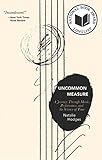
Elif Batuman: Either/Or (2022) Stella Gibbons: Cold Comfort Farm (1932) Michel Faber: Under The Skin (2000) Wallace Stegner: Crossing to Safety (1987) Gustave Flaubert: Madame Bovary (1857) Rachel Cusk: Outline (2014) Sara Gran: The Book of the Most Precious Substance (2022) Anonymous: The Railway Traveller s Handy Book (1862) Natalie Hodges: Uncommon Measure: A Journey Through Music, Performance, and the Science of Time (2022)Gary K. Wolf: Who Censored Roger Rabbit? (1981)

Films Recent releases

Seen at a 2023 festival. Disappointments this year included Blitz (Steve McQueen), Love Lies Bleeding (Rose Glass), The Room Next Door (Pedro Almod var) and Emilia P rez (Jacques Audiard), whilst the worst new film this year was likely The Substance (Coralie Fargeat), followed by Megalopolis (Francis Ford Coppola), Unfrosted (Jerry Seinfeld) and Joker: Folie Deux (Todd Phillips).
Older releases ie. Films released before 2023, and not including rewatches from previous years. Distinctly unenjoyable watches included The Island of Dr. Moreau (John Frankenheimer, 1996), Southland Tales (Richard Kelly, 2006), Any Given Sunday (Oliver Stone, 1999) & The Hairdresser s Husband (Patrice Leconte, 19990). On the other hand, unforgettable cinema experiences this year included big-screen rewatches of Solaris (Andrei Tarkovsky, 1972), Blade Runner (Ridley Scott, 1982), Apocalypse Now (Francis Ford Coppola, 1979) and Die Hard (John McTiernan, 1988).

Fran ois Marier: Monitoring and Time-Shifting YouTube Podcasts

While most podcasts are available on multiple platforms and either offer an RSS feed or have one that can be discovered, some are only available in the form of a YouTube channel. Thankfully, it's possible to both monitor them for new episodes (i.e. new videos), and time-shift the audio for later offline listening. Subscribing to a channel via RSS is possible thanks to the built-in, but not easily discoverable, RSS feeds. See these instructions for how to do it. As an example, the RSS feed for the official Government of BC channel is https://www.youtube.com/feeds/videos.xml?channel_id=UC6n9tFQOVepHP3TIeYXnhSA. When it comes to downloading the audio, the most reliable tool I have found is yt-dlp. Since the exact arguments needed to download just the audio as an MP3 are a bit of a mouthful, I wrote a wrapper script which also does a few extra things: If you find that script handy, you may also want to check out the script I have in the same GitHub repo to turn arbitrary video files into a podcast.

Russ Allbery: Review: Metal from Heaven

Review: Metal from Heaven, by August Clarke
Publisher: Erewhon
Copyright: November 2024
ISBN: 1-64566-099-0
Format: Kindle
Pages: 443
Metal from Heaven is industrial-era secondary-world fantasy with a literary bent. It is a complete story in one book, and I would be very surprised by a sequel. Clarke previously wrote the Scapegracers young-adult trilogy, which got excellent reviews and a few award nominations, as H.A. Clarke. This is his first adult novel.
Know I adore you. Look out over the glow. The cities sundered, their machines inverted, mountains split and prairies blazing, that long foreseen Hereafter crowning fast. This calamity is a promise made to you. A prayer to you, and to your shadow which has become my second self, tucked behind my eye and growing in tandem with me, pressing outwards through the pupil, the smarter, truer, almost bursting reason for our wrath. Do not doubt me. Just look. Watch us rise as the sun comes up over the beauty. The future stains the bleakness so pink. When my violence subsides, we will have nothing, and be champions.
Marney Honeycutt is twelve years old, a factory worker, and lustertouched. She works in the Yann I. Chauncey Ichorite Foundry in Ignavia City, alongside her family and her best friend, shaping the magical metal ichorite into the valuable industrial products of a new age of commerce and industry. She is the oldest of the lustertouched, the children born to factory workers and poisoned by the metal. It has made her allergic, prone to fits at any contact with ichorite, but also able to exert a strange control over the metal if she's willing to pay the price of spasms and hallucinations for hours afterwards. As Metal from Heaven opens, the workers have declared a strike. Her older sister is the spokesperson, demanding shorter hours, safer working conditions, and an investigation into the health of the lustertouched children. Chauncey's response is to send enforcer snipers to kill the workers, including the entirety of her family.
The girl sang, "Unalone toward dawn we go, toward the glory of the new morning." An enforcer shot her in the belly, and when she did not fall, her head.
Marney survives, fleeing into the city, swearing an impossible personal revenge against Yann Chauncey. An act of charity gets her a ticket on a train into the countryside. The woman who bought her ticket is a bandit who is on the train to rob it. Marney's ability to control ichorite allows her to help the bandits in return, winning her a place with the Highwayman's Choir who have been preying on the shipments of the rich and powerful and then disappearing into the hills. The Choir's secret is that the agoraphobic and paranoid Baron of the Fingerbluffs is dead and has been for years. He was killed by his staff, Hereafterist idealists, who have turned his remote territory into an anarchist commune and haven for pirates and bandits. This becomes Marney's home and the Choir becomes her family, but she never forgets her oath of revenge or the childhood friend she left behind in the piles of bodies and to whom this story is narrated. First, Clarke's writing is absolutely gorgeous.
We scaled the viny mountain jags at Montrose Barony's legal edge, the place where land was and wasn't Ignavia, Royston, and Drustland alike. There was a border but it was diffuse and hallucinatory, even more so than most. On legal papers and state maps there were harsh lines that squashed topography and sanded down the mountains into even hills in planter's rows, but here among the jutting rocks and craggy heather, the ground was lineless.
The rhythm of it, the grasp of contrast and metaphor, the word choice! That climactic word "lineless," with its echo of limitless. So good. Second, this is the rarest of books: a political fantasy that takes class and religion seriously and uses them for more than plot drivers. This is not at all our world, and the technology level is somewhat ambiguous, but the parallels to the Gilded Age and Progressive Era are unmistakable. The Hereafterists that Marney joins are political anarchists, not in the sense of alternative governance structures and political theory sanitized for middle-class liberals, but in the sense of Emma Goldman and Peter Kropotkin. The society they have built in the Fingerbluffs is temporary, threatened, and contingent, but it is sincere and wildly popular among the people who already lived there. Even beyond politics, class is a tangible force in this book. Marney is a factory worker and the child of factory workers. She barely knows how to read and doesn't magically learn over the course of the book. She has friends who are clever in the sense rewarded by politics and nobility, who navigate bureaucracies and political nuance, but that is not Marney's world. When, towards the end of the book, she has to deal with a gathering of high-class women, the contrast is stark, and she navigates that gathering only by being entirely unexpected. Perhaps the best illustration of the subtlety of this is the terminology in the book for lesbian. Marney is a crawly, which is a slur thrown at people like her (and one of the rare fictional slurs that work exactly as the author intended) but is also simply what she calls herself. Whether or not it functions as a slur depends on context, and the context is never hard to understand. The high-class lesbians she meets later are Lunarists, and react to crawly as a vile and insulting word. They use language to separate themselves from both the insult and from the social class that uses it. Language is an indication of culture and manners and therefore of morality, unlike deeds, which admit endless justifications.
Conversation was fleeting. Perdita managed with whomever stood near her, chipper about every prettiness she saw, the flitting butterflies, the dappled light between the leaves, the lushness and the fragrance of untamed land, and her walking companions took turns sharing in her delight. It was infectious, how happy she was. She was going to slaughter millions. She was going to skip like this all the while.
The handling of religion is perhaps even better. Marney was raised a Tullian, which sits alongside two other fleshed-out fictional religions and sketches of several more. Tullians tend to be conservative and patriarchal, and Marney has a realistically complicated relationship with faith: sticking with some Tullian worship practices and gestures because they're part of who she is, feeling a kinship to other Tullians, discarding beliefs that don't fit her, and revising others. Every major religion has a Hereafterist spin or reinterpretation that upends or reverses the parts of the religion that were used to prop up the existing social order and brings it more in line with Hereafterist ideals. We see the Tullian Hereafterist variation in detail, and as someone who has studied a lot of methods of reinterpreting Christianity, I was impressed by how well Clarke invents both a belief system and its revisionist rewrite. This is exactly how religions work in human history, but one almost never sees this subtlety in fantasy novels. Marney's allergy to ichorite causes her internal dialogue to dissolve into hallucinatory synesthesia when she's manipulating or exposed to it. Since that's most of the book, substantial portions read like drug trips with growing body horror. I normally hate this type of narration, so it's a sign of just how good Clarke's writing is that I tolerated it and even enjoyed parts. It helps that the descriptions are irreverent and often surprising, full of unexpected metaphors and sudden turns. It's very hard not to quote paragraph after paragraph of this book. Clarke is also doing a lot with gender that I don't feel qualified to comment in detail on, but it would not surprise me to see this book in the Otherwise Award recommendation list. I can think of three significant male characters, all of whom are well-done, but every other major character is female by at least some gender definition. Within that group, though, is huge gender diversity of the complicated and personal type that doesn't force people into defined boxes. Marney's sexuality is similarly unclassified and sometimes surprising. My one complaint is that I thought the sex scenes (which, to warn, are often graphic) fell into the literary fiction trap of being described so closely and physically that it didn't feel like anyone involved was actually enjoying themselves. (This is almost certainly a matter of personal taste.) I had absolutely no idea how Clarke was going to end this book, and the last couple of chapters caught me by surprise. I'm still not sure what I think about the climax. It's not the ending that I wanted, but one of the merits of this book is that it never did what I thought I wanted and yet made me enjoy the journey anyway. It is, at least, a genre ending, not a literary ending: The reader gets a full explanation of what is going on, and the setting is not static the way that it so often is in literary fiction. The characters can change the world, for good or for ill. The story felt frustrating and incomplete when I first finished it, but I haven't stopped thinking about this book and I think I like the shape of it a bit more now. It was certainly unexpected, at least by me. Clarke names Dhalgren as one of their influences in the acknowledgments, and yes, Metal from Heaven is that kind of book. This is the first 2024 novel I've read that felt like the kind of book that should be on award shortlists. I'm not sure it was entirely successful, and there are parts of it that I didn't like or that weren't for me, but it's trying to do something different and challenging and uncomfortable, and I think it mostly worked. And the writing is so good.
She looked like a mythic princess from the old woodcuts, who ruled nature by force of goodness and faith and had no legal power.
Metal from Heaven is not going to be everyone's taste. If you do not like literary fantasy, there is a real chance that you will hate this. I am very glad that I read it, and also am going to take a significant break from difficult books before I tackle another one. But then I'm probably going to try the Scapegracers series, because Clarke is an author I want to follow. Content notes: Explicit sex, including sadomasochistic sex. Political violence, mostly by authorities. Murdered children, some body horror, and a lot of serious injuries and death. Rating: 8 out of 10

kpcyrd: 2024 wrapped

Dear blog. This post is inspired by an old friend of mine who has been writing these for the past few years. I meant to do this for a while now, but ended up not preparing anything, so this post is me writing it from memory. There s likely stuff I forgot, me being gentle with myself I ll probably just permit myself to complete this list the next couple of days. I hate bragging, I try to not depend on external validation as much as possible, and being the anarcho-communist anti-capitalist that I am, I try to be content with knowing I m doing good in the background . I don t think people owe me for the work I did, I don t expect anything in return, and it s my way of giving back to the community and the people around me. Consider us even. That being said, I: Thanks to everybody who has been part of my human experience, past or present. Especially those who ve been closest. cheers,
kpcyrd

29 December 2024

Russ Allbery: Review: The Last Hour Between Worlds

Review: The Last Hour Between Worlds, by Melissa Caruso
Series: The Echo Archives #1
Publisher: Orbit
Copyright: November 2024
ISBN: 0-316-30364-X
Format: Kindle
Pages: 388
The Last Hour Between Worlds is urban, somewhat political high fantasy with strong fae vibes. It is the first book of a series, but it stands alone quite well. Kembral Thorne is a Hound, a member of the guild that serves as guards, investigators, and protectors. Kembral's specialty is Echo retrieval: rescues of people and animals who have fallen through a weak spot in reality into one of the strange, dangerous, and malleable layers called Echoes. Kem once rescued a dog from six layers down, an almost unheard-of feat. Kem is also a new single mother, which means her past two months have been spent in a sleep-deprived haze revolving exclusively around her much-beloved infant. Dona Marjorie Swift's year-turning party is the first time she's been out without Emmi since she gave birth, and she's only there because her sister took the child and practically shoved her out the door. Now, she's desperately trying to remember how to be social and normal, which is not made easier by the unexpected presence of Rika at the party. Rika Nonesuch is not a Hound. She's a Cat, a member of the guild of thieves and occasional assassins. They are the nemesis of the Hounds, but in a stylized and formalized way in which certain courtesies are expected. (The politics of this don't really make sense; you just have to go with it.) Kem has complicated feelings about Rika's grace, banter, and intoxicating perfume, feelings that she thought might be reciprocated until Rika drugged her during an apparent date and left her buried under a pile of garbage. She was not expecting Rika to be at this party and is definitely not ready to have a conversation with her. This emotional turmoil is rudely interrupted by the death of nearly everyone at the party via an Echo poison, the appearance of a dark figure driving a black sword into someone, and the descent of the entire party into an Echo. This was one of those books that kept getting better the farther into the book I read. I was a bit leery at first because the publisher's blurb made it sound more like horror than I prefer, but this is more the disturbing strangeness of fae creatures than the sort of gruesomeness, disgust, or body horror that I find off-putting. Most importantly, the point of this book is not to torture the characters or scare the reader. It's instead structured a bit like a murder mystery, but one whose resolution requires working out obscure fantasy rules and hidden political agendas. One of the currencies in the world of Echos is blood, but another is emotion, revelation, and the stories that bring both, and Caruso focuses the story more on that aspect than on horrifying imagery.







Rika frowned. "Resolve it? How?" "I have no idea." I couldn't keep my frustration from leaking through. "Might be that we have to delve deep into our own hearts to confront the unhealed wounds we've carried with us in secret. Might be that we have to say their names backward, or just close our eyes and they'll go away. Echoes never make any damned sense." Rika made a face. "We'd better not have to confront our unhealed wounds, or I'm leaving you to die."
All of The Last Hour Between Worlds is told in the first person from Kem's perspective, but Rika is the best character in this book. Kem is a rather straightforward, dogged, stubborn protector; Rika is complicated, selfish, conflicted, and considerably more dynamic. The first obvious twist in her background I spotted so long before Kem found out that it was a bit frustrating, but there were multiple satisfying twists after that. As advertised in the blurb, there's a sapphic romance angle here, but it's the sort that comes from a complicated friendship and a lot of mutual respect rather than love at first sight. Some of their relationship conflict is driven by misunderstanding, but the misunderstanding happens before the novel begins, which means the reader doesn't have to sit through the bit where one yells at the characters for being stupid. It helps that the characters have something concrete to do, and that driving plot problem is multi-layered and satisfying. Each time the party falls through a layer of reality, it's mostly reset to the start of the book, but the word "mostly" is hiding a lot of subtlety. Given the clock at the start of each chapter and the blurb (if one read it), the reader can make a good guess that the plot problem will not be fully resolved until the characters fall quite deep into the Echoes, but the story never felt repetitive the way that some time loop stories can. As the characters gain more understanding, the problems change, the players change, and they have to make several excursions into the surrounding world. This is the sort of fantasy that feels a bit like science fiction. You're thrown into a world with a different culture and different rules that are foreign to the reader and natural to the characters. Part of the fun of reading is figuring out the rules, history, and backstory while watching the characters try to solve the puzzles they're faced with. The writing is good but not great. Characterization was good enough for a story primarily focused on action and puzzle-solving, but it was a bit lacking in subtlety. I think Caruso's strengths showed most in the world design, particularly the magic system and the rules followed by the Echo creatures. The excursions outside of the somewhat-protected house struck a balance between eeriness and comprehensibility that reminded me of T. Kingfisher or Sandman. The human politics were unfortunately less successful and rested on some tired centrist cliches. Thankfully, this was not the main point of the story. I should also warn that there is a lot of talk about babies. Kem's entire identity at the start of the novel, to the point of incessant monologue, is "new mother." This is not a perspective we get very often in fantasy, and Kem eventually finds a steadier balance between her bond with her daughter and the other parts of her life. I think some readers will feel very seen. But Caruso leans hard into maternal bonding. So hard. If you don't want to read about someone who is deliriously obsessed with their new child, you may want to skip this one. Right after I finished this book, I thought it was amazing. Now that I've had a few days to think about it, the lack of subtlety and the facile human politics brought it down a notch. I'm a science fiction reader at heart, so I loved the slow revelation of mechanics; the reader starts the story by knowing that Kem can "blink step" but not knowing what that means, and by the end of the story one not only knows but has opinions about its limitations, political implications, and interactions with other forms of magic. The Echo worlds are treated similarly, and this type of world-building is my jam. But the cost is that the human characters, particularly the supporting cast, don't get the same focus and therefore are a bit straightforward and obvious. The subplot with Dona Vandelle was particularly annoying. Ah well. Kem and Rika's relationship did work, and it's the center of the book. If you like fantasy mechanics but are a bit leery of fae stories because they feel too symbolic or arbitrary, give this a try. It's the most satisfyingly constructed fae story that I've read in a long time. It's not great literary fiction, but it's also not trying to be; it's a puzzle adventure, and a well-executed one. Recommended, and I will definitely be reading the sequel. Content notes: Lots of violent death and other physical damage, creepy dream worlds with implied but not explicit horror, and rather a lot of blood. Followed by The Last Soul Among Wolves, not yet published at the time I wrote this review. Rating: 8 out of 10

Next.

Previous.