Search Results: "nic"

23 October 2023

Jonathan Dowland: cherished

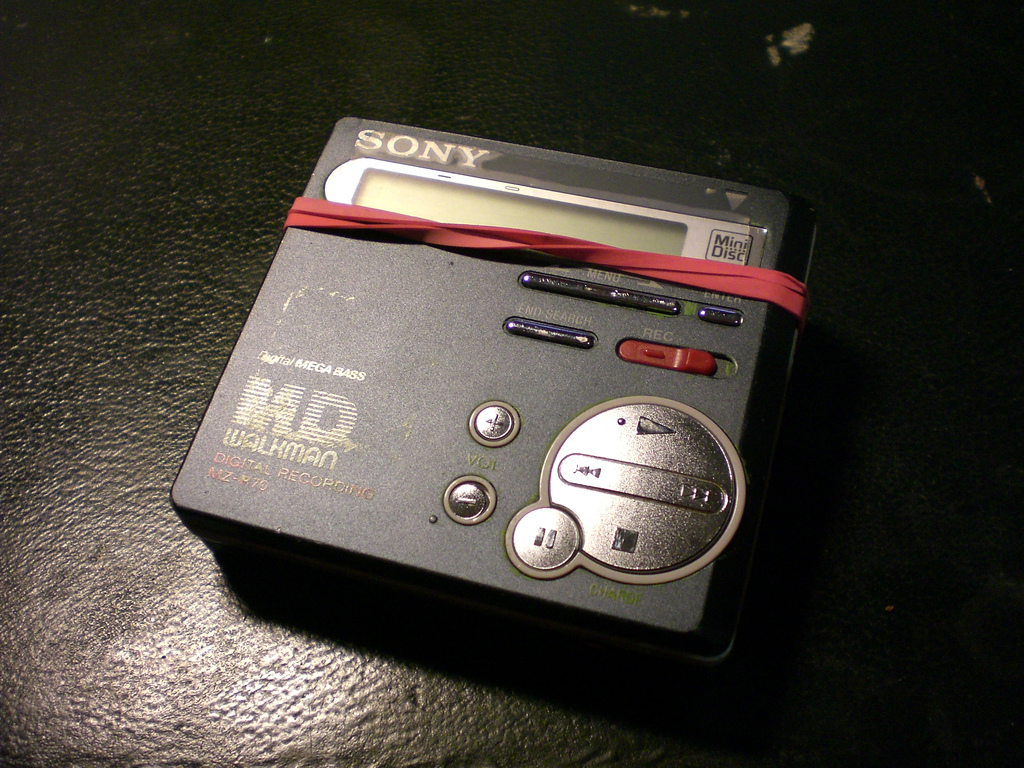
minidisc player
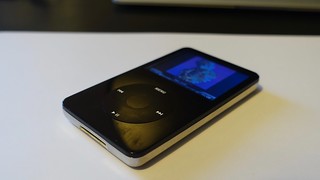
iPod
Bose headphones
If I think back to technology I've used and really cherished, quite often they're audio-related: Minidisc players, Walkmans, MP3 players, headphones. These pieces of technology served as vessels to access music, which of course I often have fond emotional connection to. And so I think the tech has benefited from that, and in some way the fondness or emotional connection to music has somewhat transferred or rubbed-off on the technology to access it. Put another way, no matter how well engineered it was, how easy it was to use or how well it did the job, I doubt I'd have fond memories, years later, of a toilet brush. I wonder if the same "bleeding" of fondness applies to brands, too. If so, and if you were a large tech company, it would be worth having some audio gear in your portfolio. I think Sony must have benefited from this. Apple too. on-ear phones For listening on-the-go, I really like on-ear headphones, as opposed to over-ear. I have some lovely over-ear phones for listening-at-rest, but they get my head too hot when I'm active. The on-ears are a nice compromise between comfort and quality of over-ear, and portability of in-ear. Most of the ones I've owned have folded up nicely into a coat pocket too. My current Bose pair are from 2019 and might be towards the end of their life. They replaced some AKG K451s, which were also discontinued. Last time I looked (2019) the Sony offerings in this product category were not great. That might have changed. But I fear that the manufacturers have collectively decided this product category isn't worth investing in.

Russ Allbery: Review: Going Postal

Review: Going Postal, by Terry Pratchett
Series: Discworld #33
Publisher: Harper
Copyright: October 2004
Printing: November 2014
ISBN: 0-06-233497-2
Format: Mass market
Pages: 471
Going Postal is the 33rd Discworld novel. You could probably start here if you wanted to; there are relatively few references to previous books, and the primary connection (to Feet of Clay) is fully re-explained. I suspect that's why Going Postal garnered another round of award nominations. There are arguable spoilers for Feet of Clay, however. Moist von Lipwig is a con artist. Under a wide variety of names, he's swindled and forged his way around the Disc, always confident that he can run away from or talk his way out of any trouble. As Going Postal begins, however, it appears his luck has run out. He's about to be hanged. Much to his surprise, he wakes up after his carefully performed hanging in Lord Vetinari's office, where he's offered a choice. He can either take over the Ankh-Morpork post office, or he can die. Moist, of course, immediately agrees to run the post office, and then leaves town at the earliest opportunity, only to be carried back into Vetinari's office by a relentlessly persistent golem named Mr. Pump. He apparently has a parole officer. The clacks, Discworld's telegraph system first seen in The Fifth Elephant, has taken over most communications. The city is now dotted with towers, and the Grand Trunk can take them at unprecedented speed to even far-distant cities like Genua. The post office, meanwhile, is essentially defunct, as Moist quickly discovers. There are two remaining employees, the highly eccentric Junior Postman Groat who is still Junior because no postmaster has lasted long enough to promote him, and the disturbingly intense Apprentice Postman Stanley, who collects pins. Other than them, the contents of the massive post office headquarters are a disturbing mail sorting machine designed by Bloody Stupid Johnson that is not picky about which dimension or timeline the sorted mail comes from, and undelivered mail. A lot of undelivered mail. Enough undelivered mail that there may be magical consequences. All Moist has to do is get the postal system running again. Somehow. And not die in mysterious accidents like the previous five postmasters. Going Postal is a con artist story, but it's also a startup and capitalism story. Vetinari is, as always, solving a specific problem in his inimitable indirect way. The clacks were created by engineers obsessed with machinery and encodings and maintenance, but it's been acquired by... well, let's say private equity, because that's who they are, although Discworld doesn't have that term. They immediately did what private equity always did: cut out everything that didn't extract profit, without regard for either the service or the employees. Since the clacks are an effective monopoly and the new owners are ruthless about eliminating any possible competition, there isn't much to stop them. Vetinari's chosen tool is Moist. There are some parts of this setup that I love and one part that I'm grumbly about. A lot of the fun of this book is seeing Moist pulled into the mission of resurrecting the post office despite himself. He starts out trying to wriggle out of his assigned task, but, after a few early successes and a supernatural encounter with the mail, he can't help but start to care. Reformed con men often make good protagonists because one can enjoy the charisma without disliking the ethics. Pratchett adds the delightfully sharp-witted and cynical Adora Belle Dearheart as a partial reader stand-in, which makes the process of Moist becoming worthy of his protagonist role even more fun. I think that a properly functioning postal service is one of the truly monumental achievements of human society and doesn't get nearly enough celebration (or support, or pay, or good working conditions). Give me a story about reviving a postal service by someone who appreciates the tradition and social role as much as Pratchett clearly does and I'm there. The only frustration is that Going Postal is focused more on an immediate plot, so we don't get to see the larger infrastructure recovery that is clearly needed. (Maybe in later books?) That leads to my grumble, though. Going Postal and specifically the takeover of the clacks is obviously inspired by corporate structures in the later Industrial Revolution, but this book was written in 2004, so it's also a book about private equity and startups. When Vetinari puts a con man in charge of the post office, he runs it like a startup: do lots of splashy things to draw attention, promise big and then promise even bigger, stumble across a revenue source that may or may not be sustainable, hire like mad, and hope it all works out. This makes for a great story in the same way that watching trapeze artists or tightrope walkers is entertaining. You know it's going to work because that's the sort of book you're reading, so you can enjoy the audacity and wonder how Moist will manage to stay ahead of his promises. But it is still a con game applied to a public service, and the part of me that loves the concept of the postal service couldn't stop feeling like this is part of the problem. The dilemma that Vetinari is solving is a bit too realistic, down to the requirement that the post office be self-funding and not depend on city funds and, well, this is repugnant to me. Public services aren't businesses. Societies spend money to build things that they need to maintain society, and postal service is just as much one of those things as roads are. The ability of anyone to send a letter to anyone else, no matter how rural the address is, provides infrastructure on which a lot of important societal structure is built. Pratchett made me care a great deal about Ankh-Morpork's post office (not hard to do), and now I want to see it rebuilt properly, on firm foundations, without splashy promises and without a requirement that it pay for itself. Which I realize is not the point of Discworld at all, but the concept of running a postal service like a startup hits maybe a bit too close to home. Apart from that grumble, this is a great book if you're in the mood for a reformed con man story. I thought the gold suit was a bit over the top, but I otherwise thought Moist's slow conversion to truly caring about his job was deeply satisfying. The descriptions of the clacks are full of askew Discworld parodies of computer networking and encoding that I enjoyed more than I thought I would. This is also the book that introduced the now-famous (among Pratchett fans at least) GNU instruction for the clacks, and I think that scene is the most emotionally moving bit of Pratchett outside of Night Watch. Going Postal is one of the better books in the Discworld series to this point (and I'm sadly getting near the end). If you have less strongly held opinions about management and funding models for public services, or at least are better at putting them aside when reading fantasy novels, you're likely to like it even more than I did. Recommended. Followed by Thud!. The thematic sequel is Making Money. Rating: 8 out of 10

22 October 2023

Ravi Dwivedi: Software Freedom Day at sflc.in

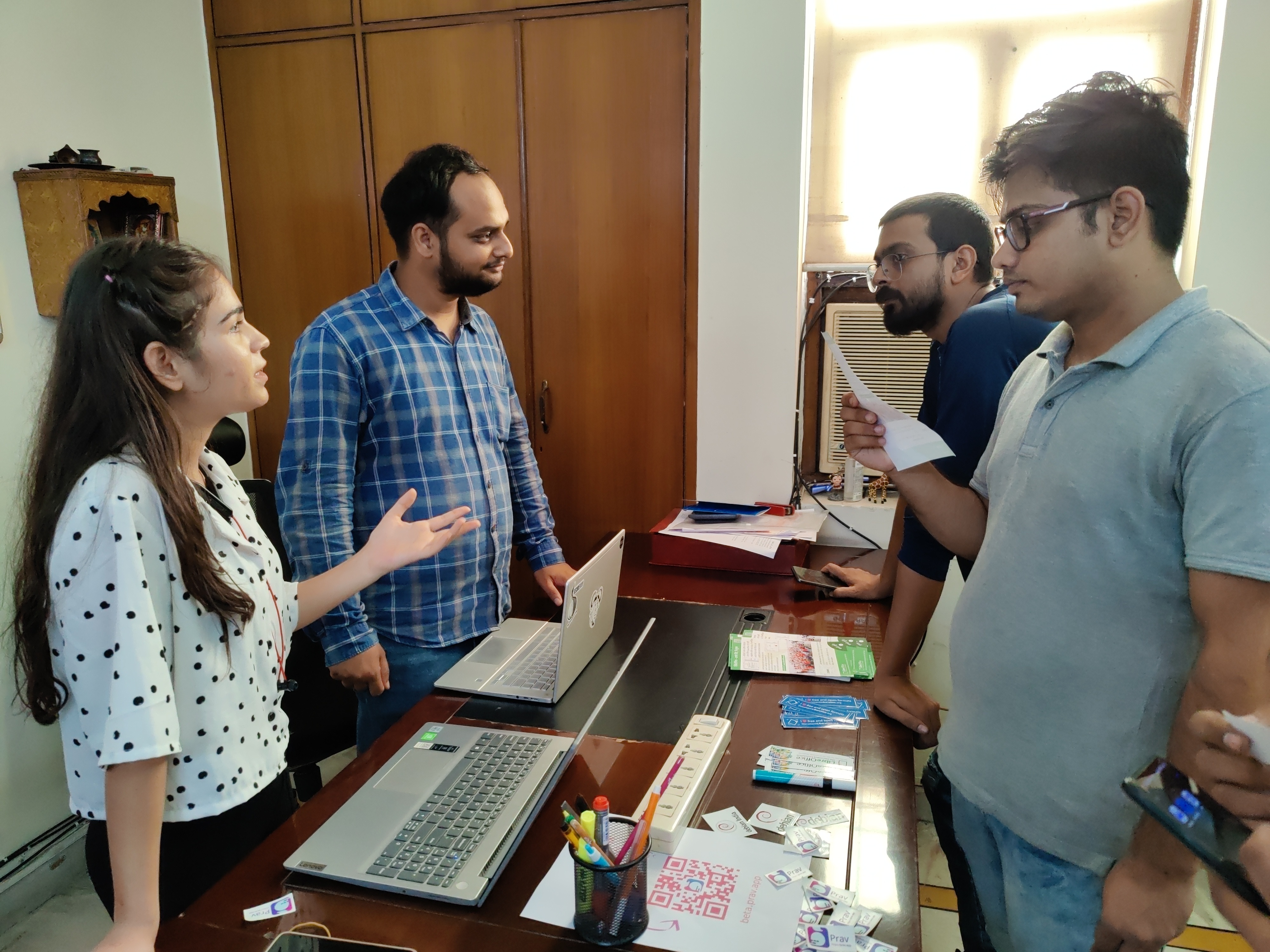
Software Freedom Law Center, India, also known as sflc.in, organized an event to celebrate the Software Freedom Day on 30th September 2023. Me, Sahil, Contrapunctus and Suresh joined. The venue was at the SFLC India office in Delhi. The sflc.in office was on the second floor of what looked like someone s apartment:). I also met Chirag, Orendra, Surbhi and others. My plan was to have a stall on LibreOffice and Prav app to raise awareness about these projects. I didn t have QR code for downloading prav app printed already, so I asked the people at sflc.in if they can get it printed for me. They were very kind and helped me in getting a color printout for me. So, I got a stall in their main room. Surbhi was having an Inkscape stall next to mine and gave me company. People came and asked about the prav project and then I realized I was still too tired to explain the idea behind the prav project and about LibreOffice (after a long Kerala trip). We got a few prav app installs during the event, which is cool.
My stall. Photo credits: Tejaswini.
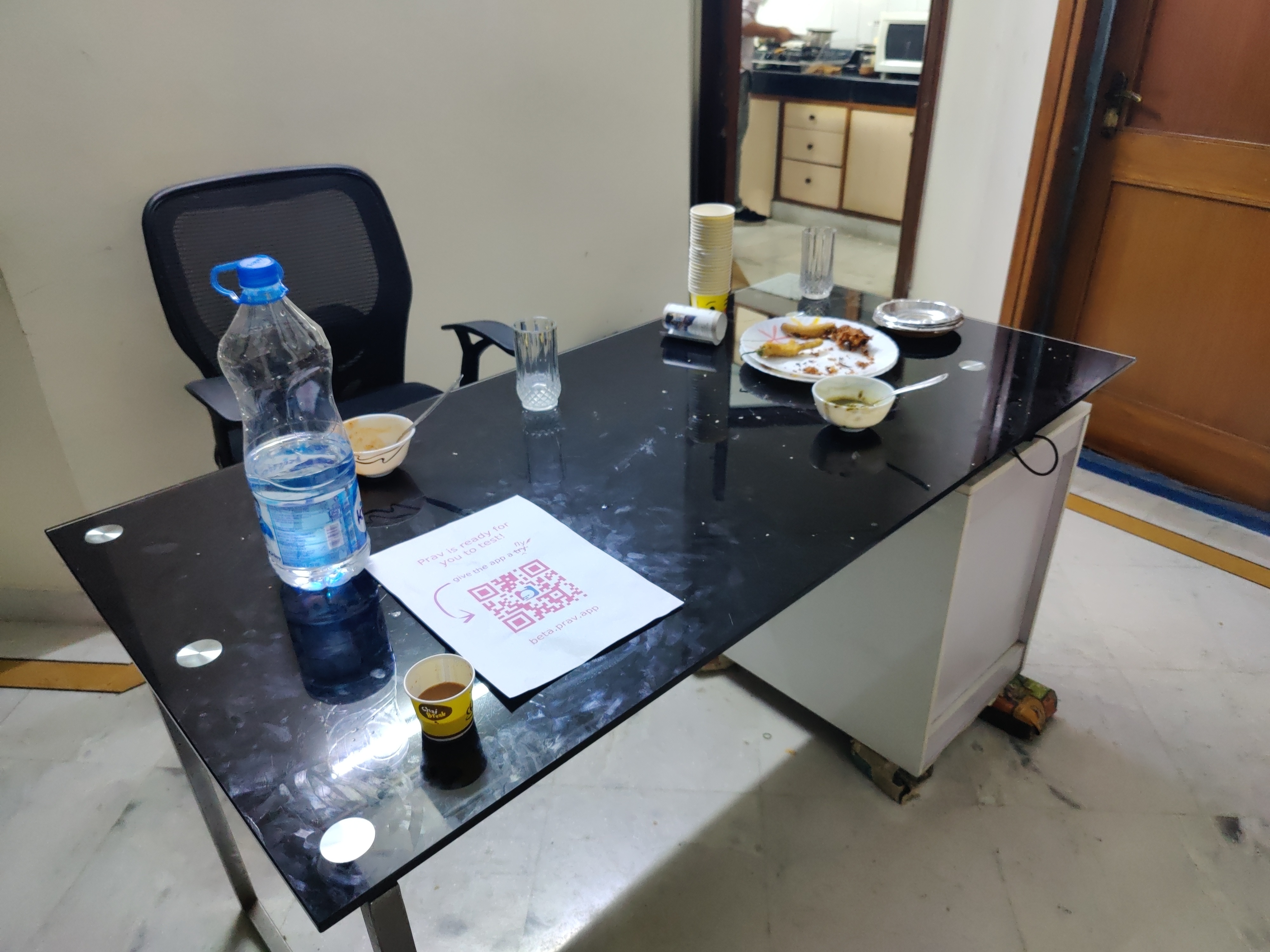
Sahil had Debian stall and contrapunctus had OpenStreetMap stall. After about an hour, Revolution OS was screened for all of us to watch, along with popcorn. The documentary gave an overview of history of Free Software Movement. The office had a kitchen where fresh chai was being made and served to us. The organizers ordered a lot of good snacks for us.
Snacks and tea at the front desk. CC-BY-SA 4.0 by Ravi Dwivedi.
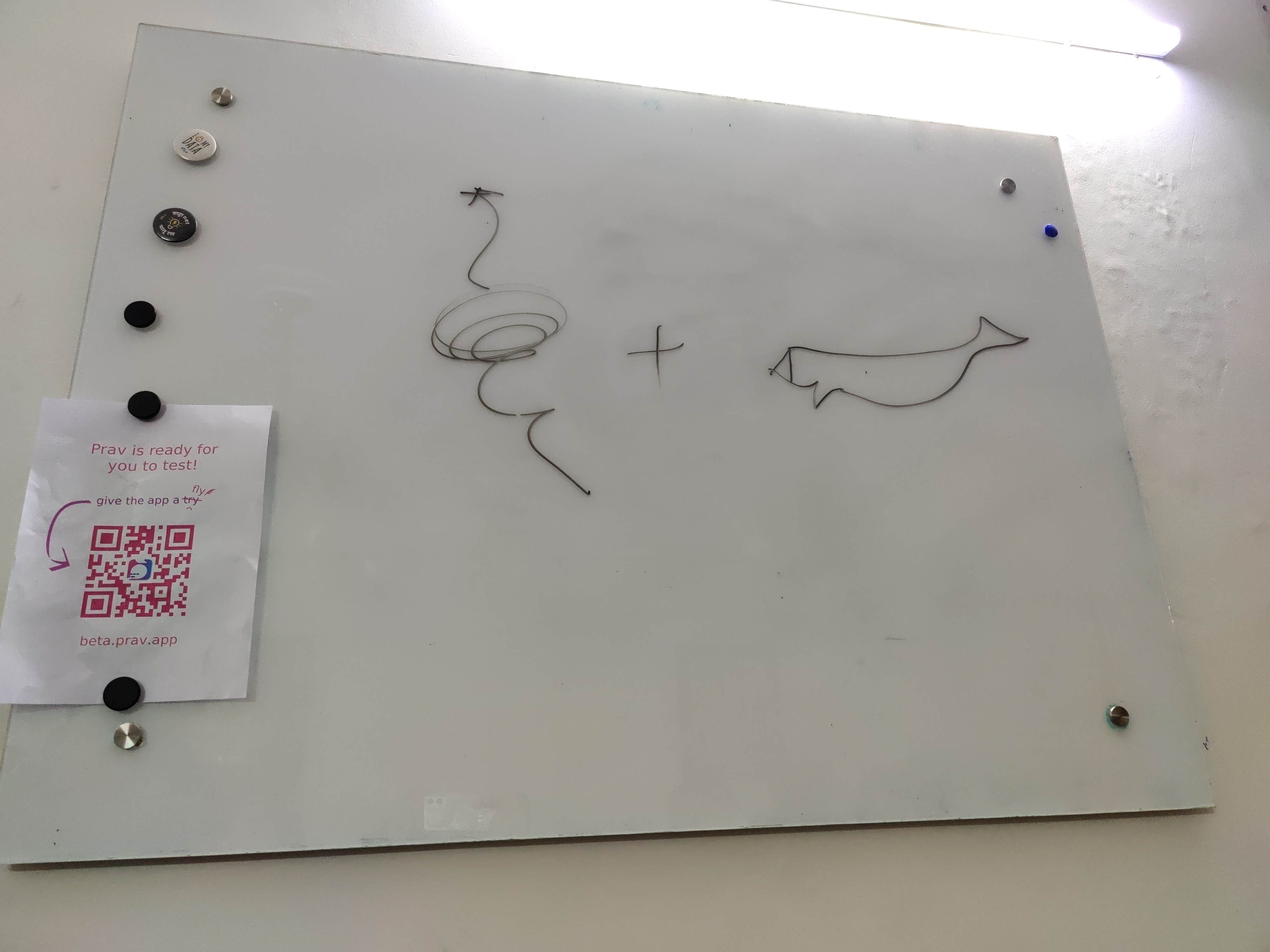
I came out of the movie hall to take more tea and snacks from the front desk. I saw a beautiful painting was hanging at the wall opposite to the front desk and Tejaswini (from sflc.in) revealed that she had made it. The tea was really good as it was freshly made in the kitchen. After the movie, we played a game of pictionary. We were divided into two teams. The game goes as follows: A person from a team is selected and given a term related to freedom respecting software written on a piece of paper, but concealed from other participants. Then that person draws something on the board (no logo, no alphabets) without speaking. If the team from which the person belongs correctly guesses the term, the team gets one step ahead on the leader board. The team who reaches the finish line wins. I recall some fun pictionaries. Like, the one in the picture below seems far from the word Wireguard and even then someone from the team guessed that word. Our team won in the end \o/.
Pictionary drawing nowhere close to the intended word Wireguard :), which was guessed. Photo by Ravi Dwivedi, CC-BY-SA 4.0.
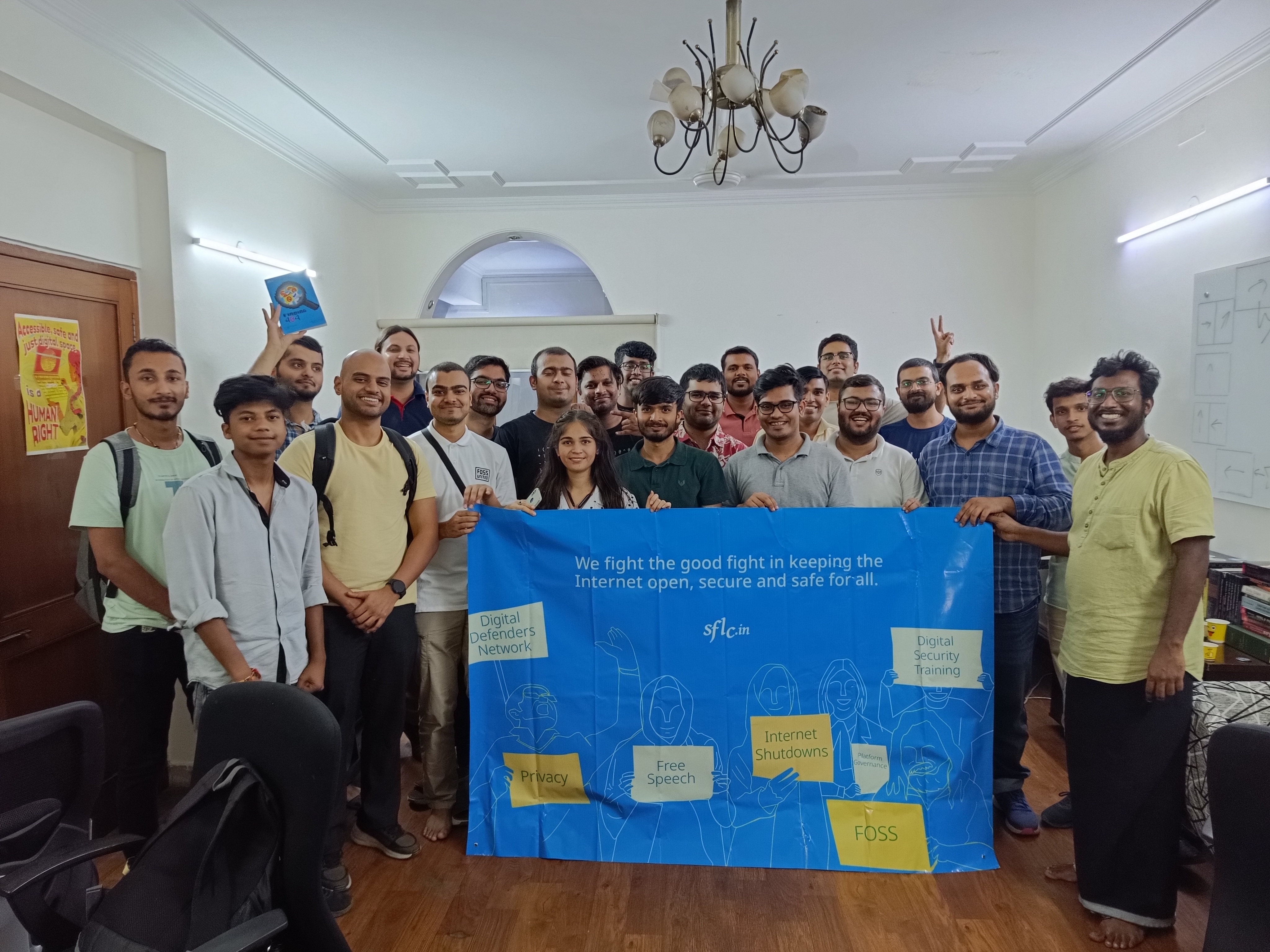
Then, we posed for a group picture. At the end, SFLC.in had a delicious cake in store for us. They had some merchandise - handbags, T-shirts, etc. which we could take if we donate some amount to SFLC.in. I bought a handbag with Ban Plastic, not Internet written on it in exchange for donation. I hope that gives people around me a powerful message :) .
Group photo. Photo credits: Tejaswini.
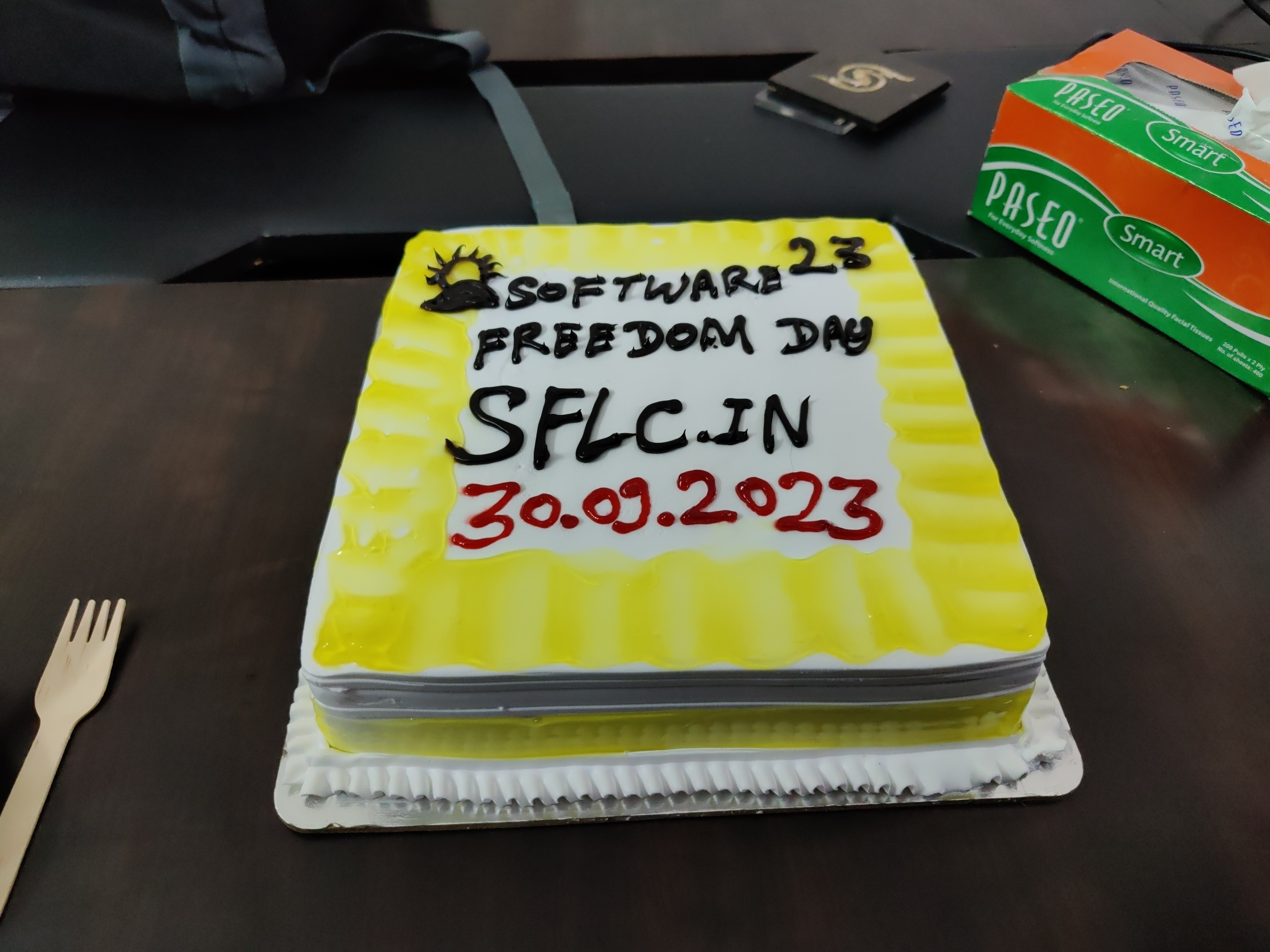
Tasty cake. CC-BY-SA 4.0 by Ravi Dwivedi.
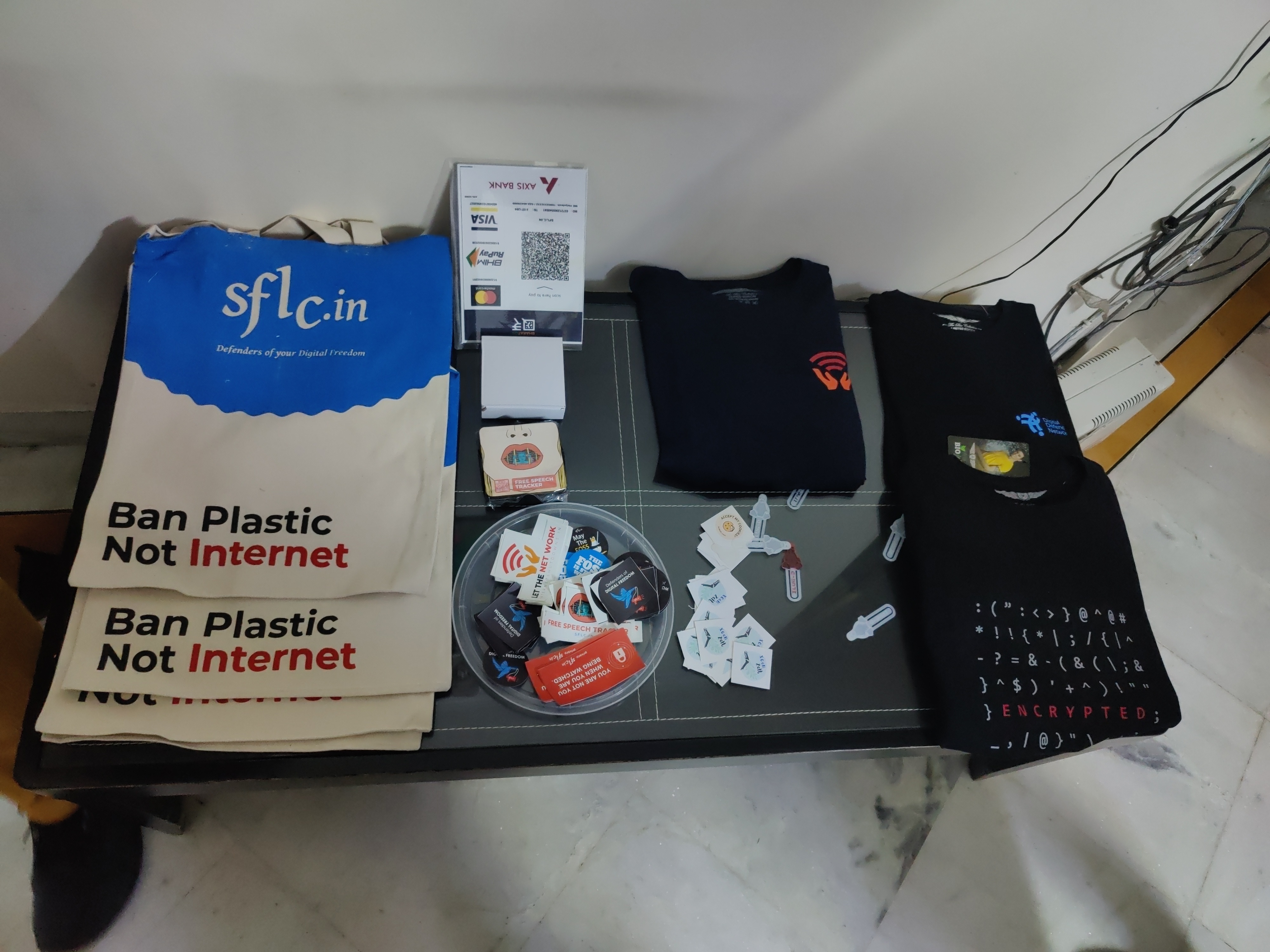
Merchandise by sflc.in. CC-BY-SA 4.0 by Ravi Dwivedi.

All in all, a nice event by sflc.in :)

Aigars Mahinovs: Figuring out finances part 3

So now that I have something that looks very much like a budgeting setup going, I am going to .. delete it! Why? Well, at the end of the last part of this, the Firefly III instance was running on a tiny Debian server in a Docker container right next to another Docker container that is running the main user of this server - a Home Assistant instance that has been managing my home for several years already. So why change that? See, there is one bit of knowledge that is very crucial to your Home Assistant experience, which is not really emphasised enough in the Home Assistant documentation. In fact back when I was getting into the Home Assistant both the main documentation and basically all the guides around were just coming off the hype of Docker disrupting everything and that is a big reason why everyone suggested to install and use Home Assistant as a Docker container on top of any kind of stable OS. In fact I used to run it for years on my TerraMaster NAS, just so that I don't have a separate home server running 24/7 at home and just have everything inside the very compact NAS case. So here is the thing you NEED to know - Home Assistant Container is DEMO version of Home Assistant! If you want to have a full Home Assistant experience and use the knowledge of the huge community around the HA space, you have to use the Home Assistant OS. Ideally on dedicated hardware. Ideally on HA Green box, but any tiny PC would also work great. Raspberry Pi 4+ is common, but quite weak as the network size grows and especially the SD card for storage gets old very fast. Get a real small x86 PC with at least 4Gb RAM and a NVME SSD (eMMC is fine too). You want to have an Ethernet port and a few free USB ports. I would also suggest immediately getting HA SkyConnect adapter that can do Zigbee networking and will do Matter soon (tm). I am making do with a SonOff Zigbee gateway, but it is quite hacky to get working and your whole Zigbee communication breaks down if the WiFi goes down - suboptimal. So I took a backup of the Home Assistant instance using it's build-in tools. I took an export of my fully configured Firefly III instance and proceeded to wipe the drive of the NUC. That was not a smart idea. :D On the Home Assitant side I was really frustrated by the documentation that was really focused on users that are (likely) using Windows and are using an SD card in something like Raspberry Pi to get Home Assistant OS running. It recommended downloading Etcher to write the image to the boot medium. That is a really weird piece of software that managed to actually crash consistently when I was trying to run it from Debian Live or Ubuntu Live on my NUC. It took me way too long to give up and try something much simpler - dd. xzcat haos_generic-x86-64-11.0.img.xz dd of=/dev/mmcblk0 bs=1M That just worked, prefectly and really fast. If you want to use a GUI in a live environment, then just using the gnome-disk-utility ("Disks" in Gnome menu) and using the "Restore Disk Image ..." on a partition would work just as well. It even supports decompressing the XZ images directly while writing. But that image is small, will it not have a ton of unused disk space behind the fixed install partition? Yes, it will ... until first boot. The HA OS takes over the empty space after its install partition on the first boot-up and just grows its main partition to take up all the remaining space. Smart. After first boot is completed, the first boot wizard can be accessed via your web browser and one of the prominent buttons there is restoring from backup. So you just give it the backup file and wait. Sadly the restore does not actually give any kind of progress, so your only way to figure out when it is done is opening the same web adress in another browser tab and refresh periodically - after restoring from backup it just boots into the same config at it had before - all the settings, all the devices, all the history is preserved. Even authentification tokens are preserved so if yu had a Home Assitant Mobile installed on your phone (both for remote access and to send location info and phone state, like charging, to HA to trigger automations) then it will just suddenly start working again without further actions needed from your side. That is an almost perfect backup/restore experience. The first thing you get for using the OS version of HA is easy automatic update that also automatically takes a backup before upgrade, so if anything breaks you can roll back with one click. There is also a command-line tool that allows to upgrade, but also downgrade ha-core and other modules. I had to use it today as HA version 23.10.4 actually broke support for the Sonoff bridge that I am using to control Zigbee devices, which are like 90% of all smart devices in my home. Really helpful stuff, but not a must have. What is a must have and that you can (really) only get with Home Assistant Operating System are Addons. Some addons are just normal servers you can run alongside HA on the same HA OS server, like MariaDB or Plex or a file server. That is not the most important bit, but even there the software comes pre-configured to use in a home server configuration and has a very simple config UI to pre-configure key settings, like users, passwords and database accesses for MariaDB - you can litereally in a few clicks and few strings make serveral users each with its own access to its own database. Couple more clicks and the DB is running and will be kept restarted in case of failures. But the real gems in the Home Assistant Addon Store are modules that extend Home Assitant core functionality in way that would be really hard or near impossible to configure in Home Assitant Container manually, especially because no documentation has ever existed for such manual config - everyone just tells you to install the addon from HA Addon store or from HACS. Or you can read the addon metadata in various repos and figure out what containers it actually runs with what settings and configs and what hooks it puts into the HA Core to make them cooperate. And then do it all over again when a new version breaks everything 6 months later when you have already forgotten everything. In the Addons that show up immediately after installation are addons to install the new Matter server, a MariaDB and MQTT server (that other addons can use for data storage and message exchange), Z-Wave support and ESPHome integration and very handy File manager that includes editors to edit Home Assitant configs directly in brower and SSH/Terminal addon that boht allows SSH connection and also a web based terminal that gives access to the OS itself and also to a comand line interface, for example, to do package downgrades if needed or see detailed logs. And also there is where you can get the features that are the focus this year for HA developers - voice enablers. However that is only a beginning. Like in Debian you can add additional repositories to expand your list of available addons. Unlike Debian most of the amazing software that is available for Home Assistant is outside the main, official addon store. For now I have added the most popular addon repository - HACS (Home Assistant Community Store) and repository maintained by Alexbelgium. The first includes things like NodeRED (a workflow based automation programming UI), Tailscale/Wirescale for VPN servers, motionEye for CCTV control, Plex for home streaming. HACS also includes a lot of HA UI enhacement modules, like themes, custom UI control panels like Mushroom or mini-graph-card and integrations that provide more advanced functions, but also require more knowledge to use, like Local Tuya - that is harder to set up, but allows fully local control of (normally) cloud-based devices. And it has AppDaemon - basically a Python based automation framework where you put in Python scrips that get run in a special environment where they get fed events from Home Assistant and can trigger back events that can control everything HA can and also do anything Python can do. This I will need to explore later. And the repository by Alex includes the thing that is actually the focus of this blog post (I know :D) - Firefly III addon and Firefly Importer addon that you can then add to your Home Assistant OS with a few clicks. It also has all kinds of addons for NAS management, photo/video server, book servers and Portainer that lets us setup and run any Docker container inside the HA OS structure. HA OS will detect this and warn you about unsupported processes running on your HA OS instance (nice security feature!), but you can just dismiss that. This will be very helpful very soon. This whole environment of OS and containers and apps really made me think - what was missing in Debian that made the talented developers behind all of that to spend the immense time and effor to setup a completely new OS and app infrastructure and develop a completel paraller developer community for Home Assistant apps, interfaces and configurations. Is there anything that can still be done to make HA community and the general open source and Debian community closer together? HA devs are not doing anything wrong: they are using the best open source can provide, they bring it to people whould could not install and use it otherwise, they are contributing fixes and improvements as well. But there must be some way to do this better, together. So I installed MariaDB, create a user and database for Firefly. I installed Firefly III and configured it to use the MariaDB with the web config UI. When I went into the Firefly III web UI I was confronted with the normal wizard to setup a new instance. And no reference to any backup restore. Hmm, ok. Maybe that goes via the Importer? So I make an access token again, configured the Importer to use that, configured the Nordlinger bank connection settings. Then I tried to import the export that I downloaded from Firefly III before. The importer did not auto-recognose the format. Turns out it is just a list of transactions ... It can only be barely useful if you first manually create all the asset accounts with the same names as before and even then you'll again have to deal with resolving the problem of transfers showing up twice. And all of your categories (that have not been used yet) are gone, your automation rules and bills are gone, your budgets and piggy banks are gone. Boooo. It will be easier for me to recreate my account data from bank exports again than to resolve data in that transaction export. Turns out that Firefly III documenation explicitly recommends making a mysqldump of your own and not rely on anything in the app itself for backup purposes. Kind of sad this was not mentioned in the export page that sure looked a lot like a backup :D After doing all that work all over again I needed to make something new not to feel like I wasted days of work for no real gain. So I started solving a problem I had for a while already - how do I add cash transations to the system when I am out of the house with just my phone in the hand? So far my workaround has been just sending myself messages in WhatsApp with the amount and description of any cash expenses. Two solutions are possible: app and bot. There are actually multiple Android-based phone apps that work with Firefly III API to do full financial management from the phone. However, after trying it out, that is not what I will be using most of the time. First of all this requires your Firefly III instance to be accessible from the Internet. Either via direct API access using some port forwarding and secured with HTTPS and good access tokens, or via a VPN server redirect that is installed on both HA and your phone. Tailscale was really easy to get working. But the power has its drawbacks - adding a new cash transaction requires opening the app, choosing new transaction view, entering descriptio, amount, choosing "Cash" as source account and optionally choosing destination expense account, choosing category and budget and then submitting the form to the server. Sadly none of that really works if you have no Internet or bad Internet at the place where you are using cash. And it's just too many steps. Annoying. An easier alternative is setting up a Telegram bot - it is running in a custom Docker container right next to your Firefly (via Portainer) and you talk to it via a custom Telegram chat channel that you create very easily and quickly. And then you can just tell it "Coffee 5" and it will create a transaction from the (default) cash account in 5 amount with description "Coffee". This part also works if you are offline at the moment - the bot will receive the message once you get back online. You can use Telegram bot menu system to edit the transaction to add categories or expense accounts, but this part only work if you are online. And the Firefly instance does not have to be online at all. Really nifty. So next week I will need to write up all the regular payments as bills in Firefly (again) and then I can start writing a Python script to predict my (financial) future!

Ian Jackson: DigiSpark (ATTiny85) - Arduino, C, Rust, build systems

Recently I completed a small project, including an embedded microcontroller. For me, using the popular Arduino IDE, and C, was a mistake. The experience with Rust was better, but still very exciting, and not in a good way. Here follows the rant. Introduction In a recent project (I ll write about the purpose, and the hardware in another post) I chose to use a DigiSpark board. This is a small board with a USB-A tongue (but not a proper plug), and an ATTiny85 microcontroller, This chip has 8 pins and is quite small really, but it was plenty for my application. By choosing something popular, I hoped for convenient hardware, and an uncomplicated experience. Convenient hardware, I got. Arduino IDE The usual way to program these boards is via an IDE. I thought I d go with the flow and try that. I knew these were closely related to actual Arduinos and saw that the IDE package arduino was in Debian. But it turns out that the Debian package s version doesn t support the DigiSpark. (AFAICT from the list it offered me, I m not sure it supports any ATTiny85 board.) Also, disturbingly, its board manager seemed to be offering to install board support, suggesting it would download stuff from the internet and run it. That wouldn t be acceptable for my main laptop. I didn t expect to be doing much programming or debugging, and the project didn t have significant security requirements: the chip, in my circuit, has only a very narrow ability do anything to the real world, and no network connection of any kind. So I thought it would be tolerable to do the project on my low-security video laptop . That s the machine where I m prepared to say yes to installing random software off the internet. So I went to the upstream Arduino site and downloaded a tarball containing the Arduino IDE. After unpacking that in /opt it ran and produced a pointy-clicky IDE, as expected. I had already found a 3rd-party tutorial saying I needed to add a magic URL (from the DigiSpark s vendor) in the preferences. That indeed allowed it to download a whole pile of stuff. Compilers, bootloader clients, god knows what. However, my tiny test program didn t make it to the board. Half-buried in a too-small window was an error message about the board s bootloader ( Micronucleus ) being too new. The boards I had came pre-flashed with micronucleus 2.2. Which is hardly new, But even so the official Arduino IDE (or maybe the DigiSpark s board package?) still contains an old version. So now we have all the downsides of curl bash-ware, but we re lacking the it s up to date and it just works upsides. Further digging found some random forum posts which suggested simply downloading a newer micronucleus and manually stuffing it into the right place: one overwrites a specific file, in the middle the heaps of stuff that the Arduino IDE s board support downloader squirrels away in your home directory. (In my case, the home directory of the untrusted shared user on the video laptop,) So, whatever . I did that. And it worked! Having demo d my ability to run code on the board, I set about writing my program. Writing C again The programming language offered via the Arduino IDE is C. It s been a little while since I started a new thing in C. After having spent so much of the last several years writing Rust. C s primitiveness quickly started to grate, and the program couldn t easily be as DRY as I wanted (Don t Repeat Yourself, see Wilson et al, 2012, 4, p.6). But, I carried on; after all, this was going to be quite a small job. Soon enough I had a program that looked right and compiled. Before testing it in circuit, I wanted to do some QA. So I wrote a simulator harness that #included my Arduino source file, and provided imitations of the few Arduino library calls my program used. As an side advantage, I could build and run the simulation on my main machine, in my normal development environment (Emacs, make, etc.). The simulator runs confirmed the correct behaviour. (Perhaps there would have been some more faithful simulation tool, but the Arduino IDE didn t seem to offer it, and I wasn t inclined to go further down that kind of path.) So I got the video laptop out, and used the Arduino IDE to flash the program. It didn t run properly. It hung almost immediately. Some very ad-hoc debugging via led-blinking (like printf debugging, only much worse) convinced me that my problem was as follows: Arduino C has 16-bit ints. My test harness was on my 64-bit Linux machine. C was autoconverting things (when building for the micrcocontroller). The way the Arduino IDE ran the compiler didn t pass the warning options necessary to spot narrowing implicit conversions. Those warnings aren t the default in C in general because C compilers hate us all for compatibility reasons. I don t know why those warnings are not the default in the Arduino IDE, but my guess is that they didn t want to bother poor novice programmers with messages from the compiler explaining how their program is quite possibly wrong. After all, users don t like error messages so we shouldn t report errors. And novice programmers are especially fazed by error messages so it s better to just let them struggle themselves with the arcane mysteries of undefined behaviour in C? The Arduino IDE does offer a dropdown for compiler warnings . The default is None. Setting it to All didn t produce anything about my integer overflow bugs. And, the output was very hard to find anyway because the log window has a constant stream of strange messages from javax.jmdns, with hex DNS packet dumps. WTF. Other things that were vexing about the Arduino IDE: it has fairly fixed notions (which don t seem to be documented) about how your files and directories ought to be laid out, and magical machinery for finding things you put nearby its sketch (as it calls them) and sticking them in its ear, causing lossage. It has a tendency to become confused if you edit files under its feet (e.g. with git checkout). It wasn t really very suited to a workflow where principal development occurs elsewhere. And, important settings such as the project s clock speed, or even the target board, or the compiler warning settings to use weren t stored in the project directory along with the actual code. I didn t look too hard, but I presume they must be in a dotfile somewhere. This is madness. Apparently there is an Arduino CLI too. But I was already quite exasperated, and I didn t like the idea of going so far off the beaten path, when the whole point of using all this was to stay with popular tooling and share fate with others. (How do these others cope? I have no idea.) As for the integer overflow bug: I didn t seriously consider trying to figure out how to control in detail the C compiler options passed by the Arduino IDE. (Perhaps this is possible, but not really documented?) I did consider trying to run a cross-compiler myself from the command line, with appropriate warning options, but that would have involved providing (or stubbing, again) the Arduino/DigiSpark libraries (and bugs could easily lurk at that interface). Instead, I thought, if only I had written the thing in Rust . But that wasn t possible, was it? Does Rust even support this board? Rust on the DigiSpark I did a cursory web search and found a very useful blog post by Dylan Garrett. This encouraged me to think it might be a workable strategy. I looked at the instructions there. It seemed like I could run them via the privsep arrangement I use to protect myself when developing using upstream cargo packages from crates.io. I got surprisingly far surprisingly quickly. It did, rather startlingly, cause my rustup to download a random recent Nightly Rust, but I have six of those already for other Reasons. Very quickly I got the trinket LED blink example, referenced by Dylan s blog post, to compile. Manually copying the file to the video laptop allowed me to run the previously-downloaded micronucleus executable and successfully run the blink example on my board! I thought a more principled approach to the bootloader client might allow a more convenient workflow. I found the upstream Micronucleus git releases and tags, and had a look over its source code, release dates, etc. It seemed plausible, so I compiled v2.6 from source. That was a success: now I could build and install a Rust program onto my board, from the command line, on my main machine. No more pratting about with the video laptop. I had got further, more quickly, with Rust, than with the Arduino IDE, and the outcome and workflow was superior. So, basking in my success, I copied the directory containing the example into my own project, renamed it, and adjusted the path references. That didn t work. Now it didn t build. Even after I copied about .cargo/config.toml and rust-toolchain.toml it didn t build, producing a variety of exciting messages, depending what precisely I tried. I don t have detailed logs of my flailing: the instructions say to build it by cd ing to the subdirectory, and, given that what I was trying to do was to not follow those instructions, it didn t seem sensible to try to prepare a proper repro so I could file a ticket. I wasn t optimistic about investigating it more deeply myself: I have some experience of fighting cargo, and it s not usually fun. Looking at some of the build control files, things seemed quite complicated. Additionally, not all of the crates are on crates.io. I have no idea why not. So, I would need to supply local copies of them anyway. I decided to just git subtree add the avr-hal git tree. (That seemed better than the approach taken by the avr-hal project s cargo template, since that template involve a cargo dependency on a foreign git repository. Perhaps it would be possible to turn them into path dependencies, but given that I had evidence of file-location-sensitive behaviour, which I didn t feel like I wanted to spend time investigating, using that seems like it would possibly have invited more trouble. Also, I don t like package templates very much. They re a form of clone-and-hack: you end up stuck with whatever bugs or oddities exist in the version of the template which was current when you started.) Since I couldn t get things to build outside avr-hal, I edited the example, within avr-hal, to refer to my (one) program.rs file outside avr-hal, with a #[path] instruction. That s not pretty, but it worked. I also had to write a nasty shell script to work around the lack of good support in my nailing-cargo privsep tool for builds where cargo must be invoked in a deep subdirectory, and/or Cargo.lock isn t where it expects, and/or the target directory containing build products is in a weird place. It also has to filter the output from cargo to adjust the pathnames in the error messages. Otherwise, running both cd A; cargo build and cd B; cargo build from a Makefile produces confusing sets of error messages, some of which contain filenames relative to A and some relative to B, making it impossible for my Emacs to reliably find the right file. RIIR (Rewrite It In Rust) Having got my build tooling sorted out I could go back to my actual program. I translated the main program, and the simulator, from C to Rust, more or less line-by-line. I made the Rust version of the simulator produce the same output format as the C one. That let me check that the two programs had the same (simulated) behaviour. Which they did (after fixing a few glitches in the simulator log formatting). Emboldened, I flashed the Rust version of my program to the DigiSpark. It worked right away! RIIR had caused the bug to vanish. Of course, to rewrite the program in Rust, and get it to compile, it was necessary to be careful about the types of all the various integers, so that s not so surprising. Indeed, it was the point. I was then able to refactor the program to be a bit more natural and DRY, and improve some internal interfaces. Rust s greater power, compared to C, made those cleanups easier, so making them worthwhile. However, when doing real-world testing I found a weird problem: my timings were off. Measured, the real program was too fast by a factor of slightly more than 2. A bit of searching (and searching my memory) revealed the cause: I was using a board template for an Adafruit Trinket. The Trinket has a clock speed of 8MHz. But the DigiSpark runs at 16.5MHz. (This is discussed in a ticket against one of the C/C++ libraries supporting the ATTiny85 chip.) The Arduino IDE had offered me a choice of clock speeds. I have no idea how that dropdown menu took effect; I suspect it was adding prelude code to adjust the clock prescaler. But my attempts to mess with the CPU clock prescaler register by hand at the start of my Rust program didn t bear fruit. So instead, I adopted a bodge: since my code has (for code structure reasons, amongst others) only one place where it dealt with the underlying hardware s notion of time, I simply changed my delay function to adjust the passed-in delay values, compensating for the wrong clock speed. There was probably a more principled way. For example I could have (re)based my work on either of the two unmerged open MRs which added proper support for the DigiSpark board, rather than abusing the Adafruit Trinket definition. But, having a nearly-working setup, and an explanation for the behaviour, I preferred the narrower fix to reopening any cans of worms. An offer of help As will be obvious from this posting, I m not an expert in dev tools for embedded systems. Far from it. This area seems like quite a deep swamp, and I m probably not the person to help drain it. (Frankly, much of the improvement work ought to be done, and paid for, by hardware vendors.) But, as a full Member of the Debian Project, I have considerable gatekeeping authority there. I also have much experience of software packaging, build systems, and release management. If anyone wants to try to improve the situation with embedded tooling in Debian, and is willing to do the actual packaging work. I would be happy to advise, and to review and sponsor your contributions. An obvious candidate: it seems to me that micronucleus could easily be in Debian. Possibly a DigiSpark board definition could be provided to go with the arduino package. Unfortunately, IMO Debian s Rust packaging tooling and workflows are very poor, and the first of my suggestions for improvement wasn t well received. So if you need help with improving Rust packages in Debian, please talk to the Debian Rust Team yourself. Conclusions Embedded programming is still rather a mess and probably always will be. Embedded build systems can be bizarre. Documentation is scant. You re often expected to download board support packages full of mystery binaries, from the board vendor (or others). Dev tooling is maddening, especially if aimed at novice programmers. You want version control? Hermetic tracking of your project s build and install configuration? Actually to be told by the compiler when you write obvious bugs? You re way off the beaten track. As ever, Free Software is under-resourced and the maintainers are often busy, or (reasonably) have other things to do with their lives. All is not lost Rust can be a significantly better bet than C for embedded software: The Rust compiler will catch a good proportion of programming errors, and an experienced Rust programmer can arrange (by suitable internal architecture) to catch nearly all of them. When writing for a chip in the middle of some circuit, where debugging involves staring an LED or a multimeter, that s precisely what you want. Rust embedded dev tooling was, in this case, considerably better. Still quite chaotic and strange, and less mature, perhaps. But: significantly fewer mystery downloads, and significantly less crazy deviations from the language s normal build system. Overall, less bad software supply chain integrity. The ATTiny85 chip, and the DigiSpark board, served my hardware needs very well. (More about the hardware aspects of this project in a future posting.)

comment count unavailable comments

Russell Coker: Brother MFC-J4440DW Printer

I just had to setup a Brother MFC-J4440DW for a relative. They were replacing an old HP laser printer that mysteriously stopped printing as dark as it should, I don t know whether the HP printer had worn out or if the HP firmware decided to hobble it to make them buy a new printer. In either case HP is well known for shady behaviour with their printer firmware and should be avoided. The new Brother printer has problems when using wifi and auto DNS. I don t know how much of that was due to the printer itself and how much was due to the wifi AP provided by Foxtel. Anyway it works better with Ethernet and a fixed address (the wifi AP didn t allow me to set a fixed address). I think the main thing was configuring CUPS to connect via the IP address and not use Avahi etc. One problem I had with printing was that programs like Chrome and LibreOffice would hang for about a minute before printing, that turned out to be due to /etc/cups/lpoptions having the old printer (which had been removed) listed as the default. It would be nice if the web configuration for cups would change that when I set the default printer. CUPS doesn t seem to support USB printing. If it is possible to get this printer to print via USB then I welcome a comment describing how to do it. Scanning only seems to work on Ethernet not on USB, the command for scanning that I ended up with was scanimage -d escl:http://10.0.0.3:80 . Again I welcome comments from anyone who has had success in scanning via USB. There are probably some Linux users who would find it really inconvenient to setup a network interface specifically for printing. It s easy for me as I have a pile of spare ethernet cards and a box of cables but some people would have to buy this. Also it s disappointing that Brother didn t include an Ethernet cable or a USB cable in the box. But if that makes it cheaper I can deal with that. The resolution for scanning is only 832*1163 and it s black and white, I think that generally scanning in printers is a bad idea, taking a photo with a phone is a better way of scanning documents. Generally this printer works well and is cheap at only $299, a price for disposable hardware by today s standards. There are Debian packages from Brother for the printer. The scanner package looks like it just configures scanimage, and I m not sure whether the stock version of CUPS in Debian will do it without the Brother package. One thing I found interesting is that the package mfcj4440dwpdrv has the following shell code in the postinst to label for SE Linux:
if [ "$(which semanage 2> /dev/null)" != '' ];then
semanage fcontext -a -t cupsd_rw_etc_t '/opt/brother/Printers/mfcj4440dw/inf(/.*)?'
semanage fcontext -a -t bin_t          '/opt/brother/Printers/mfcj4440dw/lpd(/.*)?'
semanage fcontext -a -t bin_t          '/opt/brother/Printers/mfcj4440dw/cupswrapper(/.*)?'
if [ "$(which restorecon 2> /dev/null)" != '' ];then
restorecon -R /opt/brother/Printers/mfcj4440dw
fi
fi
This is the first time I ve seen a Debian package from a hardware vendor with SE Linux specific code. I can t just add those rules to the Debian policy as that would make the semanage commands fail to add an identical context spec will break the postinst. In the latest policy I m uploading to Debian/Unstable (version 2.20231010-1) there are the following 3 lines to deal with this, the first was already there for some time and the other 2 I just added:
/opt/brother/Printers/([^/]+/)?inf(/.*)?        gen_context(system_u:object_r:cupsd_rw_etc_t,s0)
/opt/brother/Printers/[^/]+/lpd(/.*)?   gen_context(system_u:object_r:bin_t,s0)
/opt/brother/Printers/[^/]+/cupswrapper(/.*)?   gen_context(system_u:object_r:bin_t,s0)
The Brother employee(s) who added the SE Linux code to their package are welcome to connect to me on LinkedIn.

20 October 2023

Iustin Pop: How to set a per-app locale in MacOS

After spending ~20+ years with a Linux desktop, I m trying to expand my desktop setup to include MacOS (well, desktop/laptop, I mean end user in general). And to my surprise, there s no clear repository of MacOS info. Man pages yes, some StackOverflow, some Apple forums, but no canonical version. Or, I didn t find it, please enlighten me Another issue is that Apple apparently changes behaviour without clearly documenting it. In this specific case, the region part of the locale went through significant churn lately. So, my goal: In Linux, this would simply mean running the app with the correct environment variables. But MacOS deprecated this a while back (it used to work). After reading what I could, the solution is quite easy, just not obvious:
% defaults read .GlobalPreferences grep en_
    AKLastLocale = "en_CH";
    AppleLocale = "en_CH";
% defaults read -app FooBar
(has no AppleLocale key)
% defaults write -app FooBar AppleLocale en_US
And that s it. Now, the defaults man page says the global-global is NSGlobalDomain, I don t know where I got the .GlobalPreferences. But I only needed to know the key name (in this case, AppleLocale - of course it couldn t be LC_ALL/LANG). One day I ll know MacOS better, but I try to learn more for 2+ years now, and it s not a smooth ride. Old dog new tricks, right?

19 October 2023

Russ Allbery: Review: The Cassini Division

Review: The Cassini Division, by Ken MacLeod
Series: Fall Revolution #3
Publisher: Tor
Copyright: 1998
Printing: August 2000
ISBN: 0-8125-6858-3
Format: Mass market
Pages: 305
The Cassini Division is the third book in the Fall Revolution series and a fairly direct sequel (albeit with different protagonists) to The Stone Canal. This is not a good place to start the series. It's impossible to talk about the plot of this book without discussing the future history of this series, which arguably includes some spoilers for The Star Fraction and The Stone Canal. I don't think the direction of history matters that much in enjoying the previous books, but read the first two books of the series before this review if you want to avoid all spoilers. When the Outwarders uploaded themselves and went fast, they did a lot of strange things: an interstellar probe contrary to all known laws of physics, the disassembly of Ganymede, and the Malley Mile, which plays a significant role in The Stone Canal. They also crashed the Earth. This was not entirely their fault. There were a lot of politics, religious fundamentalism, and plagues in play as well. But the storm of viruses broadcast from their transformed Jupiter shut down essentially all computing equipment on Earth, which set off much of the chaos. The results were catastrophic, and also politically transformative. Now, the Solar Union is a nearly unified anarchosocialist society, with only scattered enclaves of non-cooperators left outside that structure. Ellen May Ngewthu is a leader of the Cassini Division, the bulwark that stands between humans and the Outwarders. The Division ruthlessly destroys any remnant or probe that dares rise out of Jupiter's atmosphere, ensuring that the Outwarders, whatever they have become after untold generations of fast evolution, stay isolated to the one planet they have absorbed. The Division is very good at what they do. But there is a potential gap in that line of defense: there are fast folk in storage at the other end of the Malley Mile, on New Mars, and who knows what the deranged capitalists there will do or what forces they might unleash. The one person who knows a path through the Malley Mile isn't talking, so Ellen goes in search of the next best thing: the non-cooperator scientist Isambard Kingdom Malley. I am now thoroughly annoyed at how politics are handled in this series, and much less confused by the frequency with which MacLeod won Prometheus Awards from the Libertarian Futurist Society. Some of this is my own fault for having too high of hopes for political SF, but nothing in this series so far has convinced me that MacLeod is seriously engaging with political systems. Instead, the world-building to date makes the classic libertarian mistake of thinking societies will happily abandon stability and predictability in favor of their strange definition of freedom. The Solar Union is based on what Ellen calls the true knowledge, which is worth quoting in full so that you know what kind of politics we're talking about:
Life is a process of breaking down and using other matter, and if need be, other life. Therefore, life is aggression, and successful life is successful aggression. Life is the scum of matter, and people are the scum of life. There is nothing but matter, forces, space and time, which together make power. Nothing matters, except what matters to you. Might makes right, and power makes freedom. You are free to do whatever is in your power, and if you want to survive and thrive you had better do whatever is in your interests. If your interests conflict with those of others, let the others pit their power against yours, everyone for theirselves. If your interests coincide with those of others, let them work together with you, and against the rest. We are what we eat, and we eat everything. All that you really value, and the goodness and truth and beauty of life, have their roots in this apparently barren soil. This is the true knowledge. We had founded our idealism on the most nihilistic implications of science, our socialism on crass self-interest, our peace on our capacity for mutual destruction, and our liberty on determinism. We had replaced morality with convention, bravery with safety, frugality with plenty, philosophy with science, stoicism with anaesthetics and piety with immortality. The universal acid of the true knowledge had burned away a world of words, and exposed a universe of things. Things we could use.
This is certainly something that some people will believe, particularly cynical college students who love political theory, feeling smarter than other people, and calling their pet theories things like "the true knowledge." It is not even remotely believable as the governing philosophy of a solar confederation. The point of government for the average person in human society is to create and enforce predictable mutual rules that one can use as a basis for planning and habits, allowing you to not think about politics all the time. People who adore thinking about politics have great difficulty understanding how important it is to everyone else to have ignorable government. Constantly testing your power against other coalitions is a sport, not a governing philosophy. Given the implication that this testing is through violence or the threat of violence, it beggars belief that any large number of people would tolerate that type of instability for an extended period of time. Ellen is fully committed to the true knowledge. MacLeod likely is not; I don't think this represents the philosophy of the author. But the primary political conflict in this novel famous for being political science fiction is between the above variation of anarchy and an anarchocapitalist society, neither of which are believable as stable political systems for large numbers of people. This is a bit like seeking out a series because you were told it was about a great clash of European monarchies and discovering it was about a fight between Liberland and Sealand. It becomes hard to take the rest of the book seriously. I do realize that one point of political science fiction is to play with strange political ideas, similar to how science fiction plays with often-implausible science ideas. But those ideas need some contact with human nature. If you're going to tell me that the key to clawing society back from a world-wide catastrophic descent into chaos is to discard literally every social system used to create predictability and order, you had better be describing aliens, because that's not how humans work. The rest of the book is better. I am untangling a lot of backstory for the above synopsis, which in the book comes in dribs and drabs, but piecing that together is good fun. The plot is far more straightforward than the previous two books in the series: there is a clear enemy, a clear goal, and Ellen goes from point A to point B in a comprehensible way with enough twists to keep it interesting. The core moral conflict of the book is that Ellen is an anti-AI fanatic to the point that she considers anyone other than non-uploaded humans to be an existential threat. MacLeod gives the reader both reasons to believe Ellen is right and reasons to believe she's wrong, which maintains an interesting moral tension. One thing that MacLeod is very good at is what Bob Shaw called "wee thinky bits." I think my favorite in this book is the computer technology used by the Cassini Division, who have spent a century in close combat with inimical AI capable of infecting any digital computer system with tailored viruses. As a result, their computers are mechanical non-Von-Neumann machines, but mechanical with all the technology of a highly-advanced 24th century civilization with nanometer-scale manufacturing technology. It's a great mental image and a lot of fun to think about. This is the only science fiction novel that I can think of that has a hard-takeoff singularity that nonetheless is successfully resisted and fought to a stand-still by unmodified humanity. Most writers who were interested in the singularity idea treated it as either a near-total transformation leaving only remnants or as something that had to be stopped before it started. MacLeod realizes that there's no reason to believe a post-singularity form of life would be either uniform in intent or free from its own baffling sudden collapses and reversals, which can be exploited by humans. It makes for a much better story. The sociology of this book is difficult to swallow, but the characterization is significantly better than the previous books of the series and the plot is much tighter. I was too annoyed by the political science to fully enjoy it, but that may be partly the fault of my expectations coming in. If you like chewy, idea-filled science fiction with a lot of unexplained world-building that you have to puzzle out as you go, you may enjoy this, although unfortunately I think you need to read at least The Stone Canal first. The ending was a bit unsatisfying, but even that includes some neat science fiction ideas. Followed by The Sky Road, although I understand it is not a straightforward sequel. Rating: 6 out of 10

16 October 2023

Wouter Verhelst: New toy: ASUS ZenScreen Go MB16AHP

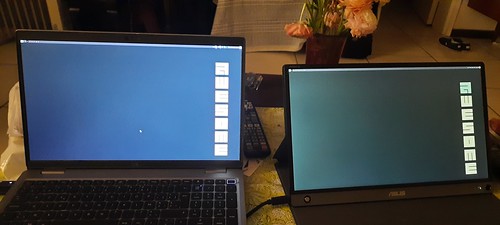
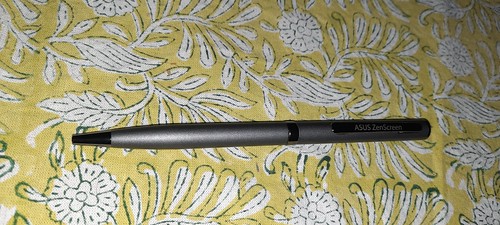
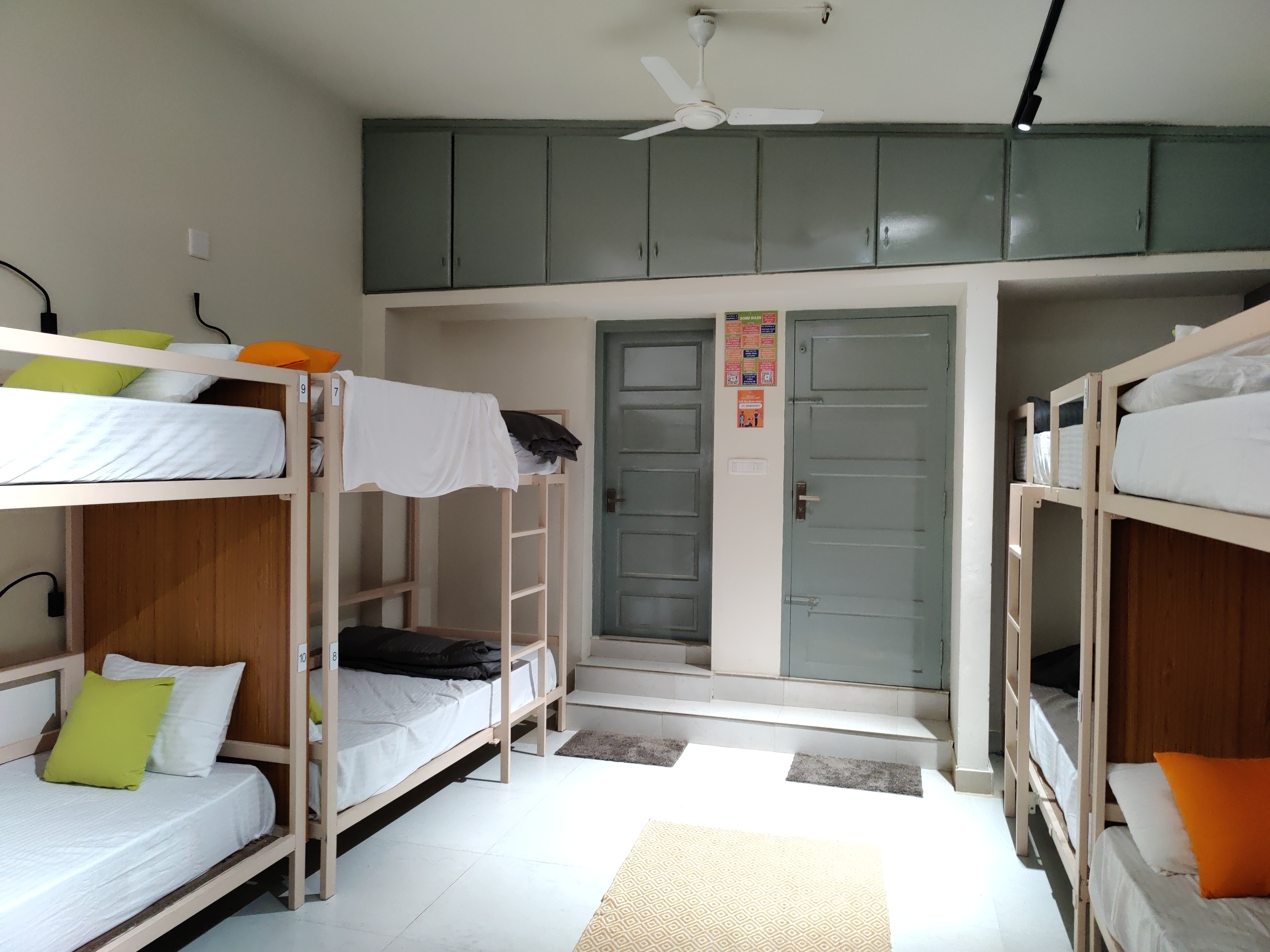
A while ago, I saw Stefano's portable monitor, and thought it was very useful. Personally, I rent a desk at an office space where I have a 27" Dell monitor; but I do sometimes use my laptop away from that desk, and then I do sometimes miss the external monitor. So a few weeks before DebConf, I bought me one myself. The one I got is about a mid-range model; there are models that are less than half the price of the one that I bought, and there are models that are more than double its price, too. ASUS has a very wide range of these monitors; the cheapest model that I could find locally is a 720p monitor that only does USB-C and requires power from the connected device, which presumably if I were to connect it to my laptop with no power connected would half its battery life. More expensive models have features such as wifi connectivity and miracast support, builtin batteries, more connection options, and touchscreen fancyness. While I think some of these features are not worth the money, I do think that a builtin battery has its uses, and that I would want a decent resolution, so I got a FullHD model with builtin battery. 20231016_215332 The device comes with a number of useful accessories: a USB-C to USB-C cable for the USB-C connectivity as well as to charge the battery; an HDMI-to-microHDMI cable for HDMI connectivity; a magnetic sleeve that doubles as a back stand; a beefy USB-A charger and USB-A-to-USB-C convertor (yes, I know); and a... pen. No, really, a pen. You can write with it. Yes, on paper. No, not a stylus. It's really a pen. Sigh, OK. This one: 20231016_222024 OK, believe me now? Good. Don't worry, I was as confused about this as you just were when I first found that pen. Why would anyone do that, I thought. So I read the manual. Not something I usually do with new hardware, but here you go. It turns out that the pen doubles as a kickstand. If you look closely at the picture of the laptop and the monitor above, you may see a little hole at the bottom right of the monitor, just to the right of the power button/LED. The pen fits right there. Now I don't know what the exact thought process was here, but I imagine it went something like this: It's an interesting concept, especially given the fact that the magnetic sleeve works very well as a stand. But hey. Anyway, the monitor is very nice; the battery lives longer than the battery of my laptop usually does, so that's good, and it allows me to have a dual-monitor setup when I'm on the road. And when I'm at the office? Well, now I have a triple-monitor setup. That works well, too.
14 October 2023

Ravi Dwivedi: Kochi - Wayanad Trip in August-September 2023

A trip full of hitchhiking, beautiful places and welcoming locals.

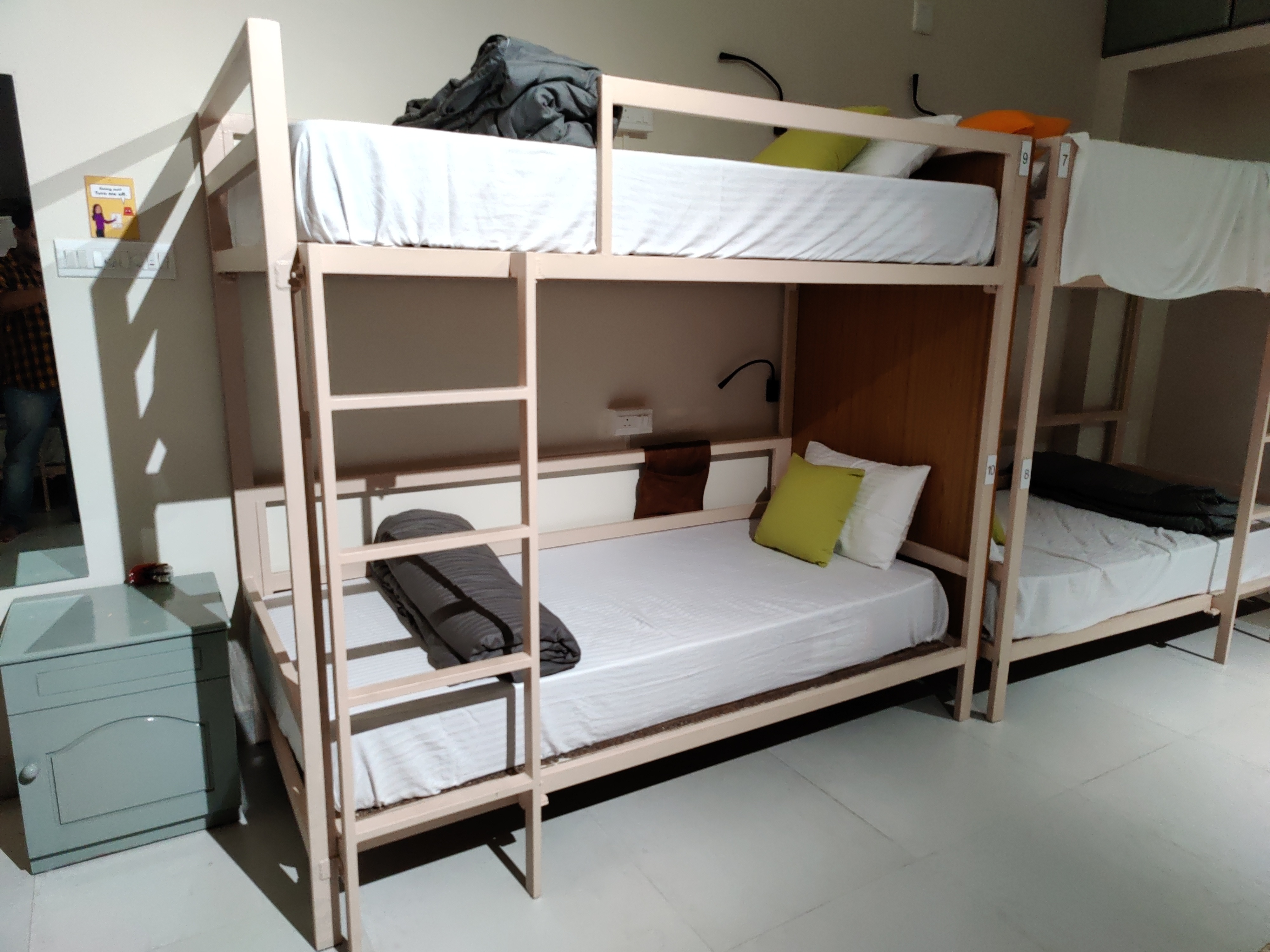
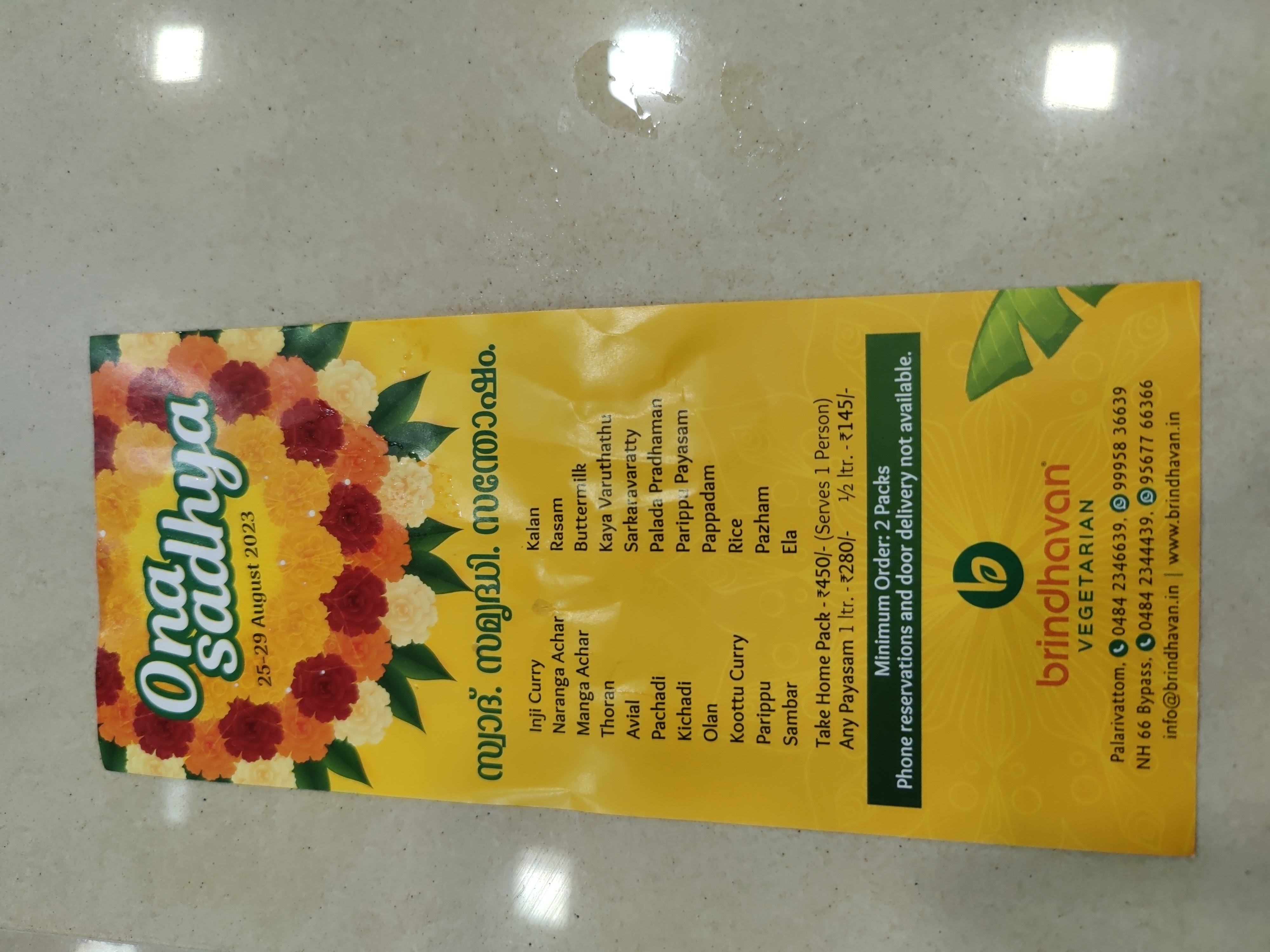
Day 1: Arrival in Kochi Kochi is a city in the state of Kerala, India. This year s DebConf was to be held in Kochi from 3rd September to 17th of September, which I was planning to attend. My friend Suresh, who was planning to join, told me that 29th August 2023 will be Onam, a major festival of the state of Kerala. So, we planned a Kerala trip before the DebConf. We booked early morning flights for Kochi from Delhi and reached Kochi on 28th August. We had booked a hostel named Zostel in Ernakulam. During check-in, they asked me to fill a form which required signing in using a Google account. I told them I don t have a Google account and I don t want to create one either. The people at the front desk seemed receptive, so I went ahead with telling them the problems of such a sign-in being mandatory for check-in. Anyways, they only took a photo of my passport and let me check-in without a Google account. We stayed in a ten room dormitory, which allowed travellers of any gender. The dormitory room was air-conditioned, spacious, clean and beds were also comfortable. There were two bathrooms in the dormitory and they were clean. Plus, there was a separate dormitory room in the hostel exclusive for females. I noticed that that Zostel was not added in the OpenStreetMap and so, I added it :) . The hostel had a small canteen for tea and snacks, a common sitting area outside the dormitories, which had beds too. There was a separate silent room, suitable for people who want to work.
Dormitory room in Zostel Ernakulam, Kochi.
Beds in Zostel Ernakulam, Kochi.
We had lunch at a nearby restaurant and it was hard to find anything vegetarian for me. I bought some freshly made banana chips from the street and they were tasty. As far as I remember, I had a big glass of pineapple juice for lunch. Then I went to the Broadway market and bought some cardamom and cinnamon for home. I also went to a nearby supermarket and bought Matta brown rice for home. Then, I looked for a courier shop to send the things home but all of them were closed due to Onam festival. After returning to the Zostel, I overslept till 9 PM and in the meanwhile, Suresh planned with Saidut and Shwetank (who met us during our stay in Zostel) to go to a place in Fort Kochi for dinner. I suspected I will be disappointed by lack of vegetarian options as they were planning to have fish. I already had a restaurant in mind - Brindhavan restaurant (suggested by Anupa), which was a pure vegetarian restaurant. To reach there, I got off at Palarivattom metro station and started looking for an auto-rickshaw to get to the restaurant. I didn t get any for more than 5 minutes. Since that restaurant was not added to the OpenStreetMap, I didn t even know how far that was and which direction to go to. Then, I saw a Zomato delivery person on a motorcycle and asked him where the restaurant was. It was already 10 PM and the restaurant closes at 10:30. So, I asked him whether he can drop me off. He agreed and dropped me off at that restaurant. It was 4-5 km from that metro station. I tipped him and expressed my gratefulness for the help. He refused to take the tip, but I insisted and he accepted. I entered the restaurant and it was coming to a close, so many items were not available. I ordered some Kadhai Paneer (only item left) with naan. It tasted fine. Since the next day was Thiruvonam, I asked the restaurant about the Sadya thali menu and prices for the next day. I planned to eat Sadya thali at that restaurant, but my plans got changed later.
Onam sadya menu from Brindhavan restaurant.
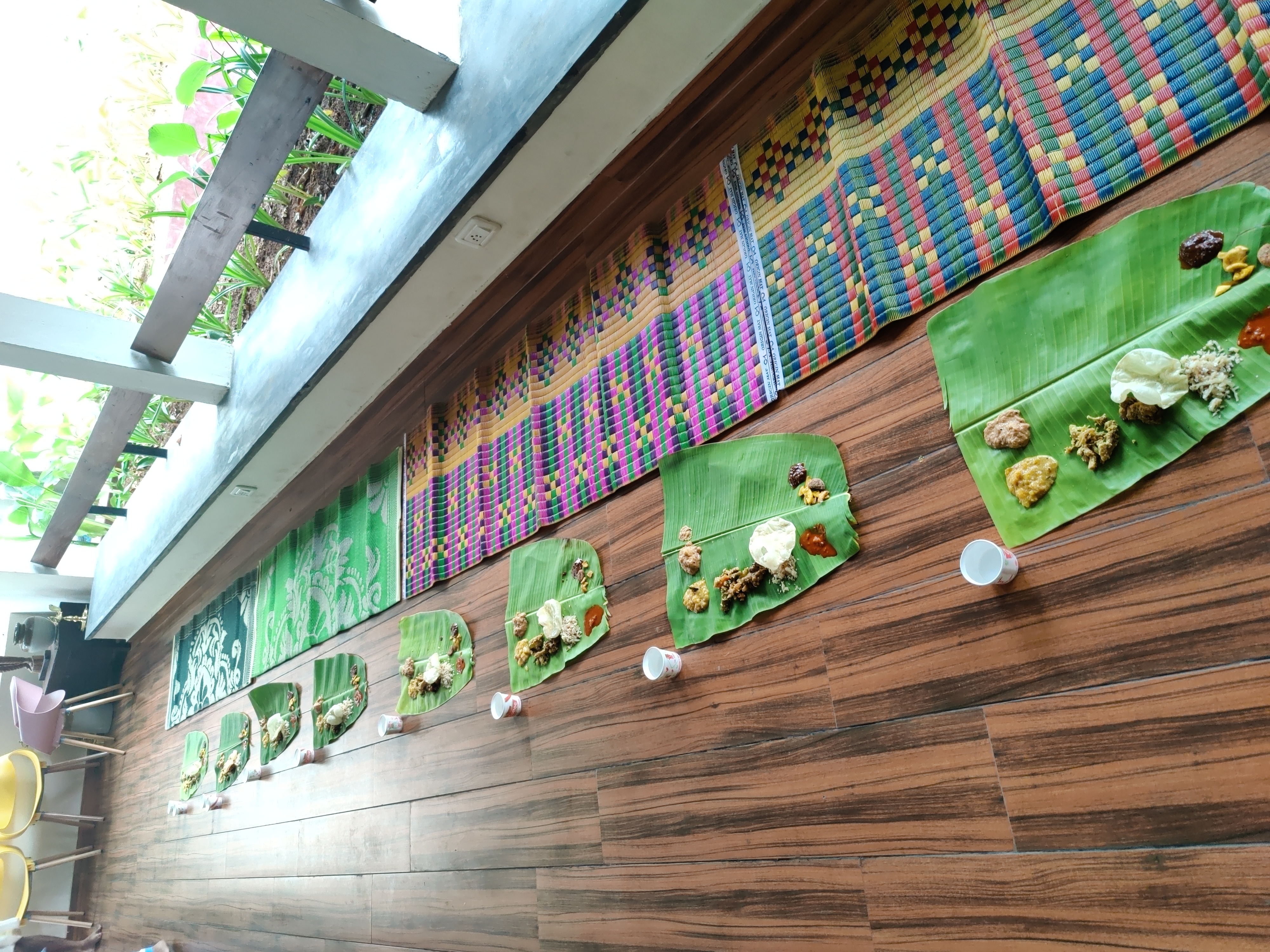
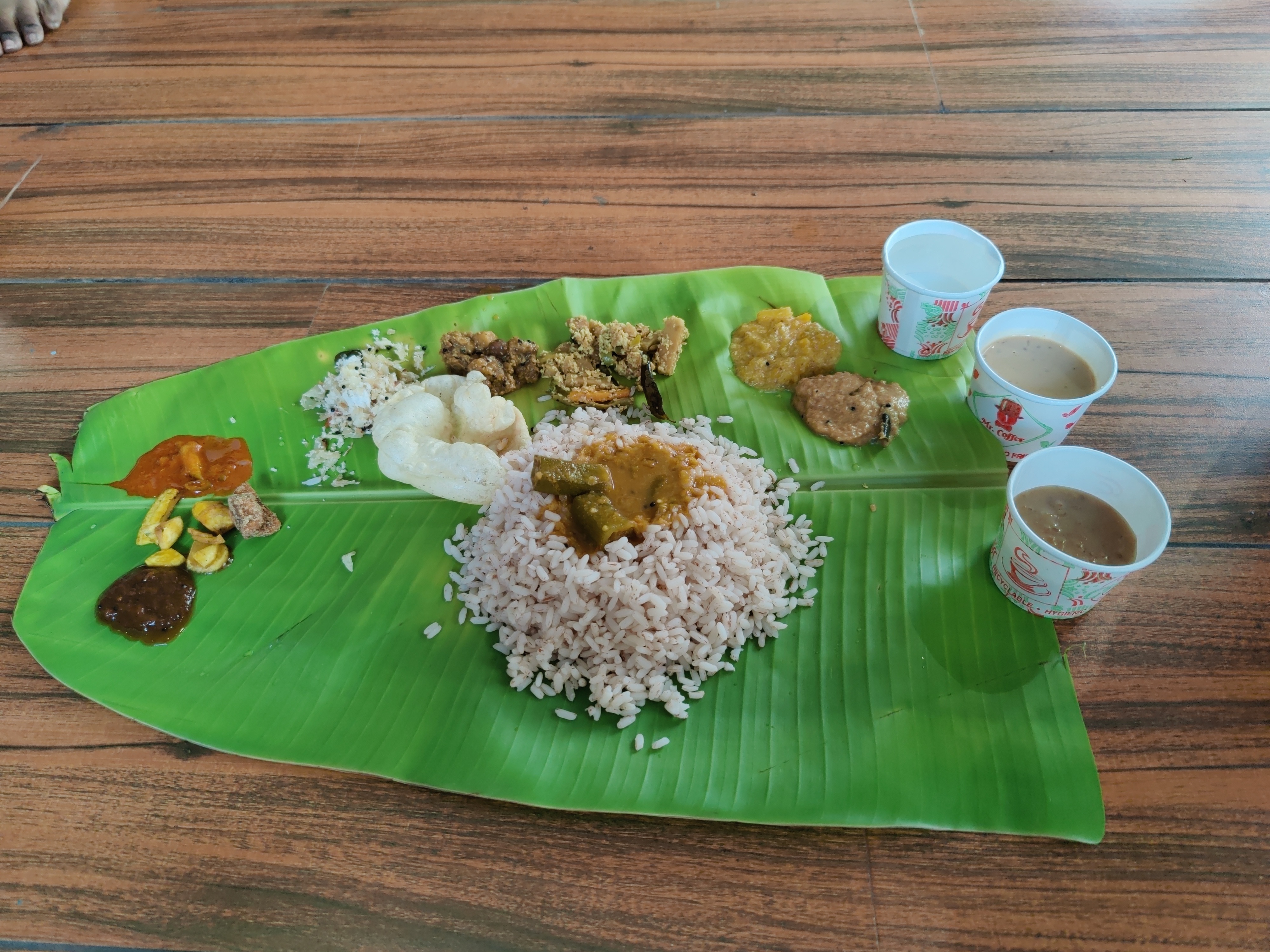
Day 2: Onam celebrations Next day, on 29th of August 2023, we had plan to leave for Wayanad. Wayanad is a hill station in Kerala and a famous tourist spot. Praveen suggested to visit Munnar as it is far closer to Kochi than Wayanad (80 km vs 250 km). But I had already visited Munnar in my previous trips, so we chose Wayanad. We had a train late night from Ernakulam Junction (at 23:30 hours) to Kozhikode, which is the nearest railway station from Wayanad. So, we checked out in the morning as we had plans to roam around in Kochi before taking the train. Zostel was celebrating Onam on that day. To opt-in, we had to pay 400 rupees, which included a Sadya Thali and a mundu. Me and Suresh paid the amount and opted in for the celebrations. Sadya thali had Rice, Sambhar, Rasam, Avial, Banana Chips, Pineapple Pachadi, Pappadam, many types of pickels and chutneys, Pal Ada Payasam and Coconut jaggery Pasam. And, there was water too :). Those payasams were really great and I had one more round of them. Later, I had a lot of variety of payasams during the DebConf.
Sadya lined up for serving
Sadya thali served on banana leaf.
So, we hung out in the common room and put our luggage there. We played UNO and had conversations with other travellers in the hostel. I had a fun time there and I still think it is one of the best hostel experiences I had. We made good friends with Saiduth (Telangana) and Shwetank (Uttarakhand). They were already aware about the software like debian, and we had some detailed conversations about the Free Software movement. I remember explaining the difference between the terms Open Source and Free Software . I also told them about the Streetcomplete app, a beginner friendly app to edit OpenStreetMap. We had dinner at a place nearby (named Palaraam), but again, the vegetarian options were very limited! After dinner, we came back to the Zostel and me and Suresh left for Ernakulam Junction to catch our train Maveli Express (16604).

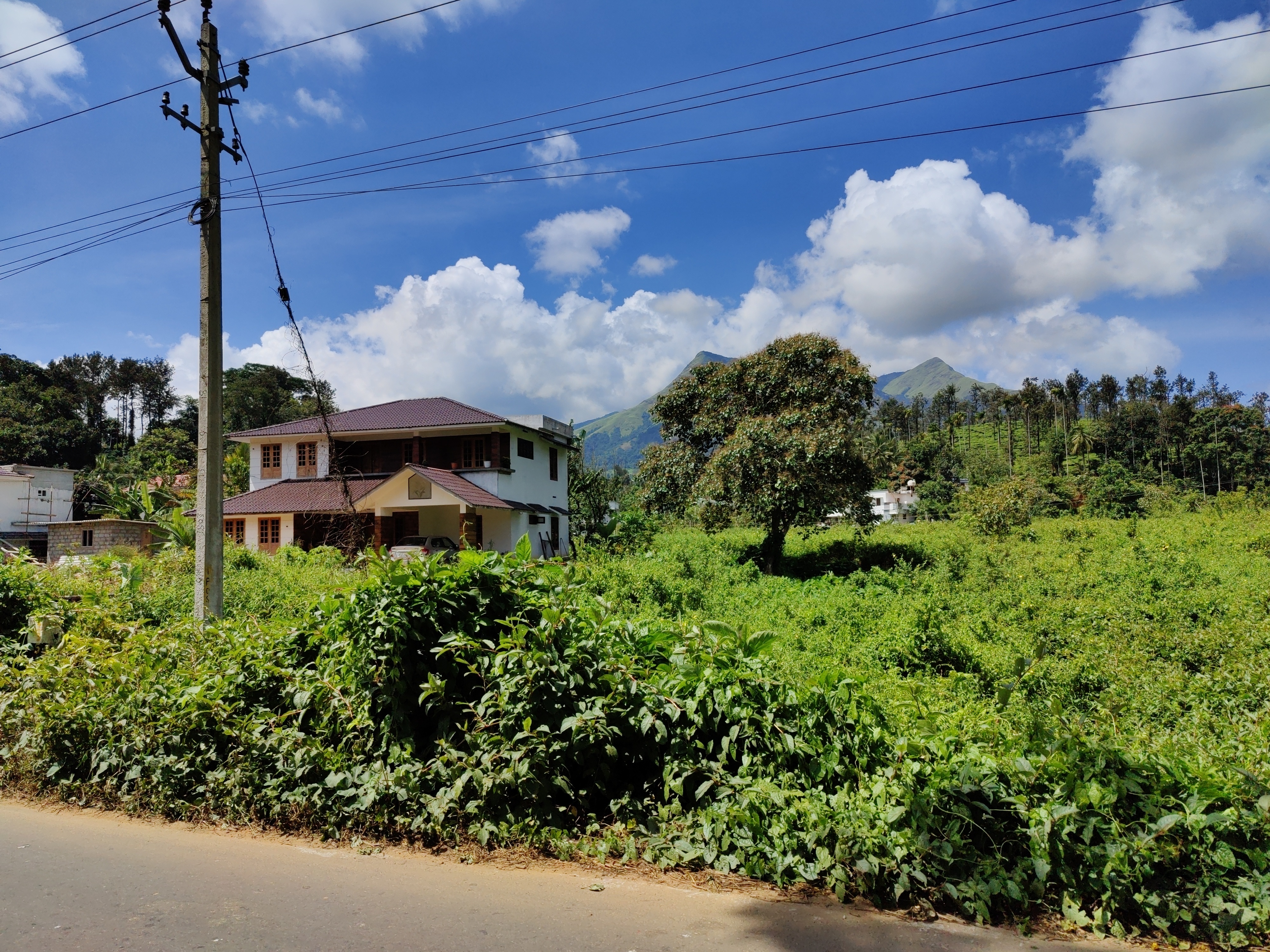
Day 3: Going to Wayanad Maveli Express was scheduled to reach Kozhikode at 03:25 (morning). I had set alarms from 03:00 to 03:30, with the gap of 10 minutes. Every time I woke up, I turned off the alarm. Then I woke up and saw train reaching the Kozhikode station and woke up Suresh for deboarding. But then I noticed that the train is actually leaving the station, not arriving! This means we missed our stop. Now we looked at the next stops and whether we can deboard there. I was very sleepy and wanted to take a retiring room at some station before continuing our journey to Wayanad. The next stop was Quilandi and we checked online that it didn t have a retiring room. So, we skipped this stop. We got off at the next stop named Vadakara and found out no retiring room was available. So, we asked about information regarding bus for Wayanad and they said that there is a bus to Wayanad around 07:00 hours from bus station which was a few kilometres from the railway station. We took a bus for Kalpetta (in Wayanad) at around 07:00. The destination of the buses were written in Malayalam, which we could not read. Once again, the locals helped us to get on to the bus to Kalpetta. Vadakara is not a big city and it can be hard to find people who know good Hindi or English, unlike Kochi. Despite language issues, I had no problem there in navigation, thanks to locals. I mostly spent time sleeping during the bus journey. A few hours later, the bus dropped us at Kalpetta. We had a booking at a hostel in Rippon village. It was 16 km from Kalpetta. On the way, we were treated with beautiful views of nature, which was present everywhere in Wayanad. The place was covered with tea gardens and our eyes were treated with beautiful scenery at every corner.
We were treated with such views during the Wayanad trip.
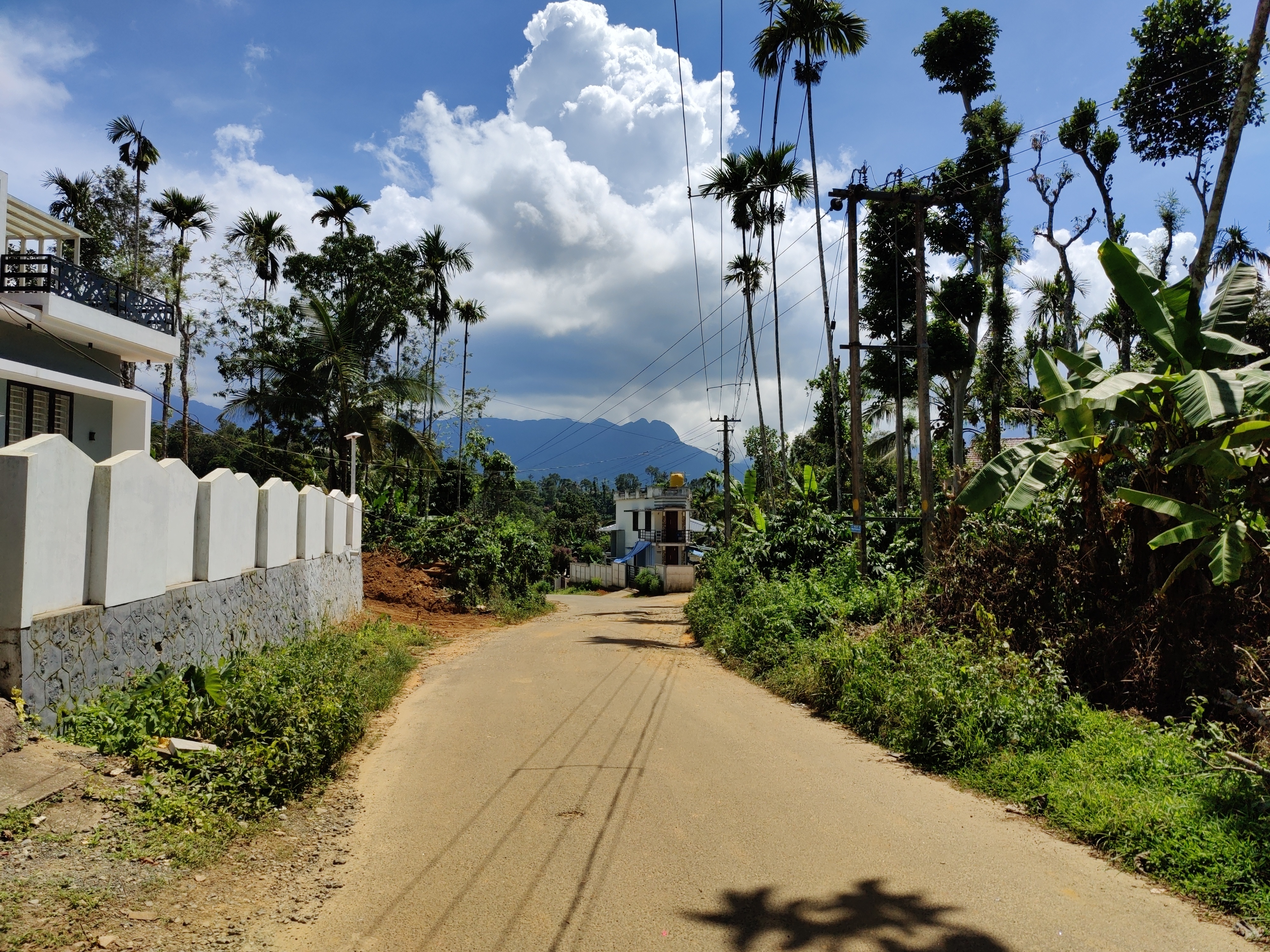
Rippon village was a very quiet place and I liked the calm atmosphere. This place is blessed by nature and has stunning scenery. I found English was more common than Hindi in Wayanad. Locals were very nice and helped me, even if they didn t know my language.
A road in Rippon.
After catching some sleep at the hostel, I went out in the afternoon. I hitchhiked to reach the main road from the hostel. I bought more spices from a nearby shop and realized that I should have waited for my visit to Wayanad to buy cardamom, which I already bought from Kochi. Then, I was looking for post office to send spices home. The people at the spices shop told me that the nearby Rippon post office was closed by that time, but the post office at Meppadi was open, which was 5 km from there. I went to Meppadi and saw the post office closes at 15:00, but I reached five minutes late. My packing was not very good and they asked me to pack it tighter. There was a shop near the post office and the people there gave me a cardboard and tapes, and helped pack my stuff for the post. By the time I went to the post office again, it was 15:30. But they accepted my parcel for post.

Day 4: Kanthanpara Falls, Zostel Wayanad and Karapuzha Dam Kanthanpara waterfalls were 2 km from the hostel. I hitchhiked to the place from the hostel on a scooty. Entry ticket was worth Rs 40. There were good views inside and nothing much to see except the waterfalls.
Entry to Kanthanpara Falls.
Kanthanpara Falls.
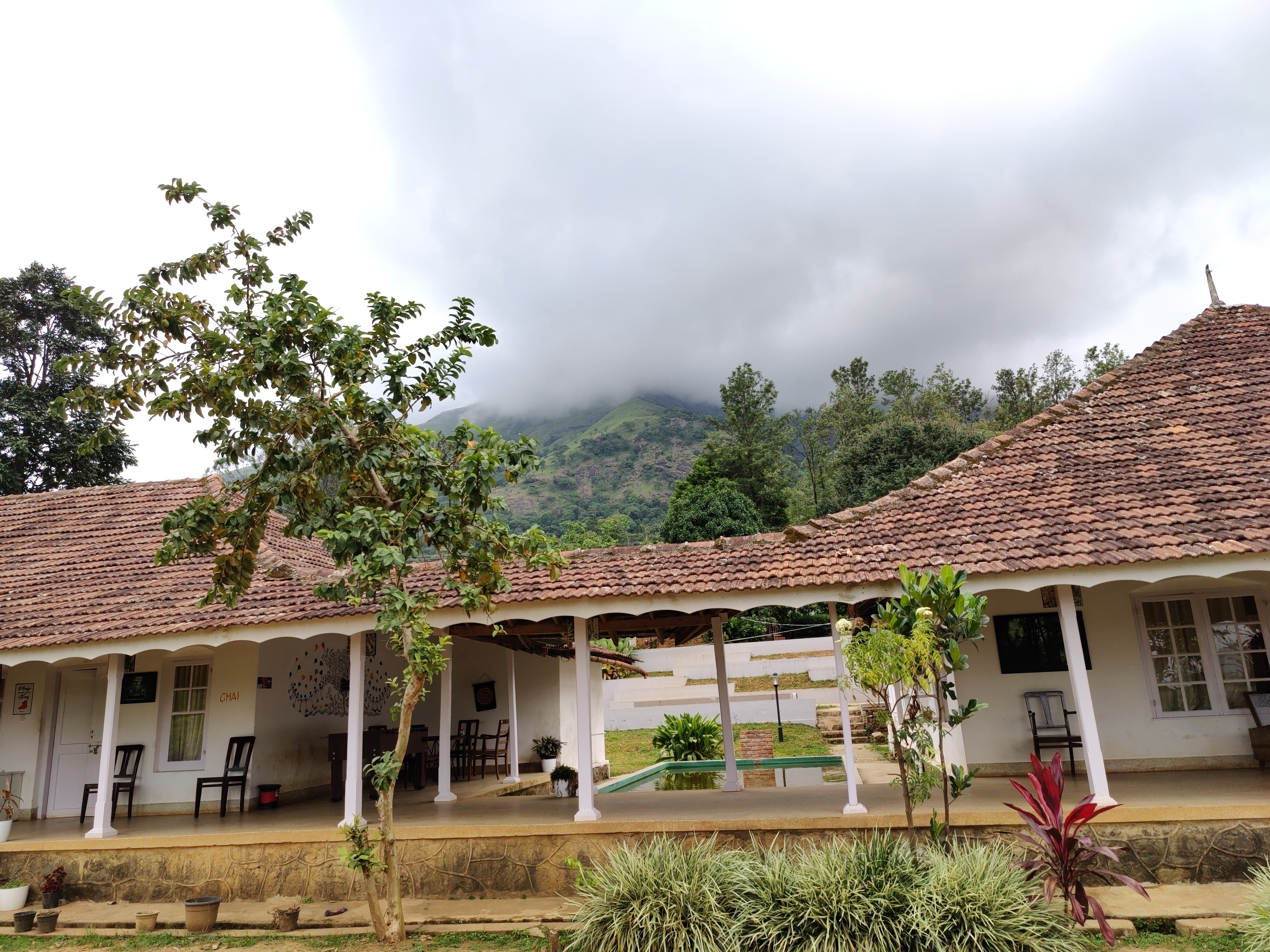
We had a booking at Zostel Wayanad for this day and so we shifted there. Again, as with their Ernakulam branch, they asked me to fill a form which required signing in using Google, but when I said I don t have a Google account they checked me in without that. There were tea gardens inside the Zostel boundaries and the property was beautiful.
A view of Zostel Wayanad.
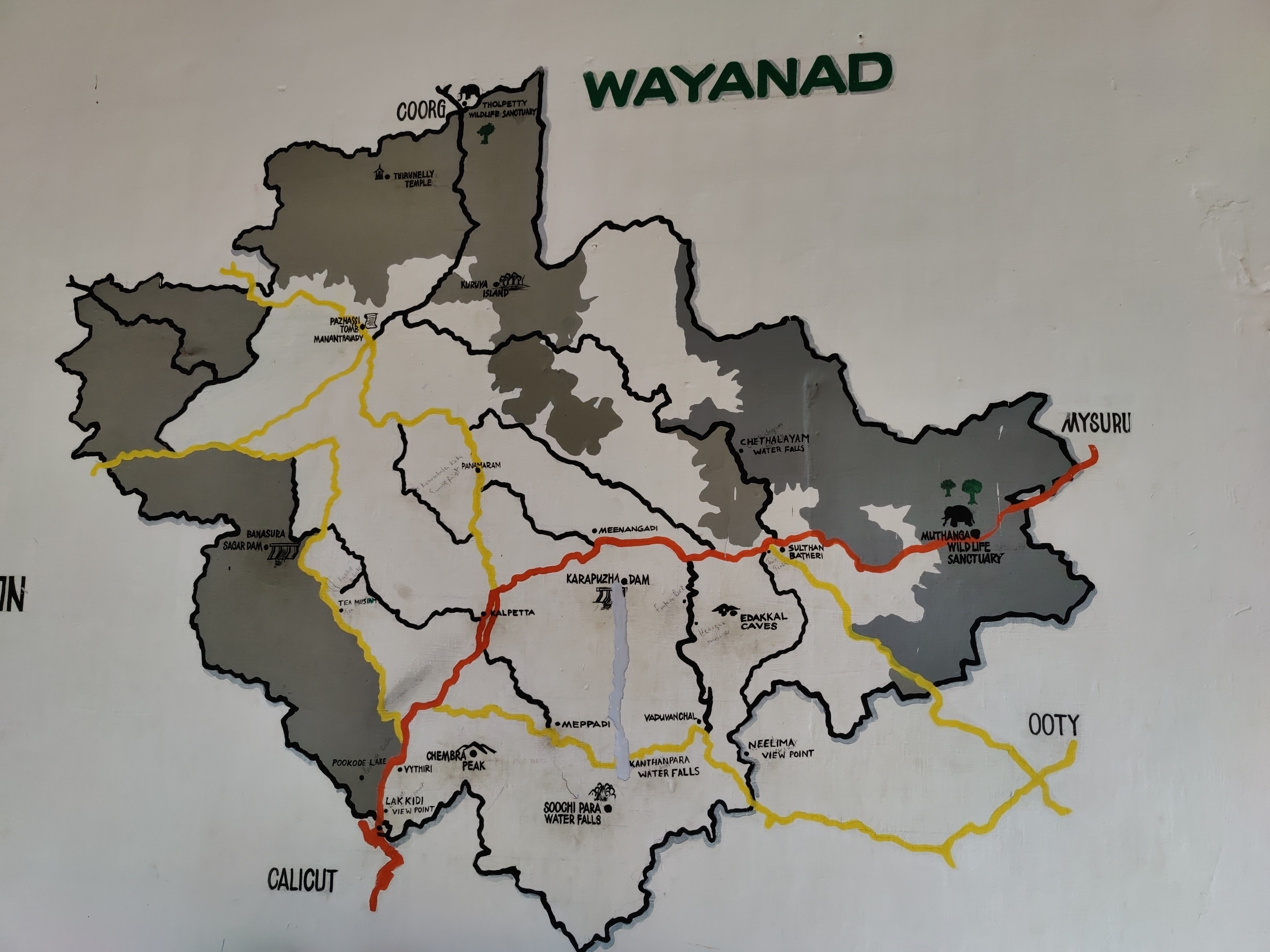
A map of Wayanad showing tourist places.

A view from inside the Zostel Wayanad property.
Later in the evening, I went to Karapuzha Dam. I witnessed a beautiful sunset during the journey. Karapuzha dam had many activites, like ziplining, and was nice to roam around. Chembra Peak is near to the Zostel Wayanad. So, I was planning to trek to the heart shaped lake. It was suggested by Praveen and looking online, this trek seemed worth doing. There was an issue however. The charges for trek were Rs 1770 for upto five people. So, if I go alone I will have to spend Rs 1770 for the trek. If I go with another person, we split Rs 1770 into two, and so on. The optimal way to do it is to go in a group of five (you included :D). I asked front desk at Zostel if they can connect me with people going to Chembra peak the next day, and they told me about a group of four people planning to go to Chembra peak the next day. I got lucky! All four of them were from Kerala and worked in Qatar.

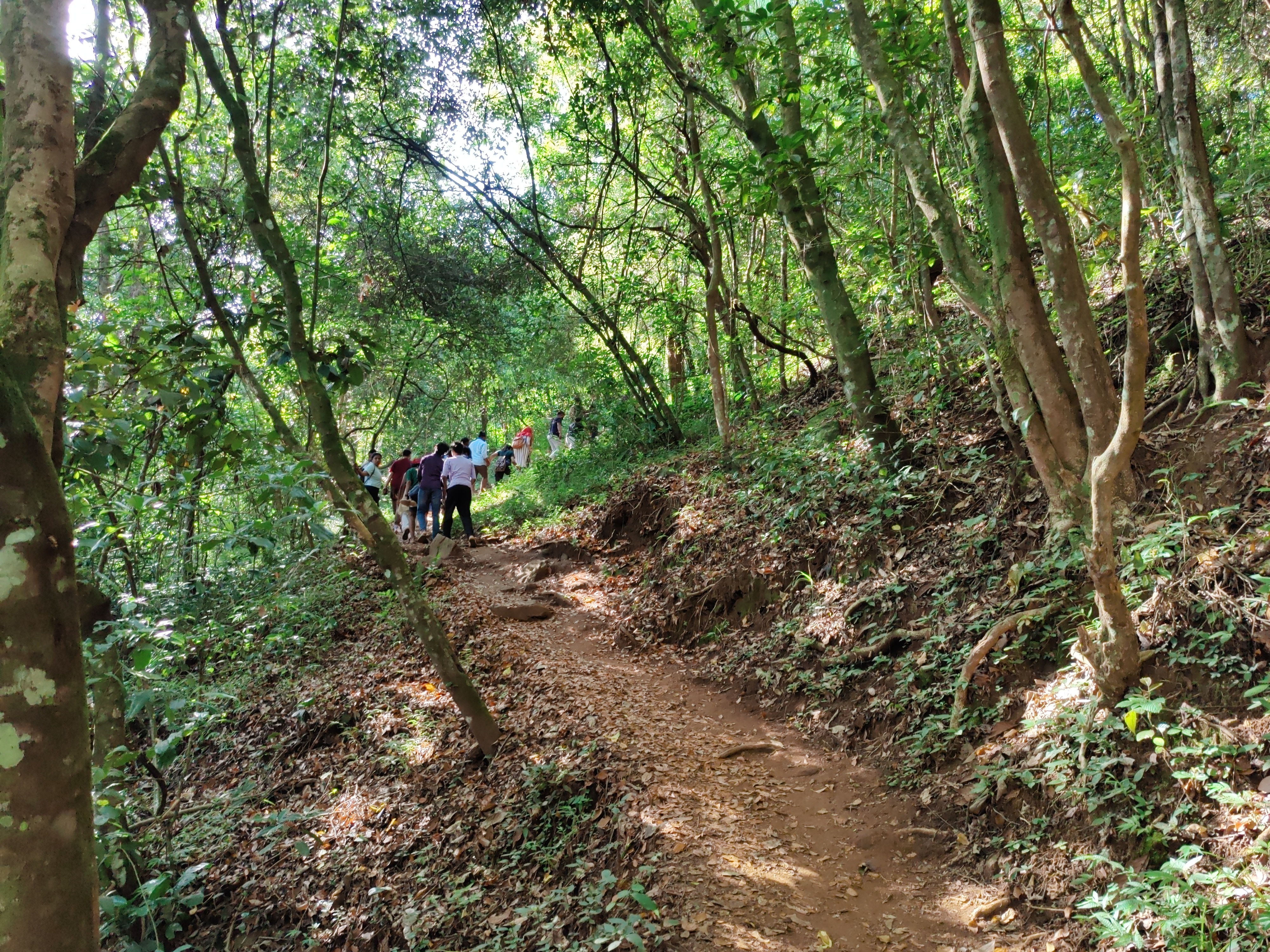
Day 5: Chembra peak trek The date was 1st September 2023. I woke up early (05:30 in the morning) for the Chembra peak trek. I had bought hiking shoes especially for trekking, which turned out to be a very good idea. The ticket counter opens at 07:00. The group of four with which I planned to trek met me around 06:00 in the Zostel. We went to the ticket counter around 06:30. We had breakfast at shops selling Maggi noodles and bread omlette near the ticket counter. It was a hot day and the trek was difficult for an inexperienced person like me. The scenery was green and beautiful throughout.
Terrain during trekking towards the Chembra peak.

Heart-shaped lake at the Chembra peak.
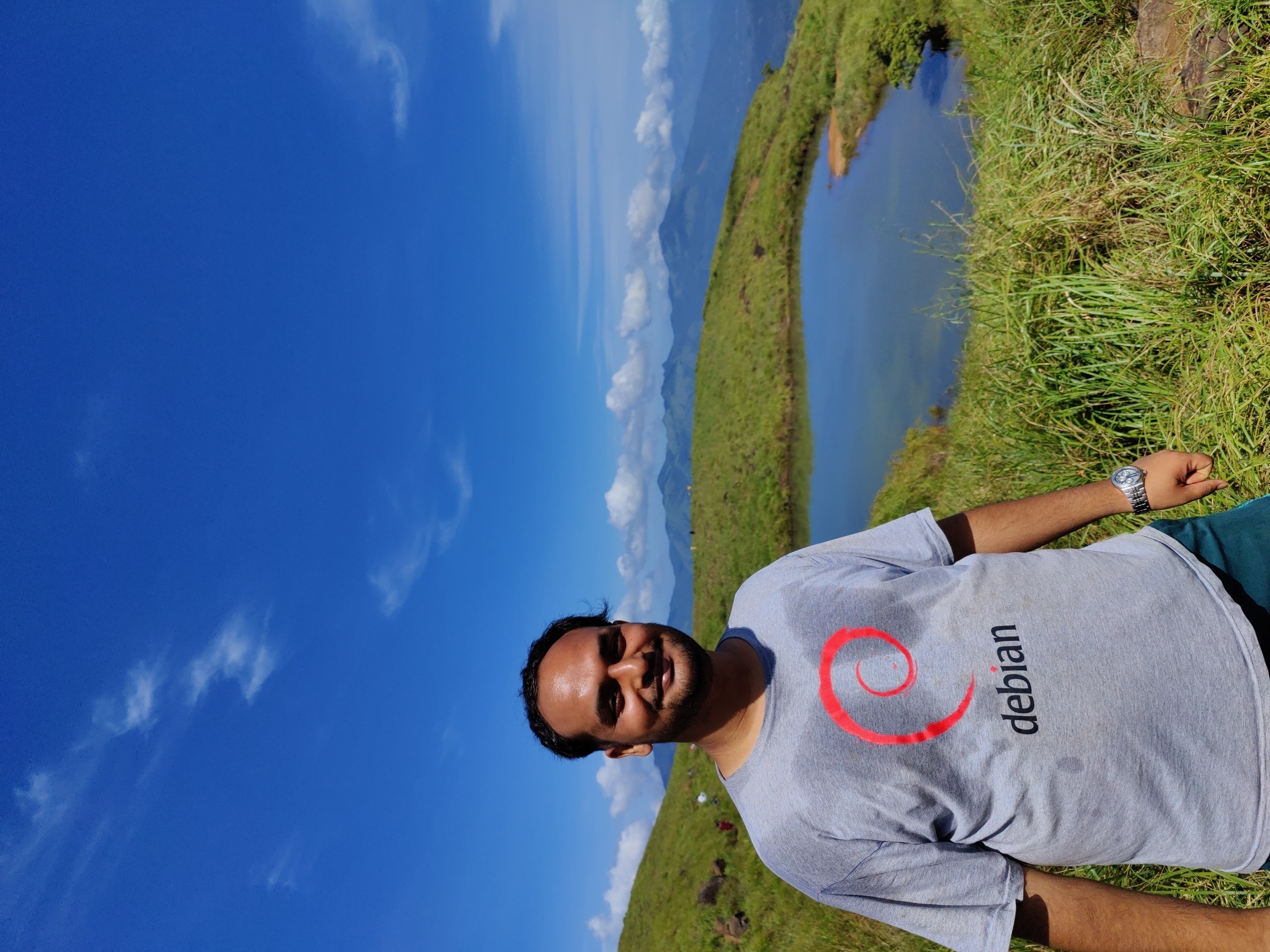
Me at the heart-shaped lake.
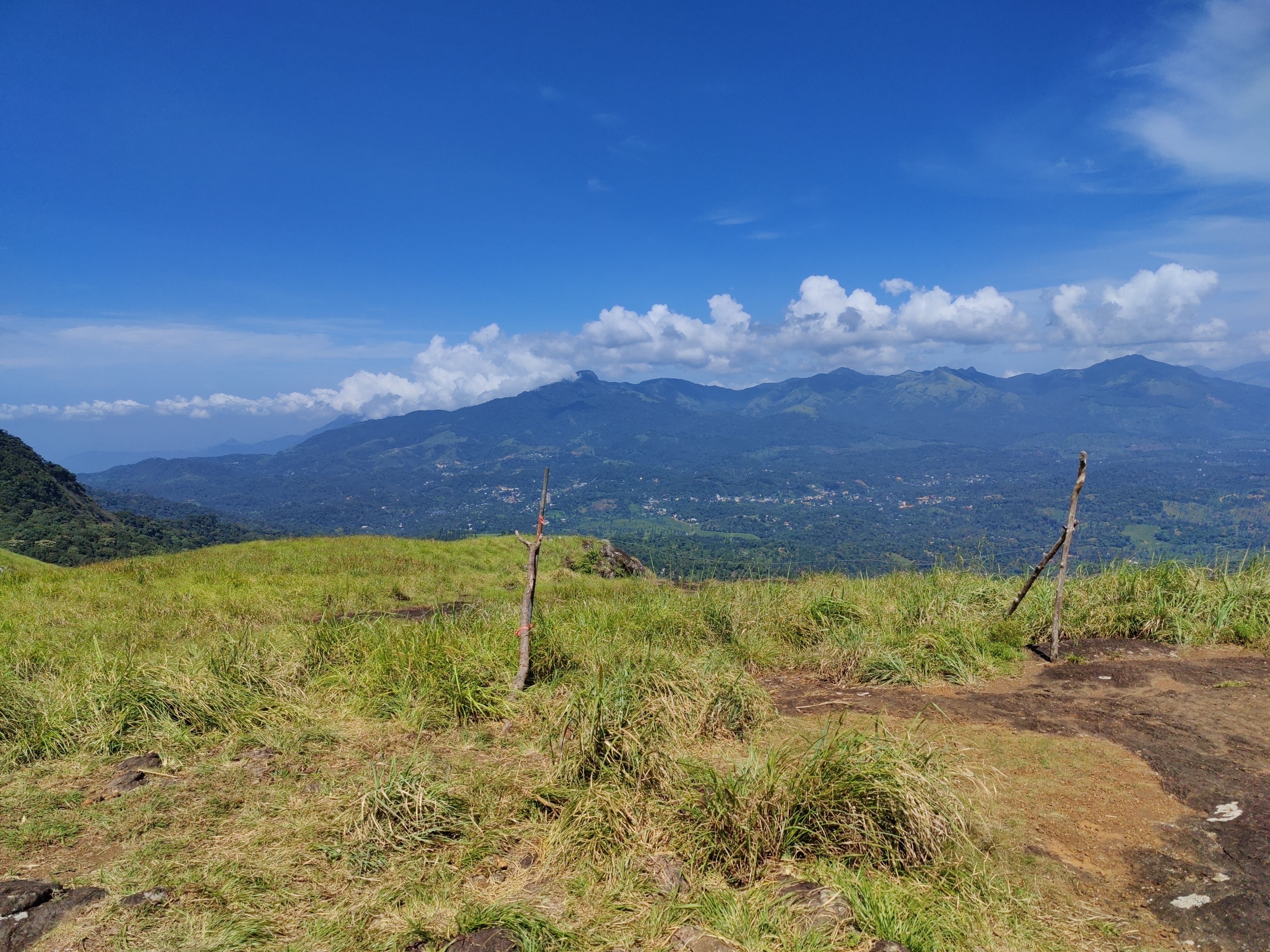
Views from the top of the Chembra peak.

View of another peak from the heart-shaped lake.

While returning from the trek, I found out a shop selling bamboo rice, which I bought and will make bamboo rice payasam out of it at home (I have some coconut milk from Kerala too ;)). We returned to Zostel in the afternoon. I had muscle pain after the trek and it has still not completely disappeared. At night, we took a bus from Kalpetta to Kozhikode in order to return to Kochi.

Day 6: Return to Kochi At midnight of 2nd of September, we reached Kozhikode bus stand. Then we roamed around for something to eat. I didn t find anything vegetarian to eat. No surprises there! Then we went to Kozhikode railway station and looked for retiring rooms, but no luck there. We waited at the station and took the next train to Kochi at 03:30 and reached Ernakulam Junction at 07:30 (half hours before train s scheduled time!). From there, we went to Zostel Fort Kochi and stayed one night there and checked out next morning.

Day 7: Roaming around in Fort Kochi On 3rd of September, we roamed around in Fort Kochi. We visited the usual places - St Francis Church, Dutch Palace, Jew Town, Pardesi Synagogue. I also visited some homestays and the owners were very happy to show their place even when I made it clear that I was not looking for a stay. In the evening, we went to Kakkanad to attend DebConf. The story continues in my DebConf23 blog post.

12 October 2023

Jonathan McDowell: Installing Debian on the BananaPi M2 Zero

My previously mentioned C.H.I.P. repurposing has been partly successful; I ve found a use for it (which I still need to write up), but unfortunately it s too useful and the fact it s still a bit flaky has become a problem. I spent a while trying to isolate exactly what the problem is (I m still seeing occasional hard hangs with no obvious debug output in the logs or on the serial console), then realised I should just buy one of the cheap ARM SBC boards currently available. The C.H.I.P. is based on an Allwinner R8, which is a single ARM v7 core (an A8). So it s fairly low power by today s standards and it seemed pretty much any board would probably do. I considered a Pi 2 Zero, but couldn t be bothered trying to find one in stock at a reasonable price (I ve had one on backorder from CPC since May 2022, and yes, I know other places have had them in stock since but I don t need one enough to chase and I m now mostly curious about whether it will ever ship). As the title of this post gives away, I settled on a Banana Pi BPI-M2 Zero, which is based on an Allwinner H3. That s a quad-core ARM v7 (an A7), so a bit more oompfh than the C.H.I.P. All in all it set me back 25, including a set of heatsinks that form a case around it. I started with the vendor provided Debian SD card image, which is based on Debian 9 (stretch) and so somewhat old. I was able to dist-upgrade my way through buster and bullseye, and end up on bookworm. I then discovered the bookworm 6.1 kernel worked just fine out of the box, and even included a suitable DTB. Which got me thinking about whether I could do a completely fresh Debian install with minimal tweaking. First thing, a boot loader. The Allwinner chips are nice in that they ll boot off SD, so I just needed a suitable u-boot image. Rather than go with the vendor image I had a look at mainline and discovered it had support! So let s build a clean image:
noodles@buildhost:~$ mkdir ~/BPI
noodles@buildhost:~$ cd ~/BPI
noodles@buildhost:~/BPI$ ls
noodles@buildhost:~/BPI$ git clone https://source.denx.de/u-boot/u-boot.git
Cloning into 'u-boot'...
remote: Enumerating objects: 935825, done.
remote: Counting objects: 100% (5777/5777), done.
remote: Compressing objects: 100% (1967/1967), done.
remote: Total 935825 (delta 3799), reused 5716 (delta 3769), pack-reused 930048
Receiving objects: 100% (935825/935825), 186.15 MiB   2.21 MiB/s, done.
Resolving deltas: 100% (785671/785671), done.
noodles@buildhost:~/BPI$ mkdir u-boot-build
noodles@buildhost:~/BPI$ cd u-boot
noodles@buildhost:~/BPI/u-boot$ git checkout v2023.07.02
...
HEAD is now at 83cdab8b2c Prepare v2023.07.02
noodles@buildhost:~/BPI/u-boot$ make O=../u-boot-build bananapi_m2_zero_defconfig
  HOSTCC  scripts/basic/fixdep
  GEN     Makefile
  HOSTCC  scripts/kconfig/conf.o
  YACC    scripts/kconfig/zconf.tab.c
  LEX     scripts/kconfig/zconf.lex.c
  HOSTCC  scripts/kconfig/zconf.tab.o
  HOSTLD  scripts/kconfig/conf
#
# configuration written to .config
#
make[1]: Leaving directory '/home/noodles/BPI/u-boot-build'
noodles@buildhost:~/BPI/u-boot$ cd ../u-boot-build/
noodles@buildhost:~/BPI/u-boot-build$ make CROSS_COMPILE=arm-linux-gnueabihf-
  GEN     Makefile
scripts/kconfig/conf  --syncconfig Kconfig
...
  LD      spl/u-boot-spl
  OBJCOPY spl/u-boot-spl-nodtb.bin
  COPY    spl/u-boot-spl.bin
  SYM     spl/u-boot-spl.sym
  MKIMAGE spl/sunxi-spl.bin
  MKIMAGE u-boot.img
  COPY    u-boot.dtb
  MKIMAGE u-boot-dtb.img
  BINMAN  .binman_stamp
  OFCHK   .config
noodles@buildhost:~/BPI/u-boot-build$ ls -l u-boot-sunxi-with-spl.bin
-rw-r--r-- 1 noodles noodles 494900 Aug  8 08:06 u-boot-sunxi-with-spl.bin
I had the advantage here of already having a host setup to cross build armhf binaries, but this was all done on a Debian bookworm host with packages from main. I ve put my build up here in case it s useful to someone - everything else below can be done on a normal x86_64 host. Next I needed a Debian installer. I went for the netboot variant - although I was writing it to SD rather than TFTP booting I wanted as much as possible to come over the network.
noodles@buildhost:~/BPI$ wget https://deb.debian.org/debian/dists/bookworm/main/installer-armhf/20230607%2Bdeb12u1/images/netboot/netboot.tar.gz
...
2023-08-08 10:15:03 (34.5 MB/s) -  netboot.tar.gz  saved [37851404/37851404]
noodles@buildhost:~/BPI$ tar -axf netboot.tar.gz
Then I took a suitable microSD card and set it up with a 500M primary VFAT partition, leaving the rest for Linux proper. I could have got away with a smaller VFAT partition but I d initially thought I might need to put some more installation files on it.
noodles@buildhost:~/BPI$ sudo fdisk /dev/sdb
Welcome to fdisk (util-linux 2.38.1).
Changes will remain in memory only, until you decide to write them.
Be careful before using the write command.
Command (m for help): o
Created a new DOS (MBR) disklabel with disk identifier 0x793729b3.
Command (m for help): n
Partition type
   p   primary (0 primary, 0 extended, 4 free)
   e   extended (container for logical partitions)
Select (default p):
Using default response p.
Partition number (1-4, default 1):
First sector (2048-60440575, default 2048):
Last sector, +/-sectors or +/-size K,M,G,T,P  (2048-60440575, default 60440575): +500M
Created a new partition 1 of type 'Linux' and of size 500 MiB.
Command (m for help): t
Selected partition 1
Hex code or alias (type L to list all): c
Changed type of partition 'Linux' to 'W95 FAT32 (LBA)'.
Command (m for help): n
Partition type
   p   primary (1 primary, 0 extended, 3 free)
   e   extended (container for logical partitions)
Select (default p):
Using default response p.
Partition number (2-4, default 2):
First sector (1026048-60440575, default 1026048):
Last sector, +/-sectors or +/-size K,M,G,T,P  (534528-60440575, default 60440575):
Created a new partition 2 of type 'Linux' and of size 28.3 GiB.
Command (m for help): w
The partition table has been altered.
Calling ioctl() to re-read partition table.
Syncing disks.
$ sudo mkfs -t vfat -n BPI-UBOOT /dev/sdb1
mkfs.fat 4.2 (2021-01-31)
The bootloader image gets written 8k into the SD card (our first partition starts at sector 2048, i.e. 1M into the device, so there s plenty of space here):
noodles@buildhost:~/BPI$ sudo dd if=u-boot-build/u-boot-sunxi-with-spl.bin of=/dev/sdb bs=1024 seek=8
483+1 records in
483+1 records out
494900 bytes (495 kB, 483 KiB) copied, 0.0282234 s, 17.5 MB/s
Copy the Debian installer files onto the VFAT partition:
noodles@buildhost:~/BPI$ cp -r debian-installer/ /media/noodles/BPI-UBOOT/
Unmount the SD from the build host, pop it into the M2 Zero, boot it up while connected to the serial console, hit a key to stop autoboot and tell it to boot the installer:
U-Boot SPL 2023.07.02 (Aug 08 2023 - 09:05:44 +0100)
DRAM: 512 MiB
Trying to boot from MMC1
U-Boot 2023.07.02 (Aug 08 2023 - 09:05:44 +0100) Allwinner Technology
CPU:   Allwinner H3 (SUN8I 1680)
Model: Banana Pi BPI-M2-Zero
DRAM:  512 MiB
Core:  60 devices, 17 uclasses, devicetree: separate
WDT:   Not starting watchdog@1c20ca0
MMC:   mmc@1c0f000: 0, mmc@1c10000: 1
Loading Environment from FAT... Unable to read "uboot.env" from mmc0:1...
In:    serial
Out:   serial
Err:   serial
Net:   No ethernet found.
Hit any key to stop autoboot:  0
=> setenv dibase /debian-installer/armhf
=> fatload mmc 0:1 $ kernel_addr_r  $ dibase /vmlinuz
5333504 bytes read in 225 ms (22.6 MiB/s)
=> setenv bootargs "console=ttyS0,115200n8"
=> fatload mmc 0:1 $ fdt_addr_r  $ dibase /dtbs/sun8i-h2-plus-bananapi-m2-zero.dtb
25254 bytes read in 7 ms (3.4 MiB/s)
=> fdt addr $ fdt_addr_r  0x40000
Working FDT set to 43000000
=> fatload mmc 0:1 $ ramdisk_addr_r  $ dibase /initrd.gz
31693887 bytes read in 1312 ms (23 MiB/s)
=> bootz $ kernel_addr_r  $ ramdisk_addr_r :$ filesize  $ fdt_addr_r 
Kernel image @ 0x42000000 [ 0x000000 - 0x516200 ]
## Flattened Device Tree blob at 43000000
   Booting using the fdt blob at 0x43000000
Working FDT set to 43000000
   Loading Ramdisk to 481c6000, end 49fffc3f ... OK
   Loading Device Tree to 48183000, end 481c5fff ... OK
Working FDT set to 48183000
Starting kernel ...
At this point the installer runs and you can do a normal install. Well, except the wifi wasn t detected, I think because the netinst images don t include firmware. I spent a bit of time trying to figure out how to include it but ultimately ended up installing over a USB ethernet dongle, which Just Worked and was less faff. Installing firmware-brcm80211 once installation completed allowed the built-in wifi to work fine. After install you need to configure u-boot to boot without intervention. At the u-boot prompt (i.e. after hitting a key to stop autoboot):
=> setenv bootargs "console=ttyS0,115200n8 root=LABEL=BPI-ROOT ro"
=> setenv bootcmd 'ext4load mmc 0:2 $ fdt_addr_r  /boot/sun8i-h2-plus-bananapi-m2-zero.dtb ; fdt addr $ fdt_addr_r  0x40000 ; ext4load mmc 0:2 $ kernel_addr_r  /boot/vmlinuz ; ext4load mmc 0:2 $ ramdisk_addr_r  /boot/initrd.img ; bootz $ kernel_addr_r  $ ramdisk_addr_r :$ filesize  $ fdt_addr_r '
=> saveenv
Saving Environment to FAT... OK
=> reset
This is assuming you have /boot on partition 2 on the SD - I left the first partition as VFAT (that s where the u-boot environment will be saved) and just used all of the rest as a single ext4 partition. I did have to do an e2label /dev/sdb2 BPI-ROOT to label / appropriately; otherwise I occasionally saw the SD card appear as mmc1 for Linux (I m guessing due to asynchronous boot order with the wifi). You should now find the device boots without intervention.

Reproducible Builds: Reproducible Builds in September 2023

Welcome to the September 2023 report from the Reproducible Builds project In these reports, we outline the most important things that we have been up to over the past month. As a quick recap, whilst anyone may inspect the source code of free software for malicious flaws, almost all software is distributed to end users as pre-compiled binaries.

Andreas Herrmann gave a talk at All Systems Go 2023 titled Fast, correct, reproducible builds with Nix and Bazel . Quoting from the talk description:

You will be introduced to Google s open source build system Bazel, and will learn how it provides fast builds, how correctness and reproducibility is relevant, and how Bazel tries to ensure correctness. But, we will also see where Bazel falls short in ensuring correctness and reproducibility. You will [also] learn about the purely functional package manager Nix and how it approaches correctness and build isolation. And we will see where Bazel has an advantage over Nix when it comes to providing fast feedback during development.
Andreas also shows how you can get the best of both worlds and combine Nix and Bazel, too. A video of the talk is available.

diffoscope is our in-depth and content-aware diff utility that can locate and diagnose reproducibility issues. This month, Chris Lamb fixed compatibility with file(1) version 5.45 [ ] and updated some documentation [ ]. In addition, Vagrant Cascadian extended support for GNU Guix [ ][ ] and updated the version in that distribution as well. [ ].

Yet another reminder that our upcoming Reproducible Builds Summit is set to take place from October 31st November 2nd 2023 in Hamburg, Germany. If you haven t been before, our summits are a unique gathering that brings together attendees from diverse projects, united by a shared vision of advancing the Reproducible Builds effort. During this enriching event, participants will have the opportunity to engage in discussions, establish connections and exchange ideas to drive progress in this vital field. If you re interested in joining us this year, please make sure to read the event page, the news item, or the invitation email that Mattia Rizzolo sent out recently, all of which have more details about the event and location. We are also still looking for sponsors to support the event, so please reach out to the organising team if you are able to help. Also note that PackagingCon 2023 is taking place in Berlin just before our summit.
On the Reproducible Builds website, Greg Chabala updated the JVM-related documentation to update a link to the BUILDSPEC.md file. [ ] And Fay Stegerman fixed the builds failing because of a YAML syntax error.

Distribution work In Debian, this month: September saw F-Droid add ten new reproducible apps, and one existing app switched to reproducible builds. In addition, two reproducible apps were archived and one was disabled for a current total of 199 apps published with Reproducible Builds and using the upstream developer s signature. [ ] In addition, an extensive blog post was posted on f-droid.org titled Reproducible builds, signing keys, and binary repos .

Upstream patches The Reproducible Builds project detects, dissects and attempts to fix as many currently-unreproducible packages as possible. We endeavour to send all of our patches upstream where appropriate. This month, we wrote a large number of such patches, including:

Testing framework The Reproducible Builds project operates a comprehensive testing framework (available at tests.reproducible-builds.org) in order to check packages and other artifacts for reproducibility. In August, a number of changes were made by Holger Levsen:
  • Disable armhf and i386 builds due to Debian bug #1052257. [ ][ ][ ][ ]
  • Run diffoscope with a lower ionice priority. [ ]
  • Log every build in a simple text file [ ] and create persistent stamp files when running diffoscope to ease debugging [ ].
  • Run schedulers one hour after dinstall again. [ ]
  • Temporarily use diffoscope from the host, and not from a schroot running the tested suite. [ ][ ]
  • Fail the diffoscope distribution test if the diffoscope version cannot be determined. [ ]
  • Fix a spelling error in the email to IRC gateway. [ ]
  • Force (and document) the reconfiguration of all jobs, due to the recent rise of zombies. [ ][ ][ ][ ]
  • Deal with a rare condition when killing processes which should not be there. [ ]
  • Install the Debian backports kernel in an attempt to address Debian bug #1052257. [ ][ ]
In addition, Mattia Rizzolo fixed a call to diffoscope --version (as suggested by Fay Stegerman on our mailing list) [ ], worked on an openQA credential issue [ ] and also made some changes to the machine-readable reproducible metadata, reproducible-tracker.json [ ]. Lastly, Roland Clobus added instructions for manual configuration of the openQA secrets [ ].

If you are interested in contributing to the Reproducible Builds project, please visit our Contribute page on our website. However, you can get in touch with us via:

Freexian Collaborators: Monthly report about Debian Long Term Support, September 2023 (by Santiago Ruano Rinc n)

Like each month, have a look at the work funded by Freexian s Debian LTS offering.

Debian LTS contributors In September, 21 contributors have been paid to work on Debian LTS, their reports are available:
  • Abhijith PA did 10.0h (out of 0h assigned and 14.0h from previous period), thus carrying over 4.0h to the next month.
  • Adrian Bunk did 7.0h (out of 17.0h assigned), thus carrying over 10.0h to the next month.
  • Anton Gladky did 9.5h (out of 7.5h assigned and 7.5h from previous period), thus carrying over 5.5h to the next month.
  • Bastien Roucari s did 16.0h (out of 15.5h assigned and 1.5h from previous period), thus carrying over 1.0h to the next month.
  • Ben Hutchings did 17.0h (out of 17.0h assigned).
  • Chris Lamb did 17.0h (out of 17.0h assigned).
  • Emilio Pozuelo Monfort did 30.0h (out of 30.0h assigned).
  • Guilhem Moulin did 18.25h (out of 18.25h assigned).
  • Helmut Grohne did 10.0h (out of 10.0h assigned).
  • Lee Garrett did 17.0h (out of 16.5h assigned and 0.5h from previous period).
  • Markus Koschany did 40.0h (out of 40.0h assigned).
  • Ola Lundqvist did 4.5h (out of 0h assigned and 24.0h from previous period), thus carrying over 19.5h to the next month.
  • Roberto C. S nchez did 5.0h (out of 12.0h assigned), thus carrying over 7.0h to the next month.
  • Santiago Ruano Rinc n did 7.75h (out of 16.0h assigned), thus carrying over 8.25h to the next month.
  • Sean Whitton did 7.0h (out of 7.0h assigned).
  • Sylvain Beucler did 10.5h (out of 17.0h assigned), thus carrying over 6.5h to the next month.
  • Thorsten Alteholz did 14.0h (out of 14.0h assigned).
  • Tobias Frost did 13.25h (out of 16.0h assigned), thus carrying over 2.75h to the next month.

Evolution of the situation In September, we have released 44 DLAs. The month of September was a busy month for the LTS Team. A notable security issue fixed in September was the high-severity CVE-2023-4863, a heap buffer overflow that allowed remote attackers to perform an out-of-bounds memory write via a crafted WebP file. This CVE was covered by the three DLAs of different packages: firefox-esr, libwebp and thunderbird. The libwebp backported patch was sent to upstream, who adapted and applied it to the 0.6.1 branch. It is also worth noting that LTS contributor Markus Koschany included in his work updates to packages in Debian Bullseye and Bookworm, that are under the umbrella of the Security Team: xrdp, jetty9 and mosquitto. As every month, there was important behind-the-scenes work by the Front Desk staff, who triaged, analyzed and reviewed dozens of vulnerabilities, to decide if they warrant a security update. This is very important work, since we need to trade-off between the frequency of updates and the stability of the LTS release.

Thanks to our sponsors Sponsors that joined recently are in bold.

11 October 2023

Iustin Pop: Not-quite-announcement: this blog is not entirely dead

Something, something then something else, and it s been another six months since I last wrote anything. The world is crazy, somehow there s no time for anything, and yet life move forward, inexorably. (Well, without going into gory side-notes about how evil stops life in various parts of the world.) As a proof that this blog is not dead, I ve finally implemented proper per-page keywords support, rather than the hard-coded keywords that were present before. Well, those defaults are still present in all pages that don t declare keywords, will probably remove them at one point. Implementing this in Hakyll is not hard, at all, if one semi-regularly writes code. There are a number of examples out there, but what was confusing: Anyway, after 2 files changed, 23 insertions(+), 8 deletions(-), this page is the first one to have any keywords. And the funny thing, after initially struggling to write a single line of Haskell, the final version of the keywords is something like this:
 
    where renderKeywords =
            return . escapeHtml . intercalate "," . map trim . splitAll ","
And I wrote that as is, compiled successfully, and did the right thing from the first try. I only write some Haskell code 2-3 times per year, but man, I love this language. Until next time, hopefully before 2024

Russell Coker: The PineTime

I have just got a PineTime smart watch [1] from Pine64. They cost $US27 each which ended up as $144.63 Australian for three including postage when I ordered on the 16th of September, it s annoying that you can t order more than 3 at a time to reduce postage costs. The Australian online store Kogan has smart watches starting at about $15 [2] with Bluetooth and support for phone notifications so the $48.21 for a PineTime doesn t compare well on just price and features. The watches Kogan sells start getting into high resolution at around the $25 price and many of them have features like 24*7 heart monitoring that the PineTime lacks (it just measures when you request it). No-one would order a PineTime for being cheap or having lots of features, you order it because you want open hardware that allows you to do things your way. Also the PineTime isn t going to be orphaned while it s likely that in a few years most of the cheap watches sold by Kogan etc won t support the new phones running the latest version of Android. The screen of the PineTime is 240*240 resolution (about 260dpi) with 64k colors. The screen resolution is lower than some high-end smart watches but higher than most phones and almost all monitors. I doubt that much benefit could be gained from higher resolution. Even on minimum brightness the screen is easy to read on all but the brightest sunny days. The compute capabilities are 4.5MB of flash storage, 64k of RAM, and a 64MHz CPU this can t run Linux and nothing like it will run Linux for a long time. I ve had the PineTime for 6 days now, I charged it once and it s now at 55% battery. It looks like it will last close to 2 weeks on a single charge and it s claimed that a newer firmware will make the battery last longer. Software The main Android app for using with the PineTime is GadgetBridge which I installed from the f-droid repository. It had lots of click-through menus for allowing access to various Android features (contacts, bluetooth, draw over foreground, location, and more) but after that it was easy to setup. It was the first bluetooth device I ve used which had a 6 digit PIN for connecting to a phone. Initially I used the PineTime with my Huawei Nova 7i [3]. The aim is to eventually have it run from my PinePhonePro but my test of the PinePhonePro didn t go as well as hoped [4]. Now I m using it on my Huawei Mate 10 Pro. It comes with InfiniTime [5] installed as the default firmware, mine had 1.11.0 which is a fairly recent version. I will probably upgrade it soon to get the better power optimisation and weather alerts in the watch face. I don t have any plans to use different watch firmware and I don t have any plans to contribute to firmware development I just can t hack on every FOSS project around it s better to do big contributions to a small number of projects. For people who don t want the default firmware the Wasp-OS project seems interesting as it s written in Python [6], I don t like Python but it s very popular. Python is particularly popular in ML development, it will be interesting to see if Wasp-OS becomes a preferred platform for smart watches that talk to GPT servers. Generally the software works well, one annoyance is that when a notification goes away on the phone it remains on the PineTime and has to be manually dismissed. It would be nice if clearing notifications on the phone would clear them on the PineTime too. The music control works with RocketPlayer on Android, it displays the track name and has options for pause/play and skipping forward and backward one track. Annoyingly the current firmware doesn t allow configuring the main screens, from the primary screen you swipe down for notifications, right for settings, up for menus, and there s nothing defined for swipe left. I d like to make swipe left the command to get to music control. Hardware It has a detachable band that appears to be within the common range of watch bands. According to the PineTime Wiki page [7] there are a selection of alternate bands that will fit it, but some don t because the band is recessed into the watch. It is IP67 rated which means you can probably wear it while swimming. The charging contacts are exposed on the bottom of the case which means that any chemicals left by pool water can be cleaned off and also as they are apparently not expected to be harmed by sweat and skin oil there shouldn t be a problem charging it. I have significant experience using a Samsung Galaxy S5 Mini which is rated at IP67 in swimming pools. I had two problems with the S5 Mini when getting out of the pool, firstly water in the headphone socket made the phone consider that it was in headphone mode and turn off the speakers and secondly it took hours to become dry enough to charge and after many swims the charge rate dropped presumably due to oxide on the contacts. There are reports of success when swimming with a PineTime. Generally it feels well made and appears more solid than the cheapest Kogan devices appear to be. Conclusion If I wanted monitoring for medical reasons then I would choose a different smart watch. I ve read about people doing things like tracking their body stats 24*7 and trying to discover useful things, the PineTime is not a good option for BioHacking type use. However if I did have a need for such things I d probably just buy a second smart watch and have one on each wrist. The PineTime generally works well. It s a pity it has fewer hardware features than closed devices that are cheaper. But having a firmware that can be continually improved by the community is good. The continually expanding use of mobile phone technology devices for custom use in corporations (such as mobile phone in custom case for scanning prices etc in a supermarket) has some potential for use with this. I can imagine someone adding some custom features to a PineTime for such use. When a supermarket chain has 200,000 employees (as Woolworths in Australia does) then paying for a few months of software development work to make a smart watch do specific things for that company could provide significant value. There are probably some business opportunities for FOSS developers to hack on extra hardware on a PineTime and write software to support it. I recommend that everyone who s into FOSS buy one of these. Preferably make a deal with two friends to get the minimum postage cost.

Russell Coker: PinePhone Status

4 months ago I got my PinePhonePro [1]. Since then I have got SE Linux working on it to the stage of allowing it to boot correctly with Debian/Unstable, login with the user_t domain (minimum privilege for the graphical user) and make and receive calls. I finished getting SE Linux working reasonably well 3 days ago and most (but not all) of the SE Linux policy is in Debian now. I ve been getting good at Github PRs and I m sending a lot of policy upstream, so the next version of Debian will have a much smaller diff from the upstream Refpolicy. I have been running the PinePhone with Plasma Mobile because I prefer KDE, I would run GNOME/Phoc if it gave significantly better functionality. 3 days ago I moved my main SIM (the one with the number that people call about work etc) to my PinePhone and tried running it as my main phone. Today I gave up on that. My Android History The last phone I had that did everything I needed was a Huawei Mate 10 Pro that I bought refurbished in June 2019 for $389. The Mate 10 Pro runs Android with the Google Play store and has been quite unremarkable which is presumably why I forgot to blog about it when I got it, it was a slight upgrade over the Huawei Mate 9 [2] that I had used for 2 years before that. In April 2022 I tried using a Huawei Nova 7i as my main phone without Google Play programs or services [3]. That experiment was a failure as I couldn t get NextCloud to work for Calendaring and Contacts. It could be that I stuffed something up when trying that, but I put more skill and effort into trying to get it to work than most people ever would. The Nova 7i is a very slick phone, faster and nicer than the Mate 10 Pro (as expected being 2 years newer) while also having ridiculously long battery life. The Nova 7i when always on running the SchildiChat Matrix client and the Conversations Jabber client it will use less than 10% battery in a 8 hour work day. As nice as the Nova 7i is for the core functions I still need to have Play Store apps for LinkedIn, Twitter, Facebook, Zoom, etc. Which meant connecting the Mate 10 Pro via Wifi. As slick as the Nova 7i is for non-Google stuff running it and the Mate 10 Pro is a medium amount of pain for a small amount of freedom. So now I have for the moment abandoned the Nova 7i and gone back to the Mate 10 Pro. What I will try to do is to either forcibly install Google Play on the Nova 7i to make it my proprietary phone or to install an open distribution of Linux (IE not Android) to make it at least a small tablet which incidentally is much more powerful than a PinePhonePro. Issues With the PinePhonePro The battery charges very slowly (as much as 50 hours estimated charge time) and discharges fast. When used in a typical way in Caffeine mode to stop suspend so I can ssh to it etc it won t come close to lasting an 8 hour day. Also it will only take 5V charging and ideally wants 5V 3A charging which most chargers won t do. The charging speed over regular USB ports is very slow, sometimes stating it will take as much as 50 hours to charge. A phone that gets below 50% charge in less than 4 hours and can t be charged at a reasonable speed from a USB port on a laptop or monitor is going to be a major pain to use in the office. I don t think this can be fixed in software, we can alleviate it by making software more CPU efficient and by enabling various hardware sleep modes more effectively but the slow charging is a hardware issue that can t be fixed. The phone call quality is poor. Usually when on a call I hear static and sometimes the person at the other end appears to hear nothing. Also the UI for calls is different from Android which makes it take longer to answer a call and gives more missed calls. The UI issue is a combination of software and habits, both of which can be changed. But the call quality may be a hardware issue. I don t know if it s a hardware issue specific to my phone or something related to the PinePhonePro on the Telstra network. Clicking on notification in the drop-down doesn t take me to the app. I don t know if this is regarded as a bug by the Plasma-Mobile developers. Also notifications aren t displayed on the lock screen and there doesn t seem to be a configuration option to enable this. The Plasma-Mobile configuration for the wifi hotspot is difficult. There is no button for it in the drop-down menu (called Quicksettings in Plasma-Mobile) and no way of easily determining whether it s in hotspot or wifi client mode. This isn t an insurmountable problem and the worst-case is that I could write a script to do it, but it s still annoying. There is apparent support in the desktop version of KDE for syncing contacts from Google and I could probably get that working (although I failed last time I tried on the desktop), but it is a pain. Conclusion Most of the problems are software related and therefore I can get involved in solving them. I plan to keep working on these things. If all the software had worked in an ideal manner then I would have spent more time investigating the hardware issues of battery life and charge time and the quality of calls. I now have my Librem5 [4] running Debian so I will be able to compare call quality with the PinePhonePro. If I m unable to get the PinePhonePro working adequately then maybe making the Librem5 my main phone will be an option. I hope that by early next year I will be able to make another test at using a FOSS phone my main phone. In the mean time I can still work on convergence and other things.

10 October 2023

Russ Allbery: Review: Chilling Effect

Review: Chilling Effect, by Valerie Valdes
Series: Chilling Effect #1
Publisher: Harper Voyager
Copyright: September 2019
Printing: 2020
ISBN: 0-06-287724-0
Format: Kindle
Pages: 420
Chilling Effect is a space opera, kind of; more on the genre classification in a moment. It is the first volume of a series, although it reaches a reasonable conclusion on its own. It was Valerie Valdes's first novel. Captain Eva Innocente's line of work used to be less than lawful, following in the footsteps of her father. She got out of that life and got her own crew and ship. Now, the La Sirena Negra and its crew do small transport jobs for just enough money to stay afloat. Or, maybe, a bit less than that, when the recipient of a crate full of psychic escape-artist cats goes bankrupt before she can deliver it and get paid. It's a marginal and tenuous life, but at least she isn't doing anything shady. Then the Fridge kidnaps her sister. The Fridge is a shadowy organization of extortionists whose modus operandi is to kidnap a family member of their target, stuff them in cryogenic suspension, and demand obedience lest the family member be sold off as indentured labor after a few decades as a popsicle. Eva will be given missions that she and her crew have to perform. If she performs them well, she will pay off the price of her sister's release. Eventually. Oh, and she's not allowed to tell anyone. I found it hard to place the subgenre of this novel more specifically than comedy-adventure. The technology fits space opera: there are psychic cats, pilots who treat ships as extensions of their own body, brain parasites, a random intergalactic warlord, and very few attempts to explain anything with scientific principles. However, the stakes aren't on the scale that space opera usually goes for. Eva and her crew aren't going to topple governments or form rebellions. They're just trying to survive in a galaxy full of abusive corporations, dodgy clients, and the occasional alien who requires you to carry extensive documentation to prove that you can't be hunted for meat. It is also, as you might guess from that description, occasionally funny. That part of the book didn't mesh for me. Eva is truly afraid for her sister, and some of the events in the book are quite sinister, but the antagonist is an organization called The Fridge that puts people in fridges. Sexual harassment in a bar turns into obsessive stalking by a crazed intergalactic warlord who frequently interrupts the plot by randomly blasting things with his fleet, which felt like something from Hitchhiker's Guide to the Galaxy. The stakes for Eva, and her frustrations at being dragged back into a life she escaped, felt too high for the wacky, comic descriptions of the problems she gets into. My biggest complaint, though, is that the plot is driven by people not telling other people critical information they should know. Eva is keeping major secrets from her crew for nearly the entire book. Other people are also keeping information from Eva. There is a romance subplot driven almost entirely by both parties refusing to talk to each other about the existence of a romance subplot. For some people, this is catnip, but it's one of my least favorite fictional tropes and I found much of the book both frustrating and stressful. Fictional characters keeping important secrets from each other apparently raises my blood pressure. One of the things I did like about this book is that Eva is Hispanic and speaks like it. She resorts to Spanish frequently for curses, untranslatable phrases, aphorisms, derogatory comments, and similar types of emotional communication that don't feel right in a second language. Most of the time one can figure out the meaning from context, but Valdes doesn't feel obligated to hold the reader's hand and explain everything. I liked that. I think this approach is more viable in these days of ebook readers that can attempt translations on demand, and I think it does a lot to make Eva feel like a real person. I think the characters are the best part of this book, once one gets past the frustration of their refusal to talk to each other. Eva and the alien ship engineer get the most screen time, but Pink, Eva's honest-to-a-fault friend, was probably my favorite character. I also really enjoyed Min, the ship pilot whose primary goal is to be able to jack into the ship and treat it as her body, and otherwise doesn't particularly care about the rest of the plot as long as she gets paid. A lot of books about ship crews like this one lean hard into found family. This one felt more like a group of coworkers, with varying degrees of friendship and level of interest in their shared endeavors, but without the too-common shorthand of making the less-engaged crew members either some type of villain or someone who needs to be drawn out and turned into a best friend or love interest. It's okay for a job to just be a job, even if it's one where you're around the same people all the time. People who work on actual ships do it all the time. This is a half-serious, half-comic action romp that turned out to not be my thing, but I can see why others will enjoy it. Be prepared for a whole lot of communication failures and an uneven emotional tone, but if you're looking for a space-ships-and-aliens story that doesn't take itself very seriously and has some vague YA vibes, this may work for you. Followed by Prime Deceptions, although I didn't like this well enough to read on. Rating: 6 out of 10

9 October 2023

Aigars Mahinovs: Figuring out finances part 1

I have been managing my finances and getting an overview of where I am financially and where I am going month-to-month for a few years already. That means that I already have a method of doing my finances and a method of thinking about them. So far this has been supported by a commerical tool called MoneyWiz. I was happy to pay them for the ability to have a solid product and be able to easily access my finances from my phone (to enter cash transactions directly in the field) and sync data across multiple devices with their cloud offering. However, MoneyWiz development stalled. So much so that they stopped updating their Android app and cancelled web version plans to just focus on a iPhone and MacOS clients. And even there the development did not seem very successful over the last year. So I am cancelling their subscription, extracting all my data (as CSV) and looking for alternatives. So let's start with the basics - what I want from finace software?
  • Open source and self-hosted
  • Accounts to represent real accounts in my bank, credit cards, cash account
  • Transactions to represent money moving in/out/between accounts
  • Tree of categories for transactions to categorise spending
  • Category reports on arbitrary time periods
  • Ability to see the expected balance on each account at any historic point in time from given transactions
  • Ability to do a corrective transaction - hmm, I don't know what happened, but right now I have X in cash
  • Adding past transactions before a corrective transaction should not change balance after correction
  • Ability to automatically import transactions from my bank
  • Ability to plan future, recurring transactions
  • Incoming transactions from bank import should be auto-matched with planned recuring transactions
  • Ability to see missed planned recurring transactions
  • Ability to see value deviations in planned recuring transactions
  • Ability to manually match a transaction with a planned recurring transaction for that month or skip a month
  • Ability to see a projected balance on my accounts at any future date given planned transactions
  • Credit card fully refilling its current (negative) balance to zero (from a given account) should be a plannable transaction
  • Accessible from multiple devices, like Linux, Android, iPhone, MacOS. Most likely that means web-based
  • Achiving accounts without loosing their past transactions with active accounts
  • API to access data, so that I could wire that up to a Home Assistant dashboard
I don't care about currencies (thanks Euro!), localization, taxes and double-entry bookkeeping. I don't have much use for tags, budgets or savings targets. It could be useful to be able to track stock investment values (but I do have a pretty good from the bank that does that anyway). And tracking loans (incoming and outgoing) could be a worthwhile thing as well, but that can also be simulated with separate accounts for each loan. Tracking refundable expenses (like medical expenses that insurances should refund later on) would also be nice. Could also be simulated by having a separate expense category (Medical - refundable) and putting the refund as a negative expense into that category. One weird feature that I really like is having transfer transactions that have arbitrary incoming and outgoing dates. For some transactions it is a simple transfer delay - money leaves the account A on Friday and only appears in the destination account B on Monday morning. However, this can also happen the other way around - a few credit cards I have seen work in a way that on 14th of each month the balance of the credit card gets reset to zero and then a week later the negative balance that was on that credit card gets taken from the base account that the card is bound to. So the money leaves the base account a week later than it arrives in the credit card account. Financial systems really are magic sometimes :D Ideally that should be represented by a single transaction with two dates - one date when money leaves one account and another date when it arrives in a different account, so that balances on both accounts in the days between would be correct (as in matching what the bank says they were on those dates). And it should automatch such transaction from bank data imports. And predict its value from the negative balance of the credit card. And a pony! But in worst case this could be simulated using a separate "In transfer" account. When I am thinking about my finances, the key metric for me is - how much will I spend this month - both in fixed spending (rent, Internet and phone bills, health insurance, subscriptions, ...) and in variable spending (groceries, eating out, clothing, ...). In theory that should be trivial, but in practice a simple calendar month view will fail because a bunch of fixed expenses occur at the month end/start boundary and can happen either at the end of previous month or at start on next month, depending on how the weekends happen to fall and how the systems of various providers decided to do direct debits this month. So 1st of month is not a good snapshoting time. Any date between 6th (last possible days for monthly bills) and 20th (earliest possible salary day) would be a better cut off point. Looking at the balance of my main account at that time point lets me know what was the difference between income and expenses for the past month. And that is the number I want the financial app to be able to predict as soon as possible. And additional complication is the way credit cards work here. The expenses booked to a credit card after 14th of September will only appear in the main account on 20th of October and thus will actually only count towards the expenses of month of October. That makes it very confusing to see a larger overspend in the main account on 6th of October and then use the categories to try to figure out where the money went, because all the spending that happened on the credit card after the 14th of September should not really be looked at in that context, but spending on the main account or cash account should be counted all the way to 6th of October. :D I am not optimistic that any finance software would able to doea with this mess correctly. So far I am tending to consider Firefly III which has most of what I need and looks great and well maintained, but has the tiny drawback of being written in PHP, so that basically excludes me from ability to contribute anything beyond ideas and feedback. :D I already did a quick test of Firefly via local Docker containers, so the next step would be to try to set it up as a production instance (using the same always-on mini PC that is running my Home Assistant instance), get the database up and working, get the Firefly III itself up and running, get account importer working for bank connection, import historical transactions from there, setup my categories and recurring transactions, import past data dumped out of MoneyWiz and see if this works well and gives me the insights I need. If you know a better solution, please let me know on any social or email channel!

8 October 2023

Sahil Dhiman: Lap 24

Twenty-four is a big number. More than one/fourth (or more) of my life is behind me now. At this point, I truly feel like I have become an adult; mentally and physically. Another year seem to have gone by quickly. I still vividly remember writing 23 and Counting and here I m writing the next one so soon. Probably the lowest I felt ever on my birthday; with loss of Abraham and on the other hand, medical issues with a dear one. Didn t even felt like birthday was almost here. The loss of Abraham, taught me to care for people more and meet cherish everyone. I m grateful for all the people who supported and cared for me and others during times of grief when things went numb. Thank you! Also, for the first time ever, I went to office on my birthday. This probably would become a norm in coming years. Didn t felt like doing anything, so just went to office. The cake, wishes and calls kept coming in throughout the day. I m grateful for the all people around for remembering :) This year marked my first official job switch where I moved from MakeMyTrip to Unmukti as a GNU/Linux Network Systems engineer (that s a mouthful of a job role, I know) where I do anything and everything ranging from system admin, network engineering, a bit of social media, chronicling stuff on company blog and bringing up new applications as per requirement. Moving from MMT to Unmukti was a big cultural shift. From a full-blown corporate with more than 3 thousand employees to a small 5-person team. People still think I work for a startup on hearing the low head count, though Unmukti is a 13 year old organization. I get the freedom to work at my own pace and put my ideas in larger technical discussions, while also actively participating in the community, which I m truly grateful of. I go full geek here and almost everyone here is on the same spectrum, so things technical or societal discussions just naturally flow. The months of August-September again marked the Great Refresh. For reasons unforeseen, I have had to pack my stuff again and move, albeit to just next door for now, but that gave me the much need opportunity to sift through my belongings here. As usual, I threw a boatload of stuff which was of no use and/or just hogging space. My wardrobe cupboard finally got cleaned and sorted, with old and new clothes getting (re)discovered. The Refresh is always a pain with loads of collating stuff in carry worthy bags and hauling stuff but as usual, there s nothing else I can do other than just pack and move. This year also culminated our four plus years of work for organizing annual Debian conference, DebConf to India. DebConf23 happened in Kochi, Kerala from 3rd September to 17th September (including DebCamp). First concrete work to bring conference to India was done Raju Dev who made the first bid during DebConf18 in Hsinchu, Taiwan. We lost but won during the next year bid at DebConf19 Curitiba, Brazil in 2019. I joined the efforts after meeting the team online after DebConf20. Initially started with the publicity team, but we didn t need much publicity for event, I was later asked to join sponsors/fundraising team. That turned out to be quite an experience. Then the conference itself turned to be a good experience. More on that in an upcoming DebConf23 blog post, which will come eventually. After seeing how things work out in Debian in 2020, I had the goal to become a Debian Developer (DD) before DebConf23, which gave me almost three years to get involved and get recognized to become a DD. I was more excited to grab sahil AT debian.org, a short email with only my name and no number of characters after it. After, quite a while, I dropped the hope of become a DD because I wasn t successful in my attempts to meaningfully package and technically contribute to the project. But people in Debian India later convinced me that I have done enough to become a Debian Developer, non uploading, purely by showing up and helping around all for the Debian conferences. I applied and got sponsored (i.e. supported) for my request by srud and Praveen. Finally, on 23rd Feb, I officially became part of Debian project as 14th (at the moment) Debian Developer from India. Got sahil AT debian.org too :) For some grace, I also became a DD before DebConf23. Becoming a DD didn t change anything much though, I still believe, it might have helped secure me a job though. Also, worth mentioning is my increased interest in OpenStreetMap (OSM) mapping. I heavily mapped this year and went around for mapathon-meetups too. One step towards a better OSM and more community engagement around it. Looking back at my blog, this year around, it seems mostly dotted with Debian and one OSM post. Significant shift from the range of topics I use to write about in the past year but blogging this year wasn t a go-to activity. Other stuff kept me busy. Living in Gurugram has shown me many facades of life from which I was shielded or didn t come across earlier. It made me realize all the privileges which has helped me along the way, which became apparent while living almost alone here and managing thing by oneself.

7 October 2023

Louis-Philippe V ronneau: Montreal's Debian & Stuff - "September" 2023

Last Sunday, our local Debian user group gathered to chat, to work on Debian and to do other, non-Debian related hacking. A "Debian & Stuff"! It had been a while since we held a proper meetup. Our last event was the Montreal BSP we organised back in March 2023... We somewhat missed the window for a June meetup and summer events never seem to gather a good crowd, so I didn't try to organise one. All this to say it was nice to see folks from the Montreal Debian community :) This event was also the first time we were hosted by L'Espace des possibles - Petite Patrie, a social venue that aims to provide a space for not-for-profit activities, like repair caf s, sowing classes, board game nights, etc. It was really nice and we will surely meet there again in the future. A group picture during the event Many people came to the event, including some new ones. Although people always tend to come and go during the day, a total of 12 people attended the event. As always, people worked on very different projects! One of the focus of this D&S was assembling AirGradient DIY basic kits. Our local community has been talking a lot about air quality metrics in the past few months1. Tiago thus decided to have a company print the PCBs for this kit and graciously gave away a few spares. Michael then took upon himself to order parts on AliExpress and a few of us ended up soldering the kits together while chatting. An AirGradient DIY basic kit, semi-assembled Otherwise, some Debian work was also done: The whole event was super fun, the tacos we had for lunch were delicious (and very authentic!), and we ended up at a local microbrewery to share a pint later in the evening. Looking forward to the next event!
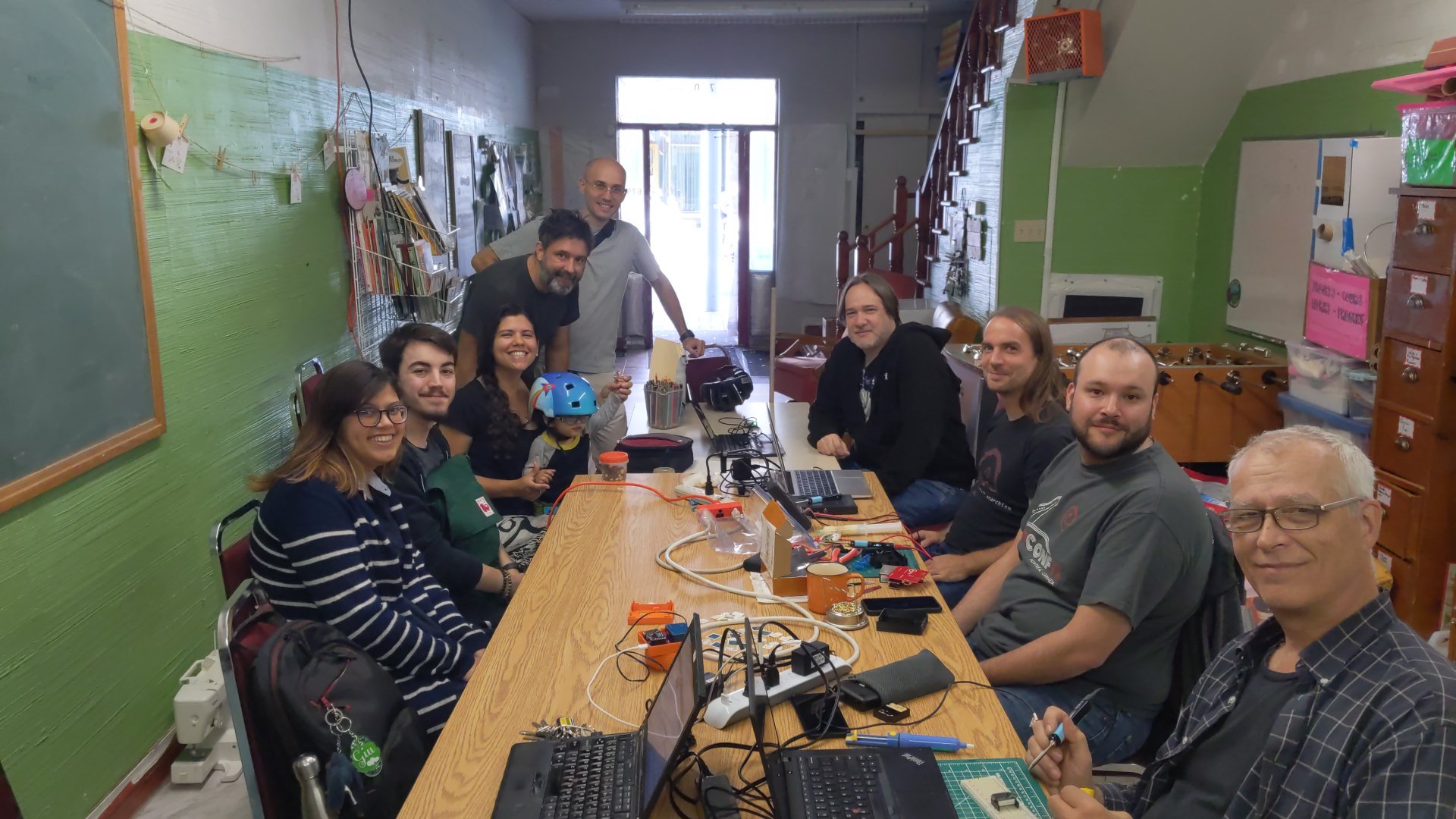
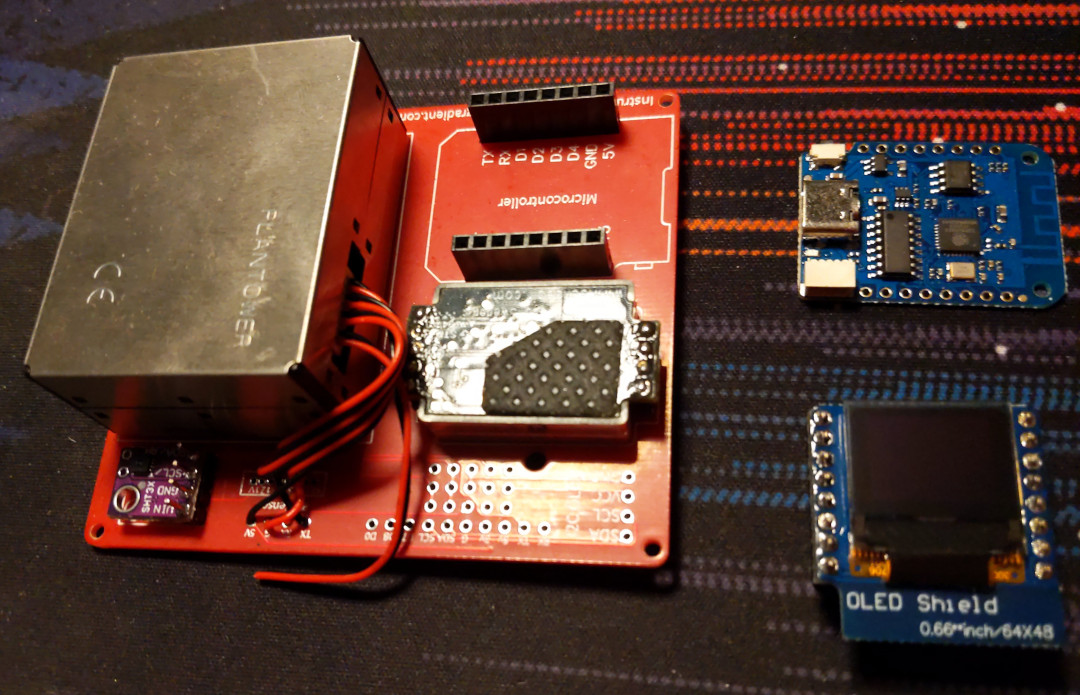
  1. Mostly as a result of the large forest fires in Canada this summer. I myself blogged twice about air quality-related projects recently.

Next.

Previous.