What Next?
I ve sent email to the LinkWithin people about all these issues other than the FireBug problem reports, given that they haven t responded to some suggestions for over 10 weeks it seems hardly worth my effort in informing them of other issues.
I m thinking of trying OutBrain.com again. 18 monthe ago I tried OutBrain but never got it working due to technical issues and then forgot about it. It has some similar features and may work better at least it has tech support people who respond to queries!
A few hours ago, I sent the following to both the R development list and the informal R / GSoC list:
Date: Mon, 26 Apr 2010 15:27:29 -0500
To: R Development List <r-devel>
CC: gsoc-r <gsoc-r>
Subject: R and the Google Summer of Code 2010 -- Please welcome our new students!
From: Dirk Eddelbuettel <edd>
Earlier today Google finalised student / mentor pairings and allocations for
the Google Summer of Code 2010 (GSoC 2010). The R Project is happy to
announce that the following students have been accepted:
Colin Rundel, "rgeos - an R wrapper for GEOS", mentored by Roger Bivand of
the Norges Handelshoyskole, Norway
Ian Fellows, "A GUI for Graphics using ggplot2 and Deducer", mentored by
Hadley Wickham of Rice University, USA
Chidambaram Annamalai, "rdx - Automatic Differentiation in R", mentored by
John Nash of University of Ottawa, Canada
Yasuhisa Yoshida, "NoSQL interface for R", mentored by Dirk Eddelbuettel,
Chicago, USA
Felix Schoenbrodt, "Social Relations Analyses in R", mentored by Stefan
Schmukle, Universitaet Muenster, Germany
Details about all proposals are on the R Wiki page for the GSoC 2010 at
http://rwiki.sciviews.org/doku.php?id=developers:projects:gsoc2010
The R Project is honoured to have received its highest number of student
allocations yet, and looks forward to an exciting Summer of Code. Please
join me in welcoming our new students.
At this time, I would also like to thank all the other students who have
applied for working with R in this Summer of Code. With a limited number of
available slots, not all proposals can be accepted -- but I hope that those
not lucky enough to have been granted a slot will continue to work with R and
towards making contributions within the R world.
I would also like to express my thanks to all other mentors who provided for
a record number of proposals. Without mentors and their project ideas we
would not have a Summer of Code -- so hopefully we will see you again next
year.
Regards,
Dirk (acting as R/GSoC 2010 admin)
Last weekend, I went to the Grenslandhallen in Hasselt, to see
Belgium compete against Estonia in a Fed Cup tie of the World Group
playoffs. The winner of this tie would gain a seat in the top-tier World
Group next year, which opens the possibility of winning this
competition.
The Belgian team was the strongest possible one, with all four best
Belgian female tennis players Yanina Wickmayer, Kim Clijsters,
Justine Henin, and Kirsten Flipkens. On paper, the team should not have
had any problems beating the Estonian team.
Unfortunately, Justine fractured her pinky finger during practice on
wednesday; and while it did not make it impossible for her to play, it
did reduce her fitness somewhat, which meant that on Saturday, Kim and
Yanina had to defend the Belgian colors. They did and won, but then Kim
injured some muscle in her foot, which made it hard for her to walk on
Sunday, let alone play.
With only Justine, Yanina, and Kirsten available, coach Appelmans
chose to put Justine on the field. Though she made a valiant effort, she
unfortunately did not manage to beat an unleashed Kaia Kanepi,
who it must be said played a terrific match. As such, it
fell on Yanina to bring home the tie in the fourth singles rubber
against Maret Ani. Being a bit nervous in the start of the first set,
she made some unnecessary errors; but after a few games, she came
through and started to play much better. Unfortunately, by that time the
score was already at 5-1. Yanina won her first service game of the match
to bring it to 5-2, but it wasn't enough, and Ani won the first set
somewhat easily.
She couldn't put anything on the table against a storming Wickmayer,
however, and after two more sets, the outcome of the match and, by
extension, the tie was clear: a win for Belgium.
I can't help but note that Wickmayer has been a great player for the
Belgian fed cup team these past few years, however. Since her first Fed
Cup participation in 2007, she holds what is, given her ranking at the
time, a rather impressive 9-4 win-loss record in Fed Cup. If it wasn't
for Wickmayer, the Belgian team would not be where it is now. It was
Wickmayer who won her three matches against Canada, one as part of a
doubles team, to prevent demotion from world group II to the
Europe/Africa zone back in 2009, with a 3-2 score. It was Wickmayer who
won the crucial third rubber against higher-ranked Radwanska in February
to beat Poland, with the latter even holding the home field advantage.
And it's now been Wickmayer who won two of the three rubbers against
Estonia that were needed to win the tie.
So Congrats, Yanina!
At my last job, I created several web applications designed to replace
built-in apps on mobile phones. While modern browsers and HTML5 made this
incredibly easy in many ways, we still ended up writing native (i.e. non-web)
code for most of our applications. There were a few different areas where the
browser alone didn't meet our needs, but one that I found suprisingly common
was background processing.
Consider the following mobile applications:
mutt -s "Bits from the (newbie) DPL"
debian-devel-announce@lists.debian.org, ... it's time to
realize that I've been elected DPL.
I still have a bunch of mixed feelings (happiness,
fear, responsibility, etc.) to disentangle, but above all I'm
really proud of our processes (well I don't mind the result
either!). I'm grateful to the other candidates and
to all the people that took part in campaigning discussions. As
I've observed
already, campaigning has been exciting for me. It wouldn't have
been so without the courage of all candidates and the inquiries of
all contributors. No wonder we have had both the highest percentage
of voters of recent years (yes, WAT runs of course helped that),
and an absolute number of voters close to that of past "heated"
elections.
In days in which most of the big players in the distro market
are companies (and hence take money-driven decision), I can't be
more proud to be a member of a huge volunteer project
whose processes are driven by a truly do-ocratic and
democratic constitution.
See you in a bit.
PS 1 in case you wondered, yes, I've fired
mutt, but I'm far from having written something in the
body of the mail! In the next few hours I'll first distill a
personal TODO-list / detailed-plan out of my platform and of the
inputs that I've already received. Then I'll finalize my
first ever DPL bits to d-d-a.
PS 2 In the meantime ... I'll surely be looking
for a new "maintainer" for RCBW, any taker?
PS 3 shameless plug! The
mythical Debian
Kilt is being weaved again, and you still have your
chance of getting one in time for DebConf10. If you're interested,
check out this
post by Phil Hands and sign up
on the wiki, I'm definitely getting one!
My blog is written in English, even though I sometimes post content relevant locally. Anyway, I want this to be as widely known as possible. We are about to launch a website/community for my University's cyclists, BiciUNAMonos. Please note the site I'm linking is still very preliminary in several ways. But that's the least relevant for now.

I am translating here a message written by fellow cyclist (and researcher in the Institute of Astronomy of my University) Sergio Mendoza.
Regarding the fatal cycling accident in Ciudad Universitaria Yesterday night I got home, and was quite surprised to open my mailbox and find a considerable amount of messages under the subject Urgent: Fallen cyclist! I immediately noticed something was very wrong, and was surprised they were contacting me. When I decided to read the first such message, I realized what happened: Dr. Jorge Villanueva was run over by the Puma [internal University service] bus number 14, route 2, which was being driven over the speed limit. This happened last Sunday, April 11. On Sundays, all of Ciudad Universitaria becomes a cycling and running circuit. I was immediately brought back to the moment that, when I was leaving my office in the Astronomy Institute and heading towards Cerro del Agua avenue, a lady driving over the speed limit on the circuit that comes from Metro Universidad threw her car at me. I saw her at a few centimeters distance from her windshield... To the day I don't know how I pulled my bike away, as I was going to hit the windshield with my shoulder. Everything happened in slow motion, I just heard several cars honking at this imprudent lady. I didn't have a scratch, but got excessively close to getting a strong hit, and with the adrenaline raging I gave a kind caress with my closed fist to her brand new car. I had to free my adrenaline somehow... My legs were trembling when I tried to pedal. I told her, lady, I am excessively visible in my bike, why did you do this? , she didn't answer, she just looked despectively at me. This kind of accidents happen every day in the University and its main entries. Precisely today, a University professor threw his car at me entering the University via Cerro del Agua. When I reached him and confronted him, he told me completely sure of his words that I was invading the lane with my bike, and that it was my fault. Anybody would have thought a car-driving university professor is capable of reading the Metropolitant Transit Regulations that clearly states on its 1st article: The priority for using the public space, for the different transport modes will be according to the following priorization: I. Pedestrians; II. Cyclists; III. Users and providers of massive, collective or individual public transport service; IV. users of particular automotor transport; and V. users and providers of freight transport. We are now organizing to put up the first ghost bike in Ciudad Universitaria. This happens few days before the formal inauguration of BiciUNAMonos, the universitary association of urban cyclists; we will do this remembering our university mate. I see every day more people in the University hitting their bike pedals to get to their faculties, centers and research institutes, but what is striking is the lack of University infrastructure. The few cycleways we have are built to use a bycicle system that is open only until 16:00. It is good, but it is in no way useful for those of us who use the bike every day and at every hour, no matter the weather. The main problem lies at the communication points, when cyclists arrive from outside Ciudad Universitaria and have to take the regular circuits to reach the cycleways. The Transit Regulation, in the 1st article I quoted above, defines in an excellent way the priorities that must exist to allow human movility. In this regard we have to mention that:Coincidentally, today I also had a freightening experience. Taking one of my usual routes to work, going up from the sporting area in the Western half of the campus (just before where the map lists the highest point in my ride), just by Investigaciones Biom dicas, I heard a car hitting the breaks behind me and passing me (on my right side) quite narrowly. I was, as always, driving towards the center of the lane, to be able to respond to unforseen events (as this one, precisely). The Universitary authorities had the great(?) idea of placing round, small bumps before the Pumabus stations to avoid drivers parking in front of them. I have seen a strong accident caused by them, and was close to suffering one myself some months ago. I know that just after Biom dicas there are some such bumps, so I never ride too much to the right I don't know what was on this driver's head. Ciudad Universitaria has a 40 Km/h speed limit. Yes, it might seem too low - Circuits are wide and well planned. But there is a lot of cyclist and pedestrian transit, at all times, and I must recognize such a limit is well in place. I often take a longer route to my Institute, bordering the University along Av. Delf n Madrigal. People tell me I'm crazy, as this is an avenue that's often taken at high speed - Usually, cars pass me by between 60 and 80 Km/h. However, I even feel safer going that way than going inside the University. Contrary to the popular belief, Universitary people do not have better driving habits than the bulk of the population. And it's often much easier to drive along a way where the traffic even if it goes at three times my speed runs only in one direction, unlike the swarming of people going in every possible direction inside the main campus. Anyway, last Sunday we lost a University professor, we lost a cyclist. Some people lost a friend, a family member. We have to make this case well known, we have to speak with the authorities so they see the Bicipuma system is good, but not enough. Cycling is the only way to go for a city as complex as ours. A much needed first step is to allow proper vial connections linking the University and the many avenues that surround it. Another one is to make a campaign so the cyclists are not seen as Sergio regards as intruders in the streets The street belongs to us all. Cyclists should never drive on walkways or among pedestrians. Drivers need to learn to share the streets with us.The last thing I wanted was to formally announce BiciUNAMonos reminding a fallen cyclist and dedicating a ghost bycicle to his memory in Ciudad Universtiaria, but we don't have a choice. We have to make it very clear to the University community that the bicycle is the best transport system, and that the drivers' imprudence inside Ciudad Universitaria must be strongly punished. Sergio Mendoza
- The pedestrians must be enormously protected with walkways and semaphores to allow them to safely walk. In Ciudad Unviersitaria there are many places that don't even have a walkway or semaphores, and drivers do not respect the pedestrian's preference. Also, now in the central area of Ciudad Universitaria we have the Pumabus system on a confined lane, providing an excellent service to the pedestrians to move within the campus.
- The cyclist comes next in this priorization, but there is nothing obvious for him. There are a couple of cyclist ways, usually invaded by pedestrians, and explicitly made to use the Bicipuma system. Cyclists need their own lane for circulation in the Universitary circuit; pedestrians have walkways, Pumab s has its confined lanes, but the cyclists still lack it. The third lane that remains is precisely for the IV and V entries in the Metropolitan Transport Regulations. They can perfectly share the remaining lane in the campus.
President
http://www.biciunamonos.org
Russ Allbery:
Do you have any thoughts about how to resolve release issues with less hurt and negative impact to the project all around?I sure do. There has been a trend over many years to conflate the release management role with many other things: QA work, buildd work, ftpmaster-like work (I mean britney here), and in some cases I would even say DPL work. If we relegate release management to a strictly managerial role, I am certain that much of the stress, tension, and burnout will be mitigated. This means putting more access into the hands of many people, which is a good thing anyway. A release manager's job should be to say when a release is ready, what should and should not be in that release, and potentially some coordination with other developers, who are almost their equals. There will still be social conflict when the spirit of teamwork and cooperation is overcome by other factors, but I can conceive of a point where even that would not happen. Raphael Hertzog:
What do you think of this and would you be ready to withdraw a delegation for a delegate that behaved badly towards another DD (even outside of his delegated role), that has been warned once by you and that did it again later on? Do you think we can draft a code of conduct for Debian and do you think you can ensure that it would be respected by delegates?I do not think that any long-term delegations should exist. I think that if they do, we have a structural problem which should be addressed in another way. Therefore I do not think it should be a big deal to withdraw a delegation for any legitimate reason, and if we are trying to force people to behave better (by a definition I agree with), then it seems reasonable to withdraw a delegation for bad behavior. Of course I would include ignoring people and having secret meetings in Vancouver as bad behavior, so that is perhaps not what you are getting at. I am not particularly in love with any formal codes of conduct, but I do think it is reasonable to hold DPL delegates or anyone who holds privileged positions of power to a much higher standard of behavior than the standard DD. With power should come responsibility, and all that. Presumably I would not delegate anyone who would place self and ego ahead of the well-being of the project, and presumably if there were a formal code of conduct or set of guidelines for delegates, those principles would align.
In just under a month, Belgium will face Estonia in a Fed Cup World
Group Playoff tie. The winning team will participate in the world
group next year, which, in theory, opens the possibility of winning. So
this is an important encounter. When team captain Sabine Appelmans
announced the Belgian selection, it was described by the
Belgian press as the 'dream team' Clijsters, Henin, Wickmayer
and Flipkens, aka the four best Belgian female Tennis
professionals. That, combined with the possibility of a World Group
promotion, seems to excite much of the country, to the extent that
10000 tickets have been sold in no time. Yes, I'll be there too.
But one man seems unhappy. Marc Wickmayer, father of Yanina, will say
to everyone who wants to hear it, that 'Appelmans needs to choose'; that
he's 'tired of the hypocrisy', and so on. His arguments: Clijsters and
Henin have not been part of the Fed Cup selection in two years, and his
daughter should not be the fourth wheel on the wagon after having been
much of the reason why Belgium is playing these playoffs.
Sigh.
Let's check some facts, shall we?


Overview
The German supermarket chain Aldi has been running in Australia for 8 years now [1]. Their standard practice for a long time has been to offer regular special deals on a few items of consumer electronics every week, my chocolate fridge is one thing I bought from Aldi [2].
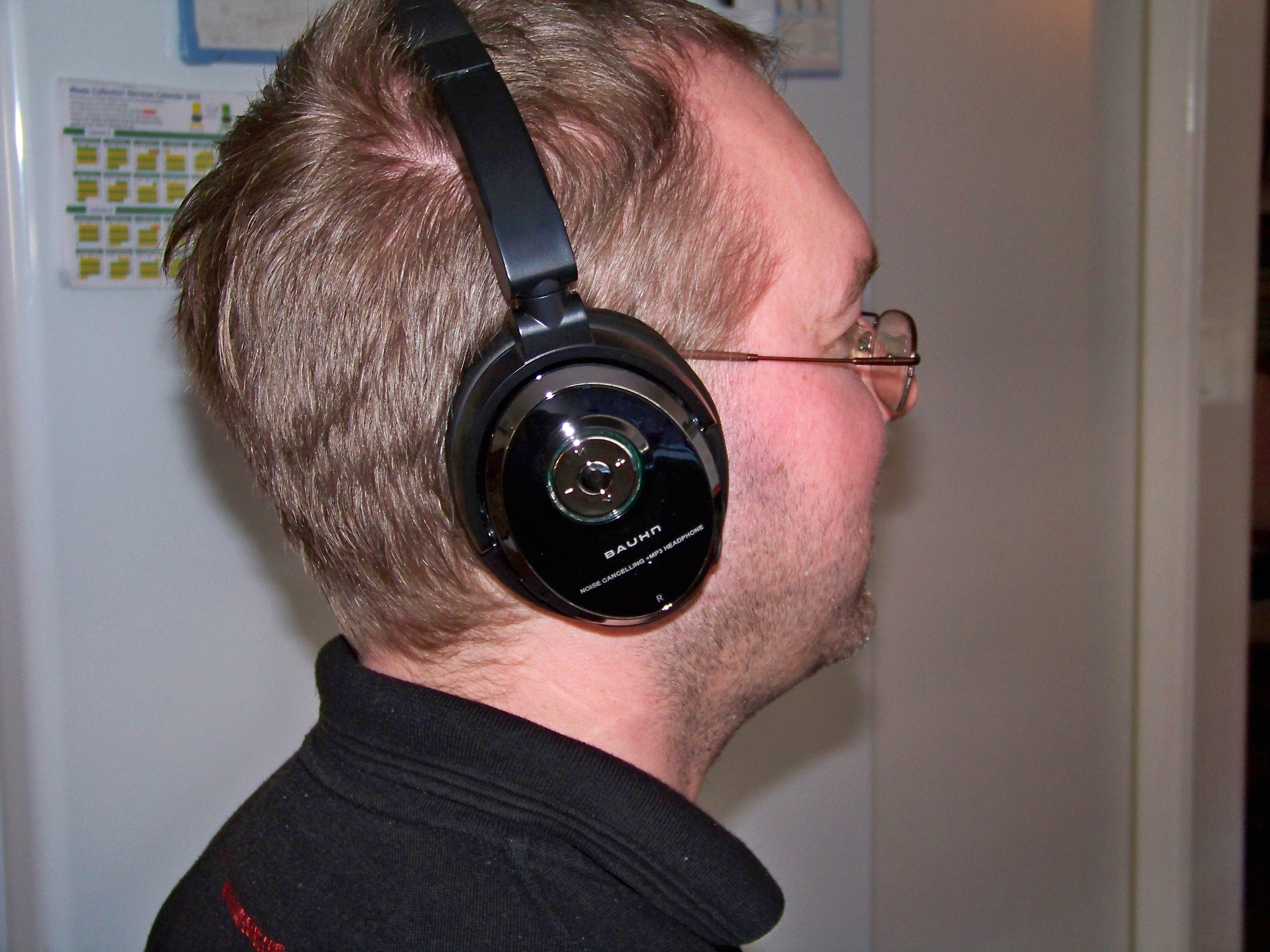
Today Aldi have started selling Noise Canceling Headphones [3]. These headphones are badged by Bauhn but that name is apparently applied to random products from cheap manufacturers, it may be an Aldi name that is applied to stuff that they sell. The headphones cost $69AU which is really cheap. But the deal will probably end in less than a week when stock runs out.
Noise canceling headphones can be used in server rooms and other noisy environments. Every company that has a server room should buy a few sets. One of the features of noise-canceling is that it works best on low frequencies and on regular sounds it specifically doesn t block human voice well. In some noisy environments it will be easier to hear people talk if you wear such headphones!
Noise canceling headphones are also very useful to people who are on the autism spectrum and other people who get more annoyed by noise pollution than average people. I have been wearing my Bose headphones on public transport and when walking around in the city, this not only stops traffic noise but it also helps to avoid people thinking that I want to talk to them.
Features
The first picture shows me wearing the Bauhn NC headphones, it s from the right to show the controls for the built-in MP3 player. I have not yet tested the MP3 functionality. It appears that as the controls are one power button, buttons for next/previous track, and for controlling the volume. This is fairly poor for MP3 functionality, ideally you would want to have a display to see a list of tracks, maybe have directories to store files, etc. I guess this could be a convenient feature on occasion, but you wouldn t buy the headphones for the MP3 functionality.
On Wednesday, I went to a meeting of the Business Initiative for North Somerset for Cooperatives-SW (our regional cooperative cooperative). It was the first time anyone from the cooperative and mutual sector was present.
Conference
Bank of England
The first speaker was Geoff Harding from the Bank of England, who talked through topics in their agents summary and related news.
One interesting graph showed a steep rise in the percentage of household income being saved. Answers to questions suggested that more of that goes to mutuals and building societies, but they find it difficult to be competitive while the banks are keen to increase their balances.
There was mention of employment hoarding businesses short-time working, redeploying or shutting down temporarily to keep trained workers under contract, rather than make them redundant and rehire later.
People from both the Federation of Small Businesses and the Hoteliers Association made strong comments about the banks claiming to government that they are willing to lend, but still offering deeply unattractive depth-of-recession rates and terms. If the regional agents get details of such cases, they pass them to the central bank.
South West Regional Development Agency
The second main speaker was Ann O Driscoll, who covers business development for the West of England (what many people call CUBA Councils that Used to Be Avon). She introduced their four strategic priorities:-
A while ago I blogged about squashing release-critical bugs in stable. Yesterday we have reached a big milestone on that area: The amount of release-critical bugs in stable dropped below 1000 (blue graph). This might sound like it's still pretty high but given that we were well over 1600 RC bugs in stable a while ago I consider this quite a success.
This is though no time for rest. There is still way too many RC bugs in stable, there are definitely still a lot of bugs that just aren't affecting stable and thus can be marked as such meaning no upload needs to get done for them. I'm taking a close look at those with higher numbers and most of those seem to be validly affecting stable too so they might require a bit more work than just tagging them.
Thanks to all people who helped on that area, I can just remember a few names and don't want to make anyone else also working on stable to feel singled out, though I want to thank Lucas for tagging his FTBFS rounds with squeeze sid right from the start because the packages obviously have built before due to his regular rebuilds. Thanks to all, but like said, not the time to rest. The green squeeze graph is still around 250 bugs away from us!
I just couldn t resist I joined the game, but did it the other way around.
I could only file 51 new FTBFS (Fail To Build From Source) bugs this time. Looks like Squeeze is getting closer!
I ve also been doing rebuilds of Ubuntu lucid. There are currently 561 packages that fail to build from source in lucid/amd64, versus 430 in sid/amd64 (I will start rebuilding squeeze instead of sid after the freeze). Surprisingly, only 131 packages fail in both. I would have expected that number to be much higher.
The 51 new FTBFS bugs:
Brendan Scott linked to a couple of articles about CAL (the Copyright Agency Limited) [1]. I have previously written about CAL and the way that they charge organisations for the work of others without their consent [2]. My personal dispute with CAL is that they may be charging people to use my work, I have not given them permission to act on my behalf and will never do so. If they ever bill anyone for my work then it will be an act of piracy. The fact that the government through some bad legislation permitted them to do such things doesn t prevent it from being piracy you can t disagree with this claim without supporting the past actions of China and other countries that have refrained from preventing factories from mass-producing unauthorised copies of software.
The first article concerns the fact that last year CAL paid more than $9,400,000 in salary to it s employees (including $350,000 to it s CEO) while it only paid $9,100,000 directly to the authors [3]. It also spent another $300,000 to send it s executives to a junket in Barbados. It did give $76,000,000 to publishers on the assumption that a proportion of this money will be returned to authors of course said publishers could have used the money to have holidays in Barbados. CAL doesn t bother to check who ends up with shares of the $76,000,000 so it s anyone s guess where it ends up.
The second article is by James Bradley who is an author and director of CAL [4]. He claims that much of the $76,000,000 was distributed to authors, although I m not sure how he would have any idea of how much it was which is presumably why he used the word much instead of some other word with a clearer meaning such as most . He also notes that CAL invested $1,000,000 in projects specifically designed to promote the development and dissemination of Australian writing , which sounds nice until you consider the fact that none of the authors (apart from presumably the few who sit on the CAL board) had any say in the matter. Can I take a chunk of the $9,400,000 that is paid to CAL employees and invest it in something? If not then why not? If they can invest money that was owed to other people then why can t I invest their salaries?
James also says The issue of how well CAL serves rights-holders and authors and artists in particular is a vital one which is remarkably silly. He is entirely ignoring the fact that some rights holders don t want to be served by CAL at all. The fact that CAL can arbitrarily take money for other people s work is an infringement on their rights. He further demonstrates his ignorance by saying Without CAL and the licences we administer, users educational institutions, government agencies and corporate organisations, to name just a few would be required to seek permission every time they reproduced copyright material or run the risk of legal action for copyright infringement of course any educational institution can use Creative Commons licensed work [5].
I ve previously written about the CK12 project to develop CC licensed text books for free use [6]. There s no reason why the same thing can t be done for university text books. In the discussion following Claudine Chionh s LUV talk titled Humanities computing, Drupal and What I did on my holidays [7] it was suggested that it should be possible to gain credit towards a post-graduate degree based on work done to share information this could mean setting up a Drupal site and populating the database or it could mean contributing to CC licensed text books. Let s face it, a good CC text book will be read by many more people than the typical conference proceedings!
James says that CAL is used Instead of having to track down individual rights-holders every time they want to reproduce copyright material . The correct solution to this problem would be to change the copyright law such that if a reasonable attempt to discover the rights-holder fails then work is deemed to be in the public domain. The solution to the problem of tracking down rights-holders is not to deny them their rights entirely and grant CAL the right to sub-license their work!
He also makes the ridiculous claim Whereas in the age of the physical book schools and universities could have bought fewer books and made up the difference by using photocopies, it is now possible for an organisation to buy a single set of digital materials and reproduce them ad infinitum which implies that CAL is the only thing saving the profits of authors from unrestricted digital copying. Of course as CAL seems to have no active enforcement mechanisms and they apparently charge a per-student fee they really have no impact on the issue of a single licensed copy being potentially used a million times extra use apparently won t provide benefits to the author and use in excess of the licensing scheme won t be penalised.
He asks the rhetorical question After all, why go to the expense of creating a textbook (or some form of digital course materials) if you are going to sell only a half-dozen copies to state education departments . The answer is obvious to anyone who has real-world experience with multiple licensing schemes you can sell one single copy and make a profit if the price is high enough. The smart thing for the education departments to do would be to pool their resources and pay text book companies for writing CC licensed texts (or releasing previously published texts under the CC). The average author of a text book would probably be very happy to earn $100,000 for their work, the editorial process probably involves a similar amount of work. So if the government was to offer $300,000 for the entire rights to a text book then I m sure that there would be more than a few publishers tendering for the contract.
According to the CIA World Fact Book there are 2,871,482 people in Australia aged 0-14 [8], that means about 205,000 per year level. CAL charges $16 for each primary and secondary student so the government is paying about $3,280,000 every year per year level. Even in year 12 the number of text books used is probably not more than 10, so it seems to me that if all the money paid to CAL by schools in a single year was instead used to fund Creative Commons licensed text books then the majority of the school system would be covered! The universities have a much wider range of text books but they also have higher CAL fees of $40 per student. After cutting off the waste of taxpayer money on CAL fees for schools that money could be invested in the production of CC licensed university text books.
C. Guy Yarvin is a good friend of Mencius Moldbug, a
pseudonymous blogger known for iconoclastic novella-length essays on
politics and history (and occasionally computer science). Guy recently
published under his own name a novel project in language and
systems design. His own writing about his work is entertaining but verbose
(as Moldbug's readers might expect), so I will attempt to summarize it here.
Nock, Urbit, Watt
First there is Nock, a tool for defining higher-level languages
comparable to the lambda calculus, but meant as foundational system software
rather than foundational meta mathe matics. Its primitives include positive
integers with equality and increment operators, cons cells with
car/cdr/cadr/etc., and a macro for convenient branching. Nock uses trees of
integers to represent both code and data.
Next, Guy provides the rationale for Nock. In short, he asks how a
planet-wide computing infrastructure (OS, networking, and languages)
would look if designed from first priniciples for robustness and
interoperability. The answer he proposes is Urbit: a URI-like name space
distributed globally via content-centric networking, with a feudal
structure for top-level names and cryptographic identities.
Urbit is a static functional name space: it is both referentially
transparent and monotonic (a name, once bound to a value, cannot be un- or
re-bound).
Why does this require a new formal logic and a new programming language? In
Urbit, all data and code are distributed via the global namespace. For
interoperability, the code must have a standard format. Nock's minimal spec
is meant to be an un ambiguous, unchanging, totally standardized basis
for computation in Urbit. Above it will be Watt, a self-hosting language
that compiles to Nock. Urbit itself will be implemented in Watt, so Nock and
Watt are designed to treat data as code using metacircular evaluation.
The code
A prototype implementation of Watt is on GitHub. It is not yet
self-hosting; the current compiler is written in C. Watt is a functional
language with static types called molds and a mechanism for
explicit lazy evaluation. (I was suprised to find I had accidentally created
an in com patible lazy dialect of Nock despite its goal of
unambiguous semantics just by implementing it in Haskell.)
The code is not fully documented, but the repository contains draft specs for
both Watt and Urbit. Beware: the syntax and terminology are a bit
unconventional. Guy has offered a few exercises to help get started with Nock
and Watt:
Since Earth code is fifty years old, and Martian code is fifty million years old, Martian code has been evolving into a big ball of mud for a million times longer than Earth software. (And two million times longer than Windows.) Therefore, at some point in Martian history, some abject fsck of a Martian code-monkey must have said: fsck this entire fscking ball of mud. For lo, its defects cannot be summarized; for they exceed the global supply of bullet points; for numerous as the fishes in the sea, like the fishes in the sea they fsck, making more little fscking fishes. For lo, it is fscked, and a big ball of mud. And there is only one thing to do with it: obliterate the trunk, fire the developers, and hire a whole new fscking army of Martian code-monkeys to rewrite the entire fscking thing. This is the crucial inference we can draw about Mars: since the Martians had 50 million years to try, in the end they must have succeeded. The result: Martian code, as we know it today. Not enormous and horrible tiny and diamond-perfect. Moreover, because it is tiny and diamond-perfect, it is perfectly stable and never changes or decays. It neither is a big ball of mud, nor tends to become one. It has achieved its final, permanent and excellent state.Do Earthlings have the will to throw out the whole ball of mud and start from scratch? I doubt it. We can build Urbit but no one will come, unless it solves some problem radically better than current software. Moldbug thinks feudalism will produce better online reputation, but feudal reputation does not require feudal identity; it is not that much harder to build Moldbug's reputation system on Earth than on Mars. I still have not figured out the killer app that will get early adopters to switch to Urbit.
I'm looking for a way to do free hosting. But I mean free as in freedom, not free as in beer. Let me explain.Next.