Search Results: "spa"

10 October 2006

Alexander Sack: IceLizard application names

It might be obvious for most that follow recent discussions, but here are the names of our IceLizard applications, as we will probably ship in etch: Now we need some artwork … there is a great draft site in ubuntu wiki that looks quite promising: https://wiki.ubuntu.com/IceWeaselIcon Of course, no guarantees :-)

Adam Rosi-Kessel: Farm Animals

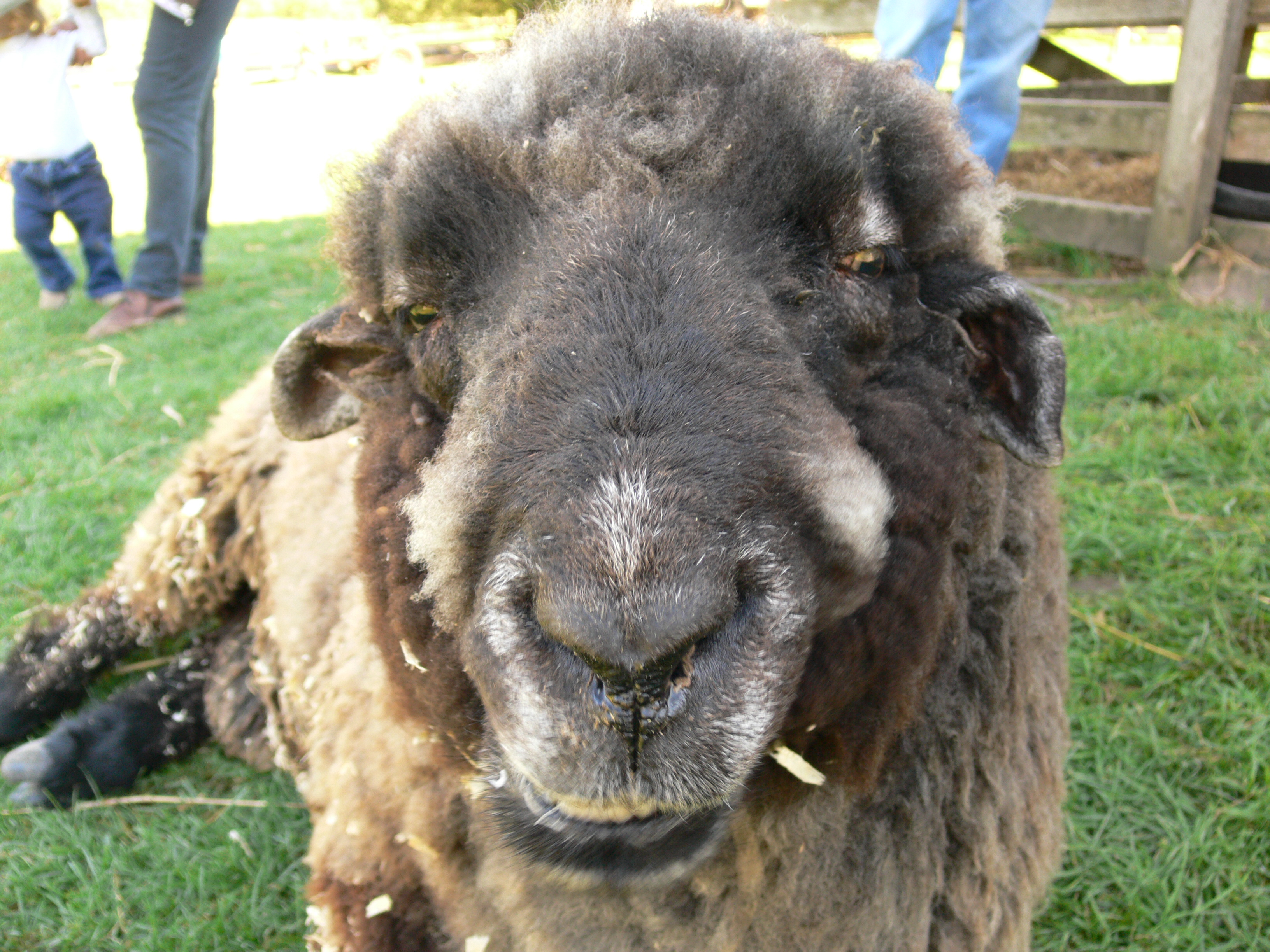
My domestic animal images are among the most popular hits on my blog, especially among the Myspace crowd. Apparently, everyone under 19 thinks it’s funny to post an embedded image link to a llama or an alpaca, pretending it’s a photo of themselves. A recent visit to Shelburne farms yielded the following additional specimens — click on any image to see a very large version. If you want to use one of these as your xanga avatar, ask me first. And please don’t borrow my bandwidth to serve it.
The Proverbial Black Sheep
A Surprisingly Accommodating Donkey and His Friend
Sleepy Sheep

Rob Bradford: Progress!

I have just submitted by first research paper to a leading networks conference. I wish I could have been in Boston but alas there was no time to spare with this deadline. Now i’m going to get some sleep.

9 October 2006

Kai Hendry: unstable mutt+vim

2006-10-09-182158_1024x768_scrot Using my preferred email environment lately has been really painful. Does this affect other people? Any tips? My configs can be found in my $HOME Otherwise I have to use freakin’ gmail and cope with its problems.

Axel Beckert: Fedora Legacy useless?

For a (much too long) time, we ran our three AMD 64 bit virus scanners and spam filter boxes with Fedora Core 4. Since the the official support ended a few months ago when Fedora Core 6 Test 2 came out, so we decided to switch them over to support through the Fedora Legacy Project. For testing purposes we first switched over one of the three boxes. But the test failed: Although the changes (as documented on the Fedora Legacy home page) seemed to work fine, not a single update came until the end of last week, even though there were partially remotely exploitable security issues in OpenSSL, OpenSSH, gzip, etc. during that time. There were also no announcements on the list since FC4 switched over to the Fedora Legacy Project, not for FC4 nor for any other distribution maintained by the Fedora Legacy Project. So what the heck does the Fedora Legacy Project if not security updates? I would be very happy if I could switch over those boxes to Debian or even Ubuntu, but there’s no BiArch support (running 32 bit applications on 64 bit operating systems transparently) in Debian (and therefore neither in Ubuntu) yet without a lot of manual fiddling and chroots, so we can’t run our 32 bit virus scanners on those 64 bit boxes with a debianesk operating system yet. Today we’ve upgraded the last of those three boxes to Fedora Core 5.

John Goerzen: Hutchinson News Interview

Terah and I were interviewed over the phone last week by a reporter for the Hutchinson News, a daily newspaper in this area. His story about local bloggers is online today. We're towards the end of the story.

Martin F. Krafft: Report from the Zurich BSPs

Yesterday, the second of Zurich's two bug squashing parties came to an end. As organiser I feel as if both events have been very successful. On 9 September, between 5 and 8 people hacked on Debian all day, and we managed to fix 17 release-critical bugs without opening any new ones. This past weekend, we had about the same number of people working between the early morning hours (9:00 o'clock) and dinner time, and fixed 27 release-critical bugs, alongside a slew of normal bugs on the way. Unfortunately, we encountered three new release-critical bugs. In the end, we decreased Debian's release-critical bug count by 41! One of the attendees, Hanspeter Kunz, worked on the BSP beginner's HOWTO while he was learning about the art of bug squashing. The document is still in the works, please feel free to contribute. I would like to thank all attendees for their time and work, and I hope my organisation made the events pleasant for all. I also would like to thank our sponsors: /ch/open and Google for covering our travel and catering expenses, and the Artificial Intelligence Laboratory for letting us use their space and infrastructure. The organisational effort required from my end was minimal, largely due to my relation to the AILab. This means that it would not be too hard for me to organise another event, but I do not think I'll have the time to do so before the release of Debian "etch". Anyway, if I can somehow excite more sponsors, the Zurich BSPs might turn into a semi-regular event, attracting people from far away, like it did to Debian's second-in-command, Steve McIntyre, who honoured us with his presence. NP: Mono / You Are There

Isaac Clerencia: Anti-bullfighting demo

More than a thousand people took part in the anti-bullfighting demo that every year takes place in Zaragoza. (Spanish) For those who are not familiar with bullfighting, it’s basically a Spanish shameful tradition, where six bulls are released one at a time to a bullfighting arena. There the bulls are tortured to death, first they’re stabbed on the neck by horse-mounted lancers, then they got planted in their back several harpoon-pointed sticks, and after half an hour of torture and agony, the bullfighter definitely murders the bull with a sword. Does it sound disgusting, cruel and sadist? It definitely is, and I’ve skipped the worst details. (yeah, I’ve got sick just writing this) We gathered at a square near the bullfighting arena, and then we headed towards it shouting stuff like “torture is neither art nor culture” (as bullfighting defenders usually say that “bullfighting is a central part of Spanish culture”), “murderers”, “torturers”, “sadists”, “you’re cavemen, evolve!”, “if you wanna see blood, slit your wrist” or “you should be ashamed of how you are raising your children” (to people who brought little (5 or 6 years old) children to the bullfight arena). The demo lasted about two hours and was completely peaceful, which is a great thing IMHO, as it clearly shows which side despises violence and which one loves it. There have been several good news for the anti-bullfighting movement last years, like several Catalonian towns declaring bullfighting illegal, Barcelona declaring itself an anti-bullfighting city (although it doesn’t have the legislative power to really ban bullfighting), demos in lots of cities and increase in people attending them. If Bullfighting seems doomed, but we still will have to push for a few years to really bury it. Even if you are not Spanish you can still help abolish bullfighting by taking part in anti-bullfight demos in front of Spanish embassies (there were 17 of them this summer), boycotting travel agents that promote bullfighting, …

Matt Brown: Per Client VLANs with Madwifi

I’ve written a patch for the madwifi-ng driver to separate each associated client into a unique VLAN. The patch only makes sense for use when the driver is in master mode being controlled by hostapd. Using this patch with WPA2/RSN you can acheive complete layer 2 isolation between associated clients. The patch does not support placing multiple clients in the same VLAN. Full layer 2 isolation requires that there is no broadcast or multicast traffic transmitted from the access point. To enforce this the patch mangles outgoing broadcast / multicast packets to be directed only to the node associated with the VLAN that the packet was received from. Clients can still send/recieve broadcast and multicast traffic without problems if you bridge them onto another layer 2 network. You must fully understand the consequences of this before using the patch. In the worst case scenario if you bridged the VLANs for each client together onto a common L2 network you will cause every broadcast/multicast packet sent onto that L2 network to be transmitted by the access point as a unicast packet to each associated client. If you have a lot of broadcast/multicast packets this is going to significantly reduce the performance of your network. This is a somewhat contrived situation as there is no point creating the VLANs in the first place if you’re just planning to bridge them back together, but I use it to illustrate the risks this patch can introduce if you don’t understand it properly. At this stage I’m not convinced that the patch is actually useful, and I’m not going to be proposing it for inclusion in the driver. You’re welcome to use it if you find it useful. Please let me know how you are using it and any problems that you run into. I don’t guarantee that I can provide support or assistance though :P The Patch How the patch works
One of the primary constraints I had in writing this patch was that the clients using the access point are not required to do anything special. From their point of view they are simply associated to a standard AP running 802.1x with WPA2. There are no 802.1q packets “on the air”. All of the VLAN functionality is handled within the driver itself. Inside the driver there is a node table listing every node that is associated. The patch adds an entry to each node record specifying a VLAN id for that client. By default this id is automatically assigned when a node associates, but it can be modified by wriiting to the /proc/net/madwifi/<iface>/sta_vlan file. As packets are moved between the kernel and the actual physical card by the driver 802.1q tags are added and removed as appropriate to ensure that the kernel sees every node in it’s own VLAN. The VLAN tagging code in the driver ignores EAPOL frames so that they are always sent to the base device where hostapd is listening. Userspace Setup
By default per node VLANs are disabled and have to be explicitly enabled

echo 1 > /proc/sys/net/<iface>/per_node_vlan

And you almost certainly want to stop the driver from bridging packets between clients

iwpriv <iface> ap_bridge 0

Then it’s simply a matter of creating the appropriate VLANs on the base interface using the standard Linux VLAN tools, eg:

vconfig add <iface> 4
Final Comments
I’ve tested the code fairly extensive and it works fine for me. It’s not particularly clean and the mangling of broadcast/multicast packets is a messy hack. You can achieve a very similar situation using PPPoE from the client to the Access Point without having to patch the driver to support per node VLANs.

Adam Rosi-Kessel: Absurd Copyright Law Case of the Day

I’m visiting my parents’ house in Vermont, where they finally got cable after the provider agreed to dig up the ground and run a mile or so of cable to their house in return for a two year subscription agreement. (I think after two years the cable company will almost have broken even on the cost of the installation). Having been absent myself from the cable world for some time, I am impressed by the variety of interactive and “on demand” options. My parents’ low-end package includes dozens of free on-demand movies and music videos, as well as built-in easy-to-use tivo-like functionality. The on-demand music videos show one brief ad before the video — it seems the tradeoff is that if you are really going to watch the ad, they can get more money and show you fewer ads. (Or, maybe I’m wrong — if it’s one ad per video, I suppose that would be more ads, but it feels like fewer because of the “on demand” nature. I guess it’s a perceptual trick.) Anyway, getting to the title of this entry. Anybody in the field of intellectual property these days has got to find Weird Al Yankovic’s music video for Don’t Download This Song (warning, myspace page, authorized by Weird Al!) (or, here) (warning, YouTube page, also authorized by Weird Al!) at least a little amusing. If you haven’t watched it, see it now. The opening verse goes like this:
Once in a while maybe you will feel the urge
To break international copyright law
By downloading MP3s from file sharing sites
Like Morpheus or Grokster, or Limeware or Kazaa
But deep in your heart you know the guilt would drive you mad
And the shame would leave a perminant scar
Cuz you’d start out stealing songs, then you’re robbing liquor stores
And selling crack and running over school kids with your car
On the cable video-on-demand channel, however, the names of all the filesharing services (Morpheus, Grokster, Limewire, and Kazaa), are all replaced with beeps, as if they were vulgarities unfit for broadcast. Or cable. If you had never seen the video online, you’d actually be likely to think this was another Weird Al joke — that he can’t even sing the names of (the mostly now defunct) filesharing services publicly. But I’m pretty sure the video was censored by the cable provider or distributor and the irony is wholly unintended. There are a couple of possibilities here. One is that the distributor was trying to avoid inducement liability under the Supreme Court’s decision in MGM v. Grokster. Could a funny song about filesharing actually meet the inducement standard? I sure hope not. The other possibility is that the distributor just found the references too abhorrent to leave in — basically the equivalent of the seven dirty words banned from broadcast TV and radio. Either way, if Weird Al were dead, I’m sure he’d be spinning in his grave. We’re lucky he’s still kicking. (“case” is kind of a misnomer for the title here, but is included for consistency).

8 October 2006

Russell Coker: started growing a beard


At LCA in January this year there was an auction at the end (an LCA tradition), and most people were feeling very relaxed and happy after plenty of good food and drink and bid with reckless abandon (another LCA tradition).

To help things along a few of us volunteered to do various things if various amounts of money were reached. The full list is here.

Anyway my contribution is to grow a beard for the next LCA. Recently I had been thinking that it was about time to start, and this morning I discovered that I had misplaced my shaver, so I start today. I had wanted to get a clean-shaven picture for the first blog entry, but things didn't work out for that. The above picture is two days of growth (members of my local LUG are probably used to seeing me look like this).

I will strart by blogging a picture every day, and then start to space them out as it grows. The apparent results of beard growth should exponentially decrease over time so the rate of pictures would best be based on the log of the time.

Petr Rockai: power management on a linux laptop

I have been using powersave until recently, but I have gone from unhappy to fed up. I also have acpi-support and laptop-mode-tools and hell knows how they all interact. To add insult to the injury, powersave loves to crash or get stuck at times and dbus screws up at times too, which in turn screws powersave. Oh dear. So i have ditched powersave, left laptop-mode-tools and acpi-support around. And i wrote a perl script, i have called it "pm" to handle things i used powersave for. Primarily dpm (device power management) in linux, suspend to ram/disk, battery monitoring and friends. Right now it's ~250 LOC with comments, and more importantly, i know how it works. And it can do things powersave can't. So i am basically happy. It can suspend and resume pci devices (using id<->function mapping) and report their status. It has a very slim suspend wrapper, that just locks screen, syncs drives, remembers power states of pci devices and asks kernel to suspend. After resuming, it restores power states, does chvt voodoo to wake up my intel graphics and sets drive spindown timeout (something, somewhere screws this one up). I also added a "summary" output, that i run using watch on one of terminals in my screen session, that reports cpu frequency and scaling policy, system temperature, battery state (including charge/discharge rate in watts and remaining capacity in mAh), harddrive state (when spinning, also temperature and number of spinups in the drive's lifetime... if you know how to get those two without spinning up the drive, tell me). Then power states of devices (usb, ethernet, wlan, sound, modem, pcmcia, smartcard controller and isa bridge). And as a cherry on top, a list of processes and pids that have recently caused block reads from the drive (needs vm/block_dump enabled in kernel), so you can find out what caused drive spinup. That is about it, now for the catch. It works for me, it probably won't for you, at least not out of the box, unless you have same laptop as me. The pci ids of devices are hardcoded (although not hard to change near the top of the script), so is the screen lock function and probably a bunch of other things. It shouldn't be hard to make a similar script for your system using mine as a starting point though. Another thing that is missing is a nice reporter for KDE to be put on the panel or somesuch. Also, since the script is simplistic in its design, it assumes lots of things about both kernel (tested on 2.6.16 stock debian) and userspace utilities (acpi, hdparm, smartctl) and (oh, coarse-grained evilness), that you have sudo (needed for hdparm at least). Another assumption is that you have single battery and single cpu. But for all the limitations, it goes that if you are going to use a script like that, you probably know enough to extend it to multi-battery and/or multi-core situations. The script definitely needs a hacker-nature :-). So for the brave, the script is to be found on the pm page.

Gunnar Wolf: About Google Reader

Ian: I have to agree with you - Google Reader rocks. So far, I've been quite reluctant on putting more personal information in other entities hands than what is necessary - specially when those entities are, as Google, expert in exploiting whatever they learn about you. Call me a paranoid, a privacy freak, or whatnot, but after fooling around a bit on Orkut, I decided to withdraw all of my participation there (and never engaged on explicit social network sites ever again - Of course, my participation in several mailing lists is tracked by many Web searchers, and I'm sure I'm well categorized in non-explicit social networks - To say the least, my GPG key is in the Debian keyring ;-) ). I never got a Gmail account and hope I'll never have to - After all, gwolf.org gives me way more than 1Gb of space, is easily accessible and searchable (by me and only by me)... Why should I worry with that?
But, yes, Google Reader gave me something I didn't ever before have: The ability to read my RSS feeds from wherever, from whatever computer, without worrying about synchronizing. For the first time ever, I found my cell phone's uncomfortable, tiny but usable Web browser good for something - whenever I cross the city, I can do it reading news or my friends' life updates. That's quite cool, and that's the only reason I'm ditching Liferea.
But unlike you, I would prefer a more mailbox-like system on Reader. And having to use non-free software sucks, as there is no way for me to change this but to bitch around :) Why do I like to treat my feeds as mail folders? Because there is certain coherence between them. If I just "read all", I get a strange mixing of unrelated items. However, in Liferea, I went through each of my feeds, in order, unless (of course) I decided to jump to another one. And I can do the same in Reader, by clicking on each individual feed with pending items... But it's a manual operation, and those should be avoided. Liferea does support acting as Google Reader, when you click on the "all unread items" virtual folder, but the default style is just the other one.
Anyway... I know that overloading Reader with everybody's preferences is not an option. I know I am not like most Google Reader's users, and it sucks. I'll have to get used to the more regular style (or write an aggregator for myself and host it at gwolf.org or such), but I'm too tied with other stuff to give it a go. :-/
Besides, I like to complain.

Biella Coleman: My Reading

So people may be wondering, How does Biella pass her time in the vast, desolate Canadian north? Thankfully there are many things to do in Edmonton proper, but I have delved quite a bit into reading so I thought I would take a break and give small reviews of the books I have read or am reading as they are all quite good. I am trying to be more systematic about my reading habits so I am back to using citeulike. I am adding anything new I read and then as I go back to I have already read (for articles), I am adding them to the list also. I hope this pays off in the future! I started the reading bash with a book that was recommended to me over a year ago while I was still in Chicago: The Fugitive’s Property: Law and the Poetics of Personhood as it deals with the bread and butter of my own work, intellectual property, liberalism, market capitalism, and American history. I found the introduction enlivening and was sufficiently interested to continue on. I think there is not a lot of innovative work in the field of intellectual property (only because it has been covered very well) and to bring together slavery/the fugitive person and intellectual property under the same analytical lens, seems productive. Best looks at how the legal treatment of the slave and that of IP, hold striking parallels for their highly fugitive (formal) nature, driven and intensified by the legal/market framework that makes personhood into property. There is a lot of good stuff in there (including a fantastic discussion on legal positivism) but in the end, the labor it took to sift through some really obtuse prose was too much for me. I can’t remember the last time I languished under the heavy weight of language that was far too ornate and under sentences that just lacked clarity. This was compounded by the fact that he assumed you knew a fair bit about slave history, which I did not. My drive also escaped me and while I hope to return to it later, I took a break and turned to more readbale material. After such heavy linguistic ornateness, I needed an antidote, QUICK, and I knew exactly where to go: William Sewell and his book I had on my shelf also nearly for a year: The Logics of History. Along with being a first rate historian he is like that black instrument popularized in the 1980s by the likes of Herbie Hancock, and Brian Eno, he is a synthesizer with an amazing ability to write clearly. Being the synthesizer that he is, he is skilled at connecting the dots between various theoretical topics like event, structure, and agency, making the theoretical implications so crystal clear you feel happy to have entered into a field (the social sciences that is) that feels awfully arcane and pointless at times. I left Stehpen Best, which was like leaving a cluttered medieval castle and into a simply decorated room filled nothing with good theoretical feng shui (I think about writing in spatial terms more than ever). He just makes reading fun, even when the topics can be less than enthralling. Many of the essays were published previously and I had read a number of them, such as his famous essay on structure and agency. What I appreciated along with the great writing, was that he takes serious the question of plurality of social life within the net of various social, economic, political determinants. So while he assumes the existence of structure (and turns Marshall Sahlins to establish), he also is quick to show that structure, like a cultural system, can only act as partial (and unexpected determinants of social life) because of the existence and presence of events (which is really Sahlins great masterful point) but more importantly because of the plurality of structures… This was perhaps on the the central motifs in my dissertation; while I placed hacking within the cultural lineage of liberalism, in no way is this the only cultural system that hackers operate through and with; they move through a cultural domain more intrinsic to their own praxis, not to mention other systems of value that reverberate more widely among the digerati… And it is this movement between social positions that allows for forms of reflexivity and social change. I primarily used Bakhtin to make this point but now I got Sewell to add to this mix. Here is a nice passage from the book that makes this point:
I would argue that a multiple conception of structures would make subjects cultural creativity easier to explain. If the cultural structures by which subjectivities are formed are multiple, then so are the subjectivities… Because persons, symbols, and objects of cultural reference overlap between structural realms, structurally generated rules, emotions, categories, and senses of self can potentially be transposed from one situation to another. Indeed, if actors commonly have the experience of negotiating and renegotiating the relationships between noncongruent cultural structures, it follows they should have some intellectual distance on the structural categories themselves, that they should be able to view one set of cultural categories from the point of view of others that are differently organized, to compare and critizise categories and categorical logics, to work out ways of harmonization or odering the seemingly contradictory demands of different cultural schemes. A multiple conception of structure, consequently makes human creativity and reflection an integral element in the theory of history, not a philosophically prior metaphysical assumption. p. 213
And here is a more engaged review that is a little more critical than my very short comments. As part of a reading group organized by my tireless supervisor, I am also reading The Cultural Locations of Disability written by two of the most prolific scholars in the field, Sharon Snyder and David Mitchell. Since I am a novice in field it is hard for me to judge the two chapters we have so far read but it is a total total total treat reading a book slowly with a group of other folks from a vast range of departments. So far I appreciate the larger arguments presented in the introduction. For example, they point to two broad categories—capitalism and modernity/enlightenment– as driving forces in a new wave of obsession with the disabled. So while capitalism’s insistence on measuring the worth of humans through an abstract and actual ability to labor, marginalizes those who cannot offer their constant labor power (and makes them an “odd” cultural object), modernity–in its desire to march forward to the mysterious plane of progress, offers a technological promise to eradicate what it designates as deviant or primitive. As they nicely sum up: In a culture that endlessly assures itself that it is on the verge of conquering Nature once and for all, along with its own primitive instincts and the persistent domains of have-nots, disability is referenced with respect to these idealized visions. As a vector of human variability, disabled bodies both represent a throwback to human prehistory and serve as the barometer of a future without deviancy. p. 31 I, think, however, they should have also included some discussion of liberalism, which in many ways, was the legal and philosophical engine that helped to naturalize capitalism not to mention it also offered a vision of person, in which self-development, expression, and discrete autonomy was deeply cherished. Seen in this liberal light, disability becomes also a type of tragedy that can be resolved though new technological interventions they discuss under the guise of modernity. I have just started Michelle Murphy’s Sick Building Syndrome and the Problem of Uncertainty: Environmental Politics, Technoscience, and Women Workers, which promises to be quite a tour de force into the contentious politics of uncertainty and the play of perceptibility and imperceptibility that surround one of many many syndromes sick building syndrome that now are part and parcel of the medical and patient advocacy field. Along with this I read and finished Andrew Lakoff’s Pharmaceutical Reason: Knowledge and Value in Global Psychiatry, which will make for great teaching, and has one of the nicest discussions on the way in which psychiatry’s insecure status among the other medical science was one of the driving forces toward embracing the new scientism of the 1980s that coincided with new more general neoliberal trends. Another nice move about the ethnography is that he was able to clarify some of the trends and rationalities of American and European psychiatry by examining how it was received and resisted among more psychoanalytical Argentinian therapists. Very classicial anthropological lens in that sesne. Finally I am in the middle of Play Money: Or, How I Quit My Day Job and Made Millions Trading Virtual Loop and I will say more about it when I am done, which should be soon as I am tearing through it evern night. I have been waiting for this book for a long while now because Dibbell is part of that trinity (Steven Levy, Bruce Sterling, Julian Dibbell) that offers some of the best writing on hackers, the internet, and virtual worlds. And this book continues in that tradition of providing a fantastic read, a vivid ethnographic picture of the topic at hand, along with key insights into the nature of economies, money, and plau within (and outside of) virtual landscapes. What I respect about Julian Dibbell is that he took a long time to get this book out. He started the research in 2003 and then spent a few years writing up. I think there is a lot of pressure to get any material or book on “virtual whatever” out there as quick as possible but for the most part I think that is a mistake. You need to let these things brew a long while or else they won’t acquire that taste of a finished product.

Andreas Metzler: Kicking gnupg2 packaging

Yesterday I got an e-mail from Werner Koch (gnupg upstream) about the status of gnupg2 in etch since he somehow thought me to be involved in its packaging. I am not involved at all but have nevertheless wasted a little time on giving gnupg2 1.9.91 a shot. Initial packages can be found here:
deb http://www.bebt.de/debian/ sid gnupg2
deb-src http://www.bebt.de/debian/ sid gnupg2
I have not tested them at all, except for checking installability and for comparing filelists, however they should spare the maintainer a nontrivial amount of time, as the packaging is a lot less crufty than before. Check the changes file.

7 October 2006

Jordi Mallach: From Teruel to Val ncia under the full moon

For a few years, the probably most intrepid group of triathletes in my club have been doing cycling tours during the long weekend of the 9 d'Octubre in Val ncia. We once did a good chunk of the Ruta del Cid, covering around 550 kilometres in 3 days and a half, carrying aproximately 25 kilograms of sleeping bag, food and clothes on our bikes, and going from Teruel to Albarrac n, back to Teruel, then to Morella and back to Alboc sser and through the Serra d'Espad . The next year, we started the trip in La S nia, and crossed the Valencian Country all the way to Requena, through Linares and Rubielos de Mora. This year, we intended to cycle across the Pyrinees, from the Basque Country to Catalonia, but in the end my travelmates have to work on Monday, so we had to quickly settle on a one day alternative. As this is the 9 d'Octubre, the trip had to be a bit crazy, so we've decided to get the last train up to Teruel, arriving there at 21:30 or so, have a very good dinner around El Torico and soon after, start our way down to Val ncia, under the full moon.


Our itinerary for tonight We'll be carrying a few forehead lights and a bicycle light, and will really hope that the sky isn't cloudy at all. We're really going to need the moonlight. The route follows the national road from Sagunt to Teruel, through an old train track which was turned into a cycling path. Most of the trip will be descending, so covering the 150 kilometres shouldn't be too hard, except that neither of us are specially trained now, unlike 3 years ago. If we end up having to stop and sleep, that's going to be a problem as we are carrying no sleepingbags or anything, just our winter cycling clothes. We pretend to take our time, aka most of the night, to get to our destination, as we obviously won't be able to cycle fast in the dark. But we'll manage. This is just crazy, not impossible. :)

6 October 2006

Ben Armstrong: Ichthux and Ubuntu CE: Why two projects?

Barbicane asked me the other day: “Why Ichthux and Ubuntu CE? Why not consolidate efforts?” As much as I’d like to see Ubuntu CE succeed, I believe they are headed down a path that will make it difficult for them to survive if they continue. In this thread (see Google cache since the forums seem to be having problems today) Jereme severely understates the differences in development philosophies that keep us apart. One key difference is more fundamental than just using metapackages instead of scripts. As I wrote about earlier, the approach Ichthux has chosen is to be a Custom Debian Distribution (CDD), working within Debian and Ubuntu to configure those distributions for the needs of Christians to meet their various needs. This is incompatible with CE’s approach, which uses scripts to tailor an Ubuntu system. This approach risks violating the integrity of the packages being modified, and makes each system upgrade an adventure for the user. What you end up with cannot truly be called an “edition” of Ubuntu at all, but is more accurately described as an Ubuntu derivative. Derivatives are not easily sustained because they are always struggling with staying in sync with the parent distribution. Ubuntu itself is a derivative, but it has an impressive amount of infrastructure with a lot of manpower behind it to ensure that the branching and merging process doesn’t get out of control. I don’t see how the much smaller Ubuntu CE development team will manage to accomplish anything significant using their current approach without being crushed by the maintenance costs of their customizations. Another difference, perhaps more readily apparent to end users, is what’s included in each distribution by default. While CE has chosen the Gnome desktop, Ichthux has gone with KDE. With each new release of Ubuntu CE, it seems what is stressed the most in their release notes is “what’s included”. Well, I just can’t see how that’s terribly important. Debian and Ubuntu both have a vast amount of software available, and both make it easy for users to make choices. If a user wants to add another application, it’s often just a few clicks away. It’s not nearly as important to have these installed by default as it is to ensure that the packages we do include are as solid and well-integrated with the system as possible. To this end, Ichthux makes use of its Debian and Ubuntu developers to ensure that each package included is kept in good shape from release to release. This means addressing bugs and wishlists that matter to our users, improving those packages not just for Ichthux, but for Ubuntu, Debian, and where those fixes flow back upstream, the broader community of Christian FOSS users everywhere. This is the real work of Ichthux: not just the production of a livecd, nor merely tweaking the default selection of packages we include from one release to the next, but to be actively involved in the Christian FOSS developer and user community. Our greatest successes will not be in the degree to which we differentiate ourselves from other Linux distributions, but rather how well we’re listening to what Christian FOSS users are saying they need, and how broad we can make our solutions. We can’t afford to be a niche distribution working off in a corner on our own pet project. That would be a terrible waste of our energy. We’re dreaming big: we want every Christian Linux user to be able to benefit from our work.

Ben Armstrong: TODO or not TODO

I’m reviewing my next actions: dozens of worthy projects waiting for me to do. But I just can’t seem to get moving on any of them. What’s keeping me back? What is so hard about getting things done? Especially with respect to the more rewarding tasks on the list, it’s a mystery that I fail to act. It should be easy. I’ve fretted over this problem for years, yet I’m no closer to an answer today at age forty than when I first discovered my dubious skills many moons ago as a procrastinator extraordinare. Surely all that I need to do is stop worrying and just act—act, and continue to act until to get things done is as natural as breathing. Oh, so simple! So easy to say! I fear I am caught in a cycle of anxiety and inaction that defeats me before I even begin. Faced with my list of next actions, I inexplicably feel anxiety about it with something like the force of physical pain. I balk. I seek out some numbing diversion to get relief: anything but whatever’s at the top of my list. But I know I mustn’t nurse this fear, or it will grow. I will not escape by focusing on how hard it is. So I resolve to nurture hope, to act and not doubt. TODO: Pick any next action. Do it! Repeat.

Adam Rosi-Kessel: Absurd Trademark Law Case of the Day

Via BNA’s Internet Law News, from the “does this argument pass the straight face test?” department:
SPAM MAKER SEES TRADEMARK BID CANNED
Hormel Foods, which owns the trademark for the spiced-ham food product Spam, has failed in its attempt to register “spam” as a European Union-wide trademark when used to designate unsolicited e-mails. Hormel argued in an appeal to the Office of Harmonisation for the Internal Market, the EU trademark body, that the general public would not immediately recognize the use of the word spam as pertaining to junk e-mail but would instead associate it with “a kind of spicy ham” food product.
http://news.com.com/2100-1030_3-6123095.html

5 October 2006

Russell Coker: Virgin - no free water and renewable energy

When returning from Ruxcon I took a Virgin Blue flight.

The Virgin web site has a FAQ with the following advice regarding DVT:
Drink plenty of water and other fluids during and after the flight, limiting alcohol, tea and coffee.

However Virgin provide no free water on the flight and charge $2 for 350ml of water! This is a strong incentive to buy caffeinated drinks and/or alcohol, after all if you are going to pay then you want something better than water!

They should provide free tap water as a basic health measure.

On the positive side there was an interesting article in the Virgin Blue magazine about alternative sources of fuel. It covered bio-Diesel (renewable and produces less toxic smoke), and producing Diesel from waste plastic (saves space in land-fill as well as providing fuel). It wasn't as technically detailled as I would like and it didn't mention some of the methods being developed for producing Diesel fuel from algae or the work on using bio-fuel for jet aircraft (which would be appropriate for an airline magazine).

But it's a good start, hopefully some travellers will learn that there are environmental problems and ways that we can fix them.

Next.

Previous.