Search Results: "ron"

30 May 2007

John Goerzen: What We've Got Coming

097-john-birthday-cropped.jpg

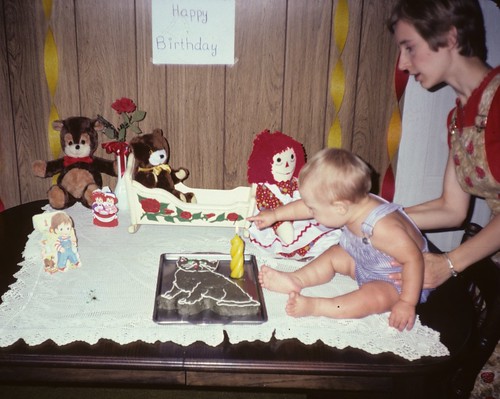
That was me on my first birthday.

You might need to view the large version to see that yes indeed, I was very intent on that fire and probably would have loved to touch it.

Now, Jacob is about 8 months old right now.

I have every reason to believe that if I were to set a lit candle in front of him, he would not focus on it and reach one finger towards it. No, I'm sure he would focus on it and lunge for it with at least two hands. Possibly so suddenly that we'd have trouble keeping him back.

This sure does keep us on our toes.

I also have no doubt that Jacob's first birthday cake will wind up looking like mine did:

096-john-birthday-cake-cropped

Matthew Palmer: The Programmer's Rant

Normally I'd sigquote this sort of thing, but (a) it requires a wider audience than the occasional appearance at the bottom of a drivel e-mail, and (b) it's way too long for that. So I'm going to blog it instead. In response to a comment that programming requires the skill of clairvoyancy, a response was:
Required? It just makes you suffer more. You know up front that they'll accuse you of ducking the question when they ask for a schedule and you give one contingent on specific preconditions. You know ahead of time that they'll change the specifications at the last minute. You no ahead of time that if you object to changes without revised budget and schedule that they'll say you're no a team player. You know ahead of time that they'll blame you even though they signed off on the schedule being contingent on no changes. You know ahead of time that there will be nothing that you can do about any of these. So what does your precognition buy you other than an ulcer or perhaps a coronary?

29 May 2007

Alastair McKinstry: Rare Earth: Why Complex life is uncommon in the Universe by Ward and Brownlee

Rare Earth proposes that Complex life is rare in the Universe. Paradoxically it first points out how abundant simple life is on Earth, in deep ocean vents, several km below the Earths surface, geysers: places that a few decades ago we would have considered completely inhospitable turn out to host life. But, they argue, complex animal and plant life (eucaryotic life) takes special conditions that they argue are probably unique. This book is an excellent starting location for someone learning about the state of the art in astrobiology. It summarises well the myriad sciences involved in why life exists on Earth, from astrophysics (is our place in the Galaxy special), planetary development (why only Earth appears to have life in our Solar system), through aspects of geology and biology that we begin to understand. I well recommend this book to anyone interested in these fields. It also has a sufficient reference section to continue the discussion.

read more »

Tags , , ,

Sven Mueller: blood donations

Hi. Recently, on planet.debian.org, there were quite a few posts relating to blood donations. I must say that I really only live thanks to people donating blood. As many might know, I had a freaking motorcycle accident about 9 years ago. Well, apart from loosing my right leg in the weeks following the accident (irreparable damages to tissues led to amputation), I also lost a lot of blood after the accident. In the six hours following the accident, I got no less than 65 blood infusions (approximately 24-30 litres or 6-8 US gallons). As you can imagine, this is about 3-4 times as much blood as my body normally carries around. At least I can say that I didn’t receive blood without giving some before, though certainly I wasn’t able to give that much blood (I donated about 10 times, approx. 0.45 litres each time). However, due to the medication I now need, I can’t donate blood anymore. Anyhow, I strongly suggest to anyone who is capable of donating blood to do so. And regarding Thijs comment about the frequency of donation and payment: This is highly depending on the area you live in and the organisation who manages the donations. For example, while I donated blood in Dortmund, Germany, I had two options to donate blood: German Red Cross, who would accept a donation every 6 weeks, with free sandwiches, drinks and chocolate but without payment and the city-owned hospital’s blood bank, which allowed a donation every 3 month, with free drinks and a 50DEM (approx. 25EUR/30USD) payment. This sounds as if the city-owned blood bank could attract homeless and junkies who were in for the money, but from my experience, the blood bank did far stricter pre-donation tests (I can’t tell what they did after donation for either organisation) than the red cross. And knowing how much money can be earned with the blood donated, I certainly think that payment is fair, though not strictly necessary. And the blood bank people did a much better job when applying the needle than the red cross people did, which might be because they were used to taking blood from people with bad veins (mostly patients donating blood for themselves for use in a later, planned surgery). But to be fair: I know from other people who had very good experiences with the red cross staff in this respect. Once again: Please donate blood if you can. If you are uncomfortable with the choice you made on your first donation, check out other options for donations. For example, if you almost collapsed when donating blood, try out the plasma donation if it is offered. They usually take the plasma, but give back an equal volume of a substitution, so your circulation isn’t disturbed as much as by taking approx. 0.5 litres from it within an hour. If you feel that the person who applied the needle did a bad job, ask for someone else next time or try a different organisation altogether. cu,
Sven

Russell Coker: Heartbeat version 2.0 CIB STONITH example configuration

Below is a sample script to configure the ssh STONITH agent for the Heartbeat system. STONITH will reboot nodes when things go wrong to restore the integrity of the cluster. The STONITH test program supports the -n option to list parameters and the -l option to list nodes. The following is an example of using it with the ssh agent:
# stonith -t ssh -n
hostlist
# stonith -t ssh hostlist="node-0 node-1" -l
node-0
node-1
The hostlist tuple is the only configuration option for ssh. It is assumed that you have passwordless ssh logins allowed between root on all the nodes in the cluster so the host name list is all that’s needed. The important thing to note about the constraint is that you are constraining the parent of the clones (which in this example has an ID of “DoFencing“) not a clone instance. ssh is the simplest and in many ways least useful method of STONITH, but it’s good for an example as everyone knows it. Once you get ssh going it’ll be trivial to get the other methods working. See below for the script to insert the XML in the CIB.
(more…)

Cameron Dale: May-28-2007: Start of Coding / New Release

The start has finally arrived, today is officially the first day of coding for the 2007 Google Summer of Code. To commemorate this occasion, I have prepared the next release (the second so far) of the software package I am writing for it, DebTorrent. You can download it from the Alioth project. Some of the changes in this release are: You can read detailed instructions for how to download using it in the README file, but the basic idea for using DebTorrent as part of an update is to: This is still an alpha release, but at least it has some more functionality than the previous one. Feel free to test it, but keep in mind that at this early stage most of the torrents will be unseeded.

Eddy Petrișor: po compendiums, just wait a little

It seems that my idea caught Javier's attention and he is already asking to use the scripts for Spanish.

As I have said before, those scripts will work for all languages in due time. Currently, as a test, they are running (or they should starting from tomorrow morning) only for the po material for the languages fr, de, ro and vi.

I intent to make compendiums for po-debconf material, po material[*] separately and another one made from all of them.

Stay tuned. Of course, a proper annoucement on debian-i18n@l.d.o will be done when I'll have something pretty ok.

Meanwhile, unpatient souls can take a peak at the current results

(I just enabled es, just for fun; es is broken, too?!? - or maybe the scripts are doing something wrong :-P - curious people can check, the logs are available.)


[*] which is more tricky since there is a need to merge fr_FR with fr/fr_CA with fr, de_DE with de, de_AT with de... and so on, but zh_TW does not have a zh to be merged with. Also the ll_CC strings should have higher precedence than ll strings.

Ian Haken: GSoC, vlosuts, and other acronyms

Summer of Code officially started today, and as such it was time to start hacking out some code for it. For the past couple of weeks I've been casually looking over an upgrade testing suite for Ubuntu (website, bzr repo). It's fairly sophisticated and does a lot of things that I'd like to bring to Debian. However, after considering it for awhile, I decided that I would prefer to start on the Debian version from scratch. This decision came about for a few reasons:

At any rate, I will probably end up reusing many pieces of the code from that tester.

Updates posted here as progress continues.

28 May 2007

Eric Dorland: The Ghost of Browser Past

Even though Iceweasel has been a reality since November, it seems that there is still some backlash about the rename. Thanks very much to Andrew for jumping to my defense (and also for organizing dinner the last time I was in Mountain View, it was a fun evening). Nothing he said was fundamentally incorrect, but it doesn't paint the full picture.

Once upon a time (somewhere around Firefox 0.9) we happily shipped the fox hugging the globe icon. Then it was pointed out the copyright license on that piece of artwork wasn't DFSG free (and probably wouldn't be free under any reasonable free software or even open content license), so we removed it and used the plain globe icon they shipped in the tarball instead. Eventually the Mozilla Foundation asked us to remove mozilla- from the package name (it was mozilla-firefox at the time) which we did, and the issue of the icon and trademark came up. After explaining why we couldn't ship the icon they gave us permission to continue to use the name. They said they would periodically check up to make sure we weren't shipping crap that would harm the brand. This seemed a fairly good compromise and we accepted.

This situation persisted for a year or so, in both Debian and Ubuntu, but then the Mozilla Corporation (who was now in possession of the trademarks) insisted we couldn't use the name without the non-free logo. They also wanted to approve any changes made before they were uploaded. They are certainly within their rights to do this, but to hear Mr. Fowler tell it we were on a crusade to purge the name from the distro. We were not, we were content with the status quo. I also must take exception with Mr. Fowler stating: "They've persisted, despite the best efforts of the Mozilla project team to engage with the Debian packagers to resolve the situation." I think from the discussion we were trying our best to reach some sort of compromise and the Mozilla side seemed firmly entrenched in their position, not offering us a lot of alternatives. The non-free nature of the logo and the unprecedented "control-freak" review process didn't leave us with a lot of alternatives.

Ubuntu does ship the officially branded version of the Firefox, but they have a weaker set of freedom guidelines than Debian. Whether you think that is good or bad is personal choice, but one of the reasons I like Debian so much is its commitment to free software, even if that means not everything is as easy or expedient as one would like.

With respect to the new name and icon, this is again a matter of personal taste. I do tend to think "Iceweasel" doesn't have that much sex appeal but it was a popular choice and had the benefit of having already been used to refer to a potential name fork of Firefox. And BTW this is really only a name fork, the amount of changes we've actually put in to the tree (beyond renaming ones) are minimal. In fact the last time it was checked, our patches were a strict subset of the patches Ubuntu uses in their Firefox package. So Iceweasel is in fact functionally identical to Firefox with what I like to think are some minor improvements from upstream.

As to your other points, I will admit to being poorly-socialized, but I think most who have met me wouldn't call me self-obsessed, egotistical or a moron.

I think Debian is developing a bit of a bias against it where we're assumed to be a bunch of crazy Free software nuts, and the presumption is anytime we act against the grain we're the ones being unreasonable despite any evidence to the contrary. I don't know how we can fight this perception, but I think we should.

Lars Wirzenius: Random hacks: Static website, with translations, using IkiWiki

One of my current projects involves setting up a website that is translated to at least two languages. For various reasons I wanted to use IkiWiki as the backend, even though the site is static, and does not need the wiki functionality. IkiWiki is, in principle, a wiki engine, but with a difference: it is run off-line, and creates a set of static HTML pages, rather than running every time a page is accessed. This makes it suitable for static websites. For the translation, I wanted to have the following setup: Each page is available in each language, so the pages are named foo.xx.html, with xx being the ISO language code. This also allows HTTP content negotiation to work, if the client asks for the page without the .html suffix. IkiWiki itself does not currently have support for translations. Doing translations by manually editing each page in each language is tiresome and error prone. I wanted to use the gettext approach, where the translations are maintained using .po files. The po4a tool makes this possible: it supports many file formats. English is declared as the original language for this project: all other languages are generated via po4a from the English ones. The page content gets put into foo.xx.mdwn. po4a generates all other language files than English, and these are then fed as input to IkiWiki, which generates the HTML. In summary and horrible ad hoc pseudo-notation:
  • po4a: foo.en.mdwn -> foo.pot
  • cp: foo.pot -> foo.xx.po
  • $EDITOR: update translation in foo.xx.po
  • po4a: foo.en.mdwn + foo.xx.po -> foo.xx.mdwn
  • IkiWiki: foo.*.mdwn -> foo.*.html
This works pretty well, but only for the part of the page that gets put into the content section in the IkiWiki page template (<TMPL_VAR CONTENT>). The page design we have calls for a couple of elements with translatable content outside the content: a logo and a menu/navigation bar. To deal with these, I made a little IkiWiki plugin. The plugin sets a couple of Perl HTML::Template variables, LANG and BASENAME, based on the input file name. If the input name is foo.en.mdwn, the variable get set to en and foo, respectively. The IkiWiki page template then uses the variables to load the right logo for the language of the page being generated. The navigation bar needs further work. Unfortunately, the po4a tools have trouble with the IkiWiki page templates, and can't extract just the menu entries. I ended up doing the navigation bar translation directly in the page template, since it is only a few words anyway.
<li><a href="index.<TMPL_VAR LANG>.html">
<TMPL_IF EN>Home
<TMPL_ELSE FI>Etusivu
</TMPL_IF></a></li>
The "this page in other languages" part of the navigation part looks like this:
<li><a href="<TMPL_VAR BASENAME>.fi.html">suomeksi</a></li>
I made the plugin (my first Perl ever!) available in case anyone else finds it useful. Note that the plugin isn't of much help if you want to maintain a translated wiki, since this all need some Makefile magic to make things smooth. I'm not sure the Makefile is at all optimal, though. We haven't yet gone public with the website, so this setup of mine may well get improvements still.
Christoph Berg: M&ouml;nchengladbach

To also announce it here, I've moved to M nchengladbach to work at credativ, along with several other DDs, Postgresql, and other open source folks. So far work has been pretty cool, and I'm fairly sure it will stay that way. I've been mostly inactive lately because I didn't have internet access at home yet. In fact, I officially still don't, but my provider is so "nice" to let me connect to the DSL line, login in, and then tell me via http that username/password were wrong. But, at this point, port 53/udp is open :) Ganneff was so kind to set up an openvpn gateway for me and forward 22/tcp to my server, so I can ssh, and tunnel everything else I like via that. Sorry to my NMs for any delays lately, I hope to catch up this week. On a different note, I'm playing with ikiwiki and converting my blog, so please excuse if that causes flooding on planet.debian.org (which I of course hope to avoid by keeping the old timestamps, mmmv).

Andrew Pollock: [tech] LVM, you've done it again

The good thing about having kept a blog these last few years, is I have a searchable record of hardware changes. Recently, I noticed a few disk errors on caesar, and I was wondering how old that disk was. I disk some searching, and found via this post that the disk in it was a hand-me-down from when I decommissioned daedalus Mk I. One of the reasons I decommissioned it when I did, was the RAID-1 was exhibiting some strange errors during resynchronisation, and I didn't want to leave the country leaving behind an ageing problematic server with my stuff on it. I'd previously been unable to fault either 120 Gb disk under some light testing with badblocks, so I just reused them, and so around October 2005, I put the larger disk in caesar. So this disk has seen a fair bit of use, originally in daedalus, and then in caesar for another 20 months. It's allowed to fail, it's served me well. Anyway, so I bought a 750 Gb drive a couple of weeks ago, because one thing that I've wanted to do with caesar was do remote backups of daedalus, and there just wasn't enough space to do that, so I went for as big as I could find, and essentially repeated the same trick as last time, to upsize:
  1. Power down, attach new disk as a slave
  2. Boot into single user mode
  3. Unmount everything, remount root read-only
  4. sfdisk -d /dev/hda sfdisk /dev/hdb to copy the partition table (I use a root, swap, LVM, three partition layout)
  5. dd if=/dev/hda1 of=/dev/hdb1 bs=1M to copy the root filesystem to the new disk
  6. mkswap /dev/hdb2 to put the swap signature on what will become the new swap device
  7. cfdisk /dev/hdb and blow away the third partition and recreate it using all of the available space (there's probably a programmatic way of doing this, but hey, it's not exactly hard to do in cfdisk either)
  8. pvcreate /dev/hdb3 to put an LVM signature on the new LVM physical volume
  9. vgextend base /dev/hdb3 to tell LVM there's two disks in the volume group for the time being
  10. Remount the root filesystem read-write
  11. rm /boot/grub/device.map and run /usr/sbin/grub-install /dev/hdb to install GRUB in the MBR of what will become the new boot disk
  12. Power down, swap the disks around so that the new disk is now primary and the old disk is now the slave
  13. Boot into single user mode again, unmount everything except root
  14. pvmove /dev/hdb3 /dev/hda3 to relocate all of the allocated physical extents off the old disk onto the new one
  15. Twiddle thumbs for a couple of hours. Admire artwork on computer's motherboard (did you know Compaq EVO's have a picture of a car on their motherboards? A map of Texas?)
  16. vgreduce base /dev/hdb3 to take the old disk out of the volume group
  17. pvremove /dev/hdb3 to remove the LVM signature from the old disk
  18. Power down and remove the old disk
  19. Reboot into multi-user mode and profit from all the additional free physical extents
I absolutely love how I can do this with LVM, with a minimum of fuss. Last time I did this, I had a kernel panic during the pvmove, but that didn't even stop it, I just rebooted and reran the pvmove and it carried on from the last checkpoint. No such excitement this time. I'm sure Solaris' ZFS does all of this with substantially less manual steps, but hey, I like my Linux :-)

27 May 2007

loldebian - Can I has a RC bug?: Im in ur conference

Im in ur conference snoring my RC off

Im in ur conference. Snoring my RC off

Simon Law (sfllaw)

Toronto, Debconf2, 2002


Jose Carlos Garcia Sogo: reCAPTCHA

Yesterday, I read a Ben Maurer post about reCAPTCHA. It is a free CAPTCHA system but with a hidden feature: you will be used to decipher words that were not correctly recognized by OCR software in text from digitized books, that will be made accesible in an electronic form. Currently, they helping Internet Archive. The idea is to present a couple of words, distorted as usual in CAPTCHAs, once of them yet correctly recognized by OCR software and the other unrecongnized. The CAPTCHA will be resolved in the known one is entered correctly while the unknown one is guessed to be the word entered. To be sure about what has been entered, the unrecognized word will be presented to more users. A nice idea

Alastair McKinstry: Darkness reduces Crime?

Thanks to Apparent Brightness for this snippet:
In the northern Swedish town of vertorne , a dispute between the local council and its electricity distributor has meant that the town has had no streetlighting for many months now (TV programme in Swedish about the controversy here). Today Swedish television and other media report that since the streetlights were switched off, thefts and burglaries have halved. Maybe the thieves are afraid of the dark , says council boss Arne Honkamaa. On the other hand, maybe it s being able to see the night sky that s reducing crime.
Tags ,

26 May 2007

Jeff Bailey: Going through the inbox

Wow - I'm finally starting to go through my email inbox from when Leif was born and starting to say thanks to folks for their support. I read them all at the time, but it's crazy to go back 3 months and see how many people were cheering for us.

There will be more photos up this weekend. =) Recent things for him include creeping off of his blanket on the floor and rolling from his back to his front in bed. It's amazing how the simplest things are "OMG come see this, quickly!" events. =)

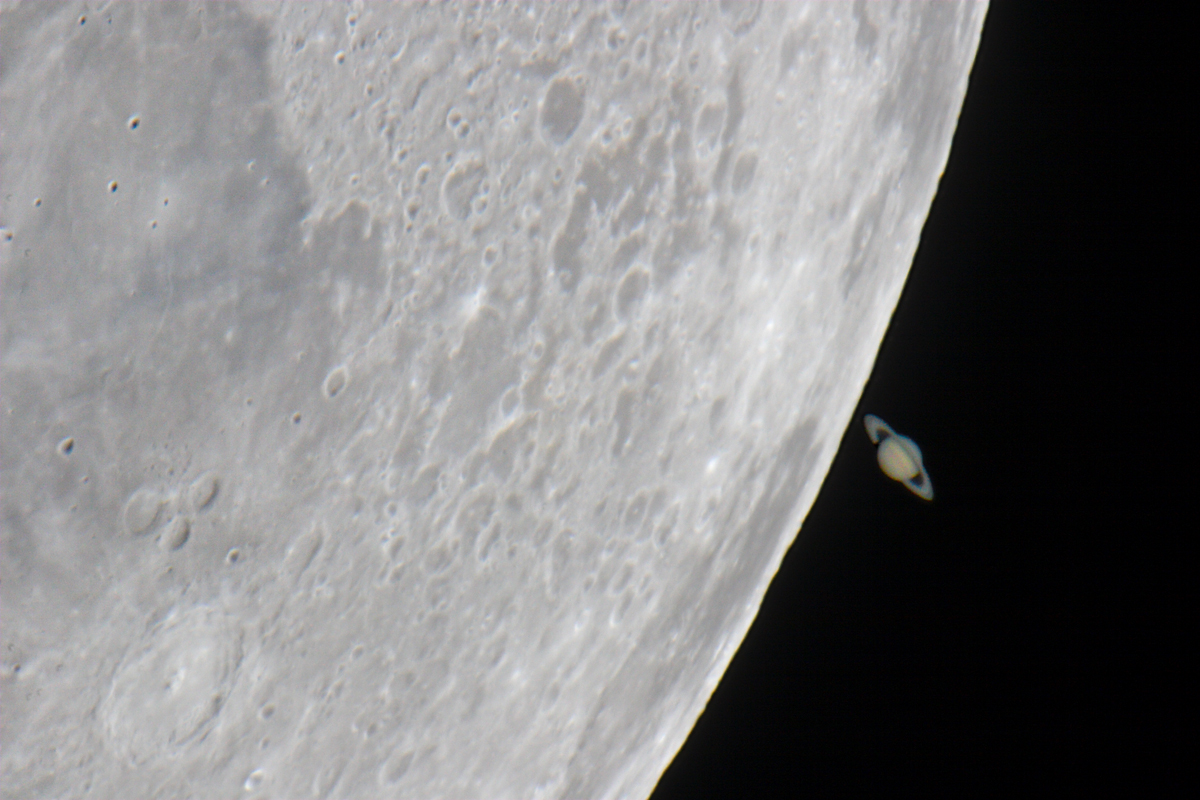
Christian Perrier: Moon and Saturn

Just enjoy: And if you do not already have, I really suggest you to add Jamie Zawinski's RSS feed of "Astronomy Picture Of the Day" to your feed reader (again: (http://www.jwz.org/cheesegrater/RSS/apod.rss).

25 May 2007

Biella Coleman: From Past to Future

In the last two weeks, life has been jam packed, full of movement and travel and a bit of sensory overload. I went to San Francisco to visit friends from the past but also took a trip to NYC to help set things up for the future. Logistically, it certainly was not enjoyable to travel from Edmonton to SF to NYC and back to SF before heading back to Edmonton, which was only made worse by the fact that I was sick flying back from NYC to SF. But taken from an aesthetic point of view, there was something that made sense about going back and forth between cities that in reality connect my past with my future. For it was my time in SF when I did my research that more or less made possible my future life in NYC. I had not been back to SF since I had left in the summer of 2003. My mom’s illness kept me away from the west, pulled instead toward the east. In fact, right before I left SF was also the time when my mother’s condition took a turn for the worse and I started to travel only for work or to visit my mom PR (or Debconf, which is, well, somewhere in between work and play). Because of my relatively long absence and the many memories of the area, my return hit vividly. You may leave a place, but when you return you are reminded of how much a place always leaves some imprint in your body and soul, which resurface upon your return. Feelings and memories of the past flickered to consciousness when my eyes first absorbed the stunningly beautiful (but also vulnerable) geography of the Bay Area: the pale blue sky, the colorful bridges and houses, the ridiculously steep hills, the wispy and thick fog. San Francisco is a city, it seems to me, that has made a Faustian pact with nature. Nature and the geography have not been completely conquered. They seep right into the man-made environment, which is why it is so beautiful here. But it comes at a price measured in ways small and large. Daily battle with the hills is a small reminder and the larger reminders come in the form of terrifying earthquakes. It was really great to see many friends, many of whom I have stayed in constant touch with on IRC, but of course, from time to time, a little flesh and blood goes a lot further than the bits and bytes. While SF does not have a high retention rate (apparently 30% of the population changes every 2 years), many of my techie friends have faithfully remained and other techie friends have since made their way to Bay Area. As much as I find this city amazing, I was reminded of how much I find San Francisco’s weather completely objectionable, disliking it even more than the cold Canadian north (really).The damp cold and constant wind are impossible to escape, only made worse by lousy indoor heating like the cozy heater I already blogged about (and apparently, this is how you can fix it). I am staying in the outer Mission district, which is where I lived for a while, and I do love the slightly warmer temperatures, flatness of the streets, and very colorful murals. While Valencia street has moved up a few notches on the gentrification scale, it does not seem out of control. And of course, the city is brimming with a particular mixture of youth and tech. In the many coffee shops, youthful faces are illuminated by Shiny New Laptops and it seems like at least every third person you meet works in the technology industry. I had not planned on heading out to the east coast but since I was given the option of seeing a couple of apartments courtesy of NYU housing, I decided it was well worth my while to make the cross country trip, given that it may be my future home for many years. Spring in NYC is one of its more flattering incarnations for there is a slight touch of nature that drapes the city, a touch that is absent during the height of the summer when the hot concrete jungle overtakes the flowers and trees. Heading to NYC briefly also reminded me that moving to NYC feels like a really BIG move. And not because the distance between Edmonton and NYC is 3900 KM but because of what it represents. It sort of dawned on me recently that becoming an assistant professor is not unlike the grueling period real doctors go through once they graduate medical school: residency. Even though by the time you start your job, you have been bequeathed with the title of a doctor, and are prepared to teach, advise, etc., in reality you are only half-baked and there is more cooking for you to go under. You need to go through a few more years of somewhat intense training to seal the deal and that is what is awaiting me starting this fall.

Alastair McKinstry: Jets seen from a Brown Dwarf Star

Artists impression of Jets from Brown Dwarf
Outflows have been discovered from a Brown Dwarf star, 2MASS1207-3932, the lightest yet. Found by Emma Whelan and Tom Ray of DIAS and others , using the ESO's Very Large Telescope (VLT), this is the first time that Jets have been seen from an astronomical object as small as this. The Brown Dwarf is 2MASS1207-3932, a 24-Jupiter mass 'near star'. Jets of material are a common feature in astrophysics, seen from Galaxies and young stars, but this is the first time they have been seen in something this small. It opens the possibility of similar outflows from smaller objects, such as giant planets. The brown dwarf 2MASS1207-3932 is full of surprises. Its companion, a 5 Jupiter-mass giant, was the first confirmed exoplanet for which astronomers could obtain an image, thereby opening a new field of research - the direct detection of alien worlds. It was then later found that the brown dwarf has a disc surrounding it, not unlike very young stars. Tags , ,

Decklin Foster: Dear Lazyweb

I just wasted half an hour (mostly finding a dead motherboard and bending wire) making one of these: http://www.rupamsunyata.org/~decklin/blogfiles/20060622/usbport.jpg I then threw out the cap to my USB storage device. Why doesn t anybody sell them? Why are the holes for your keyring always on the part you use (thus weighing it down, particularly if it's sticking out of the front of a tower) and not the part that comes off? It's not easy to unplug by accident (I did squeeze it a bit removing some of the metal). I think I m just not looking in the right place. I can t be the first person to have been annoyed with this. Lazyweb, please tell me where to go. (Yes, the only thing I use it for is my SSH key.)

Next.

Previous.