Search Results: "tim"

25 January 2012

Pietro Abate: new thinkpad x220

This summer my beloved thinkpad x301 died in a cloud of smoke. It was exactly 3 years and 20 days old while my warranty was valid only for 3 years. Now, don't tell me this is a coincidence. Anyway. After about 5 months, I finally managed to convince my employer to get me a new thinkpad, the x220. My specs includes a 128G SSD , 4G of RAM, 2.4Gz processor, camera and fingerprint reader. It's a pity that the x300 series is not in production anymore. They were light, with a solid battery and a large screen. The X1 just don't cut it. Even though it can be consider the successor of the x300, its battery life is just not enough for my needs. On the other hand, the x220 is a very nice machine : the screen is a bit smaller then the X300, but it is light, with a very powerful processor, good battery and it feels very solid. In my opinion lenovo should have packed the new hw of the x220 in the chassis of the x300, maybe with small compromise on the battery life (I got the big battery and I can squeeze almost 7 hs with a single charge) but clearly this was not a good business choice... Installing debian on this laptop is not immediate because none of the official debian installers are shipped with a recent kernel (as in 3.x series). Since with the official debian installer I cannot have neither the driver for the Ethernet card or the driver for the wirelles card, I opted to use a custom installer built by kmuto (http://kmuto.jp/debian/d-i/ ) . Using this installer the ethernet card is recognized immediately and it's easy to proceed with the installation as usual. Another option would have been to add the binary blog for the wireless chip, but apparently the deb installer supports only WEP auth, while all my access point are WPA. I didn't spend too much time on the wireless setup, so it might well be that is indeed possible to install using a WPA access point. Last time I installed a laptop, I used the automatic partition option to have lvm on top of a lucks encrypted partition, only to discover later that the default dimensions of the partitions were a bit too small for me. For example, by default the boot partition is only 256Mb. This is plenty if you want to have only one kernel image installed at each given time, but if you want more then one kernel, memtest and for example a grml rescue iso, it's easy to run out of space. So I proceed to manually partition the disc creating a boot partition of 512M, and using the rest as a luks encrypted device with lvm on top and 3 logical volumes : sys (15G), swap (4G) and home (the rest). For my daily use having 15G on my laptop for /usr, /var, etc should more the enough... Next step was to install the system. Since in recent times I got extremely pissed off with gnome 3, I've decided to dump it completely and go back to awesome. But since awesome all by itself is a bit sad, I paired it up with xfce. Everything works, except the automount, and I'm still trying to figure out how to make it work. Apparently is a consolkit problem... I'll write another post about the xfce4 + awsome setup soon... Today I've also started playing with the finger print reader. It seems working, but I haven't managed yet to use it in conjunction with pam for authentication ... more to come. And... On last closing remark : during the last 5 months I've used a dell latitude e6410 ... Gosh. I feel I'm on anther planet. The keyboard of a thinkpad give you pleasure, not pain, from 2 to 4G of RAM is a big jump and from a conventional HD to a SSD ... well... it seems I'm flyinggggg :) I've the impression my productivity just went up 50% !!! If you work with your laptop everyday get a good laptop. It is well worth the investment ...

Russell Coker: SE Linux Status in Debian 2012-01

Since my last SE Linux in Debian status report [1] there have been some significant changes. Policy Last year I reported that the policy wasn t very usable, on the 18th of January I uploaded version 2:2.20110726-2 of the policy packages that fixes many bugs. The policy should now be usable by most people for desktop operations and as a server. Part of the delay was that I wanted to include support for systemd, but as my work on systemd proceeded slowly and others didn t contribute policy I could use I gave up and just released it. Systemd is still a priority for me and I plan to use it on all my systems when Wheezy is released. Kernel Some time between Debian kernel 3.0.0-2 and 3.1.0-1 support for an upstream change to the security module configuration was incorporated. Instead of using selinux=1 on the kernel command line to enable SE Linux support the kernel option is security=selinux. This change allows people to boot with security=tomoyo or security=apparmor if they wish. No support for Smack though. As the kernel silently ignores command line parameters that it doesn t understand so there is no harm in having both selinux=1 and security=selinux on both older and newer kernels. So version 0.5.0 of selinux-basics now adds both kernel command-line options to GRUB configuration when selinux-activate is run. Also when the package is upgraded it will search for selinux=1 in the GRUB configuration and if it s there it will add security=selinux. This will give users the functionality that they expect, systems which have SE Linux activated will keep running SE Linux after a kernel upgrade or downgrade! Prior to updating selinux-basics systems running Debian/Unstable won t work with SE Linux. As an aside the postinst file for selinux-basics was last changed in 2006 (thanks Erich Schubert). This package is part of the new design of SE Linux in Debian and some bits of it haven t needed to be changed for 6 years! SE Linux isn t a new thing, it s been in production for a long time. Audit While the audit daemon isn t strictly a part of SE Linux (each can be used without the other) it seems that most of the time they are used together (in Debian at least). I have prepared a NMU of the new upstream version of audit and uploaded it to delayed/7. I want to get everything related to SE Linux up to date or at least with comparable versions to Fedora. Also I sent some of the Debian patches for the auditd upstream which should reduce the maintenance effort in future. Libraries There have been some NMUs of libraries that are part of SE Linux. Due to a combination of having confidence in the people doing the NMUs and not having much spare time I have let them go through without review. I m sure that I will notice soon enough if they don t work, my test systems exercise enough SE Linux functionality that it would be difficult to break things without me noticing. Play Machine I am now preparing a new SE Linux Play Machine running Debian/Unstable. I wore my Play Machine shirt at LCA so I ve got to get one going again soon. This is a good exercise of the strict features of SE Linux policy, I ve found some bugs which need to be fixed. Running Play Machines really helps improve the overall quality of SE Linux. Related posts:
  1. Status of SE Linux in Debian LCA 2009 This morning I gave a talk at the Security mini-conf...
  2. SE Linux in Debian I have now got a Debian Xen domU running the...
  3. Debian SE Linux Status At the moment I ve got more time to work on...

24 January 2012

James Morrison: Appengine

I've been working with appengine for a few months now. I've managed to find out the hard way that appcfg.py rollback is useless. I've learned to create a git branch for each refactoring I start on. The git branch also includes a new app version for the branch. When push all my changes to my live site, I upload one last time to the new app. Merge my branch into the master then change the live version from the old one to the new one.

I haven't learned how this work flow translates to having multiple developers. Hopefully, it is simple enough that other people can follow.

I also use make since it's an easy way to automate tasks. I hear redo is good, but for python, I'm not really compiling anything, I'm simply writing shell scripts and make is a great shell script dispatcher.

Tim Retout: Lenovo X121e 3G with ModemManager

Recently, I tried to get 3G working on my Lenovo ThinkPad X121e - it has an Ericsson F5521gw mobile broadband card. This is supported by ModemManager, but all I got were unknown errors (276 and 272). Searching online, there were very few results (hence this short note) - just previous unrelated Linux kernel issues. I found someone with the same problem on Fedora, but no solution, so I started off by filing a bug report with Debian. Of course, then I found the Arch user who had filed the same bug on Launchpad, and had discovered that resetting the BIOS to its default settings fixes the issue. If only that page mentioned the keywords "Ericsson", or "Lenovo"... So after all that, it was just some weird BIOS issue. I hate hardware.

Michal Čihař: It's too early for GSoC 2012

It looks like with start of the new year, people started to ask for phpMyAdmin's projects for GSoC 2012. Given that we have no information whether there will be Google Summer of Code this year and whether we will be chosen to participate, these questions look quite premature. On the other side you can start contributing any time and if you are already known in the community, you might have better chance being accepted. So forget speaking about hypothetical GSoC projects for now and start fixing some bugs, which is something much more needed right now (given that 3.5 is in alpha state). If you are looking for more information, we have basic facts for developers on our website, there is also a wiki page mentioning some tasks for junior developers.

Filed under: English Phpmyadmin 0 comments Flattr this!

Charles Plessy: Strange Megumi

It is since two days that all my emails, @debian.org included, are in parked somewhere between the sender and my MX, as my server broke at a moment where I strictly had no time (dealine for a grant application). It is an OpenRD Ultimate with a second hand SSD. I was quite happy to have an ARM system available to test some packages like T-COFFEE, but it looks like I will have to do without. Apparently, the machine permanently reboots. I did not manage to access to the USB serial port; there are no 10 seconds where the USB port is not disconnected / reconnected. Both ethernet port LEDs blink together synchronously with the disconnections. Removing the drive did not solve the problem. The SSD itself is fine, and I did not find in the logs hints for software problems. Strange coincidence, the last log file that was modified is daemon.log, which indicates the connection of so-called megumi-PC to our unprotected, but to my knowledge never visited, wireless network. After this, nothing.

Gunnar Wolf: BugCon friends, are you trying to scare away 50%+ of the target audience?

You are scaring away much more than that. I just came across an invitation for BugCon 2012. BugCon is a Mexican conference devoted to computer security I cannot comment on its level or value because, although it's a topic that has long interested me, I must recognize each day I feel less of an expert, nowadays finding myself at the level of a "sysadmin who tries not to be too dumb for his own job security". Oh, and also because it would be completely off-topic for this post. If you look at Vendetta's (the main organizer) blog post, it will probably give you the impression that the conference is just an excuse for the afterparty: Lets go see some b00bs! Do you think your fellow female hackers will have any interest in joining a bunch of sex-starved, hormone-infested teenagers who only want to pwn a website and grab more pr0n? Do you think females will feel welcome (or even mildly safe) between you? I would not think so. And I also think you are alienating any professional who might have any interest in joining your community, be it as a member, as a mentor, or whatnot. I cannot right now do a coherent post on this topic, but I can reference you to what I have seen (and read) over the last almost 10 years, when the issue was first brought up to our attention. I am very glad to see that, at least in the Free Software area, there has been a real change of mindset. I hope you are in time to think about it and rectify. Oh, and not the description of an incident, but a very interesting and thoughtful take on this: [pdf] Interesting analysis by Hannah Wallach on the numbers and motivations of women in Free Software groups. I don't know if Hannah has published this in article form, but many interesting points can be understood by looking at the presentation. My good friend Vendetta: I don't mean this post (longer than what I originally intended) as a way to say you and the conference you are organizing for the third year (IIRC) already is unprofessional or targetted to pimply teenagers. I know the work you have put in it. I hope you see the points I'm trying to drive You are of course free to have whatever afterparty you have. But, if as the main organizer, you are giving the images of nice chicks at Hooters more weight and relevance than to the conference itself... you are doing yourself a disservice. I hope you can rectify it, and make BugCon attractive to hacker women as well.

Raphaël Hertzog: Answering questions of Debian users on various support channels

When you start your journey with Debian, you tend to have lots of questions. You ll find some answers in various documentations but there always are remaining questions. Those can be asked on various support channels: Those are the places where you can also start your journey as a Debian contributor instead of asking questions, you just have to answer questions of other users! Let me share some advice if you want to do some user support. User support is difficult It s not always an easy task. Some users are more skilled than others and there might be difficulties related to the language, English is not always the native language of a user who asks a question in English. Be respectful and courteous when you answer user questions, even if they made mistakes. You re effectively representing Debian and you should give out a good image of the project. If you don t have the patience or the time needed to do a good answer, don t reply and let someone else take care of this user. I invite you to read (and follow!) the Debian Community Guidelines. Avoid RTFM answers, instead you should show the users how they could have found (alone) the solution to their problem. We don t want to scare people away, we want to grow our community. But it s also rewarding In some cases, the problem reported by the user will be a real problem and you ll have an opportunity to file a good bug report, thus helping to improve Debian for everybody. Often, you don t even have the answer to the user s question. But you re more skilled than him/her to do researches on the web, or you know of a good documentation that might contain the relevant bits of information, in any case you re doing further research to help this user. In this process, you also grow your own skills since you re learning stuff that you didn t know yet. At least that s how I learned many things during my first year in the Debian community there s no reason why you couldn t learn lots of stuff that way, in particular if you also read the answers of other skilled people on those channels (it takes a bit of training to learn who are the skilled people though). I still believe that doing user support is one of the best ways to join the Debian community and to start contributing. It helps you to grow your skills, and to slowly progress from average user to advanced user .
If you want to start contributing to Debian, click here to subscribe to my newsletter and get future updates for new contributors. You can also follow me on Identi.ca, Google+, Twitter and Facebook.

5 comments Liked this article? Click here. My blog is Flattr-enabled.

C.J. Adams-Collier: SOPA response from Representative Rick Larsen, WA 2nd District

Below is an email I received from Representative Rick Larsen s office. I don t recall ever having identifying myself as PVT Adams-Collier in any communications with his office, though I could have done so at some point. Maybe. I also don t recall contacting his office directly concerning SOPA. I blogged a few things and mentioned him on facebook a couple of times, though. It is good to know that I don t always have to go directly to my representative to have my voice heard. For those playing along at home, I think the best course of action would be for producers to perform searches for their work on peer-to-peer file sharing search engines such as http://thepiratebay.org/ and http://scrapetorrent.com/. If producers find that their work is being distributed in a way which is contrary to their wishes, I advise the producer or their agent to contact the individuals operating seeds with high share ratio in order to ensure that they perform AAA before accepting new peers into the swarm. Those seed operators who refuse to negotiate reasonable AAA terms should be issued C&D orders, and legal action should be taken, should they fail to comply with the request. [edit 2012-01-24T05:27:44] It would probably be wise to impose a minimum fee of $5 for seed operators per content package they distribute. This will encourage them to pass this fee on to their subscribers in a legal and responsible manner. I recommend that it be distributed in the same fair and concise way in which the tickets are distributed for toll violations on the Tacoma Narrows Bridge. Ask me how I know. This will provide content producers a valuable distribution channel which is closely in touch with the consumers of the producers media. I believe that if the producer puts forth effort in good faith to develop and maintain relationships with key distribution points, we will see a situation where both content producers and consumers get what they want. The authorization phase of the AAA system could charge a Payment Card Industry or bitcoin account a reasonable fee. My employer produces content delivery appliances which would serve quite well the role of AAA gateway. For an example of this use case in action (sans account billing), I recommend contacting seeding participants of the Debian CD/DVD swarms. I will proxy such requests if there is interest. An alternative might be a tool developed for the online gaming community with a strange name: http://www.evenbalance.com/

Dear Pvt. Adams-Collier: Thank you for contacting me about the Stop Online Piracy Act (SOPA) and the Protect IP Act (PIPA). I wanted to update you on my views on this important issue. I am opposed to SOPA and PIPA in their current forms. I believe that these bills create unacceptable threats to free speech and free access to the internet. I have heard from many of you in Northwest Washington who are deeply concerned about the potential impacts of SOPA and PIPA. Online piracy is a serious problem that costs U.S. businesses billions of dollars. Government agencies must be empowered to stop and prosecute intellectual property thieves. But in doing so we cannot undermine freedom of speech or jeopardize the free flow of information on the internet. I will work with my colleagues to see that any final anti-online piracy legislation protects the internet and does not encroach on free speech rights. Please be assured that I will keep your thoughts in mind should I have the opportunity to vote on any legislation that would impact online piracy and internet freedom on the House floor. Again, thank you for contacting me. I encourage you to contact me in the future about this or any other issue of importance to you. Sincerely, Rick Larsen
United States Representative
Washington State, 2nd District
[edit 2012-01-24T05:28:09] Sincerely, C.J. Adams-Collier
San Juan County Democratic Central Committee (*whew*) PCO
San Juan County, Washington State, Orcas 3 District

23 January 2012

Neil Williams: Emdebian Grip automated dependency resolution

The script isn't fully automated yet, I'm running it manually and watching for errors, but I do now have a simple script (~100 lines of perl) which runs edos-debcheck against each of the supported Emdebian architectures for unstable-grip and picks out those packages which are missing from the subset of packages which Emdebian monitors for Grip.

I was hoping to make these scripts into a normal Debian package but there are some limitations in that the scripts need to assume various pieces of Debian infrastructure. e.g. I started off using rsync to pull in the Packages files (along with Release and Sources) because apt has annoying behaviours with multiple architectures. (Emdebian Grip processes 7 architectures simultaneously on blavet.debian.org). Peter Palfrader kindly arranged for a local mirror to be available and now the entire Packages processing can be done using symlinks. Much, much better.

Actual package movement data comes directly from dak via projectb - something else which makes packaging these scripts for use on non debian.org boxes a bit hard.

Once again, I am indebted to the EDOS team (please, please keep working on edos-debcheck - it hasn't had uploads recently) because I tried to get this working with germinate but failed. (Colin - I'll be looking to borrow some of your time to work out what was going wrong.)

The dependency resolution script now means that I can meet release team requirements that when foo is updated in sid to depend on libbar2 but Emdebian Grip only has libbar1, the scripts will automatically pick up libbar2 and add it to Emdebian Grip. The current sid version gets pulled in and (the theory goes) will migrate into testing-grip as an almost automatically valid candidate. Processing of the dependency can happen within hours of the updated version of foo arriving in Emdebian Grip but as long as it happens within a few days I think everyone will be fine with it.

I've got a sync script too which can periodically run across the entire suite and check for packages which have slipped the net. I'll have to see how often that needs to run but once a week doesn't sound too painful.

Processing for Emdebian Grip is very fast. Most of the time is taken uploading:

2012-01-23 22:24:42 add sid-grip deb main armhf libfltk-images1.3 1.3.0-5em1
2012-01-23 22:24:52 add sid-grip deb main i386 libfltk-images1.3 1.3.0-5em1
2012-01-23 22:25:07 add sid-grip deb main mips libfltk-images1.3 1.3.0-5em1
2012-01-23 22:25:25 add sid-grip deb main powerpc libfltk-images1.3 1.3.0-5em1
2012-01-23 22:26:00 add sid-grip deb main amd64 libstdc++6-4.5-dev 4.5.3-12em1
2012-01-23 22:26:34 add sid-grip deb main armel libstdc++6-4.5-dev 4.5.3-12em1


(It was a lot longer, comparatively, when I was having to rsync and then dget instead of just read from the local filesystem.)

I've also been working on an init script which will gradually work through the subset of packages by order of Priority - approximately what a new architecture (like armhf) would do. Note that Emdebian Grip supports armhf already. The only slight concern is whether the init script needs to be throttled back to not flood the queues with hundreds of uploads an hour (which it could end up doing, at least for the first 24 hours).

Logs of package movements are available: http://www.emdebian.org/grip/logs.php

Packages can be searched too: http://www.emdebian.org/grip/search.php

More on Emdebian Integration on the Debian wiki: http://wiki.debian.org/EmdebianIntegration

Now all I need is a fix for #655919 :-) FTP team?

22 January 2012

Jon Dowland: The Crying Tree

Somebody bought The Crying Tree by Naseem Rakha for Sarah as a present and she asked me to read it so we could talk about it, so I did. It's a novel about a family tragedy, Southern-state U.S.A. and the death penalty. A little boy is shot dead, a man is arrested for the crime and faces the death penalty. The book chronicles what happens to the family and to the killer during the 19 years or so that passes before the execution takes place. The book could be accused of having an anti-capital punishment agenda, but I have no problem with that. At least until about half-way through the book, the plot and happenings follow the synopsis with little in the way of surprise, but then there's a twist. I felt that the twist diminished the message of the book. Without trying to spoil what happens, I felt that you didn't need the core details of the story to be varied or expanded upon or U-turned to push that agenda. In my opinion, it's perfectly possible for someone to construct a story about a killer who faces death, who was unambiguously guilty of the crime they are charged with, and still leave the reader feeling remorse for the killer, and questioning the justice meted out. In fact I thought Rakha was doing a fine job of just that. However, a twist (or twists) occur, and the facts are called into question, and so you ask even further questions about the practise of killing criminals, in my view redundantly. It's a good book and worth a read, regardless of what your position is on the issue. It does a great job of describing the unbearable pain of losing a child, but also of the power of forgiveness for the victims.
Jon Dowland: bugs

[pic]
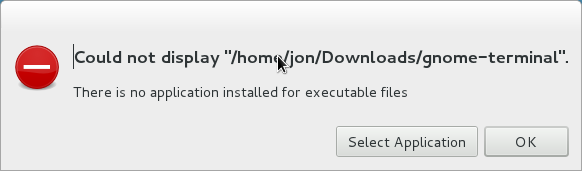
Bugs I've hit in GNOME 3, in the last 5 minutes: I didn't set out to bug-hunt this morning, I'm actually trying to get some work done. Whilst this is a particularly bad case of stacked-bugs, it's unfortunately, pretty representative of what it's like to try and use a Linux desktop at the moment. Every day I go through a similar experience. I've just had to give up and log out and back in again. The shell path bug above has re-surfaced in a new session. Great. I'm waiting on a delayed laptop at work. I'm very tempted to cancel the order and just use a Mac Air instead (we have one spare). It seems I'm walking the inevitable path of F/OSS desktop frustration and the end for many people seems to be the Mac perhaps I should spare myself the pain of the journey. In the mean time, It's bye-bye to GNOME and off to Xfce for me.

21 January 2012

Joey Hess: olduse.net 1982

Hard to believe I've consumed all of 1981's Usenet posts now on olduse.net, and it's been running for 7 months already.
Last night, there was a "very long" post, describing nearly every node on usenet in 1982. There had been a warning about this post the day before, since it would take many sites half an hour to download at 300 baud. It was handily formatted as a shell script, which created per-node files. So, I ran this code nobody has run since 1982. It worked. I got files. I tossed them on the olduse.net wiki, and used some ikiwiki code TOVA contracted me to write just a few months ago, to make clickable links on my usenet map. usenet map The map data was contributed in another post a while back. By 1982, usenet is getting nearly impossible to map with 1982 technology of ascii art. I enjoyed throwing graphviz, git, wikis, and the web at it. So, we have a collaboration across time, me and "Mark" and a lot of people who described their usenet nodes and piles of technology that make creating a mashup easy. Awesome!
I blog about stuff I find on the olduse.net blog. It's an open blog; Koldfront also blogs there, and we welcome other bloggers. Some of the highlights for me have included: As the space shuttle program is winding down, reading the excitement about the first shuttle flights, and the play-by-play coverage of a launch, posted to net.columbia by a high school student borrowing his dad's account. (A usegroup name that's hard to read without remembering its fate). The announcements of the Motorola M68k, the IBM PC, and the CD-ROM. world ipv6 launch Reading the TCP-IP digest, and Postel's plans for launching IPv4 soon, while the world IPv6 launch is being planned now. (The nay-sayers are especially fun to read. Including the guy who was concerned about the address space size, in 1981!) Learning that nethack ascention tales have a history streching back 30 years, to rogue, and that the stories back then had much the same flavor as they do today. Various celebrity sightings. Dennis Ritchie teaching C and Unix. Bill Joy talking vi. RMS talking .. nuclear politics? The general development of usenet. B-news being rolled out, groups proliferating, many first inklings of what will be major problems and developments in 5 or 10 years. A shift in tone is already apparent, by now usenet is not only about announcements, there are already some flames. oldusenet in a period terminal Still 9 years to go!

Andrew Pollock: [debian] Bits from the ISC DHCP Maintainer

I really should write these a bit more often. Wow, I can't believe it was over 4 years ago that I started having occasional face to face meetings with the ISC DHCP folks. The entire ISC DHCP team (of 5) was in town for an all-hands meeting, and Larissa Shapiro, the Product Manager for DHCP (and BIND) suggested it would be a good opportunity for another catch up. Given the current (bad) state of DHCP 4.2 in unstable, I thought this was an excellent idea, and so we all had lunch on Tuesday. I pretty much set the agenda, and it was The general state of 4.2.2 in Debian In a nutshell, it's a bit of a mess. We've got release critical bugs, build failures, the whole cat and kaboodle. It makes me very sad, because 4.2.2 was the first 4.2 series that I had a chance to upload, and I was very excited to do so, because it contains the hotly desired LDAP patches merged upstream. Unfortunately, it's also got the beginnings of the BIND/DHCP merger that's going to be BIND 10, and that is all a bit of a mess. It's directly responsible for the kFreeBSD FTBFS and the introduction of the RFCs, which are both keeping 4.2.2 out of testing. I gave the ISC folks a high-level overview of how Debian development works, and the normal progression of packages from unstable to testing to stable, and the release process and whatnot, and impressed upon them the implications of the current release critical bugs. I also showed them how Ubuntu development fitted into the picture. Finally, I showed them the popcon statistics for DHCP. I think they found it useful. FTBFS issues on kFreeBSD This was a good segue to #643569. The issue is actually with the embedded BIND sources. I'd already forwarded this bug upstream when it first happened, but I don't know what had happened to it. They seemed to act as if this was the first they'd heard of it. I'm hoping that they can get this fixed in 4.2.3, which is due around the end of the quarter. Embedded BIND sources Since we were already talking about an issue caused by the embedded BIND sources, we moved on to talking about #645760 and the existence of the embedded BIND sources in general. It should be pretty straightforward for them to strip the RFCs out of the source. They've already done it in the past for the DHCP sources, so I'm also hopeful that this will get resolved in 4.2.3. The issue of the embedded BIND sources is apparently a bit more complicated, although the day before our meeting, Michael Gilbert filed #643569 and #645760, so I hope that the ISC folks can take a look at these patches and see if it's feasible to adopt them. Patches for GNU/Hurd Finally we talked about #616290, which I know is near and dear to the GNU/Hurd porters' hearts. We probably spent the most time talking about this. The DHCP developers have concerns about accepting a patch for an OS that they do absolutely no testing on, and also questioned the viability of the OS in general. They stressed that they're fairly thin in numbers relative to what they have on their plate to achieve this year, and so pushed back pretty firmly on accepting the current patch. I relayed the frustration that the Hurd folks were having about a lack of dialogue around the patch (most of the interaction has been via an ISC support person). There was actually a bit of a split between the developers, with one of them appreciating that the Hurd was unlikely to go anywhere as a platform without a working DHCP client, so in some regards, they were condemning the platform by taking the position they were taking. They're going to go away and take another look at the patch and try to come back with some actionable feedback on what needs to change to make it more acceptable to them, so we'll see what comes of this. I'm not particularly optimistic that anything acceptable to the GNU/Hurd folks is likely to happen any time soon, but maybe if the patch gets cleaned up a bit more, I'll just bite the bullet and start applying it to the Debian package. BIND 10 One of the guys is more involved in BIND 10 than DHCP, and asked if I could help out with the packaging of a build dependency for BIND 10. It seemed like #578387 was languishing so I offered to pick it up. I've not packaged a library before, mainly because the library packaging guide has scared me off it (I feel I lack the deep C fu that seems necessary), but I figured that this would be a good learning opportunity, so I'm going to dive in.

Steve Kemp: So mega-upload is gone

So the site http://megaupload.com/ has been taken offline, amidst allegations of knowingly conducting in piracy. There are probably a lot of legitimate users who have lost access to their uploaded files, even if they were offsite backups you can imagine a user owning a website which now has a million dead-links. This reminds me of a conversation I overheard on Jon Dowlands blog - the summary is that he'd written a (useful) tool to extract attachments from Maildir folders and was wondering how to store and access those attachments. The upshot seemed to be magical URLs of the form:
  • https://file.example.com/sha1/509c2fe2eba509e93987c3024a74d74583c274bd
The comments covered an alternative which was hash:///sha1/xxxxxxxxxxxxxxxx, which then becomes close to the magnet:// schema. I've not yet thought things through, but I can't help thinking that with the redundency already present in the internet we should be looking at non-server-specific links. Yes there are times right now when you might want to address a specific file on a specific server - but otherwise? Wouldn't it be nice if you could just access a file from "anywhere" which happened to have the right contents? Already my nonporn-but-definitely-adult-site makes its images available as /img/$md5sum.jpg - and similarly the storage at the back-end of my random image upload site uses SHA1 hashes to store the actual files. To make this more complete what we need is something that crawls the internet to find files by hash; then add support in browsers. Obviously this must be async and could introduce timing issues, but fundamentally it seems like a reasonable approach to the problem of a single host going offline. (Consider what happens if imgur.com disappears. All those links would die, yet 99% of the images would still be available somewhere.) I'm tempted to suggest microformat format but I need to consider the matter. Right now I'm going to immediately update my current image hosts to use, at the very least:
 <a href="/foo" rel="sha1:xxxxx md5sum:xxxx">
  <img src="foo.jpg" alt="img name">
 </a>
The unfortunate thing is you cannot have a 'rel="xx"' attribute for an image. So you either have to encode it in the parent link, or add it to the alt attribute which is suboptimal. ObQuote: "Now, they tell me I paid my debt to society." - Oceans Eleven (2001)

20 January 2012

Benjamin Mako Hill: Internet Immortality

Kim Jong-Il is gone. That said, he continues to live on, looking at things, on the popular blog Kim Jong-Il Looking At Things which continues to be updated with new content from the archives. It is now joined by Kim Jong-Un Looking At Things. I think I agree with Jo o Rocha, creator of the original, that the younger Kim seems to be missing some hard-to-pin-down quality that made the original work well.

Enrico Zini: Debtags for derivative distributions

Debtags for derivative distributions Sometimes I do cool stuff and I forget to announce it. Ok, so I recently announced a new Debtags website. I forgot to say in the announcement that the new website does not only know of Debian packages: see for example this page, at the very bottom it says: "Distributions: oneiric, precise, sid, testing". This means that already, here and now, debtags.debian.net can be used to tag packages from both Debian and Ubuntu, and can easily be extended to cover the entire Debian ecosystem. If you are a package maintainer, you will notice that your maintainer page shows your packages from everywhere. If you want to filter things a bit, for example hide obsolete packages from an old Debian Stable or Ubuntu LTS, just click on the "Settings" link on the top right to configure the page. How it works The magic is in this mergepackages script, which is run daily, and exports merged Packages files at dde.debian.net. The debtags.debian.net concept of Packages and Sources files are just those all-merged.gz and all-merged-sources.gz. The merging is simple: that rebuild script processes files in order, and the first version of a package that is found is chosen as the base for the one that will go in the merged Packages file. Some fields like "Description" are just taken from this pivot package, others like Architecture or dependencies are merged into it. It's arbitrary, but works for me: the result has all the packages with all their possible architectures and dependencies, and is ready to be indexed with apt-xapian-index. At the moment I pull data from Debian and Ubuntu, but you can see that the script can easily be extended to pull data from any Debian-style ftp archive, so any Debian derivative can go in. I've already started negotiations with the Derivatives Census on how to add any Debian derivative and keep the list up to date. How to export tags for your own distribution I'll use Ubuntu as an example since the data is already available. The way you add Debtags to the Ubuntu packages file is just this one:
  1. Get the full reviewed tag database
  2. Optionally filter out those packages that you are not interested in
  3. Tweak this script to build an overrides file.
  4. Give the overrides file to your favourite ftp archive building tool.
The make-overrides is a bit rusty: if you improve it, please send me your changes. That is it, nothing else required, no excuses, it's ready, here, now! Hitches and gotchas This merged Packages file is a bit of a hack, and suffers from name conflicts across distributions, where two different softwares are packaged in two different distributions with the same name. Ideally, name conflicts should not happen: if a derivative decided to package kate and call it gedit, they deserve to have it tagged uitoolkit::gtk. I think it's rather important that the whole Debian ecosystem works as much as possible with a single package namespace. However, that reasoning fails if you take time into account: packages get renamed, like git and chromium, and may mean completely different things, for example, if you compare Debian Stable with Debian Sid. This last is a problem caused by debtags only working with package names but not package versions. I have a strategy in mind based on being able to override the stable tag database using headers in debian/control; it still needs some details sorted out, but I'm confident we will be able to address these issues properly soon enough. Why stop at the Debian ecosystem? Why indeed. I'm clearly trying to use FOSDEM, and the CrossDistribution devroom as the venue to discuss just that.

Alexander Reichle-Schmehl: Release Critical Bug report for Week 03

The bug webinterface of the Ultimate Debian Database currently knows about the following release critical bugs:
In Total:1563
Affecting Wheezy:928
Wheezy only:192
Remaining to be fixed in Wheezy:736
Of these 736 bugs, the following tags are set:
Pending in Wheezy:51
Patched in Wheezy:116
Duplicates in Wheezy:46
Can be fixed in a security Update:22
Contrib or non-free in Wheezy:12
Claimed in Wheezy:0
Delayed in Wheezy:3
Otherwise fixed in Wheezy:41
Ignoring all the above (multiple tags possible) 495 bugs need to be fixed by Debian Contributors to get Debian 7.0 Wheezy released. However, with the view of the Release Managers, 827 need to be dealt with for the release to happen. Please see Interpreting the release critical bug statistics for an explanation of the different numbers.

19 January 2012

Tim Retout: Perl tutorial searches revisited

So since my last post about perl tutorials, the Perl Tutorial Hub has leaped from page 2 to be the top result for the relevant Google search. The Leeds tutorial has dropped off the first page. I couldn't figure out how such a dramatic reversal could have happened, until I asked Mithaldu on IRC; the admins of the old Leeds tutorial have added a (delayed) redirect. So, Google has interpreted that as a 302 status, and given perl-tutorial.org all the old inbound links, presumably. Perhaps there is hope for Perl yet. :)

Obey Arthur Liu: State of the Aptitude (week 12)

Hi folks!

We're almost done for the official Summer of Code program and I thought that I couldn't let it end without another update, so here we are (you may thank Daniel Burrows for additional poking).

The Gtk+ interface for Aptitude is making great progress. The product is not final yet but already implements many of the planned ideas, with others to come.
Here are the screenies:


So, let's see the tasks presented in my previous update:

In some more details: we are now much closer to the final interface. Some things are not done yet, for example, notification bars la Iceweasel (or is it Firefox ?) are in the works for unobtrusive notifications about important things and a little guidance.

We are much more reliable now. We eliminated lots of memory management problems that resulted from, mmh, imperfect coding discipline. We also lock the interface when important backend stuff reload to prevent the user from shooting himself in the foot when triggering an install when the APT cache is reloading for example.. The backend refactoring took a sizable part of this second term but it was worth it. The code is now much cleaner and uses no more (at least much fewer) ugly unscalable hacks.

One very important feature of Aptitude is the ability to easily display all kinds of dependencies and navigate through them by hyperlinking. It's now working in the Gtk+ interface as well. Feel free to click on whatever looks like a package or a package version.

We now support the powerful Aptitude package searching syntax. Daniel Burrows is talking with Enrico Zini to bring the power of apt-xapian-index to Aptitude: autocompletion! lightning fast full-text searches! tag clouds! ponies!

There is still a lot to be done. I'm not going away after the GSoC program. I'm here to stay, for Aptitude and Debian. Daniel Burrows has been very helpful and supportive. The Debian community is as awesome as I knew it before participating in the program.

Daniel Burrows is planning to merge the Gtk+ interface into the main branch in September and packages may appear into Experimental. With the very interesting evolutions of the upcoming Adept-3, Lenny+1 will show very interesting changes in the area of packages managers.

Now for you. I need you to test my interface. All necessary instructions are on the development trac : http://dev.graffit.net/aptitude/trac.

Next.

Previous.