Search Results: "ana"

9 October 2006

Martin F. Krafft: Report from the Zurich BSPs

Yesterday, the second of Zurich's two bug squashing parties came to an end. As organiser I feel as if both events have been very successful. On 9 September, between 5 and 8 people hacked on Debian all day, and we managed to fix 17 release-critical bugs without opening any new ones. This past weekend, we had about the same number of people working between the early morning hours (9:00 o'clock) and dinner time, and fixed 27 release-critical bugs, alongside a slew of normal bugs on the way. Unfortunately, we encountered three new release-critical bugs. In the end, we decreased Debian's release-critical bug count by 41! One of the attendees, Hanspeter Kunz, worked on the BSP beginner's HOWTO while he was learning about the art of bug squashing. The document is still in the works, please feel free to contribute. I would like to thank all attendees for their time and work, and I hope my organisation made the events pleasant for all. I also would like to thank our sponsors: /ch/open and Google for covering our travel and catering expenses, and the Artificial Intelligence Laboratory for letting us use their space and infrastructure. The organisational effort required from my end was minimal, largely due to my relation to the AILab. This means that it would not be too hard for me to organise another event, but I do not think I'll have the time to do so before the release of Debian "etch". Anyway, if I can somehow excite more sponsors, the Zurich BSPs might turn into a semi-regular event, attracting people from far away, like it did to Debian's second-in-command, Steve McIntyre, who honoured us with his presence. NP: Mono / You Are There

Daniel Jacobowitz: ALSA: Disasters, frustration, hacking, progress, and education

I have had, ever since I got my current desktop, been frustrated with ALSA support for it. The machine is an Shuttle SN25P (with ice1724 onboard 7.1 sound card); it's otherwise very nice. I've had it for a bit over a year. When I got it, I lost several long weekends to hacking on ALSA and peering through asoundrc files, gstreamer and gnome-control-center source code, and other such things. There were two basic problems. One was that no matter what I did, I couldn't get the back speakers to play independent channels. Generally they mirrored the front speakers. The other was they adjusted volume based on the headphone mixer, rather than the master mixer - especially aggravating because muting the master mixer left my music still pouring out of the rear speakers! I filed a bug in the ALSA tracker, but didn't get much feedback, and eventually gave up. Last week, someone else seconded the bug. A helpful fellow responded and pointed us to a couple of basics, like the ALSA datasheet archive (very handy, since as far as I can tell a lot of them aren't available elsewhere, at least without NDAs). We spent some time poring over those. One of the interesting things I learned this weekend: there's a bunch of independent chips involved in onboard sound, in my case three. One seems to do communication between the computer and the analog-digital convertor, another handles the actual conversion (AC97 compatible in this case), and a third (I think...) handles the remaining two channels for 7.1 support since the second one only seems to do six. Digression time. Unfortunately one of the things he asked us to check was physical connections between the chips, and whether there was an onboard EEPROM... and somehow, in lightly applying enough compressed air to dislodge the dust, I got something wedged into the fan of my video card. Which began making a horrible rattling noise. And then when I attempted to clean it, I made it even worse. So at this point in my Saturday afternoon I had to go out and buy another one. The new one is marginally crappier than the old one, which was also pretty cheap, but the new one has the advantage of not needing a fan at all. Digression part two. While I was at the store, I picked up a Slug. I haven't unboxed it yet or gotten a drive for it, but I think I will in a week or two, and see if I can pick up some of Martin's excellent work in running Debian on one. I see that the IXP ethernet driver isn't working at the moment, maybe I can give Lennert a hand... At this point it was clear ALSA had eaten my weekend. So I came back to finish the job. The other reporter of the bug noticed a very interesting bit in the manual for the VT1617A (Via-manufactured AC97 codec) - which affected volume control and routing for the rear surround channels. I poked around in the kernel driver for a while, and discovered that the similar VT1616 chip exposed that bit as an ALSA mixer control (boolean switch)! So, wiring the two together was the next logical step. And suddenly I'd made a world of progress. I could hear things out the back speakers. Apparently - as far as I can tell anyway - no one has good solutions to this problem. I fumbled around with it for a while, wrote two more ALSA patches, and got manual configuration to use a software volume control (the "softvol" plugin) and mute switch which govern all channels. But I'm taking a break from that while I fish around for how this works on other chipsets. It's so immensely awkward that I can't believe there's no standard solution. I mean, is wanting your volume control to affect all your speakers such a rare thing? Anyway, this paragraph summarizes about six hours of beating my head on the wall. Most of this was at the asoundrc format, which is immensely picky, underdocumented, and seems like it really oughtn't to be needed at all. But apparently it is. During the course of this I got to learn how different applications decide which volume control to use, which was exciting in an exasperating and insanity inducing sort of way. You see, ALSA exports basically everything on the card as a "mixer control". There's some things which recognize volume controls by name, and some basic sorting by usefulness. xmms allows you to select any one control to use for its volume slider, which is nice. The GNOME mixer applet allows you to select any arbitrary _set_ of volume controls for the panel applet, which is even nicer. But it's at this point that, both last time and this time, I gave up in general rage. You see, the mixer applet is completely disconnected from the other and more useful way I deal with volume - the hotkeys on my keyboard, which GNOME also handles. But those go to gnome-settings-daemon, and a bunch of code labelled "acme". And this just adjusts the volume on the track which gstreamer (the GNOME audio management libraries) have marked as "MASTER", and that's done based on the order ALSA supplies the controls, which is done by a name-based sorting deep within the bowels of the ALSA library (it's in mixer/simple_none.c). And if you have two with similar enough names, it slaves them together. And nothing has a higher priority than the hardware supplied "Master Playback" controls. The best I could manage was to get the software volume control listed right after the master (in which case it wouldn't get adjusted at all), or adjusted in lockstep with the real master channel (which causes the front speakers to drop at a different rate from the rear speakers, messing up depth). Like last time, this was the point at which I gave up for the weekend. But this time I've learned a lot more and made a whole lot more progress! And written more of it down, so hopefully I have to rediscover less of it next time. I really was going to do a bunch of other things this weekend... but it just didn't happen.

Martin-Éric Racine: Linutop - Internet for the masses

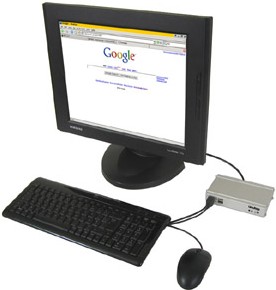
I promised last week that I would be telling more on October 1st, about the mysterious Project X that I had been sporadically blogging about over the last few months. Better late than never, so here's the story: Casablanca I met Morocco-based French entrepreneur Laurent Bervas via his blog in January 2006, while looking for countries nearby EU with a promising ICT market, because of growing obstacles in getting work in my field, due to my not being an EU national. By the time the situation had reached the ridiculous extreme that friends were continuously loosing juicy recruitment bonuses, simply because their employer's HR department had issues with hiring non-EU nationals despite EU policies that clearly favor foreigners married to an EU national I figured that I ought to do something creative and see which of the countries bordering with EU might offer interesting opportunities. Laurent was blogging about all the exciting opportunities he kept on seeing, since he relocated to Morocco to conquer the high-end Real Estate market. One day, he wrote about Morocco becoming a rising figure in the outsourcing business for the Francophone market, which prompted me to contact him. After a couple of weeks of discussion, he cautiously dropped his idea for a niche market he had spotted: a simple Linux-based set top box to surf the Internet. He then asked if I would be interested in developing it and in launching a startup with him to promote it. I gladly accepted. Startup That's when Laurent decided to introduce me to an old friend of his, Fr d ric Baille, who spent several years at Compaq, culminating with a role in the team that launched the iPaq. Fred's help was instrumental in defining the market positioning of our product. Laurent and I discussed the product features at length over IM and immediately agreed that the OS would be based on Free Software. That left the hardware part unresolved... or so did Laurent think. Years ago, I briefly worked in the management team of an Estonian data security startup. This gave me the opportunity to network with several movers and shakers of the Estonian ICT. Among them was a promising ASIC and industrial design startup that produced really cool Thin Client hardware. The answer to our hardware needs, I figured, could easily be fulfilled by them. My idea of contracting the hardware to Estonia was initially received with skepticism, so I made a simple proposal: why don't we hold the inception meeting in Tallinn and meet with the potential hardware supplier at the same time? Fred and Laurent accepted, so we spent part of April 2006 there, with me acting both as their friendly tourist guide and as the middleman for the introductions. Fred and Laurent immediately fell in love with Tallinn's designer bars, omnipresent WiFi network and blond-a-plenty. Most of all, their visit at our potential hardware supplier gave them the answers they needed: Estonia is IT. Overview The hardware we selected is built around the AMD Geode LX, a nifty Pentium-compatible single-chip computer. It comes equipped with VGA output and four USB 2.0 ports, along with high-quality audio via 1/8" input and output jacks, plus a built-in encryption engine. We added 100baseT Ethernet connectivity (with provision for other networking options) to that, to complete the platform. For the software part, we used ingredients from Debian's Etch release, focusing on a configuration that would enable easy access to the most popular applications for home and small business use: Instant Messenger (Gaim), Multimedia player (Totem), PDF reader (Evince), Web browser (Firefox), word processor (AbiWord). The result is this: Press Coverage The editorial team at IT-Neeger (an A-level Estonian ICT blog) immediately scooped the story [in Estonian] and it produced such a strong response that the traditional Estonian media contacted the IT-Neeger team to write a feature article (stay tuned for details). The local Slashdot, Minut.EE, also reported [in Estonian] on the IT-Neeger article. Thus, myself and Laurent Bervas spent the better part of this week being blogged, interviewed and podcasted by a variety of Estonian and French publications, which is how I only got around blogging this bit tonight. Marketing Contrary to our competitors, we fully intend on keeping this platform open, so our initial market will actually be Free Software developers with a penchant for innovation. As such, our first 50 units are exclusively intended for interested developers who want to improve upon our initial idea and participate in defining the final product. Inquiries are welcome!

8 October 2006

Biella Coleman: ABILIFY THIS

Yesterday I was catching up with my magazine reading at Chapters (the Canadian equivalent of Border) when I came across an ad for a drug ad for bipolar disorder that struck me as slightly different less euphoric, more cautious to be exact compared with the ads that have been bandied loosely in all sorts of magazines in the last decade in the US. The ad was for a drug called Abilify which must be some verbal riff on Ability (no?) and there was a very clear pronouncement on that ad that admitted they had no idea how the drug even worked. It went like this: ABILIFY may work by adjusting dopmamine activity instead of completely blocking it and by adjusting serotonin activity. However, the exact way any medicine for bipolar disorder works is unknown. I find this interesting because its tone seems to depart from other ads that seem somewhat more confident (or if they were less so, it was probably kept in the fine print). But when I went to the webpage, this caveat was a little harder to find, as it was a few clicks away within a page entitlted The Brain, Bipolar I Disorder, and ABILIFY . It provides a “handy” pictoral representation of what may be going on with your brain with bipolar disorder/treatment. I found the series somewhat odd and amusing, especially the one that used a magnifying glass to see” all the neurons and nerves or whatever they are in your brain. update: so you know, the US and New Zealand are the only 2 countries that allow drug direct to consumer advertising so I am not sure what the ad was doing in this magazine. It was American magazine but in Canada. I would think they would make them get rid of ads like that. Anyone know why it can slip through the border like that?

Petr Rockai: power management on a linux laptop

I have been using powersave until recently, but I have gone from unhappy to fed up. I also have acpi-support and laptop-mode-tools and hell knows how they all interact. To add insult to the injury, powersave loves to crash or get stuck at times and dbus screws up at times too, which in turn screws powersave. Oh dear. So i have ditched powersave, left laptop-mode-tools and acpi-support around. And i wrote a perl script, i have called it "pm" to handle things i used powersave for. Primarily dpm (device power management) in linux, suspend to ram/disk, battery monitoring and friends. Right now it's ~250 LOC with comments, and more importantly, i know how it works. And it can do things powersave can't. So i am basically happy. It can suspend and resume pci devices (using id<->function mapping) and report their status. It has a very slim suspend wrapper, that just locks screen, syncs drives, remembers power states of pci devices and asks kernel to suspend. After resuming, it restores power states, does chvt voodoo to wake up my intel graphics and sets drive spindown timeout (something, somewhere screws this one up). I also added a "summary" output, that i run using watch on one of terminals in my screen session, that reports cpu frequency and scaling policy, system temperature, battery state (including charge/discharge rate in watts and remaining capacity in mAh), harddrive state (when spinning, also temperature and number of spinups in the drive's lifetime... if you know how to get those two without spinning up the drive, tell me). Then power states of devices (usb, ethernet, wlan, sound, modem, pcmcia, smartcard controller and isa bridge). And as a cherry on top, a list of processes and pids that have recently caused block reads from the drive (needs vm/block_dump enabled in kernel), so you can find out what caused drive spinup. That is about it, now for the catch. It works for me, it probably won't for you, at least not out of the box, unless you have same laptop as me. The pci ids of devices are hardcoded (although not hard to change near the top of the script), so is the screen lock function and probably a bunch of other things. It shouldn't be hard to make a similar script for your system using mine as a starting point though. Another thing that is missing is a nice reporter for KDE to be put on the panel or somesuch. Also, since the script is simplistic in its design, it assumes lots of things about both kernel (tested on 2.6.16 stock debian) and userspace utilities (acpi, hdparm, smartctl) and (oh, coarse-grained evilness), that you have sudo (needed for hdparm at least). Another assumption is that you have single battery and single cpu. But for all the limitations, it goes that if you are going to use a script like that, you probably know enough to extend it to multi-battery and/or multi-core situations. The script definitely needs a hacker-nature :-). So for the brave, the script is to be found on the pm page.

Biella Coleman: My Reading

So people may be wondering, How does Biella pass her time in the vast, desolate Canadian north? Thankfully there are many things to do in Edmonton proper, but I have delved quite a bit into reading so I thought I would take a break and give small reviews of the books I have read or am reading as they are all quite good. I am trying to be more systematic about my reading habits so I am back to using citeulike. I am adding anything new I read and then as I go back to I have already read (for articles), I am adding them to the list also. I hope this pays off in the future! I started the reading bash with a book that was recommended to me over a year ago while I was still in Chicago: The Fugitive’s Property: Law and the Poetics of Personhood as it deals with the bread and butter of my own work, intellectual property, liberalism, market capitalism, and American history. I found the introduction enlivening and was sufficiently interested to continue on. I think there is not a lot of innovative work in the field of intellectual property (only because it has been covered very well) and to bring together slavery/the fugitive person and intellectual property under the same analytical lens, seems productive. Best looks at how the legal treatment of the slave and that of IP, hold striking parallels for their highly fugitive (formal) nature, driven and intensified by the legal/market framework that makes personhood into property. There is a lot of good stuff in there (including a fantastic discussion on legal positivism) but in the end, the labor it took to sift through some really obtuse prose was too much for me. I can’t remember the last time I languished under the heavy weight of language that was far too ornate and under sentences that just lacked clarity. This was compounded by the fact that he assumed you knew a fair bit about slave history, which I did not. My drive also escaped me and while I hope to return to it later, I took a break and turned to more readbale material. After such heavy linguistic ornateness, I needed an antidote, QUICK, and I knew exactly where to go: William Sewell and his book I had on my shelf also nearly for a year: The Logics of History. Along with being a first rate historian he is like that black instrument popularized in the 1980s by the likes of Herbie Hancock, and Brian Eno, he is a synthesizer with an amazing ability to write clearly. Being the synthesizer that he is, he is skilled at connecting the dots between various theoretical topics like event, structure, and agency, making the theoretical implications so crystal clear you feel happy to have entered into a field (the social sciences that is) that feels awfully arcane and pointless at times. I left Stehpen Best, which was like leaving a cluttered medieval castle and into a simply decorated room filled nothing with good theoretical feng shui (I think about writing in spatial terms more than ever). He just makes reading fun, even when the topics can be less than enthralling. Many of the essays were published previously and I had read a number of them, such as his famous essay on structure and agency. What I appreciated along with the great writing, was that he takes serious the question of plurality of social life within the net of various social, economic, political determinants. So while he assumes the existence of structure (and turns Marshall Sahlins to establish), he also is quick to show that structure, like a cultural system, can only act as partial (and unexpected determinants of social life) because of the existence and presence of events (which is really Sahlins great masterful point) but more importantly because of the plurality of structures… This was perhaps on the the central motifs in my dissertation; while I placed hacking within the cultural lineage of liberalism, in no way is this the only cultural system that hackers operate through and with; they move through a cultural domain more intrinsic to their own praxis, not to mention other systems of value that reverberate more widely among the digerati… And it is this movement between social positions that allows for forms of reflexivity and social change. I primarily used Bakhtin to make this point but now I got Sewell to add to this mix. Here is a nice passage from the book that makes this point:
I would argue that a multiple conception of structures would make subjects cultural creativity easier to explain. If the cultural structures by which subjectivities are formed are multiple, then so are the subjectivities… Because persons, symbols, and objects of cultural reference overlap between structural realms, structurally generated rules, emotions, categories, and senses of self can potentially be transposed from one situation to another. Indeed, if actors commonly have the experience of negotiating and renegotiating the relationships between noncongruent cultural structures, it follows they should have some intellectual distance on the structural categories themselves, that they should be able to view one set of cultural categories from the point of view of others that are differently organized, to compare and critizise categories and categorical logics, to work out ways of harmonization or odering the seemingly contradictory demands of different cultural schemes. A multiple conception of structure, consequently makes human creativity and reflection an integral element in the theory of history, not a philosophically prior metaphysical assumption. p. 213
And here is a more engaged review that is a little more critical than my very short comments. As part of a reading group organized by my tireless supervisor, I am also reading The Cultural Locations of Disability written by two of the most prolific scholars in the field, Sharon Snyder and David Mitchell. Since I am a novice in field it is hard for me to judge the two chapters we have so far read but it is a total total total treat reading a book slowly with a group of other folks from a vast range of departments. So far I appreciate the larger arguments presented in the introduction. For example, they point to two broad categories—capitalism and modernity/enlightenment– as driving forces in a new wave of obsession with the disabled. So while capitalism’s insistence on measuring the worth of humans through an abstract and actual ability to labor, marginalizes those who cannot offer their constant labor power (and makes them an “odd” cultural object), modernity–in its desire to march forward to the mysterious plane of progress, offers a technological promise to eradicate what it designates as deviant or primitive. As they nicely sum up: In a culture that endlessly assures itself that it is on the verge of conquering Nature once and for all, along with its own primitive instincts and the persistent domains of have-nots, disability is referenced with respect to these idealized visions. As a vector of human variability, disabled bodies both represent a throwback to human prehistory and serve as the barometer of a future without deviancy. p. 31 I, think, however, they should have also included some discussion of liberalism, which in many ways, was the legal and philosophical engine that helped to naturalize capitalism not to mention it also offered a vision of person, in which self-development, expression, and discrete autonomy was deeply cherished. Seen in this liberal light, disability becomes also a type of tragedy that can be resolved though new technological interventions they discuss under the guise of modernity. I have just started Michelle Murphy’s Sick Building Syndrome and the Problem of Uncertainty: Environmental Politics, Technoscience, and Women Workers, which promises to be quite a tour de force into the contentious politics of uncertainty and the play of perceptibility and imperceptibility that surround one of many many syndromes sick building syndrome that now are part and parcel of the medical and patient advocacy field. Along with this I read and finished Andrew Lakoff’s Pharmaceutical Reason: Knowledge and Value in Global Psychiatry, which will make for great teaching, and has one of the nicest discussions on the way in which psychiatry’s insecure status among the other medical science was one of the driving forces toward embracing the new scientism of the 1980s that coincided with new more general neoliberal trends. Another nice move about the ethnography is that he was able to clarify some of the trends and rationalities of American and European psychiatry by examining how it was received and resisted among more psychoanalytical Argentinian therapists. Very classicial anthropological lens in that sesne. Finally I am in the middle of Play Money: Or, How I Quit My Day Job and Made Millions Trading Virtual Loop and I will say more about it when I am done, which should be soon as I am tearing through it evern night. I have been waiting for this book for a long while now because Dibbell is part of that trinity (Steven Levy, Bruce Sterling, Julian Dibbell) that offers some of the best writing on hackers, the internet, and virtual worlds. And this book continues in that tradition of providing a fantastic read, a vivid ethnographic picture of the topic at hand, along with key insights into the nature of economies, money, and plau within (and outside of) virtual landscapes. What I respect about Julian Dibbell is that he took a long time to get this book out. He started the research in 2003 and then spent a few years writing up. I think there is a lot of pressure to get any material or book on “virtual whatever” out there as quick as possible but for the most part I think that is a mistake. You need to let these things brew a long while or else they won’t acquire that taste of a finished product.
7 October 2006

Clint Adams: You can hear the buildings crawl

33-year-old ultranationalist Welsh lassie > intrusive kiwi > 50-year-old diabetic Welsh policewoman with a penchant for bullfighting > Bronwyn > married ho from Detroit with commitment issues.

Jordi Mallach: From Teruel to Val ncia under the full moon

For a few years, the probably most intrepid group of triathletes in my club have been doing cycling tours during the long weekend of the 9 d'Octubre in Val ncia. We once did a good chunk of the Ruta del Cid, covering around 550 kilometres in 3 days and a half, carrying aproximately 25 kilograms of sleeping bag, food and clothes on our bikes, and going from Teruel to Albarrac n, back to Teruel, then to Morella and back to Alboc sser and through the Serra d'Espad . The next year, we started the trip in La S nia, and crossed the Valencian Country all the way to Requena, through Linares and Rubielos de Mora. This year, we intended to cycle across the Pyrinees, from the Basque Country to Catalonia, but in the end my travelmates have to work on Monday, so we had to quickly settle on a one day alternative. As this is the 9 d'Octubre, the trip had to be a bit crazy, so we've decided to get the last train up to Teruel, arriving there at 21:30 or so, have a very good dinner around El Torico and soon after, start our way down to Val ncia, under the full moon.


Our itinerary for tonight We'll be carrying a few forehead lights and a bicycle light, and will really hope that the sky isn't cloudy at all. We're really going to need the moonlight. The route follows the national road from Sagunt to Teruel, through an old train track which was turned into a cycling path. Most of the trip will be descending, so covering the 150 kilometres shouldn't be too hard, except that neither of us are specially trained now, unlike 3 years ago. If we end up having to stop and sleep, that's going to be a problem as we are carrying no sleepingbags or anything, just our winter cycling clothes. We pretend to take our time, aka most of the night, to get to our destination, as we obviously won't be able to cycle fast in the dark. But we'll manage. This is just crazy, not impossible. :)

6 October 2006

Jordi Mallach: Debian etch will ship with GNOME 2.14

This is already old news, but I haven't commented here yet. We already hinted this possibility in my previous blog entry on this topic, but sometime last week, we made it official. After speaking to some people upstream, we got the impression that the GTK situation was way too risky to do a GTK 2.10 migration, with no hints on when the file selector problems would be solved. As of today, and two GTK 2.10 releases later, not all of the issues appear to have been resolved in this branch, so we may have chosen the right path. So, with this information in our hands, we described the whole situation to the release managers, explaining what the options were, and they, of course, had no doubt on what was better for etch. The last two months before the release, we'll try to polish the last few bits that we'd like to improve in the current 2.14 packages. For example, Joss just made a change to the session manager, to make it possible to save the user's session easily, a feature which was present until GNOME 2.12, then removed in 2.14 with apparently no sane replacement of saving sessions available for the user. I must admit I'm a bit disappointed about not being to ship all the work we've been doing with GNOME 2.16 in experimental, although I believe it was the right choice. If the etch release is delayed for some major reason, and let's hope it's not, that might open a window to see a transition going on, if the fixes are finally in and we consider our packages release quality. If not, we're sorry, but we won't be able to sell the latest GNOME version argument in our release PR. ;) The Debian GNOME team has already been talking about doing a semi-official 2.16 backport for etch though, so people can use stable with the current GNOME, at least for a few months. We'll see how it goes...

Ben Armstrong: Ichthux and Ubuntu CE: Why two projects?

Barbicane asked me the other day: “Why Ichthux and Ubuntu CE? Why not consolidate efforts?” As much as I’d like to see Ubuntu CE succeed, I believe they are headed down a path that will make it difficult for them to survive if they continue. In this thread (see Google cache since the forums seem to be having problems today) Jereme severely understates the differences in development philosophies that keep us apart. One key difference is more fundamental than just using metapackages instead of scripts. As I wrote about earlier, the approach Ichthux has chosen is to be a Custom Debian Distribution (CDD), working within Debian and Ubuntu to configure those distributions for the needs of Christians to meet their various needs. This is incompatible with CE’s approach, which uses scripts to tailor an Ubuntu system. This approach risks violating the integrity of the packages being modified, and makes each system upgrade an adventure for the user. What you end up with cannot truly be called an “edition” of Ubuntu at all, but is more accurately described as an Ubuntu derivative. Derivatives are not easily sustained because they are always struggling with staying in sync with the parent distribution. Ubuntu itself is a derivative, but it has an impressive amount of infrastructure with a lot of manpower behind it to ensure that the branching and merging process doesn’t get out of control. I don’t see how the much smaller Ubuntu CE development team will manage to accomplish anything significant using their current approach without being crushed by the maintenance costs of their customizations. Another difference, perhaps more readily apparent to end users, is what’s included in each distribution by default. While CE has chosen the Gnome desktop, Ichthux has gone with KDE. With each new release of Ubuntu CE, it seems what is stressed the most in their release notes is “what’s included”. Well, I just can’t see how that’s terribly important. Debian and Ubuntu both have a vast amount of software available, and both make it easy for users to make choices. If a user wants to add another application, it’s often just a few clicks away. It’s not nearly as important to have these installed by default as it is to ensure that the packages we do include are as solid and well-integrated with the system as possible. To this end, Ichthux makes use of its Debian and Ubuntu developers to ensure that each package included is kept in good shape from release to release. This means addressing bugs and wishlists that matter to our users, improving those packages not just for Ichthux, but for Ubuntu, Debian, and where those fixes flow back upstream, the broader community of Christian FOSS users everywhere. This is the real work of Ichthux: not just the production of a livecd, nor merely tweaking the default selection of packages we include from one release to the next, but to be actively involved in the Christian FOSS developer and user community. Our greatest successes will not be in the degree to which we differentiate ourselves from other Linux distributions, but rather how well we’re listening to what Christian FOSS users are saying they need, and how broad we can make our solutions. We can’t afford to be a niche distribution working off in a corner on our own pet project. That would be a terrible waste of our energy. We’re dreaming big: we want every Christian Linux user to be able to benefit from our work.

Evan Prodromou: 13 Vend miaire CCXV

Congratulations go out to Memory Alpha, the free compendium of Star Trek information, for passing their 20,000 article mark. It's a big step for a wiki project, and MA has been a really great resource for my own trekkie nerding out over the years. tags:

Web 2.0 So, I'm going to be covering the Web 2.0 Conference for LinuxWorld and NetworkWorld early in November. Hooray for me! Professional journalism and all that. I think it will be really interesting covering the "Web 2.0" phenomenon from an Open Source/Linux/technical perspective. Despite the temptation I won't cover the event on mescaline... I think. ddf says: Then it'd be, like, "Web 2.Ooooooohhhhhhh". tags:

Blinky Hockey Tonight I met up with the members of my new hockey team, Blinky. I've been fascinated with hockey since we moved to Canada, and I've got a stick and skates, but I've never really gotten out and played with a team. Blinky is a beginners' team -- just going out for the fun of playing the game. Our coach Meg Hewitt, one of the editors at Hour, is just a darling person and a good hockey player and fan of the game. She's pulling together this coed team of friends and colleagues to let people experience the game she enjoys so much. We'll be playing Thursday night games at the hockey rink near my house (cool) at 11PM (whoa). I've gotta get some pads and a helmet and tape up my stick and all that. But now I'm really gonna get out on the ice. Fun times ahead! tags:

Pigeon Amita June's clever Marmie (and my smart Mom) sent a stack of ~20 books for AJ's 1st birthday. There are a lot of great books in this packet, but by far the favorite around this house with Mama, Papa, babysitter Julia and little AJ is Don't let the Pigeon Drive the Bus by Mo Willems. It's the touching saga of a pigeon who, well, wants to drive a bus. And you have to tell him 'NO!', and he pleads and wheedles and whines and tantrums. It's a fun fun fun fun book. tags:

4 October 2006

Marc 'HE' Brockschmidt: Why I keep working on Debian

I haven't blogged in a long time, so I probably should drop some thoughts here to show that I'm still around.

In the past few months, I have been able to dump some of my work on other people by orphaning some packages and getting Christoph Berg (Myon) to do Debian Front Desk work.

To compensate this loss of tasks, I became a member of the release team, so the recent discussions about funding release managers should probably interest me, but I fear the threads on debian-private, -project and -vote have only made me sick. The number of people who have been childish, unjust and simply weird is enormous and would be a good reason to leave Debian altogether, something which I considered a few times over the last weeks. I would surely quit a job where co-workers hate each other that much, so why should I do this to myself in my free time?

Interestingly enough, actual work for money has shown me why Debian is something that should be supported, even if the mailing lists are full of posts from idiots. I had (and have) to work on OpenBSD for a customer, porting the recent release of Gnome 2.16... Well, let me tell you, Debian is better. A lot.

I think this may help you if you're doubting that working on Debian is sane: Remember that we work together to create the best possible, universal operating system. And even if we're not there yet (and there's a lot of work left), we have succeeded in creating an useable, useful operating system, which is easy to administrate and allows you to have a lot of fun with it. And we did that together, in the occasional moments when fighting with each other wasn't that important.

I have to admit that I haven't invested a lot of time to work on Debian in the last few weeks, but this was due to personal and work reasons. In two weeks, I'll have to return to my usual university schedule, so I'll spend a lot of time on Debian ignoring the exercises I'm supposed to work on.

Also, I have been working on a new server I've rented together with Andreas Barth, playing around with Xen and starting to bootstrap the actual systems we will need. This will mean that I'll have to move my mail and web services in the next few days. I think I'll also move my blog to the new box, but I need to check out how to do this without flooding the planet...

Edd Dumbill: The best of XTech 2006

As I'm finalising the call for participation for XTech 2007 (15-18 May 2007, Paris, France), I've taken a look back at the some of the best received presentations from the 2006 conference. I thought them well worth sharing again here. To be sure of hearing about the call for participation and other XTech 2007 news, sign up for the newsletter or keep an eye on this blog. Native to a Web of Data: Designing a part of the Aggregate Web
Tom Coates (Yahoo!)
What are the architectural elements of the emerging web of data; how do you build services to thrive in this environment? What needs to change and what needs to return to fundamental principles? How do we bring it all together to make something awesome?
An open (data) can of worms
Paul Hammond (Yahoo!, ex-BBC)
Open data is not a panacea, and presents as many questions as answers. Technology can only solve some of these issues, this presentation outlines some of the other, more fundamental, problems.
Etna, a WYSIWYG XML RELAX NG and Gecko-based editor
Daniel Glazman (Disruptive Innovations)
A presentation of the new WYSIWYG XML editor based on Gecko, and its underlying implementation of RELAX NG. How American are startups?
Paul Graham (Y Combinator)
Startups are largely an American phenomenon. Why? What is it about America that makes startups work there? Could Silicon Valley be replicated in another country?
Written up as two essays: The power of declarative thinking
Steven Pemberton (W3C/CWI)
This talk discussed the requirements for Web Applications, and the underpinnings necessary to make Web Applications follow in the same spirit that engendered the Web in the first place.
RDF/A: The Easy Way to Publish Your Metadata
Mark Birbeck (x-port.net Ltd.)
RDF/A is a new, and simpler, way of adding metadata to documents, in such a way that the document contains its own metadata--making it easy to turn a home page into a FoaF file or RSS feed.

Stefano Zacchiroli: why i love collab maint

Why I love collaborative maintenance
zack@aquarium:~/pkg-ocaml-maint/trunk/packages$ find . -name control -exec sed -i s/XS-X-Vcs-Svn/XS-Vcs-Svn/   \;
zack@aquarium:~/pkg-ocaml-maint/trunk/packages$ svn commit -m 'renamed Vcs-Svn to match the final name'
Sending        packages/advi/trunk/debian/control
<snip>
Transmitting file data ..........................................................................................
Committed revision 3216.

Wouldn't it be super cool to be able to do the same on all packages of the Debian archive? And no, I'm not speaking about the damned XS-Vcs-* field with which I've already bothered you a lot. I'm talking about the ability of perform massive changes on the whole bunch of Debian packages in a batch fashion. Of course permissions should be accounted for, but it can be reduced to not being a big deal. Just map the current idea of maintenance group to regular Unix groups used to govern who-can-commit-where in the repository, perhaps with some super-group like "release managers" or "qa" who can commit everywhere. Finally, add the topping of a couple of scripts to automatically rebuild and/or upload packages from the repository. Wouldn't that have a great potential of improving the boring procedure of NMU, never too quick and easy to not hinder its diffusion?

Russell Coker: dunc-tank and motivation

The dunc-tank project was established to raise money to compensate some Debian developers who are essential to producing a timely release of Debian. There has been a lot of acrimoneous debate about whether this is a good or bad thing. The positive side of it is that the release managers will get to spend more time working on Debian, the negative side is that some volunteers will lose motivation.

However I have felt more motivated to do my unpaid Debian work. During the time that I was employed by Red Hat I was fairly slack about my Debian development work (incidentally Red Hat management were happy for me to continue Debian work so there was no pressure from Red Hat in this regard). Since leaving Red Hat I have been busy doing paid work.

Recently I have started getting involved in Debian work again. I am about to upload a new version of Postal for the first time in three years, I have set up a Xen server for Debian SE Linux development, and I am about to start serious Debian SE Linux development work again.

One factor in this has been my impression that other DDs are taking the release seriously. In the past schedules for release have slipped repeatedly without end. Now there is a schedule and this gives me more motivation to get bugs fixed!

Erich Schubert: Fun with explanations

From Top Ten Geek Business Myths:
One of the ironies of the programming world is that using Lisp is vastly more productive than using pretty much any other programming language, but successful businesses based on Lisp are quite rare. The reason for this, I think, is that Lisp allows you to be so productive that a single person can get things done without having to work together with anyone else, and so Lisp programmers never develop the social skills needed to work effectively as a member of a team. A C programmer, by contrast, can't do anything useful except as a member of a team. So although programming in C hobbles you in some ways, it forces you to form groups whose net effectiveness is greater than the sum of their parts, and who collectively can stomp on all the individual Lisp programmers out there, even though one-on-one a Lisper can run rings around a C programmer.
This is probably the first time I've seen somone use Lisp vs. C to explain business mechanics. Fun!

Norbert Tretkowski: Package management next generation, second part

ipx12345:~ # time rug install mutt
Waking up ZMD...
ERROR: 'mutt' is not available, or is fully up-to-date. real    9m35.167s
user    0m10.013s
sys     0m0.540s

Clint Adams: If she were a proctologist, she would have noticed that he was a giant anus

He rattled on, She's half-Turkish and half-Spanish--as in Spain. She grew up in the Dominican Republic but went to American schools there, so she has no accent. She's 6 feet tall, which means she's on my level, but when she puts on heels she's taller than me. She's very, very pretty... it's hard not to be when you're half Turkish and half Spanish and athletic... and to boot... here's the kicker... she's a doctor. Is she a proctologist? she inquired. Ha, no, he replied, but her subspecialty is GI. She did offer to perform my next colonoscopy. Wait, she said. Your next colonoscopy? Something about that seems so wrong. No girl who wants to sleep with you should be itching to see the inside of your intestines. So, anyway, he continued, she's got a wicked sense of humor and happens to love the opera. She's great elbow candy. Really, what this means is that I'm setting myself up for a big disappointment. I dunno, she said. The potato girl still seems like she was the prime catch. Opera schmopera. Oh, god, he groaned. You are so many years out of the loop. The potato chip girl? Beth? You realize that our daughter turned 10 on Sunday? Holy shit! she exclaimed. 10! Yeah, he grunted. I'm old! No, no, she insisted. You're not old. Just your children are.

Evan Prodromou: 12 Vend miaire CCXV

Hey, somebody used a photo I took of the Papineau mural in Papineau metro station in a discussion of the prison Pied-du-Courant. They even gave me proper attribution, per the license under which the photo was published. As an American I have a shamefully bad understanding of Canadian history. Example: when I first moved to Montreal, I had to get my local land-line phone service set up. When I was asked for my address (in English -- I didn't even try doing this stuff in French back then), I answered: "Avenue Papineau. That's P-A-P-I-N--" the operator cut me off. "I know perfectly well how to spell 'Papineau', sir," he said, icily. Oops. I'm trying to get caught up. I've been reading a ton of wp:Pierre Berton books, but I still don't have the whole story as integrated into my own mental processes the way I know, say, American history almost instinctively. Like, even though I know the story, I continue to boggle that wp:Louis Riel keeps popping up in various apparently unconnected historical contexts and era. It's like, "Wha? Louis Riel again? Didn't they shoot him four or five chapters ago? Why is he still here?" I guess it just takes time. Or maybe it's something I'm never going to understand, like why there were two teams called "Roughriders" in the CFL for so long. I dunno. tags:

Talk about your busy days Busy, busy day today. Alain Desilets, a researcher at the National Research Council and a really smart person when it comes to wiki, came to Montreal today for Wiki Wednesday. We had lunch with Alain and fellow researcher Julie at nearby Ty Breiz restaurant, a neighborhood landmark that makes fine crepes and cider and good garlicky salads. We talked about improving wiki interfaces to make it easier to translate between multiple language versions of a page (like you see on Wikipedia and Wikitravel), and came up with some interesting solutions. Then it was off to Wiki Wednesday proper, at which Alain presented his translation projects and also some collaborative fiction ideas for children. Very cool stuff! It was a real celebrity event: Sunir Shah of MeatballWiki, Sebastien Paquet of SocialText, Marc Laporte of Tiki CMS/Groupware, Anne and Antoine, organizing the RoCoCo 2007 event, and lots of other folks too. Anne and Antoine also presented their brilliant image-only wiki, Wikigraphe. It lets people upload images as a replacement for pages, then build "hotspots" on the images that link to other pages -- which are in themselves images. It's a destruction of the tyranny of text in the wiki world -- and fun to watch. Sylvain Carle compared it to drawball, but I think they're different. Much followup talk on RoCoCo 2007. It's going to be an exciting event -- so glad to have wiki friends around the world coming here, to my favorite city. Lots to do between now and May, but I think we can get it done and have a fantastic wiki (and wiki-like) event. Wiki Wednesdays are such excellent events -- kudos to Seb Paquet for organizing them in Montreal, and also to SocialText for such a good idea, and Robin Millette and gang for hosting. tags:

CC Salon Montreal On top of that, we had the Creative Commons Salon Montreal tonight at Am re de boire on rue St. Denis. The Salon is developing internationally as a way for CC-related people to interact, chat, and have fun in cities around the world, and Montreal has too many CC folks to be left out. Tina Pipers, co-chair of Creative Commons Canada, is on the faculty at McGill, so we're lucky to have such a heavy hitter in the area to chat with us. (Also, I found out tonight she's Greek! Good for us.) Tonight was expecially great since Maj and I talked about Wikitravel and our new project, Crossroads, to create Open Content travel opinion, stories, blogs, photos, etc. It's just getting off the ground, but it was great to share our vision with some people who really understand the idea of content sharing and an information commons. The discussion after our talk was great. I couldn't drag myself to YULblog, though, after 6 hours of talking... I had wanted to go to get people interested in BarCampMontreal, but Sylvain (one of the event organizers) was already going, so I felt justified in sitting it out. But when am I going to get to another Yulblog? I just don't know. tags:

Searls ha ha Searls's 4th Law: No matter what car you want to rent, what you'll get is a Chevy Cavalier. Man, I love the wp:Chevrolet Cavalier. It's a fun car to drive, and it just says "rental car". Which mean, y'know, "vacation" and "distant lands" and "irresponsibility". How can you not love that car? Not to mention that someone has to straighten out Doc Searls on Elements of Style Rule #1: Form the possessive singular of nouns with 's. This includes singular names that end with s... like "Searls". There are a few exceptions for ancient names ending in -is/-us/-es, but those are few. To paraphrase: I knew Achilles; I served with Achilles; Doc Searls, you are no Achilles. tags:

UFO Beliefs Hey! I'm back on Technorati. Rockin'! After like 3 months complaining to their customer service Web form and getting 0 (= zero) response, I finally canceled my blog claim and started a new one. The software picked up on my site right away. Problem solved! It would have been nice to hear, you know, one tiny peep out of Technorati about my 8-10 bug reports, but I guess they're pretty busy. tags:

Steve McIntyre: Why I Became a Debian Developer

I've been doing Debian for 10 years, as of this month. I reckon that's a good excuse for some ponderings... For a long time in college in Cambridge, I was a Slackware user and supporter. It was my first distribution, installed in May 1994. I sent patches to Pat for bugs that I'd found, and I helped several of my friends in college maintain their machines running Slackware too. But after a couple of years of that, I grew tired of spending more time maintaining the OS on my machine than actually using it; I had even gone through the trials of the transition to ELF by hand. Some friendly pushing by my friend Jon Rabone (at the time also a DD) was finally enough, and one weekend in October 1996 we sat down together and started to install Debian on my PC. That first installation was a nightmare! It was a major struggle, and more than one time that weekend I threatened to go back to the comfortable security of Slackware. The installer was awful, and needed lots of hand-holding. Eventually, however, we got there. hammer.chu.cam.ac.uk became a Debian machine, and most of it worked. By the end of that Sunday, I was convinced to stay with it. Next, I decided that I wanted to contribute. The NM process in 1996 was quite simple - I mailed Bruce Perens with my PGP public key and asked him for an account. The package I wanted to maintain was mikmod. At the time I was one of the upstream developers, and I wanted to make sure it worked well in Debian. Unfortunately, I had already been beaten to it - Joey Hess had already packaged it in the few days since I first started work. Some things never change... :-) I mailed Joey and took over the package, then I started looking for other things to help with. I had long been annoyed that my Slackware patches had never met with any response, so Debian seemed ideal for me - a place where I could make a difference directly. Over the following years, I took on, worked on and passed on lots of packages. At one point, I was maintaining lots of audio programs. At another I worked on lots of archiving and compression programs. Then I moved onto the debian-cd team. Debian was excellent fun: I got to use a great, stable operating system and I got to work on it and help make it better! It hasn't all been plain sailing - there have been plenty of times when I've become disillusioned with things. There have been times when I've spent an entire night or weekend hacking on things and felt unhappy that either I hadn't made any progress or (even worse) my effort wasn't appreciated. There have been times when I've gone without sleep to get a package fixed or a CD build done, because I felt it mattered. To offset that, there have been great moments: going along to Linux Expos and meeting users of my packages who wanted to say thanks and buy me beer; travelling around the world, meeting up with DDs and chewing the fat; playing Mao in the middle of the night at Debconf; most especially the feeling of achievement when my^Wour work is done and we manage to finish a release. Oh, and that first installation? It's still around, almost ten years later. It has moved onto different hardware more times than I can remember, but I've continued upgrading it regularly ever since. It was once my only computer, but now it's one of many. hammer became sledge, then jack. It's now the machine that holds my Debian mirror and serves files to the rest of my home network. That's what I call upgradeability! It's a story that I tell people at Expos, and every year it gets more impressive... :-)

Next.

Previous.