Debian participation in Italy's CAD68 committee
(The initial policy change discussed in this document is
a couple of years old now, but it took about the same time to be
fully implemented, and AFAIK the role Debian played in it has not
been documented yet.)
In October 2012 the Italian government, led at the time by
Mario
Monti, did something rather innovative, at least for a country
that is not usually ahead of its time in the area of information
technology legislation. They decided to change the
main law (the "CAD", for
Codice dell'Amministrazione
Digitale) that regulates the acquisition of software at all
levels of the public administration (PA), giving an
explicit preference to the acquisition of Free
Software.
The new formulation of
article 68 of the CAD first lists some macro criteria (e.g.,
TCO,
adherence to open standards, security support, etc.) that public
administrations in Italy shall use as ranking criteria in
software-related calls for tenders. Then, and this is the most
important part, the article affirms that the acquisition of
proprietary software solutions is permitted
only
if it is
impossible to choose Free Software solutions
instead; or, alternatively, to choose software solutions that have
already being acquired (and paid for) by the PA in the past,
reusing preexisting software. The combined effect of these two
provisions is that all
new software acquisitions by PAs in
Italy will be Free Software, unless it is motivated in writing,
challengable by a judge that it was impossible to do otherwise.
Isn't it great?
It is, except that such a law is not necessarily easy to adhere
to in practice, especially for small public administrations (e.g.,
municipalities of a few hundred people, not uncommon in Italy)
which might have very little clue about software in general, and
even less so about Free Software. This is why the government also
tasked the
relevant Italian
agency to provide guidelines on how to choose software in a way
that conforms with the new formulation of article 68. The agency
decided to form a committee to work on the guidelines (because you
always need a committee, right?

).
To my surprise, the call for participation to be part of the
committee explicitly listed representatives of Free Software
communities as privileged software stakeholders that they wanted to
have on the committee kudos to the agency for that.
(The
Italian wording on the call was: Costituir titolo di preferenza
rivestire un ruolo di [ ] referenti di community del software a
codice sorgente aperto.
) Therefore, after various prods
by fellow European Free Software activists that were aware of the
ongoing change in legislation, I applied to be a volunteer CAD68
committee member, got selected, and ended up working over a period
of about 6 months (March-September 2013) to help the agency writing
the new software acquisition guidelines.
Logistically, it hasn't been entirely trivial, as the default
meeting place was in Rome, I live in Paris, and the agency didn't
really have a travel budget for committee members. That's why I've
sought sponsorship from Debian, offering to represent Debian views
within the committee; Lucas kindly
agreed to my request. So what did I do on behalf of Debian as a
committee member during those months?
Most of my job has been some sort of consulting on how
community-driven Free Software projects like Debian work, on how
the software they produce can be relied upon and contributed to,
and more generally on how the PA can productively interact with
such projects. In particular, I've been happy to work on the
related work section of the guidelines, ensuring they point to
relevant documents such as the French government guidelines on how
to adopt Free Software (AKA
circulaire Ayrault). I've also drafted the guidelines
section on Free Software directories, ensuring that important
resources such as
FSF's Free Software
Directory are listed as starting points for PAs that
looking for software solutions for specific needs.
Another part of my job has been ensuring that the guidelines do
not end up betraying the principle of Free Software preference that
is embodied in article 68. A majority of committee members came
from a Free Software background, so that might not seem a difficult
goal to accomplish. But it is important to notice that: (a) the
final editor of the guidelines is the agency itself, not the
committee, so having a "pro-Free Software" majority within the
committee doesn't mean much per se; and (b) lobbying from the
"pro-proprietary software" camp did happen, as it is entirely
natural in these cases. In this respect I'm happy with the result:
I do believe that the software selection process recommended by the
guidelines, finally
published in January 2014, upholds the Free Software
preference principle of article 68. I credit both the
agency and the non-ambiguity of the law (on this specific point)
for that result.
All in all, this has been a positive experience for me. It has
reaffirmed my belief that Debian is a respected, non-partisan
political actor of the wider software/ICT ecosystem. This
experience has also given me a chance to be part of country-level
policy-making, which has been very instructive on how and why good
ideas might take a while to come into effect and influence citizen
lives. Speaking of which, I'm now looking forward to the first
alleged
violations of article 68 in Italy, and how they
will be dealt with.
Abundant popcorn will certainly be needed.
Links & press
If you want to know more about this topic, I've collected below
links to resources that have documented, in various languages, the
publication of the CAD68 guidelines.
- official material:
- press releases:
- press/blog coverage:
- interviews:
 Public transport strikes in Rome are so frequent that it s hard to remember when they are. I wrote a Gnome Shell extension to help remind me when there s one either coming up or in progress. Find it on extensions.gnome.org. It gets its data from another little service I just made.
 Goodbye Barnes & Noble
I've read books on electronic devices for many years now; the
convenience of having a huge library with me while traveling makes up
for the lower quality of the presentation. I've read books on a
selection of Palm devices, an old
 I've taught my laptop to wake up at 7:30 in the morning. When it does, it
will run







 The
 it's this time of the year^Wrelease cycle again almost. in ten days
(& roughly two hours), the freeze for the next debian release, codenamed
jessie, will start. by this time packages must be in testing in
order to be candidates for the release, as explained in the release team's
detailed
 Recently I was trying some statistics on the qtbase-module (where QtCore, QtGui, QtWidgets and so on lives) and was wondering who made them.
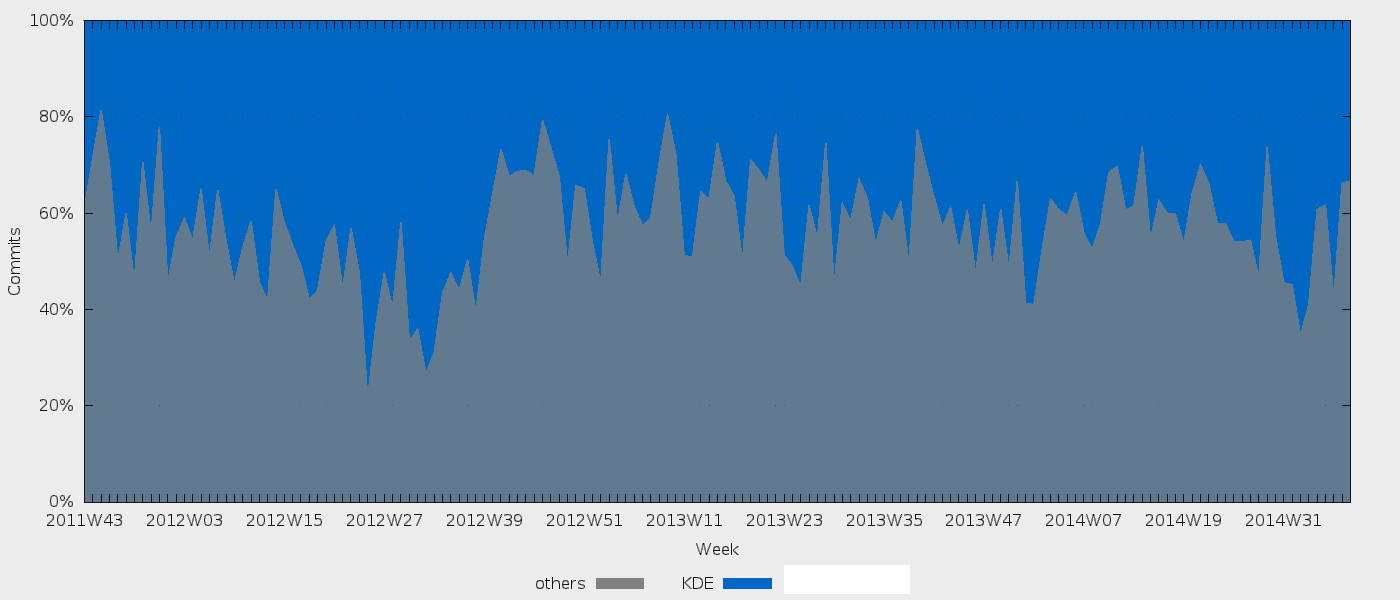

 Even though the

 Participation in DebConf14
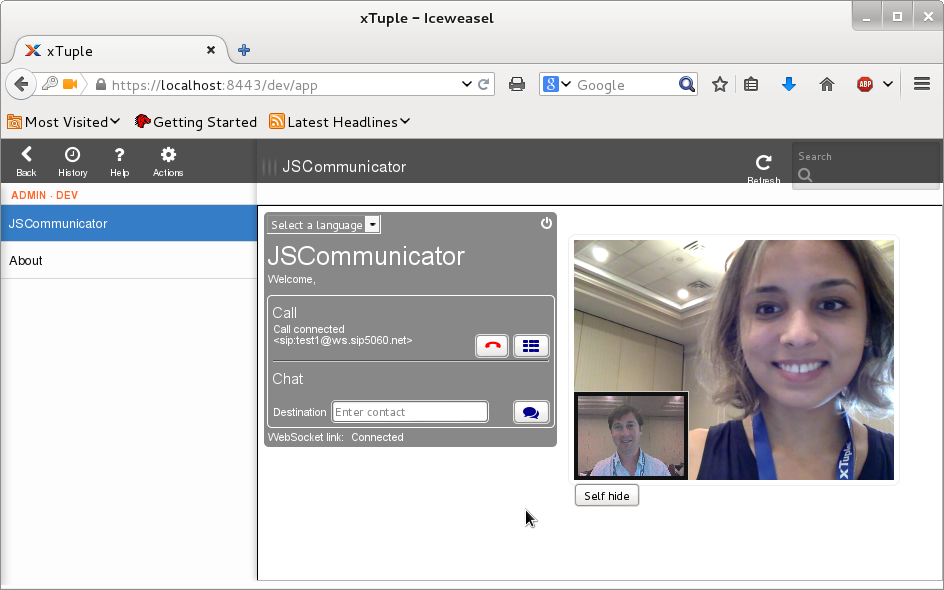
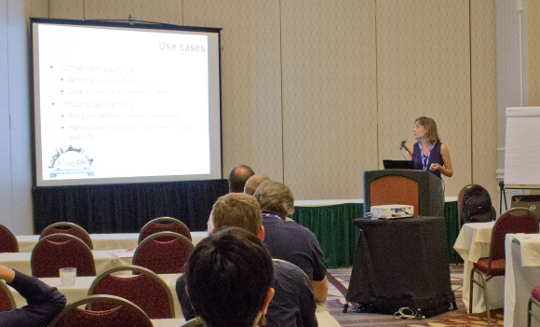
Juliana attended DebConf14 in Portland and gave a presentation of her work on the Debian RTC portal. Many more people were able to try
 It started with OPW
The key point to emphasize is that Juliana's work in GSoC was actually made possible by Debian's decision to participate in and promote Outreach Program for Women in 2013.
I've previously attended DebConf myself to help more developers become familiar with free and open RTC technology. I wasn't able to get there this year but thanks to the way GSoC and OPW are expanding our community, Juliana was there to help out.
 About a month ago, I received an upstream