Search Results: "tg"

12 November 2011

Kai Wasserb ch: New Greasemonkey script available for WotC's Magic section

No matter whether you're a professional or hobby player, if you play Magic: The Gathering, you certainly visit Wizards of the Coast's homepage from time to time. And while other parts of the WotC's page have been made unusable without ECMAScript enabled, the MTG part can be used without it mostly. The one part, that didn't work (and I needed) was card links. They have some ECMAScript to fetch the image from the Gatherer and overlay that on the current page, if you hover over a card link. If you click, it's again some script, that opens a Gatherer window. I just want all card links to be plain links pointing to the respective entries in the rather lightweight magiccards.info card search, which displays all relevant data in a compact layout. Today I finally got around to throw the ten or so lines of ECMAScript together, Greasemonkey needs to make that happen. If you like to give it a try, you can download it from my Greasemonkey script collection (direct link for the impatient: wotc_with_noscript_and_card_links.user.js). As an additional note: I'd like to point out, that there are other scripts available from userscripts.org which can do the same. But all those scripts did a lot else (like using jQuery to fetch the image on mouse over from magiccards.info).

3 November 2011

John Goerzen: Greece part 4: Food and Shopping

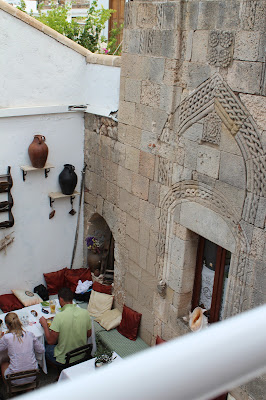
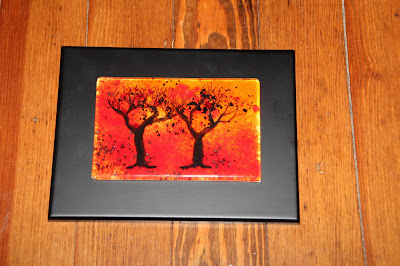
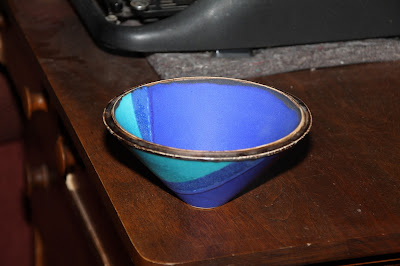
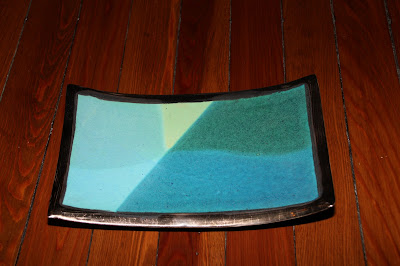
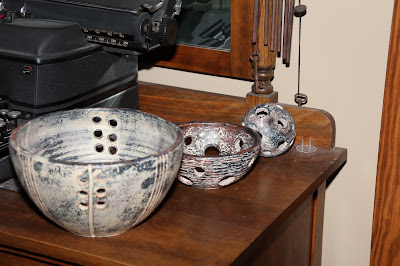
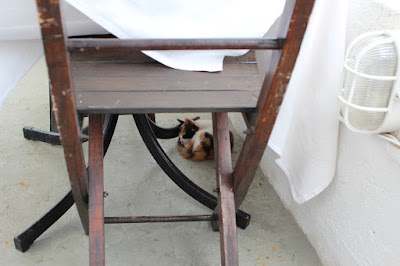
See also parts 1, 2, and 3. I am a person that enjoys food that s different from what s at home, and Rhodes didn t disappoint. Terah and I used to live close to an excellent Greek restaurant in Indianapolis, so we were already familiar in some way with the food. But there isn t any Greek restaurant at all in the Wichita area, so we missed it. Our favorite restaurant on Rhodes was Kalypso of Lindos. Everything there was just excellent, starting with the saganaki, one of my favorite Greek appetizers. I had yogurt with honey there for dessert both times we visited, a surprisingly tasty desert. Like many restaurants in Lindos, Kalypso had the option of eating on the rooftop, or at ground level. We ate on the roof, which had a nice view of the Lindos Acropolis. Being outdoors, there were sometimes cats around. This kitten enjoyed playing games with my shoestrings for awhile. Kalypso is at a 17th century captain s house. Here s a view of it from the rooftop: We, of course, had the chance to eat at quite a few different places during our visit, and I d go on way too long if I mentioned them all. Terah particularly enjoyed the gelaterie.gr ice cream shop in the square in Rhodes. We liked our lunch at Maria s Taverna in Lindos and enjoyed chatting with the staff there. I recently talked about shopping in Mexico, and perhaps learned a thing or two from that. I won t say we never buy them, but in general we don t buy souvenirs like t-shirts, plastic things made in China, etc. We prefer to buy local. Those items tend to be higher quality, more interesting, and we like to support the local economy. We also don t have lots of room for things, so we try to choose carefully. So it was something of a surprise to Terah, and perhaps even to me, when I suggested we go shopping one day. Terah typically enjoys shopping a lot more than I do. Anyhow, off we went to Lindos. One of the first things that had caught our eye in Lindos was the shop selling glass. But it wasn t just any glass; it appeared to be made with some sort of layered process, and has a distinctly three-dimensional feel to it. As you move around, it looks like the background shifts. We wound up with this item, which was made in Athens: By the time we visited Lindos specifically for shopping, we had a good feel for when the busy times of day were, so we could avoid them. It gave us the opportunity to visit with people and when they weren t busy, many shopkeepers liked to chat. I enjoy hearing people s stories and we heard several. One ceramics shop the Musa Shop -caught Terah s eye. They had such incredible and beautiful pieces outside that we just had to go in. We wound up with two pieces from there, both in shades of blue: Both remind me of the Aegean Sea and the deep blue sky of Rhodes. And then, as we were walking along, I pointed inside a shop and said to Terah, Hey, those look different. We went in, and eventually wound up buying these: The appearance, and even feel, of them is unlike anything I d seen. Quite interesting. And seeing those particular items in the Lakis Place shop led to making some new friends I ll write about it in the next post.

1 November 2011

Sylvain Beucler: Build a SFML project with CMake

[Latest version of these instructions can be found at the SFML Wiki] CMake allows your project to be built in various environments, including command-line make, Code::Blocks project files, Eclipse project files, etc. It's used in SFML 2.0. In this tutorial we'll write a simple CMake configuration file with centralized version numbering, and see how to integrate SFML in it. The source files First, create a cmake_modules directory and copy FindSFML.cmake in it. FindXXXX is automatically searched by CMake's find_package command. Then create a main.cpp, for instance:
#include "config.h"
#include <iostream>
#include <SFML/Window.hpp>
using namespace std;
int main(int argc, char* argv[])  
  cout << "Version " << myproject_VERSION_MAJOR << "." << myproject_VERSION_MINOR << endl;
  sf::Window screen(sf::VideoMode(800, 600), "myproject");
  bool running = true;
  while (running)  
    screen.Display();
   
 
We use a config.h file that is built by CMake, let's also create a config.h.in file:
#define myproject_VERSION_MAJOR @myproject_VERSION_MAJOR@
#define myproject_VERSION_MINOR @myproject_VERSION_MINOR@
And place your project license (such as the GNU GPL) in a file named COPYING. CMake configuration Let's describe our project configuration in the CMakeLists.txt file:
cmake_minimum_required(VERSION 2.6)
project(myproject)
# Set version information in a config.h file
set(myproject_VERSION_MAJOR 1)
set(myproject_VERSION_MINOR 0)
configure_file(
  "$ PROJECT_SOURCE_DIR /config.h.in"
  "$ PROJECT_BINARY_DIR /config.h"
  )
include_directories("$ PROJECT_BINARY_DIR ")
# Define sources and executable
set(EXECUTABLE_NAME "myproject")
add_executable($ EXECUTABLE_NAME  main.cpp)
# Detect and add SFML
set(CMAKE_MODULE_PATH "$ CMAKE_SOURCE_DIR /cmake_modules" $ CMAKE_MODULE_PATH )
find_package(SFML 1.6 REQUIRED system window graphics network audio)
target_link_libraries($ EXECUTABLE_NAME  $ SFML_LIBRARIES )
# Install target
install(TARGETS $ EXECUTABLE_NAME  DESTINATION bin)
# CPack packaging
include(InstallRequiredSystemLibraries)
set(CPACK_RESOURCE_FILE_LICENSE "$ CMAKE_SOURCE_DIR /COPYING")
set(CPACK_PACKAGE_VERSION_MAJOR "$ myproject_VERSION_MAJOR ")
set(CPACK_PACKAGE_VERSION_MINOR "$ myproject_VERSION_MINOR ")
include(CPack)
The interesting part is:
# Detect and add SFML
set(CMAKE_MODULE_PATH "$ CMAKE_SOURCE_DIR /cmake_modules" $ CMAKE_MODULE_PATH )
find_package(SFML 1.6 REQUIRED system window graphics network audio)
target_link_libraries($ EXECUTABLE_NAME  $ SFML_LIBRARIES )
Compilation To build with Make and the GCC compiler on the command-line:
cd build/  # a separate directory so we can easily remove all the CMake work files
cmake ..  # generate Makefile's
make
To create Code::Blocks project files:
cmake .. -G "CodeBlocks - Unix Makefiles"
and open project.cbp with Code::Blocks. Installation CMake supports the classic:
make install
It also supports DESTDIR, useful in packaging:
make install DESTDIR= pwd /myworkdir
You can also define CMAKE_INSTALL_PREFIX when invoking cmake to change the default install path (/usr/local under Unix). DESTDIR would still override this setting. Packaging You then can use cpack to make a project release:
# Binary package:
cpack -C CPackConfig.cmake
# Source package:
cpack -C CPackSourceConfig.cmake
You will get a nice myproject-1.0.tar.gz, among others. Further information
$ cmake --help-variable CMAKE_SOURCE_DIR
cmake version 2.8.5
  CMAKE_SOURCE_DIR
       The path to the top level of the source tree.
       This is the full path to the top level of the current CMake source
       tree.  For an in-source build, this would be the same as
       CMAKE_BINARY_DIR.

Philipp Kern: Useful Firefox extensions

Many people around me switched to Chrome or Chromium. I also used it for a bit, but I was a bit disappointed about the extensions available. To show why, here's a list of the extensions I've currently installed:
If Firefox on Android were quicker to start and faster overall, I might even use it there. But as-is it's not very useful. Sadly this also means that I can't use Firefox Sync on my phone and as I don't use Chrome on my desktop I also can't use Chrome to Phone. So I usually go and build a QR code on my laptop and read that with Android's Barcode Scanner.

Of course I'm actually using Iceweasel and I'm very grateful for Mike Hommey's efforts to track the release channel on mozilla.debian.net.

31 October 2011

Jon Dowland: Rage

Rage is the latest game by Id Software, a company whose prior work I have an immense fondness for. I picked it up at the same time as buying a refurbished Playstation 3 a few weeks ago. Sadly, I'm not too impressed. The graphics are very pretty, most of the time, but the PS3 suffers the same problem which has plagued the PC version, namely, texture pop-up: A noticeable delay for a low-resolution texture to be swapped in for a high-resolution one. I'm only about 45 minutes in but my experience mirrors that of Rock Paper Shotgun's: It's desperately trying to disguise it's own linearity. Finally, and most crucially, I'm suffering majorly from motion sickness after more than a few minutes of play. This might be related to the fact that Rage's framerate is apparently double that of most games at 60 frames per second. Whatever the explanation, I can't play it if it makes me sick to do so! I may trade it in for the similarly-themed Fallout: New Vegas, which I held off buying simply because I thought two post-apocalyptic FPS games was too many. I loved Fallout 3 (albeit on Xbox 360), logging perhaps 50+ hours of play with plenty more to do; but I don't think I could return to the beginning of that game.

28 October 2011

Roland Mas: FusionForge, October 2011

As usual, a brief roundup of what happened in FusionForge land this month.

24 October 2011

Thorsten Glaser: benz wedding, fun before

My dear MirBSD co-developer Benny did not only get his Doctor title but also recently married. There will be another post detailing this, including better photos of the two Doctors and the cake (with a D mon she made herself) on the wlog, but this is some fun beforehand: No GPL cars! Apparently, it is forbidden in France to drive GPL cars. (Without safety valve but you have to admit the picture was fun. And we were like since the thing actually meant is LPG in German. Just like UTC is CUT (Coordinated Universal Time) in English, TUC (Temps Universel Coordonn ) in French )

14 October 2011

John Goerzen: Greece part 2: History (and sauntering up to guys with machine guns)

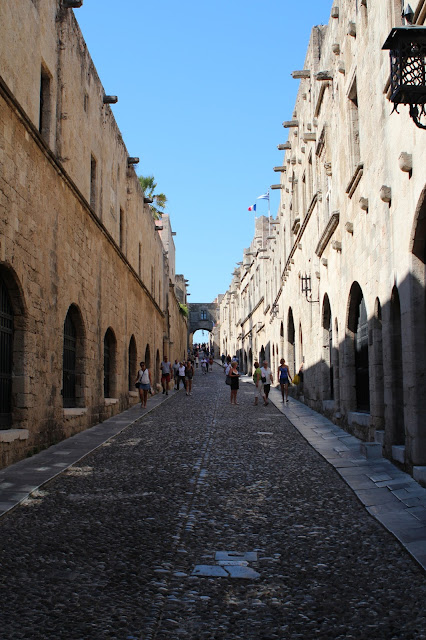
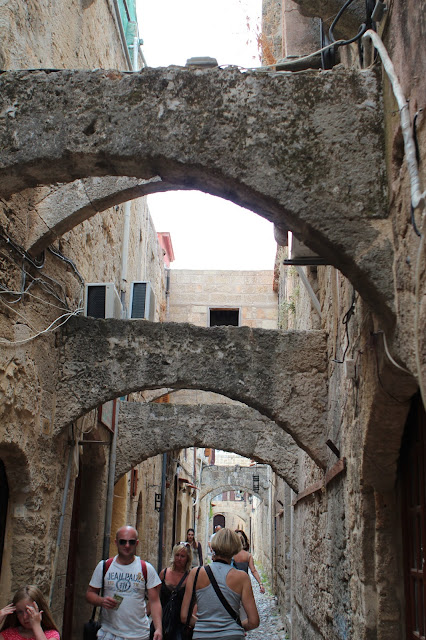
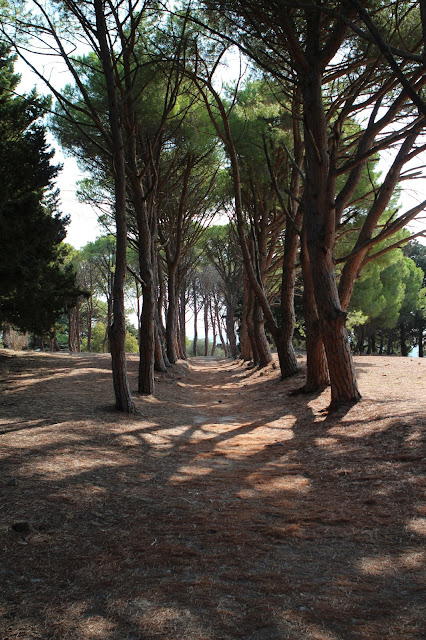
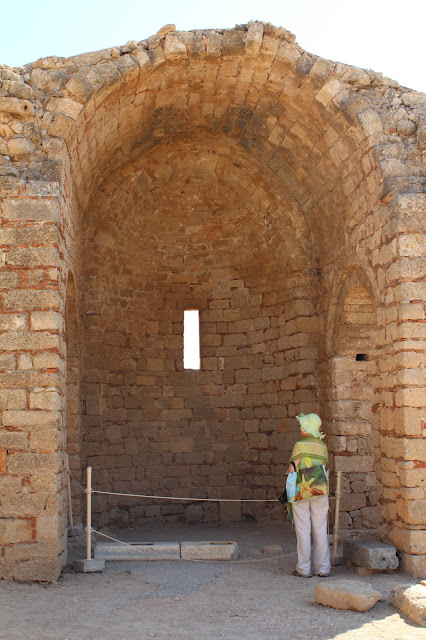
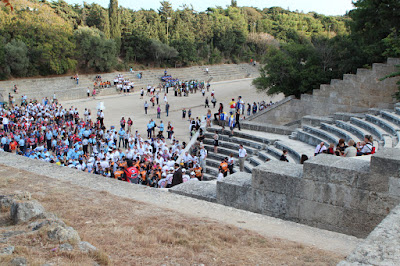
Terah and I went to the Greek island Rhodes recently. This is the second in a series about it. I am one to enjoy history. There is something deeply, well, connecting, about standing in an old place. There is a timeless quality to it a feeling of being connected to so many people of the past, and yet still being connected to change, visible in things such as weathering of stones. To gaze at pottery that s 300 years old, walk past 700-year-old walls, or pass through what remains of the grand portico of an ancient temple to Athena stirs a feeling I can barely explain, of timelessness. Although Rhodes doesn t have the famous Greek sites such as the Parthenon or Delphi, I can t help but wonder why the Rhodes sites aren t better known. They were incredible and it is hard to condense all that we saw into a short blog post. I have to start with the medieval Rhodes Old Town. We got off the bus a few blocks from it one bright morning, and our first task was to find a gate across the moat. Oh yes, A GATE ACROSS THE MOAT. It s a dry moat, and that bridge off in the distance is the gate we were headed to. Outside of the outer wall is a nice quiet walking area. The moat and walls completely surround Old Town and, for the most part, date back about 500 years. The round stones you see on that picture, we were told, were likely surplus from catapults and other projectile weapons. Cross one line of walls and you come to another, with original canons still present. The Knights Hospitaller of St. John, which held Rhodes for a few centuries until the Ottomans captured it, sure knew how to build to impress. The gate we happened to use was Amboise, the Grand Master s Gate. Right there is the stunningly rebuilt landmark Palace of the Grand Master. It is absolutely impossible for any photograph to begin to do this building justice. Between its imported Greek and Roman floors, to the grand nature of everything in it, and the archaeological museum in one corner, it was a fitting start to a visit to Old Town. Here s one of the main staircases. Just near the Palace is quiet courtyard with an old door. Pass through that door and suddenly you re in the midst of the busy Old Town. And among the landmarks in Old Town, the most prominent is Ippoton, the Avenue of the Knights. Along this avenue are the buildings built by the various nationalities of knights, many of which are historical sites in their own. Taken together, it is quite clear why Rhodes is said to be one of the world s best-preserved medieval cities. Down at the other end of Ippoton is the Knights Hospital, which is now part of the archaeological museum. Step off the Avenue a few blocks and you get to some quieter narrow streets just as old, in many cases. On Sunday morning, we were able to visit Mount Filerimos. In contrast to the busy Rhodes, Filerimos had an air of quiet and still to it. It was the site of a monastery, two historic churches, and a landmark Italian cross on the mountaintop. We arrived, and begin our visit with a walk up the quiet stone path. When we got to the top, we walked past this peaceful church. As we walked past the outside, we heard the beautiful music of chant from indoors. We got to step in and listen to mass for a few minutes. In typical fashion, directly in front of the church are two much older sites: one, the ruins of a temple to Athena, and the other a 4th-century Christian bapistery. Rhodes is a popular tourist destination, and of course we saw plenty of popular sites (such as the grandmaster s palace). Filerimos had a few tourists too, but not as many. I frequently like to operate on the plan of going wherever all the tourists aren t. And so, on Filerimos, that meant seeing what was behind the monastery. It started with this peaceful tree-lined path. And the deserted, but intentionally open, gate led to the remains of a Byzantine fortress, which had been a staging area for both the Knights and the Ottomans before their campaigns to capture Rhodes. It also provided incredible views of the surrounding countryside. The first historic site we had visited on our trip was the Acropolis of Lindos, parts of which are 2300 years old. Here s a view of the mountain from the rooftop of the Kalypso, our favorite restaurant in Lindos. The columns of the temple to Athena Lindia are visible, and of course so are the walls. The road up to the acropolis is accessible only on foot or by donkey. It is apparently the only road that has ever been used to get to the acropolis. Here is the partially-restored grand portico to the temple. There s an old Christian church (4th century, if memory serves) at the Acropolis too. The Acropolis makes some pretty good use of natural defenses too. Here s a view from one level of it. There s a manmade wall up there at the very top. And, of course, the beautiful Aegean always in the background. There are lots of cats on Rhodes. Here is a kitten napping at the top of the Lindos Acropolis: Lindos itself is a beautiful town. Here s one of the quieter streets: Notice the pebble steps leading into the houses those intricate pieces of artwork are all over. This post won t be complete without the story of our visit to the Acropolis of Rhodes. We walked there from Old Town. At the Acropolis, there are the remains of a temple to Apollo, an ancient theater, and an ancient stadium where qualifying matches for the Olympics were held. As we got closer to the area, we were repeatedly passed by people dressed in uniforms of various types. And as we got there, we joined a stream of people entering the area. The ancient stadium had apparently thousands of people in it, country names were being read off over the loudspeakers, policemen wielding machine guns were standing by, and we had absolutely no idea what was going on. At this point, you can appreciate the difference between Terah and me. Terah thought that we have no idea what is happening, she was tired from the walk, and so thought we should just leave. I thought that we have no idea what is happening, which is a great reason to stay. So Terah opted to sit and read a bit under some trees while I explored. Here s a view of the stadium as it was emptying out, seen from the theater: I explored the temple and theater, and eventually we were ready to head back. We knew there was a bus back to the New Market (from where we could get a bus back to our hotel), but didn t know where the bus stop was. The obvious place to ask were the policemen, which I thought I would do. Terah thought she would just stay sitting under the trees, on the grounds that the policemen nearest us were all carrying machine guns and perhaps wouldn t like to be disturbed. This led to my cryptic tweet:
Only ONE of us is the kind of person that goes up to guys with machine guns to ask what s happening. Me to Terah today
They told me that it was the preparations for the opening ceremony for a global shooting contest, and also gave me directions to the bus stop.

11 October 2011

Vincent Sanders: Sometimes I am just dumb

I have recently been working on some code for NetSurf which builds up an output buffer by repeatedly calling snprintf(); No great shock there, well understood trivial pattern that has been used repeatedly for ages.

Of course I discovered a buffer overflow, which to be fair had already been pointed out to me by another developer and I just failed to see it...Can I blame my old age? no? bah, get off my lawn!

Basically it boils down to me simply not seeing where C helpfully let me subtract one size_t typed value from another for a length and me completely forgetting that a negative result would simply become a large positive value...

I (erroneously) beleived snprintf took a (signed) int as the buffer length, of course it returns one, but it takes a size_t which is, of course unsigned.
Gosh I feel silly now, in fact I was so convinced I was right I wrote a program to "prove" it.
1 /* snprintf.c
2 *
3 * snprintf example
4 *
5 * Public domain (really I do not think its even copyrightable anyway)
6 *
7 * cc -Wall -o snprintf-ex snprintf-ex.c
8 */

9
10 #include <stdio.h>
11 #include <string.h>
12
13 #define SHOW printf("%3ld %.*s*%s\n", string_len - slen, (int)slen, string, string + strlen(string) + 1 )
14
15
16 int main(int argc, char**argv)
17
18 char string[64];
19 size_t string_len = sizeof(string) / 2;
20 int bloop;
21 size_t slen = 0;
22
23 /* initialise string */
24 for (bloop = 0; bloop < (sizeof(string) - 1); bloop++)
25 string[bloop] = '0' + (bloop % 10);
26
27 string[bloop] = 0; /* null terminate */
28
29 printf("%3ld %s\n", string_len, string);
30
31 /* try an empty string */
32 slen += snprintf(string + slen, string_len - slen, "%s", "");
33
34 SHOW;
35
36 /* blah blah */
37 slen += snprintf(string + slen, string_len - slen, "Lorem ipsum dolor");
38
39 SHOW;
40
41 /* this one should exceed the allowed length */
42 slen += snprintf(string + slen, string_len - slen, "Lorem ipsum dolor");
43
44 SHOW;
45
46 /* should not call snprintf up if slen exceeds string_len as the
47 * subtraction results in a negative length and snprintf takes a unisigned
48 * size!
49 */

50
51 /* this one starts exceeding the allowed length */
52 slen += snprintf(string + slen, string_len - slen, "Lorem ipsum dolor");
53
54 SHOW;
55
56 return 0;
57

Of course all this really proved was that I was wrong and I needed to clean up the original code as soon as possible.

A good lesson to learn here is that no matter how experienced you are, you can be mistaken and that, perhaps, some redemption I can take from this is I have matured enough as a programmer to write a test program to prove myself wrong!

Russell Coker: Akonadi on a MySQL Server

Wouter described how to get Akonadi (the back-end for KDE PIM) to use PostgreSQL [1]. I don t agree with his MySQL is a toy sentiment. But inspired by his post I decided to convert some of my systems to use a MySQL instance running on a server instead of one instance for each user. In the default configuration you have 140M of disk space and 200M of RAM used by each user for a private MySQL installation which has about 24K of data (at least at the moment on systems I run, maybe more in future). Here s some pseudo shell script to dump the database and get a new config: mysqldump socket=$HOME/.local/share/akonadi/socket-$HOSTNAME/mysql.socket akonadi > dump.sql
akonadictl stop
rm -rf .config/akonadi
rm -rf .local/share/akonadi
mkdir .config/akonadi
cat > .config/akonadi/akonadiserverrc <<EOF
[%General]
Driver=QMYSQL
SizeThreshold=4096
ExternalPayload=false

[QMYSQL]
Name=$USER_akonadi
Host=IP_OR_HOST
User=$USER
Password=$PASS
StartServer=false
Options=
ServerPath=/usr/sbin/mysqld

[Debug]
Tracer=null
EOF Then with DBA privs you need to run the following in the mysql client: create database $USER_akonadi;
GRANT ALL PRIVILEGES ON $USER_akonadi.* to $USER @'% IDENTIFIED BY $PASS ; Then run the following to import the SQL data: mysql $USER_akonadi < dump.sql Ideally that would be it, but on my test installation (Debian/Squeeze MySQL server and Debian/Unstable KDE workstations) I needed to run the following SQL commands to deal with some sort of case problem.
rename table schemaversiontable to SchemaVersionTable;
rename table resourcetable to ResourceTable;
rename table collectionattributetable to CollectionAttributeTable;
rename table collectionmimetyperelation to CollectionMimeTypeRelation;
rename table collectionpimitemrelation to CollectionPimItemRelation;
rename table collectiontable to CollectionTable;
rename table flagtable to FlagTable;
rename table mimetypetable to MimeTypeTable;
rename table parttable to PartTable;
rename table pimitemflagrelation to PimItemFlagRelation;
rename table pimitemtable to PimItemTable; I am not using any PIM features other than the AddressBook (which hasn t been working well for a while), so I m not sure that this is working correctly. But I would prefer that something I don t use and is probably broken take up disk space and RAM on a server instead of a workstation anyway.

8 October 2011

Steve Langasek: Free as in flickers

Ubuntu has had an explicit goal for several cycles now to achieve flicker-free booting: smooth graphical boot all the way through from bootloader to the desktop, with no messy modeswitches or cuts between text and graphics mode on the console. This is no small task, to be sure; even getting flicker-free transitions between plymouth and X for the KMS-capable video cards was a handful for 10.04 LTS. So I was suitably impressed when in the course of testing for the upcoming Ubuntu 11.10 release I found that on a laptop with the nouveau driver, we had achieved 100% flicker-free boot all the way from grub to X. And then I was astonished to find the grub-kernel transition was flicker-free when using the binary nvidia driver too! This is in large part thanks to Colin Watson's work upstream implementing VBE support in GRUB2, and Andy Whitcroft's adding proper support for a vesafb fallback when no KMS video driver is found. The architecture of how this all hangs together is now documented in the Ubuntu wiki. The irony is that, while nouveau gives a perfect flicker-free boot, and the nvidia binary drivers give a boot with just one modeswitch, both of my Intel systems show two modeswitches on boot - one between grub and the kernel, another between the kernel and X. Something to work on cleaning up next month, I think...

Wouter Verhelst: Re: 8bitmime

Would people please stop using and/or deplying MTAs that are not 8-bit safe? I mean, it's the 2010s for crying out loud; not speaking 8BITMIME is very much frowned upon (page 16, paragraph 2, second sentence).

6 October 2011

Thorsten Glaser: eMail

Would MTAs please stop sending hi-bit7 messages to other MTAs which do not advertise 8BITMIME! Recode it to QP or BASE64, damnit! The receiving MTA is entitled to strip the set bit7, which kinda makes things hard to read (while I know how to deal with blvde Stra_e, the advent of UTF-8 makes that blC6de StraC?e, introduces C0 control characters and makes typographic quotation marks into NUL-containing octet sequences (as their UTF-8 representation contains 0x80 octets) which let every sensible MDA terminate the line there). I even filed in the Debian BTS against the BTS (might be Drexim's fault, though). Would MUAs please default to Quoted-Printable! And mail hosters should use the same server when retrying delivery, to benefit greylisting. Or at least publish a list of outgoing IPv4 addresses they use for sending. Or use IPv6. Oh, and STARTTLS, while we are on my wishlist. It's a sad day when the percentage of correctly encoded eMail messages in my INBOX is smaller than that of my Spambox...

4 October 2011

Michael Banck: 4 Oct 2011

Woodchuck and FrOSCon

At the end of August, I attended FrOSCon in Bonn again, after skipping it last year. The evening before FrOSCon however, I visited Neal Walfield, his wife Isabel and their little son Noam in D sseldorf. Besides having a great time and a lovely dinner, I was most impressed by their collection of Maemo devices (they had at least two N770s, an N900 and, to my jealousy, an N950) which Neal is doing research on these days. He works on woodchuck, which is a project investigating how to improve data availability on mobile devices and our conversation prompted him to implement ATP Woodchuck, which makes smarter decisions when to run APT upgrade on your Maemo device then the standard updater. As part of the research, they also run a user behaviour study which I joined, where one installs a client which records various data off your N900 and sends them anonymized (he seems to be doing a good job at that) to figure out how people use their mobile devices and hopefully enhance the experience. So if you have a N900, you should consider joining the study so they get better data.
The next day, I picked up Martin Michlmayr nearby and we headed for FrOSCon. I was quite impressed by the Makerbot at the Tarent booth, but I still don't know what they are really doing and why they had it on display... In the afternoon, I attended a couple of talks in the PostgreSQL developer room and a talk about a big OpenVPN deployment, before ending the day with the excellent as always social event barbeque. On Sunday, I went to quite a few talks, but I thought that two of them were particularly interesting:
Michael "Monty" Widenius of MySQL gave a talk titled "Why going open source will improve your product" about starting businesses on an open source project, or how business can/should open-source their product. Besides a detailed discussion about the various forms of Open Source licenses and the Open-Core model, he proposed the idea of "Business Source" (see slide 20 of his presentation), where a startup would distribute the source code under a non-commercial (but otherwise open-source) license with the explicit guarantee that the license would be changed to a true FLOSS license at some defined point in the future, giving the company a head start to develop and nurture their project. I asked whether this has been already implemented in practise and how the community could be sure that e.g. lawyers after a hostile takeover would not just remove that part of the copyright notice, as long as a true distribution under a FLOSS license has not happened yet. Monty wasn't aware of any real-word cases, and he did not seem to be concerned about this and said the original intent would be clear in a possible court case. This was the first time I heard about this approach, I wonder how other people think about it, whether it would work in practise and be a useful thing to have?
Second, I attended a talk by Gregor Geiermann, a Ph.D. student in linguistics on "Perceptions of rudeness in Free Software communities". He conducted an online survey about the perceived rudeness of several forum thread posts on Ubuntu Forums. Survey participants were first asked a couple of generic questions about their gender, nationality etc. and were then presented with a series of posts. For each post, they were asked to rate how rude they thought it was on a scale of 1 to 5 and they also had the possibility to highlight the parts of the post they considered rude as well as add comments. He presented a neat web application for analyzing the results, which makes it possible to select different groups (he did male vs. female and Americans vs. Germans in the talk) and have their overall rudeness ratings as well as the highlighted texts visualized as different shades of blue. Comments can be easily accessed. There were quite a few interesting differences e.g. in how Germans perceived rudeness compared to Americans (RTFM comments were considered less rude by Germans for example, IIRC). In response to my question, he said he intended to release the web application as open source and this might be an interesting tool for FLOSS projects to analyze how their public communication channels are perceived by various groups. Unfortunately, I cannot find any other resources about this on the web as of today, so I should try to contact him about it at some point.

1 October 2011

Sergio Talens-Oliag: Static website generators

The last month I was supposed to work on a OpenStack related project, but for administrative reasons it has been delayed and I've tried to do small tasks to be able to finish them quickly and start the work on the main project when the issues get solved. As the delay has been longer than expected last Wednesday I've realized than on the last weeks I did a lot of small system administration tasks: With all the changes I did I noticed that I had to do something with our Intranet server; it is just a reverse proxy for a lot of different web services and its main page was one static HTML page with links to them, nothing else. In the long term maybe we will replace it with something based on Drupal or Lifeay, but for now I just wanted something to be able to organize the links and provide some information about the services for the new users without having to write HTML (I really like Agile Documentation Tools that let me focus on the content and forget about the markup), and started to look at some of them. My first idea was to use ikiwiki, as it has all the features I was looking for: I can use Markdown or reStructuredText to write the contents, the source pages are easily handled on a Version Control System, it supports the use of templates for the HTML, etc., but it seemed to me that using ikiwiki was like killing flies with a cannon (that's a Spanish say, I guess it's easy to understand it in English, no?) and I decided to review other tools to build static web sites. To make a long story short, I selected some tools that met my requirements and looked nice on their demo sites; after my first review I thought that Hyde was going to be my bet, as it uses technologies I'm already familiar with, but after trying it I saw that I was going to have a problem with documentation (the current Hyde version lacks it) and it was going to be more complicated that using ikiwiki. Before giving up I decided to review simpler tools, just in case, and after looking some of them I ended up using poole, a simple python script (the source is just one file and it only requires python-markdown to work). Before moving to the content I tried to adapt a couple of free themes to be used by the tool, but I didn't liked the result, so I went back to the plain style provided by the tool and added a logo and a background. With that simple look and feel I started to work with the content, splitting it into eight markdown files and a python macro to include a file that has all the links used on the site. While trying to make the main page look good I noticed how little I know about CSS, but using search engines I was able to build a two column block into the main page and publish the contents and with the help of some CSS enabled co-workers I changed the look and feel of the site in about 30 minutes. In summary, if you want a really simple website, you know a little bit of python and don't want to spend much time learning how to use a website generator then Poole is a good option. If you want something more complex I still think that ikiwiki is a good option, but YMMV.

30 September 2011

Thorsten Glaser: Improvements welcome

No I don t really know any SQL. In fact, even at vocational school, where we focussed on database normalisation anyway, I tried hard to avoid the topic. Feel free to access here my entire knowledge about SQL (I did use Amaya, Arena and Arachne though. Liked only Arachne out of these three, and then, only under DOS, not its Unix version. Maybe the WWW could be named AAA instead? But then, lynx(1) is the one true browser ) Ah, well. While at it the entirety of my Perl knowledge is here: perltoc(1) with quick links to perlfunc(1). The entirety of my (X)HTML and ECMAscript knowledge, DE: SELFHTML; although, the spec and DTD helped; and to write my notes on JSON, I took a peek at the formal ECMAscript spec as well propos, does anyone know a (good enough) indent(1) equivalent for ECMAscript, as I am trying to strip down some, inherited (GPL, yes) code for a hobby project, but Geo-people seem to produce illegible code?

Axel Beckert: Fun facts from the UDD

After spotting an upload of mira, who in turn spotted an upload of abe (the package, not an upload by me aka abe@d.o), mira (mirabilos aka tg@d.o) noticed that there are Debian packages which have same name as some Debian Developers have as login name. Of course I noticed a long time ago that there is a Debian package with my login name abe . Another well-known Debian login and former package name is amaya. But since someone else came up with that thought, too, it was time for finding the definite answer to the question which are the DD login names which also exist as Debian package names. My first try was based on the list of trusted GnuPG keys:
$ apt-cache policy $(gpg --keyring /etc/apt/trusted.gpg --list-keys 2>/dev/null   \
                     grep @debian.org   \
        	     awk -F'[<@]' ' print $2 '   \
                     sort -u) 2>/dev/null   \
                   egrep -o '^[^ :]*'
alex
tor
ed
bam
ng
But this was not satisfying as my own name didn t show up and gpg also threw quite a lot of block reading errors (which is also the reason for redirecting STDERR). mira then had the idea of using the Ultimate Debian Database to answer this question more properly:
udd=> SELECT login, name FROM carnivore_login, carnivore_names
      WHERE carnivore_login.id=carnivore_names.id AND login IN
      (SELECT package AS login FROM packages, active_dds
       WHERE packages.package=active_dds.login UNION
       SELECT source AS name FROM sources, active_dds
       WHERE sources.source=active_dds.login)
      ORDER BY login;
 login                   name
-------+---------------------------------------
 abe     Axel Beckert
 alex    Alexander List
 alex    Alexander M. List  4402020774 9332554
 and     Andrea Veri
 ash     Albert Huang
 bam     Brian May
 ed      Ed Boraas
 ed      Ed G. Boraas [RSA Compatibility Key]
 ed      Ed G. Boraas [RSA]
 eric    Eric Dorland
 gq      Alexander GQ Gerasiov
 iml     Ian Maclaine-cross
 lunar   J r my Bobbio
 mako    Benjamin Hill
 mako    Benjamin Mako Hill
 mbr     Markus Braun
 mlt     Marcela Tiznado
 nas     Neil A. Schemenauer
 nas     Neil Schemenauer
 opal    Ola Lundkvist
 opal    Ola Lundqvist
 paco    Francisco Moya
 paul    Paul Slootman
 pino    Pino Toscano
 pyro    Brian Nelson
 stone   Fredrik Steen
(26 rows)
Interestingly tor (Tor Slettnes) is missing in this list, so it s not complete either At least I m quite sure that nobody maintains a package with his own login name as package name. :-) We also have no packages ending in -guest , so there s no chance that a package name matches an Alioth guest account either

16 September 2011

Peter Eisentraut: ccache and clang, part 2

There's more funny business when using ccache in combination with clang. Last time I suggested that you use the invocation
./configure CC='ccache clang -Qunused-arguments -fcolor-diagnostics'
to get rid of the "argument unused during compilation" warnings.But you still might get loads of warnings that you wouldn't normally get without ccache, such as this example (from the PostgreSQL source code):

extension.c:382:35: warning: equality comparison with extraneous parentheses [-Wparentheses]
if (( (((control->directory)[0]) == '/') ))
~~~~~~~~~~~~~~~~~~~~~~~~~~^~~~~~
extension.c:382:35: note: use '=' to turn this equality comparison into an assignment
(This is the opposite of the warning that tells you to put two pairs of parentheses around an assignment used as a truth value.)Or:

path.c:727:7: warning: explicitly assigning a variable of type 'char *' to itself [-Wself-assign]
path = (path);
~~~~ ^ ~~~~
The problem is, these come from macro expansions, so wouldn't normally see them, because (I guess) the compiler driver is smart enough not to warn about such things when they come from macro expansions.The way ccache works is approximately
  1. preprocess the input file
  2. look for it in the cache
  3. if not found, compile the preprocessed file
What would be better in this situation is
  1. preprocess the input file
  2. look for it in the cache
  3. if not found, compile the original file
And indeed you can turn on that second behavior by setting the obscure environment variable CCACHE_CPP2 (as in, run cpp twice):
export CCACHE_CPP2=yes
Then all these extra warnings disappear.(The ccache man page is worth a read. There are a few interesting settings to play with.)I'm currently playing around with a shell script ccache-clang that looks like this:
CCACHE_CPP2=yes exec ccache clang -Qunused-arguments  test -t 2 && echo -fcolor-diagnostics  "$@"

14 September 2011

Thorsten Glaser: MirBSD online manpages major facelift

Our MirBSD online manual pages and other assorted BSD documentation (except of course the merely copied ncurses, lynx etc. documentation and the texinfo generated HTML pages) has just gained a major facelift. They look alike in lynx(1) best web browser ever and less(1)/man(1) now, and remind of a DEC VT420 on a CSS capable Buntbrause. Thanks to our contributor XTaran for aid with the colour scheme! Since these are generated from catmanpages, heuristics are used for things like where should bold/underline begin/end (since nroff(1) is not always the brightest but working on that), and hyperlinks can only be generated for other manpage references (whose targets may or may not exist, for example if they aren t part of MirOS base/XFree86 ). But on the other hand, Valid XHTML/1.1 and CSS speaks for itself

Mike Hommey: Building a custom kernel for the Nexus S

There are several reasons why someone would want to build a custom kernel for their Android phone. In my case, this is because I wanted performance counters (those used by the perf tool that comes with the kernel source). In Julian Seward s case, he wanted swap support to overcome the limited memory amount on these devices in order to run valgrind. In both cases, the usual suspects (AOSP, CyanogenMod) don t provide the wanted features in prebuilt ROMs. There are also several reasons why someone would NOT want to build a complete ROM for their Android phone. In my case, the Nexus S is what I use to work on Firefox Mobile, but it is also my actual mobile phone. It s a quite painful and long process to create a custom ROM, and another long (but arguably less painful thanks to ROM manager) process to backup the phone data, install the ROM, restore the phone data. And if you happen to like or use the proprietary Google Apps that don t come with the AOSP sources, you need to add more steps. There are however tricks that allow to build a custom kernel for the Nexus S and use it with the system already on the phone. Please note that the following procedure has only been tested on two Nexus S with a 2.6.35.7-something kernel (one with a stock ROM, but unlocked, and another one with an AOSP build). Also please note that there are various ways to achieve many of the steps in this procedure, but I ll only mention one (or two in a few cases). Finally, please note some steps rely on your device being rooted. There may be ways to do without, but I m pretty sure it requires an unlocked device at the very least. This post doesn t cover neither rooting nor unlocking. Preparing a build environment To build an Android kernel, you need a cross-compiling toolchain. Theoretically, any will do, provided it targets ARM. I just used the one coming in the Android NDK:
$ wget http://dl.google.com/android/ndk/android-ndk-r6b-linux-x86.tar.bz2
$ tar -jxf android-ndk-r6b-linux-x86.tar.bz2
$ export ARCH=arm
$ export CROSS_COMPILE=$(pwd)/android-ndk-r6b/toolchains/arm-linux-androideabi-4.4.3/prebuilt/linux-x86/bin/arm-linux-androideabi-
For the latter, you need to use a directory path containing prefixed versions (such as arm-eabi-gcc or arm-linux-androideabi-gcc), and include the prefix, but not gcc . You will also need the adb tool coming from the Android SDK. You can install it this way:
$ wget http://dl.google.com/android/android-sdk_r12-linux_x86.tgz
$ tar -zxf android-sdk_r12-linux_x86.tgz
$ android-sdk-linux_x86/tools/android update sdk -u -t platform-tool
$ export PATH=$PATH:$(pwd)/android-sdk-linux_x86/platform-tools
Building the kernel For the Nexus S, one needs to use the Samsung Android kernel tree, which happens to be unavailable at the moment of writing due to the kernel.org outage. Fortunately, there is a clone used for the B2G project, which also happens to contain the necessary cherry-picked patch to add support for the PMU registers on the Nexus S CPU that are needed for the performance counters.
$ git clone -b devrom-2.6.35 https://github.com/cgjones/samsung-android-kernel
$ cd samsung-android-kernel
You can then either start from the default kernel configuration:
$ make herring_defconfig
or use the one from the B2G project, which enables interesting features such as oprofile:
$ wget -O .config https://raw.github.com/cgjones/B2G/master/config/kernel-nexuss4g
From then, you can use the make menuconfig or similar commands to further configure your kernel. One of the problems you d first encounter when booting such a custom kernel image is that the bcm4329 driver module that is shipped in the system partition (and not in the boot image) won t match the kernel, and won t be loaded. The unfortunate consequence is the lack of WiFi support. One way to overcome this problem is to overwrite the kernel module in the system partition, but I didn t want to have to deal with switching modules when switching kernels. There is however a trick allowing the existing module to be loaded by the kernel: compile a kernel with the same version string as the one already on the phone. Please note this only really works if the kernel is really about the same. If there are differences in the binary interface between the kernel and the modules, it will fail in possibly dangerous ways. To use that trick, you first need to know what kernel version is running on your device. Settings > About phone > Kernel version will give you that information on the device itself. You can also retrieve that information with the following command:
$ adb shell cat /proc/version
With my stock ROM, this looks like the following:
Linux version 2.6.35.7-ge382d80 (android-build@apa28.mtv.corp.google.com) (gcc version 4.4.3 (GCC) ) #1 PREEMPT Thu Mar 31 21:11:55 PDT 2011
In the About phone information, it looks like:
2.6.35.7-ge382d80
android-build@apa28
The important part above is -ge382d80, and that is what we will be using in our kernel build. Make sure the part preceding -ge382d80 does match the output of the following command:
$ make kernelversion
The trick is to write that -ge382d80 in a .scmversion file in the kernel source tree (obviously, you need to replace -ge382d80 with whatever your device has):
$ echo -ge382d80 > .scmversion
The kernel can now be built:
$ make -j$(($(grep -c processor /proc/cpuinfo) * 3 / 2))
The -j part is the general rule I use when choosing the number of parallel processes make can use at the same time. You can pick whatever suits you better. Before going further, we need to get back to the main directory:
$ cd ..
Getting the current boot image The Android boot image living in the device doesn t contain only a kernel. It also contains a ramdisk containing a few scripts and binaries, that starts the system initialization. As we will be using the ramdisk coming with the existing kernel, we need to get that ramdisk from the device flash memory:
$ adb shell cat /proc/mtd awk -F'[:"]' '$3 == "boot" print $1 '
The above command will print the mtd device name corresponding to the boot partition. On the Nexus S, this should be mtd2.
$ adb shell
$ su
# dd if=/dev/mtd/mtd2 of=/sdcard/boot.img bs=4096
2048+0 records in
2048+0 records out
8388608 bytes transferred in x.xxx secs (xxxxxxxx bytes/sec)
# exit
$ exit
In the above command sequence, replace mtd2 with whatever the previous command did output for you. Now, you can retrieve the boot image:
$ adb pull /sdcard/boot.img
Creating the new boot image We first want to extract the ramdisk from that boot image. There are various tools to do so, but for convenience, I took unbootimg, on github, and modified it slightly to seemlessly support the page size on the Nexus S. For convenience as well, we ll use mkbootimg even if fastboot is able to create boot images. Building unbootimg, as well as the other tools rely on the Android build system, but since I didn t want to go through setting it up, I figured a minimalistic way to build the tools:
$ git clone https://github.com/glandium/unbootimg.git
$ git clone git://git.linaro.org/android/platform/system/core.git
The latter is a clone of git://android.git.kernel.org/platform/system/core.git, which is down at the moment.
$ gcc -o unbootimg/unbootimg unbootimg/unbootimg.c core/libmincrypt/sha.c -Icore/include -Icore/mkbootimg
$ gcc -o mkbootimg core/mkbootimg/mkbootimg.c core/libmincrypt/sha.c -Icore/include
$ gcc -o fastboot core/fastboot/ protocol,engine,bootimg,fastboot,usb_linux,util_linux .c core/libzipfile/ centraldir,zipfile .c -Icore/mkbootimg -Icore/include -lz
Once the tools are built, we can extract the various data from the boot image:
$ unbootimg/unbootimg boot.img
section sizes incorrect
kernel 1000 2b1b84
ramdisk 2b3000 22d55
second 2d6000 0
total 2d6000 800000
...but we can still continue
Don t worry about the error messages about incorrect section sizes if it tells you we can still continue . The unbootimg program creates three files: All that is left to do is to generate the new boot image:
$ eval ./mkbootimg $(sed s,boot.img-kernel,samsung-android-kernel/arch/arm/boot/zImage, boot.img-mk)
Booting the image There are two ways you can use the resulting boot image: one-time boot or flash. If you want to go for the latter, it is best to actually do both, starting with the one-time boot, to be sure you won t be leaving your phone useless (though recovery is there to the rescue, but is not covered here). First, you need to get your device in the fastboot mode, a.k.a. boot-loader:
$ adb reboot bootloader
Alternatively, you can power it off, and power it back on while pressing the volume up button. Once you see the boot-loader screen, you can test the boot image with a one-time boot:
$ ./fastboot boot boot.img
downloading 'boot.img'...
OKAY [ 0.xxxs]
booting...
OKAY [ 0.xxxs]
finished. total time: 0.xxxs
As a side note, if fastboot sits waiting for device , it either means your device is not in fastboot mode (or is not connected), or that you have permissions issues on the corresponding USB device in /dev. Your device should now be starting up, and eventually be usable under your brand new kernel (and WiFi should be working, too). Congratulations. If you want to use that kernel permanently, you can now flash it after going back in the bootloader:
$ adb reboot bootloader
$ ./fastboot flash boot boot.img
sending 'boot' (2904 KB)...
OKAY [ 0.xxxs]
writing 'boot'...
OKAY [ 0.xxxs]
finished. total time: 0.xxxs
$ ./fastboot reboot
Voil .
Next.

Previous.