Valhalla's Things: 1840s Underwear
Tags: madeof:atoms, craft:sewing, FreeSoftWear
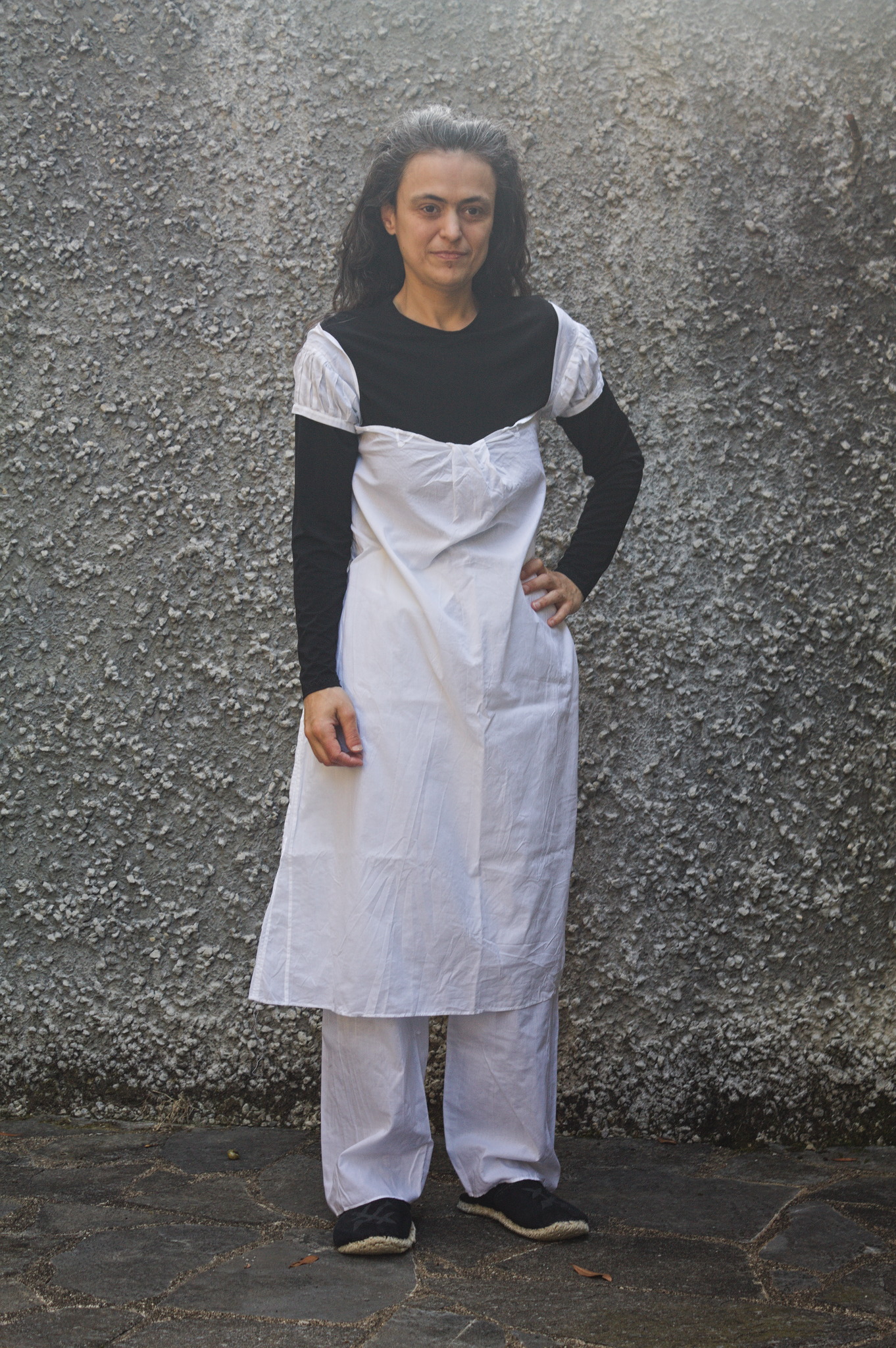 A bit more than a year ago, I had been thinking about making myself a
cartridge pleated skirt. For a number of reasons, one of which is the
historybounding potential, I ve been thinking pre-crinoline, so
somewhere around the 1840s, and that s a completely new era for me,
which means: new underwear.
Also, the 1840s are pre-sewing machine, and I was already in a position
where I had more chances to handsew than to machine sew, so I decided to
embrace the slowness and sew 100% by hand, not even using the machine
for straight seams.
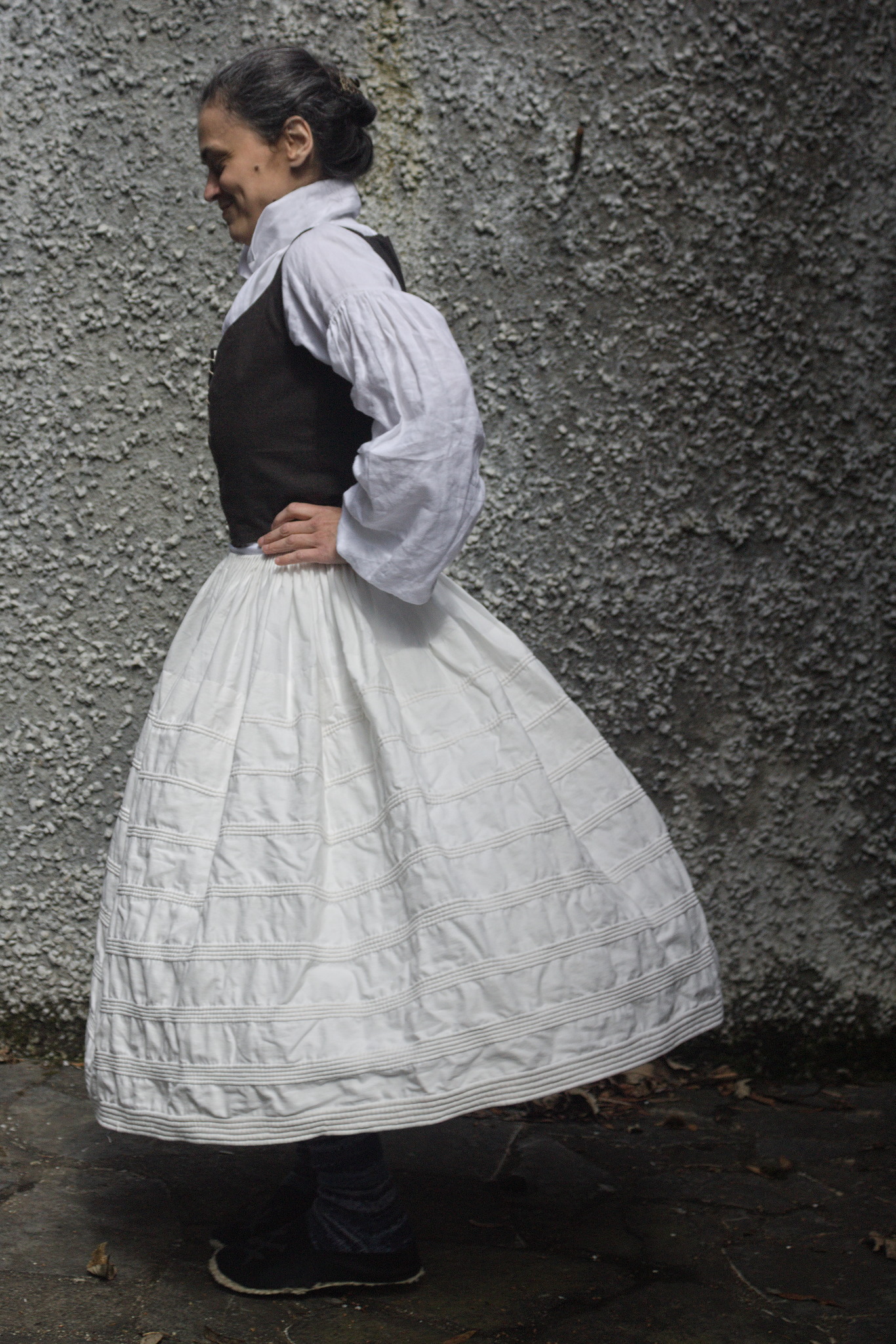 If I remember correctly, I started with the corded petticoat, looking
around the internet for instructions, and then designing my own based on
the practicality of using modern wide fabric from my stash (and
specifically some DITTE from costumers favourite source of dirty cheap
cotton IKEA).
Around the same time I had also acquired a sashiko kit, and I used the
Japanese technique for sewing running stitches pushing the needle with a
thimble that covers the base of the middle finger, and I can confirm
that for this kind of things it s great!
I ve since worn the petticoat a few times for casual / historyBounding /
folkwearBounding reasons, during the summer, and I can confirm it s
comfortable to use; I guess that during the winter it could be nice to
add a flannel layer below it.
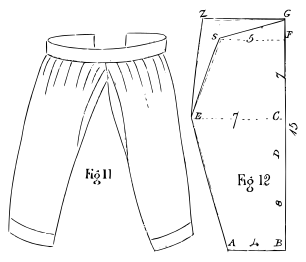 Then I proceeded with the base layers: I had been browsing through
The workwoman's guide and that provided plenty of examples, and I
selected the basic ankle-length drawers from page 53 and the alternative
shift on page 47.
As for fabric, I had (and still have) a significant lack of underwear
linen in my stash, but I had plenty of cotton voile that I had not used
in a while: not very historically accurate for plain underwear, but
quite suitable for a wearable mockup.
Working with a 1830s source had an interesting aspect: other of the
usual, mildly annoying, imperial units, it also used a lot a few
obsolete units, especially nails, that my qalc, my usual calculator and
converter, doesn t support.
Not a big deal, because GNU units came to the rescue, and that one
knows a lot of obscure and niche units, and it s quite easy to add those
that are missing1
Working on this project also made me freshly aware of something I had
already noticed: converting instructions for machine sewing garments
into instructions for hand sewing them is usually straightforward, but
the reverse is not always true.
Starting from machine stitching, you can usually convert straight
stitches into backstitches (or running backstitches), zigzag and
overlocking into overcasting and get good results. In some cases you may
want to use specialist hand stitches that don t really have a machine
equivalent, such as buttonhole stitches instead of simply overcasting
the buttonhole, but that s it.
Starting from hand stitching, instead, there are a number of techniques
that could be converted to machine stitching, but involve a lot of
visible topstitching that wasn t there in the original instructions, or
at times are almost impossible to do by machine, if they involve
whipstitching together finished panels on seams that are subject to
strong tension.
Anyway, halfway through working with the petticoat I cut both the
petticoat and the drawers at the same time, for efficiency in fabric
use, and then started sewing the drawers.
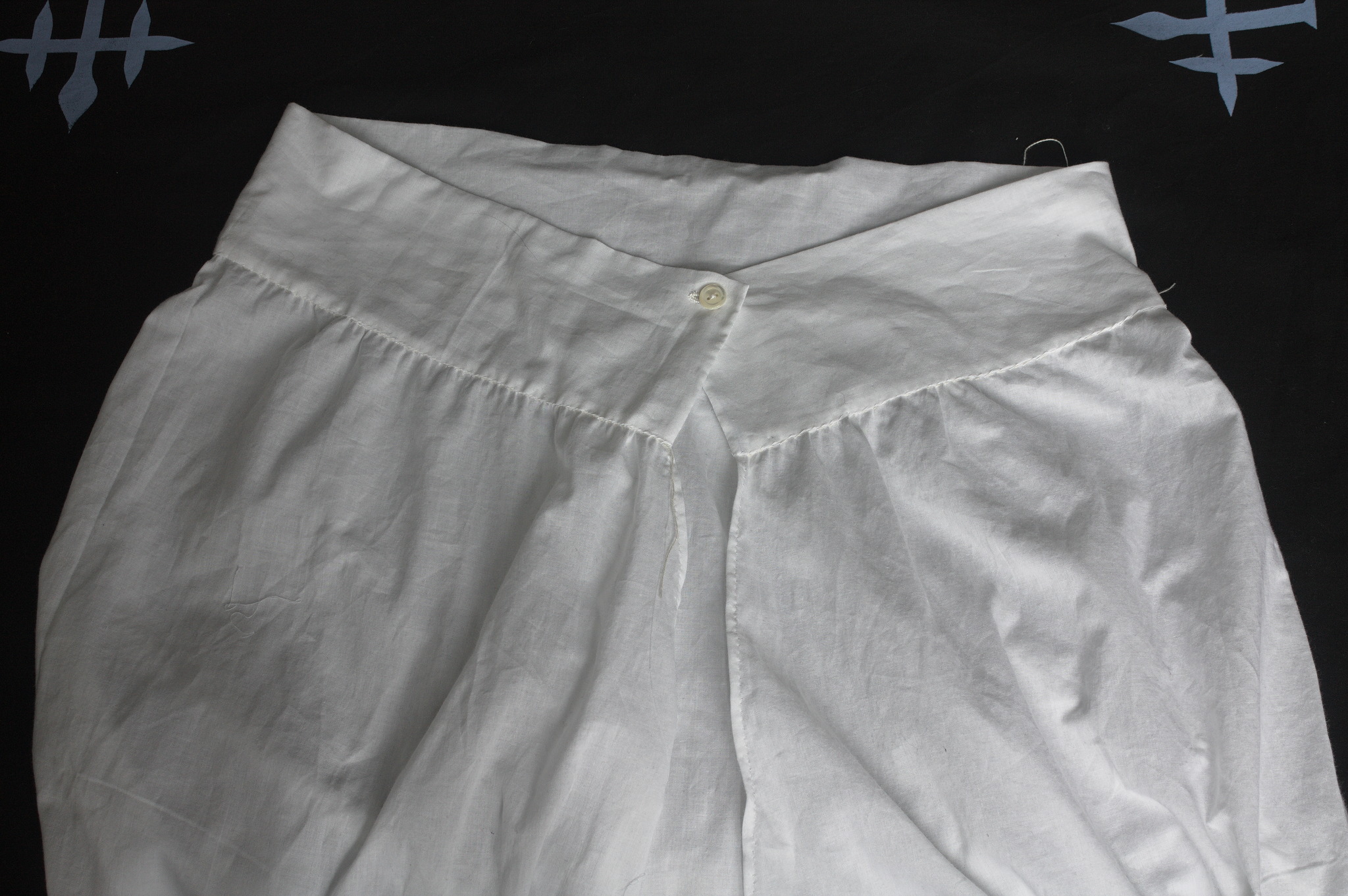 The book only provided measurements for one size (moderate), and my
fabric was a bit too narrow to make them that size (not that I have any
idea what hip circumference a person of moderate size was supposed to
have), so the result is just wide enough to be comfortably worn, but I
think that when I ll make another pair I ll try to make them a bit
wider. On the other hand they are a bit too long, but I think that I ll
fix it by adding a tuck or two. Not a big deal, anyway.
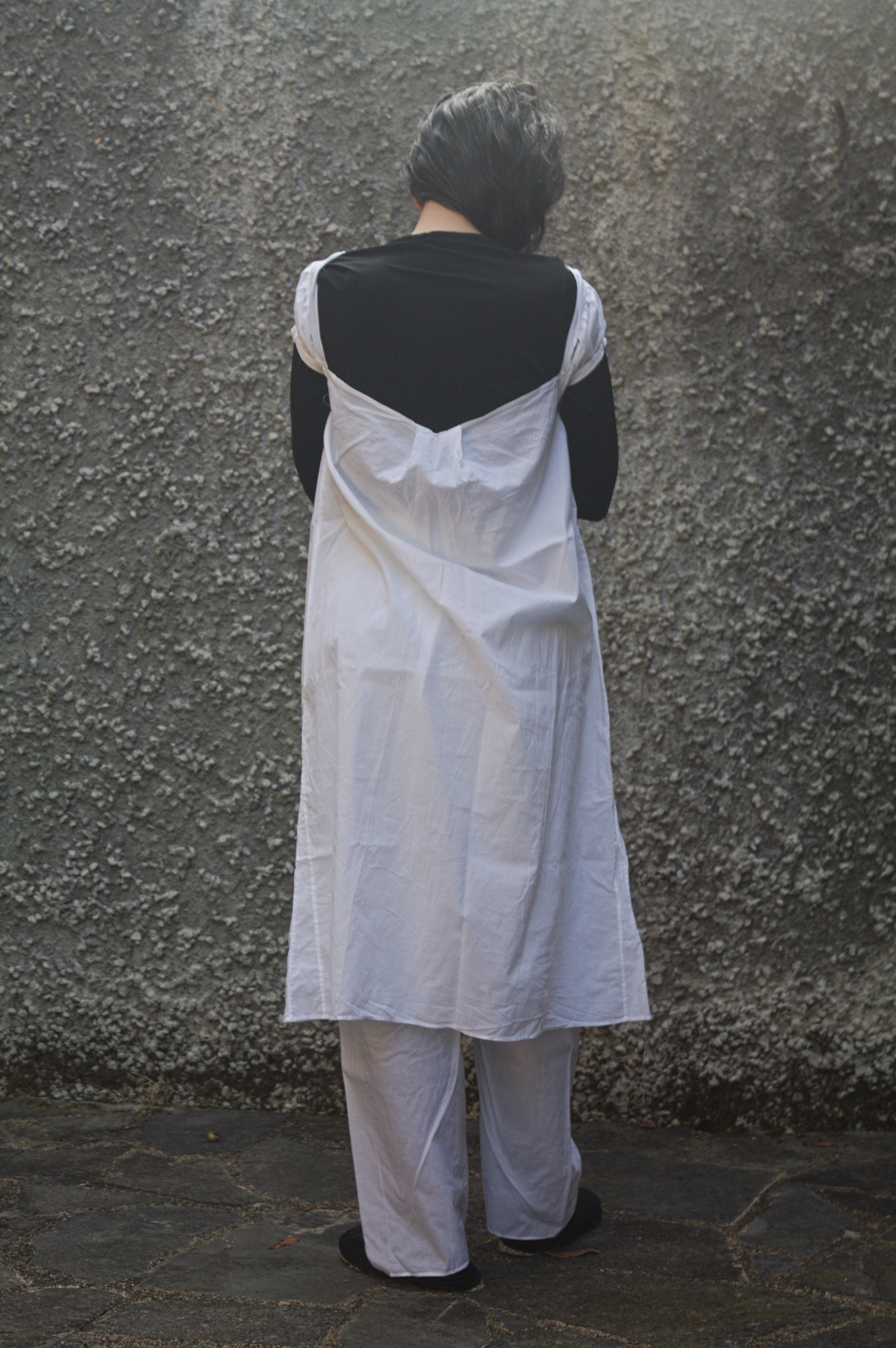 The shift gave me a bit more issues: I used the recommended gusset size,
and ended up with a shift that was way too wide at the top, so I had to
take a box pleat in the center front and back, which changed the look
and wear of the garment. I have adjusted the instructions to make
gussets wider, and in the future I ll make another shift following
those.
Even with the pleat, the narrow shoulder straps are set quite far to the
sides, and they tend to droop, and I suspect that this is to be expected
from the way this garment is made. The fact that there are buttonholes
on the shoulder straps to attach to the corset straps and prevent the
issue is probably a hint that this behaviour was to be expected.
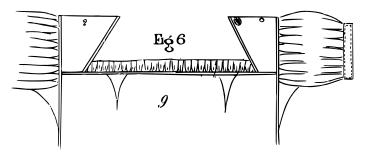 I ve also updated the instructions so that they shoulder straps are a
bit wider, to look more like the ones in the drawing from the book.
Making a corset suitable for the time period is something that I will
probably do, but not in the immediate future, but even just wearing the
shift under a later midbust corset with no shoulder strap helps.
I m also not sure what the point of the bosom gores is, as they don t
really give more room to the bust where it s needed, but to the high
bust where it s counterproductive. I also couldn t find images of
original examples made from this pattern to see if they were actually
used, so in my next make I may just skip them.
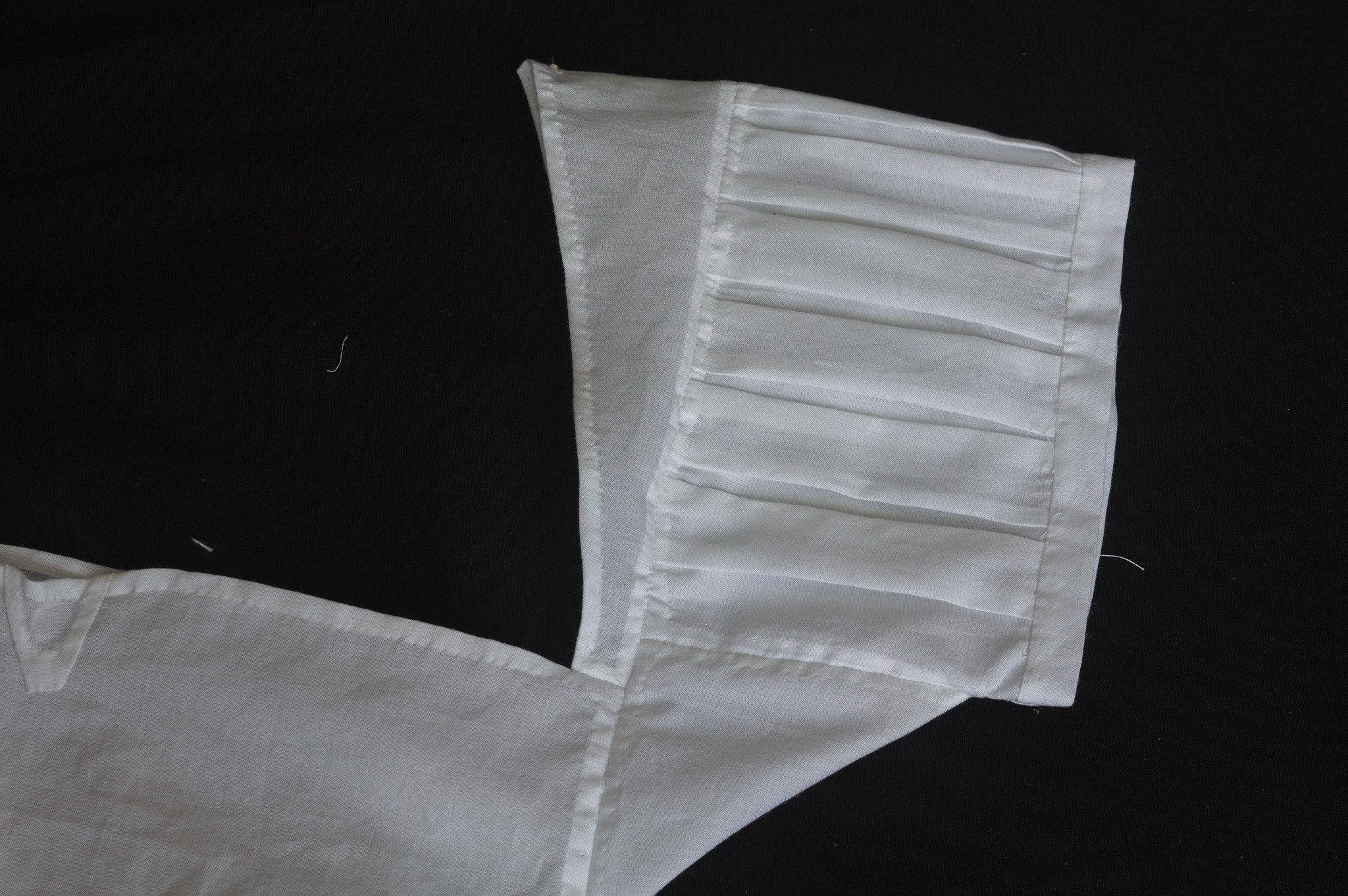 On the other hand, I m really happy with how cute the short sleeves
look, and if2 I ll ever make the other cut of shift from the same
book, with the front flaps, I ll definitely use these pleated sleeves
rather than the straight ones that were also used at the time.
As usual, all of the patterns have been published on my website under a
Free license:
 Some time ago, I wanted to encrypt a bunch of data in an application I was writing in Rust, mostly to be stored in a database, but also session cookies and sensitive configuration variables.
Since Rust is widely known as a secure-yet-high-performance programming language, I was expecting that there would be a widely-used crate that gave me a secure, high-level interface to strong, safe cryptography.
Imagine my surprise when I discovered that just didn t seem to exist.
Don t get me wrong: Rust is replete with fast, secure, battle-tested cryptographic primitives.
The

 As per
 The


 Matthew blogged about his
 showing 2MiB RAM](https://jmtd.net/amiga/2mb.jpg)

 Historically the primary way to contribute to Debian has been to email the Debian bug tracker with a code patch. Now that
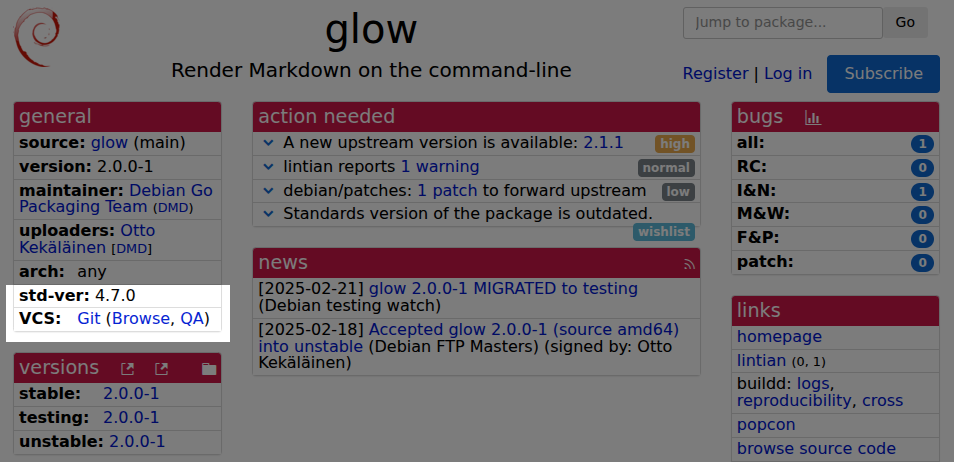 Following the Browse link opens the Debian package source repository, which is usually a project page on Salsa. To contribute, start by clicking the Fork button, select your own personal namespace and, under Branches to include, pick Only the default branch to avoid including unnecessary temporary development branches.
 Once forking is complete,
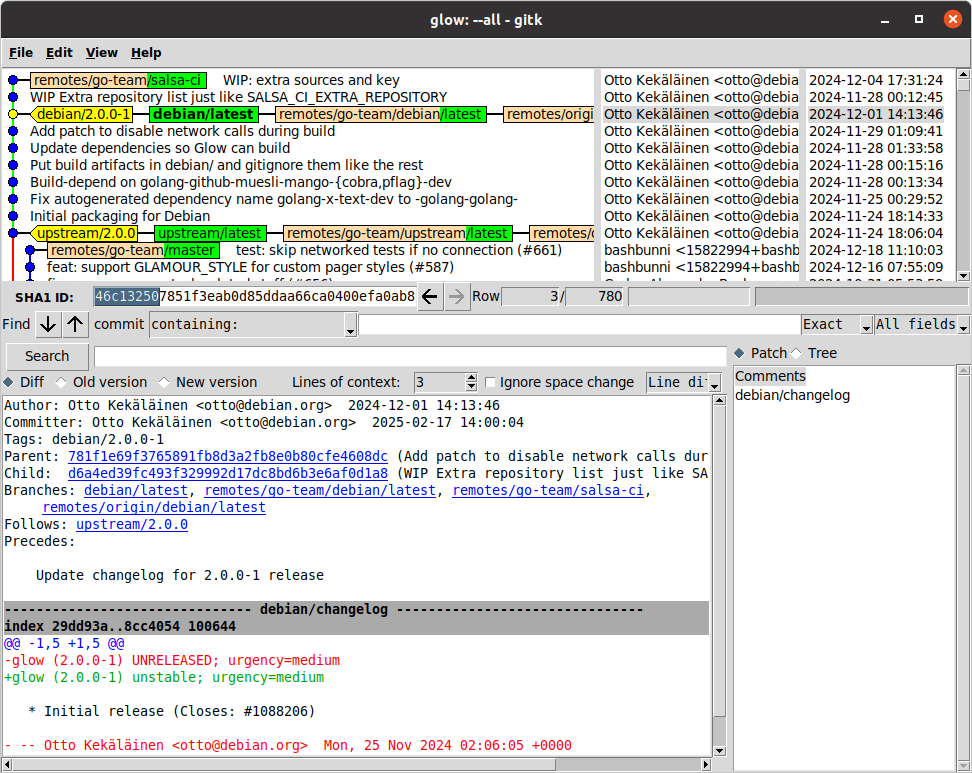 It may also be good to build the source package to establish a baseline of the current state and what kind of binaries and
 When you see a new Merge Request, try to review it within a couple of days. If you cannot review in a reasonable time, posting a small note that you intend to review it later will feel better to the submitter compared to not getting any response.
Personally, I have a habit of assigning myself as a reviewer so that I can keep track of my whole review queue at
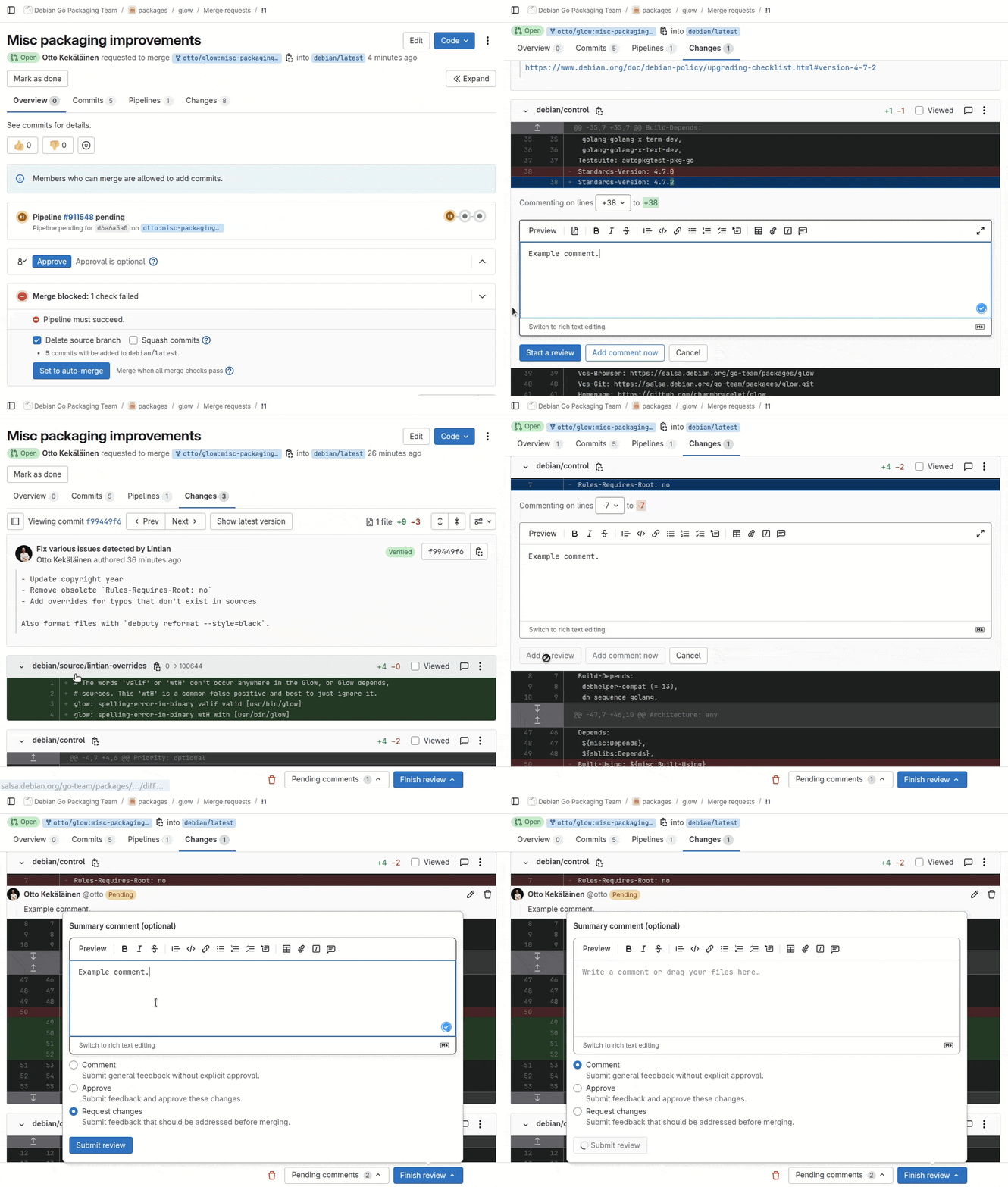 When adding the first comment, I choose Start review and for the following remarks Add to review. Finally, I click Finish review and Submit review, which will trigger one single email to the submitter with all my feedback. I try to avoid using the Add comment now option, as each such comment triggers a separate notification email to the submitter.
