Search Results: "gio"

23 January 2009

Ingo Juergensmann: Seagate Firmware Problems

Some time ago I've blogged about the downside of large disks being long the huge amount of time that it needs to check them with badblocks for medium errors.

As I told there, I bought two Seagate Barracuda ES.2 ST31000340NS and most of you might have heard about the firmware problems of those disks from Seagate. Seagate writes:

*Please email discsupport@seagate.com to request a firmware upgrade if your drive is on a release earlier than SN06.

Please include "ES.2" in the subject line of your email request for proper routing.


Well, I did write last week already, but haven't got any reply yet. This morning I mailed Seagate again, but no reaction so far until afternoon. Not even an automated "We got your mail and will answer it!" mail.
So, if you're in a similar situation you might ask yourself: "How can I get those firmware updates for my ES.2 drives then?"

Well, for me this trick worked quite fast:

  1. Go to the Seagate Contact Page
  2. Choose your region and country of Technical Support
  3. Click on "Chat" and wait...
  4. ... and wait...
  5. ... and wait...
  6. ... and wait...
  7. Request your firmware update from the friendly support staff that appeared somewhen
  8. Check your emails
  9. Follow the instructions in that mail


Yes, I've had to wait nearly one hour until someone showed up in that chat window, but then it worked quite nicely: I've got my email, downloaded that ZIP file and ... no! I didn't updat the firmware yet. I think I'll wait some more days, maybe until next week, and see if this firmware update is now working properly for others.
Maybe some will call me a coward, but I'm just following those friendly letters on that specific book you all know:

Don't Panic!

My disks are still working and my UPS does so as well. So, no need to hurry... But it's good to know that I could upgrade if I would like to... :->

19 January 2009

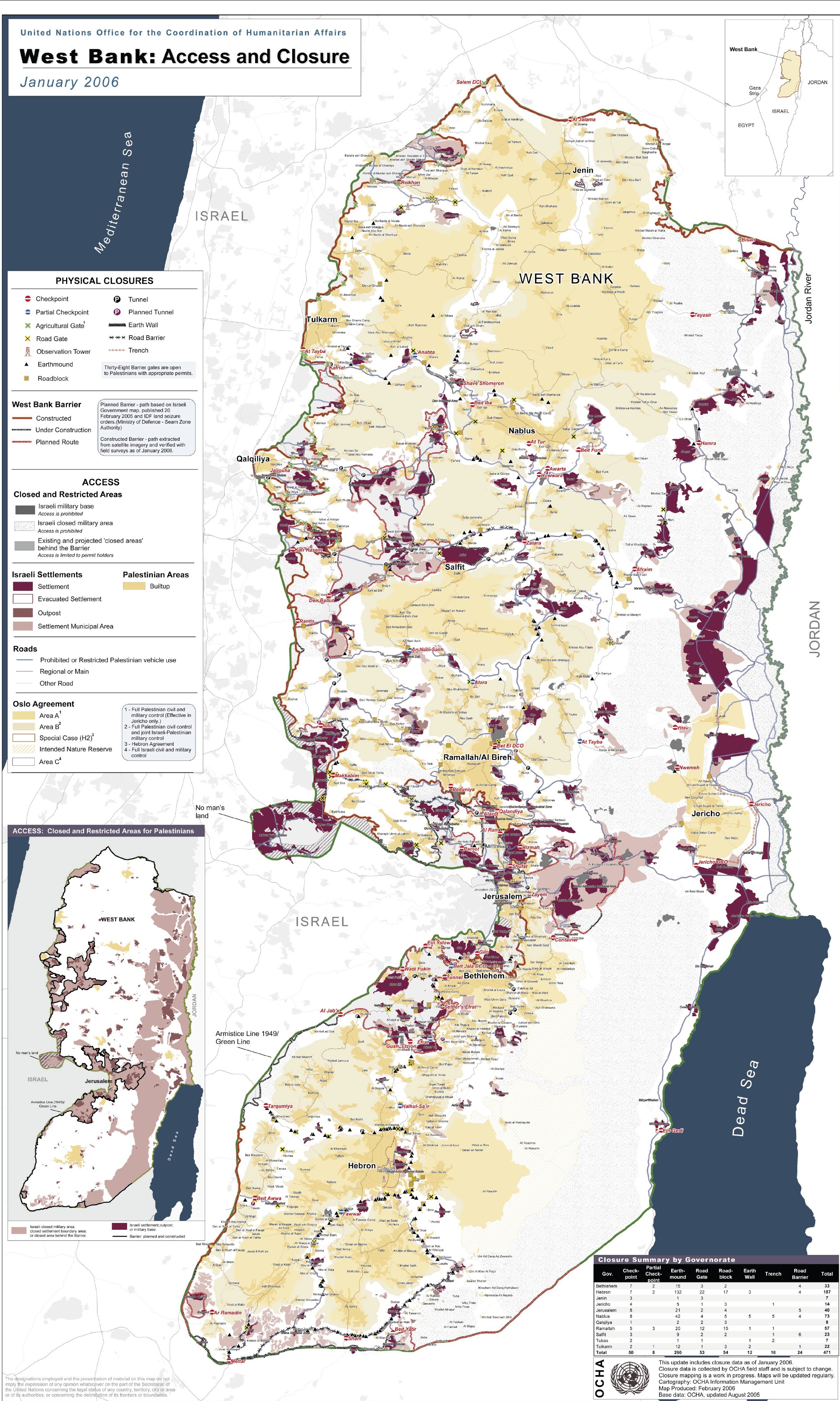
Gunnar Wolf: About the recent events and possible outcomes in Israel and Palestine

Several friends, from different groups and backgrounds and with different points of view regarding the current war in Israel (and regarding the Arab-Israeli conflict in general) have asked me for an explanation on what is happening there, what is (my view of) the real conflict, its causes... and any possible answers. And yet I am quite far from being an authority, I do want to write something about it. Be prepared, as this post is quite long.
And yet, after writing frankly a lot more than what I expected... It is by far not enough. I have still much more to add, but I have to say "stop" at some point. So, here you have it: My points of view, as well as some explanation on why are we standing where we currently are.
I am writing this based just on my personal experiencie and, of course, my personal point of view. Furthermore, I wrote a good part of this text while riding a bus, with no network access, so I am offering very few references - In any case, it will allow me to make much more progress. References always take as much time as the text itself! About me Why am I writing this? Why do people ask for my opinion? I must start by explaining who I am, so the rest of this makes sense. I am a Mexican Jew. That means, I was born in a Jewish (albeit secular) family, and grew up in an environment with general Jewish culture. My direct family (say, my parents and brother, and to a lesser degree my closest cousins) are not at all religious, I'd even venture to say most of us are complete atheists. Yet, besides the cultural belonging (which is a mixture of a Eastern European culture with lots of Idish words and dishes and general humor), my family has a strong national identification - In other words, I grew up in a fully Zionist environment, which traces back to Poland.
My grandmother was member of Hashomer Hatzair in Poland, since the early years of its existence, late 1910s and early 1920s. What is it? To make it short, a Zionist Socialist, Kibbutzian youth movement. It has many similarities (and somewhat stems indirectly from) the Scouts many of you will be familiar with, but -obviously- has a way lengthier agenda. And, yes, nowadays I feel it is somewhat out of reach with the current state of the world - It was founded in 1913, and only slightly adjusted its principles since then.
I will talk more about Hashomer later on.
My grandmother arrived in the late 1920s to Mexico, for familiar and economic reasons, but still dreamt about living in Israel for a long time. As they grew up, first my uncle joined Hashomer in Mexico in the late 1940s, when it still pursued a very much Soviet-style ideals for Israel (one of the core points that changed during the 1950s); both my father and my mother joined in the late 1950s (in fact, that's where they met). My cousins and myself were very active in the 1980s and 1990s.
The Iszaevich family has something very unusual, I'd say, engraved in our genes. We live very deeply our ideologies. That's the only explanation I can find to the way we all have led our lives. I won't go into the other family members' details, but just into mine: I was fully convinced of all we taught to our younger members and what we discussed among ourselves. I am among the very few people who really learnt Hebrew at my school, and that was only because I really cared - I know some people that just after 12 years of pseudo-learning could maybe utter a few phrases.
After finishing high school I went with my Hashomer group, together with people my age from other similar-minded Mexican Zionist youth groups, to live and learn for a year in Israel, on what is usually known as shnat hajshar - A year to get ready. To get ready to what? But of course, to come and give back go the younger groups of the movement, and finally go back to Israel and settle there definitively. I came back to Mexico, and after one year I did the only thing that was logical: I became an Israeli and went to live to a kibutz - Zikim, a beautiful place just between Ashkelon and Gaza, very near the sea shore. It was a beautiful period in my life, and I really enjoyed it - But it didn't last for very long - I quickly grew to hate the Israeli society at large. A society full of rage, of hatred. Not just between Arabs and Israelis, as many would think from the outside, but between religious and seculars. And between immigrants and locals. And between leftists and rightists (in several dimensions, as it is one of the countries where you can most easily be a economic leftist while being a political rightist - a complex society it is). A society full of disrespect and intolerance. A very hypocritical society. And one of the things that most shocked me: I wanted to live in a society of proud of its existence, that's what I had learnt Israel was - But Israelis aspire and dream of being anything else (and mostly US-Americans) in a way that made me sick, more than anything I had previously seen in Mexico.
I loved the life at the Kibutz, and I loved being an agricultor, doing hard work every day and literally getting the fruit of it. However, I cannot live isolated to a 300-people universe - At least once a week you have to go to the city if you don't want to become insane. And I could not stand the sick Israeli society.
Anyway, to make things short: After six months as an Israeli, I came back to Mexico. I went through a long period of finding myself, as I could not uphold anymore my Hashomer ideology (if I am not going to live by it, how can I continue teaching it?). Many people do anyway, but for the first months, where my Hashomer work was basically all of my life, I felt really uncomfortable. So, in short, I severed all of my relations to the Jewish community, and even denied for a long time my Jewishness until I found a (I think) better balance.
Today I am at peace. But anyway, I wanted to talk about myself in the critical period that marked me in this regard: The 1990s. Enough, lets get down to business. Zionism 1870-1920 Many people argue that the Jews invaded the Palestinians homeland - And yes, nowadays I cannot counter this. But we cannot judge what happened then based on what we see now.
Modern Zionism started around the 1870s. The Jewish history is full of pogroms and persecution, in different countries all over Europe - And a group of young people decided the only solution was to build a place to call their own. And yes, this was full of idealism and in no small part the foolishness of youth. For several centuries and up to 1920, all of current Middle East were provinces of the Ottoman Empire. Before Zionism began, the population of today-Israel was very sparse, not more than 400,000 people - up to 5% of them Jewish, around 10% Christian Arabs, and the remainder, Muslim Arabs. Of course, the low population was mostly because the country was mostly hostile - A desert in the South, mostly swamps in the North, and some minor towns mostly in the hills. It was a mostly forgotten province, away from the central Turkish rule, and there had been no frictions with the local population. It was a nice place to go, thinking -again- as a fool youngster, or as an idealist. They said, lets take a folk without a land to a land without a folk.
The number of accomplishing Zionists (this is, people who actually went to Israel instead of just talking about doing so) was not high during the first decades. But towards the 1890s, it gained critical mass. The political Zionist movement was born, with Theodor Herzl as a leader, and they started pushing -politically- for different governments to concede a territory to Jews. They went to the Turks, and didn't really get much echo. Went to other colonial powers of the time, and got unfeasible promises with no real backing (i.e. Birobidjan in Eastern Russia, Uganda in Africa)... And, as it happens in strongly ideologized movements, the movement started splitting into different groups with slightly different positions.
And no, I am not talking about the People Front for the Liberation of Judea and the People Judean Liberation Front, but I very well could. Sometimes the differences are as ridiculous as that. But hey, I take that most of my readers are acquinted with the Free Software issues, right? Think BSD vs. GPL vs. OpenSource. To give a broad idea - Only in Mexico City, with a very small Jewish community (~30,000 people), in the mid-1990s we had over 10 such movements, with 50-150 youngsters attending each. And even though some were local, and even though some very important ideologies are not represented in this country, they are all different enough to exist as separate entities. British Mandate The Ottoman empire was divided after the first World War. Its possesions in Europe became independent states, while in Asia (and Africa, if you take the semi-independent Egypt and part of Sudan into account) they were taken over as colonies or protectorates by France and the UK - Evidently, attempting to secure a long-term dominion over the area. In some aspects, they failed. In some aspects, they were (and still are) tremendously successful. The division of people by setting arbitrary boundaries has led to countries sustainable only by force and a harsh rule (such as Iraq, Lebanon and Syria), or doomed to poverty (and thus submission) due to lack of natural resources (as Jordan). Focusing on Israel/Palestine, the UK entered the area by making mutually incompatible promises to arabs and Jews - i.e. the Hussein-McMahon letters and the Balfour declaration, both ambiguous enough to lead to... Well, today. The UK rule was disastrous to the region, both in giving (and taking away) power from all sorts of puppet regimes, and swiftly going away as soon as things started looking too complicated. Yes, typical colonialism.
So, while up to the 1920s there was no real animosity between Arabs and Jews (as i.e. the Faisal-Weizmann agreement shows), during the next decades the seeds of hatred started growing, from both sides.
Many people still quote the 1947 partition plan as the direct antecedent towards Israel's real existence - That was not the first partition plan that existed. Ten years earlier, the Peel commision suggested a similar partition involving forceful population transfer. And many people see the separation of Transjordan (now Jordan) from Palestine in 1922 as a first partition. It is understandable that both partition plans (much more the 1947 than the 1937 one) were accepted by Zionists: Going from having nothing to having something (and against all odds in the environment they lived) is acceptable.
From the Zionist side, two main groups rejected the partitions: The right-wing and religious groups, insisting that the whole of the Mandate should become Israel, and the left-wing groups, which advocated for a single, bi-national state, with equal rights for all of its population. Go over and read this last link, as it was quite interesting (to me at least) to see how this solution has kept existing and regarded by (relatively) many people, and has many interesting links. 1948 onwards: Where did the refugees come from? The November 1947 partition didn't exactly translate to a planned, smooth Israeli independence - It led to six months of revolts (basically, a civil war). By mid May, the UK government and troops abandoned the territory, and one day later, Israel declared its independence. And, of course, all neighbouring countries (and Iraq) sent their troops to invade Israel. The war lasted for over six months (cease-fire was signed in January 1949). There was an intense Arab campaign indicating the armies would enter Israel and devastate it, leaving no stone in place, indicating Arab population to temporarily leave the Jewish-destined areas. The war, they said, would not take more than a couple of months, and they would be able to go back home.
Only that... When the war ended, the results were far from what the Arab governments expected. Not only Israel continued to exist, but it conquered important territories.
Of course, the Israelis were not innocent from said exodus: During the 1947-1948 civil war, and the independence war, some of the existing so-called self-defense forces (some of them were really defensive, while some were quite aggressive, even terrorist) attacked Arab villages in strategic or predominantly Jewish areas to prompt them to leave - yes, what we today call ethnic cleansing.
I had (in my head) the number of 650,000 Arabs (from a total of slightly over a million) fleeing to neighbouring countries. Wikipedia states that it is somewhere between 367,000 and 950,000. A similar number of Jews were expelled from Arab countries, many of which arrived to settle at Israel (and many others went elsewhere - For instance, a good part of the Mexican Jewish community is from Syrian origins - Many of them fleed in those years). Israel didn't accept back the (relatively few) Arabs that requested to resettle, as they were seen as hostile population - but neither did the countries that "temporarily" accepted the Palestinians accepted them as citizens. The Palestinian refugee camps today, mainly in in Lebanon, Syria, and the occupied territories held by Israel have terrible living conditions, and its population -despite living there for over 60 years- have no civil rights at all. Note that I'm omitting Jordan here, although it has several camps as well, as their situation is way better.
The Arab population that didn't leave did receive full Israeli citizenship. No, their living standards are not up to level with the average Israeli. The country and the society do have a sensible degree of racism and segregation. But the situation is nowhere as terrible as it is in the camps.
The areas which were originally to become Palestinian and were not conquered by Israel -this is, current-day West Bank and Gaza- bacame respectively Jordan and Egyptian territory. While Jordan did fully extend its soverignty covering the West Bank, Egypt didn't - Gaza is, since 1949, occupied military territory. Gaza, among the most densely populated areas in the world, has had their inhabitants under military rule ever since. When Israel returned the Sinai after signing the peace treaty with President Sadat, Egypt didn't accept Gaza back - And that's where today's greatest problem is born.
Now, Israel conquered those territories in 1967, along with the very sparsely populated Sinai and Golan. For the first ten years, the territories were basically only administered (yes, under a military rule). In 1977, with the first right-wing Israeli government, an extensive settlement policy began (and led partly to today's seemingly unsolvable situation). In 1980-1982, Israel withdrew from the Sinai. In 1981, Israel claimed full soverignty over the whole of Jerusalem and the Golan. In 1993, the "Oslo Agreement" was signed between Israel and the PLO, and it seemed we were heading towards a bright future. I lived in Israel between 1994 and 1996 - Yes, the most hope-filled period in the country's life.
Since 1996, I have tried to keep up to date with the country's evolution. All in all, even if I won't live there again, it is a country I learnt to love, a society I have long studied (even if in the end I did include many references, I wrote most of this text just off the top of my head, with the data I remember - so it might have several big errata). And yes, I keep the political stand I had 12 years ago: The only solution is to dialogue, to treat the current enemies -and not only their governments- with respect, recognizing their dignity and right to life, to self-determination. Only then we will change the status quo. How not to fight hatred Since 1993, the dream of peaceful coexistence seems to have faded. What we saw during the past three weeks, along to what we saw in Lebanon in 2006, is plainly a gross mistake if the goal is to achieve good, lasting peace.
Try to imagine how could life in Gaza be, even in the total absence of Israeli attacks. Just to set some numbers first: The Gaza strip hosts almost 1.5 million people on 360 km . When I lived in Israel, I was constantly surprised at how small a country it is - Israel tops at 550Km North to South, 150Km east to West (it is amazing, almost wherever you stand, except in the middle of the Negev, you can see the country's borders. Yes, I recognize as the border the so-called Green Line); over half of the territory is a desert, and it hosts seven million inhabitants. And it is hard to imagine how that country can be economically viable.
I do not find it feasible to imagine Gaza and the West Bank integrating a single country, and not only because they are separated by ~40Km, but because they are so sociologically different. People in the West Bank, yes, live opressed under military rule and subject to a much more constant, more visible apartheid-like state (as the territory is truly sprinkled with Jewish outposts which many Israelis refuse to recognize as their own, but still, which have incredibly higher living standards). The best land has been taken away from them, yes, but they have some space between cities to have some farming, to communicate, to... Breathe. Besides, West Bank inhabitants -even those in refugee camps- have much better living standards than anybody in Gaza. It is still an overpopulated area, but not nearly as much as Gaza.
Gazan population have been driven towards extremism. And yes, there was a civil war between Palestinian factions, as the world views between both populations are completely different - However hostile a Jenin inhabitant can be towards Israel, he does not lead the life -if it can so be called- you see at Khan Yunis.
But back to Gaza... What Israel is doing (and not only during this military operation terror campaign is wrong, from any rational point of view. Israel wants Hamas to become weaker? Then don't drive the population into supporting them!
Palestinians started giving over 50% of their support to Fatah (ex-PLO), and under 20% to Hamas. That was less than 15 years ago. However, Fatah has shown to be corrupt and inefficient at building infrastructure and improving life conditions, ineffective at negotiating a permanent agreement which secures dignity and sustainability to their people. Hamas stands as a religious, righteous organization. There are no serious corruption charges against any Hamas leaders. Hamas is clearly still at war - They didn't subscribe any peace agreement so far, and their stated #1 goal is to build a Muslim State in the whole of Israel. And the Hamas movement -like Hizbollah in Lebanon- has built quite a bit of infrastructure in the areas they control - Mainly housing. Yes, housing where they mix their own offices, many will accuse, getting human shields for free. But still, they are benefactors to a dehumanized, pauperized population.
I find it obvious that, if living conditions were at a basic level in the region, support of Hamas would decrease. Even more, of course, if they improved due to Israeli support. Israel controls this territory, so it is responsible for the well-being of its population, like it or not. And Gaza is simply too small and low on resources to survive by itself.
I was a bit surprised to find mention -although very brief- of a three state solution - And yes, this is close to what I would expect as a viable outcome. It is clear that Israel will not ever grant full citizenship to the Palestinians, as they would -euphemistically speaking- challenge the Jewish character of the State. Dropping the euphemism, Israel relies on apartheid in order not to become an Arab majority country. I might have some numbers wrong, but AFAIK, there are ~7 million Israelis, 20% of which are Arab citizens (which means, 1.4 million Arabs and probably 5 million Jews, with many other minor denominations for the difference), and ~4 million Palestinians live in the territories. Today, the country is already predominantly Arab, or at least is close to being so. So, Israel should permanently, formally disengage from all of the occupied territories. And in order to ensure violence stops, start a comprehensive, unconditional, long-term aid program. Start with giving them autonomy to regain their sea, as the Gaza port has long been closed. Allow the airport to operate again. Instead of bombing tunnels in the Egypt-Gaza borders, allow Gaza to trade with Egypt - Perhaps even to integrate territorialy, if the conditions are met. Treat their people with respect, and help them ease the terrible situation they have lived for so many decades - and then, undoubtely, terror will stop.
The West Bank? Possibly it could become a Palestinian state by itself. Possibly, it could integrate back to Jordan. That would be up to Jordans and Palestinians to decide. Of course, Jordan has already a large segment of its population defining itself as Palestinians, which counts both for and against. So, I won't venture into this supposition.
But anyway - Back to what prompted me to write this text -yes, a very or maybe even too long text - I hope somebody even takes the time to read it!- is to explain what is my point of view on the current situation, and why.
Today, a cease-fire was announced, after 23 days of murder and destruction. I sadly do not hold very high hopes for it to be lasting, much the less to be enough, to lead to what they call a de-escalation of the conflict. The most I can currently do is to voice my opinion, and hope that mine is just one more voice pointing to a sane solution, to a permanent, dignifying way out, for all people involved. Every people has the right for survival and for safety. We cannot deny this to any others. And certainly, we cannot expect anybody not to fight for their right to live.

Joost Yervante Damad: a month

Last year I even did it for longer then a month, but this year I want at least to redo a minimal effort, thus I'm going for a month of sobriety, as a kind of cleansing :) (and no, I'm not religious).

These are my 5 daily checkpoints:

  1. smoothie for breakfast

    This is something which we (me and my wife) do already anyway, have a fresh fruit smoothie for breakfast. Currently our favorite mix is 4 blood oranges, freshly pealed and parted, a seep of Sea-buckthorn elixir, and a couple of frozen strawberries (or cranberries). Mix all in the blender, long enough to don't have any parts left. It is extremely tasty, and gives a serious vitamin boost for the winter. The idea is to have it for breakfast and then don't drink or eat anything else for at least 1.5 hours, to make sure it's (almost) fully digested.

  2. < 4 coffee

    This is a hard one; people who know me will know I'm a serious coffee lover. I have a special espresso machine, and typically serve single origin or special blend coffees. It's hard to resist :)

  3. exercise

    Just a walk with the dogs already counts.

  4. no sugar

    This is usually not so hard for me, as I'm not into sweets anyway.

  5. no alcohol

    This is tougher. I'll have to stick to coffee, tea and fruit juices.
This is all as much a physical as a mental exercice :)


17 January 2009

Rodrigo Gallardo: Liferea 1.4.23 in experimental

It appears that, unless someone could manage to find a non-invasive fix to #503907 and other bugs, we won t have a working webkit for lenny. Thus I agreed to having the webkit plugin for liferea removed from sid, in preparation for its likely removal from testing. Now, liferea 1.4.18 has a couple important bugs, including the elusive #487927. Some of them might be solved by the newer releases, but I cannot simply upload 1.4.23, as the changes from 1.4.18 are much too big. However, if some of those changes are relevant to those important bugs, I could try to cherry pick them back into 1.4.18. Thus, to try to get some feedback about those changes, and to satisfy those of you that want to keep using webkit, I have uploaded 1.4.23 to experimental. It is currently waiting in the new queue, meanwhile I prepared binary packages for amd64 and i386. (Thanks for the tip, Julien!). If these packages help with some bug you have been hit with, please send your feedback to the BTS.

6 January 2009

Uwe Hermann: Running homebrew and open-source software on your Wii, using the Twilight Hack and the Homebrew Channel

Wii I've been owning a Nintendo Wii for quite a while now, but so far only played an occasional game of tennis or the like. Over the holidays I got The Legend of Zelda: Twilight Princess, which is a really nice game in itself. What is even more interesting though, is that this game allows you to run homebrew software on your Wii. What you usually want to do, is to use the so-called Twilight Hack to install the Homebrew Channel on your Wii (you'll need an SD card and the Twilight Princess game for this). Once the process has finished you won't need the game anymore though. So, here's a quick tutorial on how to install the Homebrew Channel. I basically followed the Setting up your Wii for Homebrew HOWTO from wiibrew.org. Requirements An SD card max. 2GB in size (not an SDHC card!), an SD card reader in your PC or laptop, and the Twilight Princess game (which you must play at least once). Backup First, you'll want to backup your Twilight Princess save games (if any). For that, we format the SD card (it needs a FAT16/FAT32) filesystem.
 $ mkfs.vfat /dev/mmcblk0p1 (you may need to change "mmcblk0p1" to whatever fits your setup)
Now insert the SD card into the Wii, start the Wii, go to Wii Options --> Data Management --> Save Data --> Wii and copy your Twilight Princess save games onto the SD card. Then, poweroff, remove the SD card, insert it into your laptop/PC and copy the save games to a safe place.
 $ mount -t vfat /dev/mmcblk0p1 /mnt
 $ mv /mnt/private ~/zelda_savegames
Twilight Hack and Homebrew Channel The Legend of Zelda: Twilight Princess Next up: download the Twilight Hack and Homebrew Channel, and put the files on the SD card:
 $ wget http://hbc.hackmii.com/dist/twilight-hack-v0.1-beta1.zip
 $ unzip twilight-hack-v0.1-beta1.zip
 $ cp -r private /mnt
 $ wget http://hbc.hackmii.com/dist/the_homebrew_channel-1.0.1.tar.gz
 $ tar xfvz the_homebrew_channel-1.0.1.tar.gz
 $ cp the_homebrew_channel-1.0.1/boot.dol /mnt
 $ umount /mnt
Now remove the SD card, insert it into the Wii and power-up the Wii. Go to Wii Options --> Data Management --> Save Data --> Wii, delete the Wii Twilight Princess save games, then copy the "Twilight Hack" save game from the SD card onto the Wii (you need to select the correct one for your region). Quit the menu, start Twilight Princess, load the "Twilight Hack" savegame and finally talk to the person in front of you (do not perform any other actions, or the Wii may crash!). Follow the remaining instructions on the screen and you're done. You now have an additional channel named Homebrew Channel where all your homebrew programs/games (and your own Free Software programs you may write/port) will appear. Installing homebrew software So far, there are no real applications in the Homebrew Channel, you need to put all the homebrew software you want on the SD card. There's a huuuge list of applications and games to choose from, many of them Free Software with source code, some however are binary-only. Basically, you put each application in a sub-directory of apps/ on the SD card, the most important file in every sub-directory is always boot.dol. If you have a boot.elf file instead, you'll probably need to convert it using the ELF to DOL converter. Restoring Twilight Princess save games You may now want to restore your Twilight Princess save games onto the Wii, you no longer need the "Twilight Hack" save game. Put your ~/zelda_savegames directory on the SD card and name it private/ again. Insert the SD card into the Wii and copy the save games on the Wii (similar procedure as above). Have fun with homebrew software on your Wii, or even better write your own software or port existing Linux applications/games!

4 January 2009

Jeff Bailey: ... 2008

I try to practice Inbox Zero, and this past year has been brutal far staying on top of my Inbox. When I started pruning the home email a week or so ago (having just gotten my work email box down to zero). It's giving me a pretty good review of 2008. And, umm.. wow:

Spinal tumor, surgery, hating Mountain View (the place, not the job there. My coworkers are pretty uniformly awesome), having a toddler, not being able to lift my toddler, crazy mood altering drugs, visa renewal, a funeral, unexpected pregnancy, weddings, buying a house, mid-term miscarriage, Angie's hospitalisation from that, pneumonia, a move home, having to withdraw from my Master's courses 3 times over the course of the year for medical reasons - eventually causing me to withdraw from the program. Extend it by another 3 months into 2007 (because while I'd love to believe that stress reset at the start of a calendar year...), and we have another wedding, a move to the US and a new job.

I've just gotten to an email where I took notes on what the risks were for the angiogram before I'd told many friends. There's a small pile of emails and such from people wishing me well that I never managed to reply to. I also find myself thinking back to the people I didn't hear from, and the reevaluation of my communities and friendships that came along with that.

The lyrics from Counting Crows come to mind: "It's been a long December and there's reason to believe that maybe this year will be better than the last."

Here's to 2009. =)

Andrew Pollock: [tech] Mixing electricity and water: monitoring the cat water bowl with Nagios

(this is something I've had "in production" for many months now, I just haven't had the time or energy to do a proper write up about what I did) We have a cat water bowl, it looks like this: The cat water bowl Under "normal" circumstances, it usually lasts about seven days. So when our weekly routine is happening, we'll refill it on a Saturday whilst doing house chores, and it'll last until the following Saturday when it gets refilled. Unfortunately, sometimes our routine gets disrupted, and we forget. Sometimes, we travel and have a house-sitter, who may not pay as close attention to such things as ourselves. Once, one of our cats was licking the condensation off a chilled bottle of soft drink that was on the kitchen counter one evening, before we realised the water bowl needed refilling. Naturally, we felt like terrible pet owners. So I think it was some time around the 2008 Maker Faire, that I hatched the idea of having some sort of water sensor on the cat bowl, which would communicate to one of the various computers in house. At the Maker Faire, I bought a copy of Making things talk, and an Arduino starter kit, which consisted of a Diecimila board and a make-it-yourself proto shield. I also bought a little electronics starter kit, which consisted of a breadboard and various components, and a USB-TTL cable. I decided to use Bluetooth to communicate with the board, as I already had my MythTV setup using a Bluetooth keyboard and mouse, and it was within range of the water bowl. I decided against using Zigbee, because I didn't know anything about it, and I didn't want to add (or learn about) yet another wireless infrastructure just for this project. I should point out that I know very little about electronics. I'd never owned (or really used) a soldering iron until I embarked on this project. I took a basic soldering class at the Tech Shop, but I'd already assembled the proto shield by the time I took the class, so I'd pretty much figured it out. I had a very naive vision that I could just basically shove two wires in some water and it'd close a circuit and that would be my water sensor. Of course this didn't work, so I started hunting around on the Internet for a circuit that would do this. I happened upon a circuit (I don't seem to have retained the URL, so I can't link to it), which just consisted of a couple of transistors and some resistors. So I headed off to Fry's to try and buy the transistors I needed. I quickly discovered that I didn't have sufficient information to identify the transistors that I wanted, but I did happen to stumble upon a cheap assemble-it-yourself water alarm. It consisted of a PCB, and a transistor and some resistors and a buzzer. I bought a couple of these instead. Between studying the PCB and the circuit diagram that came with the alarm, I was able to reproduce it on my breadboard instead of on the PCB. Sure enough, placing the two probes in water closed the circuit. I replaced the buzzer with an LED so I could see what was going on. I attached the circuit to the Arduino proto shield, and had it feed into one of the digital I/O ports. I wrote some quick and dirty Wiring code so that when water not present (i.e. the circuit was open and no current was detected on that I/O port) the LED was switched on. Really at this point, I didn't need a microcontroller, I could have presumably achieved the same thing with a NOT gate. At this point, I wanted to make the sensor remotely queryable. I bought a BlueSMiRF Silver Bluetooth modem, which I attached to the TX and RX lines of the board (I first configured it by attaching the USB-TTL cable to it and using Minicom on my laptop). I extended the Wiring code to provide a rudimentary prompt, and accept a command to check if water was present. I think around this time it also dawned on me that I could use the digital I/O pins as a switch. When they're "high" they provide power. So rather than constantly running a current through the water, I only needed to briefly power up the water detection circuit, see if the circuit closed or not, and then report if water was present if it did. I much preferred this, as at the time, I was endeavouring to power the whole sensor off a 9 volt battery. I figured I'd get much better battery life if I wasn't running a current through the water the entire time. I should point out that I did some "tongue tests" in a glass of water while the circuit was powered up, and couldn't detect a difference between when the circuit was on or off. The last thing I wanted to be doing was zapping the cats! At this point, the Wiring and Arduino work was pretty much complete. I setup ser2net on the MythTV server, so that I could just connect to port 4000, and be connected to the water sensor.
apollock@icarus:~$ telnet teevee 4000
Trying 172.16.0.9...
Connected to teevee.andrew.net.au.
Escape character is '^]'.
ser2net port 4000 device /dev/rfcomm0 [9600 N81] (Debian GNU/Linux)
waterbowl> s
Water is present
waterbowl>
telnet> q
Connection closed.
apollock@icarus:~$
The Wiring code running on the Arduino board is checked in here. Next, I wanted to monitor this with Nagios. One thing I found with the Bluetooth connection was that it wasn't all that reliable. Not every connection to port 4000 resulted in a connection with the water sensor. I elected to write some standalone code that submitted results to Nagios by way of a passive check, rather than having Nagios try to actively monitor it. Again, trying to conserve energy, I decided to only check the sensor once every 8 hours. So I wrote a Python daemon, which tried to be as robust as possible. If at first it doesn't make a connection on its 8 hourly schedule, it keeps trying until it does. Nagios itself has some freshness detection for this monitor, so if no passive result is submitted within 8 hours and one minute, Nagios alerts that something is possibly wrong with the sensor itself. (The original intent was to deal with the situation where the battery went flat) This is the Nagios service definition I've got. Some of it may be unnecessary or redundant:
define service  
        host_name                       teevee
        service_description             Cat water bowl
        check_command                   check_stale!2!"Check water bowl monitor is on and reachable"
        normal_check_interval           480
        notification_interval           240
        active_checks_enabled           0
        check_freshness                 1
        freshness_threshold             28860
        max_check_attempts              1
        check_period                    24x7
        use                             generic-service
        stalking_options                o,w,c
        contact_groups                  everyone
 
The code for the Python daemon is checked in here. So everything was going swimmingly, apart from I couldn't get even 24 hours of monitoring on my conservative 3 times a day schedule, and the Bluetooth modem configured for all of its power saving options, and the water sensor itself only being powered on when it was performing a check. There wasn't much more I could do to try and reduce power consumption, at least with my limited electronics knowledge. Perhaps using Zigbee instead of Bluetooth would have helped, but I still think I'd have been going through 9 volt batteries more quickly than I'd have liked. I also had a brief foray into solar powering the board. I thought maybe the lighting in the house would be sufficient to power the board. Of course this didn't work out. I'd also have needed to make the code running on the board more self-sufficient, and have it just provide a water status indication whenever it had enough power to do so, instead of being a fairly dumb device like it currently is. This all felt a whole level more complicated, and out of my league, and I wasn't interested in attempting this sort of remote-sensing exercise at this time. The Arduino board can also be powered by USB, so as I already had some long USB type A to type B cables (that had funky lights in them to boot), I decided to just get a wall wart that had a USB type A receptacle, and powered the Arduino board that way. So much for being completely "wireless". (I could have also gotten a general purpose DC power supply that was capable of spitting out 9 volts, but I doubted I'd get one with a sufficiently long cable, which is why I went for the USB-powered option, as I already had a cable long enough) Speaking of wires, the most challenging part was the probes for the water sensor. As they were going to be permanently in the cats' drinking water, I didn't want to contaminate the water with them. I figured plain untinned copper wire would be okay, since water pipes are copper. Finding untinned, unstranded copper wire was a real challenge. I started out using some FM antenna cable, but that was stranded, and the shielding was a nightmare to strip. It was also reasonably difficult to make go where I wanted it. What I really wanted was something more solid, that would flex and stay where I put it. I cannibalised a spare IEC power cable, but it was also stranded copper wire. I finally managed to obtain some solid-core CAT-5 cable from a hardware store, and this has worked exactly as I wanted. I haven't done any further work on the setup since getting the CAT-5 cable for the probe. Further improvements that I'd like to do at some point: The finished product I had a lot of fun with this project. I had a real sense of achievement, being able to go from concept to completion, and learn a few things about electronics along the way. I'm normally not a fan of messing around with hardware. Some photos of the project are here.

Christian Perrier: [life] Keeping the running pace during holidays

Christmas holidays in France are not a good season for runners: too much champagne, foie gras, cheese, wine and food in general. So, while visiting my mom and sister in the region of St-Etienne last week, I wanted to keep my sports pace to a sufficient level as we're now 3 months ahead from this marathon I've been crazy enough to apply for. That went good: 3 days after my first run over 30km, my brother in law convinced me to enjoy the big snow fall in Le Bessat, the ski station of my young years, 30 minutes away from the city of St-Etienne. That was the second time ever I'm doing croos-country skiing in skating technique. But, being supposedly used to skiing in general (20 years of ski are supposed to help), we went on the longest and hardest track: 16km and over 200m positive slope....which I completed in less than 2 hours, so a lot more than the same distance by running. Cross-country skiing in skating technique is awfully hard, particularly when you have no technique at all..:-)) To complete this, I went running for about 12 km on New Year, 3 hours after partying for New Year's Eve. Interesting way to eliminate the weight surplus..:-) And, finally, today, I went out for a 19km run in the frozen country around my place (-8 degrees) for a wonderful discovery of woods covered with ice and the climbing of the highest "mountain" in the Paris area (280m height, still !) and a great view of the neighbourhood in white, under the sun. These are the joys of running in winter, really.

31 December 2008

Andrew Pollock: [tech] Goodbye Vonage, hello T-Mobile@Home

When we first moved to the US, I wanted to try and do the telecoms and Internet stuff as cheaply as possible, while still trying to be technologically "fun" as well. I elected to get the cheapest home phone line (local calls only) I could get with AT&T (then SBC) (which is still remarkably expensive) so that I could get DSL (which, while three times faster than what I'd had previously in Australia, was still not that fast). (I went for DSL over cable because I'd heard horror stories about Comcast's reliability, and also they weren't cool with running servers or inbound services, Sonic is, and is a great ISP). I chose Vonage for US long-distance, I think because I'd heard of them previously, and was interested in trying out VoIP. We initially used Vonage for calling Australia as well, until I played around with Engin, and then deployed Asterisk. Anyway, I've been a loyal Vonage customer for exactly three years. The truth is, we hardly make any US long distance calls. We've got friends in Phoenix (hi Craig and Sarah!) that we call infrequently. I guess there might be the odd cell phone that isn't considered a local call, but we tend to use our cell phones more than the home phone anyway... So we were a very cheap $14.99 a month for Vonage. So when I called T-Mobile to purchase a SIM card for the Android Dev Phone 1 I'd been recently given, the opportunity to have their T-Mobile @Home in place of Vonage, for an extra $9.99 on top of what I was paying for the cell phone line seemed like worthwhile cost saving. I have no attachment to the incoming number for the Vonage line, we give out the AT&T land line number to people as our "primary" home number. Later that day, Vonage announced they were increasing their monthly fee from $14.99 to $17.99, which made the decision seem all the more prodigious. I did a spot of research while I was waiting for the @Home box to ship to me, and it turns out that they have a wireless router and non-wireless router option. They hadn't specified what I was getting at order time, and I was hoping I'd get the non-wireless router, since I already had an access point I was perfectly happy with it. As luck would have it, I received the wireless router model (a Linksys WRTU54G-TM). I'd mentally prepared myself to be receiving just another Linksys RTP300, like what Vonage used, and so I was quite surprised by the differences in technology used. It's been a while since I tried to do any reverse-engineering of the Vonage ATA, but I think from memory, it was essentially that: an ATA. It talked SIP back to Vonage. My DSL provider gave me a few static IP addresses, so when I got it, I just allocated one for Vonage, and did a static NAT through my firewall to for it, and everything just worked. It was fairly apparent that the WRTU54G-TM was nothing at all like this (given it was also an access point). It takes a GSM SIM card (up to two in fact), which I presume has all of the provisioning information on it. I was initially worried that I was going to need to completely rejig my network to accommodate it. I guess the SIM card approach means there's no customer specific provisioning that presumably otherwise needs to be done to the device itself, and they can just ship vanilla devices. I presume the Vonage RTP300 had some sort of customer-specific configuration, because I never had to do anything. I briefly toyed with the idea of running two access points, and having a "guest" wireless network, but I am interested in reducing heat and power consumption in my linen cupboard, so I decided to try and just swap over to using the WRTU54G-TM as my access point, retiring my Linksys WAP54G. So that's exactly what I sat down to do last night. Sometimes in their efforts to make these things "simple", they end up making things more complicated. What I wanted to do was just plug the "Internet" side of the device into my internal network, have it get an IP address with DHCP, and then let me get on with configuring it. The "advanced" setup instructions talked about the box having a default IP address of 192.168.0.1 ("or try 192.168.24.1 if that doesn't work"). I figured the DHCP IP address would override that, so I was trying to hit the IP address I could see the unit had picked up from my DHCP server. No response from the HTTP server. I could see it replying to ARP requests, and I could see what appeared to be an IPsec NAT-T connection. After some fiddling around, I twigged that I was trying to manage it over the Internet port, and any device worth its salt was going to be very hardened out of the box on what it expected to be the raw Internet-facing side, so I plugged my laptop directly into one of the four Ethernet ports that it also had, and then I could hit the 192.168.0.1 IP address and access the management interface. It never occurred to me prior to fighting with getting the WRTU54G-TM configured, that the RTP300 might have been more than a black box, as I'd never tried plugging anything into the "inside" ports on it, mainly because I'd never intended to use it as a router or a switch. Out of the box, the WRTU54G-TM was configured to be a router, which I didn't need, and it was configured to be a DHCP server for 192.168.0.0/24, which I definitely didn't want. An interesting side-effect of putting it into bridging mode was the MAC address changed (to the one that was printed on the unit, which was not how out of the box it presented itself). I have no need or intention of plugging anything into the "inside" Ethernet ports on the WRTU54G-TM, as I have a separate switch for that, and indeed I run my wireless network on a different interface of my firewall to my wired network. Fortunately I was able to enable the management interface via the "Internet" interface. The added benefit of the device doing NAT-T is I don't need to allocate an IP address to it for the VoIP stuff it work, it all just works fine without it, so I've freed up an IP address, removed two devices from my linen cupboard, added one new one, and saved some money. Woot! Next, just because I can, I'm going to try and break into the RTP300 and see if I can reconfigure it as a general purpose ATA to talk to Asterisk. There's evidence it's possible. It's otherwise of no further use to me. Even if I get it working with Asterisk, it's not of a lot of use to me. Maybe I can send it to a family member, and they can call us over the Internet for free instead of for the cost of a call to Brisbane...

28 December 2008

Theodore Ts'o: Debian, Philosophy, and People

Given the recent brouhaha in Debian, and General Resolution regarding Lenny s Release policy as it relates to Firmware and Debian s Social Contract, which has led to the resignation of Manoj Srivastava from the position of Secretary for the Debian Project, I m reminded of the following passage from Gordon Dickson s Tactics of Mistakes (part of Dickson s Childe Cycle, in which he tells the story of the rise of the Dorsai):
No, said Cletus. I m trying to explain to you why I d never make an Exotic. In your calmness in the face of possible torture and the need to kill yourself, you were showing a particular form of ruthlessness. It was ruthlessness toward yourself but that s only the back side of the coin. You Exotics are essentially ruthless toward all men, because you re philosophers, and by and large, philosophers are ruthless people. Cletus! Mondar shook his head. Do you realize what you re saying? Of course, said Cletus, quietly. And you realize it as well as I do. The immediate teaching of philosophers may be gentle, but the theory behind their teaching is without compunction and that s why so much bloodshed and misery has always attended the paths of their followers, who claim to live by those teachings. More blood s been spilled by the militant adherents of prophets of change than by any other group of people down through the history of man.
The conflict between idealism and pragmatism is a very old one in the Free and Open Source Software Movement. At one end of the spectrum stands Richard Stallman, who has never compromised on issues regarding his vision of Software Freedom. Standing at various distances from this idealistic pole are various members of the Open Source Community. For example, in the mid-1990 s, I used to give presentations about Linux using Microsoft Powerpoint. There were those in the audience that would give me grief about using a non-free program such as MS Powerpoint, but my response was that I saw no difference between driving a car which had non-free firmware and using a non-free slide presentation program. I would prefer to use free office suite, but at the time, nothing approached the usability of Powerpoint, and while dual-booting into Windows was a pain, I could do a better job using Powerpoint than other tools, and I refused to handcap myself just to salve the sensibilities of those who felt very strongly about Free Software and who viewed the use of all non-Free Software as an ultimate evil that must be stamped out at all costs. It is the notion of Free Software as a philosophy, with no compromises, which has been the source of many of the disputes inside Debian. Consider, if you will, the first clause of the Debian Social Contract:
Debian will remain 100% free We provide the guidelines that we use to determine if a work is free in the document entitled The Debian Free Software Guidelines. We promise that the Debian system and all its components will be free according to these guidelines. We will support people who create or use both free and non-free works on Debian. We will never make the system require the use of a non-free component.
This clause has in it no room for compromise. Note the use of words such as 100% free and never make the system require the use of a non-free component (emphasis mine). In addition, the Debian Social Contract tends to be interpreted by Computer Programmers, who view such imperatives as constraints that must never be violated, under any circumstances. Unfortunately, the real world is rarely so cut-and-dried. Even the most basic injunctions, such as Thou shalt not kill have exceptions. Few people might agree with claims made by the U.S. Republican Party that the war in Iraq qualified as a Just War as defined by Thomas Aquinas, but rather more people might agree that the July 20, 1944 plot to assassinate Hitler would be considered justifiable. And most people would probably agree most of the actions undertaken by the Allied Soldiers on World War II battlefields that involved killing other soldiers would be considered a valid exception to the moral (and for those in the Judeo-Christian tradition, biblical) injunction, Thou shalt not kill . As another example, consider the novel and musical Les Mis rables, by Victor Hugo. One of the key themes of this story is whether or not Thou shalt not steal is an absolute or not. Ultimately, the police inspector Javert, who lived his whole life asserting that law (untempered by mercy, or any other human considerations) was more important than all else, drowns himself in the Seine when he realizes that his life s fundamental organizing principle was at odds with what was ultimately the Right Thing To Do. So if even the sixth and eighth commandments admit to exceptions, why is it that some Debian developers approach the first clause of the Debian Social Contract with a take-no-prisoners, no-exceptions policy? Especially given the fourth clause of the Debian Social contract:
Our priorities are our users and free software We will be guided by the needs of our users and the free software community. We will place their interests first in our priorities. We will support the needs of our users for operation in many different kinds of computing environments. We will not object to non-free works that are intended to be used on Debian systems, or attempt to charge a fee to people who create or use such works. We will allow others to create distributions containing both the Debian system and other works, without any fee from us. In furtherance of these goals, we will provide an integrated system of high-quality materials with no legal restrictions that would prevent such uses of the system.
This clause does not have the same sort of absolutist words as the first clause, so many Debian Developers have held that the needs of the users is defined by 100% free software . Others have not agreed with this interpretation but regardless of how needs of the users should be interpreted, the fact of the matter is, injuctions such as Thou shalt not kill are just as absolute and yet in the real world, we recognize that there are exceptions to such absolutes, apparently unyielding claims on our behavior. I personally believe that 100% free software is a wonderful aspirational goal, but in particular with regards to standards documents and firmware, there are other considerations that should be taken into account. People of good will may disagree about what those exceptions should be, but I think one thing that we should consider as even higher priority and with a greater claim on how we behave is the needs of our users and fellow developers as people. For those who claim Christianity as their religious tradition, Jesus once stated,
Thou shalt love the Lord thy God with all thy heart, and with all thy soul, and with all thy mind. This is the first and great commandment. And the second is like unto it: Thou shalt love thy neighbour as thyself. On these two commandments hang all the law and the prophets.
Even for those who do not claim Christianity as their religious tradition, most moral and ethical frameworks have some variant on the Golden Rule: Do unto others as you would have them do unto you . I would consider, for example, that the Golden Rule is at least a high priority claim on my behavior as the notion of free speech, and in many cases, it would be a higher priority claim. The recent controversy surrounding Josselin Mouette was started precisely because Joss has taken a something which is a good thing, namely Free Speech, and relegated it to a principle more important than all else, and claiming that any restraint on such a notion was equivalent to censorship. I think the same thing is true for free software, although it is a subtler trap. Philosophical claims than 100% free software as most important consideration is dangerously close to treating Free Software as the Object of Ultimate Concern or in religious terms, idolotry. For those who are religious, it s clear why this is a bad thing; for those who aren t if you are unwilling to worship a supernatural being, you may want to very carefully consider whether you are willing to take a philosophical construct and raise it to a position of commanding your highest allegiance to all else, including how you treat other people. Ultimately, I consider people to be more important than computers, hardware or software. So over time, while I may have had some disagreements with how Mark Shuttleworth has run Canonical Software and Ubuntu (but hey, he s the multimillionaire, and I m not), I have to give him props for Ubuntu s Code of Conduct. If Debian Developer took the some kind of Code of Conduct at least as seriously as the Social Contract, I think interactions between Debian Developers would be far more efficient, and in the end the project would be far more successful. This may, however, require lessening the importance of philosophical constructs such as Free Speech and Free Software, and perhaps becoming more pragmatic and more considerate towards one another.

26 December 2008

Chris Lamb: Unfortunately, we get parallel octaves at the end

A reel from Glenn Gould's 1955 recording of the Goldberg Variations contains the following dialogue between the 22-year-old pianist and the recording engineer after a take of the 30th variation, a quodlibet:

By the way, I have a quodlibet of my own which came to me in the bathtub the other night. One of these days I will be asked to perform on the fourth of July, I'm sure, and when I do I figured out that by leaving out the repeats in the Star Spangled Banner and starting your entry on the thirteenth bar of God Save The King and then playing God Save the King over again and altering the harmony in the second half of The King to modulate to the supertonic region, it has the most marvelous effect. Listen to this.. (202KiB Ogg Vorbis).

21 December 2008

Holger Levsen: Please show some respect while standing on the shoulders of giants

I unsubscribed from -devel and -vote the other day, as the pain/gain ratio was just not worth it anymore (and -project is very much pending). Sadly, I still could not escape from what I wanted to escape from, as some people bring up those discussions and "their style" on planet.

Please show some fscking respect to your peers! Debian is not about freedom (whether you like it or not, and no matter how you define freedom), it's not about freedom of speech or being open minded, it's just about creating the greatest free operating system. The free operating system, that's why we are here.

I for one, disagree with many debian contributors ideas and believes, whether (those ideas are) Debian related or not. To give one example, I think religion is hillarious and believing in (a) higher being(s) is a sure sign of an ill (or weak, or both, or whatever) mind. (Quite similar to smoking btw, and for those who don't know, I do smoke.) But I'm not shoving this down all the time to anybody who makes a religious reference in Debian (nor in real life). Quite the contrary, I do admire quite some people who take motivation out of their religious believes to do things they think are good. I belive this is quite common the other way round too, eg when religious and human-rights motivated groups work together to help immigrants. They dont share (all) the same beliefs, and in some they have huge disagreements (eg. I think religion is the root and a means^wcontributor to many of the worlds evils) but they choose to respectfully disagree on these views to be able to work together on the common goal they share: help immigrants.

And in the same way I (try to) (dis)agree with my fellow Debian peers about their insane or great ideas. I try to respectfully disagree (or respectfully agree). And I do acknowledge that I sometimes fail, eg the above words about religion might have hurt some peoples feelings. I do give a damn about having hurt those people (so I ment to say sorry with that in cheek damn joke), even though I dont give a damn about religion. And I think the last sentence might have been too sharp to be respectful while I belive the above paragraph is fine. I also think its fine to be disrespectful (in or outside Debian) once in a while, since we are all humans and make mistakes once in a while, but I dont think it's fine to have those people in Debian who fail all the time (or too often), be it because they are incompetent to treat fellow peers with respect or because they dont care (or because they think they do something good with their kindergarten rhetoric).

Contributing to Debian is not a human right (and suppressing some voices (and esp. noise) in Debian is not censorship, for fucks sake!). We are only here, because we are standing on the shoulders of giants (except for the very few giants among us) and because we want to create/improve a great operating system. And thats why I think it's perfectly acceptable and desirable to not allow those messages here, which are distracting and/or blocking of from reaching this goal. An occasional outburst (and be that a 2-4 weeks long or a single big outburst) doesnt qualify in my book for being kicked out, no matter how harsh or unreasonable it was. Constant disruption IMO is. Where to draw the line is tricky (and I'm convinced there can't be a single written "line" covering everything in Debian), but not to draw any lines will result in only the vocal and thick-skin minorities to stay.

And with nice, respectful communities (which have policies quite a lot like the DFSG) like fedora and ubuntu available, failing to be(come again) a respectfull community might really contribute a lot to the end or slow decline of Debian. Sure, "the end of Debian!11" is a somewhat constant meme, but it is (sadly) not like Debian is undestroyable. Debian is very certainly much easier to destroy than to rebuild.

We need to take measures to prevent some peoples ideas of freedom from harming or destroying the project. And I don't mean some peoples ideas of Debian police state or Debian teletubby county - I'm very confident those ideas will not win here. But sadly I can see the results of poisonous people, or rather, their behaviour win.

And undoubtfully I also can see many great people in Debian making sure this will not happen.

The future is unwritten and I wish we show our fellows the respect they deserve. Debian wasn't made by you, more than 99,99999% of it was made by other people. And if you have to, attack ideas, not people. And usually it's also unneeded to _attack_ an idea (merely challanging it is usually enough), because usually the Debian person proposing it is not so stupid not to take your criticism into consideration.

That's why I'm still in favor of a social committee, even though I see very much the dangers of power abuse and the cultural norms in a world wide project. But I see much more danger in not stopping unrespectful assholes from urinating into our living rooms and work benches, using the waiver of "free speech" and "we all have different standards of whats acceptable."

Simpler said: either you respect the community or this community shall not be yours.

That said, I wish you all a very merry xmas, whether you celebrate and believe, or one of the two, or none. Be happy and let it be. And may we have a great 2009, despite we'll release lenny that late! ;-)
P.S.: I'll post this to -project as well, so you can reply more easily.

Cyril Brulebois: The Ugly, the Bad, the Good

This blog post is brought up to you by Sergio Leone. The Ugly See somebody propose the following change to a Depends line to make sure that a proper versioned dependency is set:
-Depends: $ shlibs:Depends , $ misc:Depends , $ xserver:Depends 
+Depends: libts-0.0-0 (>= 1.0-5), $ shlibs:Depends , $ misc:Depends , $ xserver:Depends 
While the obvious fix is to read Policy 8.6.5 and to use a debian/shlibs.local file accordingly. The Bad See the same person blog about his own competences: I m not expecting people to have to match my levels of output [ ] : He s a he , no point in using some gender-neutral thingy. The Good I ve been proposed to become an Application Manager, which I accepted. Time to get back to my first NM!

16 December 2008

Biella Coleman: If Programming Languages Were Religions and What is Up with Ruby on Rails?

I am sure this is making the rounds but this seems like an appropriate place for this list: If Programming Languages Were Religions. My favorite description:
Lisp would be Zen Buddhism - There is no syntax, there is no centralization of dogma, there are no deities to worship. The entire universe is there at your reach - if only you are enlightened enough to grasp it. Some say that it s not a language at all; others say that it s the only language that makes sense.
Speaking of computer languages and projects and religious holy wars, in the last few weeks I have been totally intrigued by the culture being built by the Ruby on Rails guys. As a researcher of Free and Open Source Software, I, like others, actually tend to see the similarities more than the difference between these two poles (in part because I focus on practice, not on the purist ideologies or two ideologues, you know who I am taking about) but it seems to me -and I could be wrong here but I suspect I am not -that Ruby on Rails is producing a unique Open Source culture, one that really diverges from some of the core principles of Free Software, much more so than other Open Source projects like Apache. The rail guys as I have heard, are Open Source evangelists of a certain stripe, who are quite cultish (you know, it is weird if you don t use github, a Mac, TextMate). What do you think of Ruby on Rails? Are the attacks fair? Are they a bunch of douchebags, as this (very incisive) post argues? Is it where Open Source meets and marries, for better or for worse, the Web 2.0 craze? If I could clone me, this is definitely one line of research, I would love to dive into right now but since I can t, your opinions would be greatly appreciated.

14 December 2008

Biella Coleman: Thinking Responsibily about the Drugs among Us

Next semester I am teaching a new undergraduate course tentatively titled Technology, Society, and Media: The Body under Transition, in Movement, and under (Massive) Transformation(s). As designed, the course should address technology and media in fairly broad stokes (which I do) but I narrow and control what is a truly unwieldy subject by framing the issues/readings in relation to the human body. Generally speaking, we will interrogate the ways in which technology engenders or erases bodily/human possibilities/capacities and especially the ethical and political ramifications that precipitate from the use/abuse of technology. We traverse a wide range of topics from the telegraph (and how it was used to speak with the dead) to the role of human enhancement technologies of today, to questions of surveillance and privacy, among many other topics. I am pretty far along with the syllabus and pretty happy with it. So far I think I have struck a nice balance between fun/light/accessible readings and some which are bit more theoretically dense. I am still looking for one or two pieces, perhaps one on tattoos and body modification and another about karaoke. If anyone knows any great articles on these topics, do pass along the information. I am probably most excited about the cluster of issues that address eugenics (and most students know next to nothing about America s central role in unleashing the Eugenics movement), disability rights activism, human enhancement technologies, and transhumanism. Considering human enhancement in light of previous efforts to enhance our population brings into relief the similar and distinct ethical issues that haunt this field. One of the most hot button issues of today concern the use of human enhancing drugs. The prestigious journal Nature has just published an editorial on the topic of cognitive enhancement drugs,Towards responsible use of cognitive-enhancing drugs by the healthy, which is a fairly interesting read and covers some of the main controversies. For me, however, the interesting issue is not only whether human enhancement is right or wrong though this is certainly important but what our embrace of these drugs tell us about the conditions under which our bodies live and labor. That is, I think we are actually missing out on posing some other important questions simply by framing this int terms of human enhancement. I suspect, and this is where ethnography would really help out, that many people turning to enhancement drugs may not be medically sick, in the technical sense but I don t think they are healthy either. Many who turn to these drugs feel pretty worn, pretty exhausted, pretty frazzled (the perfect word, I think, is agotado, Spanish for exhausted) and use these drugs as crutches, as band-aids, as an elixir to help out one preserver in tough work circumstances. I am sure there are folks who take these drugs feel fine and are just trying to push their limits and capacities but I troll many many many patient support sites and it also seems to me that many people live under a state of low-grade chronic state of unwellness. Given the pace of society, given what and how we eat, given the extraordinary rates of depression in our society ,given the fact that babies are born with 200 + chemicals in their bodies (what a way to start out life) I am skeptical that enhancement really captures what is going on with these drugs. I have not yet come up with the right term, but I am trying to come up with a phrase that would reflect the ways in which these drugs are not used as therapies for a discrete condition (Type 1 diabetes) but how they are a collective response to a state of low grade chronic unwellness that seems to mark the lives of a whole lot of people. This, I think, would be one responsible approach to human enhancement technologies that would contextualize their use within a much broader frame, one that is attuned to how bodies have been made, remade, and limited under actual material conditions of labor and life in the 21st century.

3 December 2008

Jose Carlos Garcia Sogo: Fanatics did it again

Once again, a person died today murdered by terrorists in Spain. He was a businessman, who had a construction company in his town (Azpeitia) at Basque Country region. Close his house, he was murdered by gunshots. Just because his company was a contractor in the construction of AVE infraestructure in Basque Country, which will connect it with Madrid and France. Once again, a family has been hit forever. I was going to include a black strip with the article, but it’s better to see an image.

Pablo Lorenzzoni: It's done: I am a serious man now

Some of you might be wondering where I ve gone (my last post was on 2008-11-18), but I have a short explanation for that: I got married! Yes It was on November 22nd, in a non-religious ceremony among the majority of my close friends and family. Brenda and I are together for more than 6 years already, so it was about time! After the party we went on honey moon to Bariloche (Argentina), undoubtfully one of the most beautiful parts of the planet, for one week. We were back just Monday and back to real life just now. Pictures of the party and the trip will follow

28 November 2008

Andrew Pollock: [tech] Wising up about SMART

I've always installed the smartmontools package on my servers because I figured it'd maybe give me some early warning about an impending disk failure. Getting proper SMART access was one of the motivating factors in moving my home-brew SAN from IDE-to-USB disks to native SATA. Since then, I've had two drives fail on me. One of the original four that I bought, and the replacement one that Seagate shipped to me. (Incidentally, I love how your only recourse to a replacement drive failing with Seagate is they'll ship you another (reconditioned) replacement drive. I can see the shipping expenses racking up very quickly). I decided to do the expedited return when the second drive failed, just because it meant I didn't have to be without a disk in my RAID-10 for a week while I waited for them to receive my drive and turn around and ship me a replacement drive, and it also meant I didn't have to mess around with packaging it myself. (Incidentally, I wonder what happens in Seagate's reconditioning process? Will someone else get my failed drive (i.e. the same serial number) after they replace the platters or whatever it was that failed? Would it be interesting to set up a website where people could register the serial numbers of drives they returned to Seagate, and how they died, and at how many power-on hours? How many times does a drive get "reborn"?) Whilst I was waiting for the replacement drive to arrive, I messed around with the failed one (I removed it from the RAID array), fiddling with the SMART self-tests that smartctl can initiate for you. The faulty drive failed the long self-test at the same LBA every time I ran it. It was around this time that I realised that the default configuration that comes with the Debian smartmontools package isn't all that useful with SATA disks. It ships with
DEVICESCAN -m root -M exec /usr/share/smartmontools/smartd-runner
which, as it turns out, doesn't detect SATA drives properly. I got
Nov 24 22:00:13 minotaur smartd[2990]: Device /dev/sda: ATA disk detected behind SAT layer 
Nov 24 22:00:13 minotaur smartd[2990]:   Try adding '-d sat' to the device line in the smartd.conf file. 
Nov 24 22:00:13 minotaur smartd[2990]:   For example: '/dev/sda -a -d sat' 
logged. It seems to me that if the software can detect this situation, it should be able to just try the "-d sat" behaviour automatically. So it seems that this whole time, I haven't been getting any SMART monitoring of my SATA drives. hddtemp has been happily logging the temperatures for me though. So I took the advice in the comments of /etc/smartd.conf and removed the DEVICESCAN entry in favour of explicitly naming the disks I wanted to monitor. I also discovered that I can have smartd kick off scheduled short and long self-tests on whatever schedule floats my boat. So now I've got something like this:
/dev/sda -d sat \
         -M exec /usr/share/smartmontools/smartd-runner \
         -s (L/../.././01 S/../.././(00 12))
This runs a long self-test at 1am every day, and a short one at midnight and midday. Hopefully this will help predict the next drive a bit earlier. I'm now debating whether to set up an active Nagios monitor for SMART, or to see if I can write a passive one that runs as part of the smartd-runner infrastructure that the smartmontools package provides (and is pretty neat). I guess it's already setup to email me, so it doesn't really matter whether it's Nagios emailing me, or smartd itself.

MJ Ray: Bristol Cooperatives and Social Enterprise Trade Fair on Monday

Cooperatives-SW is working in partnership with the Regional Infrastructure for Social Enterprise (RISE) to hold a Trade Fair with support from CDA (BRAVE Ltd.), Social Enterprise Works, Co-opportunity and Watershed Media Centre. It will be held on Monday 1 December at the Watershed in Bristol. TTLLP will be there and I should post lots of news about it on Tuesday. I’ll try to microblog the event, but that depends how busy it is. Thanks to the VAT rate cut on the same day, I’ll be the only one there, leaving workers in the office just in case any of our customers have problems with their OSCommerce or Drupal online shops. (It seems there shouldn’t be any, but we hope for the best and prepare for the worst.) If you’d like to meet up on Monday, send me a comment however you prefer. Update: If you want to attend the event, registration details are on this page - it looks like registration is required, but I’ll be disappointed if they turn people away from the exhibition space between 1 and 2pm if there’s room.

27 November 2008

Christian Perrier: How to get work done without doing anything

It's interesting to be here in Casar de Caceres for the joined i18n+QA+FTPmasters Extremadura meeting. Today, I've been sitting all day long in the biblioteca, which is used as hacklab, and just watched all great people around playing around with the concept of "tdebs". That weird beast can be described in two words as a concept of deb packages that would be able to distribute translation data in a more independent way then "regular" deb packages. Don't smash me as the concept is currently being twisted around in all directions by the nice folks here, to bring it to a great concept well suited for "side" material of our packages. To get an idea, you can read the original concept that popped up during the 2006 i18n Extremadura meeting, but got transformed drastically by ideas exchanged at Debconf 8 All this is made possible because the concept is now a very important issue for Emdebian and is strongly pushed by Neil Williams, whose nickname shall now be "MisterT", by general agreement of the folks here. What's really interesting right now is to see live discussions happening all the way round and see the concept slowly emerging from this. Something we could probably never do in regular mailing lists discussions or on IRC. We should really grant tons of rewards to the Extremadura region, and particularly out tireless C sar who again organised that meeting. It's still hard to say what will emerge from this and we willprobably need some more such live meetings to have real implementations of these tdeb beasts, but this is really how I like to see free software development going on. And now people begin to think about coding stuff and prepare patches, which is a good sign, in general.

Next.

Previous.