Search Results: "edd"

29 February 2020

Chris Lamb: Free software activities in February 2020

Here is my monthly update covering what I have been doing in the free software world during February 2020 (previous month): For the Tails privacy-oriented operating system, I uploaded the following packages to Debian:
Reproducible builds One of the original promises of open source software is that distributed peer review and transparency of process results in enhanced end-user security. However, whilst anyone may inspect the source code of free and open source software for malicious flaws, almost all software today is distributed as pre-compiled binaries. This allows nefarious third-parties to compromise systems by injecting malicious code into ostensibly secure software during the various compilation and distribution processes. The motivation behind the Reproducible Builds effort is to provide the ability to demonstrate these binaries originated from a particular trusted source release: if identical results are generated from a given source in all circumstances, reproducible builds provides the means for multiple third-parties to reach a consensus on whether a build was compromised via distributed checksum validation or some other scheme. The initiative is proud to be a member project of the Software Freedom Conservancy, a not-for-profit 501(c)(3) charity focused on ethical technology and user freedom. Conservancy acts as a corporate umbrella allowing projects to operate as non-profit initiatives without managing their own corporate structure. If you like the work of the Conservancy or the Reproducible Builds project, please consider becoming an official supporter. This month, I: In our tooling, I also made the following changes to diffoscope, our in-depth and content-aware diff utility that can locate and diagnose reproducibility issues, including uploading version 137 to Debian:
Debian I submitted a Request for Package (RFP) bug for hsd, a blockchain-based top-level domain DNS protocol implementation that underpins Handshake and worked on some initial packaging. (#952472)
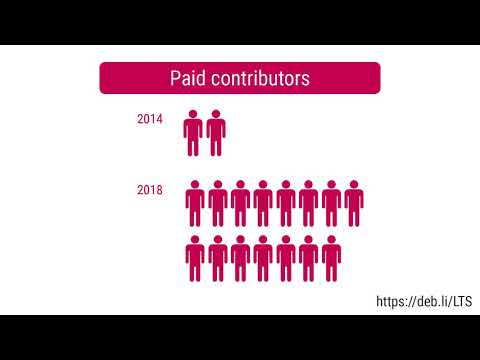
Debian LTS This month I have worked 18 hours on Debian Long Term Support (LTS) and 12 hours on its sister Extended LTS project. You can find out more about the project via the following video:
Uploads Finally, I made a non-maintainer upload of adminer (4.7.6-1) on behalf of Alexandre Rossi.

20 November 2017

Dirk Eddelbuettel: RcppEigen 0.3.3.3.1

A maintenance release 0.3.3.3.1 of RcppEigen is now on CRAN (and will get to Debian soon). It brings Eigen 3.3.* to R. The impetus was a request from CRAN to change the call to Rcpp::Rcpp.plugin.maker() to only use :: as the function has in fact been exported and accessible for a pretty long time. So now the usage pattern catches up. Otherwise, Haiku-OS is now supported and a minor Travis tweak was made. The complete NEWS file entry follows.

Changes in RcppEigen version 0.3.3.3.1 (2017-11-19)
  • Compilation under Haiku-OS is now supported (Yu Gong in #45).
  • The Rcpp.plugin.maker helper function is called via :: as it is in fact exported (yet we had old code using :::).
  • A spurious argument was removed from an example call.
  • Travis CI now uses https to fetch the test runner script.

Courtesy of CRANberries, there is also a diffstat report for the most recent release.

This post by Dirk Eddelbuettel originated on his Thinking inside the box blog. Please report excessive re-aggregation in third-party for-profit settings.

Dirk Eddelbuettel: RcppClassic 0.9.9

A maintenance release RcppClassic 0.9.9 is now at CRAN. This package provides a maintained version of the otherwise deprecated first Rcpp API; no new projects should use it. Per a request from CRAN, we changed the call to Rcpp::Rcpp.plugin.maker() to only use :: as the function has in fact been exported and accessible for a pretty long time. So now the usage pattern catches up. Courtesy of CRANberries, there are changes relative to the previous release. Questions, comments etc should go to the rcpp-devel mailing list off the R-Forge page.

This post by Dirk Eddelbuettel originated on his Thinking inside the box blog. Please report excessive re-aggregation in third-party for-profit settings.

15 November 2017

Russ Allbery: Review: The Piper's Son

Review: The Piper's Son, by Melina Marchetta
Series: Francesca #2
Publisher: Candlewick Press
Copyright: 2010
Printing: 2011
ISBN: 0-7636-5458-2
Format: Kindle
Pages: 330
Tom Mackee's family has fallen apart. The impetus was the death of his uncle Joe in the London tube terrorist bombings, but that was only the start. He destroyed his chances with the only woman he really loved. His father's drinking got out of control, his mother left with his younger sister to live in a different city, and he refused to go with them and abandon his father. But then, six months later, his father abandoned him anyway. As this novel opens, Tom collapses while performing a music set, high on drugs and no sleep, and wakes up to discover his roommates have been fired from their jobs for stealing, and in turn have thrown him out of their apartment. He's at rock bottom. The one place he can turn for a place to stay is his aunt Georgie, the second (although less frequent) viewpoint character of this book. She was the one who took the trip to the UK to try to find out what happened and retrieve her brother's body, and the one who had to return to Australia with nothing. Her life isn't in much better shape than Tom's. She's kept her job, but she's pregnant by her ex-boyfriend but barely talking to him, since he now has a son by another woman he met during their separation. And she's not even remotely over her grief. The whole Finch/Mackee family is, in short, a disaster. But they have a few family relationships left that haven't broken, some underlying basic decency, and some patient and determined friends. I should warn up-front, despite having read this book without knowing this, that this is a sequel to Saving Francesca, set five years later and focusing on secondary characters from the original novel. I've subsequently read that book as well, though, and I don't think reading it first is necessary. This is one of the rare books where being a sequel made it a better stand-alone novel. I never felt a gap of missing story, just a rich and deep background of friendships and previous relationships that felt realistic. People are embedded in networks of relationships even when they feel the most alone, and I really enjoyed seeing that surface in this book. All those patterns from Tom's past didn't feel like information I was missing. They felt like glimpses of what you'd see if you looked into any other person's life. The plot summary above might make The Piper's Son sound like a depressing drama fest, but Marchetta made an excellent writing decision: the worst of this has already happened before the start of the book, and the rest is in the first chapter. This is not at all a book about horrible things happening to people. It's a book about healing. An authentic, prickly, angry healing that doesn't forget and doesn't turn into simple happily-ever-after stories, but does involve a lot of recognition that one has been an ass, and that it's possible to be less of an ass in the future, and maybe some things can be fixed. A plot summary might fool you into thinking that this is a book about a boy and his father, or about dealing with a drunk you still love. It's not. The bright current under this whole story is not father-son bonding. It's female friendships. Marchetta pulls off a beautiful double-story, writing a book that's about Tom, and Georgie, and the layered guilt and tragedy of the Finch/Mackee family, but whose emotional heart is their friends. Francesca, Justine, absent Siobhan. Georgie's friend Lucia. Ned, the cook, and his interactions with Tom's friends. And Tara Finke, also mostly absent, but perfectly written into the story in letters and phone calls. Marchetta never calls unnecessary attention to this, keeping the camera on Tom and Georgie, but the process of reading this book is a dawning realization of just how much work friendship is doing under the surface, how much back-channel conversation is happening off the page, and how much careful and thoughtful and determined work went into providing Tom a floor, a place to get his feet under him, and enough of a shove for him to pull himself together. Pulling that off requires a deft and subtle authorial touch, and I'm in awe at how well it worked. This is a beautifully written novel. Marchetta never belabors an emotional point, sticking with a clear and spare description of actions and thoughts, with just the right sentences scattered here and there to expose the character's emotions. Tom's family is awful at communication, which is much of the reason why they start the book in the situation they're in, but Marchetta somehow manages to write that in a way that didn't just frustrate me or make me want to start banging their heads together. She somehow conveys the extent to which they're trying, even when they're failing, and adds just the right descriptions so that the reader can follow the wordless messages they send each other even when they can't manage to talk directly. I usually find it very hard to connect with people who can only communicate by doing things rather than saying them. It's a high compliment to the author that I felt I understood Tom and his family as well as I did. One bit of warning: while this is not a story of a grand reunion with an alcoholic father where all is forgiven because family, thank heavens, there is an occasional wiggle in that direction. There is also a steady background assumption that one should always try to repair family relationships, and a few tangential notes about the Finches and Mackees that made me think there was a bit more abuse here than anyone involved wants to admit. I don't think the book is trying to make apologies for this, and instead is trying to walk the fine line of talking about realistically messed up families, but I also don't have a strong personal reaction to that type of story. If you have an aversion to "we should all get along because faaaaamily" stories, you may want to skip this book, or at least go in pre-warned. That aside, the biggest challenge I had in reading this book was not breaking into tears. The emotional arc is just about perfect. Tom and Georgie never stay stuck in the same emotional cycle for too long, Marchetta does a wonderful job showing irritating characters from a slightly different angle and having them become much less irritating, and the interactions between Tom, Tara, and Francesca are just perfect. I don't remember reading another book that so beautifully captures that sensation of knowing that you've been a total ass, knowing that you need to stop, but realizing just how much work you're going to have to do, and how hard that work will be, once you own up to how much you fucked up. That point where you keep being an ass for a few moments longer, because stopping is going to hurt so much, but end up stopping anyway because you can't stand yourself any more. And stopping and making amends is hard and hurts badly, and yet somehow isn't quite as bad as you thought it was going to be. This is really great stuff. One final complaint, though: what is it with mainstream fiction and the total lack of denouement? I don't read very much mainstream fiction, but this is the second really good mainstream book I've read (after The Death of Bees) that hits its climax and then unceremoniously dumps the reader on the ground and disappears. Come back here! I wasn't done with these people! I don't need a long happily-ever-after story, but give me at least a handful of pages to be happy with the characters after crying with them for hours! ARGH. But, that aside, the reader does get that climax, and it's note-perfect to the rest of the book. Everyone is still themselves, no one gets suddenly transformed, and yet everything is... better. It's the kind of book you can trust. Highly, highly recommended. Rating: 9 out of 10

12 November 2017

Ben Armstrong: The Joy of Cat Intelligence

As a cat owner, being surprised by cat intelligence delights me. They re not exactly smart like a human, but they are smart in cattish ways. The more I watch them and try to sort out what they re thinking, the more it pleases me to discover they can solve problems and adapt in recognizably intelligent ways, sometimes unique to each individual cat. Each time that happens, it evokes in me affectionate wonder. Today, I had one of those joyful moments. First, you need to understand that some months ago, I thought I had my male cat all figured out with respect to mealtimes. I had been cleaning up after my oafish boy who made a watery mess on the floor from his mother s bowl each morning. I was slightly annoyed, but was mostly curious, and had a hunch. A quick search of the web confirmed it: my cat was left-handed. Not only that, but I learned this is typical for males, whereas females tend to be right-handed. Right away, I knew what I had to do: I adjusted the position of their water bowls relative to their food, swapping them from right to left; the messy morning feedings ceased. I congratulated myself for my cleverness. You see, after the swap, as he hooked the kibbles with his left paw out of the right-hand bowl, they would land immediately on the floor where he could give them chase. The swap caused the messes to cease because before, his left-handed scoops would land the kibbles in the water to the right; he would then have to scoop the kibble out onto the floor, sprinkling water everywhere! Furthermore, the sodden kibble tended to not skitter so much, decreasing his fun. Or so I thought. Clearly, I reasoned, having sated himself on the entire contents of his own bowl, he turned to pilfering his mother s leftovers for some exciting kittenish play. I had evidence to back it up, too: he and his mother both seem to enjoy this game, a regular fixture of their mealtime routines. She, too, is adept at hooking out the kibbles, though mysteriously, without making a mess in her water, whichever way the bowls are oriented. I chalked this up to his general clumsiness of movement vs. her daintiness and precision, something I had observed many times before. Come to think of it, lately, I ve been seeing more mess around his mother s bowl again. Hmm. I don t know why I didn t stop to consider why And then my cat surprised me again. This morning, with Shadow behind my back as I sat at my computer, finishing up his morning meal at his mother s bowl, I thought I heard something odd. Or rather, I didn t hear something. The familiar skitter-skitter sound of kibbles evading capture was missing. So I turned and looked. My dear, devious boy had squished his overgrown body behind his mother s bowls, nudging them ever so slightly askew to fit the small space. Now the bowl orientation was swapped back again. Stunned, I watched him carefully flip out a kibble with his left paw. Plop! Into the water on the right. Concentrating, he fished for it. A miss! He casually licked the water from his paw. Another try. Swoop! Plop, onto the floor. No chase now, just satisfied munching of his somewhat mushy kibble. And then it dawned on me that I had got it somewhat wrong. Yes, he enjoyed Chase the Kibble, like his mom, but I never recognized he had been indulging in a favourite pastime, peculiarly his own I had judged his mealtime messes as accidents, a very human way of thinking about my problem. Little did I know, it was deliberate! His private game was Bobbing for Kibbles. I don t know if it s the altered texture, or dabbling in the bowl, but whatever the reason, due to my meddling, he had been deprived of this pleasure. No worries, a thwarted cat will find a way. And that is the joy of cat intelligence.
8 November 2017

Dirk Eddelbuettel: R / Finance 2018 Call for Papers

The tenth (!!) annual annual R/Finance conference will take in Chicago on the UIC campus on June 1 and 2, 2018. Please see the call for papers below (or at the website) and consider submitting a paper. We are once again very excited about our conference, thrilled about who we hope may agree to be our anniversary keynotes, and hope that many R / Finance users will not only join us in Chicago in June -- and also submit an exciting proposal. So read on below, and see you in Chicago in June!

Call for Papers R/Finance 2018: Applied Finance with R
June 1 and 2, 2018
University of Illinois at Chicago, IL, USA The tenth annual R/Finance conference for applied finance using R will be held June 1 and 2, 2018 in Chicago, IL, USA at the University of Illinois at Chicago. The conference will cover topics including portfolio management, time series analysis, advanced risk tools, high-performance computing, market microstructure, and econometrics. All will be discussed within the context of using R as a primary tool for financial risk management, portfolio construction, and trading. Over the past nine years, R/Finance has includedattendeesfrom around the world. It has featured presentations from prominent academics and practitioners, and we anticipate another exciting line-up for 2018. We invite you to submit complete papers in pdf format for consideration. We will also consider one-page abstracts (in txt or pdf format) although more complete papers are preferred. We welcome submissions for both full talks and abbreviated "lightning talks." Both academic and practitioner proposals related to R are encouraged. All slides will be made publicly available at conference time. Presenters are strongly encouraged to provide working R code to accompany the slides. Data sets should also be made public for the purposes of reproducibility (though we realize this may be limited due to contracts with data vendors). Preference may be given to presenters who have released R packages. Please submit proposals online at http://go.uic.edu/rfinsubmit. Submissions will be reviewed and accepted on a rolling basis with a final submission deadline of February 2, 2018. Submitters will be notified via email by March 2, 2018 of acceptance, presentation length, and financial assistance (if requested). Financial assistance for travel and accommodation may be available to presenters. Requests for financial assistance do not affect acceptance decisions. Requests should be made at the time of submission. Requests made after submission are much less likely to be fulfilled. Assistance will be granted at the discretion of the conference committee. Additional details will be announced via the conference website at http://www.RinFinance.com/ as they become available. Information on previous years'presenters and their presentations are also at the conference website. We will make a separate announcement when registration opens. For the program committee:
Gib Bassett, Peter Carl, Dirk Eddelbuettel, Brian Peterson,
Dale Rosenthal, Jeffrey Ryan, Joshua Ulrich

Dirk Eddelbuettel: RQuantLib 0.4.4: Several smaller updates

A shiny new (mostly-but-not-completely maintenance) release of RQuantLib, now at version 0.4.4, arrived on CRAN overnight, and will get to Debian shortly. This is the first release in over a year, and it it contains (mostly) a small number of fixes throughout. It also includes the update to the new DateVector and DatetimeVector classes which become the default with the upcoming Rcpp 0.12.14 release (just like this week's RcppQuantuccia release). One piece of new code is due to Fran ois Cocquemas who added support for discrete dividends to both European and American options. See below for the complete set of changes reported in the NEWS file. As with release 0.4.3 a little over a year ago, we will not have new Windows binaries from CRAN as I apparently have insufficient powers of persuasion to get CRAN to update their QuantLib libraries. So we need a volunteer. If someone could please build a binary package for Windows from the 0.4.4 sources, I would be happy to once again host it on the GHRR drat repo. Please contact me directly if you can help. Changes are listed below:

Changes in RQuantLib version 0.4.4 (2017-11-07)
  • Changes in RQuantLib code:
    • Equity options can now be analyzed via discrete dividends through two vectors of dividend dates and values (Francois Cocquemas in #73 fixing #72)
    • Some package and dependency information was updated in files DESCRIPTION and NAMESPACE.
    • The new Date(time)Vector classes introduced with Rcpp 0.12.8 are now used when available.
    • Minor corrections were applied to BKTree, to vanilla options for the case of intraday time stamps, to the SabrSwaption documentation, and to bond utilities for the most recent QuantLib release.

Courtesy of CRANberries, there is also a diffstat report for the this release. As always, more detailed information is on the RQuantLib page. Questions, comments etc should go to the rquantlib-devel mailing list off the R-Forge page. Issue tickets can be filed at the GitHub repo.

This post by Dirk Eddelbuettel originated on his Thinking inside the box blog. Please report excessive re-aggregation in third-party for-profit settings.

7 November 2017

Reproducible builds folks: Reproducible Builds: Weekly report #132

Here's what happened in the Reproducible Builds effort between Sunday October 29 and Saturday November 4 2017: Past events Upcoming events Reproducible work in other projects Packages reviewed and fixed, and bugs filed Reviews of unreproducible packages 7 package reviews have been added, 43 have been updated and 47 have been removed in this week, adding to our knowledge about identified issues. Weekly QA work During our reproducibility testing, FTBFS bugs have been detected and reported by: Documentation updates diffoscope development Version 88 was uploaded to unstable by Mattia Rizzolo. It included contributions (already covered by posts of the previous weeks) from: strip-nondeterminism development Version 0.040-1 was uploaded to unstable by Mattia Rizzolo. It included contributions already covered by posts of the previous weeks, as well as new ones from:
Version 0.5.2-2 was uploaded to unstable by Holger Levsen. It included contributions already covered by posts of the previous weeks, as well as new ones from: reprotest development buildinfo.debian.net development tests.reproducible-builds.org Misc. This week's edition was written by Bernhard M. Wiedemann, Chris Lamb, Mattia Rizzolo & reviewed by a bunch of Reproducible Builds folks on IRC & the mailing lists.

Dirk Eddelbuettel: RcppQuantuccia 0.0.2

A first maintenance release of RcppQuantuccia got to CRAN earlier today. RcppQuantuccia brings the Quantuccia header-only subset / variant of QuantLib to R. At present it mostly offers calendaring, but Quantuccia just got a decent amount of new functions so hopefully we can offer more here too. This release was motivated by the upcoming Rcpp release which will deprecate the okd Date and Datetime vectors in favours of newer ones. So this release of RcppQuantuccia switches to the newer ones. Other changes are below:

Changes in version 0.0.2 (2017-11-06)
  • Added calendars for Canada, China, Germany, Japan and United Kingdom.
  • Added bespoke and joint calendars.
  • Using new date(time) vectors (#6).

Courtesy of CRANberries, there is also a diffstat report relative to the previous release. More information is on the RcppQuantuccia page. Issues and bugreports should go to the GitHub issue tracker.

This post by Dirk Eddelbuettel originated on his Thinking inside the box blog. Please report excessive re-aggregation in third-party for-profit settings.

5 November 2017

Dirk Eddelbuettel: pinp 0.0.4: Small tweak

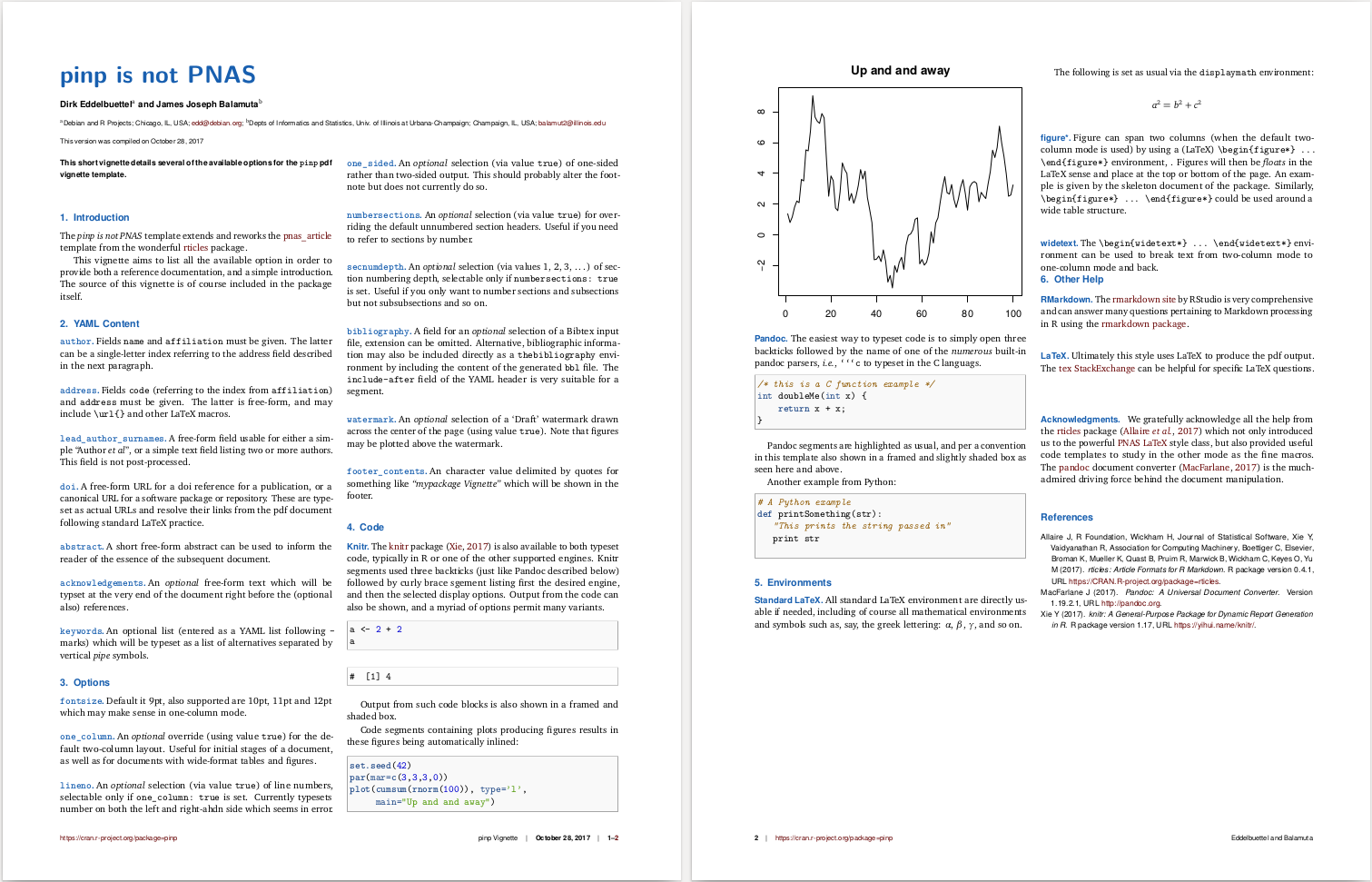
A maintenance release of our pinp package for snazzier one or two column vignettes is now on CRAN as of yesterday. In version 0.0.3, we disabled the default \pnasbreak command we inherit from the PNAS LaTeX style. That change turns out to have been too drastic. So we reverted yet added a new YAML front-matter option skip_final_break which, if set to TRUE, will skip this break. With a default value of FALSE we maintain prior behaviour. A screenshot of the package vignette can be seen below. Additional screenshots of are at the pinp page.
The NEWS entry for this release follows.

Changes in pinp version 0.0.4 (2017-11-04)
  • Correct NEWS headers from 'tint' to 'pinp' (#45).
  • New front-matter variables skip_final_break skips the \pnasbreak on final page which back as default (#47).

Courtesy of CRANberries, there is a comparison to the previous release. More information is on the tint page. For questions or comments use the issue tracker off the GitHub repo.

This post by Dirk Eddelbuettel originated on his Thinking inside the box blog. Please report excessive re-aggregation in third-party for-profit settings.

4 November 2017

Dirk Eddelbuettel: tint 0.0.4: Small enhancements

A maintenance release of the tint package arrived on CRAN earlier today. Its name expands from tint is not tufte as the package offers a fresher take on the Tufte-style for html and pdf presentations. A screenshot of the pdf variant is below.
This release brings some minor enhancements and polish, mostly learned from having done the related pinp (two-column vignette in the PNAS style) and linl (LaTeX letter) RMarkdown-wrapper packages; see below for details from the NEWS.Rd file.

Changes in tint version 0.0.4 (2017-11-02)
  • Skeleton files are also installed as vignettes (#20).
  • A reference to the Tufte source file now points to tint (Ben Marwick in #19, later extended to other Rmd files).
  • Several spelling and grammar errors were corrected too (#13 and #16 by R. Mark Sharp and Matthew Henderson)

Courtesy of CRANberries, there is a comparison to the previous release. More information is on the tint page. For questions or comments use the issue tracker off the GitHub repo.

This post by Dirk Eddelbuettel originated on his Thinking inside the box blog. Please report excessive re-aggregation in third-party for-profit settings.

3 November 2017

Reproducible builds folks: Reproducible Builds: Weekly report #131

Here's what happened in the Reproducible Builds effort between Sunday October 22 and Saturday October 28 2017: Past Events Upcoming/current events Documentation updates Bernhard Wiedemann started The Unreproducible Package which "is meant as a practical way to demonstrate the various ways that software can break reproducible builds using just low level primitives without requiring external existing programs that implement these primitives themselves. It is structured so that one subdirectory demonstrates one class of issues in some variants observed in the wild." Reproducible work in other projects Hush, a fork of ZCash, opened an issue into reproducible builds. A new tag was added to lintian (lint checker for Debian packages) to ensure that changelog entry timestamps are strictly increasing. This avoids certain real-world issues with identical timestamps, documented in Debian #843773. Packages reviewed and fixed, and bugs filed Patches sent upstream: Debian bug reports: Reviews of unreproducible packages 14 package reviews have been added, 35 have been updated and 28 have been removed in this week, adding to our knowledge about identified issues. 1 issue type has been updated: Weekly QA work During our reproducibility testing, FTBFS bugs have been detected and reported by: strip-nondeterminism development Version 0.040-1 was uploaded to unstable by Mattia Rizzolo. It included contributions already covered by posts of the previous weeks, as well as new ones from: reprotest development Development continued in git: buildinfo.debian.net development Development continued in git: reproducible-website development Misc. This week's edition was written by Ximin Luo, Chris Lamb, Bernhard M. Wiedemann and Holger Levsen & reviewed by a bunch of Reproducible Builds folks on IRC & the mailing lists.

31 October 2017

Paul Wise: FLOSS Activities October 2017

Changes

Issues

Review

Administration
  • Debian: respond to mail debug request, redirect hardware access seeker to guest account, redirect hardware donors to porters, redirect interview seeker to DPL, reboot system with dead service
  • Debian mentors: security updates, reboot
  • Debian wiki: upgrade search db format, remove incorrect bans, whitelist email addresses, disable accounts with bouncing email, update email for accounts with bouncing email
  • Debian website: remove need for a website rebuild
  • Openmoko: restart web server, set web server process limits, install monitoring tool

Sponsors The talloc/cmocka uploads and the remmina issue were sponsored by my employer. All other work was done on a volunteer basis.

Chris Lamb: Free software activities in October 2017

Here is my monthly update covering what I have been doing in the free software world in October 2017 (previous month):
Reproducible builds

Whilst anyone can inspect the source code of free software for malicious flaws, most software is distributed pre-compiled to end users. The motivation behind the Reproducible Builds effort is to allow verification that no flaws have been introduced either maliciously or accidentally during this compilation process by promising identical results are always generated from a given source, thus allowing multiple third-parties to come to a consensus on whether a build was compromised. I have generously been awarded a grant from the Core Infrastructure Initiative to fund my work in this area. This month I:


I also made the following changes to our tooling:
diffoscope

diffoscope is our in-depth and content-aware diff utility that can locate and diagnose reproducibility issues.

  • Improve names in output of "internal" binwalk members. (#877525).
  • Don't crash on malformed md5sums files. (#877473).
  • Omit misleading "any of" prefix when only complaining about a single module on import. [...]
  • Adjust tests as ps2ascii now varies its output on timezone. [...]

strip-nondeterminism

strip-nondeterminism is our tool to remove specific non-deterministic results from a completed build.

  • Clojure considers .class file to be stale if it shares the same timestamp of the .clj. We thus adjust the timestamps of the .clj to always be younger. (#877418).
  • Print a message in --verbose mode if no canonical time was specified. [...]

buildinfo.debian.net

buildinfo.debian.net is my experiment into how to process, store and distribute .buildinfo files after the Debian archive software has processed them.

  • Always show SHA-256 checksums, regardless of the browser viewport size. [...]
  • Add an API endpoint to fetch specific .buildinfo files for a certain package/version/architecture. [...]


Debian My activities as the current Debian Project Leader are covered in my "Bits from the DPL" email to the debian-devel-announce mailing list.
Patches contributed
  • devscripts: Please print the actual arguments debuild makes to Lintian. (#880124)
  • hw-detect: Drop reference to floppy disks; it's almost 2018. (#880122)
  • debci:
    • Use deb.debian.org over http.debian.net. (#879654)
    • Document how to use an alternative mirror. (#879655)

Debian LTS

This month I have been paid to work 18 hours on Debian Long Term Support (LTS). In that time I did the following:
  • "Frontdesk" duties, triaging CVEs, etc.
  • Followed up on a large number of upstream "pings" that have been left dormant.
  • Issued DLA 1121-1 to fix an out-of-bounds read vulnerability in curl where a malicious FTP server could abuse this to prevent clients from interacting with it.
  • Issued DLA 1123-1 for the "Go" programming language where an attacker could generate a MIME request such that the server ran out of file descriptors.
  • Issued DLA 1126-1 for the libxfont font selection and rasterisation library, correcting two vulnerabilities, both involving the library being tricked into reading invalid/random memory.
  • Issued DLA 1134-1 for sdl-image1.2, an image loading library. A maliciously-crafted .xcf file could cause a stack-based buffer overflow resulting in potential code execution.

Uploads
  • python-django:
    • 2.0~beta1-1 New upstream 2.x release.
    • 1.11.6-1 New upstream bugfix release.
  • gunicorn (19.6.0-10+deb9u1) Prepared a release for stable to avoid a runtime dependency on a compiler. (#877722)
  • redis:
    • 4:4.0.2-3:
      • Drop the Debian-specific /etc/redis/redis-server.pre-up.d (etc.) hooks and remove them if unchanged.
      • Include systemd redis-server@.service and redis-sentinel@.service template files to easily run multiple Redis instances. (#877702)
      • Patch redis.conf and sentinel.conf with quilt instead of maintaining our own versions under debian/.
    • 4:4.0.2-4:
      • Add input validity checking to cluster config slot numbers to fix CVE-2017-15047. (#878076)
      • Drop debian/bin/generate-parts now we aren't calling it.
      • Correct Bash-ism in NEWS file.
    • 4:4.0.2-5: Replace the existing patch for CVE-2017-15047 with an upstream-blessed version that covers another case.
  • redisearch (0.21.3-5) Initial release.
  • docbook2man (2.0.0-40) Correct spelling mistakes in binaries and other misc packaging tidying.
  • python-redis (2.10.6-1) New upstream release.
  • bfs (1.1.3-1) New upstream release.

FTP Team

As a Debian FTP assistant I ACCEPTed 103 packages: amcheck, argagg, binutils, blockui, bro-pkg, chkservice, citus, django-axes, docker-containerd, doctest, dtkwidget, duktape, feed2exec, fontforge, fonttools, gcc-8, gcc-8-cross, generator-scripting-language, gitgraph.js, haskell-uri-encode, hoel, iniparser, its, jquery-areyousure, kodi, libcatmandu-mods-perl, libcatmandu-template-perl, libcatmandu-xml-perl, libcatmandu-xsd-perl, libcode-tidyall-plugin-sortlines-naturally-perl, libgdamm5.0, libinfinity, libmods-record-perl, libreoffice-dictionaries, libset-intervaltree-perl, libsodium, linux, linux-grsec, ltsp-manager, lxqt-themes, mailman3-core, measurement-kit, mini-buildd, musescore, node-babel, node-babel-eslint, node-babel-loader, node-babel-plugin-add-module-exports, node-babel-plugin-transform-define, node-gulp-newer, node-regenerate-unicode-properties, node-regexpu-core, node-regjsparser, node-unicode-data, node-unicode-loose-match, openjdk-9, orafce, pgaudit, pgsql-ogr-fdw, pk4, postgresql-mysql-fdw, powa-archivist, python-azure-devtools, python-colormap, python-darkslide, python-dotenv, python-karborclient, python-logfury, python-lupa, python-marshmallow, python-murano-pkg-check, python-octaviaclient, python-pathspec, python-pgpy, python-pydub, python-randomize, python-sabyenc, python-searchlightclient, python-stestr, python-subunit2sql, python-twitter, python-utils, python-wsgilog, r-cran-bindr, r-cran-desc, r-cran-hms, r-cran-readstata13, r-cran-rprojroot, r-cran-wikidatar, r-cran-wikipedir, r-cran-wikitaxa, repmgr, requests-file, resteasy3.0, sdl-kitchensink, stardicter, systemd-el, thunderbird, tomcat8.0, uwsgi-plugin-luajit, uwsgi-plugin-mongo, uwsgi-plugin-php & uwsgi-plugin-v8. I additionally filed 3 RC bugs against packages that had incomplete debian/copyright files against: fonttools, generator-scripting-language & libsodium.

Dirk Eddelbuettel: linl 0.0.2: Couple improvements

Following up on the initial 0.0.1 release of linl, Aaron and I are happy to announce release 0.0.2 which reached the CRAN network on Sunday in a smooth 'CRAN-pretest-publish' auto-admittance. linl provides a simple-yet-powerful Markdown---and RMarkdown---wrapper around the venerable LaTeX letter class; see below for an expanded example also included as the package vignette. This versions sets a few sensible default values for font, font size, margins, signature (non-)indentation and more; it also expands the documentation.
The NEWS entry follows:

Changes in tint version 0.0.2 (2017-10-29)
  • Set a few defaults for a decent-looking skeleton and template: font, fontsize, margins, left-justify closing (#3)
  • Blockquote display is now a default as well (#4).
  • Updated skeleton.Rmd and vignette source accordingly
  • Documented new default options (#5 and #6).
  • Links are now by default printed as footnotes (#9).

Courtesy of CRANberries, there is a comparison to the previous release. More information is on the tint page. For questions or comments use the issue tracker off the GitHub repo. For questions or comments use the issue tracker off the GitHub repo.

This post by Dirk Eddelbuettel originated on his Thinking inside the box blog. Please report excessive re-aggregation in third-party for-profit settings.

Dirk Eddelbuettel: pinp 0.0.3: More docs, more features

Our pinp package for snazzier one or two column vignette received it second update. Now at version 0.0.3, it arrived on CRAN on Saturday with minimal fuzz as an 'CRAN-pretest-publish' transition. We added more frontmatter options, documented more, and streamlined some internals of the LaTeX class borrowed from PNAS. A screenshot of the (updated) vignette can be seen below. Additional screenshots of are at the pinp page.
The NEWS entry for this release follows.

Changes in tint version 0.0.3 (2017-10-28)
  • Section 'Acknowledgements' now conditional on a frontmatter setting, section 'Matmethods' has been removed, pnasbreak no longer used which stabilizes LaTeX float formatting. References are now shown in the column just like other content (Dirk in #36).
  • Vignette now uses new numbered sections frontmatter switch which improves the pdf outline.
  • New front-matter options for title/section header colors, and link colors (Dirk in #39).
  • YAML frontmater options are now documented in the help page for pinp as well (Dirk in #41).
  • Some typos were fixed (Michael in #42 and #43).

Courtesy of CRANberries, there is a comparison to the previous release. More information is on the tint page. For questions or comments use the issue tracker off the GitHub repo.

This post by Dirk Eddelbuettel originated on his Thinking inside the box blog. Please report excessive re-aggregation in third-party for-profit settings.

22 October 2017

Dirk Eddelbuettel: linl 0.0.1: linl is not Letter

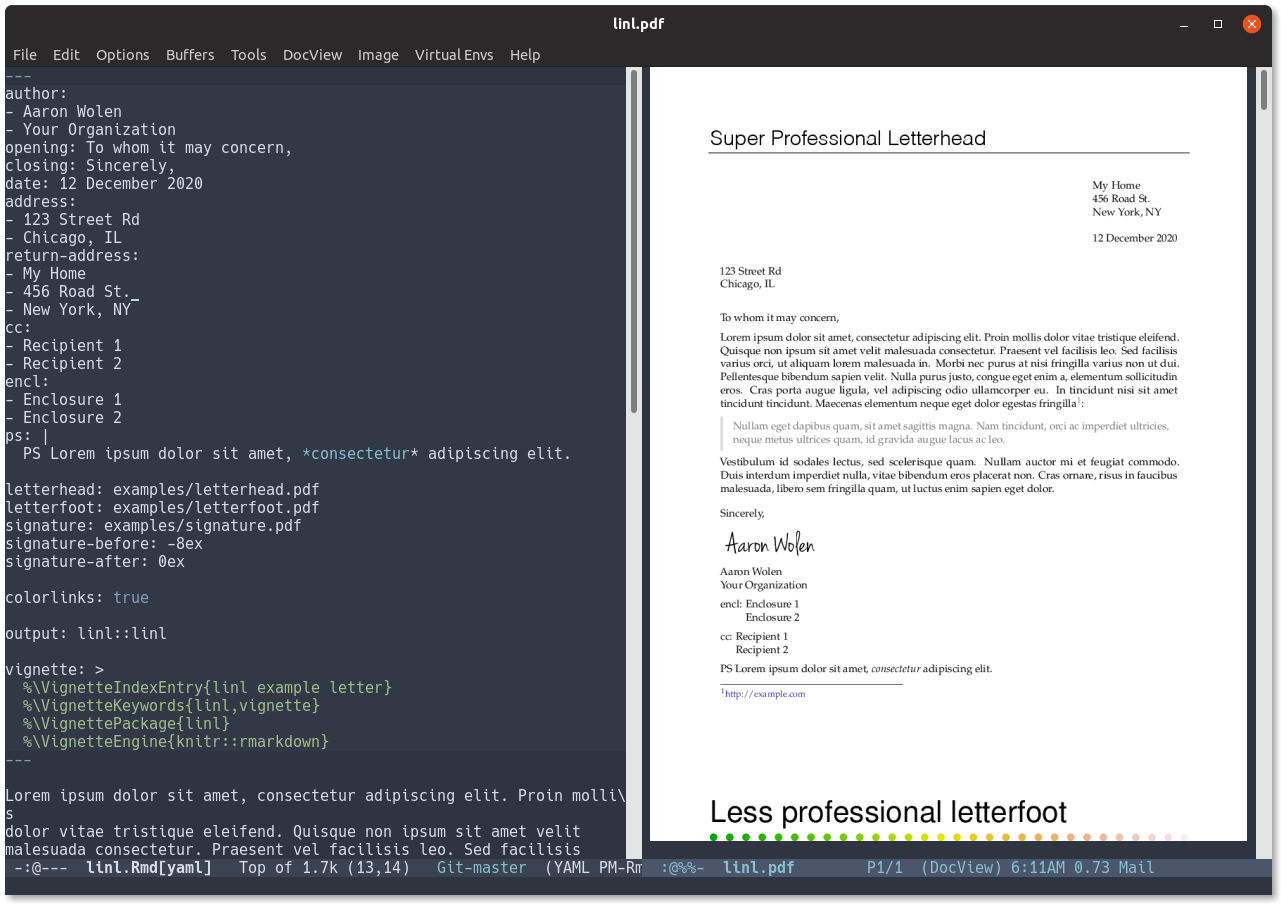
Aaron Wolen and I are pleased to announce the availability of the initial 0.0.1 release of our new linl package on the CRAN network. It provides a simple-yet-powerful Markdown---and RMarkdown---wrapper the venerable LaTeX letter class. Aaron had done the legwork in the underlying pandoc-letter repository upon which we build via proper rmarkdown integration. The package also includes a LaTeX trick or two: optional header and signature files, nicer font, better size, saner default geometry and more. See the following screenshot which shows the package vignette---itself a simple letter---along with (most of) its source:
The initial (short) NEWS entry follows:

Changes in tint version 0.0.1 (2017-10-17)
  • Initial CRAN release

The date is a little off; it took a little longer than usual for the good folks at CRAN to process the initial submission. We expect future releases to be more timely. For questions or comments use the issue tracker off the GitHub repo.

This post by Dirk Eddelbuettel originated on his Thinking inside the box blog. Please report excessive re-aggregation in third-party for-profit settings.

21 October 2017

Jaldhar Vyas: Sal Mubarak 2074

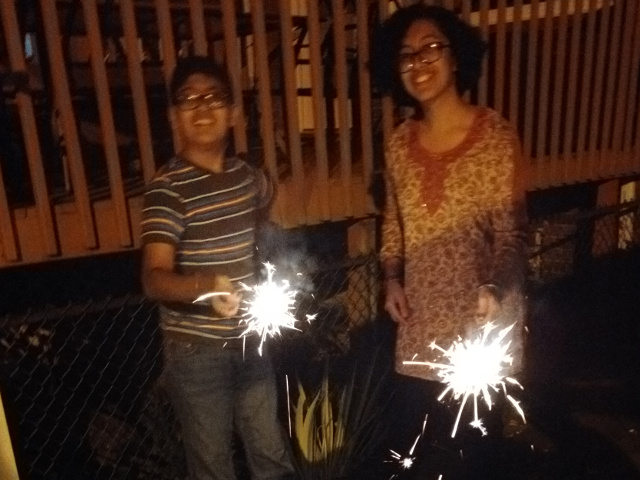
Wishing all Debian people a prosperous and auspicious Gujarati new year (V.S. 2074 called Saumya.) This year fireworks became legal for the first time in New Jersey. Not that it ever stopped us before but it is nice to see the government stop meddling for no reason. (Eff you, Indian Supreme Court.) Sparklers on Diwali. Although you can only see sparklers in the picture above, we got enough armament to make ISIS jealous. There were also lots of diabetes-inducing sweets and (inexpensive, practical) presents for young and old. That's what I call a proper Diwali and new year.

17 October 2017

Norbert Preining: Japanese TeX User Meeting 2017

Last saturday the Japanese TeX User Meeting took place in Fujisawa, Kanagawa. For those who have been at the TUG 2013 in Tokyo you will remember that the Japanese TeX community is quite big and vibrant. On Saturday about 50 users and developers gathered for a set of talks on a variety of topics. The first talk was by Keiichiro Shikano ( ) on using Markup text to generate (La)TeX and HTML. He presented a variety of markup formats, including his own tool xml2tex. The second talk was my Masamichi Hosoda ( ) on reducing the size of PDF files using PDFmark extraction. As a contributor to many projects including Texinfo and LilyPond, Masamichi Hosoda tells us horror stories about multiple font embedding in the manual of LilyPond, the permanent need for adaption to newer Ghostscript versions, and the very recent development in Ghostscript prohibiting the merge of font definitions in PDF files. Next up was Yusuke Terada ( ) on grading exams using TeX. Working through hundreds and hundreds of exams and do the grading is something many of us are used to and I think nobody really enjoys it. Yusuke Terada has combined various tools, including scans, pdf merging using pdfpages, to generate gradable PDF which were then checked on an iPad. On the way he did hit some limits in dvipdfmx on the number of images, but this was obviously only a small bump on the road. Now if that could be automatized as a nice application, it would be a big hit I guess! The forth talk was by Satoshi Yamashita ( ) on the preparation of slides using KETpic. KETpic is a long running project by Setsuo Takato ( ) for the generation of graphics, in particular using Cinderella. KETpic and KETcindy integrates with lots of algebraic and statistical programs (R, Maxima, SciLab, ) and has a long history of development. Currently there are activities to incorporate it into TeX Live. The fifth talk was by Takuto Asakura ( ) on programming TeX using expl3, the main building block of the LaTeX3 project and already adopted by many TeX developers. Takuto Asakura came to fame on this years TUG/BachoTeX 2017 when he won the W. J. Martin Prize for his presentation Implementing bioinformatics algorithms in TeX. I think we can expect great new developments from Takuto! The last talk was by myself on fmtutil and updmap, two of the main management programs in any TeX installation, presenting the changes introduced over the last year, including the most recent release of TeX Live. Details have been posted on my blog, and a lengthy article in TUGboat 38:2, 2017 is available on this topic, too. After the conference about half of the participants joined a social dinner in a nearby Izakaya, followed by a after-dinner beer tasting at a local craft beer place. Thanks to Tatsuyoshi Hamada for the organization. As usual, the Japanese TeX User Meetings are a great opportunity to discuss new features and make new friends. I am always grateful to be part of this very nice community! I am looking forward to the next year s meeting.

13 October 2017

Shirish Agarwal: I need to speak up now X Economics

Dear all, This would be a longish blog post (as most of mine are) compiled over days but as there is so short a time and so much to share. I had previously thought to share beautiful photographs of Ganesh mandals taking out the procession at time of immersion of the idol or the last day of Durga Puja recent events around do not make my mood to share photos at this point in time. I may share some of them in a future blog post or two . Before going further, I would like to offer my sympathies and condolences to people hurt and dislocated in Hurricane Irma , the 2017 Central Mexico Earthquake and lastly the most recent Las Vegas shooting as well as Hurricane Maria in Puerto Rico . I am somewhat nonplussed as to why Americans always want to name, especially hurricanes which destroy people s lives and livelihood built over generations and why most of the hurricanes are named after women. A look at weather.com site unveiled the answer to the mystery. Ironically (or not) I saw some of the best science coverage about Earthquakes or anything scientific reporting and analysis after a long time in mainstream newspapers in India. On another note, I don t understand or even expect to understand why the gunman did what he did 2 days back. Country music AFAIK is one of the most chilled-out kind of music, in some ways very similar to classical Indian singing although they are worlds apart in style of singing, renditions, artists, the way they emote etc. I seriously wish that the gunman had not been shot but caught and reasons were sought about what he did, he did. While this is certainly armchair thinking as was not at the scene of crime, but if a Mumbai Police constable could do it around a decade ago armed only with a lathi could do it, why couldn t the American cops who probably are trained in innumerable ways to subdue people without killing them, did. While investigations are on, I suspect if he were caught just like Ajmal Kasab was caught then lot of revelations might have come up. From what is known, the gentleman was upwardly mobile i.e. he was white, rich and apparently had no reason to have beef with anybody especially a crowd swaying to some nice music, all of which makes absolutely no sense. Indian Economy Slowdown Anyways, back to one of the main reasons of writing this blog post. Few days back, an ex-finance Minister of India Yashwant Sinha wrote what was felt by probably millions of Indians, an Indian Express article called I need to speak up now While there have been many, many arguments made since then by various people. A simple search of I need to speak up would lead to lead to many a result besides the one I have shared above. The only exception I have with the article is the line Forty leading companies of the country are already facing bankruptcy proceedings. Many more are likely to follow suit. I would not bore you but you ask any entrepreneur trying to set up shop in India i.e. ones who actually go through the processes of getting all the licenses for setting up even a small businesses as to the numerous hurdles they have to overcome and laid-back corrupt bureaucracy which they have to overcome. I could have interviewed some of my friends who had the conviction and the courage to set up shop and spent more than half a decade getting all the necessary licenses and approval to set up but it probably would be too specific for one industry or the other and would lead to the same result. Co-incidentally, a new restaurant, leaf opened in my vicinity few weeks before. From the looks it looked like a high-brow, high-priced restaurant hence like many others I did not venture in. After a few days, they introduced south-Indian delicacies like Masala Dosa, Uttapam at prices similar to other restaurants around. So I ventured in and bought some south Indian food to consume between mum and me. Few days later, I became friends with the owner/franchisee and I suggested (in a friendly tone) that why he doesn t make it like a CCD play where many people including yours truly use the service to share, strategize and meet with clients. The CCD joints usually serve coffee and snacks (which are over-priced but still run out pretty fast) but people come as they have chilled-out atmosphere and Wi-Fi access which people need for their smartphones, although the Wi-Fi part may soon become redundant With Reliance Jio making a big play. I also shared why he doesn t add more variety and time (the south Indian items are time-limited) as I see/saw many empty chairs there. Anyways, the shop-owner/franchisee shared his gross costs including salary, stocking, electricity, rent and it doesn t pan out to be serving Rs.80/- dish (roughly a 1US dollar and 25 cents) then serving INR Rs. 400/- a dish (around 6 $USD). One round of INR 400/- + dishes make his costs for the day, around 12 tables were there. It s when they have two full rounds of dishes costing INR 400/- or more that he actually has profits and he is predicting loss for at least 6 months to a year before he makes a rebound. He needs steady customers rather than just walk-ins that will make his business work/click. Currently his family is bearing the costs. He didn t mention the taxes although I know apart from GST there are still some local body taxes that they will have to pay and comply with. There are a multitude of problems for shutting a shop legally as well as they have to again renavigate the bureaucracy for the same. I have seen more than a few retailers downing their shutters for 6-8 months and then either sell it to new management, let go of the lease or simply sell the property to a competitor. The Insolvency and Bankruptcy Code is probably the first proper exit policy for large companies. So the 40 odd companies that Mr. Sinha were talking about were probably sick for a long time. In India, there is also an additional shame of being a failed entrepreneur unlike in the west where Entrepreneurs start on their next venture. As seen from Retailing In India only 3.3% of the population or at the most 4% of the population is directly or indirectly linked with the retail trade. Most of the economy still derives its wealth from the agrarian sector which is still reeling under the pressure from demonetization which happened last year. Al jazeera surprisingly portrayed a truer picture of the effects demonetization had on common citizen than many Indian newspapers did at the time. Because of the South African Debconf, I had to resort to debit cards and hence was able to escape standing in long lines in which many an old and women perished. It is only yesterday that the Government has acknowledged which many prominent Indians have been saying for months now, that we are in a slowdown . Be aware of the terms being used for effect by the Prime Minister. There are two articles which outlines the troubles India is in atm. The only bright spot has been e-commerce which so far has eluded GST although the Govt. has claimed regulations to put it in check. Indian Education System Interestingly, Ravish Kumar has started a series on NDTV where he is showcasing how Indian education sector, especially public colleges have been left to teachers on contract basis, see the first four episodes on NDTV channel starting with the first one I have shared as a hyperlink. I apologize as the series is in Hindi as the channel is meant for Indians and is mostly limited to Northern areas of the Country (mostly) although he has been honest that it is because they lack resources to tackle the amount of information flowing to them. Ravish started the series with sharing information about the U.S. where the things are similar with some teachers needing to sleep in cars because of high-cost of living to some needing to turn to sex-work . I was shocked when I read the guardian article, that is no way to treat our teachers.I went on to read How the American University was Killed following the breadcrumbs along the way. Reading that it seems Indians have been following the American system playbook from the 1980 s itself. The article talks about HMO as well and that seems to have followed here as well with my own experience of hospital fees and drugs which I had to entail a few weeks/month ago. Few years ago, when me and some of my friends had the teaching bug and we started teaching in a nearby municipal school, couple of teachers had shared that they were doing 2-3 jobs to make ends meet. I don t know about others in my group, at least I was cynical because I thought all the teachers were permanent and they make good money only to realize now that the person was probably speaking the truth. When you have to do three jobs to make ends meet from where do you bring the passion to teach young people and that too outside the syllabus ? Also, with this new knowledge in hindsight, I take back all my comments I made last year and the year before for the pathetic education being put up by the State. With teachers being paid pathetically/underpaid and almost 60% teachers being ad-hoc/adjunct teachers they have to find ways to have some sense of security. Most teachers are bachelors as they are poor and cannot offer any security (either male or female) and for women, after marriage it actually makes no sense for them to continue in this profession. I salute all the professors who are ad-hoc in nature and probably will never get a permanent position in their life. I think in some way, thanx to him, that the government has chosen to give 7th pay commisson salary to teachers. While the numbers may appear be large, there are a lot of questions as to how many people will actually get paid. There needs to be lot of vacancies which need to be filled quickly but don t see any solution in the next 2-3 years as well. The Government has taken a position to use/re-hire retired teachers rather than have new young teachers as an unwritten policy. In this Digital India context how are retired teachers supposed to understand and then pass on digital concepts is beyond me when at few teacher trainings I have seen they lack even the most basic knowledge that I learnt at least a decade or two ago, the difference is that vast. I just don t know what to say to that. My own experience with my own mother who had pretty good education in her time and probably would have made a fine business-woman if she knew that she will have a child that she would have to raise by herself alone (along with maternal grand-parents) is testimonial to the fact how hard it is for older people to grasp technology and here I m talking just using the interface as a consumer rather than a producer or someone in-between who has the idea of how companies and governments profit from whatever data is shared one way or the other. After watching the series/episodes and discussing the issue with my mother it was revealed that both her and my late maternal grandfather were on casual/ad-hoc basis till 20-25 years in their service in the defense sector. If Ravish were to do a series on the defense sector he probably would find the same thing there. To add to that, the defense sector is a vital component to a country s security. If 60% of the defense staff in all defense establishments have temporary staff how do you ensure the loyalty of the people working therein. That brings to my mind Ignorance is bliss . Software development and deployment There is another worry that all are skirting around, the present dispensation/government s mantra is minimum government-maximum governance with digital technologies having all solutions which is leading to massive unemployment. Also from most of the stories/incidents I read in the newspapers, mainstream media and elsewhere it seems most software deployments done in India are done without having any system of internal checks and balances. There is no lintian for software to be implemented. Contracts seem to be given to big companies and there is no mention of what prerequisites or conditions were laid down by the Government for software development and deployment and if any checks were done to ensure that the software being developed was in according to government specifications or not. Ideally this should all be in public domain so that questions can be asked and responsibility fixed if things go haywire, as currently they do not. Software issues As my health been not that great, I have been taking a bit more time and depth while filing bugs. #877638 is a good example. I suspect though that part of the problem might be that mate has moved to gtk3 while guake still has gtk-2 bindings. I also reported the issue upstream both in mate-panel as well as guake . I haven t received any response from either or/and upstreams . I also have been fiddling around with gdb to better understand the tool so I can exploit/use this tool in a better way. There are some commands within the gdb interface which seem to be interesting and hopefully I ll try how the commands perform over days, weeks to a month. I hope we see more action on the mate-panel/guake bug as well as move of guake to gtk+3 but that what seemingly seemed like wait for eternity seems to have done by somebody in last couple of days. As shared in the ticket there are lots of things still to do but it seems the heavy lifting has been done but seems merging will be tricky as two developers have been trying to update to gtk+3 although aichingm seems to have a leg up with his 3! branch. Another interesting thing I saw is the below picture. Firefox is out of date on wordpress.com The firefox version I was using to test the site/wordpress-wp-admin was Mozilla Firefox 52.4.0 which AFAIK is a pretty recentish one and people using Debian stretch would probably be using the same version (firefox stable/LTS) rather than the more recent versions. I went to the link it linked to and it gave no indication as to why it thought my browser is out-of-date and what functionality was/is missing. I have found that wordpress support has declined quite a bit and people don t seem to use the forums as much as they used to before. I also filed a few bugs for qalculate. #877716 where a supposedly transitional package removes the actual application, #877717 as the software has moved its repo. to github.com as well as tickets and other things in process and lastly #877733. I had been searching for a calculator which can do currency calculations on the fly (say for e.g. doing personal budgeting for Taiwan debconf) without needing to manually enter the conversion rates and losing something in the middle. While the current version has support for some limited currencies, the new versions promise more as other people probably have more diverse needs for currency conversions (people who do long or short on oil, stocks overseas is just one example, I am sure there are many others) than simplistic mine.
Filed under: Miscellenous Tagged: #American Education System, #bug-filing, #Climate change, #Dignity, #e-commerce, #gtk+3, #gtk2, #Indian Economy 'Slowdown', #Indian Education System, #Insolvency and Bankruptcy Code, #Las Vegas shooting, #Modern Retail in India, #planet-debian, #qalculate, Ad-hoc and Adjunct Professors, wordpress.com

Next.

Previous.