Vincent Bernat: Syncing RIPE, ARIN and APNIC objects with a custom Ansible module
Internet is split into five regional Internet registry: AFRINIC,
ARIN, APNIC, LACNIC and RIPE. Each RIR maintains an Internet Routing
Registry. An IRR allows one to publish information about the
routing of Internet number resources.1 Operators use this to
determine the owner of an IP address and to construct and maintain
routing filters. To ensure your routes are widely accepted, it is
important to keep the prefixes you announce up-to-date in an IRR.
There are two common tools to query this database:
The second one allows you to build route filters using the information
contained in the IRR database:
There is no module available on Ansible Galaxy to manage these
objects. Each IRR has different ways of being updated. Some RIRs
propose an API but some don t. If we restrict ourselves to RIPE, ARIN
and APNIC, the only common method to update objects is email
updates, authenticated with a password or a GPG signature.2
Let s write a custom Ansible module for this purpose!
Code
The module takes a list of RPSL objects to synchronize and returns
the body of an email update if a change is needed:
whois and
bgpq4. The first one allows you to do a query with the WHOIS
protocol:
$ whois -BrG 2a0a:e805:400::/40
[ ]
inet6num:       2a0a:e805:400::/40
netname:        FR-BLADE-CUSTOMERS-DE
country:        DE
geoloc:         50.1109 8.6821
admin-c:        BN2763-RIPE
tech-c:         BN2763-RIPE
status:         ASSIGNED
mnt-by:         fr-blade-1-mnt
remarks:        synced with cmdb
created:        2020-05-19T08:04:58Z
last-modified:  2020-05-19T08:04:58Z
source:         RIPE
route6:         2a0a:e805:400::/40
descr:          Blade IPv6 - AMS1
origin:         AS64476
mnt-by:         fr-blade-1-mnt
remarks:        synced with cmdb
created:        2019-10-01T08:19:34Z
last-modified:  2020-05-19T08:05:00Z
source:         RIPE
$ bgpq4 -6 -S RIPE -b AS64476
NN = [
    2a0a:e805::/40,
    2a0a:e805:100::/40,
    2a0a:e805:300::/40,
    2a0a:e805:400::/40,
    2a0a:e805:500::/40
];
Notice I recommend that you read Writing a custom Ansible module as an introduction, as well as Syncing MySQL tables for a more instructive example.
Code
The module takes a list of RPSL objects to synchronize and returns
the body of an email update if a change is needed:
- name: prepare RIPE objects
  irr_sync:
    irr: RIPE
    mntner: fr-blade-1-mnt
    source: whois-ripe.txt
  register: irr
Prerequisites
The source file should be a set of objects to sync using the RPSL
language. This would be the same content you would send manually by
email. All objects should be managed by the same maintainer, which is
also provided as a parameter.
Signing and sending the result is not the responsibility of this
module. You need two additional tasks for this purpose:
- name: sign RIPE objects
  shell:
    cmd: gpg --batch --user noc@example.com --clearsign
    stdin: "  irr.objects  "
  register: signed
  check_mode: false
  changed_when: false
- name: update RIPE objects by email
  mail:
    subject: "NEW: update for RIPE"
    from: noc@example.com
    to: "auto-dbm@ripe.net"
    cc: noc@example.com
    host: smtp.example.com
    port: 25
    charset: us-ascii
    body: "  signed.stdout  "
You also need to authorize the PGP keys used to sign the updates by
creating a key-cert object and adding it as a valid authentication
method for the corresponding mntner object:
key-cert:  PGPKEY-A791AAAB
certif:    -----BEGIN PGP PUBLIC KEY BLOCK-----
certif:
certif:    mQGNBF8TLY8BDADEwP3a6/vRhEERBIaPUAFnr23zKCNt5YhWRZyt50mKq1RmQBBY
[ ]
certif:    -----END PGP PUBLIC KEY BLOCK-----
mnt-by:    fr-blade-1-mnt
source:    RIPE
mntner:    fr-blade-1-mnt
[ ]
auth:      PGPKEY-A791AAAB
mnt-by:    fr-blade-1-mnt
source:    RIPE
Module definition
Starting from the skeleton described in the previous article, we define the module:
module_args = dict(
    irr=dict(type='str', required=True),
    mntner=dict(type='str', required=True),
    source=dict(type='path', required=True),
)
result = dict(
    changed=False,
)
module = AnsibleModule(
    argument_spec=module_args,
    supports_check_mode=True
)
Getting existing objects
To grab existing objects, we use the whois command to retrieve all
the objects from the provided maintainer.
# Per-IRR variations:
# - whois server
whois =
    'ARIN': 'rr.arin.net',
    'RIPE': 'whois.ripe.net',
    'APNIC': 'whois.apnic.net'

# - whois options
options =
    'ARIN': ['-r'],
    'RIPE': ['-BrG'],
    'APNIC': ['-BrG']

# - objects excluded from synchronization
excluded = ["domain"]
if irr == "ARIN":
    # ARIN does not return these objects
    excluded.extend([
        "key-cert",
        "mntner",
    ])
# Grab existing objects
args = ["-h", whois[irr],
        "-s", irr,
        *options[irr],
        "-i", "mnt-by",
        module.params['mntner']]
proc = subprocess.run("whois", *args, capture_output=True)
if proc.returncode != 0:
    raise AnsibleError(
        f"unable to query whois:  args ")
output = proc.stdout.decode('ascii')
got = extract(output, excluded)
The first part of the code setup some IRR-specific constants: the
server to query, the options to provide to the whois command and the
objects to exclude from synchronization. The second part invokes the
whois command, requesting all objects whose mnt-by field is the
provided maintainer. Here is an example of output:
$ whois -h whois.ripe.net -s RIPE -BrG -i mnt-by fr-blade-1-mnt
[ ]
inet6num:       2a0a:e805:300::/40
netname:        FR-BLADE-CUSTOMERS-FR
country:        FR
geoloc:         48.8566 2.3522
admin-c:        BN2763-RIPE
tech-c:         BN2763-RIPE
status:         ASSIGNED
mnt-by:         fr-blade-1-mnt
remarks:        synced with cmdb
created:        2020-05-19T08:04:59Z
last-modified:  2020-05-19T08:04:59Z
source:         RIPE
[ ]
route6:         2a0a:e805:300::/40
descr:          Blade IPv6 - PA1
origin:         AS64476
mnt-by:         fr-blade-1-mnt
remarks:        synced with cmdb
created:        2019-10-01T08:19:34Z
last-modified:  2020-05-19T08:05:00Z
source:         RIPE
[ ]
The result is passed to the extract() function. It parses and
normalizes the results into a dictionary mapping object names to
objects. We store the result in the got variable.
def extract(raw, excluded):
    """Extract objects."""
    # First step, remove comments and unwanted lines
    objects = "\n".join([obj
                         for obj in raw.split("\n")
                         if not obj.startswith((
                                 "#",
                                 "%",
                         ))])
    # Second step, split objects
    objects = [RPSLObject(obj.strip())
               for obj in re.split(r"\n\n+", objects)
               if obj.strip()
               and not obj.startswith(
                   tuple(f" x :" for x in excluded))]
    # Last step, put objects in a dict
    objects =  repr(obj): obj
               for obj in objects
    return objects
RPSLObject() is a class enabling normalization and comparison of
objects. Look at the module code for more details.
>>> output="""
... inet6num:       2a0a:e805:300::/40
... [ ]
... """
>>> pprint( k: str(v) for k,v in extract(output, excluded=[]) )
 '<Object:inet6num:2a0a:e805:300::/40>':
   'inet6num:       2a0a:e805:300::/40\n'
   'netname:        FR-BLADE-CUSTOMERS-FR\n'
   'country:        FR\n'
   'geoloc:         48.8566 2.3522\n'
   'admin-c:        BN2763-RIPE\n'
   'tech-c:         BN2763-RIPE\n'
   'status:         ASSIGNED\n'
   'mnt-by:         fr-blade-1-mnt\n'
   'remarks:        synced with cmdb\n'
   'source:         RIPE',
 '<Object:route6:2a0a:e805:300::/40>':
   'route6:         2a0a:e805:300::/40\n'
   'descr:          Blade IPv6 - PA1\n'
   'origin:         AS64476\n'
   'mnt-by:         fr-blade-1-mnt\n'
   'remarks:        synced with cmdb\n'
   'source:         RIPE'
Comparing with wanted objects
Let s build the wanted dictionary using the same structure, thanks
to the extract() function we can use verbatim:
with open(module.params['source']) as f:
    source = f.read()
wanted = extract(source, excluded)
The next step is to compare got and wanted to build the diff
object:
if got != wanted:
    result['changed'] = True
    if module._diff:
        result['diff'] = [
            dict(before_header=k,
                 after_header=k,
                 before=str(got.get(k, "")),
                 after=str(wanted.get(k, "")))
            for k in set((*wanted.keys(), *got.keys()))
            if k not in wanted or k not in got or wanted[k] != got[k]]
Returning updates
The module does not have a side effect. If there is a difference, we
return the updates to send by email. We choose to include all wanted
objects in the updates (contained in the source variable) and let
the IRR ignore unmodified objects. We also append the objects to be
deleted by adding a delete: attribute to each them them.
# We send all source objects and deleted objects.
deleted_mark = f" 'delete:':16 deleted by CMDB"
deleted = "\n\n".join([f" got[k].raw \n deleted_mark "
                       for k in got
                       if k not in wanted])
result['objects'] = f" source \n\n deleted "
module.exit_json(**result)
The complete code is available on GitHub. The module
supports both --diff and --check flags. It does not return
anything if no change is detected. It can work with APNIC, RIPE and
ARIN. It is not perfect: it may not detect some changes,3 it
is not able to modify objects not owned by the provided
maintainer4 and some attributes cannot be modified, requiring
to manually delete and recreate the updated object.5 However,
this module should automate 95% of your needs.
-
Other IRRs exist without being attached to a RIR. The most
notable one is RADb.
-
ARIN is phasing out this method in favor of IRR-online.
RIPE has an API available, but email updates are still
supported and not planned to be deprecated. APNIC plans to expose
an API.
-
For ARIN, we cannot query
key-cert and mntner objects
and therefore we cannot detect changes in them. It is also not
possible to detect changes to the auth mechanisms of a mntner
object.
-
APNIC do not assign top-level objects to the maintainer
associated with the owner.
-
Changing the status of an
inetnum object requires
deleting and recreating the object.
- name: prepare RIPE objects irr_sync: irr: RIPE mntner: fr-blade-1-mnt source: whois-ripe.txt register: irr
- name: sign RIPE objects shell: cmd: gpg --batch --user noc@example.com --clearsign stdin: " irr.objects " register: signed check_mode: false changed_when: false - name: update RIPE objects by email mail: subject: "NEW: update for RIPE" from: noc@example.com to: "auto-dbm@ripe.net" cc: noc@example.com host: smtp.example.com port: 25 charset: us-ascii body: " signed.stdout "
key-cert object and adding it as a valid authentication
method for the corresponding mntner object:
key-cert: PGPKEY-A791AAAB certif: -----BEGIN PGP PUBLIC KEY BLOCK----- certif: certif: mQGNBF8TLY8BDADEwP3a6/vRhEERBIaPUAFnr23zKCNt5YhWRZyt50mKq1RmQBBY [ ] certif: -----END PGP PUBLIC KEY BLOCK----- mnt-by: fr-blade-1-mnt source: RIPE mntner: fr-blade-1-mnt [ ] auth: PGPKEY-A791AAAB mnt-by: fr-blade-1-mnt source: RIPE
Module definition
Starting from the skeleton described in the previous article, we define the module:
module_args = dict(
irr=dict(type='str', required=True),
mntner=dict(type='str', required=True),
source=dict(type='path', required=True),
)
result = dict(
changed=False,
)
module = AnsibleModule(
argument_spec=module_args,
supports_check_mode=True
)
Getting existing objects
To grab existing objects, we use the whois command to retrieve all
the objects from the provided maintainer.
# Per-IRR variations:
# - whois server
whois =
'ARIN': 'rr.arin.net',
'RIPE': 'whois.ripe.net',
'APNIC': 'whois.apnic.net'
# - whois options
options =
'ARIN': ['-r'],
'RIPE': ['-BrG'],
'APNIC': ['-BrG']
# - objects excluded from synchronization
excluded = ["domain"]
if irr == "ARIN":
# ARIN does not return these objects
excluded.extend([
"key-cert",
"mntner",
])
# Grab existing objects
args = ["-h", whois[irr],
"-s", irr,
*options[irr],
"-i", "mnt-by",
module.params['mntner']]
proc = subprocess.run("whois", *args, capture_output=True)
if proc.returncode != 0:
raise AnsibleError(
f"unable to query whois: args ")
output = proc.stdout.decode('ascii')
got = extract(output, excluded)
The first part of the code setup some IRR-specific constants: the
server to query, the options to provide to the whois command and the
objects to exclude from synchronization. The second part invokes the
whois command, requesting all objects whose mnt-by field is the
provided maintainer. Here is an example of output:
$ whois -h whois.ripe.net -s RIPE -BrG -i mnt-by fr-blade-1-mnt
[ ]
inet6num: 2a0a:e805:300::/40
netname: FR-BLADE-CUSTOMERS-FR
country: FR
geoloc: 48.8566 2.3522
admin-c: BN2763-RIPE
tech-c: BN2763-RIPE
status: ASSIGNED
mnt-by: fr-blade-1-mnt
remarks: synced with cmdb
created: 2020-05-19T08:04:59Z
last-modified: 2020-05-19T08:04:59Z
source: RIPE
[ ]
route6: 2a0a:e805:300::/40
descr: Blade IPv6 - PA1
origin: AS64476
mnt-by: fr-blade-1-mnt
remarks: synced with cmdb
created: 2019-10-01T08:19:34Z
last-modified: 2020-05-19T08:05:00Z
source: RIPE
[ ]
The result is passed to the extract() function. It parses and
normalizes the results into a dictionary mapping object names to
objects. We store the result in the got variable.
def extract(raw, excluded):
"""Extract objects."""
# First step, remove comments and unwanted lines
objects = "\n".join([obj
for obj in raw.split("\n")
if not obj.startswith((
"#",
"%",
))])
# Second step, split objects
objects = [RPSLObject(obj.strip())
for obj in re.split(r"\n\n+", objects)
if obj.strip()
and not obj.startswith(
tuple(f" x :" for x in excluded))]
# Last step, put objects in a dict
objects = repr(obj): obj
for obj in objects
return objects
RPSLObject() is a class enabling normalization and comparison of
objects. Look at the module code for more details.
>>> output="""
... inet6num: 2a0a:e805:300::/40
... [ ]
... """
>>> pprint( k: str(v) for k,v in extract(output, excluded=[]) )
'<Object:inet6num:2a0a:e805:300::/40>':
'inet6num: 2a0a:e805:300::/40\n'
'netname: FR-BLADE-CUSTOMERS-FR\n'
'country: FR\n'
'geoloc: 48.8566 2.3522\n'
'admin-c: BN2763-RIPE\n'
'tech-c: BN2763-RIPE\n'
'status: ASSIGNED\n'
'mnt-by: fr-blade-1-mnt\n'
'remarks: synced with cmdb\n'
'source: RIPE',
'<Object:route6:2a0a:e805:300::/40>':
'route6: 2a0a:e805:300::/40\n'
'descr: Blade IPv6 - PA1\n'
'origin: AS64476\n'
'mnt-by: fr-blade-1-mnt\n'
'remarks: synced with cmdb\n'
'source: RIPE'
Comparing with wanted objects
Let s build the wanted dictionary using the same structure, thanks
to the extract() function we can use verbatim:
with open(module.params['source']) as f:
source = f.read()
wanted = extract(source, excluded)
The next step is to compare got and wanted to build the diff
object:
if got != wanted:
result['changed'] = True
if module._diff:
result['diff'] = [
dict(before_header=k,
after_header=k,
before=str(got.get(k, "")),
after=str(wanted.get(k, "")))
for k in set((*wanted.keys(), *got.keys()))
if k not in wanted or k not in got or wanted[k] != got[k]]
Returning updates
The module does not have a side effect. If there is a difference, we
return the updates to send by email. We choose to include all wanted
objects in the updates (contained in the source variable) and let
the IRR ignore unmodified objects. We also append the objects to be
deleted by adding a delete: attribute to each them them.
# We send all source objects and deleted objects.
deleted_mark = f" 'delete:':16 deleted by CMDB"
deleted = "\n\n".join([f" got[k].raw \n deleted_mark "
for k in got
if k not in wanted])
result['objects'] = f" source \n\n deleted "
module.exit_json(**result)
The complete code is available on GitHub. The module
supports both --diff and --check flags. It does not return
anything if no change is detected. It can work with APNIC, RIPE and
ARIN. It is not perfect: it may not detect some changes,3 it
is not able to modify objects not owned by the provided
maintainer4 and some attributes cannot be modified, requiring
to manually delete and recreate the updated object.5 However,
this module should automate 95% of your needs.
-
Other IRRs exist without being attached to a RIR. The most
notable one is RADb.
-
ARIN is phasing out this method in favor of IRR-online.
RIPE has an API available, but email updates are still
supported and not planned to be deprecated. APNIC plans to expose
an API.
-
For ARIN, we cannot query
key-cert and mntner objects
and therefore we cannot detect changes in them. It is also not
possible to detect changes to the auth mechanisms of a mntner
object.
-
APNIC do not assign top-level objects to the maintainer
associated with the owner.
-
Changing the status of an
inetnum object requires
deleting and recreating the object.
module_args = dict( irr=dict(type='str', required=True), mntner=dict(type='str', required=True), source=dict(type='path', required=True), ) result = dict( changed=False, ) module = AnsibleModule( argument_spec=module_args, supports_check_mode=True )
whois command to retrieve all
the objects from the provided maintainer.
# Per-IRR variations: # - whois server whois = 'ARIN': 'rr.arin.net', 'RIPE': 'whois.ripe.net', 'APNIC': 'whois.apnic.net' # - whois options options = 'ARIN': ['-r'], 'RIPE': ['-BrG'], 'APNIC': ['-BrG'] # - objects excluded from synchronization excluded = ["domain"] if irr == "ARIN": # ARIN does not return these objects excluded.extend([ "key-cert", "mntner", ]) # Grab existing objects args = ["-h", whois[irr], "-s", irr, *options[irr], "-i", "mnt-by", module.params['mntner']] proc = subprocess.run("whois", *args, capture_output=True) if proc.returncode != 0: raise AnsibleError( f"unable to query whois: args ") output = proc.stdout.decode('ascii') got = extract(output, excluded)
whois command and the
objects to exclude from synchronization. The second part invokes the
whois command, requesting all objects whose mnt-by field is the
provided maintainer. Here is an example of output:
$ whois -h whois.ripe.net -s RIPE -BrG -i mnt-by fr-blade-1-mnt [ ] inet6num: 2a0a:e805:300::/40 netname: FR-BLADE-CUSTOMERS-FR country: FR geoloc: 48.8566 2.3522 admin-c: BN2763-RIPE tech-c: BN2763-RIPE status: ASSIGNED mnt-by: fr-blade-1-mnt remarks: synced with cmdb created: 2020-05-19T08:04:59Z last-modified: 2020-05-19T08:04:59Z source: RIPE [ ] route6: 2a0a:e805:300::/40 descr: Blade IPv6 - PA1 origin: AS64476 mnt-by: fr-blade-1-mnt remarks: synced with cmdb created: 2019-10-01T08:19:34Z last-modified: 2020-05-19T08:05:00Z source: RIPE [ ]
extract() function. It parses and
normalizes the results into a dictionary mapping object names to
objects. We store the result in the got variable.
def extract(raw, excluded): """Extract objects.""" # First step, remove comments and unwanted lines objects = "\n".join([obj for obj in raw.split("\n") if not obj.startswith(( "#", "%", ))]) # Second step, split objects objects = [RPSLObject(obj.strip()) for obj in re.split(r"\n\n+", objects) if obj.strip() and not obj.startswith( tuple(f" x :" for x in excluded))] # Last step, put objects in a dict objects = repr(obj): obj for obj in objects return objects
RPSLObject() is a class enabling normalization and comparison of
objects. Look at the module code for more details.
>>> output=""" ... inet6num: 2a0a:e805:300::/40 ... [ ] ... """ >>> pprint( k: str(v) for k,v in extract(output, excluded=[]) ) '<Object:inet6num:2a0a:e805:300::/40>': 'inet6num: 2a0a:e805:300::/40\n' 'netname: FR-BLADE-CUSTOMERS-FR\n' 'country: FR\n' 'geoloc: 48.8566 2.3522\n' 'admin-c: BN2763-RIPE\n' 'tech-c: BN2763-RIPE\n' 'status: ASSIGNED\n' 'mnt-by: fr-blade-1-mnt\n' 'remarks: synced with cmdb\n' 'source: RIPE', '<Object:route6:2a0a:e805:300::/40>': 'route6: 2a0a:e805:300::/40\n' 'descr: Blade IPv6 - PA1\n' 'origin: AS64476\n' 'mnt-by: fr-blade-1-mnt\n' 'remarks: synced with cmdb\n' 'source: RIPE'
Comparing with wanted objects
Let s build the wanted dictionary using the same structure, thanks
to the extract() function we can use verbatim:
with open(module.params['source']) as f:
source = f.read()
wanted = extract(source, excluded)
The next step is to compare got and wanted to build the diff
object:
if got != wanted:
result['changed'] = True
if module._diff:
result['diff'] = [
dict(before_header=k,
after_header=k,
before=str(got.get(k, "")),
after=str(wanted.get(k, "")))
for k in set((*wanted.keys(), *got.keys()))
if k not in wanted or k not in got or wanted[k] != got[k]]
Returning updates
The module does not have a side effect. If there is a difference, we
return the updates to send by email. We choose to include all wanted
objects in the updates (contained in the source variable) and let
the IRR ignore unmodified objects. We also append the objects to be
deleted by adding a delete: attribute to each them them.
# We send all source objects and deleted objects.
deleted_mark = f" 'delete:':16 deleted by CMDB"
deleted = "\n\n".join([f" got[k].raw \n deleted_mark "
for k in got
if k not in wanted])
result['objects'] = f" source \n\n deleted "
module.exit_json(**result)
The complete code is available on GitHub. The module
supports both --diff and --check flags. It does not return
anything if no change is detected. It can work with APNIC, RIPE and
ARIN. It is not perfect: it may not detect some changes,3 it
is not able to modify objects not owned by the provided
maintainer4 and some attributes cannot be modified, requiring
to manually delete and recreate the updated object.5 However,
this module should automate 95% of your needs.
-
Other IRRs exist without being attached to a RIR. The most
notable one is RADb.
-
ARIN is phasing out this method in favor of IRR-online.
RIPE has an API available, but email updates are still
supported and not planned to be deprecated. APNIC plans to expose
an API.
-
For ARIN, we cannot query
key-cert and mntner objects
and therefore we cannot detect changes in them. It is also not
possible to detect changes to the auth mechanisms of a mntner
object.
-
APNIC do not assign top-level objects to the maintainer
associated with the owner.
-
Changing the status of an
inetnum object requires
deleting and recreating the object.
with open(module.params['source']) as f: source = f.read() wanted = extract(source, excluded)
if got != wanted: result['changed'] = True if module._diff: result['diff'] = [ dict(before_header=k, after_header=k, before=str(got.get(k, "")), after=str(wanted.get(k, ""))) for k in set((*wanted.keys(), *got.keys())) if k not in wanted or k not in got or wanted[k] != got[k]]
source variable) and let
the IRR ignore unmodified objects. We also append the objects to be
deleted by adding a delete: attribute to each them them.
# We send all source objects and deleted objects. deleted_mark = f" 'delete:':16 deleted by CMDB" deleted = "\n\n".join([f" got[k].raw \n deleted_mark " for k in got if k not in wanted]) result['objects'] = f" source \n\n deleted " module.exit_json(**result)
The complete code is available on GitHub. The module supports both
--diff and --check flags. It does not return
anything if no change is detected. It can work with APNIC, RIPE and
ARIN. It is not perfect: it may not detect some changes,3 it
is not able to modify objects not owned by the provided
maintainer4 and some attributes cannot be modified, requiring
to manually delete and recreate the updated object.5 However,
this module should automate 95% of your needs.
- Other IRRs exist without being attached to a RIR. The most notable one is RADb.
- ARIN is phasing out this method in favor of IRR-online. RIPE has an API available, but email updates are still supported and not planned to be deprecated. APNIC plans to expose an API.
-
For ARIN, we cannot query
key-certandmntnerobjects and therefore we cannot detect changes in them. It is also not possible to detect changes to the auth mechanisms of amntnerobject. - APNIC do not assign top-level objects to the maintainer associated with the owner.
-
Changing the status of an
inetnumobject requires deleting and recreating the object.


 Like











 To ensure
 Previously:

 For long time I have been using a good old nvidia GeForce GTX 1050 for my display and deep learning needs. I reported a few times how to get Tensorflow running on Debian/Sid, see
 The problems with AMD and
 Here is another monthly update covering what I have been doing in the free software world during August 2020 (




 Welcome to the 29th post in the randomly repeating R recommendations series or
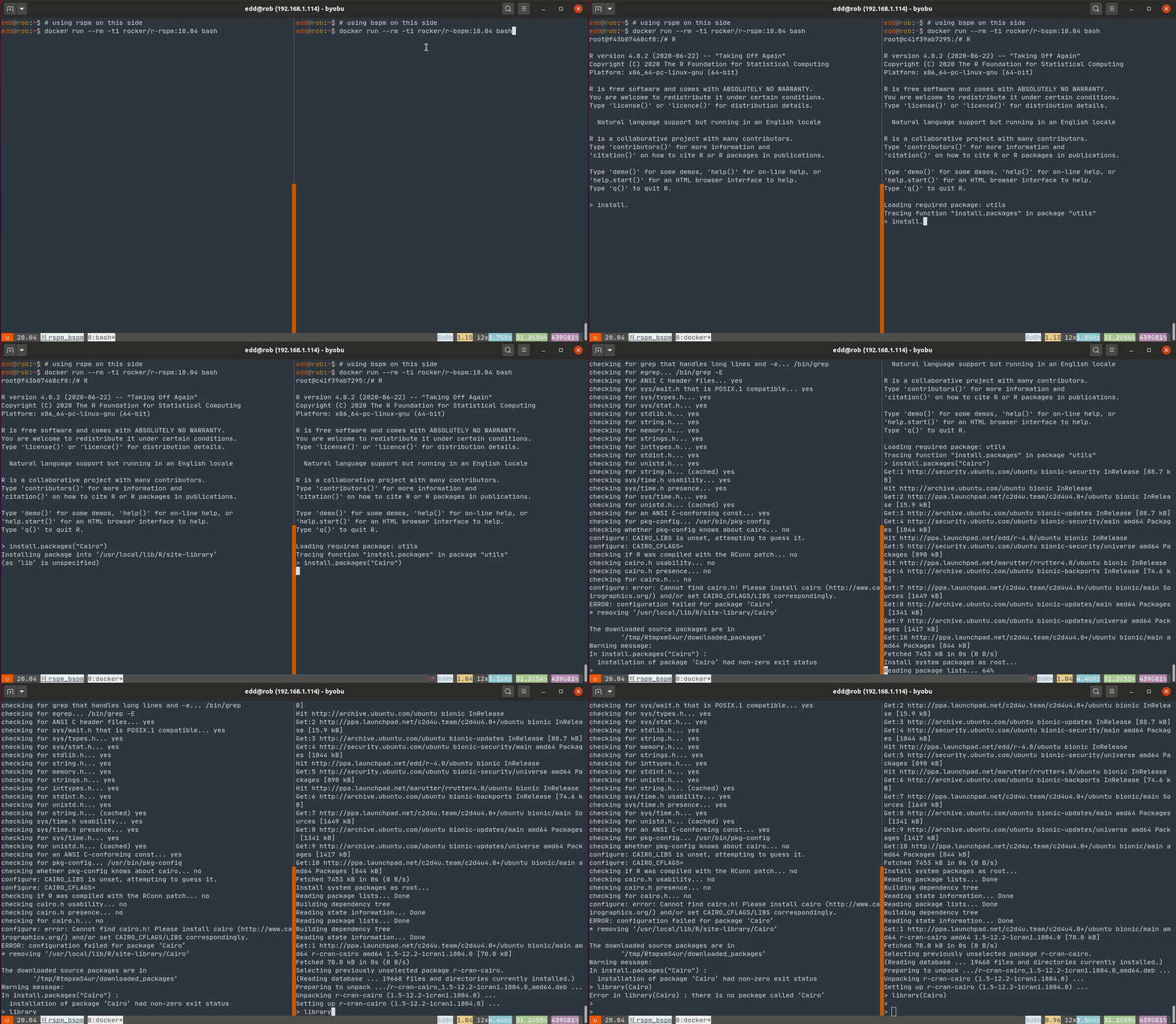 This fails for RSPM as no binary is present and a source build fails for the familiar lack of a
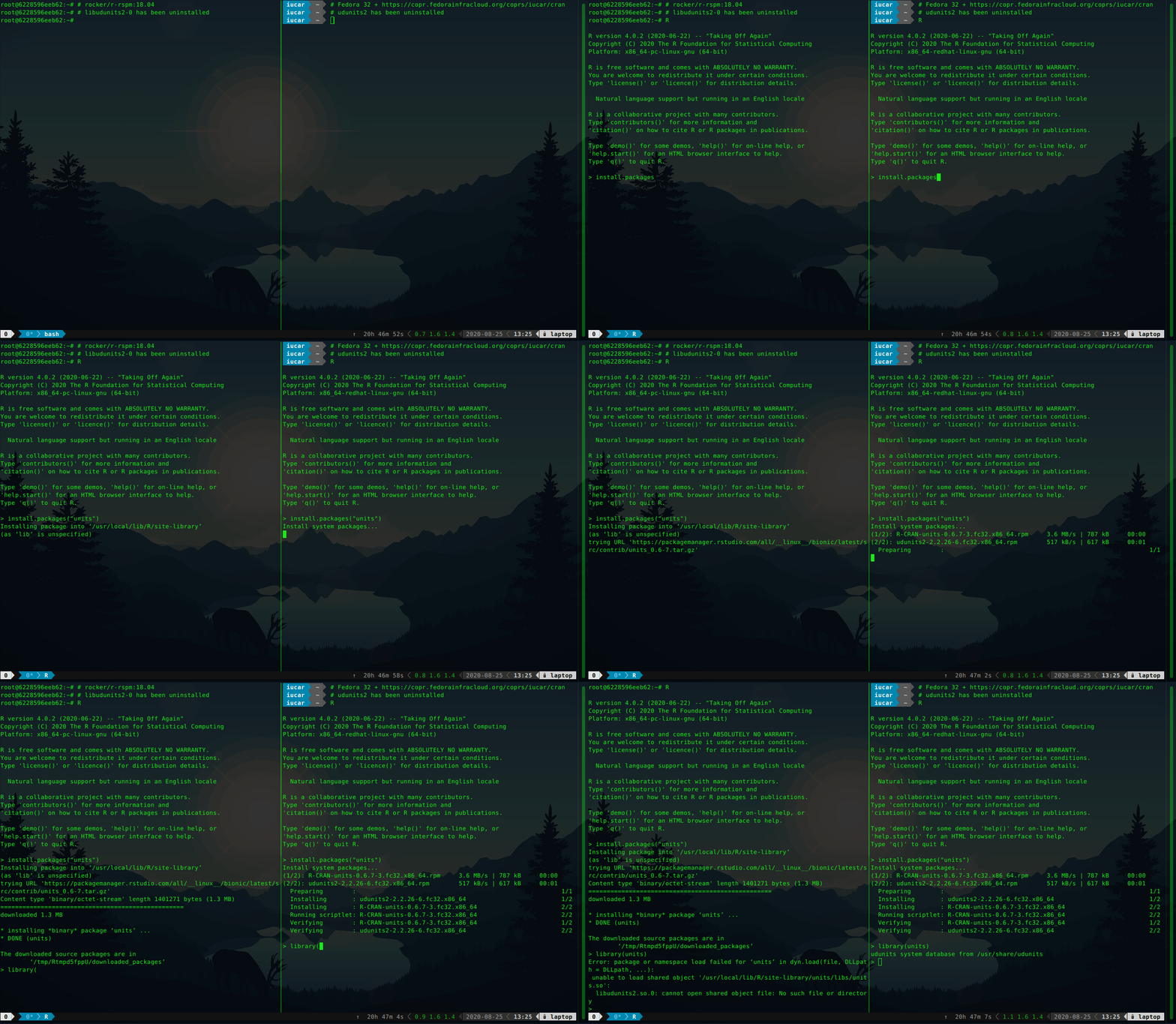 The installation of
 After:



 After a short introduction by Hong Phuc we turned to a self-introduction and what is equality for me round. This brought up already a wide variety of issues that need to be addressed if we want to counter inequality in free software (culture differences, language barriers, internet connection, access to services, onboarding difficulties, political restrictions, ).
Unfortunately, on-air time was rather restricted, but even after the DebConf related streaming time slot was finished, we continued discussing problems and possible approaches for another two hours. We have agreed to continue our collaboration and meetings in the hope that we, in particular the FOSSASIA community, can support those in need to counter inequality.
Concluding, I have to say I am very happy to be part of the FOSSASIA community where real diversity is lived and everyone strives for and tries to increase social equality. In the DebConf IRC chat I was asked why at FOSSASIA we have about a 50:50 quote between women and men, in contrast to the usual 10:90 predominant in most software communities including Debian. For me this boils down to many reasons, one being competent female leadership, Hong Phuc is inspiring and competent to a degree I haven t seen in anyone else. Another reason is of course that software development is, especially in developing countries, one of the few escape pods for any gender, and thus fully embraced by normally underrepresented groups. Finally, but this is a typical chicken-egg problem, the FOSSASIA community is not doing any specific gender politics, but simply remains open and friendly to everyone. I think Debian, and in particular the diversity movement in Debian can learn a lot from the FOSSASIA community. At the end we are all striving for more equality in our projects and in the realm of free software as a whole!
Thanks again for all the participants for the very inspiring discussion, and I am looking forward to our next meetings!